
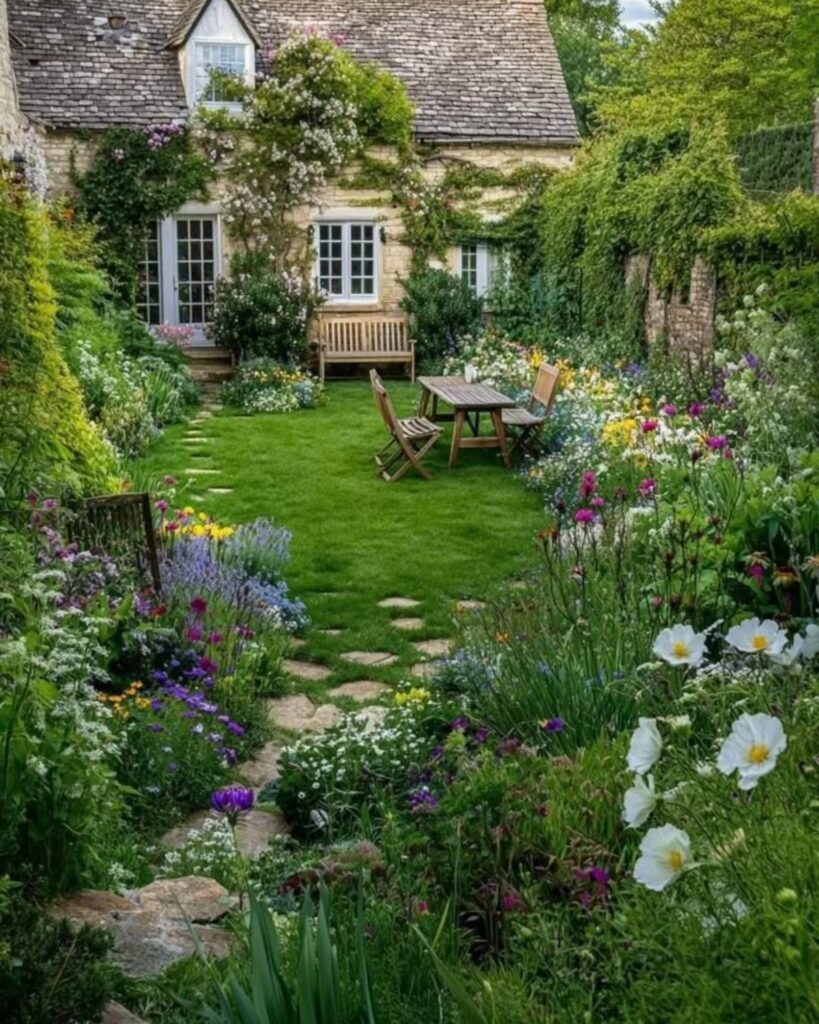
These 16 ideas range from a stone patio chair you reset in an afternoon to a pleached lime hedge that outlasts a mortgage, so the first cut is how many weekends you have, not how much you spend.
What decides the choice is your summer climate zone: the same English look that thrives in Portland wilts in Phoenix unless you swap foxgloves for blanket flower and alliums for heat-bred ornamental onions.
[link-whisper-related-posts]1. Planting Design
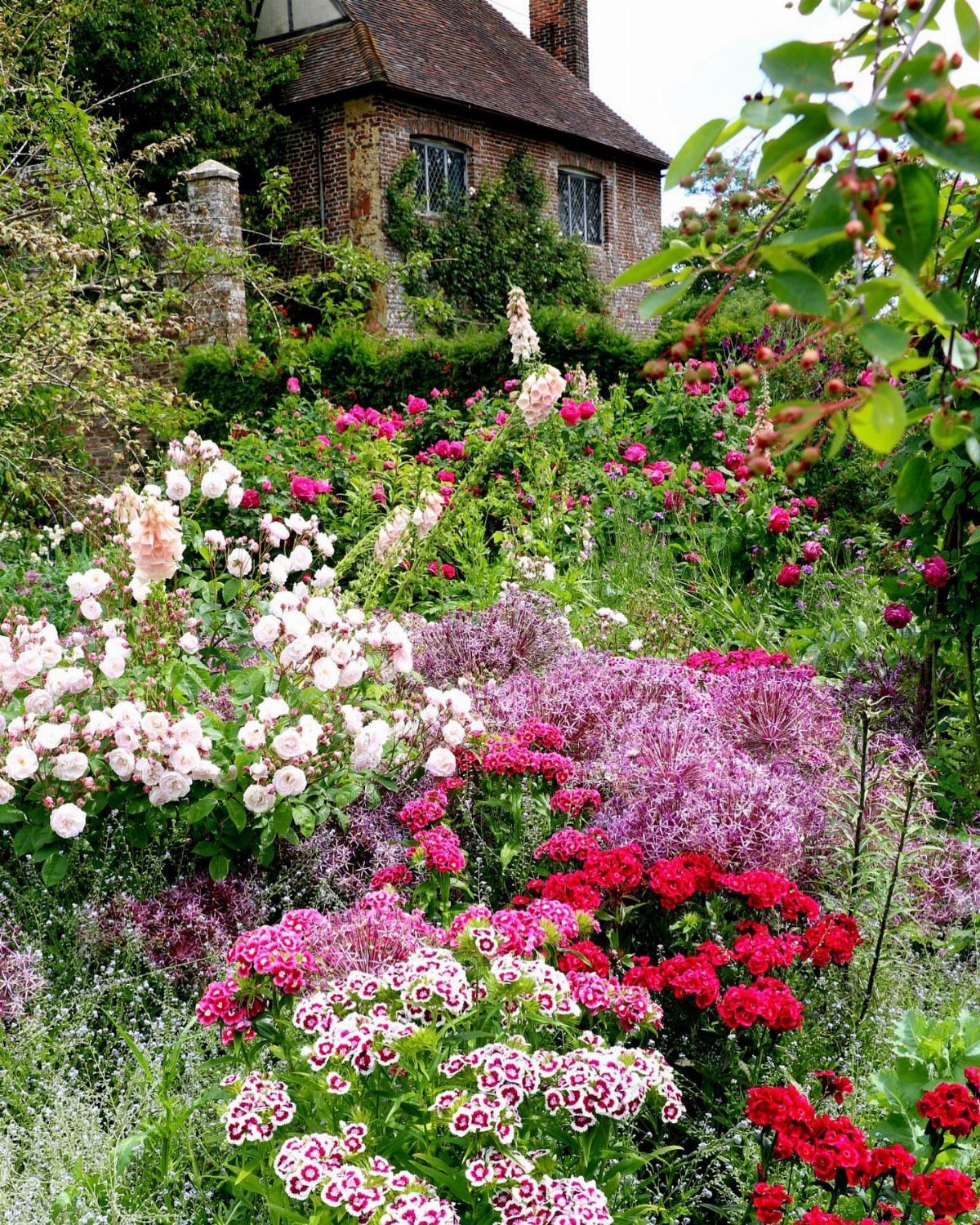
British cottage planting starts with knowing your site. Roses, alliums, sweet Williams, and foxgloves all thrive in damp, cool summers, so match your choices to your own summer heat and humidity rather than copying a planting list from somewhere wetter.
If you are in zone 6 or below, or at elevation, you can run closer to this mix.
In hotter zones, I would swap the foxgloves for blanket flower and the alliums for ornamental onions bred for Southern summers; the romantic look stays, but the plants live.
Group them in drifts of 5 to 7, not spotty ones, and let them seed where they will.
2. English Landscape Garden
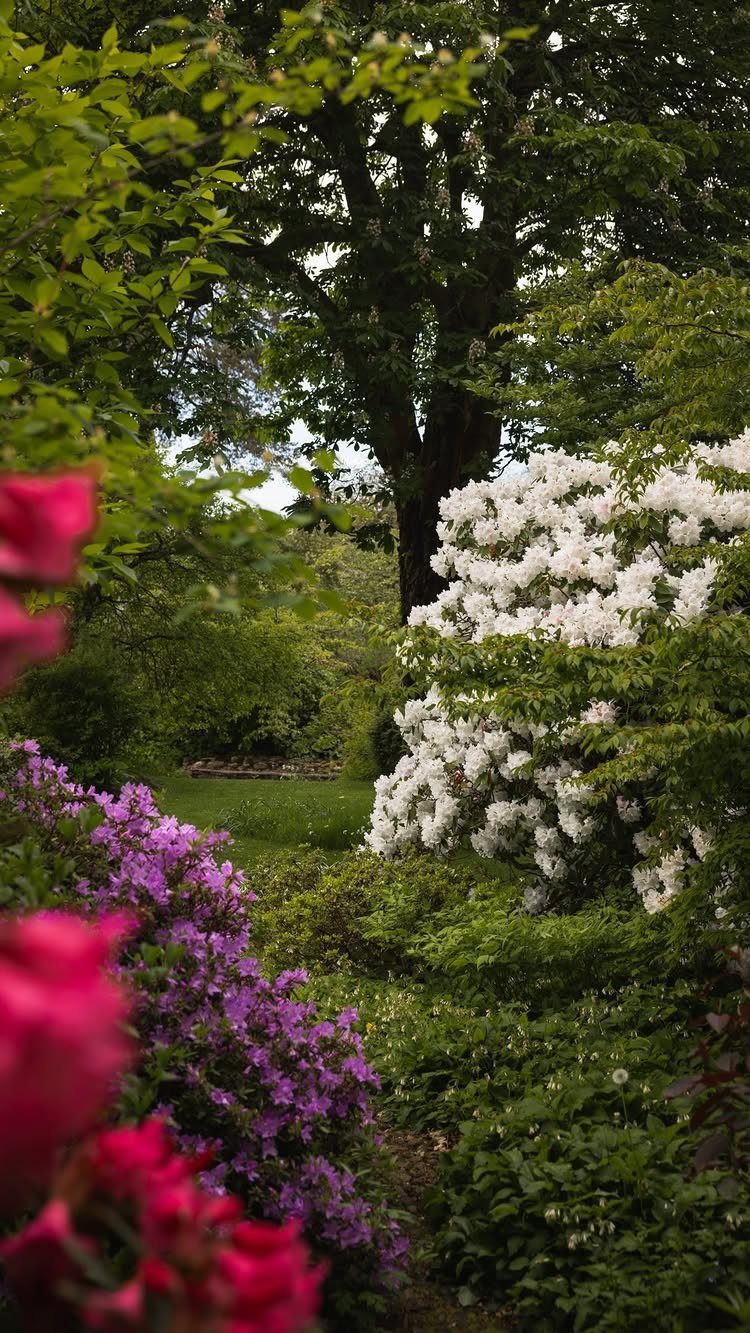
The English landscape garden style is freedom staged to look like accident. Wide lawns, scattered mature trees, and sudden explosions of rhododendron color: that is the formula, and it reads as wealthy because it takes decades.
You can crib the mood faster by buying one big specimen tree rather than waiting for saplings, and planting azaleas in the dappled shade beneath.
The trade is maintenance; lawn plus understory needs more water and more seasonal cleanup than hardscaping ever would. I like this for a back corner where you already have canopy, not for a front yard you need to control.
One of the most classic and attractive garden designs is the English Country Garden. The mix of lush, vibrant patches of flowers with well-trimmed hedges, stone walls, winding paths, and other nooks offers a combination of unfussy charm and formal wonder.
3. Garden Ornaments
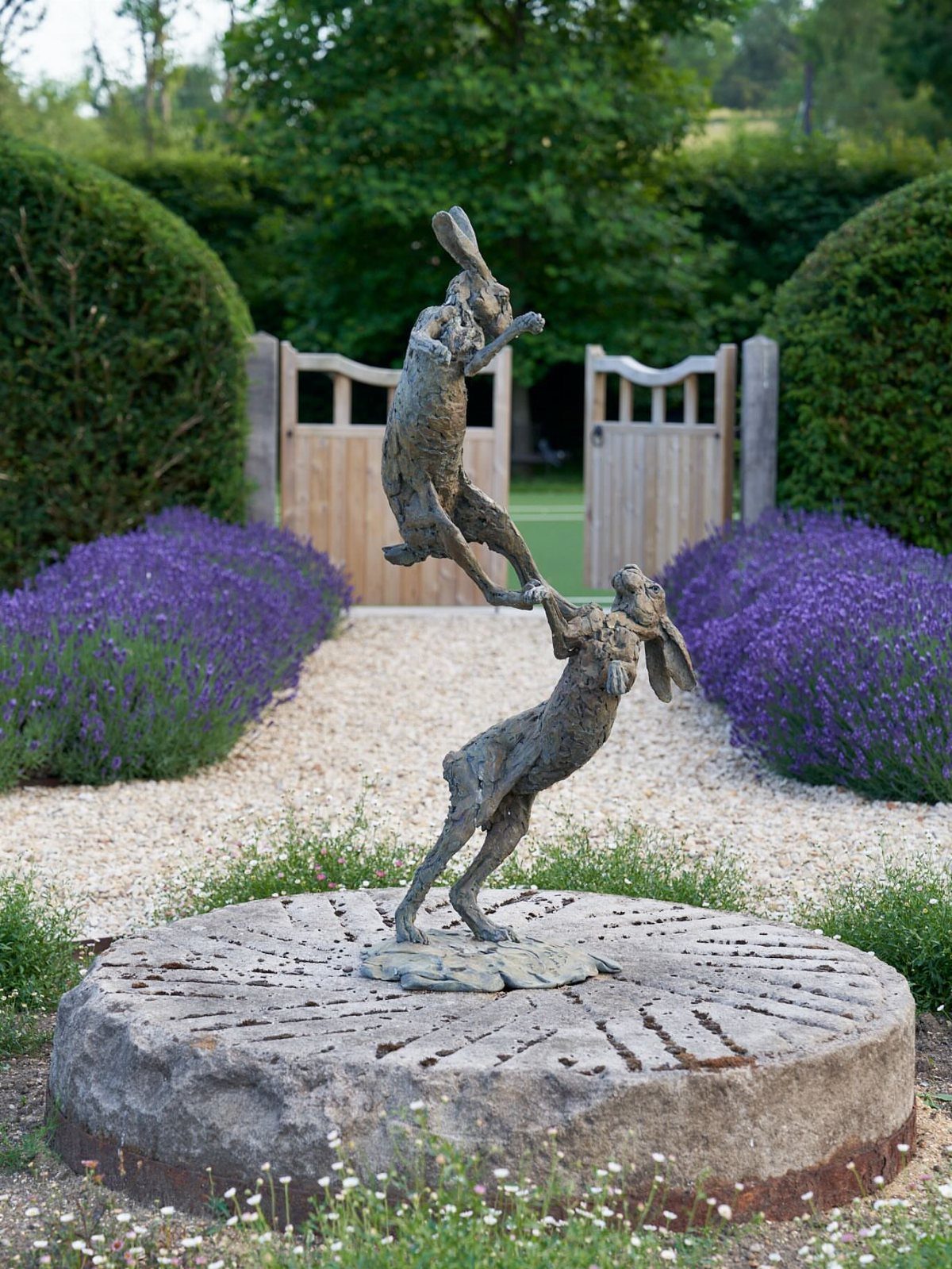
The material matters: bronze weathers to a green-brown that sits back against foliage, while resin or painted cast iron shouts.
Stone plinths need no footer if you keep them low and set them on compacted gravel, but I would still sink them below grade for stability.
Place it at a curve or a gate, somewhere the walk pauses naturally, not mid-stride where it blocks the flow.
4. Meandering Paths
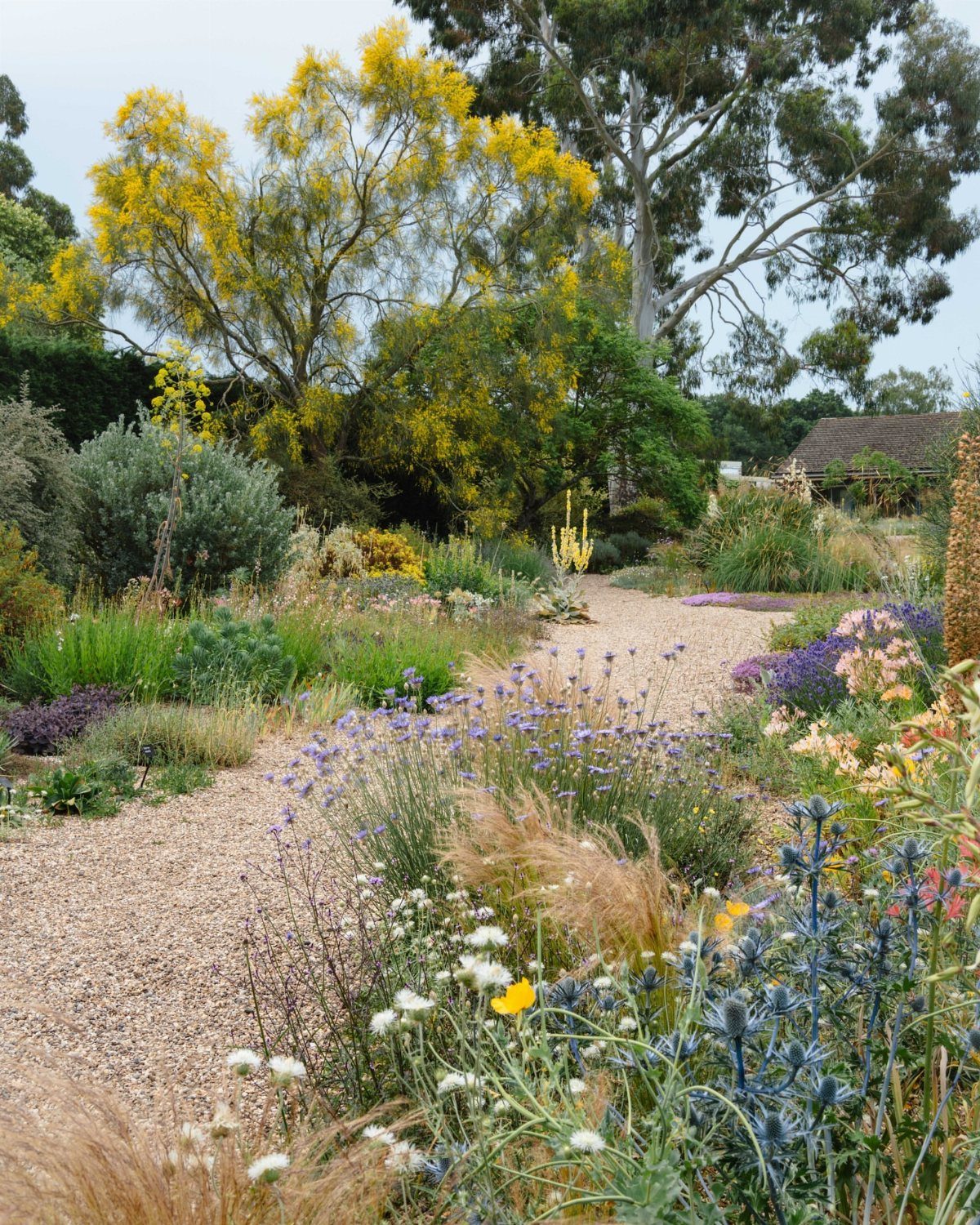
Curved gravel paths work because they hide what comes next. Path width matters more than most people think; too narrow feels like a corridor, too wide like a driveway.
I lay them with steel or aluminum edging, never the plastic stuff that heaves in freeze-thaw. The curves should not be regular; a sine wave reads as fake.
Instead, dodge around one existing tree or a good boulder, and let that obstacle set the bend. Small crushed stone packs tight enough for a wheelchair but still drains; pea gravel shifts and annoys.
5. Mixed Borders
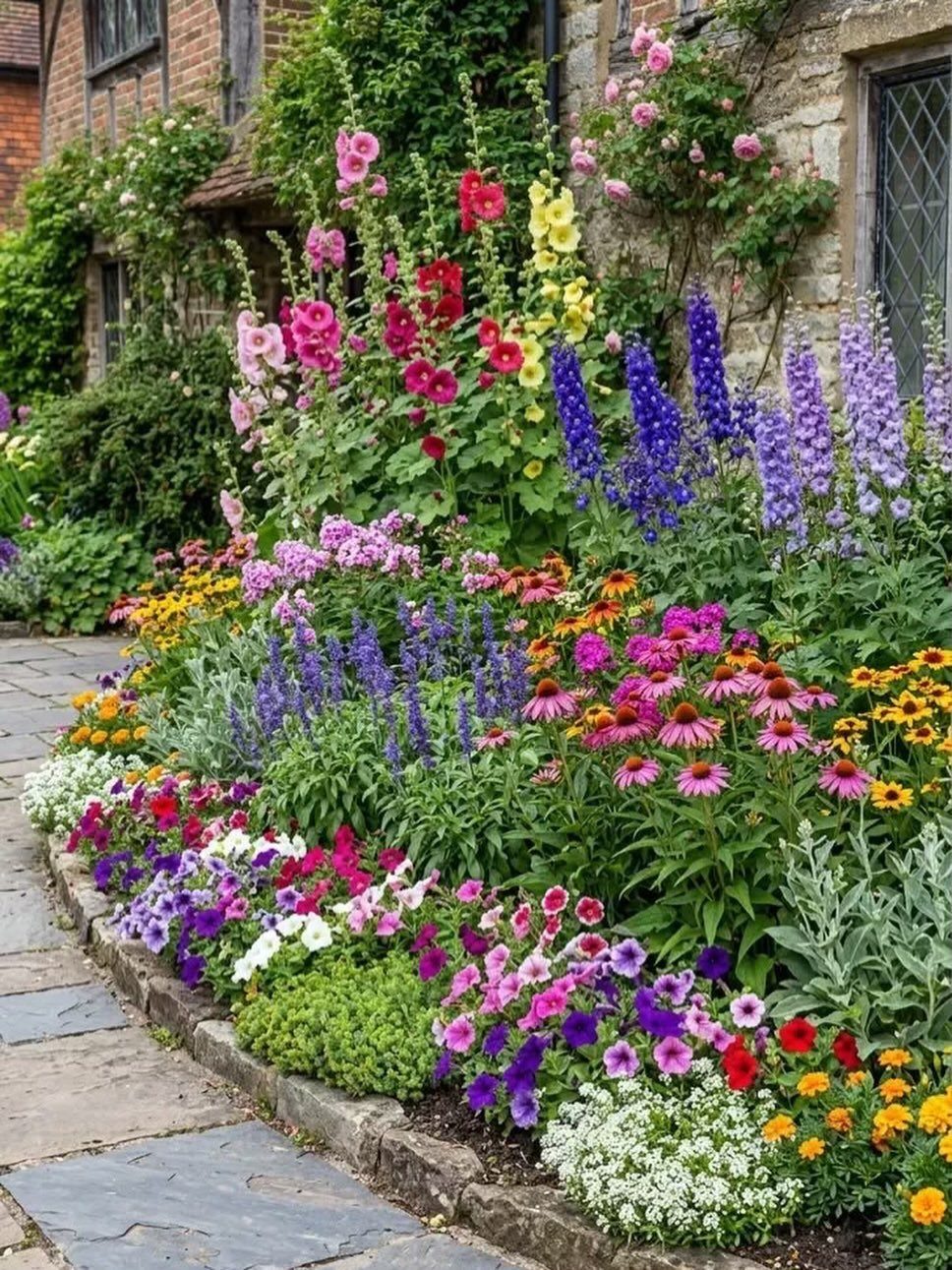
A mixed border against stone is the most forgiving way to garden.
Hollyhocks to delphiniums to low alyssum means height at the back, middle, and front. That sounds obvious, but most beginners plant by color and lose the structure.
I start with 3 foliage textures: something sword-like, something round, something ferny. Add color after.
The stone path edge keeps plants from flopping onto walking space, and it warms the soil for earlier blooms. In narrow beds, stick to 2 heights or it turns to visual noise.
6. Garden Benches
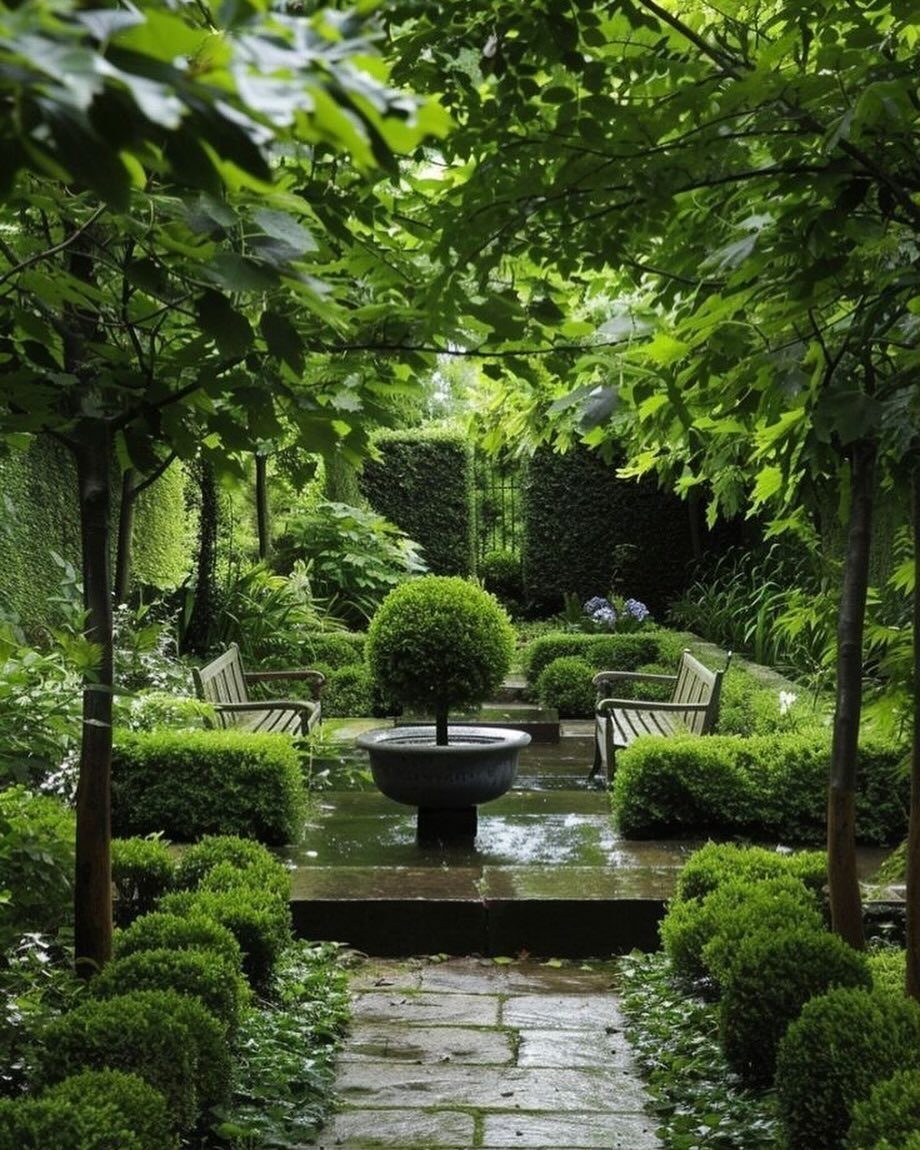
2 benches facing each other turns a path crossing into a room. The photo sets them on stone with boxwood walls and a single round topiary between; the symmetry is formal, but the scale is intimate.
Wood seats need 22 inches of clear space behind for standing up without scraping the hedge, and I would go with teak or black locust if they will sit in shade; cedar greys out fast where sun never hits.
The real decision is whether you want conversation or solitude. Facing benches invite talk; a single bench aimed at a view lets one person stop and think.
7. Fragrant Roses
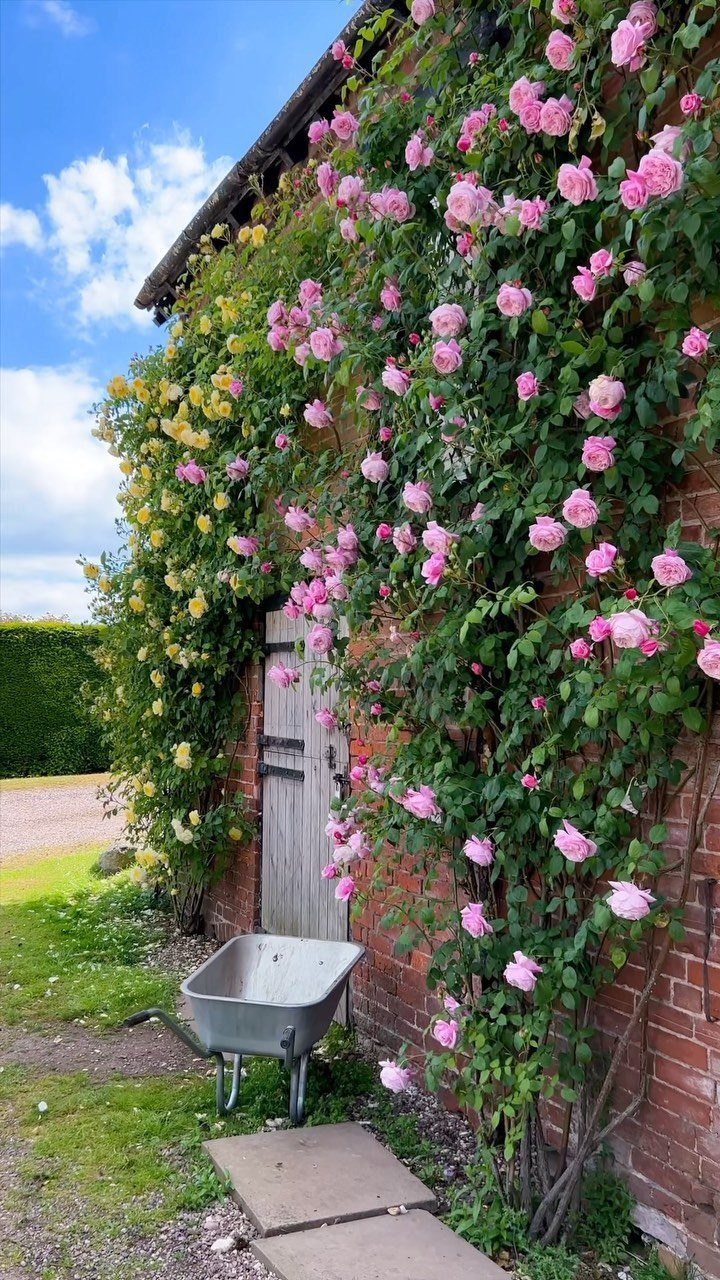
Pink and yellow climbers against brick give the classic English look without the formality of a rose bed.
I would train them on galvanized wire run through masonry eyes rather than a wood trellis; the wire disappears and the brick does the visual work.
Fragrance carries better in still, damp air, which is why this works in the Pacific Northwest or any yard with morning shade.
In hot, dry zones, the scent fades fast and the blooms crisp; there I would grow jasmine on the same wall and accept a different romance.
8. Climbing Plants on Trellises
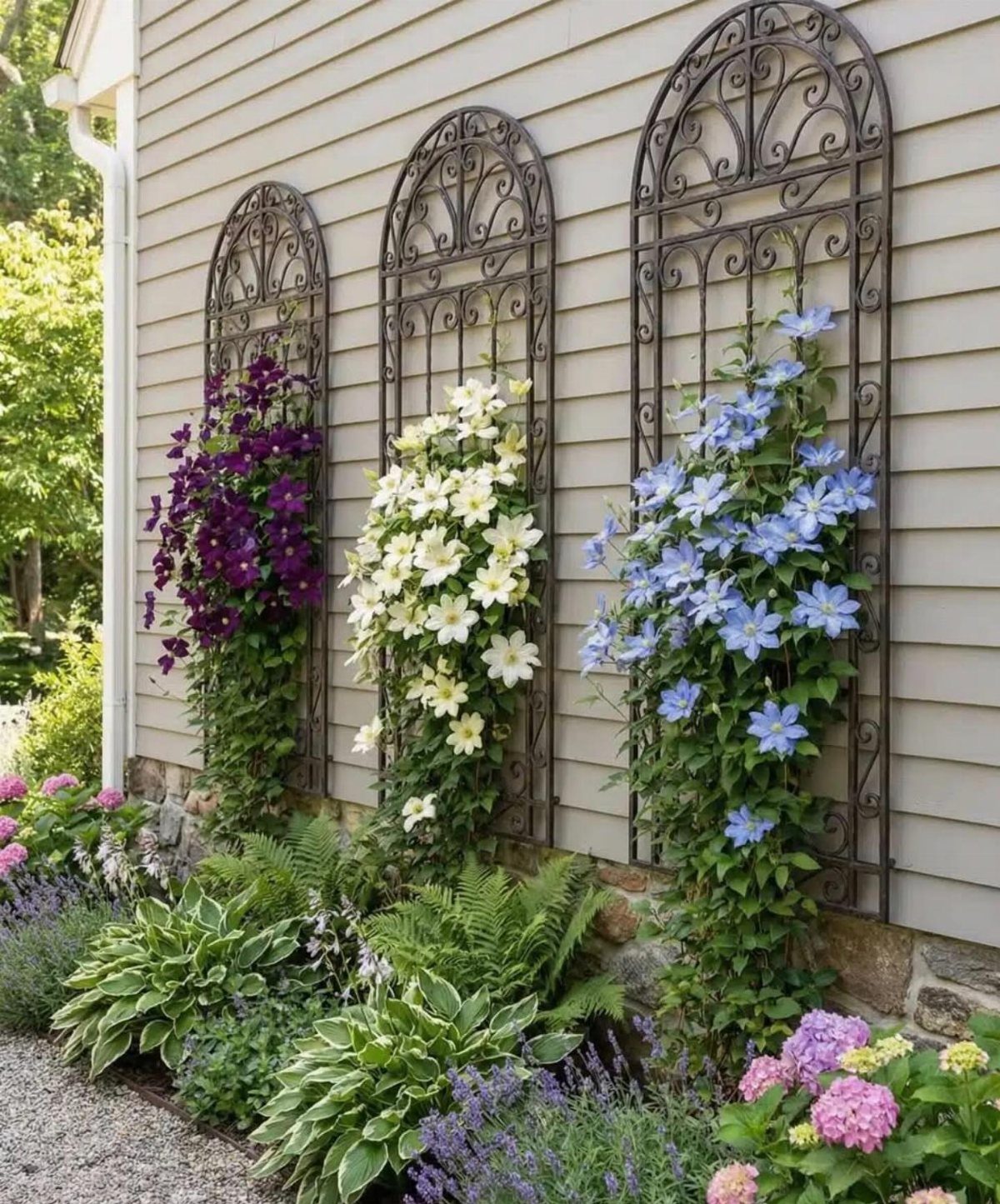
Arched trellises turn flat siding into architecture. 3 trellises grouped tight read as windows, which is why I like them clustered rather than scattered across a wall.
Clematis roots want cool shade and their heads want sun; the hostas below do that job. Vinyl siding needs standoff brackets, not direct mount, or moisture traps behind the metal.
I would paint the brackets the siding color so the trellis seems to float. One trellis with a big climber looks like repair; three with different blooms look like intention.
9. Geometric Patterns with Plantings
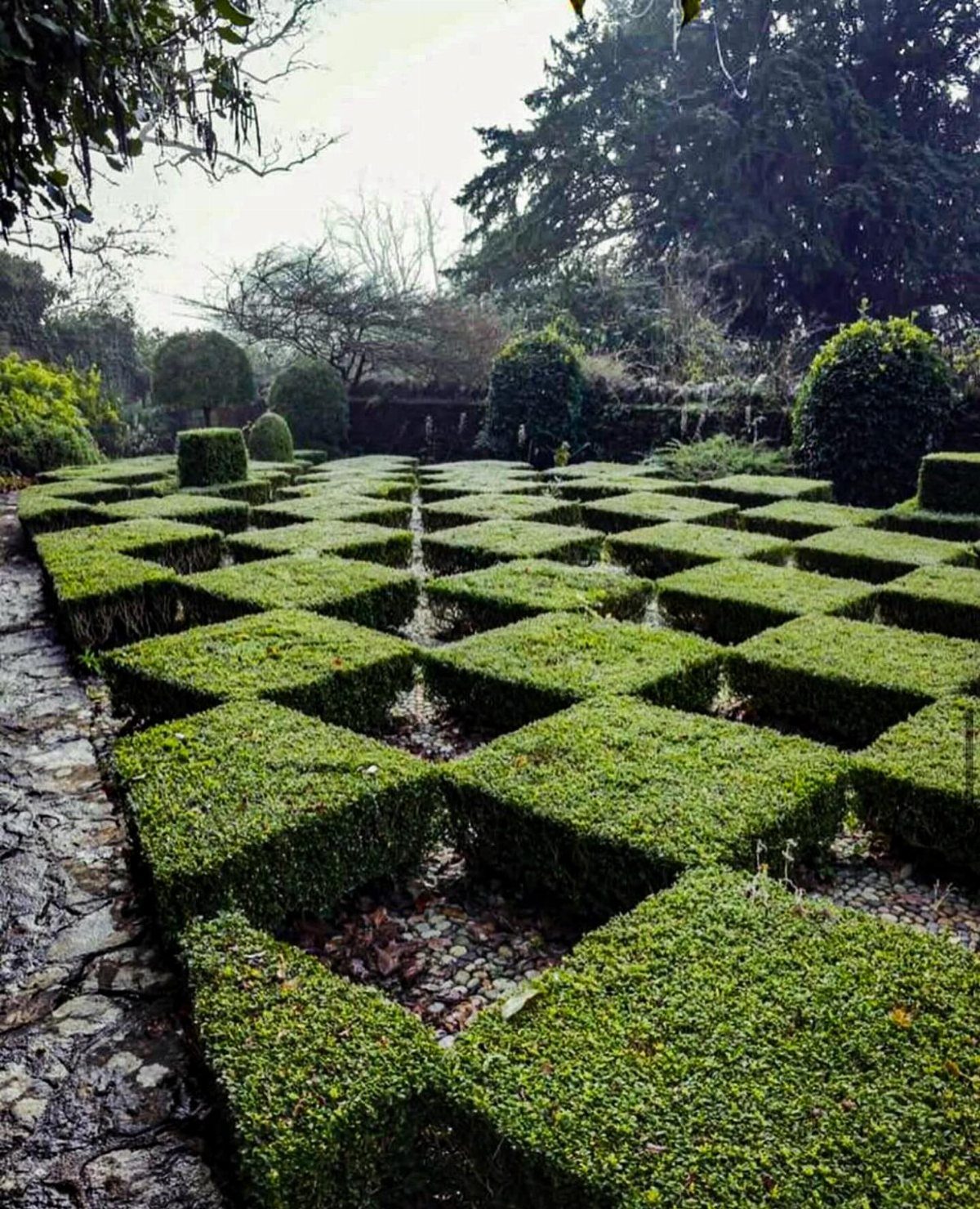
Checkerboard planting is the most discipline you can ask of a gardener. Low hedges give the clearest geometry, but the same layout works with lavender, germander, or even annual herbs if you replant each season.
Stone or brick dividers between squares keep one overachiever from swallowing its neighbor; I leave a narrow gap, just wide enough to walk and trim.
I would keep the grid small; tight squares read as garden, larger ones turn into parking lots. Soft light helps green read pure; in blistering sun, I would swap to silver foliage or the contrast turns harsh.
10. Contrasting Colors

Pink against orange sounds loud, and it is, but the white hydrangeas behind act as a rest stop for the eye. I would not add yellow; 3 hot notes turn to noise.
The columnar evergreens stake the back edge so the border does not read as a grade-school gradient. Coneflowers and daylilies are cheap, tough, and repeat; plant them in drifts of at least 5 or the color looks accidental.
This is a weekend project if you start with gallon pots and have decent soil; the pots do most of the work for you.
11. Trimmed Hedges
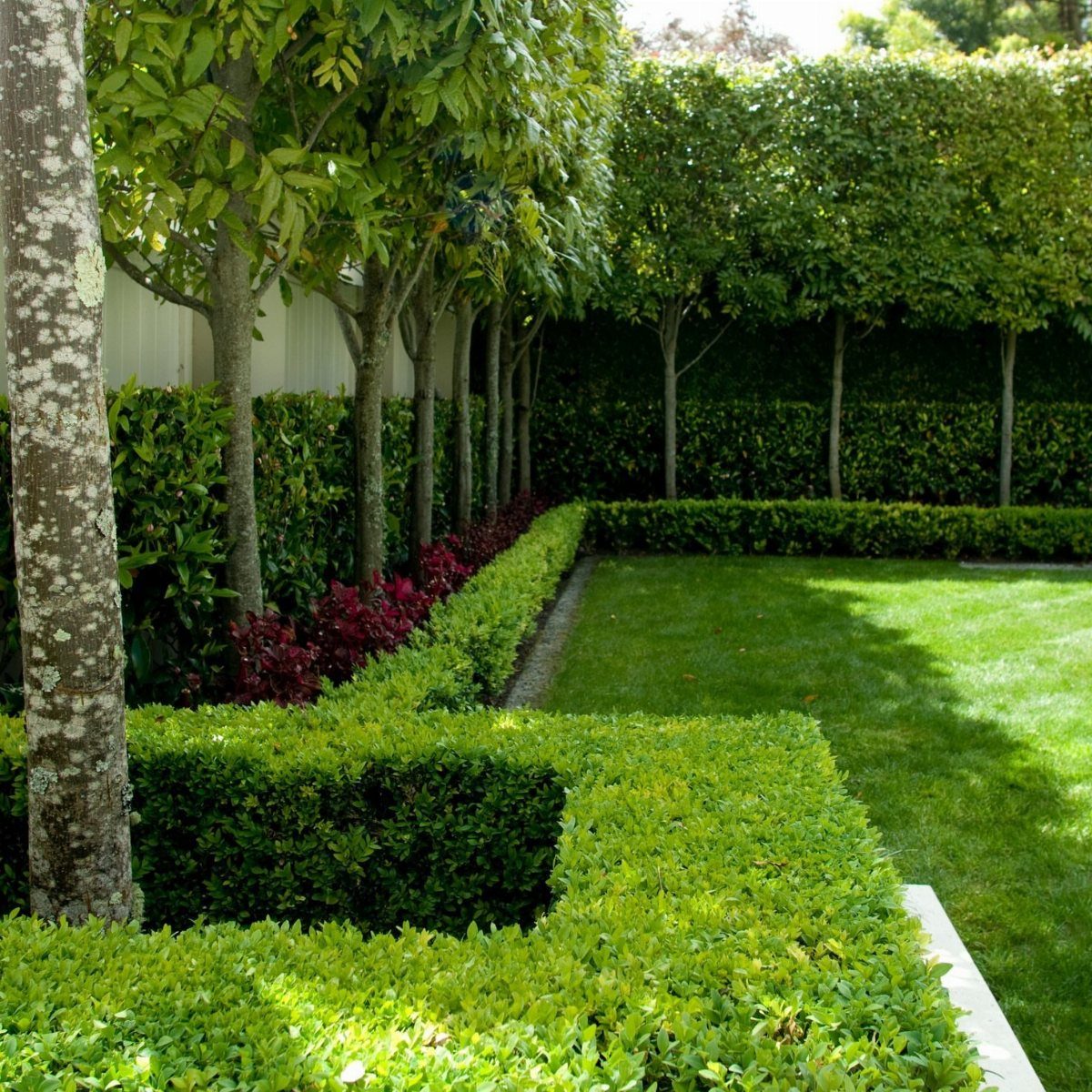
Crisp hedges cost time, not money. Box responds to shearing by thickening, which is the good news and the trap; once you start, you commit for the season.
I sheathe my blades in a rag soaked in bleach between plants if I am cutting through box blight territory, which is most of the Eastern seabed now.
Pleached limes above the border are hired work for most of us; the flat hedge below is not. I would never mix hedge species in one horizontal line; different growth rates undo the geometry fast.
12. Think Beyond Fences
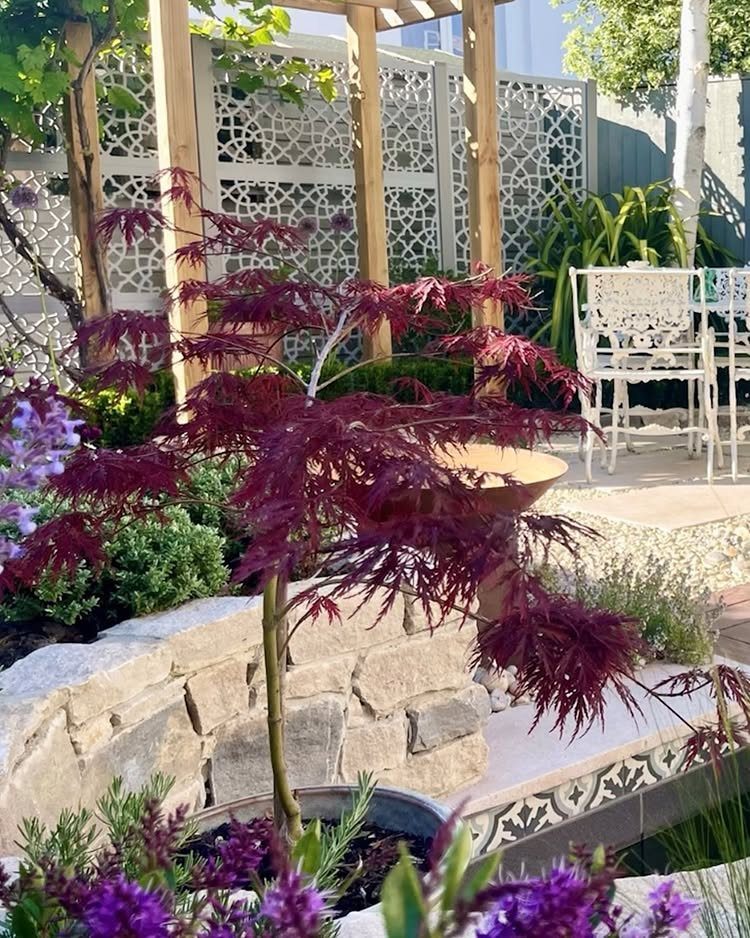
Privacy without fence line means planting for height in the ground plane and screening above it. A Japanese maple gives summer color at eye level while the decorative panel handles the rest without rooting depth or setback rules.
I would mount that screen on galvanized posts set in concrete footers below frost line, same as a fence, because wind load on a solid panel is higher than on slats.
The pergola with white furniture gives a destination; without it, the screen is just a wall. My trade would be to skip the pergola and spend on a better screen material; vinyl lattice sags first, cedar trellis holds longer.
13. Create a Sense of Journey
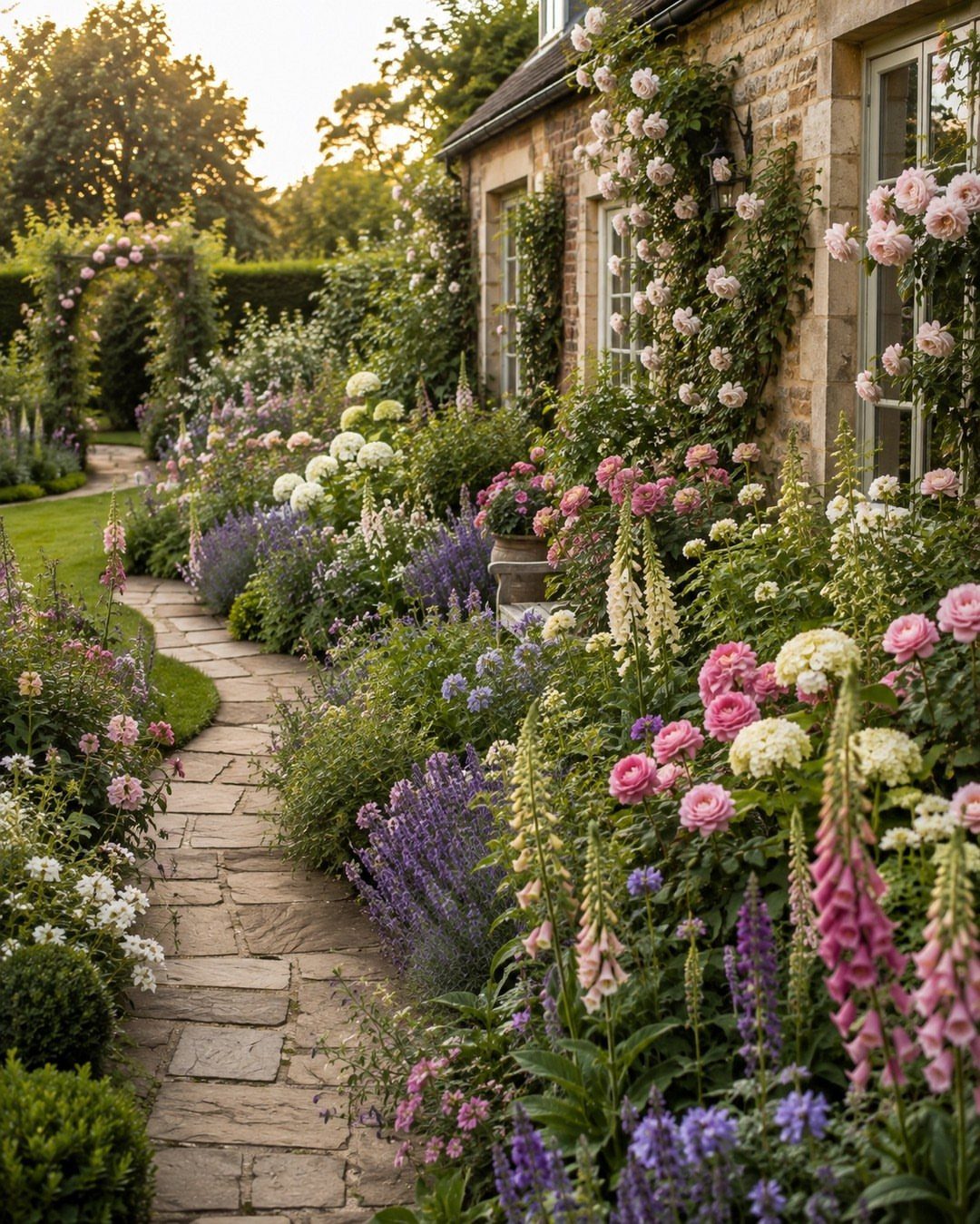
A path that curves past the limit of what you can see makes a small garden feel twice as large.
The archway does the heavy lifting here: framed by climbers, it reads as a door to somewhere else even when the "somewhere" is only a few steps of border.
I would plant the approach side heavier than the exit, so the compression and release registers even on a long straight run.
Morning sun on the stone gives you texture; afternoon shade there would need brighter flowers to carry the same pull.
14. Traditional Cottage Garden
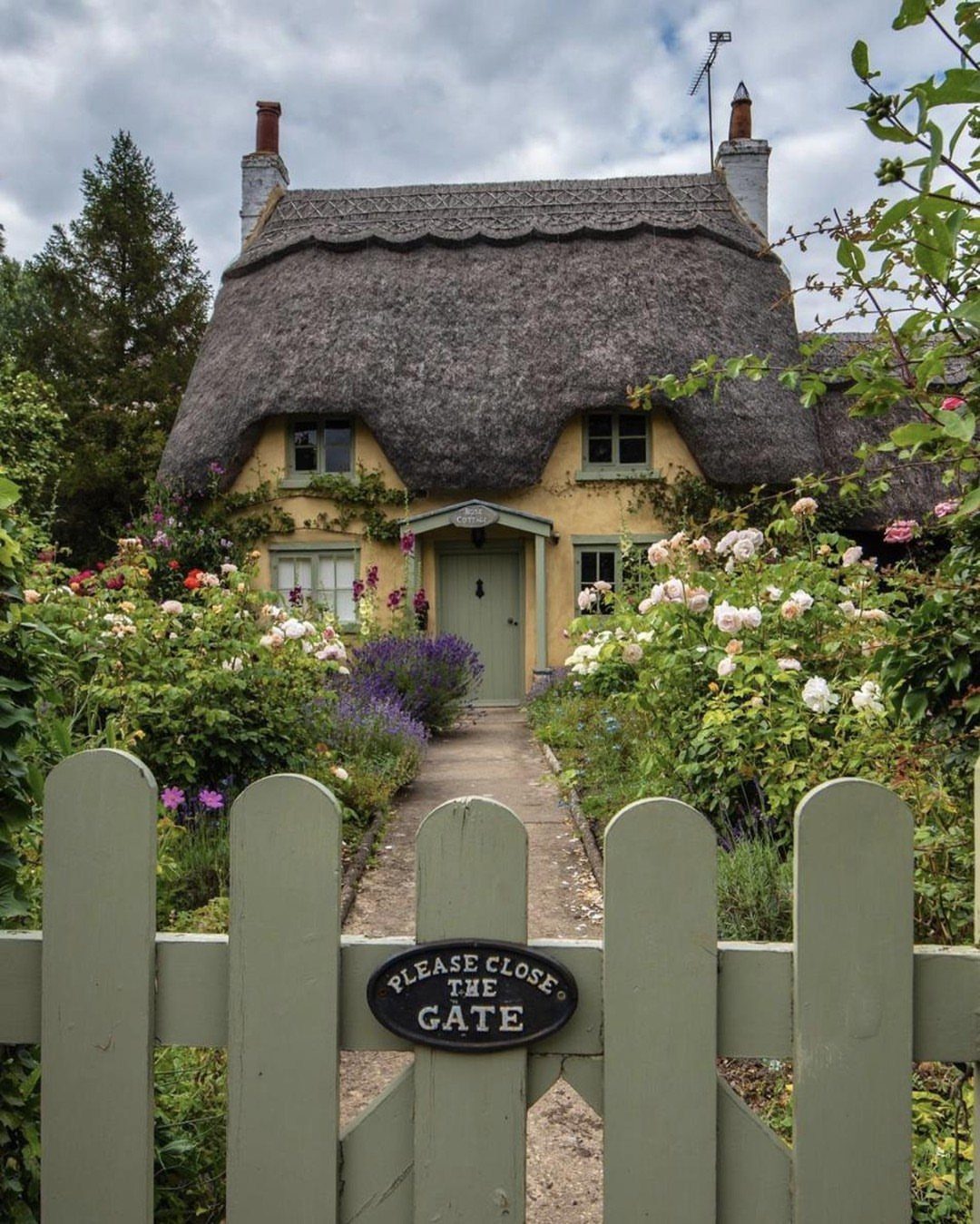
The gate color matters as much as the plants. Sage green against thatch reads as belonging to the house, not applied after; a red or black gate would stage a fight.
Lavender and roses share the same soil preference, which is why this pairing lives on in British references, but the lavender wants 8 hours of sun and sharp drainage or it sulks.
In heavy clay, I would swap to catmint, which forgives wet feet and still gives the soft haze at knee height.
The stone path wants a layer of compacted grit beneath or it shifts in winter; the casual look takes prep.
15. Wrought Iron Garden Gate
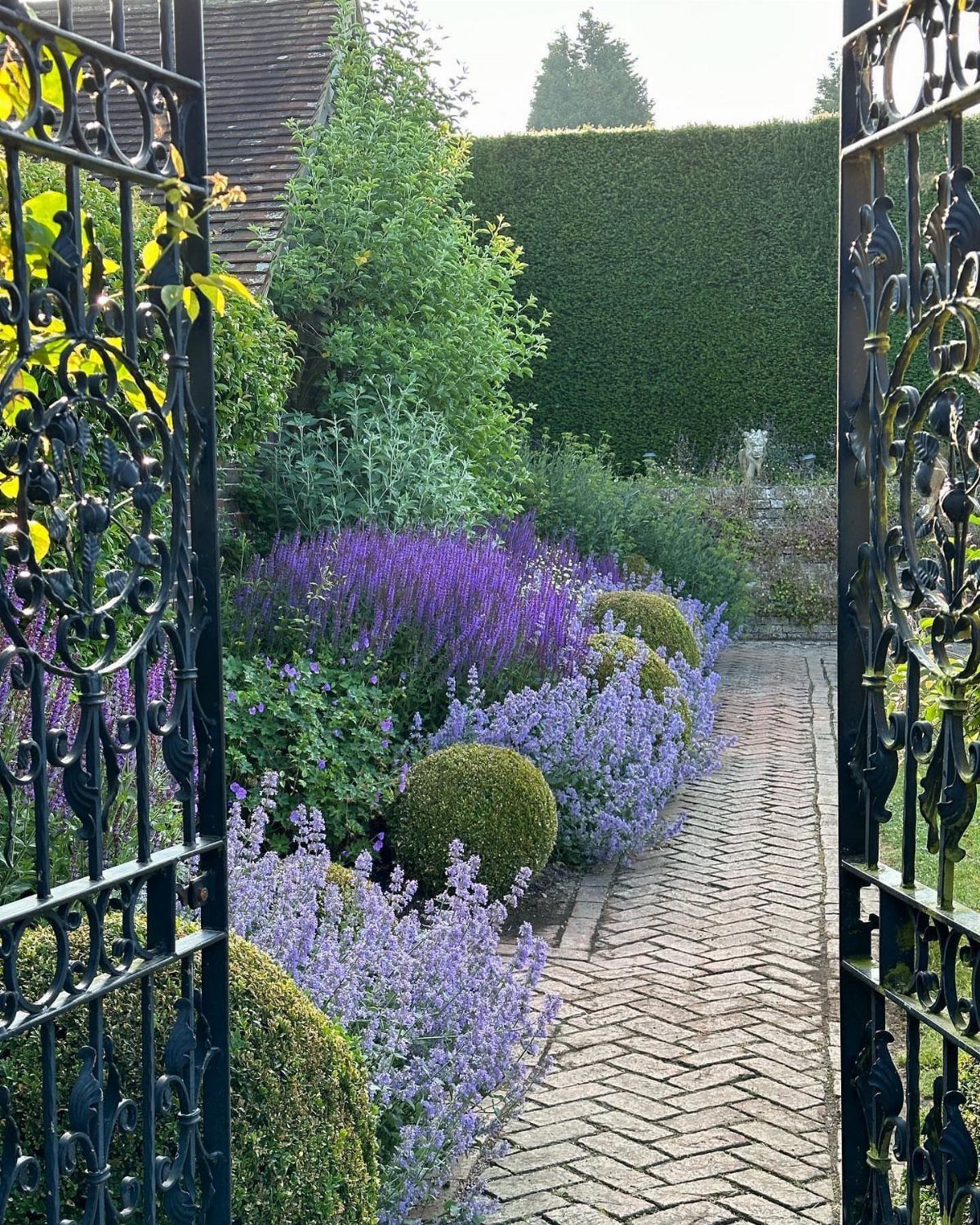
Ornamental iron frames the garden as a gift to be opened.
The herringbone brick widens the visual space because the angled lines pull sideways; running bond would read as a corridor. Boxwood spheres give the geometry the gate itself lacks, a tension I like better than matching curlicues with curlicues.
Salvia repeat-blooms if you deadhead; catmint does not need the attention. I would set the gate posts in concrete deep, same as a fence, because the visual weight of iron needs real anchoring even where the gate itself is light.
Paint it black on a regular cycle or the rust shows from across the lawn.
16. Cozy Stone Patio Seating
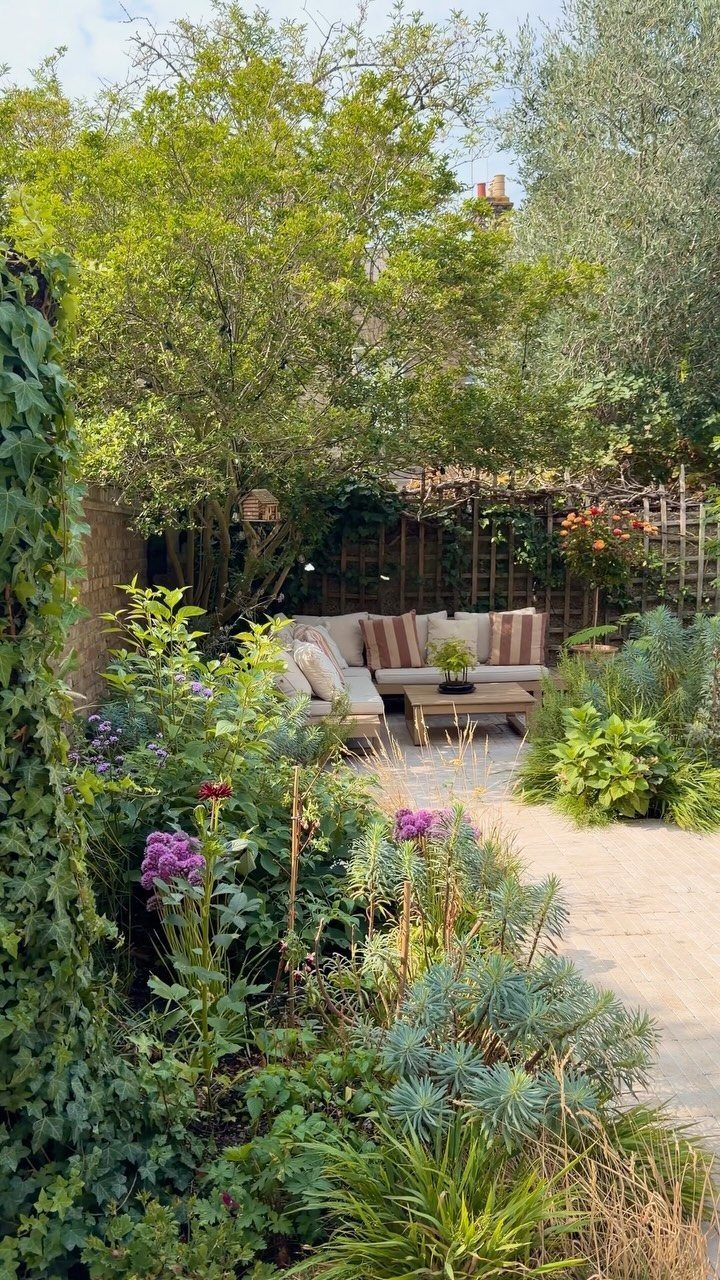
Light stone stays cool underfoot, which is the reason limestone or travertine wins over dark slate in any sun above zone 7.
The L-shape against planting turns a seating area into a room with one wall open to garden; I would angle it slightly off true for a less static feel.
Cushions in stripes rather than solid add the cottage reference without theme-park obviousness.
The wooden trellis behind needs a foot of separation from any seated head or the maintenance is annual annoyance. My trade would be fewer pillows, better fabric: Sunbrella costs double but holds up season after season.
Historical Context of English Gardens
The English Landscape Garden did not arrive on its own. It built through the 18th century, from roughly 1720 to 1780, as a deliberate answer to the rigid geometries that came before it.
William Kent and Lancelot "Capability" Brown get most of the credit, but the style took shape through dozens of lesser-known designers, surveyors and hands-on landscapers whose names rarely make the guidebooks.
The style moved fast across Europe once it caught.
France, Italy, and Germany each took up their own version of the naturalistic look, with local names attached: Jardin anglais, Giardino all’inglese, Englischer Landschaftsgarten. The French landscape garden kept developing the thread after it crossed the Channel.
That international spread matters for anyone borrowing the look now. The "English" garden was already a hybrid by the 1730s, shaped by painters and landowners as much as by climate.
Copying it today means copying an adaptation, not a native form, which is why the plants need swapping more than the layout does.
Importance of Structure in Gardens
Hardscaping carries a garden the way bones carry a body: invisible when it works, obvious when it fails. Paths, walls, sitting areas, and water features are the layout every plant has to live inside.
The choice of what to build and where shapes more than walking routes.
Budget limits every decision before aesthetics touch it. Faster-growing plants cost less upfront but ask more time later; slow spreaders reverse that trade.
Annuals versus perennials, self-seeders versus controlled clumps, bloom-time against maintenance hours: these are the same math as choosing a paver or a poured edge. The garden that looks effortless on Sunday was plotted with these questions on paper first.
Wild Gardening Philosophy
Wild gardening is not the same as not gardening. It means choosing plants that belong enough to live without rescue, then letting them sort out their own spacing.
Native species are the usual start, but "native" is a smaller circle than most people draw. A plant from 2 counties east may not feed the insects in your yard.
The stricter standard is local ecotype, seed collected within a region, though that market is thin and costs more. Most of us split the difference with species that naturalized decades back and settled into the local food web.
The sustainability claim holds only if you stop there. Fertilizer on a "wild" bed is theater.
Watering past establishment defeats the point. The look you get is messier, later in spring, and interrupted by plants you did not choose.
That is the trade. I think it works best at a property edge or a back corner where the rest of the garden carries the structure, not as the whole plan unless you have acres to absorb the variation.
Frequently Asked Questions
What is the best layout for a garden?
I would start with hardscaping, not plants: paths, walls, and sitting areas form the bones everything else grows around. Curved gravel paths hide what comes next and make a small space feel larger, while straight lines read as corridors.
The layout should match your purpose; a back corner can handle loose English landscape style, but a front yard needs more control.
What is English cottage garden style?
It is an informal, dense mix of flowers, herbs, and vegetables that reads as romantic accident rather than plan.
The classic pairing is roses with lavender or catmint at knee height, with plants grouped in drifts of 5 to 7 rather than spotted individually.
I would match the plant list to your actual summer heat and humidity, not copy from a British catalog; in hot zones, blanket flower and Southern-bred ornamental onions keep the look alive where foxgloves would fail.
What are some ideas for low-maintenance landscaping?
Hardscaping carries less upkeep than lawn plus understory, and mixed borders against stone are more forgiving than fussed-over beds.
Wild gardening at a property edge means plants that naturalize without rescue, no fertilizer, and watering only through establishment; the trade is a messier look and plants you did not choose.
Self-seeders and local species that settled in decades back cost less time than annual replanting or sheared geometry.
What are the key principles of garden design in the UK?
Structure still comes first, but the British approach treats it as permanent bones: gravel paths, dry-stone walls, a stone bench or trough, maybe a small rill. Only after those sit in place do you choose what grows around them.
Plant selection then fills that framework, with bloom time, spread rate, and maintenance hours weighed against budget the same way you would choose a paver over poured concrete.
What is an English landscape garden?
The English landscape garden is planned carelessness: swaths of turf left long, specimen trees dropped where a painter would want them, and shrubs that erupt in color as if they seeded themselves.
The formula reads wealthy because it takes decades, though one big specimen tree and azaleas in dappled shade can crib the mood faster.





