
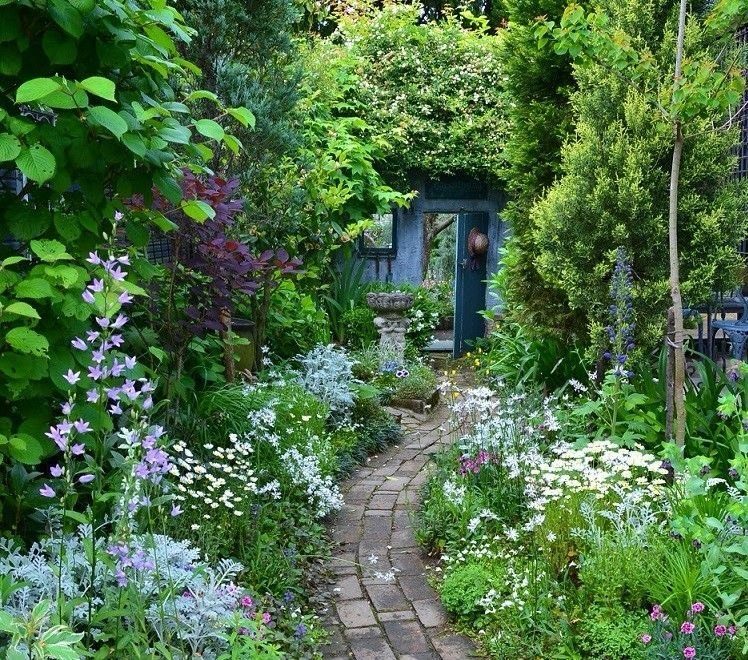
The first idea takes nothing more than a reel mower and some patience; the last needs stone by stone cobblework and a built arbor with a truck of sand behind it.
How much sun the ground gets and whether frost heaves where you live will steer you toward what lasts, because a shade path goes slick with the wrong moss and a slab in wet winter turns to rubble by spring.
[link-whisper-related-posts]1. Curved Garden Walkways
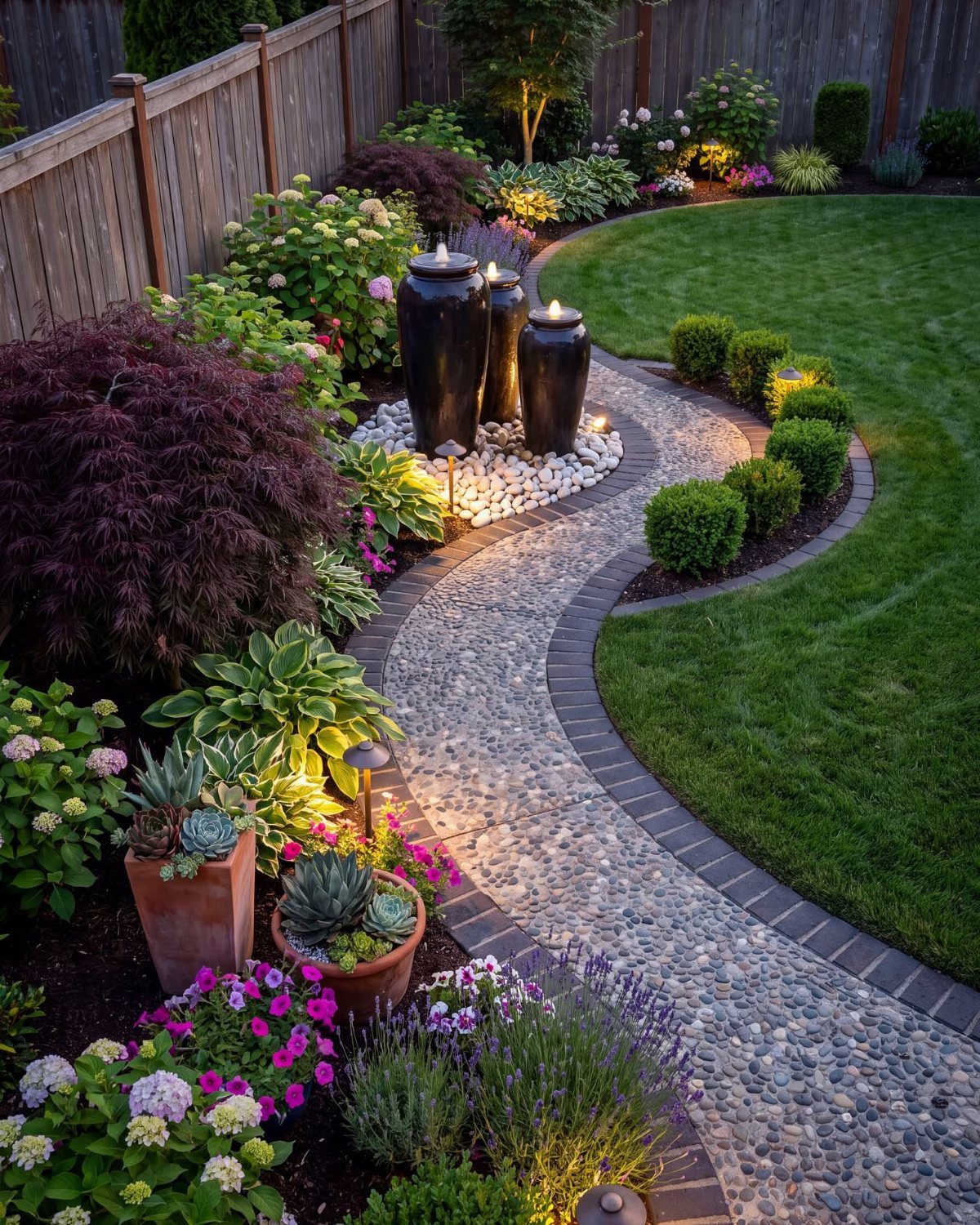
A curved path slows the walk and gives layered plantings room to unfold on both sides, which is exactly what cottage gardens need.
I would mark the line with a garden hose first and live with it for a day before cutting anything. The curve works when you can see what is coming and not what is after that.
Brick pavers at the edges hold the shape and keep lawn from creeping in; gravel fills the center and drains fast after rain. Expect to reset the bricks every few years where frost heaves, but the maintenance is light otherwise.
2. Rustic Gravel Path
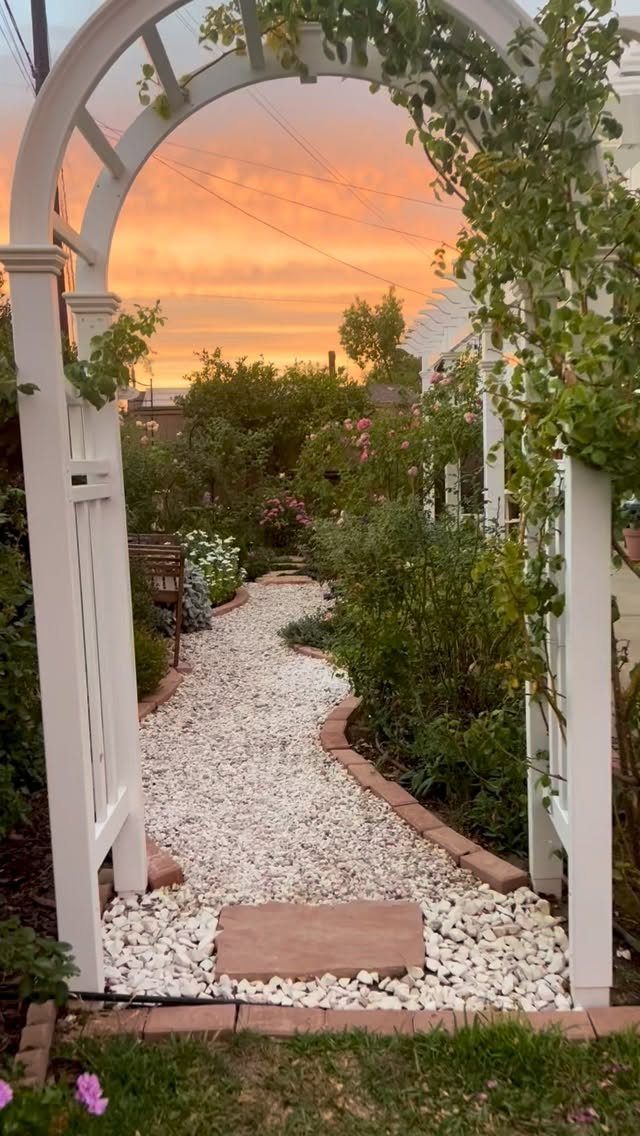
White gravel brightens at dusk the way asphalt never will, and a brick edge keeps it from scattering into the beds.
I like limestone chips because they lock underfoot better than pea gravel, though they cost a dollar or two more per bag. The trellis overhead is optional; the path stands alone if your budget is tight this year.
Rake it level after heavy rain and top it off every second spring. The wildflowers at the sides self-seed better when the soil does not get compacted by footsteps.
3. Stepping Stone Path
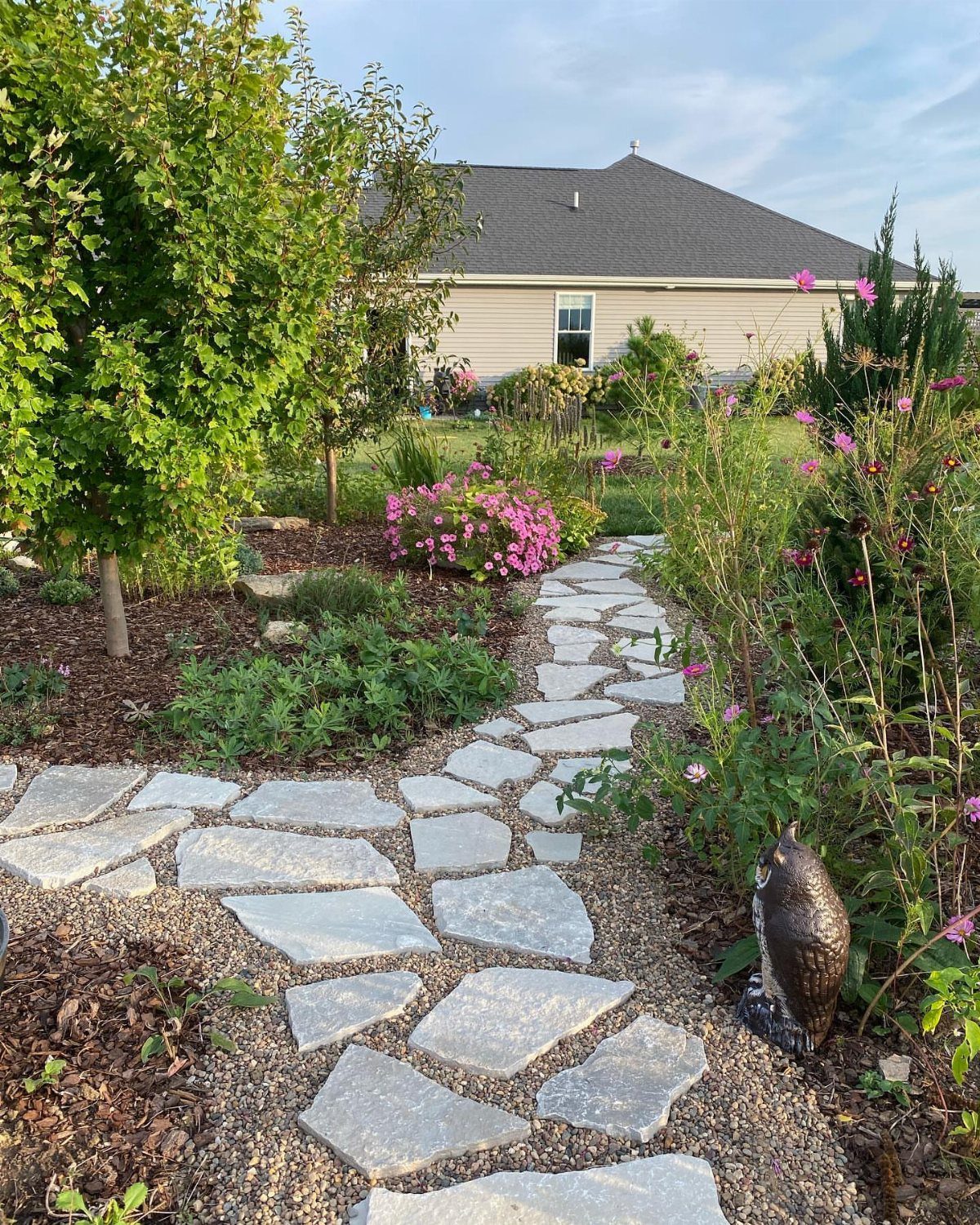
Flagstone set in gravel lets you walk dry-shod while water runs through to the roots below, which matters in beds you have already planted.
A comfortable stride for most adults governs how far apart to set stepping stones; place them closer or farther apart if you are shorter than average or taller than most.
Pea gravel between them is easier on bare feet than crushed stone but shifts more, so I would edge the whole path with steel or brick.
Owl statue optional.
4. Lavender-Edged Path
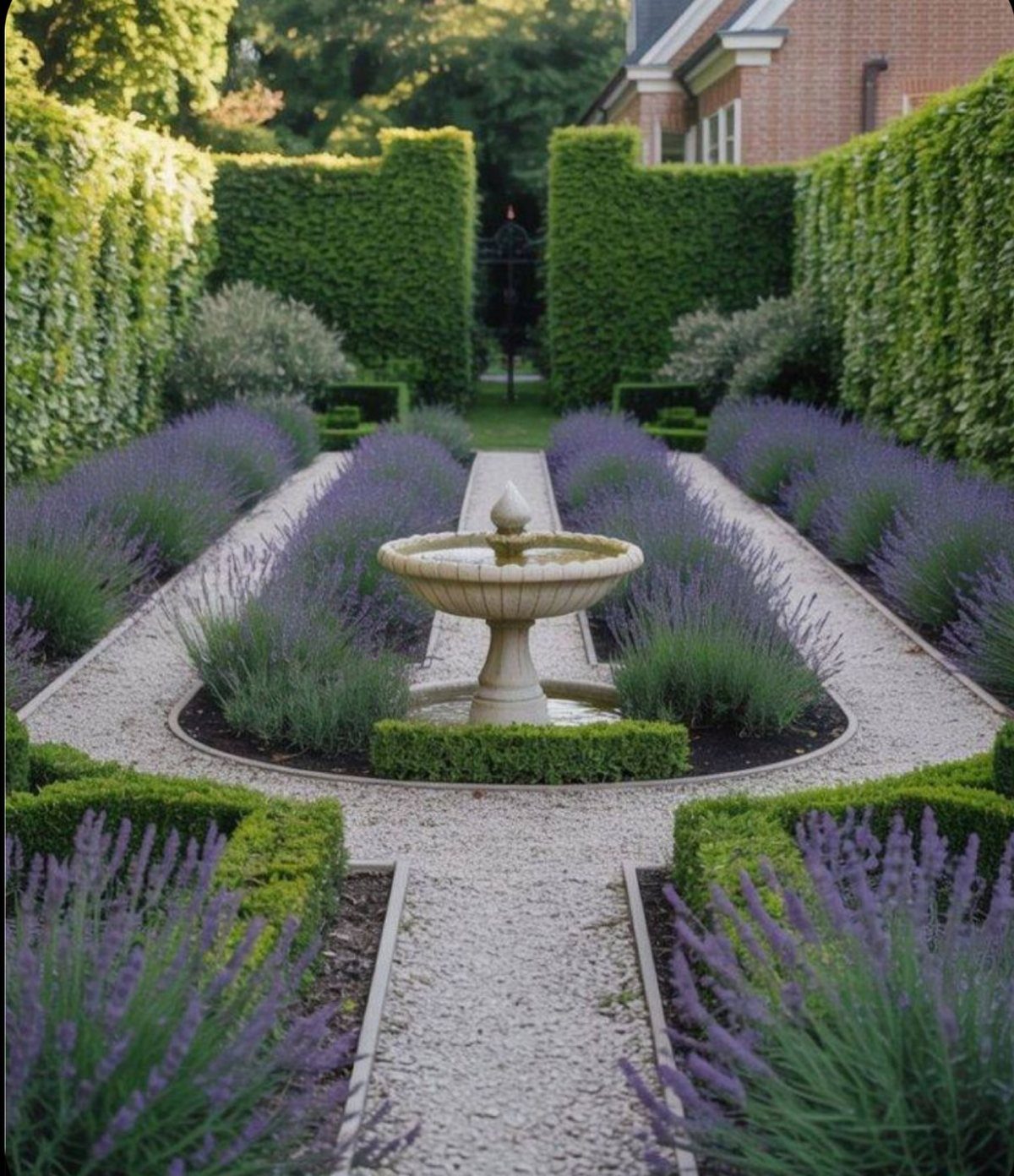
Lavender wants poor soil and full sun, so this path suits the side of the house that bakes for the better part of the day.
I would space the plants close enough to let them fill in over 2 seasons rather than buying double the stock to get instant coverage.
The boxwood inside the row is a formal touch I would skip unless your whole garden leans that way; lavender alone, with gravel right up to the stems, reads more cottage to me.
I cut mine back by a third after the first bloom finishes, staying clear of the old wood so the plant stays compact without risking damage.
5. Mown Grass Path
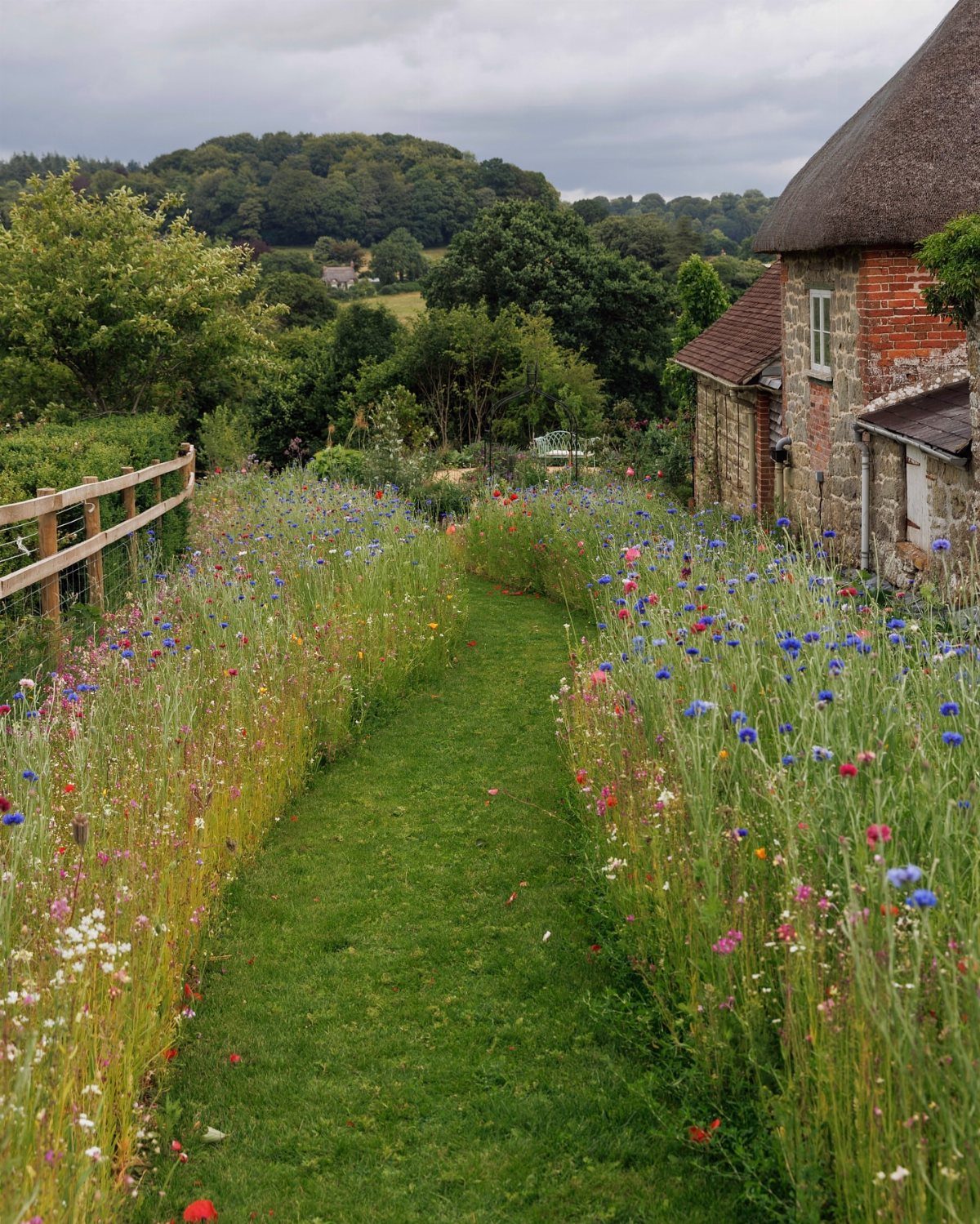
A grass path through wildflowers needs mowing more often than gravel asks in peak season, but it absorbs foot traffic without the crunch.
I would use a walk-behind reel mower for the cleanest cut and the narrowest swath; rotary blades tear the turf and throw clippings into the flower beds.
The wildflowers at the sides must be species that finish blooming before the first hay cut in June, or you mow your color away.
This suits ground that drains well and gets solid sun for more than half the day. Shade makes the path thin and weedy fast.
6. Creeping Thyme Between Flat Stones
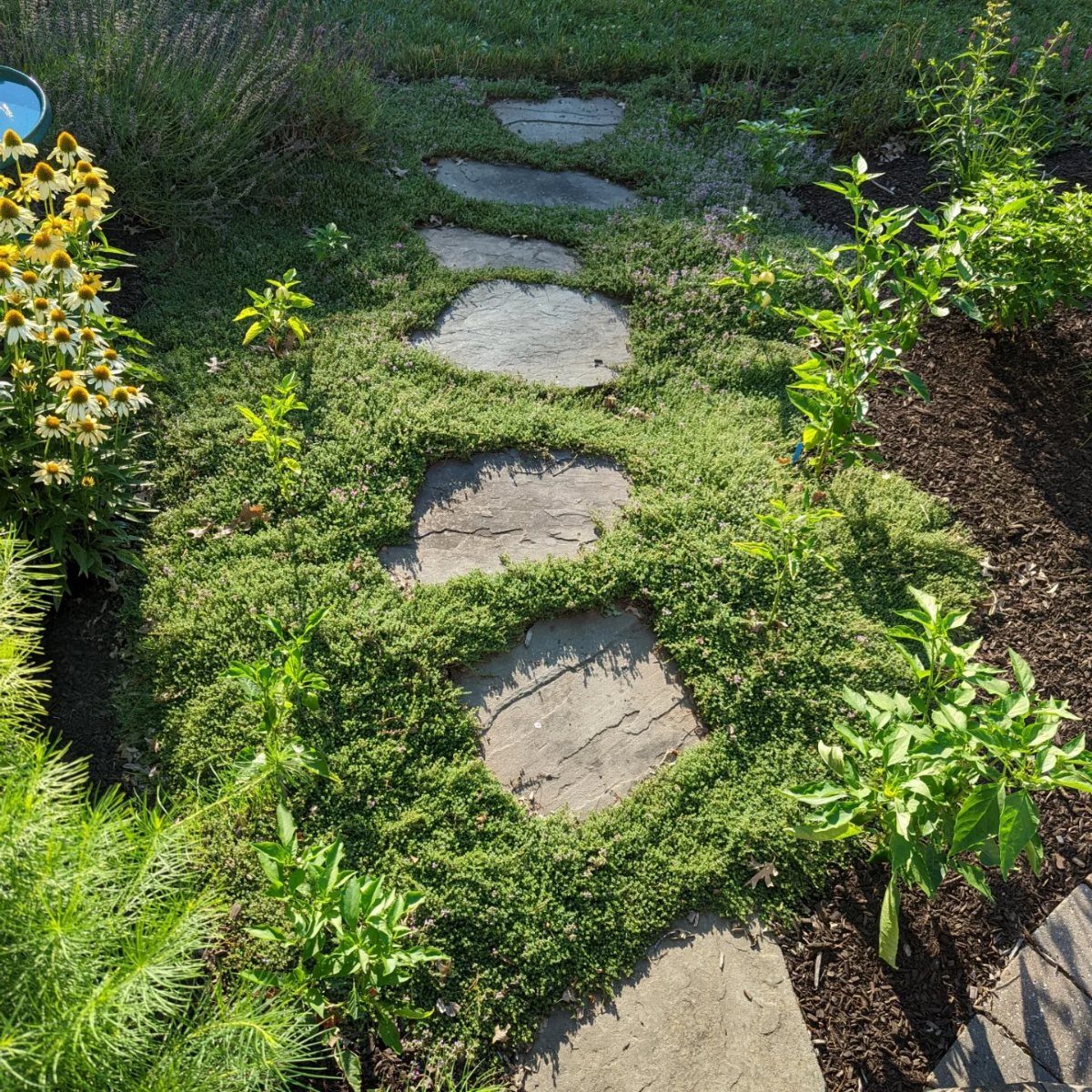
Creeping thyme takes light foot traffic and smells like summer when bruised, the main reason to choose a living path over dead material.
I would plant plugs close enough together in spring and stay off the path while the roots spread; the wait is hard but the fill-in is faster than seed.
The flat stones need to sit half an inch above the finished level so the thyme can creep over their edges without creating a trip hazard.
In zones colder than 6b, I would switch to woolly thyme, which shrugs off winter wet better than the common varieties.
Top-dress with compost once a year and do not fertilize; lush growth flops and rots.
7. Reclaimed Stone Slab Path
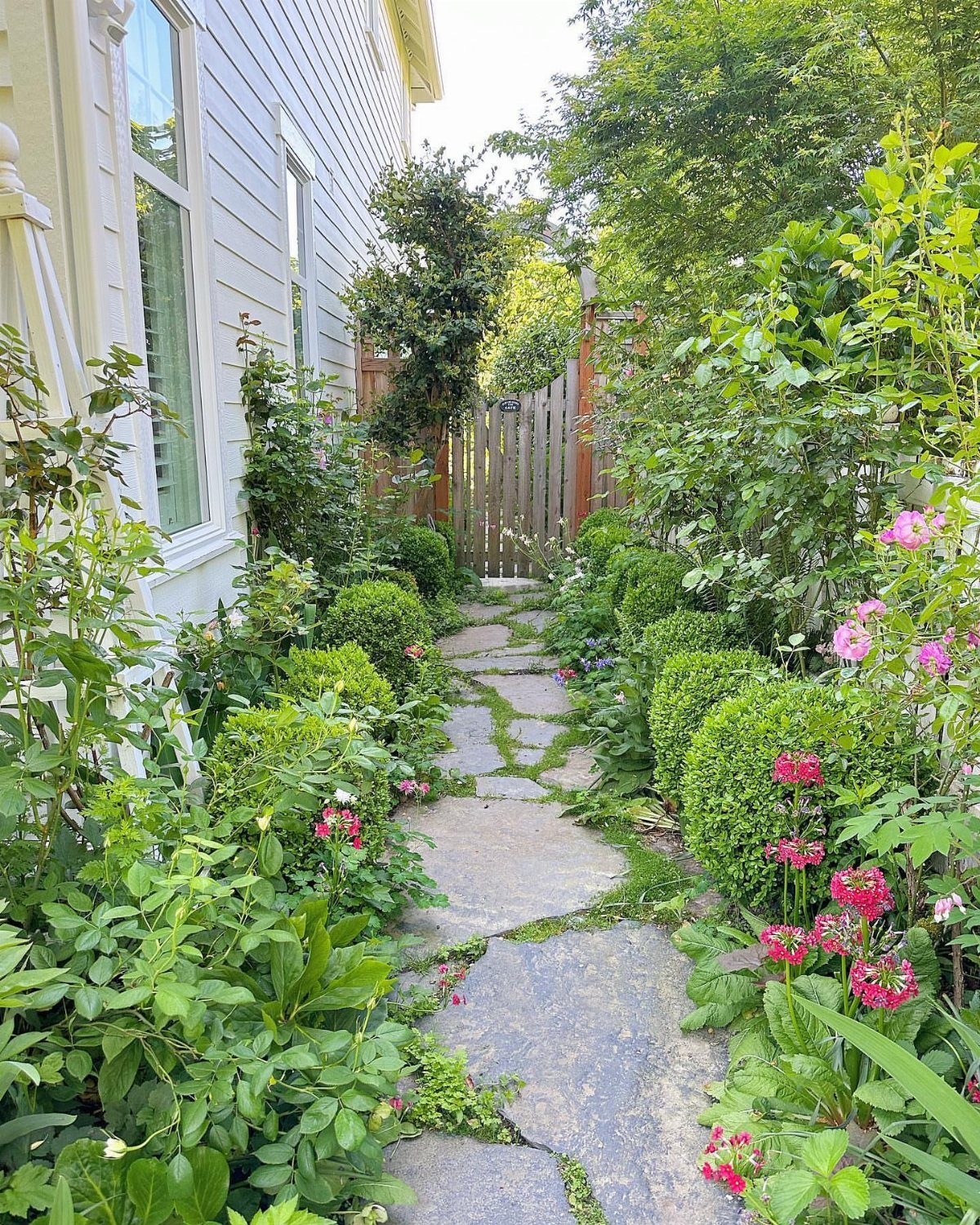
Stone slabs set irregularly let ground-cover plants colonize the gaps, so the path looks established before it is.
I would hunt salvage yards and demolition sales for thick pieces; anything that feels thin in the hand cracks under frost.
Set them on a bed of compacted screenings rather than mortar, so you can lift and relevel after the first winter.
Pachysandra or mazus fills the cracks fastest in shade; chamomile or thyme where sun lasts past noon. The uneven surface means this path is not the one you sprint down with a wheelbarrow full of soil.
8. Winding Cobblestone Pathway
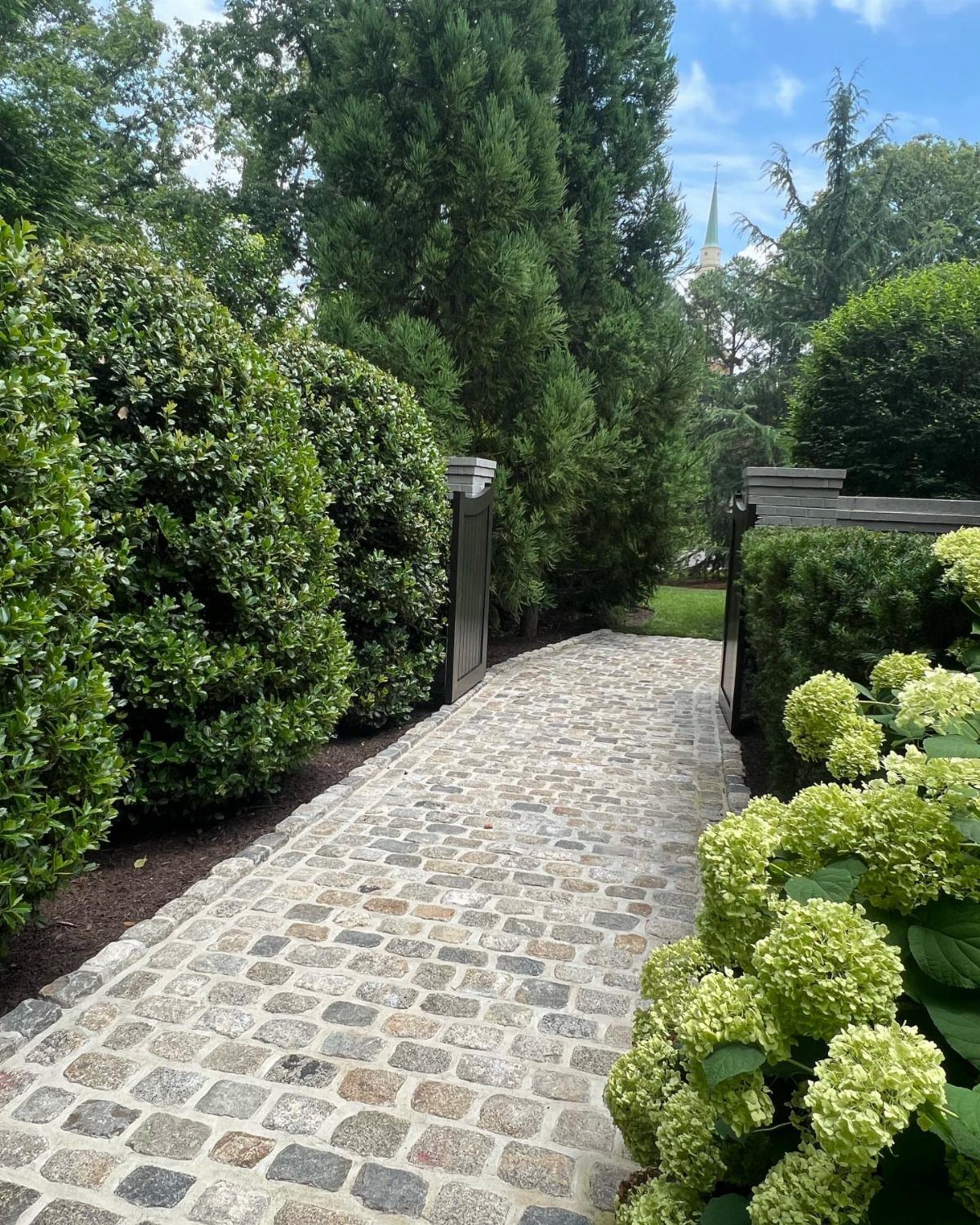
Small square cobblestones force a slower pace than slabs, which suits a garden meant for looking at, not marching through.
The curve is set stone by stone, so it can follow a contour no preordered kit allows.
I would lay them dry on a sand bed and sweep in granite dust or paver sand to lock them; mortar is permanent and unforgiving if the ground shifts.
Hydrangeas at the sides are hungry and thirsty, so root-run space matters. Give the bed generous space on each side or the stone edge will be lifting soon from root pressure.
9. Rose Arbor Covered Stone Path
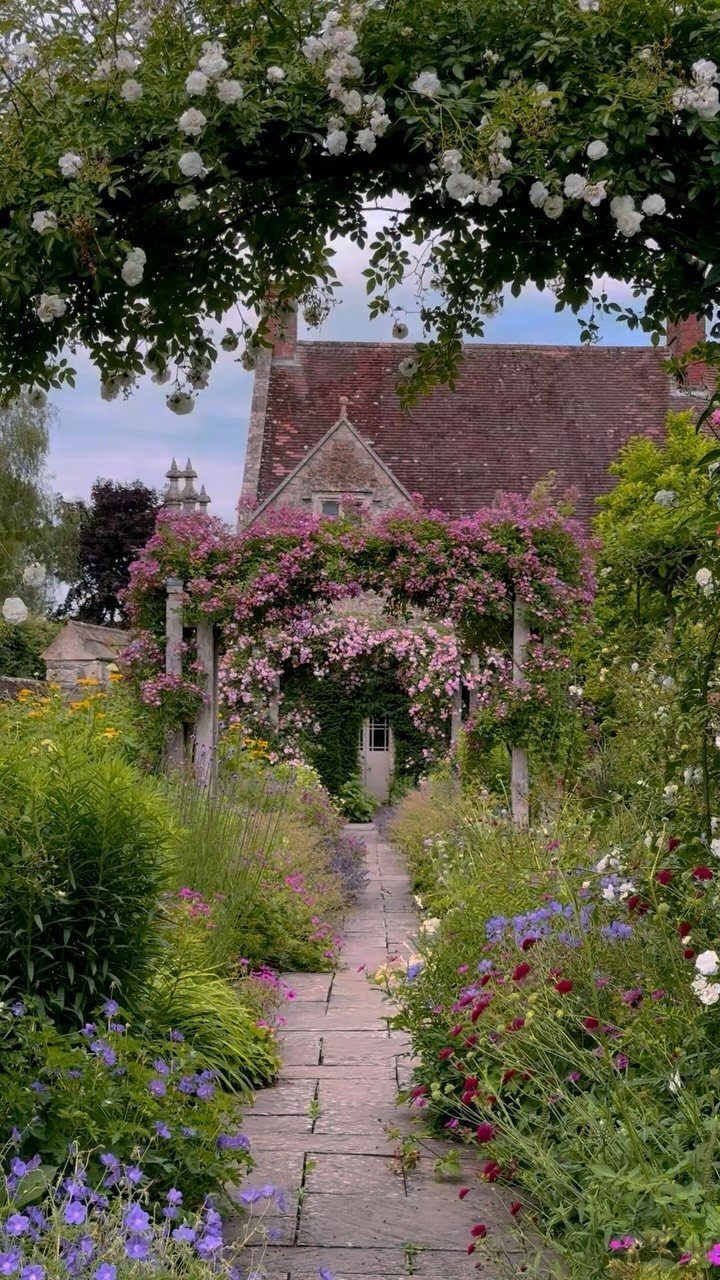
Climbing roses need something to climb, and an arbor over stone turns a straight walk into a room you pass through.
The stone base must stay sweepable; fallen petals mat and rot if they sit. Brush them clear weekly in June or the surface grows slick.
10. Mixed Gravel and Stone Slabs
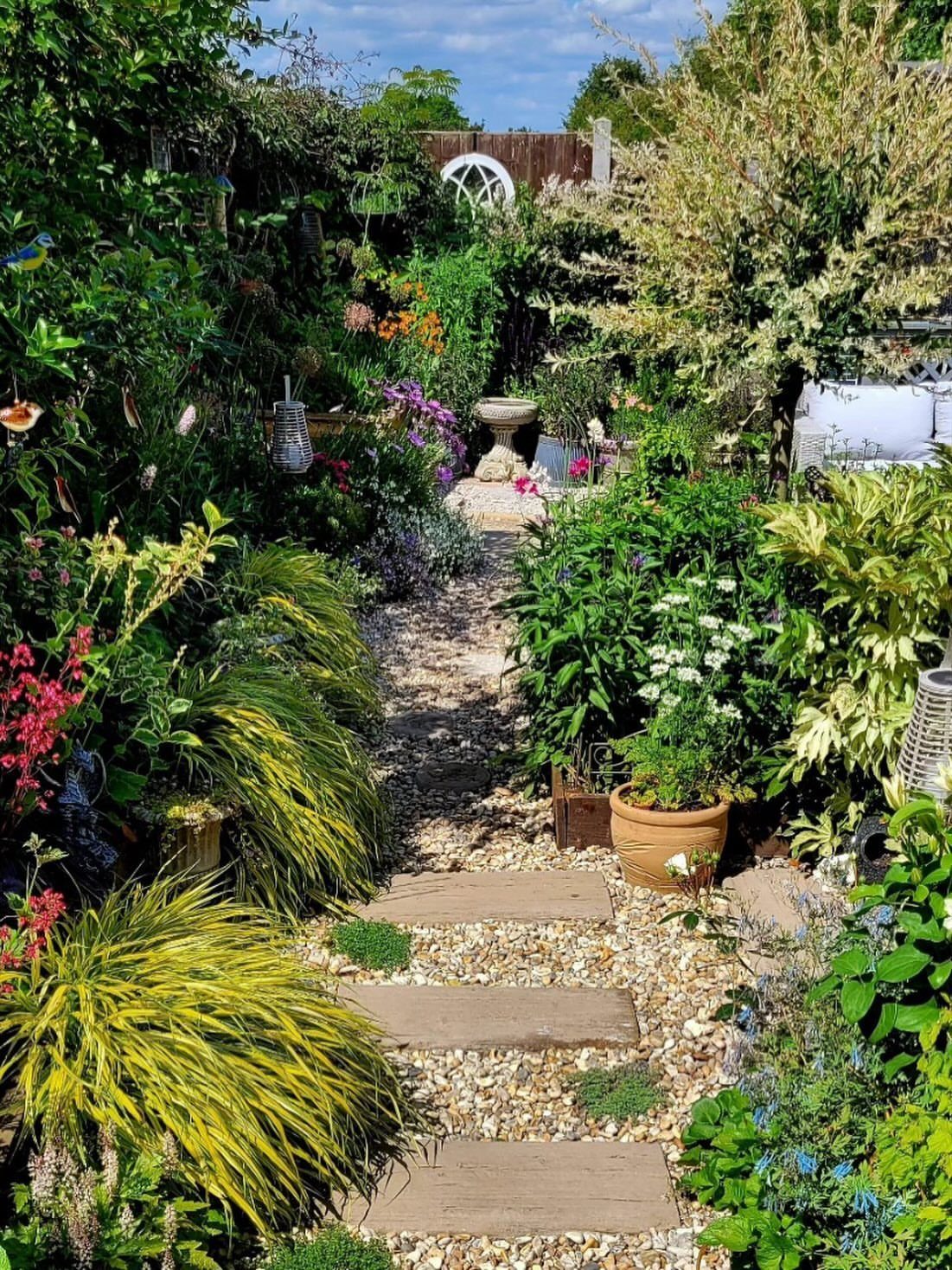
Stone slabs every few paces keep your feet dry after rain, while gravel between them handles the drainage you cannot see.
I would set the slabs a natural stride apart, center to center; closer and you mince, farther and you lunge. Lock the gravel with fines mixed in, not loose pea gravel that slides under the slab corners.
The birdbath at center or end gives the eye a destination, though a pot or painted obelisk works the same way if water is not your project this year.
Benefits of Garden Paths
A path that keeps feet dry and off the plants is the difference between a garden people walk through and one they avoid.
Well-designed routes do the heavy organizing: they split beds from seating areas and steer traffic away from mud without a word of explanation.
Safety sits on the surface itself. Uneven ground, wet soil, and roots are hazards a level path solves outright; the same stone or gravel that looks right hides the slope underfoot.
Where grass gets pounded bare, a path needs no mowing and no replanting, and the time you would spend fixing worn turf goes to something else.
Seasonal color works harder when the walk leads the eye to it. A straight line to a bench in May becomes a framed view of asters in October if the path stays put.
Factors for Path Design
Start with the width. Curves follow a hose laid on the ground for a day before you cut anything; a radius that looks right in morning light may read wrong by afternoon.
Materials matter for what grows beside them. Dark stone absorbs heat and dries soil at the edge; light gravel reflects it.
Reclaimed brick, limestone chips, and irregular slabs all read cottage because they were never meant to match; concrete pavers and slate belong to a different garden entirely.
Focal points earn their spot. Root runs are the factor most people miss: hungry shrubs and climbers need space belowground, or they will lift the edge stone you laid flat.
Cottage Garden Characteristics
Flowers, herbs, and small shrubs live in the same bed by design; the layered look comes from cramming them close enough that no soil shows by midsummer.
Climbing plants soften vertical lines, and curved routes replace every straight line the space would otherwise demand.
The style runs informal, but that is not the same as accidental.
Plants grow closely together on purpose, and the full, almost overstuffed effect is what creates the cozy atmosphere readers of this site look for. Pollinators arrive for the mix of bloom times and the herbs tucked between stones.
This works at the scale of a front yard or a back corner; the principles do not change with the acreage. What changes is how many layers you can fit before the path disappears entirely.
Cottage gardens are known for their informal, lush beauty. The path here should feel inviting and slightly overgrown.
Frequently Asked Questions
What is a cottage garden?
A cottage garden layers flowers, herbs, and small shrubs into one bed so no soil shows by midsummer. Curved paths replace straight lines, and climbers soften fences and walls.
The look seems informal, but the density is deliberate: plants grow close on purpose to create the full, overstuffed atmosphere that draws pollinators and gives the style its cozy feel.
How do you design a cottage garden path?
Before you cut anything, lay a garden hose along the ground and walk it for a day; you’ll know if the curve feels right when your feet tell you. width: choose something your arms and a wheelbarrow can live with.
After that, material sorts itself: reclaimed brick, crushed limestone, or irregular slabs all read as cottage because none of them started out matching.
Leave generous root-run space beside hungry shrubs, and mark focal points like a birdbath or bench so the walk has a destination.





