
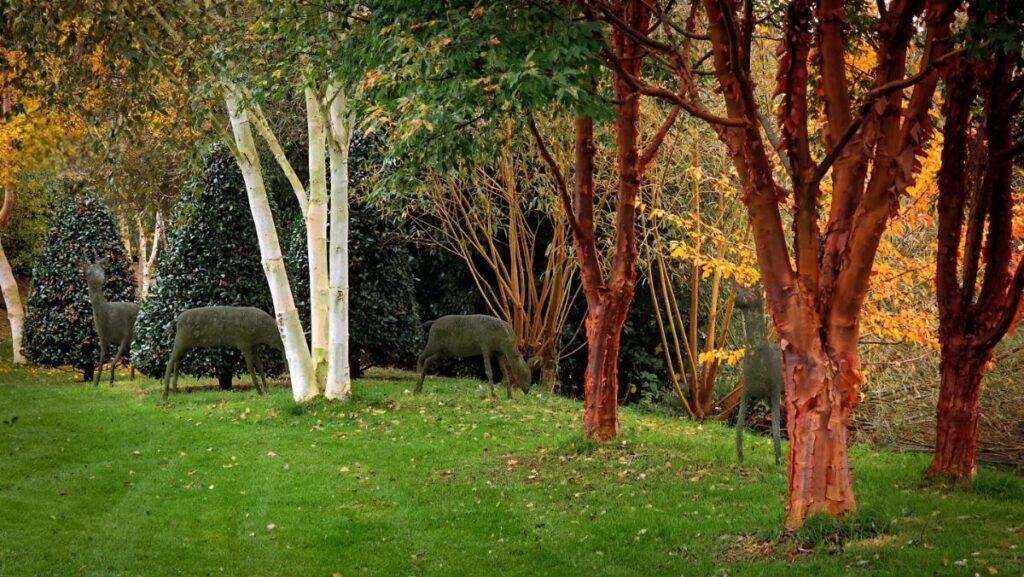
These 8 ideas run from a hundred crocus bulbs you push in with a thumb to a paperbark maple that asks a decade of patience, and the one that fits your garden is the one that matches real hours in late January rather than imagined ones in September.
I choose witch hazel where old roots already hold the ground, red twig dogwood only where I will cut stems back hard each spring, and hellebores on a bank where I can look up into the nodding flowers.
[link-whisper-related-posts]1. Paperbark Maple
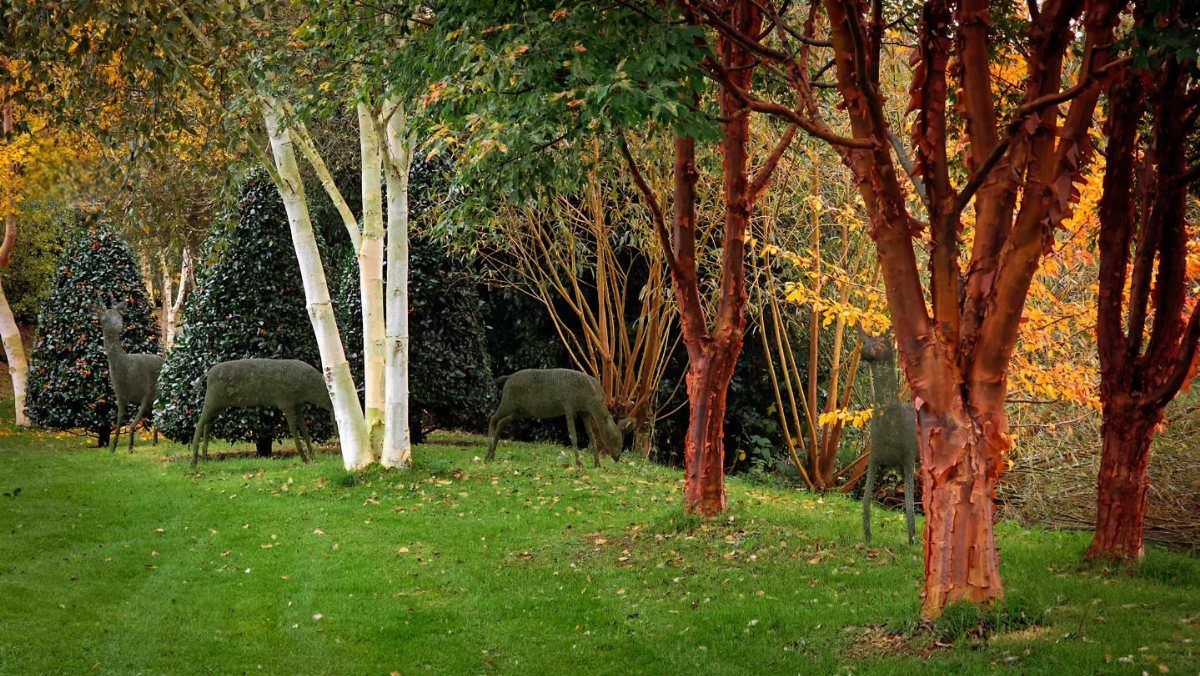
Acer griseum earns its place in a small garden by doing its best work when every other tree has gone quiet.
The bark peels in thin, papery curls of cinnamon and copper, catching low winter light against snow or gray sky.
I plant it where I walk past in winter, since summer leaves hide the show.
It grows slowly enough that a rental you might leave still gets something from it. Give it afternoon shade in hot zones; the bark color deepens with a little stress, but drought turns it dull rather than bright.
2. Witch Hazel
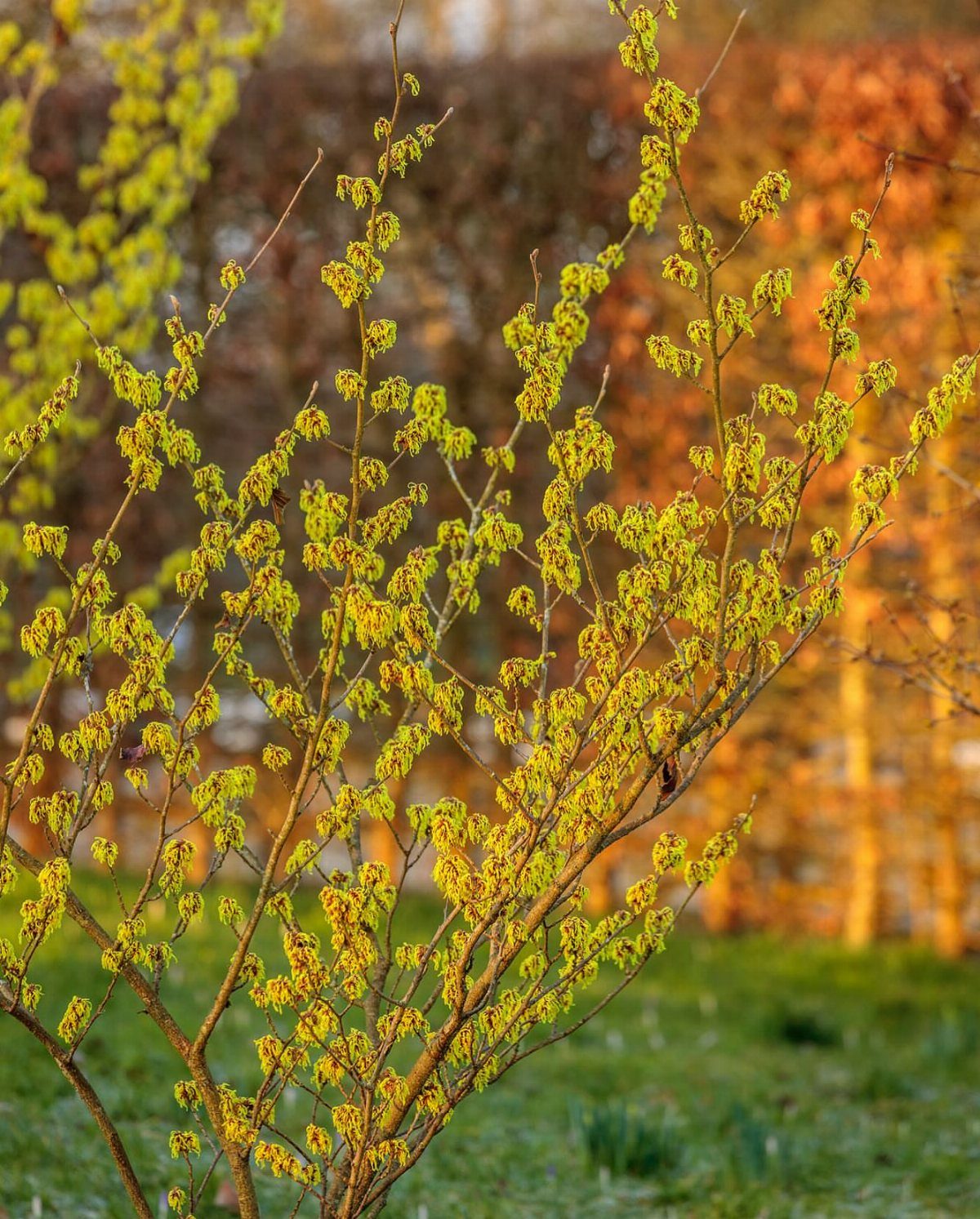
Hamamelis x intermedia pushes out those ribbon-petalled flowers on bare wood from January into March, when I am most desperate for color that is not brown.
The scent carries on cold, still air; plant it near a path you use in winter, not buried in a back bed.
‘Arnold Promise’ and ‘Diane’ are the varieties I see most, yellow to copper-red depending on the cultivar.
It wants sun to bloom well and handles the root competition of old trees better than most shrubs, a useful fact in established yards.
Summer foliage is unremarkable, so I place it where late perennials or grasses take over the view.
3. Red Twig Dogwood
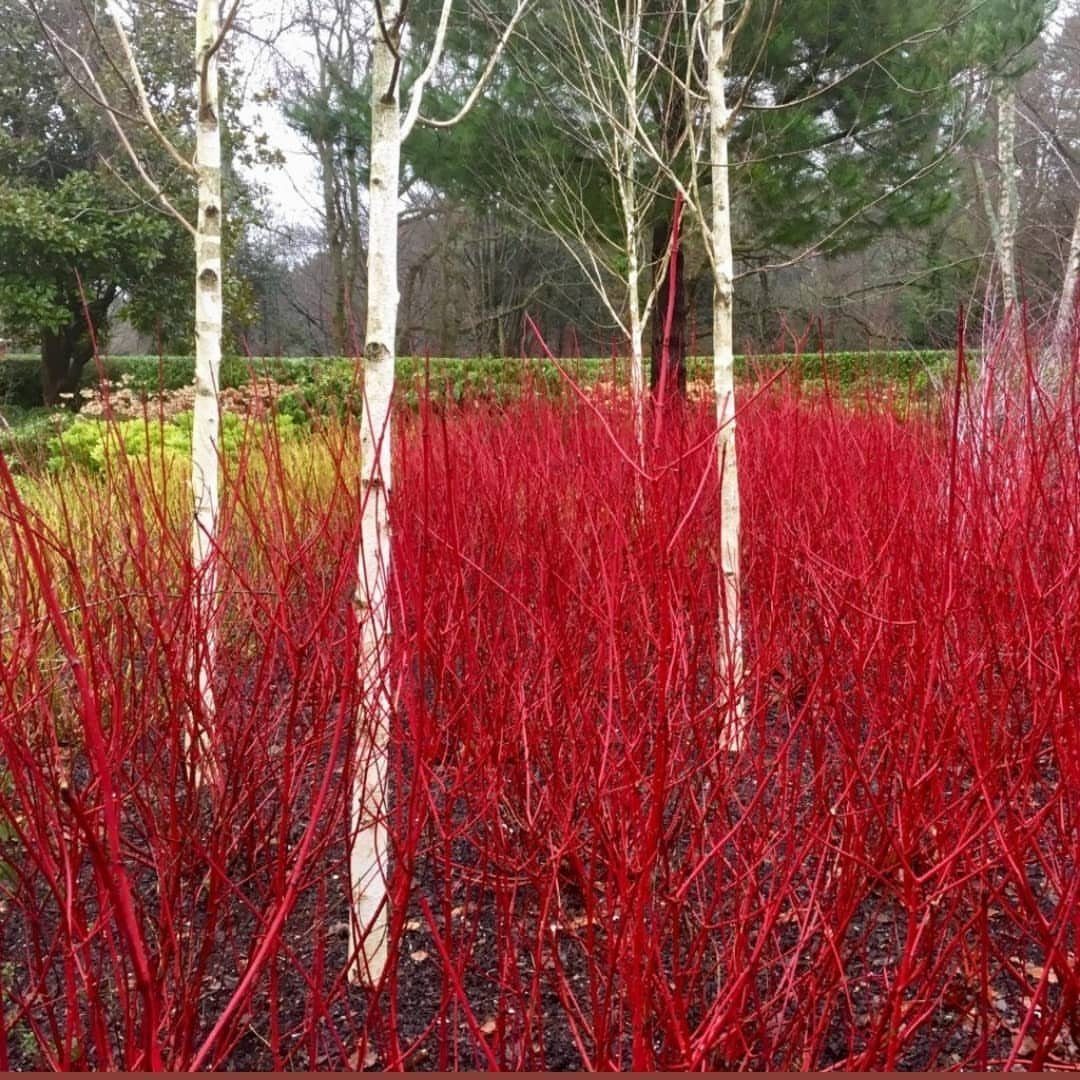
Cornus sericea ‘Cardinal’ or ‘Arctic Fire’ turns branches brilliant red through winter, though the color only holds on younger wood.
That is the maintenance: cut a third of the oldest stems to the ground each spring, or the whole shrub fades to muddy green-brown.
I use it massed in groups of five or more; single plants read as scattered sticks.
It tolerates wet clay where other shrubs rot, and full sun gives the densest color. Against white birch bark or snow, the red acts like a paint stroke I did not have to apply myself.
4. Winterberry Hollies
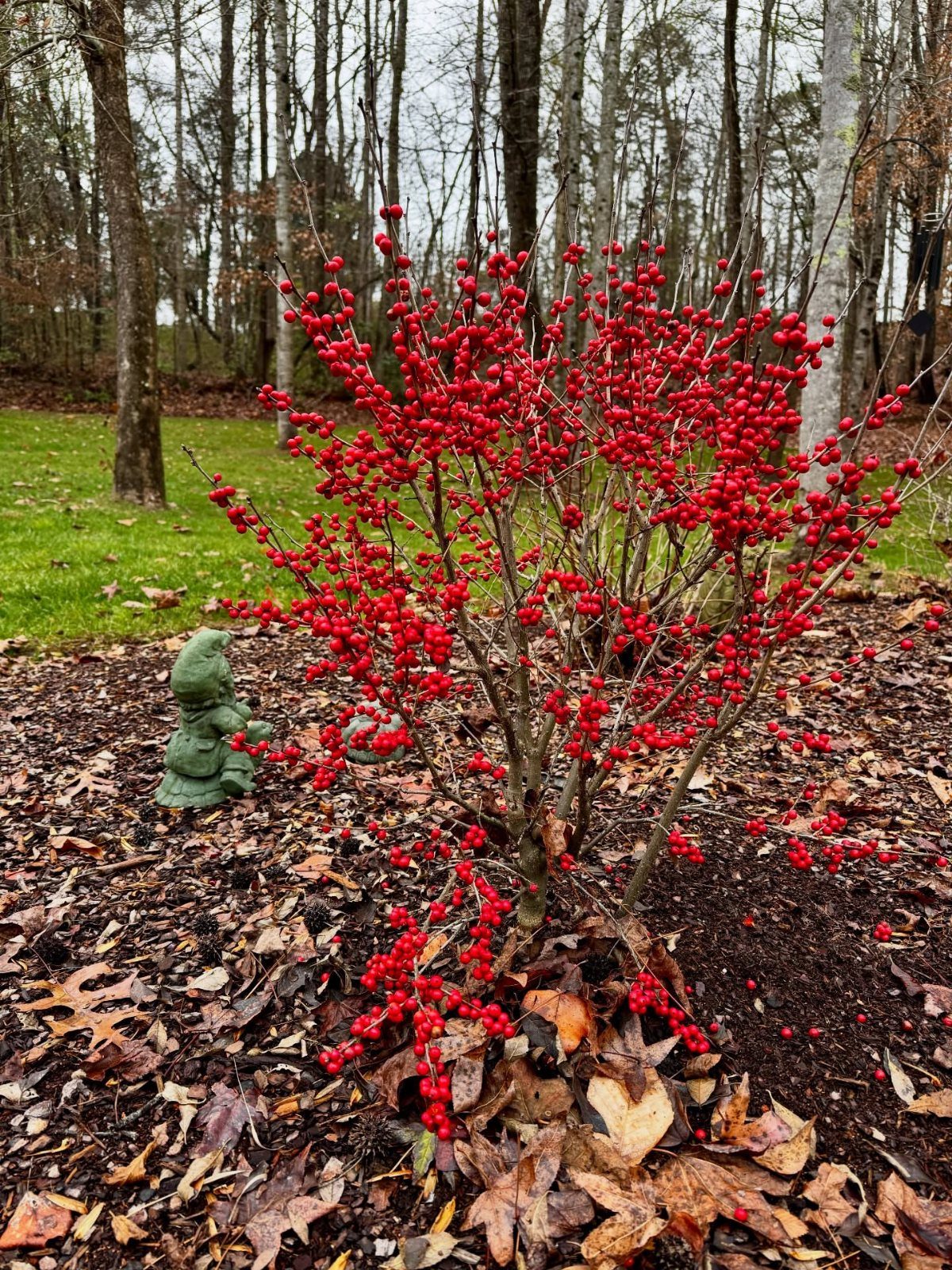
Ilex verticillata drops its leaves to leave the berries fully exposed, a trick the evergreen hollies cannot match. The berries last until birds finish them, often late winter, and the color reads across a whole yard even on gray days.
You need a male pollinator, one ‘Jim Dandy’ or ‘Southern Gentleman’; place it close enough to work.
Without this, you get the green leaves but no red show. ‘Winter Red’ and ‘Berry Heavy’ fruit reliably; ‘Sparkleberry’ grows taller than the rest. I prune in early spring since next year’s berries form on new wood.
5. Hellebores
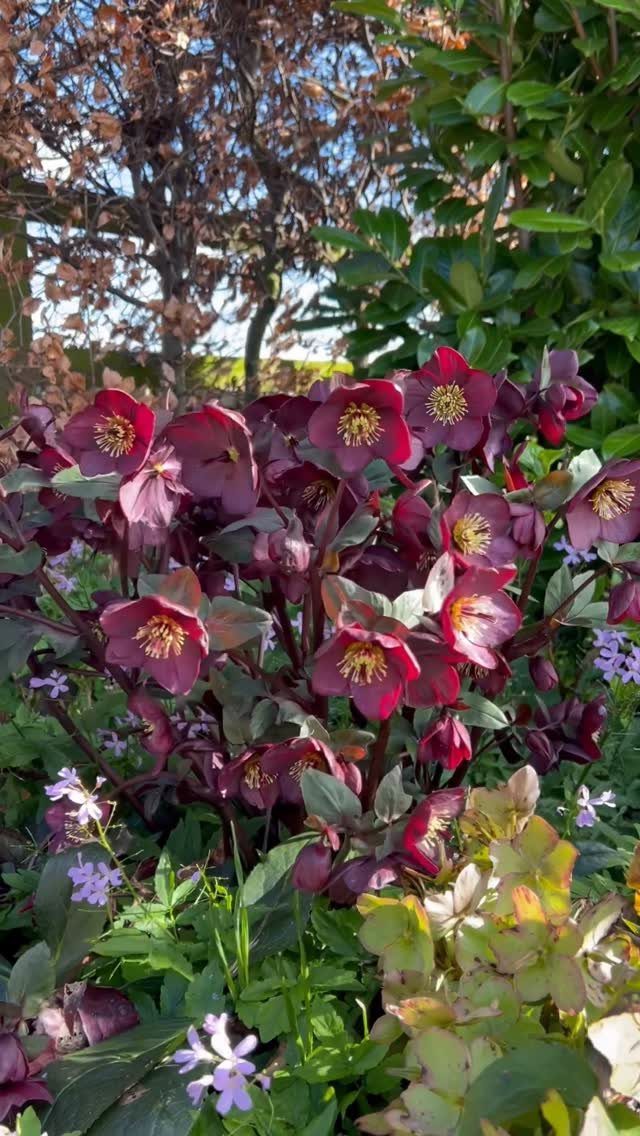
Helleborus orientalis opens in my garden by late February, sometimes through snow, with flowers that face downward so I plant them where I look up into them: on a bank, at a wall’s edge, in raised beds.
The colors run from white through deep purple, often with spotting inside the petals.
They sulk if divided or moved, so I choose the spot once and leave them.
Dappled shade suits them; too much sun bleaches the flowers and burns the evergreen leaves. I cut old foliage to the ground in January before buds rise; it takes 10 minutes a clump and prevents disease.
6. Bulbs
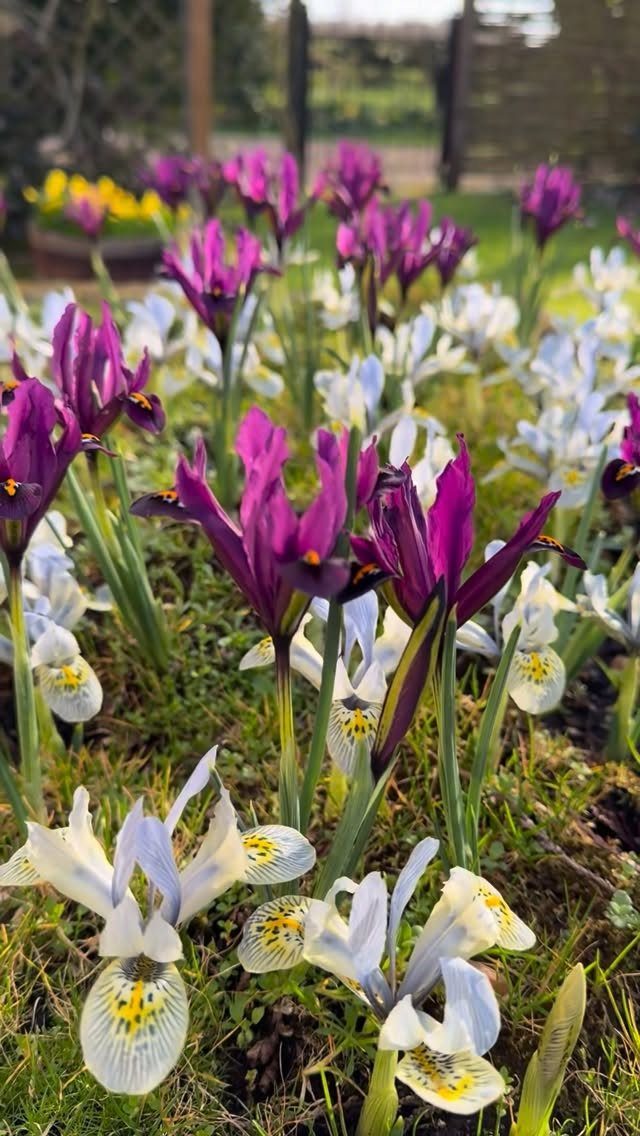
Crocus tommasinianus and the small Iris reticulata break ground in late winter, weeks before daffodils.
I push them into lawn edges or gravel where later plants will hide the dying foliage; the dwarf iris in particular needs drainage sharp enough that standing water rots the bulbs.
I naturalize crocus by the hundred in turf I do not mow until midsummer; the grass hides the yellowing leaves, and the early purple spreads like a ground cover in time.
7. Winter Jasmine
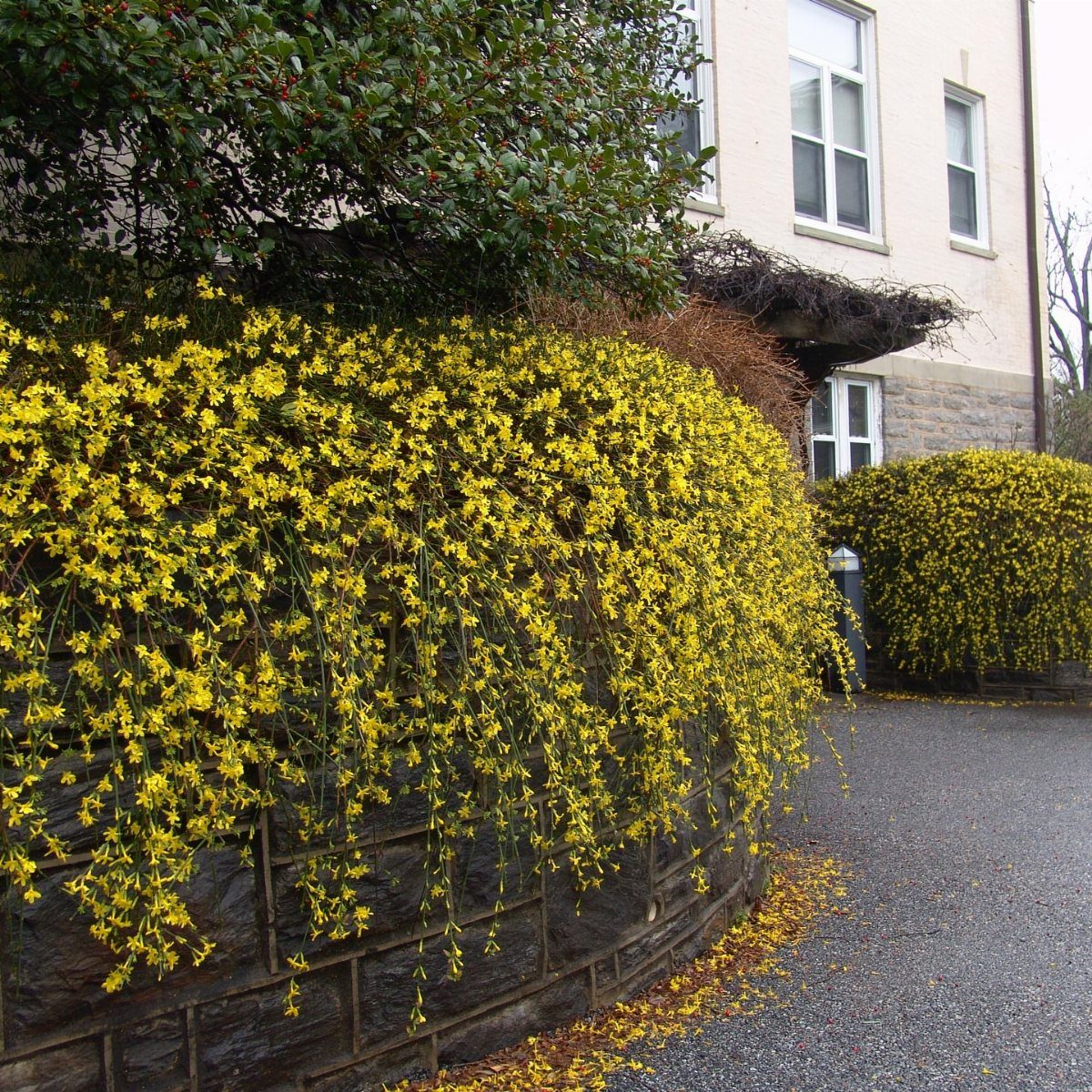
Jasminum nudiflorum sends out those yellow blooms on bare green stems from January through March, sprawling rather than climbing unless you tie it.
I grow it where stems can spill down a wall or slope, since the flowers sit on the prior year’s growth and I want to see them from below.
Hard pruning after bloom keeps it compact; left alone it stretches tall and thins at the base, so if you want a dense mound you will need to stay on it.
It takes poor soil and part shade, though sun gives more flowers. Not fragrant, which surprises people who know the summer jasmines.
8. Boxwood Shrubs for Winter Structure
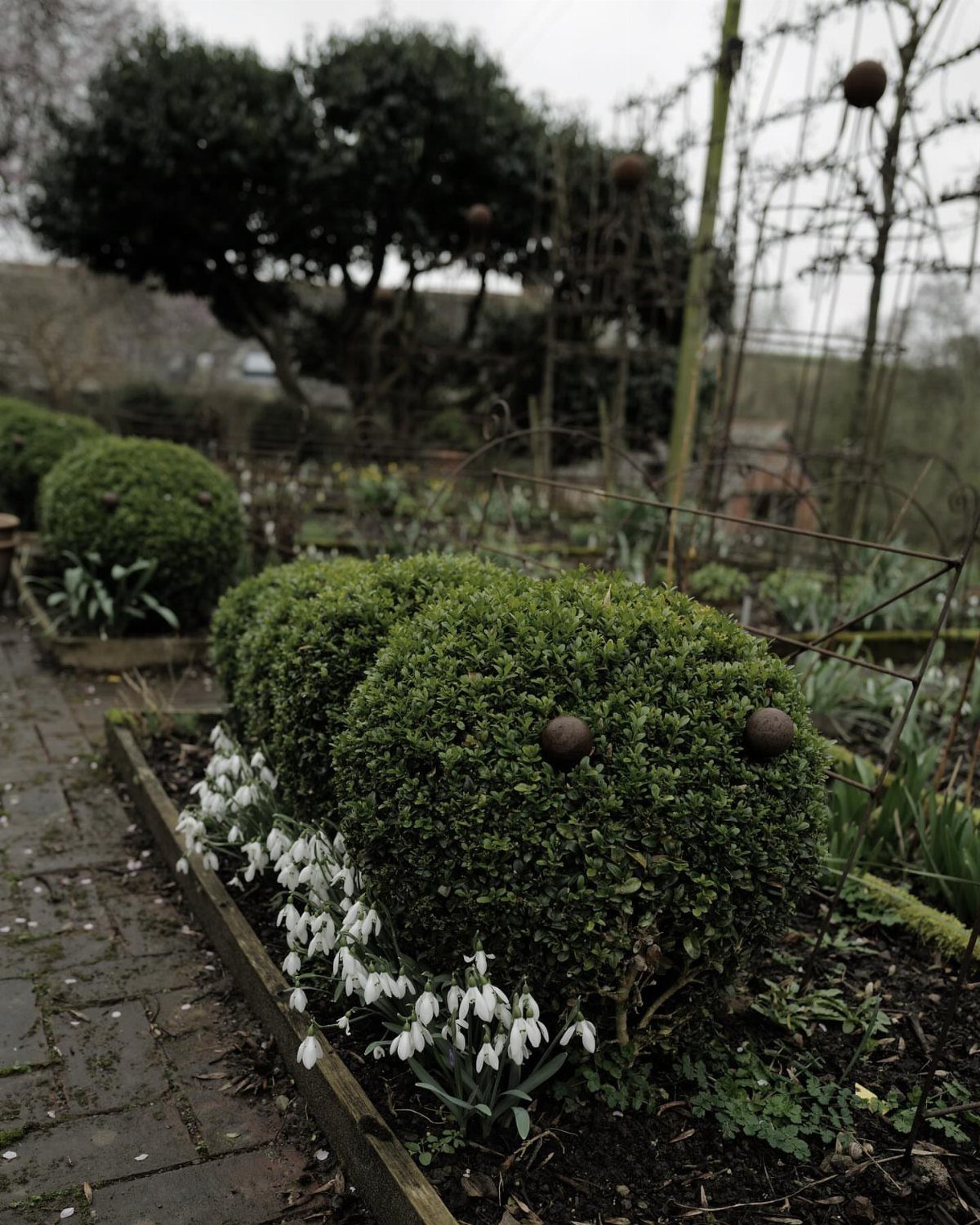
Buxus sempervirens holds shape through snow and brown surroundings, the green reading as design rather than growth when everything else has dropped. I clip mine in late spring, then lightly in August; late cuts push tender shoots that winter burn.
Small-leaved varieties like ‘Justin Brouwers’ or ‘Green Velvet’ need less frequent shaping than the species.
I plant them in odd-numbered groups or as punctuation along a path, low enough that snow does not split them open. Drought turns them bronze and slow to recover, so I water before ground freeze in dry falls.
Choosing the Right Plants
Hardiness zones settle the question before anything else.
A plant that survives my winter may die in yours. I check the USDA zone for my address against the label on every tree and shrub, not just the bulb and perennial ones.
Evergreens give structure when snow sits heavy; deciduous species give the bark, berries, and branch color that read against it. I mix both, since either alone flattens the view by February.
Space decides form: columnar witch hazels fit narrow borders where a spreading dogwood would swallow the path. For balcony or rental patio, I keep to small bulbs in pots and dwarf boxwood that stays under 2 ft.
Time is the cost nobody lists.
Red twig dogwood wants an annual hard prune; hellebores ask for a quick cleanup in January before buds rise. I match the plant to the hours I actually have in late January, not the ones I imagine in September.
Caring for Winter Plants
Dry winter wind pulls water from soil and leaves alike.
I check pots and beds weekly with my finger; frozen surface means nothing if the root ball below is dust. Water before a hard freeze, not after, so roots enter cold with stored moisture.
Fertilizer waits.
Growth is slow or stopped; nutrients sit unused and can burn. I hold off until late February, when sap begins to rise and roots can take it in.
Pest patrol never stops.
Mice girdle stems under snow cover; voles tunnel through mulch. I walk the garden after every thaw, looking for chewed bark or disturbed soil, and set guards before damage spreads.
Prune on a mild day, never during a freeze window. Cut stems seal slowly in cold, and disease finds the opening.
I finish dogwood thinning before buds swell, hellebore cleanup by mid-January. Frost cloth drapes over pushed shoots if a late drop threatens; I keep it handy, not buried in the shed.
Planning for Winter Interest
I stand in the garden on a gray day in late November, before anything is planted, and look for where my eye stops on emptiness.
That spot needs something vertical: a trunk, a framework of branches, a clipped mound that holds its geometry against the ground plane.
Contrast carries the design. Smooth red dogwood stems against rough birch bark; papery maple curls against flat evergreen planes.
I work in threes: one texture dominant, two others in support. Too many and the garden turns to noise.
Color spreads or concentrates depending on distance.
Berries and twigs read from across a yard; hellebore faces demand to be walked up to. I place the bold masses where I see them from glass I look through in winter, the subtle details along paths I still use.
Containers fill gaps the planted design cannot reach: a step, a door, a corner of hardscape where soil is thin or absent.
Kale or snapped stems give quick color without the year-round commitment of a shrub. I treat them as movable punctuation, not the sentence itself.
Frequently Asked Questions
What plants provide winter interest?
Witch hazel, winterberry holly, hellebores, red twig dogwood, paperbark maple, and winter jasmine are the plants I rely on most.
3 reliable anchors for cold-month color: witch hazel’s yellow spidery blooms on bare twigs from January into March, winterberry shrubs that drop their leaves to leave fire-red berries hanging until late February, and hellebores pushing open cup-shaped flowers through snowmelt as early as February.
I mix these with evergreens like boxwood so the design holds structure after snow falls.
How can I create a winter garden?
I pick a bitter gray Saturday in late fall, stand at the garden’s edge, and mark every spot where my eye stops on dull mulch or flat lawn; those dead zones are where a vertical stem or persistent berry cluster would give the eye somewhere to rest.
Evergreens give the framework, deciduous plants give bark color and berries that read against snow, and containers fill steps or corners soil cannot reach.
The winter garden runs on texture rubbed against texture: coral-red dogwood stems laid beside chalk-white birch, or dried Japanese maple leaves curling like parchment ribbons over the flat rosettes of bergenia that stay green at forty below.
What are some tips for winter gardening?
I water thoroughly right before the ground locks up; a frozen crust on top means nothing if the soil around the roots is powder dry underneath, and a hydrated root ball handles deep cold far better than a thirsty one.
Fertilizer sits in the garage until the end of February, when living wood starts to draw sap and feeder roots wake enough to drink it in; anything earlier sits unused or washes through to nowhere.
Every thaw window gets me outside with clippers, checking young fruit trees for mouse-chewed bark at the base and patrolling for new vole tunnels in the mulch; I save hard pruning for days above freezing, since a fresh cut in true cold stays open too long and infection walks right in.





