
These ideas run from an afternoon’s mowing a grass path to the patience a knot garden demands as it fills in, and the thousand dollars a mature cypress avenue costs if you buy trees already tall.
The one that fits your yard depends on how much weekly tending you will actually do, not what you wish you would.
Dwarf boxwood ‘Suffruticosa’ sheared twice a summer keeps crisp lines on the smallest budget of this list, and that maintenance cost, measured in hours with your own shears, is the figure that decides every other choice here.
[link-whisper-related-posts]1. Knot Gardens
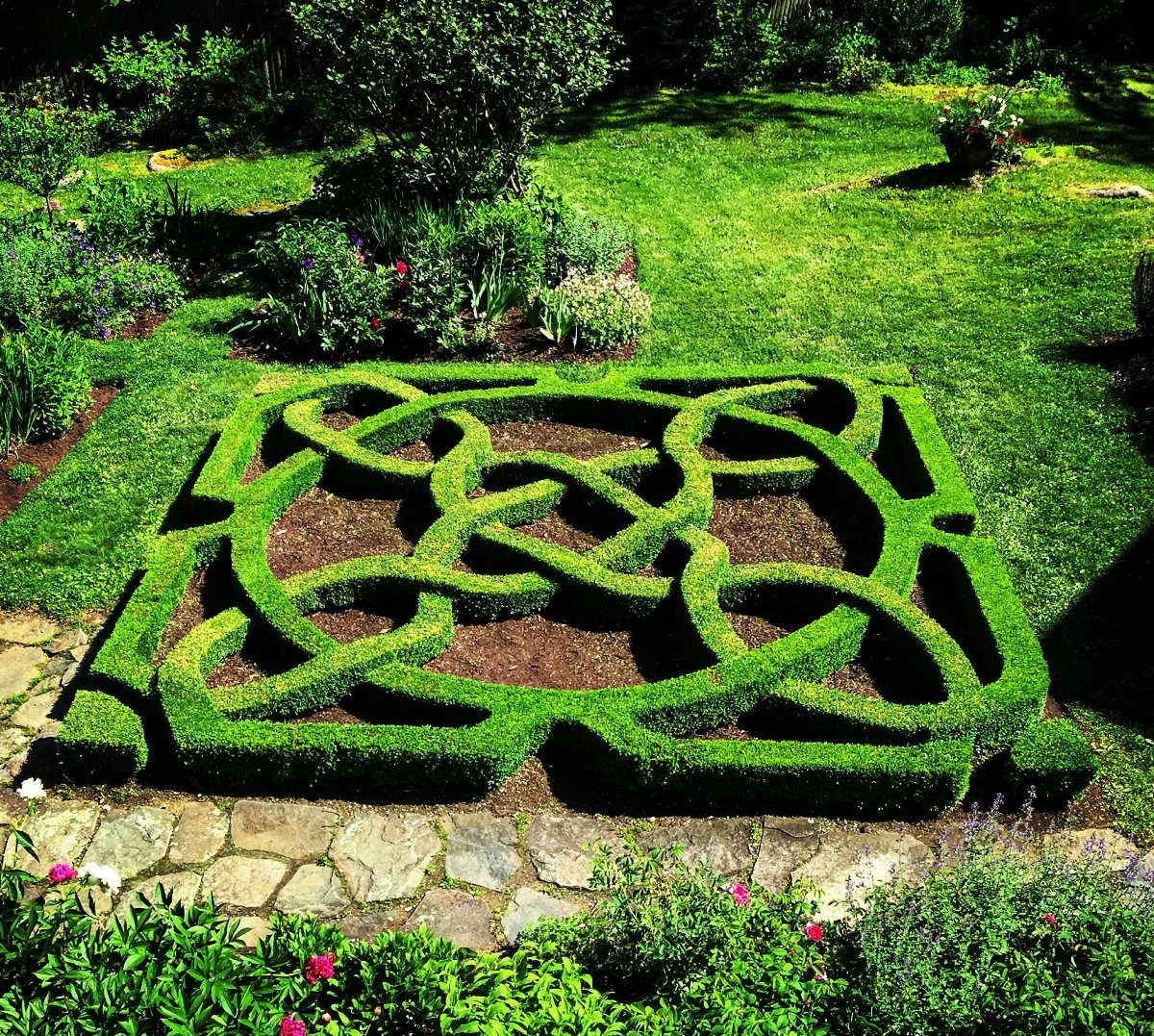
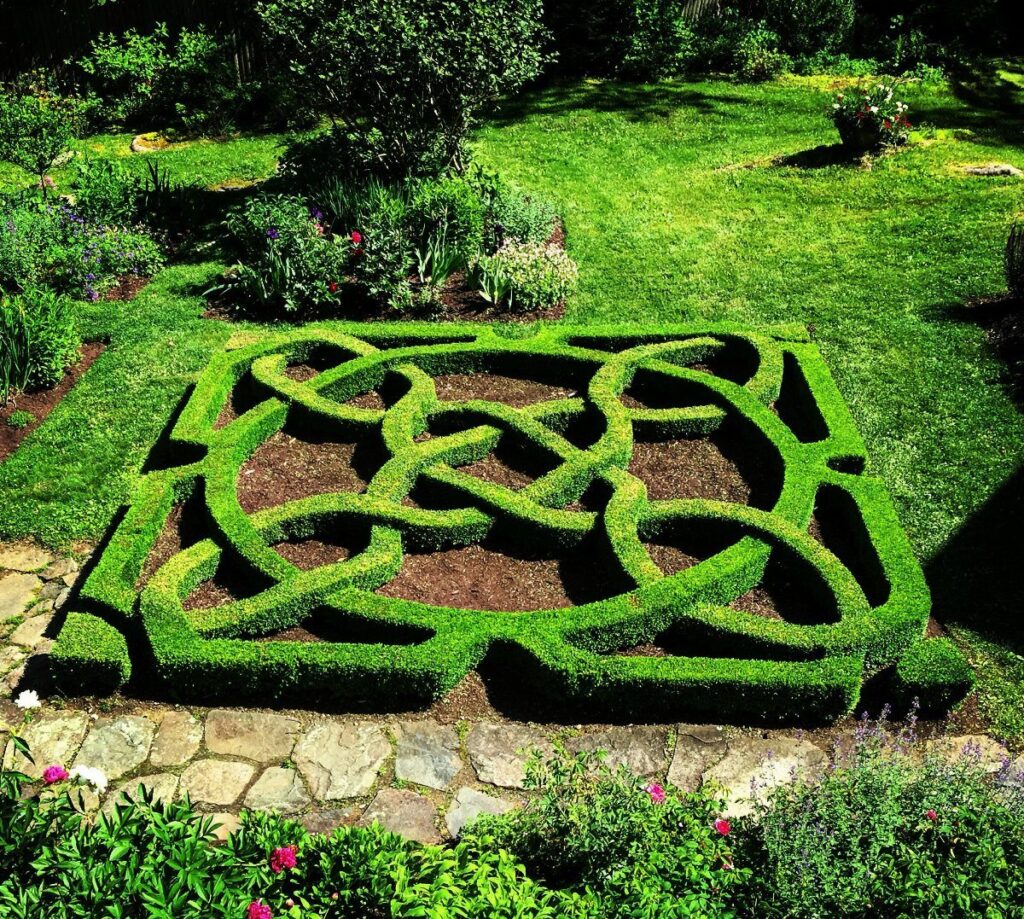
Low boxwood or lavender clipped into interlocking shapes reads as pattern from above and still invites you to walk the paths between them.
This suits a flat, sunny corner where you can spare a modest square of lawn. I would start with one simple circle or square; the Celtic interlace takes years of patience and shearing.
Dwarf boxwood ‘Suffruticosa’ stays low and fills in reliably once established. Shear twice a summer, in June and late August, and the lines stay crisp enough to satisfy even a formal eye on a real budget.
Hedges you shear yourself save the cost of a contractor and only take your time. Hedges this low need no contractor, but they need your shears several hours each season.
2. Use of Hedges
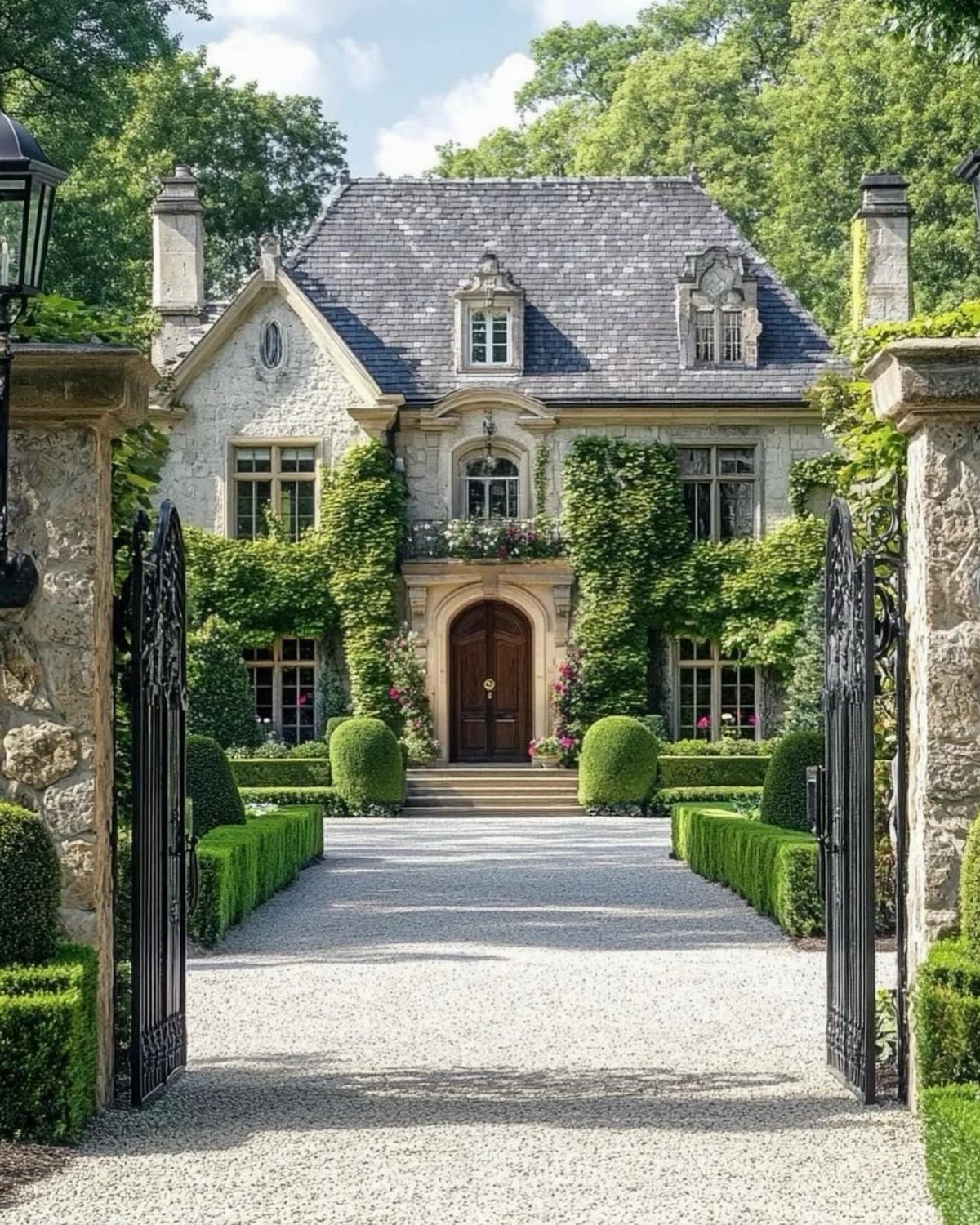
Hedges do the work of walls without the masonry bill. A clipped yew or privet border turns a driveway into an arrival, frames a view, or hides the vegetable patch from the terrace where you sit.
I like hornbeam where winters drop below zero; it holds dried leaves through winter for a rusty screen that still blocks sightlines. Yew costs more up front and moves slower, yet tolerates deep shade and needs only 2 cuts.
3. Grand Tree-lined Paths
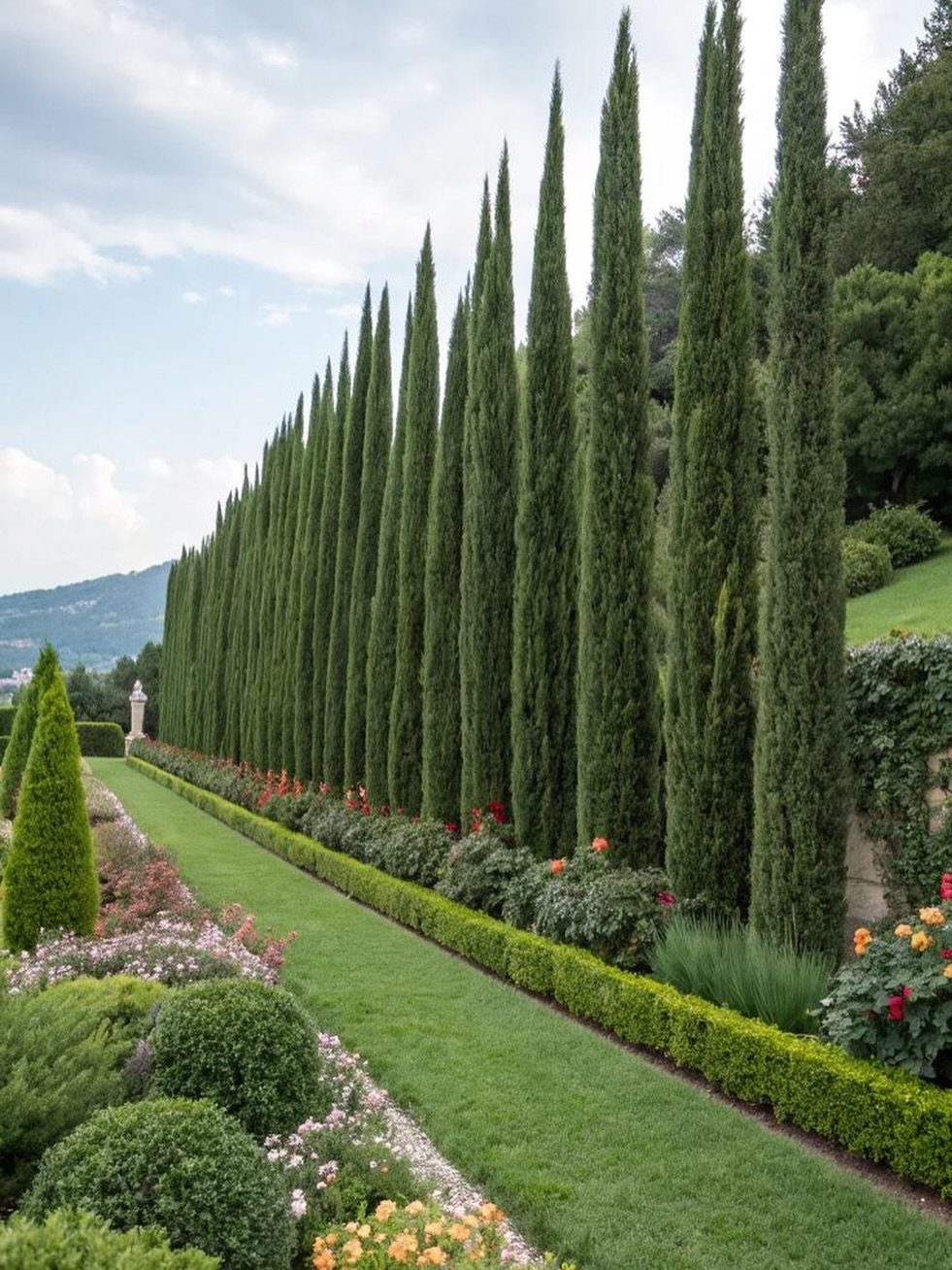
Columnar Italian cypress or narrow ‘Skyrocket’ juniper give a path its spine; plant them on close centers and the vertical lines pull your eye toward whatever sits at the end.
I would underplant with low boxwood or germander to catch the eye at knee height and keep the scale from reading like a corridor.
The path itself wants compacted gravel or mown grass wide enough to read as lawn; anything narrower feels like a sidewalk, anything wider and the trees look lost.
Cost runs higher per tree at maturity size, or less for smaller stock and several years’ wait.
4. Focal Points
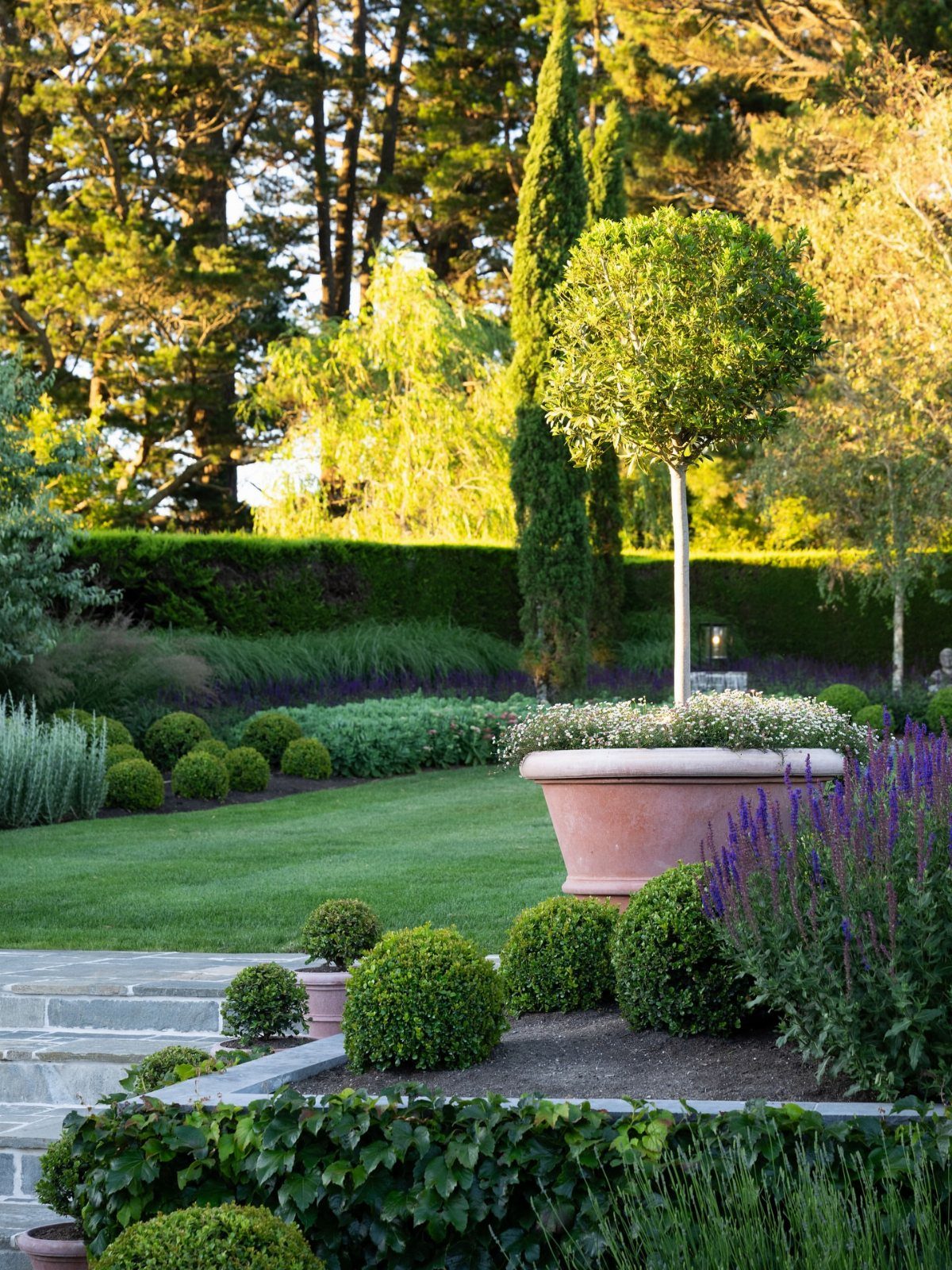
Every garden needs one place the eye rests. A terracotta urn on a plinth, a steel obelisk, or a single standard rose do the job without the fountain’s plumbing bill.
I place mine where paths meet or where a window frames it from inside.
A terracotta urn of modest size runs more than you’d guess; fill it with a clipped boxwood ball or a single ‘Iceberg’ rose standard you train yourself over 2 seasons.
Move it every few years if the surrounding plants grow up to compete. A focal point that hides is a focal point wasted.
5. Water Features
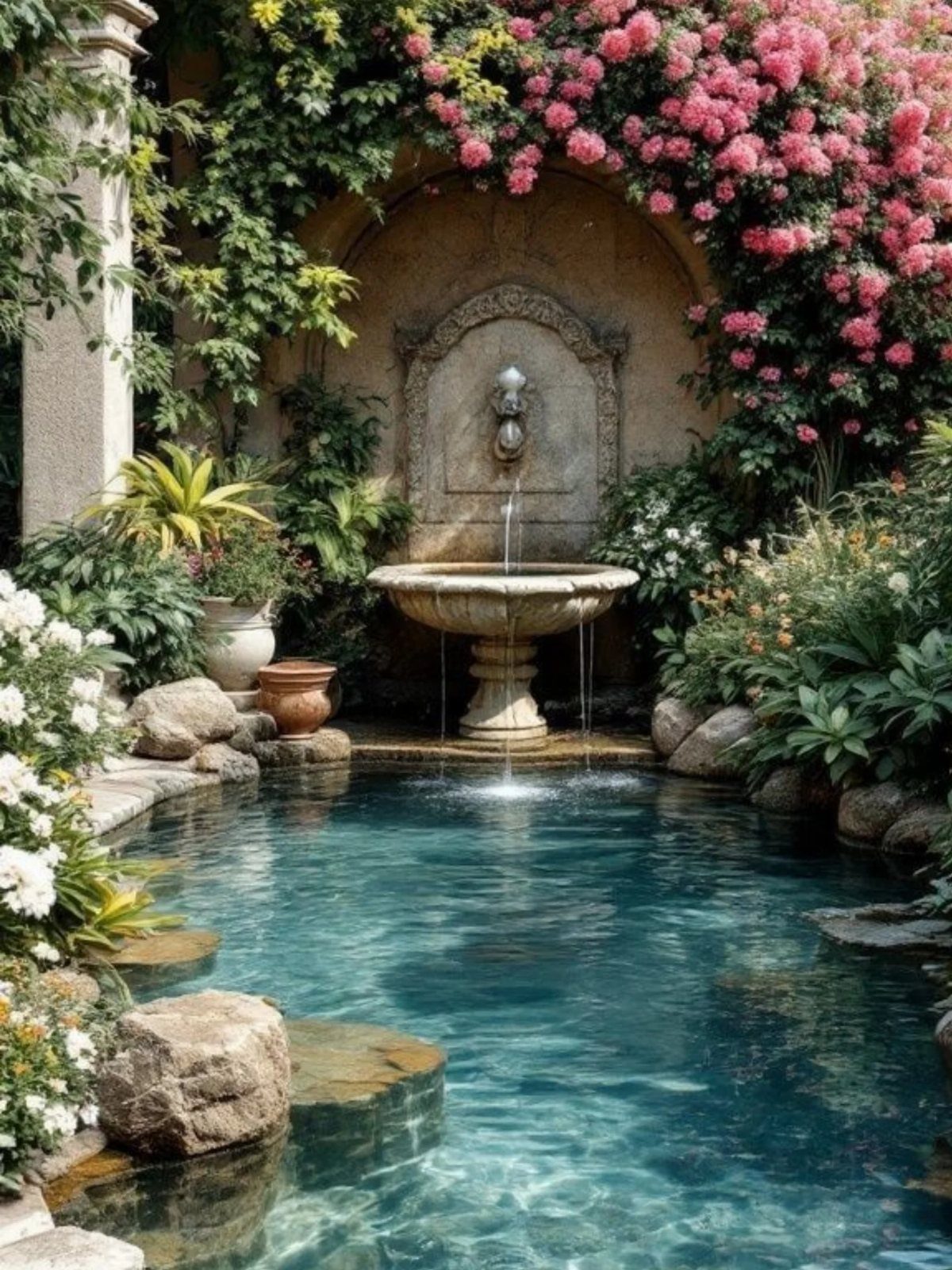
Wall fountains suit small courtyards where a pond would breed mosquitoes and swallow half the lawn.
I would build up a bed of compacted crushed stone under the basin before setting it, or winter frost heave tilts the plinth and the water misses.
The exposed pump lasts longer if you lift it before hard freeze; in zone 6 and north, that chore is November annual maintenance.
Solar pumps work where sun hits the panel most of the day, but flow drops by half on cloudy days. For a steady trickle I wire it proper.
6. Grassy Swaths
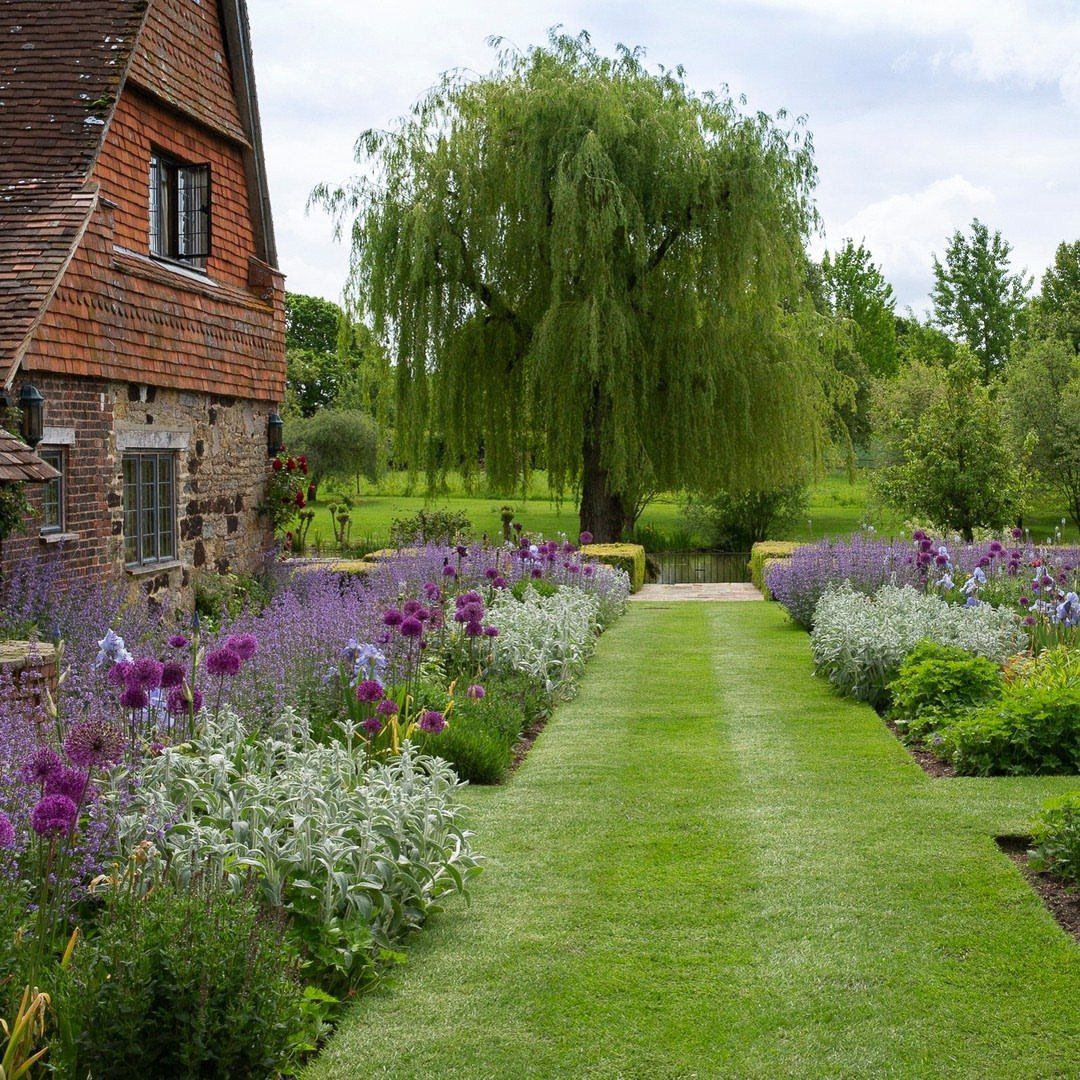
A wide grass path between planting beds is cheaper than gravel and softer underfoot. Mow it weekly high and the strip stays lawn, not weedy track.
I keep the edges crisp with aluminum edging sunk deep, or let a low hedge of lavender or germander creep in to hold the line for free.
Budget an hour a week June through September for mowing and edge-trimming. Let it go unmowed and the path reads as abandoned meadow, which is its own look but not this one.
7. Native Plants
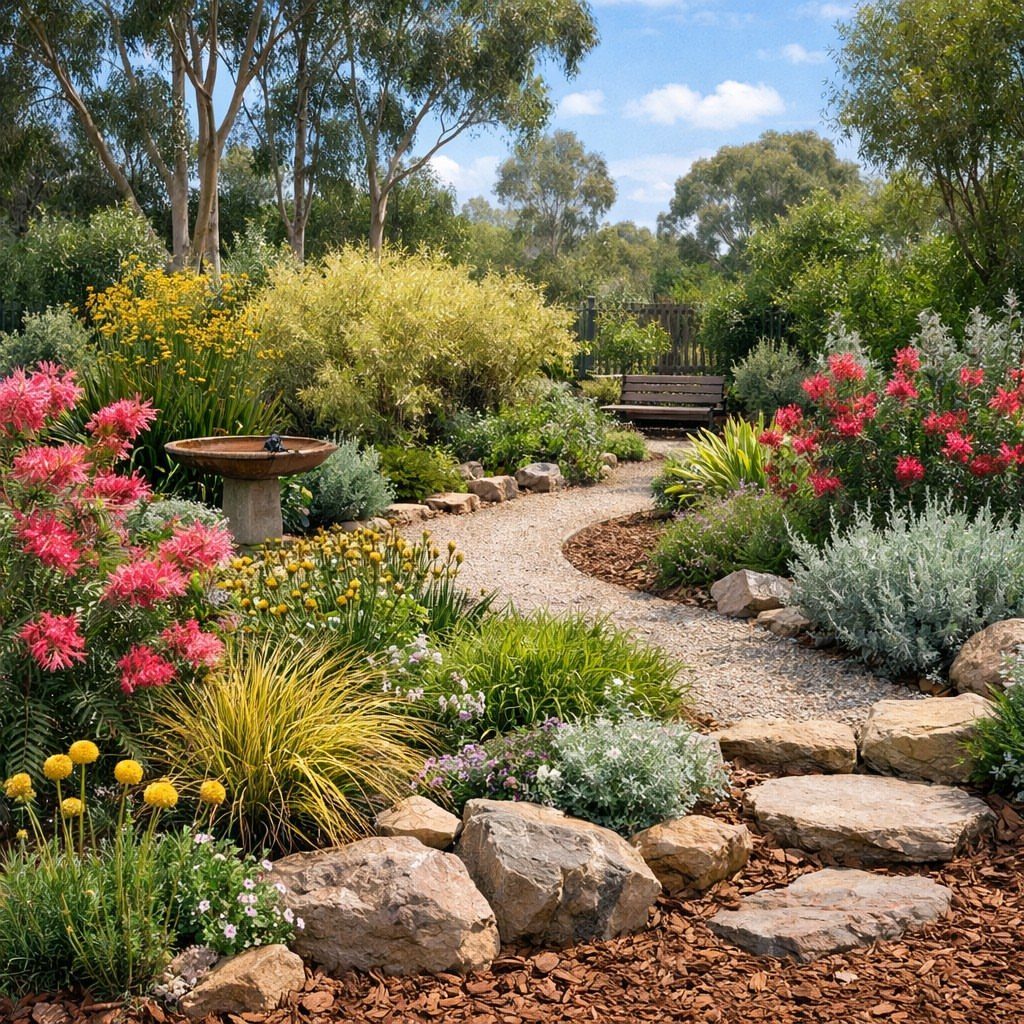
A gravel path through native shrubs and grasses asks far less of you than a perennial border bred for drama.
I would start with what already grows wild nearby: serviceberry, switchgrass, purple coneflower.
Plant in drifts of five or seven, not soldier rows, and let the gravel show between. Wood chip mulch holds moisture and fades to gray in a season; refresh it every spring or let it be.
No shearing schedule, no fertilizer program, no winter lift of pumps. The trade is looser form; color comes in waves, not timed for July.
Birds and pollinators arrive on their own. A stone birdbath is enough water for this garden, and left rough it weathers fine.
Landscape Integration
A country estate garden lives or dies on how it meets the land already there. Wet ground, open fields, and broken outdoor spaces are not problems to flatten; they are the design.
I would map what exists before adding anything. A wet corner becomes an orchard row that likes damp feet, not a lawn that drowns.
Pasture grass left standing screens the vegetable beds from the terrace without a hedge bill. Working fields and garden rooms share the same gravel path; repeated stone or mown edge ties them together even when the uses split.
The arrival sets the rest. A gate or a tree pair at the drive entrance tells you the scale before you reach the door.
Paths need not meander in tight space, but they must connect: seating to kitchen, beds to chicken run, each border reading as its own room because a hedge or a wall behind it gives the eye a place to stop.
Environmental Stewardship
Sustainability in a garden this size is not a specialty add-on; it is the only way to keep the work human.
Native plants asked me for no fertilizer schedule and no shearing calendar, and birds arrived without my invitation. Switchgrass and coneflower in drifts of five or seven let me skip the perennial border’s drama and its water bill both.
Solar works where the panel sees sun; where it does not, I wire for steady flow and lift the pump before hard freeze.
The work shrinks to what one person can maintain, and the land keeps its own capital.
Seasonal Interest
Year-round interest in a country garden comes from structure, not from chasing bloom.
I would lean on evergreens and flowering hedges as the backbone; they carry the border when perennials have quit.
A small specimen tree, even a dwarf where space is tight, gives winter silhouette and spring scale both. Boxwood or lavender clipped low holds geometry under snow.
Layer by height and texture: tall delphinium or foxglove at the back, hardy geranium and tiarella clustered low at the front, the middle ground held by iris and peony for June.
Repeating the same plants, not sampling one of everything, knits the rooms together.
Lupine wants sharp drainage; astilbe wants steady moisture. Plant them together and one will always struggle.
Color runs in waves you do not control, timed by the season, not by the catalog.
Frequently Asked Questions
What are the key elements of a country garden?
The key elements are defined spaces, a structure that carries the garden year-round, and integration with the land already there.
Evergreens and clipped hedges carry the structure year-round, I place shorter plants in front and taller ones behind, and I repeat the same varieties across beds so the garden reads as connected rooms rather than random spots.
Where the soil stays wet, I let it stay orchard or meadow instead of fighting for lawn that will never thrive.
Working with what exists, not flattening it, is what makes the garden read as if it has always been there.
How can I create privacy in my garden?
A hedge gives you the wall’s quiet without the invoice for stone or brick.
Hornbeam is my pick for zones where January hits single digits; the dried leaves hang on through winter and make a copper screen that still blocks the view.
Where you have the ground, tall pasture grass left uncut through summer does the same screening work with no planting cost at all.





