
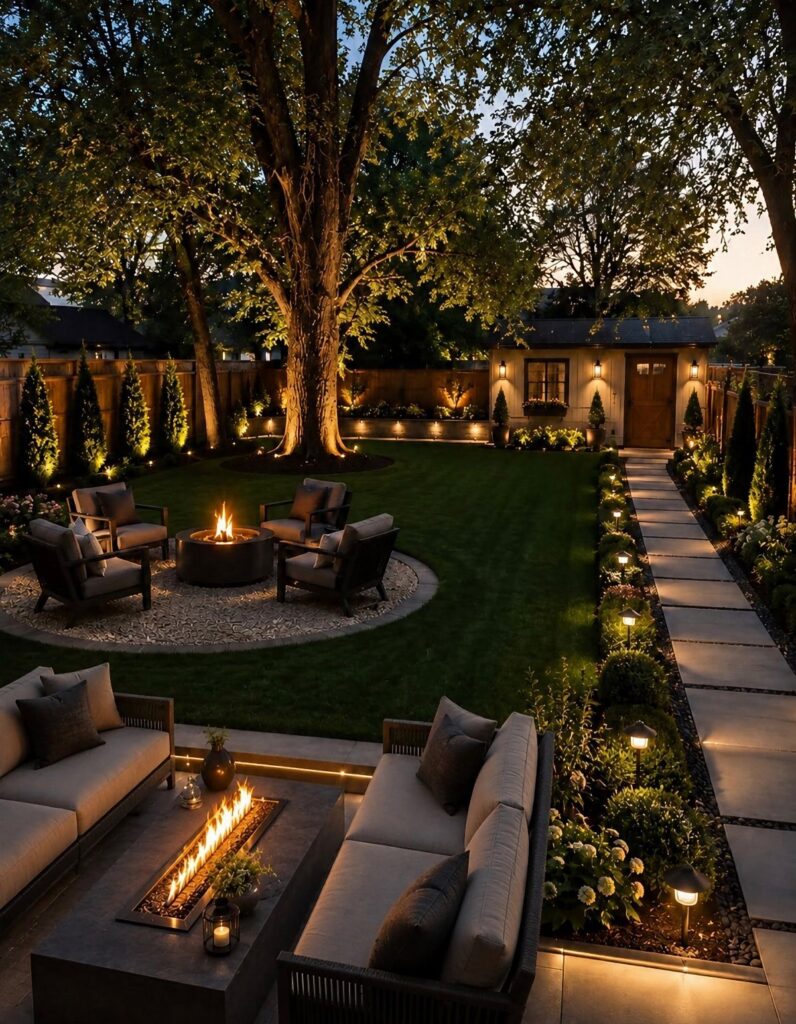
What actually picks which ones belong in your yard is whether you need the space after dark on a weeknight, or only when the sun is still up.
A 2,500-lumen projector needs real dark; if your yard gets streetlight glow until late, that setup fights you more than it helps.
[link-whisper-related-posts]1. Outdoor Sofas with Thick Cushions
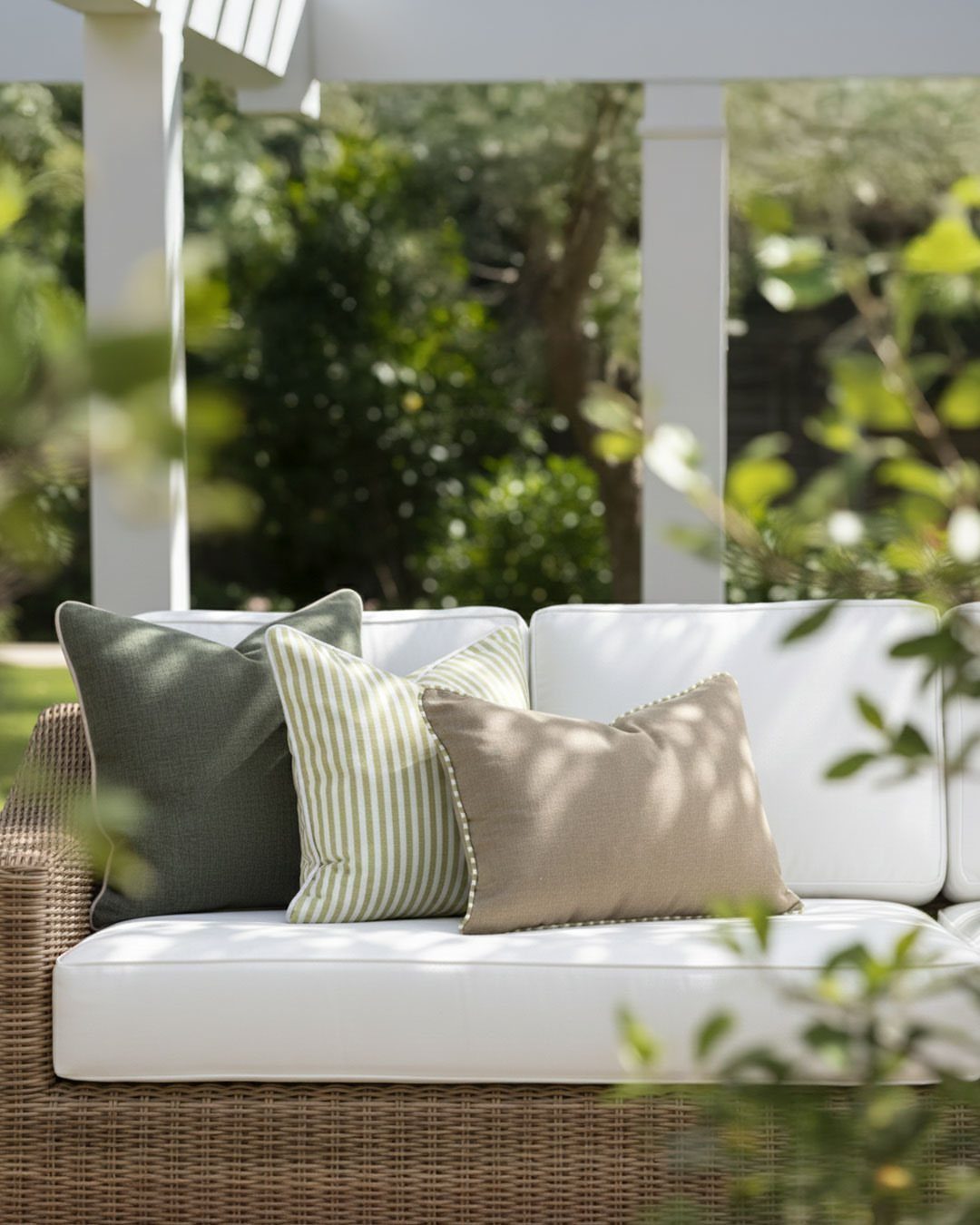
Thick cushions turn a patio from seating into settling.
I look for high-density foam wrapped in solution-dyed acrylic; Sunbrella and Outdura both run about the same price per yard and handle years of full sun before fading gets obvious. Anything thinner feels like a perch.
Drainage matters more than the fabric tag. Cushions without mesh bottoms or zippered vents stay wet for days after rain and mildew from the inside out.
I store mine under the sofa in a deck box on off nights, but a shed works better if you have one.
2. String Lights
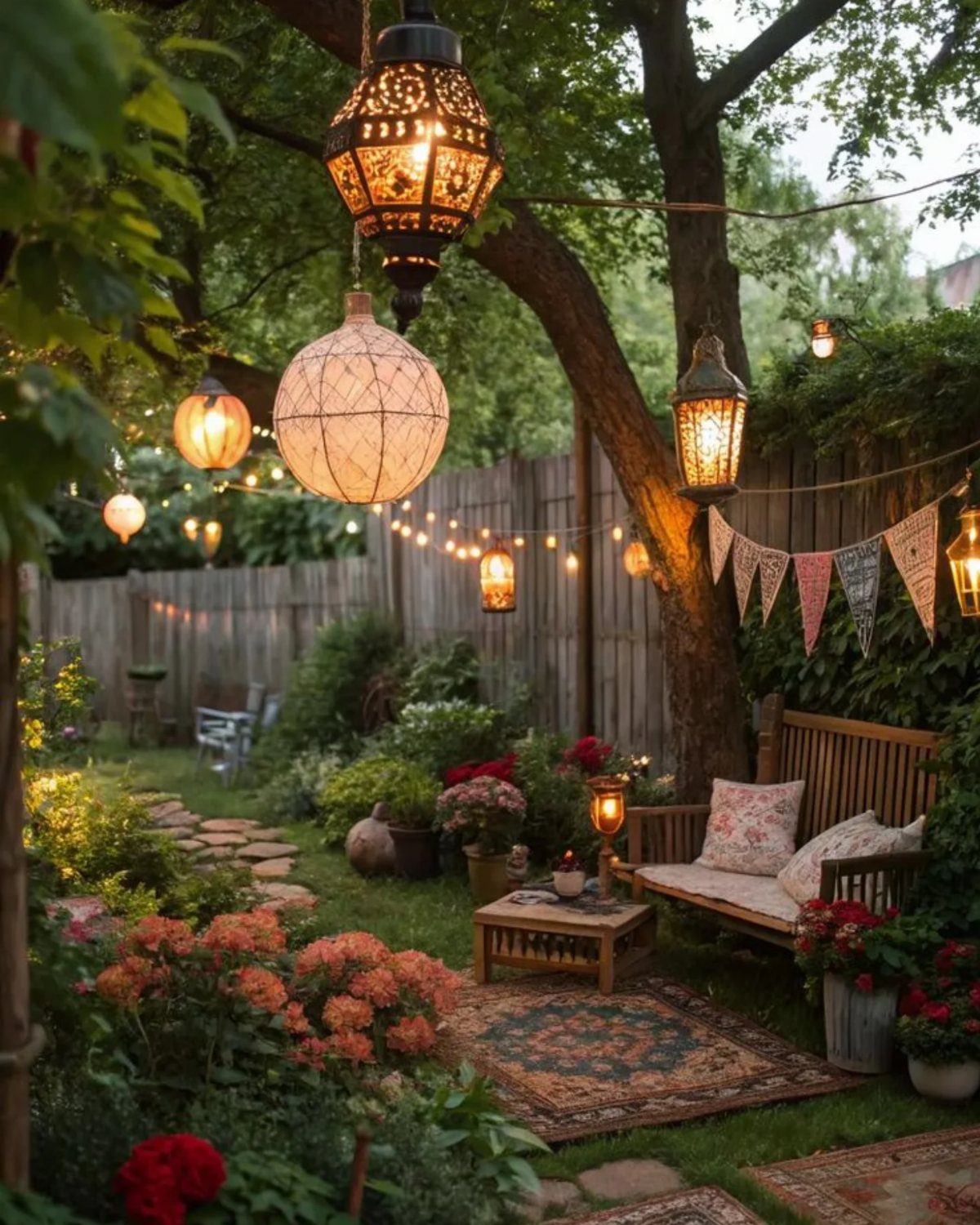
Warm white bulbs at 2700K, not clear or cool white, cast the amber that actually reads as cozy.
I would pick one style per space and let the other fill gaps. Hanging loops spaced across a fence or pergola beats draping from a single anchor point, which sags and blows into a clump by August.
Plug-in LEDs draw little power and run off a standard outdoor outlet.
Solar sets exist but their brightness drops fast after the battery ages one season. I buy a spare string in year one while the model is still stocked; connectors change and matching a faded line later is nearly impossible.
3. Outdoor Rugs
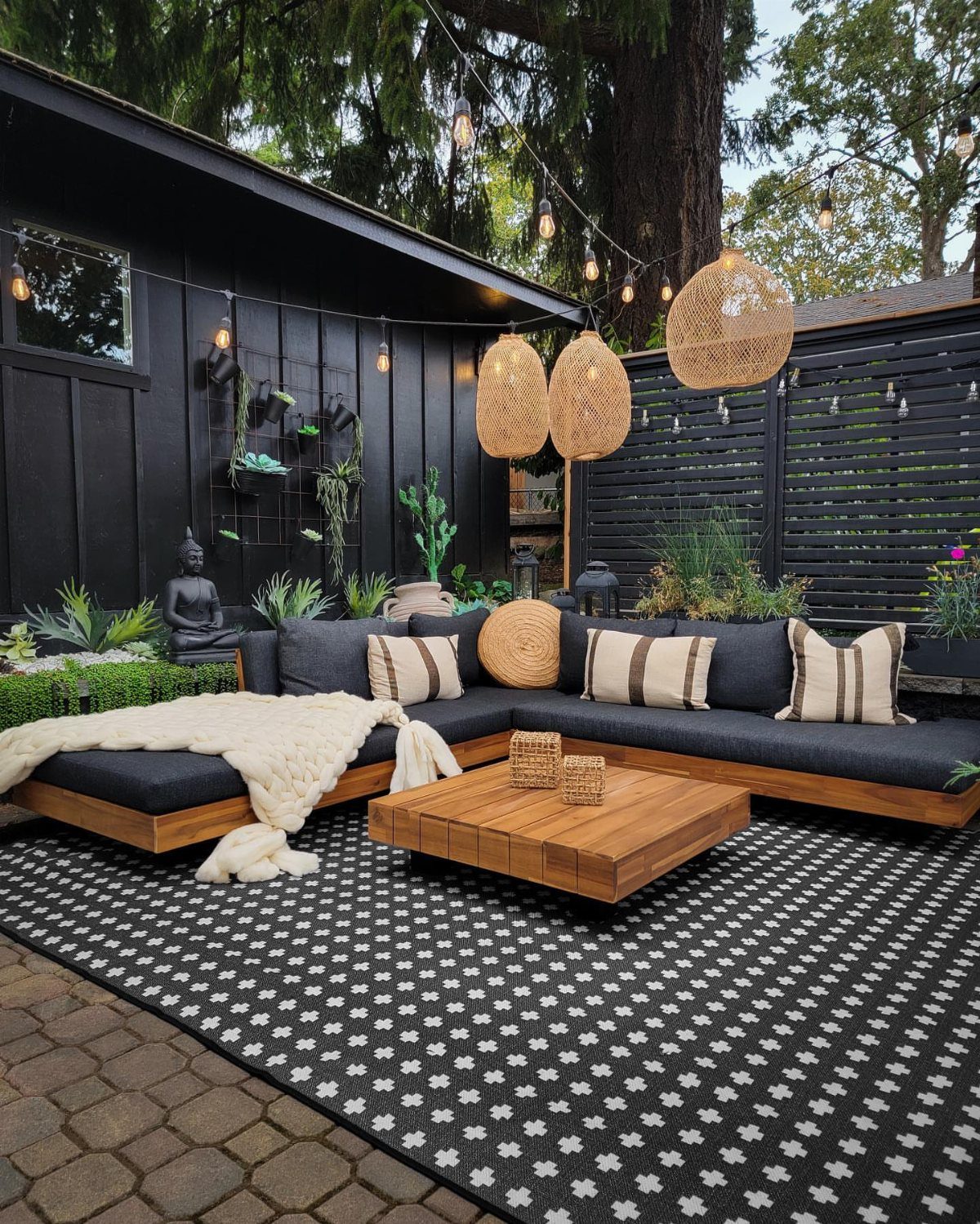
A rug that lives outside needs to be polypropylene, not the "indoor/outdoor" jute blend that sheds and rots. For size, I add room beyond the furniture footprint on each side so chairs stay on rug even when pushed back.
This is a cheap way to define a zone where no walls exist.
The one limit: pooled water on a flat weave takes hours to dry. A ribbed or low-loop texture drains faster and tracks less grit indoors.
4. Dining and Lounging Spaces
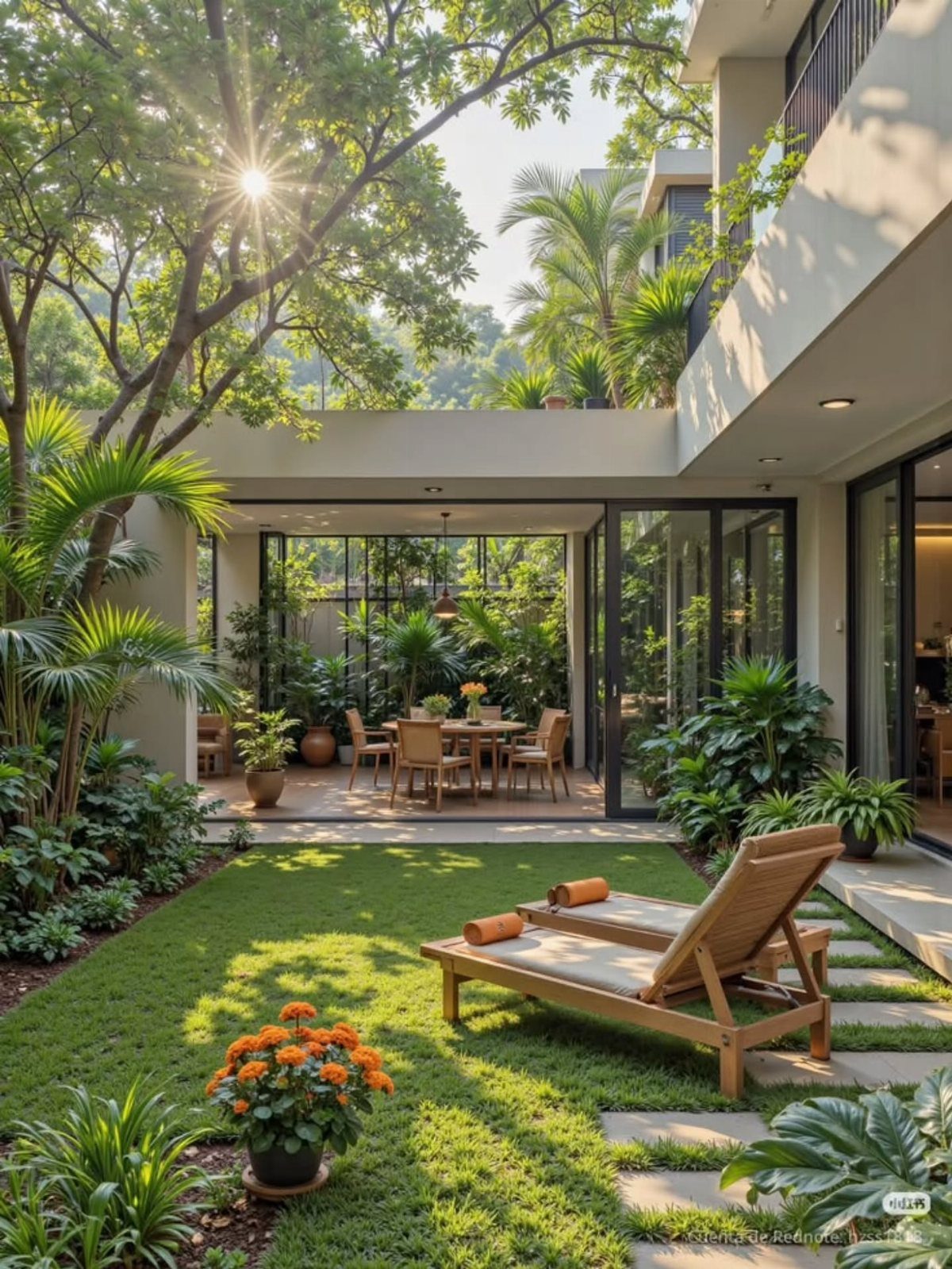
Some yards can carry 2 areas; most cannot, and forcing both makes neither usable. I would measure walking paths first: leave a clear route between chair backs and walls or planting beds.
If your space makes you choose, I default to dining.
A table chairs more people than a sofa, and with a small grill you get full evenings instead of just afternoon reading. Lounging reads as luxury; dining reads as room.
5. Outdoor Heaters
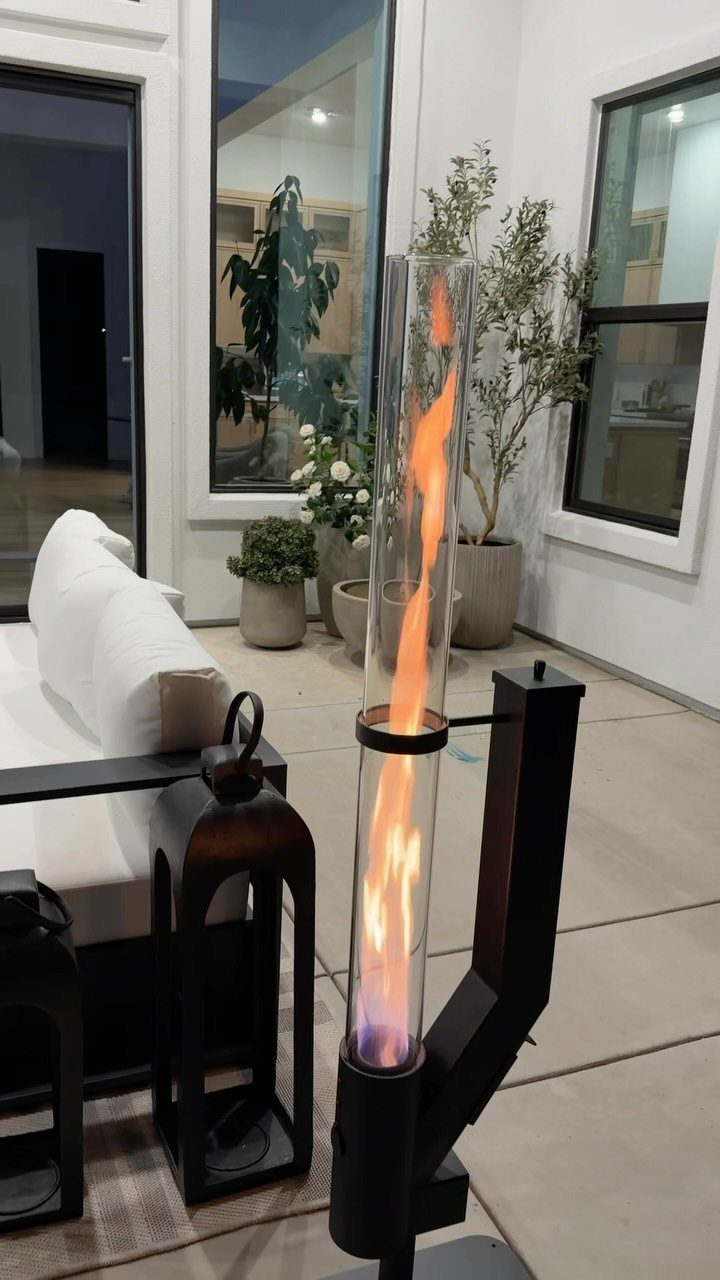
Glass-tube flame heaters run on standard propane tanks and radiate heat in a wide enough circle for a small group seated close.
Running cost is the trade-off. A full tank lasts an evening or so, so figure several tanks per season of regular use.
I keep a spare and swap at a Blue Rhino exchange rather than refilling; the convenience is worth the small markup for something I forget until guests are already cold.
6. Fire Pits
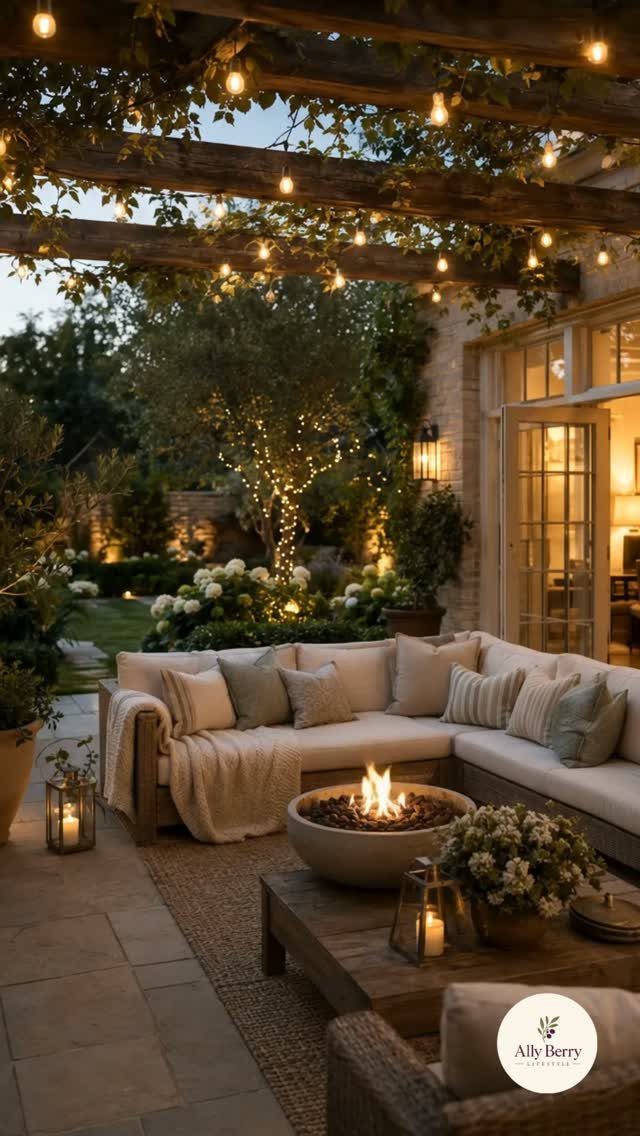
Gas fire pits light with a switch and die clean when dinner ends; wood burns longer, hotter, and demands a screened ember period I am too tired to supervise.
I would not set a wood fire that close to a wood surface no matter what the label claims.
For heat output, gas tops out around 50,000–60,000 BTU.
That warms faces and hands nearby, not the whole patio. I place seating a couple of feet from the edge; closer and the radiant heat gets intense, farther and it disappears into night air.
7. Hammocks or Swings
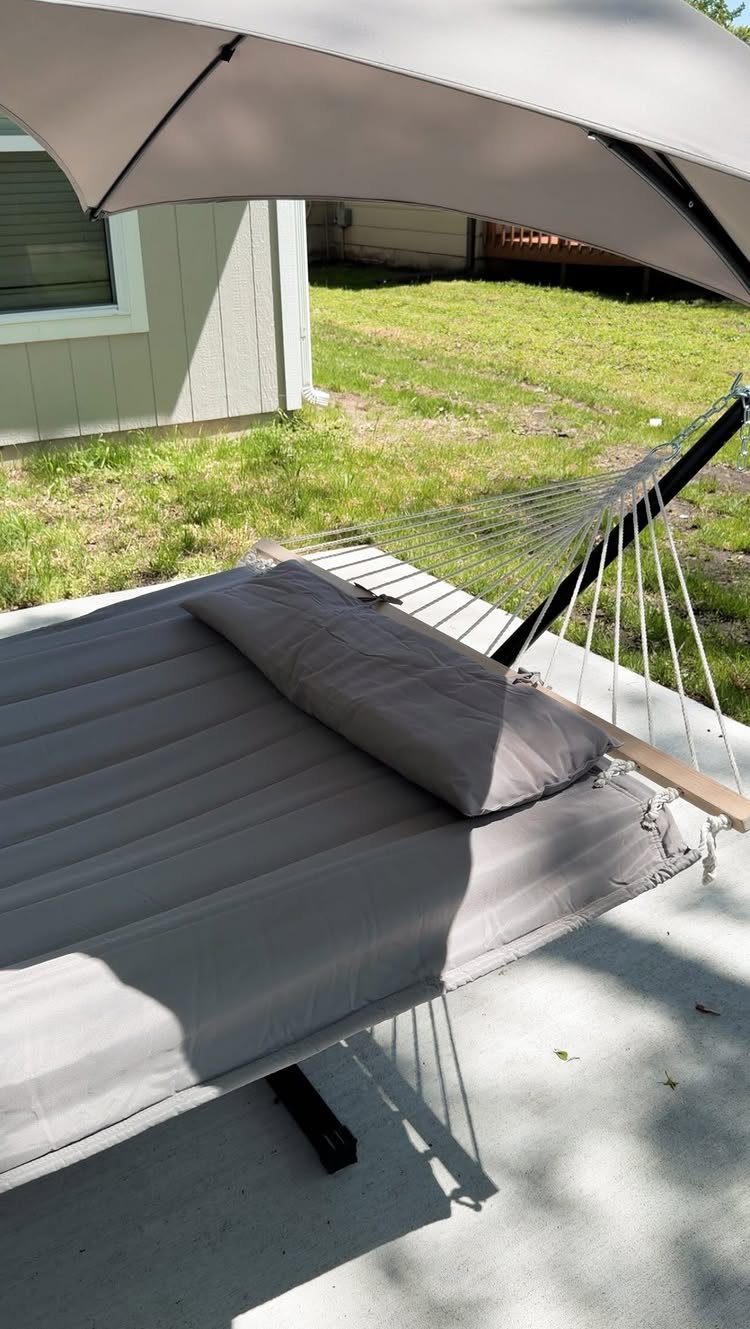
A freestanding frame removes the math of finding 2 trees the right distance apart.
Weight limits matter more than they look.
Most residential stands hold one adult safely; two is pushing it, so check the weight rating before you buy. I set mine on level concrete or pavers; grass softens and the frame torques.
The umbrella overhead is smart. Full sun degrades fabric faster than rain, and afternoon shade extends the season when heat keeps you inside otherwise.
8. Movie Night Setup
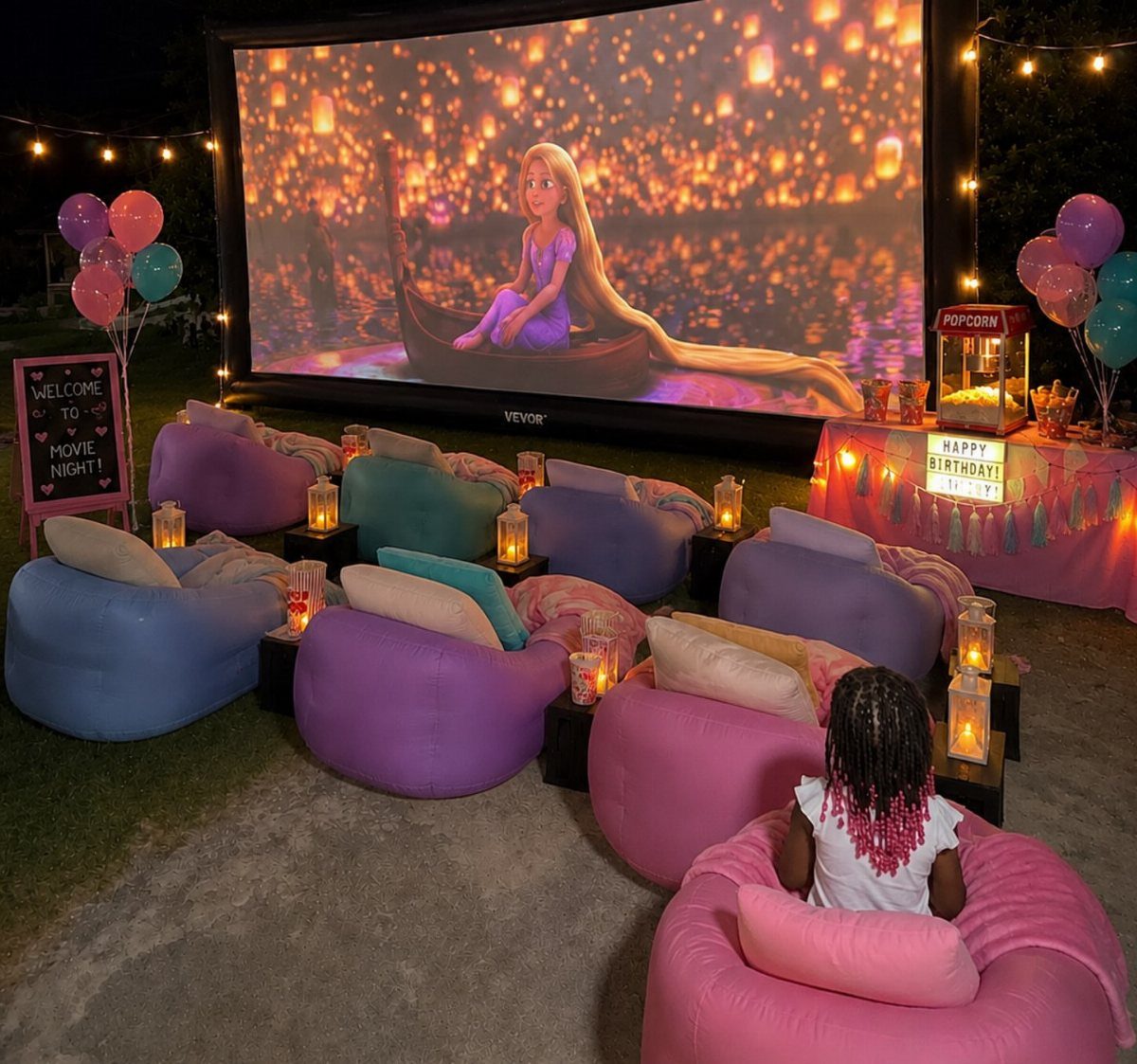
An inflatable screen packs to a duffel and sets up with a blower, which is how you get a big image without a blank wall.
A projector rated 2,500 lumens works after dusk, not before.
I start the film at 8:30 p.m. in summer, earlier as August ends. Built-in projector speakers aim too narrow for outdoor spread; a cheap Bluetooth speaker placed near the screen keeps dialogue anchored to the picture.
9. Bring Indoor Comforts Outside
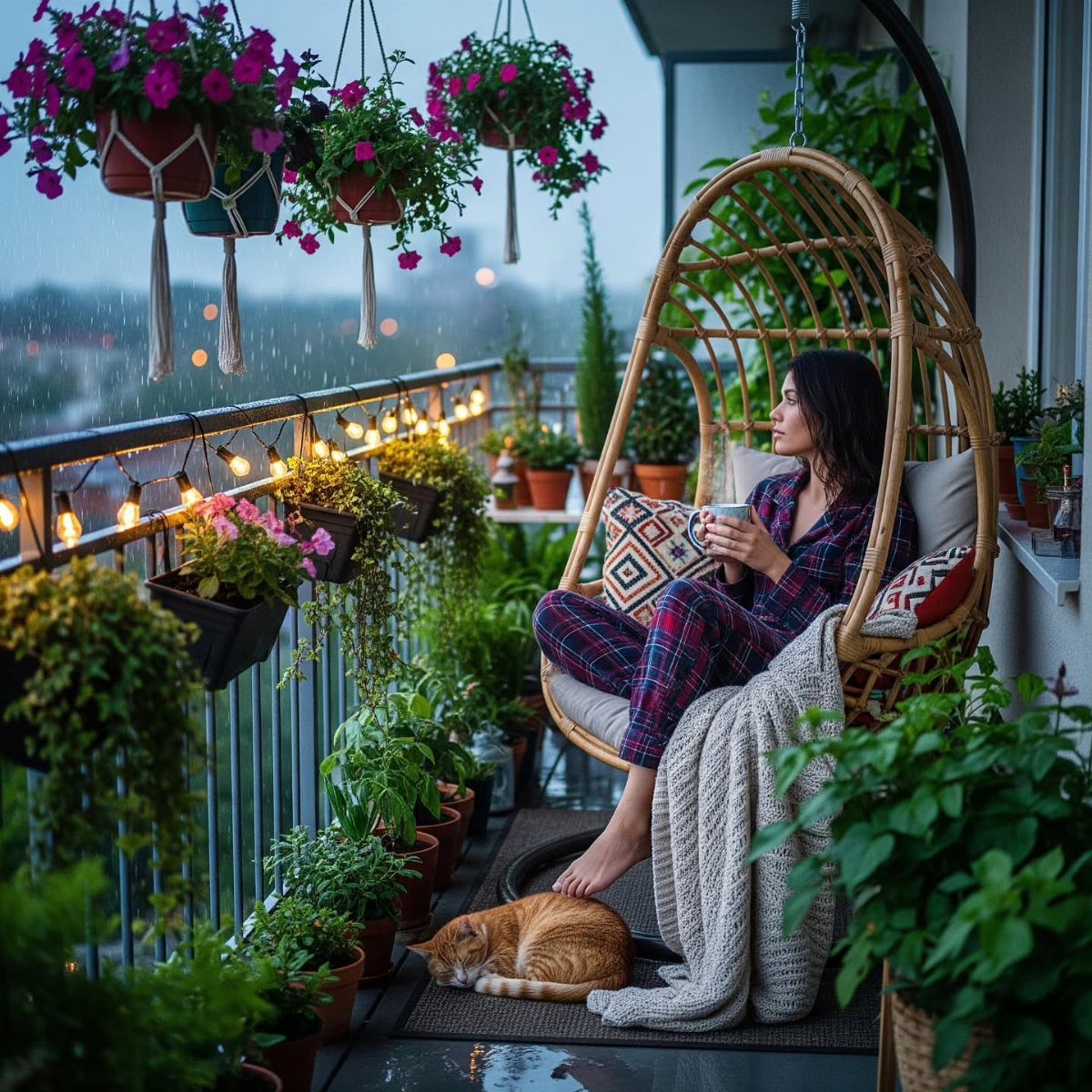
Bringing indoor comforts outside is the whole idea. I would start with what I already do inside and ask which part tolerates wind and a little drizzle.
Blankets stored in a sealed deck box stay ready; the ones I lug out each time never get used.
A small side table for the mug matters more than the chair itself, since the ground is the only other shelf. Potted plants rotate in and out as the season shifts, which is what I see happening here.
Creating an inviting and cozy outdoor space is key to turning it into a place you want to be, even if you are wrapped up in a blanket the whole time.
10. Larger Planters with Greenery
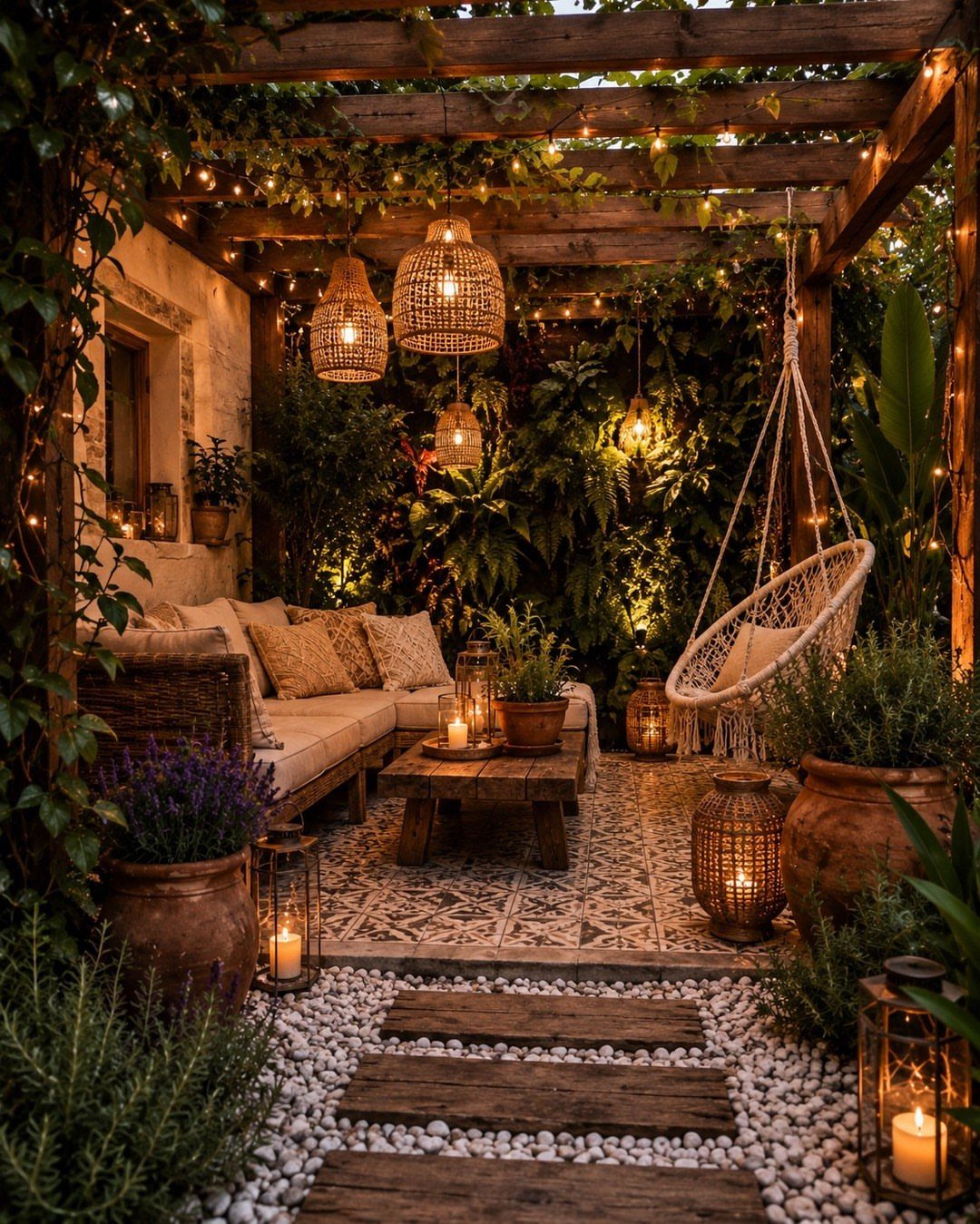
Big pots ground a space the way a rug does, but vertically. I look for glazed ceramic or fiber-reinforced concrete; plastic tall enough topples in a gust and looks like a hotel pool deck anyway.
Drainage holes are nonnegotiable. One inch of standing water rots any root in days, and saucers underneath breed mosquitoes.
A pebble walkway like this one buys you grace: spilled soil, overflow, a dropped clipper all disappear. Moving a wide planter takes help or a dolly; place it before you fill it.
11. Outdoor Bar Area
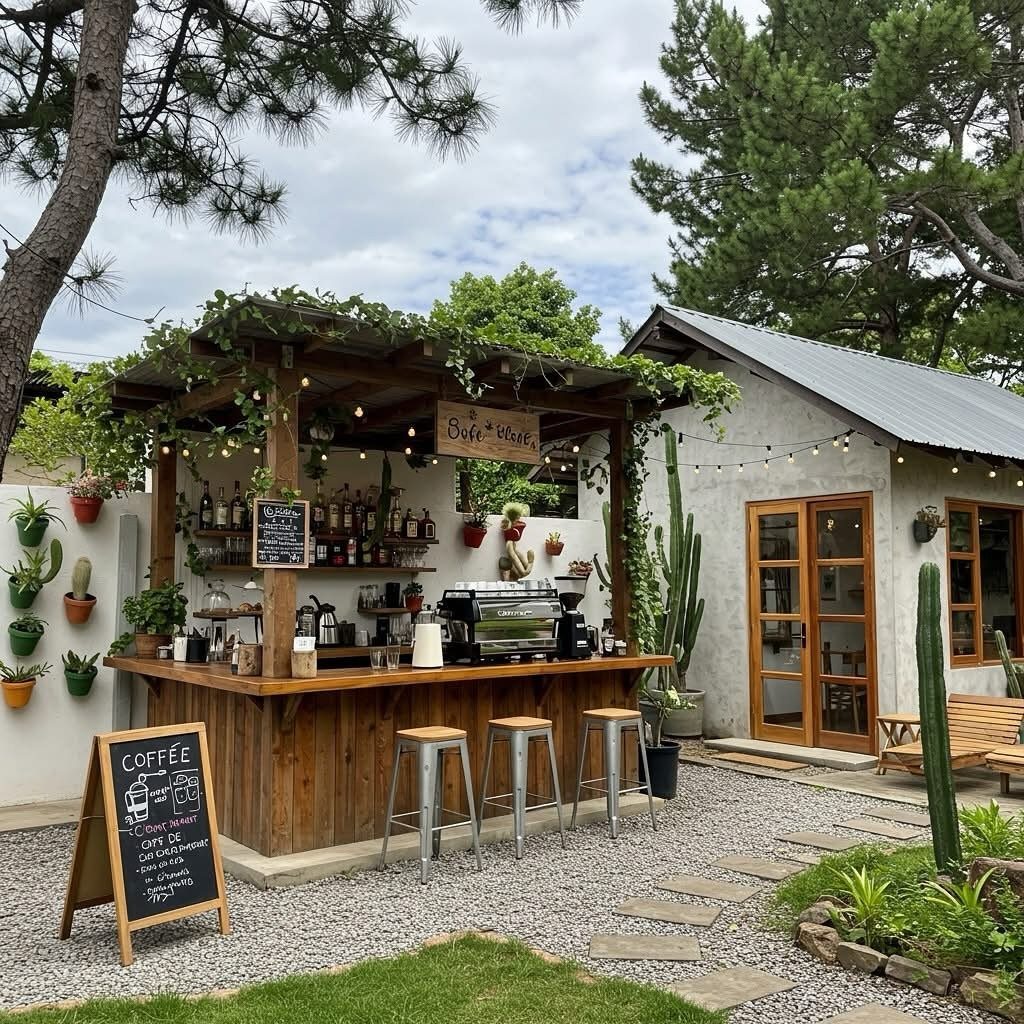
A dedicated coffee bar reads differently than a cooler on the ground. I would seal it with marine varnish if it stays out year-round.
The espresso machine means running power; an outdoor-rated extension from a GFCI outlet is the safe path, not a window cord.
Chalkboard signs are cheap signage that changes with the menu. Gravel underfoot drains and levels easier than poured concrete, which matters if the ground settles.
12. Outdoor Draperies
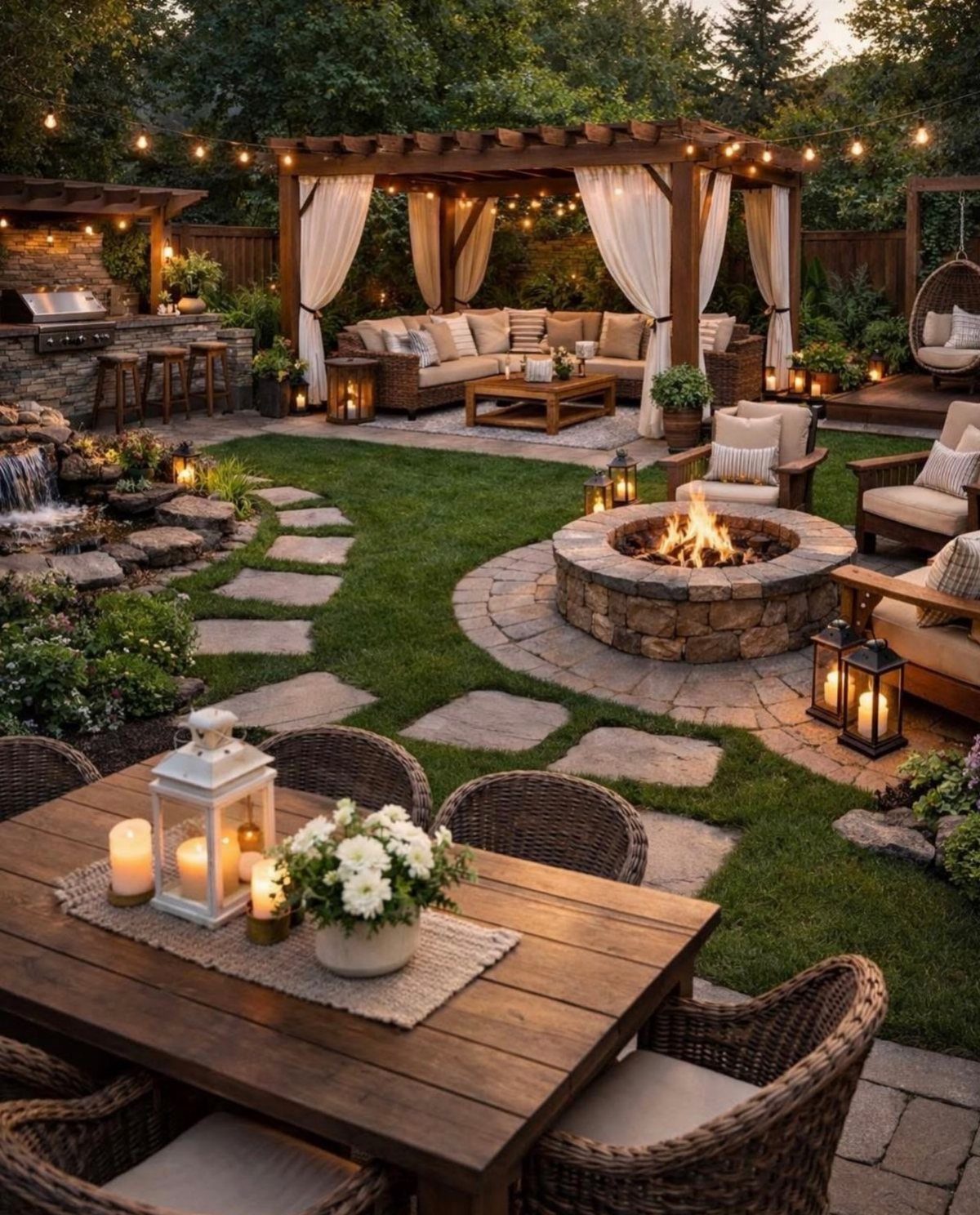
White curtains under a pergola turn hard corners soft. Outdoor fabric matters; polyester or acrylic hold up, and I learned that the hard way when cotton mildewed on me through one humid July.
Grommets top and bottom let you tie them back or secure against wind; these are tied, not drawn, which is how most people live with them.
I mount the rod just below the beam, not on it, so rain runs off and not in.
The drapery adds no privacy here since the yard is open; the value is framing the space and cutting glare at dinner. At dusk, lit from behind, they glow.
13. Coffee Tables and Side Tables
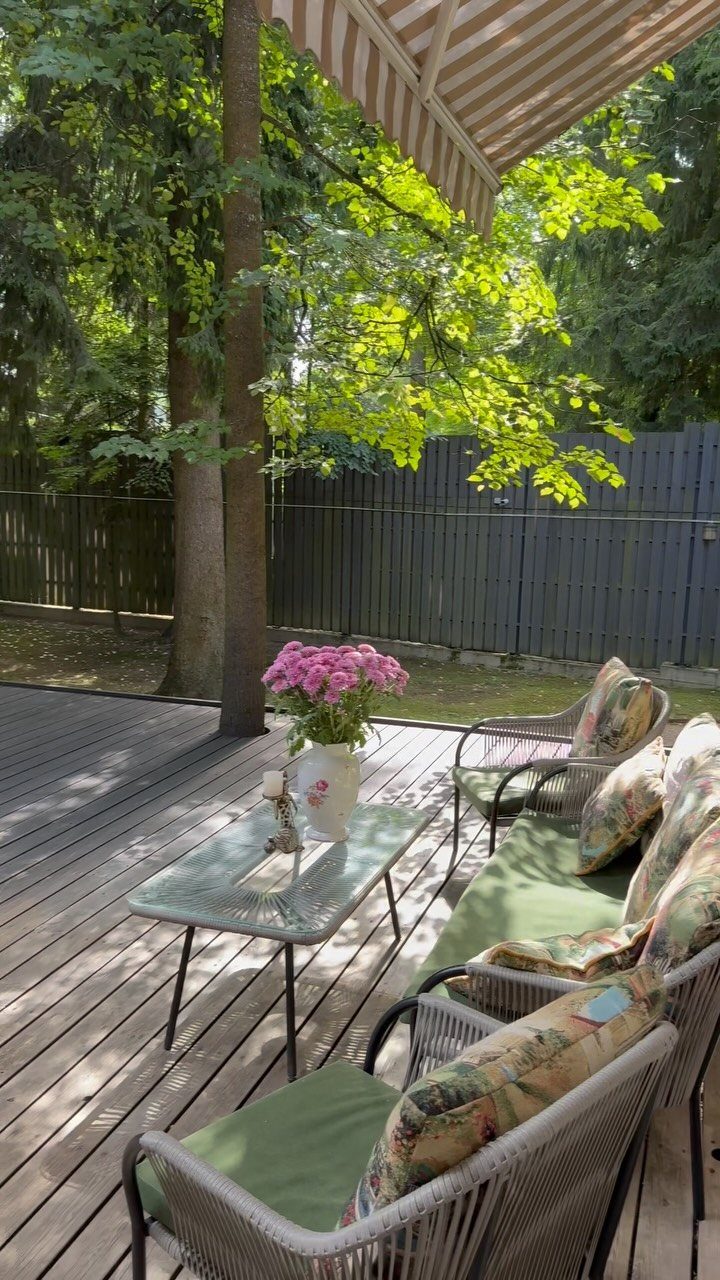
A coffee table holds the candle, the flowers, the drink you came out with. Without one, the ground becomes a shelf.
Glass tops like this one shed rain and wipe clean; wood needs sealant yearly or it cups and cracks.
I would size it to leave enough walking path around every edge to move through with a tray in your hands, same as indoors.
Side tables by each seat matter more than the center piece. A chair without a surface means standing up to set anything down, which undoes the comfort you built.
Small tables move; one big one anchors. Most evenings I want both in reach, and rearrange as the group changes.
Choosing Weather-resistant Furniture
Teak and eucalyptus carry natural oils that repel moisture and insects without yearly sealing, though they gray to a weathered patina most people either love or sand away.
Aluminum frames the modern look at a lower weight; powder coating adds the real protection, since bare aluminum pits in salt air.
I would pick eucalyptus over teak on a tight budget, it runs cheaper and performs close enough for most yards.
Resin wicker outlasts natural rattan by years and needs only a hose-off, but the weave still traps pollen in spring.
HDPE plastic is the newer entry: heavier than aluminum, recyclable, and slow to heat in direct sun. Sit on it before you buy it; some brands feel like a bench, others like a chair.
Steel’s strength costs you in temperature.
Powder coating helps, but a steel armrest in July can still raise a blister. For cushions, solution-dyed acrylic is the standard that matters more than the brand name on the tag.
Creating a Cohesive Design
A space reads as yours when the rug color picks up a throw pillow inside, or the planter glaze matches the kitchen tile.
I would carry one thread from room to patio and stop there; matching everything reads as a catalog spread.
Mixing prints works outdoors because the eye forgives more under open sky. Vary the scale, large floral against small stripe, and tie them with a shared value, light or dark, warm or cool.
Texture does the rest: a ribbed rug, smooth ceramic, nubby cushion cover. The contrast adds depth without clutter.
Throws stored in a lidded bench bridge the temperature drop at 8 p.m.
I would roll them, not fold, so they look intentional even when half awake guests grab one. The plaid that reads rustic inside reads coastal outside if the palette shifts from red to blue.
Maintaining Outdoor Spaces
Cushions stored dry last twice as long. I would slide them into a deck box or carry them to a shed the same evening I use them; dew sets in overnight even under cover.
A fabric left damp for 2 days mildewes, but solution-dyed acrylic releases it with a bleach solution so the piece is not ruined.
Rugs need lifting and hosing, not just sweeping.
Dirt pressed into polypropylene fibers abrades them like sandpaper. I would hang the rug over a railing to dry both sides; flat on concrete it traps moisture underneath.
Teak left unoiled grays uniformly.
If you prefer the honey tone, oil once a season and wipe the excess or it turns sticky and collects dust. Aluminum wipes clean with soapy water; steel needs checking at welds and touch-up where powder coating chips.
Wicker vacuumed with a brush attachment clears the weave. Pressure washing drives water into the frame and rusts steel inserts you cannot see until they swell.
Frequently Asked Questions
How can I make my outdoor space cozy?
Start with thick cushions on solid seating, warm white string lights at 2700K, and an outdoor rug sized to catch chairs even when pushed back.
These three do more than decorative objects because they address what makes patios feel hostile: hard surfaces, dark edges, and undefined space.
I add a side table within arm’s reach of each seat so no one has to stand to set down a mug.
What furniture is best for outdoor spaces?
Teak and eucalyptus resist moisture and insects without yearly sealing, though both gray unless you oil them. Aluminum frames keep weight low and stay clean with soapy water; powder coating is what adds real protection against pitting.
What lighting works best for outdoor areas?
Warm white LED string lights at 2700K cast the amber that reads as cozy; cool or clear white does not. Plug-in sets draw little power and stay bright; solar drops off after one season as the battery fades.





