
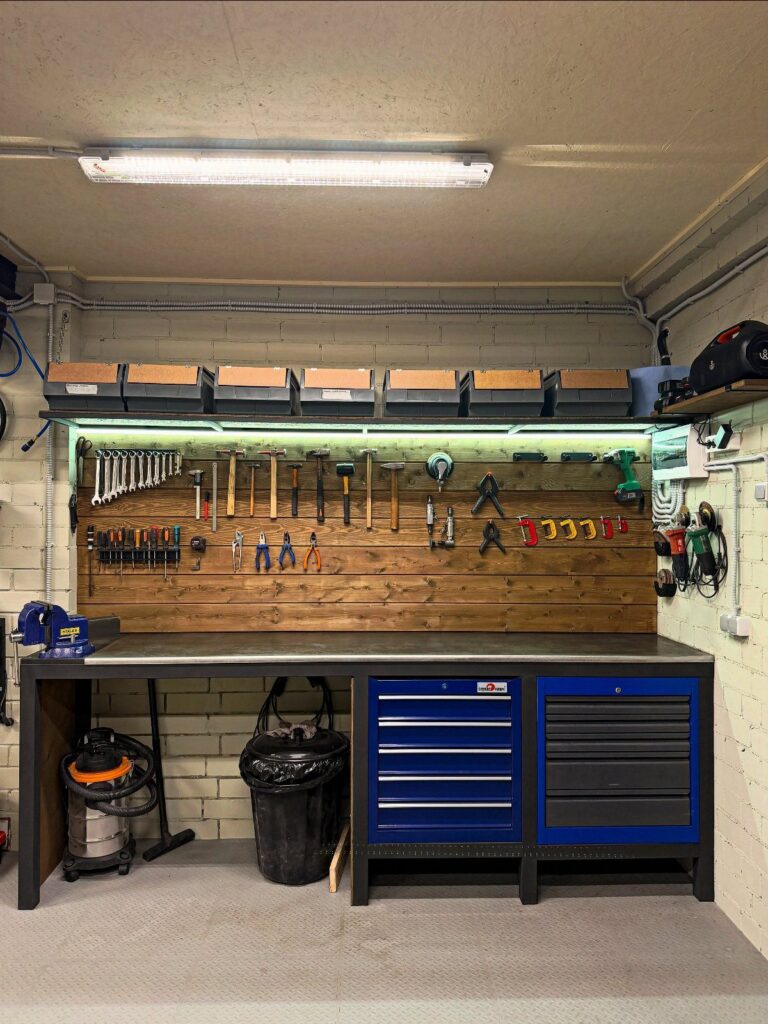
A workbench takes a half-sheet of plywood and an afternoon; a full slatwall system and tool cabinet bank take a whole garage bay and a bigger budget.
A steel pegboard, full-depth slatwall panels, and a rolling cabinet can all sit on the same wall if you plan the layout tight from the start.
Six feet of wall already holds a small bench setup with an overhead shelf if you plan it tight. From there I would work outward.
[link-whisper-related-posts]1. DIY Workbenches
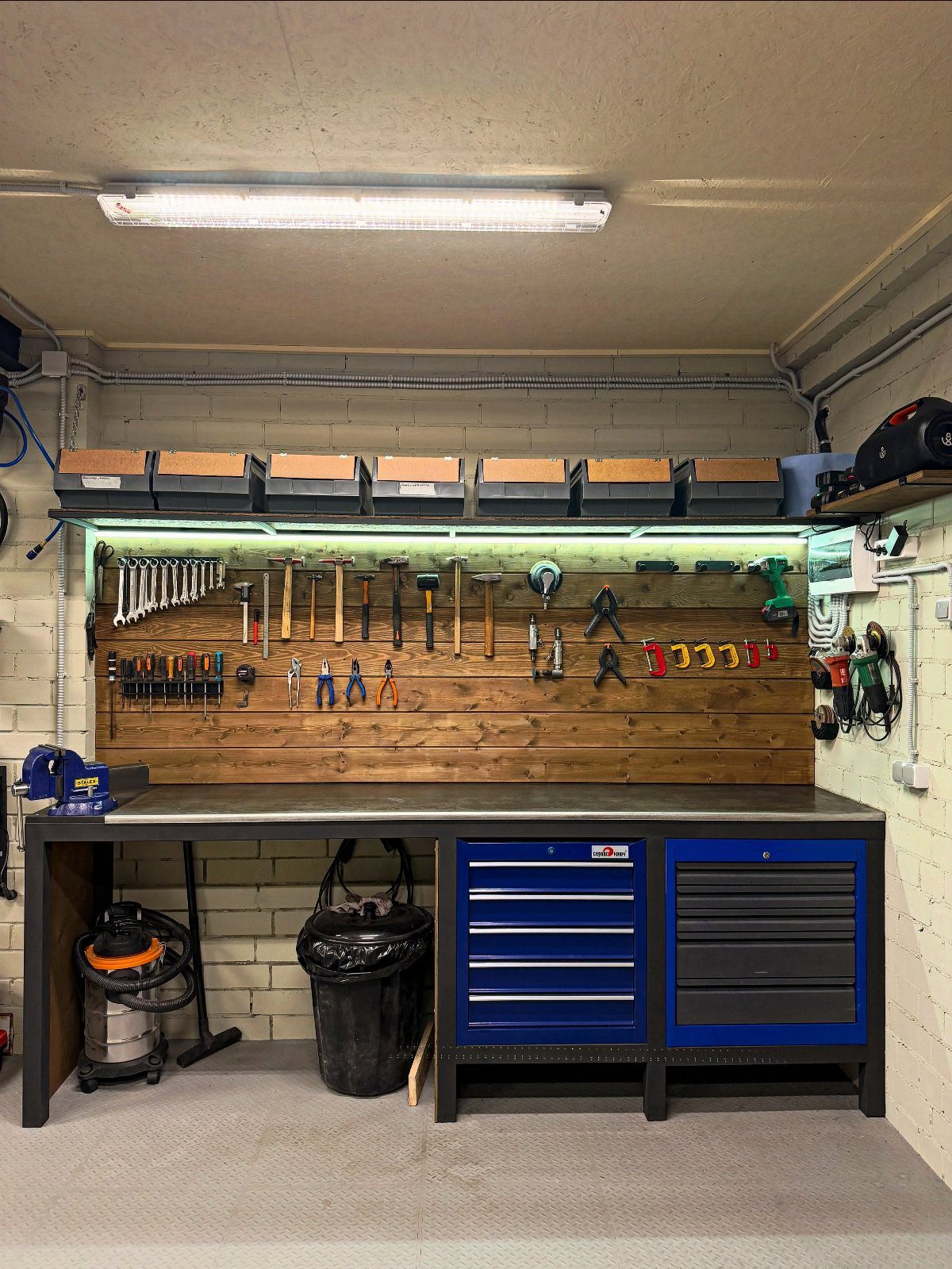
A metal-framed workbench with an integrated tool drawer bank and slatwall backing turns the center of your garage into actual workspace, not just storage that happens to have a surface.
I would build the frame from 2x4s and a half-sheet of 3/4-inch plywood for the top.
Add a shelf overhead for bins and a shop vacuum. You need 6 feet of wall width and an afternoon.
For just a few hundred dollars you can re-create this storage system yourself in one weekend. This project covers about 16 ft. of wall space and offers a multitude of ways to organize your garage.
2. Rolling Tool Chests
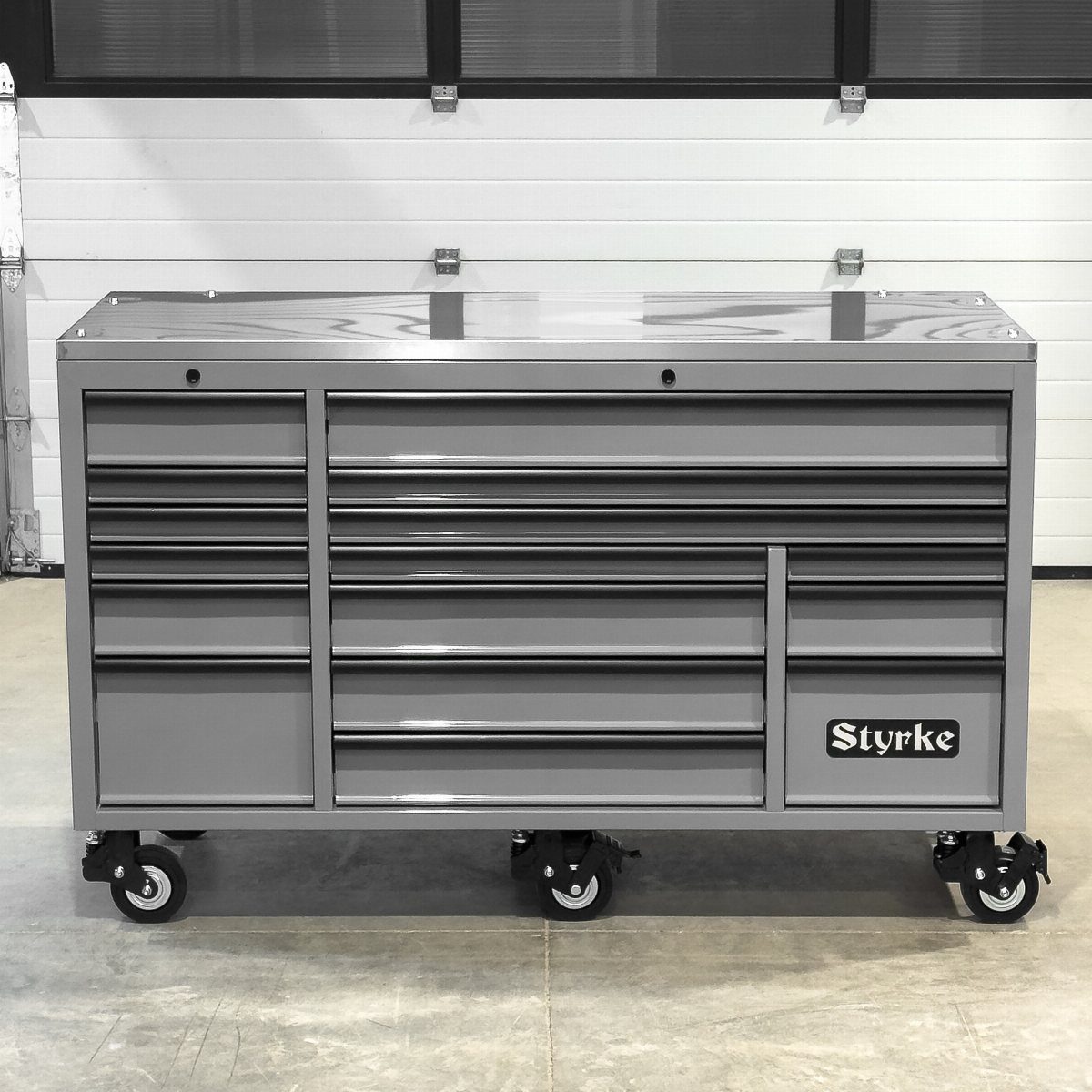
The middle ground between a fixed cabinet and a scattered pile is a chest that rolls where the project is.
Gray powder-coated steel with a stainless worktop takes abuse and stays presentable.
Caster wheels mean you pull it to the car instead of walking back and forth across oil spots. I look for full-extension ball-bearing drawers; anything less, and the back third becomes a graveyard for hex keys you forgot you owned.
3. Overhead Storage Racks
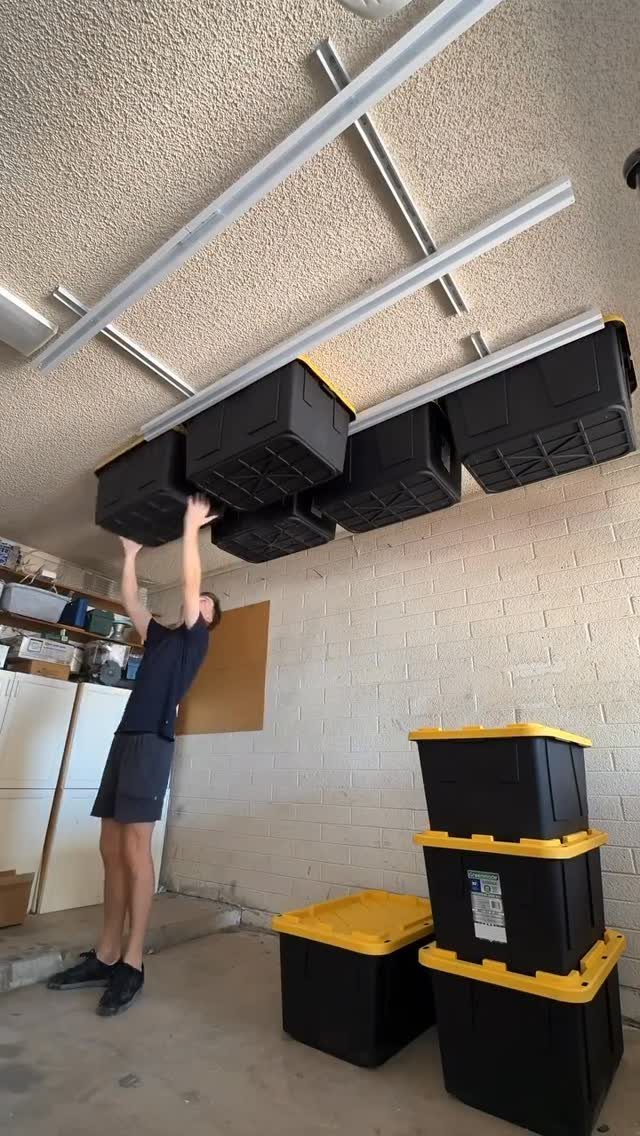
Ceiling-mounted racks pull the seasonal stuff, the bins you touch twice a year, completely off the floor.
The systems bolt to ceiling joists on threaded rod or drop chains, usually a couple feet down.
That puts totes above the garage door arc or high along the back wall where headroom is wasted anyway. A full-sized rack holds several bins and rates for hundreds of pounds depending on the gauge.
I check joist direction before I buy anything. Racks running the wrong way need more anchors or they sag in the middle.
4. Wall-Mounted Racks
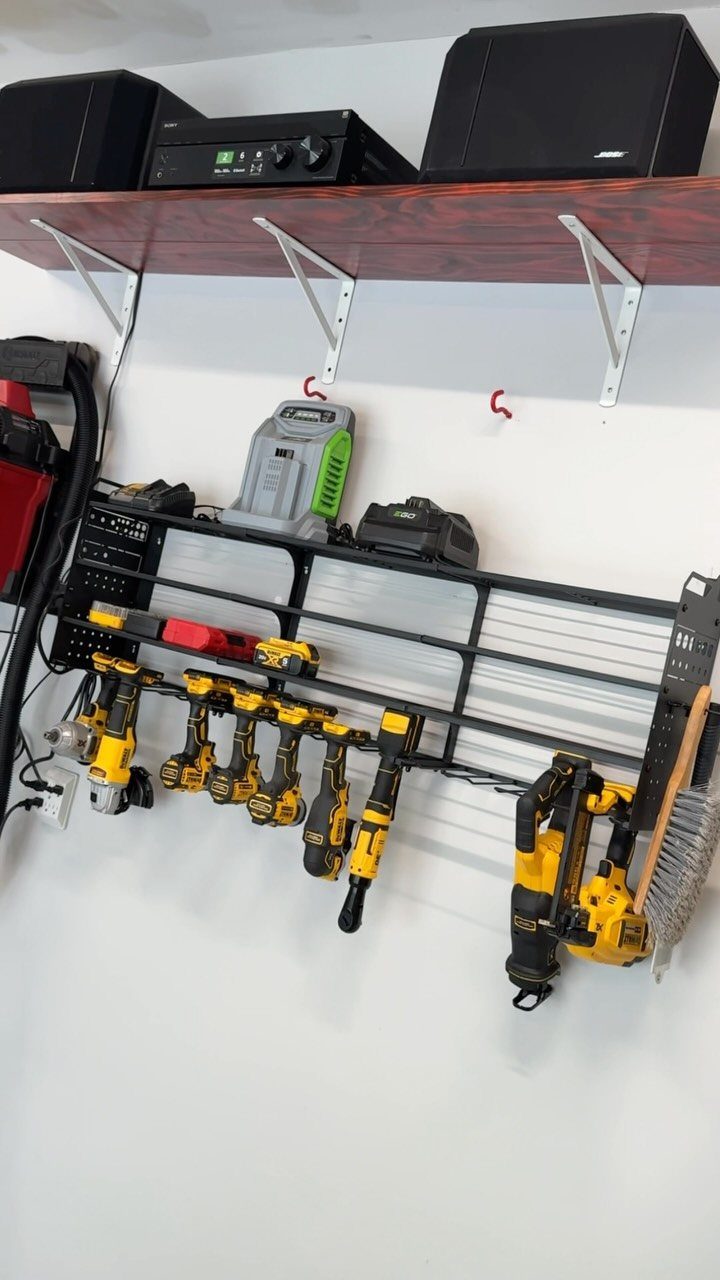
Power tools get lost in drawers. A rack keeps chargers, drills, and the matching batteries at eye level where your hand finds them without looking.
Black metal rack against white wall; I would add tool outlines so a missing drill becomes visible at a glance.
Install with heavy-duty wall anchors or directly into studs at standard spacing. This is for the few tools you reach for weekly, not the full collection.
5. Tool Cabinets
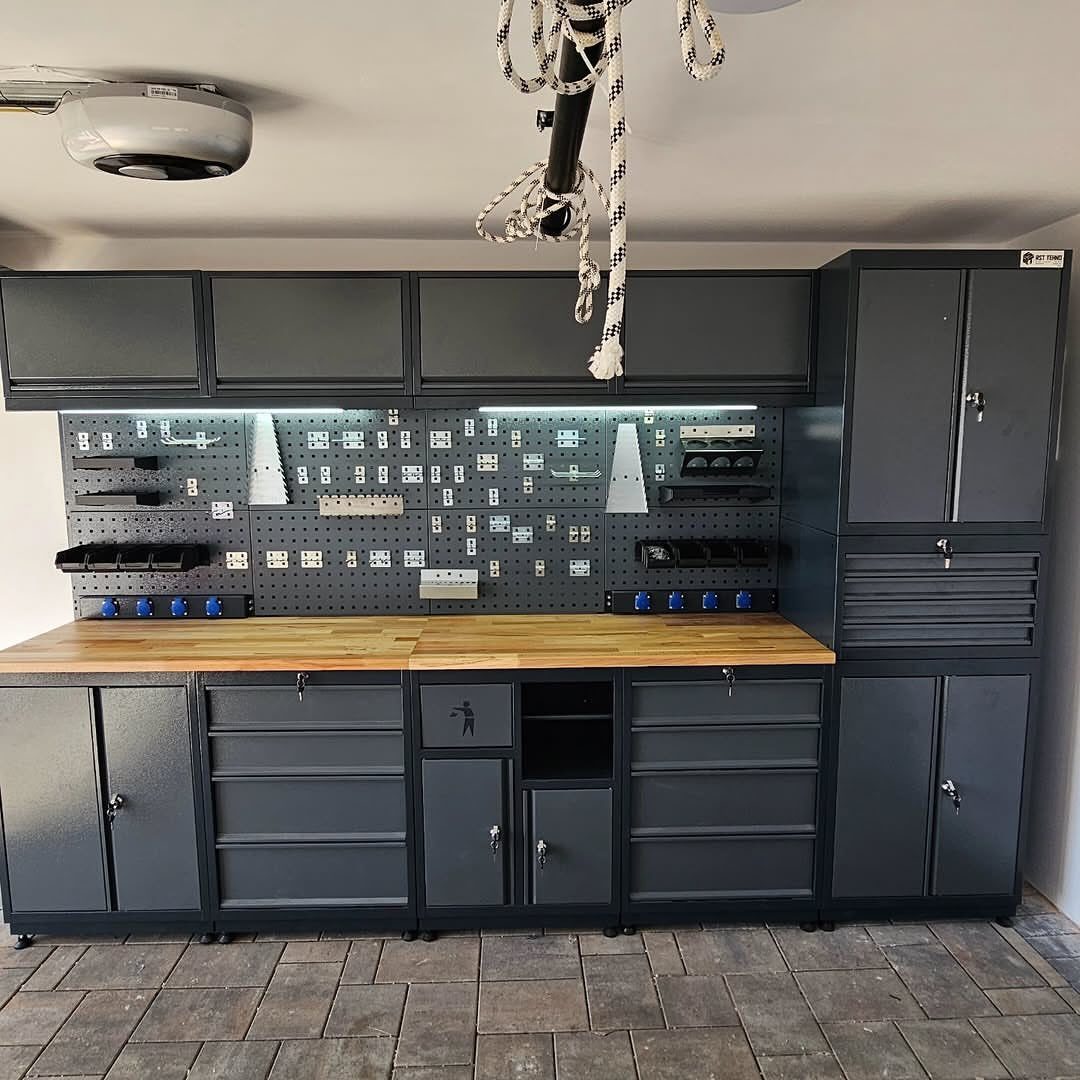
When the tool count passes what a chest holds, a modular cabinet bank with integrated work surface and pegboard becomes the permanent answer.
Drawers sort by task; uppers take the stuff you rarely open; the pegboard fills the gaps between them with hangable odds.
Bolt cabinets to the wall and each other. A long run with a deep bench eats a garage bay, so I would only commit if parking outside stops being an option.
6. Tool Organizers
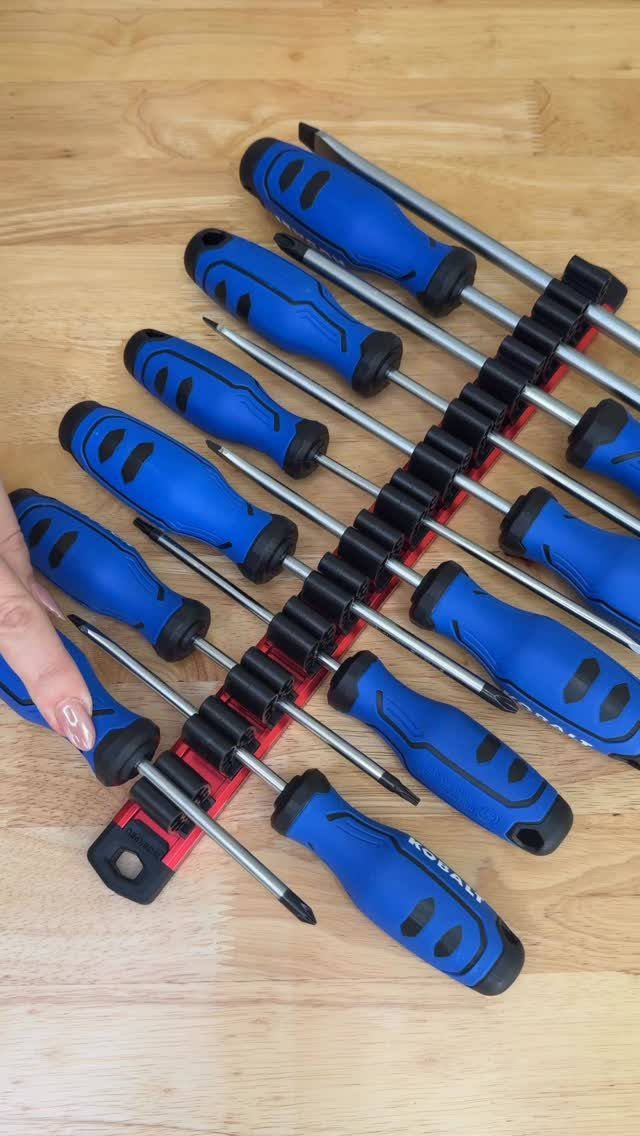
One rail for one tool family, clipped in by the handle: a screwdriver organizer keeps the set together and standing upright.
Plastic or steel, the rail screws to a workbench back or stout board. I have seen these for wrenches, pliers, ratchets, each shaped to the tool profile so nothing stacks or slides.
The limitation is obvious; once the rail is full, you stop buying that size screwdriver or you start a second rail.
7. Labeled Clear Bins
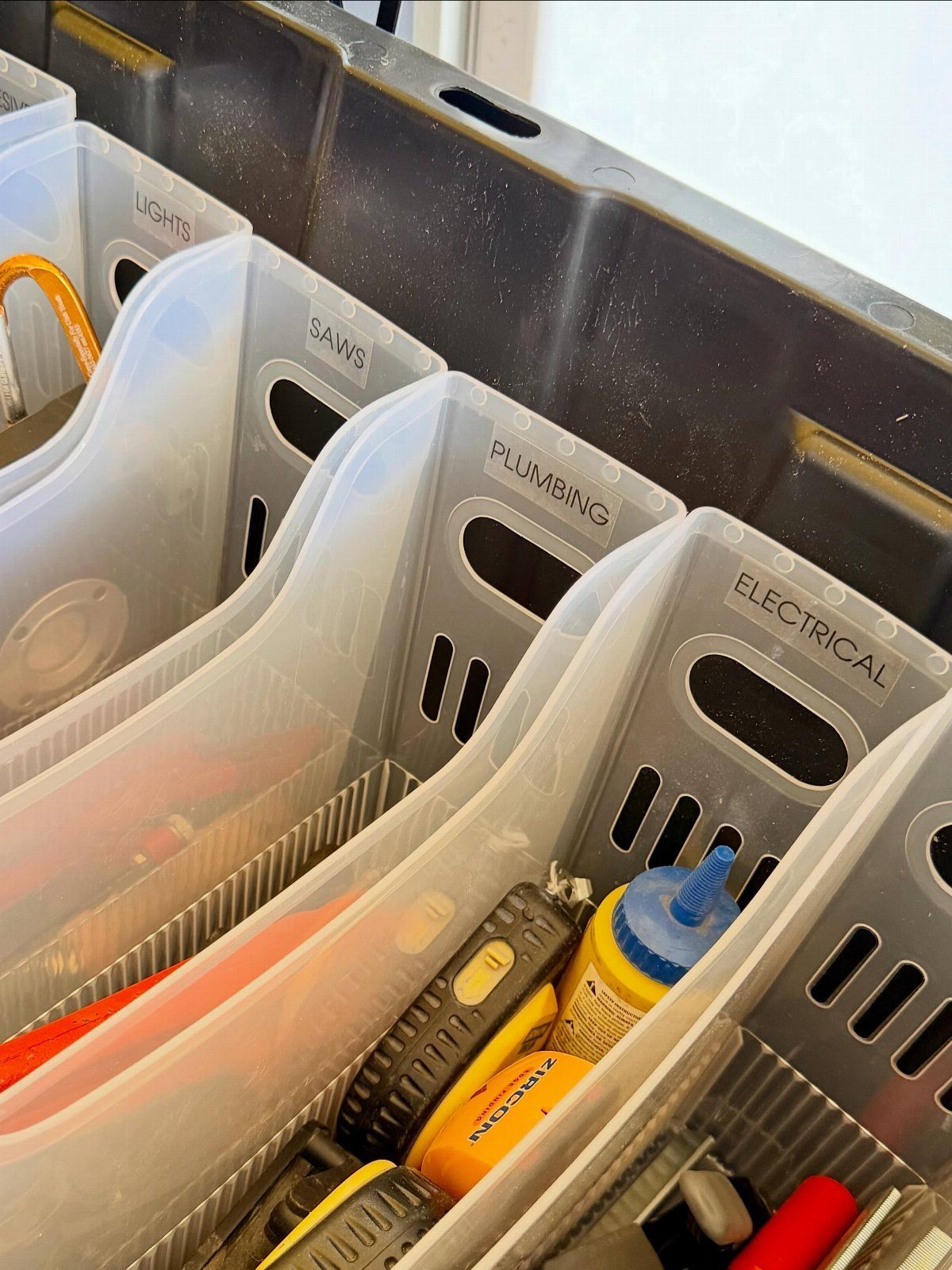
Translucent bins with a label facing out let you find the right category without lifting the lid.
I sort by task rather than tool type: a "SAWS" bin holds the saw, its blades, the miter box and the spare square.
Labels print on any sticker sheet; I use a label maker so the text stays legible after greasy fingers brush it.
A dark tote or shelf behind the bins makes the contents read even faster through the plastic. This suits the collection that has outgrown a single drawer but does not yet justify a full cabinet system.
8. Pegboard Tool Wall
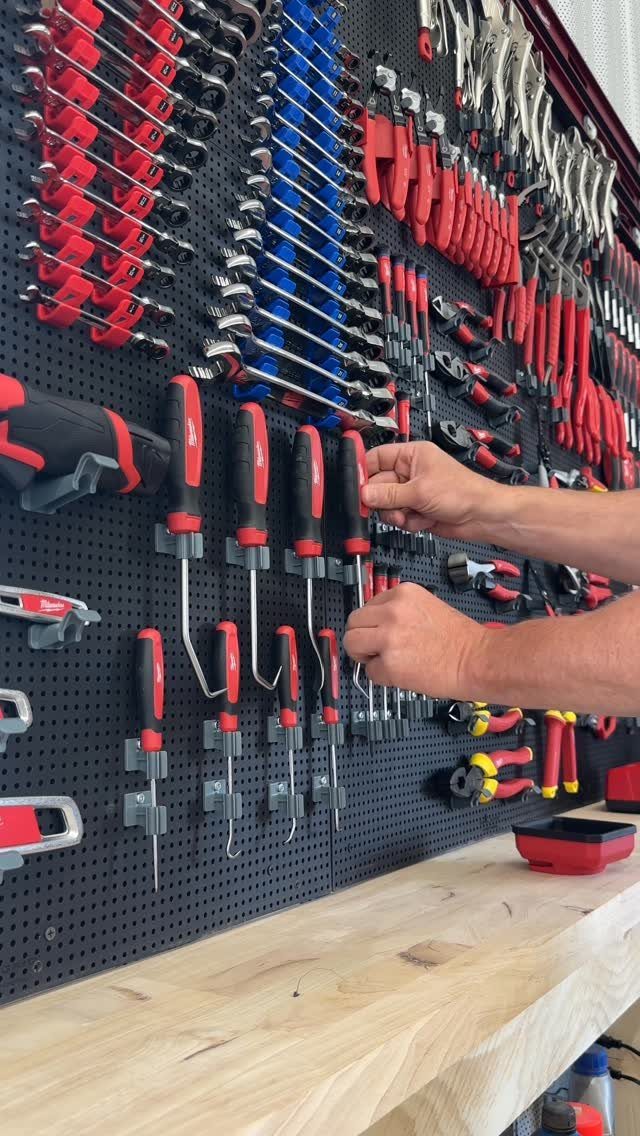
A pegboard gives every hand tool a silhouette-shaped hole in the pattern, and your eye finds the missing one instantly.
Black board against pale tools, or the reverse: the contrast matters more than the color. Standard pegboard is 1/4-inch holes on 1-inch spacing; I back it with 3/4-inch plywood so hooks do not tear out when a wrench catches.
The bench below should sit close enough that you reach, not stretch. This is for the active set you use monthly, not the inherited duplicates you keep for someday.
9. Rolling Utility Cart
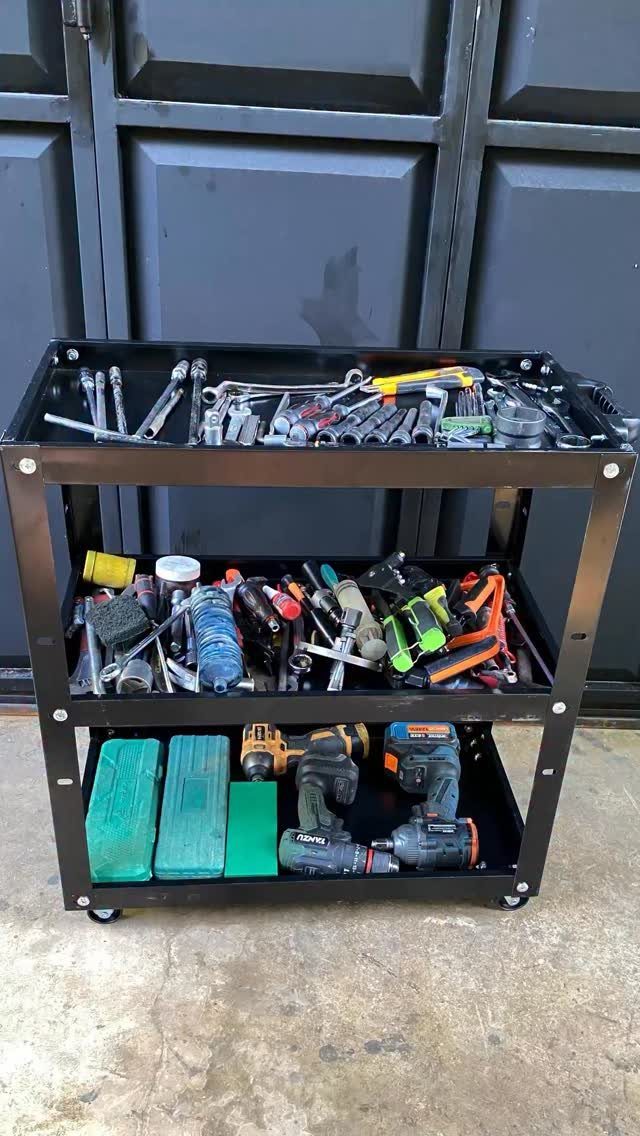
3 tiers on casters bring the whole kit to the driveway or the basement stairs without the load trip by trip.
Metal construction takes the weight; I would set power drills on the top shelf, hand tools below, hardware in bins on the bottom where gravity helps more than hinders.
The width of a cart is the width of a doorway: measure yours before you buy. This fits the apartment-dweller who works in a shared garage or the homeowner whose projects move between house and yard.
10. Slatwall Tool Storage
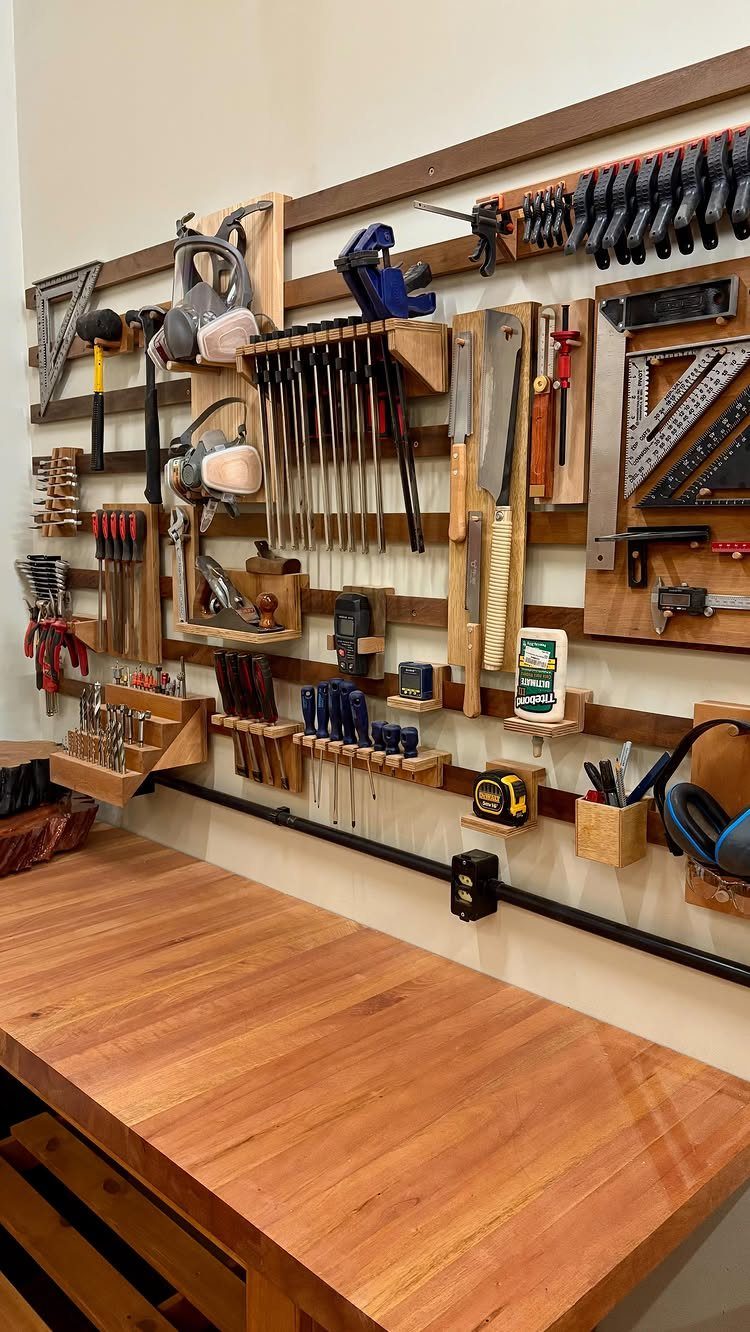
Horizontal grooves let hooks slide to fit the tool, not the other way around: saw today, clamps tomorrow, the same panel adapts.
Wood slatwall above a matching bench reads as built-in furniture, not hardware store afterthought. I would space the panel so my hand reaches the highest hook without a step stool; about chest height above the bench surface is my rule.
The accessories cost more than pegboard equivalents, but a holder for Titebond bottles or safety glasses actually fits the thing it holds. This is the permanent wall for someone who knows which tools stay and which ones leave.
Maximizing Garage Space
Vertical storage is the only way a garage earns back its floor.
Wall racks and pegboards keep hand tools off benches you need clear for actual work; overhead racks pull holiday bins and camping gear into the dead air above the door track where nobody walks anyway.
I sort by purpose, not brand. Cutting tools with cutting tools, measuring with measuring, so my hand knows where to reach without my eyes checking.
The stuff I touch daily stays at eye level or on the workbench surface; seasonal items climb as high as the rack allows.
Rolling cabinets bridge the gap for tools that travel project to project, and clear bins with facing labels let me verify contents without the lift-and-guess routine.
Every few months I pull duplicates and broken pieces; a tool that sits untouched for 2 seasons is a candidate for donation, not storage.
Assessing Storage Needs
Start with what you own, not what you wish you owned. Small hand tools, power tools, and specialized equipment each demand different real estate; a diagnostic scanner needs shelf depth a screwdriver does not.
Condition matters. Broken tools waste the wall space they hog, and that second ratchet set in good shape belongs with someone who will turn it.
Frequency decides placement: daily tools at hip to shoulder height, weekly within arm’s reach, yearly overhead or in the back row.
I group similar sizes when the wall allows it; a rack of matching-profile items reads faster than a scattered board.
The count of each category tells you whether a rail, a drawer bank, or a full cabinet is the right answer. Buy storage for what you own now, not the shop you picture someday.
Maintaining Organization
A system only lasts if returning tools takes less effort than leaving them out. I take a few minutes after a project to walk each piece back to its spot; the alternative is a long archaeological dig next weekend.
Monthly tidying catches what drifted. I check for damaged tools, relabel bins where grease blurred the text, and verify that the winter gear has not colonized the spring zone.
Seasonal rotation keeps the front row relevant: gardening forward when the soil warms, ice tools accessible when the driveway freezes.
Cleaning as you go is the habit that preserves the layout. After a shift or a Saturday project, the bench gets wiped, the vacuum goes back under its shelf, and the cart rolls home.
Perfection is not the point. I am only trying to slow the entropy that turns an organized garage back into a pile with a door on it.
Frequently Asked Questions
What factors should be considered when organizing small versus large tools?
Frequency of use and the physical demands of each tool type should guide where it goes.
Small tools like sockets and screws vanish into clutter without drawer organizers or divided bins; large tools like hammers and saws need dedicated racks or deep drawers where they will not topple or block access.
Daily-use items stay at hip to shoulder height, while anything oversized and rarely touched climbs high or drops low.
How can specialized tools be organized within a tool chest?
Drawer partitions and clear containers keep specialized tools separated and visible. I group similar items together so my hand knows the drawer before my eyes check; consumables that share a task land in the same zone.
If the drawers do not roll out all the way on ball bearings, the back third of the chest turns into a graveyard for half-inch drives and odd sockets you will not remember until you buy duplicates.





