
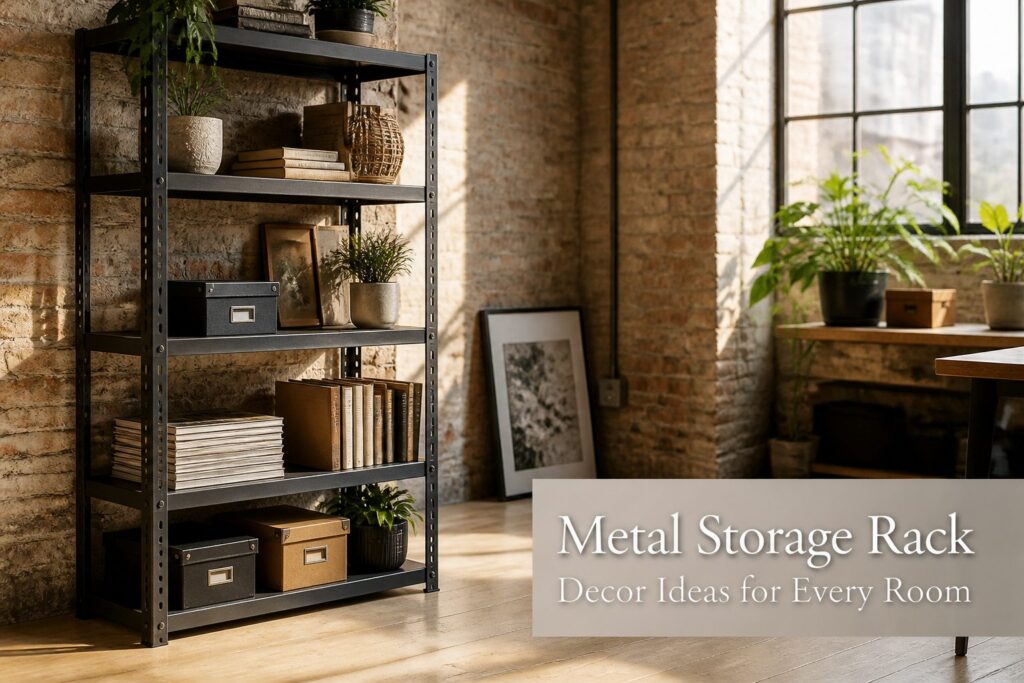
A metal storage rack earns its place in a room only when something hard and cold already lives there: exposed ductwork, concrete floors, bare brick.
Without that echo, steel fights the warmth of upholstery and soft light. The decision is visual temperature, not storage logic.
The problem is weight. A fully loaded rack usually has to be emptied before it moves, unlike a bookcase you can drag across carpet with the books still inside.
That semi-permanence makes placement the choice you live with. Powder-coated steel with a 36-inch span wins for most rooms, but bare steel develops a patina that darkens where hands touch it, and that oxidation sheds onto light fabrics nearby.
[link-whisper-related-posts]1. Industrial-Style Racks That Anchor a Room
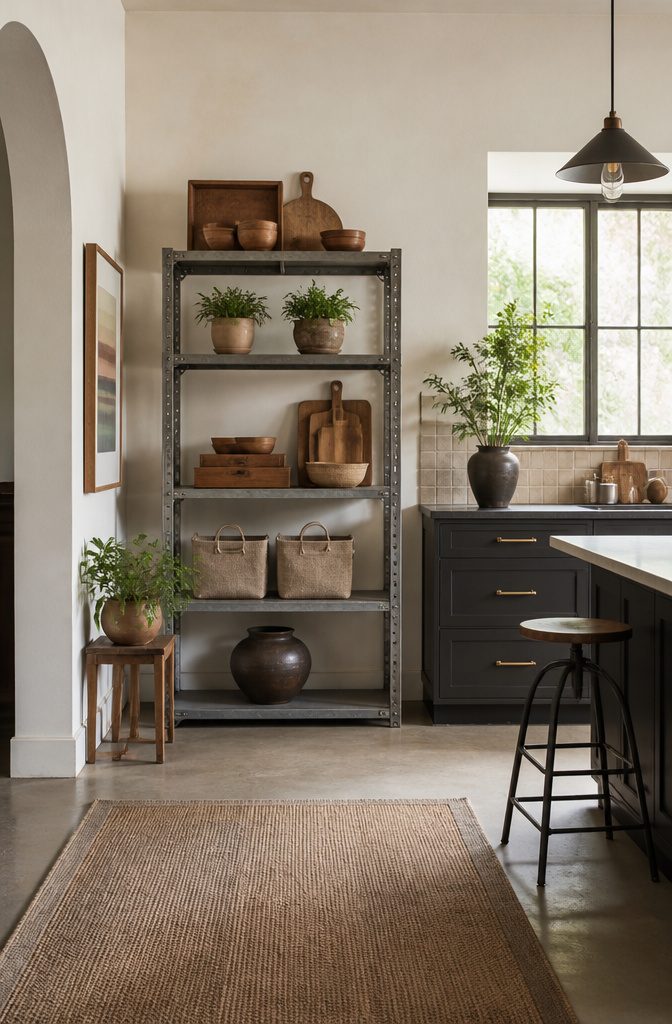
Raw steel frames with visible rivets and cast-iron fittings carry a factory-floor character that works in living spaces precisely because it does not pretend to be furniture.
The finish is usually powder-coated for rust resistance, or left bare to develop a natural patina that darkens unevenly where hands touch it.
I prefer the powder-coated route for anything near upholstery; bare steel sheds fine oxidation that light fabrics pick up.
These racks earn their place when they hold materials that argue with the metal.
Wood cutting boards, linen baskets, matte ceramic: the contrast is what keeps the room from feeling like a workshop. A fully steel-on-steel display reads as storage; mixed materials read as intentional design.
Weight capacity is substantial on these frames, enough for kitchenware, books, or small planters without concern, though I would not stack cast-iron cookware to the top tier without checking wall anchors.
The visual weight matters too. A six-foot raw steel rack against pale drywall becomes the room’s anchor point; build around it rather than tucking it aside.
2. Modular Units You Rebuild as Needs Change
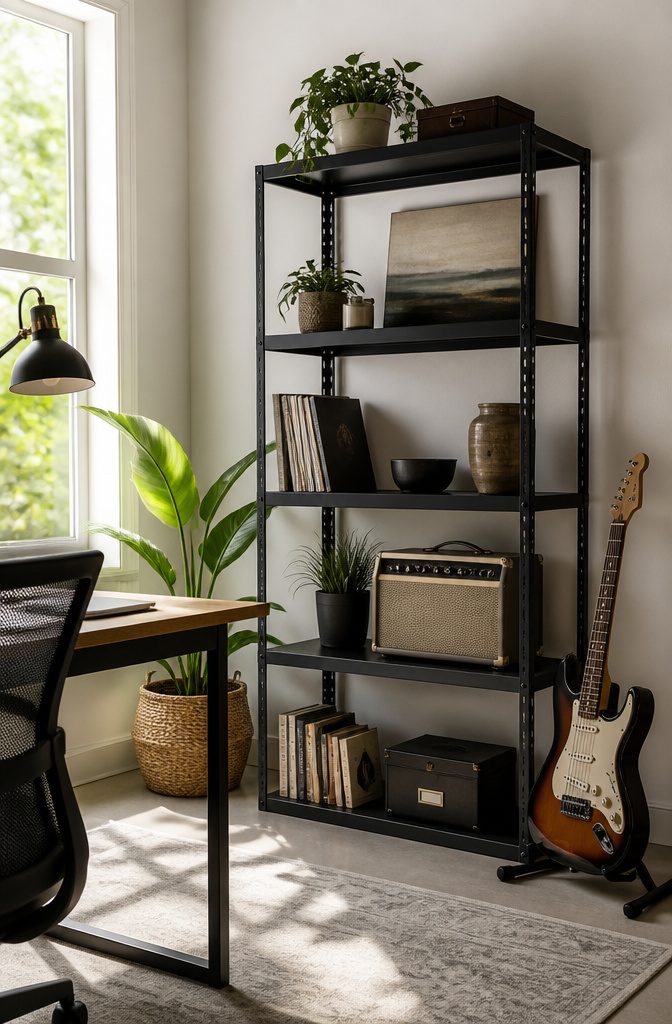
Boltless steel shelving earns its keep the moment your lease ends or your spare room switches from nursery to office.
The posts come punched every inch or inch and a half, so a shelf lifts out in minutes to clear a vacuum or a guitar amp.
The 36-inch and 48-inch spans are the standard widths, and both sizes share the same vertical posts, which means you can bolt a fresh bay onto the end of an existing run without buying a whole new rack.
Rivet-lock systems work the same way; the shelf corners hook into the post slots and hold tight without a single nut.
I have split one 72-inch-tall unit into two 36-inch benches for a laundry room, then reassembled it as a single rack two apartments later.
The finish wears faster than welded furniture-grade steel, and the rivets can loosen if you move the unit fully loaded. For a renter or anyone whose rooms change jobs with the seasons, that trade is worth it.
3. Heavy-Duty Racks for Garage and Workshop
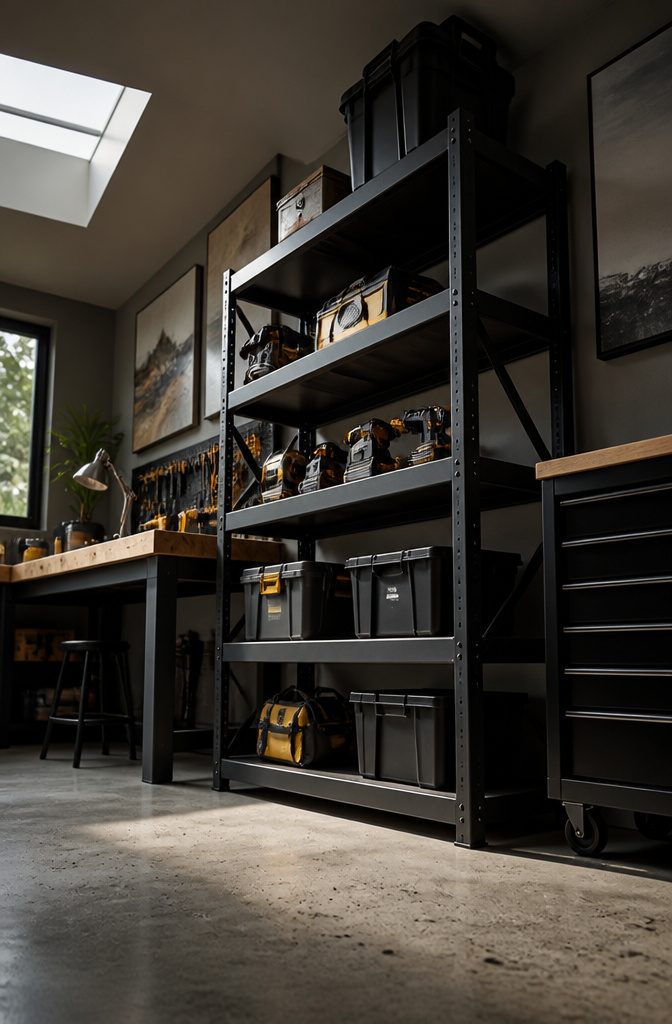
Welded-frame steel shelving with reinforced corners carries the loads that matter in a garage or workshop. I look for particleboard or wire decks rated for the weight of tools and equipment, not the lighter specs sold for pantry duty.
Adjustable feet handle uneven concrete floors, a detail that saves the whole installation from rocking every time you set down a battery pack.
The usual finish is baked enamel over cold-rolled steel, which resists moisture and oil better than paint-on coatings I’ve seen flake within a season.
That same utilitarian look reads as unfinished anywhere inside the house, so I keep these units to basements, utility rooms, or detached workshops where function is the whole point.
A cross-beam design adds stability to taller units, and wall anchoring belongs on anything that could tip from a shifted load.
4. Decorative Shelving That Reads as Furniture
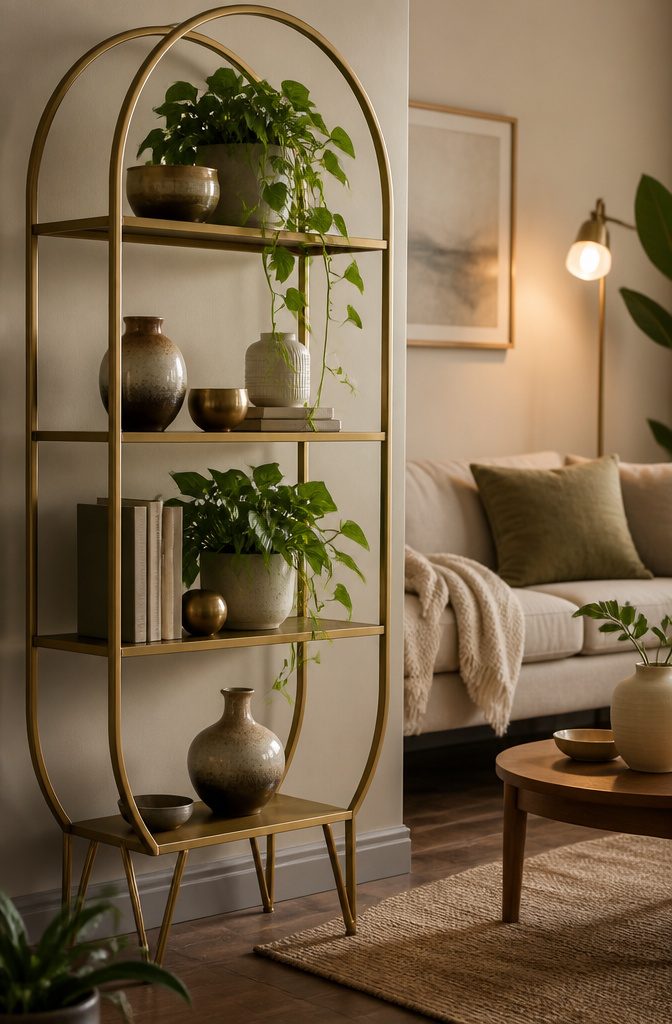
Thinner-gauge steel, bent into arches or fitted with hairpin legs and X-braces, shifts a metal storage rack from closet utility to living room furniture.
The silhouette reads mid-century or art deco depending on the curve of the arch or the angle of the brace, and that transformation is what you are paying for when the price jumps past utility grade.
You are buying the shape, not stronger metal. The gauge stays light, sometimes 20-gauge or less, and the finish, brass plating, blackened patina, or white powder coat, accounts for most of the labor cost.
These racks carry books, a few plants, ceramics I picked out piece by piece. They are not for power tools or bulk storage.
I would not load one with reference texts or a ceramic collection that runs past forty pounds. The honest trade-off is visual weight against actual capacity.
If the room needs a statement piece and your storage is mostly light, the silhouette wins. If you are moving boxes quarterly, the silhouette bends.
5. Corner Units That Use Dead Space
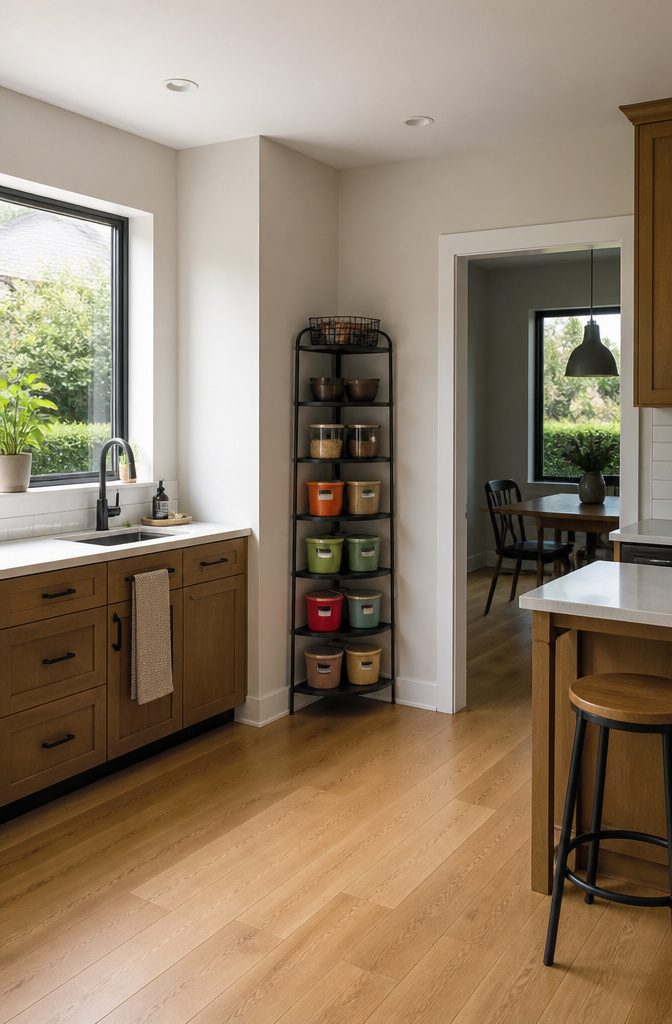
A corner metal storage rack turns the triangle where two walls meet into vertical storage you actually reach for.
The geometry matters: these units are either freestanding towers or connectable add-ons that lock onto a standard straight run, and the shelves themselves are quarter-round or pie-shaped.
Depth is shallow at the back wall and deeper at the front face, so the back corner is useless for anything tall; plan the front edge for bins and the wedge behind for flat items you rarely need.
Single towers work for renters because they stand alone without wall anchors. Connectable corner pieces need the adjacent straight sections for stability, which makes them better for owners who can bolt the whole run in place.
The mistake I see most is loading the top tier with heavy boxes.
A corner unit is least stable at the apex; the center of gravity sits farther from the wall than on a flat-backed rack. Keep the top light, the base heavy, and the whole thing stays put.
6. Adjustable-Height Racks for Growing Collections
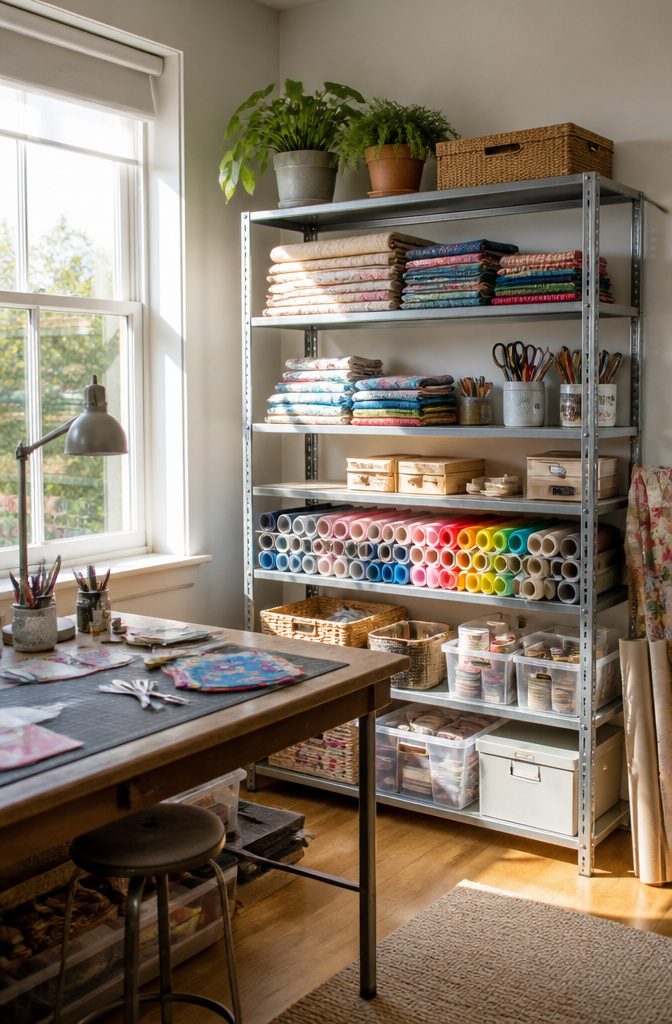
The punched-post system on a good adjustable rack is the detail that separates a temporary fix from years of actual use.
A steel pin or shelf clip drops into holes drilled along the corner uprights in 1-inch or 1.5-inch increments, letting you raise or lower a shelf without tools or disassembly.
That matters most when the things you store keep changing: vinyl records give way to board games, or a short row of novels becomes stacked photo boxes that need a few extra inches of headroom.
The best systems add a locking mechanism so the clip cannot walk out under load, a failure that starts slow and ends with a shelf on the floor.
I look for the kind where the pin seats with a small click or a tab you press to release, not gravity alone.
You usually pay a few dollars more and spend a little longer adjusting the height, but a rack that holds its height through a move or a heavy season is worth it.
7. Racks With Add-On Accessories
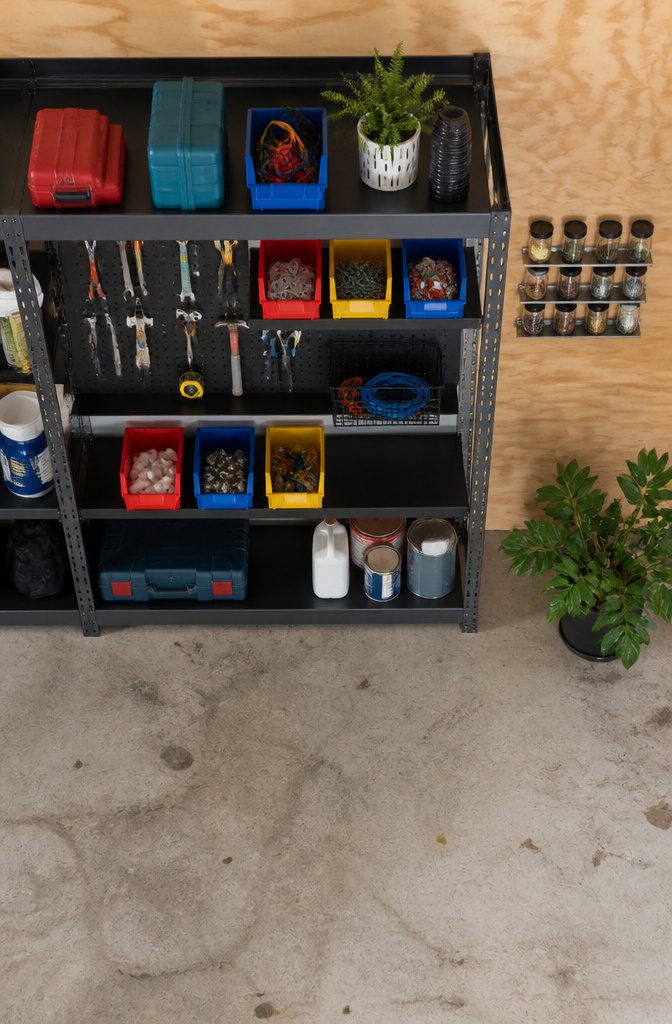
The real value of a metal storage rack opens up once you treat it as a system rather than a frame.
S-hooks slip over wire shelves to hang pots in a kitchen or hand tools in a garage, and the good ones are thick enough that they do not bounce free when you brush past.
Plastic bins that span two shelves turn open wire into cubby-style storage for hardware or craft supplies, though the span rarely fits if your shelf depth is not the standard 18 or 24 inches.
Solid liners, either rolled rubber or cut acrylic, keep small items from tipping through the gaps; without one, a spice jar or nail box is guaranteed to wedge itself at an angle that blocks the whole shelf.
Magnetic strip holders bolt to upright posts and work well for spice jars with steel lids or for keeping driver bits visible in a workshop.
Matching the post spacing matters more than the brand name on the box.
Accessories clip or bolt to specific intervals, usually one inch or two, and a bin made for 1-inch vertical spacing will sit crooked or refuse to latch on a rack with 1.5-inch holes.
I have learned to measure the gap between posts before ordering anything, because returns on a $12 bin cost more in time than the bin is worth.
Bracket-mounted drawers exist for some systems and add real utility, but they eat headroom and can make a rack feel cluttered where open shelves felt light.
For most rooms, I would rather add one solid liner and a handful of S-hooks than build out the full catalog; the rack stays adaptable, and I am not locked into a single brand’s accessory line for the next decade.
8. Open Wire Shelves for Air and Visibility
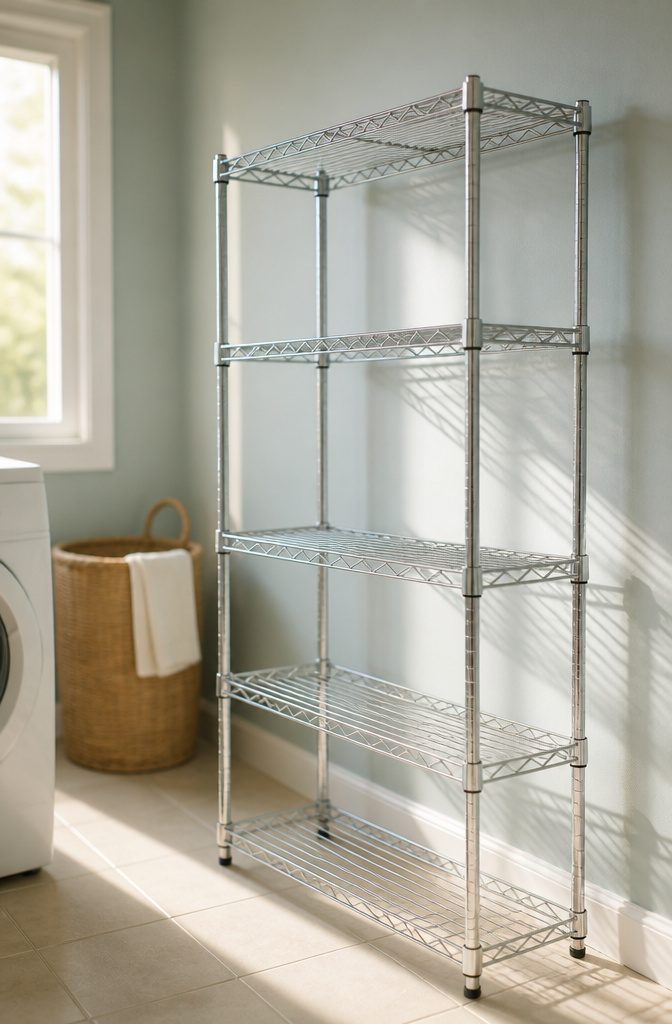
Welded wire grid decks let air move through stored linens and off-season clothes, so fabrics stay dry instead of trapping the humidity that breeds mildew.
You can also read labels from underneath without unstacking anything, which saves time in a pantry or laundry room.
That same openness is the weakness: small jars and bottles tip between the wires, and anything liquid will drip straight through if it spills.
The look is commercial kitchen or back-of-house retail, unmistakably, so I would not force this into a living room unless the industrial note is already there.
It works best where the transparency is the point: pantries, laundry sorting stations, and plant collections that need light from below.
Chrome plating resists rust in damp spaces but shows every fingerprint; epoxy-coated black or white hides daily wear far better and quiets the visual noise if you already have enough metal in the room.
What Metal, What Finish, What Lasts
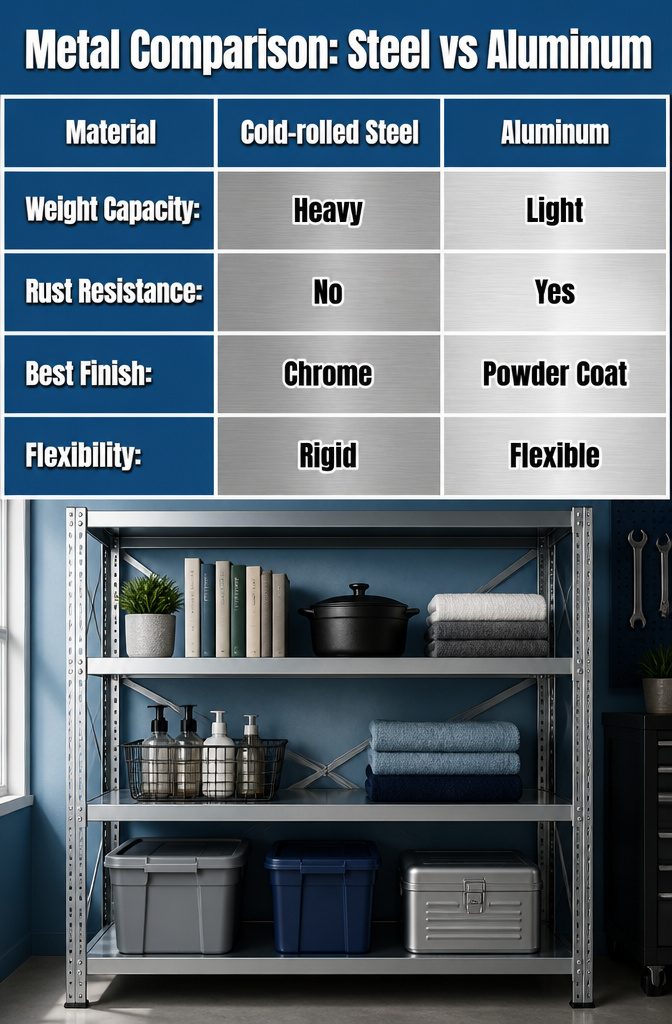
Cold-rolled steel carries the load aluminum cannot. I reach for it when the rack needs to hold books, cast iron, or a growing stack of storage bins, but the trade-off follows immediately: chip the coating and moisture gets to work.
Steel rusts from the inside out, and by the time you see orange blooming on the surface, the damage is already deeper than it looks.
Aluminum solves that problem entirely.
It never rusts, which makes it the safer bet for a bathroom or any room where humidity swings. The problem is flex.
Load an aluminum shelf past its comfort and the shelf itself bows, slowly at first, then permanently. I keep aluminum to lighter duty: towels, toiletries, the display pieces that weigh more in presence than in pounds.
The finish matters as much as the metal underneath. Chrome looks at home in a living room, reflecting light and reading as intentional furniture, but it fingerprints the moment you touch it and shows every water spot.
Powder coat gives you color options and a surface that forgives daily use; it is my default for anything that lives in a basement or garage where scrapes are inevitable.
Epoxy sits between the two, tougher than powder coat against chemicals and moisture, which is why it ends up in workshops and kitchens where cleaners and grease are part of the routine.
Powder coat on steel wins for most rooms, but epoxy is what I want within ten feet of a stove or a sink.
Where I Use Metal and Where I Do Not
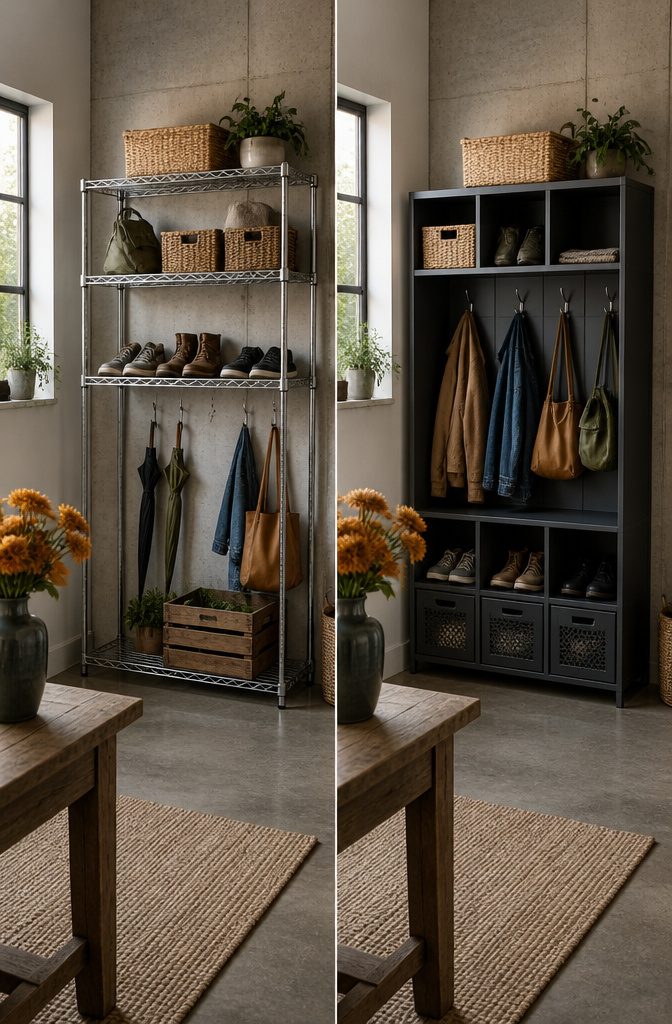
Raw steel carries a visual temperature that decides where it belongs. I reach for metal storage rack decor in utility spaces first: laundry rooms, mudrooms, garages, anywhere the job already outweighs the finish.
An open wire shelf turned pantry in a kitchen reads as honest storage, especially when the rest of the room runs warm with wood counters or brass hardware.
Industrial lofts are the easy case, where exposed ductwork and concrete make a black metal rack feel like architecture instead of an intruder.
The line I draw is in rooms built for rest and ritual.
A raw steel rack in a traditional bedroom or a formal dining room fights every layer of warmth those spaces need: upholstery, rug, the soft light from a shaded lamp.
In those rooms I switch to painted MDF or solid wood shelving, even if the storage logic is identical. The same items arranged on warm material simply sit more peacefully.
The test is whether the room already contains another hard, cold element to echo.
If it does, metal belongs. If every surface invites touch, steel becomes the note that refuses to resolve.
How to Keep Metal Shelving Clean
Grease and dust bond to powder coat over time, especially in kitchens or near entryways where hands brush the frame.
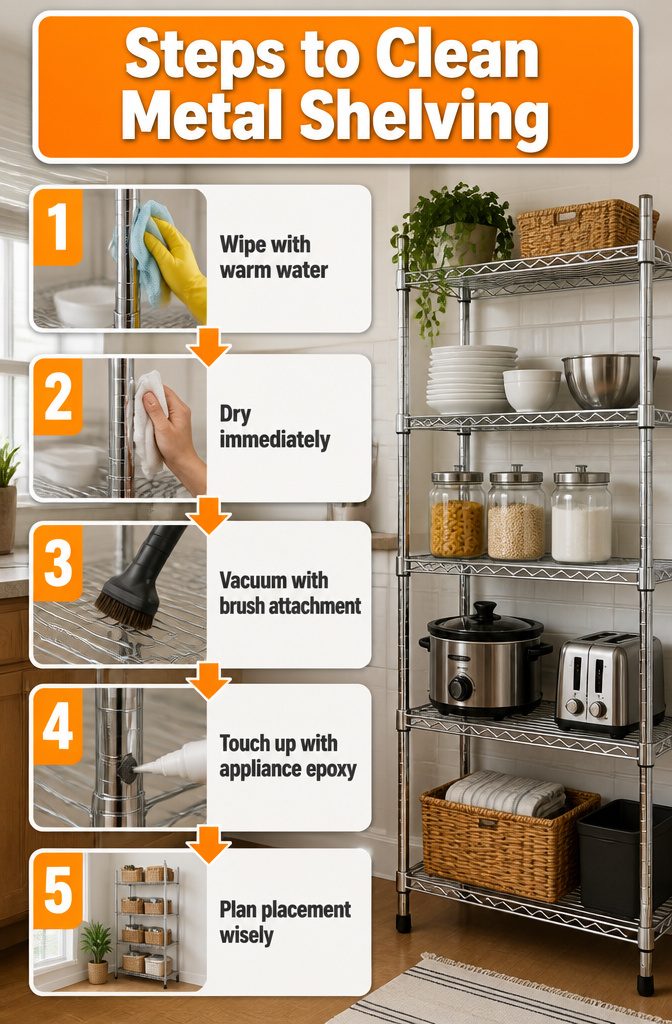
I wipe mine with warm water and a drop of dish soap, then dry immediately; trapped moisture is what lets rust start under the finish.
Wire shelves need vacuuming with a brush attachment first, since dust settles in the welds where a cloth cannot reach.
Chipped chrome should be touched up with appliance epoxy before rust blooms, because once pitting starts, the metal is already compromised.
Placement matters more than people expect. A fully loaded metal rack usually requires emptying it first before it can be moved, unlike a solid bookcase that can be dragged across carpet with the books still inside.
That weight makes placement decisions semi-permanent, so I set mine where I am willing to live with them for a year or more.
Frequently Asked Questions
What are the best uses for metal storage racks?
Metal storage racks work best in utility spaces where function matters more than finish: laundry rooms, mudrooms, garages, workshops, and basements. They also fit open pantries and industrial lofts where the hard, utilitarian look echoes exposed ductwork or concrete.
How do I choose the right metal shelving unit?
Match the rack to the job and the room.
For heavy loads like tools or cast iron, pick welded-frame cold-rolled steel with reinforced corners and adjustable feet for uneven floors. For spaces that change often, boltless modular systems with punched posts let you reconfigure without tools.
For living rooms, thinner-gauge decorative racks with arched silhouettes or hairpin legs read as furniture but carry far less weight. Always check that accessories match your post spacing before ordering bins or hooks.
Can metal storage racks be used for decorative purposes?
Yes, but only certain types.
Racks built from thinner-gauge steel with curved arches, hairpin legs, or X-braces shift from utility to furniture and carry mid-century or art deco silhouettes. The trade is real: you are buying shape, not stronger metal, so these stay light.
Load them with books, a few plants, or ceramics you chose yourself, not power tools or bulk storage. The visual weight works as a room anchor; the actual capacity rarely exceeds 40 pounds per shelf.





