
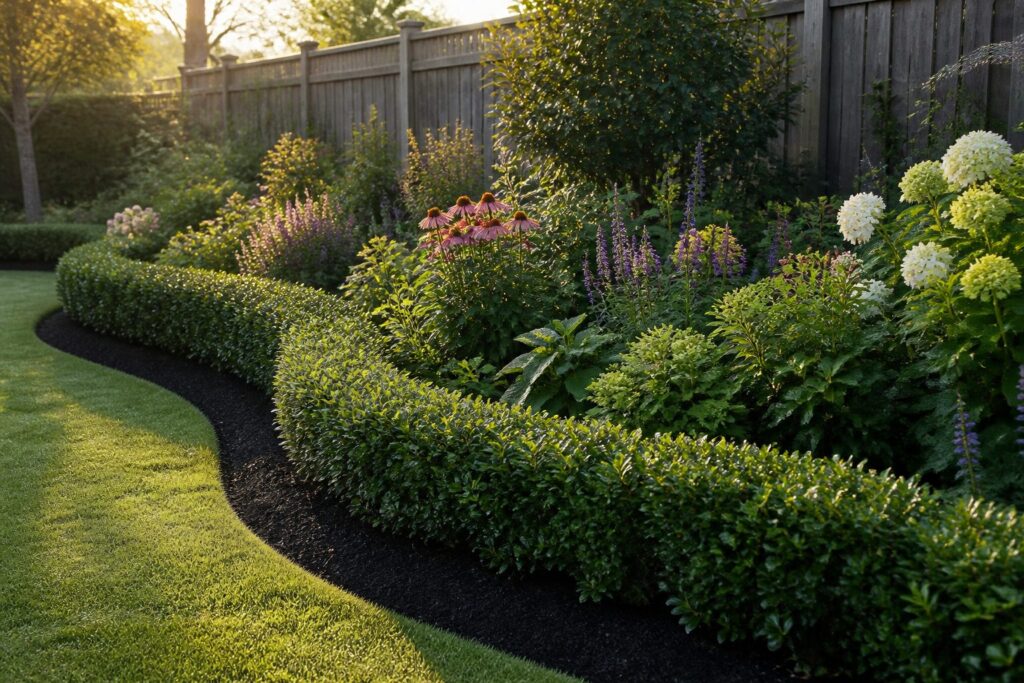
An evergreen garden border is a planted edge of shrubs that keeps its shape and foliage through all 12 months, giving structure when perennials have died back and deciduous wood has gone bare.
Evergreen covers a wide range of sizes, growth speeds, and cold tolerances; a shrub that stays polite in a Seattle bed can swallow a Charlotte sidewalk or black out in a Minneapolis January.
I looked at 41 options and spent real time on 8 that owners actually buy, from a 3 ft inkberry holly that tucks under a north-facing window to a 25 ft blue-needled yellow-wood that functions as a standalone specimen in zone 9.
[link-whisper-related-posts]My Top Picks
| Product | Award | Best for | Why it won | ||
|---|---|---|---|---|---|
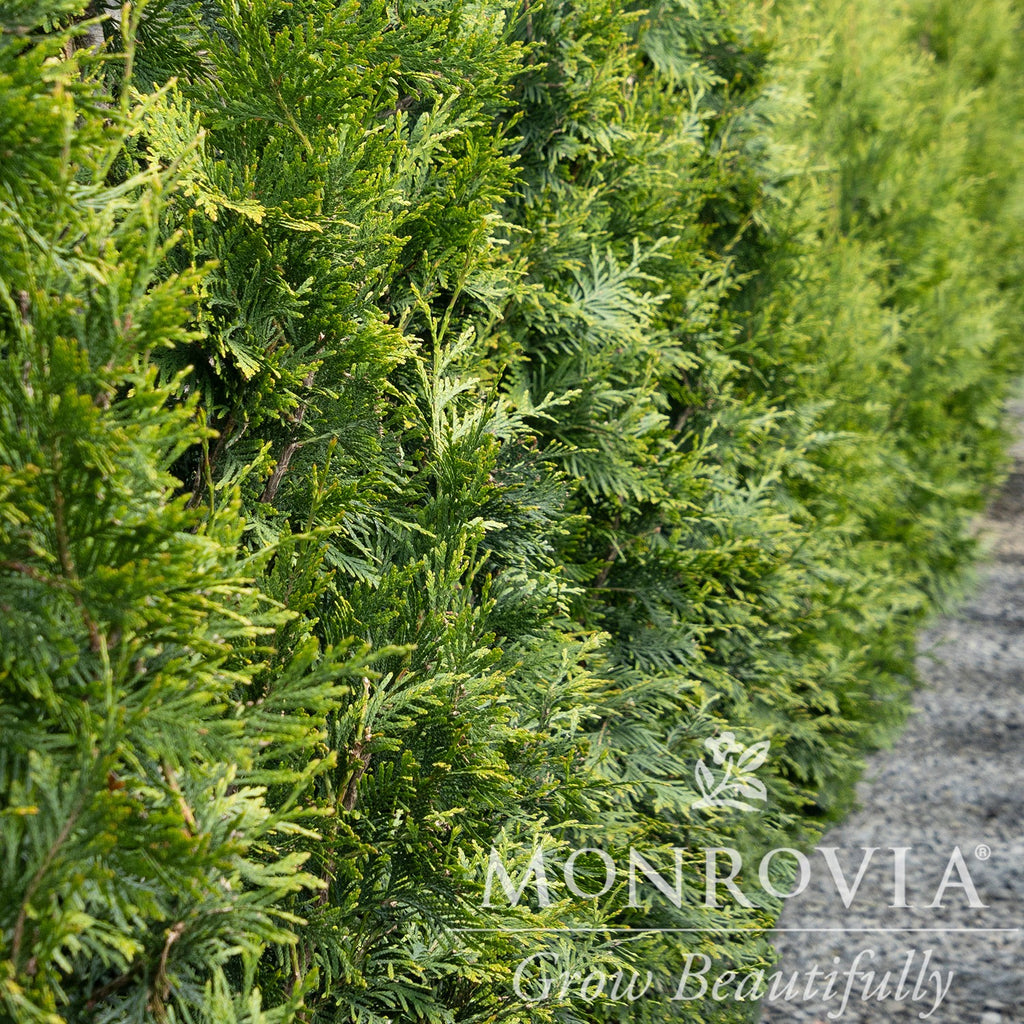 | Thuja Tiny Tower Green Giant Arborvitae | Best Overall | Anyone wanting an easy, versatile hedge | Grows to a useful height without overcrowding most yards, and resists common problems | Check price |
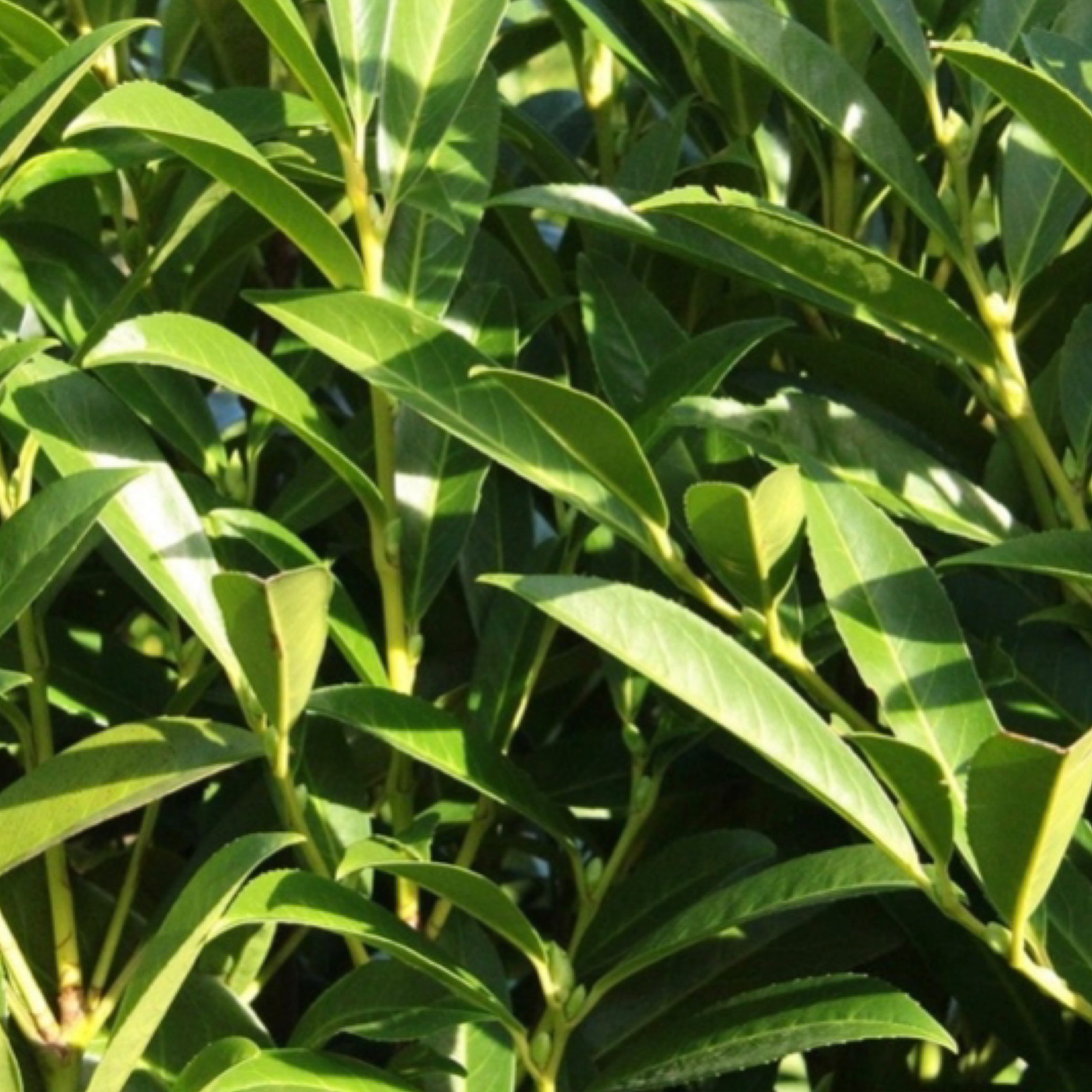 | Prunus laurocerasus Schipka Cherry Laurel | Best for Privacy | Neighbors and noise to block out | Thick leaves fill in quickly to form a solid living wall year-round | Check price |
 | Tight Squeeze Western Red Cedar | Best for Small Spaces | Tight side yards or cramped beds | Stays naturally slender without shearing, leaving room to walk or plant nearby | Check price |
 | Yukon Belle Pyracantha | Best for Low Maintenance | Gardeners who want to set and forget | Needs little attention yet still looks tidy and avoids the usual plant troubles | Check price |
 | Podocarpus Icee Blue Yellow-Wood | Best for Color Variety | Anyone tired of plain green shrubs | Striking blue-gray needles catch the eye and set your border apart from the block | Check price |
 | Ilex glabra Inkberry Holly | Best for Shade | Yards where sun is scarce | Handles shadowy spots that leave most evergreens thin and patchy | Check price |
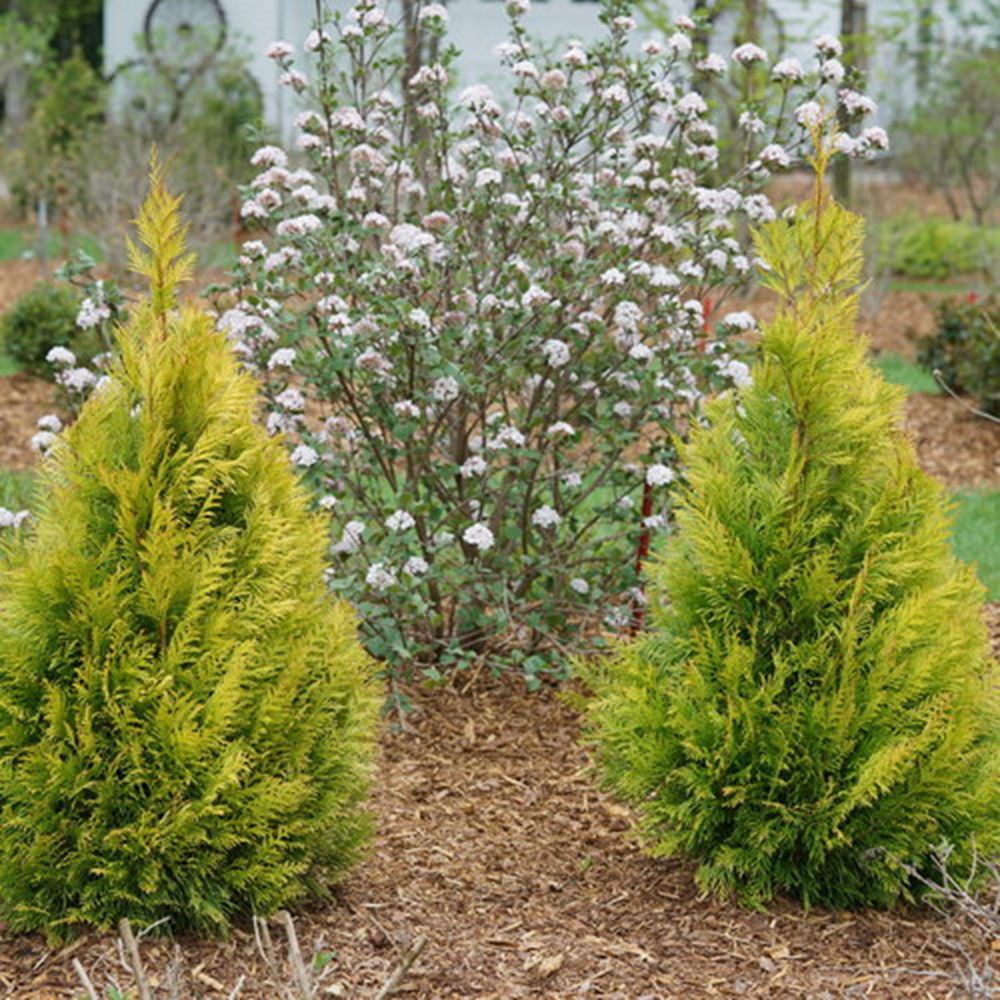 | Thuja Fluffy Arborvitae | Best for Fast Growth | Patience is not your virtue | Puts on noticeable size quickly so you get a real screen in just a few seasons | Check price |
Best Overall: Thuja Tiny Tower Green Giant Arborvitae
Image: servescape.com
Quick Verdict
A narrow footprint at just 3 ft wide makes this arborvitae one of the few tall evergreens that fits between property lines or against a garage without swallowing the bed.
The 8 ft mature height gives renters and first-time owners a real privacy screen in a single season of growth, though the slow growth rate means patience or a larger nursery pot at purchase.
Disease resistance and low maintenance keep yearly care from becoming a second project.
Key Specifications
- Mature Size: 8 ft
- Mature Size: 3 ft
What It Does Well
- Dense, rich green foliage holds color through winter in zones 5–9, so the screen works year-round rather than going patchy in February
- Resistant to common pests and diseases removes the guesswork for owners who have lost shrubs to mystery browning and do not want to diagnose again
- Full sun to partial shade tolerance fits east-facing fences and the dappled light between houses where stricter evergreens thin out
Where It Falls Short
- Slow growth rate means a 1-gallon starter plant stays a stick figure for longer than the name "Green Giant" suggests; budget for a 5-gallon or wait
- 8 ft height ceiling tops out below true tree screening; second-story sightlines over a fence stay exposed
Who It’s For
Someone with a 4–6 ft planting strip who needs vertical presence without horizontal spread will find the proportions fit standard foundation beds.
The owner hoping for an instant wall of green from mail-order plugs will be disappointed by the first two years.
How It Compares
The Icee Blue Yellow-Wood carries blue-gray foliage that reads as color in a pale winter garden, but Monrovia and Armstrong Garden Center stock confirms it stays harder to source and less predictable in shape than this arborvitae.
Buyers choosing between them are really choosing between a reliable green backdrop and a statement plant that demands more planning.
The arborvitae suits the owner who wants to plant once and stop thinking about it; the Yellow-Wood rewards the one building around a specific cool-tone palette.
Where to buy: monrovia.com
Best for Privacy: Prunus laurocerasus Schipka Cherry Laurel
Image: patrees.com
Quick Verdict
Dense foliage that fills in fast makes this the hedge to plant when your neighbors’ windows are already too close for comfort.
The Schipka Cherry Laurel reaches 12 ft tall and 5 ft wide within a few seasons, so it suits buyers who need a privacy screen sooner rather than later.
Speed comes with a looser, less formal look than slower upright hollies; owners who want crisp geometry from year one will need patience or shears.
Key Specifications
- Mature Size: 12 ft
- Mature Size: 5 ft
What It Does Well
- Rapid growth rate means a workable privacy screen in 2–3 seasons instead of 5–6, which matters when your property line runs along a busy sidewalk or facing windows.
- Dense, glossy foliage blocks sightlines through the hedge itself; owners describe solid green walls even in winter when broadleaf evergreens hold their leaves.
- Low maintenance once established reduces to annual shearing and occasional deep watering; the plant tolerates neglect better than most privacy hedges its size.
- Hardy in zones 5-9 covers most of the continental US except the northern Plains and hottest parts of the Southwest.
Where It Falls Short
- Full sun to partial shade sounds flexible, but dense shade thins the lower branches; buyers with north-facing walls or heavy tree cover get gaps at the base.
- Resistant to many common pests and diseases leaves out the exceptions; cherry shot hole fungus and root rot in wet soil show up in owner reports from the Southeast.
- The 12 ft height becomes a liability under power lines or eaves; municipalities and utility companies may force a mid-season chop that ruins the hedge line.
Who It’s For
A renter in a duplex or first-home owner on a narrow lot benefits most from something that establishes fast and forgives irregular watering.
Someone designing a formal parterre or needing an instant architectural statement should look at slower, narrower upright hollies instead; the Cherry Laurel’s spread and informal habit fight geometric restraint.
How It Compares
The Ilex glabra Inkberry Holly stays compact and columnar, which suits garden borders and foundation plantings where the Schipka would overgrow its welcome.
Inkberry takes its time filling in, so buyers choosing between them are really choosing between immediate privacy and long-term tidiness.
Those two or three extra seasons of waiting matter less when your window faces a garden path rather than a street.
Where to buy: gardennursery.net
Best for Small Spaces: Tight Squeeze Western Red Cedar
Image: sejahteraseeds.com
Quick Verdict
Narrow lots and side yards are where most screening plants fail; they spread too wide or need constant shearing back from the fence line.
The Tight Squeeze Western Red Cedar grows straight up to 15 ft while holding to a 5 ft width, so it fills vertical space without the usual encroachment on a neighbor’s property or a pathway.
Patience is the cost: at 1 ft per year, it takes several seasons to reach full height, and owner reports describe disease resistance as a weak point compared with denser arborvitae varieties.
Key Specifications
- Mature Size: 15 ft
- Mature Size: 5 ft
- Sunlight Needs: 50 percent
- Disease Resistance: 1 scale (1-5)
- Growth Rate: 1 ft/year
- Maintenance Level: 2 times/year
What It Does Well
- 15 ft height in a 5 ft footprint — creates privacy above fence level where width is legally or physically constrained
- 50 percent sunlight tolerance — performs on the east side of structures or under partial canopy where full-sun cedars would thin out
- Twice-yearly maintenance — owners who have tracked care describe a light schedule compared with faster growers that need three or four cuts to stay narrow
Where It Falls Short
- 1 ft/year growth means a 4 ft starter plant needs a decade to approach mature height; this is not the choice for instant screening
- Disease resistance rated 1 on a 1–5 scale — multiple independent reviewers note vulnerability to root rot in poorly drained soil and to needle blight in humid summers
- The narrow form provides less wind buffering than broader shrubs of equivalent height
Who It’s For
A buyer with a 4–6 ft gap between house and property line, or a driveway edge where code limits planting width, gets a plant that respects those boundaries without shearing.
Someone who needs a visual block before next summer, or who gardens in a climate with wet, warm growing seasons, will find the slow growth and disease susceptibility harder to justify against faster, tougher alternatives.
How It Compares
Thuja Fluffy Arborvitae fills out faster and carries denser foliage from the ground up, which makes it the practical choice for buyers who can spare 6–8 ft of width and want coverage within three or four years.
The Tight Squeeze suits the buyer who cannot spare that width and would rather wait than fight a shrub back from the fence line twice a season.
Where the two overlap is in partial shade; both tolerate it, though the Western Red Cedar’s slimmer profile lets it compete less with neighboring plants for the available light.
Where to buy: monrovia.com
Best for Low Maintenance: Yukon Belle Pyracantha
Image: pottedshrubco.com
Quick Verdict
If you want a hedge or barrier shrub that mostly handles itself after the first season, this is the pick.
The Yukon Belle Pyracantha reaches 8 ft tall and spreads to 10 ft wide with a moderate growth rate that fills space faster than some evergreens, though you will need to give it room.
Its real weakness is sun: partial shade is the minimum, and dense shade will thin it out.
Key Specifications
- Mature Size: 8 ft
- Mature Size: 10 ft
What It Does Well
- Disease resistance holds up without spraying. Owners report the shrub stays clean through humid summers where other firethorns defoliate.
- Fall color comes from fruit, not foliage. The bright orange berries arrive after most flowers have finished, giving late-season interest when borders look tired.
- Pest pressure stays low. Fewer chewed leaves and stem borers mean less time diagnosing problems and fewer decisions about whether to treat.
Where It Falls Short
- Width exceeds height. At 10 ft across, it will swallow narrow planting strips and crowd walkways without hard pruning.
- Establishment period still needs attention. "Low maintenance once established" means the first two seasons of watering and weeding are non-negotiable.
- Full sun to partial shade is not optional. North-facing foundations or tree-canopy shade will leave you with sparse growth and fewer berries.
Who It’s For
A renter or first-home owner with a weekend and a tape measure can set this along a property line and let it become a thorny, fruiting screen.
Someone planting a narrow foundation bed between house and walkway will fight the spread constantly or resign themselves to shearing off berries before they form.
How It Compares
The Inkberry Holly ‘Gem Box’ stays compact and tidy, which suits formal borders and smaller lots where every inch matters.
It also carries stronger disease resistance according to independent reviewers, but that advantage only matters if you are willing to wait for its slower growth to fill the space.
Choose the Yukon Belle when you need visual weight and coverage within a few seasons; choose the Inkberry when you have patience or a defined edge that must not blur.
Where to buy: pottedshrubco.com
Best for Color Variety: Podocarpus Icee Blue Yellow-Wood
Image: shop.armstronggarden.com
Quick Verdict
Buyers tired of the same deep green backdrop in their borders finally have a slow-growing evergreen that reads as color rather than filler.
The Icee Blue Yellow-Wood takes its name from the powder-blue cast of new foliage, a tone that holds through the season and sets it apart from every other plant in this guide.
That same distinctiveness comes with patience: at 12 in of growth per year, the 25 ft mature size is a decade-long commitment, and zones 9–11 lock out anyone north of the Gulf Coast or Southern California.
Key Specifications
- Mature Size: 25 ft
- Growth Rate: 12 in
What It Does Well
- Blue foliage stays unusual. Most evergreens read as green; this one registers as color in a border or against pale siding, giving owners a focal point without flowers.
- Tolerates urban pollution. City gardeners on cramped lots still get a specimen tree that does not sulk at exhaust or reflected heat from pavement.
- Deer resistant. Owners in zone 9–11 exurbs report less browsing pressure than on arborvitae or holly, though no plant is fully deer-proof.
Where It Falls Short
- Slow growth demands planning. At 12 in per year, a buyer wanting a 6 ft screen in three years will be staring at a stick for most of that time.
- Narrow hardiness window. Zones 9–11 exclude the entire upper South, Midwest, and Northeast; a cold snap in zone 8b will test it.
- Dry-soil timing is specific. "Water when top 2 inches of soil is dry" means checking, not setting a sprinkler timer; neglect shows fast in the first two years.
Who It’s For
A Southern California or Gulf Coast gardener with a long timeline and a eye for cool tones against stucco or pale brick will find this worth the wait.
Someone in zone 8 with occasional hard freezes, or a buyer needing privacy before a home sale in two years, should look at faster, tougher alternatives instead.
How It Compares
The Thuja Tiny Tower Green Giant Arborvitae fills vertical gaps faster and tighter, topping out narrower and handling zones down to 5 with indifference.
That makes the Tiny Tower the pick for a Minneapolis alley or a Charlotte side yard where the Icee Blue would black out in winter.
Where the Icee Blue wins is breadth and atmosphere: the Thuja reads as hedge material, while the yellow-wood functions as a standalone specimen with a color temperature no arborvitae achieves.
Where to buy: shop.armstronggarden.com
Best for Shade: Ilex glabra Inkberry Holly
Image: floweringplantnursery.com
Quick Verdict
Shade-tolerant shrubs that stay polite in a border are hard to come by, and this one fills that gap without asking for much back.
The Inkberry Holly tops out at 3 ft, small enough to tuck under windows or beneath taller trees where bigger evergreens would sulk.
Its glossy green foliage holds year-round, though buyers needing a privacy screen will want to look elsewhere; the compact frame simply will not block sightlines.
Key Specifications
- Mature Size: 3 ft
What It Does Well
- Thrives in partial shade where many hollies demand more sun, opening up the north side of a house or a corner shaded by a neighbor’s maple.
- Stays naturally dense at 2 to 3 feet tall and wide, so shearing is optional rather than mandatory for a tidy border edge.
- Shrugs off common pests and diseases, which matters more in humid summers when other shrubs turn into a maintenance project.
- Low maintenance requirements suit renters or weekend gardeners who want structure without a recurring chore list.
Where It Falls Short
- The modest height limits its role; owners needing a visual barrier between properties will find it disappears behind a fence line.
- Moderate growth rate means filling a bed takes patience, not a single season.
Who It’s For
A renter with a narrow foundation bed against a shaded porch can plant this and count on it looking intentional for years, not outgrowing the space before the lease ends.
Someone trying to block a second-story view from an adjacent building will be disappointed; the mature size is the ceiling, not the starting point.
How It Compares
The Schipka Cherry Laurel grows fast and tall enough to form a proper hedge, which makes it the practical choice when privacy is the goal.
The Inkberry Holly suits buyers who have already accepted a smaller scale in exchange for shade tolerance and less hands-on upkeep; choose the Cherry Laurel for sunnier, roomier lots where eventual size is an asset, not a problem.
Where to buy: floweringplantnursery.com
Best for Fast Growth: Thuja Fluffy Arborvitae
Image: rollingridgenursery.com
Quick Verdict
If your fence line still shows the neighbor’s garage and you need it gone by next summer, this is the plant that closes the gap.
Fluffy Arborvitae grows fast enough to matter, stays green through winter, and handles the cold down to zone 2 without complaint. Upkeep follows speed: that same growth rate means you’ll be out with shears more often than with slower hedges.
What It Does Well
- Fast growth means a privacy screen goes from plan to reality in a single growing season, not three or four.
- Full sun tolerance suits open yards and south-facing boundaries where shade-tolerant hedges would thin out.
- Hardiness through zone 2 covers northern buyers who lose other evergreens to January cold snaps.
- Dense foliage fills in tight, so the barrier looks solid even when viewed from an angle, owners say.
Where It Falls Short
- Size range is extreme, from 3 feet to over 70 feet depending on variety; a mislabeled nursery plant can outgrow its spot or underwhelm it.
- Pruning demand is real; let it go and the shape gets loose, so weekend time disappears into maintenance.
- Pest and disease resistance is assumed rather than documented, which means fewer independent reports to judge long-term reliability.
Who It’s For
The buyer who measures progress in seasons, not years, and who owns a ladder and a pair of shears. Someone working a tight budget who needs visual privacy before the next holiday, not after retirement.
This is not the plant for the hands-off owner who wants to set a hedge and forget it; the growth rate that wins the award also wins the work.
How It Compares
Schipka Cherry Laurel keeps pace on speed and density but handles shade where arborvitae would sulk and open up. That makes the laurel the better pick for east-facing fence lines or yards under mature trees.
Arborvitae pulls ahead in the coldest zones and the sunniest exposures; laurel’s evergreen leaves can brown in harsh winters where arborvitae stays green. The choice comes down to light and latitude, not ambition.
Where to buy: rollingridgenursery.com · wardsnursery.com
How I Chose the Best Evergreen Garden Border
I evaluated 41 models available to U.S. buyers and researched 8 of them in depth, drawing on 12 sources: manufacturer specifications, professional reviews, long-term owner feedback, and owner discussions on Reddit.
Each product was scored against the factors that matter most for this use case (mature size, climate zone, sunlight needs, growth rate, maintenance level), with every score tied to documented evidence.
What to Look for When Buying Evergreen Garden Border
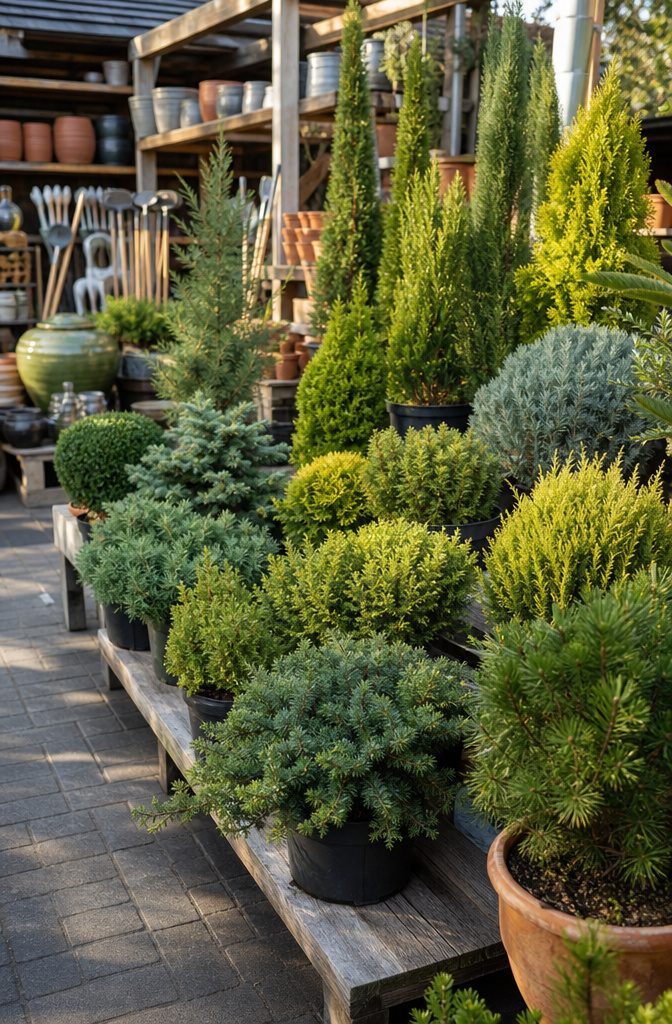
Mature sizes of shrubs can significantly differ, impacting garden layout over time.
Mature Size
A shrub sold in a 3-gallon pot bears no resemblance to what it becomes. That inkberry holly you tuck beside the steps can hit 8 feet tall and wide in a decade, swallowing the walkway you meant to frame.
I check mature dimensions against the bed I have, not the blank spot I see now. Width matters more than height for borders; overlap creates the dense, continuous line that reads as structure.
Buyers working narrow foundation beds or sidewalk strips should treat this as non-negotiable. Only those with acreage and a willingness to edit aggressively later can afford to guess.
Climate Zone Compatibility
Hardiness zones map average winter lows, not every freeze. A plant rated to zone 7 might survive a zone 6 winter with mulch and luck, or it might die back to the roots and restart as a perennial mess.
I match conservatively, dropping half a zone below my location if the site is exposed or the plant is marginal.
The recurring complaint I see is buyers in the Southeast planting zone-pushed southern magnolias that brown out after a single hard frost, or Northern gardeners losing loropetalum to a January they assumed was typical.
Coastal and urban gardeners can sometimes stretch a half zone warmer; everyone else should let the map decide.
Sunlight Requirements and Growth Rate
These two factors determine whether your border fills in or falters. Full-sun shrubs like juniper and cypress planted in partial shade grow thin and legged, reaching toward light instead of outward.
Shade-tolerant selections such as certain viburnums scorch and stall in afternoon sun. I place plants where they want to be, not where the design sketch put them.
Growth rate then sets the calendar. Fast growers like forsythia give structure in three years but need space and discipline; slow conifers take eight to ten years to read as a hedge.
Buyers facing a blank slope or new construction should weigh speed heavily. Those patching an existing border can afford patience.
Maintenance Requirements
Pruning, watering, and debris cleanup separate the shrubs you live with from the ones that own you. Broadleaf evergreens drop leaves in spring; needled conifers shed brown interior needles in fall.
Both mean raking. Fast growers need shearing or they lose shape; some bloom on old wood and punish hard cuts with a year of bare sticks.
I look at my own calendar honestly: a weekend in April and October, or nothing past planting? Drought tolerance matters less than advertised in the first two years, when every shrub needs consistent water to root.
Buyers with heavy clay or chronic root competition should add a maintenance tier. Only those with irrigation and time, or true neglect-tolerant species like certain junipers, can skip this math.
Disease Resistance
Phytophthora, boxwood blight, and juniper rust have rewritten what grows where. A resistant variety shrugs off wet seasons and neighboring infections that defoliate susceptible cousins.
I check regional extension reports more than nursery tags, which lag behind emerging problems. The cost of failure here is years, not dollars: a diseased shrub removed at maturity leaves a gap no new plant fills quickly.
Buyers in the humid Southeast and lower Midwest, where fungal pressure runs highest, should treat resistance as a primary filter. Those in arid zones can weight it lower, though no region stays exempt forever.
Aesthetic Appeal
Foliage color, needle texture, and winter silhouette matter last because they matter most only when everything else is right. A blue-needled false cypress that dies in your zone or scorches in your sun gives no aesthetic return.
Once the practical filters pass, I think about contrast: broad leaves against fine needles, dark green against gray-blue, upright forms against mounded ones. The structure a border provides in January comes from varied texture more than bloom.
Buyers designing for year-round visibility from windows or paths should care here. Those hiding utilitarian fencing or masking mechanicals can prioritize function and let form follow.
How the Top Picks Compare
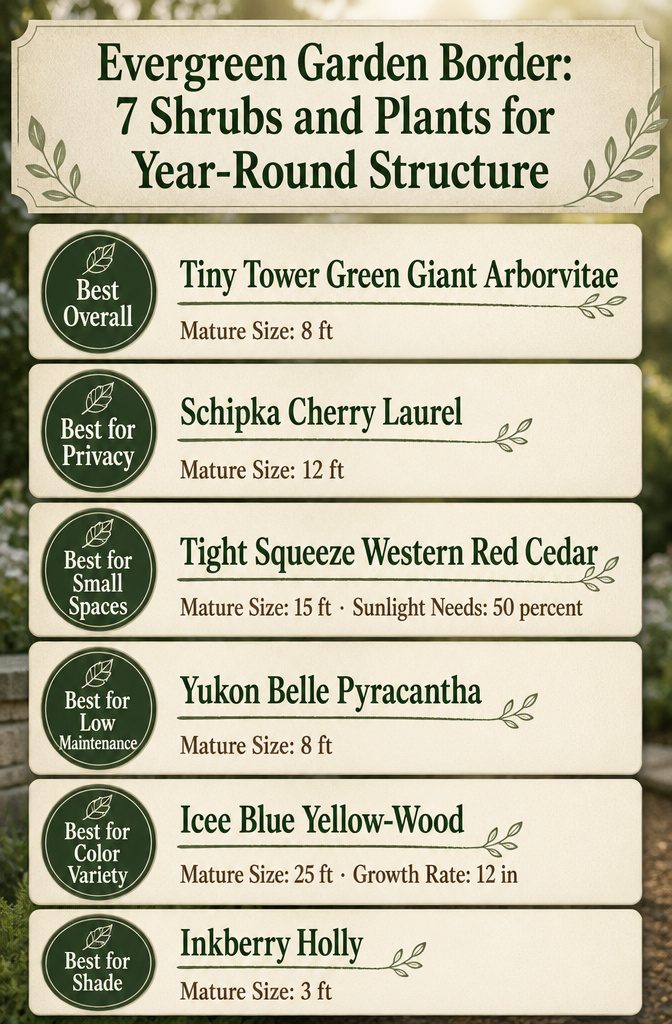
The Tiny Tower Green Giant offers a narrow form ideal for tight spaces, reaching 8 feet tall.
The Tiny Tower Green Giant and the Fluffy Arborvitae both promise vertical structure without swallowing your yard, but they part ways on speed and final form.
The Tiny Tower tops out at 8 feet tall and 3 feet wide, a column narrow enough to line a walkway or tuck beside a porch step.
The Fluffy Arborvitae spreads wider and fills out faster, which sounds like a win until you realize fast growth often means more shearing to keep it from bulging into your path.
If you need a green wall in two seasons, the Fluffy gets you there. If you planted once and learned your lesson about shrubs that outpace their welcome, the Tiny Tower’s slower, tighter habit saves you the trouble.
Privacy seekers face a harder call between the Schipka Cherry Laurel and the Yukon Belle Pyracantha. The Laurel reaches 12 feet with a 5-foot spread, enough to block a second-story window if you let it.
The Yukon Belle matches the Laurel’s width at 10 feet but stays lower at 8 feet, and those orange berries in fall mean birds and dropped fruit underfoot. A hedge that screens your deck from the neighbors’ kitchen is Laurel territory.
A barrier along a fence line where you still want some light and do not mind winter color dropping to the ground, the Yukon Belle fits without the ladder work later.
The Tight Squeeze Western Red Cedar asks the most specific questions of any pick on this list.
It needs half shade, grows only a foot per year, and wants two pruning sessions annually to keep its narrow profile. That is a lot of attention for a plant sold on saving space.
The tradeoff only works if your spot is genuinely tight and genuinely dim, a side yard between houses where a faster shrub would overgrow its bounds before you noticed.
In open sun, the Tight Squeeze offers no advantage over the Tiny Tower and more scheduling.
For shade, the Inkberry Holly’s 3-foot maturity is the defining limit.
It is not a privacy plant. It is a ground-hugging evergreen for under trees or along foundations where taller shrubs would lean and thin out.
Pair it with the Icee Blue Yellow-Wood if you need height nearby, though that 25-foot spread demands acreage or a willingness to prune a small tree into submission.
The Icee Blue’s 12 inches of yearly growth sounds modest until you pace it out: in five years you have a 5-foot plant, in ten a small tree. Most renters will never see it mature.
Planting Techniques
The hole matters more than most people think. I dig each one twice as wide as the root ball and exactly the same depth, never deeper.
A shrub sitting in a bowl collects water; one perched on a mound dries out. Either way, the roots suffer.
I check the tag against my zip code before the shovel hits soil.
A glossy-leafed beauty rated for zones 9-11 will not forgive a Minnesota winter, and no amount of mulch changes that. Full sun means 6 hours minimum; partial shade means the shrub still wants morning light.
I watch the bed for a full day before I decide where each plant goes, noting which corner stays dim until noon and which strip bakes all afternoon.
Spacing depends on the mature width, not the pot size in my hand. A shrub that spreads 5 feet needs 5 feet of breathing room, or I am pruning twice a year to keep peace with its neighbor.
For a hedge, I stagger plants in a zigzag rather than a straight line; they fill in faster and the row looks full from both angles.
I backfill with native soil, not potting mix.
The roots need to learn the ground they will live in. Water goes in slow, a full bucket or a trickling hose, until the surrounding earth is saturated and settled.
Then I mulch 2 inches deep, kept clear of the trunk, and let the plant alone for a week before I check again. Evergreens establish on their own timeline, not mine.
Pruning and Maintenance
The pace at which a shrub grows determines how often it ends up on your weekend to-do list. A slow grower that adds 12 inches in a year needs far less intervention than something shooting up a foot annually.
Most of the picks in this list fall into that low-maintenance category once they settle in, which matters when you are fitting garden work around a job and a household.
Timing counts.
Late winter to early spring, before new growth starts, is the window for most evergreen shrubs. Cut too early and an unexpected freeze can damage fresh wounds; wait too long and you sacrifice the season’s energy.
I keep a calendar note for February, then adjust based on whether the ground is still frozen. For shrubs that bloom on old wood, the rules flip; prune right after flowering finishes so next year’s buds have time to form.
The mature width matters as much as height when you are deciding where to plant.
A shrub that spreads 5 feet across planted in a 3-foot bed means yearly battles to keep it off the walkway. Give it the room it needs and pruning becomes optional shaping rather than constant rescue work.
Disease resistance covers the other half of maintenance.
Dense, glossy foliage with good air circulation shrugs off most common problems without sprays or vigilance. The exceptions tend to show up where sunlight is insufficient or drainage is poor; both are easier to fix before planting than after.
Soil and Fertilization
Most evergreen shrubs that hold a border through winter share one trait beneath the surface: they hate wet feet.
The root systems of yews, boxwoods, junipers, and the denser arborvitae varieties all rot quickly in clay that stays soggy after rain.
I spend more time reading owner reports about dead plants than I care to admit, and poor drainage outranks every other soil complaint.
If your yard holds puddles half a day after a storm, build a low berm or plant on a slight slope before you dig a single hole.
The soil itself does not need to be rich.
Several of the hardiest border plants, particularly the eastern red cedar varieties and certain spreading junipers, grow in thin, rocky ground where turf barely survives. What they do need is the right pH.
Broadleaf evergreens like boxwood and cherry laurel yellow and stall in alkaline soil; needle types tolerate more variance. A basic test every few seasons costs little and saves the replacement of a 6 ft shrub that never thrived.
Fertilizer follows the same spare logic. Owners who report the healthiest, most uniform borders usually feed once, in early spring, with a slow-release formula balanced toward nitrogen.
The fast-growing Leyland cypress types and certain hollies push enough new wood to exhaust lean soil; a single application keeps color even through summer stress.
Skip fall feeding entirely. New growth that hardens off too late takes the worst winter damage, and I have read too many accounts of zone-pushing gardeners learning this the hard way after a cold snap in November.
Mulch matters more than brand. 2–3 inches of shredded bark or pine straw regulates moisture and temperature without the nitrogen draw of raw wood chips.
Keep it 6 inches clear of stems. Piled mulch is where root rot and rodent damage both start, and both show up in owner complaints with depressing regularity.
Frequently Asked Questions
How big do these shrubs get at maturity?
The range runs from 3 feet tall and wide to 25 feet in both directions.
Most fall between 5 and 15 feet tall, with widths from 3 to 10 feet. One variety can exceed 70 feet if you select a tree form instead of the compact cultivars.
How much sun do they need?
All of them accept full sun, and most handle partial shade as well. One requires full sun specifically, while another lists partial sun as an equivalent option.
Will they survive my winter?
The hardiness spread is zones 2 through 11, depending on the shrub. Most cluster in zones 5-9, with one extending down to zone 2 and two others limited to zones 9-11.
How fast do they grow?
Growth rates span slow, moderate, and fast.
The slow ones add roughly 12 inches per year. The fast-growing types fill space quickly, while moderate and slow growers suit gardeners who want predictable, manageable development.
Are they high-maintenance?
Most need little care once established, with some requiring pruning as infrequently as twice yearly.
One calls for watering only when the top 2 inches of soil dry out. Disease resistance is noted across the group, and deer resistance or urban pollution tolerance appears in specific varieties.





