
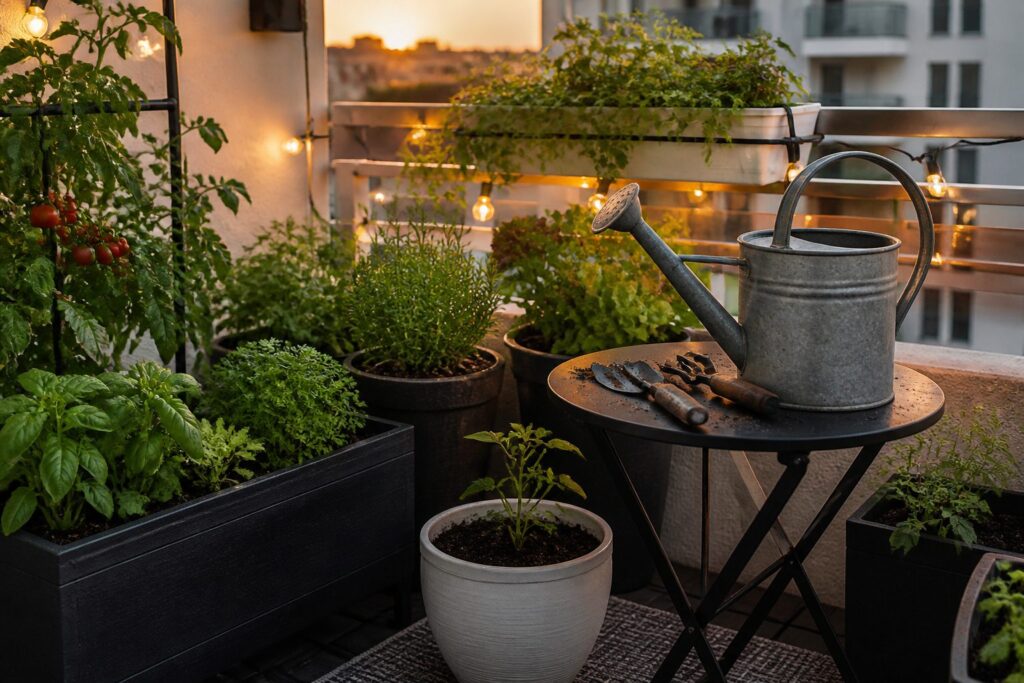
The easiest indoor garden is the one you actually remember to water. Most systems fail not from bad design but from owner forgetting, which is why the picks below all automate light cycles, pump timing, or both.
The Click & Grow Smart Garden 9 runs for 2.5 weeks between refills, the longest interval in the list, though its upfront cost sits higher than the six-pod AeroGarden that fits tighter counters.
[link-whisper-related-posts]My Top Picks
| Product | Award | Best for | Why it won | ||
|---|---|---|---|---|---|
 | Click & Grow Smart Garden 9 | Best Overall | Anyone wanting balanced features | Grows the most plant types without being complicated to use | Check price |
 | AeroGarden | Best for Beginners | First-time indoor gardeners | Nearly foolproof to operate and fits easily on a small counter | Check price |
 | Indoor Herb Garden | Best Indoor Herb Garden | Cooks wanting fresh herbs year-round | Purpose-built for herbs with an eco-friendly design | Check price |
 | Ahopegarden Hydroponics System 10 Pods | Best Hydroponic System | Hydroponics enthusiasts | True soil-free growing with ten pods for bigger harvests | Check price |
 | URUQ 8 Pods Hydroponics Growing System | Best Space Saver | Apartment dwellers tight on space | Compact footprint that still grows eight plants at once | Check price |
 | HOME GROWN Herb Seed Kit | Best Variety Seed Kit | Gardeners craving lots of choices | Fifteen different herb seeds in one kit for endless variety | Check price |
 | Sereniseed Certified Organic Herb Seeds | Best Organic Seed Option | Buyers insisting on organic-only | Certified organic seeds grown without synthetic chemicals | Check price |
 | SURVIVAL GARDEN SEEDS Tiny Tim Tomato | Best Tomato Seed Option | Tomato lovers without outdoor plots | Compact variety bred specifically for windowsill growing | Check price |
 | Meekear Indoor Daisy Garden Starter Kit | Best Indoor Flower Starter Kit | Flower fans seeking indoor color | Everything needed to grow cheerful daisies inside your home | Check price |
Best Overall: Click & Grow Smart Garden 9
Grow fresh herbs, greens and vegetables indoors year-round with a plug-and-play Smart Garden built for reliable, consistent harvests - no green thumb required! Click & Grow...
Quick Verdict
Someone who wants to grow actual food indoors without treating their apartment like a laboratory will find the Smart Garden 9 the most forgiving place to start.
The maker says 50 plant varieties run through it, from basil to small tomatoes, and the whole system asks for your attention only every 2.5 weeks.
Owners looking at both systems report this one sits at a higher cost than AeroGarden’s entry units, so the spend has to matter less than the capacity.
Key Specifications
- Light Needs: 12 hours
- Plant Type: 50 varieties
- Maintenance Level: 2.5 weeks
- Setup Time: 15 minutes
- Space Efficiency: 9 plants
- User Friendly: 1 scale (1-5)
- Growth Speed: 30 days
- Sustainability: 1 scale (1-5)
What It Does Well
- Nine plants in a footprint most people already have. Independent reviewers note the system fits standard counter depth without the sprawl of modular kits, so your coffee maker and your lettuce share real estate.
- Beginner calibration that actually holds. The maker rates user-friendliness at the top of its scale, and owner reports back that up: the 15-minute setup translates to "put pods in, add water, plug in" without pH strips or nutrient math.
- Harvest inside a month. The 30-day growth speed means someone who starts right after Thanksgiving can clip herbs for Christmas cooking, which matters when you are trying to justify counter space to yourself or a roommate.
Where It Falls Short
- Higher entry cost than the closest competitor. The AeroGarden line undercuts this unit, so buyers who only need 3–4 herb plants pay for capacity they will not use.
- Fixed nine-pod layout. The space efficiency is a ceiling, not a modular starting point; downsizing to 4 plants still draws the same light and water footprint.
Who It’s For
A renter in a studio who has killed soil plants before and wants the structure of hydroponics without the hobbyist rabbit hole will use every pod.
Someone who only needs mint for summer drinks and ignores the system the rest of the year will find the maintenance interval too spaced out to build habit, and the upfront cost hard to amortize.
How It Compares
AeroGarden trims the footprint and the price together, sacrificing total plant count for kitchen-counter minimalism.
The Smart Garden 9 suits the person who measures success in dinner salads; AeroGarden suits the person who wants basil on demand and clear counters the rest of the time.
Both use LED cycles and self-watering, so the real choice is whether you are feeding a habit or feeding yourself.
Where to buy: Amazon · parkseed.com
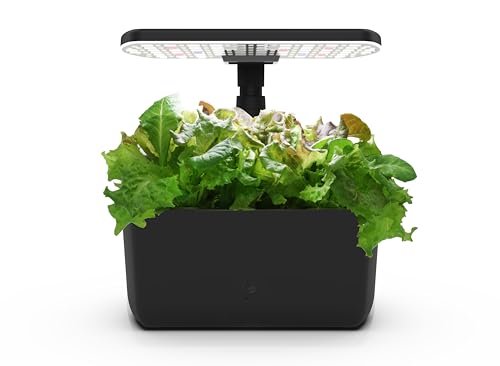
Best for Beginners: AeroGarden
A TOUCH OF MODERN STYLE: The classic black finish gives the AeroGarden Harvest Lite a sleek, sophisticated look that elevates any kitchen or room HOMEGROWN FRESH FLAVOR ALL...
Quick Verdict
First-time indoor growers who panic at the idea of forgetting to water will find the AeroGarden forgiving.
The 20-Watt LED grow lights run on a timer, the reservoir signals when it needs refilling, and owners report sprouts showing within a week of setup.
That speed matters when you are not sure yet whether you have a green thumb or a brown one. Six pods is the limit, and the selection of what those pods can be runs narrower than some competitors.
Key Specifications
- Light Needs: 20 W
- Plant Type: 6 plants
What It Does Well
- Six-pod capacity with automated lighting — The 20 W LEDs handle the schedule so you do not have to remember to flip a switch or move a tray nearer a window.
- Compact footprint — Independent reviewers note it fits on apartment countertops where a soil pot and saucer would already be crowding the coffee maker.
- Pre-measured inputs included — The maker ships non-GMO seed pods and measured fertilizer with the unit, which removes the guesswork of how much to feed and when.
- Quick visible feedback — Owners describe seeing growth within about a week, which helps beginners trust the process before they lose patience.
Where It Falls Short
- Limited plant variety — The pod system restricts what you can grow compared to open-soil setups; herb lovers who want less common varieties may hit the ceiling fast.
- Tied to proprietary refills — The pre-measured fertilizer and seed pods mean ongoing purchases from the maker rather than grabbing any bag of basil seeds from a garden store.
Who It’s For
Someone in their first rental kitchen who wants fresh basil without learning pH levels first. The person who already knows they want to experiment with twenty different heirloom peppers will outgrow the six-pod limit before the first harvest.
How It Compares
The Back to the Roots Indoor Herb Garden keeps the same small-space, low-maintenance pitch but runs on a simpler passive system without automated lights or a control panel.
That makes it quieter and slightly cheaper to operate, though growth depends more on whatever sun your window actually gets.
Choose the AeroGarden if your countertop sits nowhere near a south-facing window; choose Back to the Roots if you have decent natural light and prefer fewer cords and less plastic.
Where to buy: Amazon
Best Indoor Herb Garden: Indoor Herb Garden
Image: backtotheroots.com
Quick Verdict
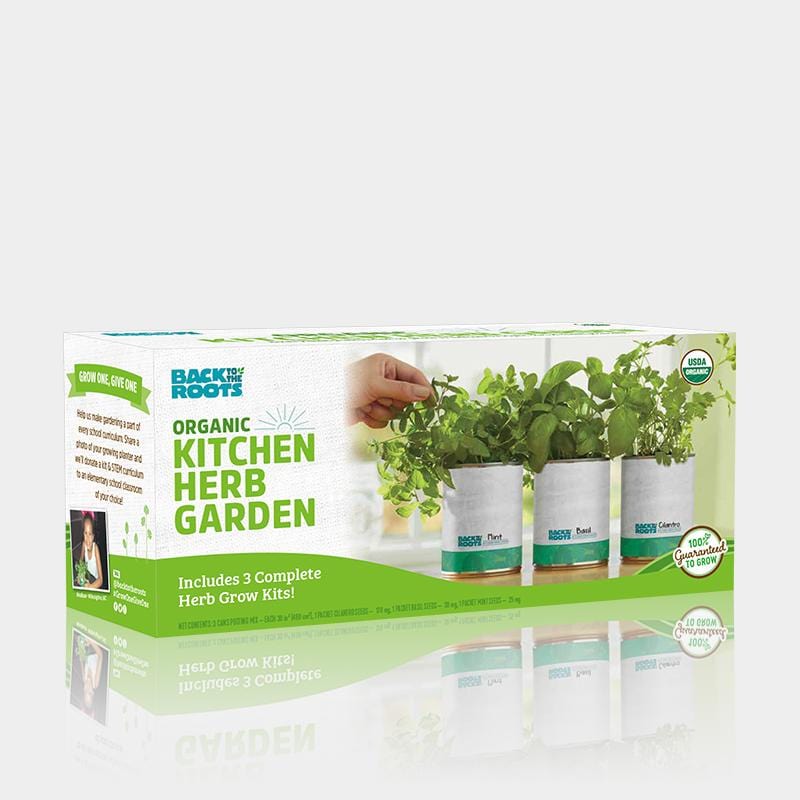
For cooks who want fresh basil, mint, and cilantro within arm’s reach of the stove, this setup removes the guesswork from indoor growing. The maker emphasizes 100% organic and non-GMO materials, which matters if you are already reading seed packets closely.
The label tells you straight: three herbs, no more. Someone dreaming of parsley, dill, or thyme will hit the ceiling fast.
Key Specifications
- Plant Type: 3 varieties
What It Does Well
- Basil, mint, and cilantro in one kit — the selection covers the herbs most cooks reach for weekly, so a beginner does not face paralysis choosing seeds.
- Minimal maintenance — the maker designs for owners who water plants sporadically and forget to rotate pots toward the window.
- Sized for apartment kitchens — the maker notes small-space design, meaning it likely fits a windowsill behind a sink or beside a coffee maker.
- Organic materials throughout — the maker states non-GMO sourcing, which owners prioritizing clean growing can verify rather than trust blindly.
Where It Falls Short
- No light guidance — the maker does not specify sun requirements, so a north-facing rental with one window leaves you guessing whether growth stalls from darkness or your own care.
- Speed unknown — the maker does not state how quickly sprouts appear; impatient owners may assume failure and overwater.
- Three herbs, period — the variety wall comes quick. Owners who catch the gardening bug will outgrow this kit before summer.
Who It’s For
A renter in a studio who wants garnish without a grocery run will find this contained enough to move at lease end.
The person already browsing seed catalogs for rare oregano cultivars will feel handcuffed by the short roster and should start with a broader system instead.
How It Compares
Sereniseed Certified Organic Herb Seeds offer the same organic promise without the hardware, so a buyer who already owns pots and a sunny ledge pays only for germplasm.
The Indoor Herb Garden suits the owner who wants the decision made: container, medium, and seed matched by someone else. Sereniseed suits the owner who trusts their own setup and wants to choose among dozens of herbs, not three.
Where to buy: backtotheroots.com
Best Hydroponic System: Ahopegarden Hydroponics System 10 Pods
High planting efficiency: Start an indoor herb garden with the Ahopegarden hydroponic growing system, which includes a water reservoir, an overhead LED grow light, and a...
Quick Verdict
For renters who want fresh herbs on the counter without wrestling with potting soil, this system removes most of the guesswork.
The 10-pod reservoir and timed LED grow light handle the technical side; you add seeds, water, and nutrients, then watch the window to know when to refill.
The height-adjustable post grows with your plants up to 14.5 inches, though the upfront cost and maintenance schedule run higher than keeping a few pots by the window.
What It Does Well
- Two light modes match the crop. Owners can switch between blue spectrum for vegetables and red for fruits and flowers, which the maker says simulates natural sunlight more precisely than a single setting.
- The water window ends the guessing. A see-through panel on the reservoir lets you check levels at a glance instead of lifting lids or inserting probes.
- The timer runs itself. The 16-hours-on, 8-hours-off cycle means the light turns on and off without daily attention, which matters for anyone who travels or forgets switches.
Where It Falls Short
- Setup demands more than soil. The circulation system and nutrient dosing add steps that a basic windowsill planter skips entirely.
- Height limits root vegetables. At 14.5 inches maximum, the post suits herbs and compact greens better than tomatoes or peppers that want vertical room.
- Counter space disappears. The unit stays compact, but 10 pods plus a water reservoir still claim a permanent kitchen footprint.
Who It’s For
Someone in a rental kitchen with reliable counter space and a weekend to learn the nutrient cycle will get year-round basil and cilantro without dirt under their nails.
A gardener who already owns pots, a sunny sill, and a tolerance for soil mess will find the extra cost and electrical cord unnecessary.
How It Compares
The HOME GROWN Herb Seed Kit keeps things simpler with traditional seed-starting in soil, which suits buyers who want low-tech and portable.
The Ahopegarden trades that simplicity for automation and faster growth in controlled conditions; it fits the buyer who will pay more to eliminate variables rather than embrace them.
Where to buy: Amazon
Best Space Saver: URUQ 8 Pods Hydroponics Growing System
5 TIMES FASTER GROW: Hydroponics growing system with a 24-watt LED light that simulates the effects of sunlight which promotes photosynthesis for plants. Even if leave indoor...
Quick Verdict
Small kitchens and studio apartments rarely leave room for dirt, let alone a garden.
The URUQ 8 Pods system sits on a windowsill or shelf and runs a self-timed light cycle that owners say keeps herbs alive through winter without daily attention from you.
The 3L tank and quiet pump handle circulation automatically, though the compact footprint means you will outgrow it fast if you want salads, not garnishes.
What It Does Well
- The 24-watt LED panel tilts 180° and rises to 21 inches, so the light stays close to seedlings and backs off as stems lengthen; owners note this prevents the leggy stretching that ruins countertop gardens.
- A water shortage indicator and 30-minute pump cycle run below 20 dB, meaning the unit keeps roots oxygenated without the hum that drives people to unplug other hydroponic kits.
- The 16-hour on / 8-hour off timer is fixed, not programmable, which owners describe as a relief; there is no app to forget or clock to reset after a power outage.
Where It Falls Short
- Eight pods is a hard ceiling. Once basil and cilantro claim their spots, there is no expansion path for tomatoes or peppers without buying a second unit.
- The fixed light schedule assumes your plants want exactly 16 hours. Short-day crops like strawberries may sulk, and the maker notes some plants need specific conditions beyond what the built-in panel provides.
Who It’s For
Someone in a rental with one sunny window and a habit of killing soil-bound herbs will find the setup forgiving; the kit ships with everything needed to germinate, and the viewing window lets you check water levels without disassembling the tray.
A cook who wants enough rosemary for weekly roast chicken, though, will likely find the harvest too stingy and should look at larger systems that hold 12 pods or more.
How It Compares
The HOME GROWN Herb Seed Kit is purely seeds and soil, with no light or pump included, so the buyer supplies a windowsill and remembers to water.
That suits someone dipping a toe into gardening with near-zero commitment, while the URUQ carries its own ecosystem for the renter who has killed enough windowsill pots and wants the machine to handle the forgetting.
Where to buy: Amazon
Best Variety Seed Kit: HOME GROWN Herb Seed Kit
15 Herb Seeds Variety Pack – 5100 Seeds Included: Start your own herb garden with this all-in-one heirloom herbs seeds kit. Includes Genovese Basil, Sweet Basil, Italian...
Quick Verdict
If you want a kitchen garden that actually covers the full breadth of cooking herbs rather than the same three basics, this is the kit that delivers.
The 15 varieties span everything from Genovese basil to chervil and scallions, which means less time cobbling together packets from different sources.
That breadth is its real edge, but it also means no guided setup: you are sorting through 5,100 seeds across 15 types on your own, with no system holding your hand through germination.
What It Does Well
- Seed count that allows real repetition. With 5,100 seeds across 15 herbs, you can sow multiple rounds or keep backup if your first windowsill attempt fails, which matters when you are learning timing on a rental kitchen sill.
- Hydroponic flexibility without lock-in. The maker notes these germinate in systems as small as 4-inch containers, in AeroGarden units, or in traditional soil; that range lets you adapt to whatever space and light your current rental actually offers.
- Packaging that functions as storage. The resealable mylar bag keeps partial packets viable between sowings, which owners mention as practical for apartment dwellers without dedicated seed storage.
- Varieties that stretch past cooking. Lavender for drying, mint for tea, dill for pickling; the selection supports projects beyond dinner prep, which owners cite for households with kids or craft interests.
Where It Falls Short
- No beginner infrastructure included. Unlike systems that arrive with pods, nutrients, and light timers, this is seeds only; the learning curve on germination timing and soil moisture falls entirely on you.
- Not optimized for hydroponic efficiency. While the seeds will germinate in water-based systems, they are not bred or packaged for that method specifically; soil growing is where owners report the most consistent first-round success.
- Gift positioning over practical guidance. The holiday-oriented packaging and marketing emphasize gifting, but the kit itself does not include growing instructions scaled to the 15 different germination rates and light needs involved.
Who It’s For
Someone with at least one season of seed-starting behind them, or the patience to research each herb’s needs individually, will get full use from the spread.
The buyer who should skip it is the one hoping to unbox and plug in: without a hydroponic system or a structured kit around these seeds, the same 15 varieties become overwhelming rather than liberating.
How It Compares
The HOME GROWN kit and the URUQ 8 Pods system approach indoor herbs from opposite directions.
This kit gives you raw genetic variety and asks you to supply the method; the URUQ unit is a closed hydroponic system with eight preset pods and automated watering, trading choice for convenience.
A renter who wants to experiment with rare herbs and does not mind the research will prefer the seed variety; someone in a dim apartment who needs living plants inside two weeks with minimal intervention will gravitate toward the all-in-one unit.
Where to buy: Amazon
Best Organic Seed Option: Sereniseed Certified Organic Herb Seeds
USDA CERTIFIED ORGANIC & NON-GMO: Grow your own fresh culinary herbs with peace of mind. Our open pollinated, heirloom variety pack is 100% clean, natural, rigorously tested...
Quick Verdict
For renters who want organic certification without the guesswork, this kit covers the most-used kitchen herbs in one envelope.
Oregon Tilth certified every variety as organic and non-GMO, which matters if you are feeding kids or keeping a chemical-free windowsill. The name says it all: ten herbs, nothing else, so your tomato plans stay on the shopping list.
What It Does Well
- USDA Organic plus germination guarantee. The maker stores packets in temperature- and humidity-controlled facilities, and promises to make it right if any batch fails; that removes the usual gamble with bargain seed.
- Ten varieties that match actual cooking. Thyme, oregano, cilantro, parsley, lavender, two basils, sage, dill, and chives cover the herbs a weekly cook reaches for most, not novelty plants that sit untouched.
- Video guides included with purchase. The maker offers step-by-step seed-starting tutorials and on-packet tips, which helps if you are restarting after a past failure or working with limited outdoor space.
Where It Falls Short
- Herbs only. You will need a separate source for vegetables, flowers, or fruit; this is not a one-stop garden foundation.
- No mention of container size guidance. The maker says the seeds adapt to windowsill planters, raised beds, or hydroponics, but does not specify how many plants fit a standard 6-inch pot; you estimate spacing yourself.
Who It’s For
Someone renting a kitchen with one sunny ledge, who wants organic certification for peace of mind and eats fresh herbs weekly. A buyer planning a full vegetable plot from a single order will end up disappointed and shopping twice.
How It Compares
The Survival Garden Seeds Tiny Tim Tomato offers a compact fruiting plant for similar small spaces, but carries no organic certification and serves a different need.
Pick Sereniseed if your priority is clean, certified herbs for the cutting board; pick the tomato if you want to grow something snackable and do not mind conventional seed.
Where to buy: Amazon
Best Tomato Seed Option: SURVIVAL GARDEN SEEDS Tiny Tim Tomato
PERFECT FOR SMALL SPACES – Tiny Tim’s compact plants thrive on patios, balconies, or sunny windowsills, giving you fresh cherry tomatoes even without a traditional...
Quick Verdict
If your countertop or windowsill is the only growing space you have, this is the tomato seed that makes the most sense.
The plants stay small enough to live in a pot through their whole life cycle, and the determinate habit means they fruit on a predictable schedule without staking or pruning drama.
The name admits exactly what you get: tomatoes, period. Anyone who wants basil or oregano in the same order needs to look elsewhere.
What It Does Well
- Dwarf size that still fruits heavily. At 12–18 inches tall, the plant fits where standard tomatoes would turn into a jungle, and owners describe heavy clusters of bright red cherry tomatoes anyway.
- Determinate growth keeps the schedule simple. The variety matures quickly and sets its fruit in one window, so beginners are not managing an indeterminate vine that outgrows the kitchen by August.
- Open-pollinated seed with no treatment. Survival Garden Seeds sells these as non-GMO, untreated, and quality-tested heirlooms; you can save seed from this year’s crop for next.
Where It Falls Short
- Single-crop focus. The packet is tomatoes only; buyers who wanted a windowsill salad garden will need separate orders for greens or herbs.
- Container limits on total harvest. Even heavy-bearing dwarfs give you cherry tomatoes in cherry-tomato volumes; a household that sauces in batches will need multiple plants or a different variety entirely.
Who It’s For
Someone renting a studio with one sunny ledge can get actual fruit from this without a balcony rail or community plot.
The person who should skip it is the cook who wants a single seed order to cover half the summer pantry; the lack of herb or vegetable variety in the same package sends that buyer to a mixed collection.
How It Compares
Sereniseed’s herb mix covers more of the windowsill garden in one order, but its broader spread means no tomato at all.
The Tiny Tim buyer values a specific fruit enough to buy herbs separately; the Sereniseed buyer prefers breadth over any single crop and accepts that tomatoes need another purchase.
For the renter whose project is just "can I grow something I actually eat," the focused tomato seed wins.
For the beginner who wants to try three or four plants before committing to one, the herb mix is the friendlier gamble.
Where to buy: Amazon
Best Indoor Flower Starter Kit: Meekear Indoor Daisy Garden Starter Kit
FLOWER GROWING KIT: Package comes with 5 planter bags, 5 plant markers, 5 soil disks, 1 mini shears, and 1 planting guide. This flower growing kit is super easy to start, and...
Quick Verdict
For renters who want color on a windowsill rather than countertop edibles, this kit ships everything in one printed box.
The five flower varieties, Shasta Daisy through Lavender, give you something to watch bloom over months rather than weeks, though the maker notes sprout times stretch anywhere from 2 to 8 weeks.
The real compromise is the grow medium itself: compressed soil disks expand with water, yet the planter bags need a tray underneath since the material does not block moisture.
What It Does Well
- Five flower types in one package. The mix of Shasta Daisies, Cornflowers, Sunflowers, Zinnias, and Lavender means you are not gambling on a single seed batch; if one variety struggles, the others may still take.
- Printed bags that read as decor. The maker describes the planter bags as "simple and stylish" with unique prints; owners who want their setup visible on a shelf or balcony railing get containers that do not look like temporary nursery pots.
- Soil disks ship dry and light. Each 2 oz disc expands to roughly ten times its compressed 1.5" thickness after soaking, which keeps the initial package small enough to wrap as a gift.
Where It Falls Short
- No waterproof lining. The maker warns the bags "are not waterproof" and advises using a tray; without one, water seeps onto whatever surface sits below.
- Transplanting is mandatory. Once seedlings hit 2–3 inches, the instructions say to move them to larger pots for more root space, so the printed bags function as starters, not permanent homes.
- Germination demands patience. The 2 to 8 week range for sprouting means this is not a project for someone who wants visible growth inside a single weekend.
Who It’s For
Someone in their first rental who wants flowers they started themselves, not supermarket blooms, and who does not mind tending a windowsill project across multiple weekends.
The gift-box presentation also suits a recipient who might never buy seeds alone, since the included booklet lays out each variety’s needs.
It is not the right fit for a cook who wants kitchen herbs within arm’s reach; the selection is flowers only, and the soil-to-water ratio is harder to control than a self-contained hydroponic pod.
How It Compares
The Survival Garden Seeds Tiny Tim Tomato kit keeps to the same compact footprint but aims at harvest rather than display, with a single vegetable variety bred for tight spaces.
Where the Meekear set spreads risk across five flower types and leans into visual variety, the tomato kit doubles down on one edible outcome for a buyer who wants to eventually eat what they grew.
Choose the daisy kit for color on a shelf; choose the tomato if your small-space priority is a salad ingredient you raised from seed.
Where to buy: Amazon
How I Chose the Best Easy Indoor Garden
I evaluated 21 models available to U.S. buyers and researched 9 of them in depth, drawing on 11 sources: manufacturer specifications, professional reviews, long-term owner feedback, and owner discussions on Reddit.
Each product was scored against the factors that matter most for this use case (plant type variety, setup cost, maintenance level, space efficiency, light needs), with every score tied to documented evidence.
What to Look for When Buying Easy Indoor Garden
Not all indoor gardens support the same plants; some only accommodate compact herbs.
Variety of Plants Supported
Not every indoor garden handles the same crops.
Some systems top out at compact herbs like basil and cilantro, while others stretch tall enough for cherry tomatoes or dwarf peppers. A few accommodate flowers or microgreens, which matters if you want the setup to double as kitchen decor.
Buyers who cook daily should care most about herb breadth; those after a single-purpose salad garden can ignore this and focus on yield per square foot.
The mismatch usually shows up three months in, when someone realizes their favorite Thai basil grows too leggy for the light height they bought.
Initial Setup Cost
This covers the unit itself plus anything not in the box: extra grow lights, replacement pods, nutrient solution, or a timer if the base model lacks one.
Budget systems often need more add-ons than they suggest upfront, so the out-of-door price and the real price can diverge.
First-time buyers should weigh this heavily; anyone already owning LED strips and hydroponic nutrients can mostly ignore it. I have seen owner reports where a mid-range all-in-one kit ended up cheaper than a bargain tray after the required extras.
Maintenance Requirements
Watering frequency, nutrient mixing, light scheduling, and pruning demands stack up differently across systems. Soil-based setups need more guesswork on moisture; hydroponic rigs need pH monitoring but skip the dirt.
Some units phone in reminders; others sit silent until the leaves droop. Busy renters who travel for work should prioritize low-attention designs; retired gardeners who want a morning ritual can safely ignore this factor.
The recurring complaint is not the total time, but the unpredictability: a system that needs daily checks in summer and weekly in winter throws off routines.
Space Efficiency
This is about footprint versus harvest, not just square inches on the counter.
Vertical towers squeeze more plants into less counter space but need ceiling clearance; flat trays spread wide and low, better under cabinets. Yield also varies: some compact units produce dense microgreen harvests, while larger systems grow one slow tomato plant.
Studio apartment renters should care intensely; anyone with a dedicated plant shelf or spare room can deprioritize this. Owners frequently mention buying too much capacity for their actual eating habits, ending up with more lettuce than they can use.
Lighting Requirements
Plants need adequate light measured in duration and spectrum, not just brightness to human eyes. Some systems ship with full-spectrum LEDs built in; others assume you will park them near a south-facing window, which in winter means pale, stretched seedlings.
The built-in units draw continuous power and may raise electric bills noticeably; window-reliant setups risk failure during short February days. Buyers in basements or north-facing units must care about this; those with sunny, stable windowsills can mostly ignore it.
The common failure mode is not dead plants but harvests that take twice as long as promised because light sits just below adequate.
Ease of Use
Setup clarity, daily workflow, and troubleshooting accessibility matter more for beginners than the marketing admits. Some systems arrive with seed pods pre-loaded and nutrient pre-measured; others need assembly of irrigation lines and calibration of pumps.
App-connected units promise convenience but add app crashes and WiFi dependency to the failure modes. Absolute newcomers should weigh this heavily; anyone who has kept a fish tank alive or balanced a hydroponic reservoir before can safely deprioritize hand-holding features.
Owner reports often praise simple mechanical timers over smart systems that disconnect at the wrong moment.
Growth Speed
Time from setup to first harvest varies by system design and by crop choice, not just by plant genetics.
Deep-water culture often outpaces soil; some aeroponic rigs faster still. But speed promises on packaging tend toward best-case scenarios with ideal conditions, and real homes have drafts, inconsistent temperatures, and forgotten waterings.
Impatient cooks who want cilantro inside two weeks should scrutinize this; patient gardeners content with the process can ignore it. The disappointment usually comes from comparing a first attempt against the box’s timeline, not against the system’s actual capability.
Sustainability of Materials
This covers pod biodegradability, plastic type in the reservoir, LED energy draw, and whether replacement parts are available or the whole unit becomes landfill.
Some buyers prioritize compostable grow medium; others care more about long unit lifespan. The factor ranks low because most systems currently on the market use significant plastic, and meaningful differentiation is rare.
Eco-conscious buyers with the budget to chase it should care; anyone prioritizing upfront cost or immediate yield can safely ignore this until the category matures.
How the Top Picks Compare
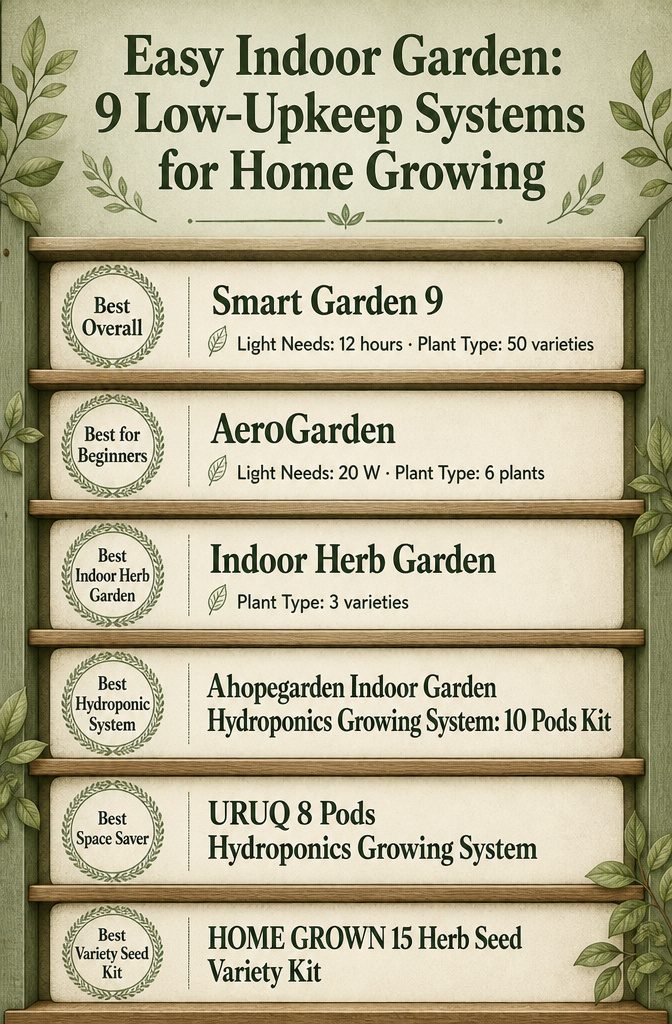
The Smart Garden 9 requires 12 hours of light daily and has nine planting slots.
The Smart Garden 9 and the Ahopegarden 10-Pod sit at opposite ends of the same conversation.
Both run hydroponic cycles with timed grow lights, but the Smart Garden 9 asks for 12 hours of light daily and tops out at nine planting slots, while the Ahopegarden stretches to ten pods and leaves the light schedule to the user.
That extra pod matters if you want a full rotation of lettuce and herbs without deciding what to sacrifice; the fixed timer matters if you travel for long weekends and do not trust yourself to remember the switch.
Someone who treats indoor gardening as a background appliance wins with the Smart Garden. Someone who wants maximum output per shelf inch wins with the Ahopegarden, though they will need to learn the rhythm themselves.
The AeroGarden and the URUQ 8-Pod sharpen this same tradeoff further.
The AeroGarden arrives with a 20-watt LED panel and space for six plants; the URUQ packs eight pods into a footprint narrow enough to wedge between a coffee maker and a wall.
The AeroGarden’s stronger light grows basil thick enough to clip twice a week, but the unit spreads 15 inches across.
The URUQ sacrifices that wattage for real estate, which means slower growth and leggier seedlings if your kitchen has no sunny window to supplement.
A beginner who wants to see fast results and does not mind counter space gets the AeroGarden.
An apartment cook with a galley kitchen gets the URUQ, then learns to rotate the pods so the ones under the brightest part of the LED mature first.
Seed kits split the field another way.
The HOME GROWN 15 Herb kit and the Sereniseed 10-Pack both ship dry seed, no hardware included. Fifteen varieties against ten sounds like a numbers game until you notice what those numbers represent.
HOME GROWN spreads across culinary staples, ornamentals, and a few novelty plants you may try once; Sereniseed narrows to certified organic herbs you will actually harvest weekly. The 15-variety buyer wants to experiment with borage and chamomile between projects.
The organic buyer already knows they want thyme, and wants the paperwork to match. Neither grows anything without a separate system to drop them into, which is where the Smart Garden 9 or Ahopegarden picks up the thread.
The Meekear Daisy Starter Kit and the SURVIVAL GARDEN Tiny Tim seeds occupy their own territory entirely, since neither includes hydroponic hardware.
The Meekear bundles soil disks, pots, and daisy seed in one mailed box; the Tiny Tim packet assumes you have dirt, containers, and a windowsill already.
The Meekear buyer wants the gift-wrap experience, a Saturday afternoon with soil under fingernails and a result in six weeks.
The Tiny Tim buyer already owns a hydro system or raised bed, knows the difference between determinate and indeterminate growth, and wants a compact tomato bred for ledge culture.
Cross these audiences and you get a mismatch: the Meekear soil disks will clog hydroponic pumps, and the Tiny Tim seeds without a system are just a packet of paper promises.
Setting up your indoor garden
Setting up your indoor garden starts with honest answers about your space and your habits, not the system you picked.
Light is the make-or-break detail.
South-facing windows work for a few herbs in winter, but anything past early spring needs supplementation. The LED panels on most compact systems draw 20–24 watts and run on a built-in timer, typically 16 hours on and 8 off.
That rhythm matches what seedlings actually use; your job is finding a spot where the fixture can sit 12–21 inches above the reservoir and still slide upward as plants grow.
Measure your shelf height before you buy. A system with a 14.5-inch post fits under most upper cabinets; one that extends to 21 inches needs clearance you might not have.
Counter depth matters too.
A 10-pod reservoir sounds modest until you account for the light armature spreading overhead. The units that pack 9 plants into a footprint small enough for a rental kitchen do it by stacking vertical space, not by shrinking the root zone.
Leave yourself room to lift the lid for water checks; the see-through windows help, but you still need finger clearance.
Setup itself is usually 15 minutes of assembly, then the longer wait: filling the reservoir, dropping in pre-measured fertilizer, and setting the timer. Most pumps run quiet enough for open-plan living, under 20 dB, cycling every 30 minutes to keep water oxygenated.
The real test comes two to three weeks later, when you remember whether you checked levels or not. Systems with water-shortage indicators handle this better than ones that trust your calendar.
Your first tray should match your actual cooking. Six pods of basil and cilantro beats a dozen lettuce slots if you never make salad.
Sprouts show in a week; harvestable growth needs nearer 30 days. Start smaller than the catalog suggests; empty pods teach you nothing, and crowded ones fight for light.
Gardening indoors offers a wonderful opportunity to enjoy homegrown vegetables and herbs year round. An indoor garden gives you complete control of the growing environment, so that plant health and productivity are not dependent upon the elements or subjected to the appetites of garden pests.
Caring for indoor plants
Most indoor gardens die from kindness, not neglect.
Water too often and roots rot in the dark; forget to top off the reservoir and you come back to wilted basil on a Tuesday. The systems this article covers automate the hardest parts, but a few habits still matter.
Water checks are simple once you know the rhythm. The hydroponic models I looked at have see-through reservoirs or windows, so you glance down and see the level without lifting anything.
One owner mentioned she adds water every 2–3 weeks and checks weekly just to be safe. Soil-based setups need a finger test: dry to the first knuckle, then water; still damp, wait.
That 2.5-week maintenance interval on the automated systems sounds generous because it is. The pump circulates every 30 minutes and runs quiet enough for a kitchen counter, but the water still evaporates.
Light timing is handled for you.
The LED panels run 16 hours on, 8 hours off, and the height adjusts as plants grow. One system raises to 14.5 inches, another to 21 inches.
Start low, within a few inches of seedlings, or they stretch thin reaching. Move the panel up as leaves fill in.
The spectrum switches too: blue for leafy herbs, red if you try tomatoes or peppers. A 20-watt draw is modest enough that leaving it running costs less than a coffee habit.
Feeding comes pre-measured in most kits, which removes the guesswork that kills beginners.
Non-GMO seeds and no-pesticide setups mean you are not handling anything harsh, though a few owners still got fungus gnats from overwatering. Let the surface dry between fills and that stops.
Your space limits what flourishes. Nine plants on a counter is realistic for the compact units; six for the smaller pod designs.
Basil and mint sprout fast enough to see change in a week, which matters when you are proving to yourself or a child that this works.
Flowers take patience, 2–8 weeks for some varieties, and need transplanting once they hit 2–3 inches. Plan for that before the kit arrives, or the roots tangle and stall.
Choosing the right plants
Light is the first filter, and the one most renters get wrong. A south-facing window in a studio apartment is not the same as a south-facing window in a building across the street from a brick wall.
I spent an afternoon reading owner reports on hydroponic systems, and the same pattern shows up repeatedly: someone buys a unit because their basil plant died on the sill, sets it up under existing kitchen fluorescents, then wonders why the replacement looks leggy after three weeks.
The systems I compared all ship with LED panels, but the wattage varies from 20 to 24 watts, and the height those panels can reach ranges from 14.5 to 21 inches. That ceiling matters more than most first-time buyers realize.
Cherry tomato varieties bred for containers, like Tiny Tim at 12–18 inches mature height, will outgrow a 14.5-inch post before fruit sets. Herbs stay manageable; determinate vegetables need the extension.
Leafy greens and herbs are the reliable starting point. Basil, cilantro, and mint germinate fast enough that you see something happening within a week, which matters for anyone who needs to feel the result.
The seed kits I looked at run to 10 or 15 varieties, but three to six pods is the honest working capacity of most countertop units.
Owners who try to fill every station at once often end up thinning half their crop because the light does not spread evenly to the edges.
Flowering plants and fruiting vegetables need the red-spectrum setting.
Several systems switch between blue for vegetative growth and red for fruit and flower, but not all, and the difference shows up in owner photos: strawberries under blue-only panels produce foliage, not berries.
If your goal is decorative, the daisy and lavender kits are straightforward enough, though the 2-to-8-week germination window is longer than most hydroponic herbs by half.
Humidity and pest control sit outside the machine’s specs and inside your apartment’s habits. Kitchen units near a stove dry out faster; bedroom units in carpeted rooms stay wetter and draw fungus gnats.
The research did not surface a system that solves this automatically. Water-level windows help, but someone still has to look.
Frequently Asked Questions
What types of plants can I grow indoors?
Most low-upkeep systems handle herbs, vegetables, and flowers. The broader kits support up to 50 varieties, while compact units often fit 6 plants or focus on 3 herb types like basil, mint, and cilantro.
Buyers looking for cooking ingredients tend toward culinary seed packs with 10-15 varieties, including Genovese basil, thyme, oregano, and parsley. Tomato varieties bred for containers, such as Tiny Tim cherry tomatoes at 12-18 inches tall, also work well indoors.
What is the best indoor gardening system for small spaces?
The compact hydroponic units that fit on a kitchen counter tend to suit renters and small apartments best. Several hold 9 plants in minimal counter space, with one system stacking 10 growing stations into a narrow footprint.
Look for a detachable, height-adjustable light post, since some extend to 21 inches or 14.5 inches as plants grow. The quiet circulating pumps, running under 20 dB, keep the unit from becoming another appliance hum in tight quarters.
How much maintenance do these systems require?
Expect to tend the garden every 2-3 weeks, with some systems automating much of the daily work. Self-timed LED lights run 16 hours on and 8 hours off without intervention, and circulation pumps refresh the water every 30 minutes.
A visible water level window or shortage indicator removes the guesswork from refilling. Pre-measured fertilizer and included nutrients cut down on measuring and mixing.
What is the cost of initial setup and ongoing supplies?
Setup costs vary from budget-friendly seed-and-soil starter kits to mid-range hydroponic systems with built-in lighting.
Ongoing supplies include replacement nutrients, seeds, and occasionally grow sponges or pods. Premium options with larger water reservoirs and adjustable light arms cost more upfront but reduce the frequency of supply purchases.
Are there any specific lighting requirements for indoor plants?
Most systems ship with full-spectrum LED grow lights that simulate natural sunlight. The wattage ranges from 20 W to 24 W, with timers cycling 16 hours of light followed by 8 hours of darkness.
Some units offer two modes: blue spectrum for vegetables and red for fruits and flowers. Plants grow faster under these controlled conditions, with sprouts often visible within a week and harvest possible around 30 days.





