
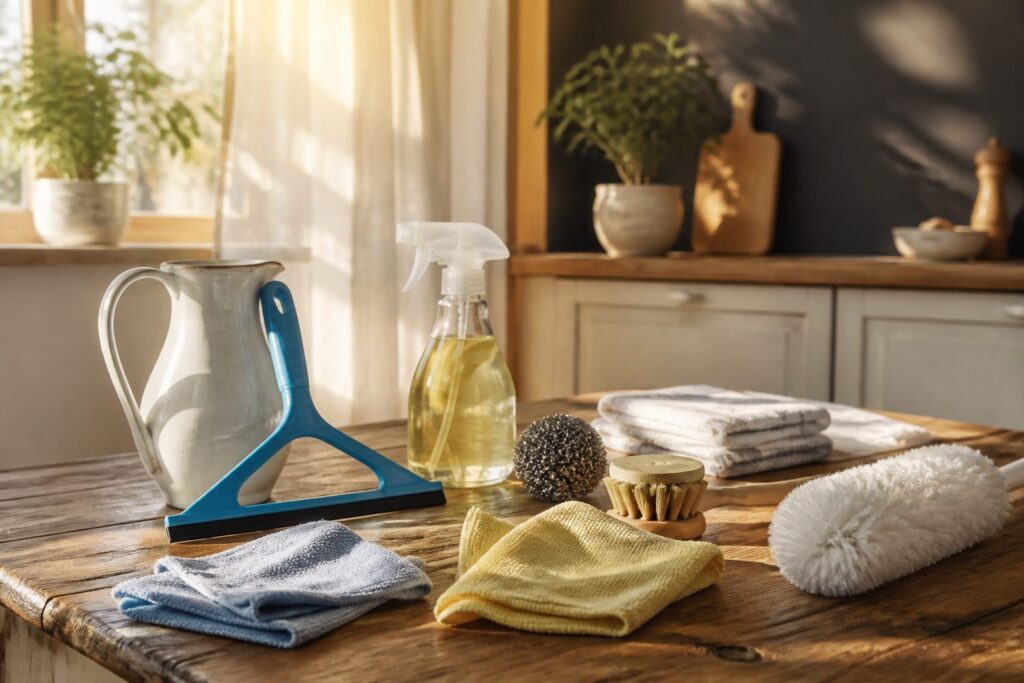
Home cleaning tools are the specific implements, from microfiber cloths to sealed HEPA vacuums, that let you finish a job without damaging the surface underneath.
Most people own too many of the wrong ones and not enough of the right ones: a squeegee left in the closet means weekly vinegar scrubs instead of a thirty-second daily pass on the shower door, and a vacuum too heavy to carry upstairs means half the house never gets cleaned.
One synthetic fiber, split finer than a human hair, is what separates a microfiber cloth that traps dust from a cotton rag that just pushes it around.
[link-whisper-related-posts]1. Microfiber Cloths
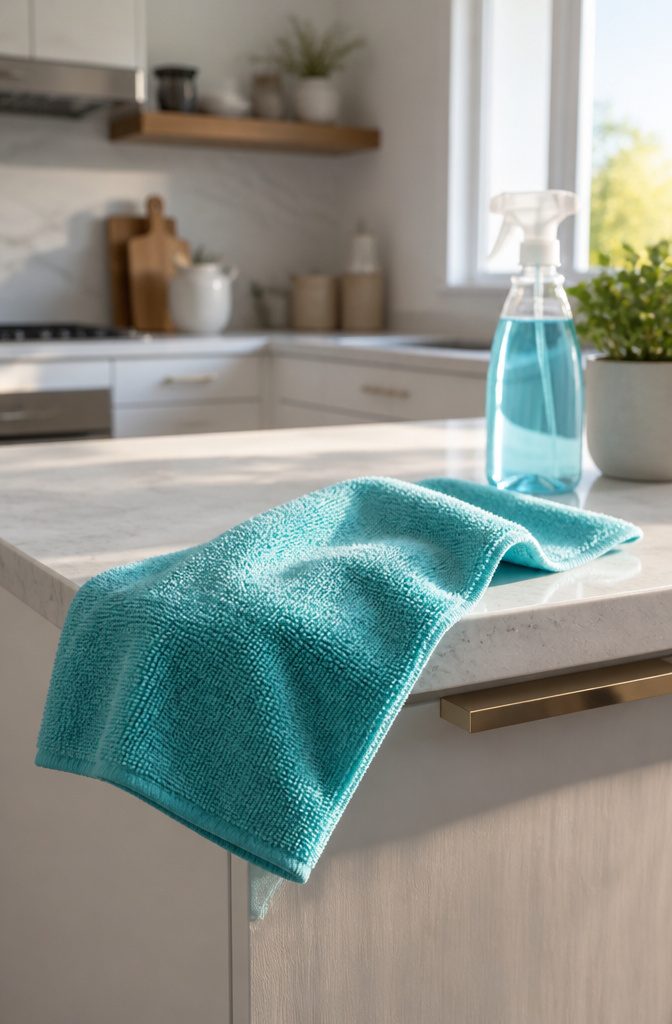
Microfiber cloths earn their spot in any basic kit because the synthetic weave grabs dust and grease without scratching what sits underneath.
The fibers are split finer than a human hair, which gives them the surface area to hold onto debris rather than pushing it around.
For someone working through a Saturday morning list, this means one cloth can handle the bathroom mirror, the kitchen counters, and a quick pass over the TV screen without swapping tools.
I keep a color-coded set on hand so the cloth that touched the sink never sees the dining table. They work dry for dusting, damp for most surfaces, and wrung-out wet for streak-free glass.
The real limit is heat: toss them in a hot dryer and the fibers melt flat, turning a useful tool into a rag that smears. Wash cold and air-dry, or accept the replacement cost sooner than necessary.
2. Vacuum Cleaner
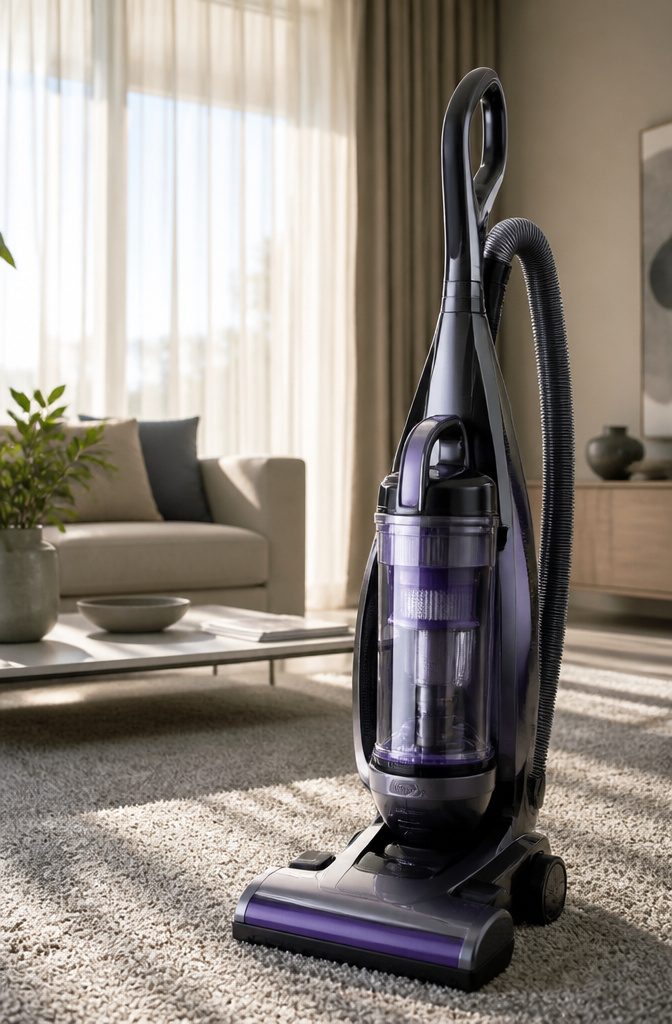
A vacuum cleaner with a sealed HEPA system traps the fine particles a broom kicks back into the air, and that difference is what justifies the floor space it takes up.
I notice the change most in rooms with rugs, where the fibers hold onto dust and whatever else shoes track in until suction pulls it out rather than stirring it around.
Aim for a canister weight you can carry up stairs one-handed; anything heavier stays parked on the main floor and half your house goes unvacuumed.
The motor matters less than the filtration.
A sealed path from intake to canister or bag keeps what you collect from leaking through seams, and for anyone sensitive to dust or running a machine weekly rather than daily, that seal is the detail worth checking.
Cordless sticks win on convenience but trade run time and suction depth; plug-ins still clean faster on wall-to-wall carpet.
I would not spend for an auto-empty dock in a small apartment, but in a house with shedding pets or multiple high-traffic rooms, the time it saves adds up across a year of Saturdays.
3. Squeegee
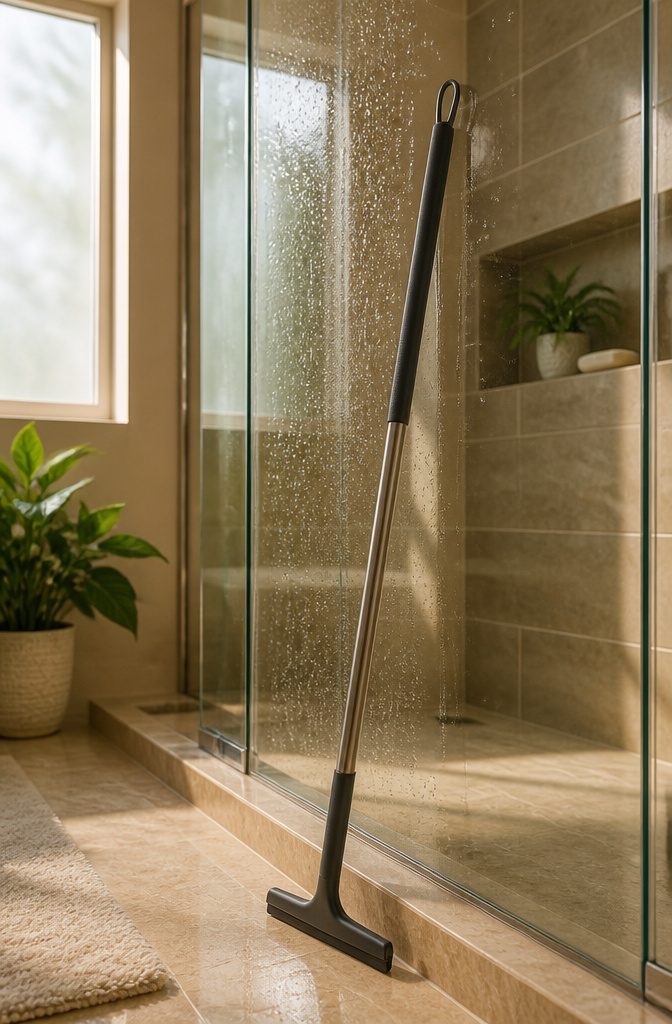
A squeegee earns its keep on glass and tile where water spots and soap film build fastest.
The rubber blade pulls moisture off shower doors and windows in one pass, which matters more than it sounds when hard water leaves mineral rings that need chemicals to fix later.
The best ones have a 10- or 12-inch blade and a handle long enough for overhead glass without a step stool. I keep a separate small squeegee, about 6 inches, for bathroom mirrors and car windshields.
The blade material is the whole story here: silicone lasts longer than rubber and stays flexible in cold water, though it costs a few dollars more upfront.
For shower doors, I squeegee after the last use of the day, which takes under thirty seconds.
Skipping this means scrubbing with vinegar weekly instead. On exterior windows, the tool works wet or dry, but it needs a cloth wipe at the edges where the blade leaves a thin line.
The limit is texture. A squeegee drags on painted walls, countertops, or anything porous, and the noise alone stops me from trying.
4. Scrub Brushes
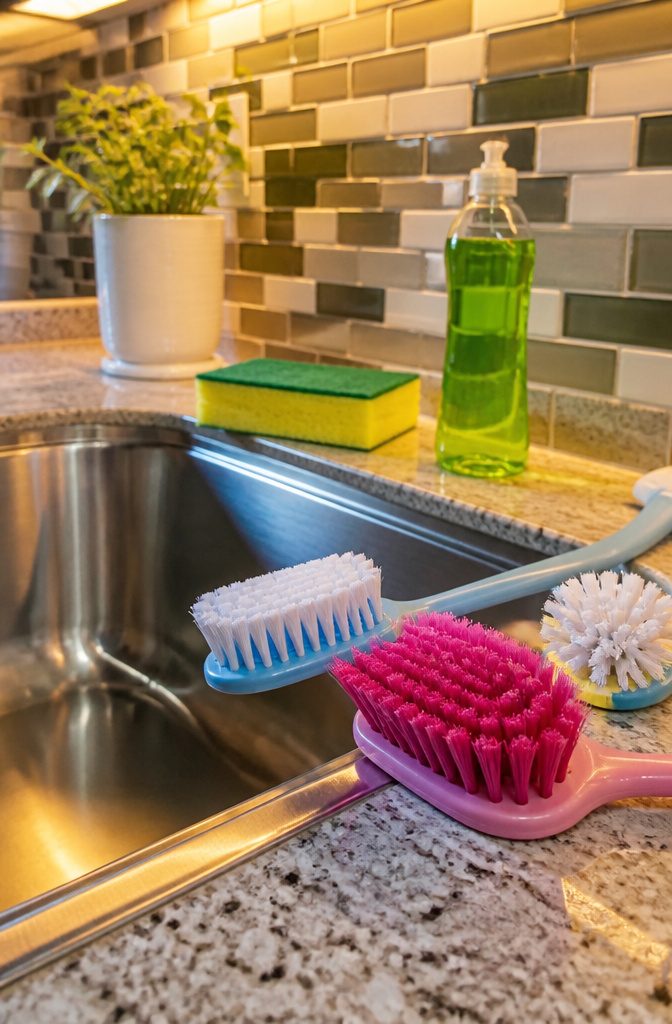
A scrub brush earns its place when elbow grease alone quits.
The bristle stiffness tells you the job it was built for: soft natural fibers work painted walls and tile grout without chewing the finish, while stiff synthetics cut through baked-on stove grease and the ring around a bathtub.
I keep one of each, and the split between them is simple.
Soft brushes cost less and dry faster, so they stay ready in the kitchen drawer; stiff ones need a rinse and a dry stand, or the bristles splay and the brush turns into a useless pancake within a month.
The handle shape matters more than most people notice. A palm grip gives you pressure for spot work, but a long handle saves your knees on floors and keeps your hand out of toilet water.
For renters, the long handle wins because it reaches behind toilets and under radiators where a landlord’s inspection always looks.
Replace a scrub brush when the bristles no longer hold their shape, not when they fall out; a floppy brush just moves dirt around and wastes your time.
5. Extendable Duster
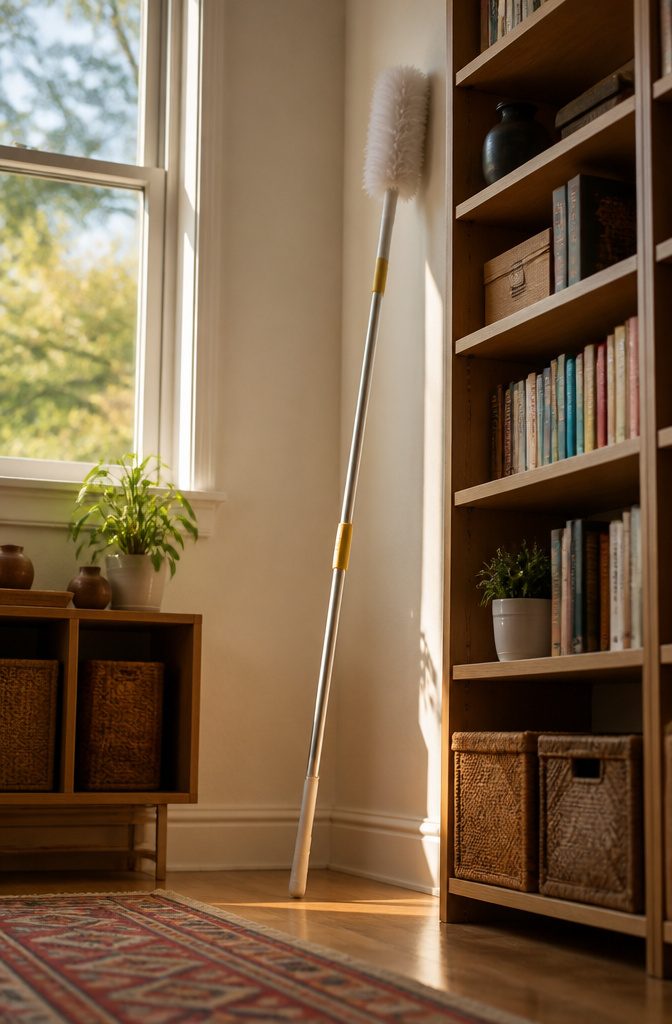
An extendable duster earns its place the first time you need the top of a door frame without dragging a chair across the room.
The OXO Good Grips Microfiber Extendable Duster runs on a telescoping pole that collapses for a closet shelf and stretches to reach ceiling corners, crown molding, and the horizontal surface above kitchen cabinets where grease settles into dust nobody wants to claim.
Microfiber filaments grab what they touch rather than pushing it airborne, which matters more at height where you can’t see what you missed until it drifts down later.
A hand duster or damp cloth works for anything within arm’s reach, but the extendable duster wins anywhere above shoulder height or behind furniture with clearance too narrow for a vacuum hose.
The head bends to angle but still needs space to maneuver; tight gaps between a wall and a bookcase remain frustrating. For renters in particular, the tool skips the ladder storage problem entirely.
6. Bucket
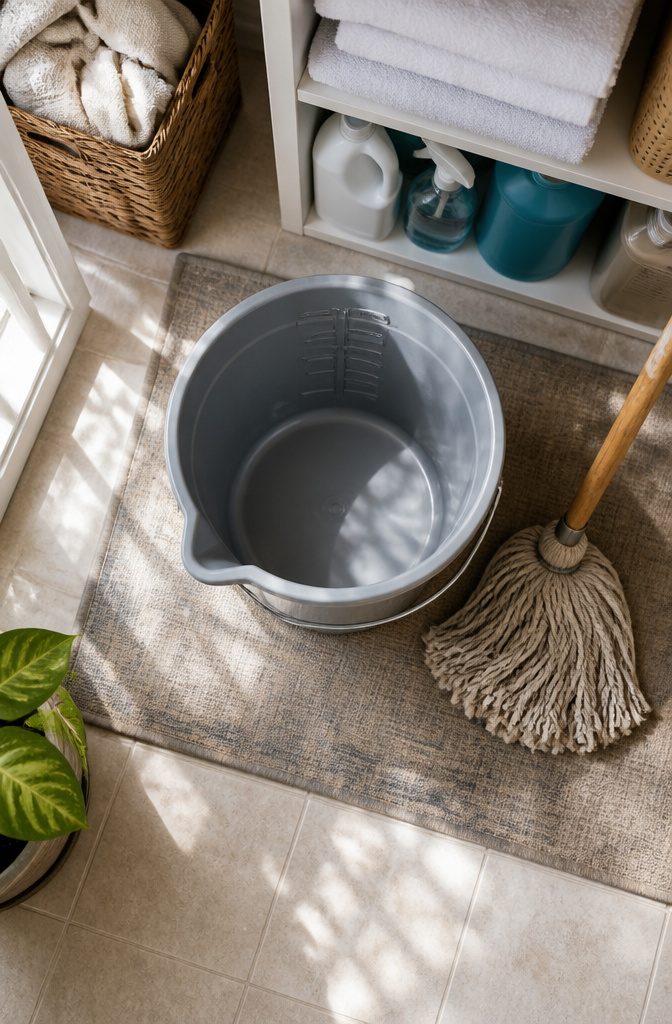
A 5-gallon bucket with a pour spout and measurement marks is still the center of any wet-mopping setup, even with spray mops and premixed solutions on the market.
You need somewhere to mix hot water with floor cleaner at the right dilution, and a bucket gives you the volume to rinse a dirty mop head without hauling the sink around the house.
Buckets hold water or cleaning solutions for wet mopping, full stop.
That baseline function has not been replaced. What has changed is how you use it.
I keep one bucket for the cleaning solution and a second for rinse water, which cuts the number of trips to the tub in half and keeps the floor from ending up streaked with dirty residue.
Two buckets is a judgment call, not a requirement, but the time saved on a Saturday morning is real.
Plastic still wins for weight and cost.
A metal pail looks better sitting out, yet it dents, it conducts heat, and the handle clips rust. For a tool that sits in a closet 90 percent of the time, the practical choice is the dull one.
7. Rubber Gloves
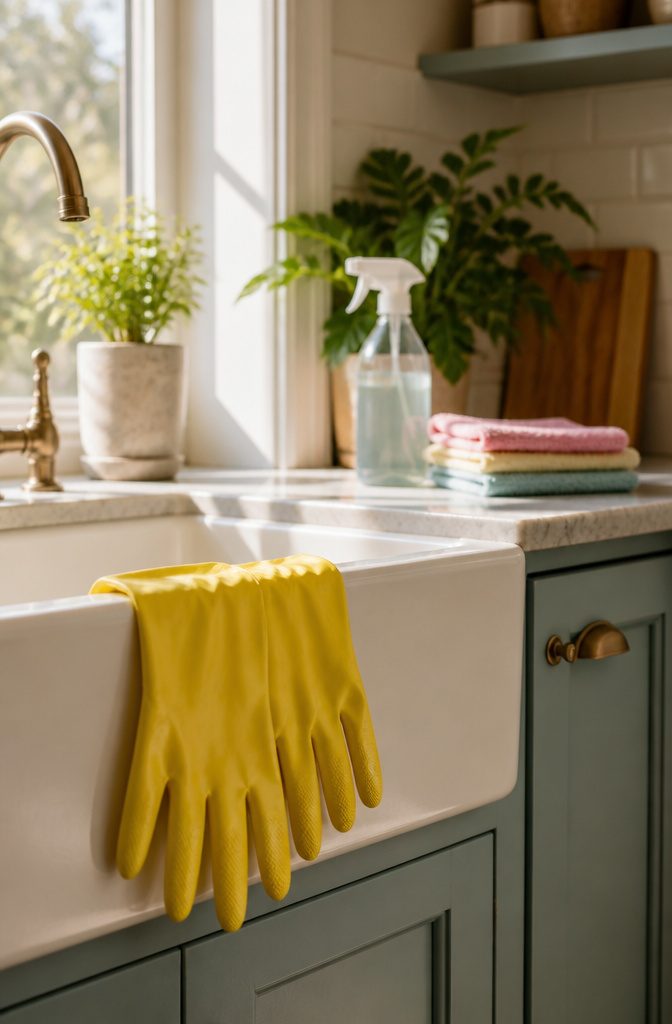
Rubber gloves keep bleach, ammonia, and degreasers off your skin, and that barrier matters more than most people think.
I replace mine the moment I spot a pinhole or thin spot, because a compromised glove gives false confidence while chemicals seep through.
The difference between nitrile and latex is real: nitrile resists punctures and solvents better, latex fits tighter but degrades faster around petroleum-based cleaners. For routine dusting or wiping with plain water, gloves are optional and I usually skip them.
The non-negotiable moment is anything involving oven cleaner, toilet bowl disinfectant, or a job that has you submerged in suds for twenty minutes. Your hands will crack, burn, or absorb something they shouldn’t.
A three-pack runs about $6–10, enough to stash a pair under every sink. I keep one dedicated set for bathrooms only, since cross-contaminating kitchen and toilet germs defeats the purpose.
8. Mop
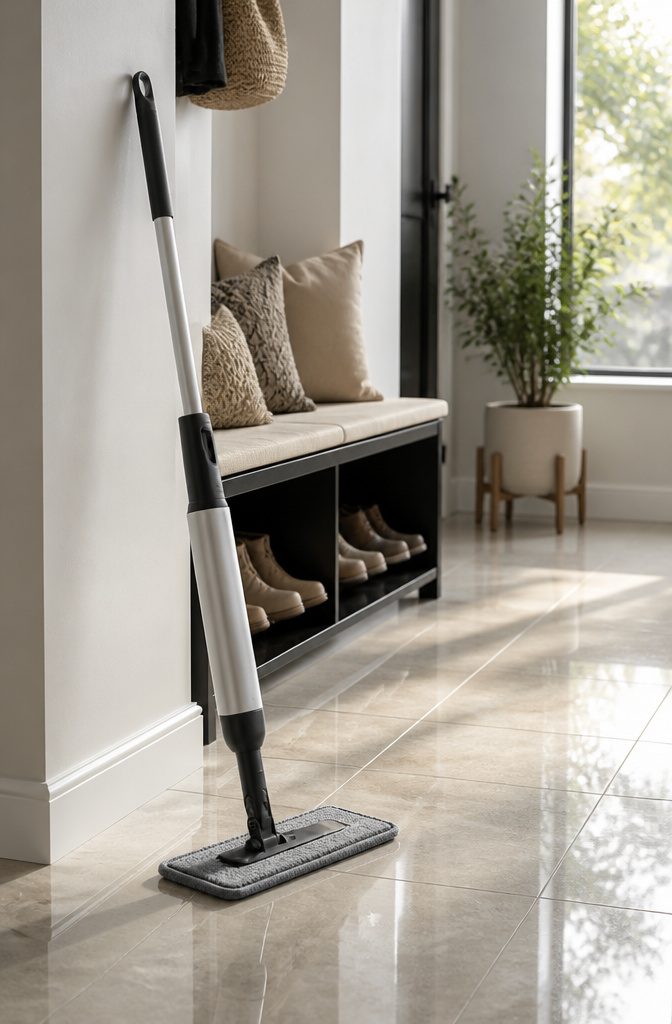
A mop handles the jobs a broom leaves behind, the wet cleaning and disinfecting that sealed hard floors need to stay presentable.
Skip it for unsealed wood or laminate, where standing water warps the boards faster than the dirt bothers you. For tile, vinyl, and sealed concrete, it is the tool that actually finishes the job.
What matters more depends on your floor and your tolerance for waiting.
One emphasizes the bucket paired with the mop, the cleaning solution you mix and carry with you. The other treats the mop itself as the essential floor tool, full stop.
My own preference lands with the second view: a microfiber twist mop with a wringing mechanism beats dragging a bucket around a small apartment, and the floors get just as clean with a spray bottle of diluted cleaner applied directly.
The bucket setup makes sense if you are cleaning a whole house in one pass, or if you are working with a disinfectant that needs a specific dilution to do its job.
For a weekend project on a real budget, a $15–$25 microfiber flat mop covers most renters and first-home owners. Replace the pad every six months to a year, sooner if it starts leaving streaks.
The cotton string mops still sold at hardware stores absorb more, but they also smell and shed; the microfiber upgrade is worth the few extra dollars.
9. Sponges and Scrubbers
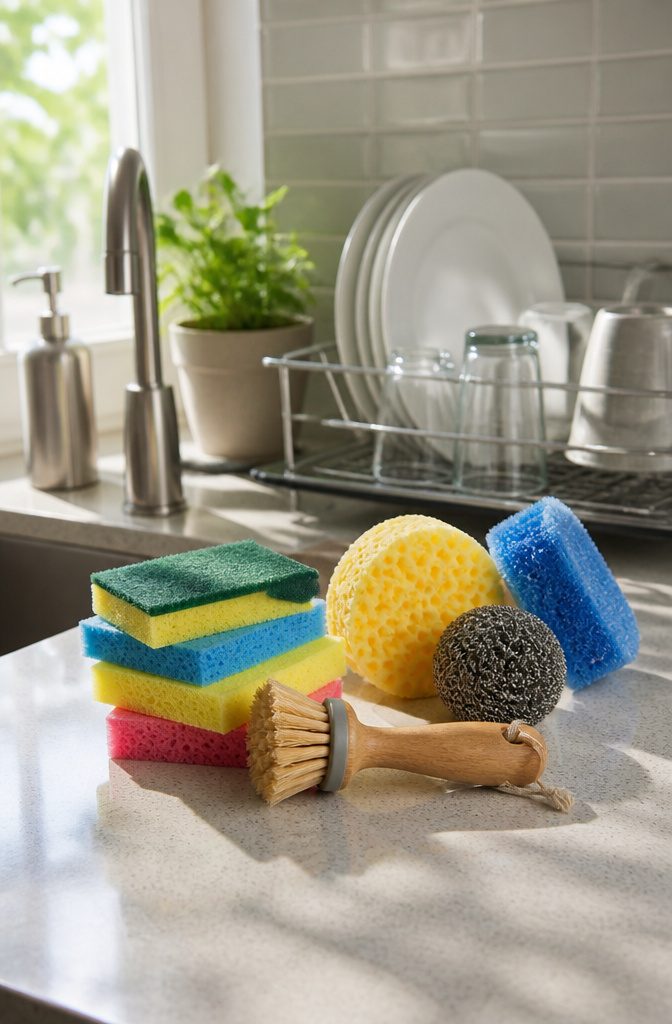
A sponge handles the daily jobs a microfiber cloth cannot touch.
The soft side lifts grease from a plate; the abrasive face scrubs a stovetop or soap scum from tile. Scrubbers, the stiffer cousins, take over when mildew or baked-on residue needs more pressure than a sponge can apply without tearing.
You get less use out of the cheap ones.
A sponge holds moisture, so it needs replacing faster than a cloth, and it does not trap dust or polish glass. For grout lines or heavy grease, a dedicated scrubber works faster and spares the sponge from shredding.
I keep both in rotation: sponge for dishes and counters, scrubber for the shower and stove. A flat scrubber with a handle also saves knuckle-scraping on bathtub corners, though it cannot flex into a glass like a sponge can.
Cost stays low either way, so the real limit is storage space under the sink. Two tools cover it; three starts to crowd the caddy.
10. Cleaning Carts and Caddies
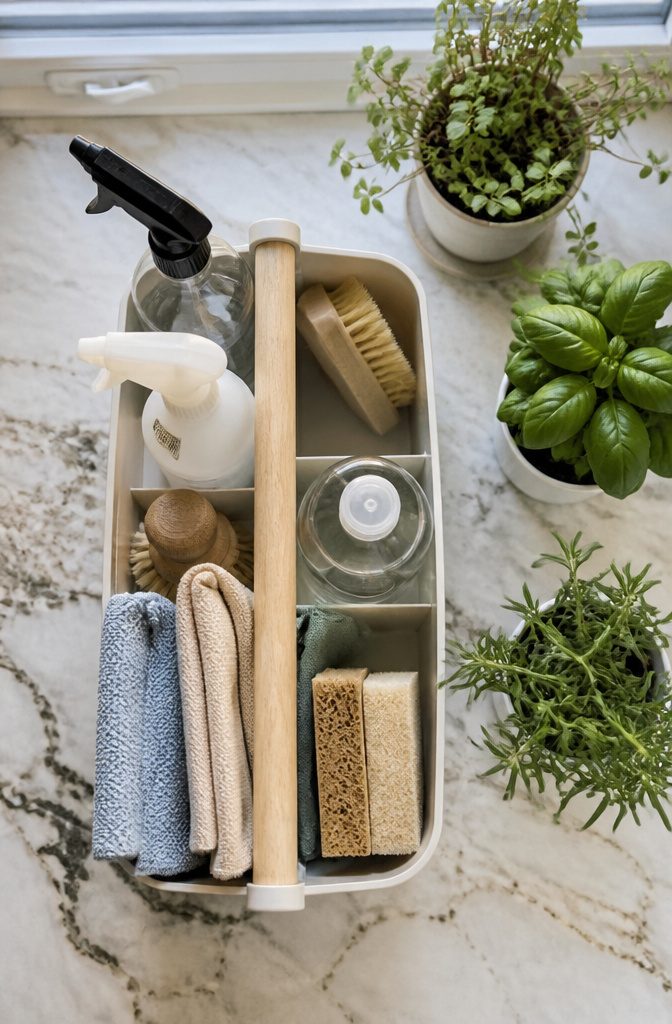
A cleaning cart or caddy turns the scattered pile of home cleaning tools into something you can carry in one trip. The difference between a cart and a caddy comes down to scale and floor plan.
A cart rolls between rooms with a full stock of sprays, cloths, and brushes, which matters when you are working through a whole apartment in an afternoon.
A caddy fits under a sink and holds just the essentials for a single bathroom or the kitchen counter.
I prefer a caddy for renters.
Carts need storage space and level floors, and most leases do not promise either. A caddy with a handle and divided compartments keeps bottles upright and wet sponges separate from dry cloths.
The best ones have a rigid base that will not sag when loaded, because a floppy caddy dumps everything the moment you set it down.
Look for one with a removable tray or small pockets for the tools you reach for most. That small design detail saves the digging that turns a ten-minute wipe-down into a twenty-minute hunt.
11. Spray Bottles
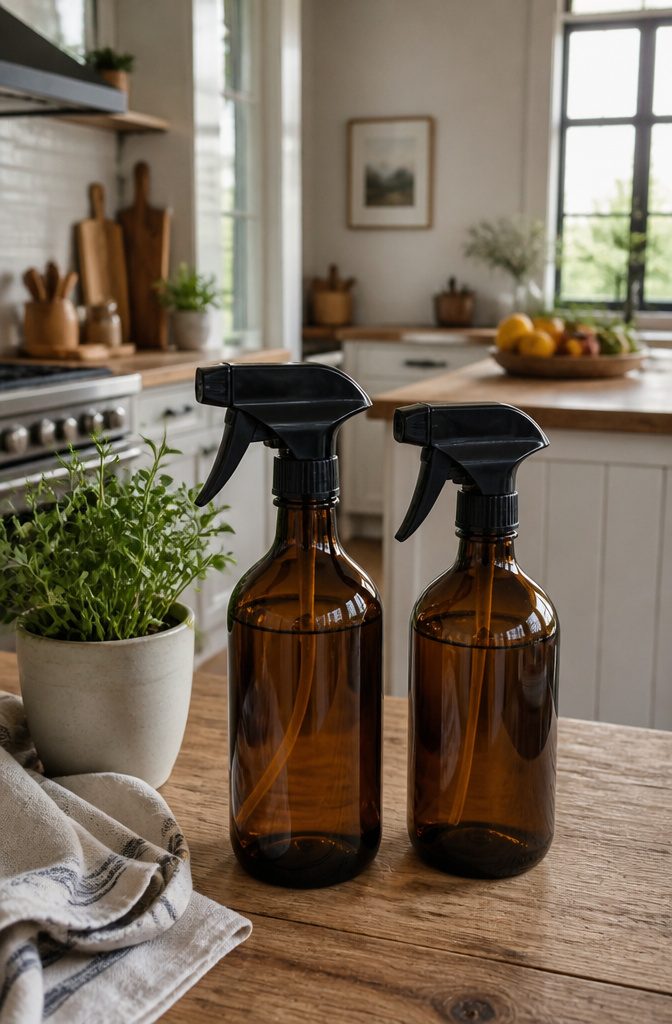
A spray bottle turns any countertop solution into a tool you control, which matters more than most people realize. Store-bought cleaners usually ship in their own trigger bottles, but homemade solutions need a vessel that won’t clog or degrade.
I keep two sets: one for vinegar-based mixes, which eventually corrode metal springs, and one for dish-soap blends that sit longer.
The cheap ones from the dollar store fail at exactly the wrong moment, mid-wipe, when the trigger seizes or the nozzle cracks.
Spending three or four dollars more on a bottle with an adjustable brass nozzle pays for itself by month two.
Homemade solutions win on cost per ounce and let you dial the strength to the job; store-bought wins when you need disinfectant claims that meet a standard, or when you are cleaning for someone with allergies and cannot risk a mixing error.
For a weekend deep clean, I reach for the commercial bottle. For daily maintenance, the homemade mix in a reliable spray bottle is what actually stays within arm’s reach.
12. Toilet Brush
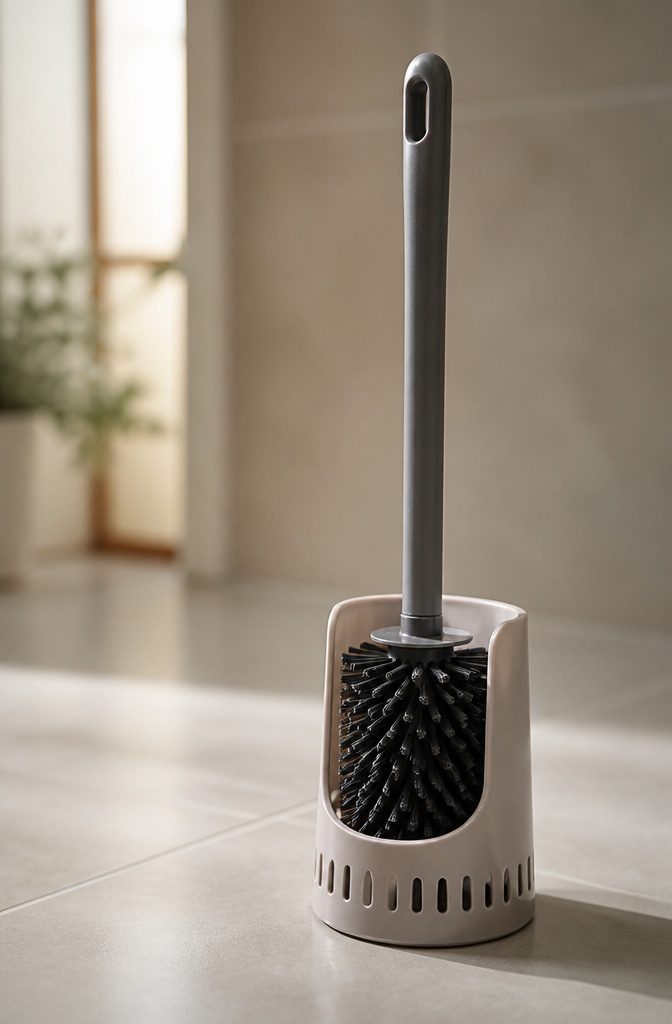
A toilet brush is the one tool you cannot substitute with a rag or a sponge.
The curved handle and dense bristles exist to reach under the rim and into the trap where waste actually collects, and that geometry matters more than any advertised coating or color.
What separates an adequate brush from one worth replacing is the holder.
A vented caddy that lets the head dry between uses keeps the bristles from souring in stagnant water; a closed cup traps moisture and breeds bacteria you then spread around the bowl on the next pass.
I replace mine when the bristles flare or flatten, since a splayed head no longer makes contact with the porcelain surface it is supposed to scrub.
Plastic bristles work fine and cost little, but they degrade faster than silicone, which sheds less and dries quicker. Silicone heads cost more upfront and flex differently, so they feel less aggressive on set-in stains.
For a rental, the cheaper plastic model swapped out every few months wins; for a home you intend to keep, a silicone head in an open, vented holder saves the recurring replacement and smells better doing it.
13. Disinfectant Wipes and Magic Erasers
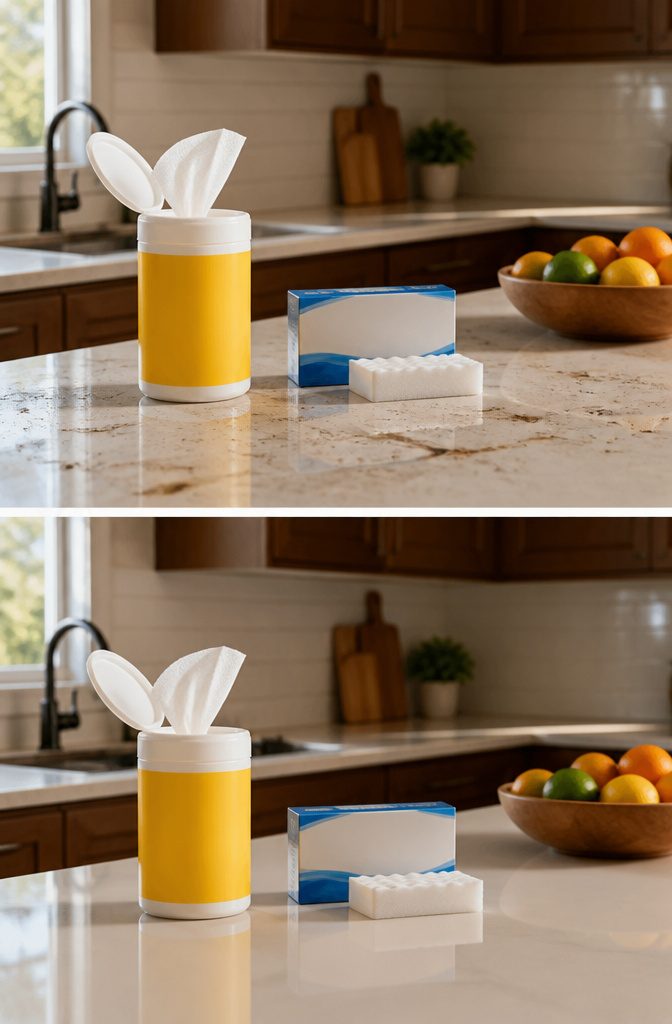
Disinfectant wipes earn their spot for one reason: speed.
A quick pass over a doorknob or light switch after someone gets home sick, and the job is done before a spray bottle even leaves the cabinet. They cost more per wipe than a spray bottle and cloth.
A single wipe runs about five to ten cents, which sounds small until you realize a microfiber cloth and a bottle of diluted bleach solution handles the same job for a fraction of a penny per use.
I keep a canister around for the car and for travel, but at home I reach for them only when I am already running late.
Magic Erasers work on scuffs that nothing else touches, especially on painted walls and baseboards where a scrub brush would take the finish with the dirt.
The material is melamine foam, essentially a very fine abrasive, which explains why it lifts marks but also why it wears away to nothing in a few uses.
A four-pack costs roughly the same as a pack of six reusable melamine sponges from a hardware store, and those last longer because they are denser.
I buy the name-brand version once to confirm the wall color survives it, then switch to the bulk option for maintenance. Both tools have their place, but neither belongs in a weekly rotation if the budget matters.
14. Broom and Dustpan
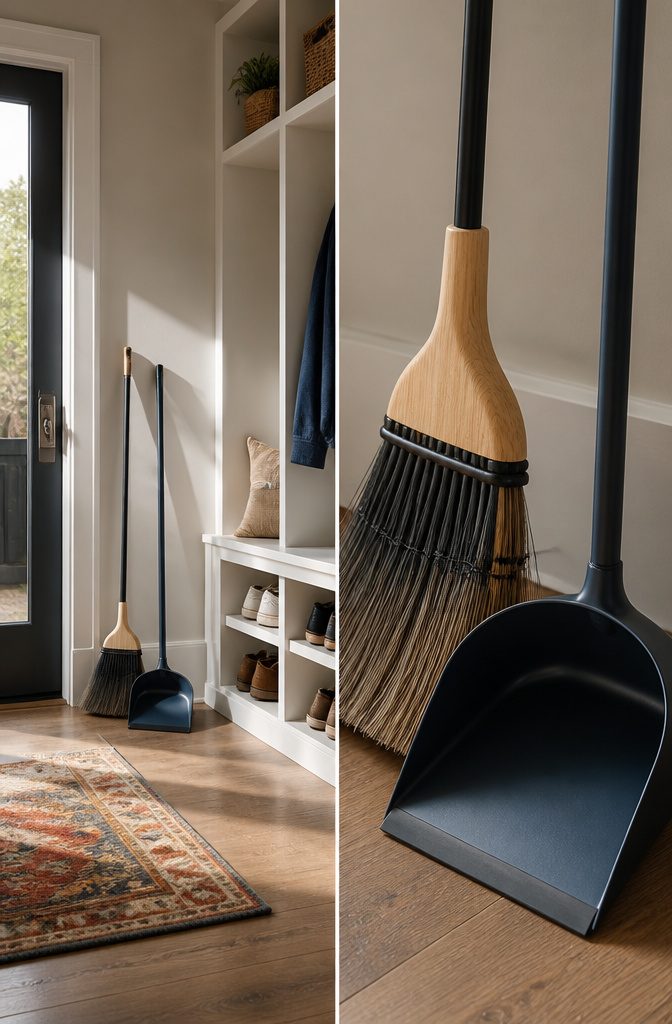
A broom and dustpan still earn their spot in even the most gadget-stocked closet.
Vacuums excel at embedded dirt and carpet pile, but the pair handles broken glass, wet leaves tracked in from a patio, and the dusty fallout from a quick shelf install faster than dragging out a machine and finding an outlet.
The broom sweeps dirt, dust, and debris from hard floors; the dustpan collects and holds it for easy disposal.
For quick kitchen cleanups after dinner or a Saturday morning sweep of entryways, the motion is immediate and the storage is a corner, not a closet.
The right bristle matters more than most buyers expect. Soft, flagged ends grab fine dust on smooth tile; stiffer, unflagged synthetic bristles push heavier grit without matting down.
I keep one of each: the soft one lives in the kitchen for daily use, the stiff one in the garage for sawdust and potting soil.
A dustpan with a rubber lip that sits flat against the floor saves the extra sweep that cheap, warped plastic demands.
The pair costs little and lasts years, and using the correct tool for surface debris helps prevent the scratches that aggressive vacuum wheels or rushed wiping can leave behind.
15. Heavy-Duty and Specialty Tools
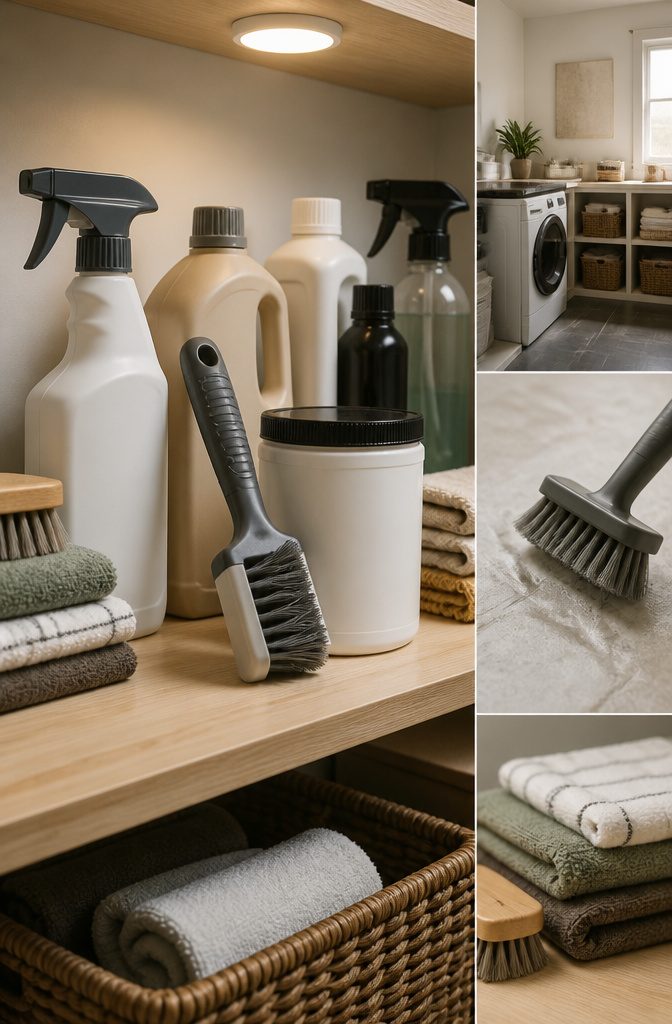
Standard sponges and all-purpose cleaners handle most daily messes, but mildew, grease, and soap scum laugh at them.
That is where heavy-duty cleaning products earn their shelf space. I keep one dedicated bottle for the bathroom grout and the stovetop hood, because repeated scrubbing with the wrong formula just wastes time and damages the finish underneath.
Specialty tools follow the same logic.
A grout brush with stiff, angled bristles reaches into joints that a flat sponge simply skims. A squeegee after every shower prevents mineral buildup that later demands hours of scraping.
The storage cost is real: these items do not nest neatly in a caddy. My judgment is to own them only after a project has proven the standard kit inadequate.
If you are fighting the same stain twice in one month, the tool pays for itself. If not, the rental counter or a one-time borrow from a neighbor keeps your closet sane.
Health and Hygiene
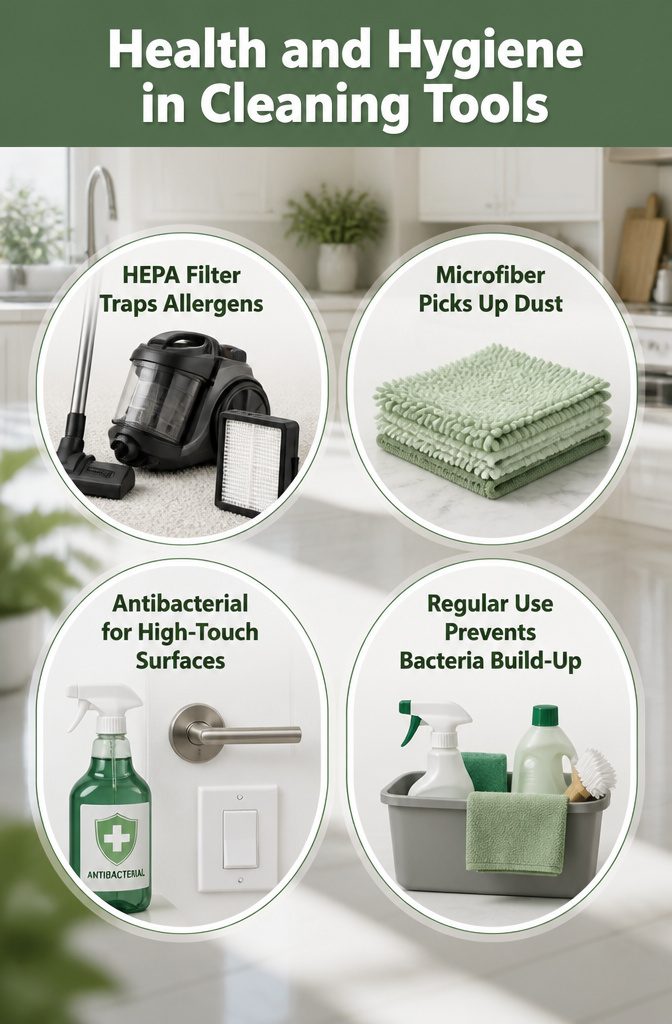
A vacuum with a HEPA filter traps particles a standard bag lets recirculate, and that distinction matters most in the rooms where you spend the still hours: bedroom, living room, anywhere you sit long enough to breathe deep.
Microfiber mops and cloths pick up what cotton pushes around, because the split fibers create actual grip on dust and dander rather than sliding across it.
I reach for antibacterial cleaners on the surfaces hands touch repeatedly, door handles to light switches, though I do not bother with them on the window glass or the top of the fridge where contact is brief and the residue costs more than it gives.
What actually helps is doing it regularly, not going harder when you finally get around to it.
A quick pass with the right tool every few days beats a quarterly deep clean with the wrong one, because bacteria and allergens accumulate on a timeline your lungs do not pause for.
I have watched people buy a single expensive gadget and let it gather dust in the closet while the cheap daily habits lapsed. The tool that stays in your hand is the one that protects your health.
Cleaning Efficiency
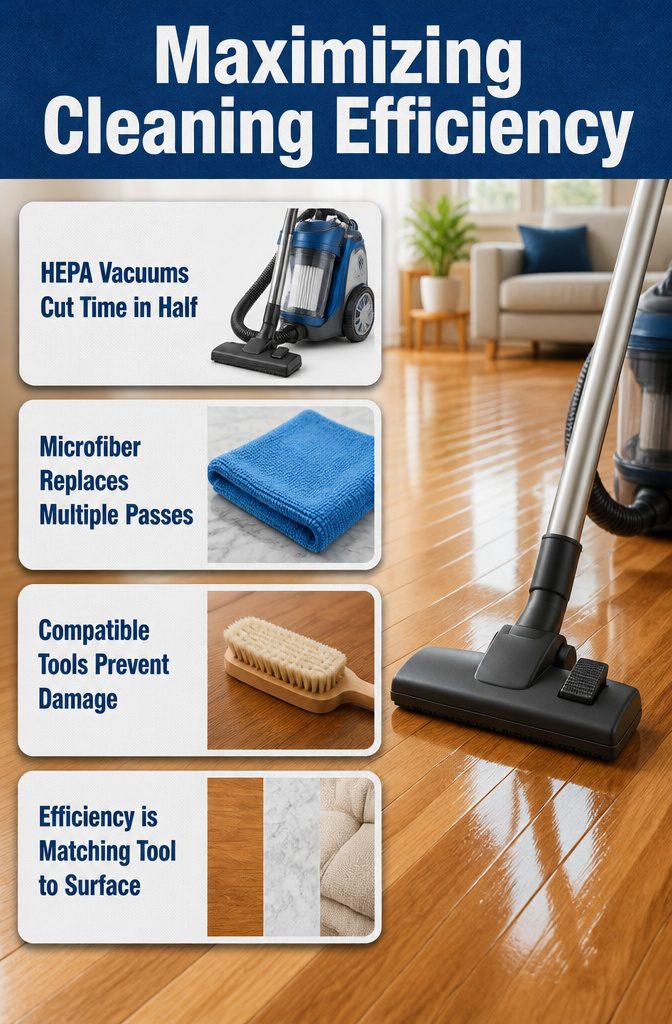
A vacuum with a HEPA filter cuts floor-cleaning time roughly in half while it pulls allergens out of the air instead of recirculating them. That difference matters on a Saturday morning when you are trying to finish before lunch.
Microfiber cloths work the same way on surfaces: the material traps dust rather than pushing it around, so one pass replaces the three or four a cotton rag demands.
The right tool does not just speed up the job; it changes what "clean" means.
A soft-bristle brush on wood prevents the scratches that later collect grime, and using the correct cleaner for upholstery keeps fibers intact so they resist staining longer.
Efficiency here is not about rushing; it is about matching the tool to the surface so the work holds. You notice it in hours saved and in not having to re-clean something that was never really finished the first time.
Protecting What You Own
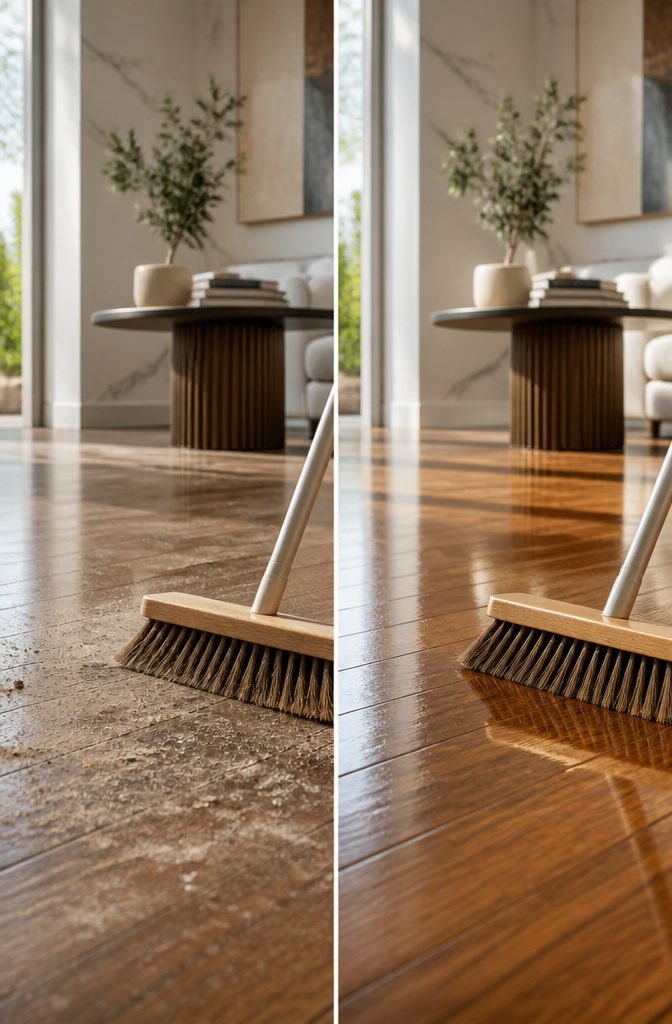
A soft-bristle brush on a hardwood floor or marble countertop removes grit without etching the surface, while the same brush on cast iron or grout simply polishes nothing.
That match between tool and material is what keeps a $200 side table from looking like a thrift find in three years.
The damage I watch for is usually cumulative, not dramatic. Dust under a dry mop acts like sandpaper; a squeegee dragged across a painted door frame leaves a scar that primer won’t hide.
Using the right tool at the right interval, about once a week for high-contact surfaces, cuts the wear that forces early replacement.
Microfiber cloths matter here more than their price suggests.
They lift particles rather than pushing them, which means fewer passes and less abrasion per cleaning. The upfront cost runs higher than a bag of rags, but you get a finish that holds its gloss.
For renters especially, this calculus pays at move-out. A security deposit often hinges on whether the oak floors still show their original stain or whether the bathroom tile grout has dulled to gray.
The tools that prevent that damage are the same ones that fit under a sink and cost less than a single professional deep clean.
The Mental Side of a Clean Home
A clean room quiets the mind before it does anything else.
I notice this most when I walk back into a space I have just tidied: the counters are clear, the floor is swept, and my shoulders drop without my asking them to.
The clutter you see is a task your brain keeps scheduling, and unfinished tasks wear on you whether you choose them or not.
Organized spaces also remove the low-grade panic of someone dropping by. A friend texting that she is ten minutes out does not send me scrambling for a laundry basket if the surfaces are already handled.
The tools matter here, but so does the system they serve: a vacuum in the closet does nothing for your nerves until the routine is regular enough that the floor stays passable without a special effort.
I think the real payoff is not the clean itself but what it makes room for. A Saturday morning without the catching-up phase starts differently.
You sit, you read, you leave the house without that background hum of undone work. The home cleaning tools are the means; the quiet mind is the end.
Choosing What Actually Works
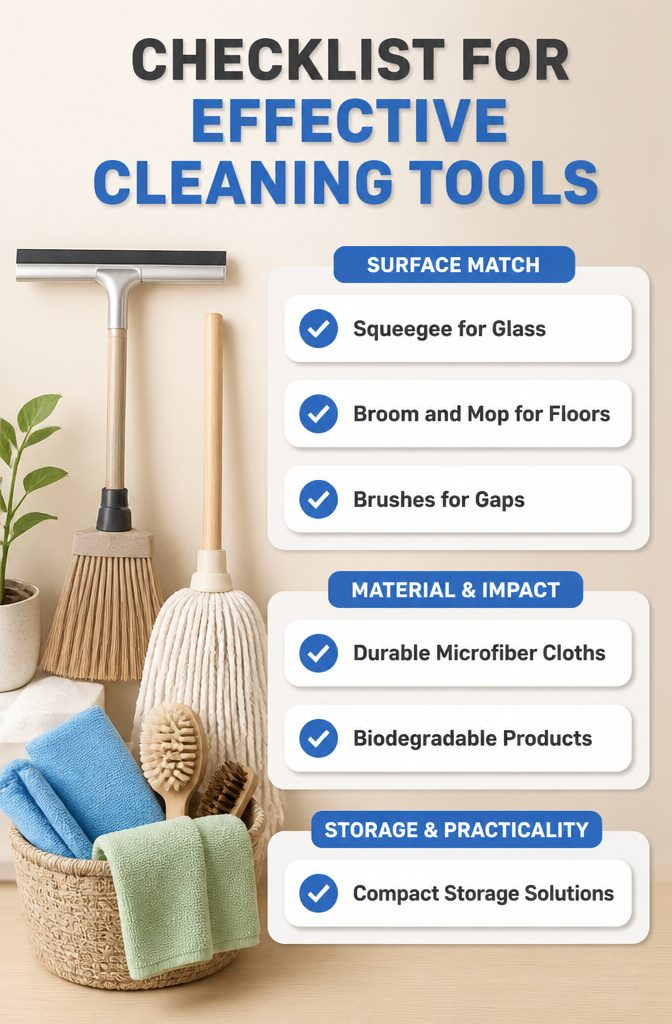
The right home cleaning tools depend on what you’re actually cleaning, not what the package claims.
A squeegee saves real time on glass and water removal; a broom and mop pair handles floors; brushes fill the gaps. I match the tool to the surface first, then check what it’s made of.
Microfiber cloths trap dust better than traditional rags because the fibers grab rather than push particles around, and they hold up through repeated washes if the weave is tight enough.
Durability matters more than features for weekend cleaners. Tools that simplify the task and cut effort pay off faster than specialized gadgets that sit in a closet.
For the environmental side, I look for biodegradable products, minimal packaging, or sustainable materials like bamboo handles and natural bristles. Usually you are choosing between price and availability, not between things that actually work differently.
Storage is the last filter: if it doesn’t fit a caddy or a shelf I already own, it becomes clutter. A compact tool you can grab beats an "efficient" one buried behind the vacuum.
Frequently Asked Questions
What are the best home cleaning tools?
Microfiber cloths, a vacuum with a sealed HEPA system, scrub brushes with the right bristle stiffness for the job, and a squeegee for glass and tile are the standouts.
Each earns its place by doing a specific job faster or safer than the alternative. A color-coded set of cloths and a canister light enough to carry upstairs cover most weekly tasks without extra trips.
Why is it important to have cleaning tools?
The right tools protect health by trapping allergens instead of stirring them up, cut the time a job takes, and prevent the cumulative damage that forces early replacement of floors and furniture.
They also reduce the mental load of unfinished tasks and leave you ready for guests without a scramble.
A vacuum with HEPA filtration and microfiber cloths that grab rather than push dust are the two upgrades that show the fastest return.
How do I choose the right home cleaning tools?
Match the tool to the surface and the mess. Soft natural bristles for painted walls and tile grout, stiff synthetics for baked-on grease, and silicone squeegee blades for hard water areas.
Weight matters too: a canister you can carry one-handed actually gets used on upper floors, while a heavy one stays parked.
For storage, renters should favor caddies over carts since most leases do not promise the space or level floors a cart needs.
What equipment do professional house cleaners use?
Professional services bring a full stock of tools and expertise, handling the same categories covered in any well-equipped home kit: kitchen, bathroom, floors, laundry, and specialty tools.
The difference is volume and efficiency, not secret equipment. For most households, owning a core set of home cleaning tools and maintaining a regular rhythm beats waiting for a scheduled service.
What is the 20 minute rule in cleaning?
The closest principle it emphasizes is that a quick pass with the right tool every few days beats a quarterly deep clean with the wrong one, because bacteria and allergens accumulate on a timeline your lungs do not pause for.
What are some good kitchen cleaning tools?
A microfiber cloth for counters and the TV screen, a sponge with an abrasive face for stovetop grease, and a soft-bristled broom with flagged ends for fine dust on tile are the kitchen standouts.
A spray bottle with a reliable brass nozzle for homemade solutions keeps daily maintenance within arm’s reach, and a dedicated set of rubber gloves stashed under the sink protects hands during longer jobs.





