

A room takes about ten minutes a day to keep in maintenance mode, but most people let it slide into recovery mode by Saturday.
That is the cost of skipping the daily four: the bed unmade, clothes on the chair, the nightstand clutter that multiplies overnight.
The exception is the monthly Saturday morning, when ceiling fan blades and the dust behind furniture need an hour of attention you cannot compress.
I keep my actual checklist on the back of the door, paper, not an app, because crossing off a finished task gives the hit of progress that starting the next one requires.
[link-whisper-related-posts]Daily Cleaning Tasks
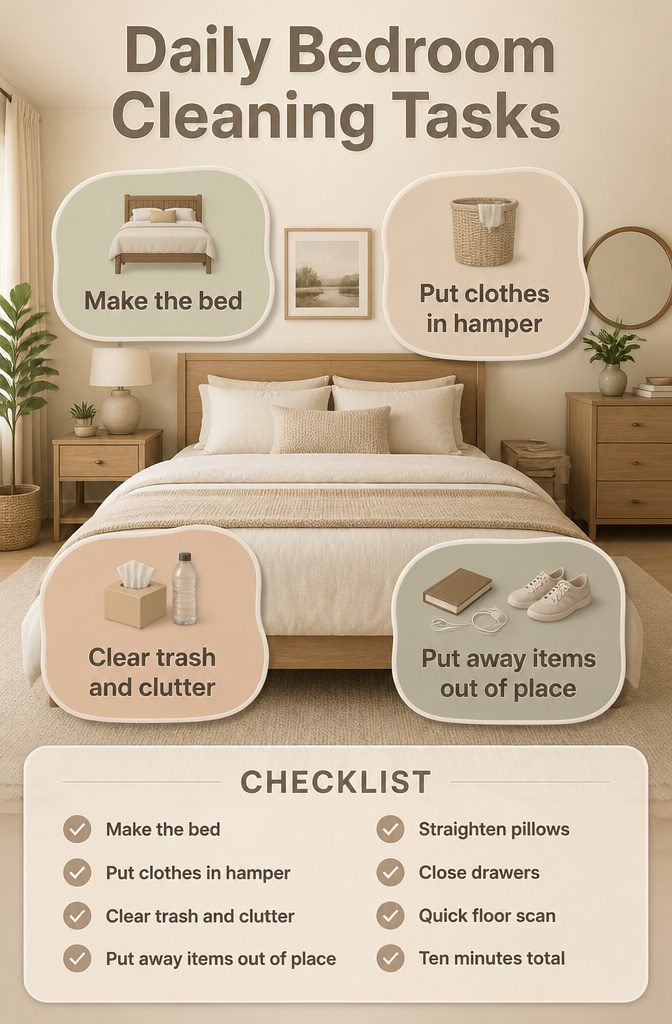
The four daily tasks take about ten minutes once they become habit, and they are what keeps a bedroom from sliding into chaos.
- Make the bed and straighten throw pillows and blankets. This single move resets the visual center of the room; everything else looks less messy by comparison.
- Put dirty clothes directly into the hamper instead of draping them over a chair or the floor.
- Clear trash and clutter from nightstand and dresser tops. A used tissue or an empty water bottle left overnight tends to multiply by morning.
- Put away anything else that is out of place: the book on the bed, the charger on the floor, the shoes kicked halfway under the dresser.
Do these four things daily and the room stays in maintenance mode rather than recovery mode. When Saturday cleaning arrives, you are dusting surfaces that are already clear, not excavating them.
Weekly Cleaning Tasks
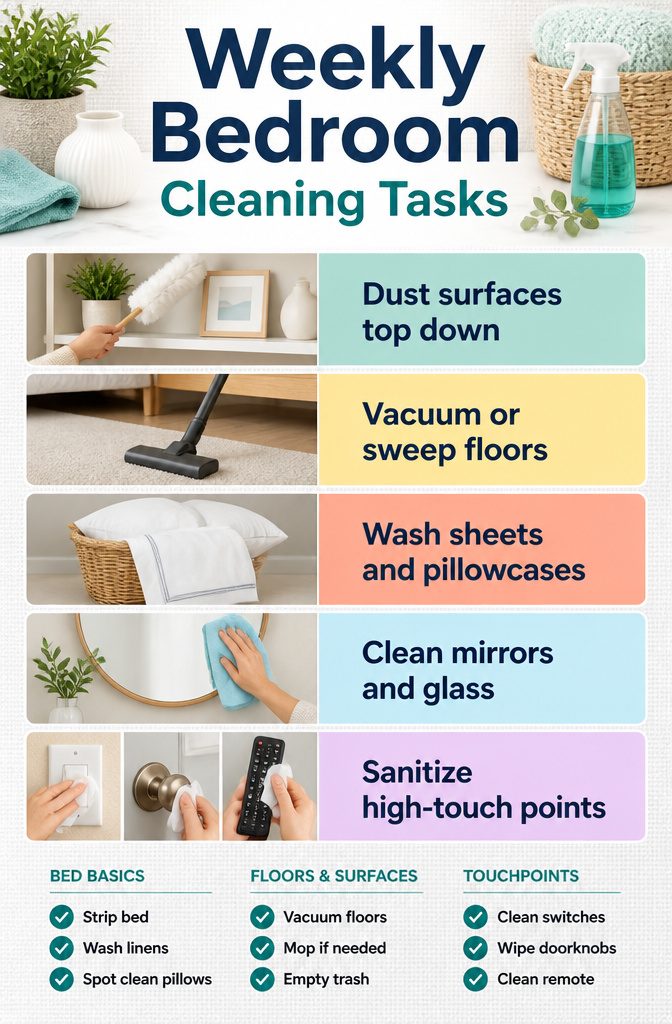
The weekly reset is where a room actually gets clean instead of merely tidy. I run through five tasks that take about an hour total and pull the space back from the accumulated grit of daily living.
- Dust from the top down: shelves, picture frames, dresser tops, then nightstands and the bed frame itself. Working high to low keeps settled dust from landing on a surface you already cleaned.
- Vacuum carpets thoroughly or sweep hard floors, and hit under the bed if the clearance allows it. Mop only when the floor looks grimy; a damp mop adds time and drying that most weeks do not need.
- Strip the bed and wash sheets plus pillowcases. I do not bother with the comforter weekly unless there is a visible stain. Spot cleaning the throw pillows and comforter covers that schedule for me.
- Clean mirrors and any glass surfaces with a streak-free product. Nightstand tops count here if they are glass.
- Sanitize the high-touch points: light switches, doorknobs, and the remote if there is one in the room. This is the task most people skip, and the one that actually cuts down on the cycle of minor colds.
Empty the trash while you are moving between tasks. It costs two minutes and prevents the bag from turning into a weekend project of its own.
Monthly Cleaning Tasks
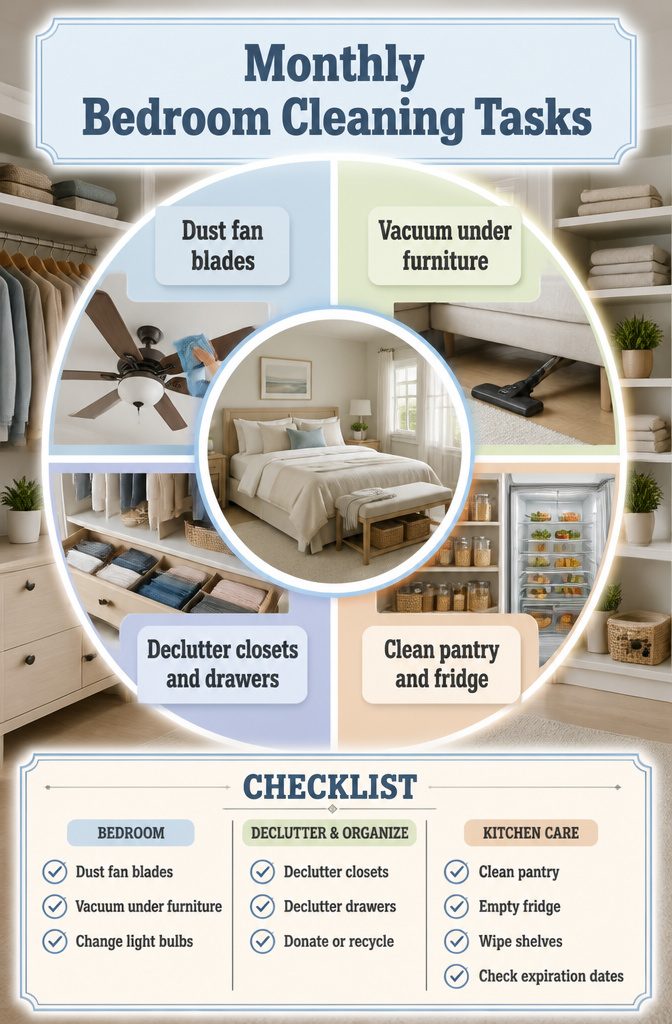
Monthly tasks reach the places daily and weekly rounds never touch. I do them on a quiet Saturday morning, once a month, and they keep the hidden buildup from becoming a project.
- Dust ceiling fan blades and light fixtures with a microfiber rag and a light mist of dusting spray. The blades collect more than you’d expect; I change any burnt-out bulbs while I’m up on the ladder so I don’t climb twice.
- Vacuum under furniture and behind appliances where the weekly pass misses. The dust and hair that settle there work into fibers and scratch hard floors over time.
- Declutter closets and drawers. Pull everything out, make two piles (trash, and donate or recycle), then put back only what you use. The space you clear is space you won’t have to clean around later.
- Clean and organize the pantry, then empty the fridge and freezer and wipe down the shelves. I check expiration dates while the shelves are bare; it’s faster than hunting later.
Deep Cleaning Tasks
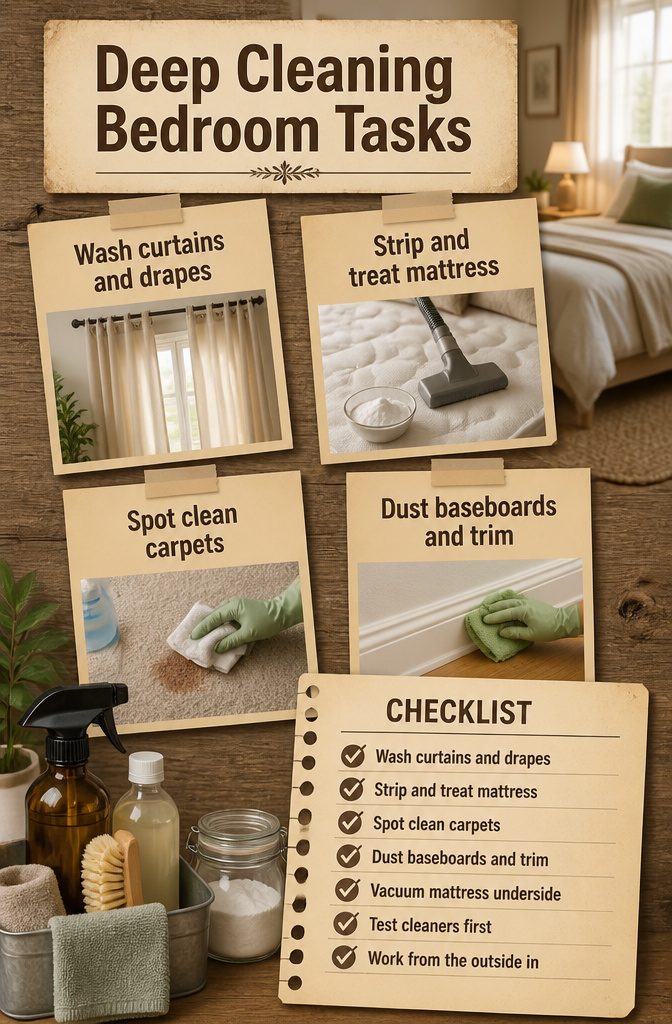
Deep cleaning is where the room actually resets. Fabrics hold odors and dust that weekly routines never touch, and fixed surfaces collect grime too slowly to notice until someone points it out.
- Wash or dry clean curtains and drapes once or twice a year. Machine-washable panels go straight in on delicate; others need spot testing on the back edge first, since bleeding or watermarking is hard to fix after the fact. I dust the rods and hardware while the fabric is down, because re-hanging over a dirty track undoes the work.
- Strip the bed entirely and treat the mattress. Baking soda pulled across the surface and vacuumed out after twenty minutes handles most of what settles in; if the mattress comes off the frame, vacuum the underside too.
- Spot clean carpets and upholstery where stains have set. Work from the outside in, and test any cleaner on a hidden patch first. Whole-room extraction is worth renting for, but spot work handles ninety percent of what shows.
- Baseboards and trim are the proof of a deep clean. A barely-damp microfiber cloth run along the top edge of baseboards picks up the gray line that dusting always misses. Door trim and switch plates get the same treatment. Visitors notice this unconsciously, even when they cannot name what changed.
Why Declutter First
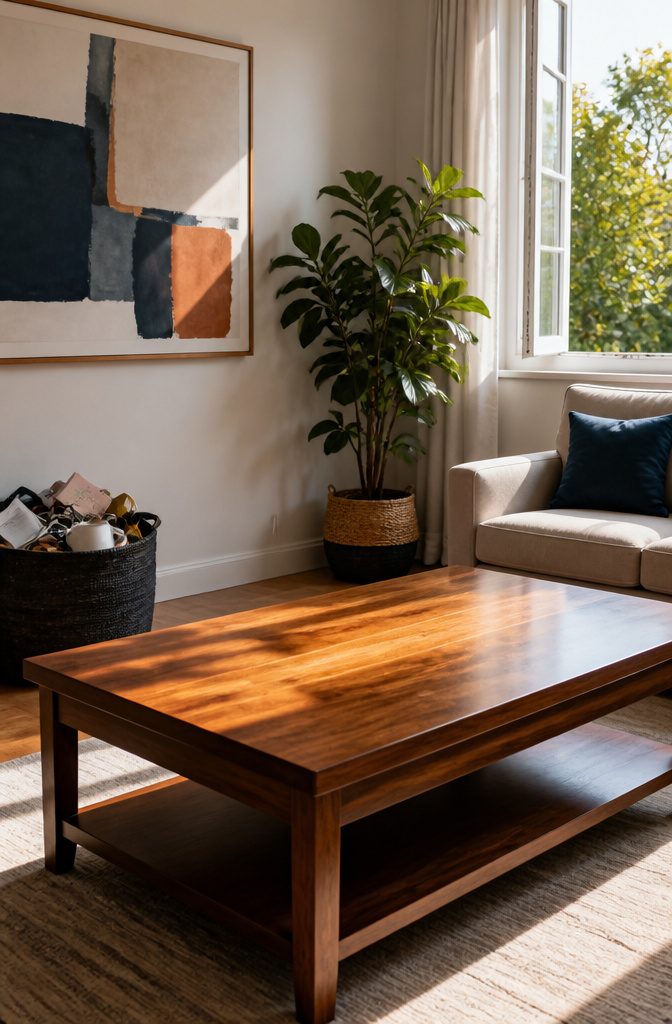
A room cleans faster when the surfaces are already clear. The ten minutes spent tossing old receipts, ferrying mugs to the kitchen, and corralling chargers into one drawer pays back in the scrubbing that follows.
Without that step, I am wiping around objects, moving them twice, and missing the dust that hides underneath.
How ruthless to get with decluttering depends on which source you read. One camp says quick: grab a bin for anything that belongs elsewhere and keep moving.
The other says sort deep, right down to the single sock and the prescription glasses from three prescriptions ago. For a weekend clean, the quick bin wins.
The deep sort is its own project, and mixing the two means neither gets finished. I have learned to schedule them separately, a fast clear now and a closet purge when the calendar has a free Saturday.
Open the window while you work. Ten minutes of outside air lifts the stale smell that clutter traps, and the breeze will still be there when you set down the vacuum.
Building the Routine
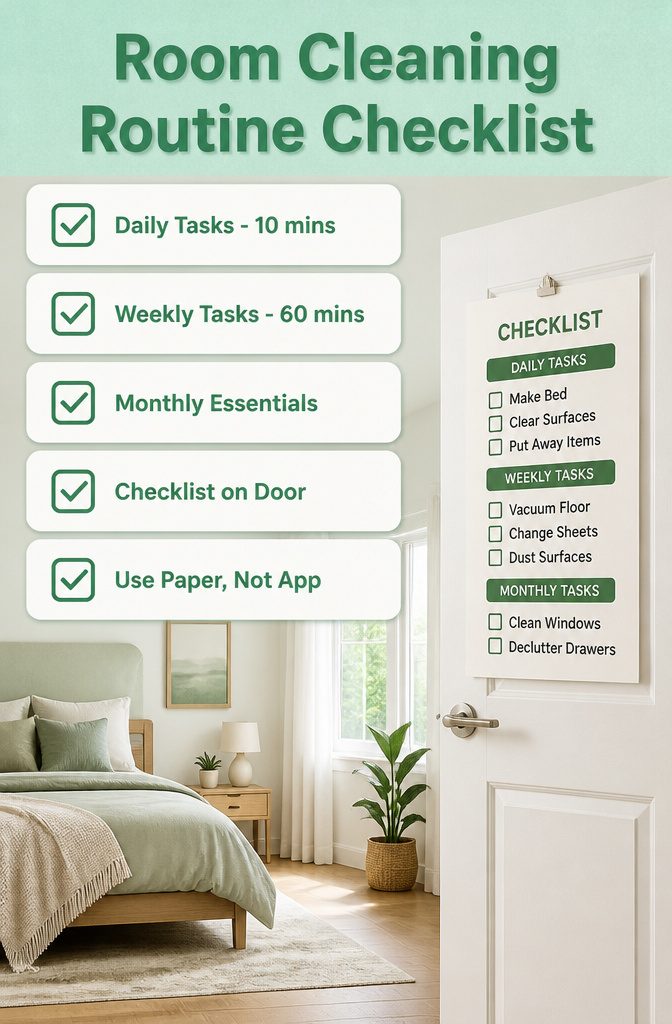
A clean room stays clean because the work is spaced out, not because someone finds a Saturday to do it all.
The daily tasks take ten minutes, the weekly ones about an hour, and the monthly jobs are what keep you from ever facing a full weekend loss. That spacing is what makes the system stick.
I keep my checklist on the back of the door, paper, not an app.
Crossing off a finished task gives a small hit of progress that the next item needs, especially when the bed is unmade and the floor is invisible and starting at all feels unreasonable.
The checked boxes become their own argument for continuing.
Molly Maid puts it plainly:
Using a checklist for house cleaning on a routine basis helps get you motivated and keeps you on track.
For me that means the list is the routine.
Without it, I clean what looks worst and stop before what matters most is done. With it, the ten-minute window after coffee actually gets used.
Frequently Asked Questions
What are the daily cleaning tasks for a room?
The four daily tasks are making the bed, putting dirty clothes directly into the hamper, clearing trash and clutter from nightstands and dresser tops, and putting away anything else out of place.
Together they take about 10 minutes once they become habit. Doing them keeps the room in maintenance mode rather than recovery mode.
How often should I deep clean my room?
Deep clean once or twice a year for items like curtains and drapes, and whenever you notice accumulated grime on fabrics or fixed surfaces.
The mattress gets treated during this deeper round, and baseboards and trim get the damp-cloth treatment that weekly dusting never fully addresses.
What is the best way to declutter a room?
Spend 10 minutes on a quick sweep, tossing old receipts, ferrying mugs to the kitchen, and corralling loose items into one bin for elsewhere in the home.
Save the deep sort, single socks and expired prescriptions included, for its own dedicated Saturday; mixing quick clearing with deep sorting usually means neither job finishes.
How do you clean up a bedroom?
Work in layers: daily habits keep surfaces clear, weekly tasks handle dust and linens, monthly rounds hit ceiling fans and under furniture, and deep cleaning resets fabrics and fixed surfaces a couple times a year.
Declutter first so you are not wiping around objects and missing what hides underneath.
What is the 5 5 5 rule for cleaning?
The routine it lays out instead spaces tasks across daily, weekly, monthly, and deep-cleaning intervals, with the daily four taking 10 minutes and the weekly five taking about an hour.
What is the 80/20 rule house cleaning?
Its own spacing method puts effort where it prevents larger problems: the quick daily 10 minutes and weekly hour keep you from losing a full weekend to recovery cleaning later.
What are some ways to keep my house clean?
Use a visible checklist, paper or otherwise, to stay on track instead of cleaning what looks worst and stopping early.
Open windows for 10 minutes while you work to lift stale air. Schedule quick clears and deep sorts separately so both actually get done.





