
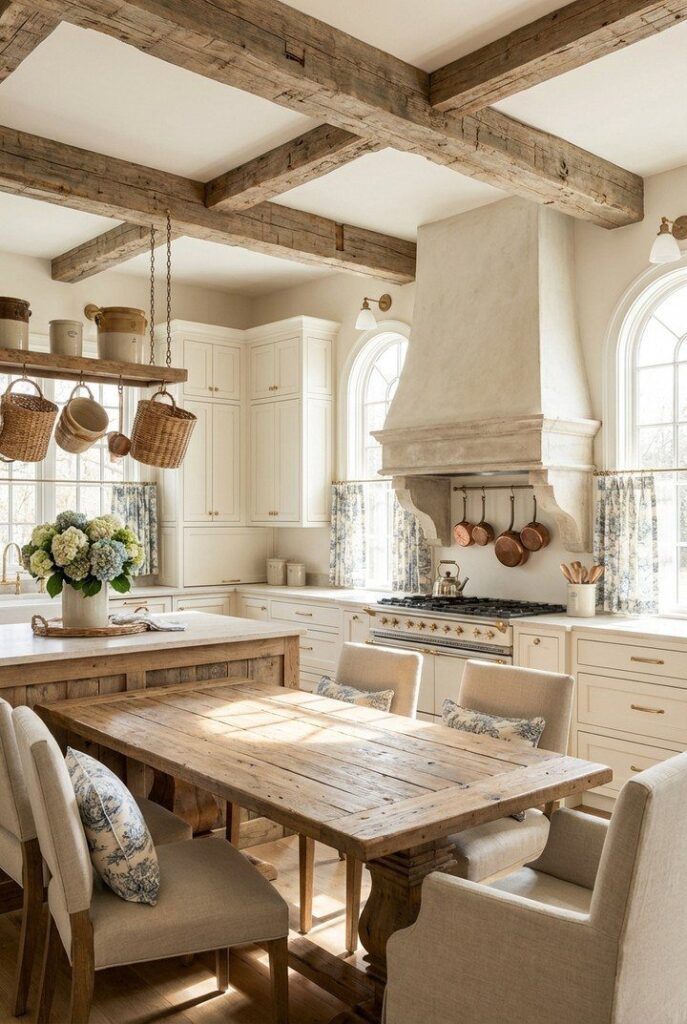
The one that belongs in your kitchen depends on whether you want a weekend project or something that lives in the room permanently, because French country kitchens mix both.
A cabinet skirt on a rod costs less than a door but still turns open shelving below the sink into something gathered and green.
[link-whisper-related-posts]1. Hanging Copper Pots
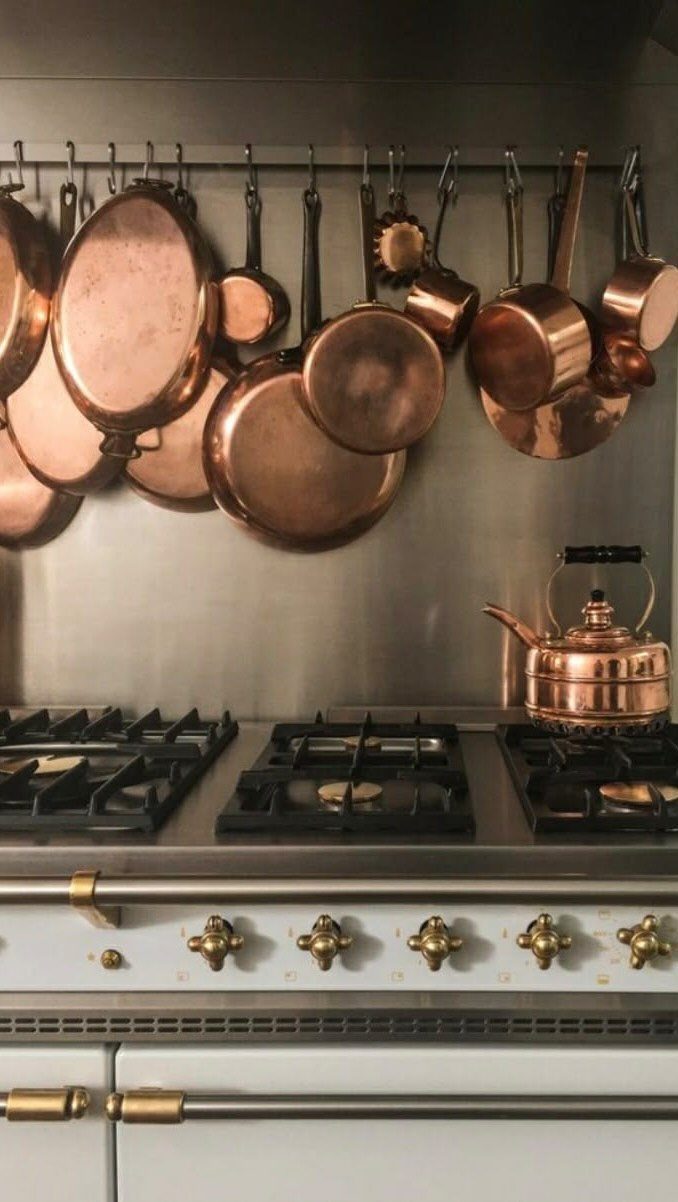
Copper pots soften a kitchen in a way stainless steel never quite manages. The warm metal ages to a dull penny brown that reads as history even when the pieces are new.
I would hang them where they catch side light from a window; the color turns almost gold then. A wall rack keeps them off the counter and within reach of the stove.
Brush them with ketchup or a copper cleaner when they blacken, or let them go if you prefer the patina. Either choice is acceptable; half-polished looks accidental.
2. Exposed Wooden Beams
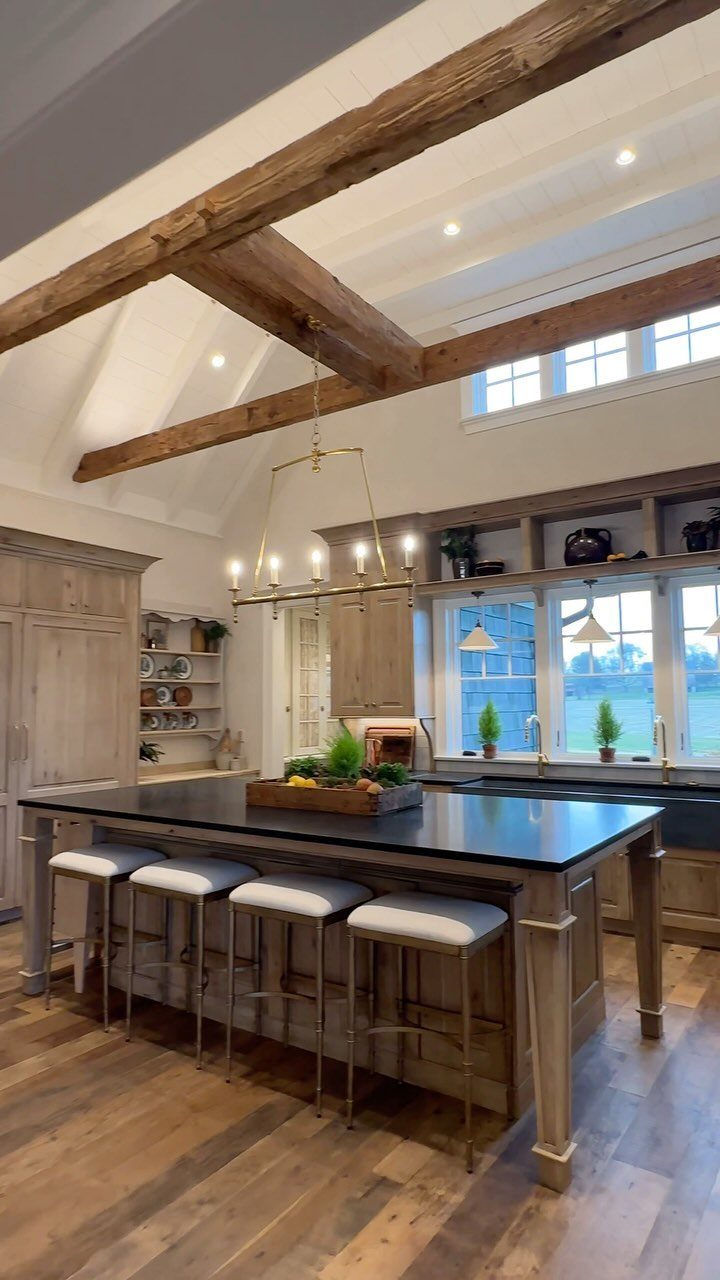
Ceiling beams add the kind of weight that drywall cannot fake.
If you are lucky enough to find them hidden above a dropped ceiling, exposing them is mostly demo and refinishing. Sand gently, seal with oil or a matte lacquer, and leave the saw marks.
Faux beams in hollow MDF cost less than real timber and install in an afternoon, but I would only use them where the ceiling is high enough that no one will look too close.
Below a certain height, I want real structure or nothing.
3. Open Shelving
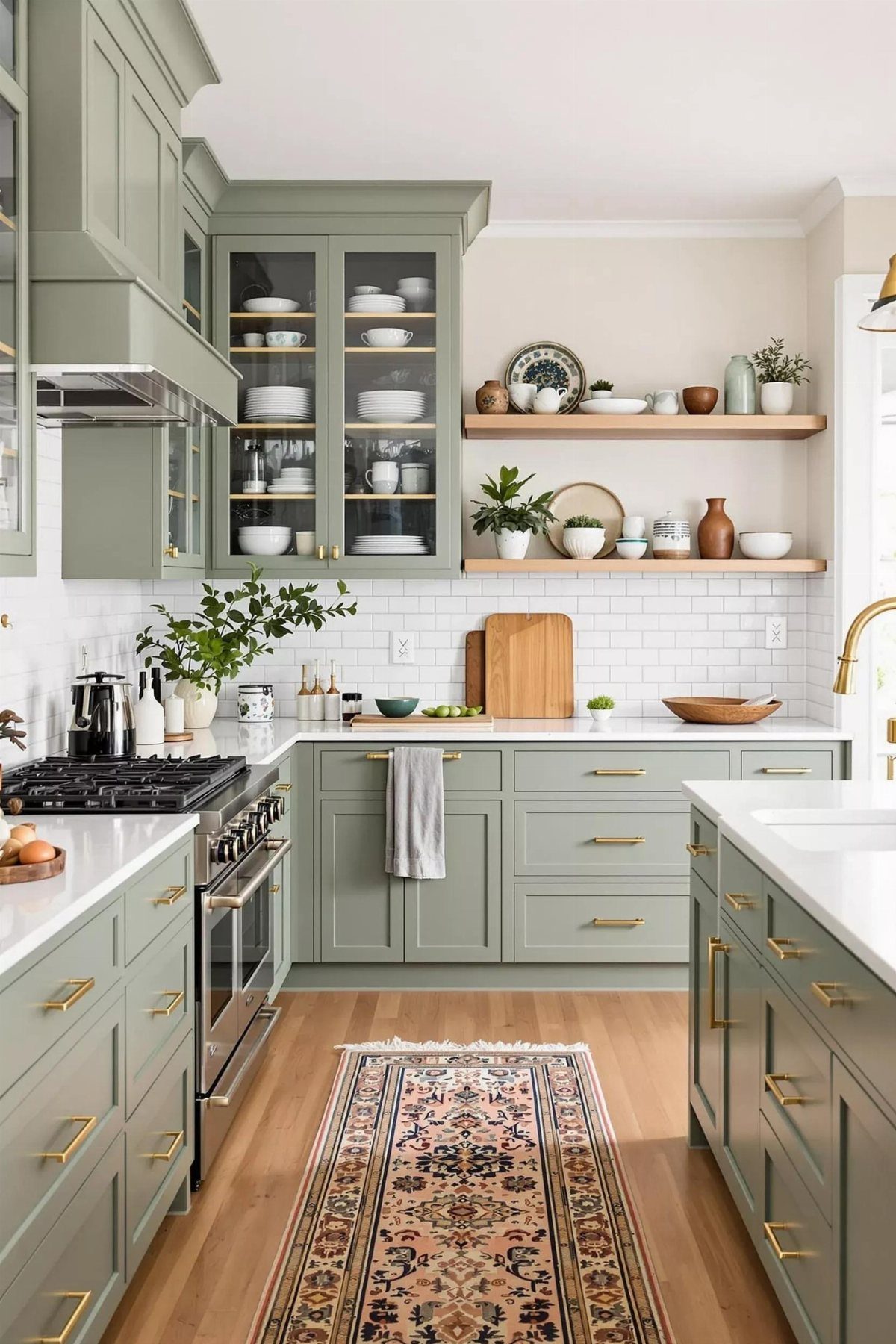
Shelves at counter height free you from the rhythm of cabinet doors and let dishes become part of the room.
I like wood shelves with real thickness to them, set on brackets hidden in the wall or scrolled iron if the style leans more cottage.
The risk is dust and grease from cooking; this approach suits kitchens that work hard less often, or shelves kept for display plates and the few daily bowls.
A row of small potted herbs is the compromise I would choose: useful enough to justify the open air, pretty enough to want looking at.
4. Muted Color Palette
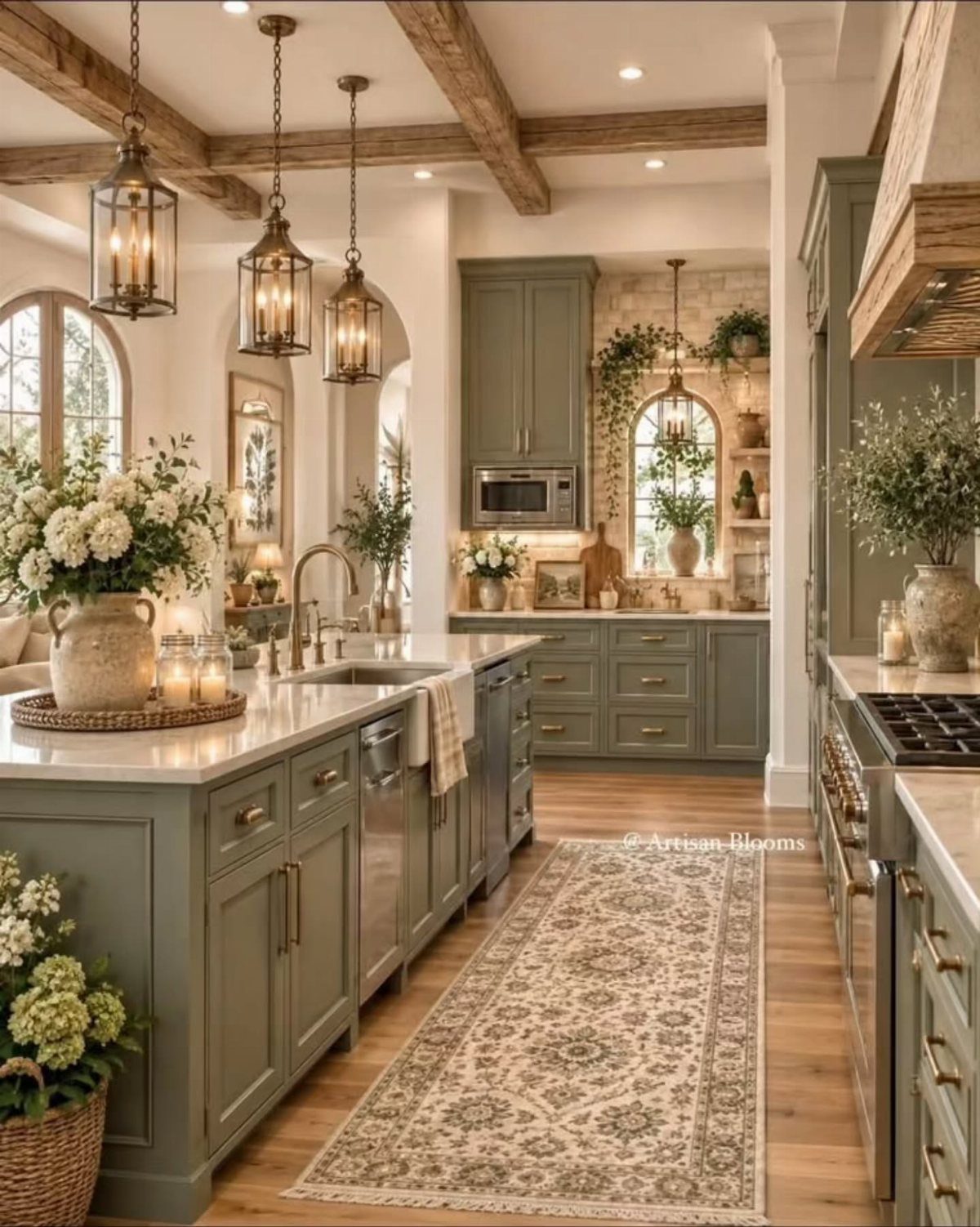
Sage green reads as color without shouting, which is the French country balance I aim for.
I would pair it with brass hardware that will darken over time and white marble countertops that do the same; the kitchen grows into itself rather than starting fully finished.
The muted range runs from putty and dusty blue to warmed gray and pale ochre.
None of them should compete. If one element pops, a red pot or a bright art print, the rest of the room should quiet down around it.
5. Farmhouse Table
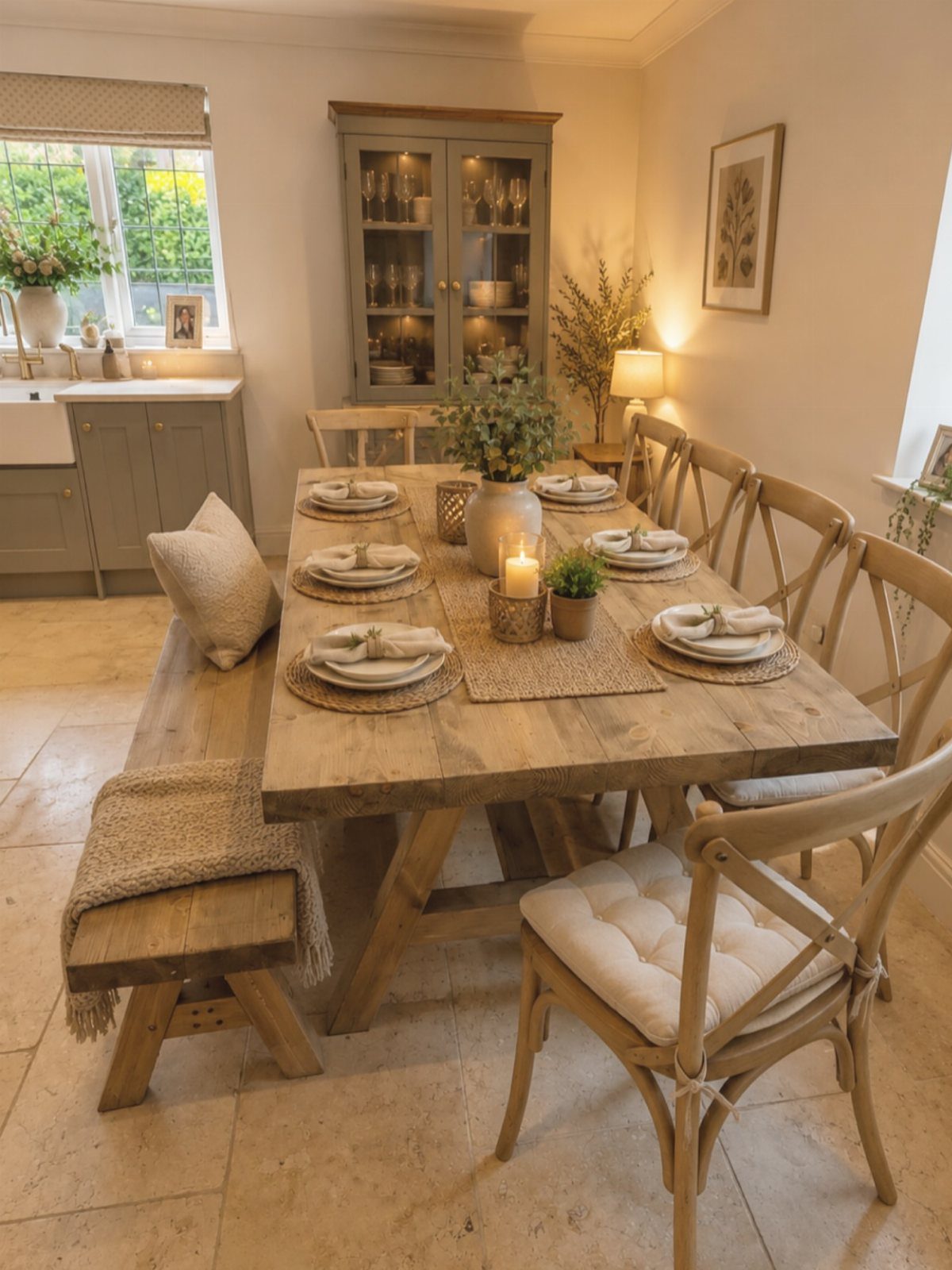
A heavy wooden table with a trestle base or turned legs anchors a kitchen the way an island cannot; it says this room is for people first, cooking second.
I would choose pine or oak, either reclaimed or distressed at purchase, and leave it unwaxed so that water rings and knife marks become part of the surface.
A bench on one side keeps it informal; chairs with a shaped back, cross-backs or similar, keep it from feeling like a picnic.
A French country farmhouse table looks best with simple, unfussy place settings rather than full tableware; a runner, plates, and greenery suffice.
6. Patterned Tiles
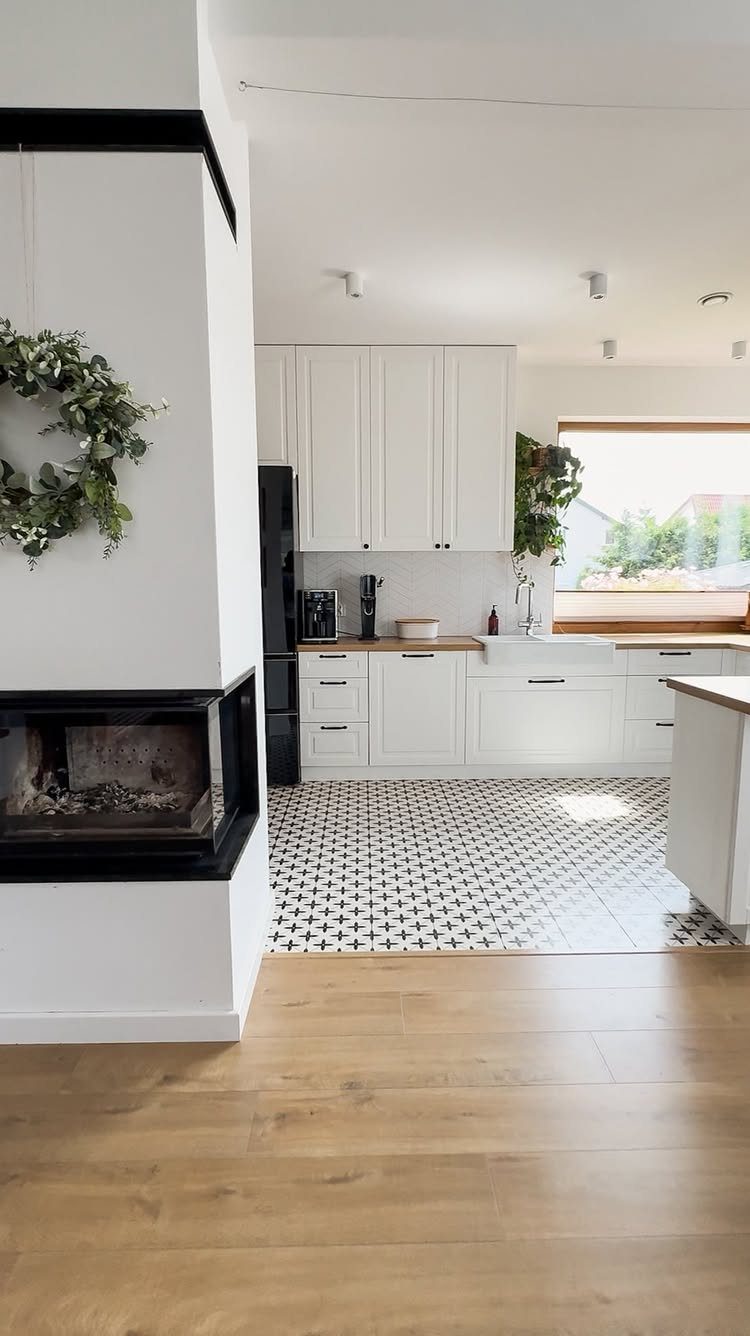
A geometric floor in black and white carries pattern without the commitment of color.
I would lay these in an entry hall or kitchen where the cabinets stay plain; the tile replaces what a rug would do, but survives spills and shoes.
The pattern reads as old linoleum or encaustic cement; modern porcelain versions need no sealing and still cost less than the real thing. The risk is dizziness in a small room.
7. Farmhouse Sink
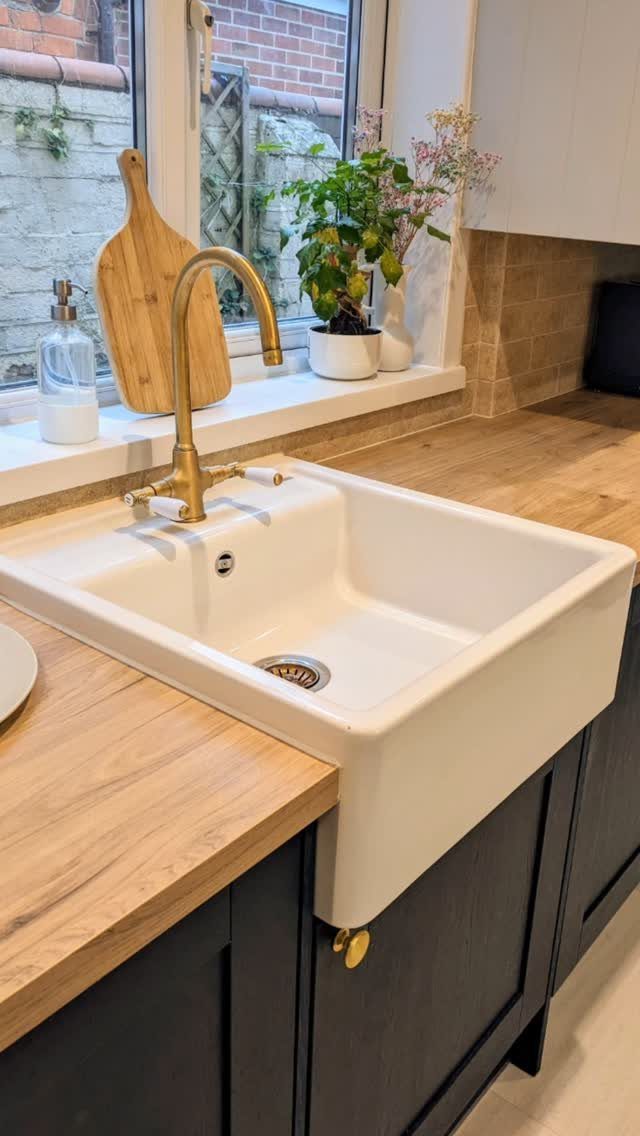
An apron-front sink lets water drip straight off you and onto the floor of the basin, not the counter behind it.
I would choose fireclay or thick enamel over thin porcelain; both survive dropped pans and decades of scrubbing. A flat farmhouse face reads modern, while a gentle arch nods to older country kitchens.
Brass or unlacquered bronze faucets age to a living finish that matches the sink’s claim to time. The downside is depth; you bend lower than with a standard basin, and cabinet modification below is usually unavoidable.
8. Vintage Lighting
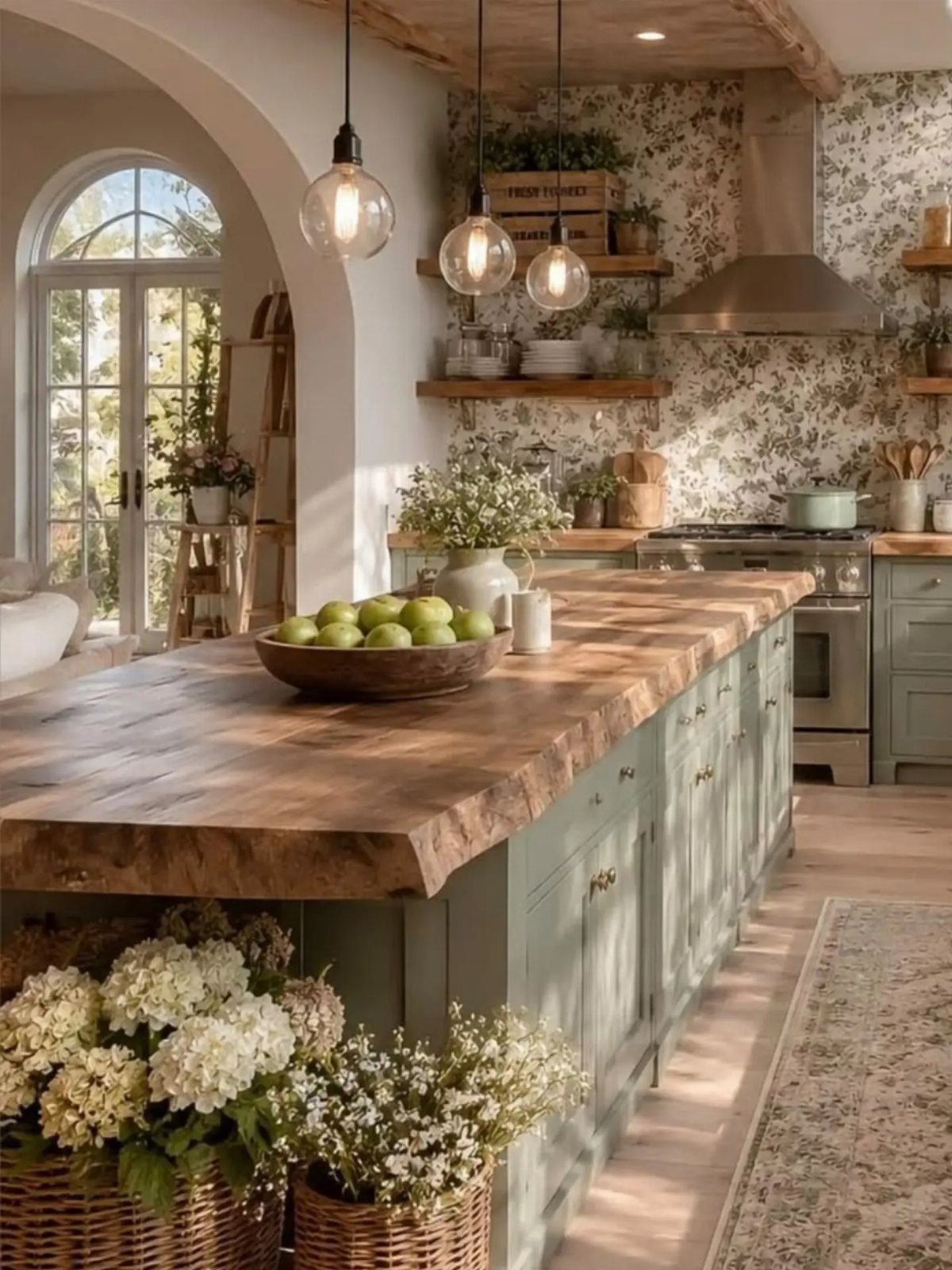
Glass globes hung at eye level turn a kitchen from workspace to room.
Pendant spacing follows a rough rule: the diameter of each shade in inches is the distance in feet between centers.
2 globe pendants over an island need enough run of counter to fill without crowding. The glass should show the filament or bulb shape; frosted glass defeats the purpose.
I would put these on a dimmer if the kitchen sees evening use, since full brightness turns warmth into glare. The look works where ceilings have some height; lower, and I would swap to flush mounts with similar aged metal.
9. Natural Stone Flooring
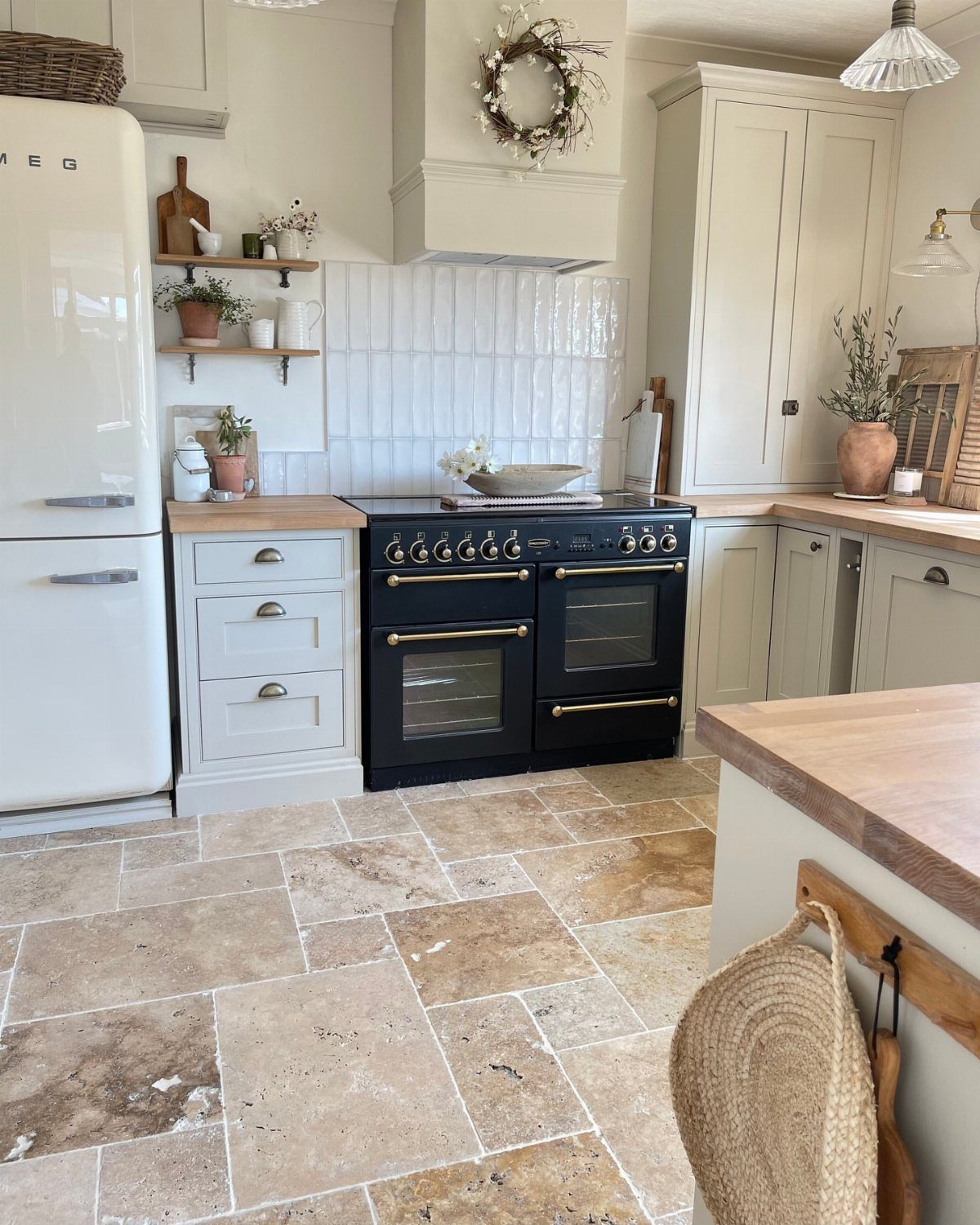
Stone tiles carry the cold that makes a kitchen feel like a cellar in winter and a refuge in summer.
Travertine or limestone needs sealing on install and again every few years, or it stains from red wine, tomato sauce, anything acidic.
Honed rather than polished finish hides etching and foot traffic. I would lay it where the kitchen opens to garden or patio; the stone continues the outside in.
Radiant heat underneath fixes the cold-floor problem but adds cost and height that may not meet existing transitions. Porcelain imitation has improved enough to consider, though the weight underfoot differs.
10. Cabinet Skirt
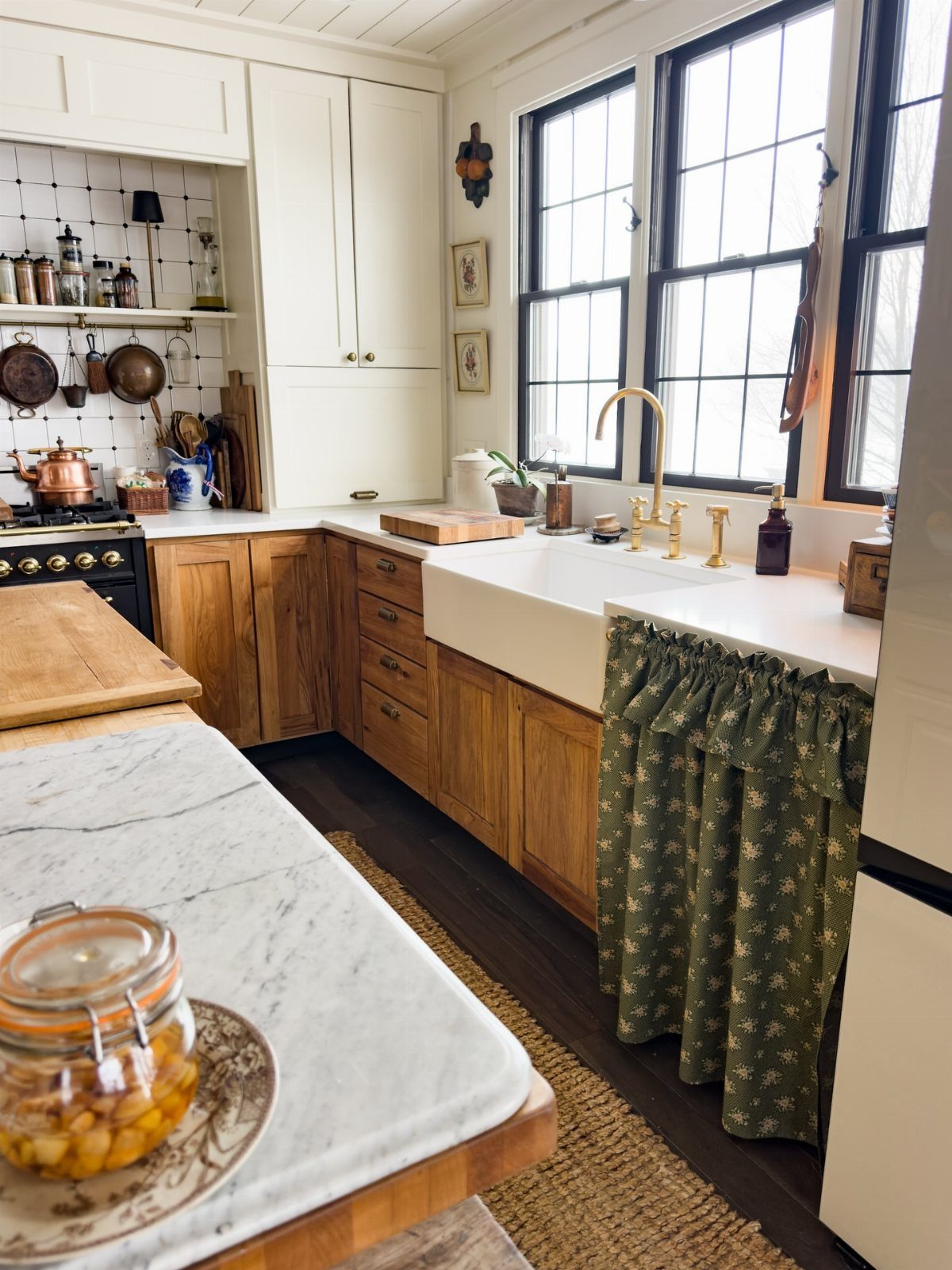
A gathered or pleated panel hung on a rod turns open shelving below a sink into something softer than a cabinet door.
A green botanical print against white works best at some scale, since small repeats read as solid from standing height.
Cotton or linen washes and presses, but a sink skirt gets splashed: oilcloth or coated cotton lasts longer and still moves. The rod mounts inside the cabinet frame, so the fabric clears toe kick and floor.
This suits renters who cannot replace doors, or anyone who wants to change color without tools. Access is harder; you lift the skirt to reach beneath, which grows old with heavy daily use.
11. Butcher Block Islands
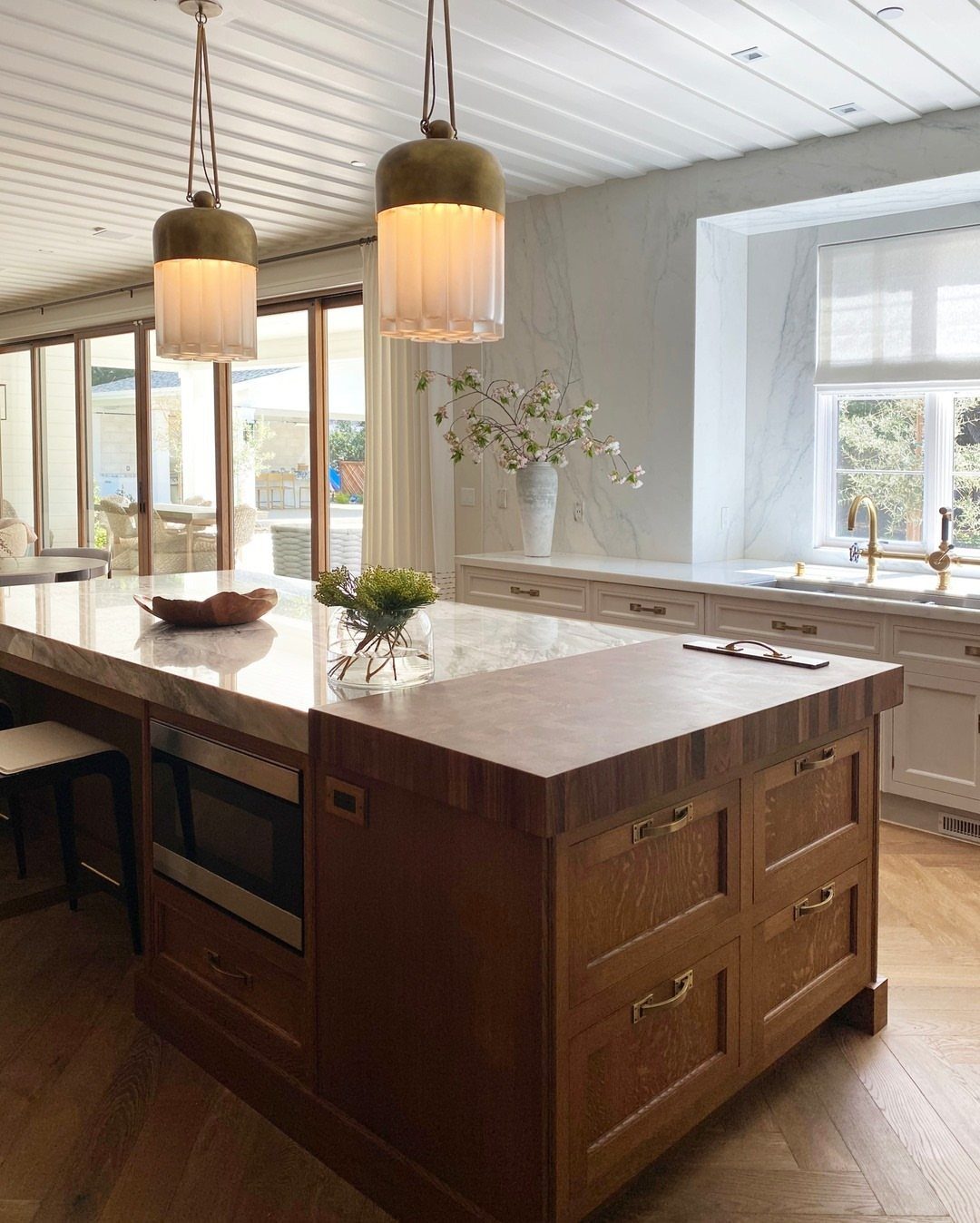
End-grain maple or edge-grain oak gives you a surface you can chop on and sand back to new, which stone and laminate never allow.
A thick block paired with marble lets you keep the wood for prep and the stone for pastry and display, since dough releases more cleanly from cool stone for rolling.
Oiled finish needs re-oiling every month in hard use, or go with mineral oil and beeswax for a harder, more water-resistant surface.
The risk is ring marks and scorching; trivets and cutting boards are not optional. A thick block warps less and looks proportionate to a large island base.
12. Wooden Boards
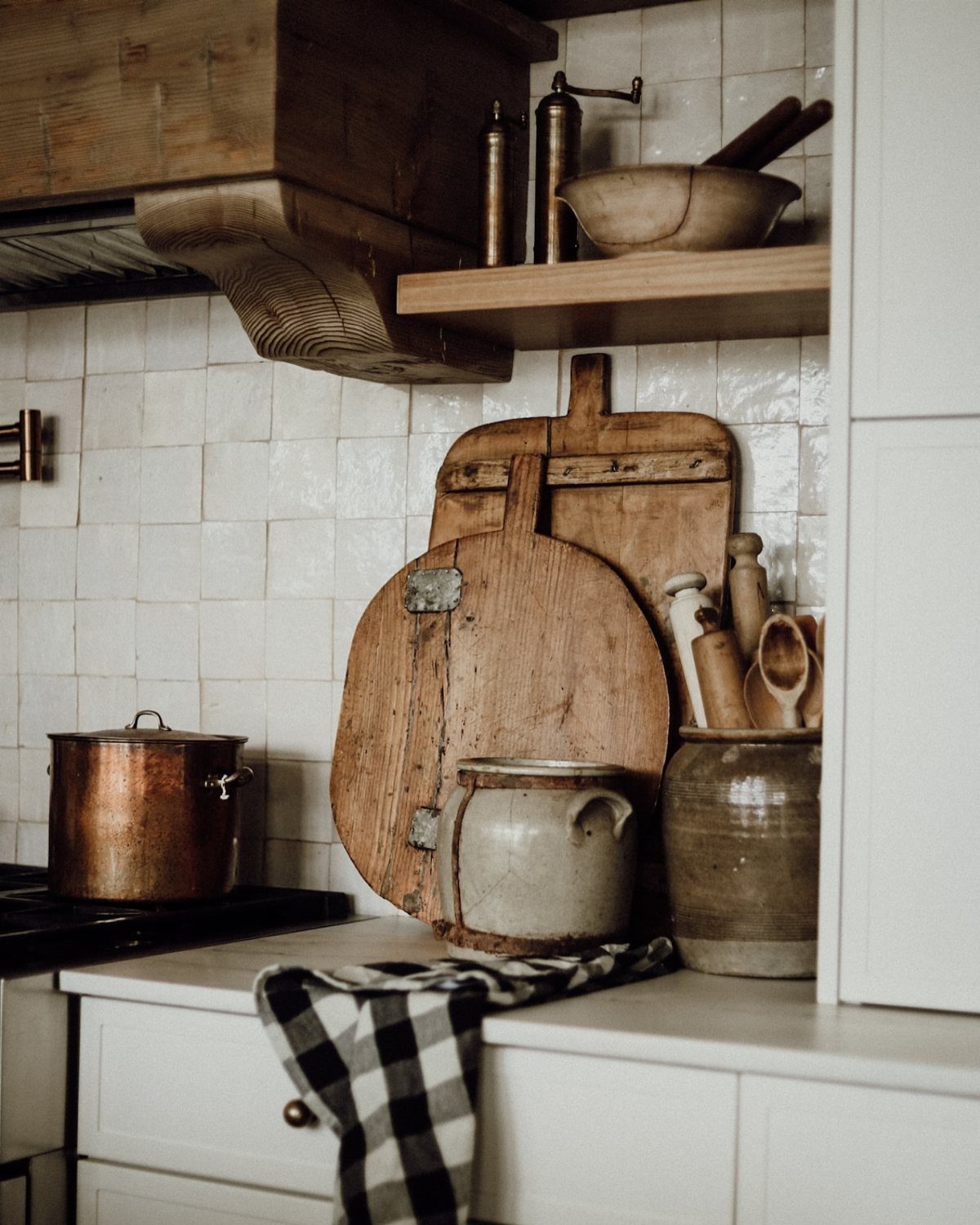
Thick cutting boards leaned against a backsplash are the easiest acquired detail in this list.
I would look for end-grain construction, visible as a checkerboard of short wood pieces on the surface, since it heals from knife marks better than long grain.
Beech, maple, or walnut all work; avoid olive wood for daily cutting, as its hardness dulls knives faster. Rinse, never soak, and re-oil when the board lightens or drinks oil immediately.
A board uphill from the stove lives in the zone where splatter and handling meet; keep it back from direct heat, or the side facing the burner will check and split.
13. Checkerboard Flooring
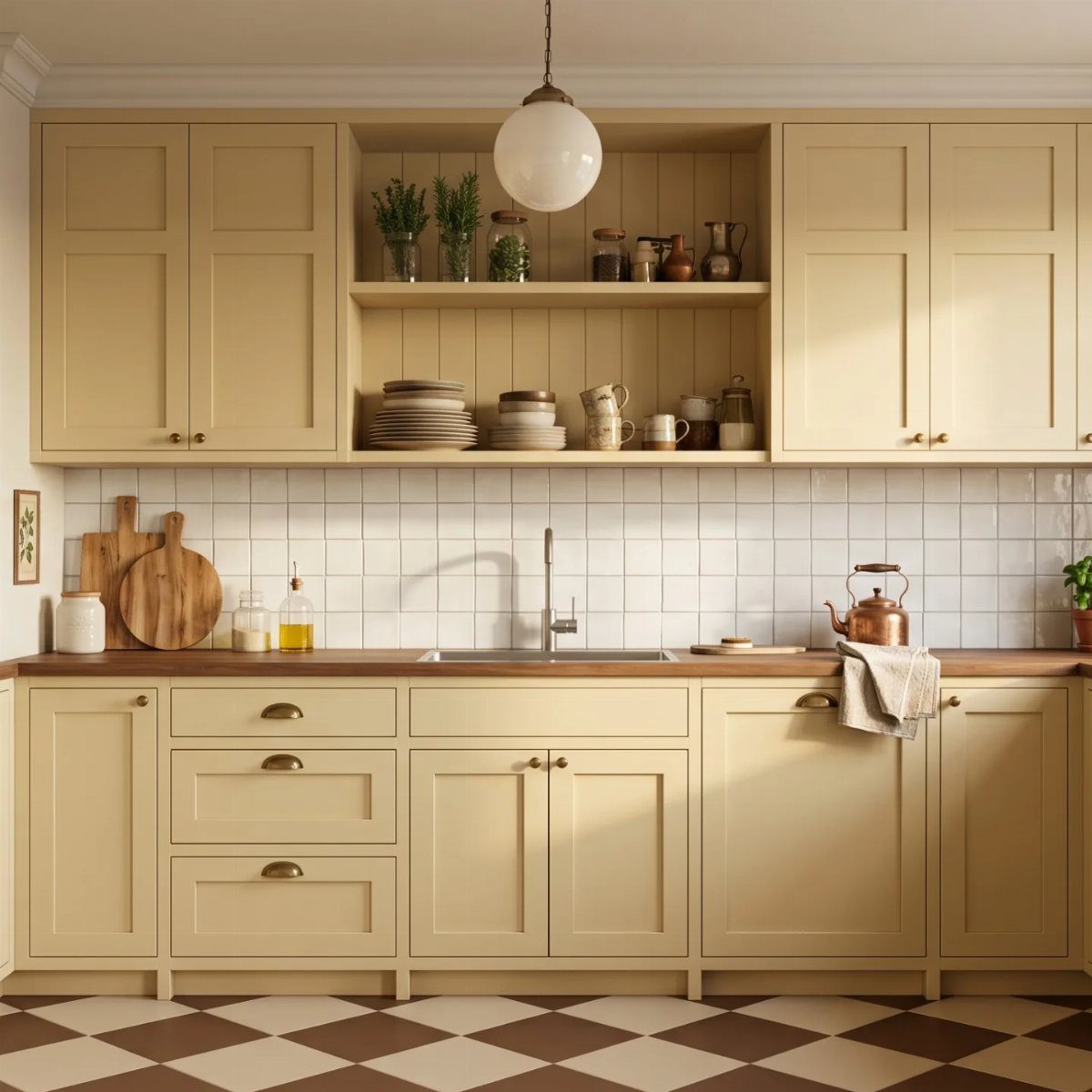
Brown and white squares set on the diagonal move the eye across a kitchen floor better than a straight grid.
I would keep the tones close in value, cream and tan rather than high-contrast black and white, since French country favors the softened version.
Vinyl tile or sheet goods run cheaper per square foot than real stone and install in a weekend; real porcelain needs a wet saw and more budget.
Diagonal layout wastes more tile at edges, so order 15% extra over the standard 10%. The pattern works best where cabinets stay simple and counters stay quiet, since the floor already carries the visual weight.
14. Natural Materials
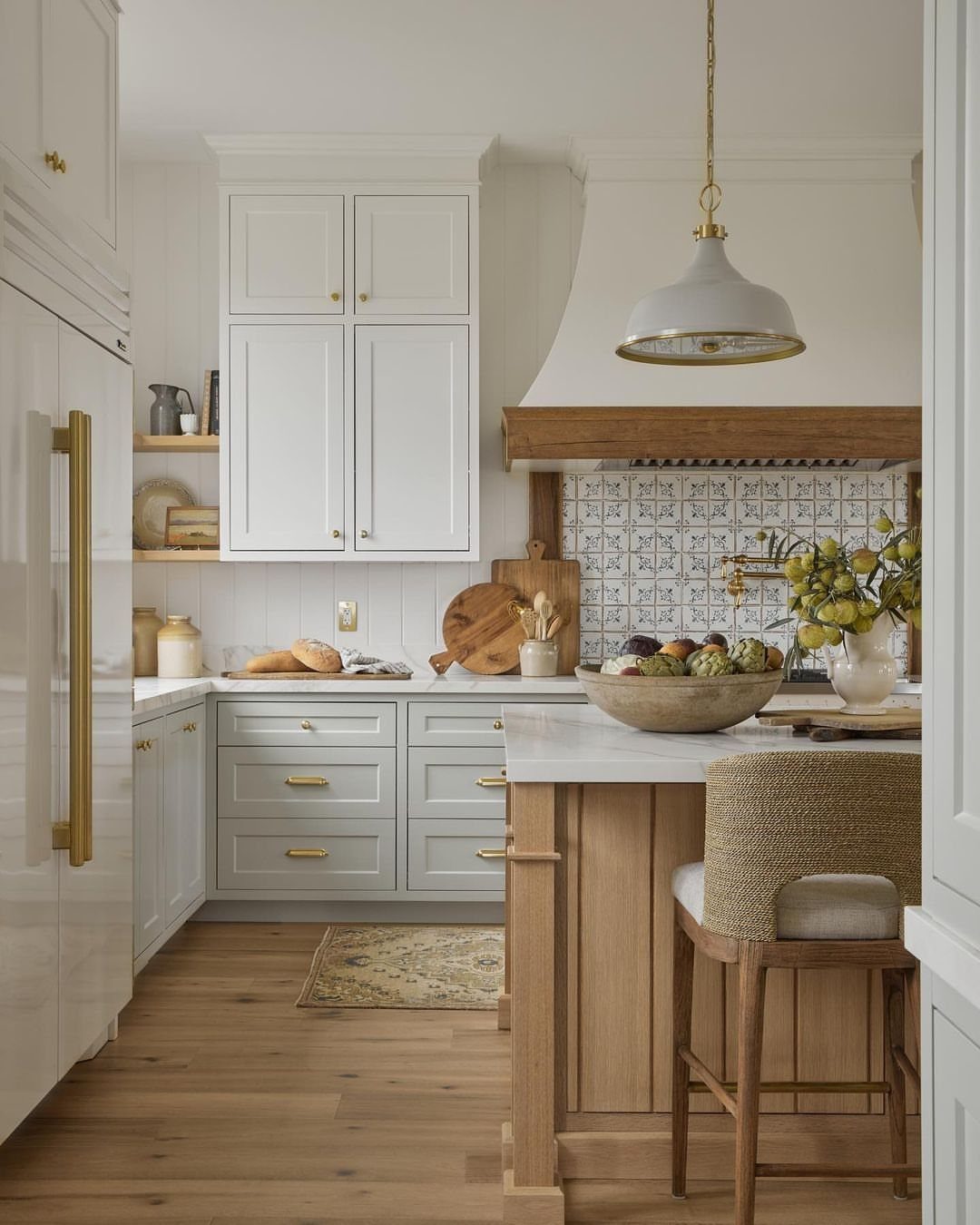
Light wood, woven rush, and stone that still looks like stone connect a kitchen to what grows outside it.
I would mix textures rather than matching: rough wood cabinets against a smoother wood island, or a woven seat against a stone counter. Brass or black iron hardware bridges the gap between organic and finished.
The risk is too much beige; one element should hold more color, the blue-gray of painted cabinets or the green of a herb pot. Keep the grain and variation visible; high-gloss finishes read as manufactured, which undoes the point.
15. Patterned Textiles
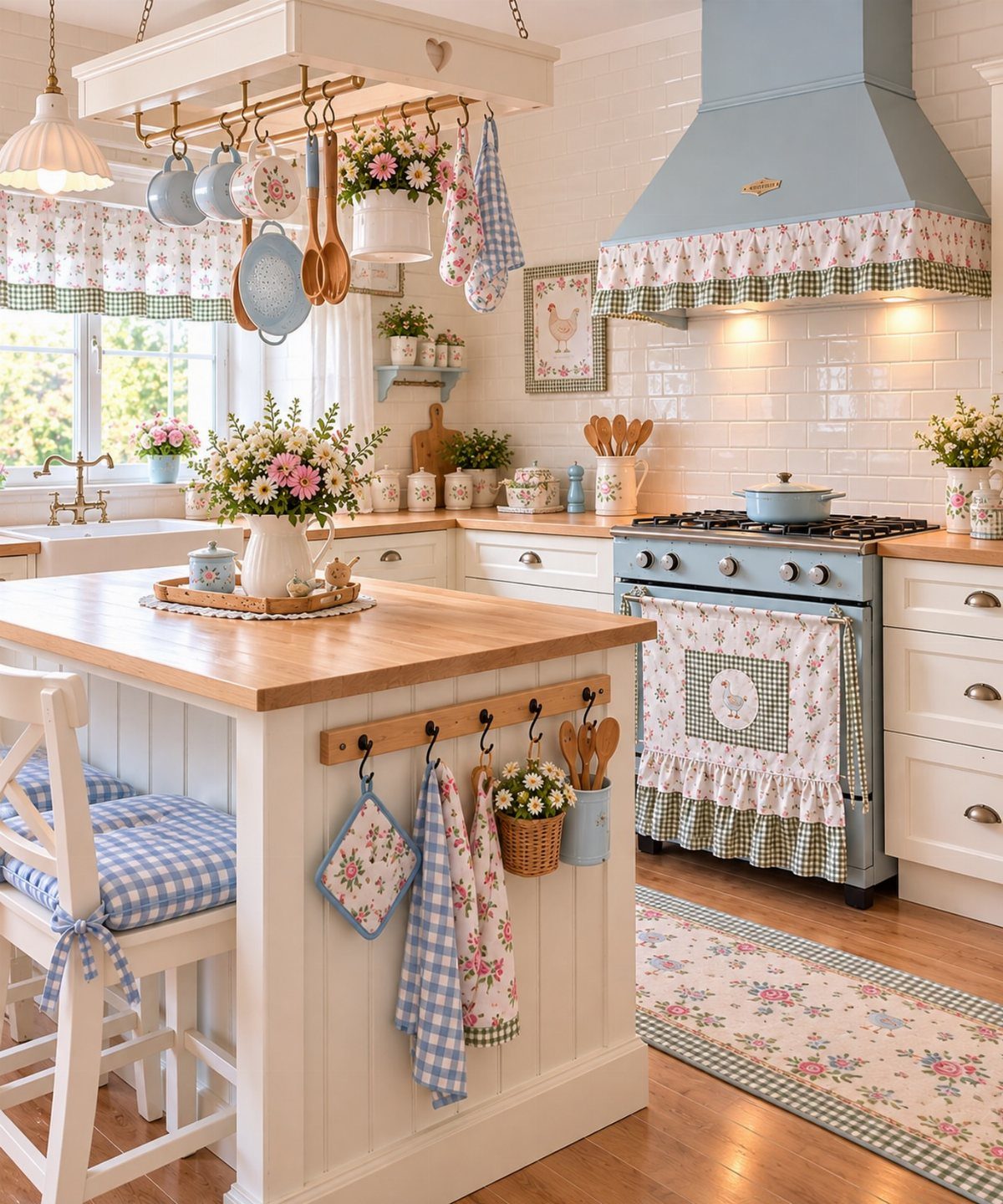
Gingham checks and small florals on cushions, towels, and hood trim soften wood and tile in a way paint cannot.
Cotton duck and linen hold up to washing; coated fabrics resist splatter but stiffen over time. I would keep the scale small, since large repeats dominate from a distance and this detail should read as background.
Change textiles seasonally if you want variety; it costs less than re-tiling and takes an afternoon. The look suits kitchens that already have solid cabinets and plain counters; patterned textiles fight patterned tile, so choose one or the other.
16. Arched Doorways
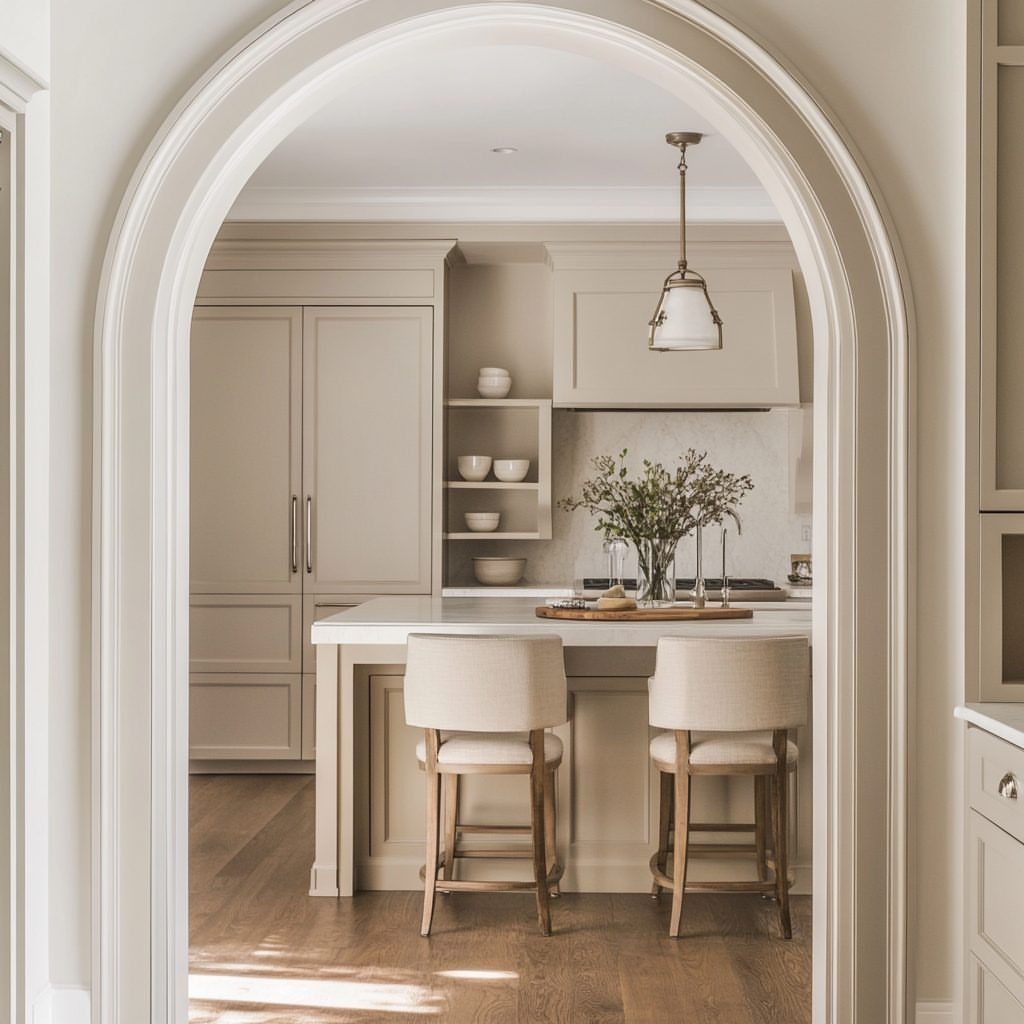
A curved top turns a standard opening into a frame that draws the eye through to whatever sits beyond it.
The radius matters: too shallow and it reads as a mistake, too deep and it steals attention from the room itself.
I would match the curve to existing windows or keep it restrained, a gentle segment rather than a full half-circle.
Drywall arches in prefab kits cost less than you might expect and install with standard tools; plaster demands a skilled hand and more money.
Paint the arch the wall color, not the trim color, so the shape speaks without shouting. This suits older homes with some irregularity already; in a rigidly modern space, an arch can feel pasted on.
French Country Kitchen Characteristics
French country kitchens are built around the same idea as American farm kitchens: everyone ends up here. The difference is in the finish.
Where a plain farmhouse keeps things simple, French country adds ornament that still feels worn in, not staged: a crystal chandelier above a trestle table, copper cookware hung where you’ll actually reach for it, cabinets detailed like furniture with chicken wire or aged hardware swapped in.
The look collects over time.
Open shelves hold blue-and-white platters and farmhouse clocks you found secondhand, not matching sets bought all at once. The palette stays quiet—soft cream, pale gray, muted sage—so the room feels settled rather than decorated.
Designer Amitha Verma notes the specific materials that mark the style: weathered stone floors, exposed wood beams, honed marble counters, and cabinetry detailed like furniture.
The hardware ages deliberately; glazed ceramic knobs and unlacquered brass pulls darken with touch and time. Chicken wire or decorative metal grilles replace some cabinet door fronts, and the hinges themselves become decoration with bolts left visible.
The color range stays in the warm register: soft cream, warm beige, pale gray as a base, with light blue, muted sage, or dusty yellow as the accent.
These are the tones of a village in Provence after decades of sun, not a fresh paint job.
Crystal chandeliers hang where a simpler farmhouse would use iron, and Louis XV–style curved chairs with rush seats mix with the trestle table. The effect is collected over generations rather than installed in a single month.
According to Houston-based interior designer Amitha Verma, French country kitchens are defined by weathered stone floors, exposed wood beams, honed marble countertops, aged hardware, and traditional cabinetry with ornate, furniture-like detailing.
Creating a Cozy Atmosphere
A French country kitchen earns its warmth through layers that work at different times of day.
Natural wood against neutral cabinetry keeps the room from reading as cold or too finished.
I would use it where the eye lands often: the island face, open shelf edges, the chair seats. The grain should show; lacquer that sits on the surface like plastic undoes the intention.
Lighting does the emotional work after dark.
Vintage fixtures in iron or brass hung low enough to pool light on faces rather than flood the room, and a dimmer shifts the kitchen from task space to dining space without moving a bulb.
The glow flatters food and people alike; bright downlighting belongs in a commercial kitchen, not a home where lingered conversation matters as much as cooking.
I would add textiles in the same spirit: cushions that can be moved to a chair for long sitting, a heavy linen runner that softens the table’s edge.
These are the details that make a kitchen feel occupied rather than staged.
Functional Kitchen Design
French country design suits the kitchen because the room serves 2 lives that other styles often divide: daily drudgery and occasional ceremony.
The same sink that holds colanders of washed greens accepts a champagne bucket at holidays, and the table where a child does homework expands for guests without changing character.
The practicality is built into the materials.
Stone floors survive muddy boots and dropped dishes. Honed marble shows etching from lemon juice and red wine, but in this style that history reads as use rather than damage.
The apron-front farmhouse sink that the list describes is deep enough for stockpots and harsh enough that a dropped cast-iron skillet will not crack it.
Cabinetry built like furniture means joints that tolerate adjustment and hardware meant to be replaced every few decades, not every few years.
I would resist the temptation to modernize the function out of the room.
Soft-close drawers concealed behind rustic faces are fine; but a kitchen that looks aged and behaves like a showroom defeats its own purpose. The hosted dinner and the Tuesday breakfast should feel equally at home there.
Frequently Asked Questions
What makes a kitchen in French country?
French country kitchens pair rustic bones with details that read as collected, not bought.
Stone floors, exposed beams, and a heavy trestle table ground the room, while crystal chandeliers, copper pots hung on the wall, and cabinet hardware that darkens with touch add the elegance.
The palette stays quiet: warm creams, pale grays, and muted greens or soft blues as the only accent.
Is French country out of style in 2026?
The style endures because it builds on materials that age well and a layout built for how people actually gather.
A kitchen designed around a farmhouse table, honest wood, and stone that shows use only looks dated if treated as a stage set; the real version grows more convincing with time.
What’s the difference between French country and farmhouse style?
American farmhouse keeps things plain and practical; French country adds ornament that still feels worn in.
Farmhouse kitchens usually end with the trestle table and open shelves; French country keeps going with a crystal chandelier overhead, chicken wire swapped in for some cabinet fronts, and Louis XV curved chairs pushed up against rough-hewn wood.
The farmhouse is utility first; the French country version admits romance without losing function.





