
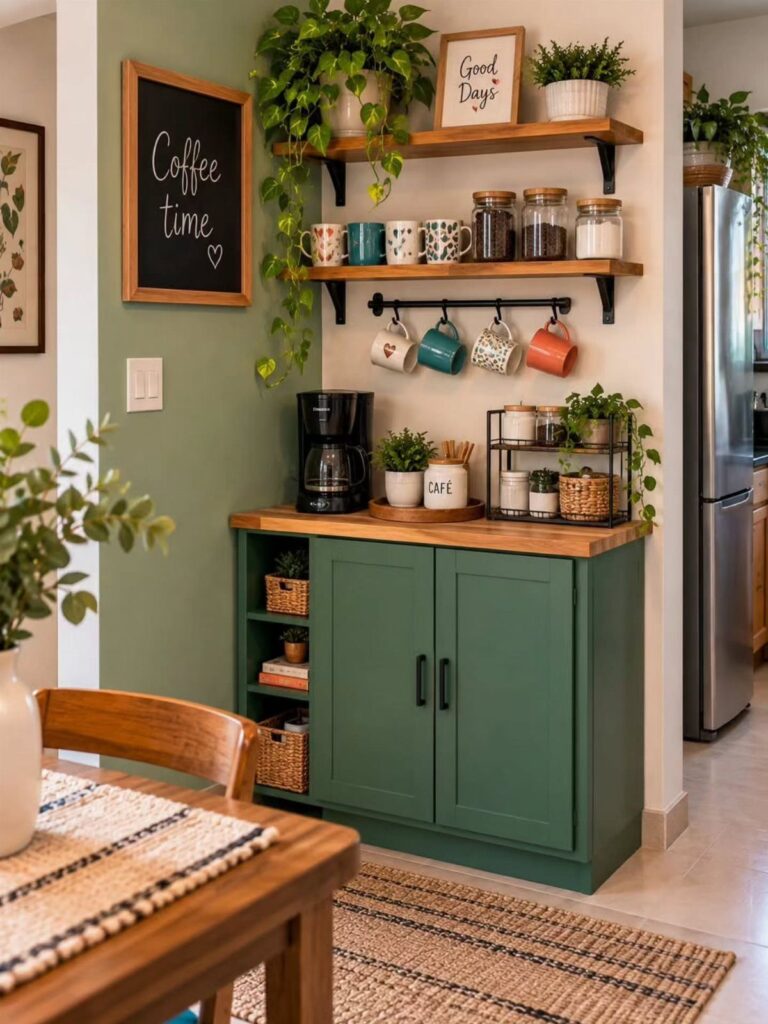
A shelf coffee bar can be a rolling cart you wheel into place or a built-in alcove that needs a contractor, with most ideas sitting in the weekend-project middle.
What picks one is the wall you actually have: a narrow gap, a corner that wastes space, or a full stretch you can give up entirely.
Corner counters with stools need enough depth for knees to clear the wood every morning.
[link-whisper-related-posts]1. Shelf Coffee Bar with Espresso Machines
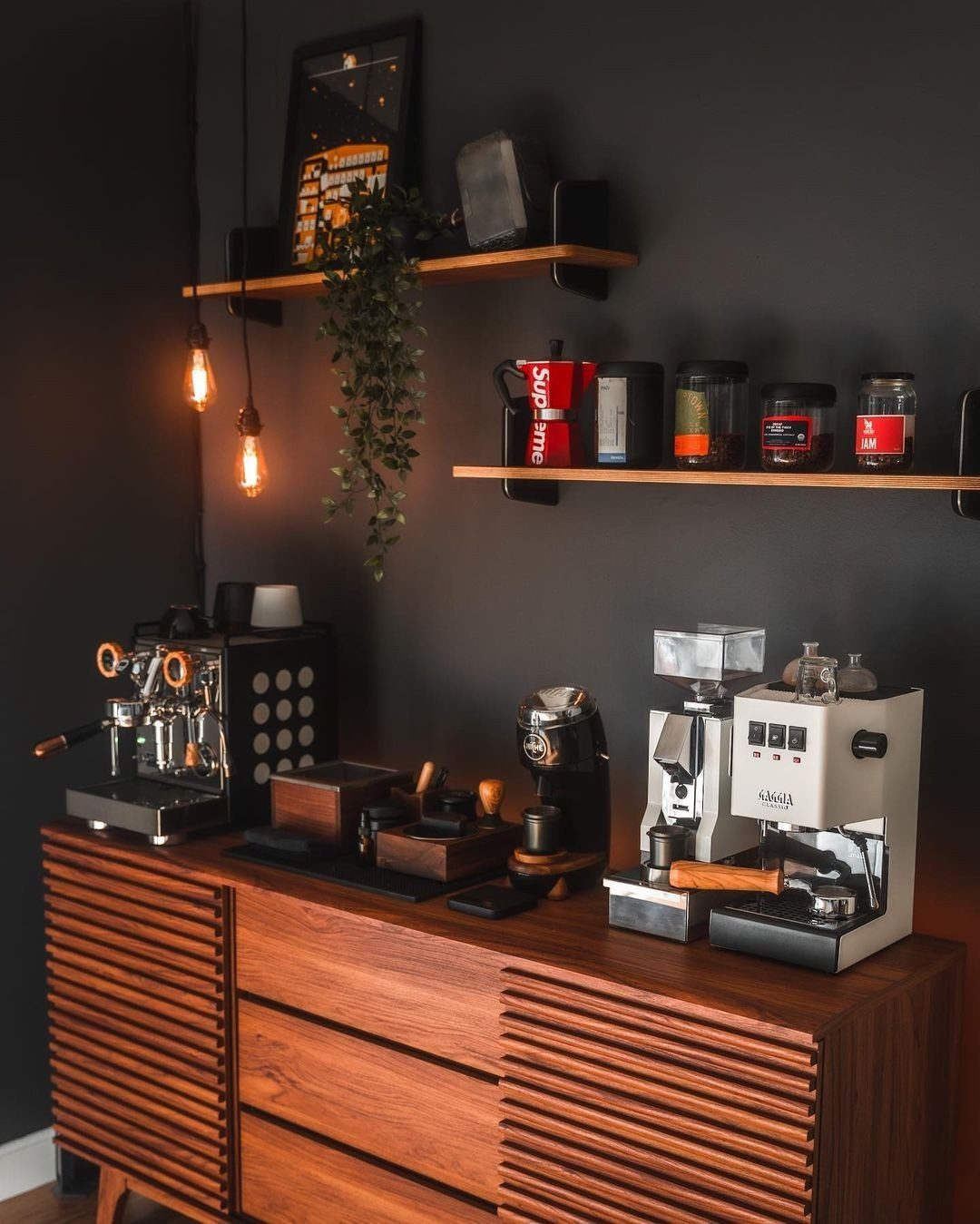
A dedicated shelf for the machine itself keeps countertop clutter down and brings the ritual up to eye level. 2 floating shelves above hold beans, cups, and the small tools you reach for every morning.
The hard part is depth: floating shelves usually sit too shallow for some grinder-hopper combos, so check your machine’s footprint before you order.
I would measure the footprint before ordering shelves, or plan the bottom one as a deeper ledge and keep the second shallow for cups only.
2. Coffee Bar Seasonal Decor Candles
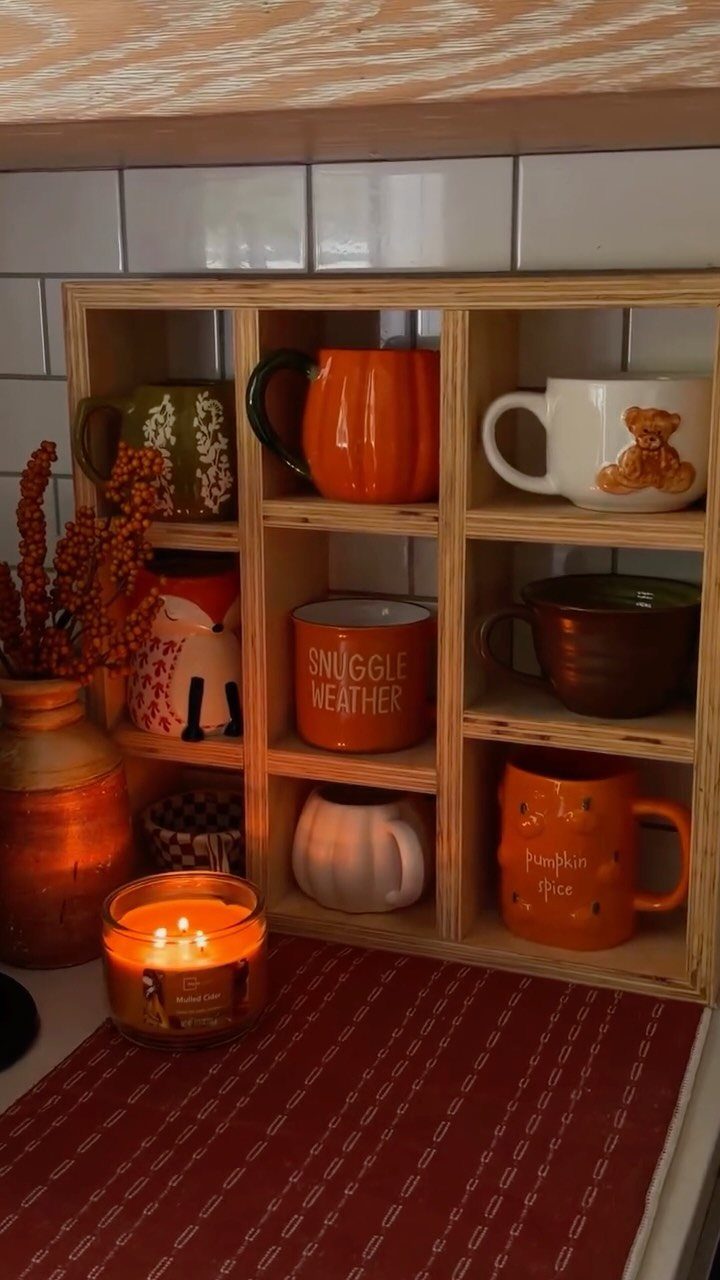
A wooden cubby shelf gives you natural compartments to rotate. I would keep the base setup bare in summer, one neutral candle and white mugs, then layer in berry stems and spiced scents once the temperature drops.
The candle does the heavy lifting; everything else is just color coordination with what you already own.
It costs almost nothing and takes almost no time to swap. You need a bin somewhere for the off-season pieces, or the simplicity you gained disappears under clutter.
3. Floating Shelves Coffee Bar
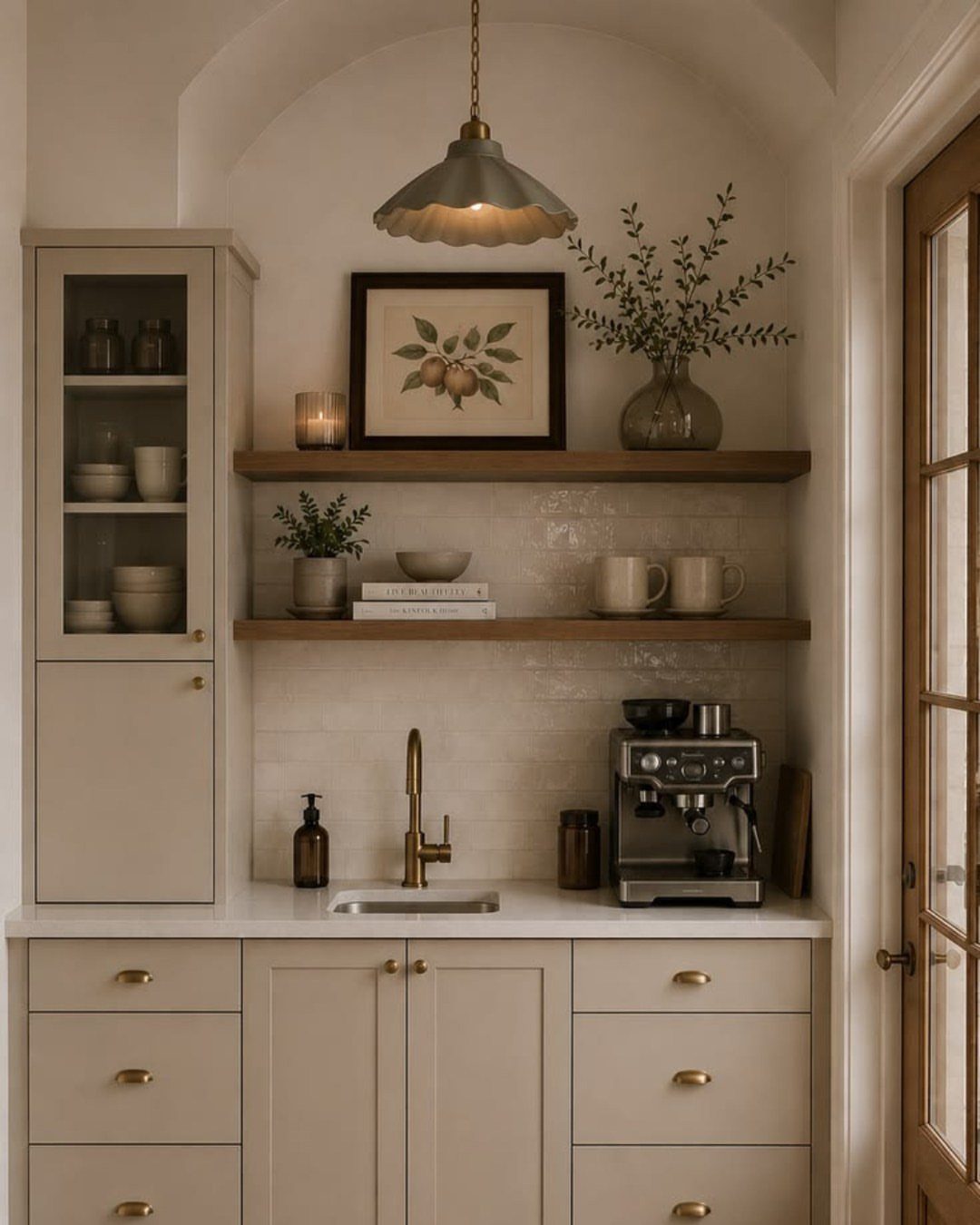
Open shelves turn any stretch of wall into a station without the footprint of a cabinet. The espresso machine sits below, cups and a small plant live on the shelves, and the whole thing reads as intentional rather than improvised.
I would use solid wood or a thick veneer. Cheap floating brackets sag over time, especially with ceramic mugs, so look for a bracket rated to 25+ pounds or a shelf with a hidden metal cleat.
A simple painted arch behind the shelves fakes the same effect for the cost of a quart of paint and an afternoon.
4. Coffee Bar Table
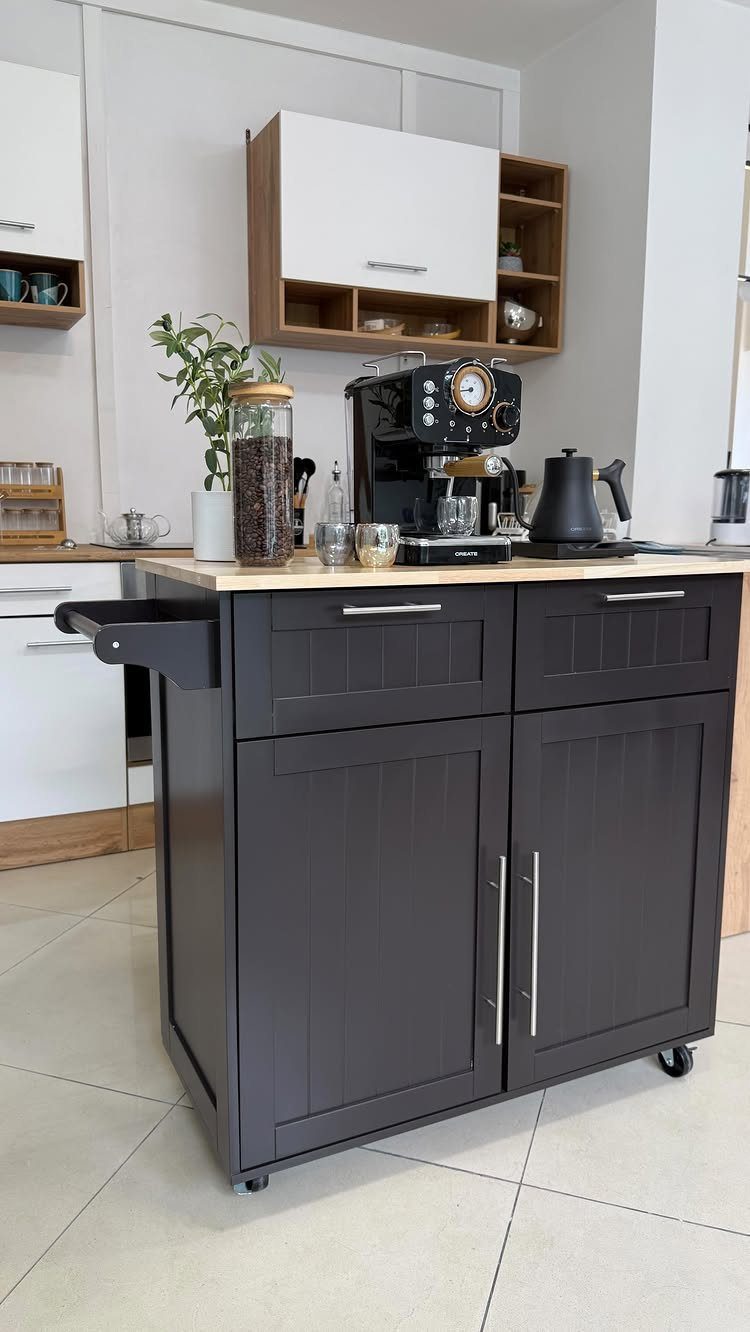
A rolling cart is the best option for renters or anyone who rearranges.
A smaller console works if your machine is compact. Locking casters are non-negotiable; hot espresso and a wobbly cart do not mix.
I would choose a surface that can take water and heat without drama: butcher block needs oiling, laminate does not.
The lower shelf stores beans and filters, the top holds only what you touch daily. A decent cart costs less than most built-in solutions and moves with you.
5. Minimalist Coffee Bar Shelf
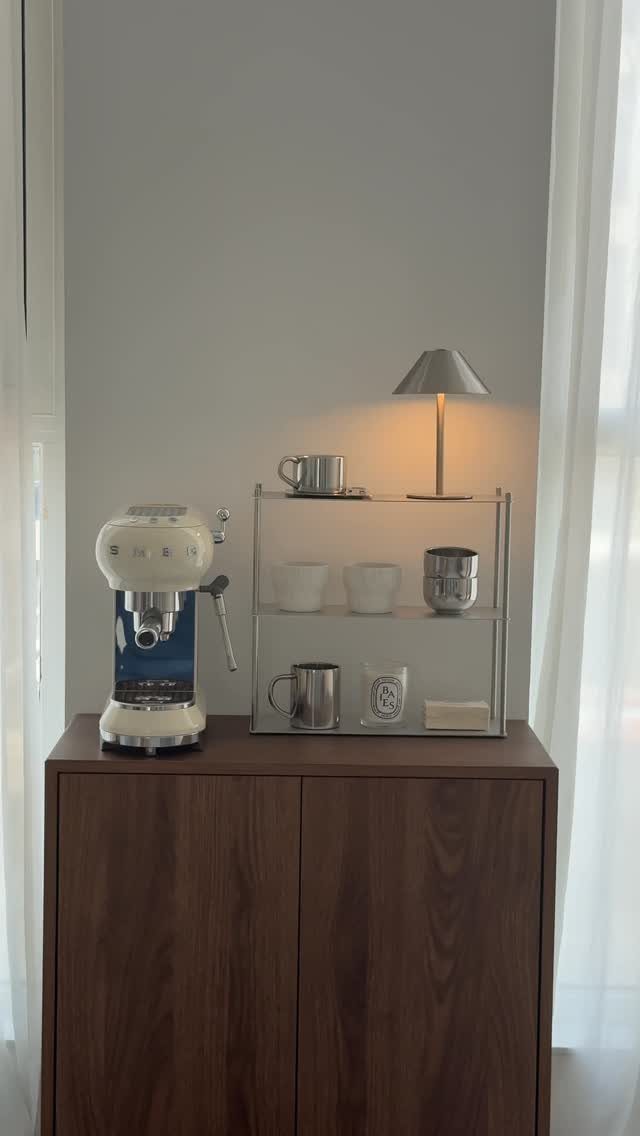
A small metal shelving unit next to the machine keeps the visual weight low.
Keep each tier to one job: a cup, a candle, a lamp, and nothing fights for attention. I like the acrylic shelf option even better if your counter is dark, because it disappears.
This suits people who already edit their possessions down.
If you own only the mugs you love, not a cabinet full, the restraint feels calm rather than sparse. Add a small tray on the cabinet itself to catch drips and grounds, or the minimalism becomes maintenance.
6. Narrow Space Coffee Bar Shelf
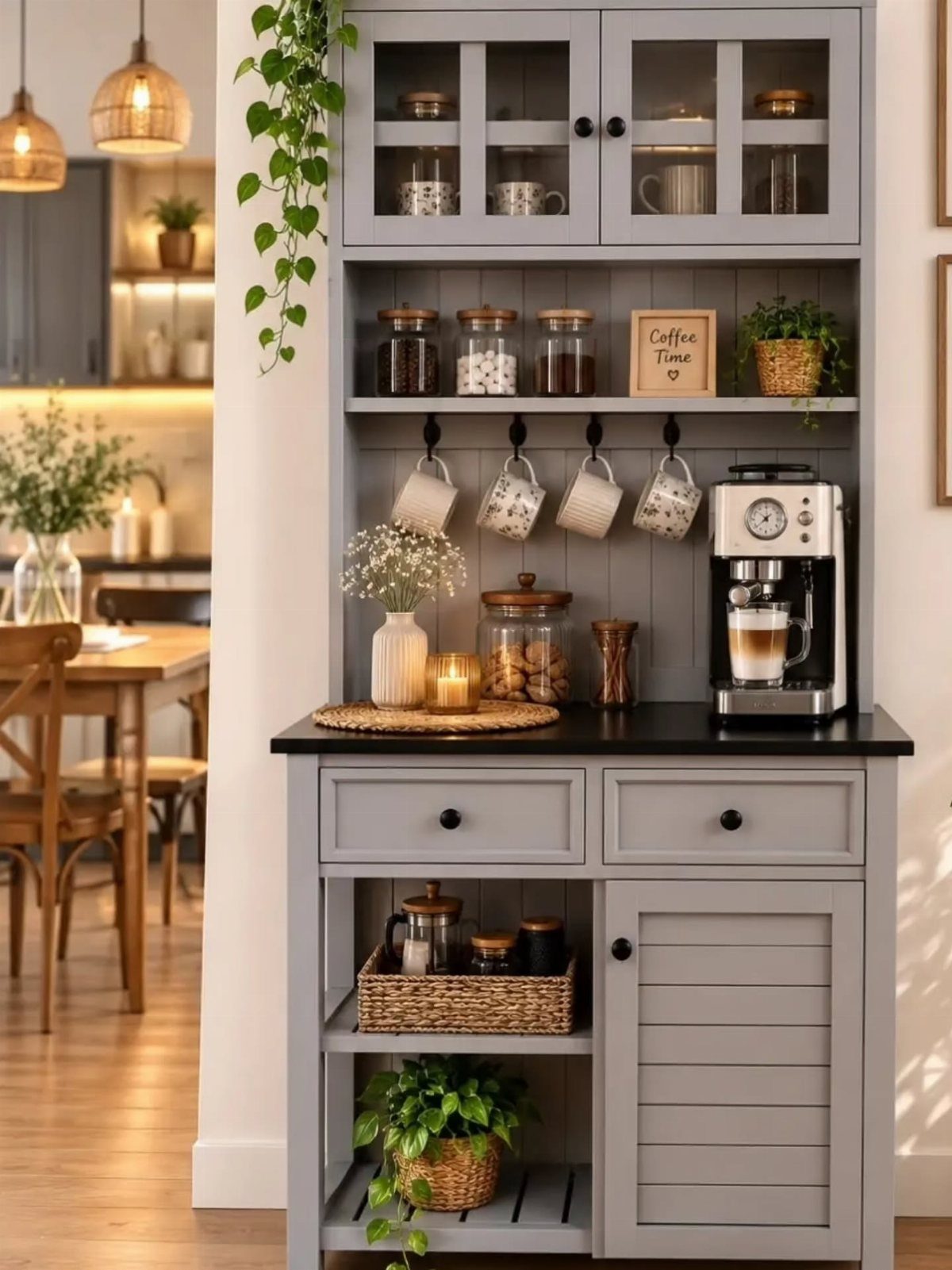
A freestanding hutch built narrow squeezes a full station into a gap that would otherwise hold a broom.
Hooks under the upper cabinet hang mugs vertically, which buys back the shelf space the machine devours. Glass canisters keep beans visible and airtight.
Skip the decor at first and prove you can operate without bumping elbows. The countertop depth matters more than width here; anything under a foot and a half gets tight if the machine vents out the back.
7. Built-in Alcove Coffee Bar Shelves
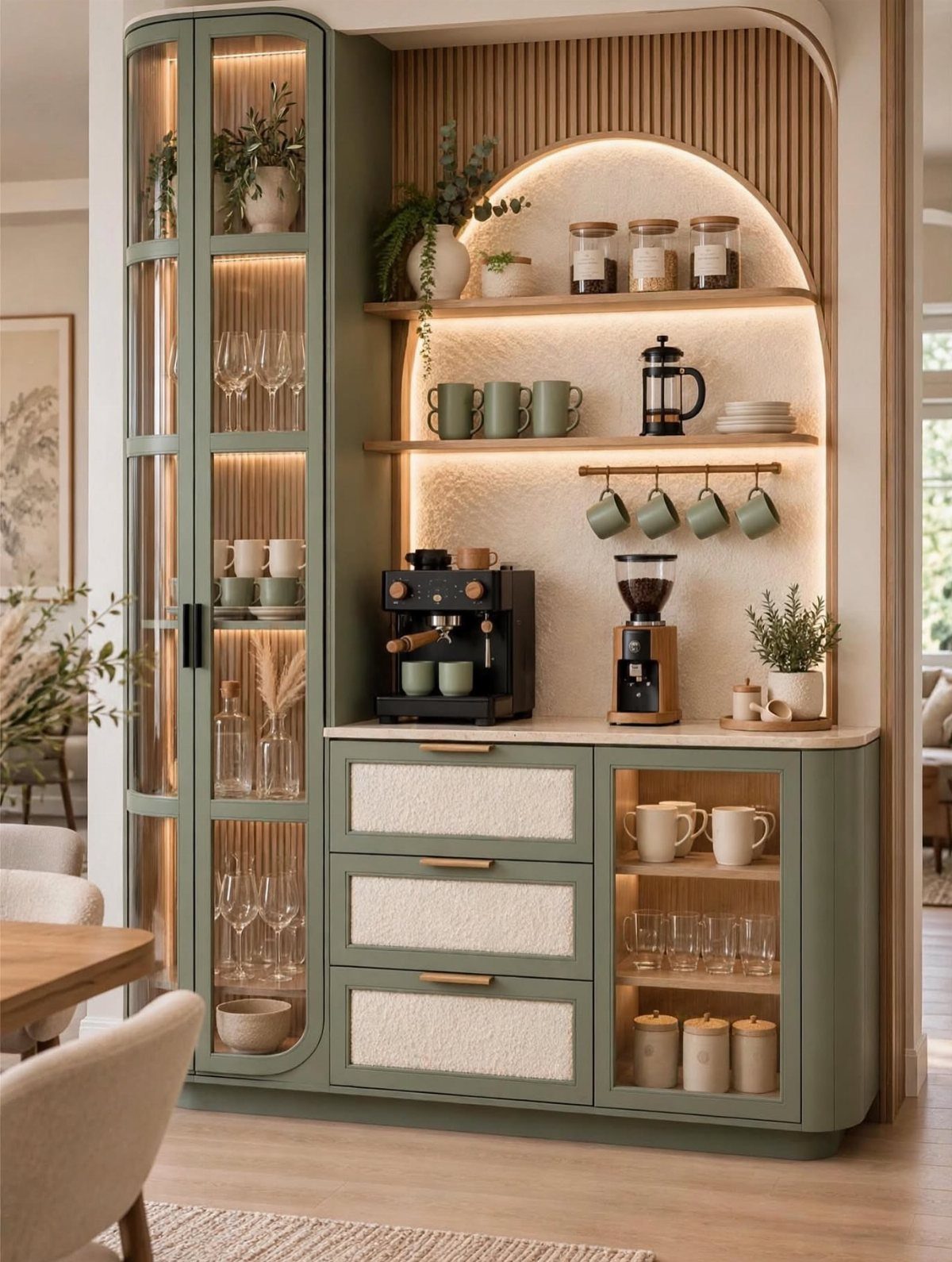
An alcove frames the coffee gear like a room within the room. The arch and the shelf become the architecture; you add only the machine and the cups.
Sage green keeps it quiet, but any muted color works.
The light inside matters more than the paint: a warm bulb at the top turns morning coffee into something intentional. If you rent, a shallow bookcase turned sideways and a stick-on LED strip fakes the effect without the contractor.
This wants a wall you can give up. Built-in alcove shelves store everything, light it, and give the corner a finished look in one move.
8. Corner Coffee Bar Shelving Setup
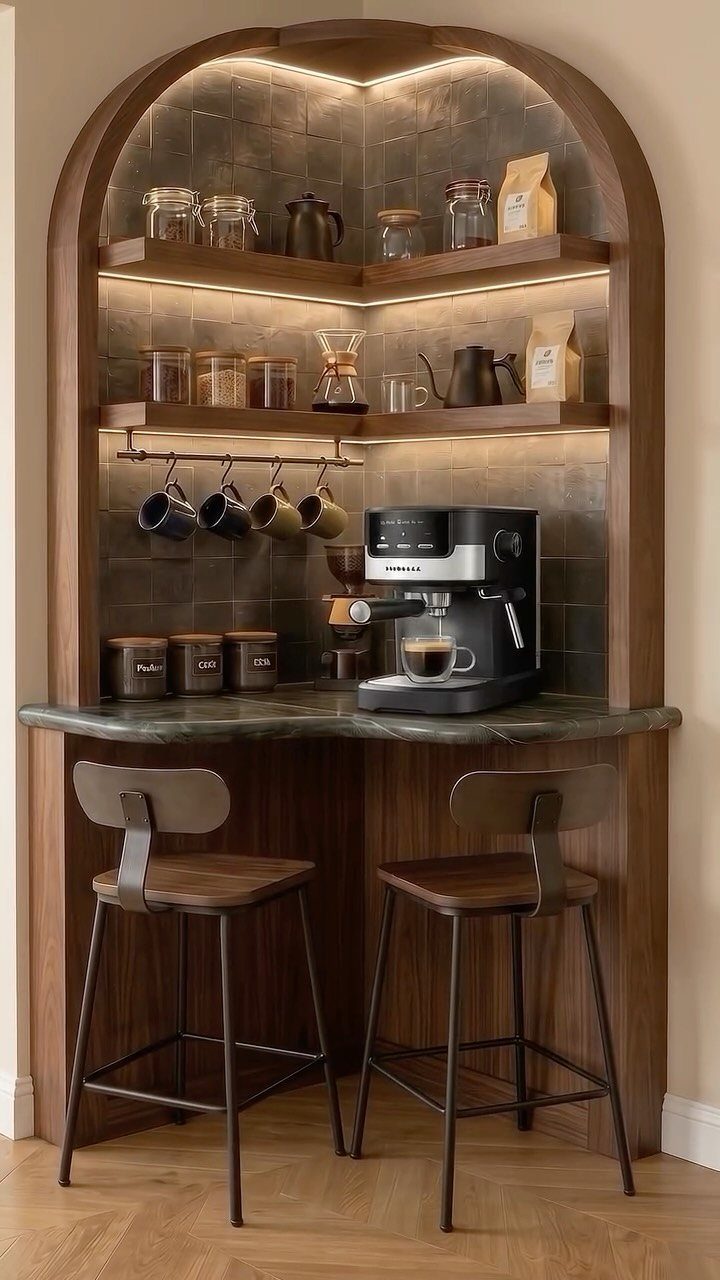
Corners waste space until you build for them. A curved counter follows the walls so the machine faces the room, not the seam; shelves above stay shallow because you stand close.
The 2 stools are the detail that changes this from storage to habit.
I would check the depth before adding them: 18 inches is tight for knees, 24 feels civilized. Under-shelf lighting is cheap now, a basic LED strip, and it matters more in a corner where overhead light rarely reaches.
Renters can skip the built-in counter and use a triangular console instead.
9. Mug Cubby Wall Shelf
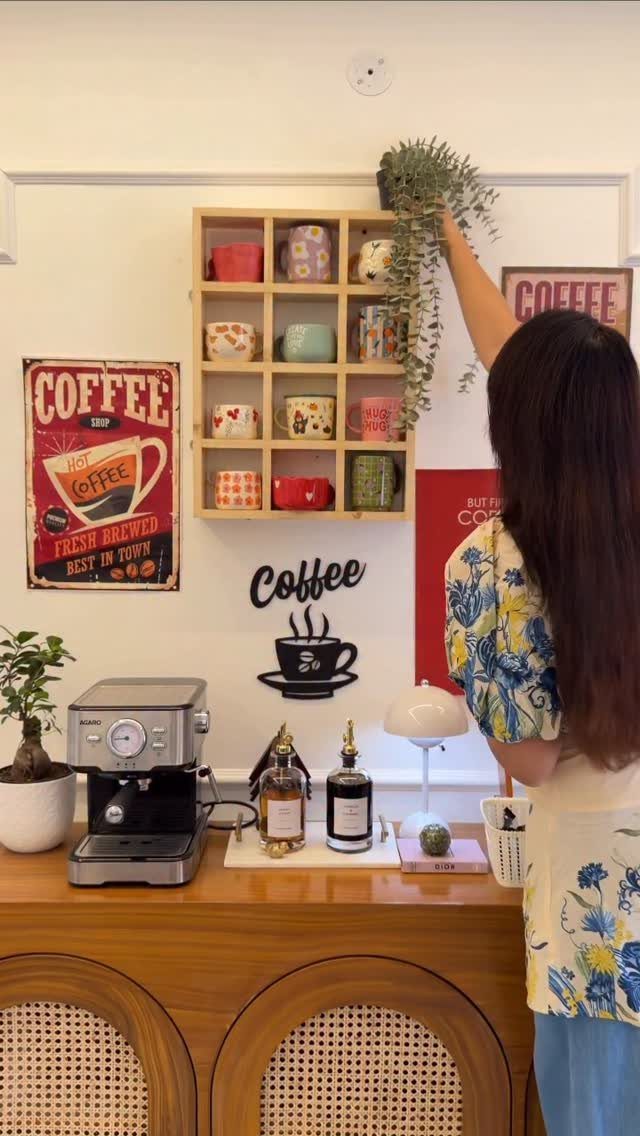
A cubby shelf turns mug collection into display. Each slot holds one or two cups, color-coded or mixed, and the whole thing reads as art above the station.
The printed sign is optional; the structure does the work.
Mount it at eye level when you stand at the machine, not higher, or you lose the casual reach. I would keep the cubby width modest so it does not dominate a small wall.
The plant on top is the living detail: something trailing softens the grid. Choose a pothos you can neglect.
Styling Tips for Coffee Stations
Start with your biggest pieces so you know what space is left before you commit the lower shelf to mugs and jars.
Mixing textures keeps a coffee station from reading flat: wood next to glass, ceramic against metal, greenery breaking up the hard lines.
Two or three colors is enough; more than that and the eye gets restless. Odd-numbered groupings, especially threes, read as styled without looking staged.
A thin cutting board or frame leaned at the back builds depth; shorter pieces sit in front so nothing hides. That back layer eats depth fast, so check that your shelves can handle it before you plan around it.
Leave open space deliberately.
Every shelf needs a spot where nothing sits, or the whole thing tightens into clutter. A small seasonal swap, one item, is enough to keep the corner from going stale.
Placement Considerations
Function comes before aesthetics in placement.
I would put the machine where it minimizes the mess you actually make. For me that meant the trash can, because spent grounds travel.
If your habit is different, follow it: the spot you sit to drink matters, or proximity to the sink, or the path from bed to cup before your brain is on.
Availability is the second check.
One good location is a luxury in small kitchens; most renters get one wall or corner and make it work. Locking casters on a cart solve this by letting you roll the whole station to where the morning actually happens.
Think about what you touch daily and what you store weekly; the first wants to be within 2 steps of where you stand, the second can live farther out.
Avoiding Clutter
Balance is the word, not minimalism.
A shelf with nothing on it looks abandoned; a shelf with no gaps looks like storage. The breathing room is what makes the objects you keep feel chosen.
Start with what you use: mugs, jars, the machine itself. Those earn their spot.
Everything after that is a choice about density. Two or three colors, mixed textures, a plant to soften the grid.
The step back matters. I would cross the room and look back: distance strips out the small decisions you made up close and shows what actually registers.
A seasonal item keeps the corner from going dead, but one is enough.





