
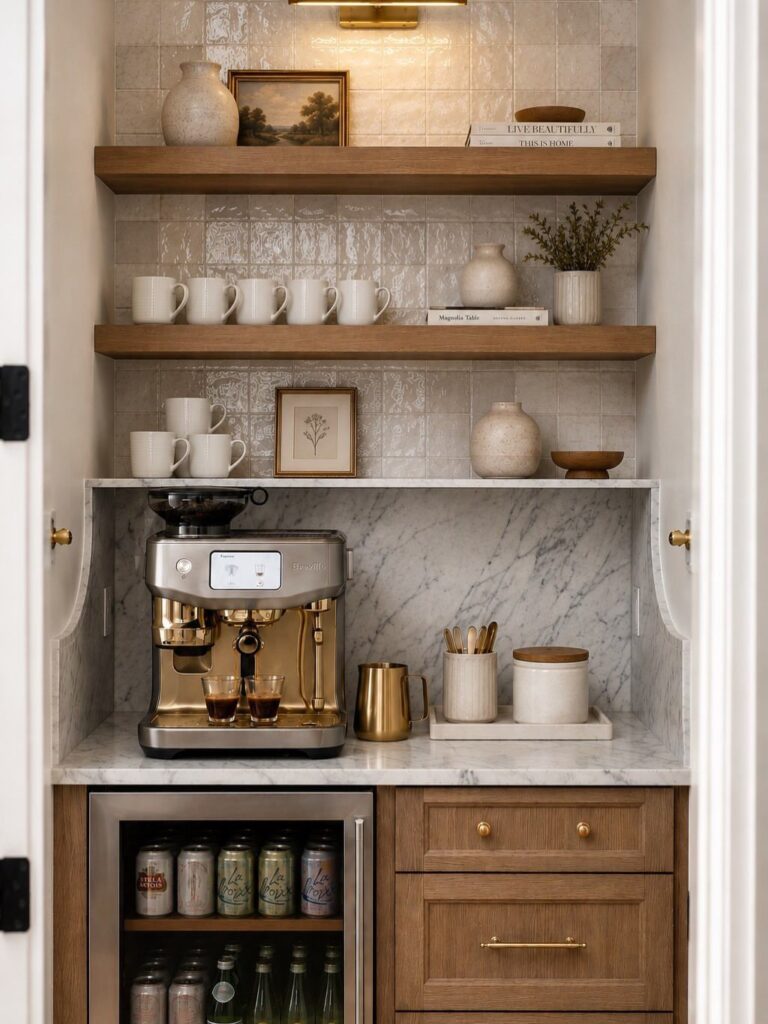
A cart on casters rolls away for renters; beadboard or shiplap needs a landlord who is not coming. That same logic still holds: measure your space, then measure your commitment.
[link-whisper-related-posts]1. Mug Rack
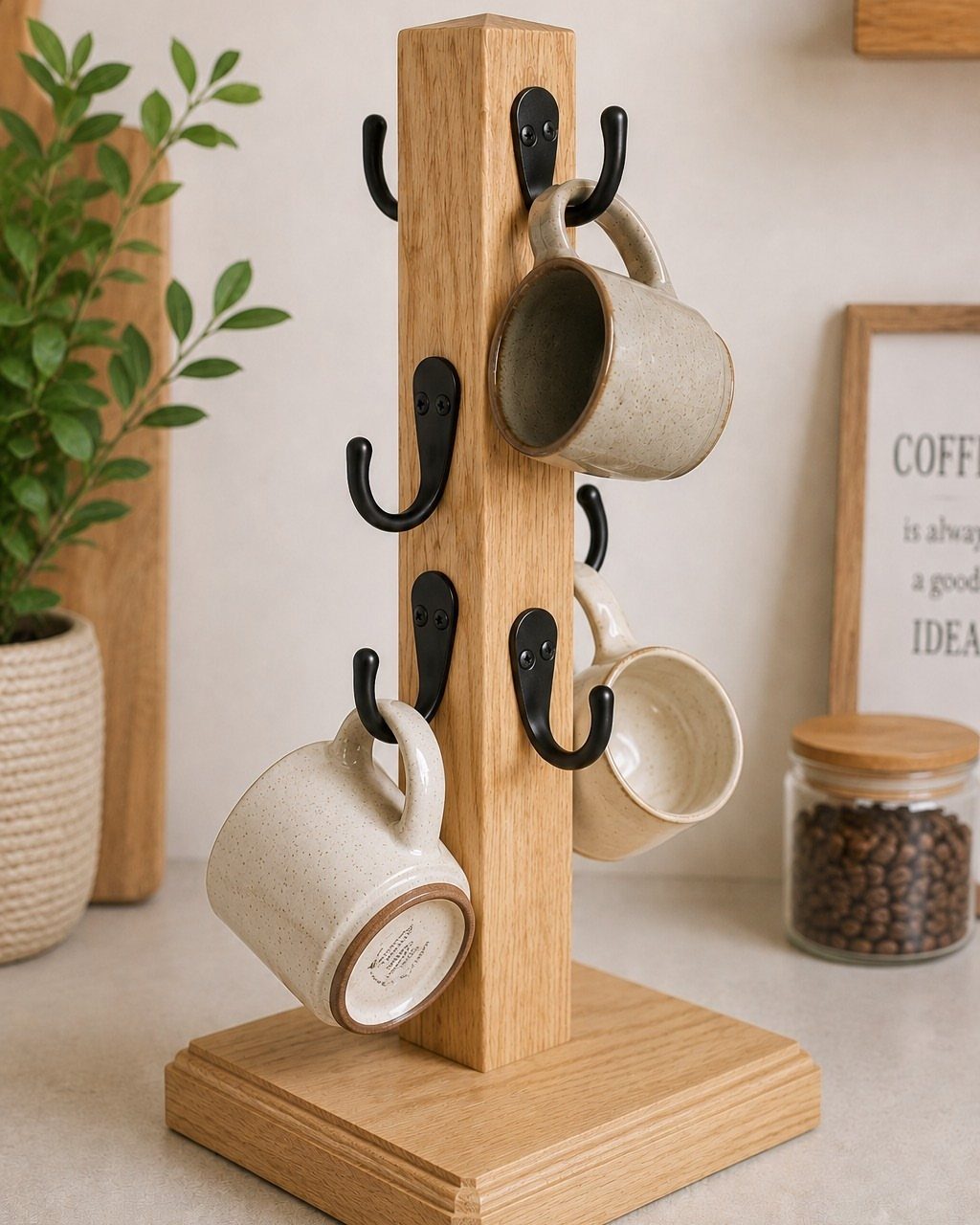
Hooks mounted under a cabinet or on a small stand keep mugs within arm’s reach and free cabinet space above. Black iron hooks against warm wood suit the farmhouse palette without trying too hard.
I look for hooks spaced close enough that mugs don’t knock, and I skip the decorative hooks that pinch fingers. A countertop stand works for renters; screwed-in under-cabinet hooks do not.
A stand runs cheap at big-box stores, hooks alone even less.
2. Coffee Bar Accessories
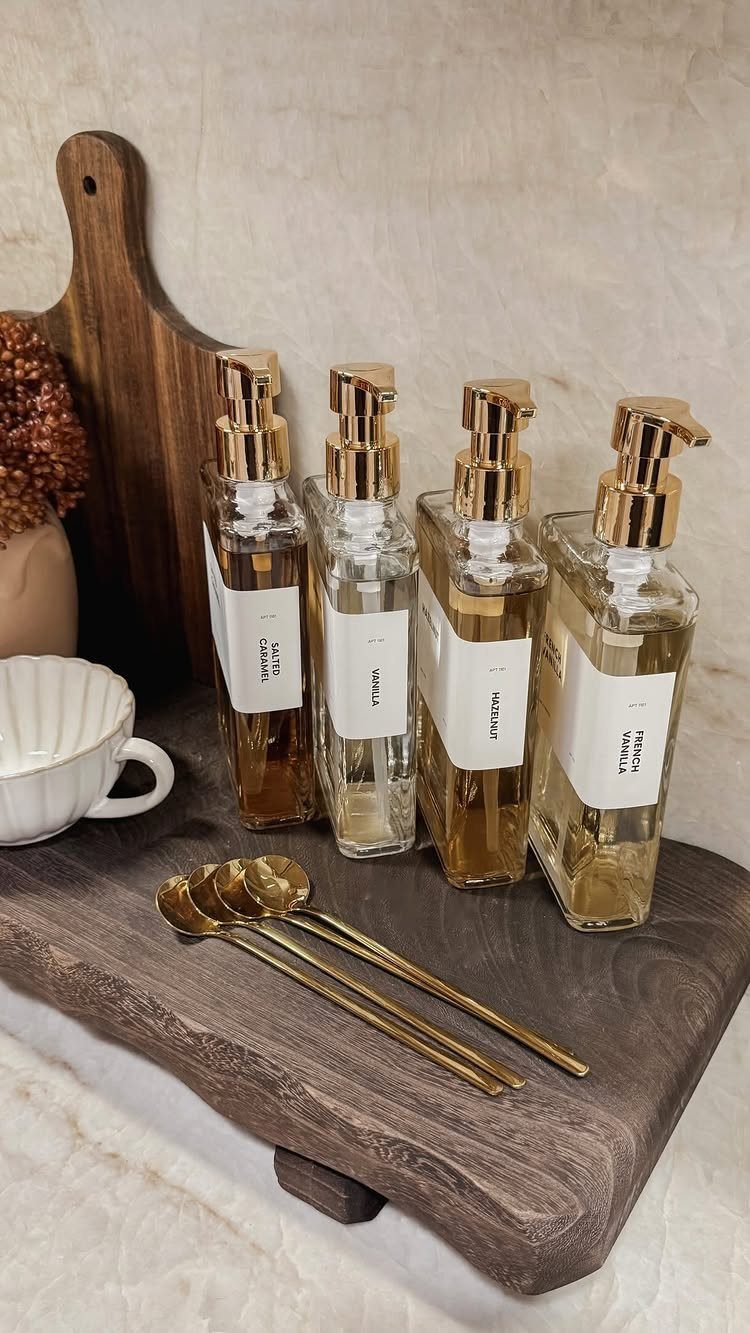
Glass pump bottles for syrups beat the sticky original bottles and keep a counter looking kept.
Gold-toned pumps and a wood riser warm up the utility, though I would swap gold for brushed nickel in a kitchen that already runs cool. A few bottles hold enough variety for most households; more clutter the station.
Decant into clean bottles, label with a paint pen. Refill from cheaper bulk bottles stashed below.
3. Seasonal Decor with Pumpkins
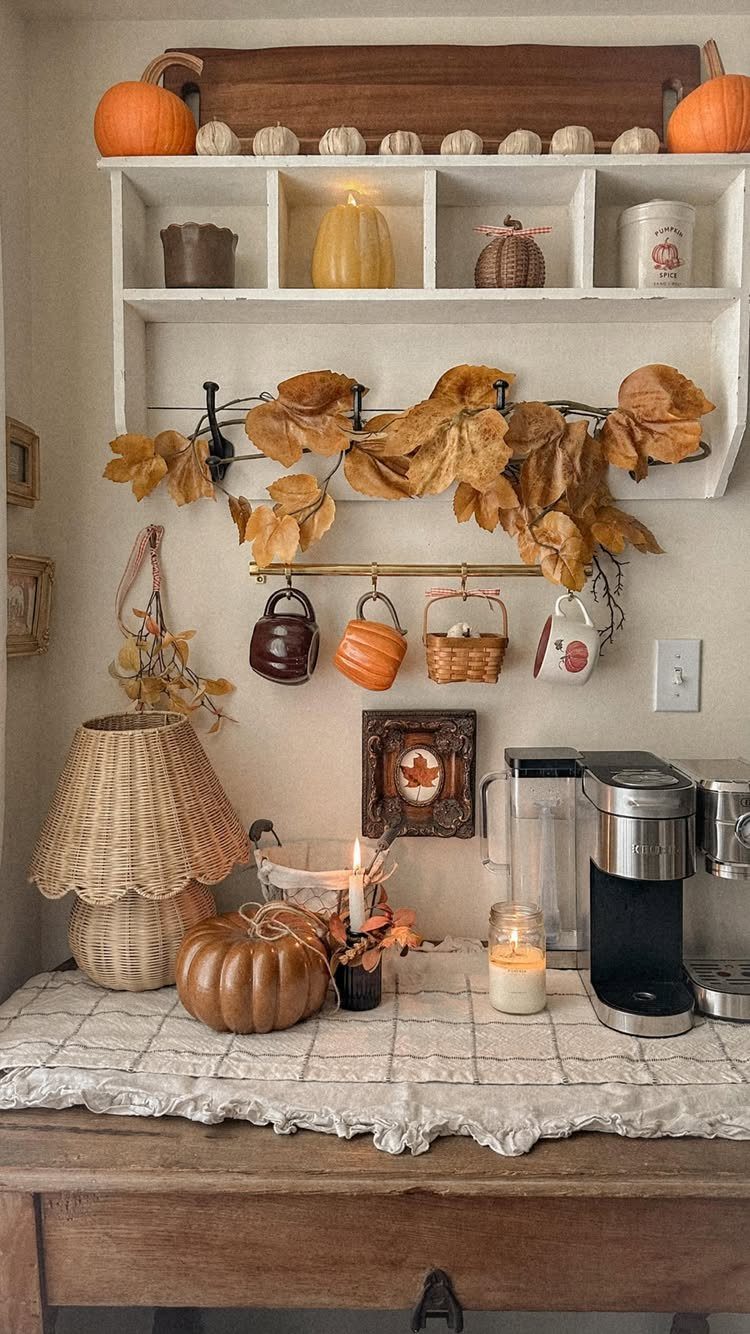
The pumpkins and dried leaves here do what seasonal decor should: swap out fast, cost little, and read clearly from across the room.
The garland and printed sign are dollar-store or craft-store territory, easy to assemble for next to nothing. I would keep the base pieces neutral year-round and rotate only the small stuff in October.
The maker found her table secondhand, over a century old. That weight of wood grounds the whimsy; without it, I would use a darker stain on whatever I had.
4. Small Coffee Bar Corner
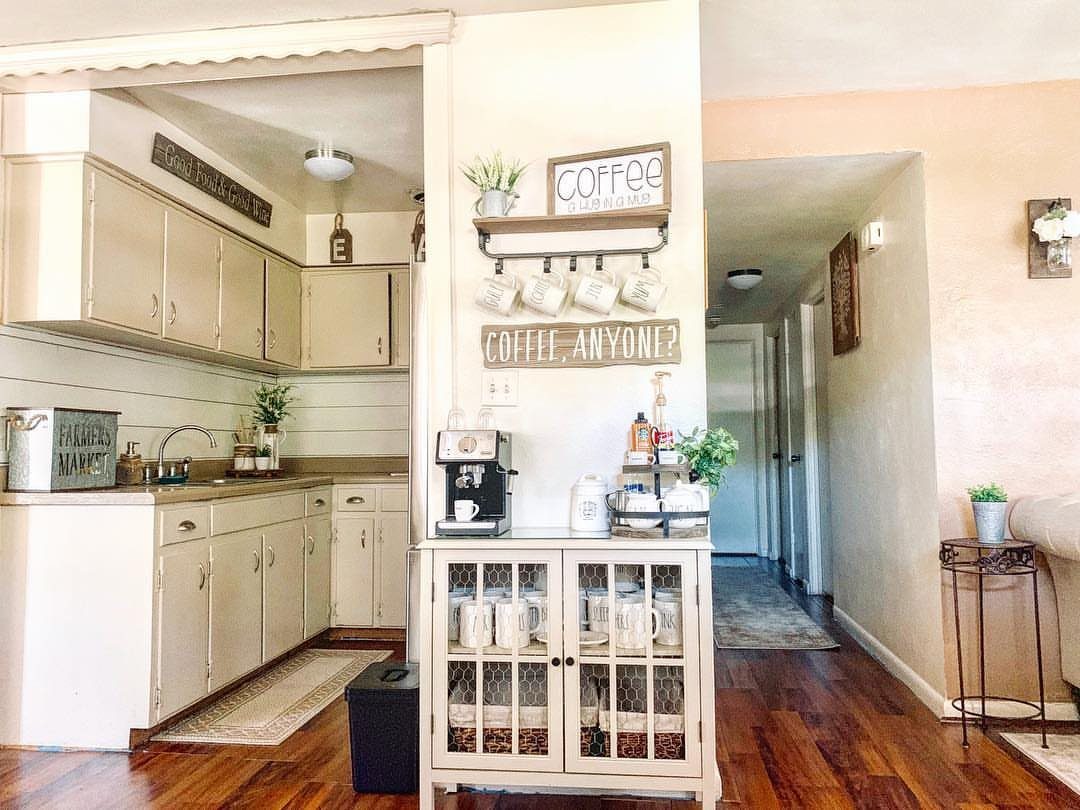
A slim sideboard wedged between kitchen and hallway proves you can make do with whatever wall you have. The white finish keeps it from reading as furniture in a walkway.
A wall-mounted mug rack above steals vertical space the floor doesn’t offer. Two matching signs are one too many for my taste, but the scale is right for the width.
An espresso machine plus grinder demands more depth than a standard console; measure before you buy. Measure before you buy anything.
5. Coffee Bar Sign
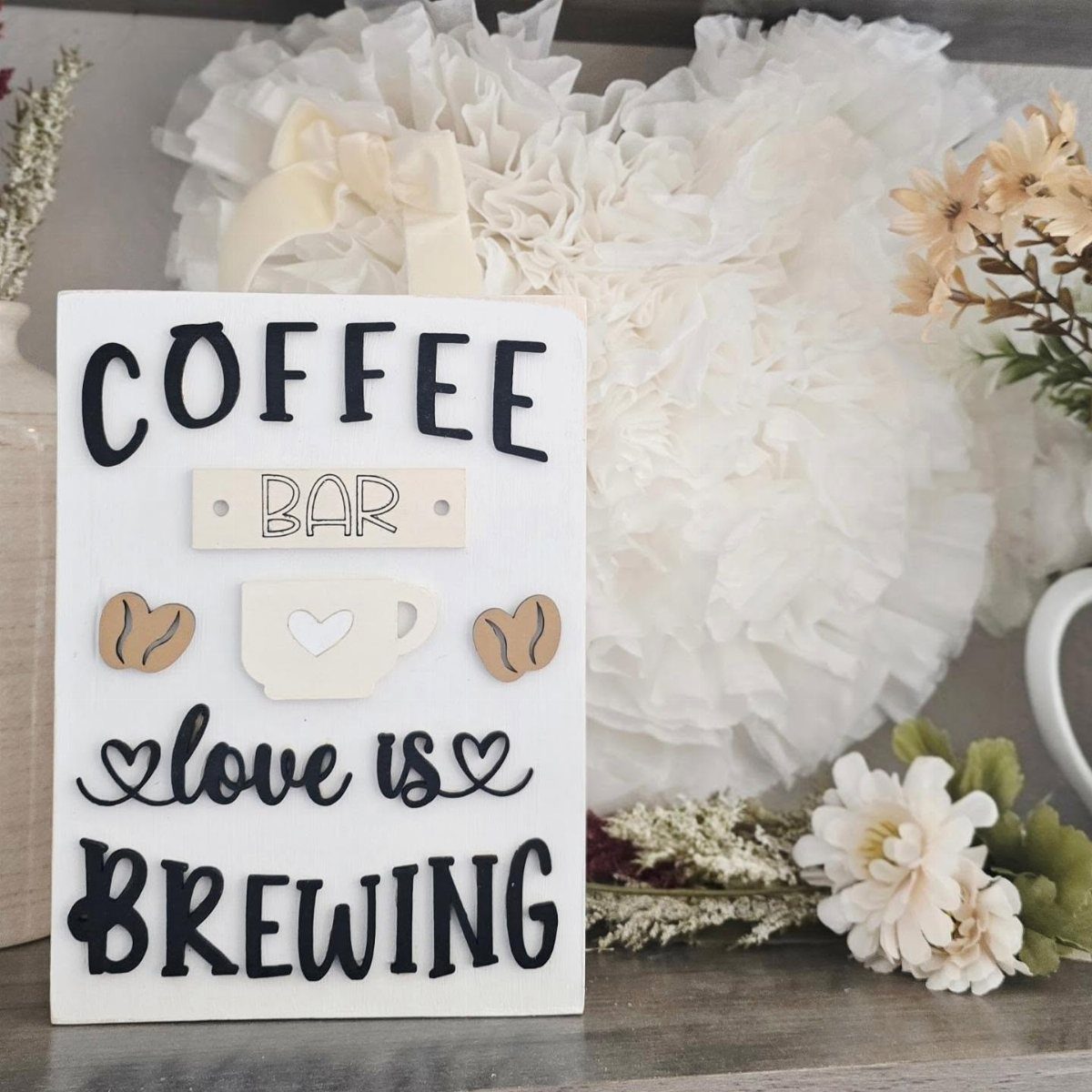
This is the easiest entry point for farmhouse style: one small painted sign, picked up cheap at craft fairs or marked up finished online. The 3D lettering catches light better than flat vinyl.
I prefer the phrase to be slightly off, slightly hokey; "love is BREWING" commits to the bit. White with black keeps it legible against busy backsplashes or wallpaper.
Standalone on a shelf works. Hook-backed for seasonal rotation works better.
6. Vintage Sideboard Cabinet Coffee Bar
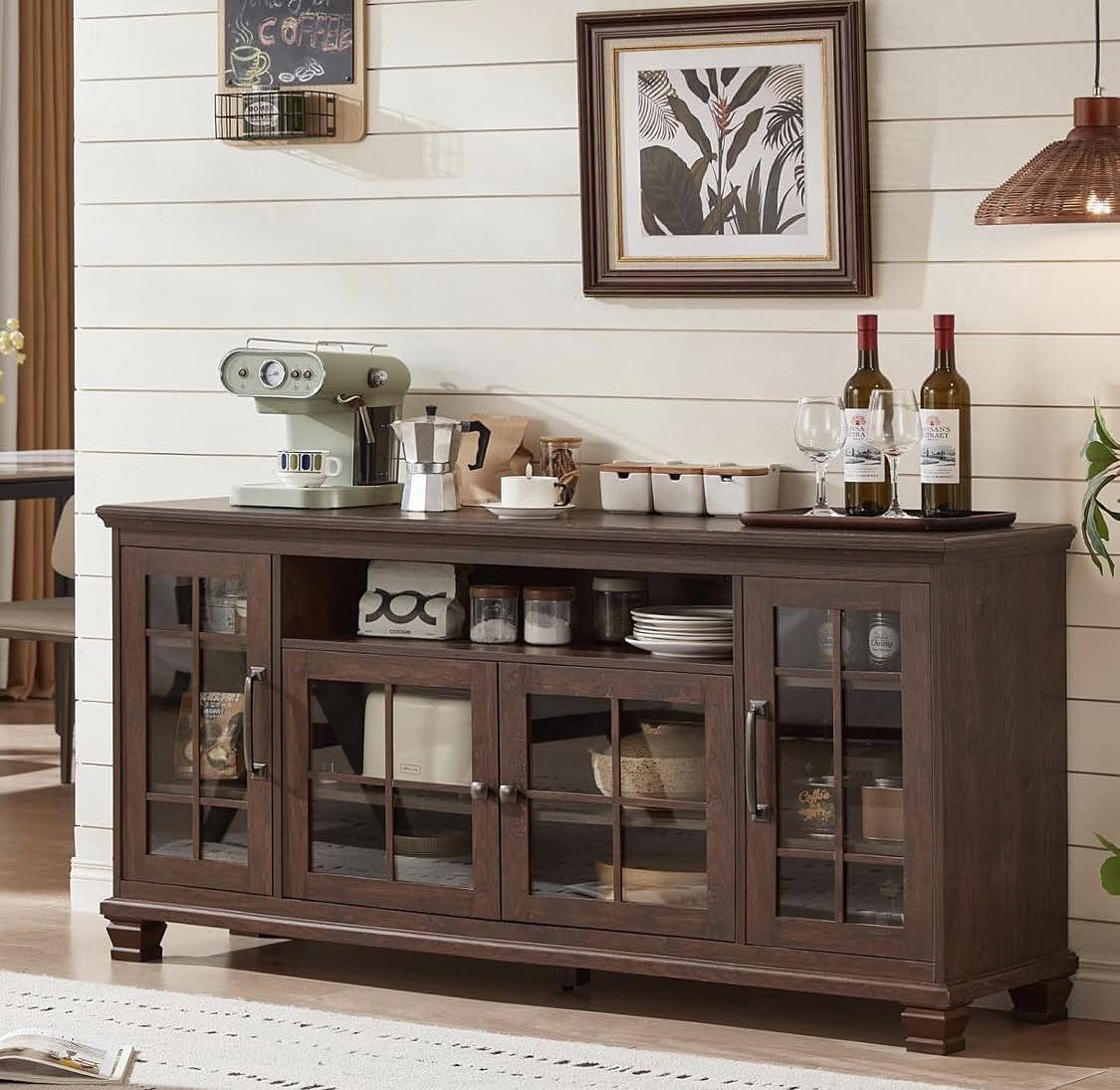
A dark wood sideboard with glass doors does 2 jobs: it stores mugs and beans behind the panes, and it stages the espresso machine on top like a proper appliance.
The contrast against white shiplap is the look; paint the sideboard and you lose half the effect. I hunt estate sales and Facebook Marketplace for these, with price depending on city and how long you can wait.
Glass doors mean dust shows. If that’s you, solid panel doors trade the display for mercy.
7. Floating Shelves
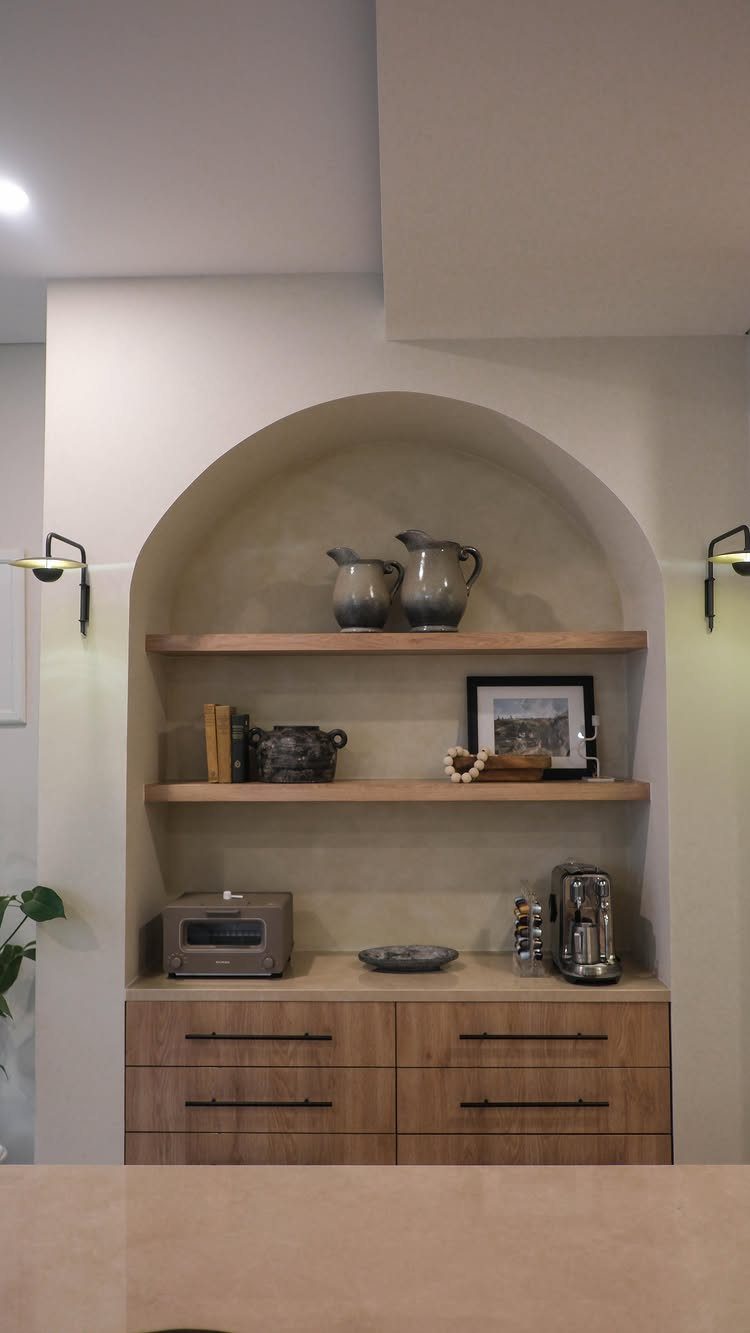
Arched niches are built for floating shelves; the curve frames whatever sits there like a propped canvas.
Wood against painted drywall gives the warmth of a farmhouse kitchen without the weight of a full hutch. I would run the shelf material to match the counter below, or deliberately contrast; close but not exact looks accidental.
Open shelf life means dust. If you are already wiping espresso cups before use, this is your system.
8. Chalkboard for Coffee Specials
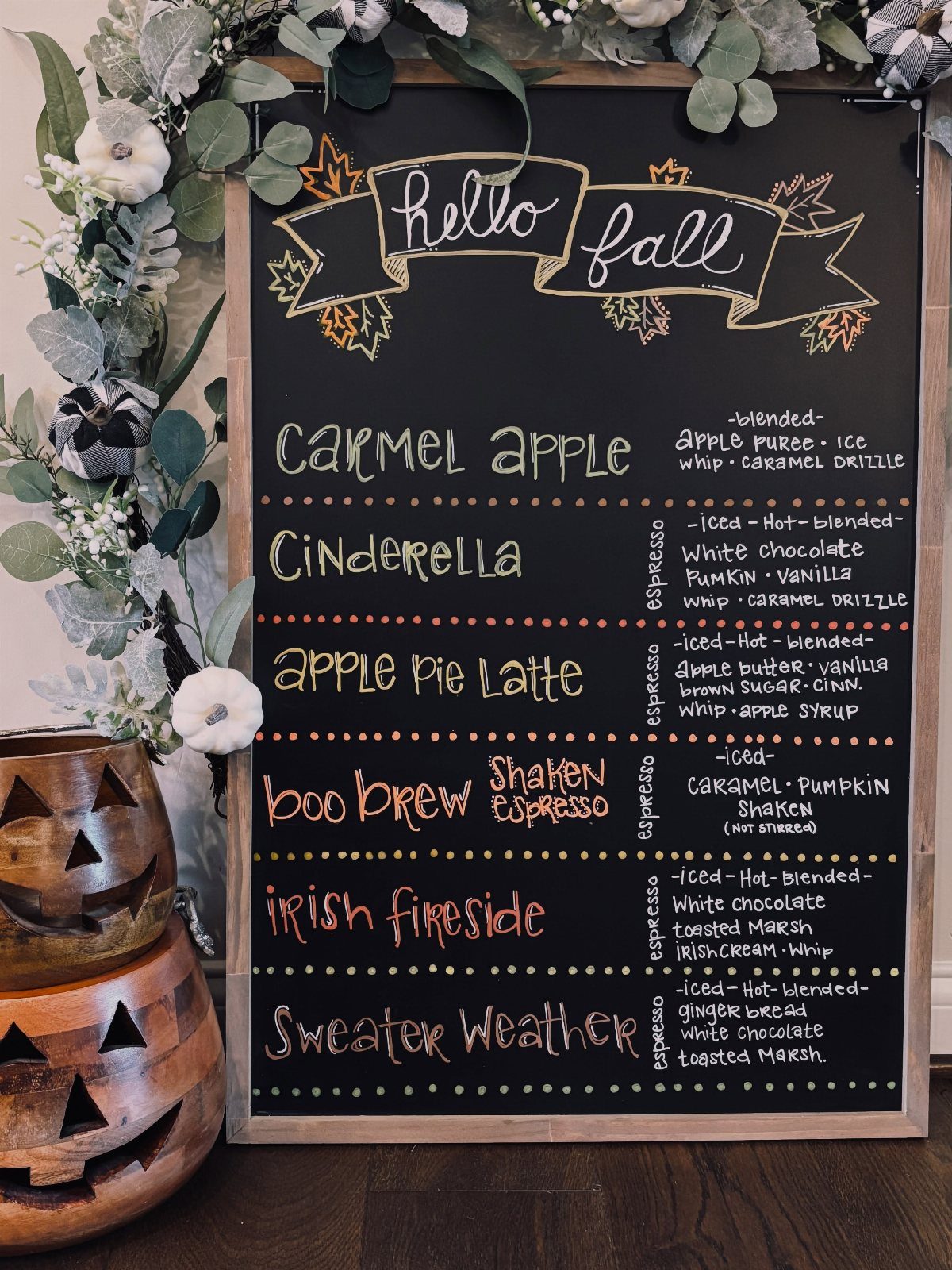
A chalkboard framed in wood reads farmhouse faster than any canned sign.
A chalkboard lets you change the drink list by season without replacing the sign itself. Hand-lettering hides a lot, and chalk paint over old art or a thrifted frame gets you there for the cost of a brush.
Faux greenery and small pumpkins dress it up now. Come January, swap in a single evergreen sprig and keep the banner blank.
9. Lemon Themed Decor
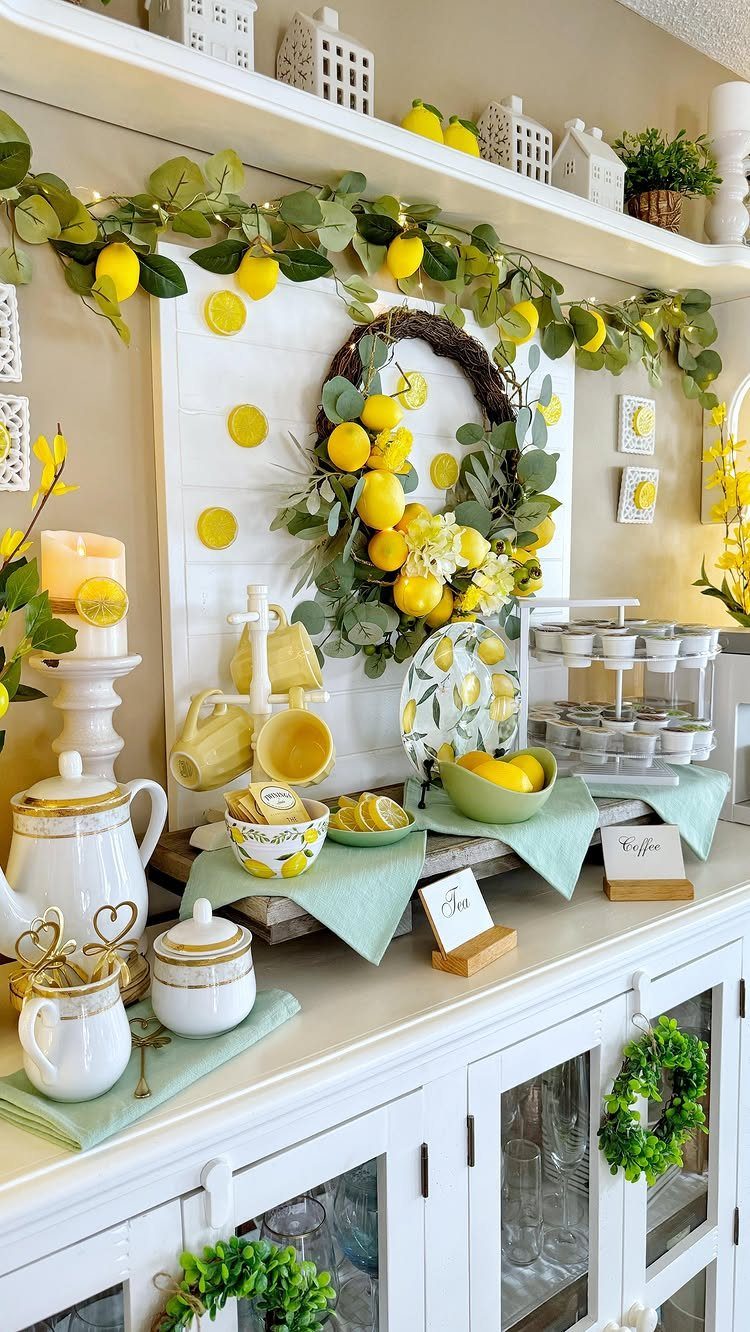
Yellow reads cheerful against white without the arthritis of all-lemon-everything.
A wreath, a garland run along the counter edge, two or three yellow mugs: that is the dose. I would stop before adding lemon-print canisters or dish towels; the theme curdles fast.
Painted wood signs in small scale, "Tea" and "Coffee," do the labeling job and move to a drawer when you tire of citrus.
10. Pallet Wall Organizer
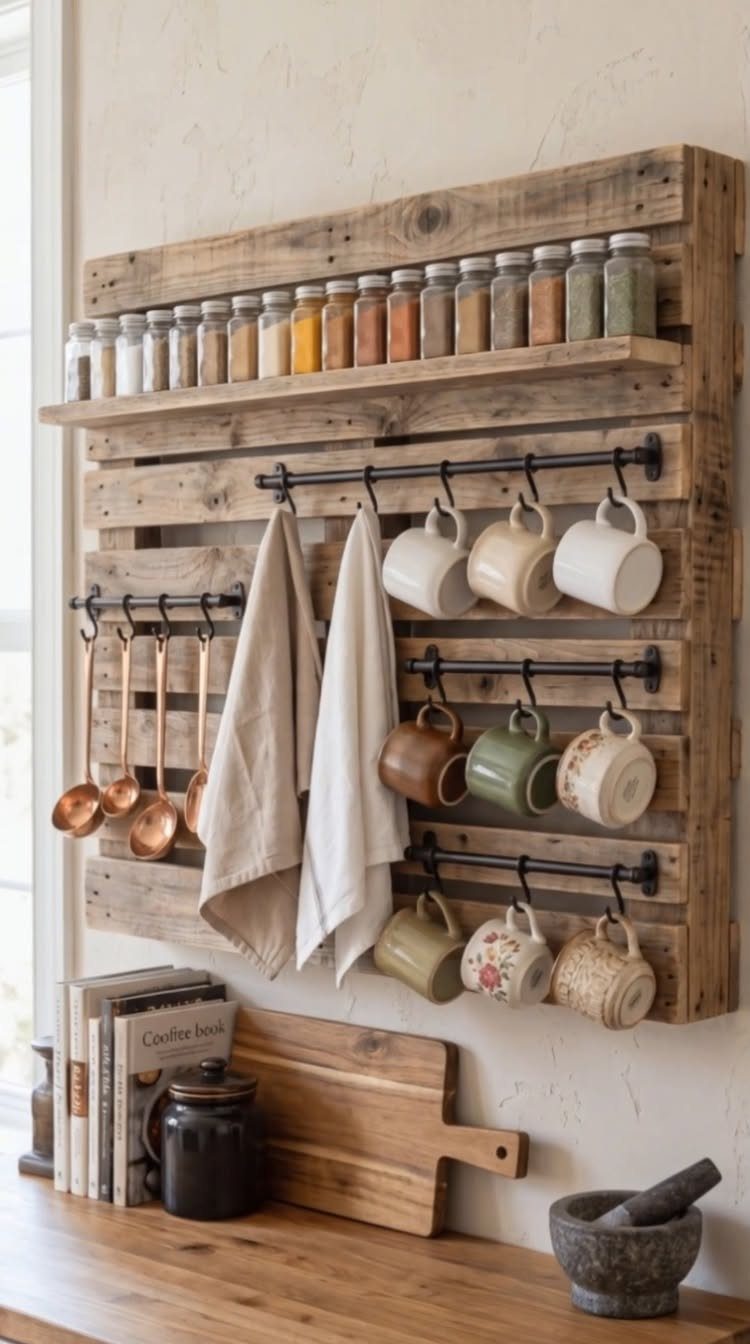
Pallet wood on a wall is free if you know a loading dock, cheap if you do not.
This one carries spice jars across the top rail, hangs mugs below, and leaves the center open for a book or a single oversized utensil. The rails are simple closet rod hardware; the pallet is the facade.
Sand until you cannot catch a splinter. Seal it or every grain of coffee dust sticks.
11. Built-In Cabinet Nook
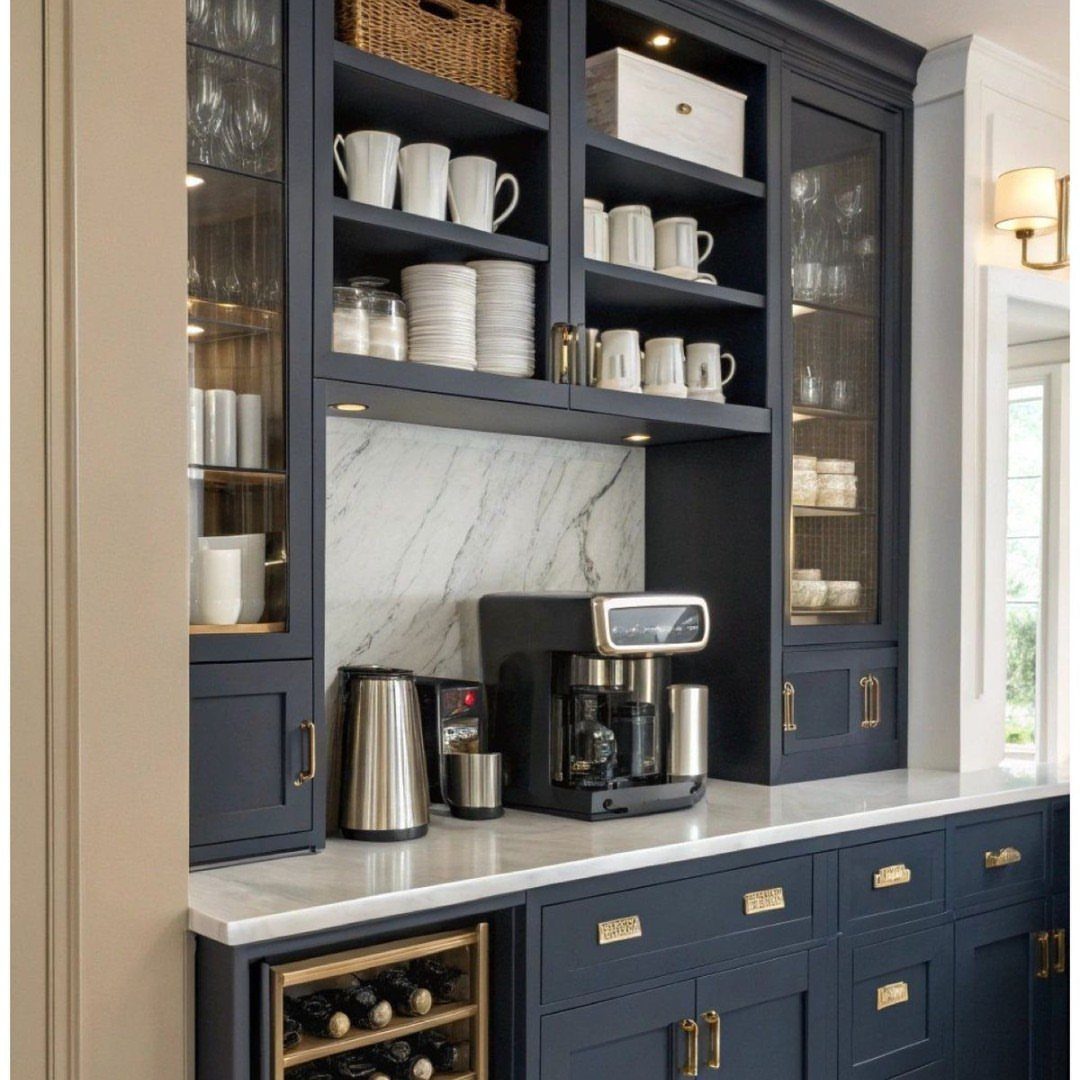
Built-in cabinetry in navy is a commitment that pays back in counter space you did not have before.
Marble here runs up the wall as backsplash, so splashes wipe off the same stone they hit; smart in a coffee station, necessary if you are also the wine fridge this setup includes.
I would not attempt this on a weekend. This is a winter project, or a contractor’s month.
Open shelving between cabinets breaks the bank of blue and gives you daily-reach items in hand.
12. Rolling Coffee Cart
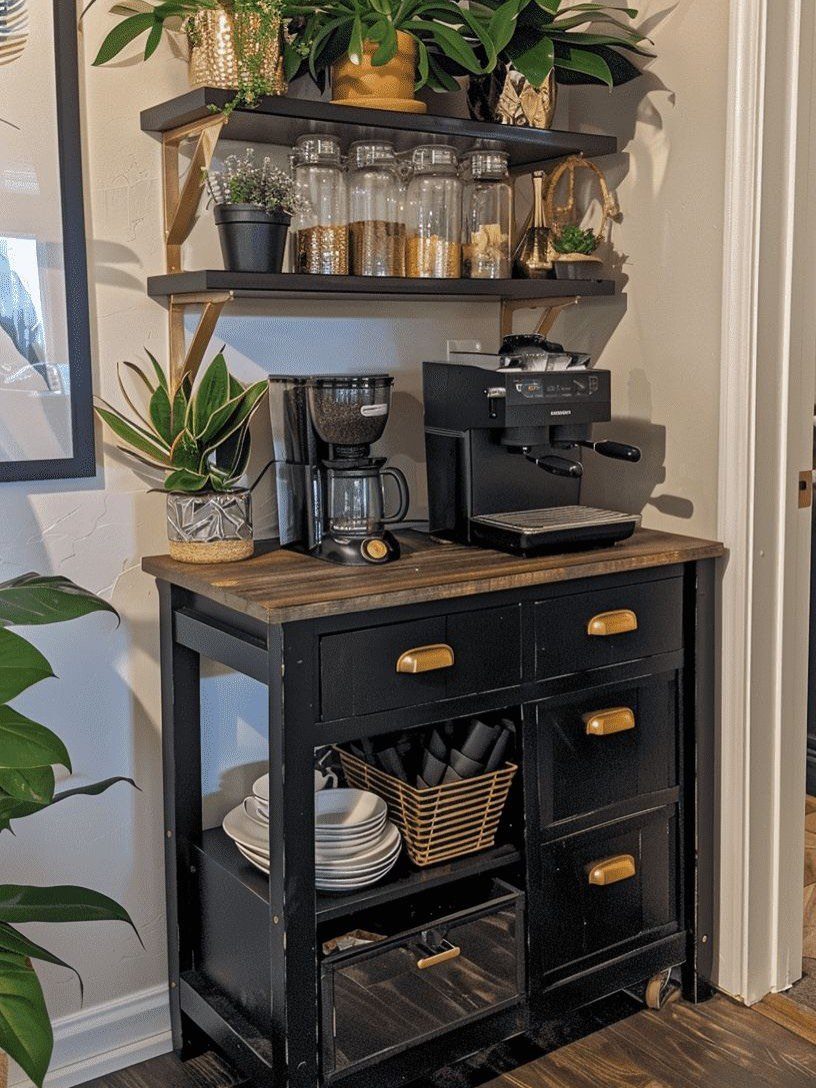
A cart on casters solves the renter’s problem and the host’s: roll it out for brunch, tuck it against the wall on weekdays.
Black with gold hardware reads more modern farmhouse than rustic, which suits an espresso machine over a pour-over setup. Matching shelves above turn a cart into a visual wall unit without anchoring anything permanent.
Two locks on two wheels keep the cart from drifting across tile when feet are still half asleep. Check them before the first brew.
13. Walk-In Pantry Coffee Station
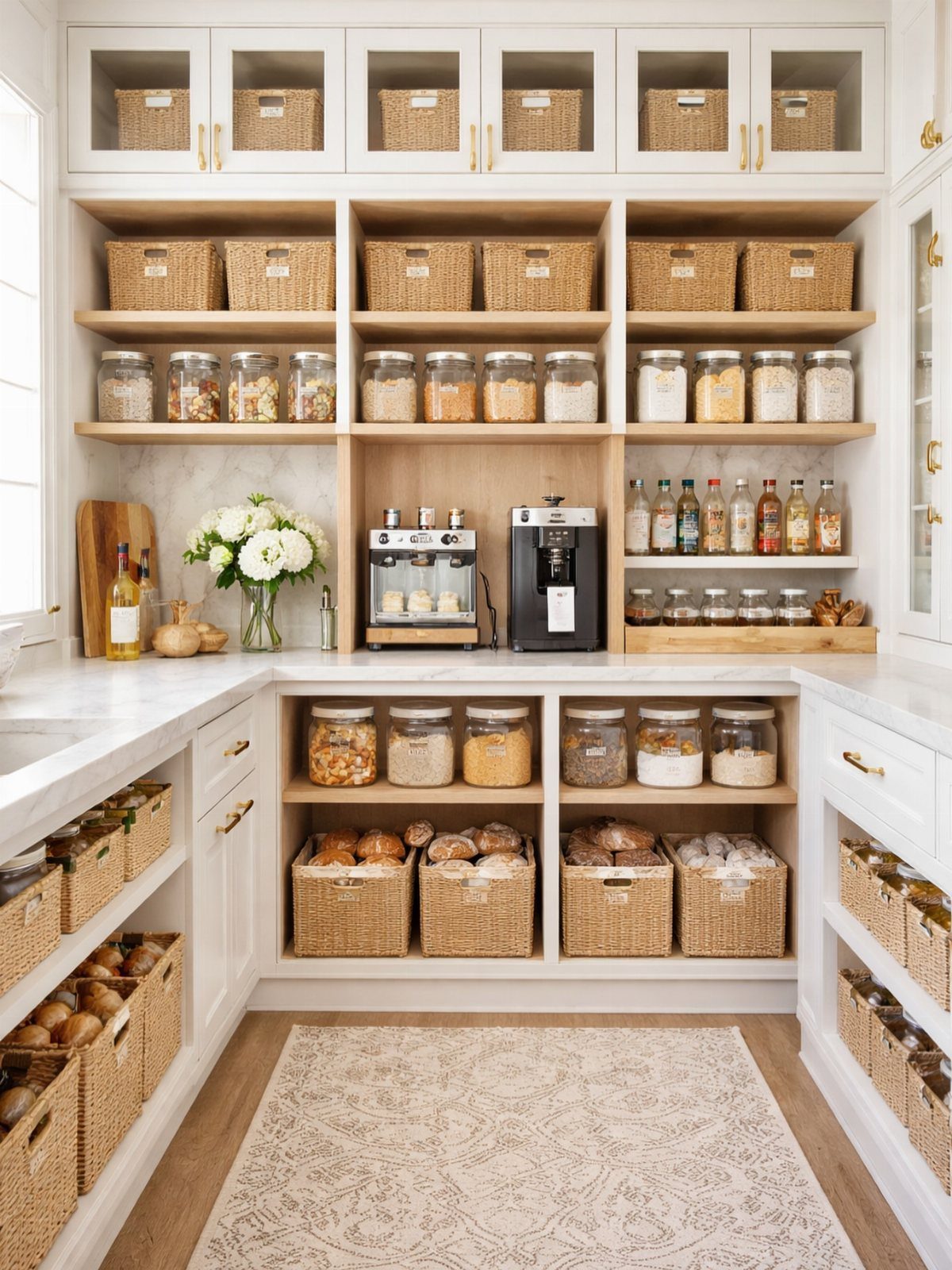
Pantry shelf space that is already there gets one job addition instead of a new furniture purchase.
The coffee maker sits where dry storage lived, with jars and baskets sliding aside to make room. Countertop in a pantry is precious; a rolling cart parked in the gap does the same job if yours has none.
White and wood keep the station from reading as clutter against food storage. Match your shelf finish or deliberately do not.
14. Farmhouse Hutch Coffee Station
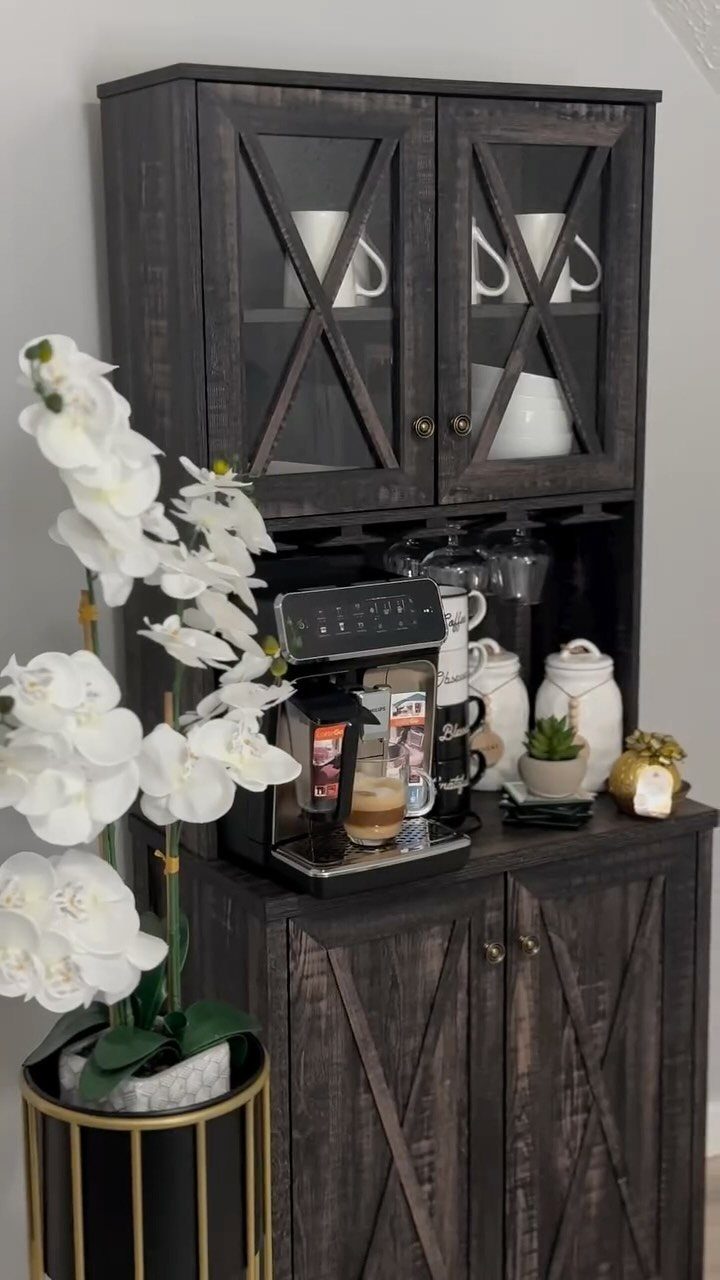
Dark wood with X-detail doors carries enough visual weight that the hutch becomes the room’s statement whether you planned that or not.
Glass doors on top mean you stage what shows; I would fill them with white or cream pieces, never mismatched colors that fight the wood. The lower cabinet hides the grind and the backup bags.
Estate sales and auctions move these slower than sideboards, so prices soften with patience. Electric inside means running a cord; cord channels in back trim keep it neat.
15. Shiplap Wall Coffee Station
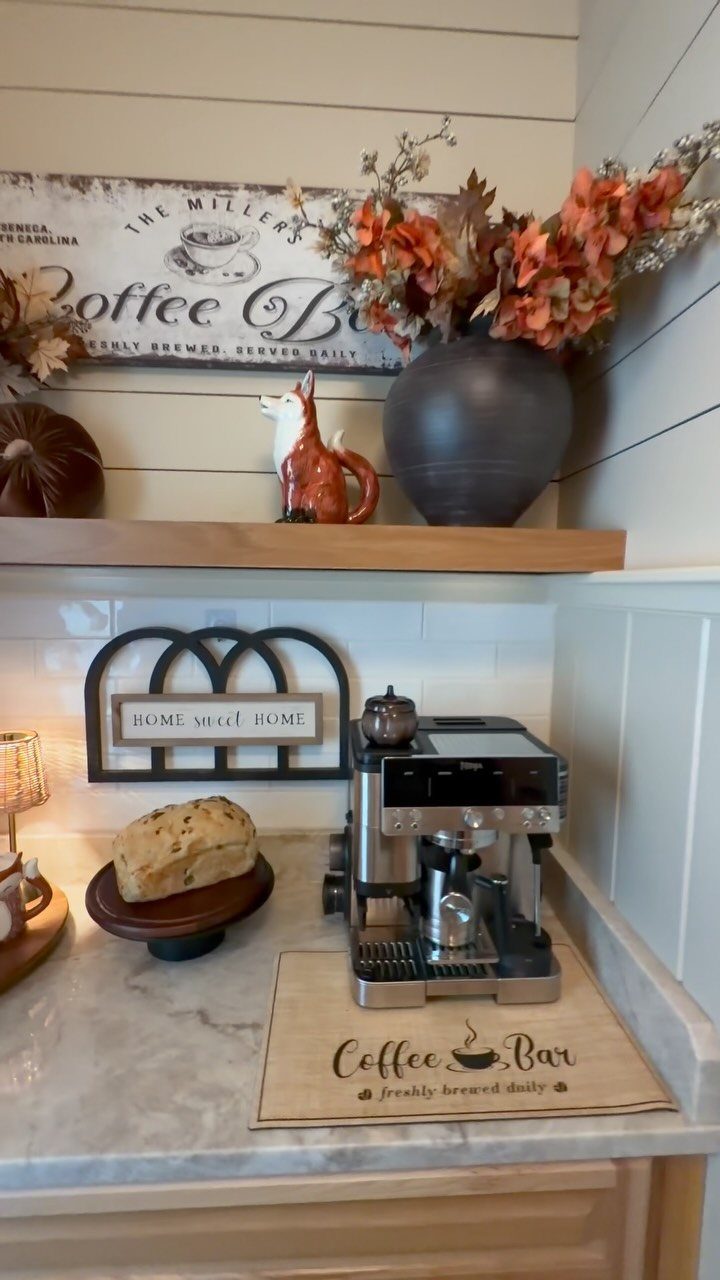
Shiplap behind a coffee station reads farmhouse because it is the wall itself, not applied decor.
I would carry the same restraint to whatever machine you choose, skipping red or chrome that pops too hard against white boards and a marble counter. A floating shelf above holds daily cups without breaking the line of the boards.
Fall leaves and the fox figure in this setup are where your own season lives. The wall stays, the small stuff rotates.
16. Beadboard Wall Coffee Counter
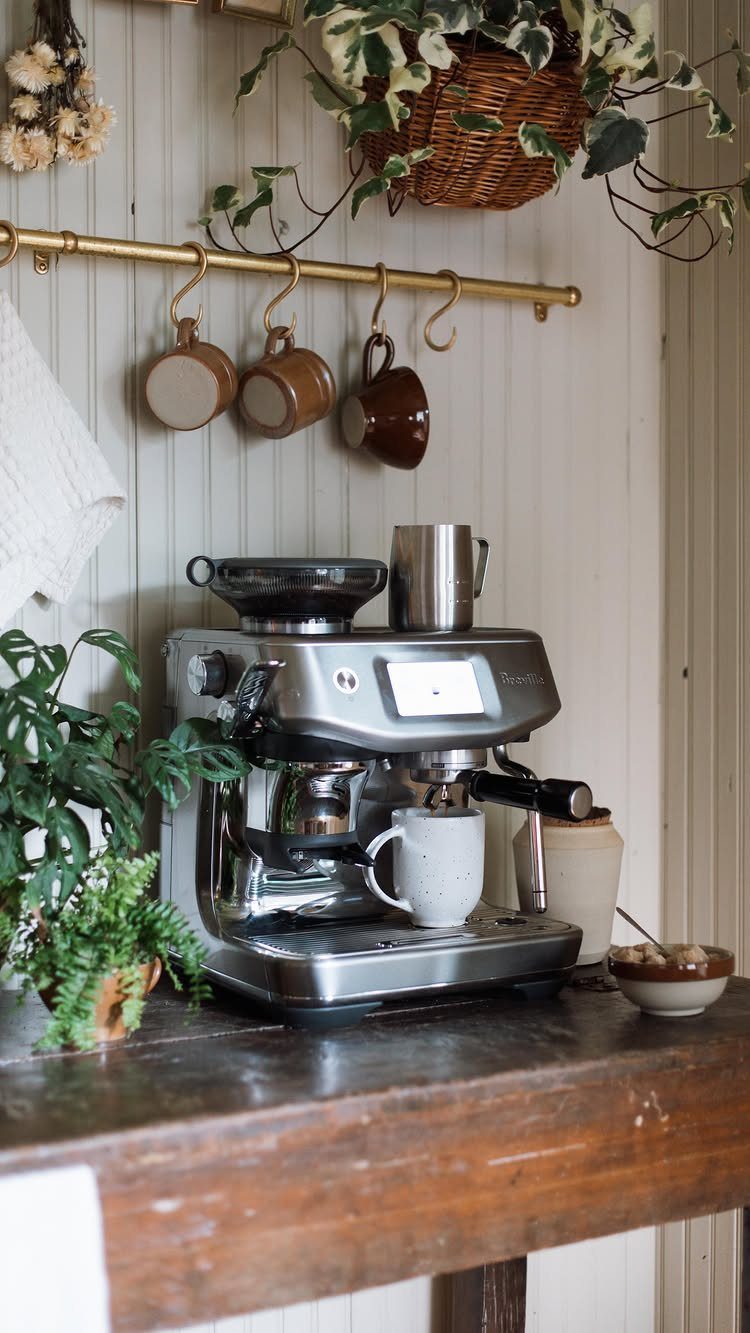
Beadboard narrowing above a counter draws the eye down to the work surface, which is where you want it.
Off-white here, not stark, lets the wood counter and brass rail warm the space. A wall-mounted mug rail saves the counter for brewing; brass against beadboard is the detail that signals intention, not accident.
Hanging plants need light and occasional drip. If your window is elsewhere, a single succulent on the rail and pothos across the room trades the cascade for survival.
Tips for Decorating a Coffee Bar
A tiered tray earns its counter space by sorting mugs, stir sticks, and syrups into vertical layers you can read at a glance.
Metal or wood finishes in white, black, or raw pine fit most farmhouse setups without a second purchase.
Greenery breaks up wood and metal better than another ceramic piece. A small potted plant or a few eucalyptus stems do the job; anything that needs daily watering dies there, so I stick to cut stems or very forgiving succulents.
Seasonal rotation keeps the eye from glazing over.
Pinecones and plaid hold through winter, then I pull them and set out a ceramic rabbit with something pale pink for spring. The base tray and mugs stay put, only the small stuff moves.
Frequently Asked Questions
How to style a coffee bar area?
A tiered tray stacks mugs, stir sticks, and syrups in layers I can scan in one look; eucalyptus or a small clipping from the yard keeps wood and metal from going flat.
Keep the base pieces neutral and swap small items by season so the eye stays fresh without constant buying.
What makes a coffee bar farmhouse style?
Farmhouse style starts with wood, iron, and worn finishes you could have pulled from a barn. Paint it white, paint it black, leave it bare, the material reads the same.
Get three or four of these into your setup and the style follows without any signs: reclaimed or distressed wood, galvanized metal, mason jars, burlap or linen, and cast iron or oil-rubbed bronze hardware.
What is a coffee bar in a house?
A dedicated spot where your coffee maker, mugs, and supplies live together instead of scattered across kitchen counters.
It can be as small as a rolling cart parked by the pantry or as built-in as cabinetry with its own counter and backsplash.
Can I store coffee beans in mason jars?
Mason jars work fine for beans I plan to grind inside 7 days; light still gets in, so they sit in my cabinet, not the counter.
The jar seals out air and looks right in a farmhouse setup, but light and oxygen still break down flavor over time so I would not fill jars with your backup supply.





