
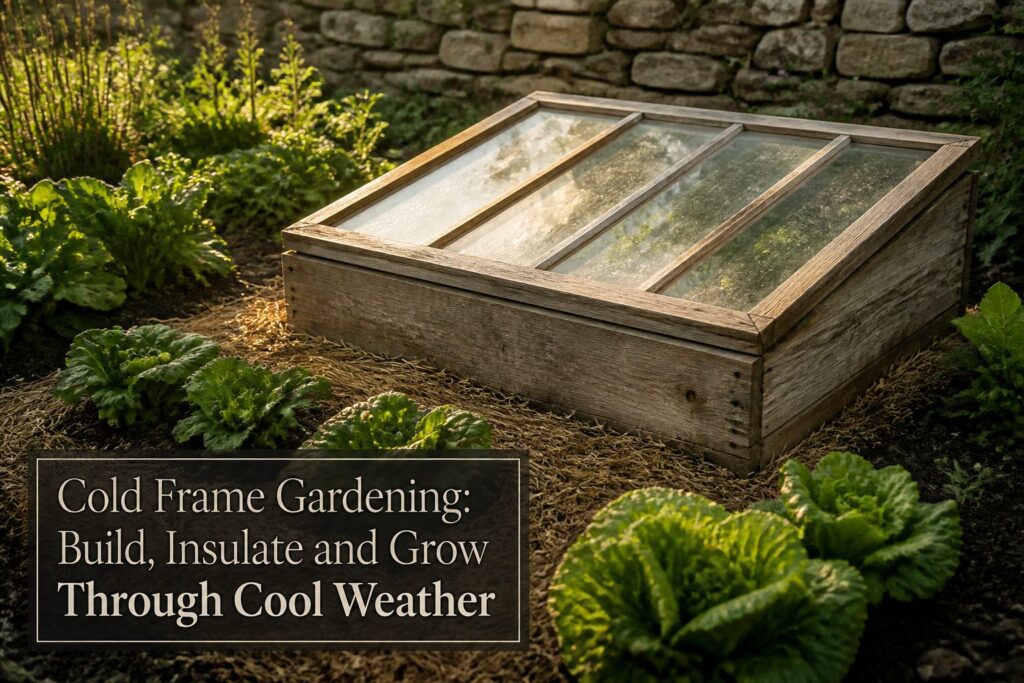
A cold frame is a bottomless box with a transparent lid that sits directly on soil or a raised bed, trapping enough solar heat to keep the interior 5 to 10 degrees Fahrenheit warmer than outside air.
That low profile means you cannot walk inside, so every component, from the sloped lid to the straw packed around the base, has to do precise work with almost no margin for error.
Build one with a south-facing window salvaged from a remodel, and lettuce or spinach will survive nights that would kill them in the open garden.
[link-whisper-related-posts]What a Cold Frame Is
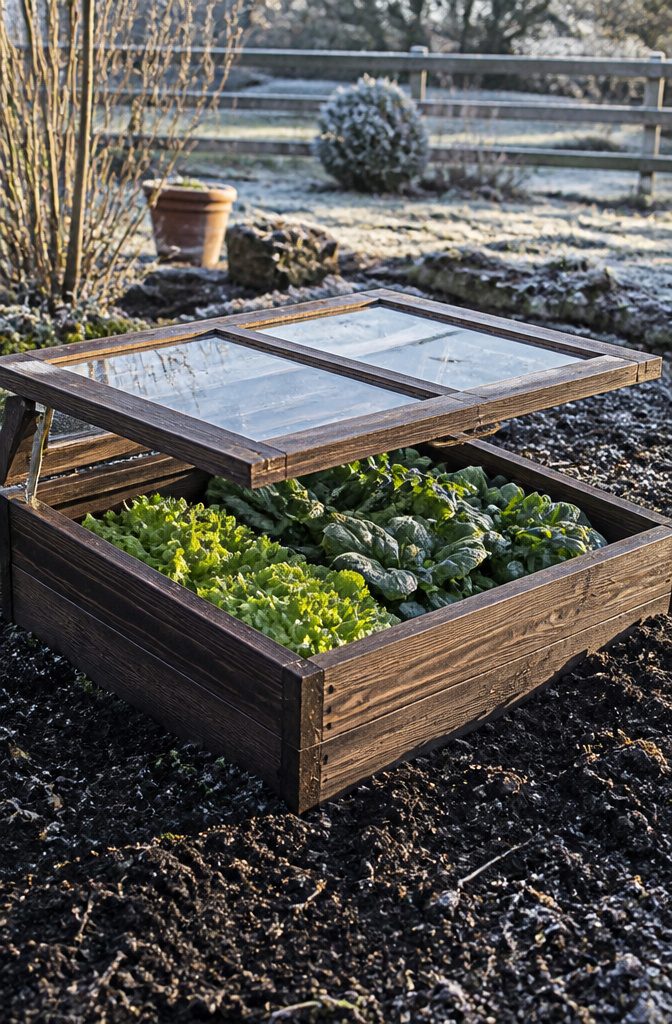
A cold frame is a bottomless box with a transparent lid that sits directly on the soil or over a raised bed.
The ground inside stays in contact with the earth below, so plants root naturally while the structure above traps solar heat.
That trapped warmth keeps the interior 5 to 10 degrees Fahrenheit above the outside air, enough to shield lettuce, spinach, and other cool-season crops from frost and wind while extending the harvest two to four weeks into either end of the season.
Four parts make the system work.
The frame itself is the low enclosure, usually wood or rigid plastic, that blocks wind and holds everything in place. The cover, typically glass or clear polycarbonate, admits sunlight and slows heat loss at night.
A ventilation system, even if it is just a prop stick to crack the lid, prevents the interior from overheating on sunny days, since temperatures above 40°F inside call for opening.
Insulation is the fourth piece, added around the base or as a removable layer over the cover when nights turn severe, and it is what lets cold-hardy vegetables survive through winter rather than merely tolerate a light frost.
The whole assembly functions as a miniature greenhouse, but the distinction matters.
A greenhouse you enter; a cold frame you lift. That low profile limits what grows inside and makes the four components do more precise work with less margin for error.
Choose a Location
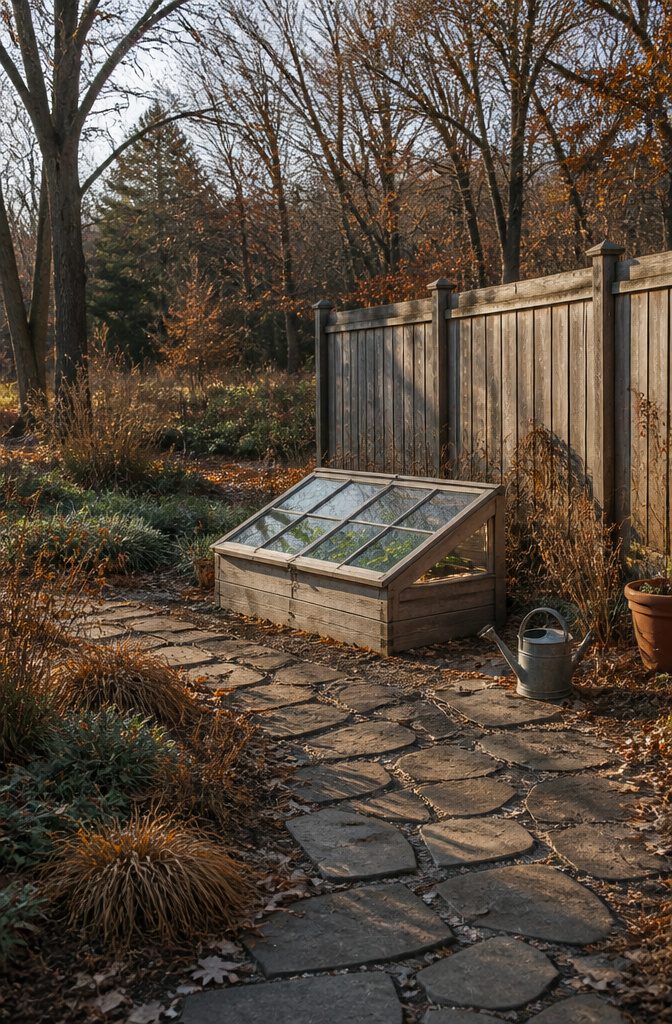
A cold frame lives or dies by where you set it down. The lid needs to face south, catching every available angle of winter sun from first light to last.
In the northern hemisphere, that south-facing orientation gives you the longest exposure and the most heat trapped under the glass or plastic, which is why you built the thing.
I look for a spot with decent drainage, since a frame sitting in pooled water rots the wood and drowns roots.
The north end should sit against something solid: a house wall, a garage, a fence. That backing blocks the cold winds that pull heat out faster than the sun can replace it.
Most of us do not have a perfect south wall waiting, so anywhere sunny and open works, but you will spend more effort on wind protection if there is nothing to lean against.
A water source nearby saves trips with a can, and you will make more of them than you expect.
The frame keeps the air inside 5°F to 10°F warmer than outside on a clear day, but only if the sun can reach it and the wind cannot steal it back.
Select Materials
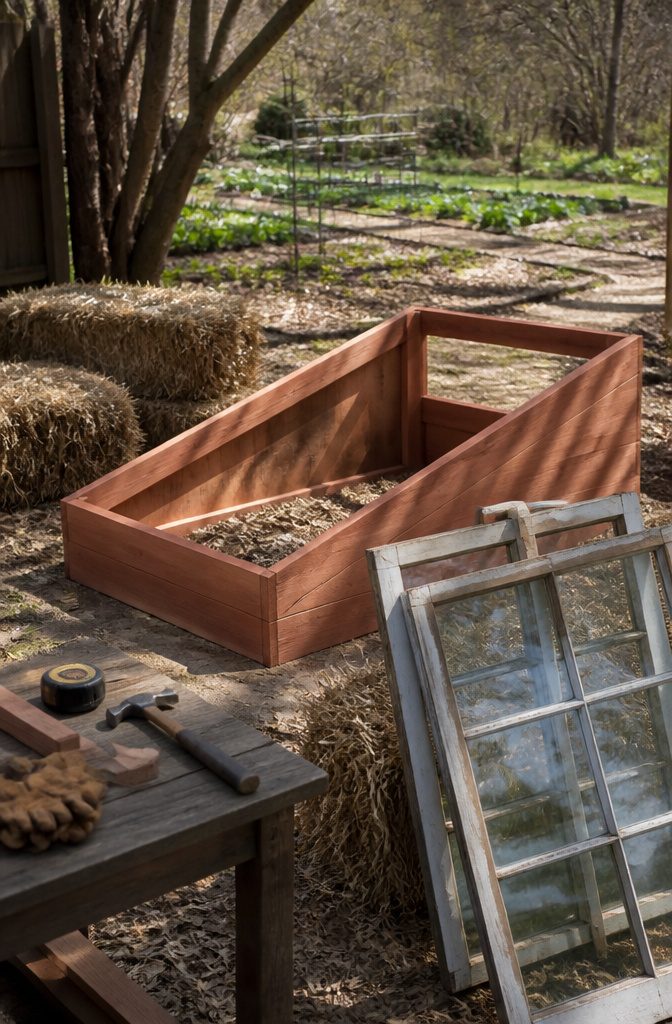
Wood frames dominate this project because you can cut them to size with hand tools you already own.
Cedar and other rot-resistant hardwoods last far longer than softwood scraps, and a line of bricks or blocks underneath lifts the frame off damp soil.
Old windows and shower doors are the classic lid material, angled toward the winter sun to catch light when it sits low.
Glass insulates better than clear plastic sheeting, though rigid plastic holds up to rough handling if your yard sees kids or pets.
Cinder blocks stack into walls that stay put for overwintering tender plants, and straw bales frame a bed in an afternoon if you need something this season that disappears next spring. Bales suit renters especially well.
Pressure-treated lumber should stay out of any frame that sits directly on garden soil; the chemicals leach. A coat of non-toxic paint tidies up weathered wood without that risk.
Build the Frame
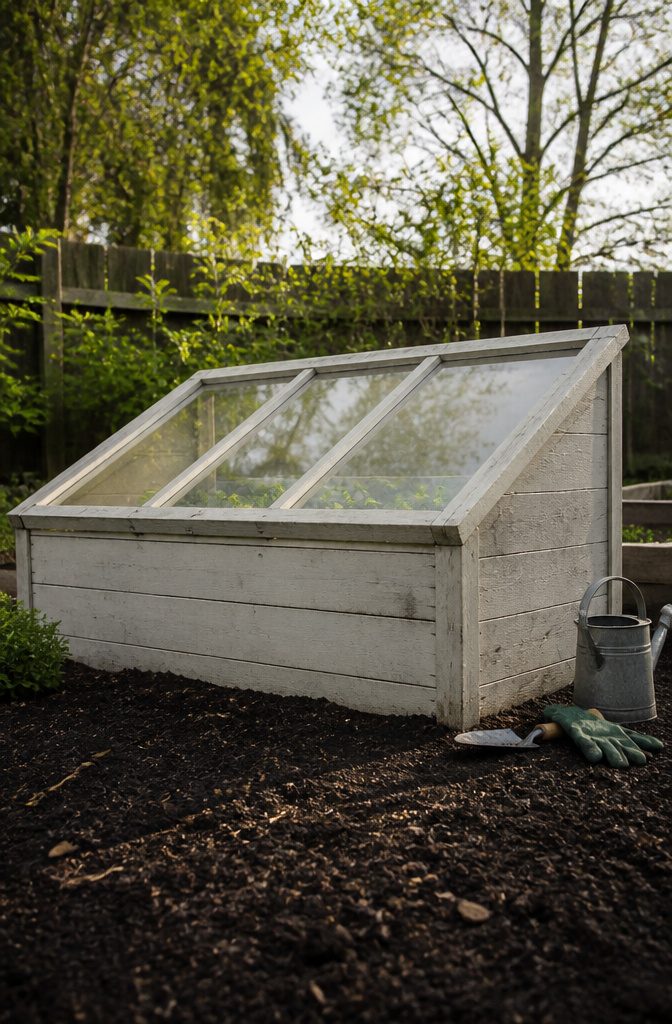
A cold frame is really just a bottomless box with a sloped lid facing south, and that slope is what makes it work through the cold months.
I build mine 12 inches high in front and 18 inches in back. The six-inch difference tilts the transparent lid toward the low winter sun, which sits closer to the horizon than most people picture.
A flat top would catch glancing rays; the angle drinks them in directly and sheds snow and leaf litter that would otherwise block light for days.
Rot-resistant wood matters here because the soil inside holds moisture against the boards for months. Pressure-treated lumber is the standard choice, though any species with natural resistance will do.
I screw the sides to corner posts rather than nailing; the frame flexes with frost heave, and a loose joint in March means a collapsed frame by April.
The front and back boards meet the slanted side pieces with simple butt joints cut to match that 12-to-18-inch rise.
If the lid is a salvaged window or shower door, the hinge goes on the taller back board so it lifts toward the sun for venting on days above 40 degrees.
Create the Lid
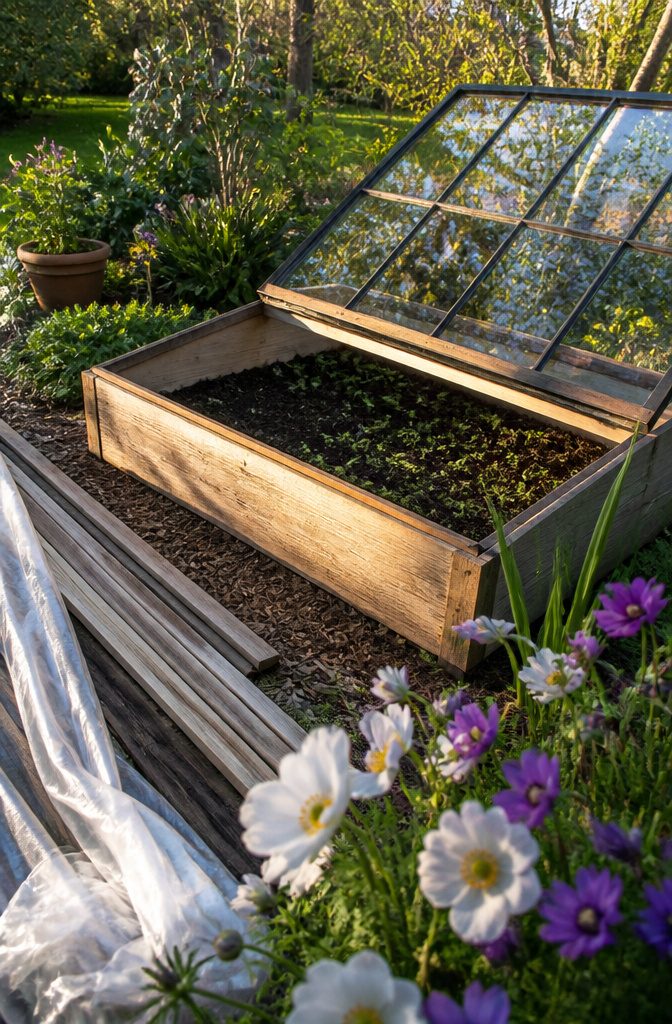
The lid is where a cold frame earns its keep, and an old window is usually free and already framed, which saves an afternoon of fussing with lumber and plastic.
If you go that route, build your box to fit the window, not the other way around. Salvaged glass is heavy, but the frame gives you something solid to hinge and a weight that seals well against the box below.
Clear plastic sheeting works too, stretched tight and held with batten strips so it does not flap. Either way, the fit matters: gaps bleed heat at night.
But the lid also needs to open. On a sunny winter day the interior can still cook your seedlings, so prop it with a short batten on mild afternoons and a longer one when you want real airflow.
I lean toward the window if I can find one. The plastic route is lighter and easier to cut to size, yet it will need replacing after a season or two of wind and frost.
Add Insulation
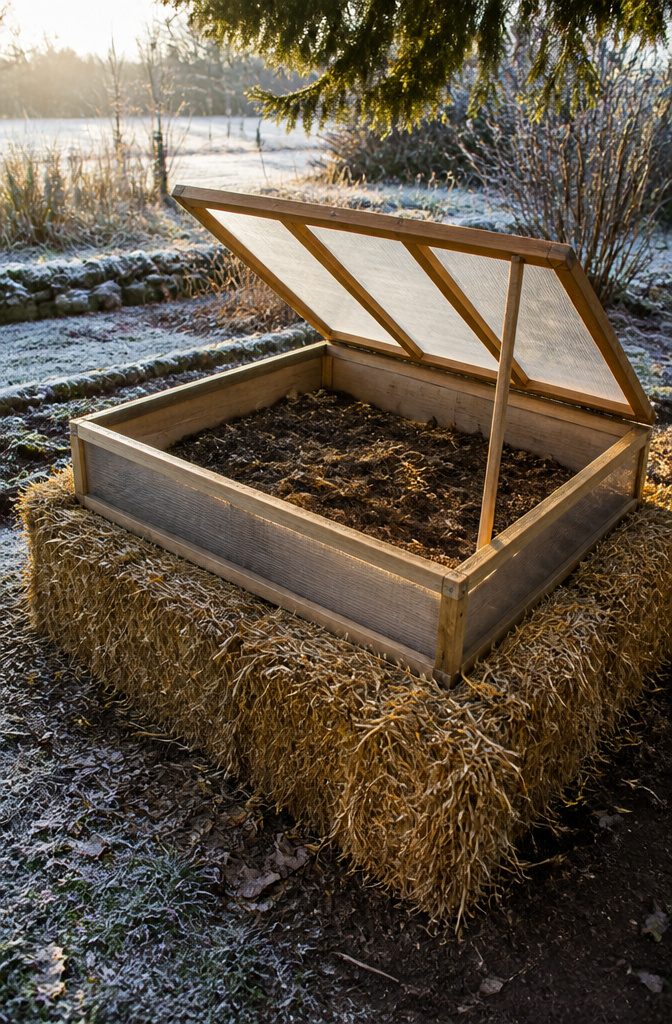
Heat leaks from a cold frame the same way it escapes from an old house: through the gaps you did not think to fill.
The ground-to-frame seam, the corners where straw bales settle unevenly, and the space around the lid are the usual suspects.
Packing these openings with straw or loose mulch buys you several degrees on a hard freeze night, which is often the difference between limp survivors and plants you can still harvest from.
I like straw for this because it is what I already have on hand after building the walls, and it breaks down into the clay soil by spring.
Mulch works the same way if that is what you are using elsewhere in the garden. The material does not need to be packed tight; you want air trapped between the pieces, since still air is what actually insulates.
A loose ring around the base and a light stuffing along the back, taller side of the frame will handle the worst of it.
The lid itself is harder to seal without blocking light, so I focus my effort below it and accept that some heat will rise out the glass.
Monitor and Maintain
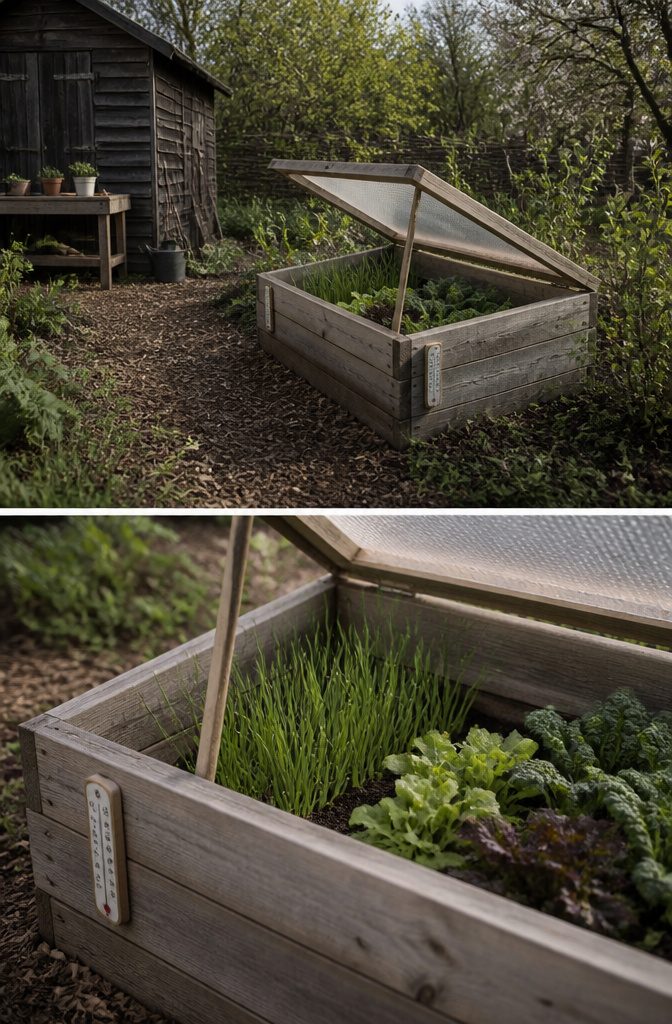
A cold frame needs your attention like a small pet, not a statue. The temperature inside can shift fast, even when the sky looks gray, so I check mine more often than feels reasonable.
Sources disagree on exactly when to crack the lid.
One says 85°F inside; another warns damage starts above 90°F. I take that gap as the real guidance: prop it open before you think you need to, because by the time plants show stress, the heat has already done its work.
A simple board or dowel does the job manually; a wax-filled automatic opener buys you hours away.
Close the lid before sunset to trap the day’s stored warmth. A min/max thermometer hung on an inside wall tracks what you missed while you were at work.
Excessive heat above 90°F can damage fragile seedlings.
That 90°F ceiling is your hard stop, not your target. Insulating the frame with straw bales or soil mounds around the base softens the swings, but nothing replaces showing up to look.
Cool-Season Vegetables
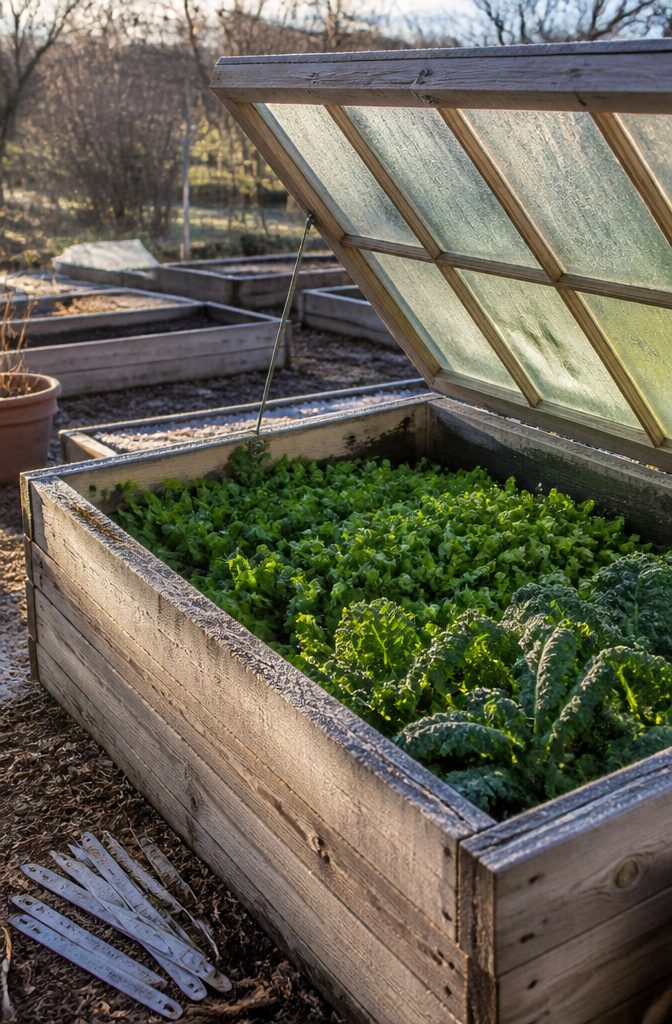
Lettuce, spinach, kale, arugula, collards, and green onions are the cold frame vegetables I would plant first if I were starting tomorrow.
These greens germinate in soil too cold for tomatoes or peppers, sometimes as early as two to four weeks before the usual outdoor planting date, and they mature fast enough to beat summer heat.
The reason comes down to biology. Most of these crops evolved to complete their life cycle in cool, short-day conditions, so a cold frame only nudges them toward what they already prefer.
Soil temperatures that would stall a bean seed barely slow lettuce, and spinach actually bolts faster when it gets warm.
In my reading, kale and collards keep producing well into November in most seasons if you remember to close the lid on frosty nights, while arugula gives that sharp harvestable leaf in weeks, not months.
Green onions fit the same profile: they tolerate cold soil, ask for little space, and reward a cut-and-come-back approach. Daylight is the problem.
Even with a warm frame, growth slows once fall shortens the hours of sun, so patience matters more than fertilizer. Start these crops, though, and you will eat from the garden when neighbors have already put theirs to bed.
Root Crops
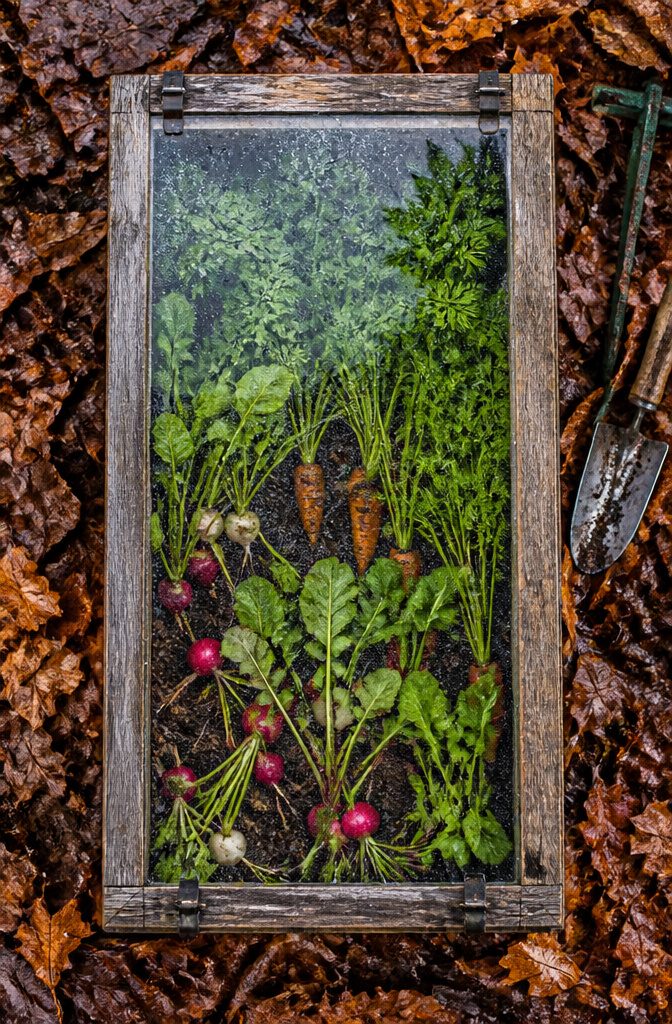
Root crops earn their place in a cold frame because they already prefer the steady, cool conditions the frame provides.
Radishes, carrots, beets, and turnips all grow well through shoulder season and into winter, though patience matters: shorter daylight hours slow growth even when the soil stays warm.
Soil depth is where I would spend my planning time. A standard cold frame with a 12-inch front height handles most varieties, and that dimension is usually enough for full-size carrots and beets.
Shorter frames can work for radishes and small turnips, but the 12-inch front clears the path for a wider mix without forcing you toward early harvests.
Overcrowding is the mistake I watch for.
Tight spacing stresses these plants, and a cold frame tempts you to pack more in than the soil can support. The better move is to sow in modest rows and let the frame’s protected environment do the yield work instead.
In spring, that same frame gets you two to four weeks ahead of open-ground planting; in fall, closing the lid overnight stretches harvest into November even where frosts arrive early.
Herbs
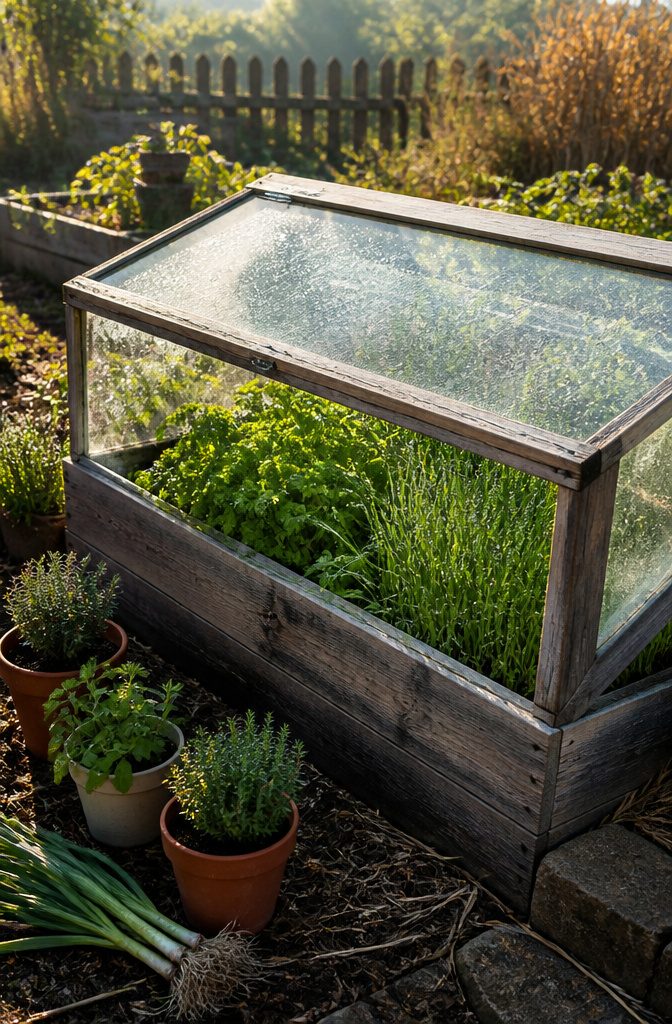
Parsley, cilantro, and chives are where cold frame gardening pays off fastest. These three tolerate cool, steady conditions well enough that the frame’s slight warmth and wind protection push them weeks ahead of open ground.
I get my first cut of chives in early March and my last in November, all from the same box.
The harvest rhythm matters more than the planting calendar here. Parsley and cilantro mature slowly enough that starting them under cover in late winter yields usable leaves before any spring-sown outdoor crop.
Chives, once established, simply keep producing until hard frost forces the lid shut. All three reward repeated cutting, which makes the cold frame’s easy access practical rather than occasional.
Summer is the problem. These herbs want to bolt once real heat arrives, so I treat the frame as a shoulder-season tool.
The same space that grew cilantro through April gets replanted with something else by June, then sown again in September for fall picking.
It is not year-round production; it is two extra harvests bracketing the main season, and for kitchen herbs that is usually enough.
Tender Plants for Hardening Off
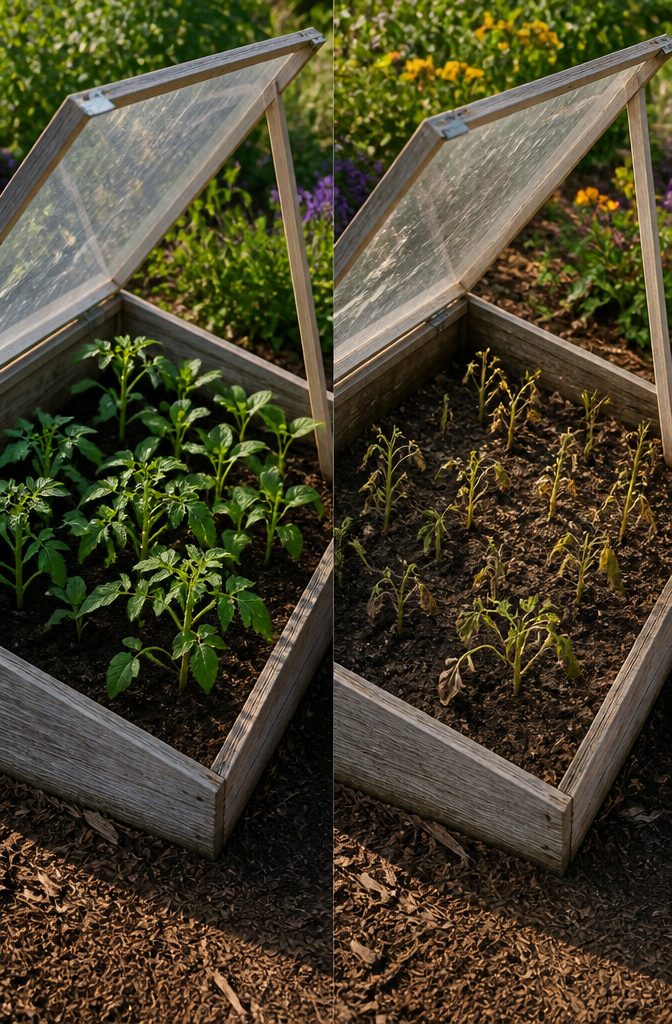
Peppers and tomatoes are the classic candidates for hardening off in a cold frame, and this is transitional work, not full-season growing.
These warm-season vegetables will not tolerate frost, so moving them straight from a windowsill or greenhouse to open ground in mid-May risks transplant shock from sudden exposure to temperature swings, stronger light, and wind.
A cold frame lets you stage that transition over five to seven days instead of shuttling pots in and out of the house.
The method is straightforward: once seedlings have several sets of true leaves and a solid root ball, pack them into the frame and start venting during the warmest part of the day.
Open the lid a crack at first, widen the gap gradually, and close it at night to hold in heat when frost threatens. This replaces the nightly rescue mission of carrying trays back indoors.
The frame still demands attention, though. Like a car interior on a sunny day, it can overheat fast, so skipping the venting step will cook plants rather than toughen them.
I wait for a stretch where lows stay above 35°F for cool-season starts, and for tomatoes and peppers I hold off until we’re inside two to three weeks of the last frost date and the forecast has settled.
You get stockier plants that move to the garden without the stunted growth that comes from shock.
Cold Frames Versus Greenhouses
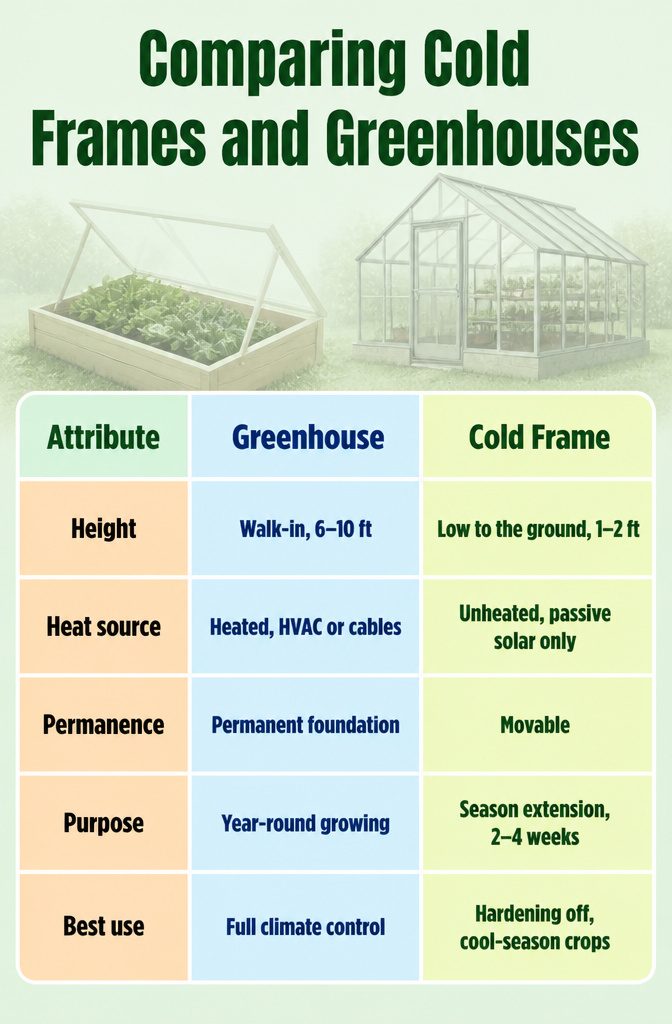
A cold frame is a miniature greenhouse in shape, but the differences matter more than the similarities.
Cold frames stay low to the ground, rely entirely on passive solar heating, and move when you need them to; greenhouses are walk-in structures with active heat and a permanent foundation.
| Attribute | Greenhouse | Cold Frame |
|---|---|---|
| Height | Walk-in, 6–10 ft typical | Low to the ground, 1–2 ft |
| Heat source | Heated, HVAC or cables | Unheated, passive solar only |
| Permanence | Permanent foundation | Movable |
| Purpose | Year-round growing | Season extension, 2–4 weeks |
| Best use | Full climate control | Hardening off, cool-season crops |
I would not build a greenhouse for weekend-scale cold frame gardening.
The cost and commitment are an order of magnitude higher, and most renters cannot install one anyway. A cold frame gives you the same season extension principles without the infrastructure.
You are not growing tomatoes in January. You are starting lettuce three weeks earlier and keeping kale alive into November, which is what most of us actually need.
Temperature Control Methods
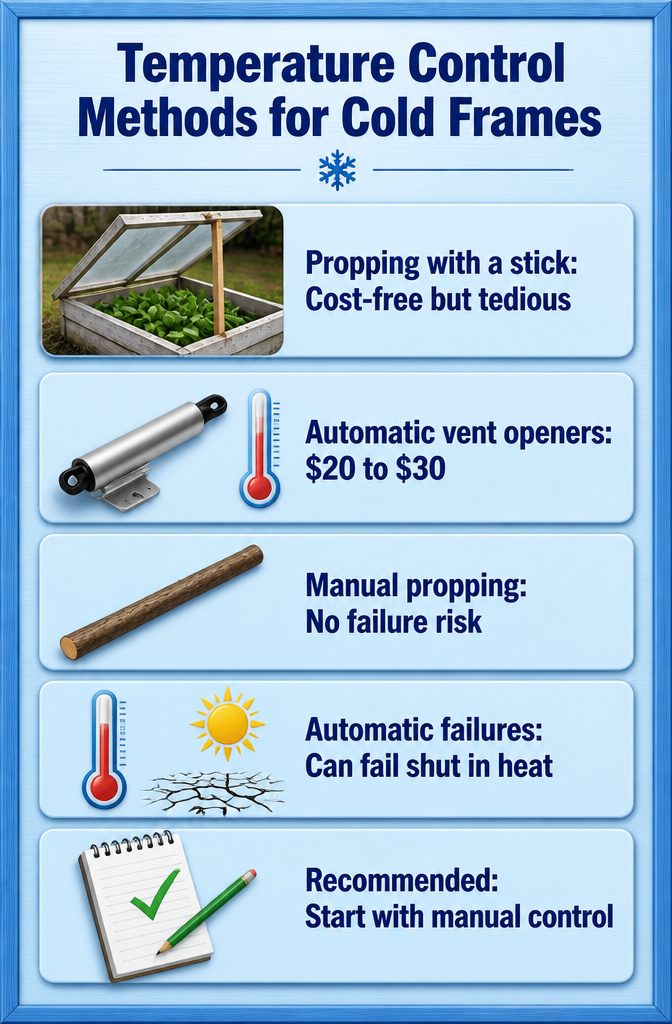
The simplest way to stop a cold frame from cooking your plants is also the most tedious: prop the lid with a stick.
Different sized sticks give you different gap widths, so you can fine-tune the vent on a mild March afternoon versus a blazing April day.
I have forgotten a propped lid during a sudden grocery run and come back to wilted spinach more than once.
Automatic vent openers handle the remembering for you. They use wax-filled cylinders that expand as the interior temperature climbs, lifting the lid once the air inside hits roughly 65 to 75 degrees Fahrenheit.
They lower it again as things cool. What I cannot tell you, because the available material skips past it, is exactly how to install one or which cylinder length matches which frame size.
That gap matters: you will need to read the product instructions or find a build guide that steps through mounting.
Manual propping costs nothing and breaks never.
An automatic opener runs maybe twenty to thirty dollars and can fail shut on a hundred-degree day or blow open in a wind gust if mounted loose. My call?
Start manual. If you are checking the frame daily anyway to water or harvest, the stick takes ten seconds.
Add the opener only once you know you are missing the peak heat window while you are at work, and buy from a vendor that lists the full weight rating and frame compatibility so you are not guessing at threads and brackets.
Frequently Asked Questions
What can I grow in a cold frame?
Lettuce, spinach, kale, arugula, collards, green onions, radishes, carrots, beets, turnips, parsley, cilantro, and chives all grow well in a cold frame.
These cool-season crops germinate in soil too cold for warm-season vegetables and mature fast enough to beat summer heat or survive into late fall.
How do you ventilate a cold frame?
Prop the lid open with a stick or board when the interior temperature rises above 40°F on sunny days.
Close it before sunset to trap the day’s stored warmth overnight. An automatic vent opener that lifts the lid at 65–75°F handles this if you are away during peak heat.
What materials do I need to build a cold frame?
Rot-resistant wood like cedar for the frame, plus glass from an old window or clear rigid plastic for the lid.
Straw bales or cinder blocks work for temporary walls. Avoid pressure-treated lumber that touches garden soil because chemicals can leach.
How long can plants stay in a cold frame?
Cool-season vegetables can stay from early spring sowing through late fall harvest, extending the season two to four weeks on either end.
Cold-hardy greens like kale may survive all winter with extra insulation around the base and lid on severe nights.
Should a cold frame be in full sun?
Yes, place it where the sloped lid faces south to catch every angle of winter sun from first light to last.
A spot against a house wall, garage, or fence on the north side blocks cold winds that steal trapped heat faster than the sun replaces it.
What are the pros and cons of a cold frame versus a greenhouse?
A cold frame costs little, moves when you need it to, and fits small spaces or rental yards, but it stays low to the ground and relies only on passive solar heat.
A greenhouse gives walk-in height, active heating, and year-round growing, yet needs a permanent foundation and far more money and commitment.





