
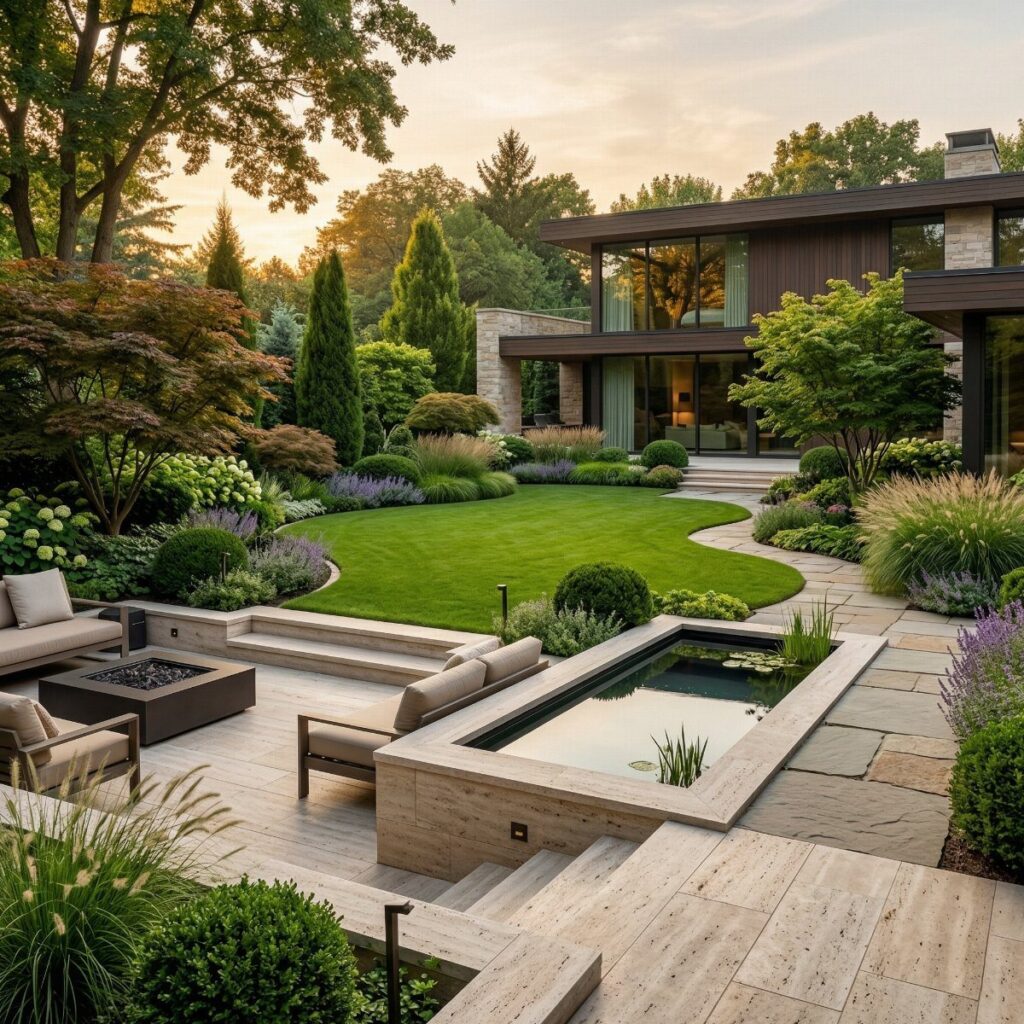
These ideas run from a weekend project built with pallet wood or an old ladder to a stone fire pit or full outdoor kitchen that needs skilled trades and heavy material delivery.
The pump sizes I list match what each fountain build actually requires: a smaller output for a compact column, doubled for the next size up, because getting that ratio wrong is where most DIY water features fail.
[link-whisper-related-posts]1. Outdoor Living Patio
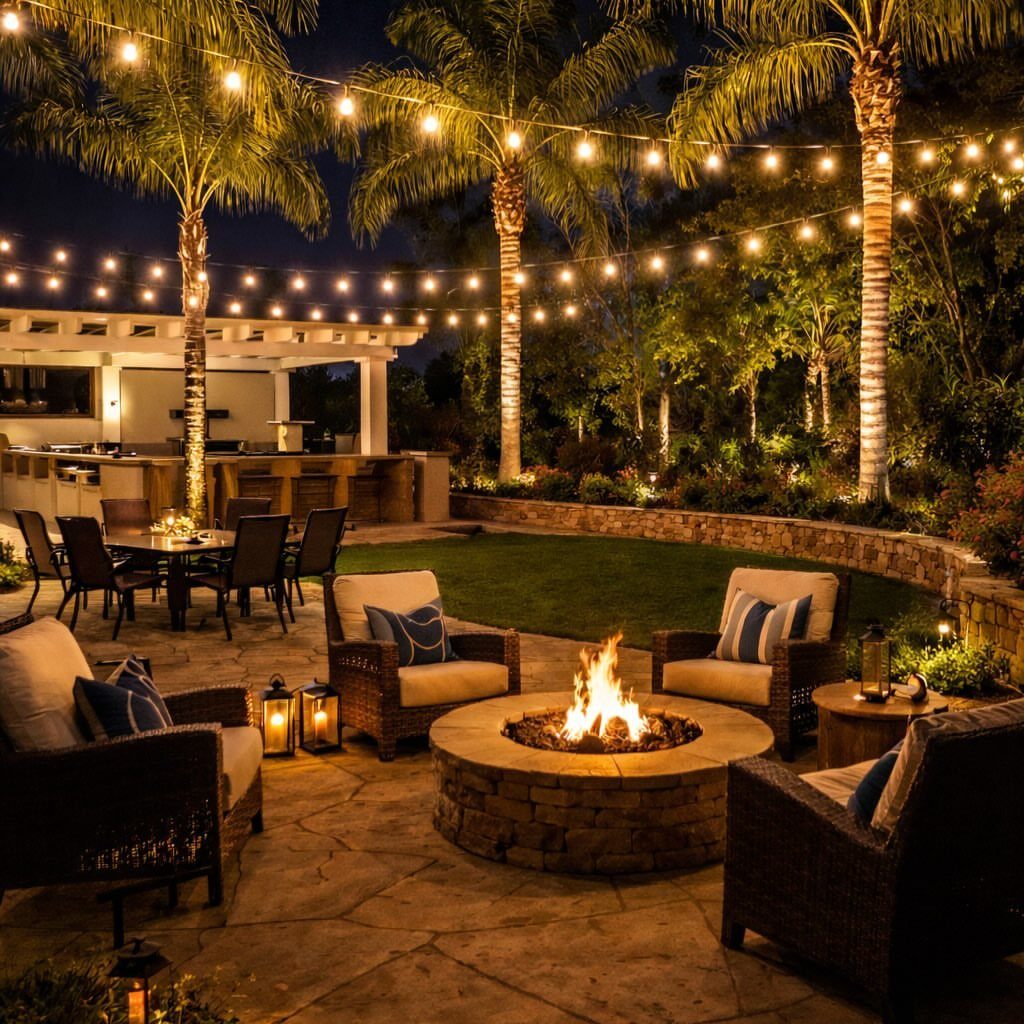
A permanent outdoor living patio turns the yard into a second living room you actually use. A weather-ready outdoor living zone wraps cooking, dining and lounging together under string lights, with stone underfoot and a fire pit at center.
Start with a poured concrete or paver base at grade so you skip the retaining wall cost; a pergola you build yourself with posts and a slatted roof keeps lumber budget modest.
I would put the fire feature dead center and arrange seating tight around it, close enough for heat to reach. The kitchen can wait; a grill on a rolling cart covers most cooks for years.
2. Outdoor String Lights
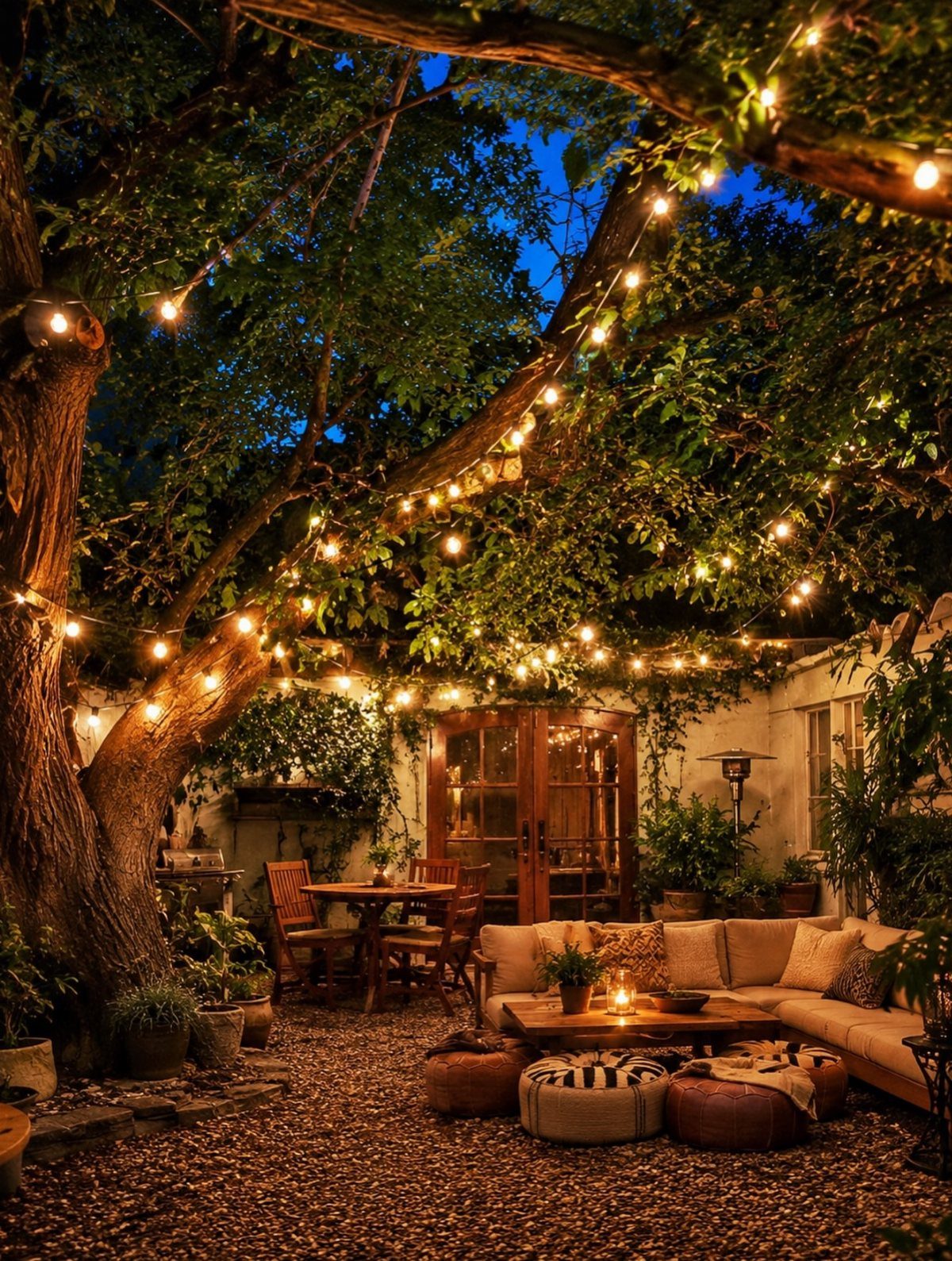
Outdoor string lights cost almost nothing and do more than any single item to make a yard feel finished after dark. 2 trees and a single strand of lights turn a plain gravel corner into somewhere you want to sit.
Buy LED filament bulbs on heavy-gauge black cord, not the thin wire kits that sag and tangle.
For a short span, I like moderate bulb spacing: enough light to read under, not so many that you are replacing bulbs every season. Use eye hooks with spring tension or guidewire if your trees move in wind.
3. Outdoor Kitchens
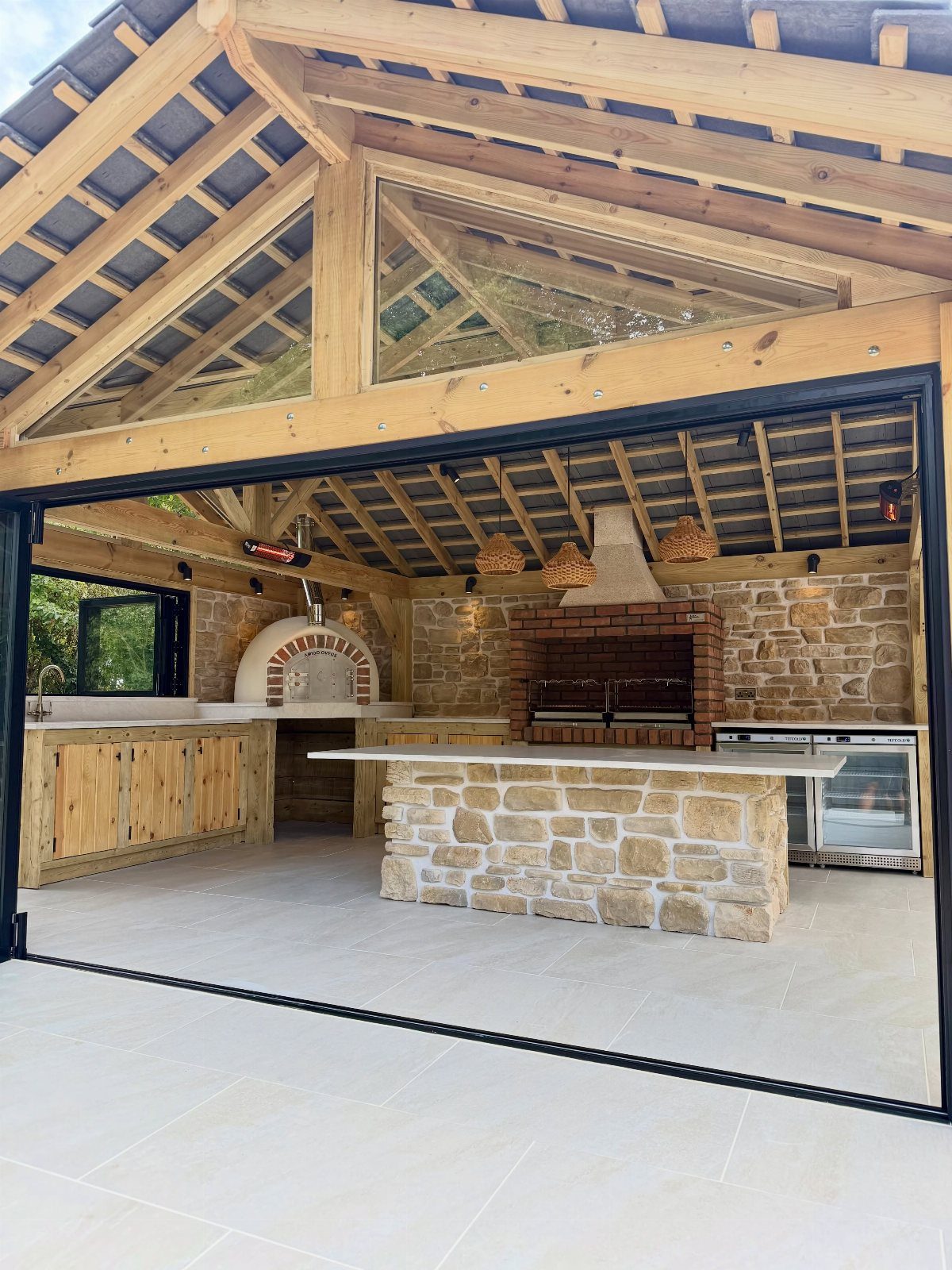
An outdoor kitchen only earns its keep if you cook outside often in season.
The masonry island is the lasting part: concrete block core faced in stone or tile, with a stone countertop that handles hot pans and weather.
I would build it standard counter height, same as indoor counters, and deep enough front to back so plates do not crowd the cook. A short run holds a built-in grill; longer adds a sink stubbed to a hose bib.
A kettle grill with a pizza stone does most of the job for the price of a good grill.
4. Reclaimed Wood Hardscaping
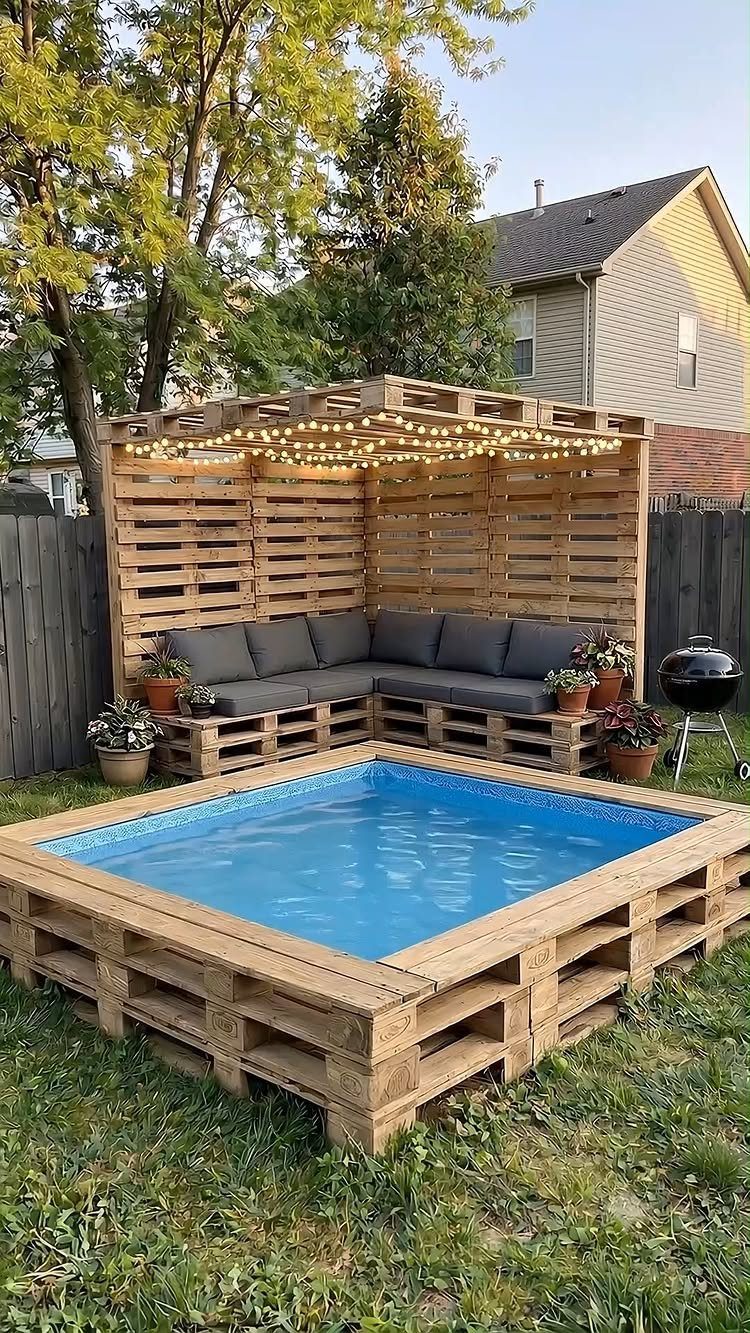
The builder framed with quarter-cut pallet pieces and lined the pool with a waterproof tarp from an old tent, which tells you the real skill here: cutting clean joints from rough, inconsistent lumber.
Pallet wood is free for the hauling but warped, nail-riddled and chemically treated unless you find heat-stamped HT marks.
I would plane or at least belt-sand every face, and I would use it only for vertical surfaces or furniture that sits under cover.
The look is rustic, not refined, and that honesty is the point. Paint kills it.
5. Drought-Tolerant Garden
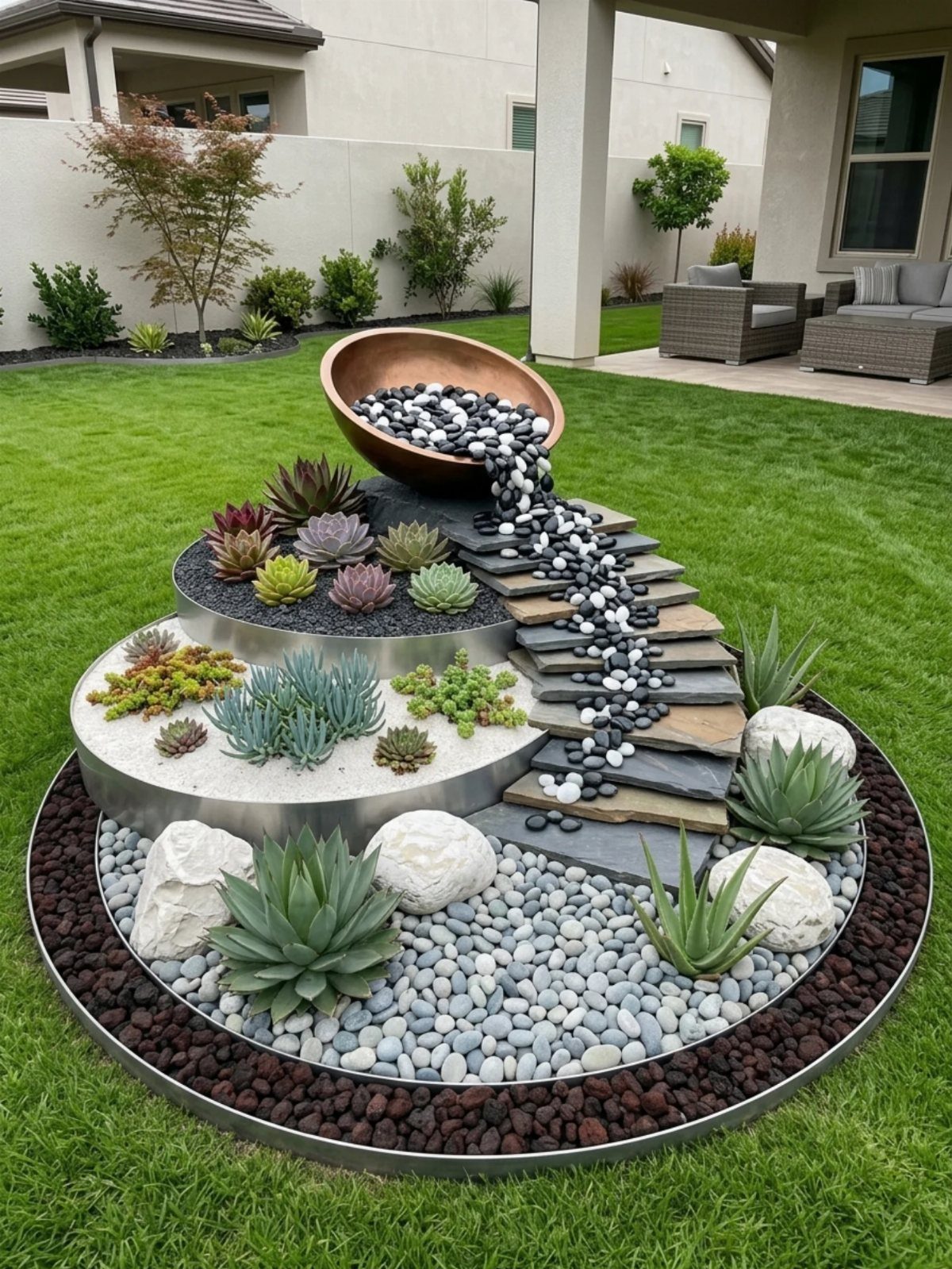
A drought-tolerant garden lives on rainfall once established and shrinks your water bill to the seasonal variance.
Choose plants for your winter lows, not just summer dryness. Hardy succulents like sedum, sempervivum and cold-climate opuntia survive to zone 5; softer echeverias and aeoniums need zone 9 or pot-life indoors.
I would space them well apart in fast-draining soil amended with coarse sand or chicken grit, not fine sand that packs.
The rocks are decorative, not optional: they slow weed growth, reflect heat and keep crown rot off plants that hate wet feet. Black and white together read as deliberate; single-color reads as afterthought.
6. Water Features
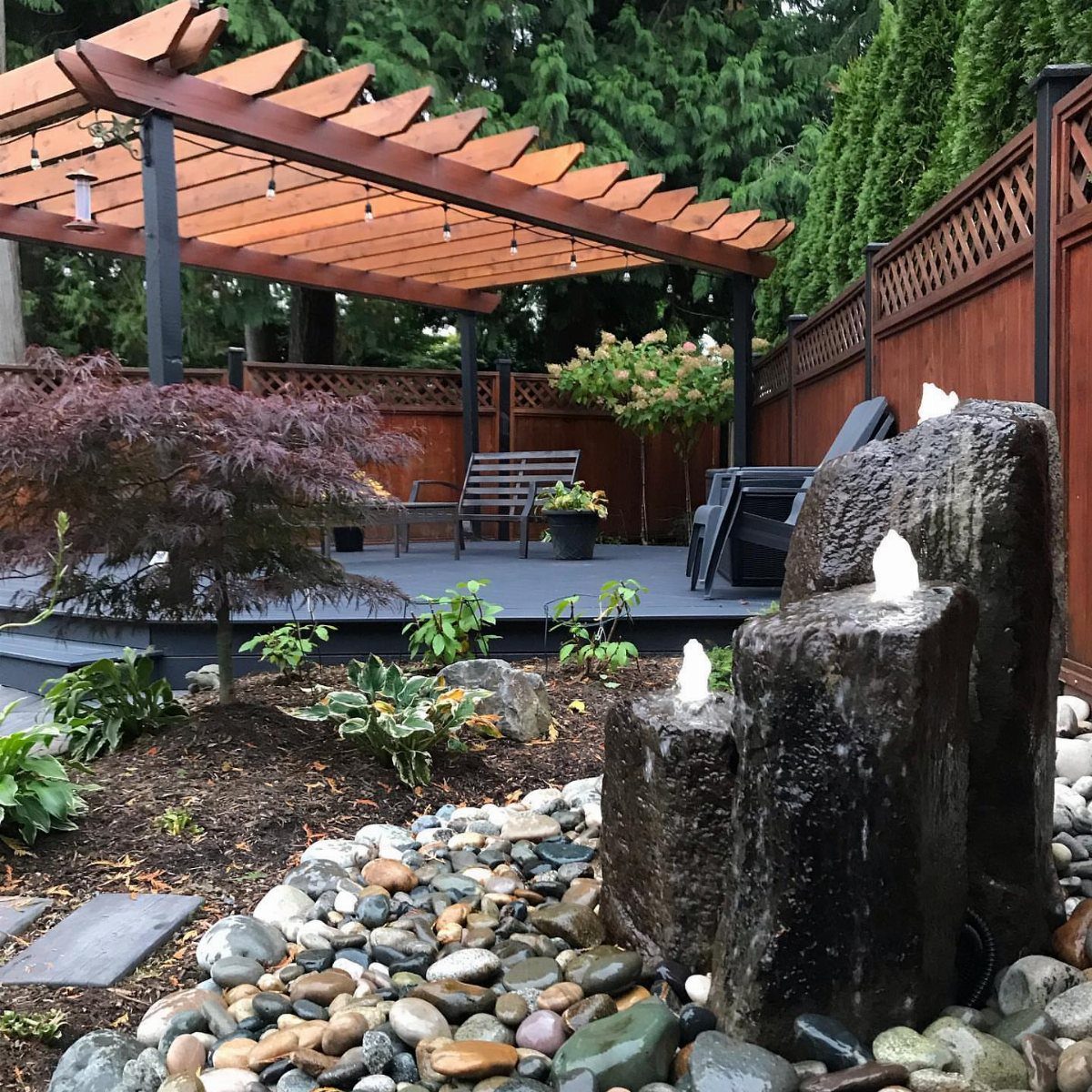
A basalt column fountain brings moving water to a yard too small for a pond and too active for standing water you must maintain.
The sound is what sells it: not the splash of a falls but a low, continuous roll that masks traffic from across the patio. Scale the pump to the stone; a 2-foot column needs roughly 400 gallons per hour, a 4-footer 800.
I would set the basin 6 inches above grade, built from a stock tank or concrete box, so surface water drains away and the pump does not sit in mud.
Winter means pulling the pump before the first hard freeze; I store mine in a bucket of water in the basement so the seals do not dry crack.
7. Pathways
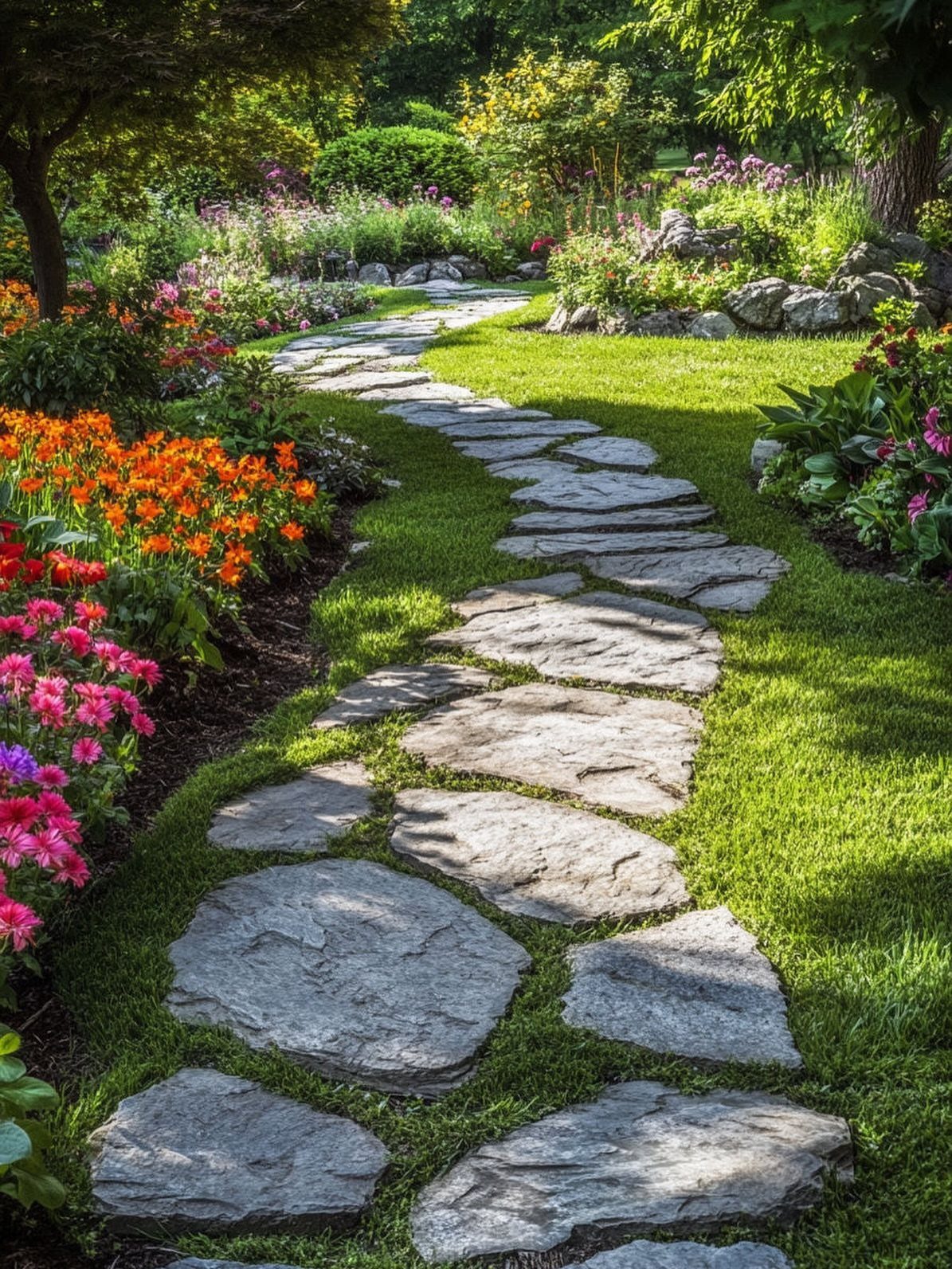
Curved flagstone breaks a straight lawn into rooms you walk through rather than stare across.
I would set the stone low enough to mow over, with sand or stone dust bedding instead of cement so frost heave does not crack your joints.
Thicker slabs stay put without concrete if you sink them a couple inches into compacted paver base. Leave generous gaps and plant creeping thyme or dwarf mondo; green between stone beats bare dirt and costs less than perfect spacing.
A dry-laid path goes in over a weekend for the price of stone plus delivery.
8. Garden Furniture
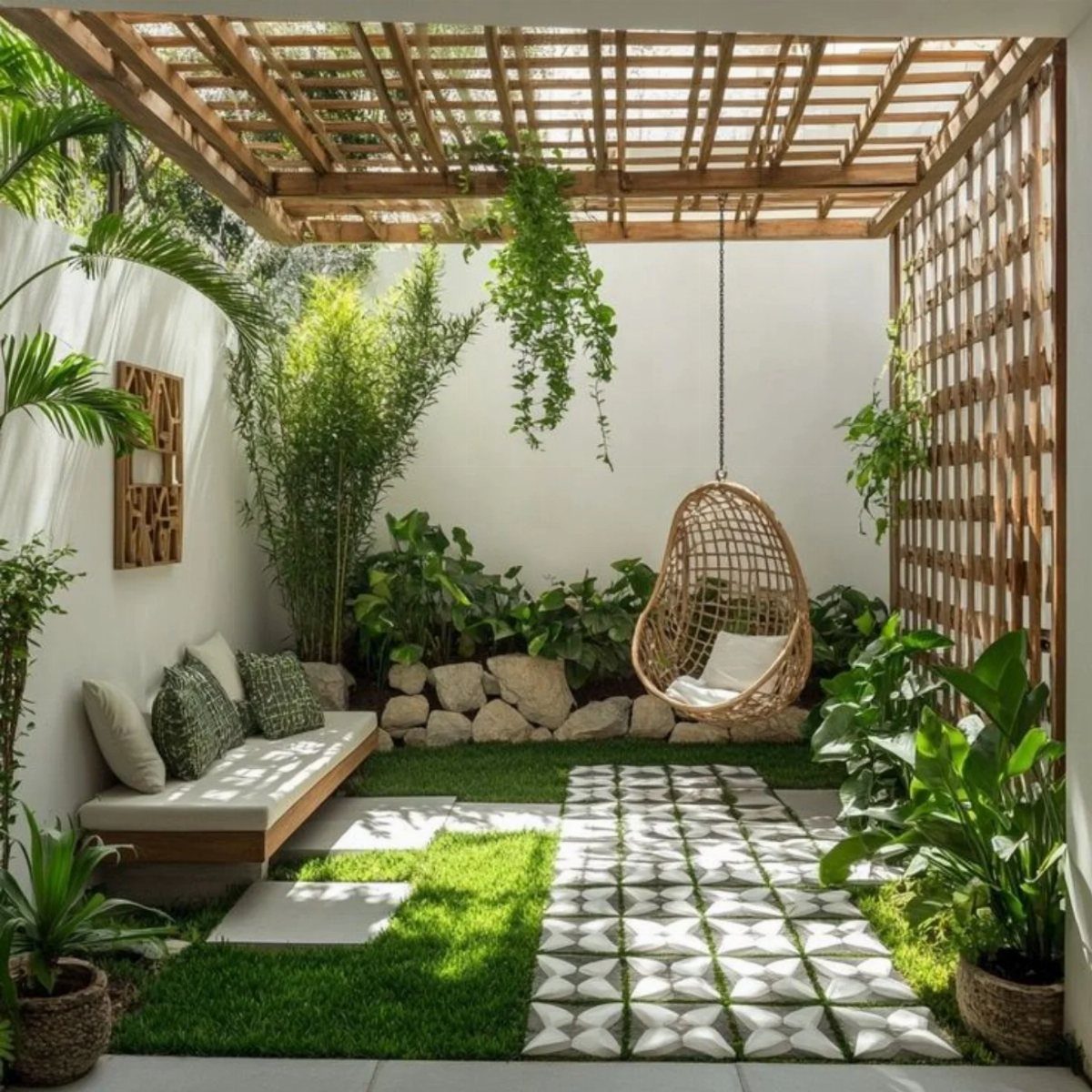
A pergola anchors a seating area overhead without closing it in; paint or stain it to match your trim and it reads as architecture, not an afterthought.
The egg chair visible is wicker or resin over steel; I would check the weight limit and chain hardware before anyone swings.
A daybed thick with cushions needs storage or covers, or you are laundering mildew every spring. I would spend the cushion budget on the seat you use most and buy a simple wooden bench for the rest.
Plants close in the space better than privacy screens: climbing hydrangea on the pergola posts, potted ferns underneath.
9. Fire Pits
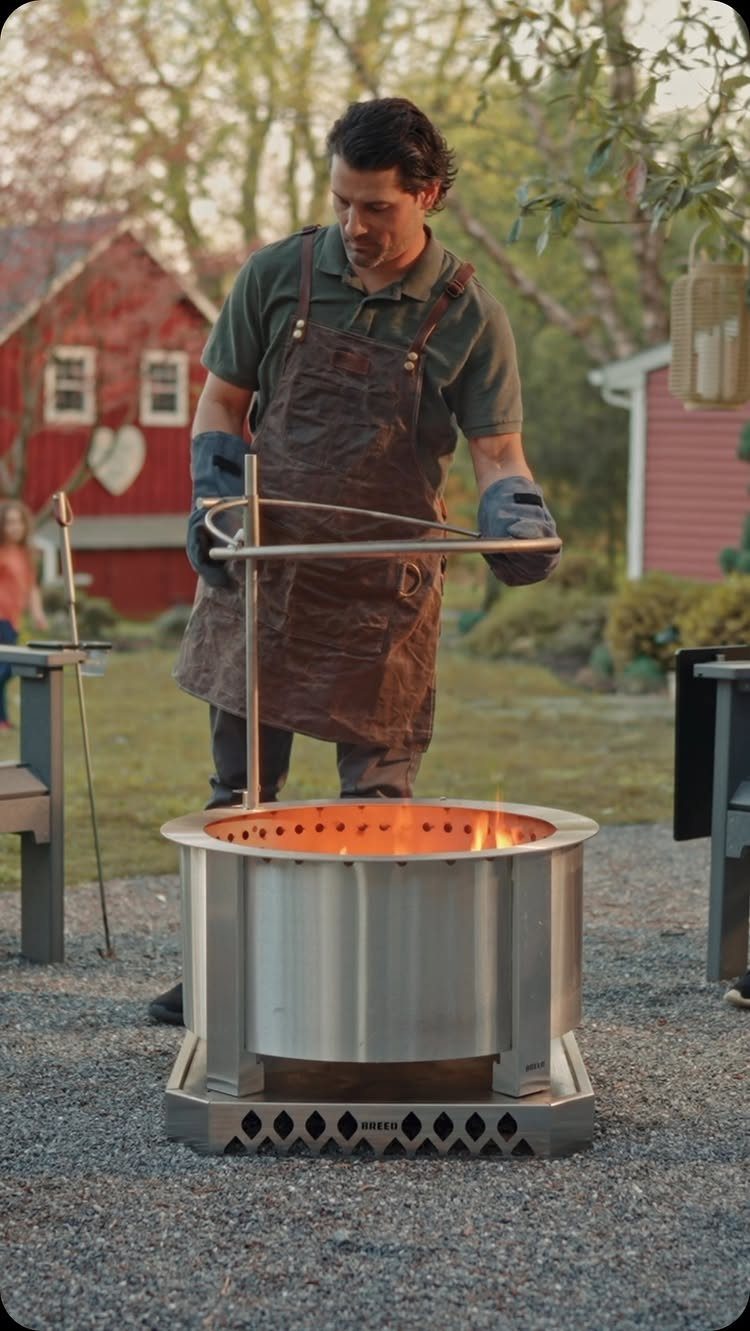
A smokeless fire pit burns its own gases in a secondary wall, so you sit downwind without moving.
The Breeo design pulls air through the double wall; wood sits inside and flames roll out the top. I would still keep seating well back from the flame for radiant heat comfort and ember safety.
A cooking grate or rotisserie attachment turns it into a grill, though I would keep a separate kettle for smoking where temperature control matters.
Gravel or pavers underneath, never lawn; scorched grass does not recover.
10. Low-Light Shade Garden
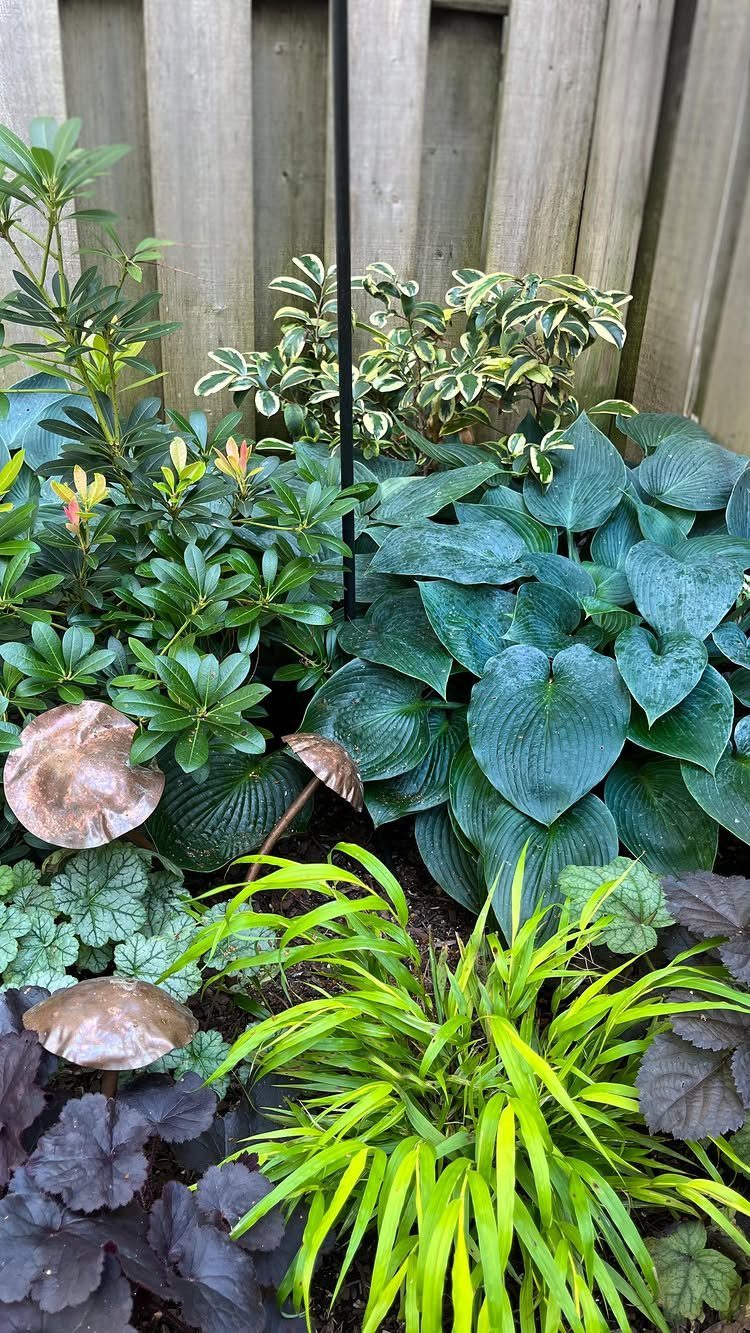
Hosta, heuchera and pieris thrive where lawn dies and most flowers sulk.
The copper mushroom stakes are pure ornament; I would skip them and let plant form carry the interest.
Big-leaf hostas need slug patrol in wet summers, so I plant them where morning dew dries fast and keep beer traps if damage shows.
Dark heuchera varieties hold color in deeper shade than chartreuse types, which need bright indirect light to glow.
A fence-line bed like this one faces north by default; test your light with a phone app at midday before you shop.
11. Colorful Flower Beds
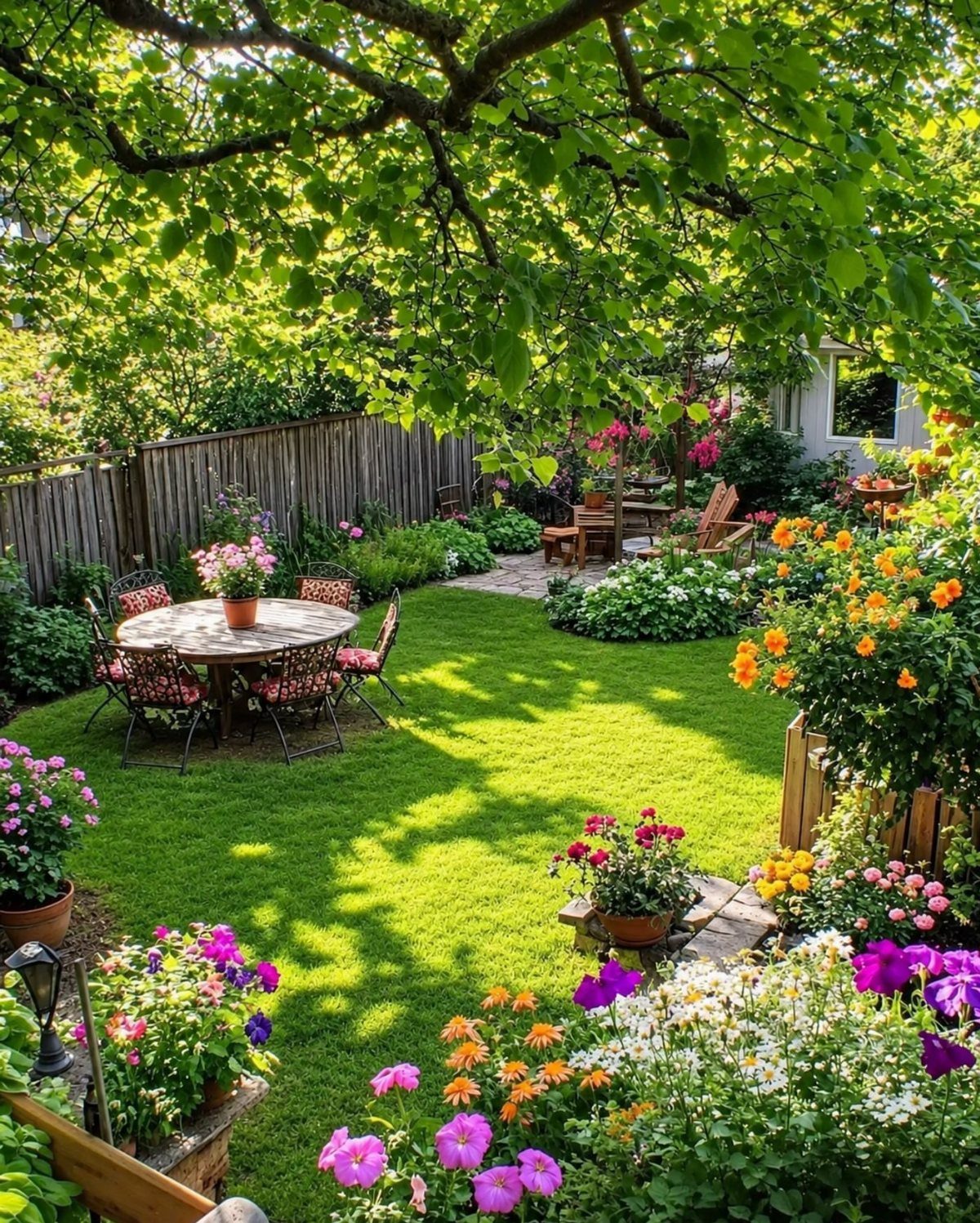
Color massing beats mixed planting for impact from the lawn or the window.
The visible beds run hot: reds, oranges and magentas grouped in drifts, not spot-the-rainbow chaos. I would repeat each color at least 3 times down the bed so the eye travels.
Annuals give color the first season; perennial beds need time to fill. I would back the border with tall cannas or Joe Pye weed, drop medium dahlias or zinnias mid-height, and let low verbena spill the front edge.
A few foliage plants, coleus or bronze fennel, keep the show going when blooms rest between flushes.
12. Raised Garden Beds
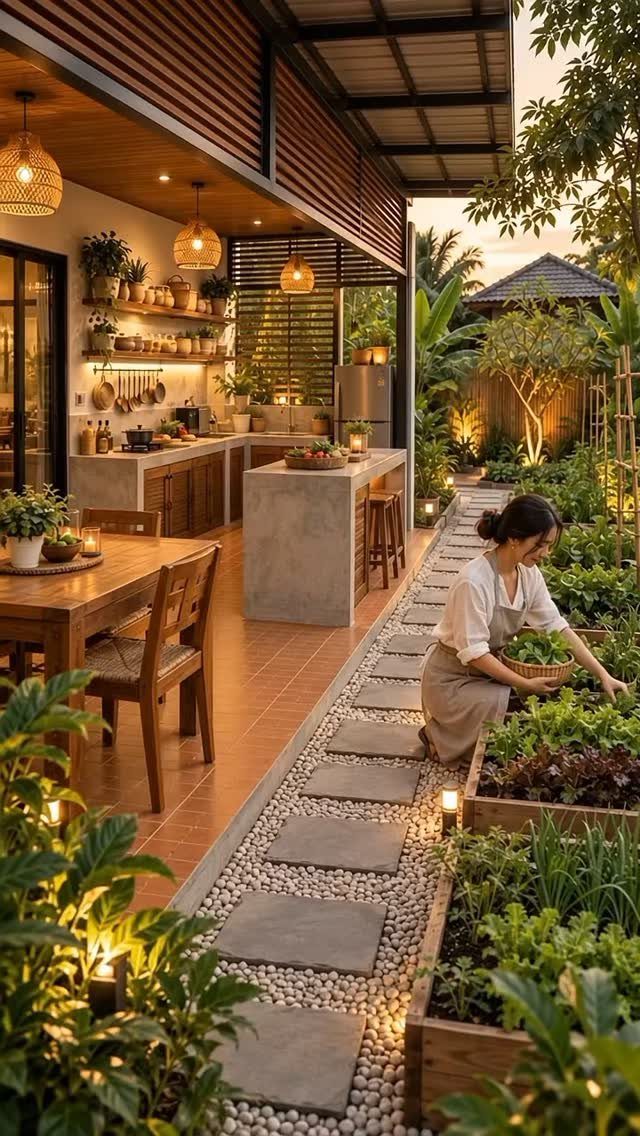
Raised beds warm faster in spring and drain better than native clay, but I would not build taller than I must.
Shallow cedar or hemlock boards work fine for greens and herbs; deep-rooted tomatoes and carrots want more depth. I would line the path side with stone or gravel, not grass, so muddy feet do not track into the kitchen.
Staggered joints where posts meet rails last longer than simple butt ends; deck screws plus exterior wood glue beats nails that work loose in wet-dry cycles.
Buy bagged soil mix for a couple beds, bulk delivered for half a dozen or more.
13. Edible Gardens
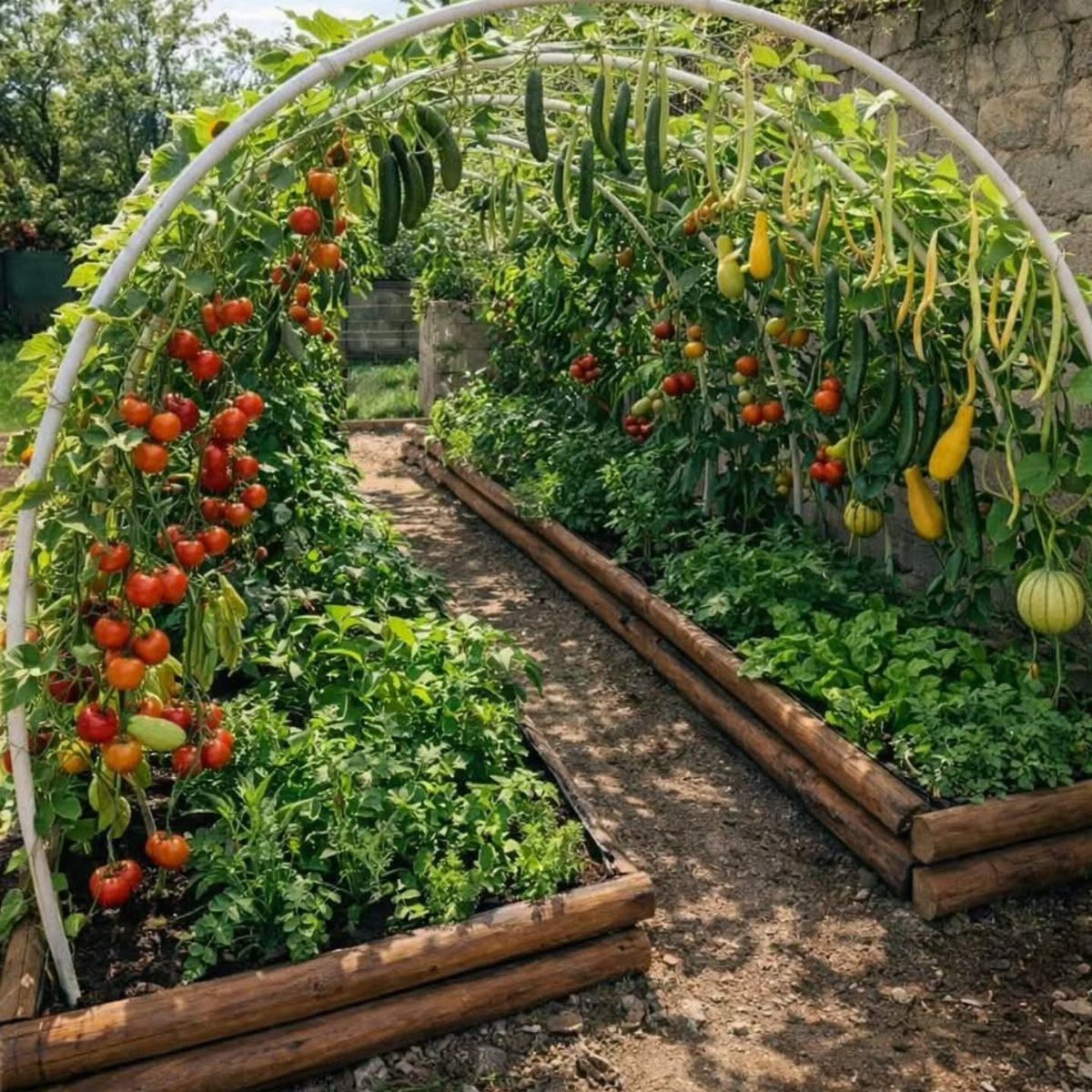
An edible garden turns the space you already tend into food you actually eat.
Arched trellis pipes bent from ordinary electrical conduit, set in T-post bases, let tomatoes climb one side while cucumbers hang through the other.
I would run a soaker hose along the bed foot and mulch with straw to keep fruit clean and cut watering by half. Heavy feeders like tomatoes and squash need fresh compost each spring; leafy greens make do with less.
Start with what you buy most: if tomatoes vanish from your fridge, plant a handful of vines, not a dozen crops you flick past at the store.
14. Ground Cover Plants
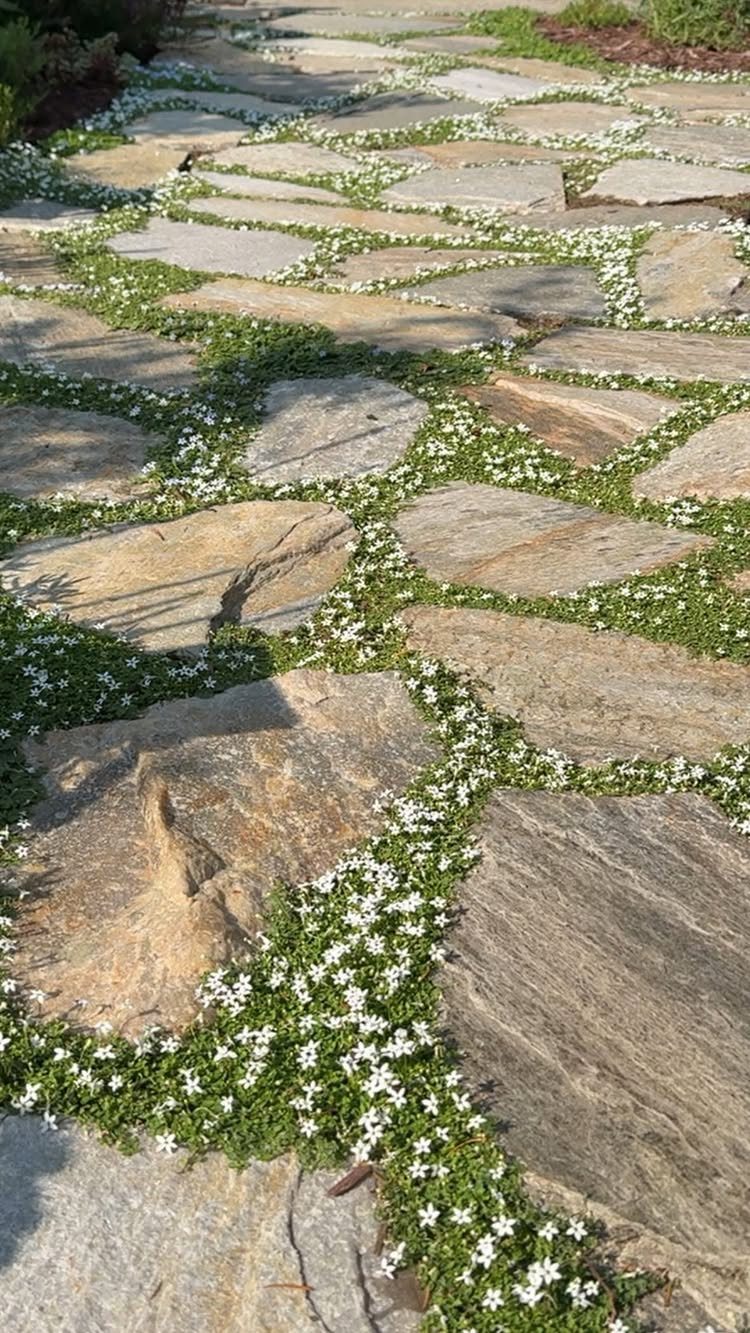
Creeping plants between flagstones turn a path into a planted surface that needs no weeding and almost no mowing.
Creeping thyme takes foot traffic, stays low enough to step over, and spreads to fill gaps fast enough that you stop thinking about bare spots; I use it between pavers and at the front of beds where I walk.
I would plant plugs, not seed, in spring so roots establish before summer heat; water through the first year, then leave them.
Stone dust or sand bedding beats mortar here because frost heave shifts slab and plant together rather than cracking a rigid joint.
A path this filled in costs more in plants than stone, but the maintenance drops to almost nothing once it closes.
15. Formal Gardens
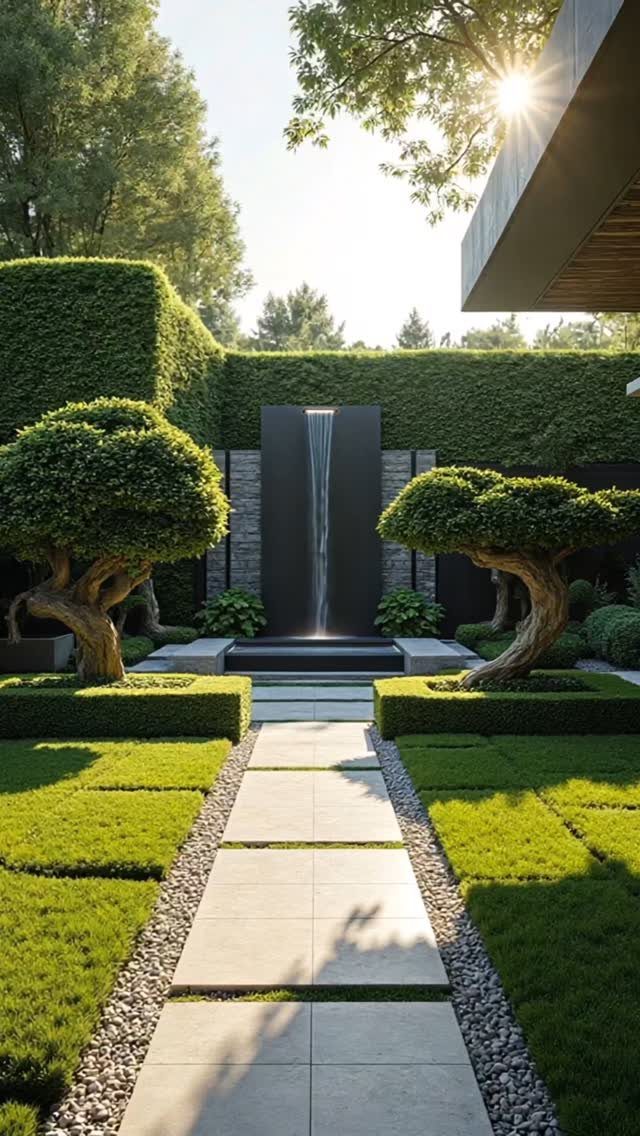
A formal garden imposes order on a yard that otherwise feels cluttered, but it demands the discipline to sustain that order.
Clipped hedges and a squared lawn need monthly shearing through the growing season; I would plant yew or boxwood for structure and accept that the early years look sparse while they fill.
The central fountain can be a stock basin and bubbler rather than custom masonry; symmetry matters more than scale. I would lay the stone path dead straight, checked with a string line, because the eye catches every wander.
This suits the patient gardener with time or budget for help. A loose cottage border demands less and forgives more.
“A timeless and lived-in garden is very much a garden of the moment and reflects the collective desires for respite and rest. The best designers are increasingly tying beautification in with strategies for stormwater management, biodiversity, and long-term resilience.”
16. Wildflower Gardens
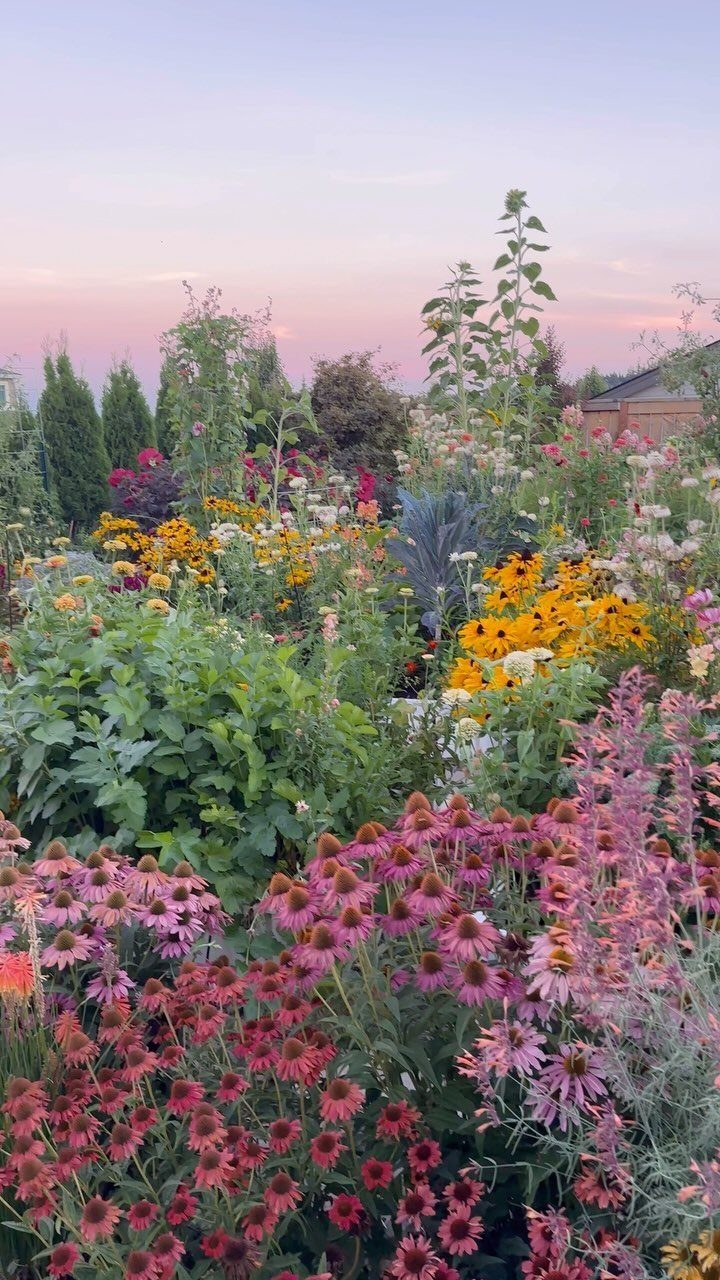
A wildflower garden reads as untamed but starts with deliberate choices.
Coneflowers and black-eyed Susans are two of the few wildflowers that seed reliably and bloom the first year from transplant; most mixes sit there with nothing but foliage before they amount to anything.
I would buy plants, not seed, for a patch this dense, and I would edit ruthlessly in June so self-seeders do not choke the originals.
A late-summer cut, after goldfinches finish, spreads the next generation and keeps the stand from going woody.
The sunset tones come from planting, not accident: pink and yellow together read as designed; random color reads as neglect.
17. Stone Landscape Borders
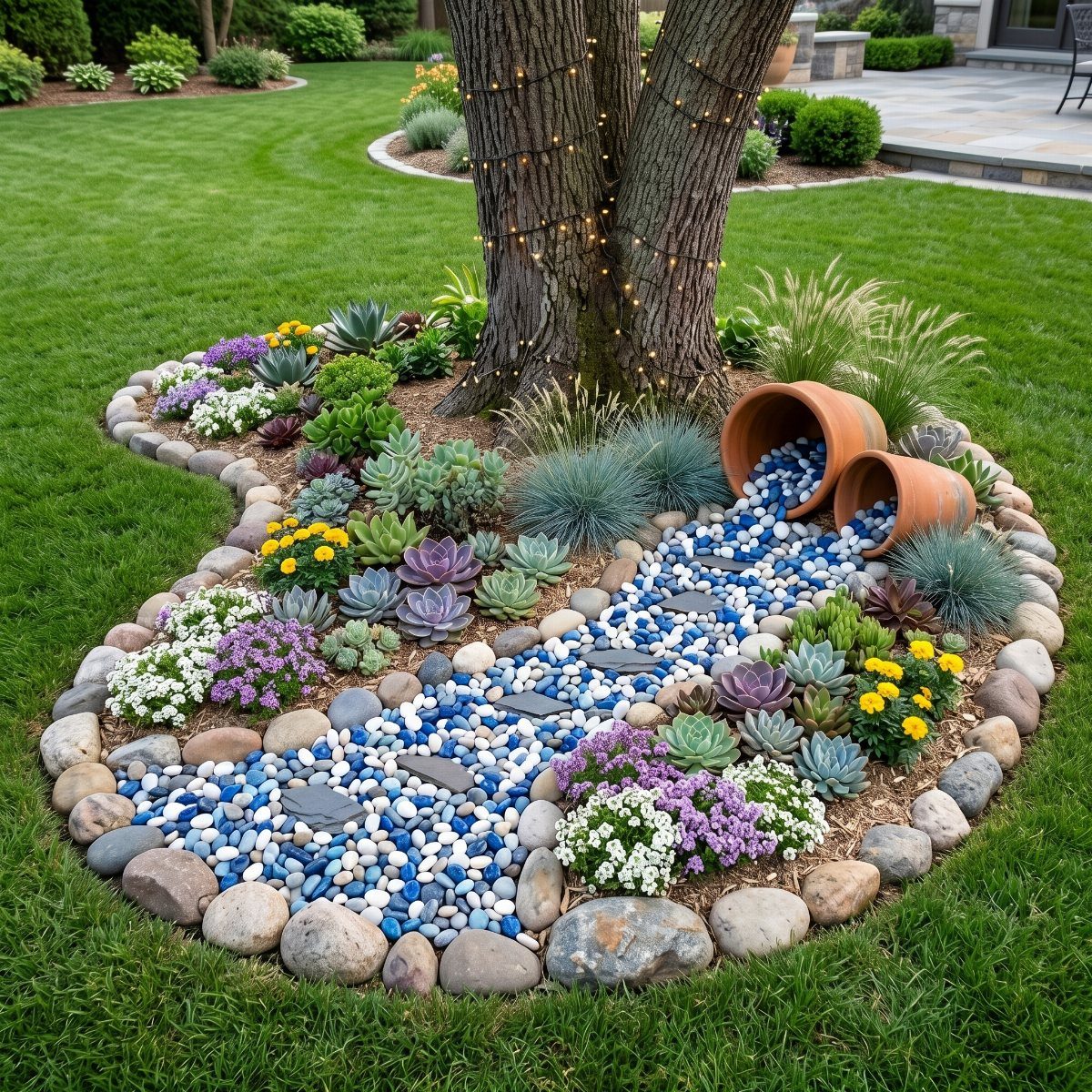
A stone border around a tree or bed contains mulch, defines the edge, and lifts the whole planting from garden-variety to intentional.
River rocks smooth and rounded enough to stay put work best at a size you can half-bury in the soil so they do not roll into the lawn.
The tipped terracotta pots spilling pebbles are theater, not structure, and I would skip them unless the look matches the rest of the yard.
The blue and white pebbles inside the bed should be coarse, not aquarium-fine, or they wash into the soil within a season.
A single tree bed like this takes an afternoon and one load of stone; the edge stays clean for years after.
18. Vertical Gardens
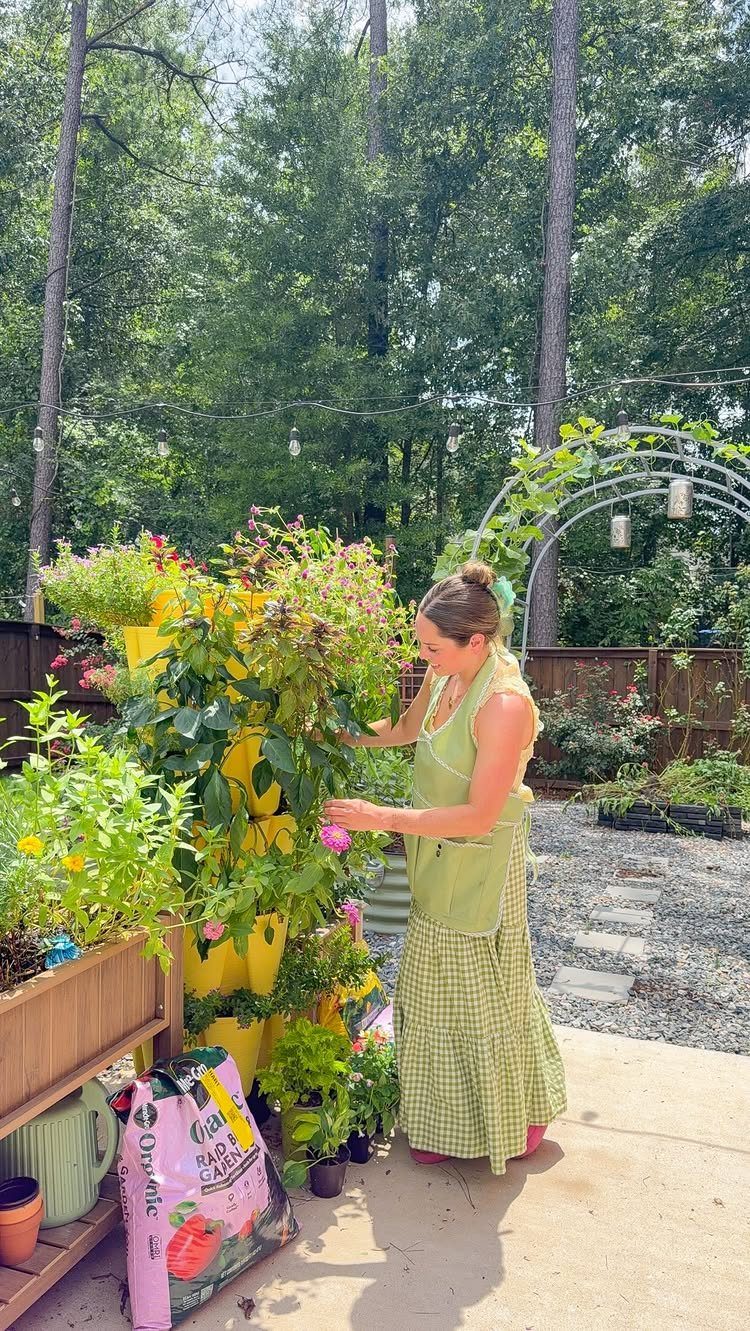
A vertical planter buys planting room on a patio or balcony where ground space does not exist.
A modular stack tower, each pocket with its own drainage, needs a light potting mix rather than garden soil, or the weight compresses and water runs straight through.
Herbs and compact annuals work best; tomatoes want more root depth than a pocket gives. I would set casters or stand it on a saucer, because a soaked tower weighs enough to mark a wood deck permanently.
The yellow frame is powder-coated steel or resin; I would check that the finish is UV-stable, or repainting becomes a yearly chore.
19. Privacy Screens
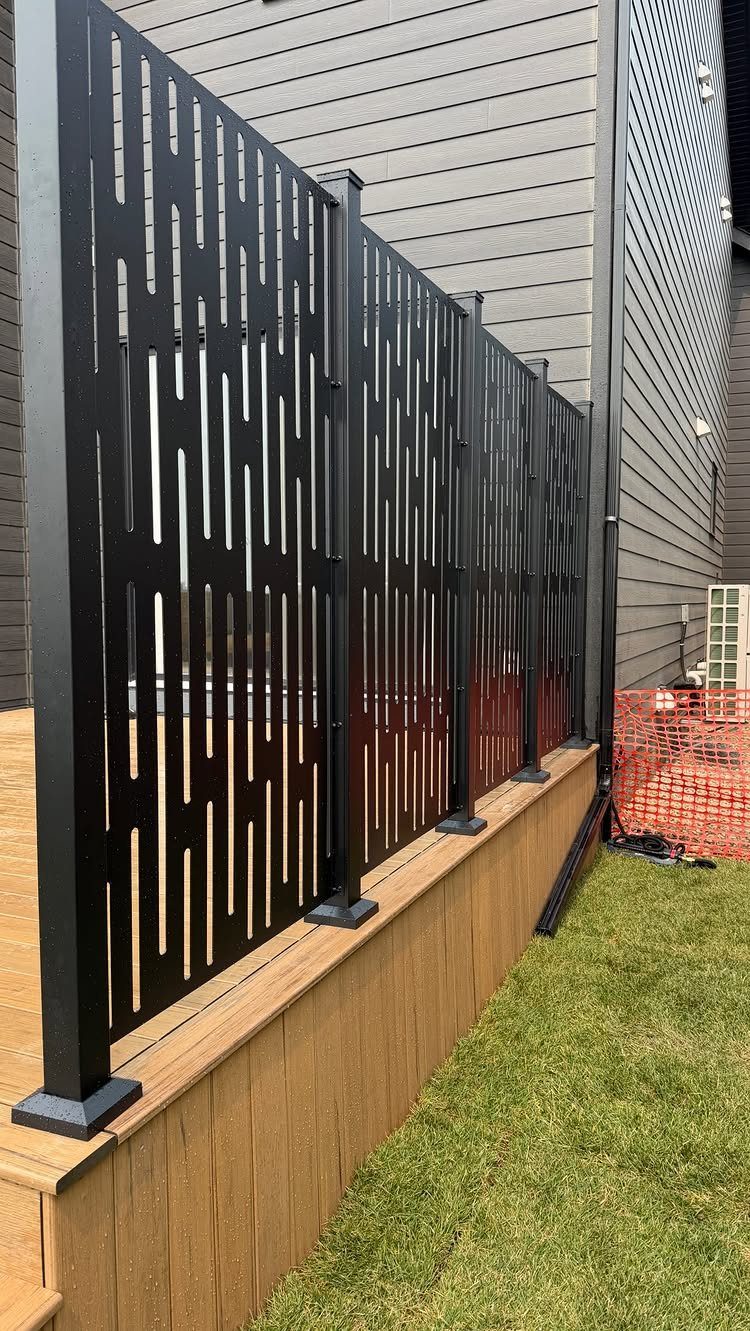
Decorative cut-out panels in matte black turn a deck edge into a semi-wall that blocks sightlines without blocking breeze.
I would mount them to 4×4 posts set in concrete below frost line, not surface brackets that torque in wind.
The vertical-slot pattern is common enough to source from several manufacturers, though I would compare gauge; thinner steel dents and resonates when tapped. Leave an inch gap at deck level so water drains and leaves blow through rather than packing.
A screen tall enough to block sightlines needs a gate if it crosses your access path; plan the opening before you set the posts.
20. Unique Garden Sculptures
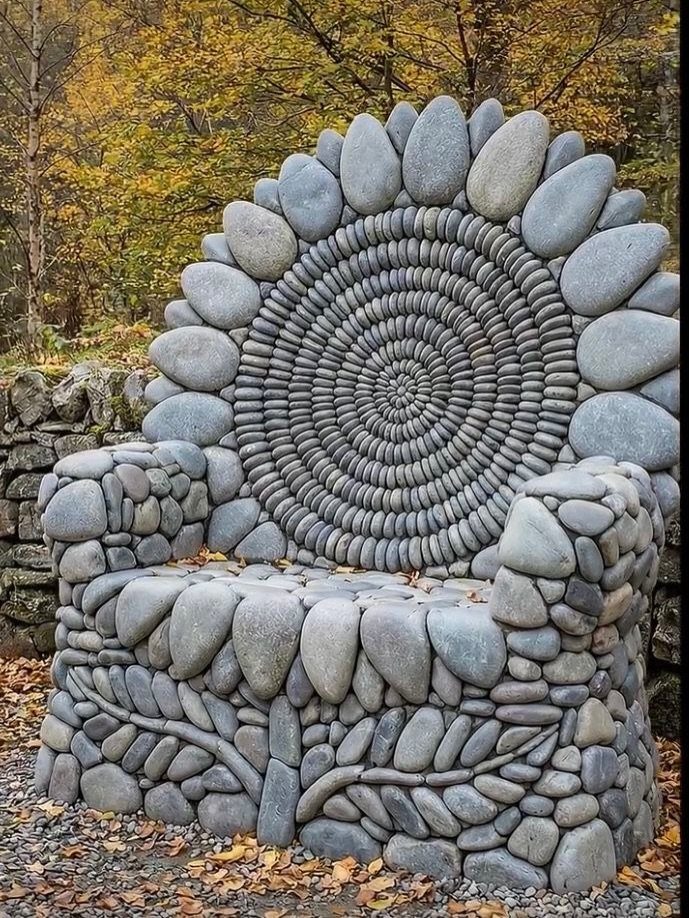
A stone chair built from river rock turns a seating idea into a permanent installation that will not blow over or rot.
The construction is dry-stack with hidden mortar or pins at stress points; the weight of the stone is what holds it.
I would build on a concrete pad with a gravel bed beneath for drainage, or frost heave cracks your work over a few winters.
This is weekend work measured in days, not hours, and the stone delivery is the bulk of the cost. A metal chair with stone veneer is the practical alternative if you actually want to sit.
21. Vegetable Gardens
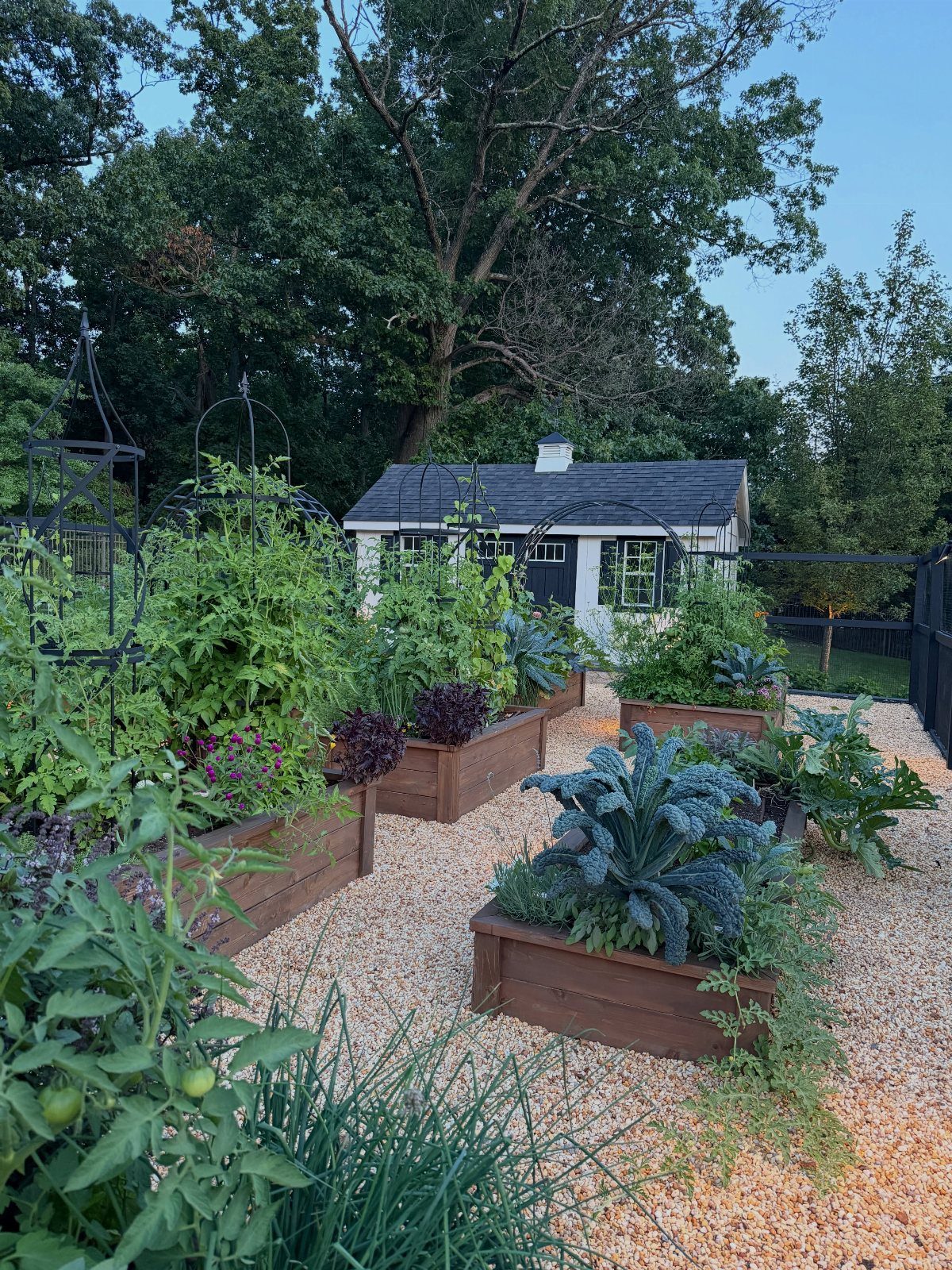
Raised beds on gravel keep vegetables out of mud and your knees out of the dirt, but the setup cost runs higher than planting in ground.
The pea gravel paths need edging to stay put; steel landscape strip or pressure-treated 2×4 on edge both work. I would run beds north-south for even light and keep them narrow enough that the center is reachable from either side.
The shed in the background stores tools and cures garlic and onions; any dry, shaded corner works if you lack the shed budget.
Metal trellises last longer than wood; I would use welded cattle panel bent to an arch, or flat panel against the bed back for beans and peas.
Buy soil once, maintain with compost after.
22. Cottage Gardens
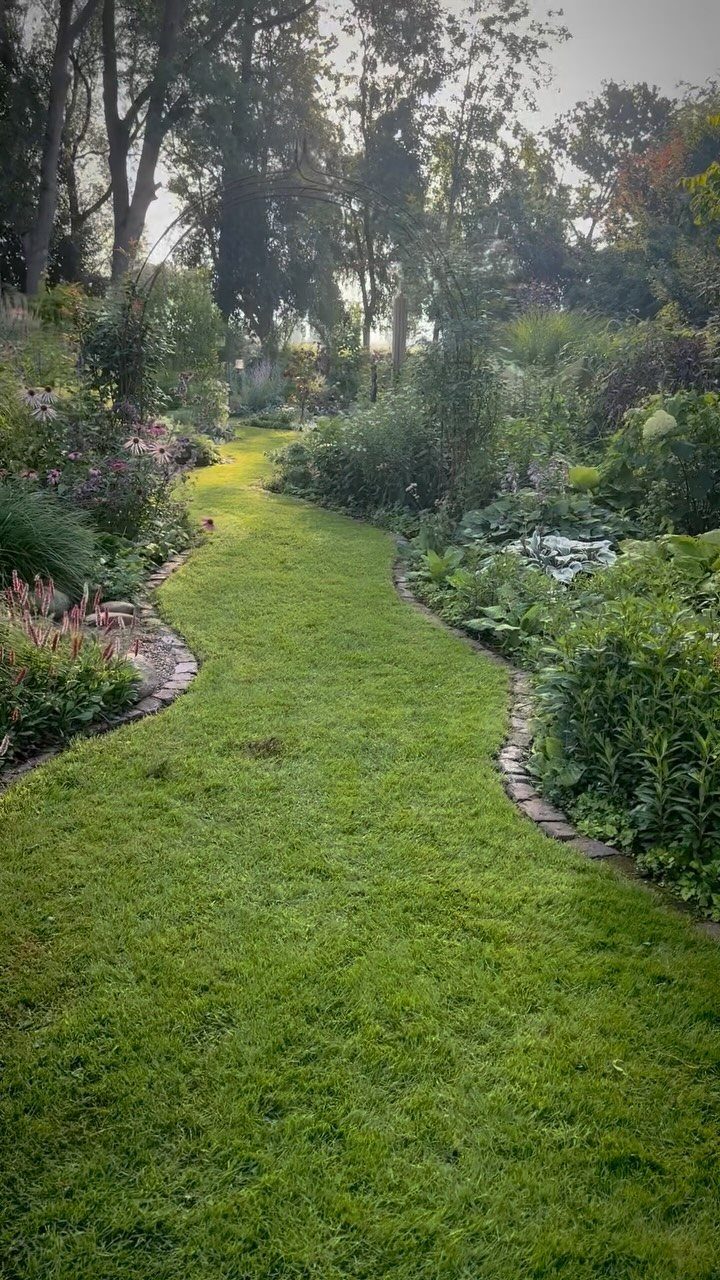
A winding grass path through dense planting invites slow walking and surprises at each curve.
The grass needs mowing, so I would keep the path wide enough for a push mower and edge it with stone or steel strip so the bed does not creep.
Tall plants at the back, spillers at the front, with something in bloom for each month; that is the whole plan. Self-seeders like foxglove and nigella fill gaps and move around year to year, which is the point.
A metal arch is optional structure; without it, the path still reads as a room. I would plant climbers at the arch foot only if you will prune them twice a season, or the tunnel closes in and mold follows.
This garden style forgives mistakes; that is why I would recommend it to anyone uncertain of their skill.
23. Lush Tropical Garden
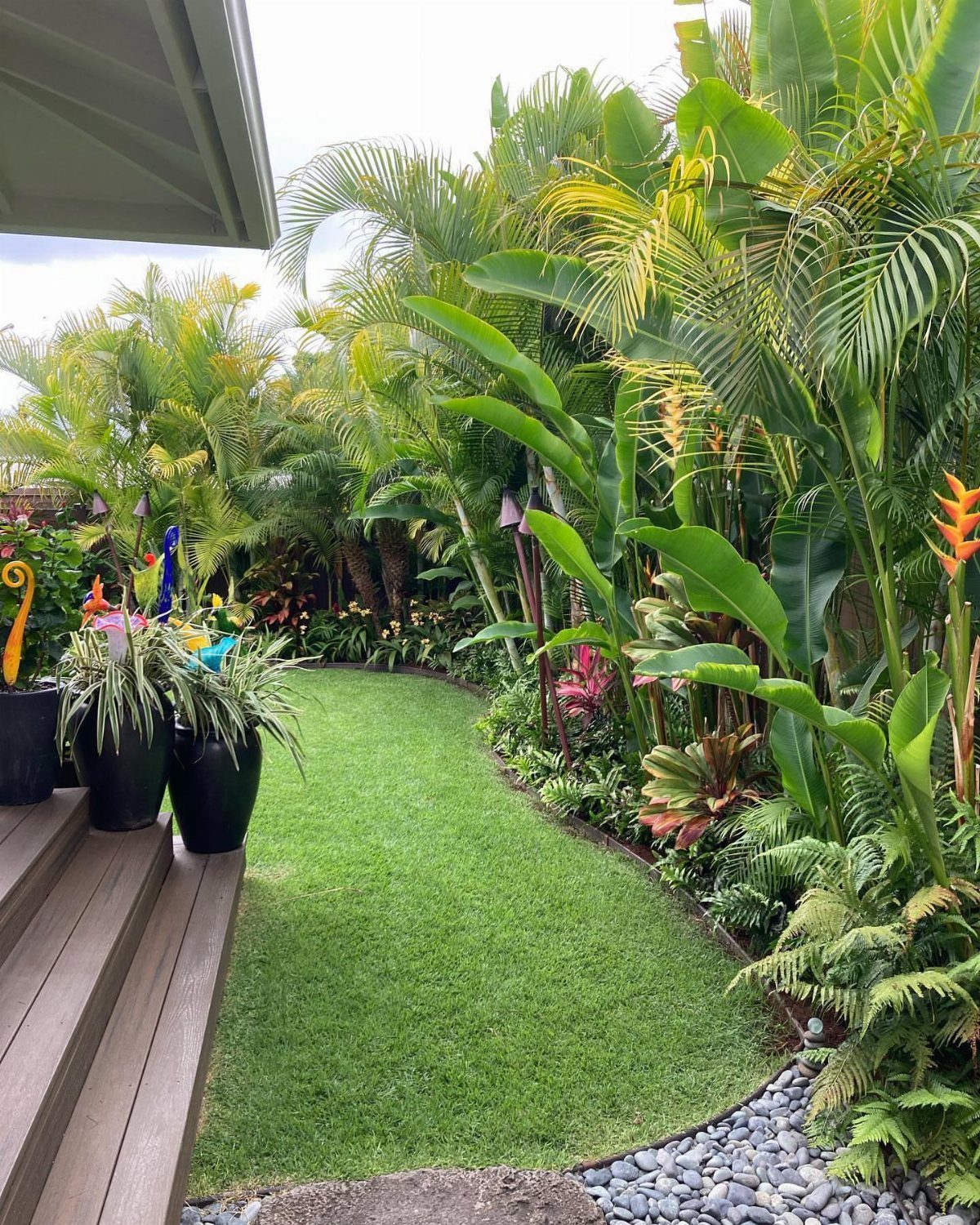
Dense layers of palm, fern and broad-leaf foliage turn a temperate yard into something that reads tropical even without true tropical hardiness.
Layer heights: canopy from windmill or needle palms, understory from fatsia and aucuba, ground plane from ferns and hosta where shade is deep.
I would push the hardiness zone by siting near a south wall for radiant heat and wind protection; microclimate buys you half a zone.
The curved lawn is maintenance; I would shrink it to a sitting patch and let the planting expand.
Container plants on the deck steps move indoors or to a garage for winter where marginal specimens need shelter. The constant green comes from evergreen choices, not summer annuals that drop in fall.
24. Desert Cactus Garden
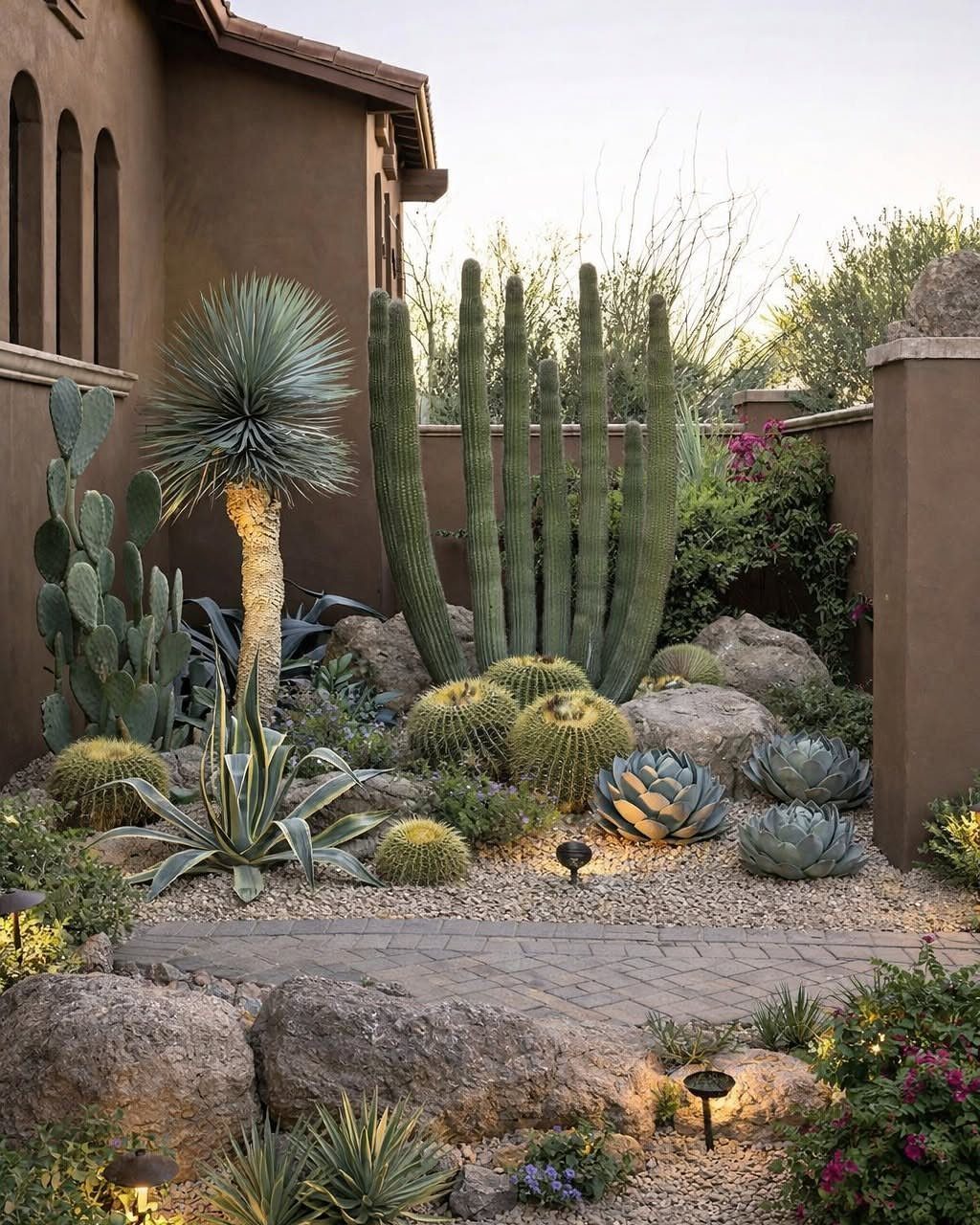
Columnar cactus and sculptural agave read as architecture in a climate too dry for lawn.
Gravel groundcover, not mulch; organic matter holds moisture that rots cactus crowns.
I would use crushed granite, which locks underfoot and does not roll like pea gravel. Boulders are placement, not afterthought: group in odd numbers, half-buried so they look settled, not dropped.
Landscape lighting here is uplighting on trunks and down-lighting from the wall wash; I would install conduit during construction, not after, and use low-voltage LED so you are not drawing household wattage.
Winter wet is the killer; grade the bed to shed water and raise mounded soil so roots never sit.
25. Succulent Border
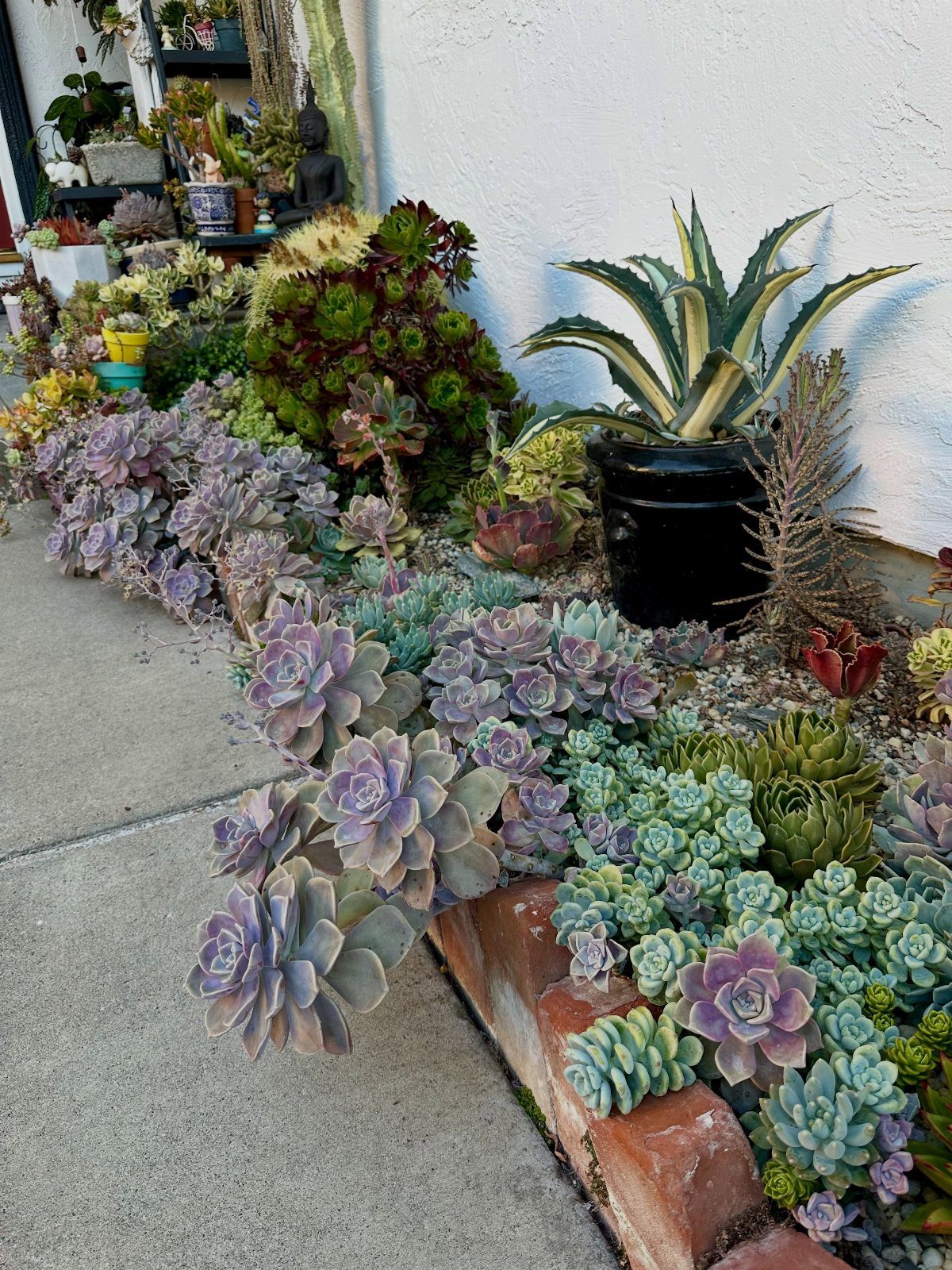
Brick edging lifted just enough gives succulents the drainage they demand and keeps the planting read as deliberate, not accidental.
Echeveria rosettes in repeating blue-green and pink-brown tones read as a border rather than a collection of pots tipped out.
I would pack them shoulder-to-shoulder; succulents grow slowly and bare soil between them collects weeds. A sharp sand or decomposed granite mix, not potting soil, fills the bed; organic matter rots them in humid summers.
This suits the gardener who waters reluctantly and forgets to fertilize. The sidewalk heat that fries hosta helps here.
26. Decorative Wooden Ladder Trellis
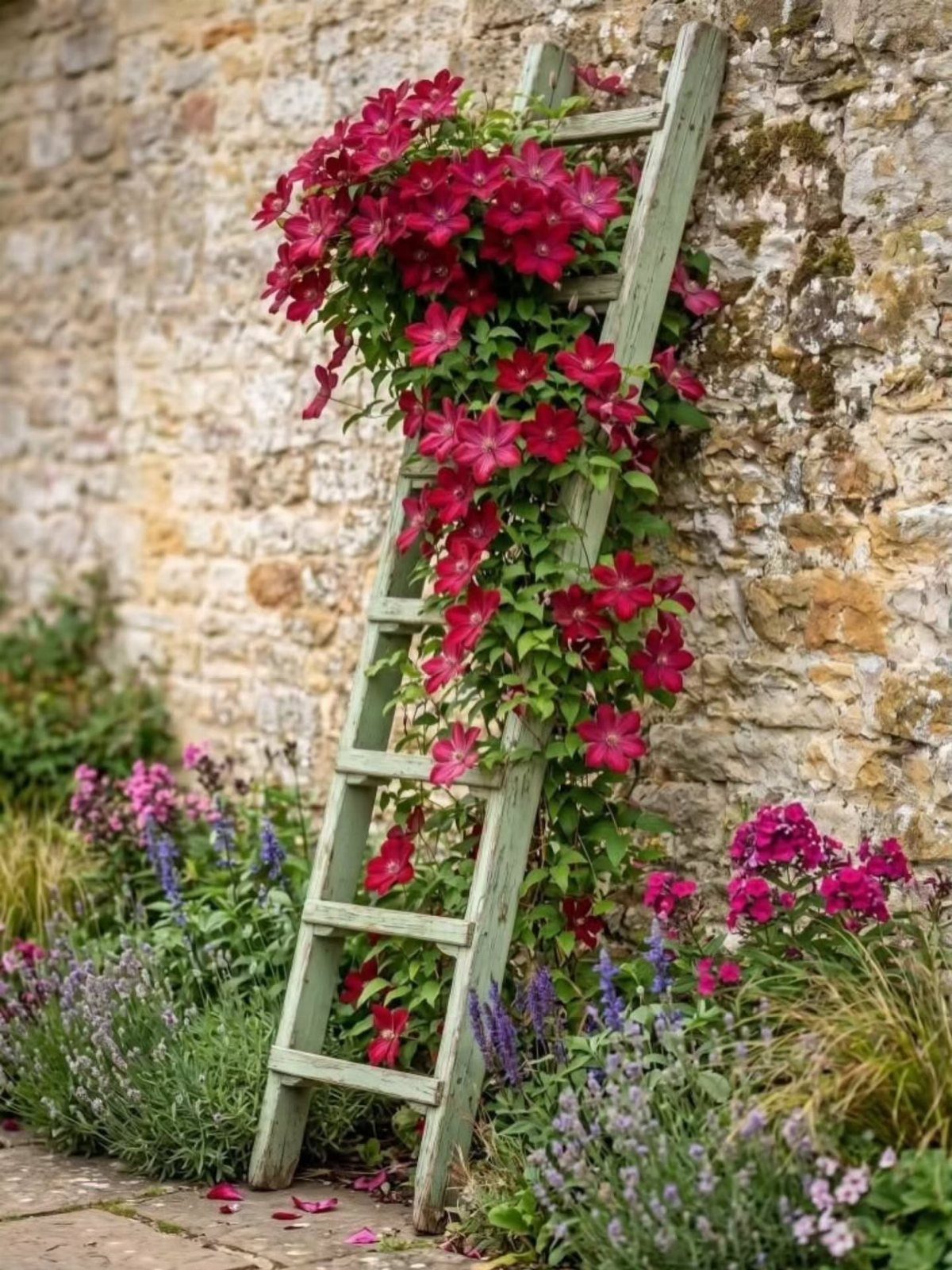
A wood ladder past paint peeling to raw grain gives clematis something to climb that costs nothing and looks earned rather than bought.
I would lean it at a slight angle so stems twine up without slipping, and wire the feet to ground stakes if wind is common.
Clematis roots want cool shade; a stone wall behind does that while the top growth reaches sun. Prune to the ladder rungs each spring so the wood stays visible and the bloom clusters at eye level.
Any weathered ladder serves; paint residue does not matter since the vine covers it. The magenta is the flower, not the wood.
27. Fence Line Rose Border
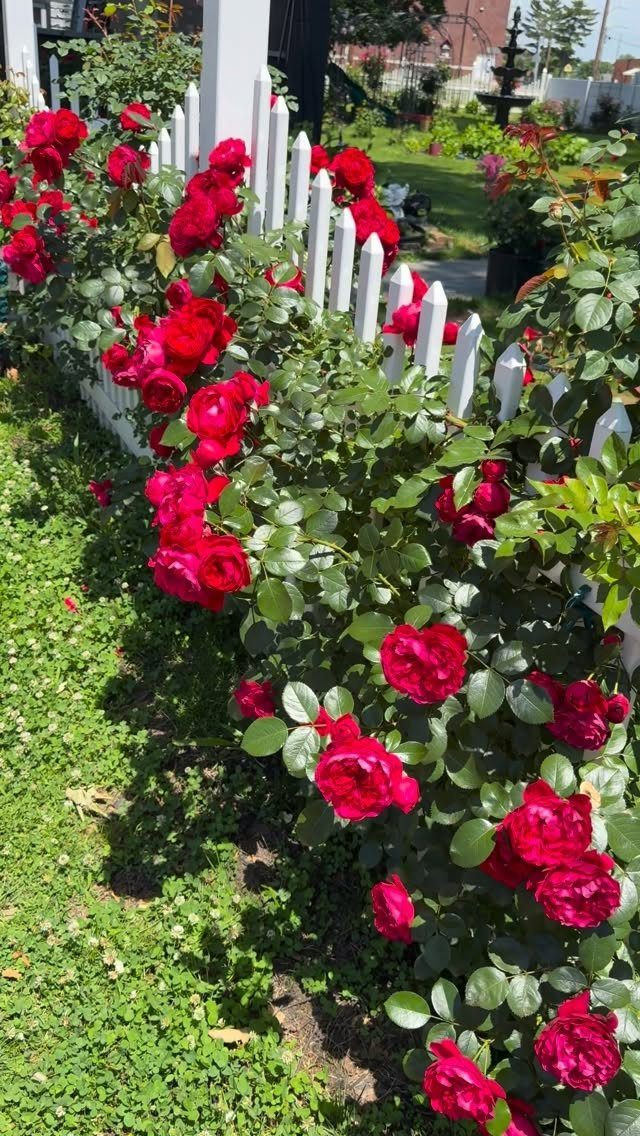
A fence line of deep red roses against white pickets is the image that sells the house, but the look depends on work most summers.
Disease-resistant shrub roses, not hybrid teas, keep the foliage clean enough that you are not spraying on a constant schedule.
I would plant well away from the fence so air moves behind the canes and you can deadhead from both sides. The picket paint will need touching up where thorns scrape; semi-gloss exterior holds up better than flat.
The red reads against white; any other fence color and I would choose pale pink or yellow blooms instead.
28. Hydrangea and Hedge Border
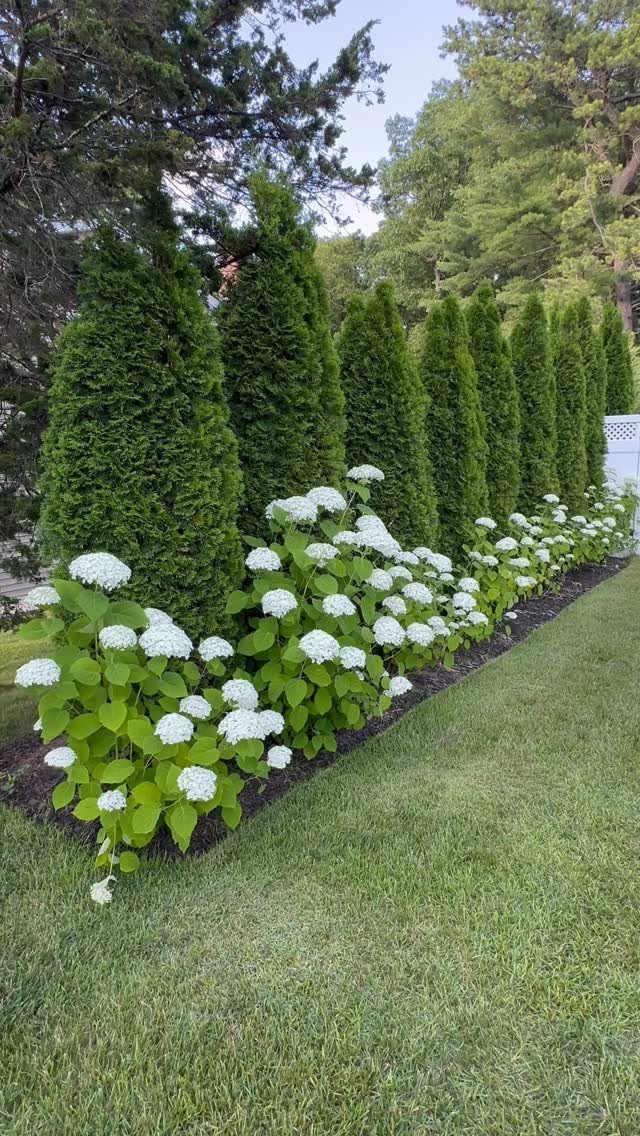
Tall arborvitae as a flat green wall behind white hydrangea mopheads solves 2 problems at once: screening the neighbor and giving the flowers a backdrop that makes them read as landscape, not shrubbery.
The hydrangea wants afternoon shade in zones 7 and south; the evergreen line provides that once it fills.
I would set the hedge back with room to breathe, hydrangea fronts another stretch forward, so each has room to reach mature spread without crowding.
Lime light or similar paniculata types take more sun and stay white longer than macrophylla; check your zone before choosing.
This pairing works where a cottage tangle would look unmaintained.
29. Modern Minimalist Garden
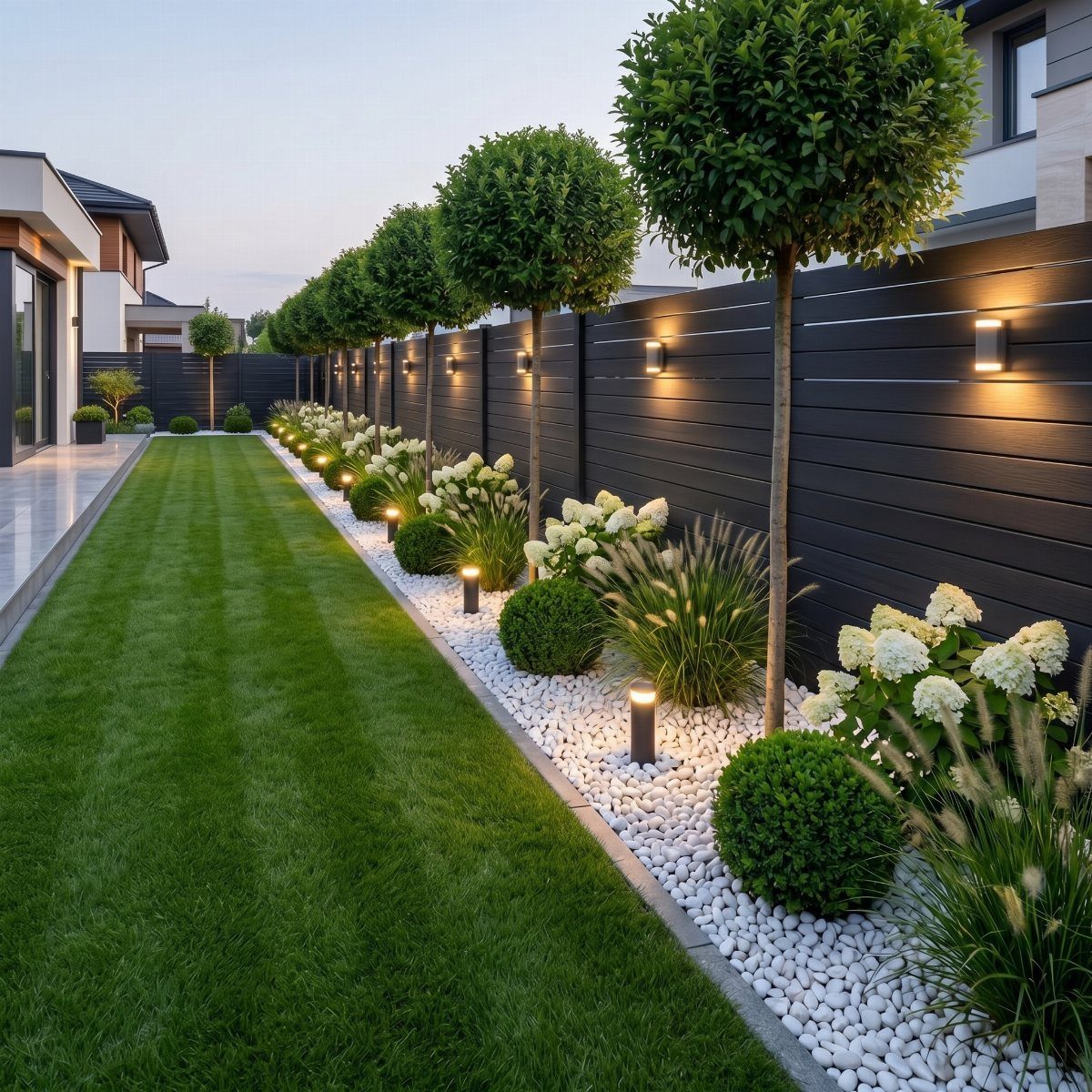
White pebble mulch against crisp turf demands weed barrier underneath and edging that stays sharp, or the look collapses into lawn-with-gravel.
The spherical topiary is cloud-pruned boxwood or ilex, sheared twice a season; I would hire that out unless you enjoy steadiness.
The horizontal slat fence reads lighter than solid board and its integrated lighting means no posts to dodge when you mow. LED strip at deck level is replaceable when it fails; wall-wash fixtures fixed into the fence are not.
This garden trades plant variety for restraint. One weak element, and the whole reads as unfinished rather than minimal.
Budgeting for Landscaping
I would start any backyard plan with what already exists: native plants that belong here, old sheds or fences worth keeping, the contour of the land as it drains.
Replacing all of that with trucked-in solutions is how budgets double before a single plant goes in.
Working in phases keeps cash flow sane and lets you correct course. I would tackle hardscaping first, then structure, then plantings that need time to fill anyway.
Xeriscaping fits any climate, not just dry ones: a rain barrel and a rain chain cut the hose bill wherever you live, and fewer plants does not mean less impact if you place them with intention.
Perennials cost more once than annuals every spring. Low stone borders and self-seeding wildflowers look deliberate by year three and cost almost nothing to maintain.
Assessing Your Space
Before I spend on anything, I walk the yard after heavy rain. Waterlogged patches need drainage changed or material swapped, not plants doomed to rot.
Debris removal adds up: one dumpster rental can eat the plant budget. I would check what must go versus what stays, including shrubs that can be potted during work and returned after.
Soil group matters more than zone maps suggest.
Clay, sand and loam each want different amendments and drain at different rates; guessing means replacing plants. I would test before I shop.
Existing trees frame the design or block it.
Their root zones limit excavation, and mature canopy changes light patterns through the day. A phone app at midday gives you sun angles you can trust; memory from last summer will lie to you.
Structures already standing: fence lines, old patios, even concrete pads for a forgotten shed. Keeping them saves demolition and often anchors the new plan.
Choosing Materials
For hardscaping that lasts, I go with bluestone, brick, or pea gravel. Each has a look that ages well, and none of them asks for much once it is in.
Each lasts decades if bedded properly, but the pristine look needs shearing and sweeping all season. I would calculate maintenance hours, not just install cost.
For lower upkeep, I would look at how material handles freeze. Poured concrete on grade skips the retaining wall but needs control joints planned.
Sustainability here means longevity. Rain barrels and chains cut municipal water use without visible change to the planting style.
Powder-coated steel panels need UV-stable finish or they chalk and rust; checking that spec before buying saves repainting.
Frequently Asked Questions
Can you design your own backyard landscape?
Yes, and I would start by walking the space with a notebook before buying anything.
Level bumpy ground, note which trees stay, and decide where a path or bed would actually get walked past or sat in; a feature hidden behind a shed is wasted effort.
Most of these projects go in over a weekend for a few hundred in materials, so you can test an idea cheap and adjust next season rather than hiring a master plan up front.
What are some garden ideas for 2026?
I lean toward edible plantings, drought-tolerant beds that shrink the water bill, and permanent hardscape like stone paths and masonry fire pits that outlast trends.
I would add that raised beds on gravel and semi-formal hedges for structure keep showing up because they solve real problems more than because they are new.
Is there an app to plan a garden layout?
I do not use apps for layout; a measured sketch on graph paper and a midday light reading from a phone app at the spots you actually want to plant tells you more than most software.
I have never found an app that beats standing in the dirt with a hose and some string to lay out a bed this size.





