
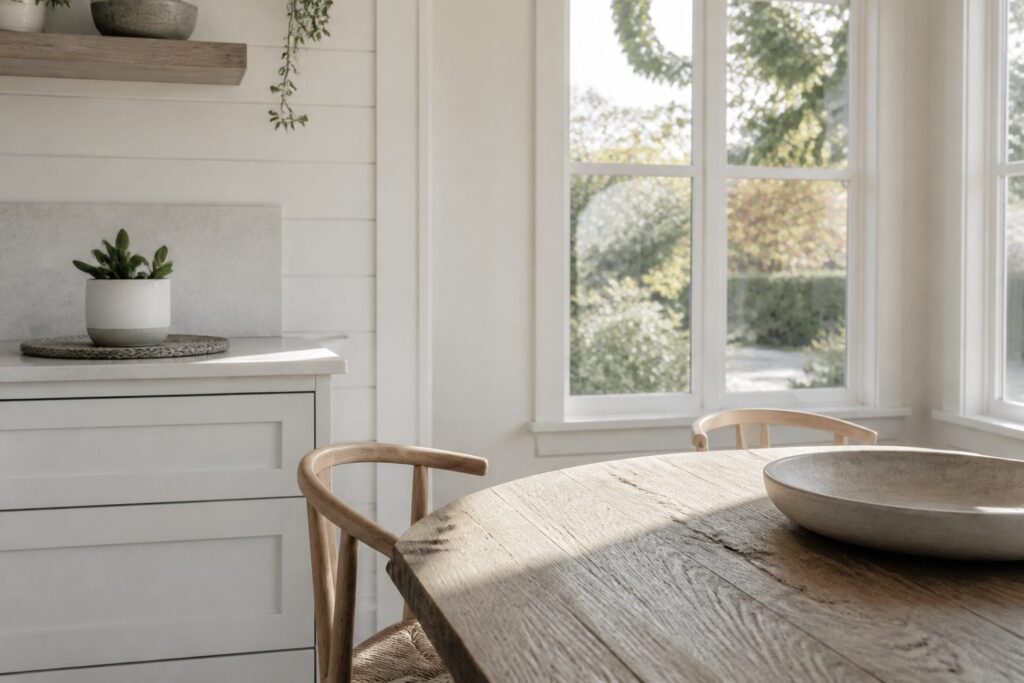
A white wood interior pairs pale walls with visible timber grain to keep brightness from turning cold.
Undertone trips people up: creamy whites need golden oak or honey-toned flooring, while cooler whites require gray-washed oak or driftwood finishes, and a mismatch makes either the walls look dirty or the floor read pink.
Engineered plank runs about an 8-foot stretch for less than butcher block, and installs dry over a weekend without glue curing time.
[link-whisper-related-posts]White Oak Cabinets
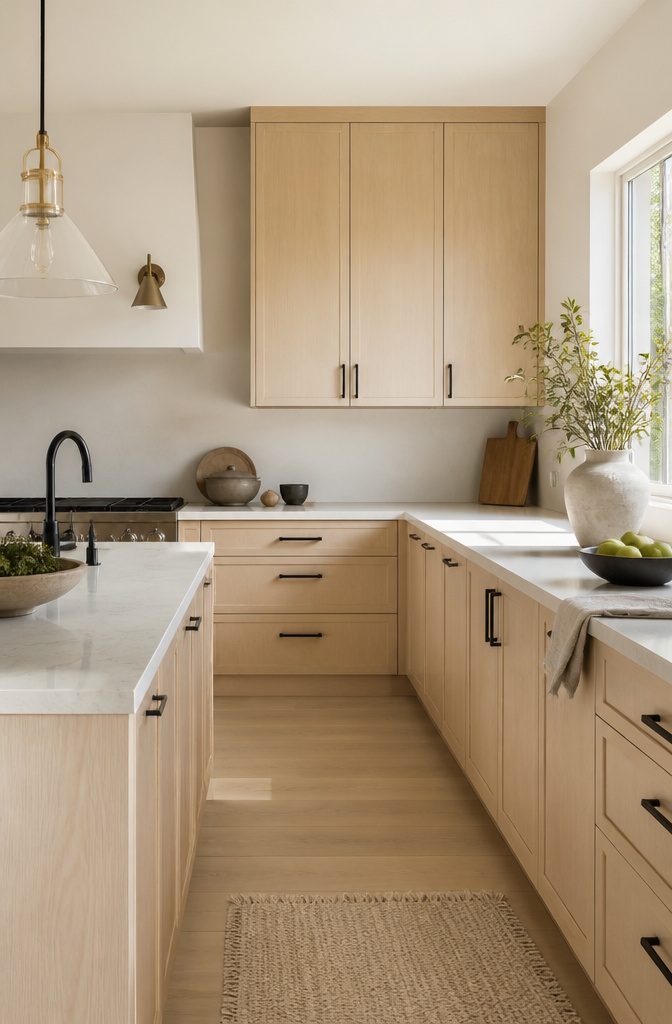
White oak cabinets carry a grain pattern that reads as texture rather than stripes, which keeps a kitchen from feeling like a showroom floor.
The pores run long and quiet, catching afternoon light in a way that flat paint never manages. That warmth is what draws people toward white wood interiors in the first place, and oak delivers it without drifting into rustic territory.
For a weekend update, stock cabinets in white oak veneer hit a practical middle. The material takes a beating, shrugs off steam from a boiling pot, and asks only for a re-oiling every couple of years.
Solid slab doors run cheaper than shaker-style frames and read cleaner against white walls, so I would start there if the budget is tight. Prefinished panels save you a sanding stage, which matters when Saturday morning is your only window.
The old-world feeling comes from letting the grain stay visible rather than drowning it in opaque stain.
A whitewash or limed finish keeps the boards light while the pattern does the work. Pair them with matte black pulls and suddenly the kitchen has a point of view, not just a color scheme.
White oak does yellow slightly over time in direct sun, so weigh that against the grain you want. North-facing renters win here; everyone else should plan their upper cabinets for the brighter wall.
Light Wood Accents
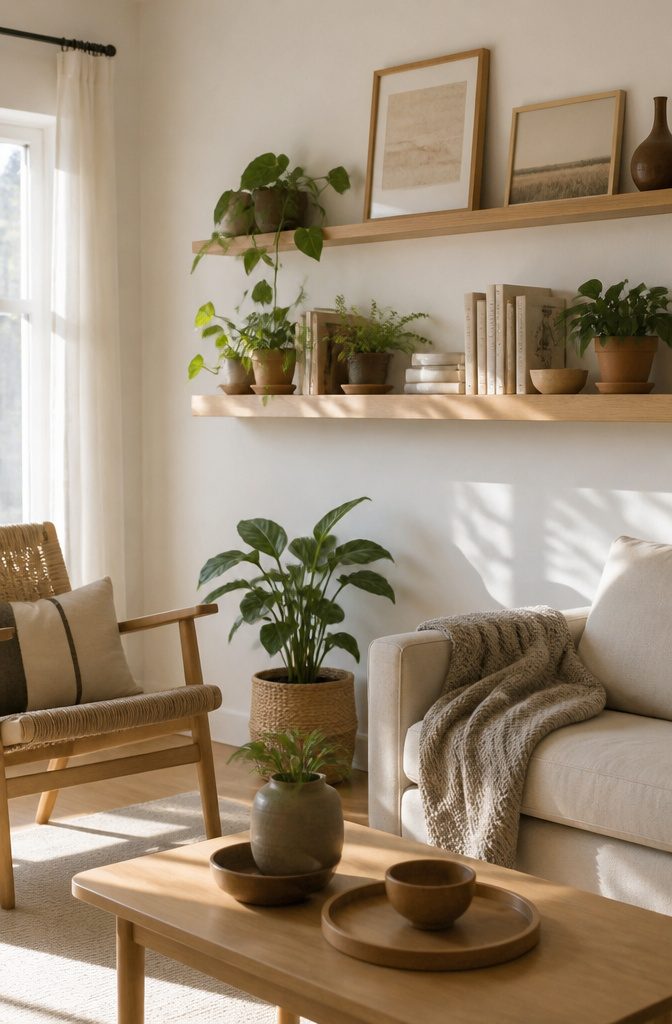
Light wood accents do the work of warming up a white room without asking you to paint a wall or refinish a floor. ** Birch or maple shelving, a pine picture ledge, or even a beech cutting board propped against a backsplash** can pull cooler whites toward something livable.
I think of them as the bridge material: small enough to swap in an afternoon, visible enough to change how the whole room reads.
The grain itself matters more at this scale than it does on cabinets.
On a 36-inch floating shelf, you see every streak of figuring up close, so I look for pieces with a little variation rather than the perfectly uniform stuff.
Golden undertones in the wood lean warm against creamy whites; if your walls read cooler, gray-washed oak or a driftwood finish keeps the palette from turning muddy.
Where these pieces land determines whether they actually get noticed.
Open shelving at eye level in a kitchen or office puts the warmth right where light hits it. A narrow picture ledge above a sofa does the same for a living room.
I skip the small frames scattered on side tables; they disappear. One substantial piece, a stool or a wall-mounted shelf in a tone that speaks back to the white, does more than three token accents ever will.
White Walls With Wood Trim
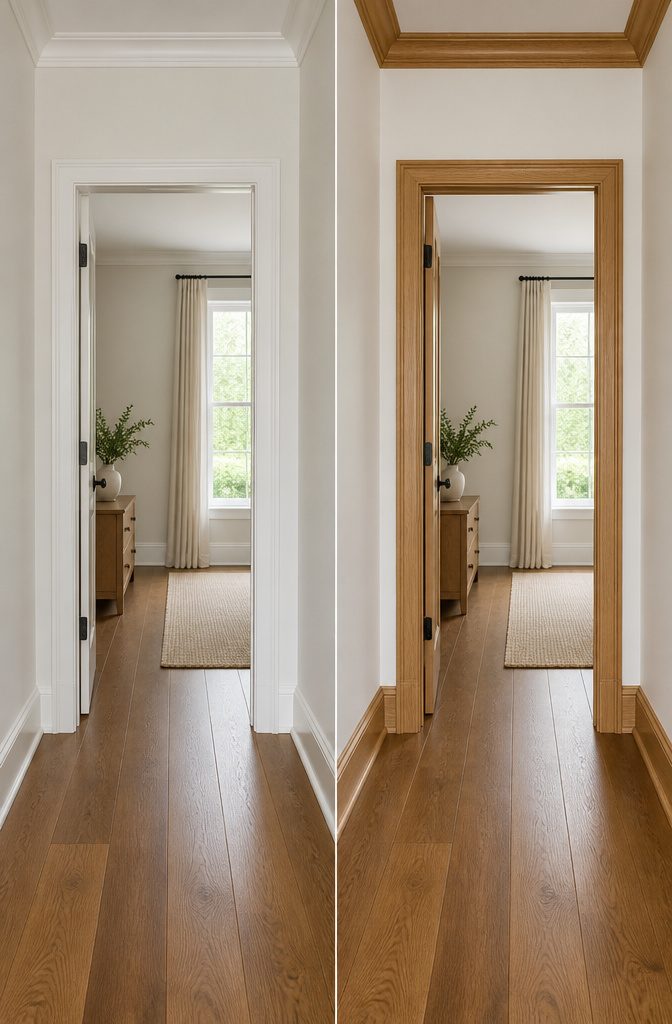
White walls with wood trim carry a room without asking for attention, and that restraint is exactly why the pairing lasts.
Benjamin Moore’s Oxford White hits the right note for the wall side: clean enough to read as white in daylight, soft enough to avoid that sterile jolt you get with bluer bases.
Against oak or pine trim, the contrast stays gentle; against walnut or stained mahogany, it sharpens just enough to frame the wood rather than compete with it.
The combination works across styles because the two elements do different jobs. White recedes visually, which makes the walls feel farther apart than they are, while wood trim draws the eye to edges and openings, giving the room its structure.
In a farmhouse space, the same pairing reads cozy; in something more contemporary, the identical paint and trim feel deliberate and edited. You can change the look without swapping the trim when your taste shifts.
Ceilings gain from the same logic.
Carry Oxford White up and keep the crown or baseboards in wood, and the vertical line of the trim breaks up what would otherwise be a flat box. The cost stays within a weekend and a few gallons of paint.
Dark Wood Elements
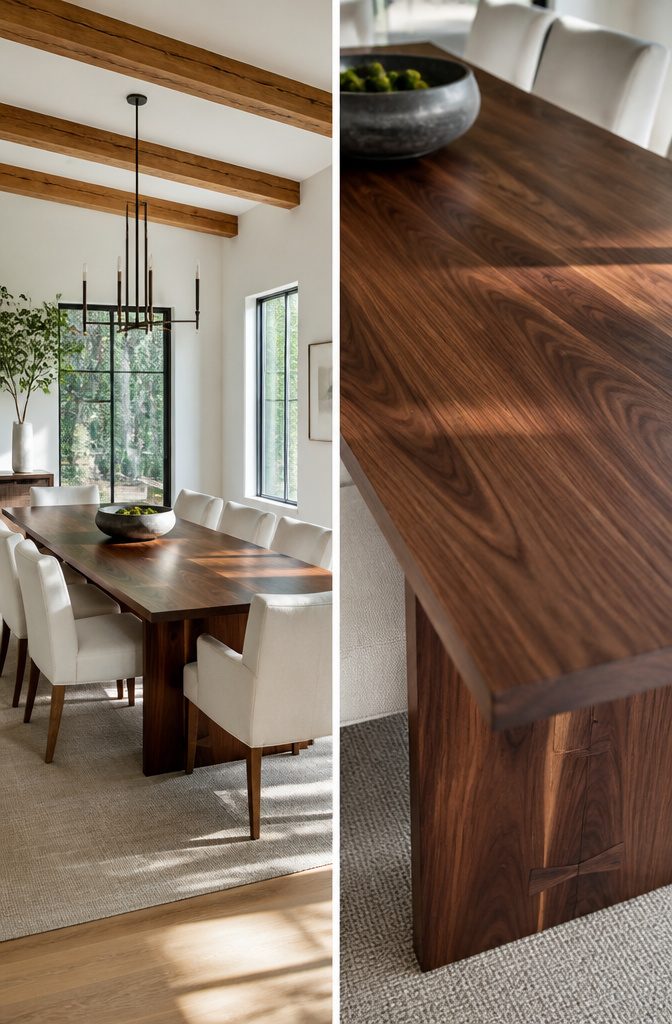
A single dark wood piece does more work than three. In a white wood interior, the eye needs somewhere to land before the space reads as serene rather than unfinished.
I place that weight on a walnut table or a rustic oak beam, not on matching end tables and a console that compete for attention.
The woods that read dark without slipping into black are the ones with warm undertones.
Walnut and honey-toned flooring anchor without gloom, while gray-washed oak or driftwood finishes stay lighter and pair better with cooler whites. Creamier walls call for golden woods to keep the warmth mutual.
Where you put the dark piece matters as much as which wood you choose. One substantial item, a dining table or a single beam across a ceiling, creates depth and dimension.
Scatter the same tone around the room and the contrast dissolves into clutter. The balance between sleek white surfaces and organic grain should feel layered, not busy.
Mixed Wood Tones
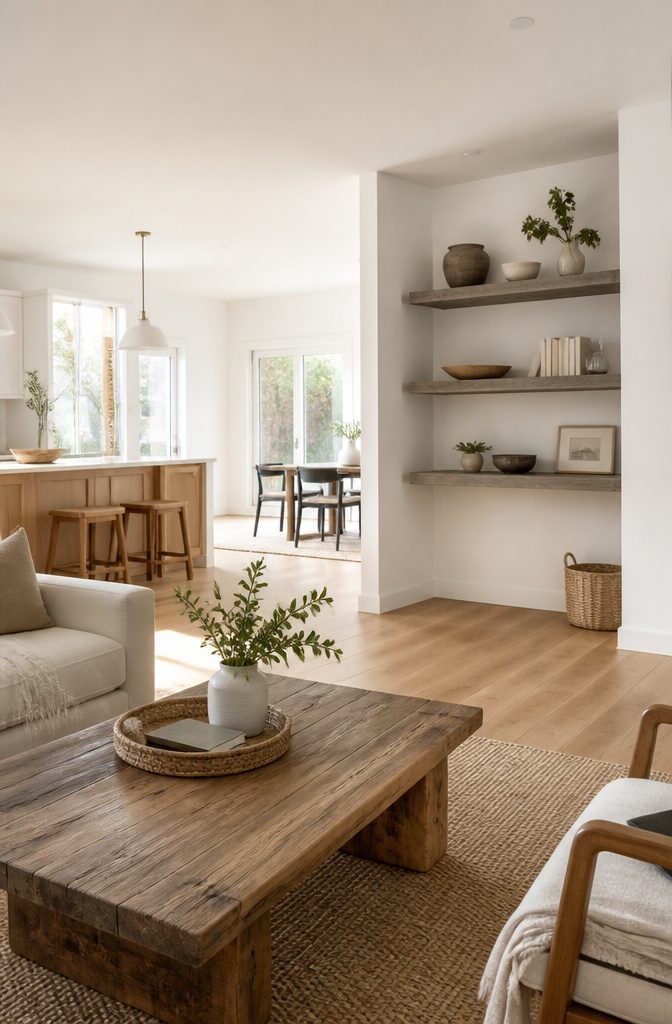
Mixing wood tones in a white wood interior only works when the undertones agree. A room with creamy white walls and golden oak reads warm and layered, while the same maple against a cool white turns muddy and accidental.
Match the undertone, not the color, and the difference between walnut and maple becomes complexity instead of clutter.
Reclaimed pine against smooth white oak is one pairing that earns its place: both carry a subtle warmth, but the contrast in texture and age keeps the eye moving.
Gray-washed oak or driftwood finishes need the cooler side of white to feel intentional, not like leftover pieces forced together.
I have watched rooms fail where every wood was close in lightness but fought in undertone, and I have seen a dark walnut console rescue a pale maple floor because both leaned the same way.
The risk is not contrast itself. The risk is mixing golden and ashy woods under the same white without noticing until the furniture arrives.
Natural Wood Grain Finishes
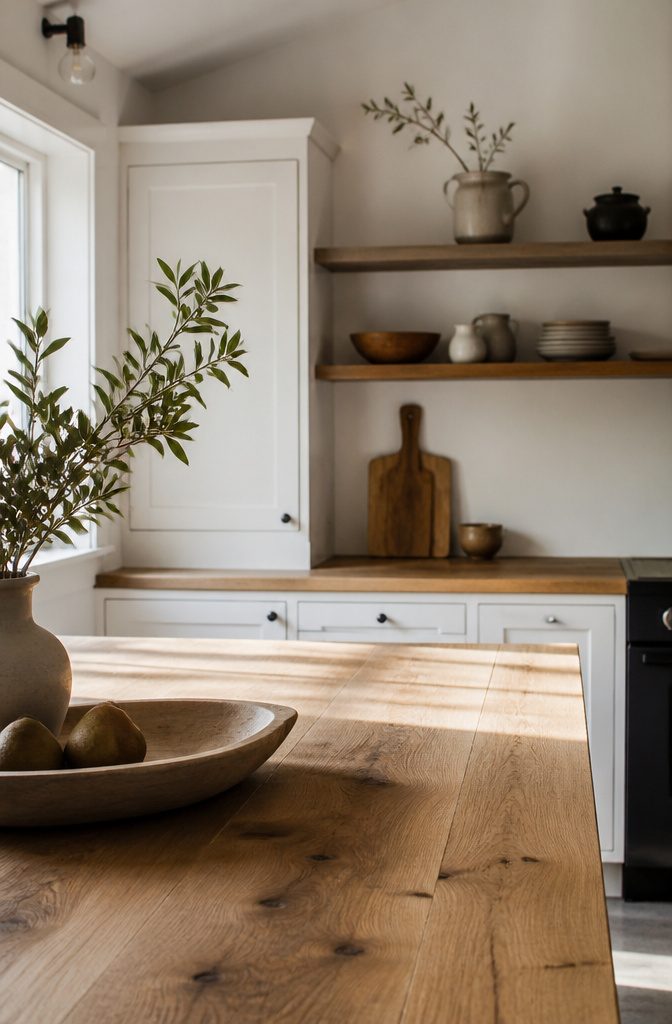
Visible grain is what keeps white wood from reading as plastic. The knots, the ripple, the way light catches early growth rings, all of it signals that something grew and was shaped rather than manufactured.
Painted or veneered surfaces flatten that story into a single plane, which is exactly why I pass on them for any piece that sits within arm’s reach.
The finish you choose either protects that texture or buries it.
Oil sinks in and hardens from within, so the surface still reads as bare wood to your fingertips; it needs reapplication every year or two, but oil rewards the effort with the most honest look.
Wax sits on top and gives a softer luster, though it scratches easier and demands more frequent attention.
Clear lacquer builds a harder shell and needs less upkeep, yet even the thinnest film adds a slight gloss that distances the wood from your hand.
For a weekend project on a few hundred dollars, oil wins on honesty; lacquer wins if you are fitting out a rental and cannot revisit it annually.
White Cabinetry With Wood Countertops
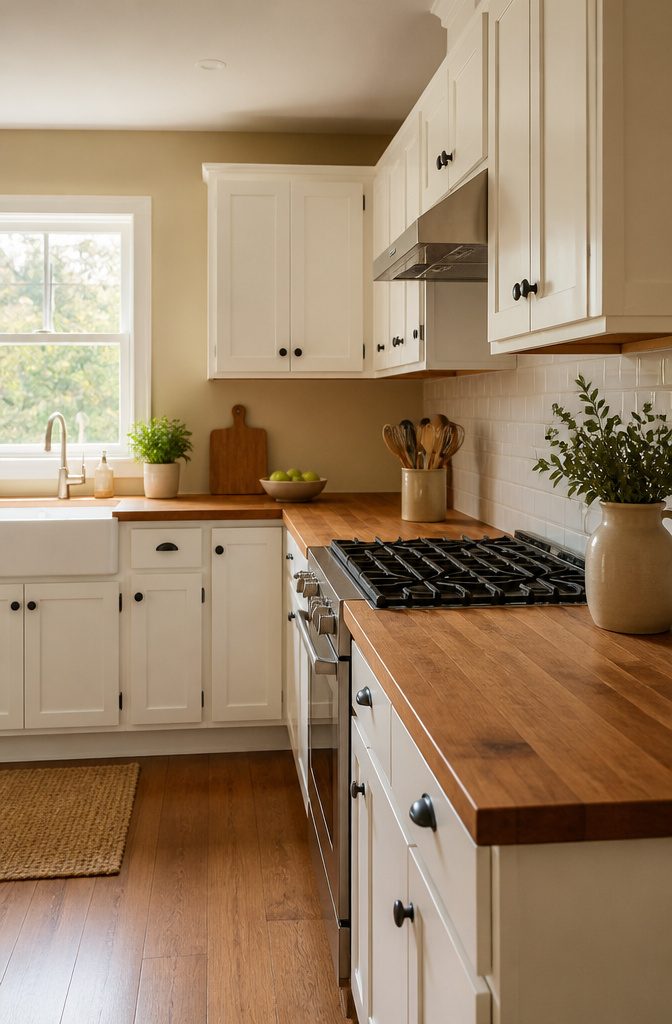
White cabinets with wood countertops give you the warmth of the look without committing to full wood cabinetry.
Butcher block is the practical entry point here: most home centers stock maple and oak in standard depths, and a typical 8-foot run costs less than a single slab of stone.
I think oak wins for kitchens because its grain hides the cut marks that accumulate near the sink, though maple takes stain more evenly if you want to darken it later.
The weekend-installation promise is real but narrow. You can swap out a laminate top for pre-finished butcher block in about two days, including drying time for the adhesive.
What eats the schedule is the sink cutout; doing it with a jigsaw and template is possible, but one wrong curve and you are ordering another slab.
Most people budget a third day for finishing the underside and oiling the surface.
The maintenance rhythm is where this pairing separates keepers from regret.
Mineral oil every few weeks for the first year, then monthly after that. Skip it and the wood dries out around the faucet, which is exactly where you do not want cracks.
Water sits on it longer than it should, which means you wipe spills now, not after dinner. That cost in attention is why I would not put butcher block in a rental unless the tenant is you.
Wood Flooring
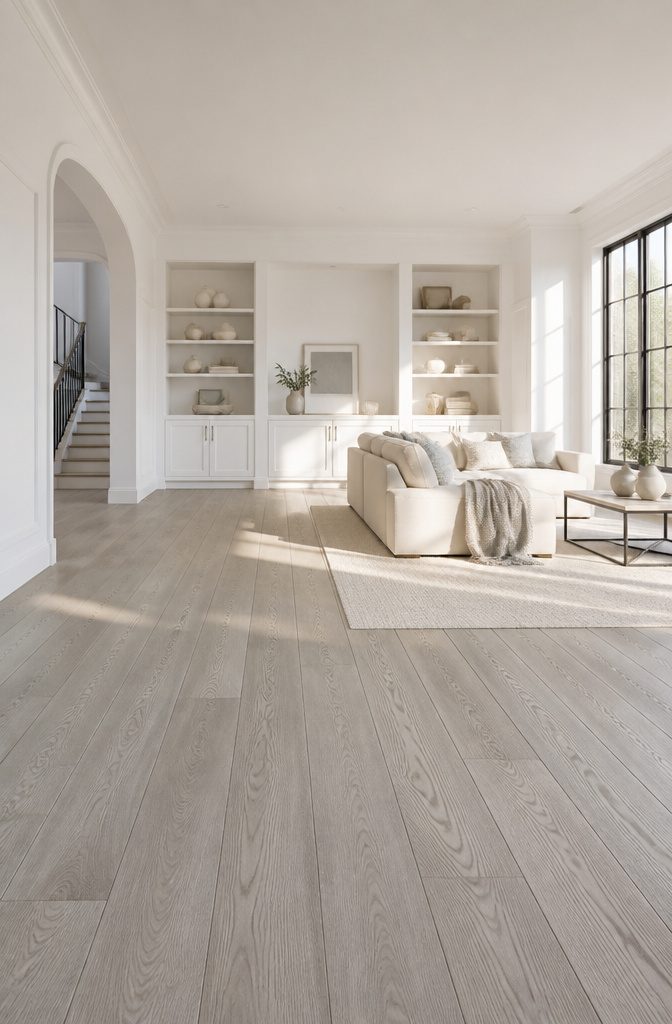
The floor is where a white wood interior lives or dies, because it is the largest single wood surface in the room and it sets the temperature for everything above it.
Creamy whites want golden woods; cooler whites need gray-washed oak or a driftwood finish. Get that pairing wrong and the walls look dirty or the floor looks pink, no matter what the paint chip promised.
Engineered plank or luxury vinyl plank that reads real is where I would put my money for a weekend project on a real budget.
Both give you the grain variation that keeps a pale floor from reading as plastic, and both lock together dry, so you are not waiting for glue to cure before you move the sofa back.
I have seen vinyl planks with embossed texture that catches light the way a matte oak board does, and at a distance the distinction is not worth the price gap for a space you are refreshing, not flipping.
The contrast between a sleek white surface and the organic grain underneath is what keeps the palette from going flat.
A rustic oak beam or honey-toned flooring adds dimension that white walls alone cannot deliver, but the floor has to carry that weight consistently across every square foot you see.
Wood Furniture Pieces
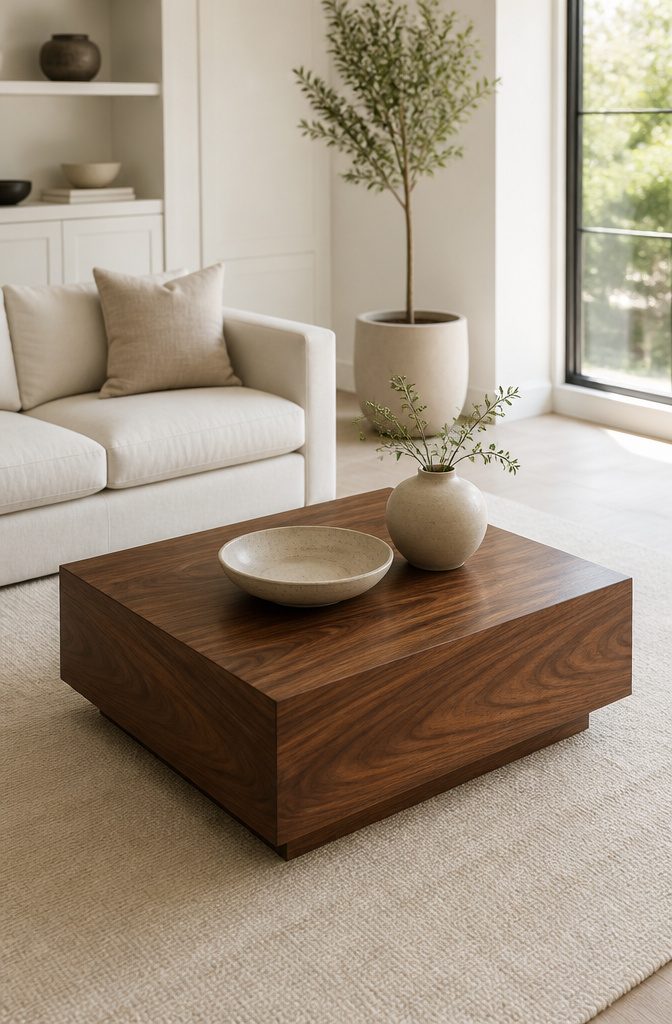
Standalone wood furniture carries warmth through a white room in a way built-ins cannot: it moves.
A single walnut table or honey-toned oak piece grounds the space with organic grain and texture against all that clarity, and if you tire of the layout, the balance shifts with you.
One well-chosen piece outperforms a matching set every time.
A reclaimed wood dining table with white upholstered chairs gives you the full contrast, dimension, and comfort the combination promises, without the visual weight of a coordinated suite. The table does the heavy lifting; the chairs keep it airy.
For renters especially, this is the practical path. A solid wood console or credenza against white walls adds the same layered, thoughtful feel as beam work, but it travels with you.
Spend the budget on the single largest surface you interact with daily, the piece your eye lands on from the doorway. Everything else can wait.
Balance and Contrast
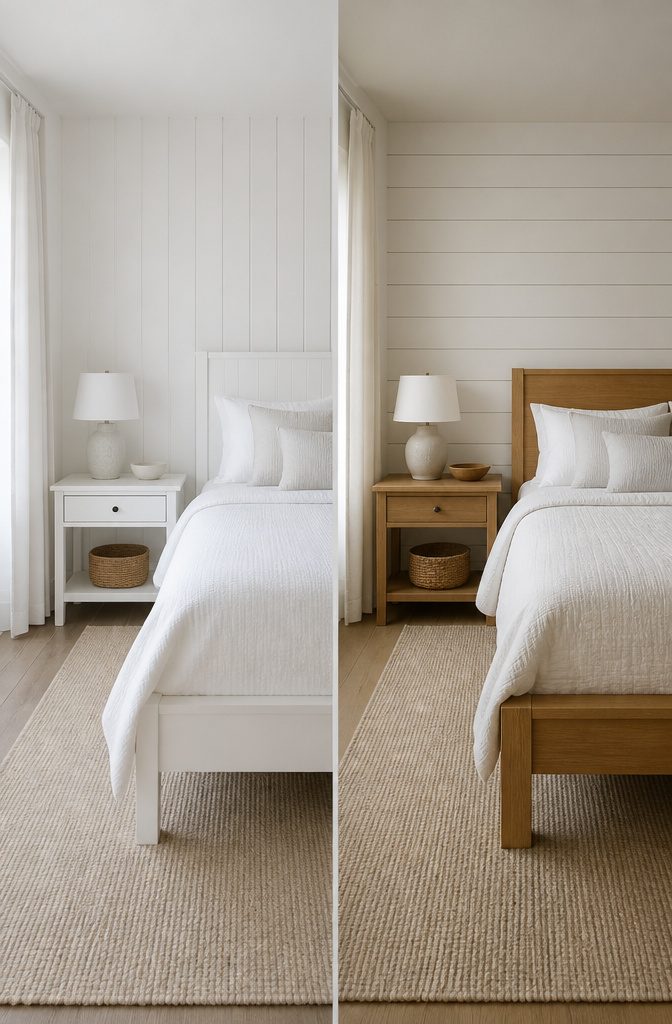
White brings clarity and light; wood grounds a room with texture and warmth.
The two balance each other because white alone can read cold and sterile, while wood alone in quantity turns heavy and dim. Together they hit a middle note that stays comfortable through a full day of shifting sun.
White walls, cabinetry, or upholstery push walls back visually and bounce available light, which matters in smaller rooms or north-facing spaces where every lumen counts.
Wood elements, whether a rustic oak beam, a walnut table, or honey-toned flooring, then step in to keep that brightness from flattening into something clinical. The grain gives the eye something to rest on, something that shifts at different angles.
The real engagement comes from layered tones rather than a single wood paired with a single white.
A room with bright white trim, warmer white walls, and two wood finishes, say a pale ash shelf against medium oak floors, builds depth without clutter.
The contrast stays dynamic because each layer reads slightly differently as light moves across it. Skip the layering and the palette risks reading as a paint swatch rather than a lived-in space.
Versatility Across Styles
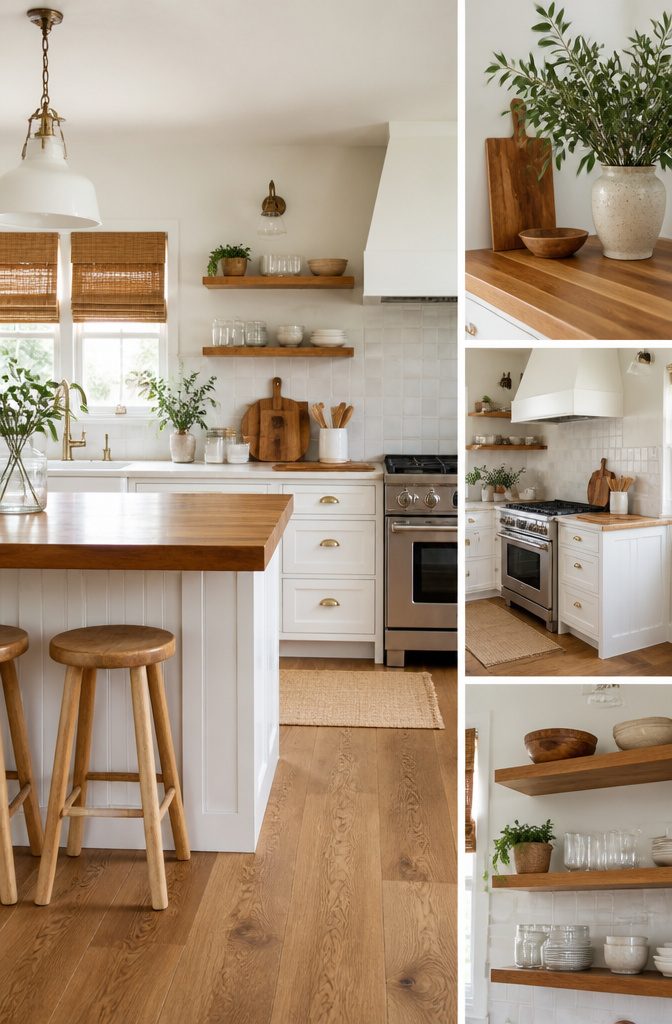
White and wood shift direction with a few deliberate choices, which is why the same two materials can read as three different rooms.
In a Scandinavian interior, white walls with blonde wood floors set the tone; the pale timber keeps the space from feeling sterile, and the pairing works because nothing competes for attention.
A farmhouse kitchen steers the same palette toward warmth by swapping the floor for white cabinetry and butcher-block counters, where the wood grain shows through daily use and the color softens under task lighting.
Contemporary spaces tend to isolate the contrast, one dramatic wood element against crisp white, a walnut staircase or a custom oak island doing the work that several smaller pieces would scatter.
The materials stay constant; the ratio and finish do the steering. For a renter or weekend project, the Scandinavian route asks least of the architecture, since pale floors and plain walls need no built-in commitment.
Butcher block in a kitchen demands more care, oiling against water damage, and that trade-off is worth weighing before the first cut.
Natural Texture
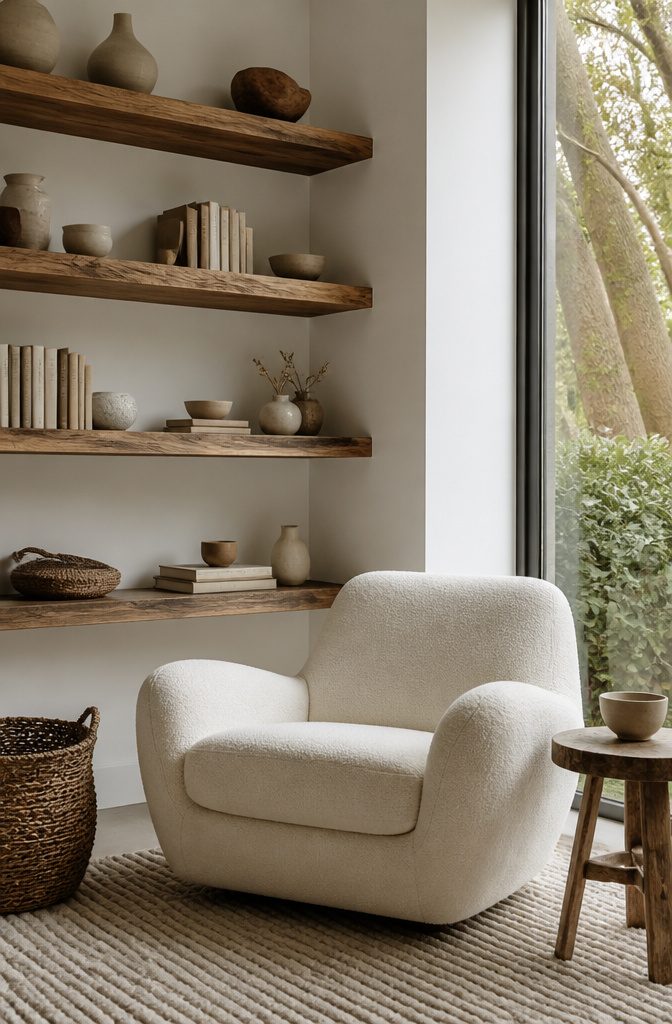
White alone reads flat because the eye has nowhere to rest. Wood grain gives the surface a tactile rhythm that invites touch even from across a room.
In a minimalist space, that variation does the work that color or pattern would otherwise do: pale ash or birch carries gentle shifts in tone that keep the palette from going sterile.
Smooth matte surfaces on every wall, every cabinet, every piece of furniture create what I think of as a showroom effect.
The room looks staged rather than lived in, and the silence of all that sameness can feel cold by evening. Grain breaks that stillness without breaking the calm.
The balance I look for is one material with visible texture against one that reads as quiet.
A white-painted wall behind a raw oak shelf, or birch flooring against matte white cabinetry: the contrast is enough to make both feel intentional. Too much grain competes; too little, and the space forgets it is made of real materials.
Timeless Appeal
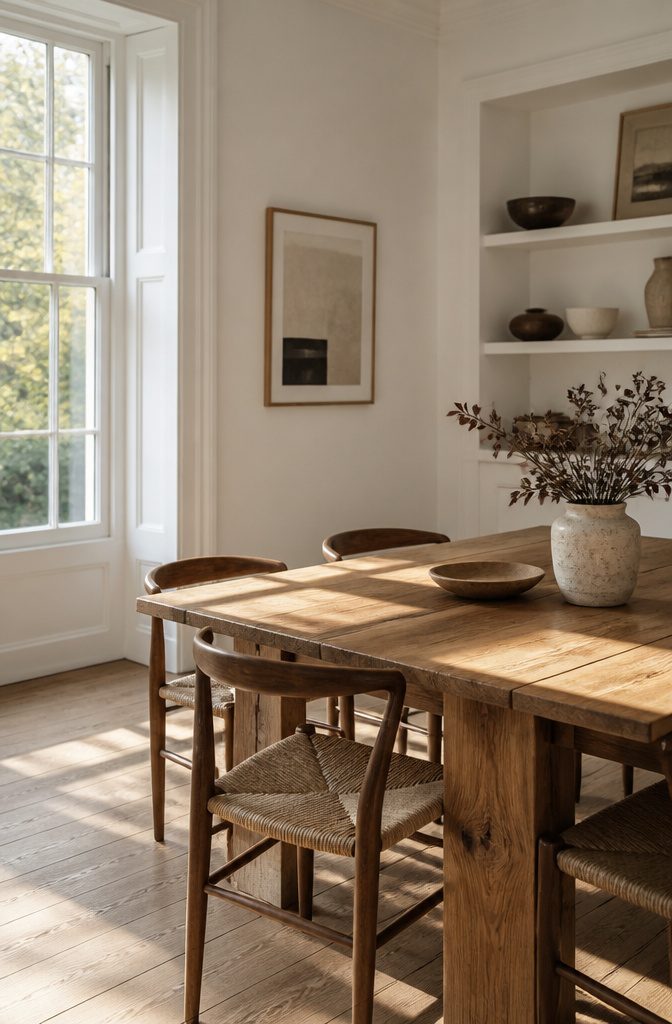
White and wood outlast trends because the pairing needs no trend to make sense.
White expands light; wood returns warmth. Neither argues with the other, and neither demands a particular era’s furniture to look finished.
The real durability is in what you do not have to do.
A room built on this base does not need repainting when your taste shifts from Scandi to cottage or from minimal to layered. The white walls accept color through curtains, a sofa, a single large painting.
The wood grain anchors the space even when everything else changes. Seasonal branches or a new textile collection read as updates, not repairs.
I tend to warn against combinations that only work with one style of hardware or one vintage era. White and wood carry no such trap.
White oak cabinets beside salvaged timber beams hold together across two centuries of reference, as one designer proved in a circa-1802 farmhouse renovation. The same shell takes black metal accents tomorrow and woven baskets next year.
Restraint is what keeps it from looking dated. The combination rewards simplicity and punishes clutter; every object you add sits in clear view against that quiet backdrop.
Choose this foundation when you want the room to feel settled now and still open to what you bring home in five years.
Seasonal Flexibility
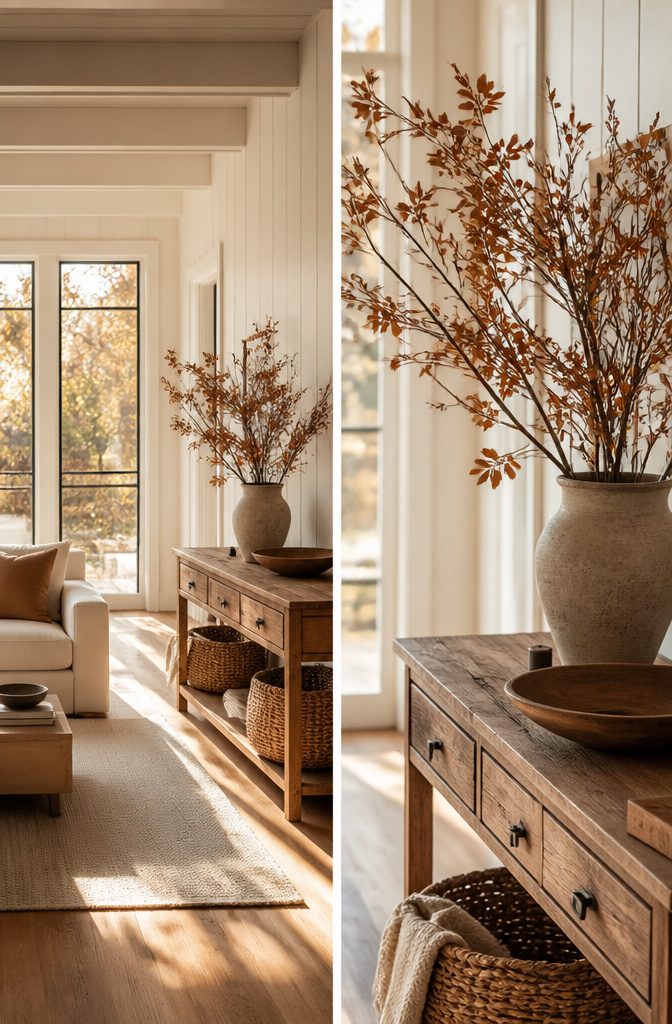
A white and wood interior gives you a clean backdrop that shifts with the seasons without touching a paint can or moving a cabinet.
In summer, woven baskets and linen curtains keep the room feeling light against pale walls and natural grain.
Swap in autumn branches when the light turns amber, then winter greenery when the days shorten. The same corner reads completely different each time because the base stays quiet and the accessories do the work.
Avoiding the full-room overhaul is where the real value sits. Most renters and first-home owners I know would rather spend a Saturday afternoon rearranging a shelf than another weekend taping trim.
White and wood lets you do exactly that: one set of walls, four moods a year, all on the kind of budget that leaves room for the next project.
Creating Depth With Undertones
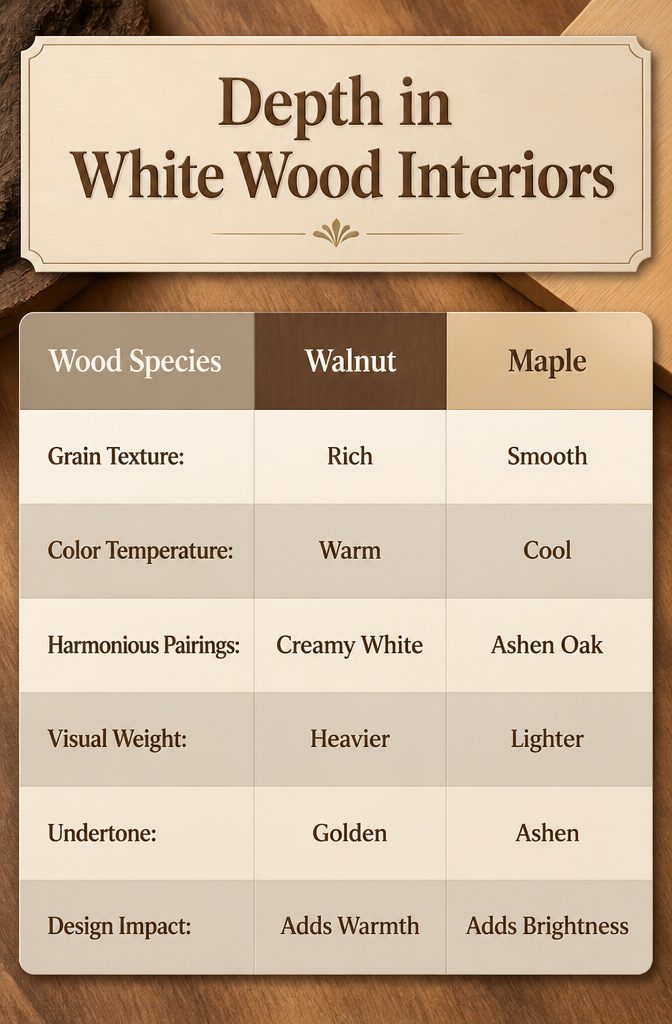
Mixing walnut with maple, or reclaimed pine with white oak, keeps a white wood interior from reading as flat.
The eye catches the shift in grain and value before it names the species, and that slight friction is what makes the room feel collected rather than assembled.
The undertone does the real work of harmony or clash.
Creamy whites sit naturally with golden woods; cooler whites need the ashen side of oak, the gray driftwood finish. Get the pairing wrong and the same two pieces turn muddy or sterile against each other.
The test is simple and works in any aisle with samples in hand. Hold one wood directly against the other and step back until they blur into single blocks of color.
If the two masses feel related, the undertones match. If one suddenly jumps forward as warmer, cooler, pinker, or greener, they will fight for attention on the same wall.
The distance strips away grain and finish so you are judging only the color temperature underneath, which is exactly what the room will register once the furniture is in place.
Frequently Asked Questions
Why is white and wood a popular combination in home decor?
White expands light and pushes walls back visually, while wood grounds the room with texture and warmth.
The two balance each other because white alone can read cold and sterile, and wood alone in quantity turns heavy and dim. Together they hit a middle note that stays comfortable through a full day of shifting sun.
How can I incorporate white and wood into my interior design?
Start with white walls and add wood through shelving, furniture, or flooring rather than trying everything at once.
Light wood accents like birch or maple shelving pull cooler whites toward something livable, and one substantial piece outperforms scattered small tokens. White cabinetry with butcher block countertops gives you the warmth without committing to full wood cabinetry.
What styles work well with white and wood interiors?
The combination adapts across Scandinavian, farmhouse, and contemporary spaces by adjusting the ratio and finish.
Scandinavian interiors pair white walls with blonde wood floors; farmhouse kitchens use white cabinetry with butcher-block counters; contemporary spaces isolate one dramatic wood element like a walnut staircase against crisp white. The materials stay constant; the proportion does the steering.
What is white wood?
White wood refers to pale-toned lumber from species like white oak, birch, maple, pine, or beech used in interiors for its light color and visible grain.
In the context of white wood interiors, it describes the overall palette of pairing white surfaces with light to medium wood elements rather than a single species.
What are the types of wood finishes?
Oil sinks in and hardens from within for the most honest look but needs reapplication every year or two. Wax sits on top with a softer luster yet scratches easier and demands more frequent attention.
Clear lacquer builds a harder shell and needs less upkeep, though even the thinnest film adds slight gloss that distances the wood from your hand.
Can you paint white furniture to look like wood?
For the authentic warmth that white wood interiors require, visible grain and natural texture are what keep the palette from reading as plastic or manufactured.
What is the white stuff on my wood furniture?
For white powdery buildup on wood furniture, you would need to consult care guides specific to your finish type.





