
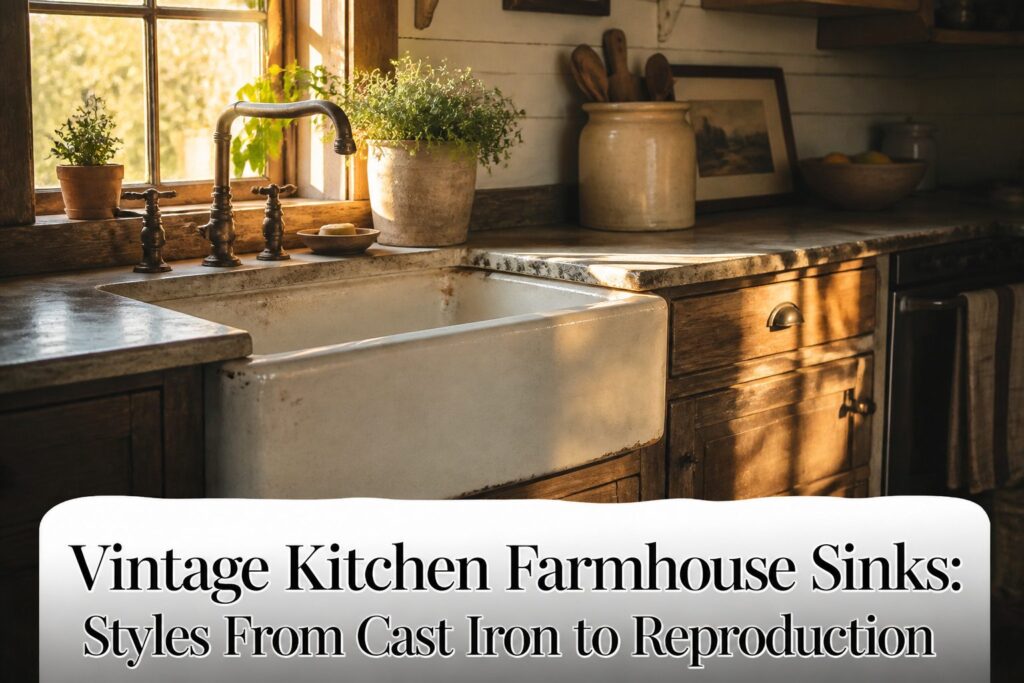
A vintage sink kitchen farmhouse is a wide, apron-front basin set into the counter with its front exposed, originally built for heavy farm-kitchen use.
The real problem is weight: a true 42-inch cast iron model like the Sandford runs 250 pounds, demanding reinforced cabinets and often two installers where a modern steel drop-in needs neither.
Reproductions in fireclay or fiberglass cut that load dramatically, but the surface rings hollow and the long-term durability remains unproven against iron that has already lasted a century.
[link-whisper-related-posts]Single Bowl Farmhouse Sink
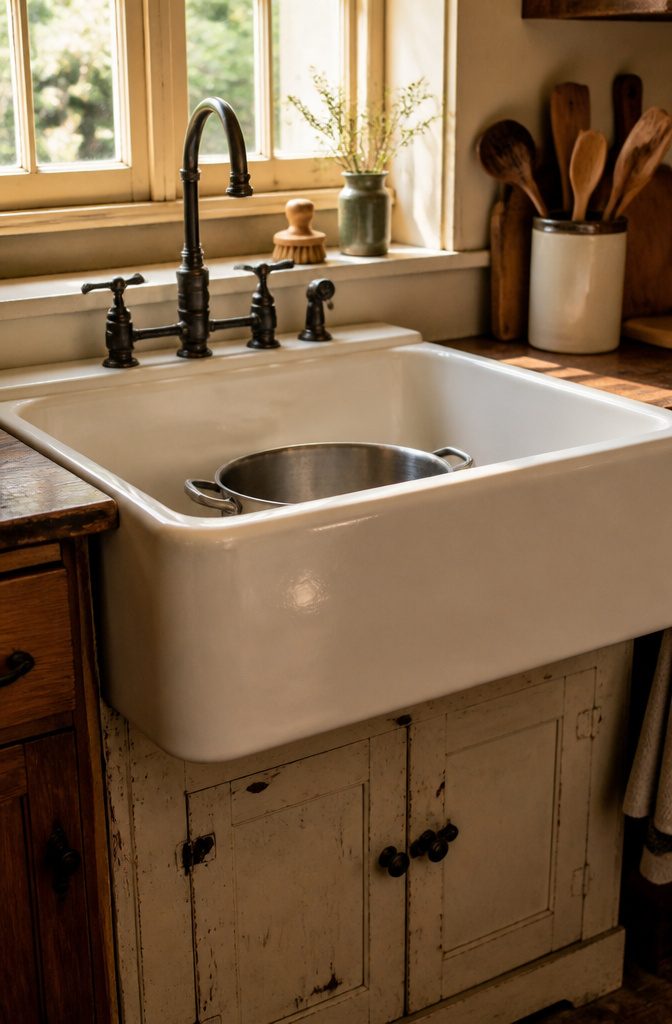
The single bowl is the shape most people picture when they hear vintage sink kitchen farmhouse: one wide, open basin with nothing dividing it, apron front and all. That uninterrupted floor matters more than it sounds.
A 42-inch Sandford model swallows a full sheet pan or a stockpot without the tilting and wedging that a partition forces on you. Water stays inside because the walls are high enough, and your forearms do not end up soaked.
I look for depth first when I spot one of these at a salvage yard or an estate sale listing.
Anything under eight inches front-to-back feels like a bathroom sink dressed up for kitchen duty. Ten inches is where the practicality starts, and twelve is better still if the cabinet below can take it.
The weight is the other check: cast iron this size runs well past two hundred pounds, so the floor and the base cabinet need to be honest about what they can hold.
A reproduction in fireclay gives the same lines with less structural anxiety, though the surface rings differently when you set a heavy pot down.
Double Bowl Farmhouse Sink
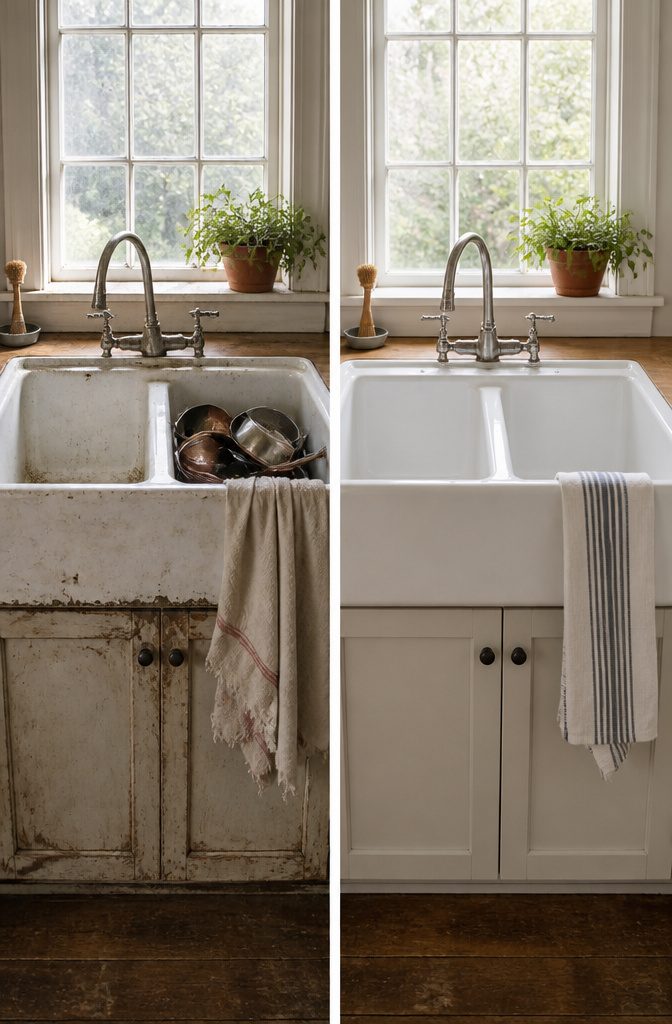
A double bowl farmhouse sink splits the basin down the middle, usually into two equal 15-inch halves within that common 30-inch width.
The divider sits high enough to keep soapy water on one side while you rinse on the other, which sounds efficient until you try fitting a roasting pan or a stack of sheet trays into either half.
For the kind of heavy, oversized cookware that draws people to farmhouse sinks in the first place, the divider becomes a wall you are constantly working around.
I have watched renters buy these thinking the split will streamline their cleanup, then spend a year lifting pots over that central ridge to wash them at an angle.
The multitasking advantage is real for lighter daily loads: one side fills with hot water while the other drains, or one soaks while the other stays clear for hands.
But farmhouse kitchens, at least the ones that earn the name, tend to run toward the big-batch and the oversized, and that is exactly where the double bowl fights back.
If your routine leans toward prep bowls and cutting boards rather than stockpots, the split probably earns its keep.
For the rest of us, the single bowl wins on pure utility, and the double reads more as a period-correct compromise than a practical upgrade.
Farmhouse Sink with Drainboard
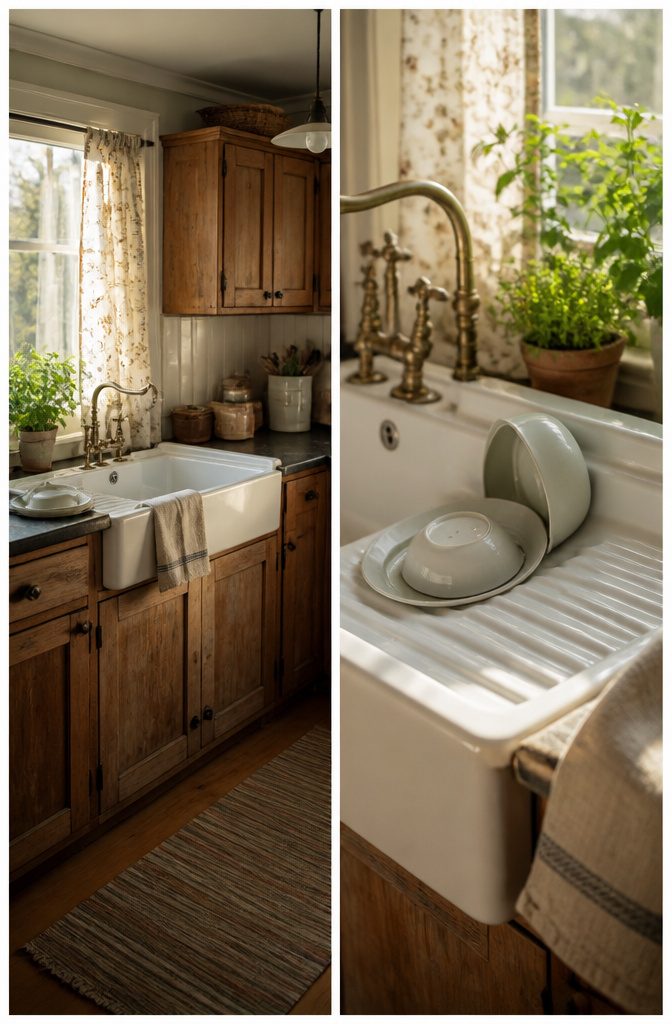
The integrated drainboard is what separates a true vintage farmhouse sink from the apron-front imitations that came later.
On originals, you will find either a single board to the left or a pair flanking both sides of the basin, sloped so water runs back into the bowl instead of pooling.
That slope matters more than the width, and it is the detail I look for first when judging whether a piece was built for work or built for show.
A double drainboard gives you the most drying real estate, but it also demands the most counter. I think of it as trading linear feet of countertop for a self-contained workstation.
In a galley kitchen under ten feet, that trade usually costs too much. A single drainboard on the left, where a right-handed cook stands, keeps the compromise reasonable.
Reproductions with drainboards exist, though the proportions often feel off to me.
The boards run narrower than on cast iron originals, or the slope is too shallow to actually drain. If you are buying new, I would rather see a reproduction skip the drainboard entirely than do it halfway.
A flat ledge beside the basin is just counter space pretending to be a feature, and it will not perform the job.
Skirted Farmhouse Sink
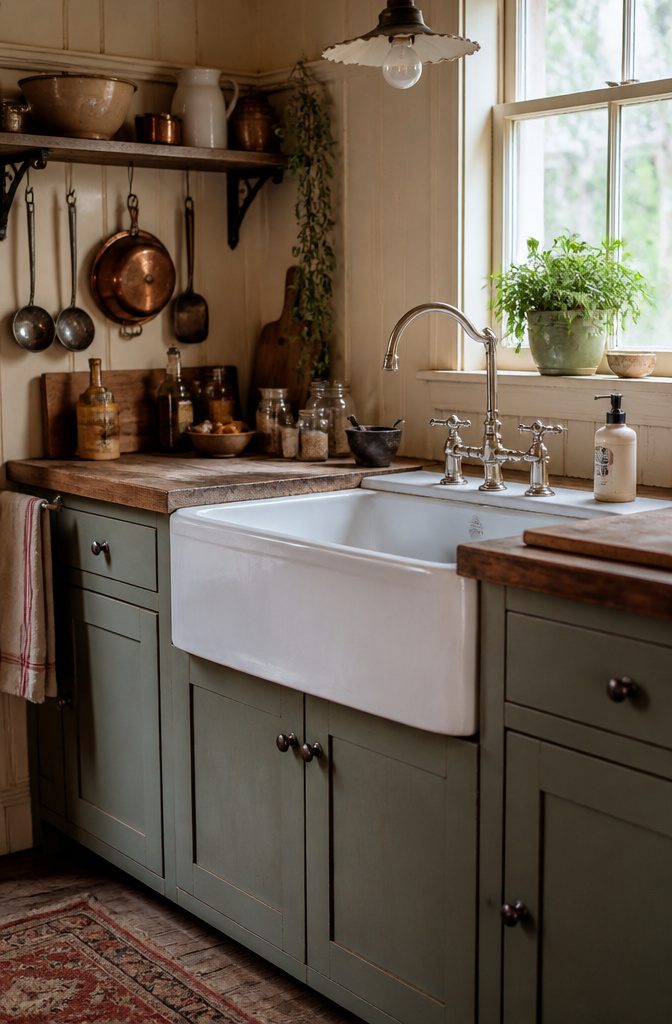
A skirted farmhouse sink carries its decorative panel past the basin and down over the cabinet face, almost like furniture slipped over the front of the box.
That extra length of visible apron is what separates it from a plain apron-front model, where the front stops at the sink rim and leaves your cabinet door exposed below.
The skirt can be original to an old cast iron piece, cast as one solid form with the bowl, or it can be added later with a wood or composite panel clipped onto a standard apron front.
An original skirt has the weight and the patina you are buying the sink for, but it also dictates your cabinet height and your counter seam placement because the proportions are fixed.
An added skirt gives you more flexibility in fitting a reproduction or salvage sink to modern cabinets, though the joint between sink and skirt needs sealing well or it will catch every splash and crumb.
Installation runs differently from a plain apron front in one practical way.
The cabinet face must be notched or built shorter to let the skirt pass in front of it, which means you are committing to the sink before you commit to the cabinet finish.
Swap the sink later and you are looking at a new cabinet front or a visible gap where the old skirt sat.
I would plan the skirt as the visual anchor of the whole run and build outward from there, rather than dropping it into cabinets already in place.
Vintage Cast Iron Sink
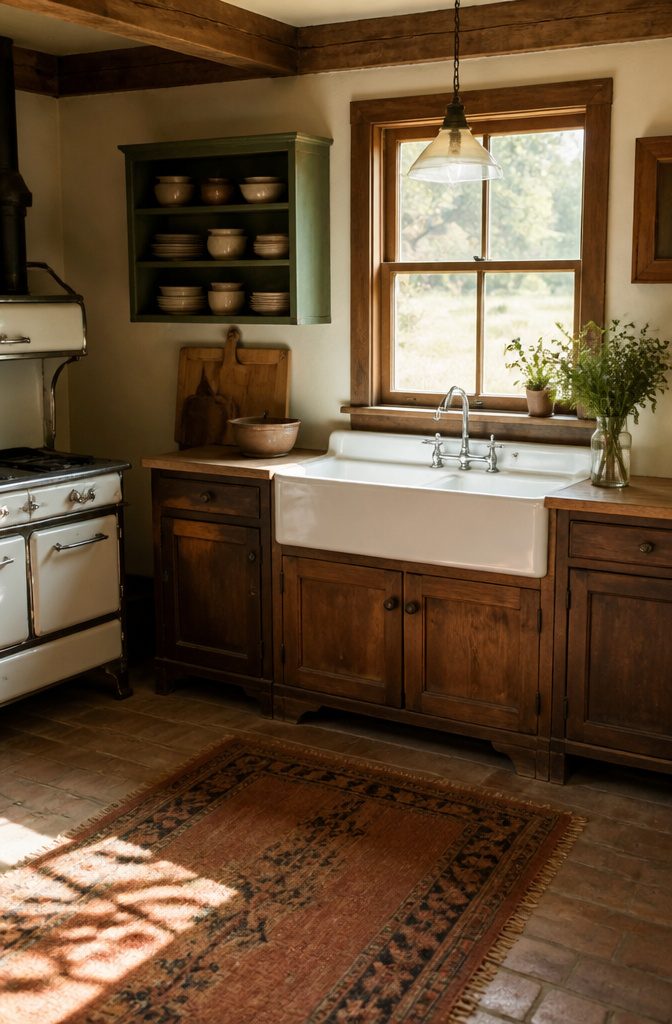
Porcelain-enameled cast iron is the material that makes a vintage sink feel like the real thing. The iron body gives it heft, and the glassy porcelain surface wears its scratches like patina rather than damage.
I have seen these sinks outlast three generations of kitchens, though the weight is not negotiable: a 42-inch model like the Sandford runs about 250 pounds, and your cabinet needs to know it is coming.
The Sandford at 42 inches is the size I would pair with a 40-inch vintage stove. Repetition of widths keeps a retro kitchen from feeling like a collage.
It carries a left-hand drainboard, wall-mount faucet holes on an 8-inch spread, and the shallow basin that matches early-1900s originals. For cleaning old porcelain, Bar Keeper’s Friend still works.
The oxalic acid lifts rust and coffee stains without the abrasion that would dull the gloss on acrylic or fireclay. Use a soft scrub sponge, not steel wool, and the surface stays glassy for decades.
Reproduction Sinks
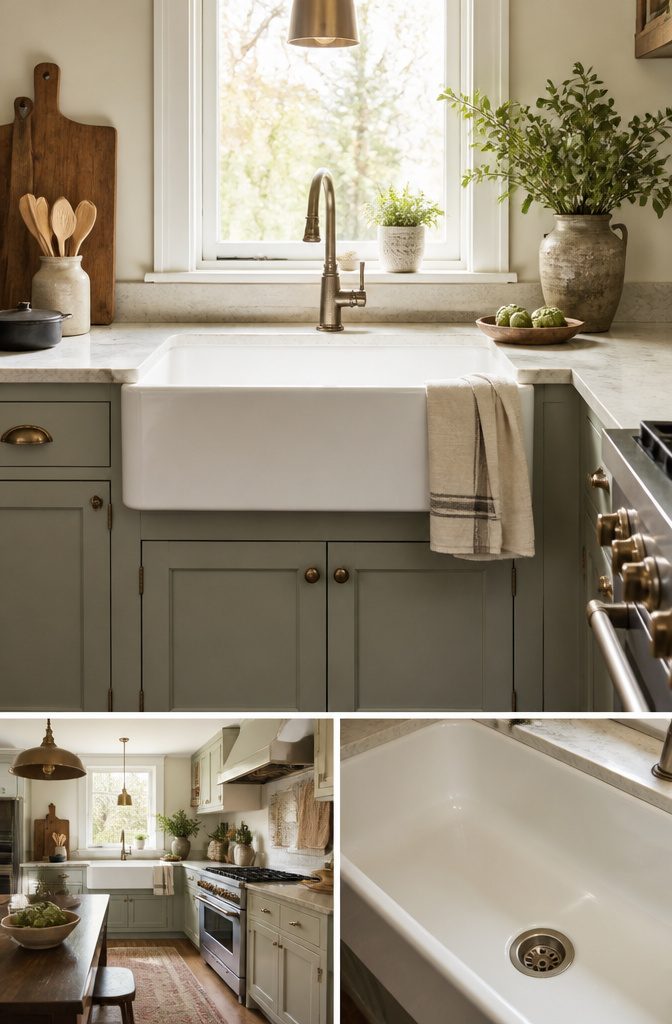
Modern reproductions let you skip the hunt for a true vintage piece, but the gap between the two options is wider than most buyers expect.
A real refinished sink carries the wear and handwriting of another era. A reproduction starts fresh, and that freshness cuts both ways: no chipped enamel to repair, but also no proof that the porcelain will age the same way.
The Strom Plumbing Clarion sits at the heavy end of reproductions. It stretches 5 feet and weighs nearly 500 pounds, priced at $1,550.
Those numbers place it in territory where you are already investing serious cabinet support and floor reinforcement. For that weight and money, I prefer knowing where it was made.
Most reproduction farmhouse sinks come from Chinese manufacture now.
Kohler’s Delafield line, made in the U.S., runs against that tide. I would pay the premium the Delafield commands, if only because porcelain fired here has a longer track record against crazing and thermal shock.
The Chinese versions I have seen in person look right on day one; whether they stay that way through a decade of boiling pasta water and cast-iron pans is a bet I would rather not take.
Materials That Last
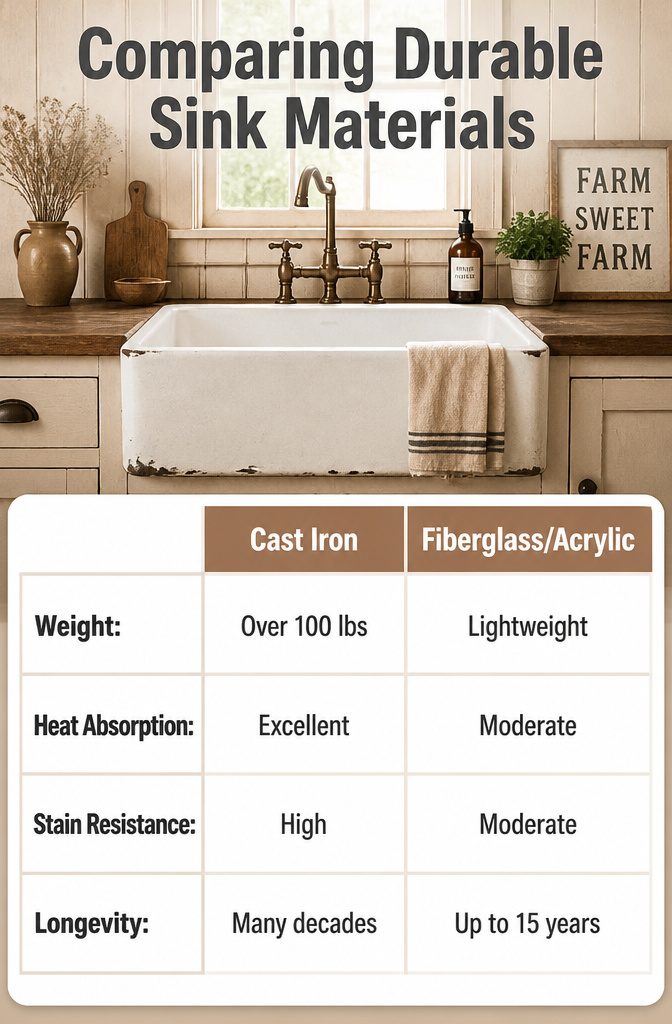
Cast iron coated in porcelain enamel carries the weight of a vintage sink kitchen farmhouse installation, literally.
At well over 100 pounds empty, it demands cabinet reinforcement and two people for the drop-in, but that mass absorbs heat and sound like nothing else.
The enamel surface resists coffee and wine stains for decades until the day something heavy chips it; then rust spreads under the finish where you cannot see it.
Fiberglass and acrylic reproductions weigh a fraction as much, which means you can lift one into place alone and skip the structural retrofit.
They ship without the hairline cracks that haunt salvaged iron, and modern gel coats handle boiling water better than early plastics managed.
The trade-off shows up around year ten or fifteen, when the surface dulls and a dropped knife leaves a gouge that will not polish out.
Solid surface composites and fireclay sit between these poles. Fireclay shrugs off thermal shock and carries the heft of iron without the rust risk, though it costs more than most weekend budgets allow.
Composites stay lighter and cheaper, but I would plan on replacement rather than refinishing when the surface finally goes.
For a rental where you want the look without the permanence, fiberglass wins. For a house you plan to stay in, the weight of iron is worth the structural headache.
Size and Cabinet Fit
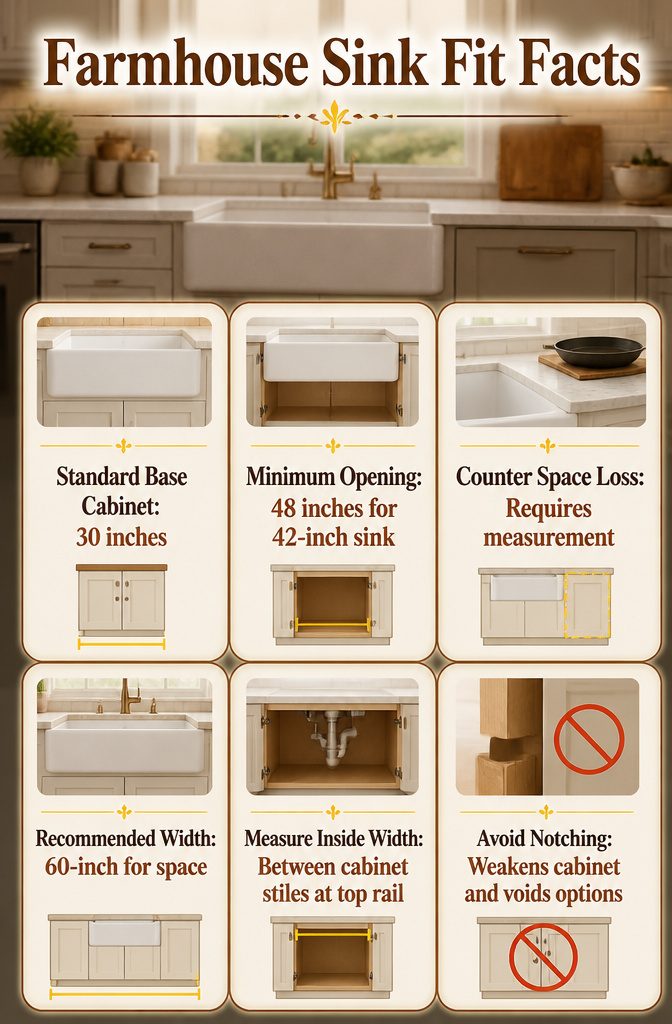
A 30-inch farmhouse sink drops into most standard base cabinets without drama. You pull the old top-mount out, clean the rails, and the apron front clears the cabinet face with room to spare.
That width works in galley kitchens where every inch of aisle matters, and it leaves enough counter landing on at least one side for a hot pan.
The jump to 42 inches is where I start measuring twice. That span usually needs a minimum 48-inch cabinet opening to keep side supports from crowding the bowl.
I have seen renters force a 42-inch sink into a 36-inch base by notching the stiles, which weakens the cabinet and voids any chance of reinstalling it later.
The extra basin width is genuinely useful for sheet pans, but only if the kitchen layout can absorb the lost counter space.
A 60-inch model, like the Clarion, reads as furniture.
It demands either a run of cabinets built for it or a standalone placement against a wall with plumbing roughed in the floor. Most kitchens laid out in the last fifty years do not have that opening ready.
Before ordering anything, I measure the clear width between cabinet stiles at the top rail, not the finished face frame. That inside dimension decides what will actually slide in.
Wall-Mount and Undermount Support
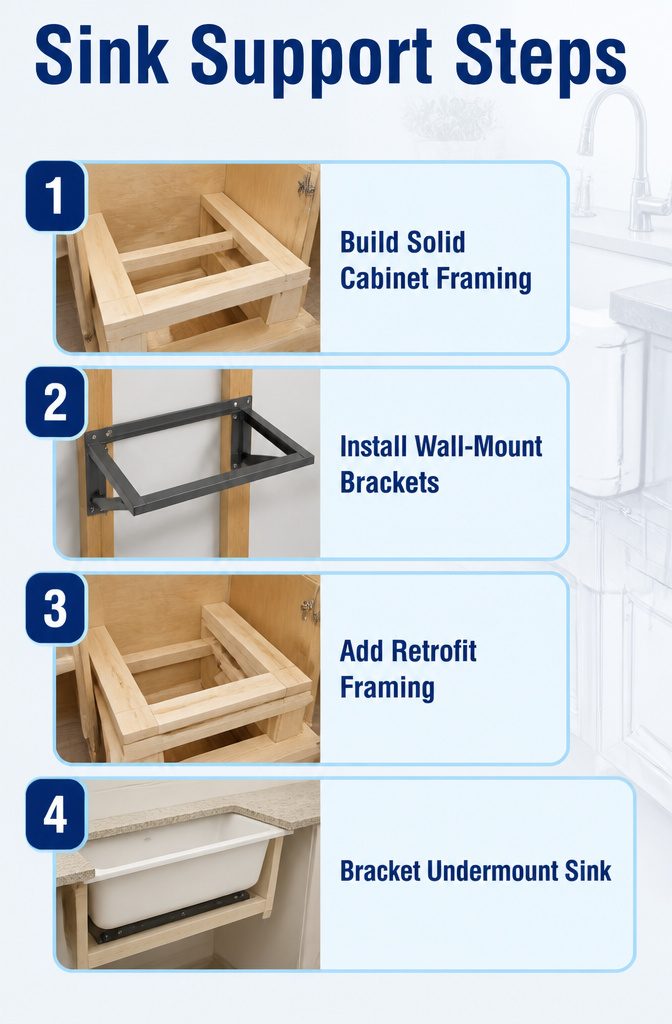
Cast iron farmhouse sinks are heavy enough that the cabinet beneath them has to be built for the load, not just the opening.
A drop-in stainless steel unit distributes its weight across the countertop lip, but an apron-front vintage sink carries every pound through its base and front rim.
The floor of the cabinet and the front rail need solid framing, especially in older homes where the subfloor may have settled.
Wall-mount brackets help, though finding hardware rated for a 200-pound basin plus water takes some searching.
Most reproduction makers now include a steel frame that bolts to the wall studs and carries the sink from behind, which I think is the safer route than trusting the cabinet box alone.
If the sink is going into existing cabinetry, the retrofit framing costs a weekend and some plywood, but skipping it risks cracks in the porcelain or, worse, a slow sag that pulls the sink away from the wall.
Undermount installs on a vintage-style sink are less common because the apron front wants to sit proud of the cabinet face, but they do appear in some reproduction lines.
The same rule applies: the support has to come from below and behind, not from the counter edge.
Granite or quartz counters can take the weight if the sink is properly bracketed underneath, but I would not trust them to carry it unassisted.
Refinishing What You Find
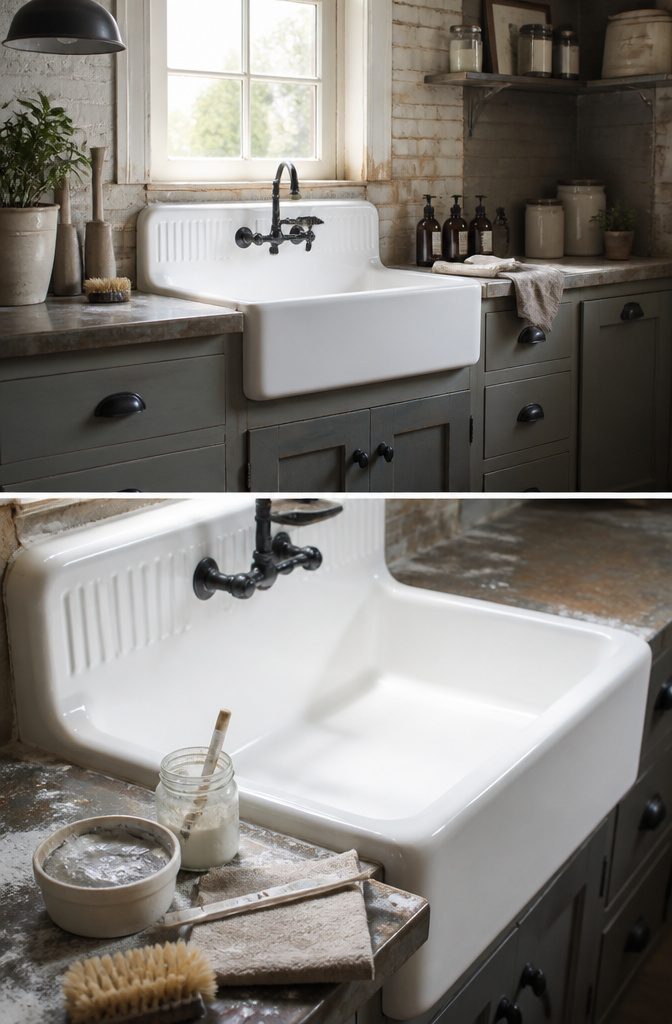
A refinished vintage sink runs about what a mid-range reproduction costs, but you keep the original cast iron body that will outlast any new steel basin.
The process strips the old porcelain down to the metal and fires on a fresh coat, giving you another thirty to fifty years of service if the iron underneath is sound.
The finish is too far gone when the iron itself is pitted through, not merely stained or chipped.
Surface rust and hairline cracks in the porcelain are repairable. Thinner spots at the basin bottom or structural sagging in the apron mean the metal has corroded past saving, and no refiring will bond to compromised iron.
Reproduction fiberglass avoids the weight and the breakage that one owner noted after a year of use, though the same reader admitted it solved a dish-breaking problem they’d never had with stainless steel.
That trade-off is real: you lose the thermal mass and the period heft, gain forgiveness on impact.
For wall-mounted high-back sinks, refinishers typically do not supply the original mounting hardware.
Brackets and legs come from salvage suppliers or specialists, with cast iron legs running around $210 for adjustable pairs. Factor that in before you decide the found sink is the cheaper path.
Frequently Asked Questions
What is the difference between a farmhouse sink and an apron sink?
There is no real difference. "Farmhouse" and "farm sink" are just slang terms for the same early-1900s to 1950s design, whether it had an apron front or not.
These sinks were sold in city high-rises as often as rural farmhouses because they were simply the standard style of the era.
Where can I find vintage farmhouse sinks?
Check eBay for restored farmhouse sinks, sort by distance to avoid shipping costs, or hunt local salvage yards and estate sales.
Reproductions from makers like Strom Plumbing and Kohler are also easier to find now if you want the look without the hunt.
How do I clean an old porcelain sink?
Bar Keeper’s Friend still works best.
The oxalic acid lifts rust and coffee stains without the abrasion that would damage newer materials. Use a soft scrub sponge, never steel wool, and the glassy surface stays intact for decades.
What did sinks look like in the 1930s?
Most American homes in the 1920s and 1930s had large white cast iron sinks with an apron front and integrated backsplash.
They came as single bowl, double bowl, with drainboard on one or both sides, some mounted above cabinets, some with decorative skirts, and some standing on cast iron legs.
Are farmhouse sinks expensive?
A refinished vintage sink runs about what a mid-range reproduction costs.
The Strom Plumbing Clarion reproduction stretches 5 feet and costs $1,550, while cast iron legs for wall-mounted sinks run around $210. Refinishing an original gives you another 30 to 50 years if the iron underneath is sound.
What are the latest trends in farmhouse sink design?
Reproductions are becoming easier to find, though most now come from Chinese manufacture.
Kohler’s Delafield line, made in the U.S., runs against that tide. Buyers are also retrofitting reproductions with added skirts for flexibility, and wall-mount bracket systems are now standard for handling 200 to 500 pound loads without trusting the cabinet box alone.





