
A tension rod and a pedestal sink cabinet both solve the same problem, and nothing below needs more than an afternoon with a screwdriver.
What decides which one is yours is whether your pipes sit in back or dead center, because a single wide organizer fits the first arrangement and two narrow ones flanking the plumbing fit the second.
I measure span on the package now and buy short to compress, not long to stretch, since a rod at its longest holds weakest.
[link-whisper-related-posts]1. Tiered Organizers
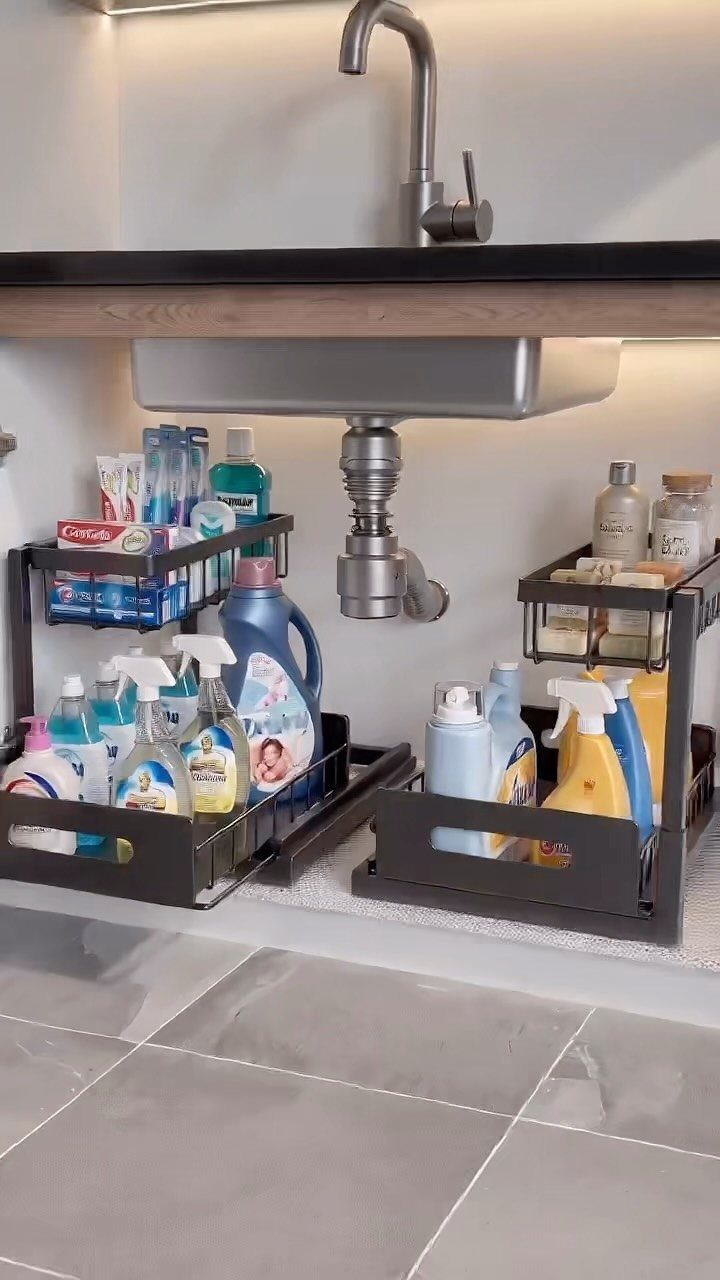
A two-tier pull-out organizer turns dead space behind plumbing into usable storage. A metal frame that sits clear of pipes gives two full surfaces where only one existed before.
I like the pull-out mechanism because you do not have to crawl halfway into the cabinet to reach what sits in back.
Cleaning bottles on one level and daily toiletries on the other keeps the things you grab often within easy reach.
Measure your cabinet depth before you buy; most units need enough clearance for the frame plus a little extra for the slide hardware. A clear surface beats a stuffed cabinet every time.
If your sink plumbing sits dead center, a single wide organizer may not fit. 2 narrow units flanking the pipes solve that.
2. Lazy Susan
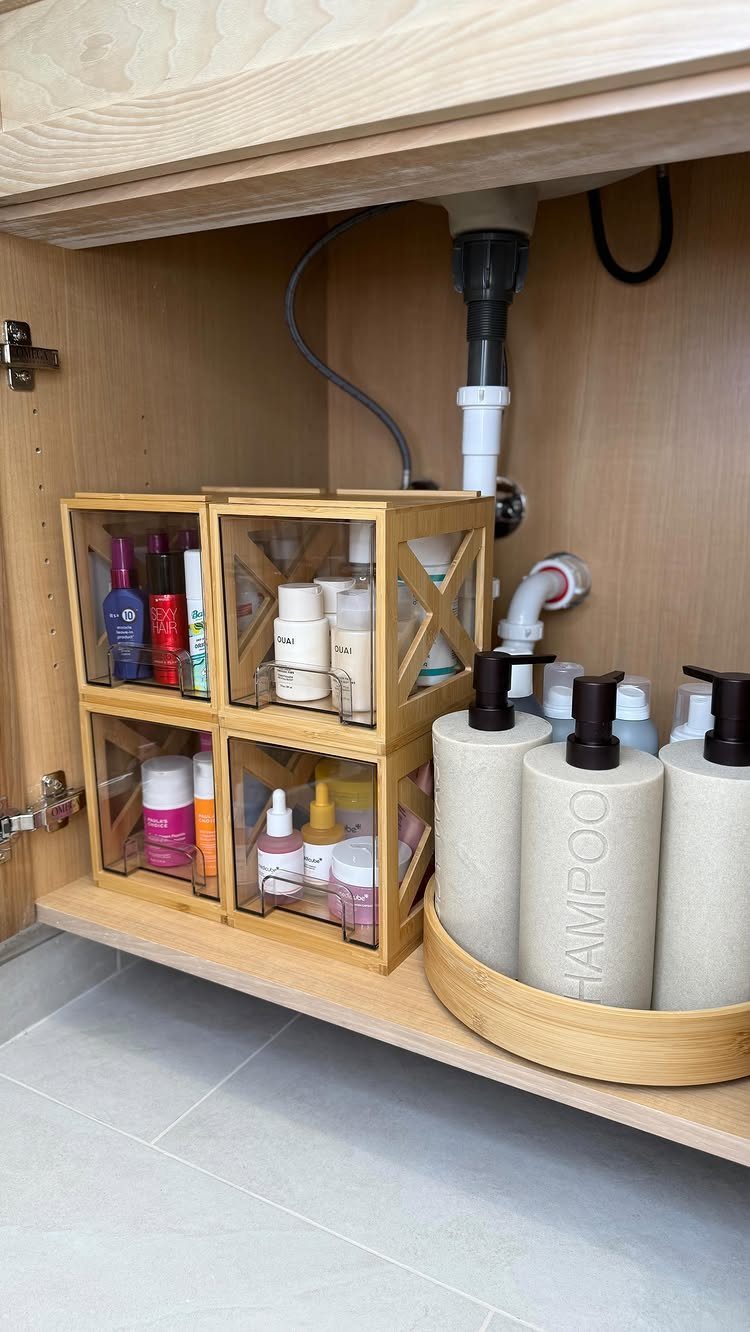
A turntable spins bottles and jars to the front so nothing hides in back.
A bamboo turntable on the cabinet floor carries large dispenser bottles that would otherwise block everything behind them.
I prefer coated wire or plastic to unsealed wood for under-sink use; bare wood swells with drips and stains where a non-porous surface just needs wiping.
Spin the tray to see labels at a glance.
No installing, no hardware, no measuring. Bamboo runs cheaper than plastic or metal in this size, and it stays quiet when you spin it.
Best for cabinets with a straight back wall and clear floor space. Drawers or a fixed shelf above limits how tall a bottle you can stand on it.
3. Pull-Out Drawers
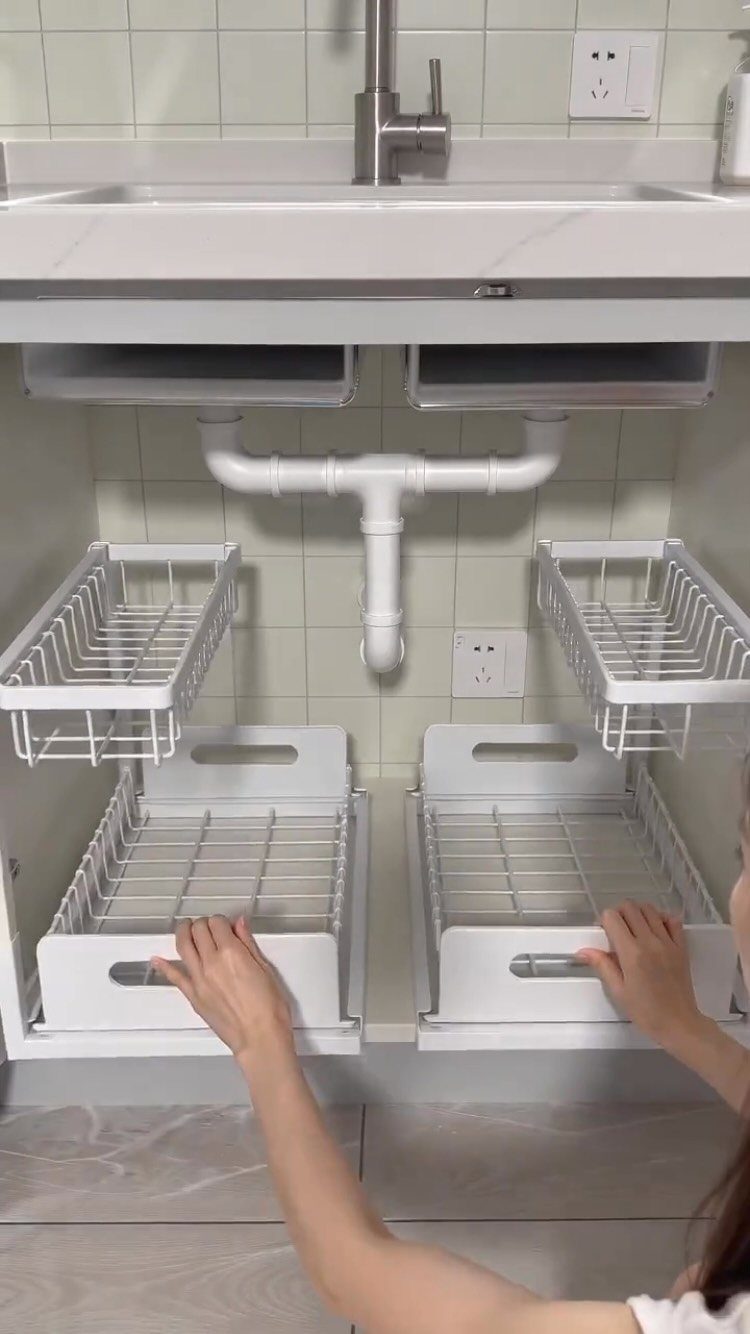
Wire sliding drawers mount to cabinet sides and give you drawer action where a fixed shelf or open cavity now sits.
The white metal set pulls past plumbing and stops where you need it. I would choose wire over solid sides for under-sink use; drips fall through, and you spot leaks before they pool.
Check your cabinet width before ordering a kit; narrow ones need side walls you can screw into without hitting the plumbing.
Pull with one hand while the other steadies the frame; plan on two hands when the drawer holds full bottles.
4. Use of Command Hooks
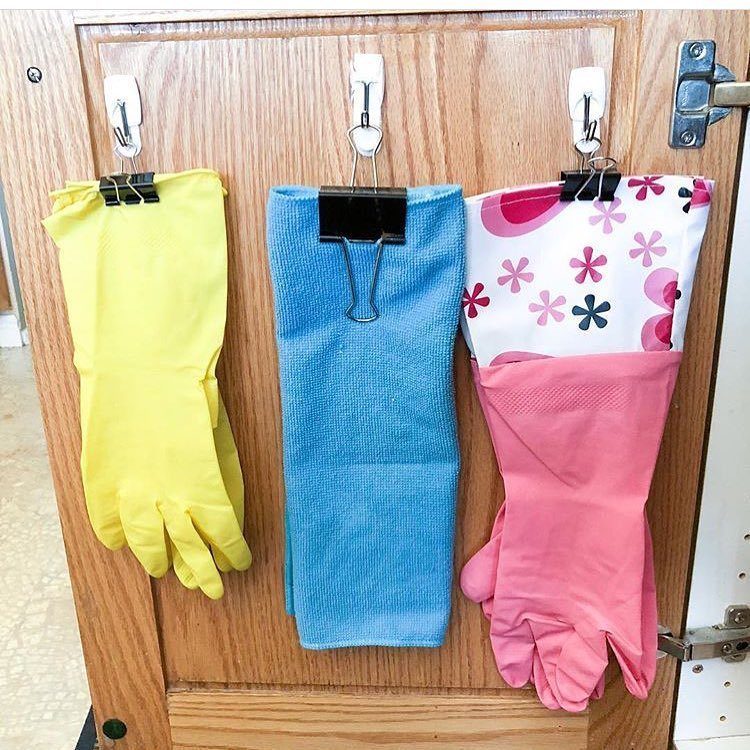
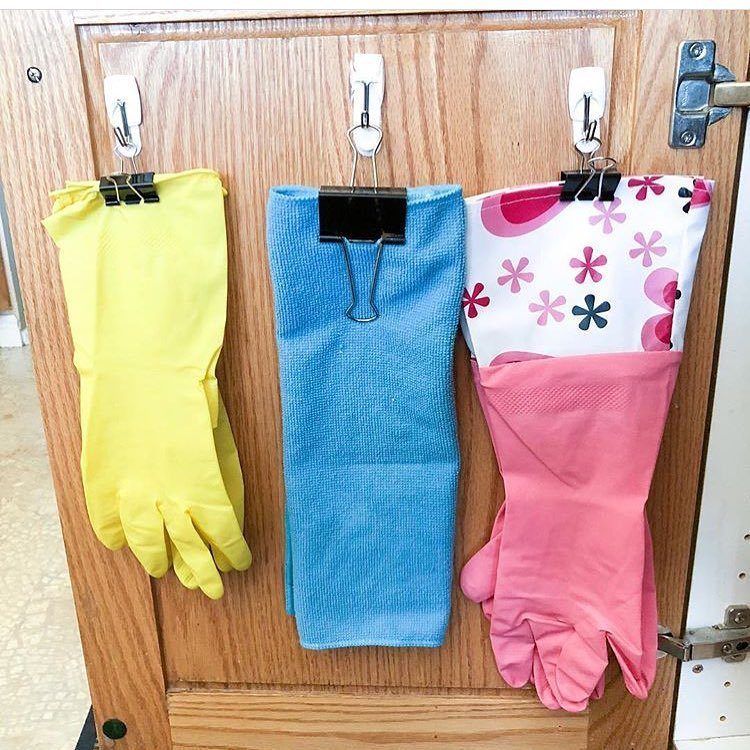
3 adhesive hooks on a cabinet door hold gloves, cloths, and small tools off the floor and out of the splash zone.
Press to the door firmly, then wait before you load so the adhesive sets.
Door thickness matters. Standard cabinet door thickness works fine; anything thinner risks pull-off when you close hard.
5. Under Pedestal Sink Organizers
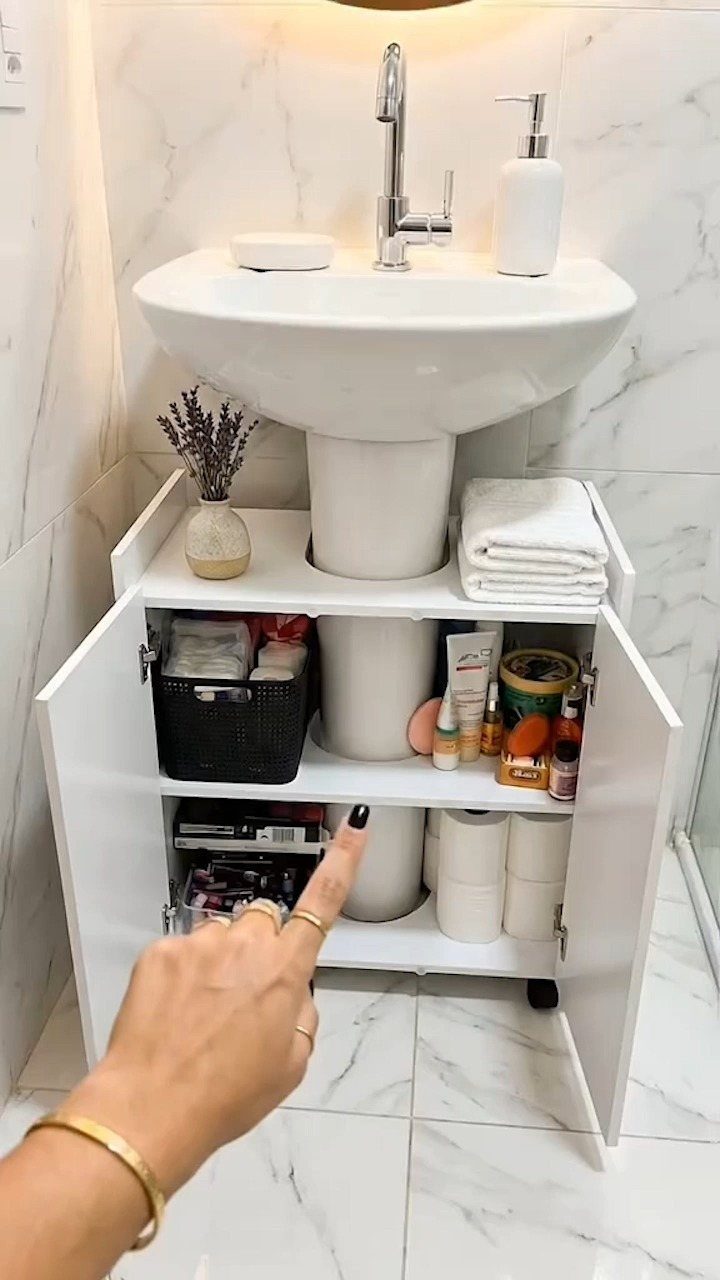
A curved cabinet built around a pedestal sink turns the visible void below into enclosed storage that looks like it belongs there.
A wraparound unit on 3 sides opens to shelves you stock with baskets or loose.
I would add small bins on each shelf; the open sides let items slide off when you swing the doors. Most units ship flat and assemble with a screwdriver in 20 minutes.
Pedestal diameters vary, so measure yours before ordering. A unit too wide gaps at the back; too narrow and you do not wrap close enough to look built in.
6. Tension Rod
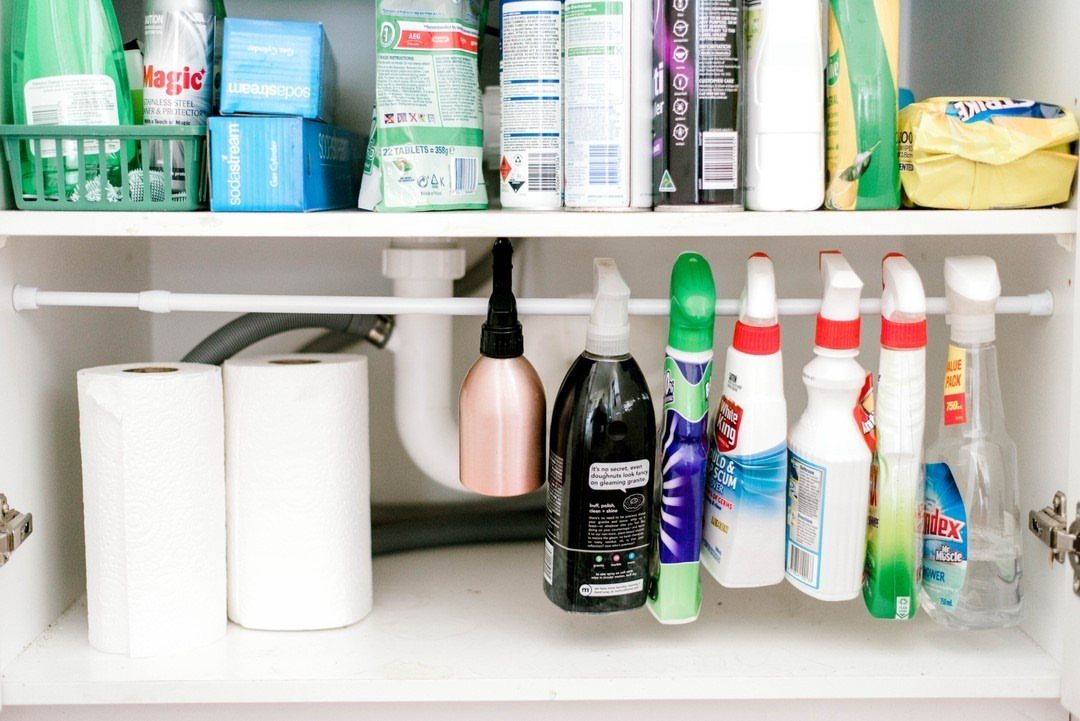
A tension rod spans the cabinet width and hangs spray bottles by their triggers, freeing the floor and shelf for bulkier items.
A rod set high enough that paper towel rolls stash beneath it. I set mine low enough to leave room for tall bottles hanging and rolls standing.
Twist to tighten, no tools, no marks on the cabinet walls. A heavy-duty rod handles a full cleaning kit without sagging.
Check your span. Rods list their range on the package; one at its shortest holds weakest, so I buy long and compress rather than short and stretch.
7. Clear Acrylic Storage Bins
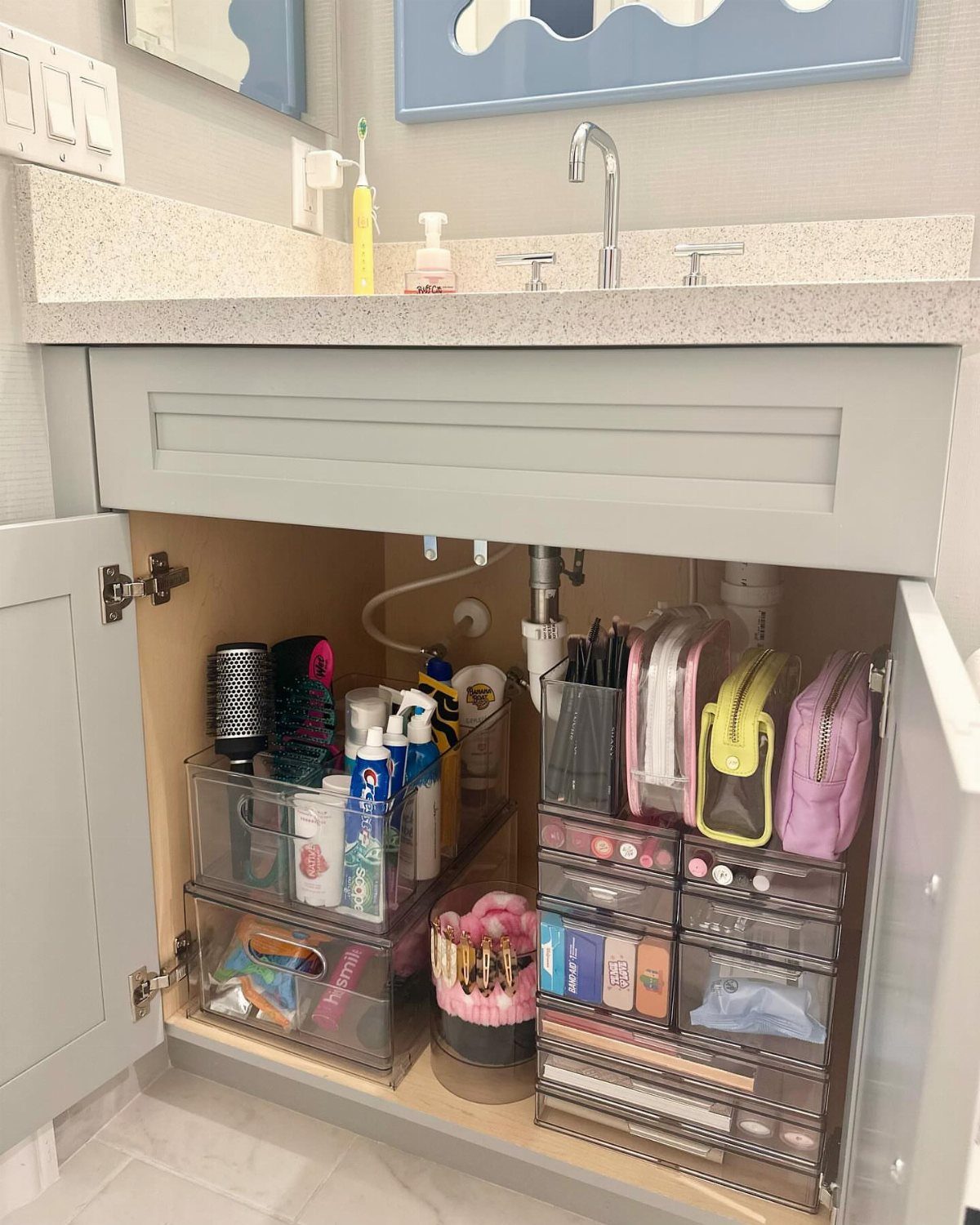
Clear acrylic bins let you see what you own without lifting a lid.
Stackable drawers and open trays divide the cabinet into zones: daily skincare in front, backups and tools behind. I buy single sizes that line up edge to edge; gaps waste space and let bottles tip.
Wipe drips before they dry; acrylic clouds faster than glass if you let residue sit.
Best for cabinets with a flat floor and no center pipe in the way.
8. Silicone Under-sink Cabinet Mat
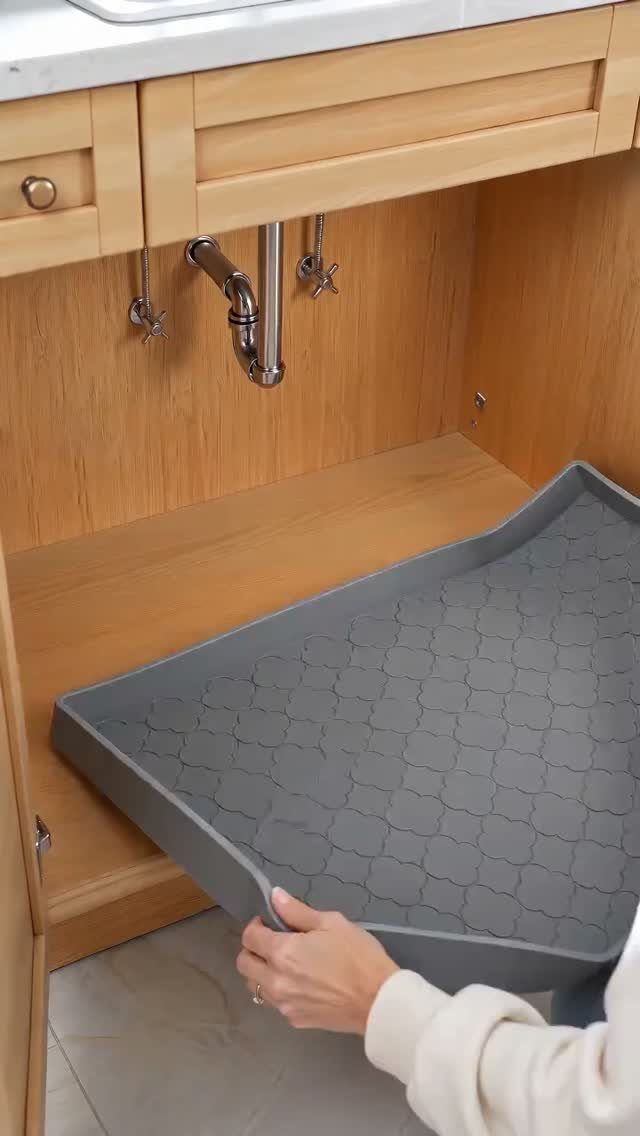
A silicone mat with raised edges catches the leak or spill before it reaches wood.
Peel it out, rinse in a sink, and set it back; no scrubbing cabinet corners. I would run one under any sink with aging valves or a history of slow drips.
The lip matters. A flat liner buys you seconds; a raised edge buys you hours if a supply line lets go.
Rolls or folds for install, lies flat after a day. Cheap insurance against a cabinet floor that swells and warps.
Best Items to Store
Store items you touch weekly or less under a bathroom sink.
Cleaning sprays, spare toothpaste and shampoo, backup toilet paper, and a first aid kit fit here well. Hair tools that only come out on styling days belong here too.
Daily skincare and makeup need easier reach, so keep them on the counter or in a medicine cabinet. The same goes for a toothbrush you use twice a day.
Grouping counts more than what you actually store.
Put cleaners with cleaners, toiletries with toiletries, and tools with tools. That way you know which bin to pull.
Because the cabinet under a sink tends to be small (not to mention filled with pipes), Dykstra recommends keeping everything as accessible as possible and within view.
Preparation Steps
Pull everything out before you plan a single organizer.
Wipe the floor, sides, and door clean while the space is empty. Fix any drip or loose fitting now; it only gets harder once bins are in.
Strip bottles out of retail boxes and shrink wrap. That packaging eats inches you do not have.
Measure height, width, and depth with the door closed.
Note where the P-trap sits and which way the supply lines run. Mark pipe locations on a sketch so you do not order a drawer kit that collides with plumbing.
Decluttering Advice
Empty the cabinet onto the floor and sort into 3 piles: keep, toss, and move elsewhere.
Check dates on anything with one; sunscreen and acne treatments expire faster than people expect. Toss duplicates unless you will use both before they go bad.
Lay the keepers out in groups before you buy a single bin. Seeing the full spread keeps you from guessing wrong on sizes and buying storage you do not need.
Once a year, pull it all out again. Preferences shift, products expire, and what made sense last spring may not fit how you live now.
Frequently Asked Questions
How do you organize an under-sink area?
Start by keeping like with like: bottles of cleaner in one zone, extra toiletries in another, and any small tools in their own spot. Then fit the organizer to the space, not the other way around.
Check the real dimensions with the door shut and mark where the drain pipe crosses, then pick stackable bins, drawer units, or a tension rod that swings past the plumbing without catching.
Two narrow pull-out organizers flanking a center pipe beat one wide unit that won’t fit.
What should you keep under your sink?
Reserve the space for things you grab once a week or less: a spray bottle, backup tubes of paste or shampoo, a spare roll of paper, a small first-aid kit, and a curling iron or dryer for styling days.
What you use morning and night, your skincare, makeup, and toothbrush, earns a spot on the counter or inside the medicine cabinet where you can reach it without bending.
How to organize a bathroom vanity?
An expandable shelf works in tight vanities whether it holds lidded bins or creates a narrow pocket for folded washcloths.
Clear containers and labels keep contents visible without digging. Match the organizer to the vanity’s actual dimensions; a unit that looks right on the shelf but gaps at the sides wastes space and lets bottles tip.





