
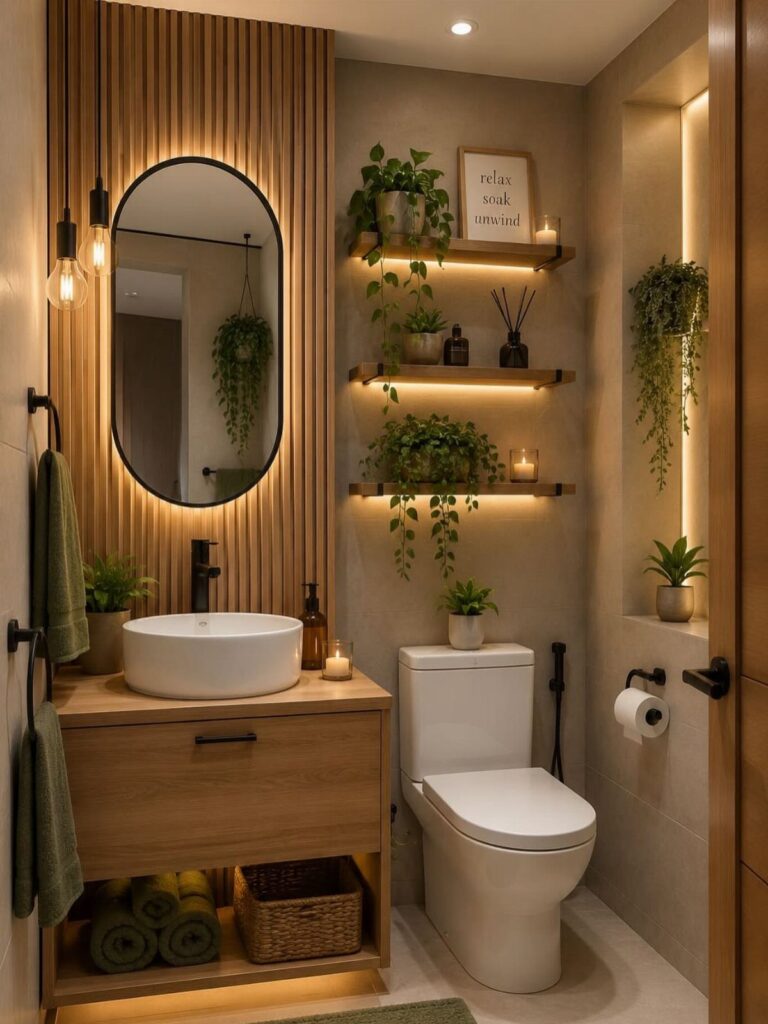
The ideas below start with open shelving you can hang in an afternoon, move up to a slatted cabinet that stays shallow but covers the tank, and end with a full built-in that needs an open wall and a free weekend.
What settles it is not style but aisle width: the narrower your path past the toilet, the more your storage needs to hug the wall flat or disappear into it entirely.
The slatted door cabinet clears the lid by 2 inches, a hard number that keeps you from unbolting storage just to change a flapper.
[link-whisper-related-posts]1. Open Shelving
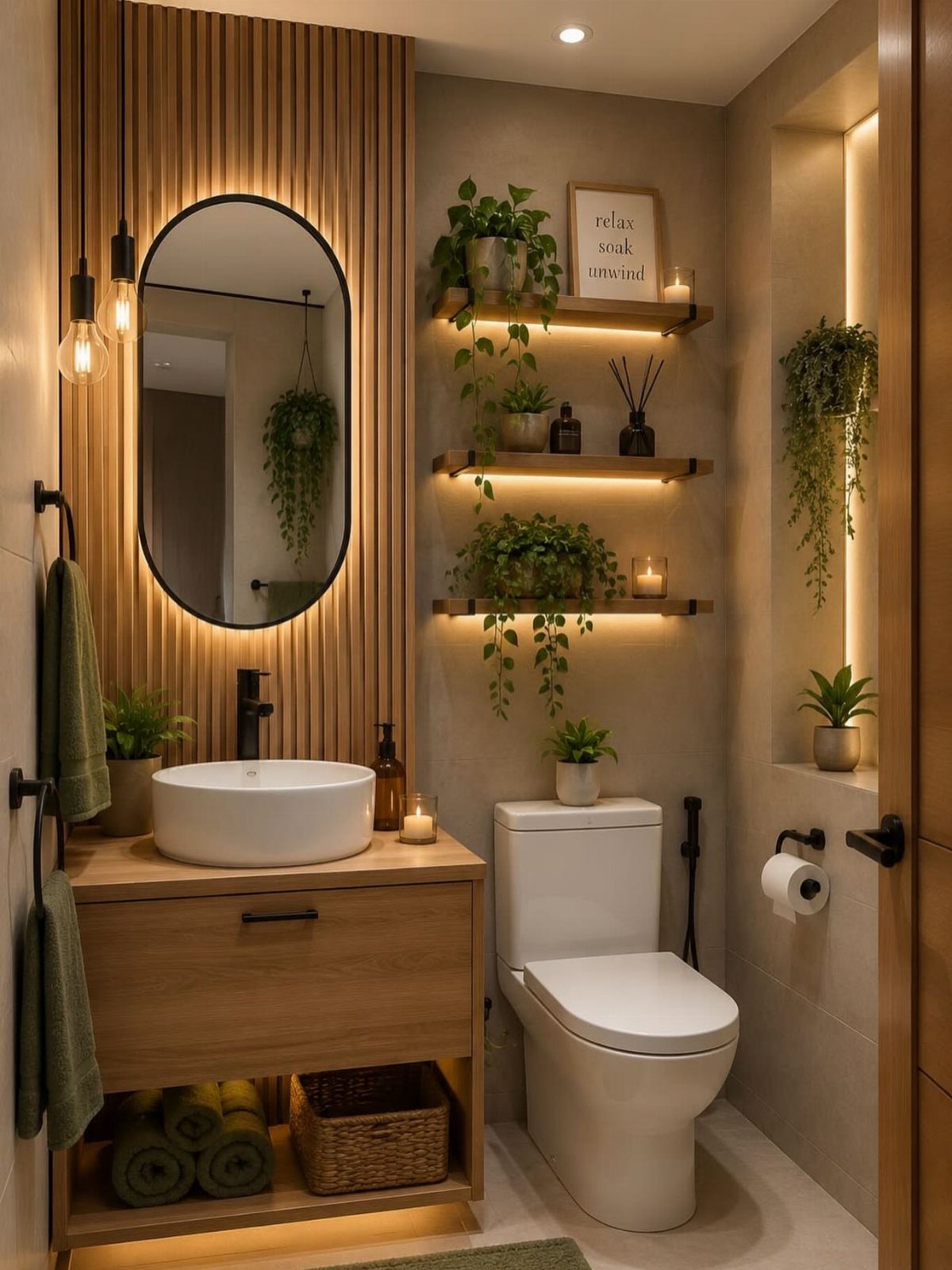
Open shelving above a toilet turns dead wall space into storage you actually use. The shelves float with no brackets below, so they read clean even in a tight bath.
I like that nothing hides what you grab; you just reach.
Pick boards 1 to 1.5 inches thick so they do not bow under a stack of towels. Mount into studs or use toggle anchors rated for the load, since toiletries add up fast.
Skip this if your stuff tends toward clutter. What reads as styled in a photo turns into visual noise fast with too many bottles.
2. Built-in Wall Cabinet
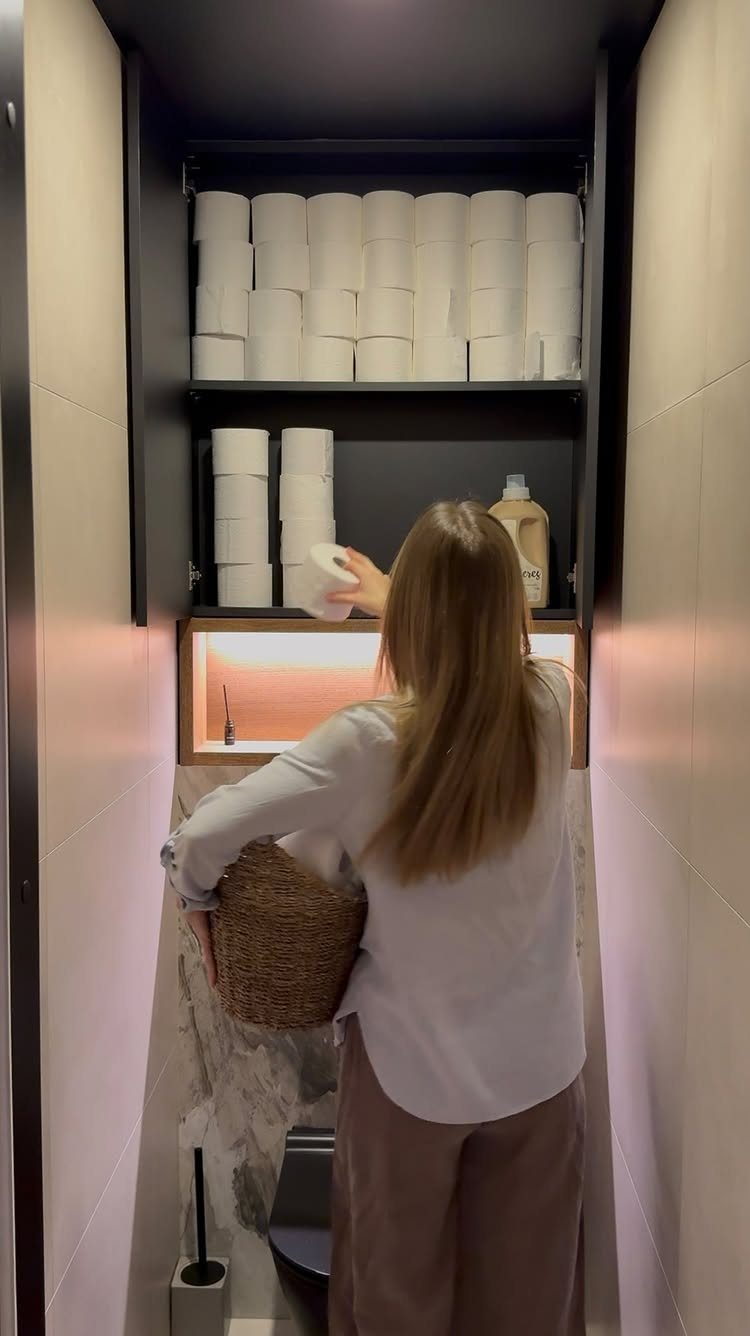
A recessed cabinet sits inside the wall itself, so nothing projects into the room. A cabinet that sits flush with the wall matters most in a narrow bath where anything protruding catches your shoulder.
Depth is limited to your stud bay, shallow enough that a hinged door fits flush.
You lose some square footage to the cavity, but you gain a cleaner aisle and hidden bulk storage for the one item every bath needs more of.
Plan this during any wall renovation; cutting in later costs more than the cabinet.
3. White Slatted Door Wall Cabinet
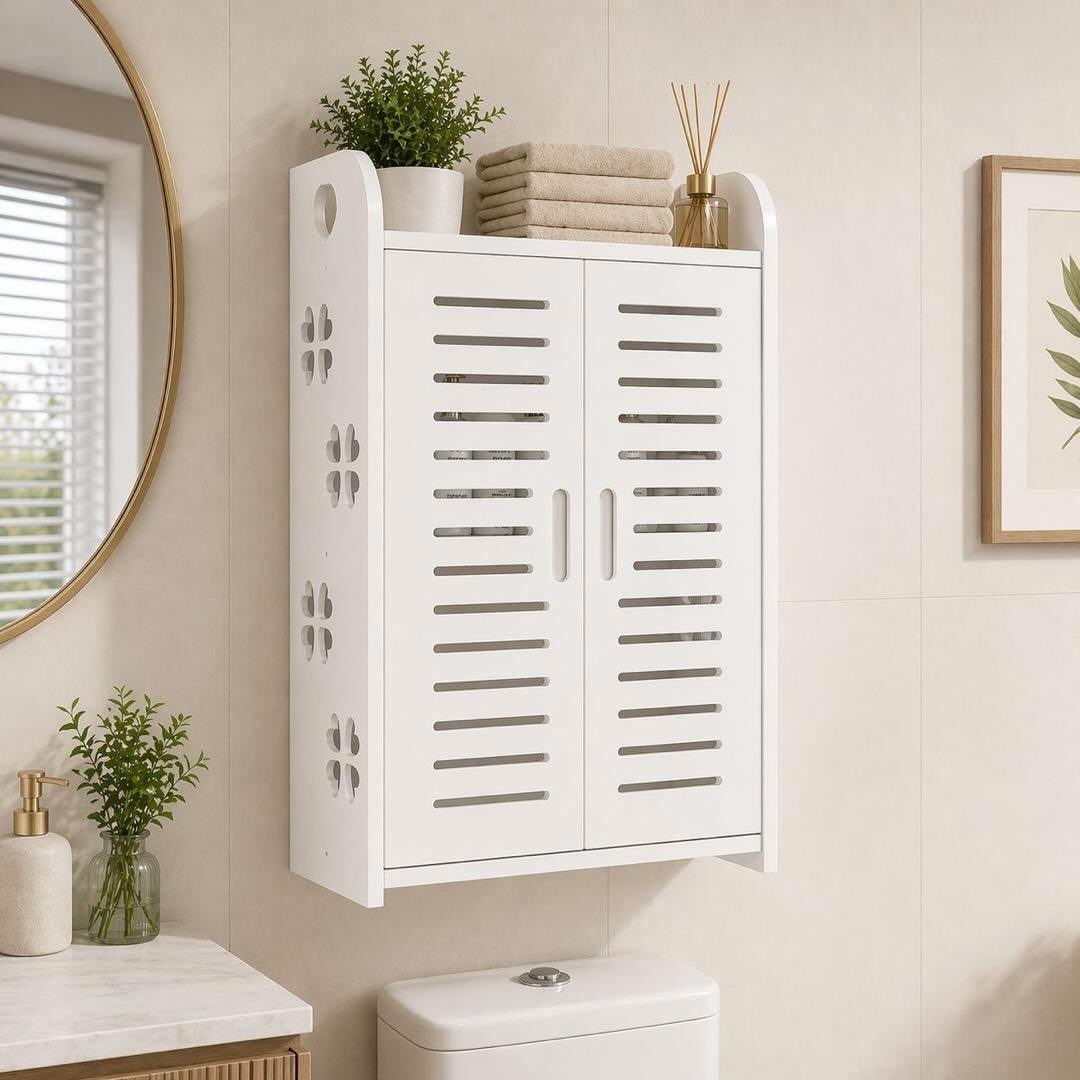
Slatted doors let air pass so towels inside do not sour, and the gaps read lighter than a solid slab.
This cabinet sits tight to the tank, its side cutouts picking up the door rhythm so the whole piece reads as one unit.
I would mount with a French cleat or Z-bar rather than L-brackets; both hold weight closer to the wall and keep the bottom edge from kicking out.
Check your toilet tank height first: the cabinet bottom should clear the lid by at least 2 inches so you can lift it off without taking down storage.
Paint-grade wood works fine here since the slats hide brush marks. Prime end grain before color so moisture does not swell the slats over time.
Choosing Bathroom Storage
Start by mapping where clutter actually lands. Toothpaste tubes, spare rolls, the hair dryer you use daily, each of these needs a home, and the spot you naturally drop them is where storage belongs.
In a bath with a narrow aisle, wall-mounted storage beats anything that sits on the floor. You keep every inch of walkable floor, and your eye reads the room as larger.
The finish matters as much as the form. Match your storage to the vanity tone, or pick one step lighter or darker for variation that still holds together.
A white cabinet on white tile reads flat; light wood against white gives the same cleanliness with more depth. Metal finishes should talk to your faucet and towel bar, not ignore them.
If you are choosing during a renovation, recessed storage costs less now than cutting in later. The stud bay is already open; use it.
The best over-the-toilet storage pulls off a tricky balancing act: adding much-needed bathroom storage without making small bathrooms look tinier or more crowded.
Coordinating Colors
White storage stays the safest choice because it reads clean in a room where clean matters.
But white against white walls needs texture to avoid looking like a blank spot. Slatted doors, beaded board, or a face-frame detail give the eye something to register without adding color.
Gray works across modern and transitional styles without the starkness of pure white. Dark gray adds weight; use it when your vanity is already dark and you want the storage to anchor that end of the room rather than float.
Wood still carries warmth that tile and porcelain have trained us to forget.
Light wood suits baths with natural light; dark wood turns heavy fast in a small or dim space. Paint-grade wood lets you shift later, but stained wood commits you to a palette.
Color is the risk that pays off.
Dark blue storage against white tile reads intentional, not whimsical. A quiet green does not fight for attention, so you stop noticing it and start living with it.
Either one needs a second instance of that color somewhere in the bath, a hand towel, a soap dish, so the cabinet does not sit alone.
Frequently Asked Questions
How high to hang a cabinet above a toilet?
Leave enough room below the cabinet that the tank lid still lifts off without moving any storage.
I would check your tank height before buying, since toilets vary. Any lower and you fight the hardware every time you clean.
What are some good options for storage above the toilet in a bathroom?
Open shelving, a recessed built-in cabinet, and a wall-mounted cabinet with slatted doors each suit different baths.
Open shelves keep everything visible and reachable; a recessed cabinet hides clutter without projecting into the room; slatted doors let towels breathe while reading lighter than solid wood.
Match the choice to your aisle width and how tidy you keep your surfaces.
How to decorate the wall above your toilet?
Treat the storage itself as the decoration.
Light wood against white tile reads clean but not flat, which white-on-white can edge toward. Whatever color the cabinet carries, repeat it somewhere else in the room, a towel or a soap dish, so it belongs.





