
These ideas range from a pack of drawer dividers to a full-wall custom system that costs more than the bags it displays, with most falling in a range you can knock out on a Saturday.
The one that belongs in your closet hinges on whether you are solving a visual mess you see every morning or reclaiming space you do not have.
[link-whisper-related-posts]1. Invest in Quality Hangers
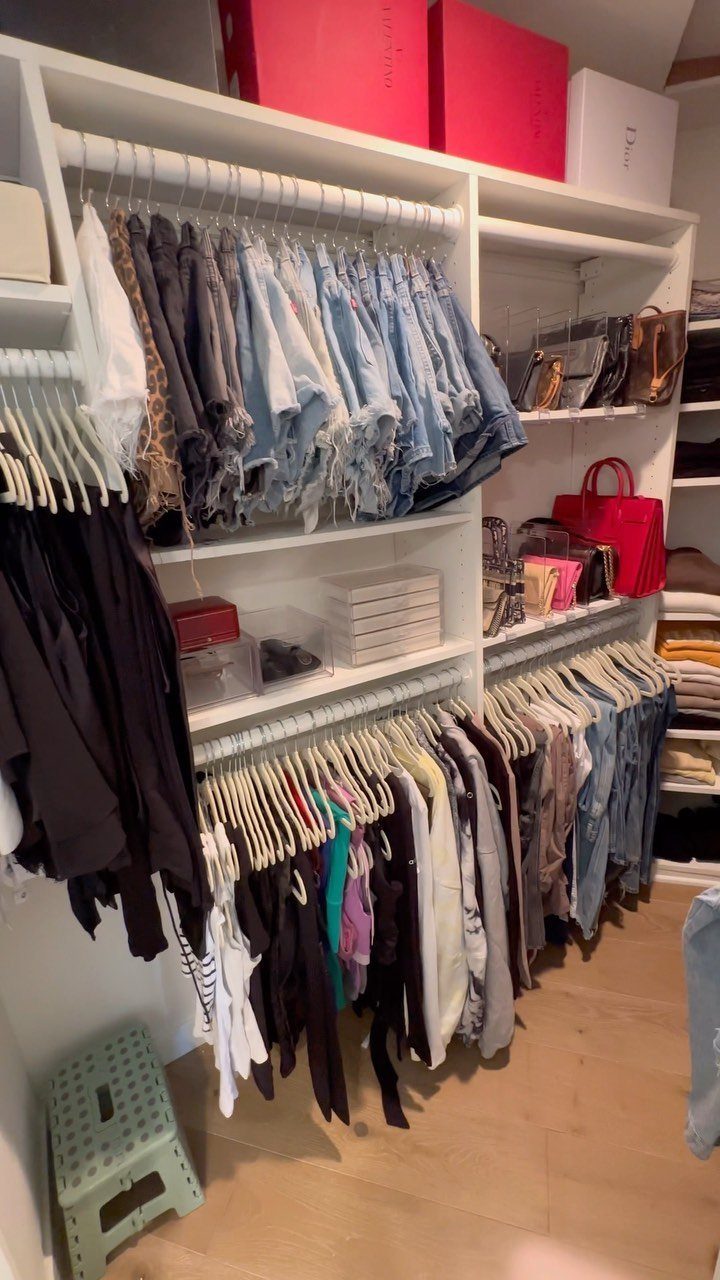
Matching hangers do more than look neat.
A velvet finish keeps silk blouses and wide-neck tops from sliding to the floor, while slim profile ones pack about 1/3 more garments per foot of rod than the bulky plastic kind most people inherit.
Clip hangers handle skirts and strapless dresses without creasing the waistband.
I swap mine out a few at a time when a line goes on sale, rather than buying a closetful at once.
The gradual upgrade works on a real budget and I notice the difference every time I slide a hanger across the rod.
2. Use a Shoe Rack
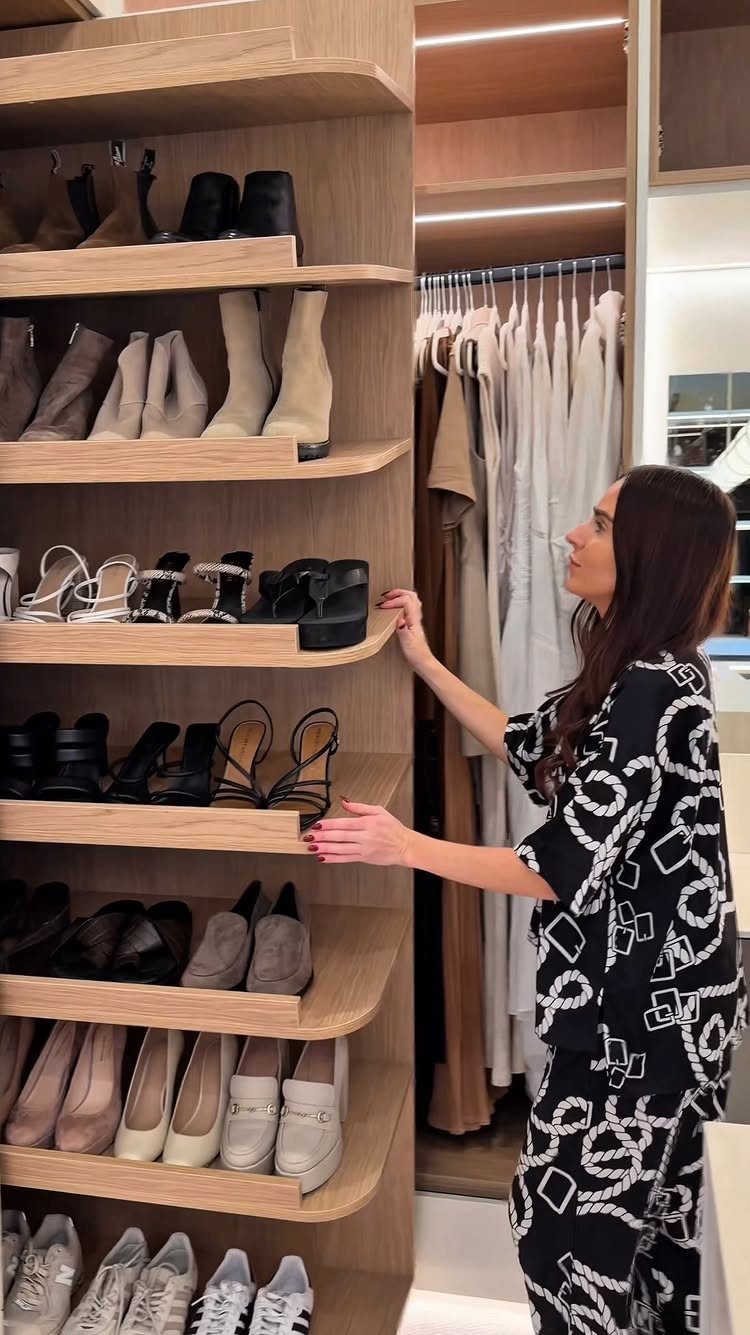
Floor piles are the fastest way a closet turns chaotic. A tall vertical rack uses wall space that hanging clothes never touch and puts every pair at eye level when you are dressing.
Open shelving beats closed for daily pairs; you see what you own and the scuffs that tell you which ones need replacing.
Wood tones warm up a closet that reads too clinical otherwise. I look for racks with adjustable shelves, since ankle boots and running shoes need more height than flats do.
With a small closet especially, it’s important to not squander precious vertical space. Remember to look up and down to find inspiration — whether that means using the existing closet frame to hang small accessories or adding more shelf space with a hanging organizer.
3. Use a Clear Shoe Box
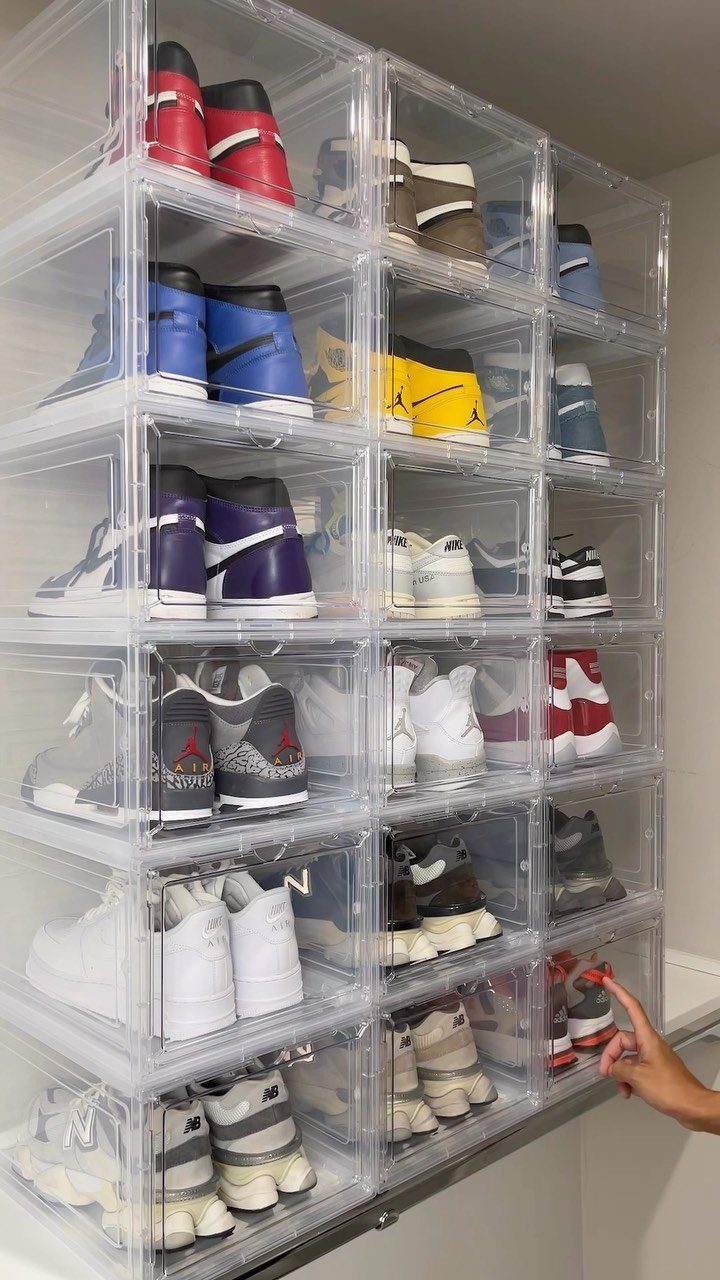
For shoes you wear less than once a week, a clear box protects the shape and the finish from dust without the mystery of a cardboard original.
Stackable ones, roughly 13 x 8 x 5 inches, build into columns that use shelf depth efficiently, labels facing out.
Acrylic looks sharp but costs more than standard polystyrene; I use the cheaper kind for pairs I don’t reach for often.
I use acrylic for the front row of a display shelf and the cheaper kind for backup storage higher up.
The hand pointing to that bottom box is doing the real test: can you pull one out without the stack tipping? Good boxes have a back lip that locks the lid below.
4. Over-the-Door Hook Rack
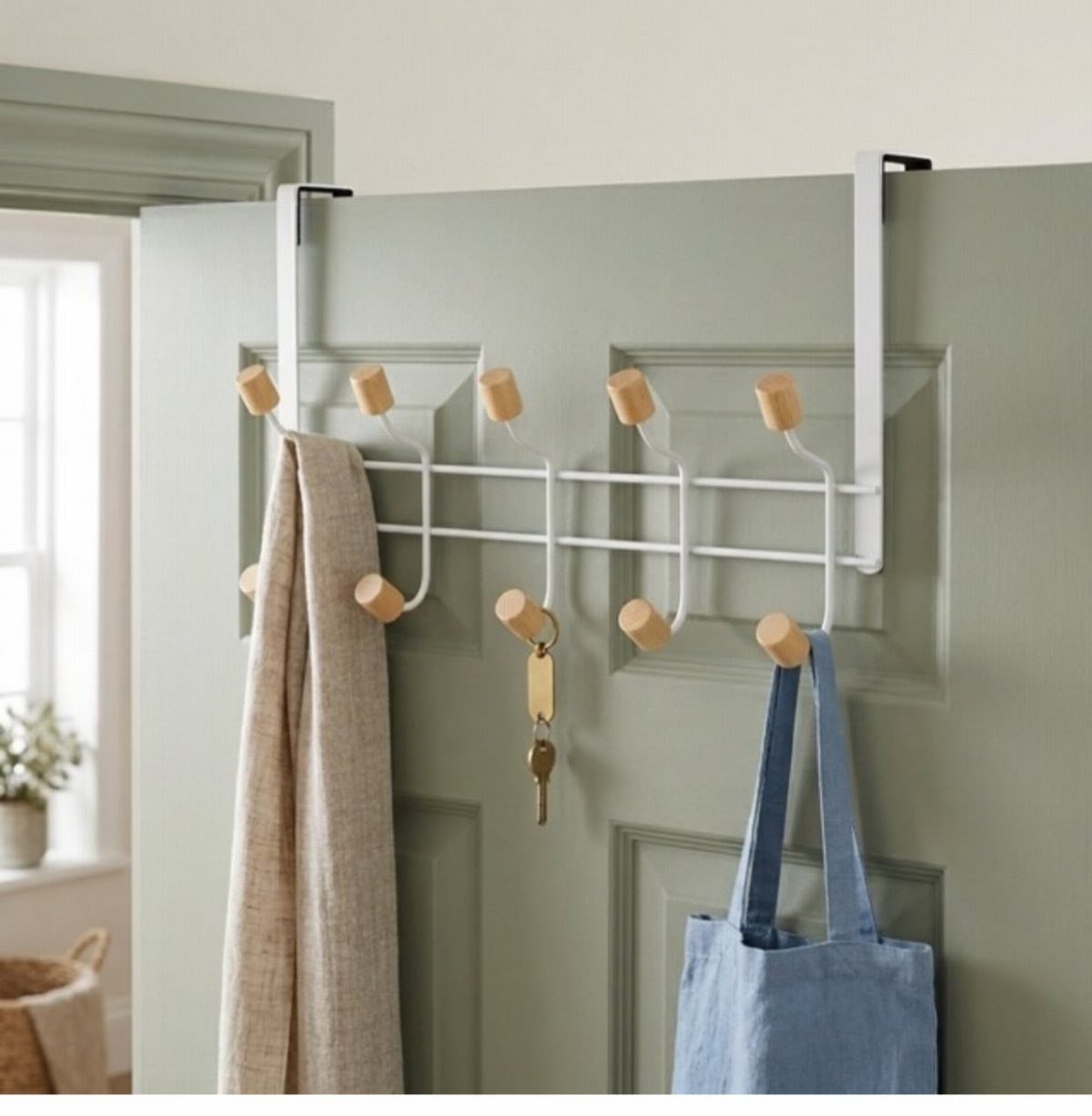
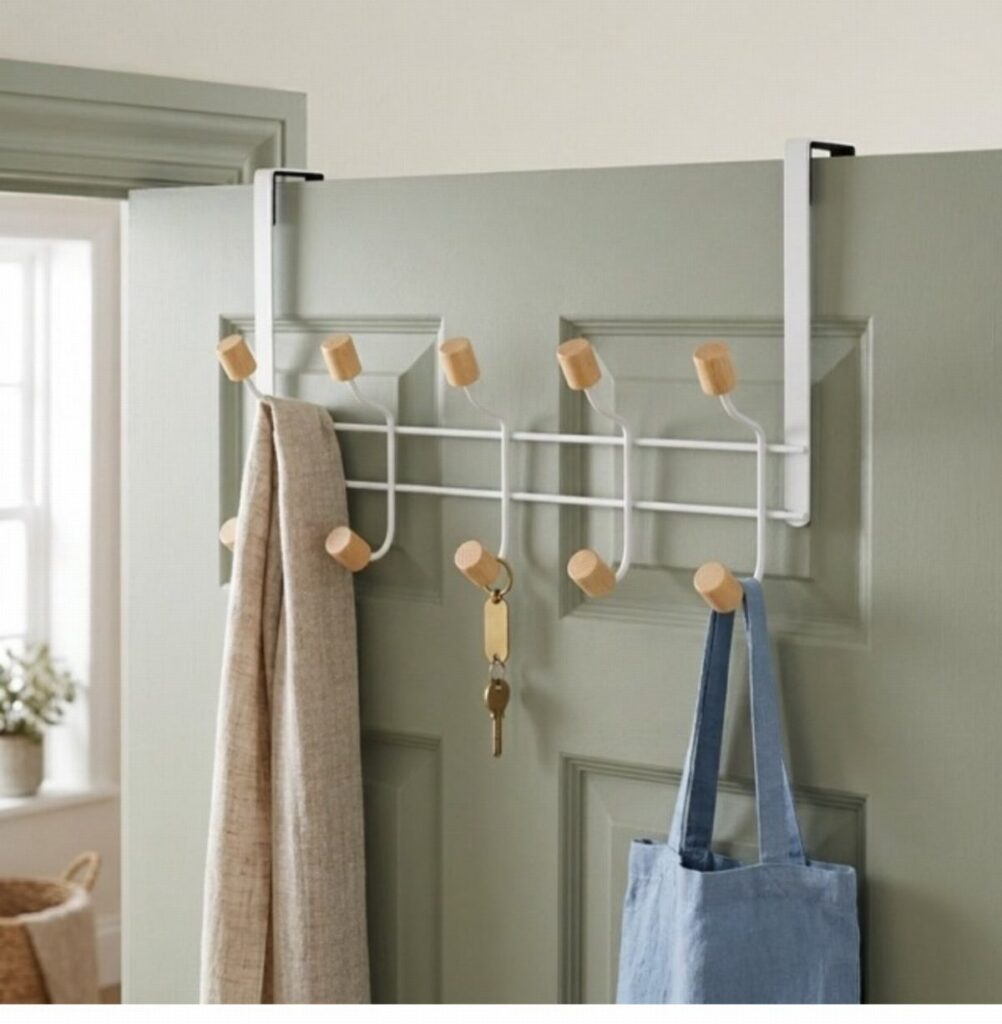
An over-the-door hook rack uses a steel frame that hangs on the door top without hardware, so it moves with you when the lease ends.
Wood knobs are gentler on silk scarves than bare metal and they spread items enough that nothing tangles.
I limit mine to three things I grab on the way out: a tote, a light jacket, and one scarf.
More hooks look available but crowds mean you stop seeing what is there. The green door behind this one shows the rack on a painted surface; a white or natural wood door would read even cleaner.
5. Use Bins and Baskets
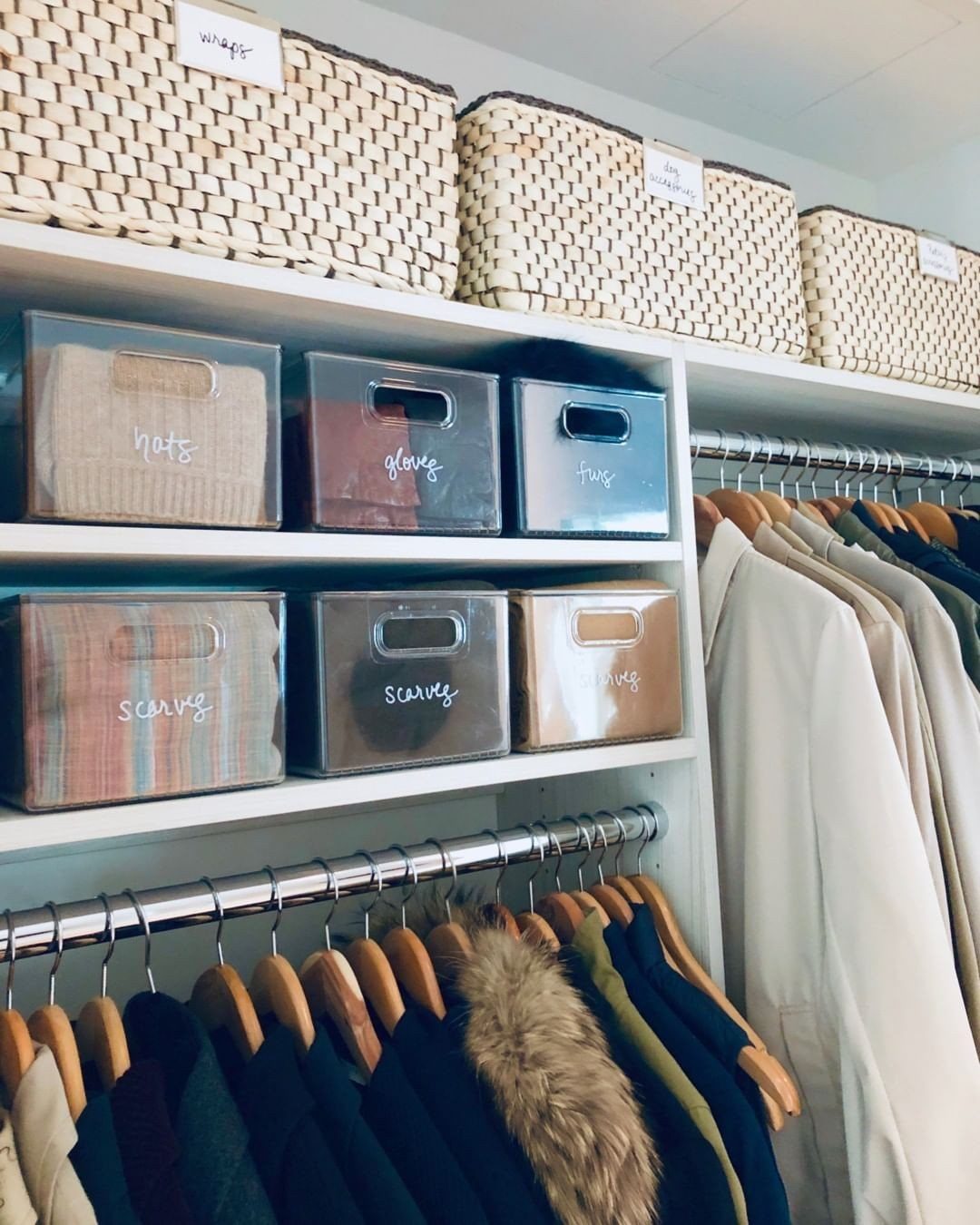
Shelves above the hanging rod collect chaos by default. A bin with a label forces you to name a category before you toss something in, and that pause alone cuts the junk by half.
Woven baskets hide visual noise; clear bins show you where the gloves went without the rummage.
I use baskets for soft things that survive a crush, hats and scarves mostly, and clear bins for anything with a shape to protect. Typed labels look sharper than my handwriting and peel off clean when the category changes.
6. Use Drawer Dividers
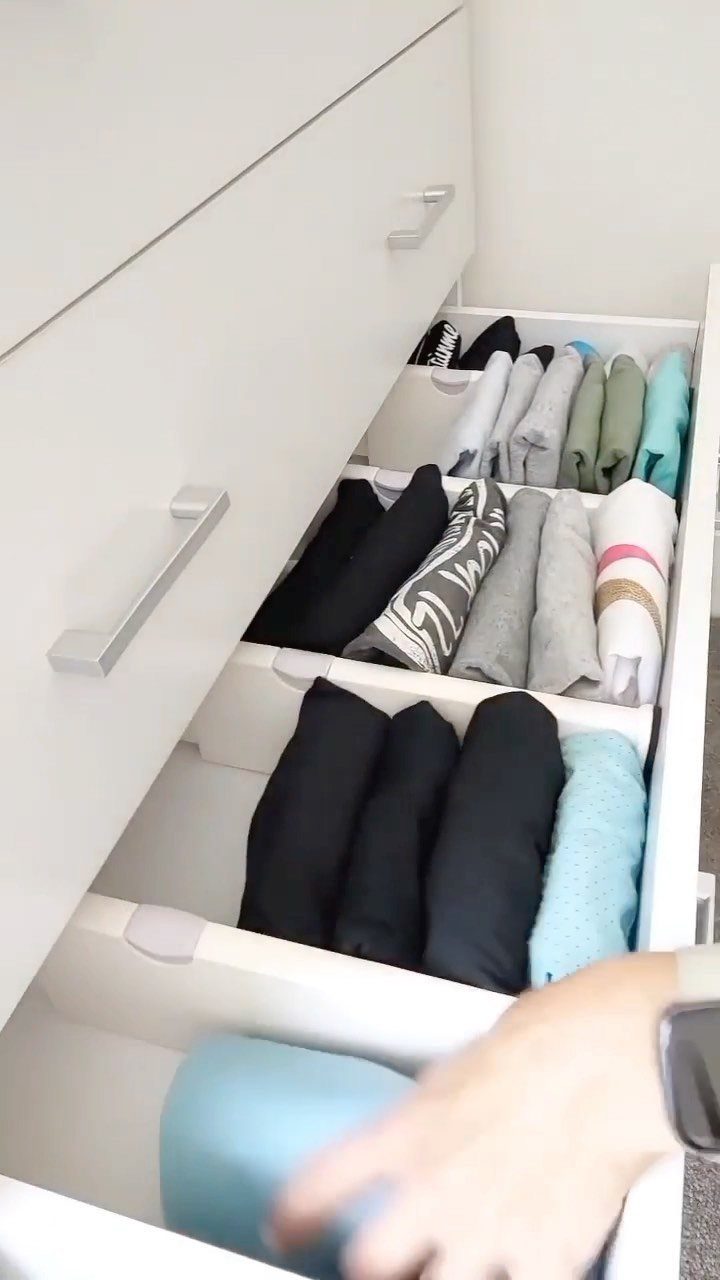
A drawer without dividers becomes a file of folded clothes you never file back straight.
A set of adjustable plastic rails turns one deep drawer into narrow slots that a folded shirt stands up in. You see every color at once and pulling one out does not avalanche the rest.
I set the widths by what I actually own: wider slots for sweaters, narrow for camisoles and workout tops. The folding and upright placement is the maintenance that makes it last, a quick reset every few days.
7. Create a Hat Wall
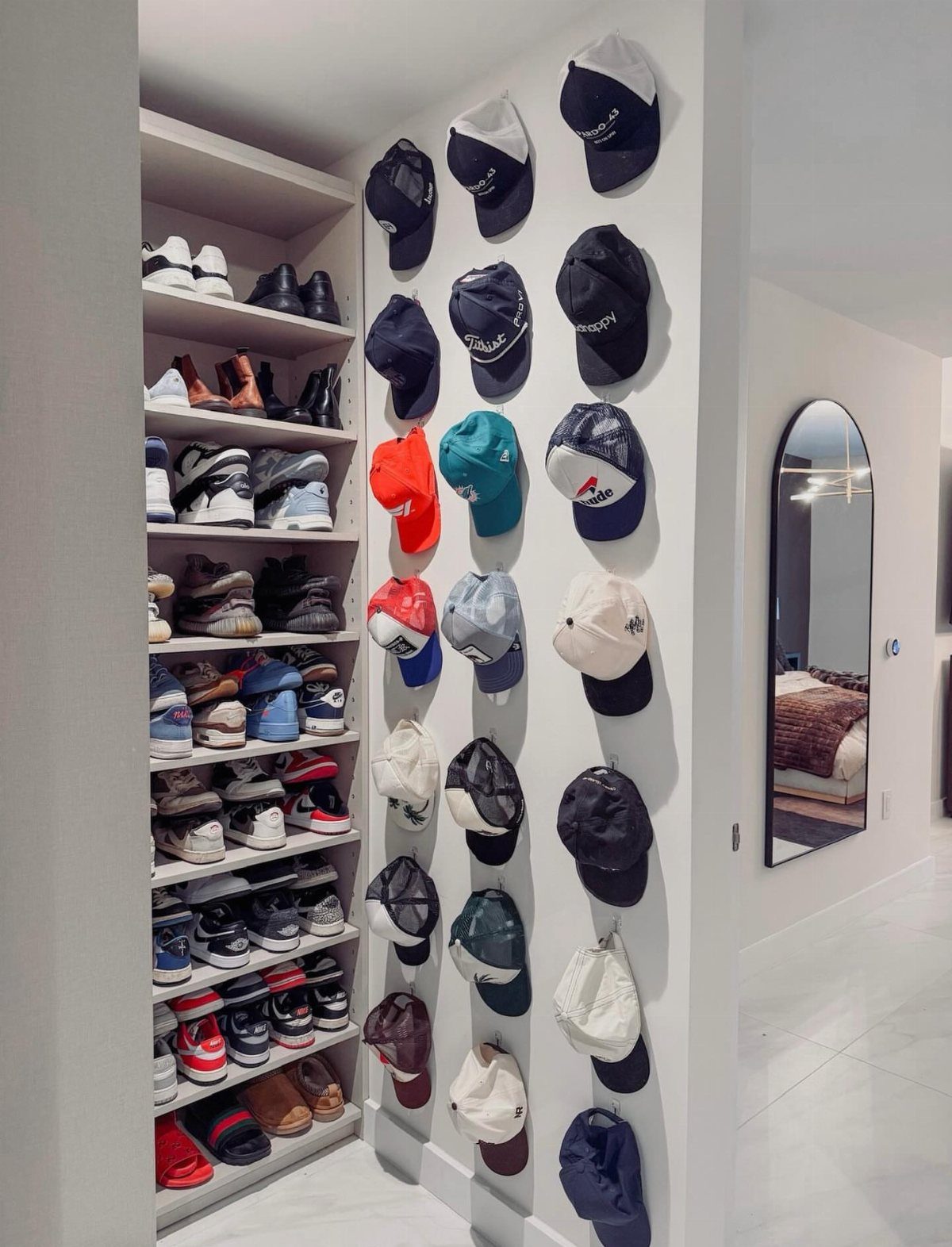
Baseball caps stack flat in a drawer until the brim warps and you forget which teams you own.
A line of hooks on an empty wall turns them into a color gradient you actually use, with the quick grab of a kitchen pegboard but nowhere near the install.
I space mine so the brims have room and don’t knock when I pull one off.
The wall beside a full-length mirror works best; you catch the cap in the reflection and know if the shade matches before you try it on.
Built-in shelves nearby, like the ones in this setup, keep the whole accessories story on one wall.
8. Organize by Category
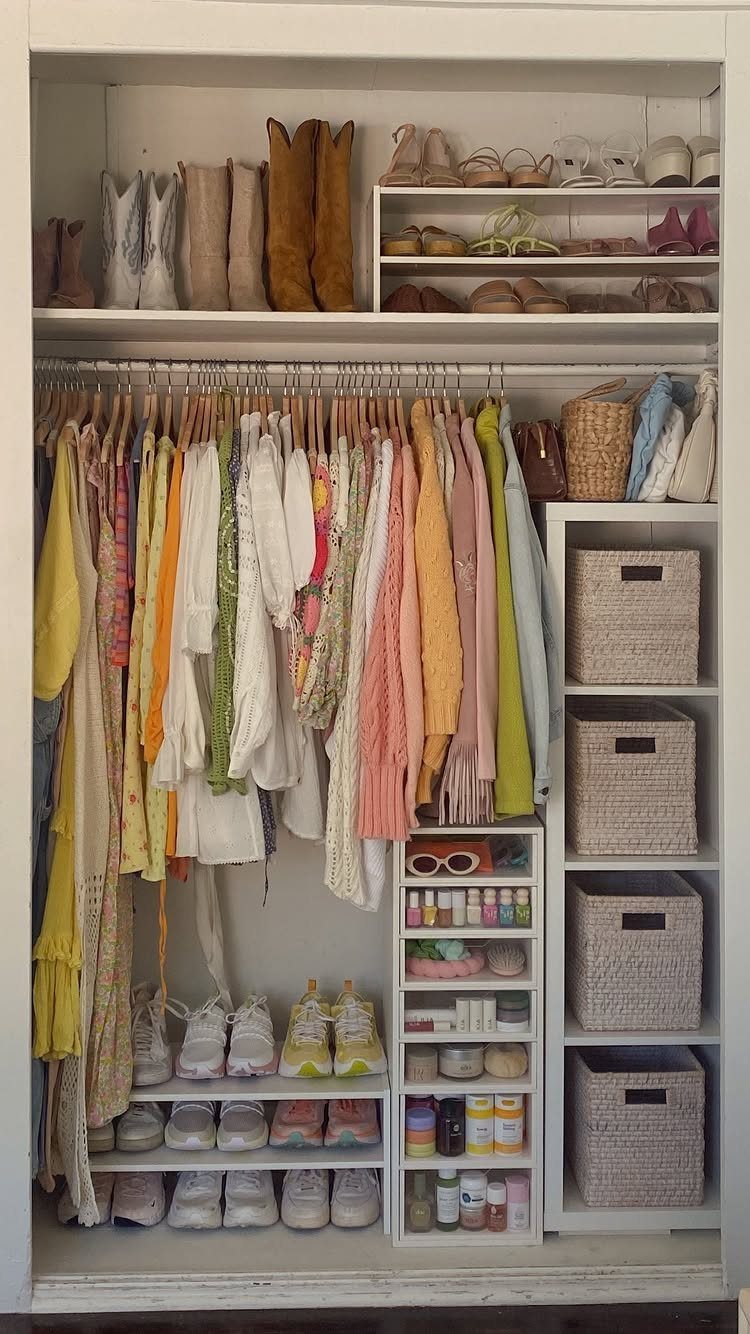
Color-coding looks satisfying in a photo but falls apart fast unless you already dress that way. Grouping by type, workout tops with workout tops and blazers with blazers, means your hand knows where to go without your eyes fully open.
I hang dresses left to right by sleeve length within each color family, not by rainbow. Shoes sit on the lower shelves I can reach sitting down; bags and small compartments rise to standing eye level.
Woven bins at the base swallow the off-season extras that would otherwise colonize the floor. The real test is whether someone else can put away your laundry without asking where things go.
9. Boutique-like Closet

Vertical side lighting flips the switch from storage to display, the same way a gallery lights a single painting. The glow has to come from the sides, not overhead; top light flattens leather and buries texture.
I think of this as jewelry for the closet itself, not a starting point. The hardware matters less than the spacing; each piece needs enough room that the light catches it from multiple angles without washing onto the neighbor.
A full run of integrated fixtures costs more than the contents in some cases. I would wire one dramatic column and leave the rest in shadow before I would half-light the whole wall.
10. Custom Closet System
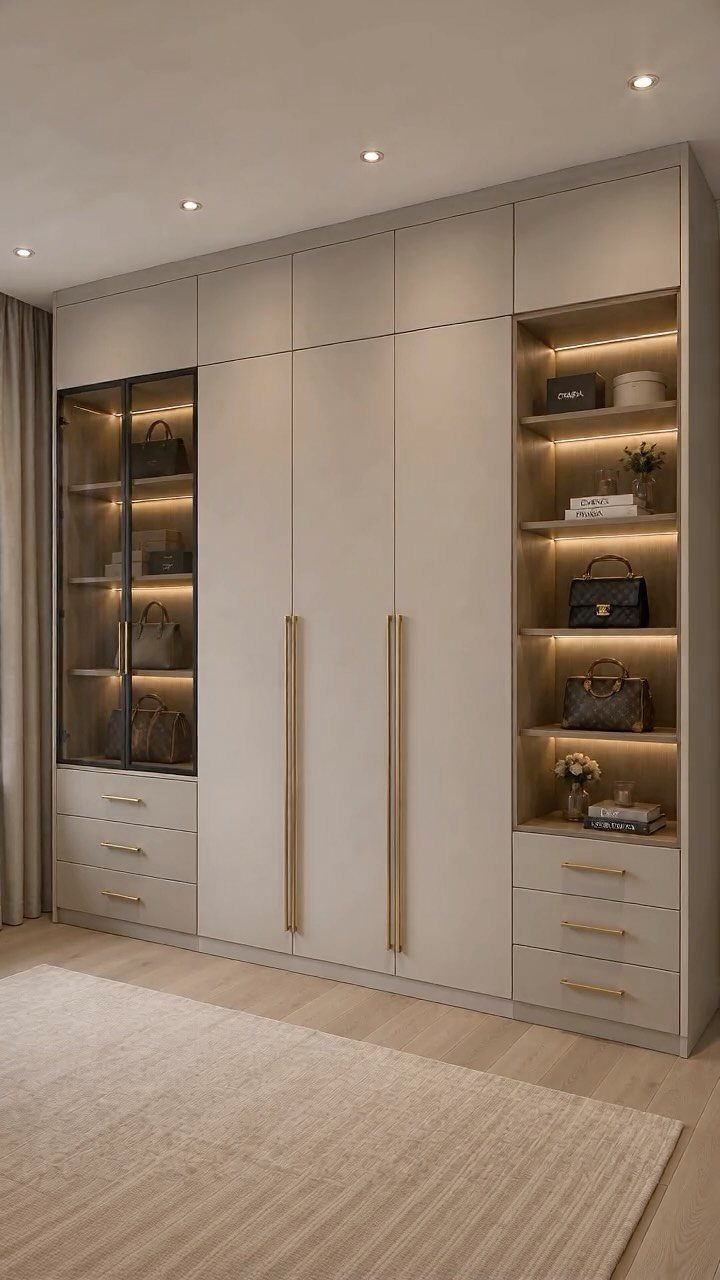
Glass doors turn handbag storage into a room feature, but they also mean you are dusting shelves instead of hiding them.
The brass hardware and beige frame in this unit warm up a bedroom that might otherwise feel like a retail stockroom.
I would take the open shelf version for daily bags and reserve glass for the few pieces that earn the stage.
Integrated lighting helps when the closet opens off a dark hallway; in a bedroom with windows, it is more vanity than function.
The investment makes sense when the unit spans a full wall and you plan to stay put, because it does not travel.
11. Vacuum-sealed Bags
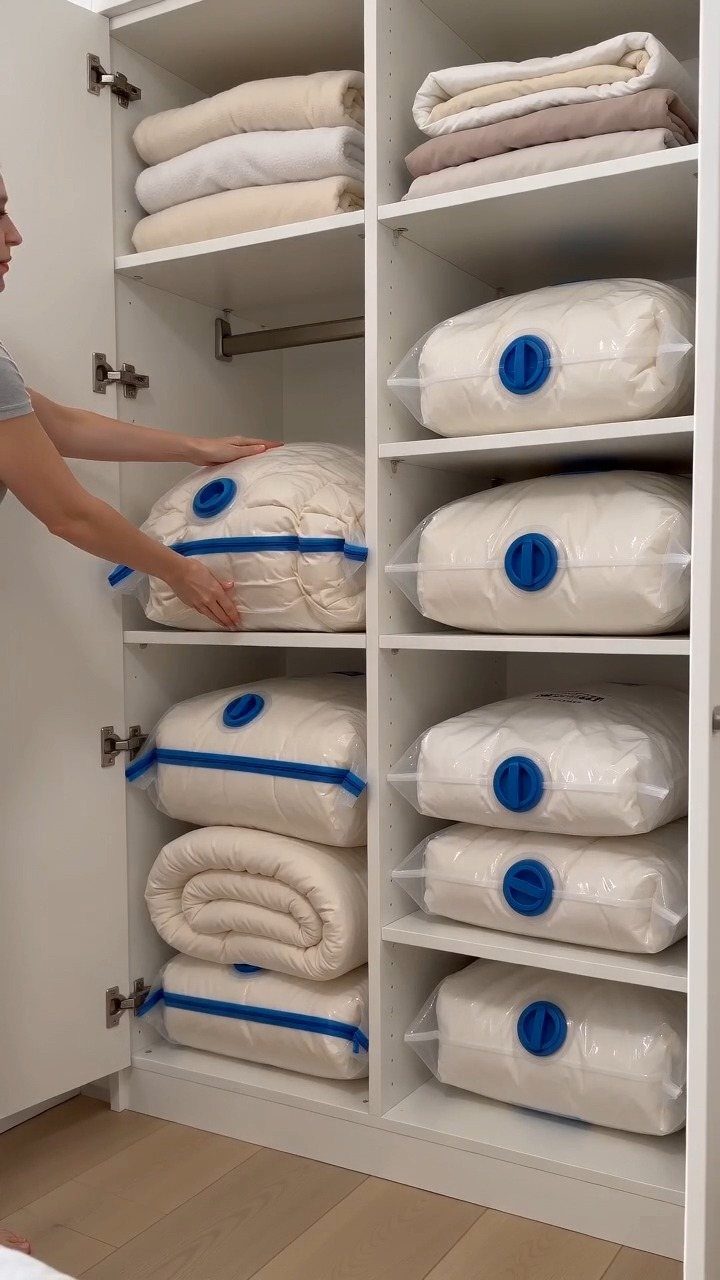
The valve on a good bag is the part you will touch a hundred times, so I look for the wide blue style that seals without a perfect pinch.
Compression drops bedding and coats to about 1/3 of their fluff volume, which turns a single closet shelf into off-season storage for a full household.
I label each bag with the month I sealed it, not just the contents; I always check for trapped moisture before I open it.
Folded linens stack flatter than draped ones, and the bag slides easier onto a shelf when the filled shape is more brick than blob.
The upfront cost of a set pays back fast in apartments where a second closet is not an option.
Importance of Closet Organization
A messy closet does not stay in the closet. Researchers have measured it: women living with household clutter showed higher levels of cortisol.
The closet is the easiest place to break that cycle because the contents are all yours, the space is contained, and the result is visible every morning.
Organization here is not about the look; it is about removing a small daily friction that compounds.
I think of it as the one room where control is actually possible, and that control sets the tone for the rest of the apartment.
Decluttering Strategies
A closet edit starts with everything on the floor. Every organizer I have read agrees: you cannot judge what you own while it hangs in place.
The standard sort is 3 piles, keep, donate, sell. The tougher call is the maybe pile, and the "Five Outfit Rule" handles that.
If a piece makes 5 different looks you will actually wear, it stays; if not, it goes. The 90-day test is the backup question: worn in the last 90 days or planned for the next?
Seasonal items get a pass, everything else faces the bin. I also use the backwards hanger move at season change.
Flip every hanger backward, and anything still backward at the end has outinged itself. No extensions, no second guessing; the garment already voted.
Choosing the Right Storage Solutions
Storage fails when it fights your habits. Clear bins work because you see the contents without the lid lift; decorative boxes work when the closet is open to the room and you need the visual quiet.
Drawers beat open storage for anything small enough to tangle or scratch: jewelry, sunglasses, hair ties.
Pull the drawer, see the grid, grab the item. For the larger stuff, I look for adjustability.
A fixed shelf at boot height wastes space when boot season ends; rails that move, or stackable units, adapt to what you actually own this year. Vertical space matters most in apartments.
A bin that stacks buys you shelf depth; a hanging organizer buys you rod clearance. Match the container to the motion you make: grab, fold, or peer.
Frequently Asked Questions
What is the 3-3-3 rule for decluttering?
The 3-3-3 rule means choosing 3 items to keep, 3 to donate, and 3 to discard during a single session.
I have not used this exact count myself; the method I follow is a standard three-pile sort of keep, donate, and sell, with the "Five Outfit Rule" for tougher calls.
The 3-3-3 rule is three minutes to find three items to remove, done three times a week.
It keeps the job small enough that you will actually do it. The backward hanger trick at season change does the same job as any numbered rule, letting the garment vote with the wear it gets.
What are the best rules for organizing a closet?
Group by category, not by color, so your hand knows where to go before your eyes do.
I sort dresses by sleeve length, left to right within each category. Rainbow order looks satisfying in photos, but I do not think in color when I get dressed, so that system collapses on me by Wednesday.





