
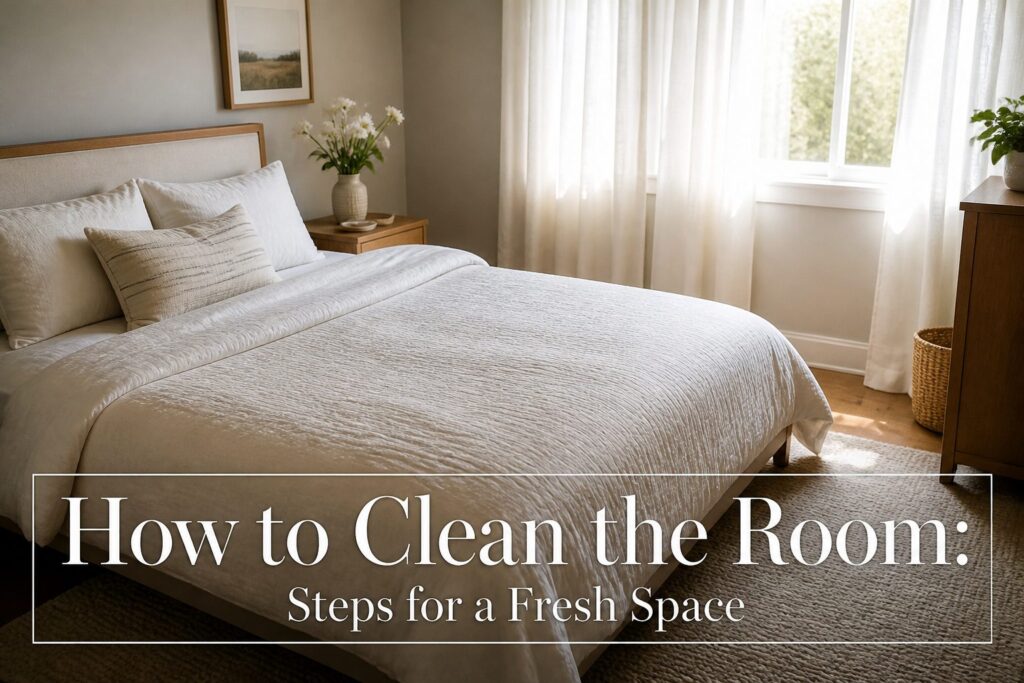
A clean room takes 20 to 30 minutes if the order is right, closer to an hour if you move furniture and hit the corners most people skip.
The stage that breaks the rhythm is not the cleaning itself; it is stopping mid-task to hunt for a dustpan or a missing spray bottle because the supplies never got gathered first.
That broken flow is where a Saturday morning becomes an all-day drift.
[link-whisper-related-posts]1. Gather Supplies
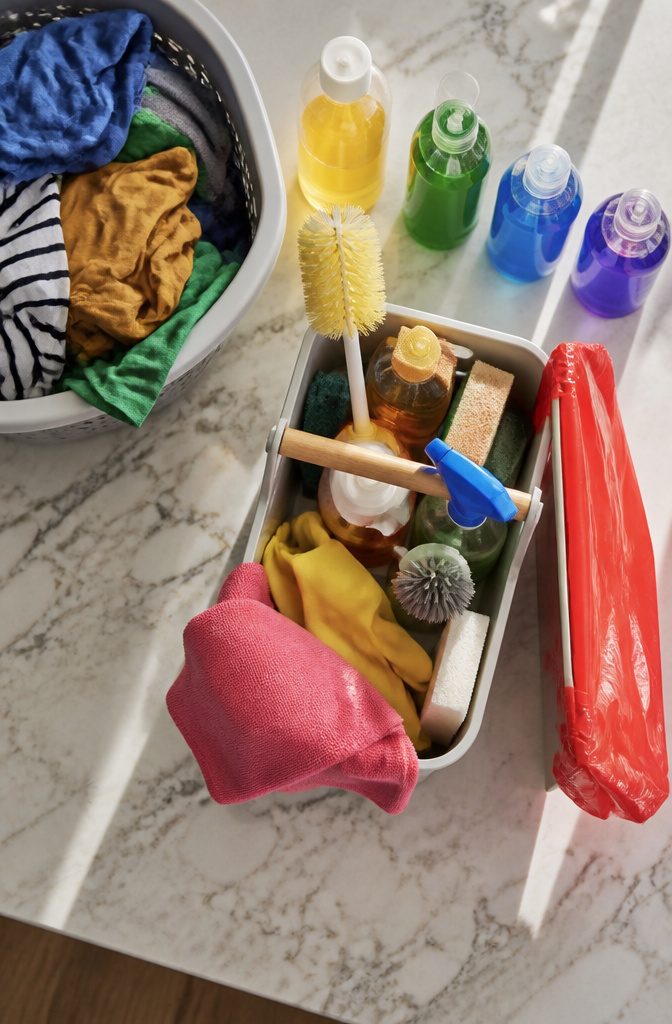
A cleaning caddy keeps everything in one trip, which matters more than the exact brand.
I load mine with a trash bag, a laundry basket for the clothes that always end up on the chair, microfiber cloths, an all-purpose cleaner, and a vacuum or broom, depending on the flooring.
Get everything in one place before you touch the first surface. Stopping mid-clean to hunt for a dustpan costs more time than the actual wiping, and that broken rhythm is usually where a Saturday morning turns into an all-day drift.
Organizing bins help for the small items that belong elsewhere but need a holding zone until the surfaces are clear.
Some people add a feather duster for ceiling corners; I skip it unless I am already seeing cobwebs, because the cloth and cleaner handle ninety percent of what actually collects dust.
2. Declutter Surfaces
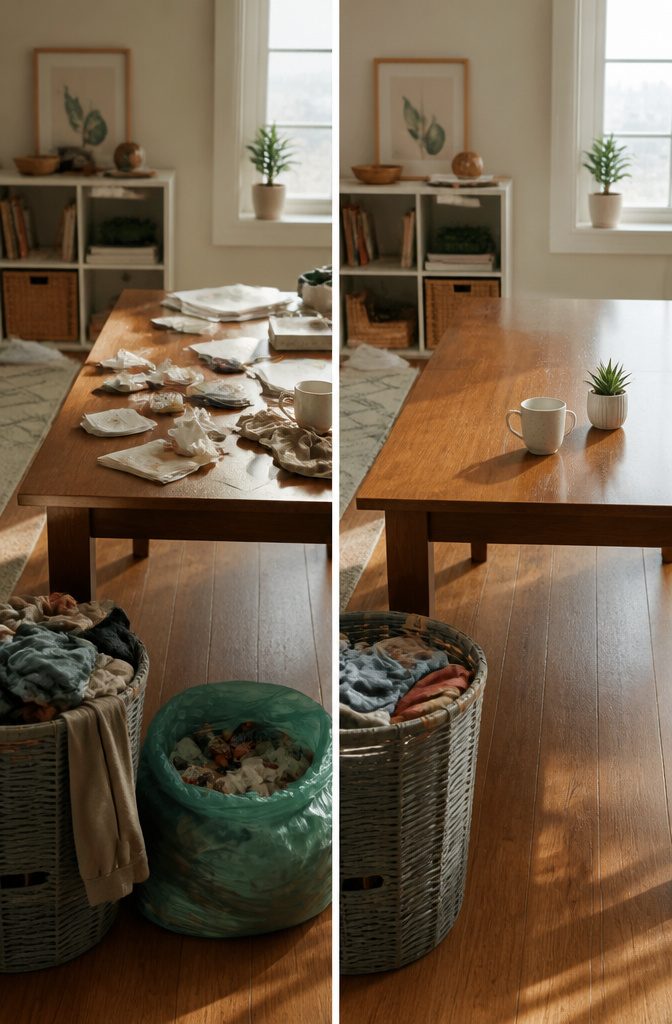
Trash goes first, because it is the easiest to spot and the fastest to remove.
A plastic bag in one hand, circle the room once, and most of the visual noise disappears. Dirty laundry follows: bedsheets kicked to the corner, yesterday’s jeans on the chair, the towel that never made it to the hamper.
Pile it all in a basket and move it to the door; sorting lights from darks can wait until the room is actually clean.
For a mess that feels too big to finish, work in zones rather than categories.
One corner, then the next. Trash, then laundry, then the books and chargers and coffee mugs that belong in other rooms.
The "sort later" basket buys speed now; just do not leave the room to return things mid-stream, or the bedroom project becomes a house-wide detour. Surfaces clear fastest when nothing gets relocated twice.
Take things that don’t belong in the bedroom out… Clear off your surfaces as much as you can of things that don’t normally go on them.
That last part matters most: a surface stays cleaner longer when it has a default state of empty.
3. Make the Bed
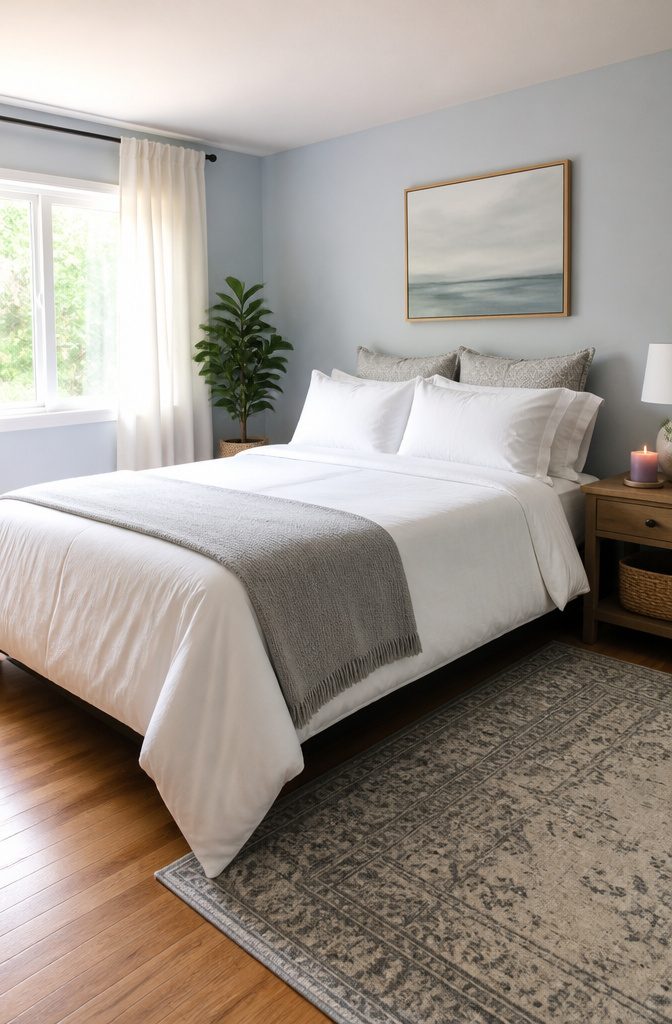
Strip the old linens first. Most people sleep better knowing the bed is fully reset, not just pulled tight.
Pull everything off, pillowcases included, and drop it straight in the hamper. Fresh sheets go on next, hospital corners optional, but tuck the fitted sheet snug so it does not ride up by morning.
The pillow arrangement matters more than people admit. Two sleeping pillows flat, shams or decorative pillows propped behind if you own them.
The bed eats up the most visual real estate in almost any bedroom, so a made bed reads as half the job done even when the floor still needs work.
I treat this as a daily two-minute task, not a weekly deep clean. The room looks intentional instead of abandoned, and if someone texts that they are five minutes away, you are already guest-ready.
You lose almost nothing for the gain. Skipping it saves those two minutes but costs the whole mood of the space.
4. Dust Surfaces
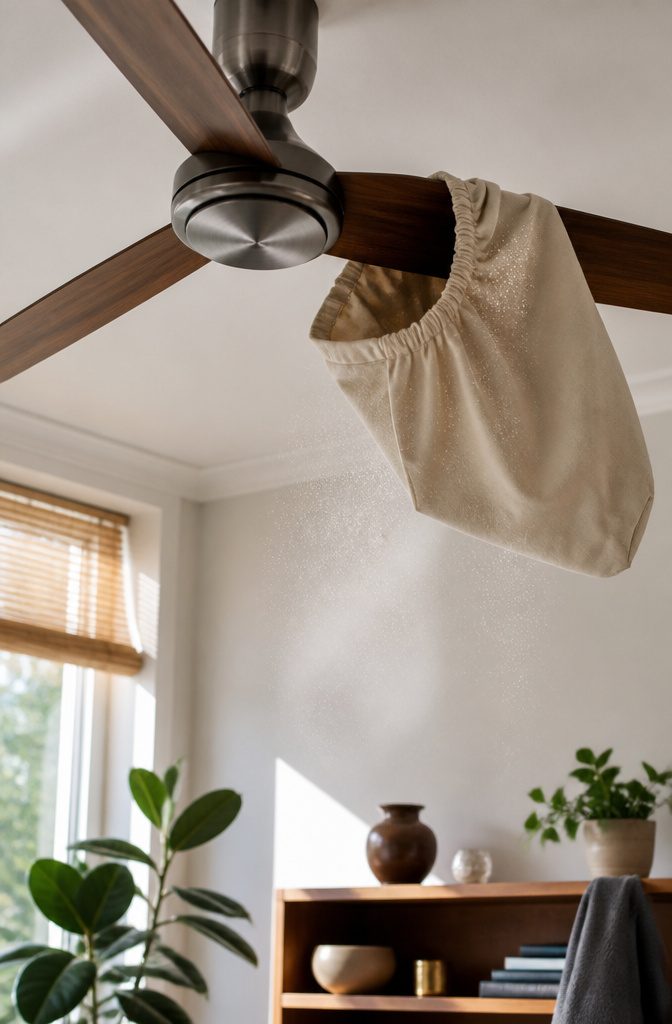
The old pillowcase trick for ceiling fan blades is one of those moves that actually earns its keep.
Slip an open pillowcase over each blade and pull it back toward you; the dust stays inside instead of drifting onto your bed or dresser. Start high and work down every time, because dust falls.
Ceiling fans and light fixtures go first, then shelves, then furniture at sitting height. If you tackle the nightstand before the fan, you will clean that nightstand twice.
A damp microfiber cloth handles most surfaces without pushing particles around, and turning fans and lights off beforehand keeps you from breathing warm dust or working around a spinning blade.
The ten minutes this takes is only efficient if the order is right; otherwise it is just ten minutes you will repeat.
5. Wipe Surfaces
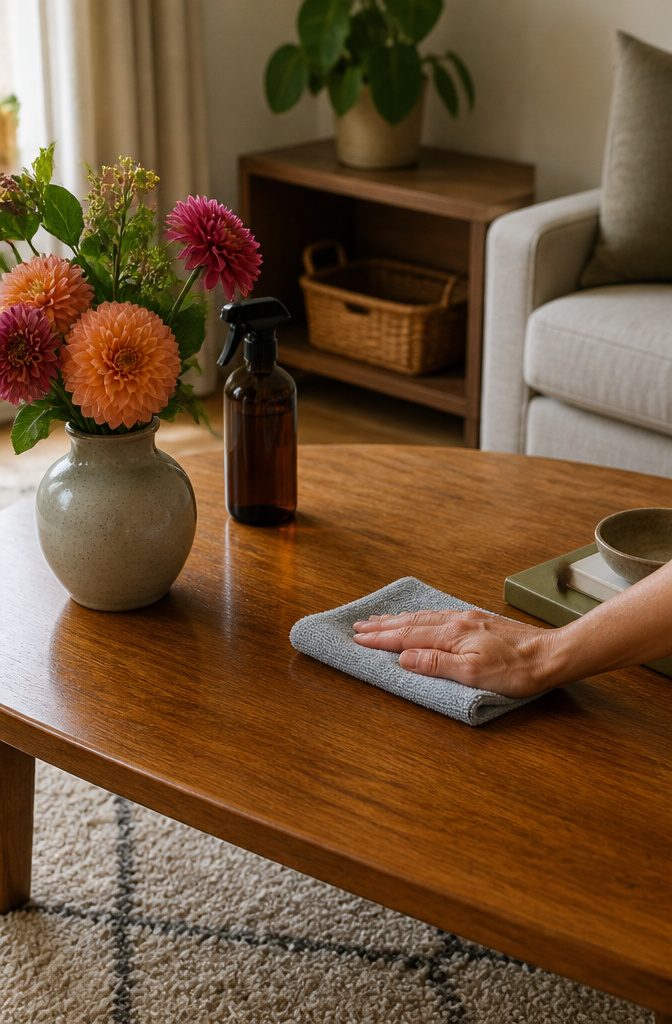
All-purpose cleaner is the right choice for furniture and hard surfaces, and I keep it simple: damp cloth first, spray second.
A microfiber cloth picks up dust without pushing it around, then a light mist of cleaner on the cloth itself, not the wood, lifts the sticky residue that accumulates on nightstands and desk edges.
Work top to bottom so anything you dislodge falls onto areas you have not touched yet.
For the finish, wipe in an S-pattern, zig-zagging across the surface rather than scrubbing in circles.
Circles redistribute grime; the S-pattern carries it to the edge. Damp works better than soaked.
Excess liquid seeps into seams and leaves streaks, especially on laminate or veneer furniture common in rentals. Buff dry with a second cloth if the surface looks dull.
Electronics need a lighter touch.
A barely damp cloth, no spray, handles screens and remotes. The same cloth run along lamp bases and picture frames catches the dust that sits just outside your usual line of sight.
6. Clean Mirrors and Windows
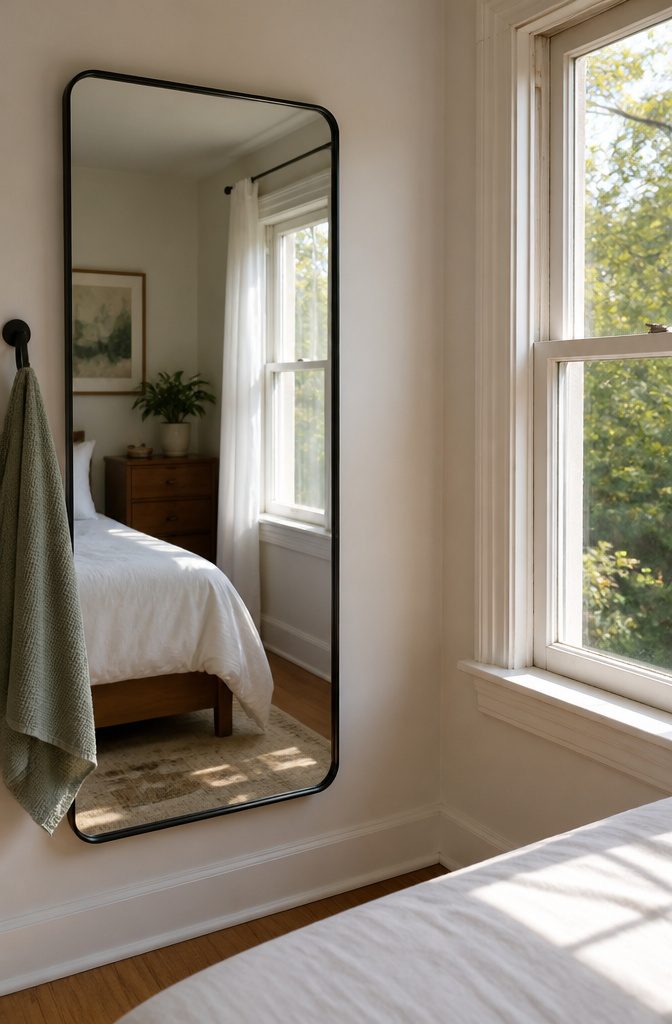
Mirrors and windows collect the kind of grime that dulls a whole room even when everything else is tidy.
I reach for a glass cleaner and a lint-free cloth, though a vinegar-water mix works in a pinch if that is what is on hand.
The cloth matters more than the spray: paper towels and regular rags leave fibers behind, and those fibers read as streaks in afternoon light.
Spray the cleaner directly onto the glass, then wipe in circles to lift the film.
Finish with straight vertical strokes; the overlap catches the last faint marks that circular motion misses. A true streak-free shine needs that final straight pass, not more elbow grease.
Window tracks need attention too, though they are easy to skip.
Vacuum loose debris with a crevice attachment, then scrub caked dust with an old toothbrush and all-purpose cleaner. The track is only a few inches wide, but clean glass above a grimy track still looks half-done.
Polished reflective surfaces bounce light deeper into the room than matte walls ever will. In a small bedroom, that borrowed depth is often the cheapest square footage you will find.
7. Vacuum or Sweep Floors
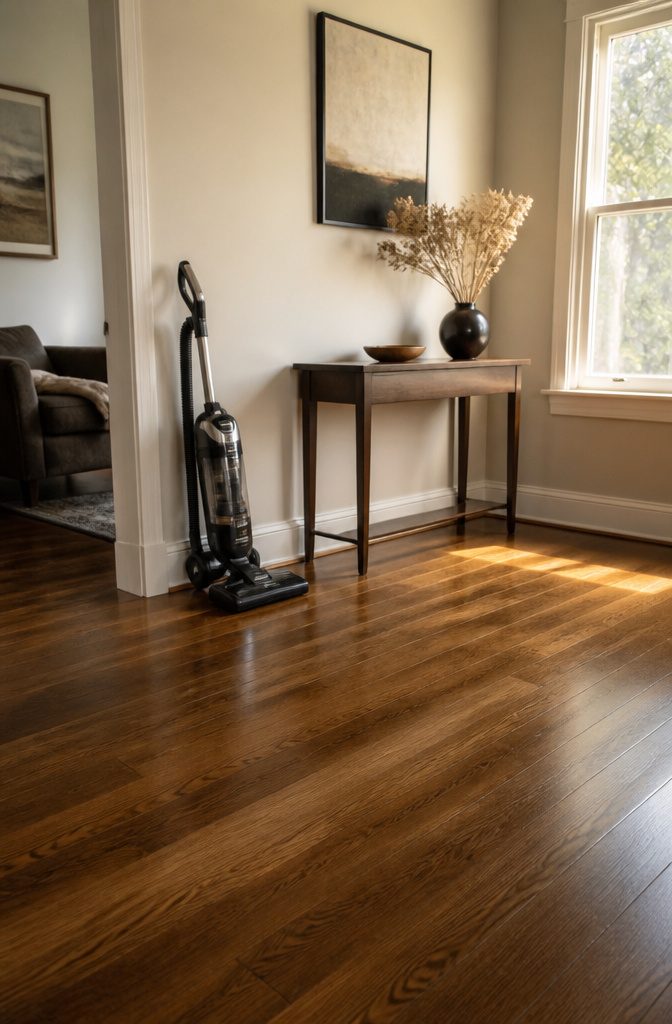
Carpets collect what the eye misses.
I run the vacuum in overlapping strokes, working toward the door so I don’t walk over what I just cleaned. Hard floors get a broom first, then a damp mop, since vacuum wheels can drag grit and scratch softer finishes.
Corners and the gap under the bed are where dust actually lives. The crease where carpet meets wall darkens over time; it is not supposed to ombre.
A crevice tool reaches where the main head cannot, including behind furniture where dust bunnies pile up. If you have blinds, the same attachment with a soft brush end lifts dust from slats without bending them.
Moving furniture out of place takes an extra five minutes and reveals what the normal view hides.
I do this only when allergies flare or when I can see the shadow under the dresser, whichever comes first. The depth is your call, but skipping it entirely means the room looks clean without being clean.
8. Finish With Scent
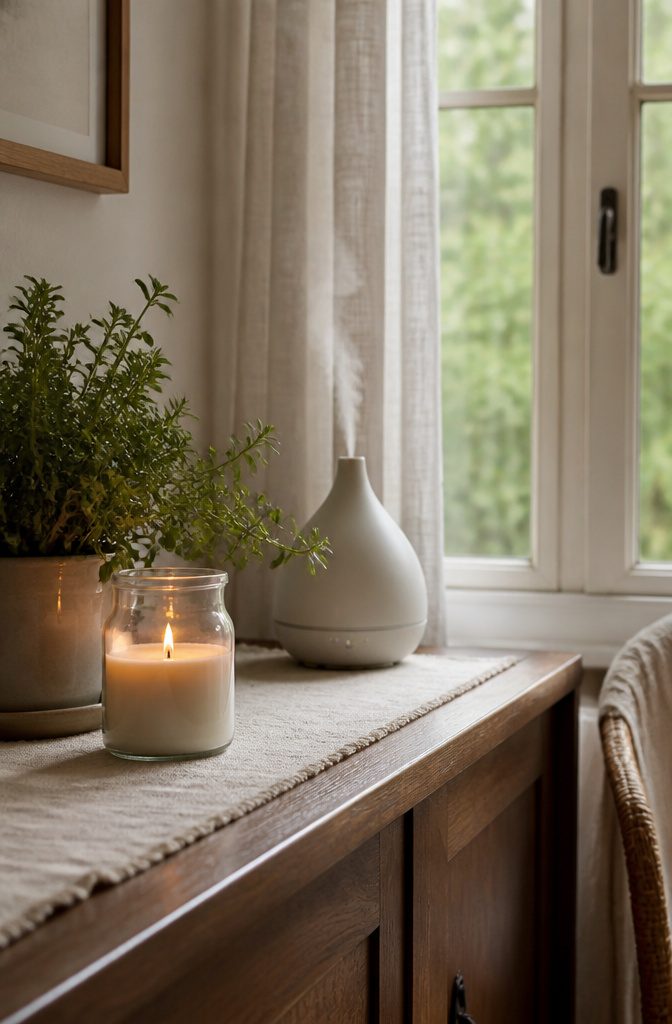
Scent is the last thing I add, and only after the surfaces are actually clean. A candle or diffuser set against dust and stale air just layers perfume over the problem, so this step waits until everything else is done.
Open windows first if the weather allows.
Fresh air costs nothing and clears out the chemical smell of cleaners better than any product. On days when outside air is not an option, a room spray or essential oil diffuser does the job.
I keep both on hand and choose based on the room itself: something light and herbal for a bedroom, nothing that competes with cooking smells near a kitchen.
A candle works too, though I treat it as atmosphere rather than air freshener. The burn time matters more than the brand; a small soy candle in a glass jar gives about 20 hours, enough for several cleaning sessions.
The real value here is signaling.
Your nose tells you the work is finished before your eyes do, and that small sensory cue makes the space feel maintained rather than merely picked up. Spend two minutes on this step, not twenty.
Cleaning Mindset and Motivation
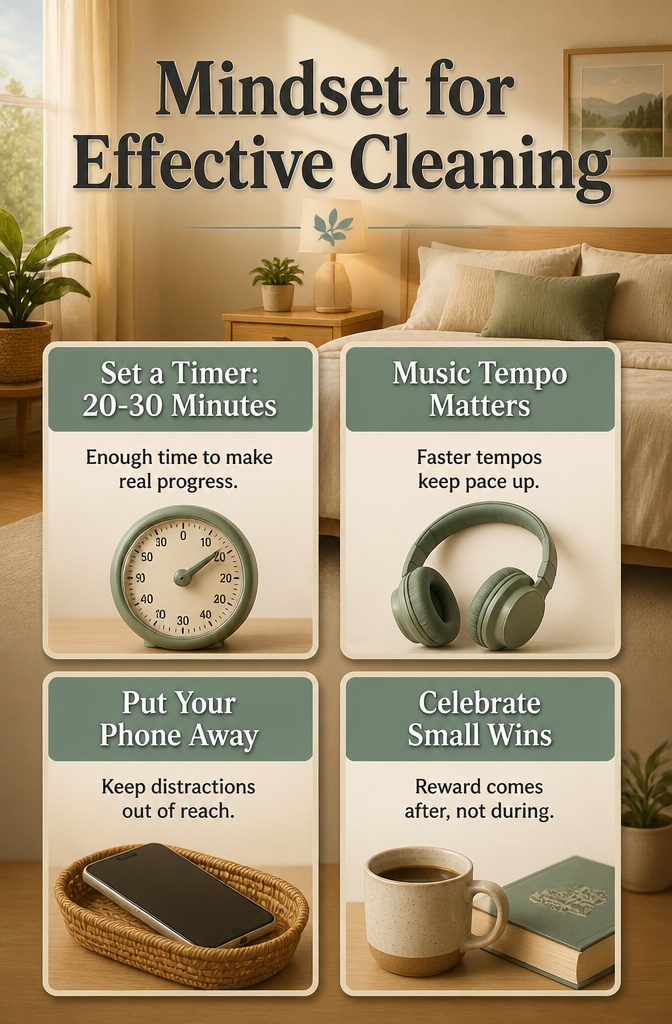
The timer is what separates a finished room from one that stays half-done.
I set mine for 20 to 30 minutes when the mess is moderate, enough time to clear surfaces, reset the bed, and run the vacuum without letting the job swell into an all-day project.
A deeper clean, one that moves furniture and tackles corners, runs closer to an hour, and knowing that upfront keeps expectations honest.
Music helps, but the beat matters more than the playlist. Faster tempos keep pace up; slower tracks drag energy down.
Some people race the clock, others race a playlist of fixed length. Either way, the same idea holds: external structure beats willpower.
The phone goes elsewhere.
Not face-down on the dresser, but in another room. Every glance at a notification fractures the momentum that the timer and music are supposed to build.
Small wins keep the work moving. Bed first, then desk, then floor.
Perfection is the enemy here; a room that looks clean enough is clean enough. The reward comes after, not during, a cup of coffee or ten minutes with a book, something that marks the end clearly.
Routine Cleaning Schedule
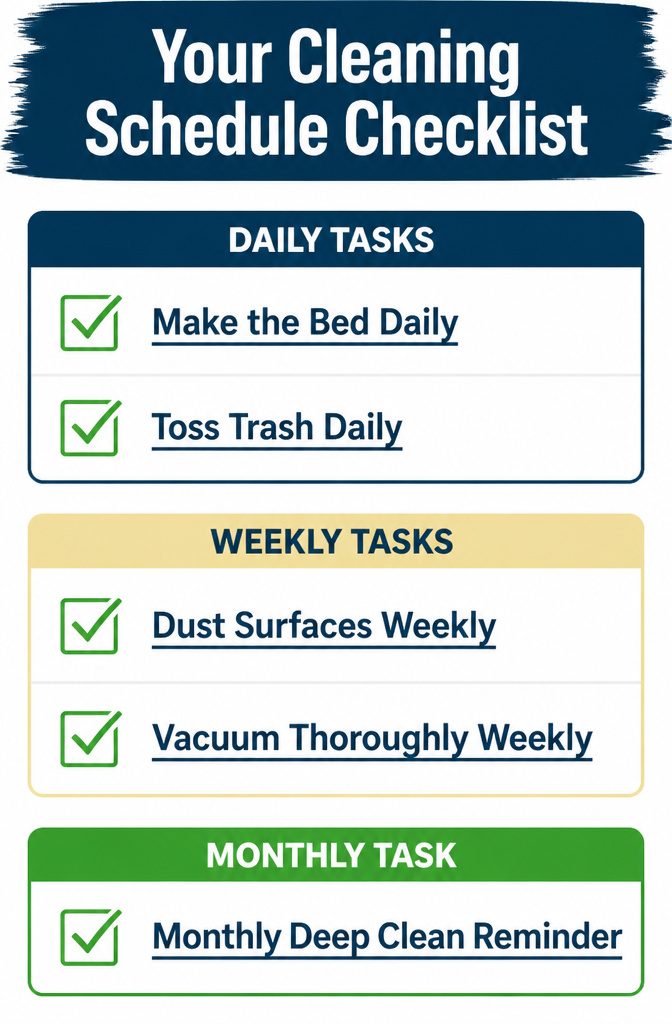
A room that stays clean is a room that gets cleaned in layers, not in exhausting single sessions.
The daily layer takes about five minutes: make the bed, toss trash, put clothes back on hangers or in the hamper. That small routine keeps clutter from becoming a weekend project.
The weekly layer runs 20 to 30 minutes for dusting surfaces, vacuuming thoroughly, and wiping mirrors. I do this on the same day each week so it does not drift.
The monthly layer is the deeper pass most people skip: get under the bed, organize drawers, tidy the closet, clean baseboards, and wash curtains or wipe blinds.
Set a recurring reminder for that monthly hour; without it, the small spaces that daily and weekly cleaning miss will slowly reclaim the room.
One habit makes the schedule stick: put things back in place after use. It sounds minor, but it is the difference between a room that looks maintained and one that needs another full reset.
Organizing Tips
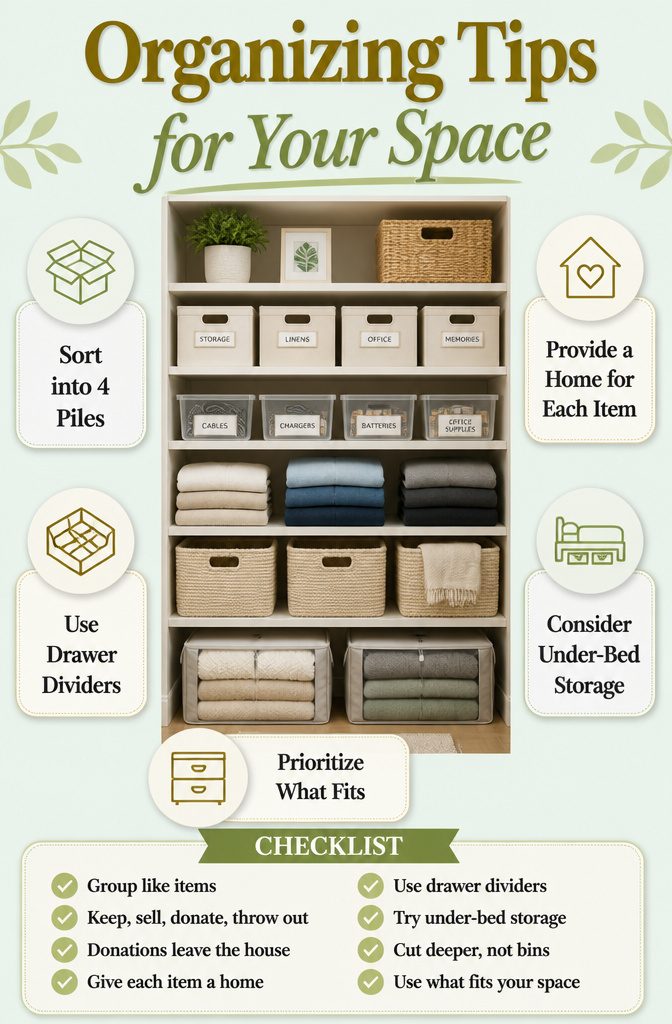
Grouping like items is the move that makes the rest of organizing possible.
I sort into four piles: keep, sell, donate, and throw out. A thrift-store box stashed in the car means donations actually leave the house instead of sitting in a corner for another month.
Once the sorting is done, every kept item needs a designated home.
Shirts with shirts, chargers with chargers. Drawer dividers or open bins keep these categories from bleeding back together, and under-bed storage buys back floor space from seasonal clutter.
The 80/10/10 split professional organizers describe feels about right in practice: most of the work is the sorting, a sliver is purging, and the last bit is arranging what stays.
The real limit is what fits your actual storage.
If drawers are still overflowing after assigning homes, that is a signal to cut deeper, not to buy more bins. A lighter wardrobe you use beats a full one you fight through every morning.
Specific Cleaning Techniques
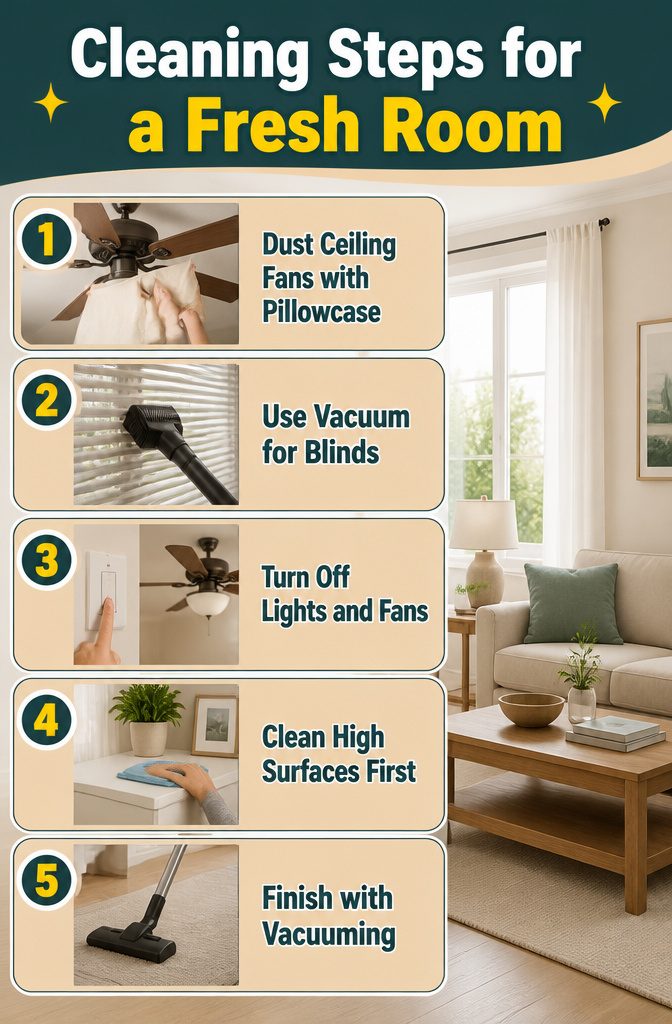
Ceiling fans collect dust in ways that defy a simple swipe.
An old pillowcase slipped over each blade traps the pile instead of scattering it. Pull the fabric slowly toward you so the dust stays inside, then shake it out over a trash bin.
For blinds, the brush attachment on a vacuum handles slatted surfaces faster than any cloth. Work top to bottom so anything missed falls toward the floor you have not yet cleaned.
Lights and fans should be off before you start; a spinning blade turns a quick job into a mess. Blinds and high surfaces come before the vacuum pass, since dust resettles and you will only chase it twice otherwise.
Frequently Asked Questions
How can I clean my bedroom when it’s really messy?
Work in zones rather than categories: trash first, then laundry, then items that belong elsewhere.
Tackle one corner at a time and use a "sort later" basket so you do not leave the room mid-stream. This keeps the job contained instead of turning it into a house-wide detour.
What’s the fastest way to tidy up before guests arrive?
Make the bed first, since it takes up the most visual space and reads as half the job done.
Clear visible surfaces, run the vacuum toward the door, and add a light scent after everything else is finished. Skip the deep corners; a room that looks clean enough is clean enough for a five-minute warning.
How long should it take to tidy a bedroom?
A moderately messy room takes 20 to 30 minutes with a timer and focused pace.
A deeper clean that moves furniture and hits baseboards runs closer to an hour. Setting the expectation upfront keeps the job from swelling into an all-day drift.
How to clean a room step by step?
Gather supplies in one trip, declutter surfaces starting with trash and laundry, make the bed with fresh linens, dust high to low, wipe surfaces in an S-pattern, clean mirrors and windows, vacuum or sweep floors, and finish with fresh air or a light scent.
The order matters: dust falls, so start at the ceiling and work down.
How to clean your room really quickly?
Set a 20-minute timer, put your phone in another room, and play music with a fast tempo.
Hit the bed first for maximum visual impact, circle once for trash and laundry, then run the vacuum toward the door. Do not relocate items twice and do not leave the room until the timer rings.
What is the 5-5-5 rule for cleaning?
The daily five-minute layer is what prevents weekend overload.





