
A half bath renovation can run anywhere from $1,500 to $15,000, and the difference comes down to how much of the work you keep inside the walls. Paint and a $40 faucet swap are weekend jobs; reroute plumbing or touch the electrical panel and you are paying a licensed trade whether you planned to or not. One couple kept their whole project at $2,225 by doing the labor themselves and letting $580 in bold tile do the visual lifting.
[link-whisper-related-posts]1. Create a Statement Vanity
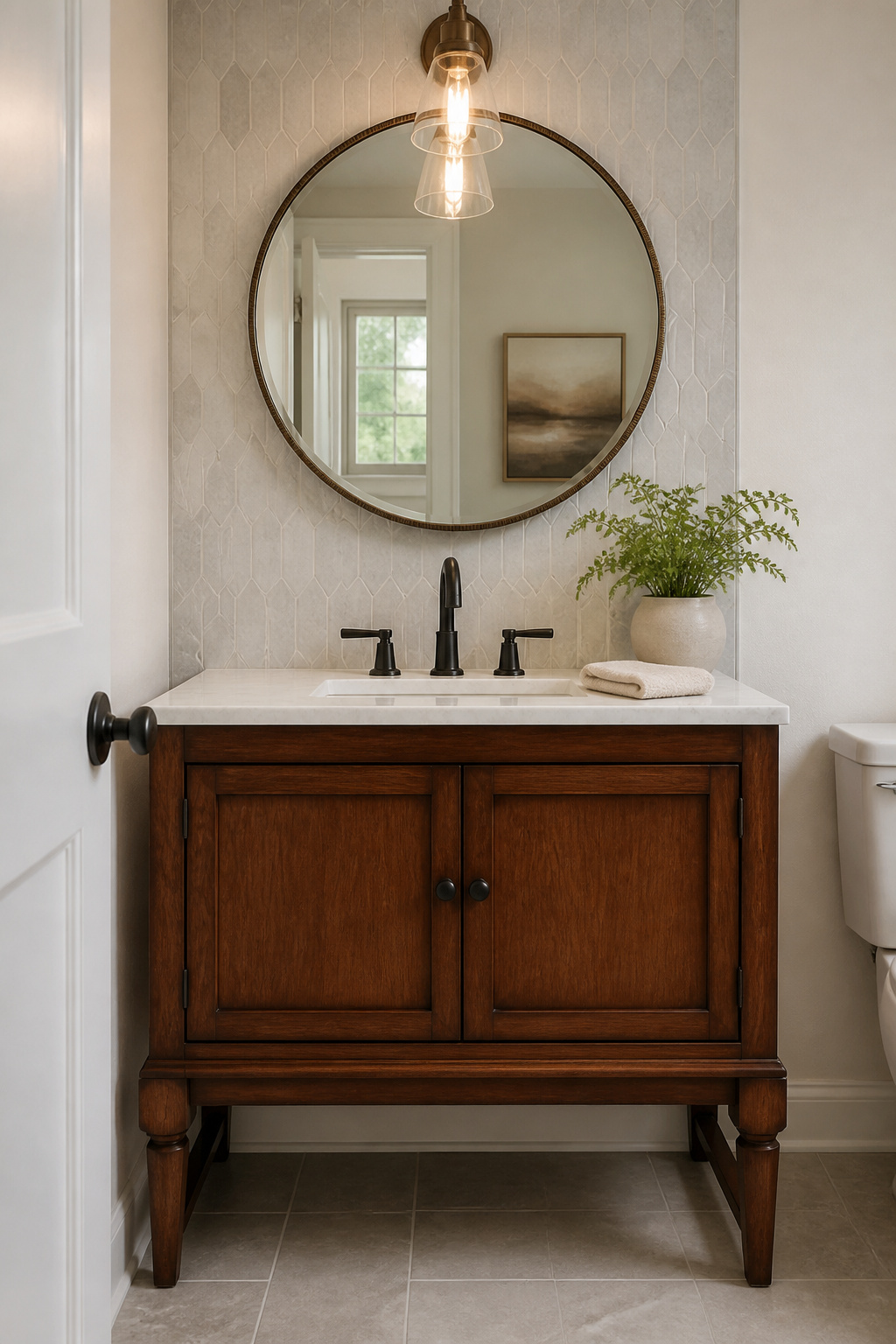
A vanity that reads as furniture changes the whole room because it borrows presence from somewhere else. Instead of built-in cabinetry that looks like it was born in the bathroom, a repurposed cabinet or a furniture-style base brings weight, legs, and a finished side panel you actually want to see from the doorway.
A full half bath renovation runs $1,500 to $15,000, so the vanity sits where it belongs: one of the bigger line items, but not the whole budget. In one breakdown, the vanity, mirror, faucet, lighting, and hardware together came to $846, against $580 for tile and supplies. That ratio feels about right for most projects.
Floating vanities save the floor space you need in a half bath, and the wall-mounted look reads modern without the modern price tag if you start with a simple cabinet and a concealed bracket. Corner sinks do the same thing in reverse, tucking the basin where no one was using the wall anyway. Both options leave room to move, which matters when the whole room is barely wider than the door swing.
The risk with a statement vanity is overbuilding it. A heavy piece in a tight space blocks the toilet or the door arc, and then the room fights itself. Measure the clearances first, then choose the piece that fits.

STURDY SOLID WOOD WITH SMOOTH SURFACES - Crafted from premium solid wood, these furniture legs boast exceptional sturdiness. Expertly carved with European-style and meticulous workmanship, they undergo multi-stage sanding for a flawlessly smooth, burr-free surface. Adding an elegant and refined touch to any furniture piece.

【Versatile Use】This vanity stool is perfect for a variety of settings, whether you need a stylish makeup stool at your vanity, an entryway stool for changing shoes, or an ottoman footrest in your living room. Its compact size makes it easy to fit into any space!

Set of 4 wooden furniture legs.
2. Go Bold with Wallpaper or Paint
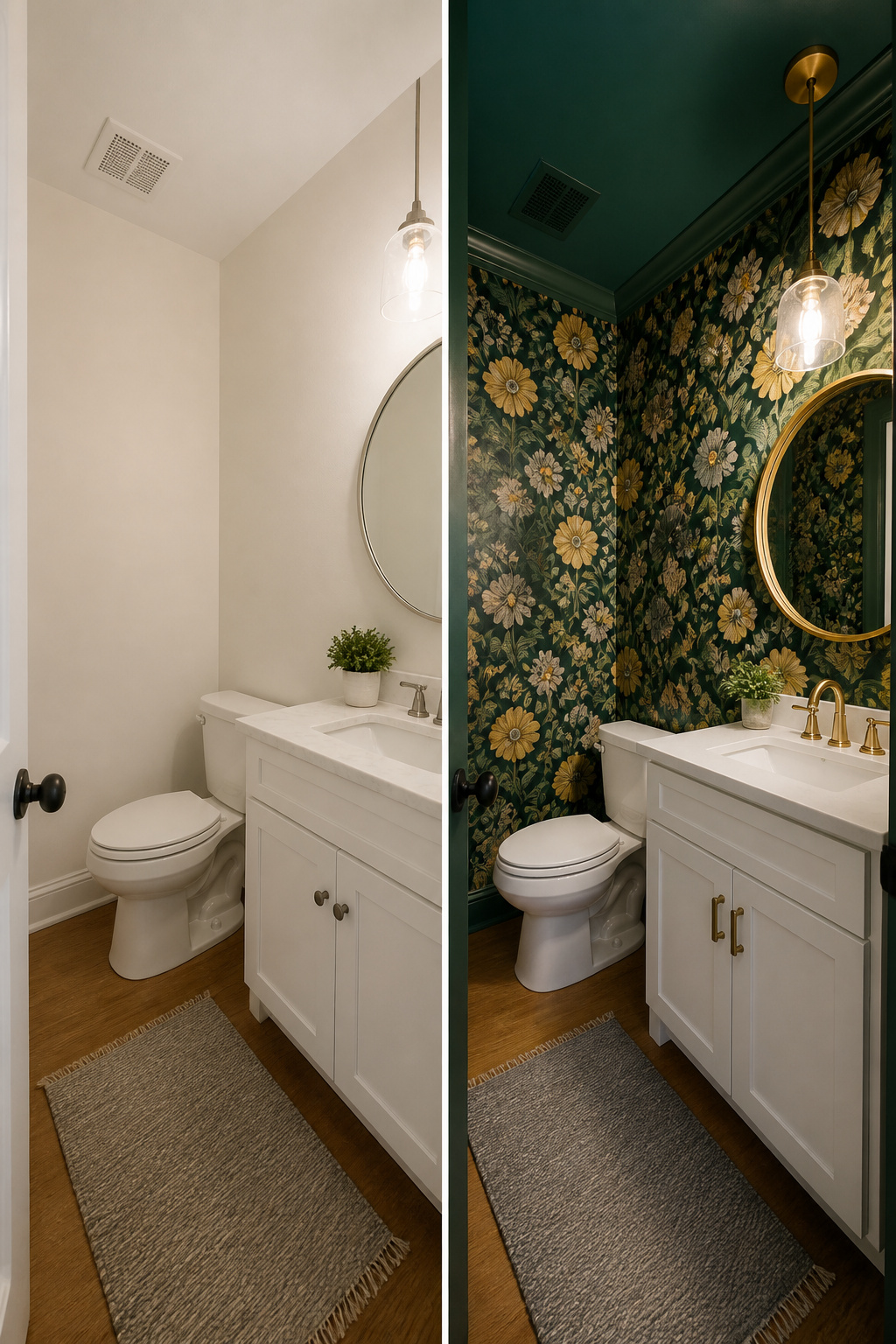
A half bath runs about 15 to 20 square feet, which means one roll of wallpaper covers it with length to spare. That small footprint is exactly why you can risk a loud floral or a deep, saturated paint color here. Guests spend minutes inside, not hours, so the choice does not wear on anyone the way it might in a full bath.
Moisture is lighter in a half bath, no shower steaming up the walls, but the room still needs a finish rated for bathroom use. Scrubbable paint and vinyl-backed paper hold up to hand-washing splashes and the occasional wipedown. I would not hang untreated grasscloth or standard matte latex here; the humidity that does exist will stain or lift it within a year.
The jewel box effect the sources mention comes from treating all four planes as one continuous gesture. In a space this small, a bold pattern wraps the room fast and reads as intentional rather than chaotic. Paint the ceiling the same deep tone or paper right over it, and the visual seams disappear. A statement mirror and a fixture with some weight finish the trick without adding another competing layer.
Two ways to play the budget: paper the wall behind the vanity as a single focal plane and paint the rest, or commit fully and use that one roll everywhere. The full wrap wins for drama, but the accent wall keeps the project under a single Saturday and lets you test whether you can live with the pattern before you order more.

SPACE-SAVING 18 INCH DESIGN FOR SMALL BATHROOMS: Measuring about 17.7 inches wide, this compact 18 inch bathroom vanity with sink fits powder rooms, half baths and tiny en-suites, turning a narrow wall into a full wash station where every inch counts

Perfect Size for Small Bathrooms – Measuring 14" W x 10" D x 4" H. this compact wall-mounted sink is designed to maximize functionality in tight spaces. Ideal for half baths, powder rooms, or tiny bathrooms.

Material: Medium Density Fiberboard, outlasts wood in damp bathroom environments
3. Upgrade Lighting for Instant Impact
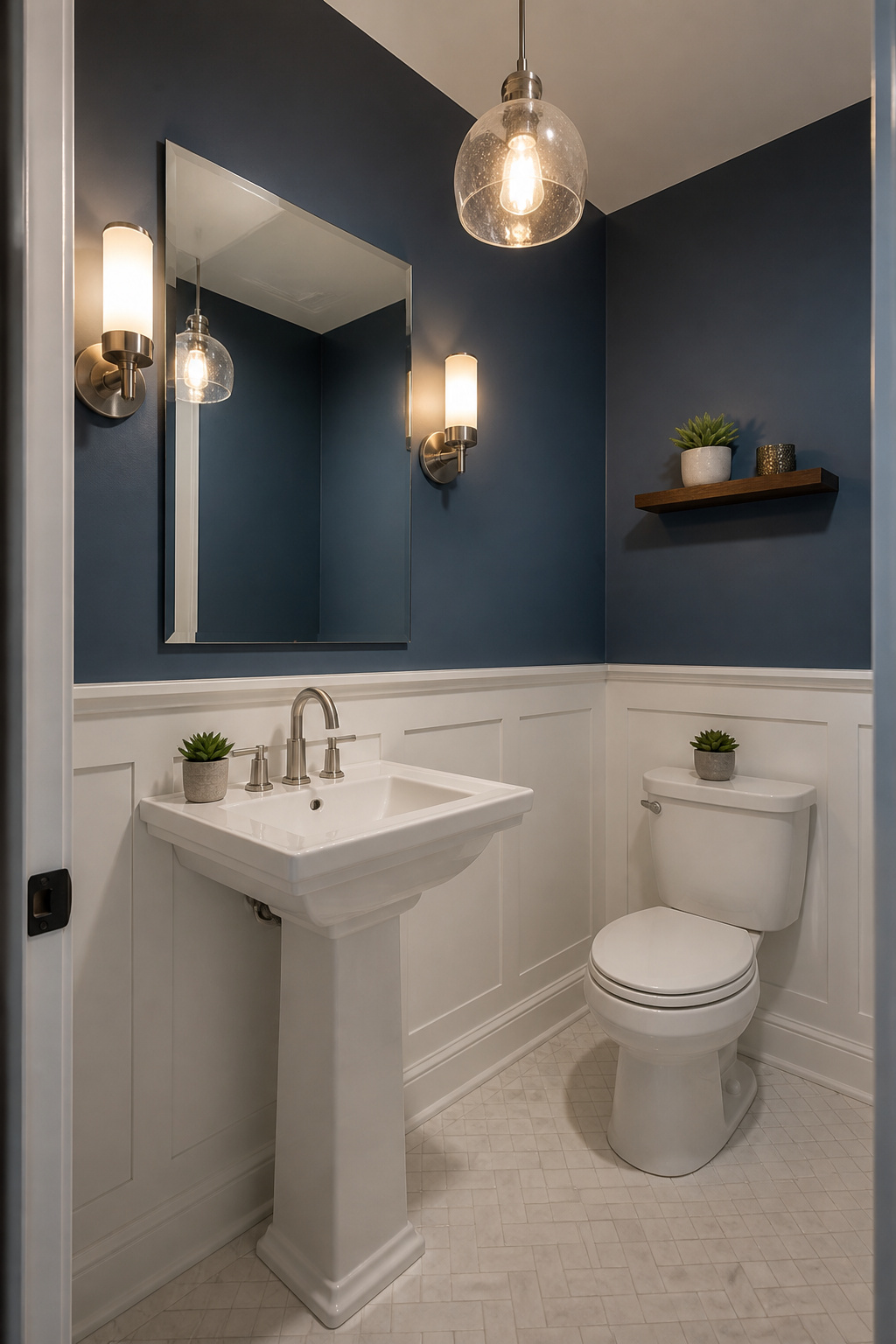
Lighting in a half bath works harder than in almost any other room because the space is small and the mirror is where you check your face before leaving the house. Side sconces set at eye level on either side of the mirror wash light evenly across your face, neck, and hair, while overhead lighting alone drops shadows where you do not want them. If your mirror sits too tight to the wall for sconces, an over-mirror fixture at least 24 inches long and mounted 75 to 80 inches above the floor spreads light wide enough to do the same job.
Most fixture swaps keep the existing junction box, which keeps this work in the first few days of a one-to-three-week renovation timeline. Swap the ceiling fixture for a small pendant or flush mount for ambient fill, add the mirror lighting for tasks, and you have layered light without touching wiring behind the walls.
Energy-efficient options matter in a room that runs lights in short bursts all day. LED strips under a floating vanity or inside a wall-mounted cabinet give soft ambient glow with almost no draw, and the bulbs in your sconces or ceiling fixture can move to LED without changing the fixture itself if the base matches. The combination light and exhaust fan units save space in tight ceilings and pull double duty where every inch counts.
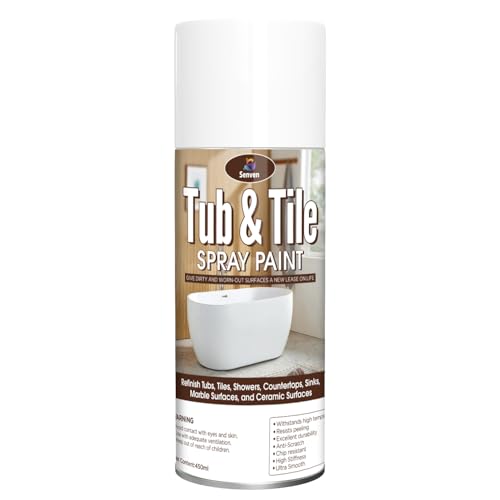
SENVEN TUB & TILE REFINISHING SPRAY PAINT: Apply this Tile Spray Paint to ceramic, porcelain, or fiberglass surfaces, including tiles, sinks, and tubs. Specifically for ceramic, porcelain surfaces like bathtubs, tile floors/walls, toilets, sinks and countertops. DIY refinish your bathroom with just one quick and easy spray step for a refreshed look. The SENVEN Tub & Tile Refinishing Kit is here to reduce costs without breaking the bank on new fixtures or hiring a contractor

【TUB & TILE REFINISHING KIT】 Refresh aging bathtubs, bathroom tiles, sinks, shower walls, and other suitable surfaces with DWIL tile paint. This 16.5oz tub and tile paint kit includes essential application tools, making it a practical choice for DIY bathroom makeovers without the cost and mess of full replacement.
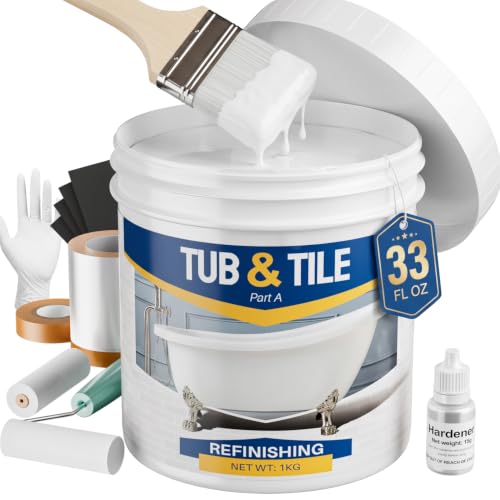
【PREMIUM TWO-PART WATER-BASED ACRYLIC RESIN】Our tub and tile refinishing kit offers outstanding adhesion and resists peeling and abrasion. The tough coating stays intact even in humid bathrooms and kitchens for long-lasting renovation results.
4. Add a Budget-Friendly Accent Wall
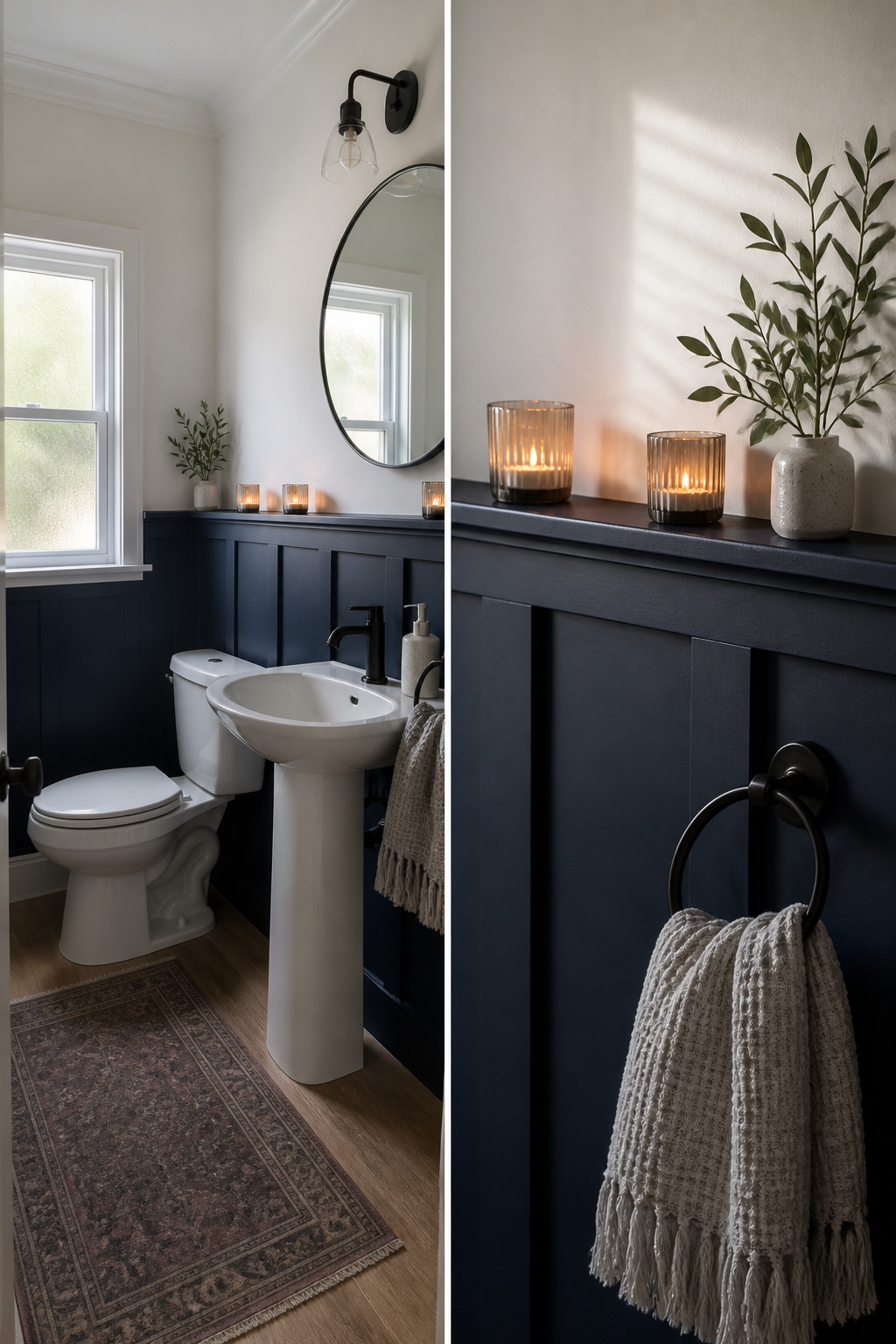
One wall done differently wakes up a half bath faster than any full-room treatment, and the cost lands where most weekend projects do. Board and batten on the lower half of the walls ran about $200 in materials for the whole job, and that was enough to make the room feel finished rather than patched together.
Beadboard or a strong paint color on a single wall hits the same mark for even less. Tile costs more and eats time, so that route only makes sense if you already have the saw and the patience for grout. Board and batten or paint, you are looking at a day, maybe a day and a morning if the corners fight you.
The question of whether to do this yourself or bring someone in depends on what the wall already holds. Straight drywall with no plumbing behind it is a few cuts and a nail gun. Move an outlet or work around old lathe and plaster, and the math shifts. Knowing which tasks you can handle and when to call in experts is what keeps a half bath project from stalling out halfway through a Saturday.

【Size & High Quality Material】Size: 15.7" x 78.7"=1.31ft x 6.56ft (covers 8.61 sq.ft). Made of durable vinyl, the peel and stick wallpaper is non-toxic, durable, environment-friendly.
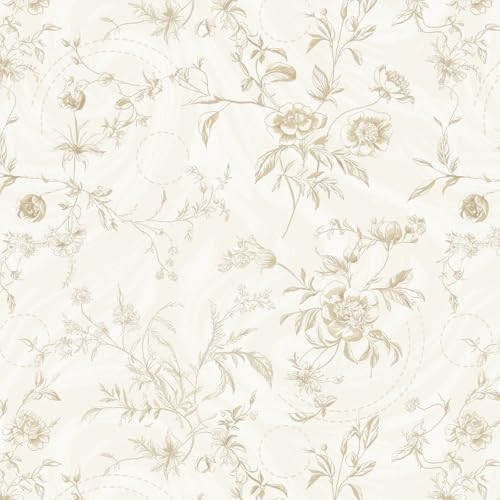
Design: Inspired by French gardens, exuding elegance and romance, a soft beige background features light brown floral branches and leaves in a scattered, natural arrangement. Delicate brushstrokes form varied floral patterns, while the harmonious color scheme captures the romantic essence of a French garden, bringing warmth and an inviting atmosphere into your home

【Size & High Quality Material】Size: 15.7" x 78.7"=1.31ft x 6.56ft (covers 8.61 sq.ft). Made of durable vinyl, the peel and stick wallpaper is non-toxic, durable, environment-friendly.
5. Install a Modern Mirror
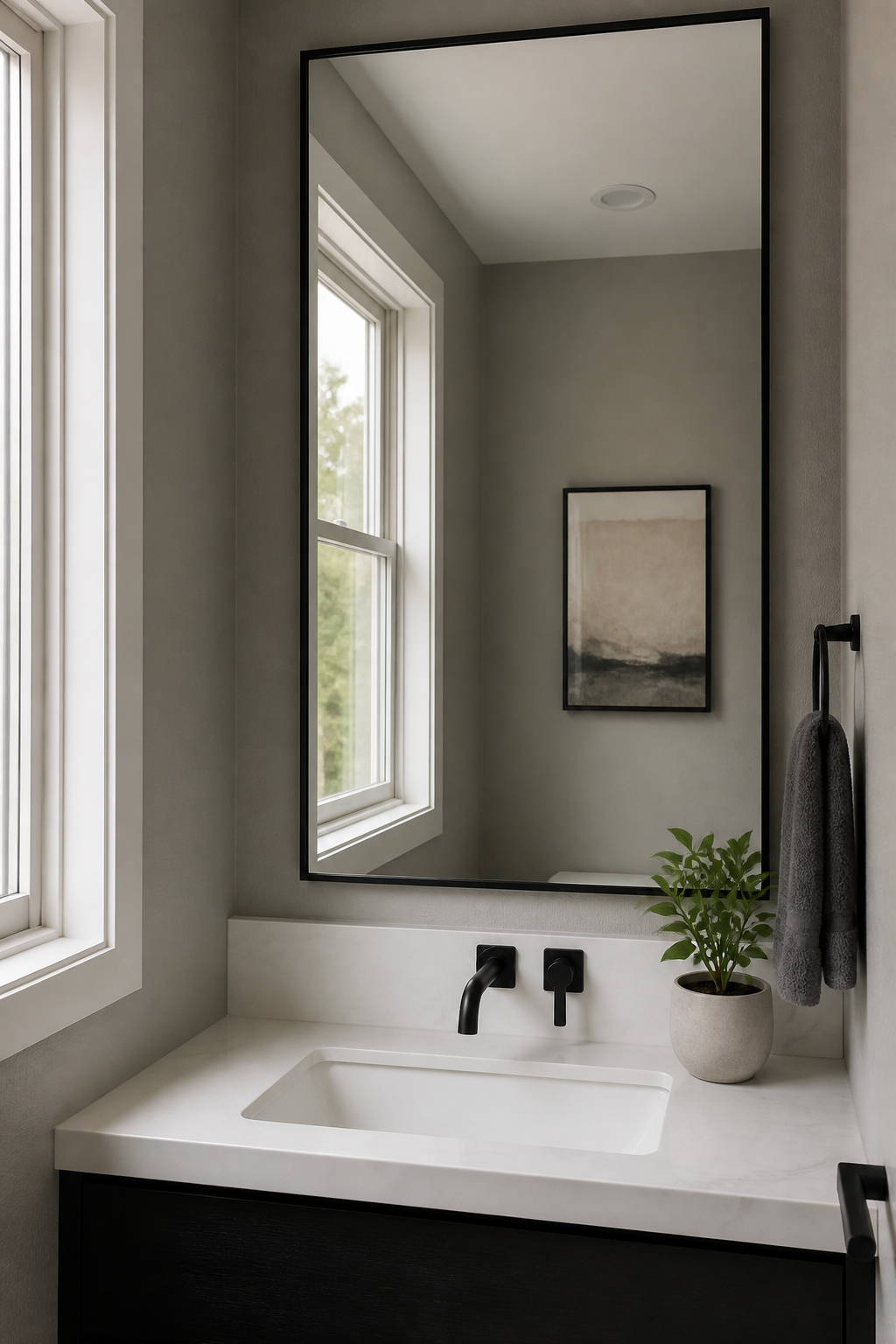
A mirror does more in a half bath than check your reflection. In a room roughly 3–4 feet wide and 6–8 feet long, it catches what little light exists and pushes it back out, so the walls seem to step away from you. The trick is sizing it without bumping into the rules that keep the toilet usable.
The 30-inch toilet clearance and the 15-inch center-to-wall measurement are what narrow your options. That center-to-wall span means a mirror hung above the sink can only run so wide before it crowds the fixture beside it. Frameless or thin-framed mirrors win here; they add the reflective surface without the bulk that eats into those inches. I would skip anything ornate that projects past the glass itself.
Placement matters as much as size. Mount it to catch window light if you have one, or direct it toward the fixture so the bulb doubles back. In a room this small, a larger mirror almost always beats a small one, even if it means going taller rather than wider to respect that clearance. The shape is a judgment call: a vertical rectangle draws the eye up, which helps when the ceiling is low and the floor is already spoken for.

17.3-inch vanity light: Fits 24” and 30” standard bathroom mirrors—the top single-sink vanity sizes in homes. Well-proportioned and never too small or oversized, it delivers balanced, full coverage for your entire vanity area

【PREMIUM MATERIAL and MODERN DESIGN 】The vanity lights for mirror are built in sturdy metal black base and lamp body, with clear glass shades, create a modern warm to your home lighting. The shade makes the lamp base dust and water resistant, so it is also suitable for wet places such as bathroom lights over mirror, laundry rooms.

ETL-Certified :ETL certified vanity light.The socket features UL certification and is compatible with dimmable bulbs and switches,including incandescent,CFL,halogen and LED bulbs (max 60W per bulb,Ceramic E26 Socket,bulbs and switches are not included)
6. Use Bold or Patterned Flooring
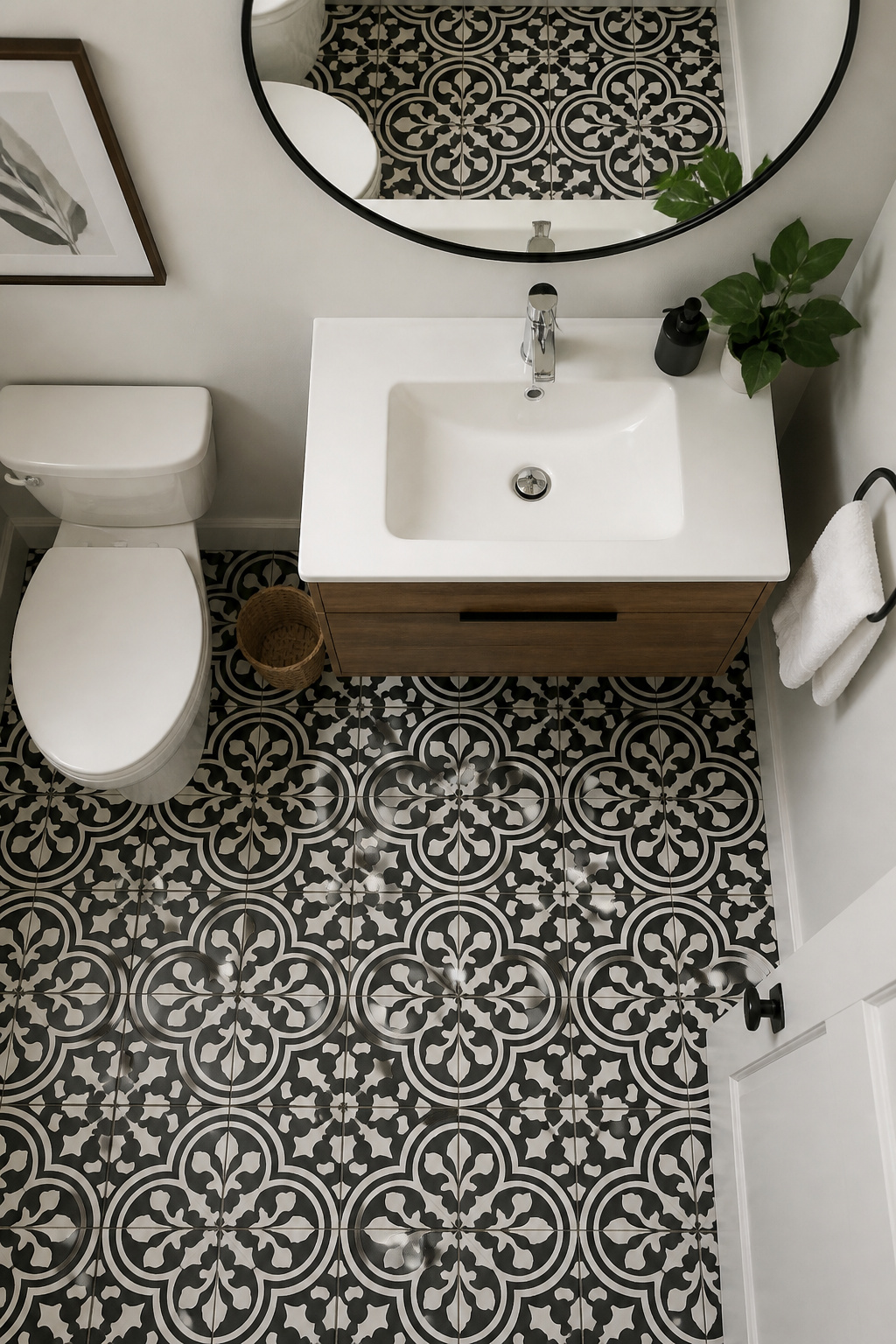
Vinyl plank, ceramic tile, and painted concrete each handle wet feet differently, and the choice matters more in a half bath than you’d think because the floor is what you notice first in a room that small. I learned that scale of pattern is the part people get wrong: a large-format motif that would look dramatic in a foyer swallows a powder room whole and makes the walls feel like they’re closing in. A pattern repeat under six inches reads as texture, not statement, in a space under twenty square feet. That is where the budget play gets interesting. Real marble runs $40 to $100 per square foot, but cultured marble, a mix of marble dust and polyester resin, lands at roughly half that and reads the same from standing height. Standard vinyl or ceramic tiles can mimic pricier materials for a fraction of the price, and since you’re covering maybe thirty square feet total, the upgrade to a bold pattern is one of the few splurges that stays cheap. One couple I read about kept their entire half bath renovation to $2,225 by spending $580 on tile, grout, and a saw rental, doing the labor themselves over a weekend. The floor was the visual anchor; everything else could be basic. My own leaning is toward smaller patterns or high-contrast geometry in wet areas, large patterns in dry ones, because water finds the seams and small tiles with more grout lines grip better underfoot.

[24-Inch Retro Palace Style Bathroom Vanity] Designed in a retro palace style with intricately carved cabinet legs for an elegant aesthetic. The cream finish and carved details add classic luxury to bathroom spaces.

Package & Dimension: The package includes 4pcs adjustable furniture legs with 16pcs screws. Tube Diameter: 38 mm/ 1.5". Hole Distance (L*W): 40 x 30 mm/ 1.57" x 1.18". Mounting Base Size (L*W): 60*50mm/ 2.36" x 1.97". Base Thickness: 3 mm/ 0.12".

Sophisticated Vanity Design: Enhance your bathroom with a touch of opulence and refined elegance with our bathroom vanity, which features four charming round turned legs and a serene, understated color palette, complemented by glossy handles and exquisite craftsmanship.
7. Maximize Storage with Smart Solutions
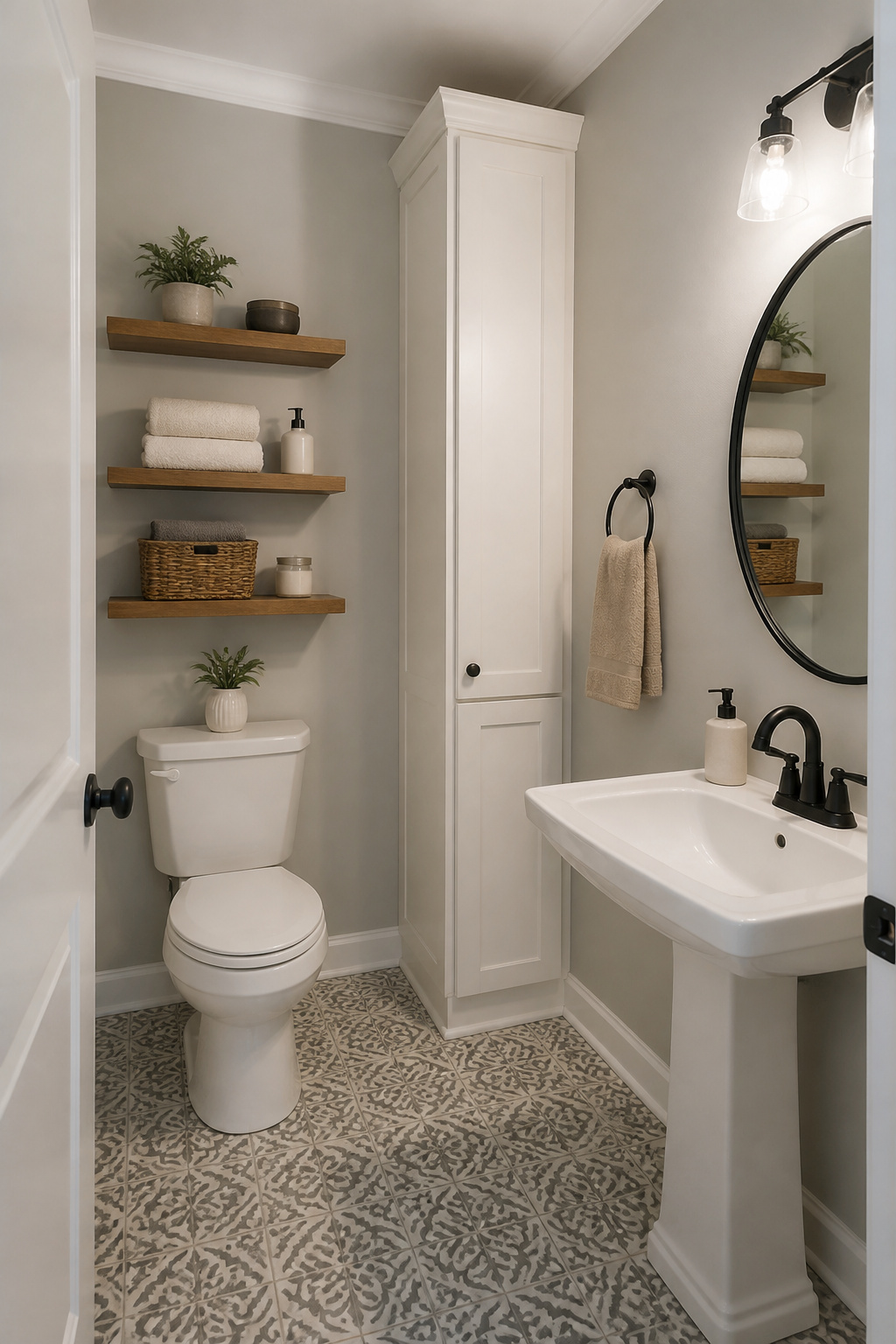
Floating shelves above the toilet keep hand towels and soap within reach without the footprint of a cabinet. In a half bath renovation where every inch matters, that wall space is usually dead air anyway, and the shelf itself runs about the cost of a plank and a pair of brackets.
A narrow vertical cabinet slides into gaps beside the sink or toilet where nothing else fits. The tradeoff is real: the door swing needs clearance, and in a 30-inch-wide space, that swing can block the toilet or clip your knee on the way out. Recessed niches built into the wall solve this by storing bottles flat against the stud bay, no protrusion at all. They work best during a gut renovation when the wall is open, though a shallow retrofit niche can sometimes squeeze between studs without moving plumbing.
The back of the door hangs an organizer for cleaning supplies or spare rolls, though it only helps if the door opens inward and stays clear of the wall when shut. When floor space is truly gone, a narrow stool with a lidded seat or a wall-mounted drop-leaf becomes the last storage fallback: surface when you need it, nothing when you don’t. Skip the vanity entirely if storage elsewhere is solid; cabinetry eats the biggest percentage of a small bathroom’s budget and its floor area both.

【Premium Material & Protection Design】The floating bathroom shelves is made of high-quality painted pine wood with waterproof feature (Dimension: 6" D x 15.7" L x 2.6" H). The durable metal bracket with guard rail around that prevents anything from falling. The bathroom floating shelves are durable enough to bear capacity strong up to 20 lbs. in solid drywall or concrete wall.

🌲【Floor Standing Bathroom Vanity】Featuring clean lines, a wave-pattern cabinet door, and delicate brushed copper accents, this bathroom vanity adds both style and value to your home
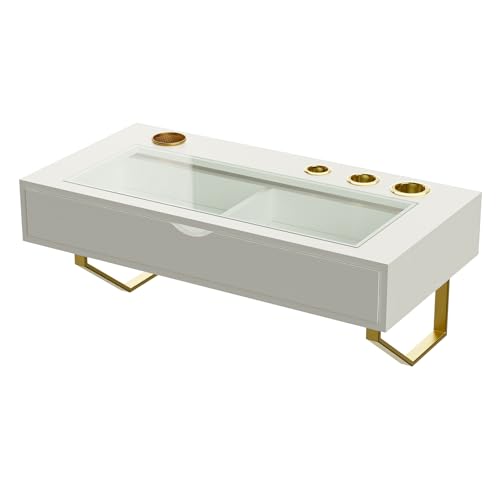
Versatile Design: This desk combines modern and classic design elements, functioning as either a writing desk or dressing table to suit various styles of home decoration
8. Try a Monochromatic Color Theme
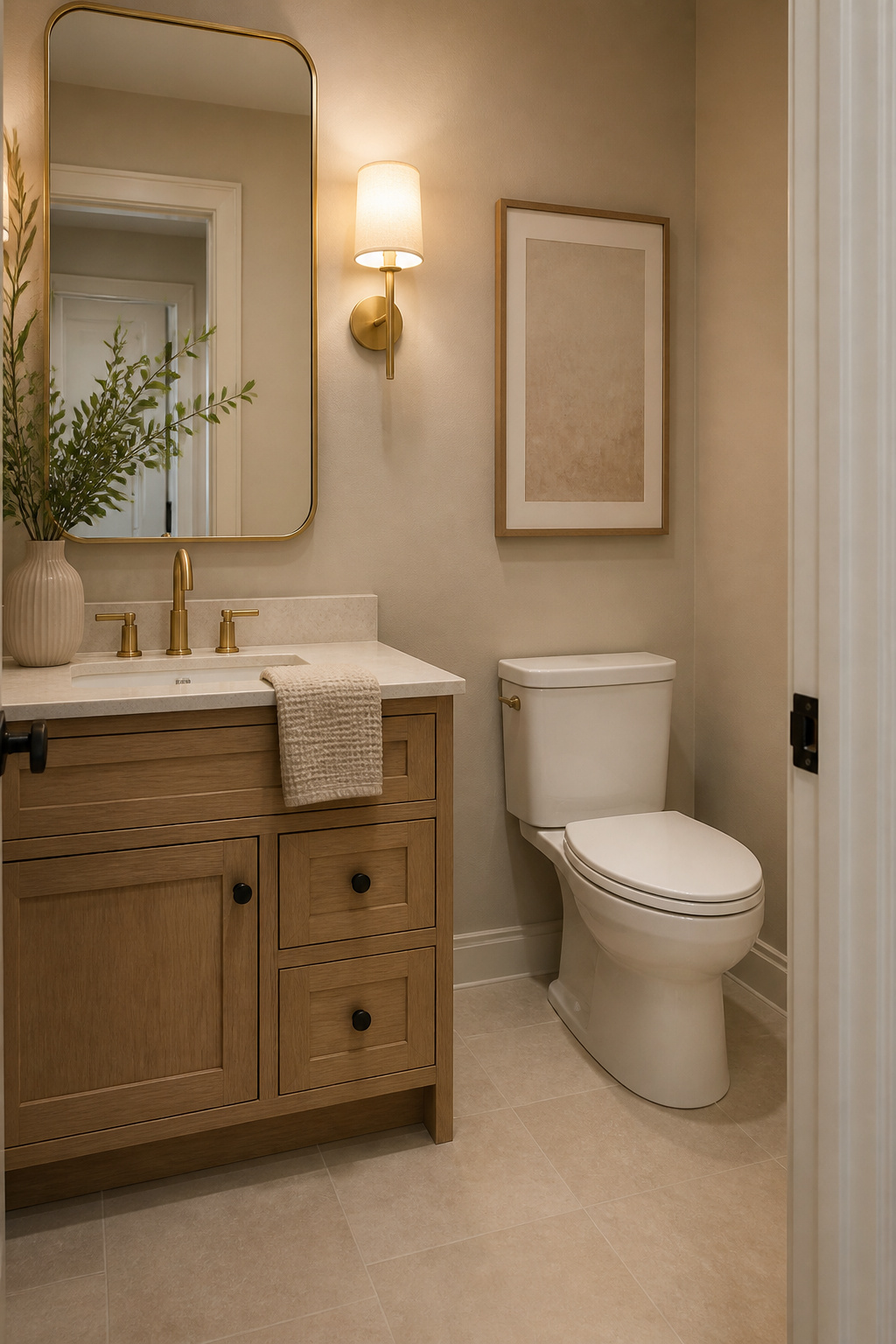
A single color carried through paint, tile, and fixtures keeps a half bath from feeling chopped up. In fifteen to twenty square feet, every transition between colors is a wall your eye hits; monochrome removes those borders so the room reads as one continuous plane. The ceiling matters here too. Painting it the same shade as the walls, or a few steps darker, adds height where white would just create another horizontal line to trip over.
The risk is flatness. Texture has to do the work that color variation normally would. Matte paint on the walls against a satin cabinet finish creates enough contrast without breaking the family. A ribbed ceramic planter, a nubby hand towel, or a fixture with some heft to its surface, these keep the eye moving. The ceiling a shade darker than the walls is the move that actually sells the space as intentional, not lazy.
I would skip high-gloss anything in a room this small. One mirror-finish surface reflects back every flaw; two or three and you are living in a fun house. Stick to eggshell or matte on walls, satin on trim if you want definition, and let the texture carry the interest.

【TUB & TILE REFINISHING KIT】 Refresh aging bathtubs, bathroom tiles, sinks, shower walls, and other suitable surfaces with DWIL tile paint. This 33oz tub and tile paint kit includes essential application tools, making it a practical choice for larger DIY bathroom makeover projects without the cost and mess of full replacement.

One Coat Coverage - Glidden One Coat Interior Paint & Primer has exceptional hide and stain block which means you need fewer coats to hide your common stains and make your walls beautiful.

One Coat Coverage - Glidden One Coat Interior Paint & Primer has exceptional hide and stain block which means you need fewer coats to hide your common stains and make your walls beautiful.
9. Upgrade Fixtures for a Luxury Feel
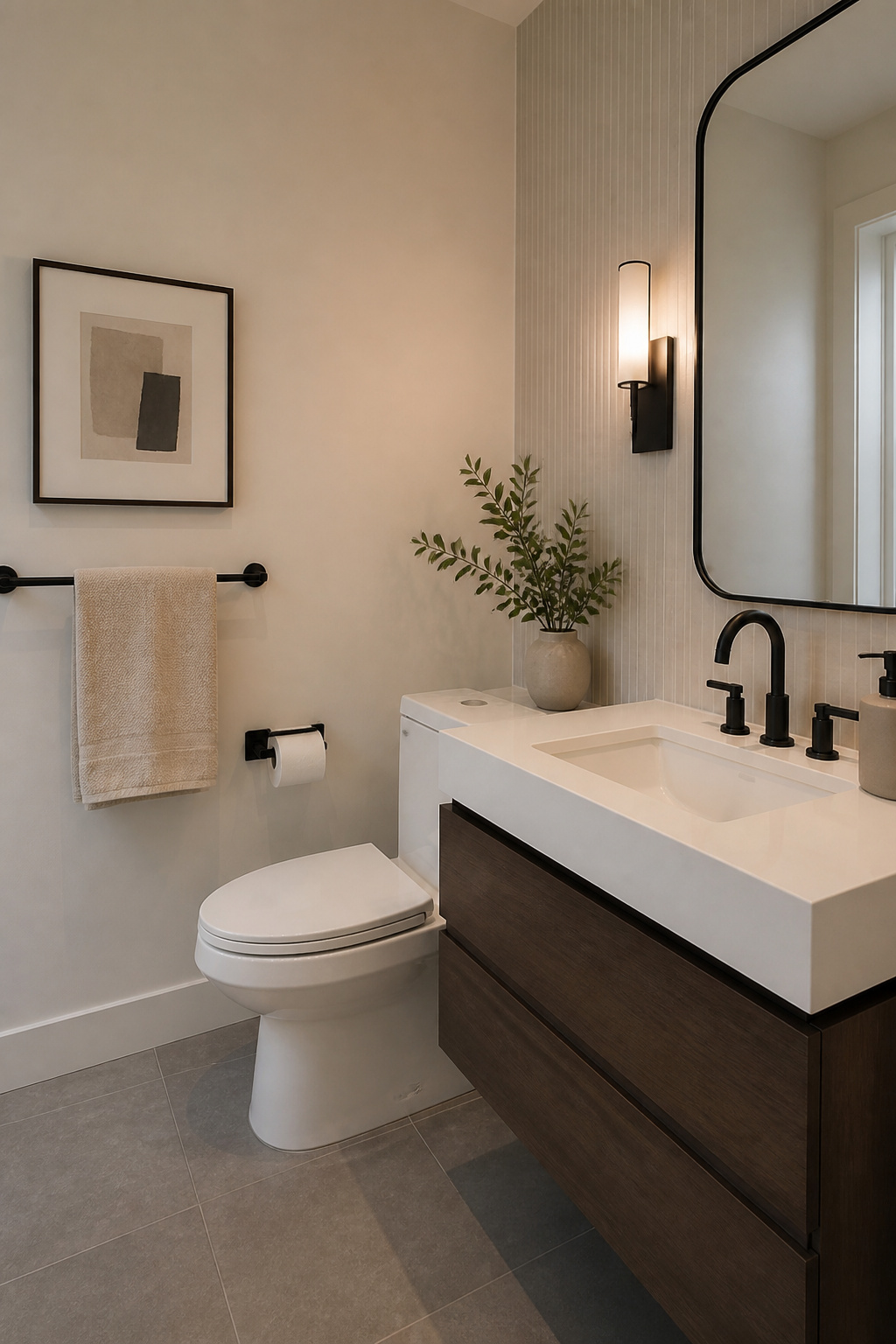
The first thing to go in my half bath was the builder-grade chrome faucet, and the difference a $40 replacement made still surprises me. Brushed nickel or matte black finishes catch the light differently, and in a room you step into for thirty seconds, that register matters. Towel bars and toilet paper holders mount with a drill and a level; no plumber needed, and swapping the set together keeps the finish from looking accidental.
The toilet is where the question gets real. Older models pull more than six gallons per flush, and a dual-flush replacement can drop that to almost 13,000 gallons saved a year. That number is the environmental sell, but the practical one is the water bill and the fact that buyers now expect it. Installing the toilet yourself is possible if the flange is sound, but a misseat means leaks you will not find until the subfloor tells you. I would rather pay the plumber for an hour than discover rot in two years.
For resale value, the toilet and faucet swaps pay back because they read as "updated" to buyers who will not otherwise notice a half bath. Hardware alone modernizes without the same return; do it for the daily use, not the appraisal.

【ROLL SIZE】 Blue Wood Paper is 17''width x 120''length (43.5*305CM); Covers 14.2 square feet ( Cover 1.3 Square Meter per roll), enough size allows you to use this blue wood paper in any scene

【Size & High Quality Material】Size: 15.7" x 78.7"=1.31ft x 6.56ft (covers 8.61 sq.ft). Made of durable vinyl, the peel and stick wallpaper is non-toxic, durable, environment-friendly.

【Unique Design】The soft cream-white wallpaper is adorned with fine light blue vertical stripes, interspersed with hand-drawn hazy blue roses, creating an eternal French country style. The soft blue flowers are paired with fresh green leaves, presenting a soft and peaceful texture without any glaring colors. The vertical stripes visually expand the narrow space. This retro neutral color scheme seamlessly blends with wooden, cream-colored, and American-style furniture, being gentle and soothing, integrating exquisite elegance with a casual and rustic warmth
10. Add Art and Decorative Touches
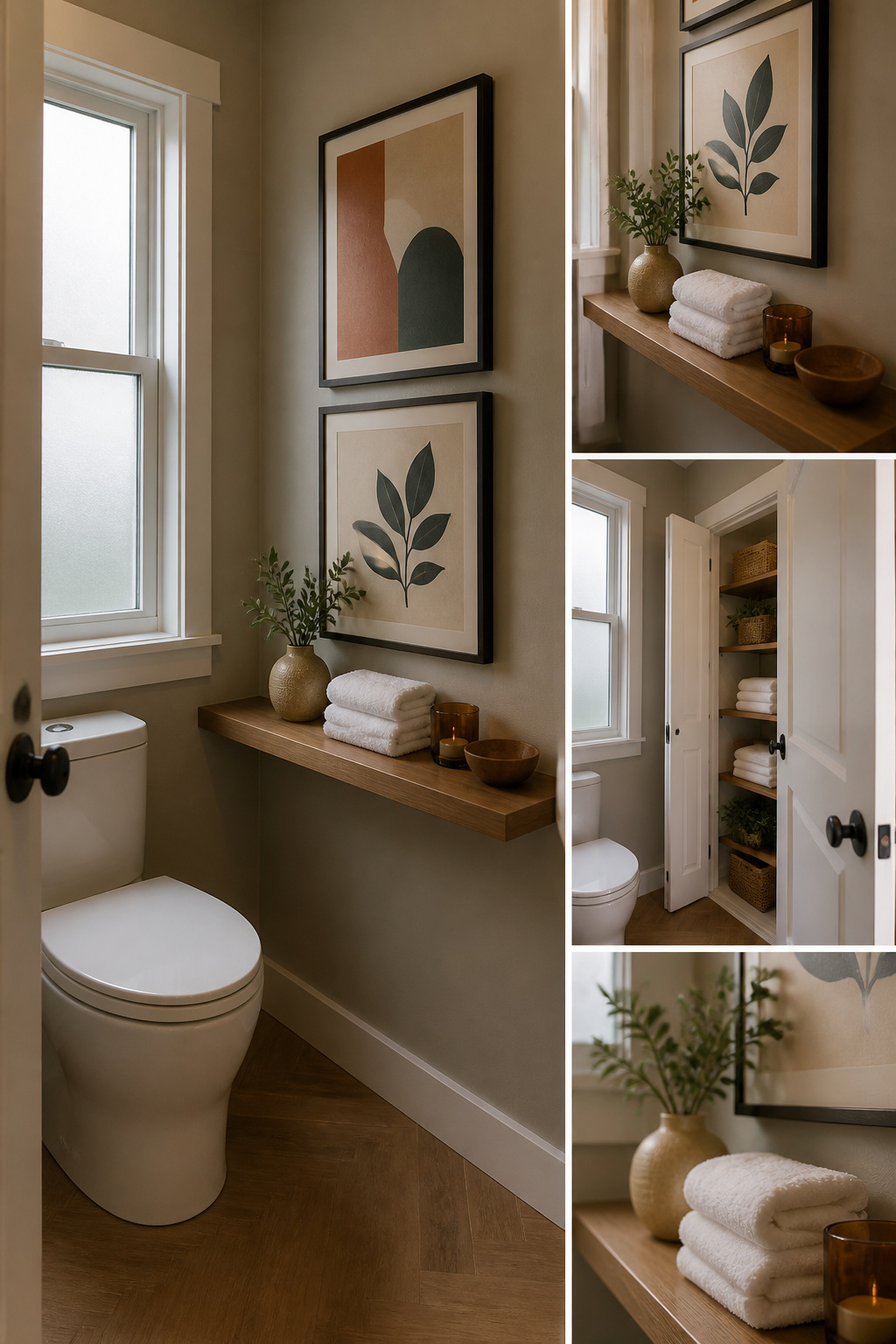
Paper prints warp in a half bath faster than most people expect. Steam from a hot shower in the next room is enough to ripple the edges over a month or two, so metal or sealed wood pieces survive better than anything under glass that traps moisture. I rotate a small collection seasonally, storing the off-season batch flat in a closet with a desiccant pouch, and the pieces last years instead of months.
Scale matters more in a tight space than people assume. A 5×7 print looks generous on a wall only 30 inches wide; anything larger fights the door swing and the towel bar. The seasonal refresh costs almost nothing if you keep to thrifted frames in a single size and just swap the inserts. A new palette every few months keeps the room from feeling like a design afterthought, which half baths often do.
11. Consider a Simple DIY Refresh
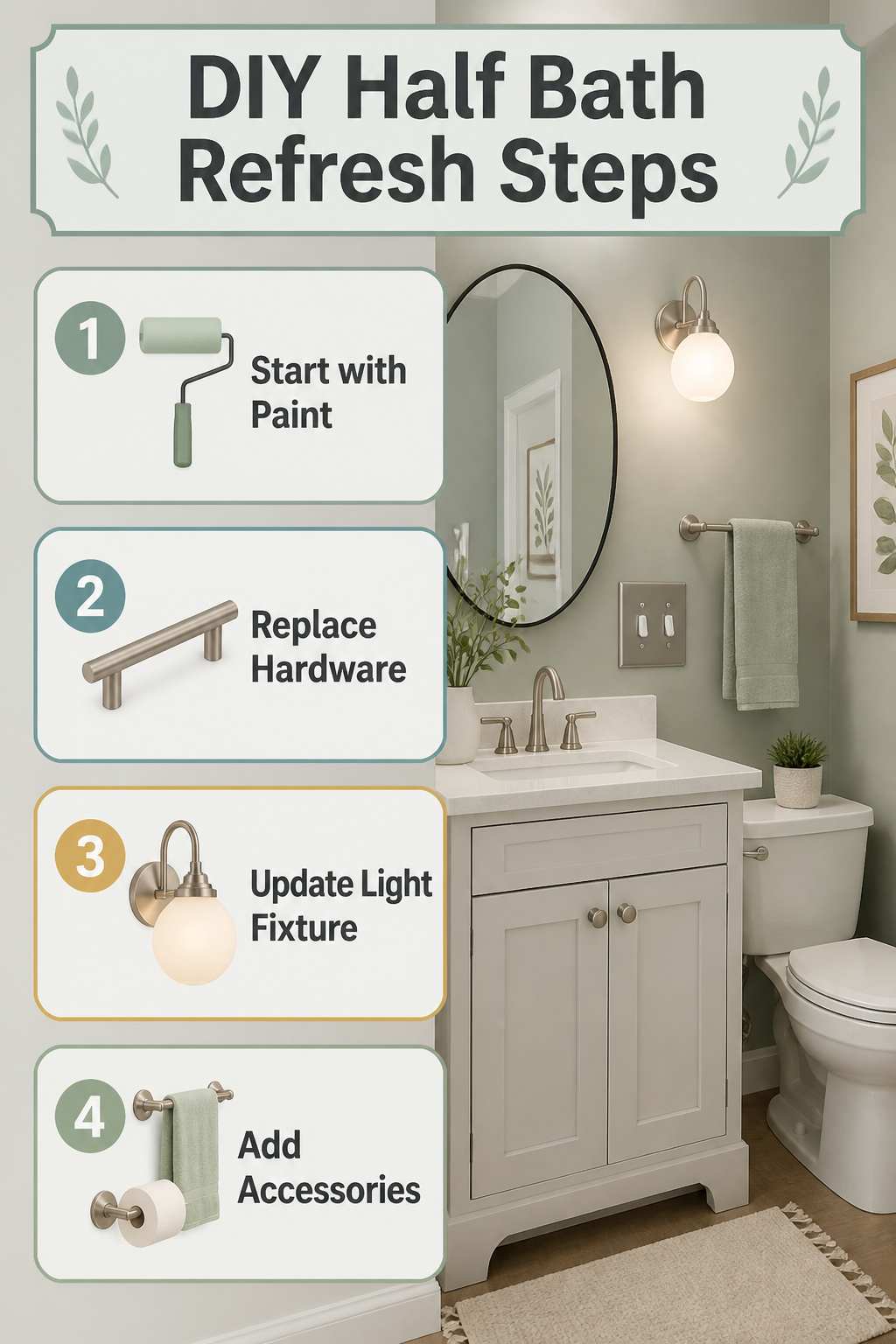
A half bath renovation done by hand over one weekend lands somewhere between $200 and $600 if you stay out of the walls. Paint runs first, then hardware, then a light fixture if the box is already there and rated for the weight.
The line I drew in my own bathroom was simple: if water or wires need rerouting, that is Monday work for someone with a license. A new faucet on existing shutoffs is Saturday morning. Moving a supply line or swapping a breaker for a heavier draw is not. I repainted the walls, swapped the vanity pulls for brushed nickel, and installed a milk-glass sconce where a builder-grade bar had been. The toilet stayed; it worked fine.
Accessories finish what the paint starts. A matching toilet paper holder and towel bar read as intentional for under $40. The mistake is stopping at one or two and leaving the old brass switch plate. Replace the plate too, or the new hardware looks like an accident.
Cost Breakdowns and Where Money Goes
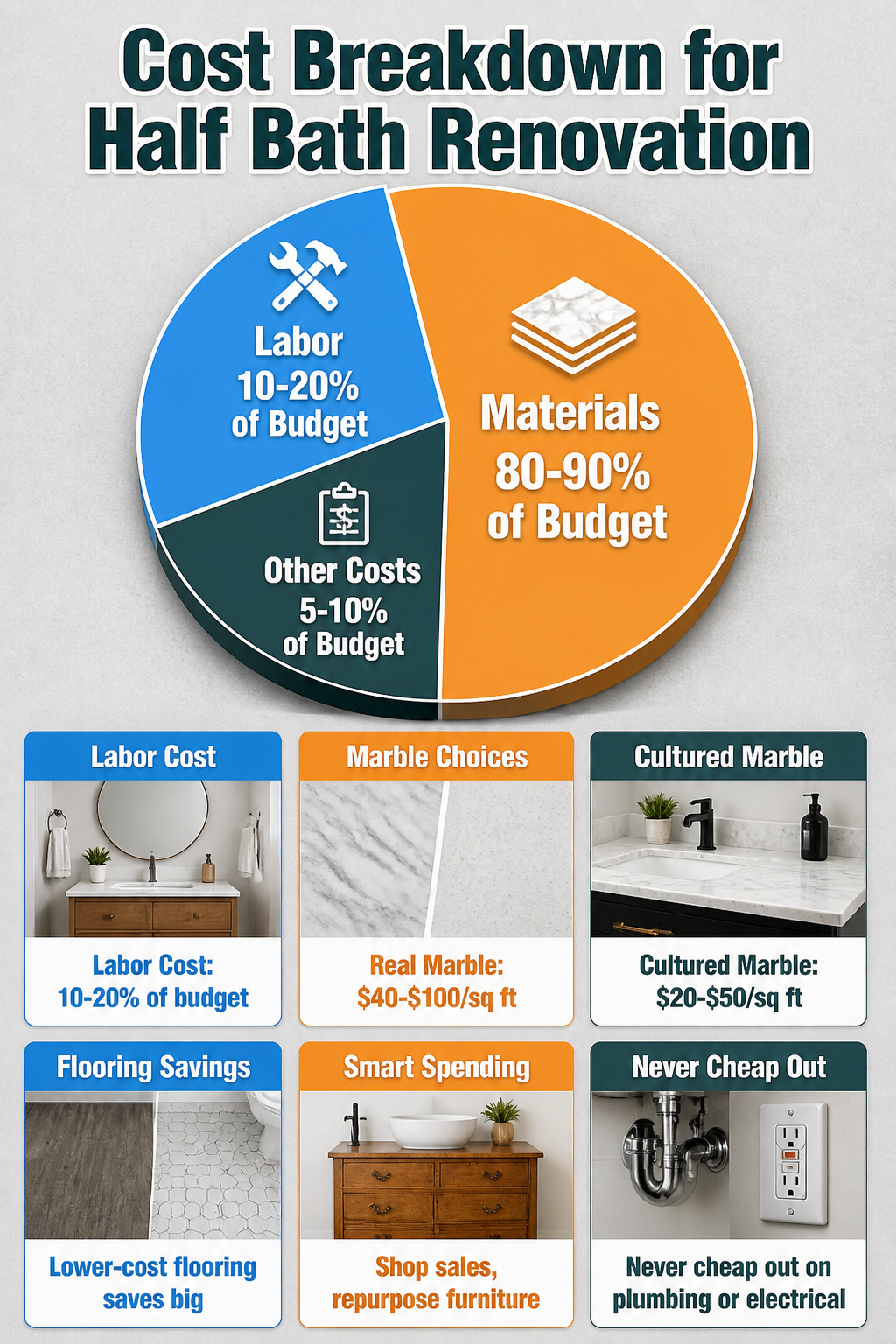
Labor eats 10 to 20 percent of the budget on a half bath renovation, so doing your own painting or flooring keeps that slice in your pocket. Materials make the rest of the swing. Real marble runs $40 to $100 per square foot, while cultured marble, a blend of natural marble dust and liquid polyester resin, lands at about half that price. The same swap works for flooring: luxury vinyl plank or natural stone tile look the part, but standard vinyl or ceramic tile gets you there for a fraction of the cost.
| Budget tier | Typical range | What it covers | Best value move |
|---|---|---|---|
| Basic | $1,500–$4,500 | Paint, fixture swap, vinyl or ceramic tile, DIY labor | New vanity and mirror — visible change, modest cost |
| Mid | $4,500–$12,000 | Cultured marble surfaces, mid-range fixtures, possible plumbing relocation | Keep the new bath close to existing plumbing |
| Extensive | $12,000+ | High-end finishes, custom work, structural changes | Hire out plumbing and electrical; DIY the rest |
Mid-range fixtures beat high-end models for resale value per dollar spent. Shop sales, repurpose furniture for vanities, and never cheap out on the plumbing or electrical — those are the parts that flood or burn.
Homeowners can expect to spend between $4,500 and $12,000 for a half-bath addition.
That $4,500–$12,000 figure is for additions; renovations of existing space start lower, which is why the $1,500 entry point is real if you keep the footprint and do the grunt work yourself.
DIY Scope and When to Hire
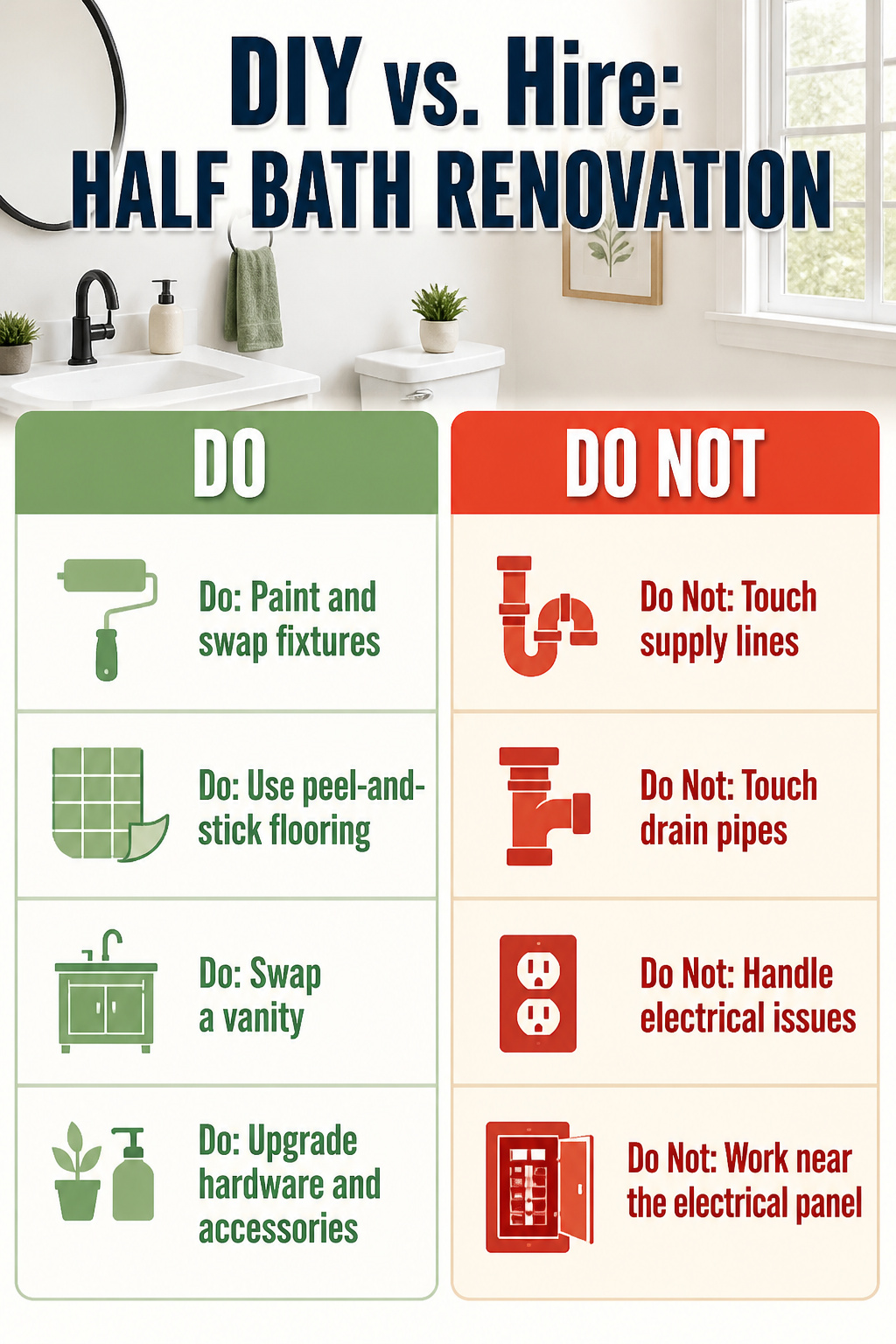
A half bath renovation tempts even cautious homeowners because the space is small and there is no tub or shower to reroute. The line between a weekend project and a permit job runs straight through the walls. Painting, swapping a vanity, or laying peel-and-stick flooring are fair game for most renters and first-home owners with a few hundred dollars and a Saturday. The moment you touch supply lines, drain pipes, or anything tied to the electrical panel, the risk shifts from cosmetic to structural.
Most jurisdictions treat plumbing and electrical as licensed trades for good reason. Code typically requires a seven-foot ceiling, mechanical ventilation or an operable window, and GFI-protected outlets in any bathroom. A licensed electrician should handle new circuits or outlet placement near water sources. The same applies to pipe connections and venting. Saving labor costs on a DIY half bath renovation collapses fast if a supply line fails behind fresh drywall or an ungrounded fixture trips the breaker every morning. Hire out the wet systems, keep the finish work for yourself, and the budget still lands well below a full contractor bid.
Space Planning for Real Dimensions
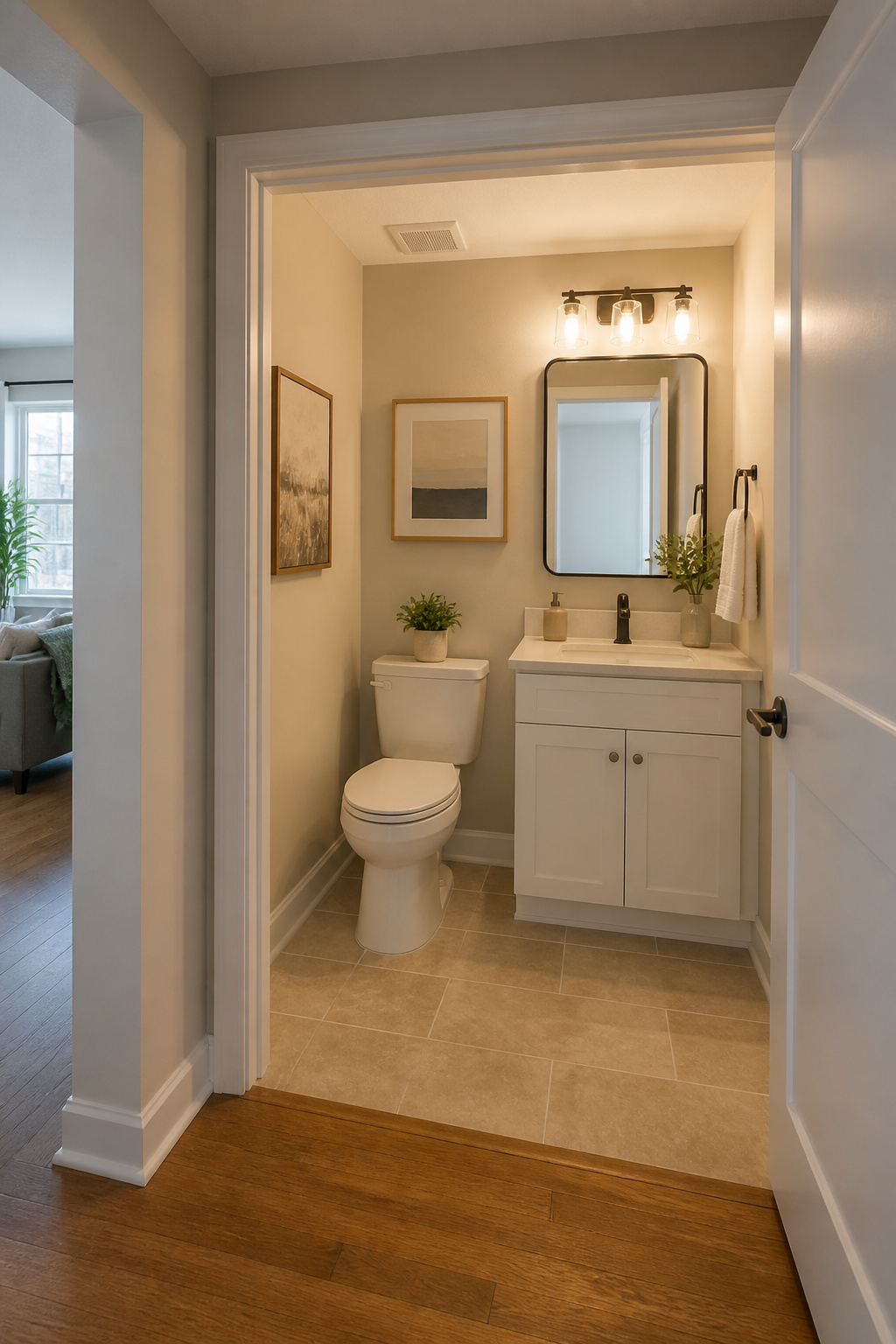
Most half baths land in a 3–4 by 6–8 foot footprint, roughly 15–20 square feet, and the real fight is making that feel like enough room without touching a wall. The code minimums are where planning starts: center the toilet 15 inches from any side wall or fixture, keep 30 inches of clear width in front of it, and allow 48 inches of open floor in front of the sink. An in-swinging door beats one that opens into a hallway, and it needs its own width in clear floor space to swing.
Layout tricks that actually open the room up work with what is already there. A mirrored wall bounces light and depth back at you. Painting cabinets the same color as the walls erases the line where storage ends and architecture begins. Some designers go the opposite direction and wrap the whole room in dark tones; the eye stops reading boundaries and the space feels continuous rather than chopped up. Either way, the goal is the same: keep the eye moving so the square footage stops announcing itself.
Design Styles That Suit Small Rooms
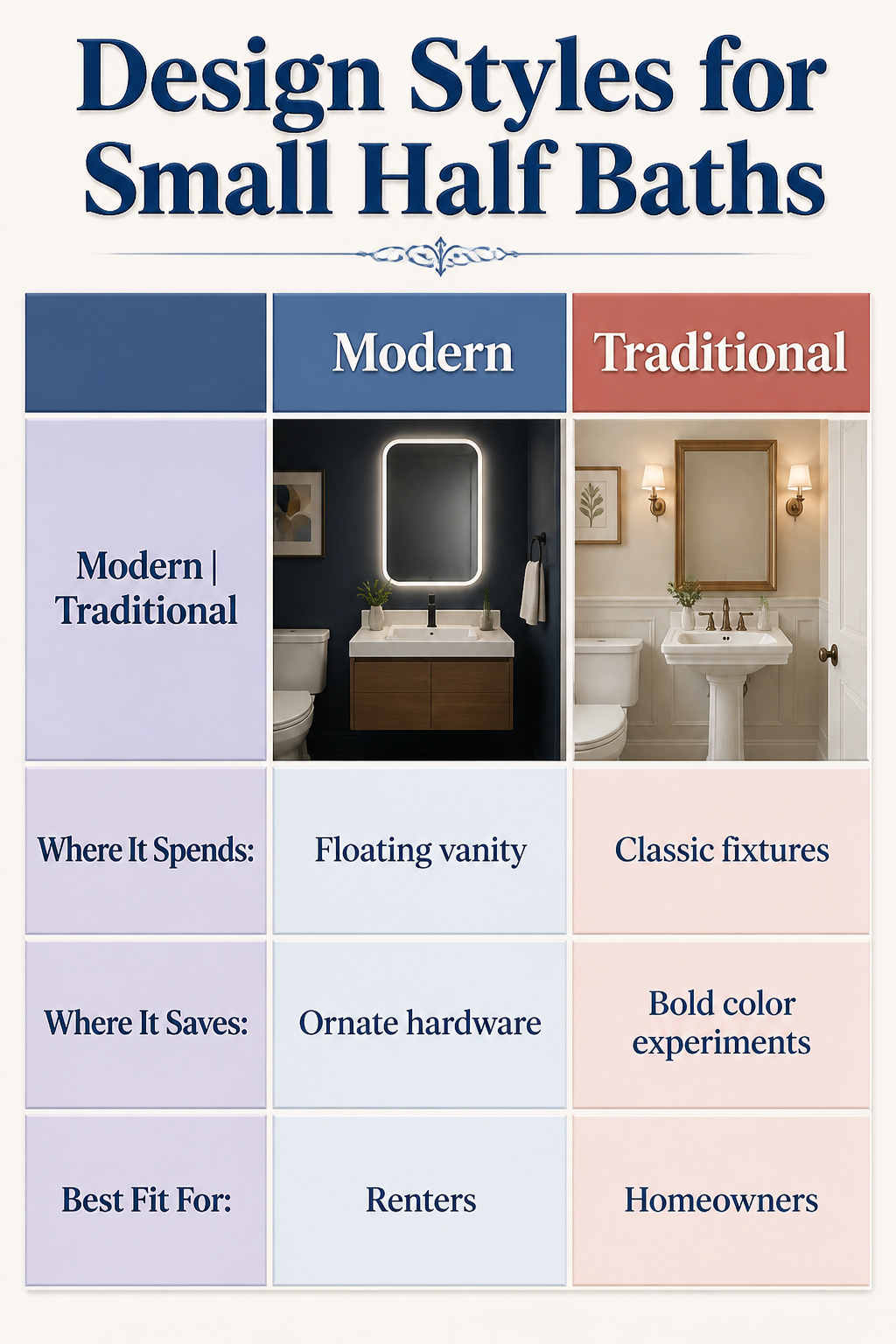
Small rooms punish timid choices. Dark walls, busy patterns, and bold colors work here precisely because the scale is contained: you can wrap the whole space in one mood and let the eye stop hunting for boundaries. That said, each style spends its budget differently.
| Style | Where It Spends | Where It Saves | Best Fit For |
|---|---|---|---|
| Modern | Floating vanity, oversized or backlit mirror | Ornate hardware, decorative molding | Renters who want sleek without plumbing changes |
| Traditional | Classic fixtures, framed mirror, wainscoting | Bold color experiments (stays neutral) | Homeowners keeping resale in mind |
| Eclectic | Statement wallpaper, unusual mirror shape | Matching sets of anything (doesn’t bother) | Repeat renovators doing one room a year |
Modern keeps the floor clear and the lines clean, which reads as square footage you don’t have. Traditional leans on details that read as finished even in 30 square feet. Eclectic takes the permission small spaces grant to experiment and runs with it: a powder room is the cheapest room to take a risk in, because you only need one roll of wallpaper and one weekend to undo it.
Frequently Asked Questions
How much does a half bath renovation cost?
A half bath renovation typically runs between $1,500 and $15,000, with most homeowners landing somewhere in the middle depending on materials and how much work they do themselves. A budget-friendly DIY refresh can stay under $600 if you stick to paint, hardware, and surface swaps, while moving plumbing or using high-end finishes pushes the total toward the upper end. Labor eats 10 to 20 percent of the budget, so handling your own painting and flooring keeps costs down.
What are the best half bath renovation ideas for small spaces?
Floating vanities, large mirrors, and smart storage solutions work best in tight half baths because they free up floor space and bounce light around the room. Corner sinks and wall-mounted vanities leave room to move where every inch counts, while recessed niches or over-toilet shelves add storage without protruding into the walkway. A single bold wallpaper or deep paint color wrapping all four walls also helps the space feel intentional rather than cramped.
How long does a half bath renovation take?
Most half bath renovations wrap up in one to three weeks, with fixture swaps and surface updates finishing in the first few days. A full weekend covers painting, hardware changes, and peel-and-stick flooring for DIYers staying out of the walls. Projects stretch longer once you factor in plumbing or electrical work that requires permits and licensed trades.
Is a DIY half bath renovation a good option?
DIY works well for painting, swapping vanities, changing hardware, and laying flooring, but stop before you touch supply lines, drains, or electrical circuits. Most jurisdictions require licensed plumbers and electricians for wet systems and new wiring, and the savings collapse fast if a hidden leak rots the subfloor or an ungrounded fixture keeps tripping breakers. Paint and finish work are fair game; anything behind the walls is Monday work for someone with a license.
What adds the most value in a half bath renovation?
Upgrading the toilet to a water-efficient model and swapping the faucet for a modern finish read as updated to buyers without requiring a big spend. Modern lighting layered around the mirror and a furniture-style vanity with matching hardware also register as finished details in a room most people only step into briefly. These changes cost less than full gut work but signal that the space has been cared for.