
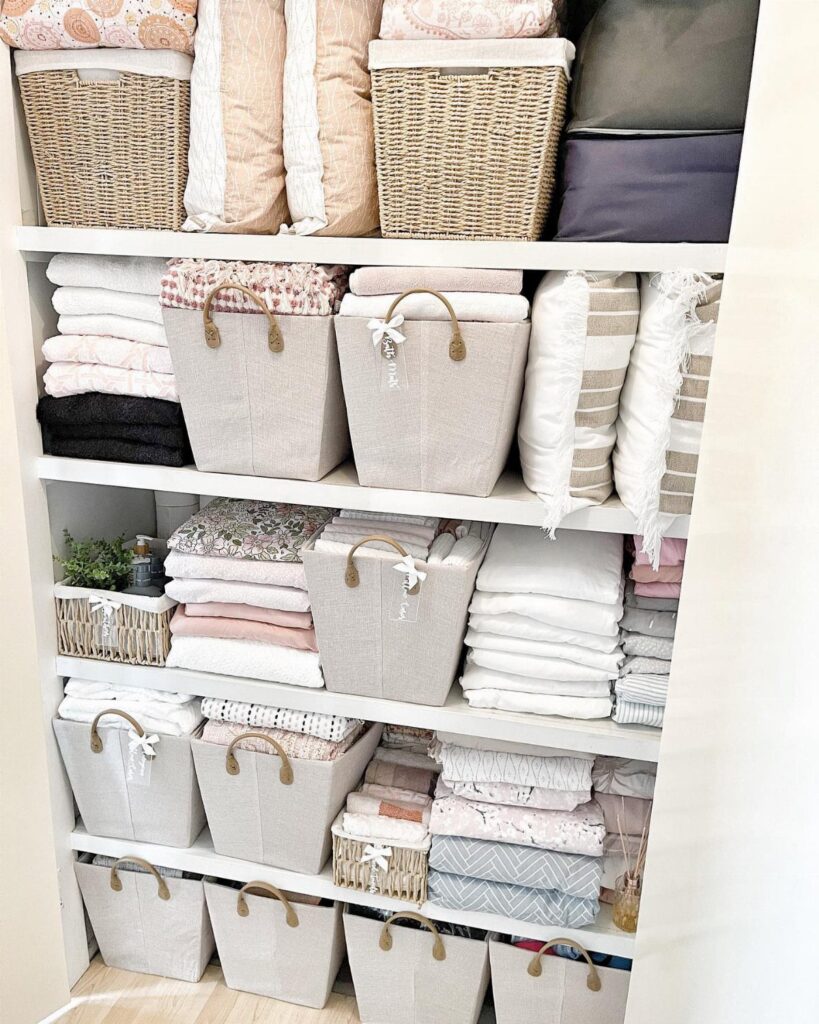
These ideas start with a pack of S hooks and run to a rotating shoe tower, all chosen to be installed or rearranged inside a single weekend.
The right one depends on how much you want to spend and how permanent you want it to be, since that single fact eliminates half the list before you pick up a bin or a screwdriver.
[link-whisper-related-posts]1. Fabric Drawer Organizers
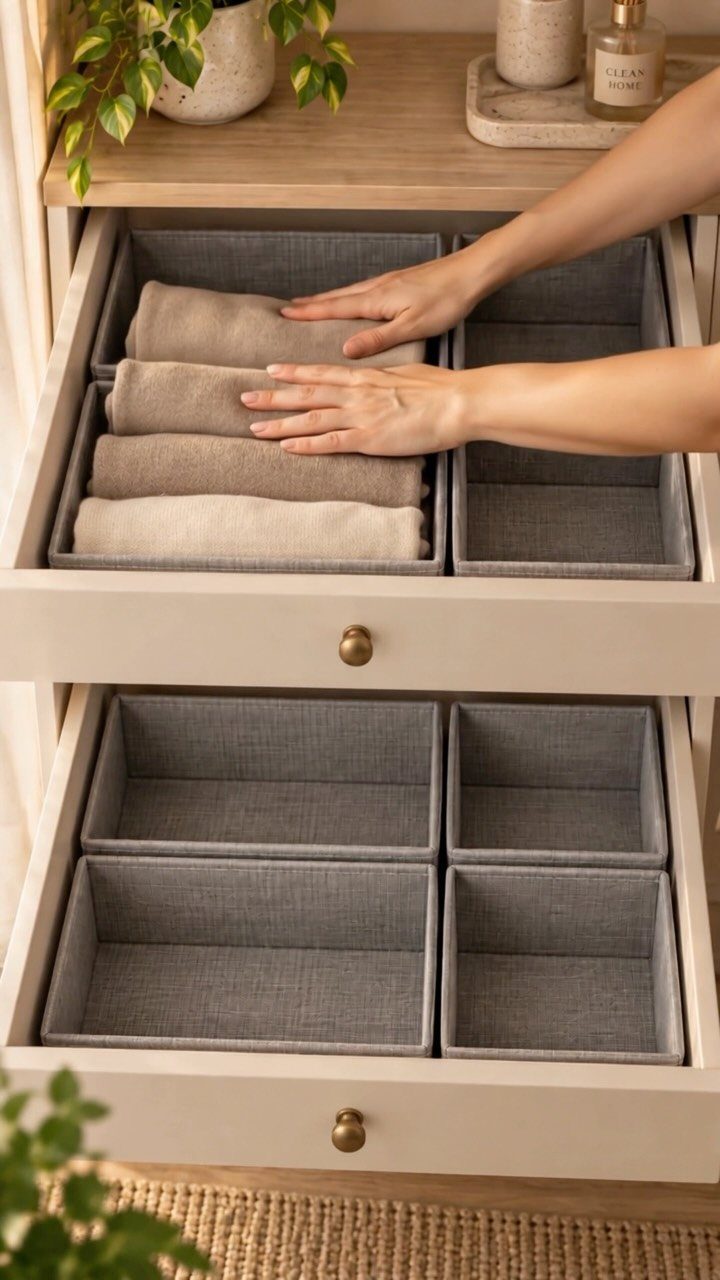
Fabric drawer organizers let you subdivide a deep dresser drawer into manageable zones without any tools. I buy the kind with flat bottoms and reinforced sides; flimsy ones collapse once you load them with socks or T-shirts.
Grey bins like these usually sit two to a drawer in standard dresser widths, so measure yours before buying. You can lift a whole bin to the bed when you’re getting dressed, then slide it back.
2. Standalone Shelves
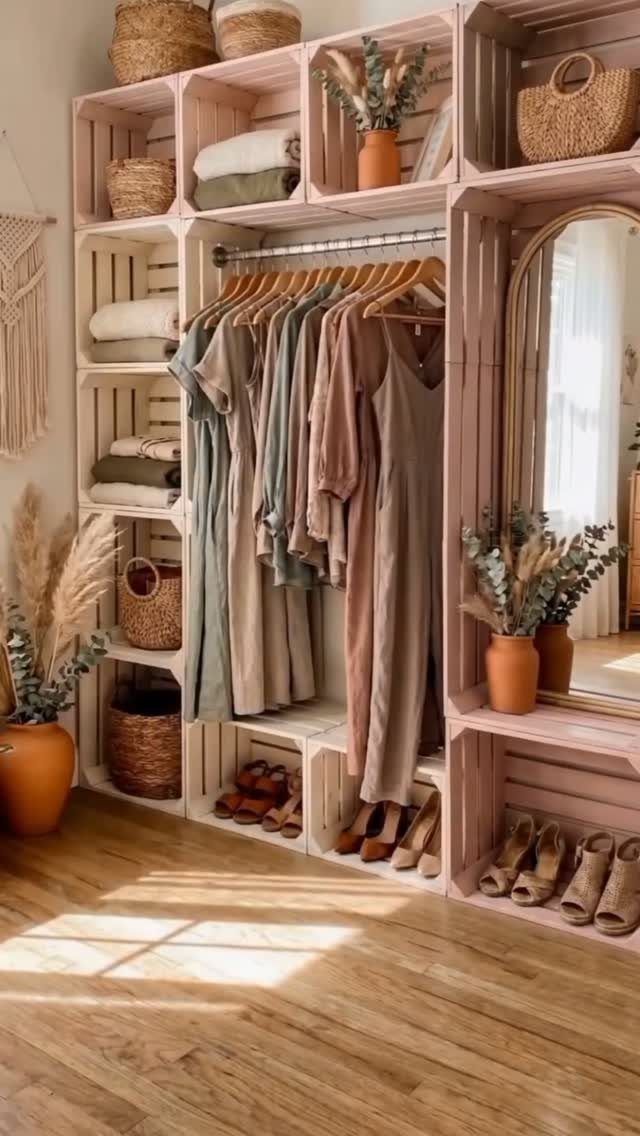
Standalone shelves built from wooden crates give you a closet system that moves with you. No drilling into walls means your deposit stays intact, though the unit needs a couple inches of clearance to stand stable.
Anchor the top crate to the one below it so the stack doesn’t shift when you pull out a basket.
3. Clothes Organized by Color
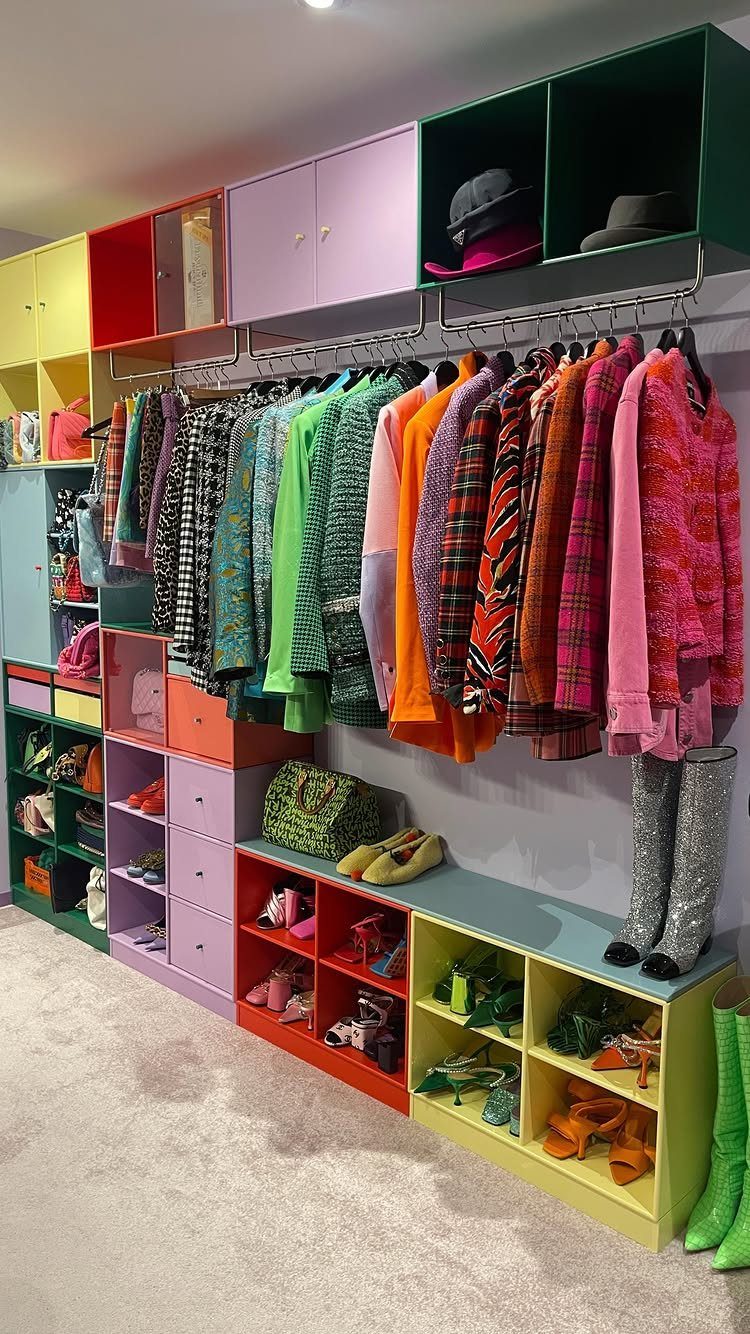
Color sorting turns finding clothes into scanning a gradient. I find it works best with a rod full of similar items: all jackets, or all shirts.
Mix categories and the color logic breaks down fast. A single rod in a studio apartment organizes the same way.
4. Denim on S Hooks
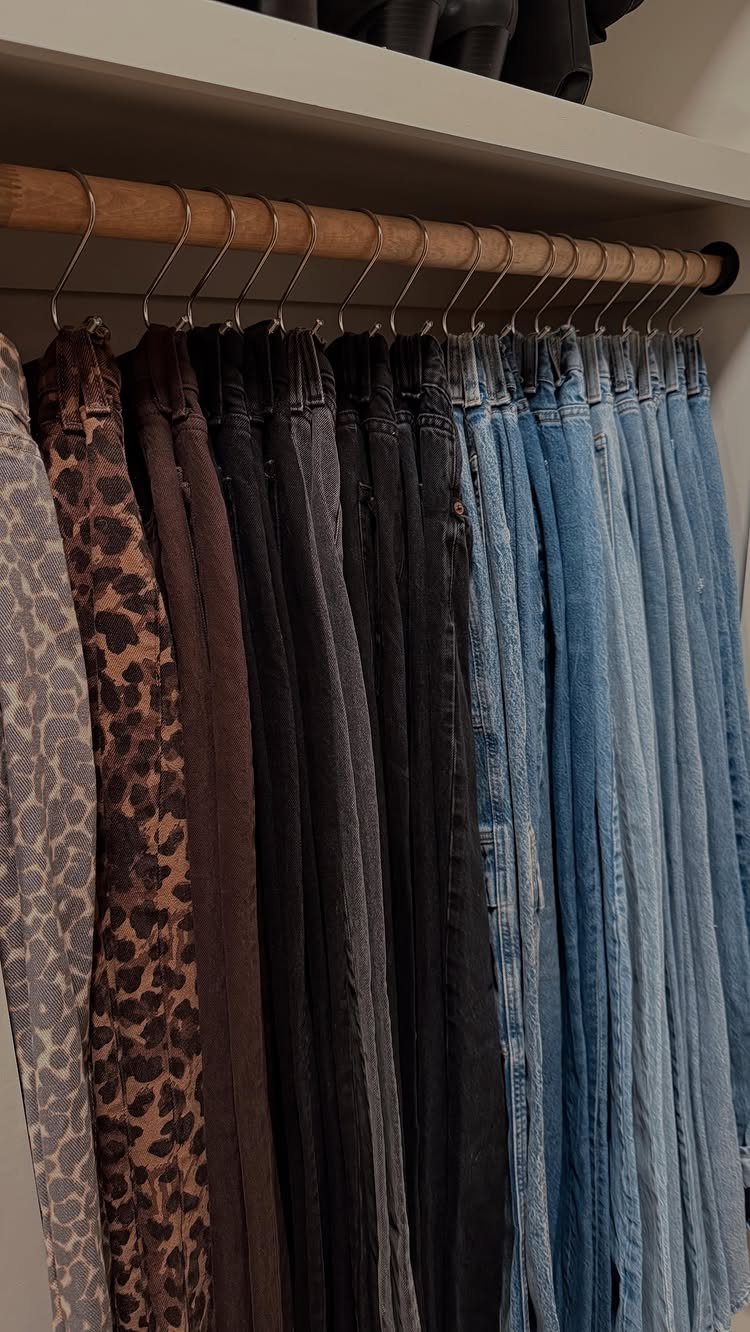
S hooks through belt loops let jeans hang straight and close together, more pairs across a given rod length than folded denim would fit on the same shelf width.
Pants slide off easier than they do from clip hangers, and you see the wash and cut immediately.
Belt loops on women’s jeans vary in strength; I check that the center back loop is sewn through the waistband, not just bartacked to it, before trusting a hook with heavier denim.
5. Clothing Organized by Category
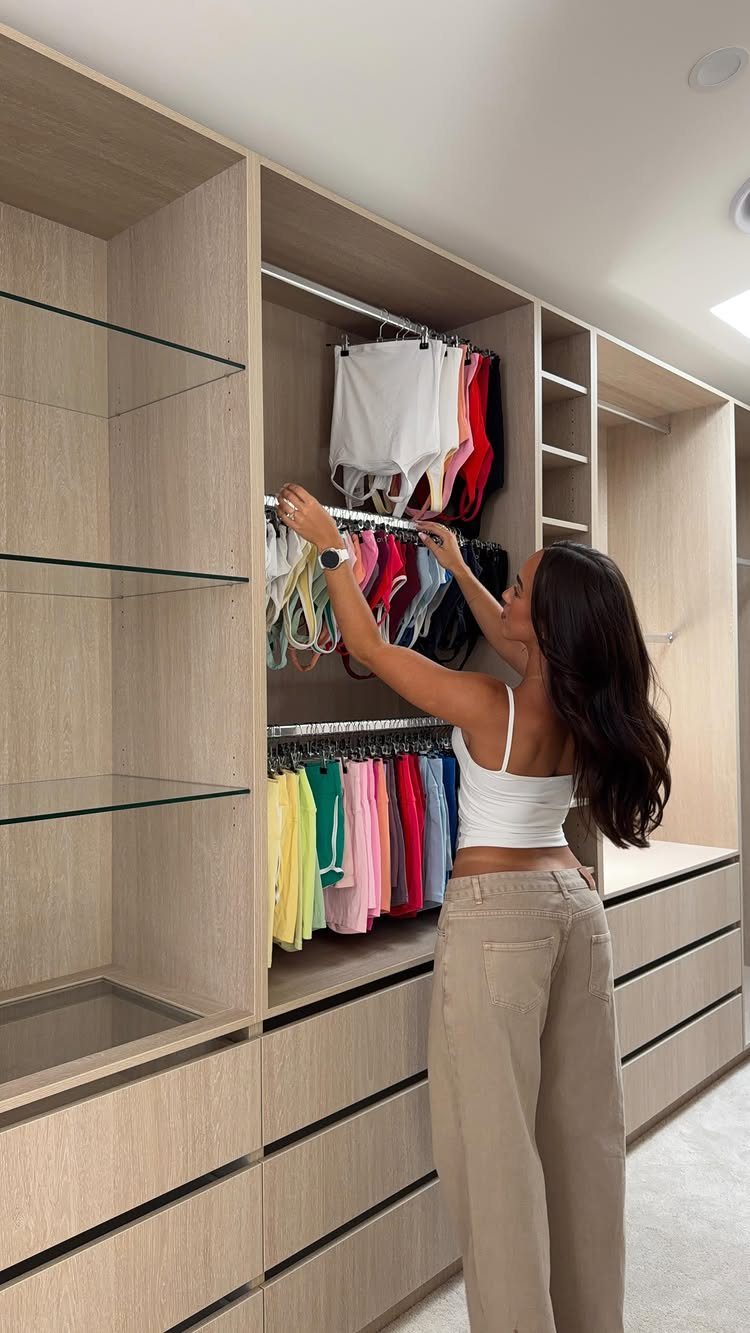
Grouping by category means all your work shirts hang together, all your workout gear, all your dress pants.
I sort by activity first, then by sleeve length or weight within each group, which matters more in a four-season closet than a mild-climate one.
The system falls apart only when you own one item that belongs everywhere and nowhere; my solution is a "miscellaneous" rod end, limited enough that it forces a real decision.
6. Baskets for Storage
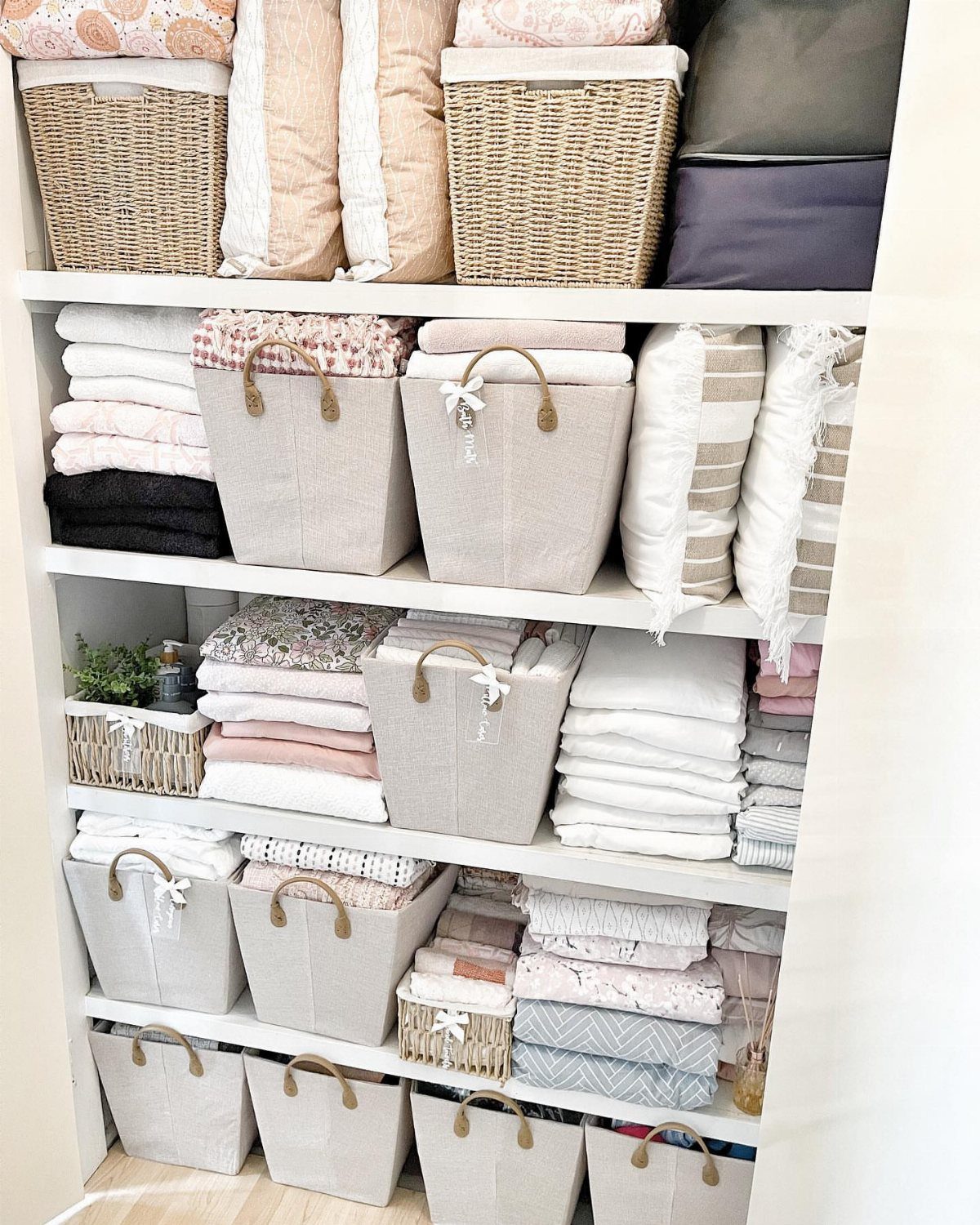
Baskets hide what you do not want to look at daily.
I buy baskets an inch shorter than the shelf depth so they slide out without catching. Choose materials to the room’s humidity: wicker softens in a steamy bathroom, polyester weave holds up better there.
7. Zebricolo Purse Organizer
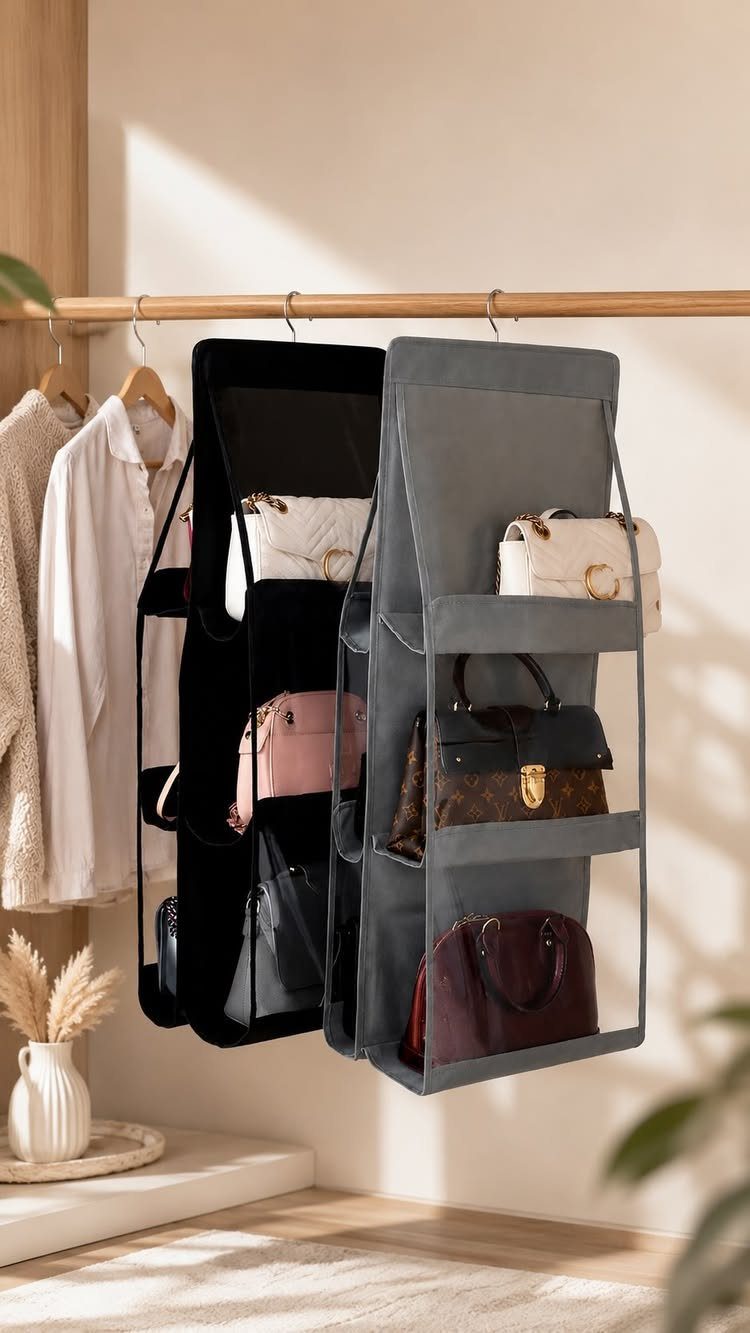
A hanging purse organizer with clear pockets turns a closet rod into vertical storage for bags that otherwise eat shelf space.
I look for ones with pockets deep enough that a small crossbody won’t tip out when I slide the organizer along the rod to reach something behind it.
The weight adds up fast; I keep heavier leather bags on the lower tiers and reserve top pockets for clutches and evening bags.
8. Fold Clothes Vertically
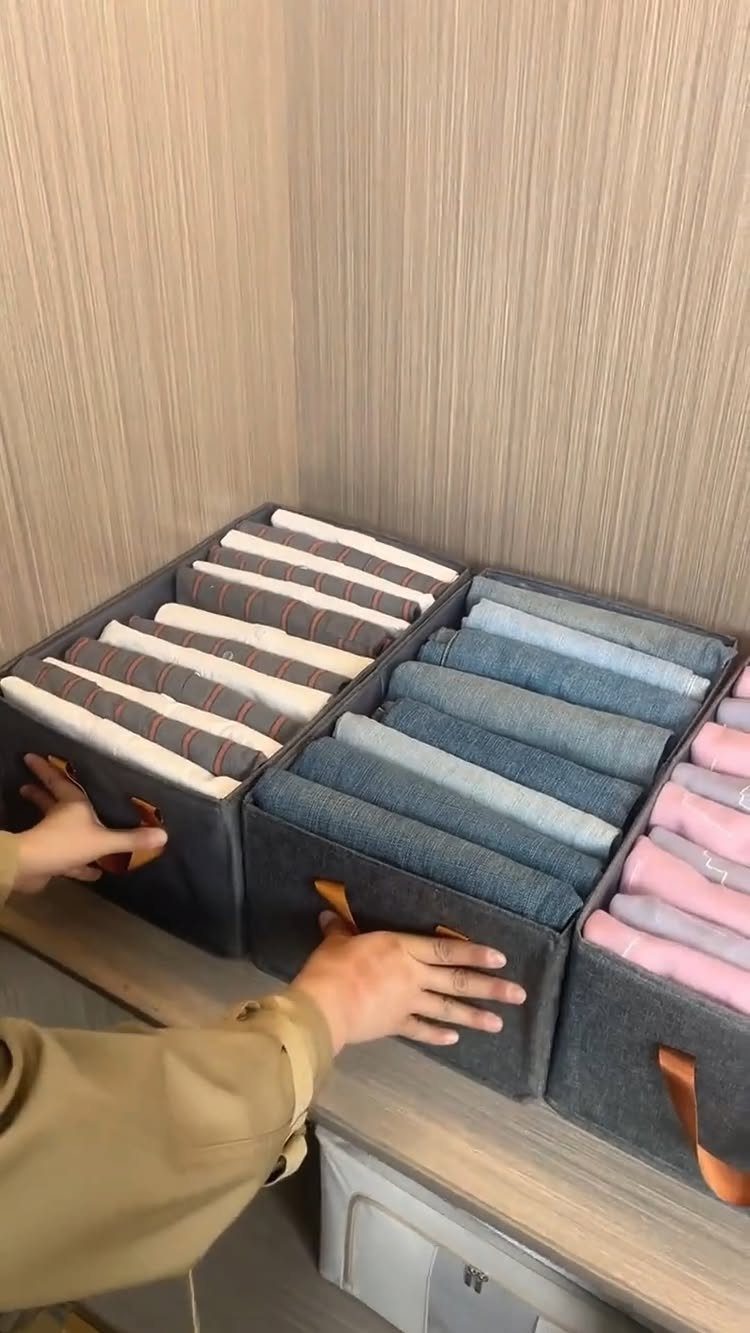
Vertical folding in fabric bins keeps T-shirts and jeans visible from above, each item’s spine showing color and label while the stack stays upright.
The fold is a simple third: in half, then in thirds, standing the result on its folded edge.
I find this works better in bins than loose on shelves, where vertical stacks tend to fan out after the first two or three items get pulled. Fabric bins with some structure hold the shape; soft-sided ones need frequent restacking.
9. Use Clear Storage Bins
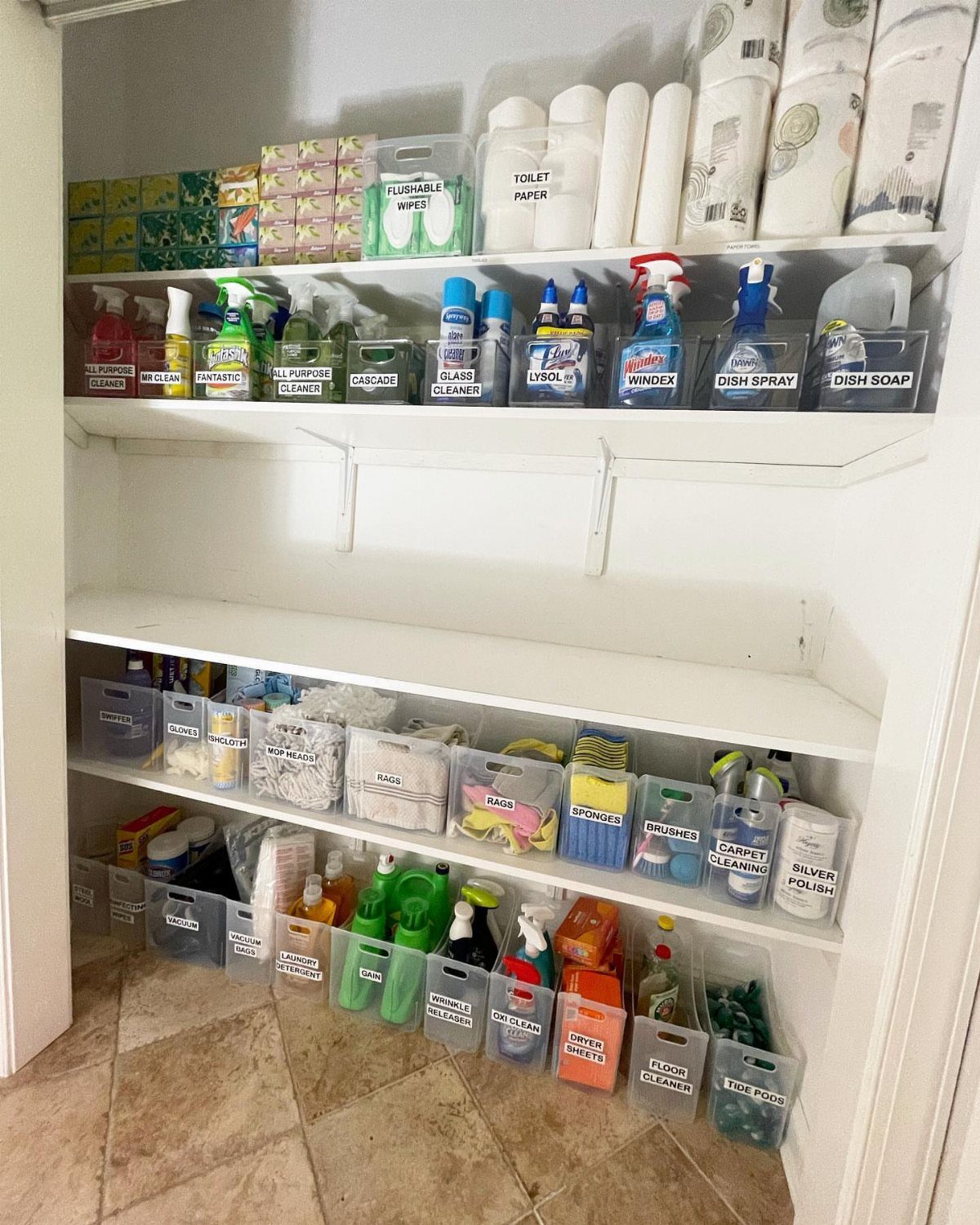
Clear bins trade the neat look of matching opaque containers for the speed of seeing what you have without lifting a lid. I reserve them for utility closets and categories I dig into often: cleaning refills, light bulbs, batteries.
A printed label on the front or a strip of masking tape with a marker date keeps the contents honest when similar items cluster together. For anything less attractive, I still prefer solid sides.
10. Over-the-door Organizers
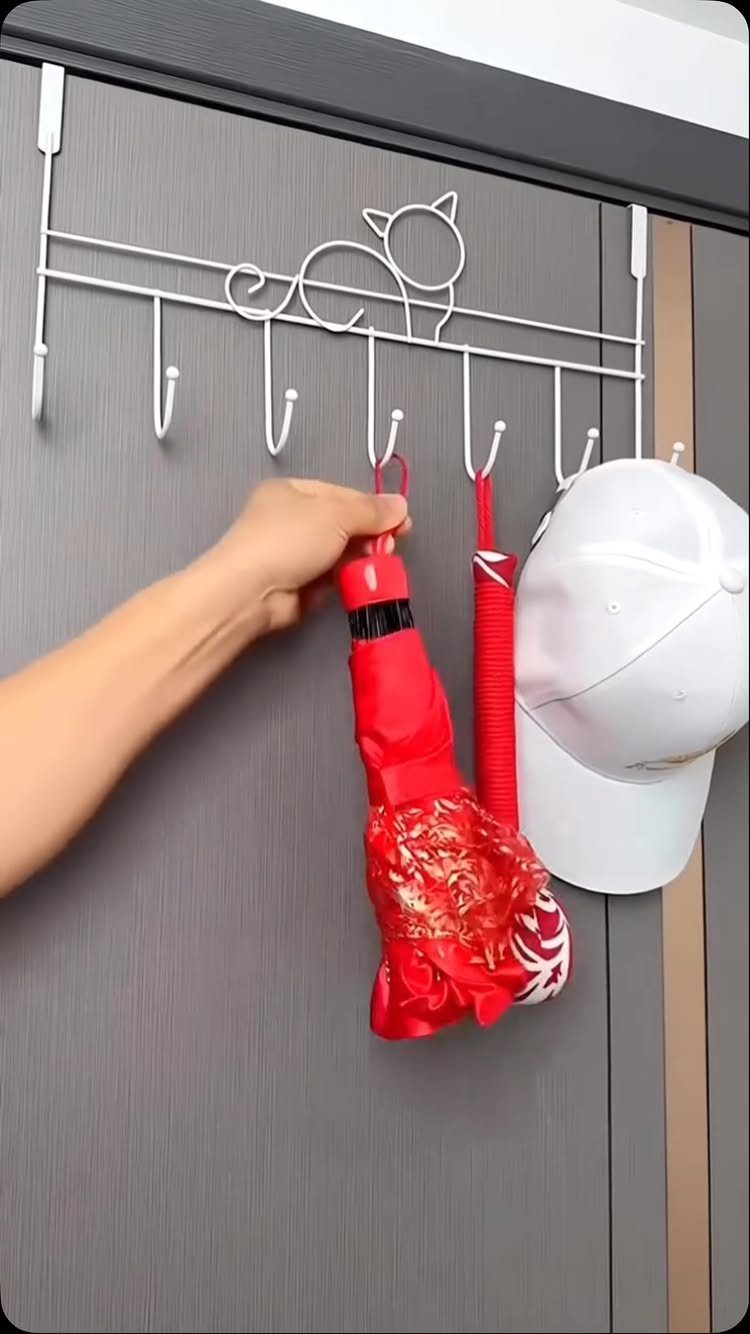
Over-the-door hooks and racks reclaim the gap behind a closet or bedroom door that otherwise stays empty.
I check that the door still closes flush with the hardware loaded; thin wire racks clear most standard jambs, but padded hooks or thick brackets can bind.
The best ones distribute weight across the top of the door rather than concentrating it on a pair of tacky adhesive pads that fail in humidity. Shoes, umbrellas, tomorrow’s outfit: the awkward shapes that don’t fit a shelf hang here.
11. Label Storage Containers
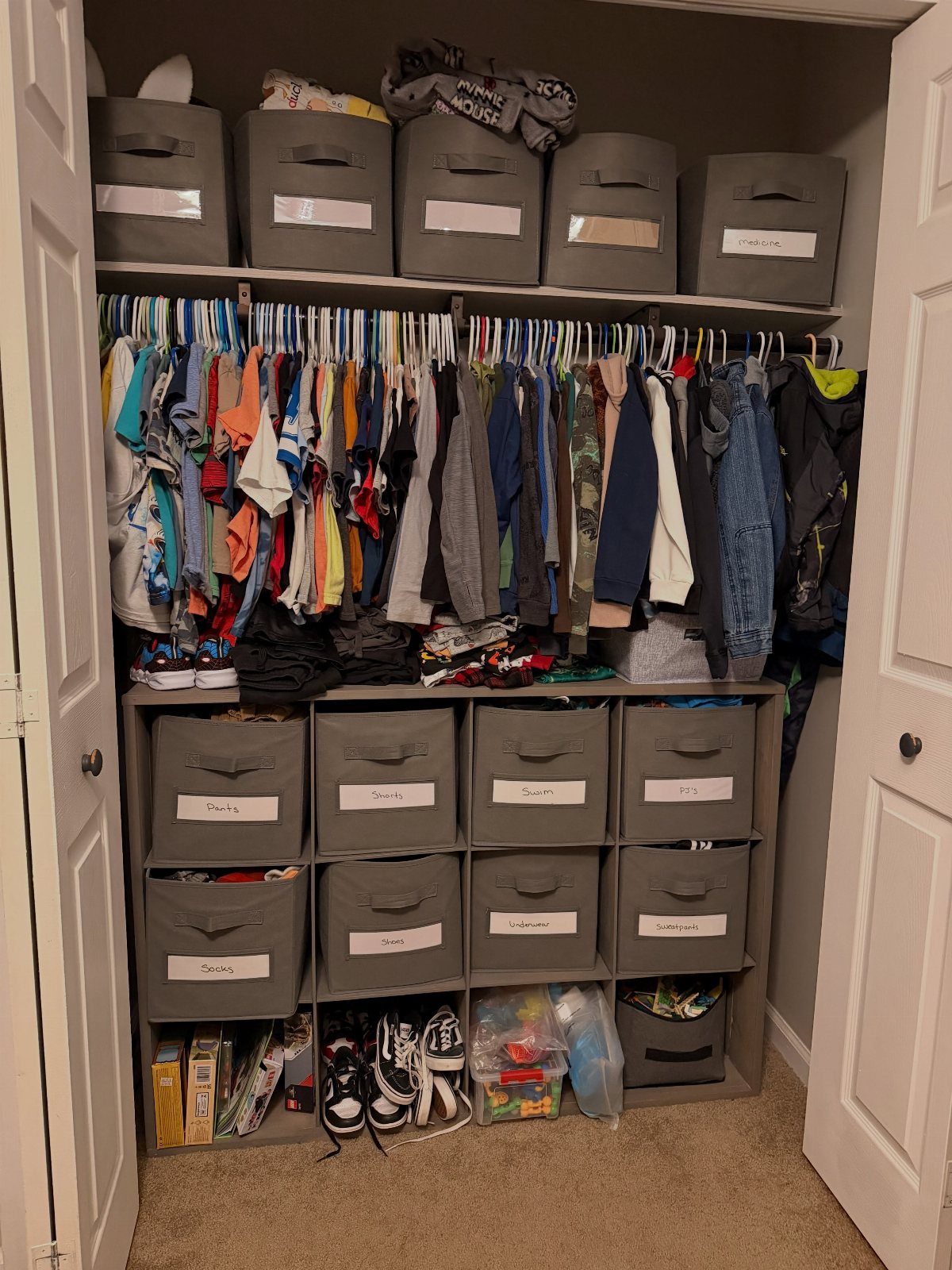
Labels on bins survive only if the system is simple enough to maintain. I limit categories to what I can list in 8 words or fewer; "Activewear, folded" beats "Gym clothes, not running."
A label maker gives a cleaner look than my handwriting, but a ballpoint abbreviation on masking tape works fine behind a closet door where nobody sees it.
The real discipline is relabeling when a bin’s contents drift, which they do every season.
12. Pull-out Closet Racks
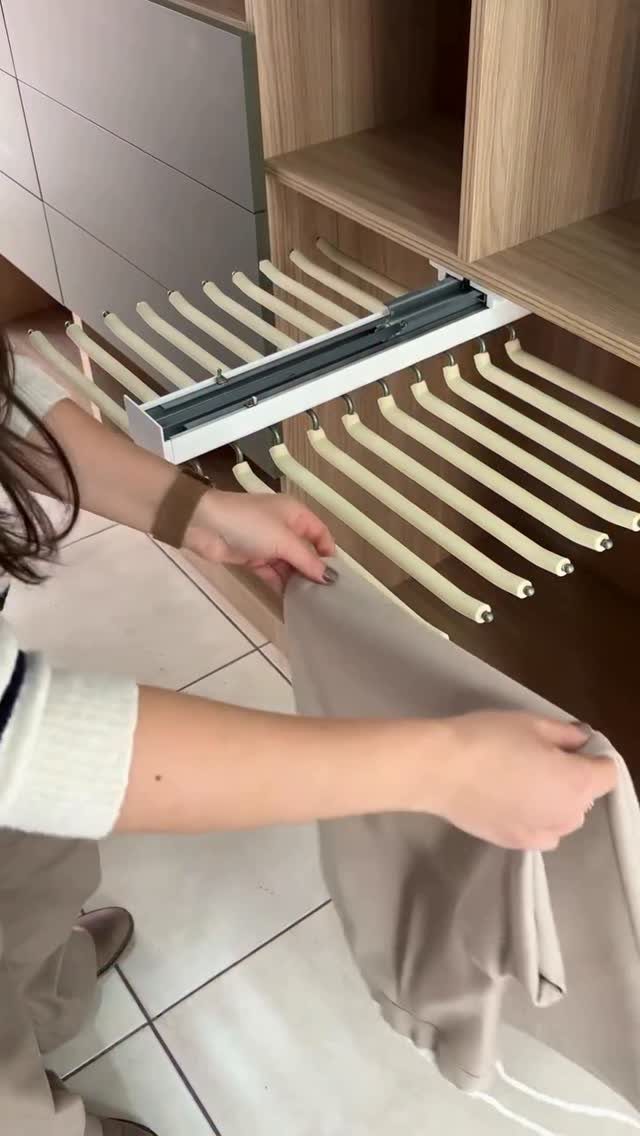
Pull-out racks mounted inside a wardrobe or closet system bring hanging storage to deep cabinets where a fixed rod would leave half the volume unreachable.
I measure the extension length against the cabinet depth and the floor clearance; a rack that pulls out needs enough open space in front to clear folded items or baskets below.
The hardware is usually side-mounted on the cabinet walls, not the back, so I check that the side panels are thick enough to take screws without splitting.
13. Rotating Shoe Tower
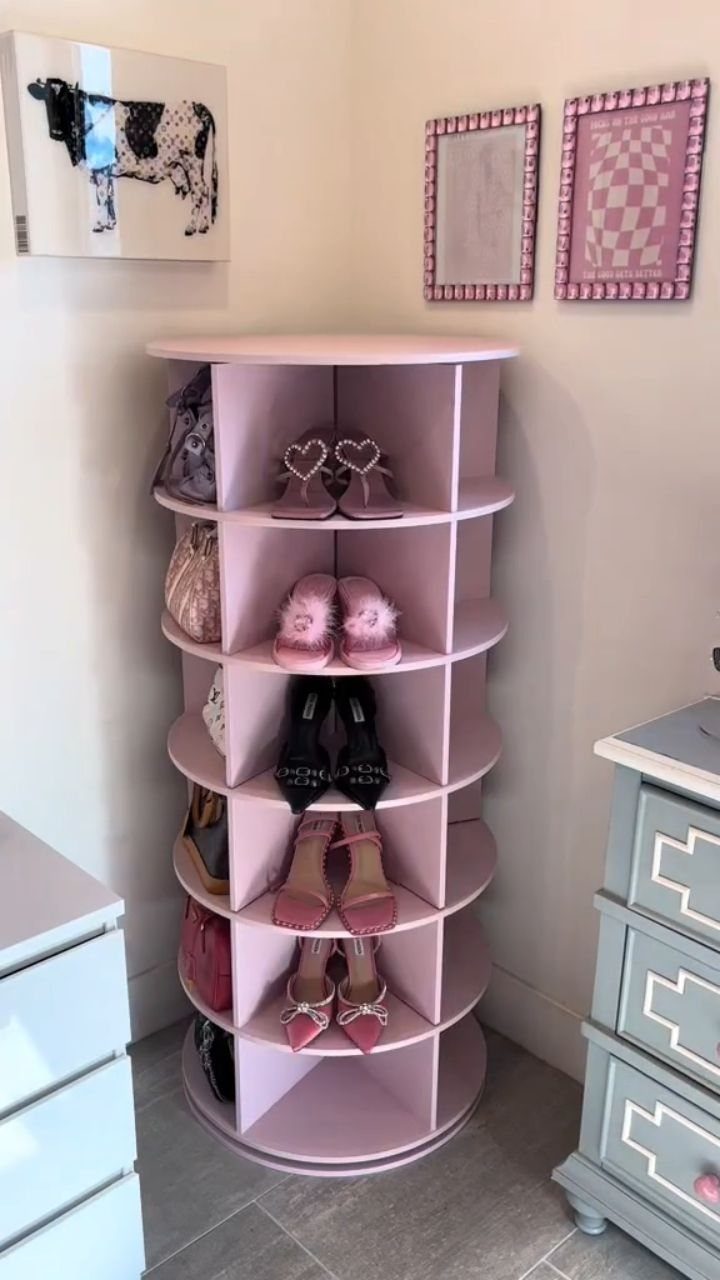
A rotating tower fills a closet corner with storage that turns to face you, no digging into deep shelves required.
The circular shelves keep pairs visible from every angle, and the vertical footprint suits small bedrooms where floor space matters more than ceiling height.
I look for units with a weighted base or low center of gravity; a tall spinner loaded with shoes tips easily if the bottom is narrow.
The best ones spin smoothly when pushed but stay put when bumped. A screwdriver is the only tool you need for assembly, and most units break down flat when you move.
Tuck it in a corner between 2 dressers so the surrounding furniture braces the tower against accidental knocks.
I would not rely on this as the only shoe storage unless you wear a narrow range of heel heights; bulky sneakers and ankle boots eat shelf space that slim pumps barely touch.
Budget-friendly Solutions
Most of these ideas stay under $75 total, which matters when you are organizing a closet you might leave in a year.
A small dresser from a thrift store or garage sale tucked into a corner handles sweaters and athletic wear without the cost of a built-in system.
Paint the drawer fronts different colors or cover them with decorative paper and you have a sorting system built in for the price of a quart of paint.
Here, 33 of the best closet organization ideas and expert tips to help you sort through your storage boxes and create easy access to your wardrobe every morning.
Importance of Decluttering
Purging comes before any organizer gets its value. A bin labeled for clothes you do not love becomes a bin full of clothes you do not wear.
The time spent sorting returns in faster mornings and less decision fatigue, and your clothes last longer when they are not crushed between pieces you never chose.
A jacket that does not fit, shoes that are worn through, anything you keep passing over: that stuff is not coming back into rotation.
I donate what is still wearable and toss what is not; the closet gains space immediately, and I stop digging past the same 5 items every morning. What stays should be what you reach for.
Renter-friendly Options
Renters need systems that leave no trace. Over-the-door racks and hooks use gaps that do not belong to the landlord.





