
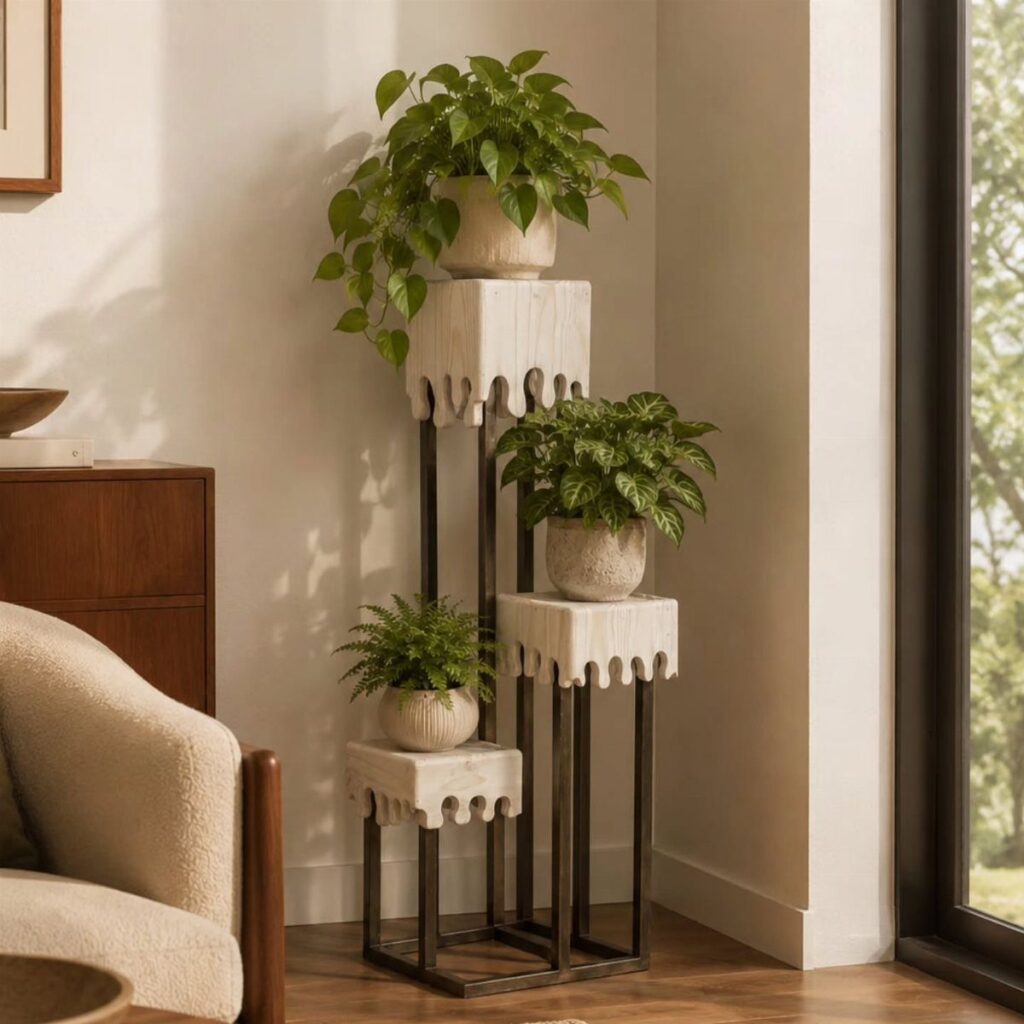
A good plant stand has less to do with matching your pots and more to do with how much floor you can spare.
These ideas range from a slim wall-mounted shelf you can finish in an afternoon to a branch-and-dowel build that demands patience for drying wood, and the deciding factor is whether you need to move it next month or settle it for years.
The driftwood stand uses Forstner-bit holes and dowel joinery for its tiers: no metal, no screws, just friction and gravity holding the whole thing together.
[link-whisper-related-posts]1. Sleek and Modern Plant Stand
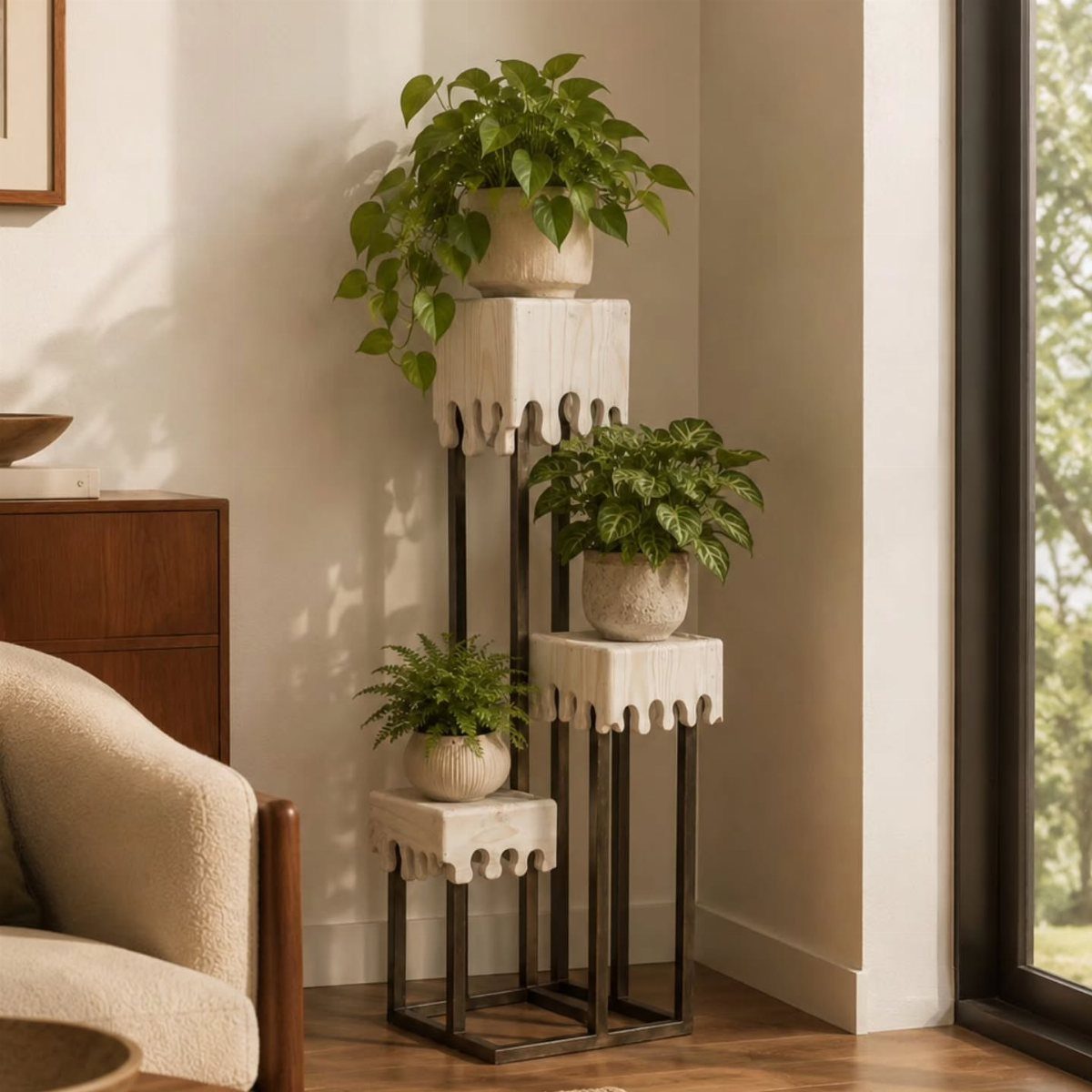
Metal frames with sculpted wood tops give you clean lines that read modern without trying too hard.
I like this style for renters because it looks built-in but moves out in one piece; the weight is the trade-off, so check the floor load if you are going three tiers.
A corner placement near a window gives each plant its light without crowding the room. The stone or wood surface you choose changes the whole tone: lighter wood warms the metal, darker stone keeps it cool and graphic.
2. Wall Mounted Wooden Plant Stand
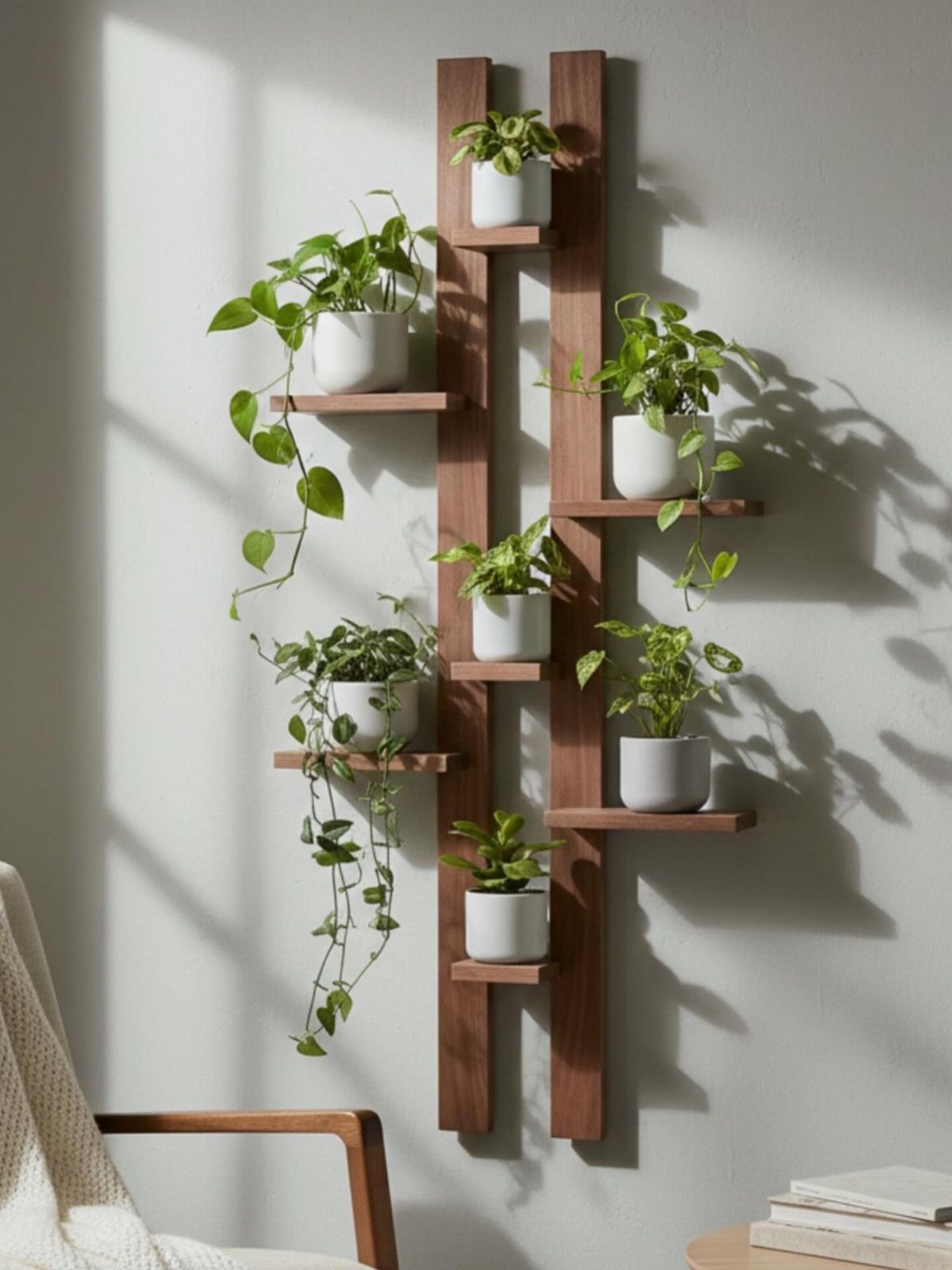
A wall-mounted unit turns empty vertical space into living green without eating floor square footage.
I would mount this on studs or use heavy toggle anchors; wet soil is heavier than it looks, and a shelf of small pots adds up fast.
Shallow platforms force discipline: only compact plants, no overwatering. I see this working best in a narrow spot beside a chair or between windows where a floor stand would block traffic.
Potted plant — Make sure your pot has a diameter of 10 inches or less so it fits in your plant stand.
3. Multi-Tiered Wooden Plant Stand
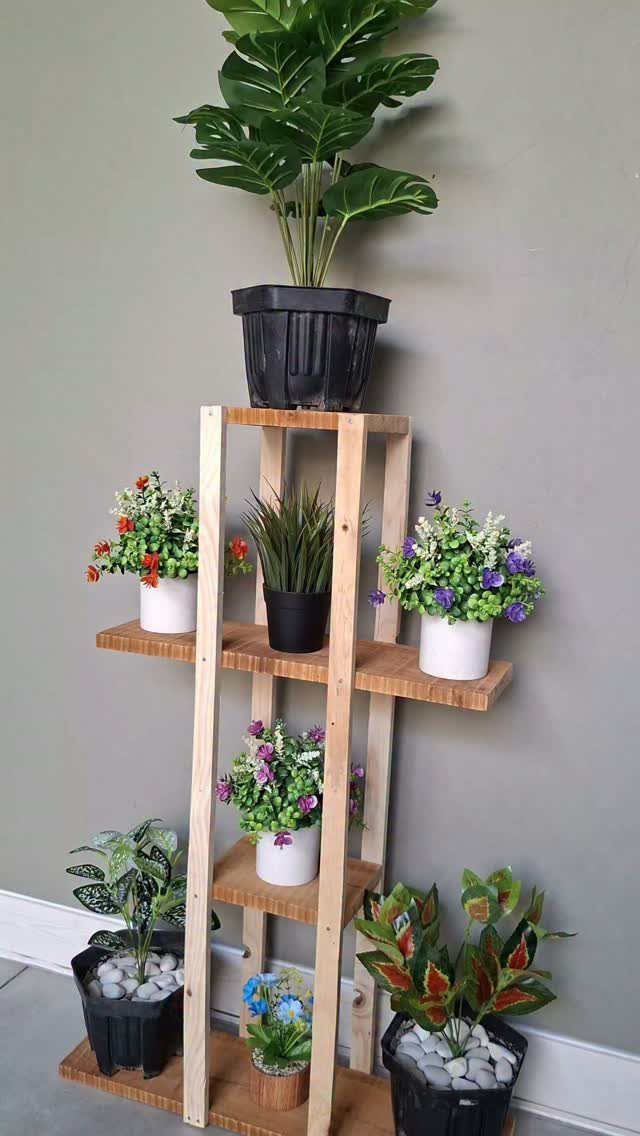
Light wood tiers against a gray wall give you a Scandinavian calm that does not fight the plants for attention.
The height here is the useful part: a Monstera on top gets the clearance it needs, smaller plants fill the lower levels, and the whole thing reads as one piece of furniture rather than a stack of shelves.
I would build this with 1×2 verticals and plywood rounds, finished with water-based polyurethane for the pale tone. The spacing between tiers needs to clear your tallest pot plus growth; anything trailing or climbing needs more room than you think.
4. A-Frame Wooden Ladder Stand
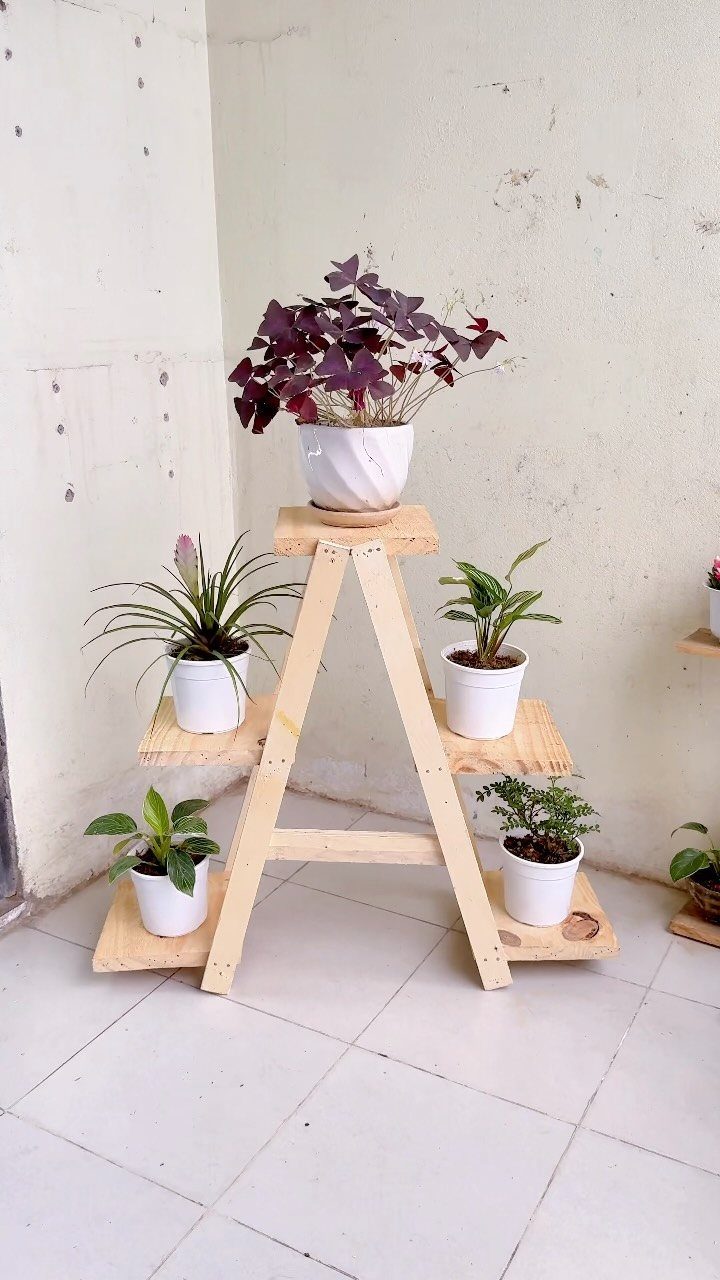
The A-frame geometry is self-supporting, which means no hardware showing and a faster build than a boxy shelf.
Light-colored steps keep the silhouette airy even when fully loaded, and a plan that staggers plants across 3 levels keeps the whole thing from looking crowded.
I would rip the steps from 1×10 pine and angle the legs for stability without bulk.
The ladder form folds flat for storage or moving, which matters more than people admit until their third apartment. Match your step depth to your pot size; too deep and the frame gets tippy, too shallow and pots sit precariously.
5. Driftwood Branch Plant Stand
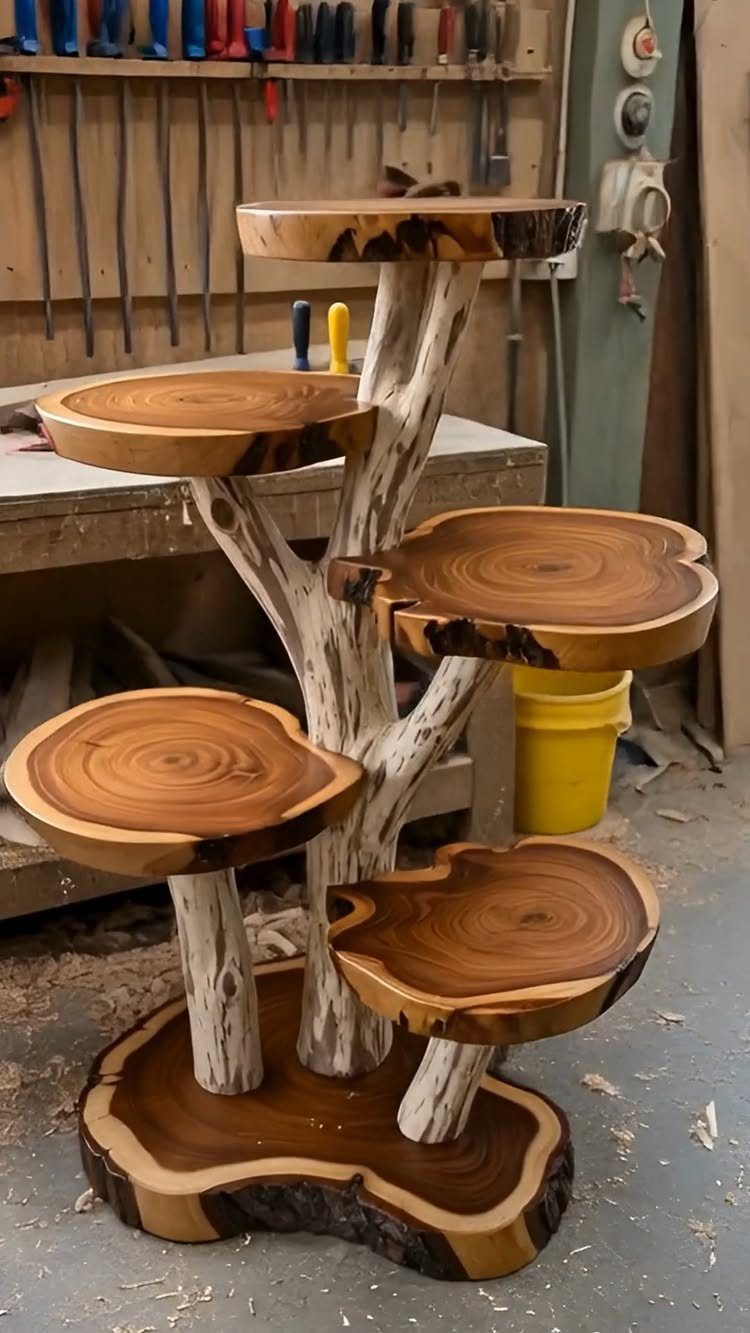
Stripped branches and live-edge rounds give you texture that manufactured wood never matches, and each stand is singular because the raw material is.
The building trick is straight drilling: a Forstner bit into the branch end, a dowel into the slab center, and friction plus gravity do the rest. No metal shows, which keeps the rustic claim honest.
I would harvest branches after winter pruning when bark slips easy, then dry them long enough that the wood stops moving before you build.
Green wood moves and cracks; patience here is the difference between a stand that lasts and one that wobbles by fall.
The exposed joinery and raw material mean this is maker territory, not a Saturday morning project, but the result belongs in a living room, not a shop.
Frequently Asked Questions
How to display lots of indoor plants?
Tiered stands and wall-mounted shelves let you stack vertically instead of spreading across every flat surface. An A-frame ladder or a multi-tiered wood stand each holds six to nine pots in the footprint of one piece of furniture.
I would leave breathing room between plants so light reaches every leaf and air circulates; a crowded stand invites fungus gnats and mildew.
What can I use instead of a plant saucer?
A thin cork mat or a glazed ceramic tile under the pot catches drips without the plastic look.
For stands with open frames, I would line the shelf with a waterproof liner cut to fit; pond liner from the hardware store lasts longer than shower curtain material and lies flat.
Empty the liner after watering so roots never sit in standing water.
What can I use to stand my plant up?
A single pot sits fine on any flat surface, but elevating it on a stool or small stand brings the foliage into light and keeps the floor clear.
A driftwood branch or a sleek metal frame both lift a specimen plant to window height without the bulk of a table.
Match the base width to the pot diameter; a top-heavy plant on a narrow foot will tip the first time you brush past.





