
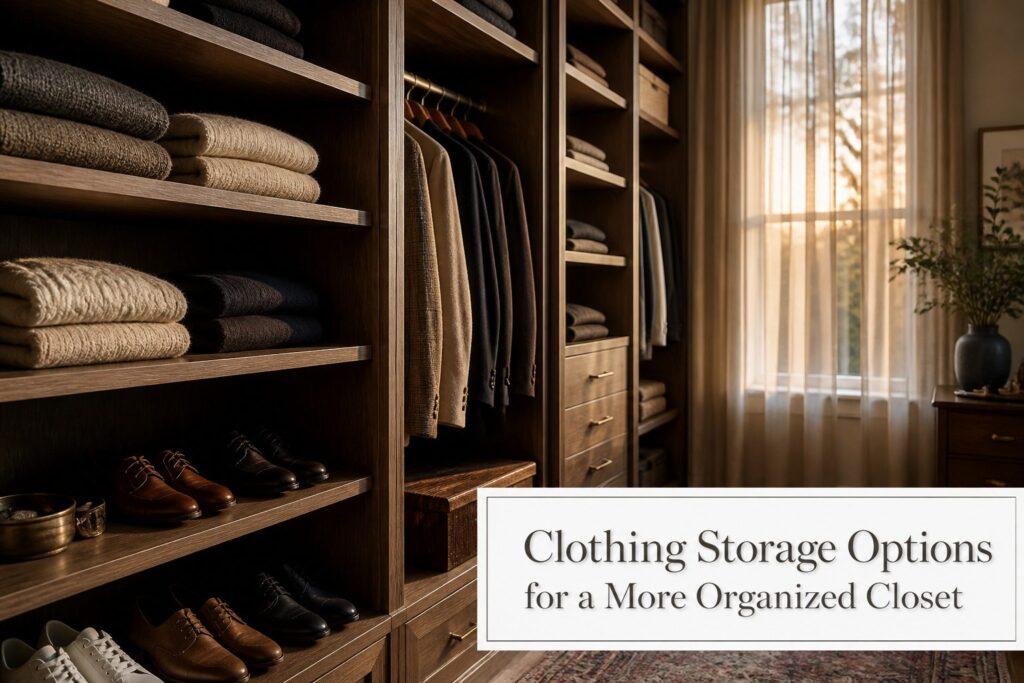
The right clothing storage option depends on whether you own your space or rent it. Custom built-ins cut to precise dimensions offer permanence and tailored function, but they stay with the house and the cost reflects that commitment.
The IKEA PAX Wardrobe System wins for flexibility: modular frames with mix-and-match interiors that shift as your wardrobe does, no contractor required.
[link-whisper-related-posts]1. Custom Closets
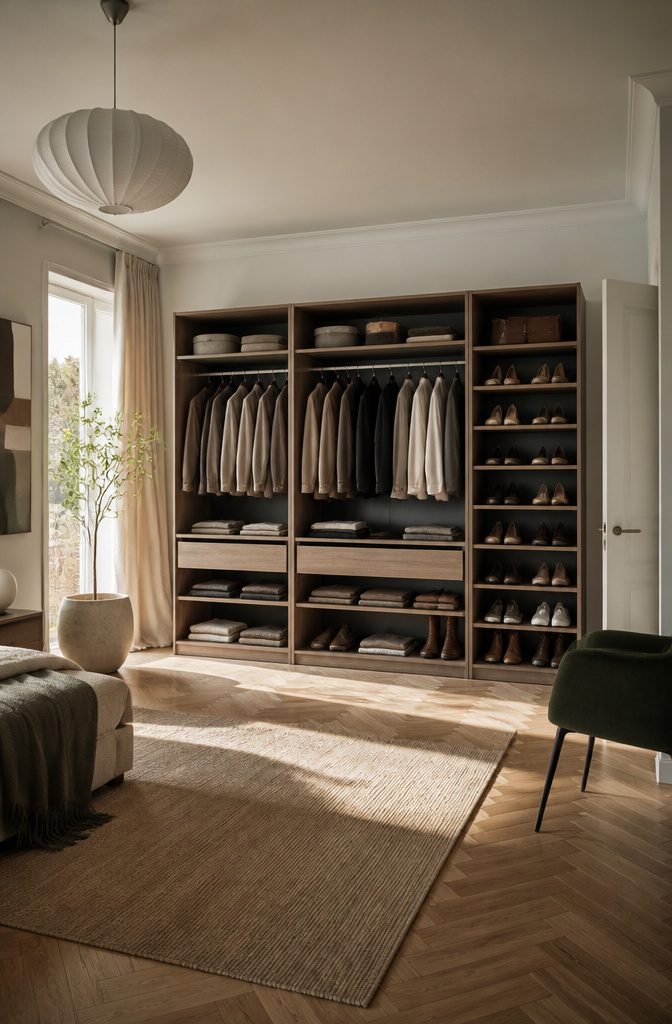
A tailored storage system turns the closet you have into the closet you need.
The IKEA PAX Wardrobe System has become the go-to for this because its modular frames and mix-and-match interiors let you build around your actual wardrobe, not a manufacturer’s idea of it.
Hanging rails, pull-out trays, shoe shelves, and drawer units all clip into the same carcass, so the configuration can shift as your storage needs do.
Adjustable track systems like the ClosetMaid ShelfTrack serve a similar purpose for reach-in closets between 5 and 8 feet wide.
Brackets mount to a horizontal rail, then shelves and rods hang at whatever height makes sense for long coats or folded denim. The hardware stays put, but the layout does not have to.
Built-in cabinetry takes this further, with interiors cut to precise room dimensions and lifestyle habits; pigeonhole shelving for accessories, internal drawers for folded items, and dedicated shoe storage are all on the table.
Custom closets ask for commitment. A fitted system stays with the house, and the cost reflects that permanence.
For renters or anyone who reorganizes seasonally, PAX or an adjustable track system wins on flexibility. The person who knows their exact inventory and plans to stay put may find the built-in worth it.
2. Hanging Clothes
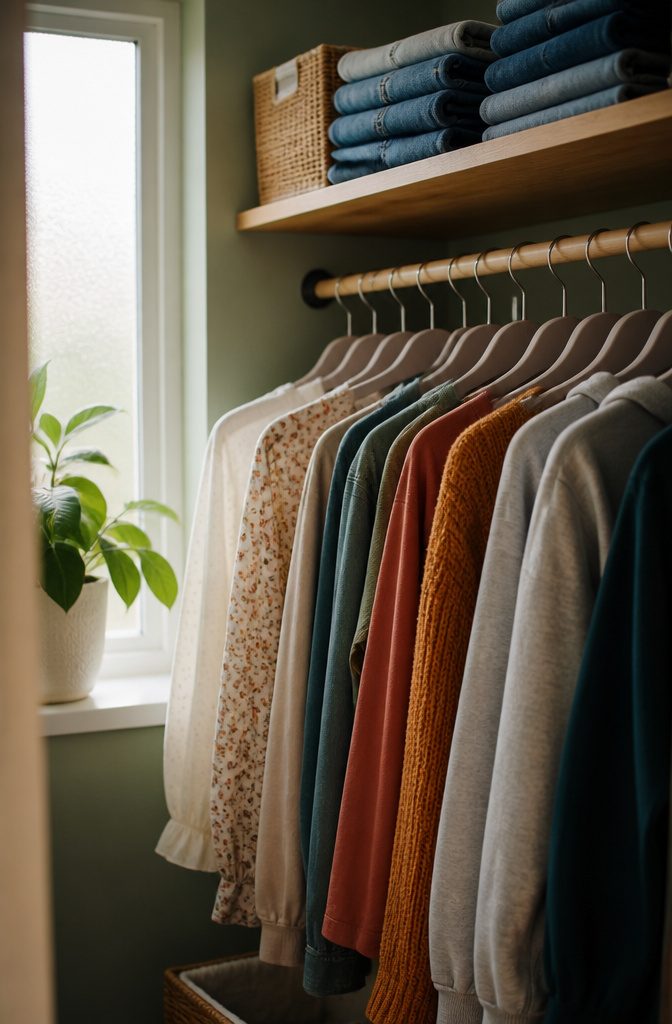
Not everything in your closet wants to hang. I fold heavy knits and cashmere, since gravity pulls them out of shape on a rod, and denim stores better flat so it doesn’t stretch at the shoulders.
Sweatshirts, though, I hang. They’re thick enough to hog drawer space, and a hanger keeps that crease from forming across the middle.
For the pieces that do go up, slim velvet hangers win on two counts at once.
The velvet surface grips silk blouses and camisoles that slide right off plastic, and the profile is thin enough to squeeze roughly twice as many garments into the same linear foot as a standard hanger.
Wire hangers, by contrast, can misshape shoulders over time. I keep them out of the closet entirely.
What stays on a rod versus a shelf is mostly about weight and weave.
Lightweight wovens, jackets, and anything pressed for work belongs on a hanger. Anything heavy enough to sag, or so small it wastes the real estate, gets folded.
3. Folding Techniques
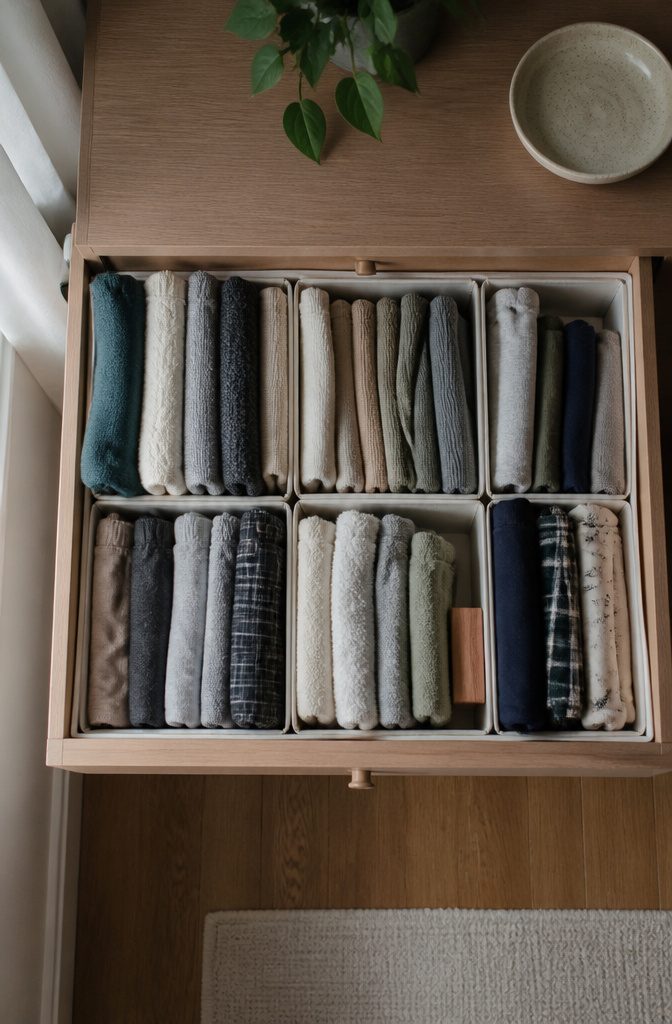
The file folding method keeps every item visible at a glance instead of buried in a stack.
You fold each piece into a rough rectangle, then stand it upright in the drawer so the folded edge faces you like a row of files.
This works best for knit fabrics and anything with some body to it: pajamas, sweatshirts, sweaters, and loungewear hold that upright shape without slumping.
Woven cottons and slippery silks tend to slide or crease, so I fold those flat in traditional stacks.
Adjustable drawer dividers turn this from a Pinterest trick into an actual system. Measure your drawer depth before you buy, because a divider that stops an inch short leaves a gap where files collapse into a heap.
Courtney’s note about bulkier items is worth keeping in mind: file folding actually shines on heavier pieces that would topple in a vertical stack, not just the thin tees that look tidy in photos.
For natural fiber sweaters you wear often, the upright fold beats a towering pile that topples every time you pull one from the bottom.
The ones you store long-term belong in sweater boxes with archival tissue underneath and a cedar block dropped in to fend off pests.
4. Bins and Baskets
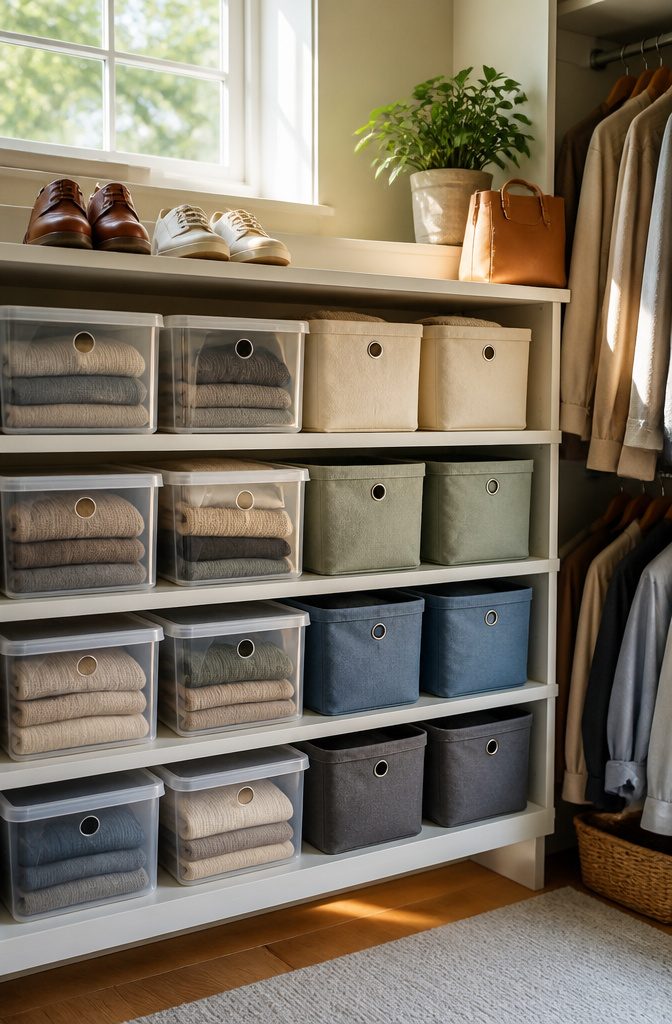
Clear bins with rear ventilation holes solve two problems at once: you can see the pair you want without unstacking anything, and air keeps moving so the closet does not pick up the smell of last season’s boots.
For off-season clothing, I prefer the ones with a clear window in front rather than full transparency; you spot the contents fast, but the plastic is less likely to yellow where the sun hits it.
Fabric bins work better for the things you reach for weekly. Sweaters and undergarments stay separated by category, and the bin itself tells you when it is time to edit: once the sides bow, you are storing too much.
Stackable shoe bins pull double duty here, too. I have seen them used for small handbags and folded accessories, which keeps dust off leather and lets you stack upward instead of spreading sideways.
The limit is ceiling height. A tower of bins looks tidy until the top one requires a step stool you do not own.
I stop at four high for anything I might need midweek, and push off-season stacks to the upper shelf where they sit untouched for months.
5. Vertical Storage
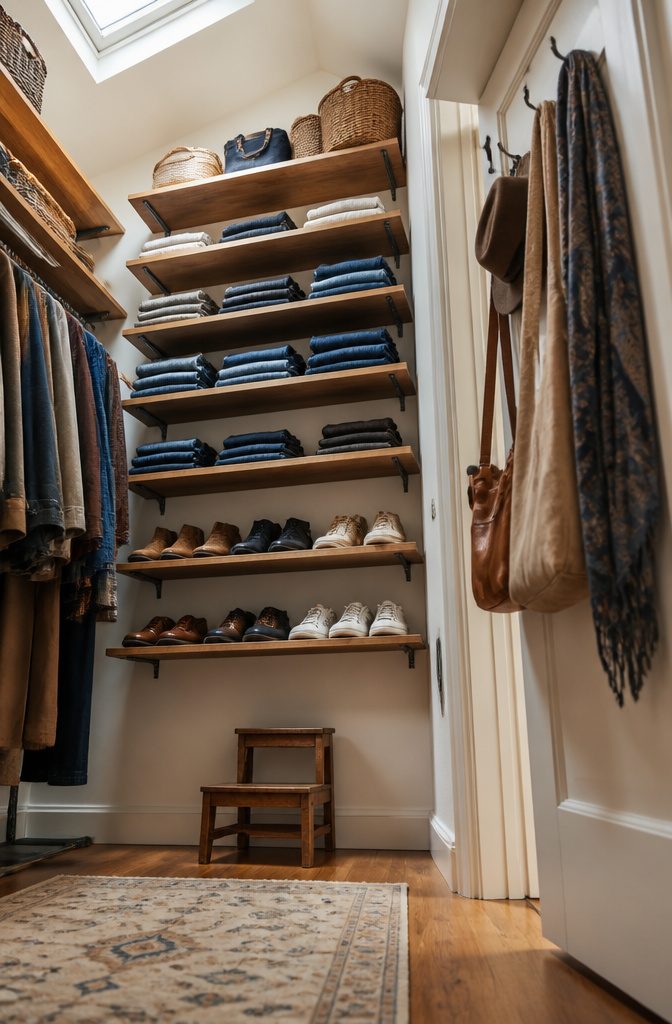
The ceiling and the back of a closet door are usually dead space, which makes them the first place I look when a small closet starts to overflow.
Wall-mounted shelves stacked upward draw the eye away from the narrow floor and let you store folded denim, sweaters, or shoes without adding a footprint.
I prefer adjustable units for this; a fixed shelf rarely lines up with the actual height of your boots or bags, and you end up wasting the gap above them.
Over-door hooks and pocket organizers reclaim the same vertical plane for items you grab daily: coats, scarves, tomorrow’s outfit. A 12-pocket over-door organizer, hung with included clips instead of hardware, works well for renters who cannot drill into walls.
Vertical storage costs accessibility; anything above shoulder height becomes storage you plan around, not rummage through. I treat the top shelf as seasonal rotation space and keep a small step stool inside the closet so the height actually gets used.
6. Shoe Storage Solutions
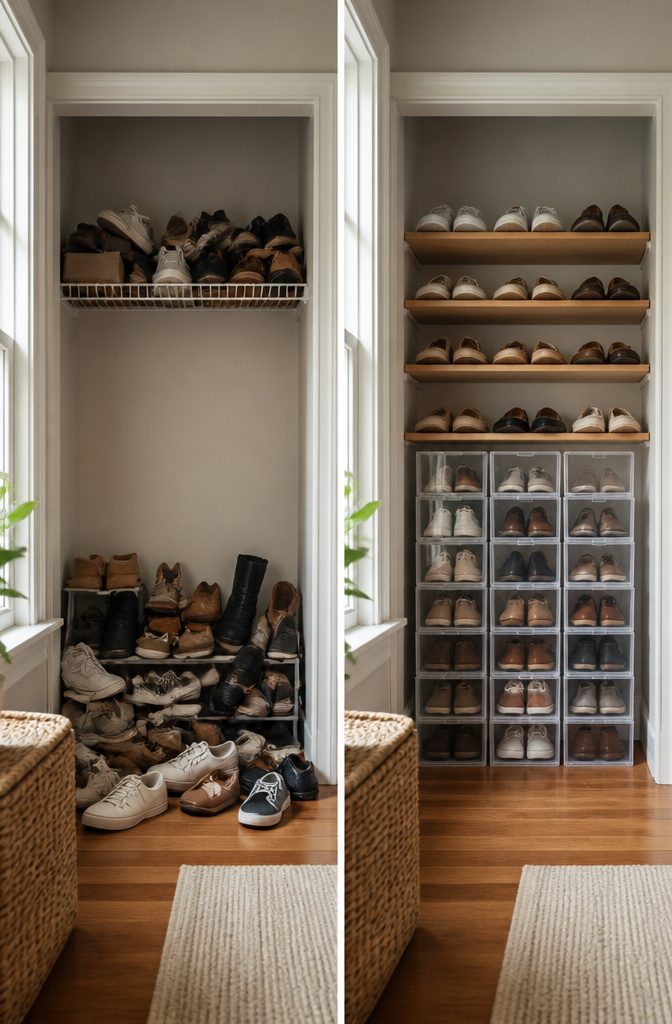
Shoes are the first thing to colonize a closet floor, and they’re also the hardest to keep pristine.
Clear, stackable shoe storage bins solve both problems: you see the pair you want without unstacking anything, and the hard shell keeps dust off leather while rear ventilation holes let air circulate so odors don’t set in.
I keep mine for the pairs I wear only a few times a season, because the small hassle of opening a lid is worth the protection for shoes that would otherwise sit untouched for months.
For daily rotation, I prefer open access. A three-tier floor rack keeps the pairs I grab most often visible and reachable; it also lifts everything off the carpet so the closet doesn’t read as cluttered the moment you glance in.
Open shoe storage means dust settles, and scuffs happen when shoes knock against each other.
Over-door pockets split the difference, hanging twelve pairs at eye level with zero floor footprint, though the fabric pockets don’t shield against light or dust the way a bin does.
I find them best for sneakers and flats, not for suede or anything that needs to keep its shape.
If you’re choosing between a tall vertical rack and cabinet-style storage, the real question is whether you mind bending.
A 10-tier unit holds 25 pairs in a footprint smaller than a laundry basket, but the lower tiers require a crouch. Cabinets with doors hide the visual noise entirely, yet they demand more depth than most reach-in closets allow.
For a weekend project on a real budget, I’d start with the clear bins for protection and a simple floor rack for the rotation; the combination runs under $100 and installs in the time it takes to unbox.
7. Pull-Out Storage
Deep shelves look generous until you live with them.
A 24-inch cabinet means the back third becomes a black hole where scarves go to die, and you end up buying replacements for things you already own. Pull-out racks fix this by bringing the back row to you.
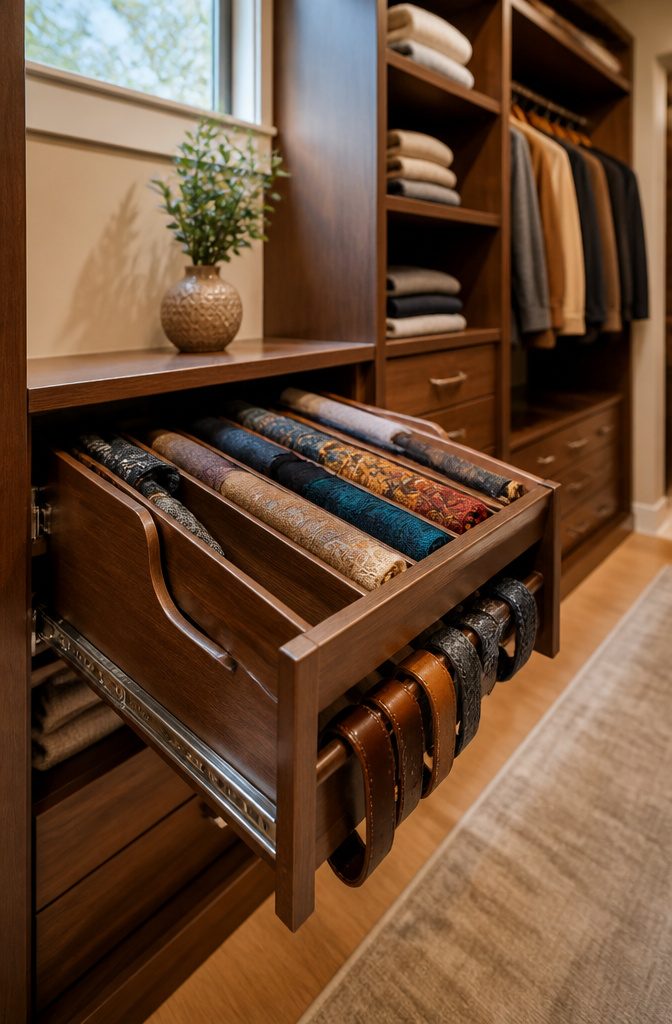
Custom pull-out accessories turn that dead depth into usable territory. Belt racks, scarf racks, and valet rods mount to the side wall and slide out when you need them, then tuck flat against the panel when you do not.
They keep small accessories untangled and visible, which matters because tangled leather belts or buried silk scarves tend to get repurchased, not retrieved.
For bulkier items, a pull-out shelf on drawer slides works the same way. Deep shoe storage, folded sweaters, or handbag collections all benefit.
Without the slide mechanism, you are stacking and unstacking to reach the back row every morning. With it, the back row rolls forward.
Pull-out storage needs installation. A pull-out needs side clearance and proper mounting, so it suits custom or semi-custom systems more than wire shelving you are stuck with in a rental.
If you are buying new, I would spec the pull-outs before the shelf depth. If you are retrofitting, measure the cabinet opening against the slide length before you order.
8. Off-Season Storage
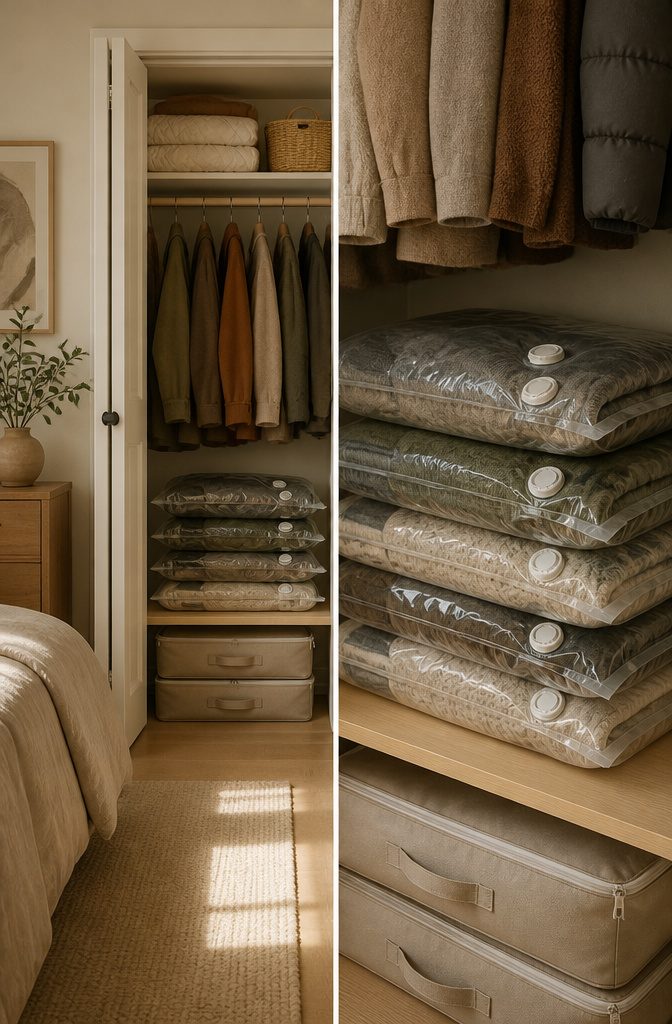
Vacuum storage bags pull the air out of bulky winter coats or sweaters and compress them flat enough to slide onto a closet shelf you had written off as full.
I use them for anything padded or down-filled that would otherwise eat half a hanging rod.
Vacuum bags crinkle: every time you open one, the seal wears a little, and after a few seasons the valve can leak slowly enough that the bag re-inflates by March.
For items that need to stay folded rather than crushed, under-bed storage bags keep the shape intact while clearing the prime closet real estate.
Thin canvas or woven versions slide under a standard bed frame with an inch or two to spare; measure your frame height before buying, because a bag that bulges even slightly will scrape the floorboards.
Washing before you store is non-negotiable. Moths track body oils and food stains you cannot smell anymore, so a load through the machine now saves a closet full of holes later.
Dry-clean wool coats before bagging them; the solvent residue also repels larvae. Skip the scented sachets until the pieces are fully cooled and dry, or you trap humidity against the fabric.
9. Lighting
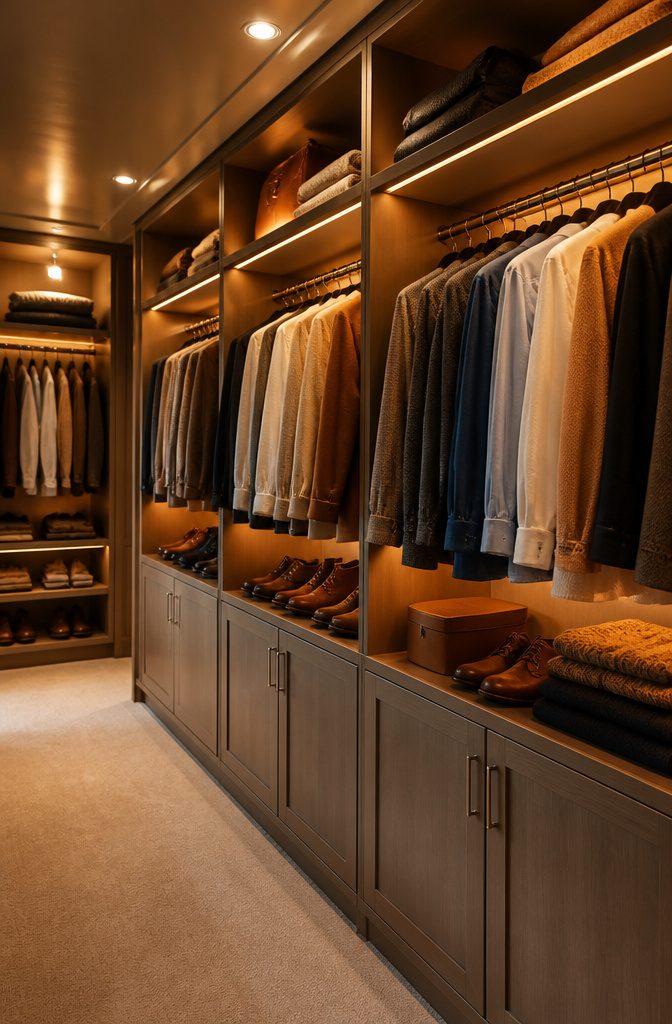
Poor lighting turns even the best-organized closet into a black hole where sweaters vanish and you buy duplicates of what you already own.
I learned this the hard way after installing a full shelving system, then still finding myself squinting at navy versus black in the morning shadows.
LED closet lighting fixes this at the source: strips affixed along shelves, behind doors, or above rails put light exactly where garments hang, and running them vertically illuminates the full length of coats and dresses without the dim middle that a single overhead bulb leaves behind.
Motion-activated LED options solve the power-waste problem, since closet lights are so often left on by accident. Downlighters along cabinet tops or recessed spots at the baseline work for a more built-in look, though they take more planning.
The real cost of skipping this step is not the fixture price; it is the hours lost searching and the money spent re-buying what darkness hid.
Why Organization Saves Time
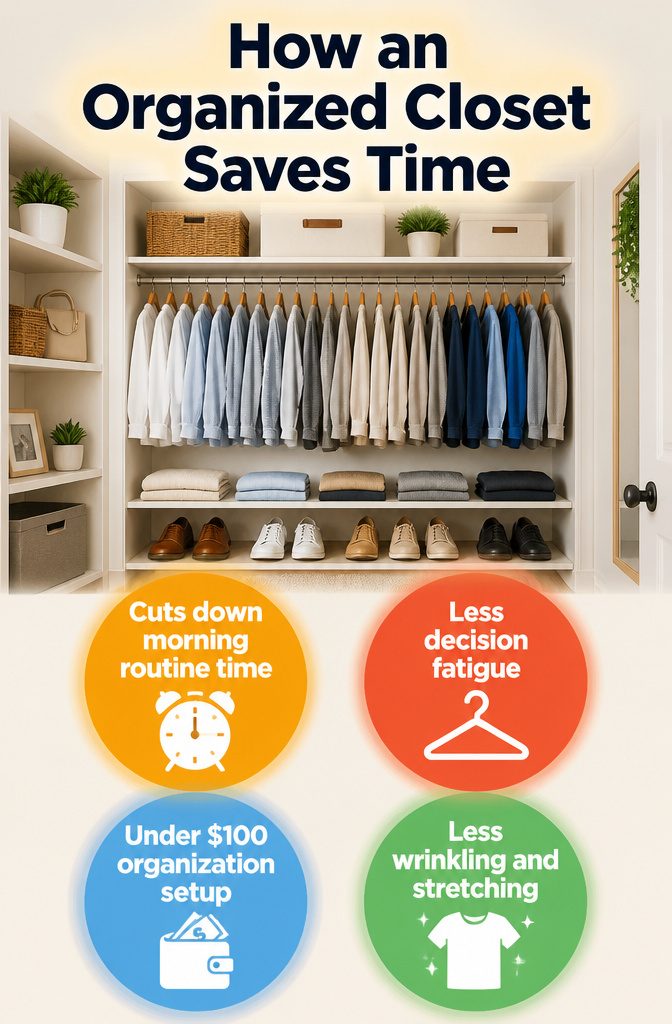
A well-organized closet cuts the friction out of mornings I’d rather not rush through. When every shirt has a designated spot, I grab what I need without the chair-digging ritual that turns a ten-minute routine into twenty.
The same system protects clothes from the wrinkling, stretching, and overhandling that happens when items pile up or squeeze against each other.
Decision fatigue drops sharply when I can see my options at a glance instead of sorting through a jumble. A pile on the chair is not the best way to see everything you have to wear.
For renters and first-home owners working with standard closets, the time savings compound daily.
A system that costs a weekend to set up and under a hundred dollars in basics pays back in smoother mornings and evenings out with friends, plus the quiet relief of opening a door to order instead of anxiety.
Seasonal Rotation
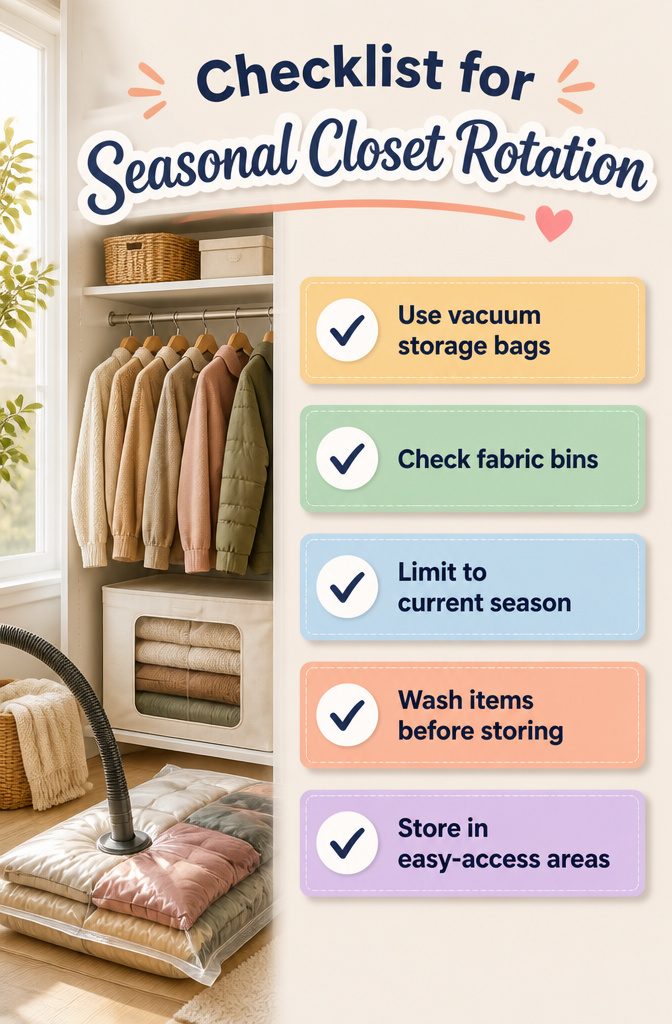
Vacuum storage bags compress bulky winter coats or sweaters down to a fraction of their closet volume, which makes them the tool I reach for first when the seasons flip.
The air gets pulled out with a standard vacuum hose, and the flattened stack slides under a bed, onto a shelf, or into a cabinet until October rolls around again.
For items that need to stay folded but still visible, clear-window fabric bins work better; the zipper keeps dust and pests out, and you can spot the contents without unstacking.
Barbara Brock, who organizes professionally, keeps only the current season in the primary closet, shoes and belts included, and moves everything else out.
That edit is what turns a crowded closet into one you can actually dress from in the morning.
Either method works, but vacuum bags win for pure space savings, while fabric bins win when you need to grab one specific sweater without opening five containers.
Wash everything before it goes into storage; the bags protect against damage, but they seal in any odor already there.
Maintaining What You Store
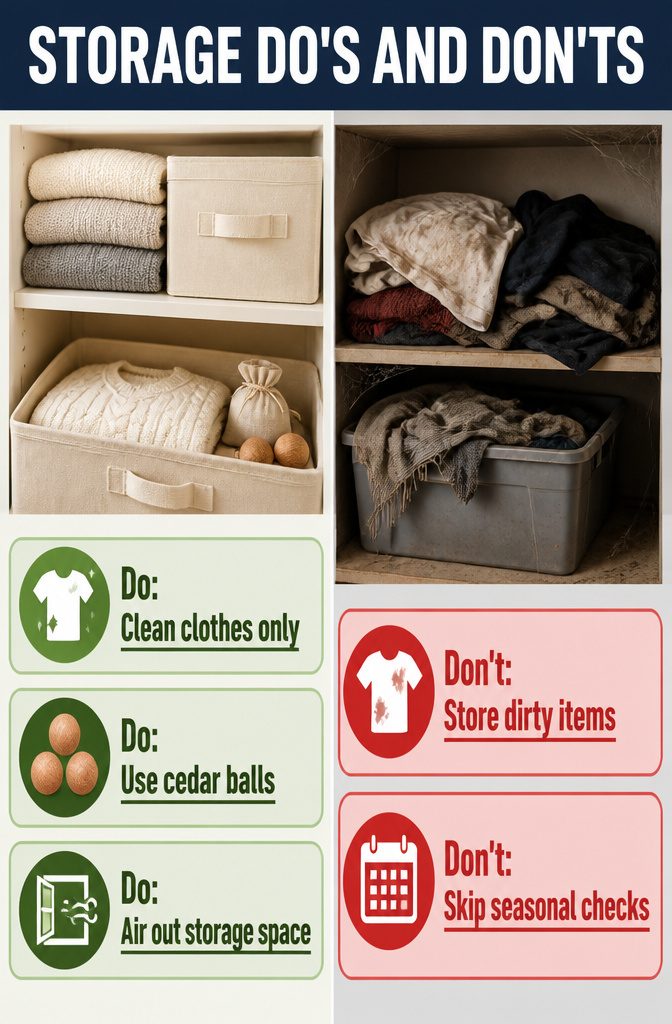
Clean clothes go into storage, and nothing else.
A quick wash before boxing up off-season pieces keeps musty smells from settling in while they sit. I make this non-negotiable, even when the garment looks fine; body oils and invisible stains attract pests over months.
For natural fibers, cedar balls beat mothballs every time. Eastern red cedar has natural oils that kill moth larvae, and the wood leaves clothes smelling like something other than a chemical cabinet.
I tuck them into sweater boxes and coat pockets, replacing or sanding them lightly when the scent fades.
If cedar feels too rustic for a closet, dried lavender sachets do a similar job with a lighter fragrance. They repel moths well enough for most households and cost less to replace seasonally.
The real maintenance habit is simpler: pull everything out twice a year, check for damage, and let the space air before reloading. A closet that never gets emptied slowly fills with things no one wears.
Frequently Asked Questions
What are the best ways to store clothes?
The best clothing storage options combine custom or modular closet systems, proper hanging techniques, and smart folding methods.
Slim velvet hangers grip garments and double your hanging capacity, while file folding keeps drawer contents visible and accessible. Clear bins with ventilation holes protect off-season pieces without trapping odors.
How do I organize my closet for seasonal changes?
Move off-season clothing out of your primary closet entirely using vacuum storage bags for bulky coats and sweaters, or clear-window fabric bins for folded items you might need to grab individually.
Professional organizer Barbara Brock keeps only the current season accessible, including shoes and belts, so you can actually dress from what you see.
What type of hangers should I use?
Slim velvet hangers are the best choice for most garments.
The velvet surface prevents silk blouses and camisoles from sliding off, and the thin profile fits roughly twice as many pieces per foot as standard hangers. Avoid wire hangers, which distort shoulders over time.
How can I maximize space in a small closet?
Use vertical storage on walls and the back of doors to reclaim dead space without adding floor footprint.
Adjustable wall-mounted shelves let you stack upward for folded items, and over-door organizers with pockets work for daily accessories. Keep a small step stool inside the closet so upper shelves actually get used rather than ignored.
What kind of wardrobe storage organizer does IKEA offer?
The IKEA PAX Wardrobe System uses modular frames with mix-and-match interiors including hanging rails, pull-out trays, shoe shelves, and drawer units that all clip into the same carcass.
The configuration can shift as your wardrobe changes, making it a flexible option for renters or anyone who reorganizes seasonally.
Should you hang or fold clothes?
Hang lightweight wovens, jackets, and anything pressed for work. Fold heavy knits and cashmere, since gravity pulls them out of shape on a rod, and store denim flat so it does not stretch at the shoulders.
Sweatshirts work either way, but hangers save drawer space and prevent a crease across the middle.
How do you stop clothes from going mouldy in storage?
Wash everything before storing, since body oils and invisible stains attract pests and trap odors over time.
Choose storage containers with ventilation holes or breathable fabric rather than airtight plastic, and make sure garments are fully cooled and dry before sealing. Cedar blocks or dried lavender sachets repel moisture-attracting pests naturally.





