
The single question that sorts these ideas is whether your project this year is a solo afternoon or a build that needs cure time for anchors and adhesive.
I reach for a rolling cart when mobile storage doubles as a workbench because that kind of ready-made match is what separates an idea that stays on the list from one that actually gets done before Sunday evening.
[link-whisper-related-posts]1. Garage Workbench
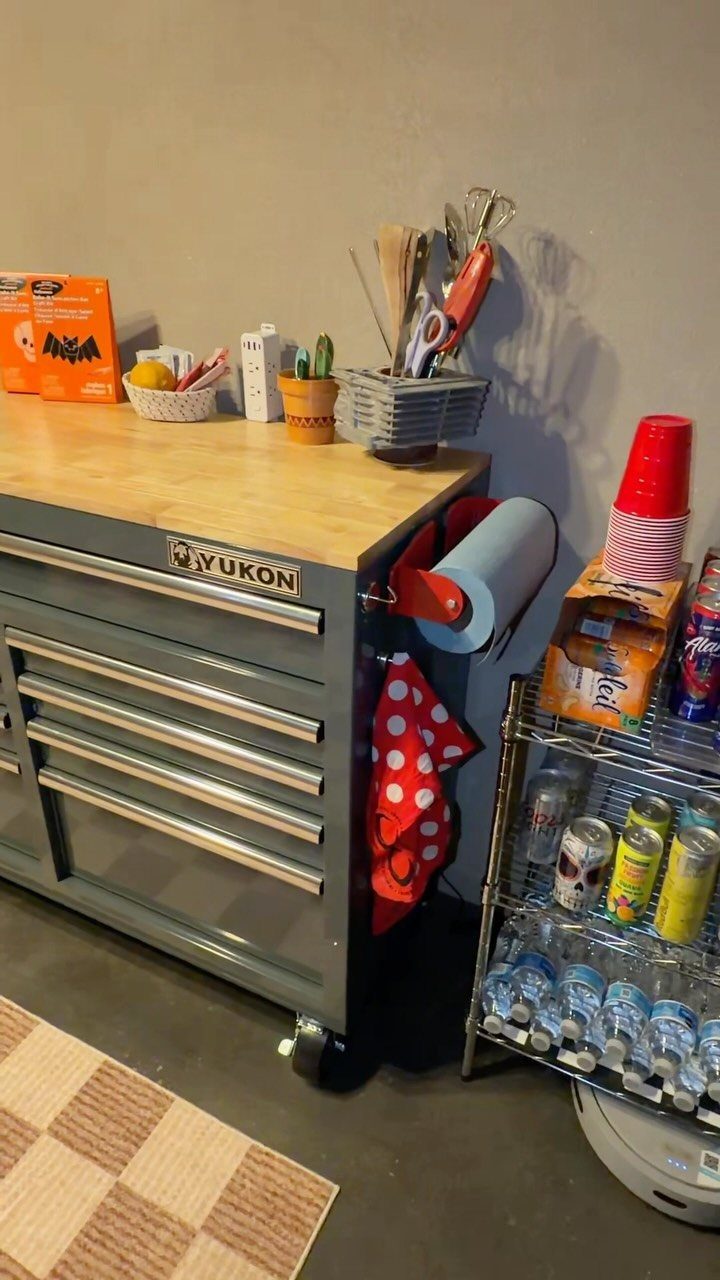
A rolling tool chest with a solid top earns its place as a workbench because the storage is already there.
I like the Yukon line for this; its drawer depth fits socket sets and the casters lock so the whole thing stays put when a project runs long.
2. Garage Zones
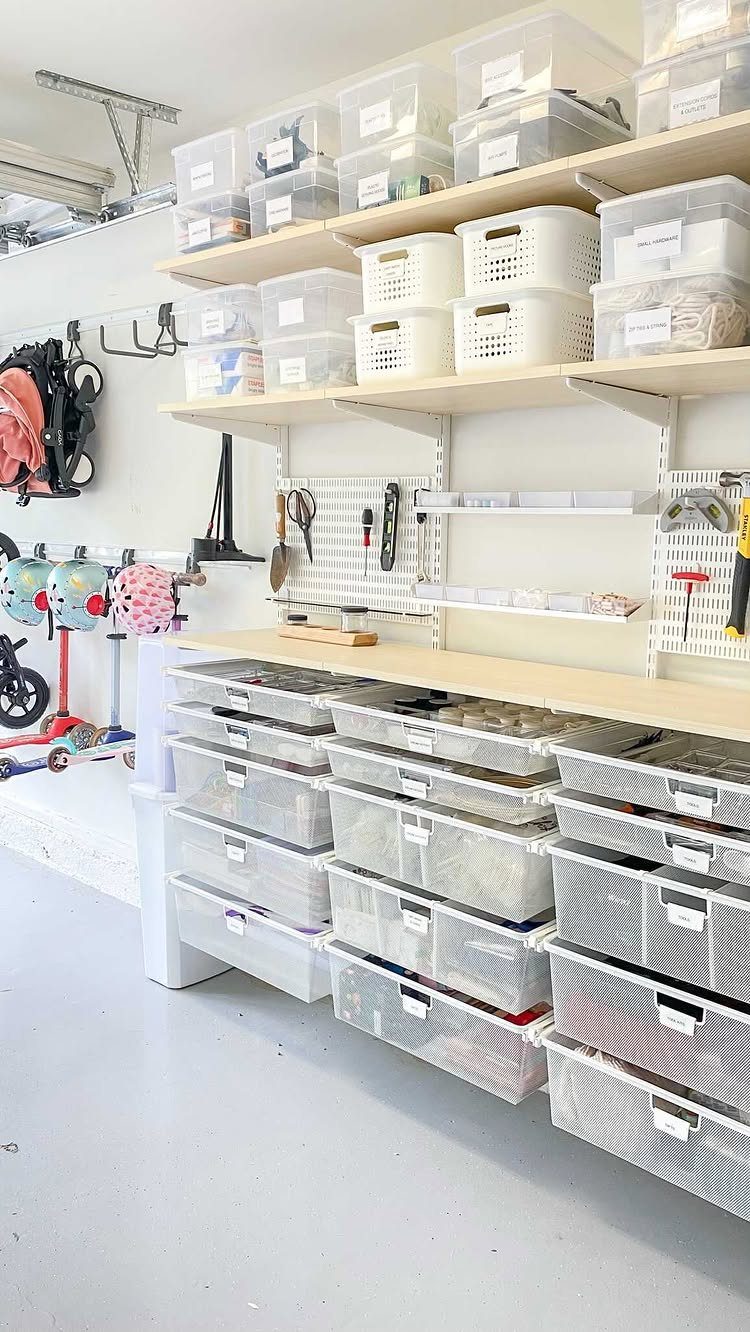
The quickest return on a weekend is splitting the garage into zones: tools here, sports there, seasonal storage overhead. I have seen a four-zone layout fit a standard two-car space without any single area feeling pinched.
Start with the wall that sees the most daily traffic, mount a pegboard for the everyday tools, and let the rest of the categories settle around that decision.
For many of the best garage storage ideas, the point is to get as many items off the ground as possible, says La Fond, the founder of the home-organizing company Of Space + Mind.
3. Tote Storage Shelving Unit
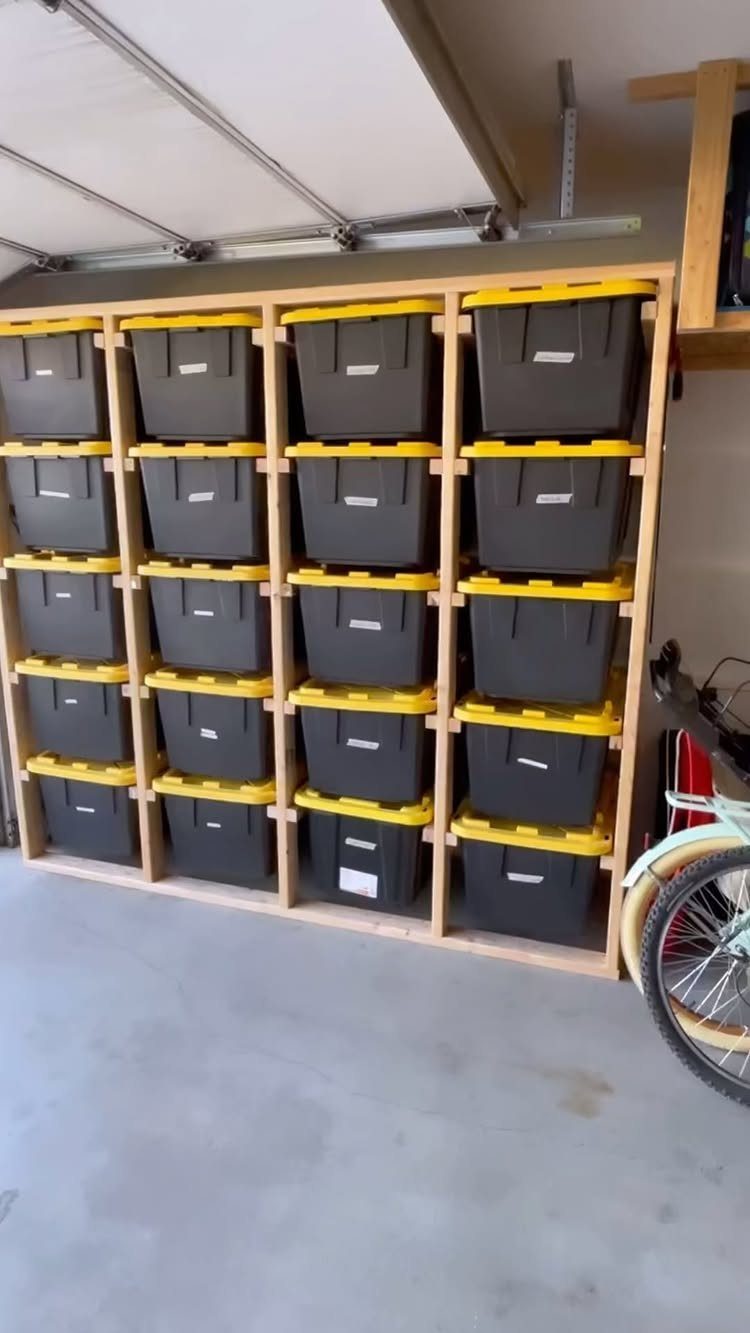
Custom shelving for uniform bins beats adjustable wire racks when every container is the same size.
Build the frame depth to match your bin exactly, and space the shelves close enough that the bins slide in like drawers without the drawer hardware cost.
I would use 2×4 uprights and 3/4-inch plywood; a loaded rack of full bins asks for it.
4. PVC Pipe Drill Holders
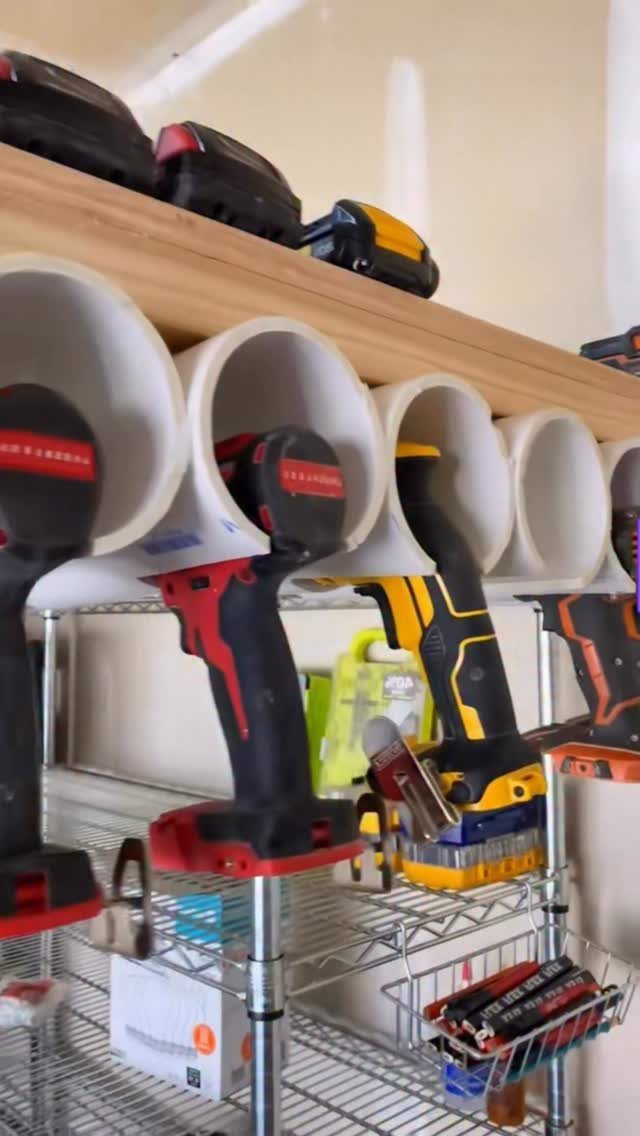
Four-inch PVC scraps, cut to the height of your drill barrels and screwed to the underside of a shelf, turn wasted airspace into tool slots.
The drills hang by their bodies, bits down, so the chuck does not take the load. I mount them on the front half of the shelf only; the back half stays clear for battery storage and chargers.
5. Wall-Mounted Power Tool Station
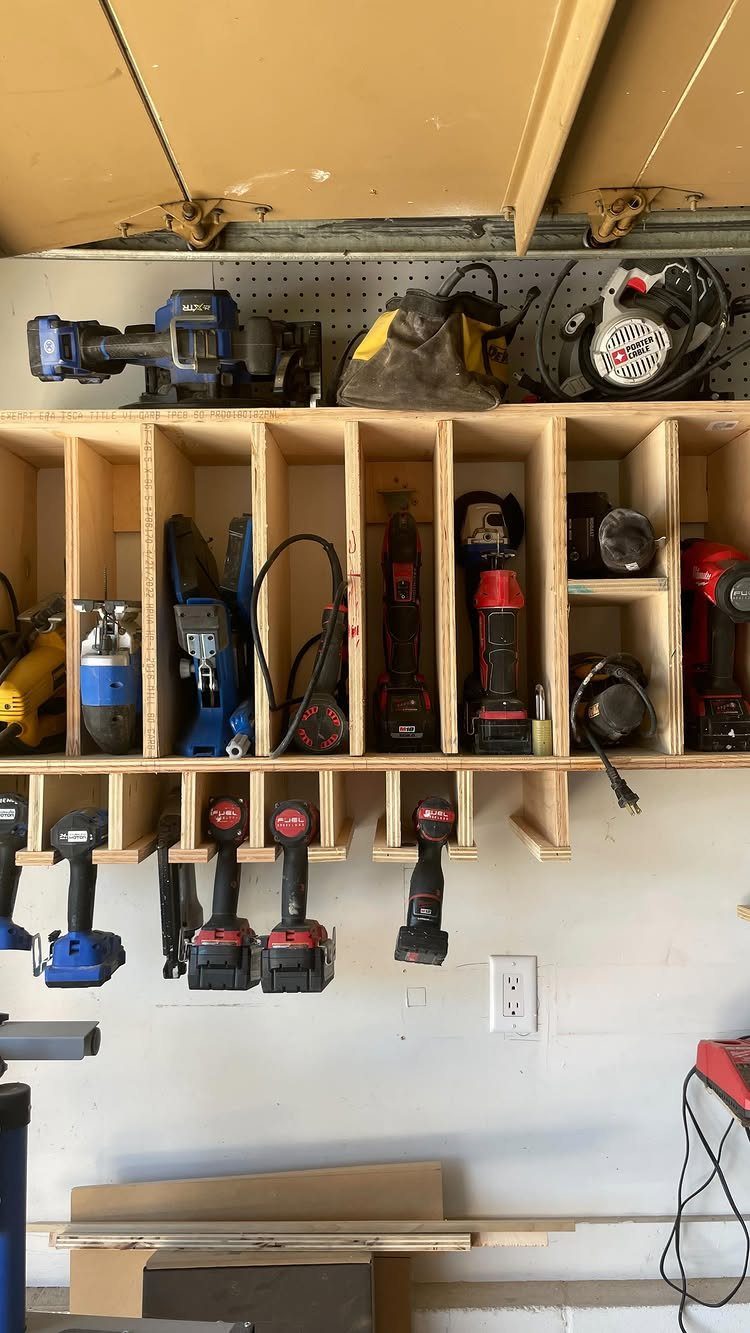
Dedicated charging space is what separates a tool wall from a tool pile. A station with a cubby for each tool, plus a shelf for the charger and spare batteries, keeps every drill ready.
Build it in pine if you stain and seal it; plywood edges show too many voids for a wall you face every day.
6. Yard Tool Wall Racks
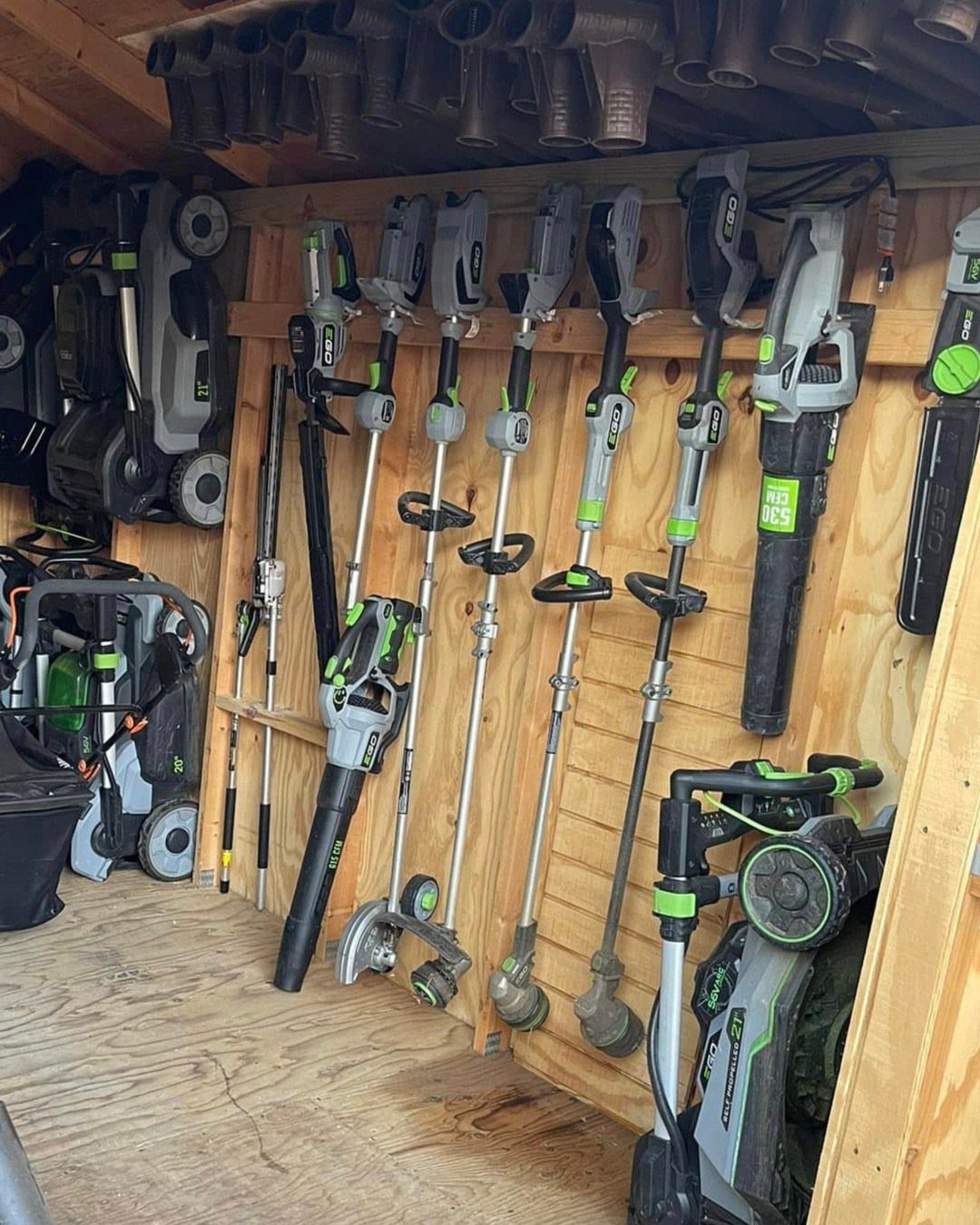
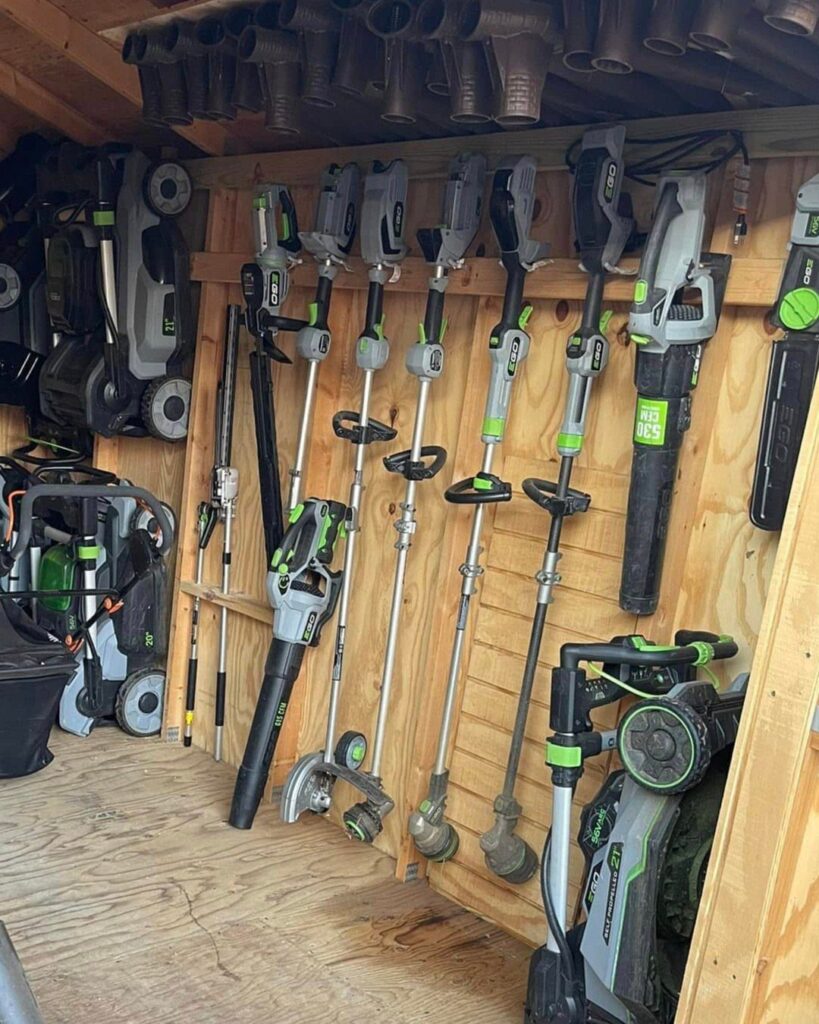
Battery-powered yard tools with a shared voltage system earn their wall space because one charger loop handles every season.
I hang long-handled gear at working height, handles up, using deep J-hooks rated for heavy loads. The folded mower or snowblower stays on the floor beneath; gravity does the work, and nothing leans into nothing else.
7. Ceiling Pulley Hoist
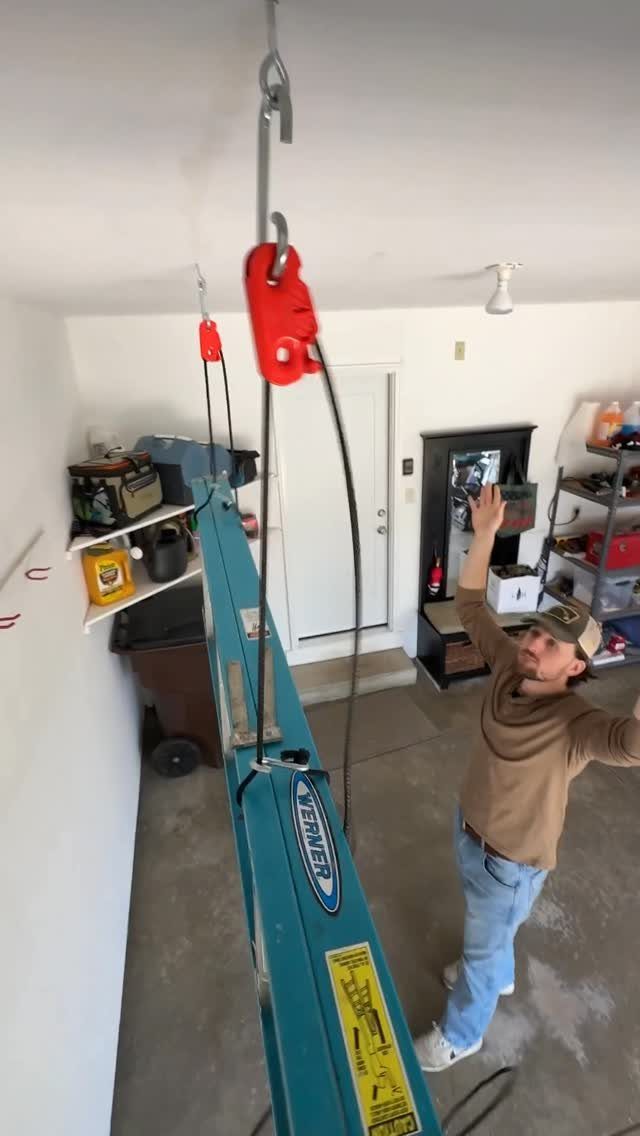
A ceiling hoist frees an entire wall by parking ladders and bikes where the headlights used to sweep.
I would mount the bracket to a joist, not drywall, and pick a red rope over black because you can spot a fray at a glance.
8. Heavy-Duty Metal Shelving Units
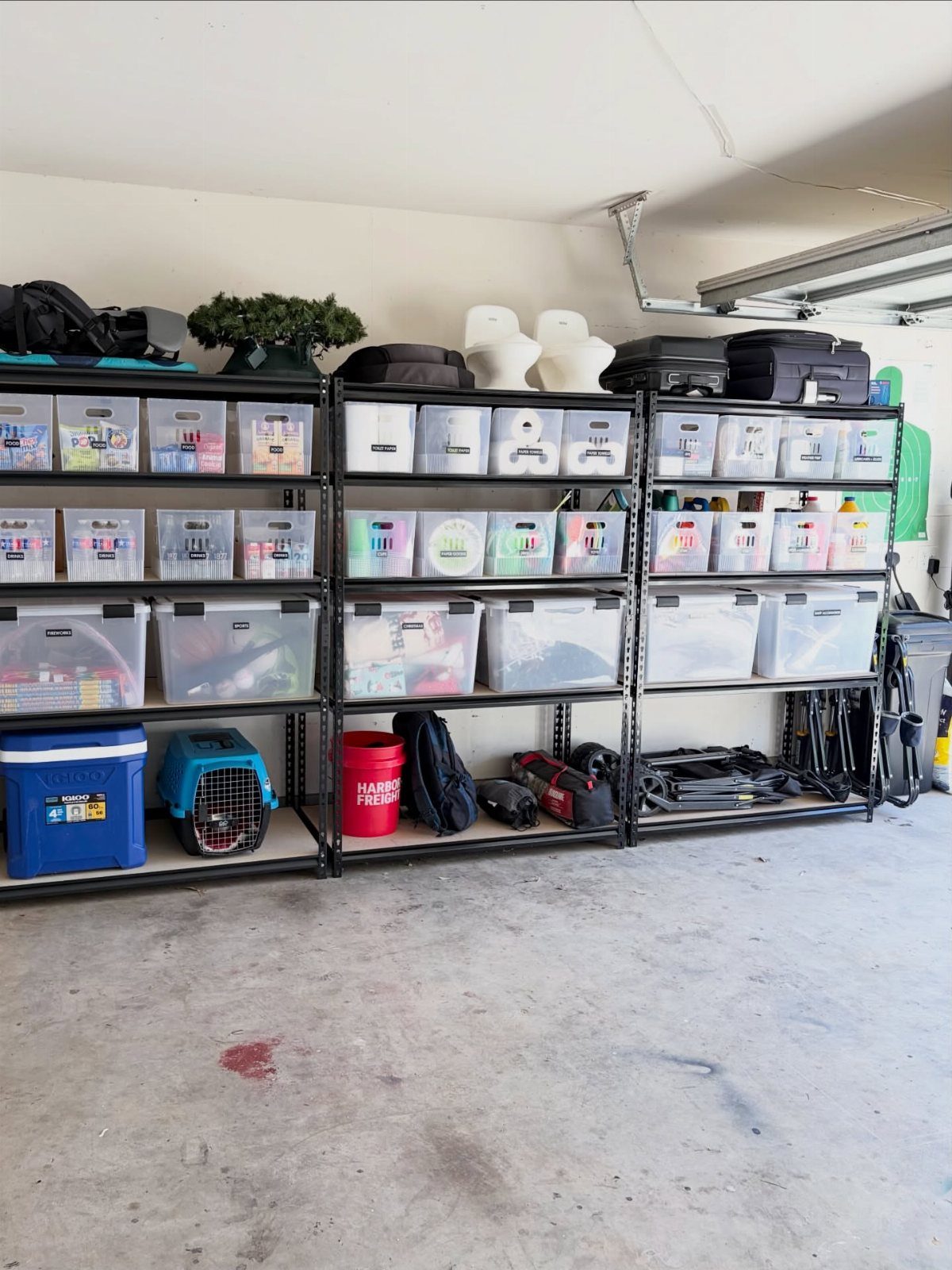
Black wire shelving from Harbor Freight holds its own when loaded with clear bins because the contents matter more than the frame.
Three units against one wall let you label the bins so no one asks where the tent poles live.
9. Arched Storage Cubbies
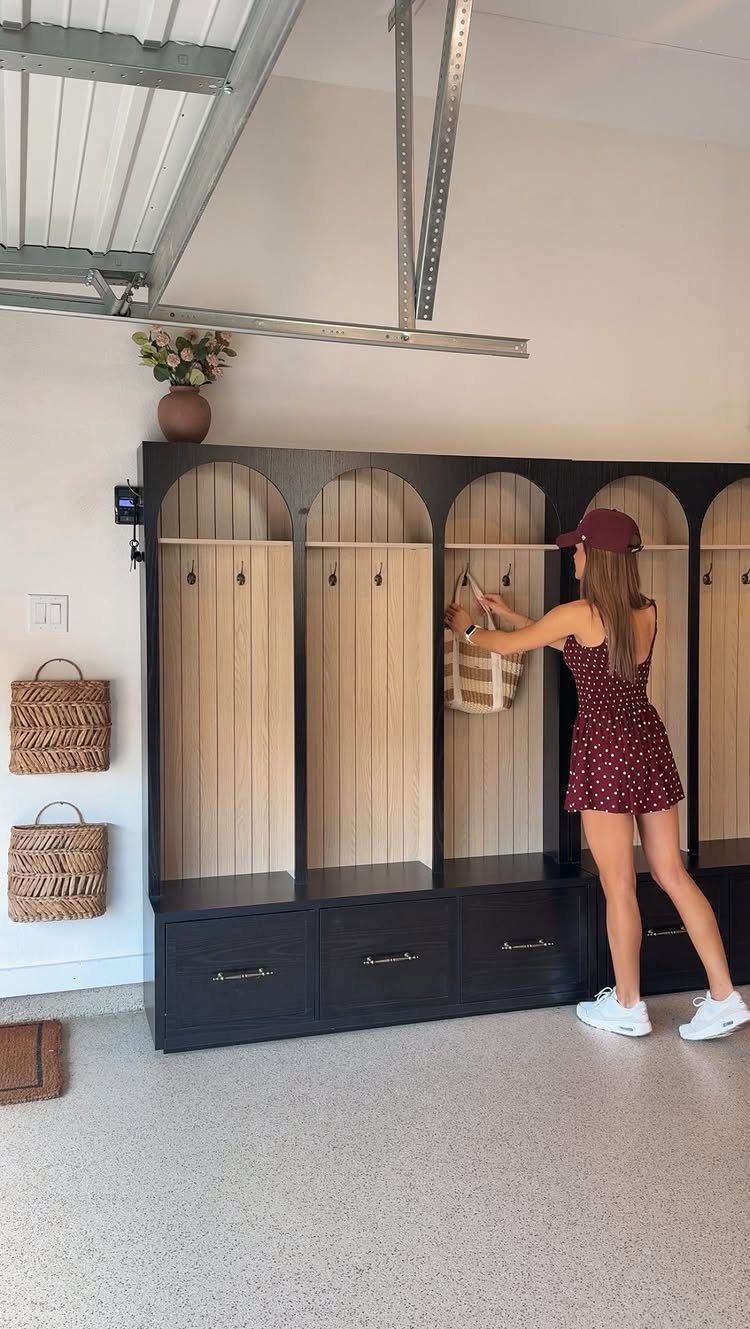
Arched cubbies in a tall dark unit dress up garage storage enough that it could stand in a mudroom without apology.
The lower drawers catch what the open shelves cannot: gloves, keys, the small stuff that migrates to every flat surface.
10. Use Vertical Space
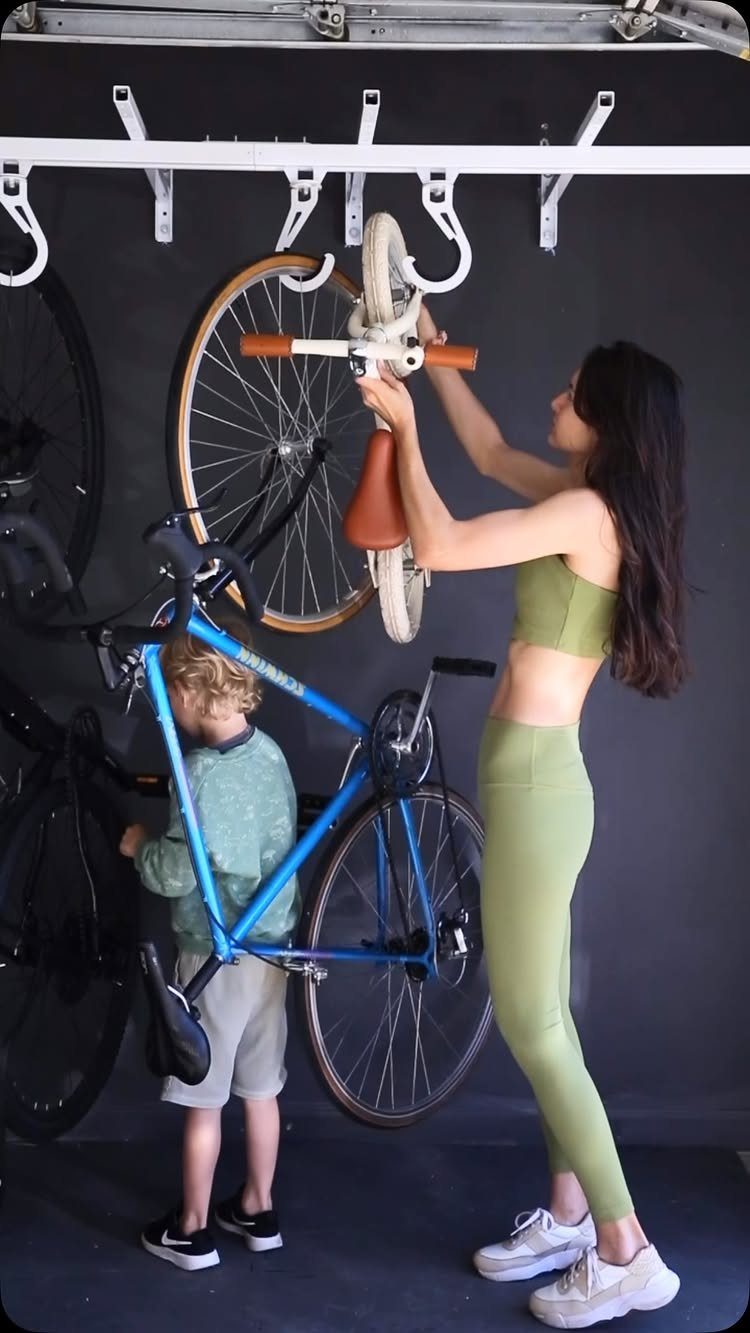
Bikes on hooks bring the ceiling into play when wall space runs short. I hang the heaviest frames highest, since lifting a bicycle overhead asks more of shoulders than most people expect.
11. Slatwall Panels
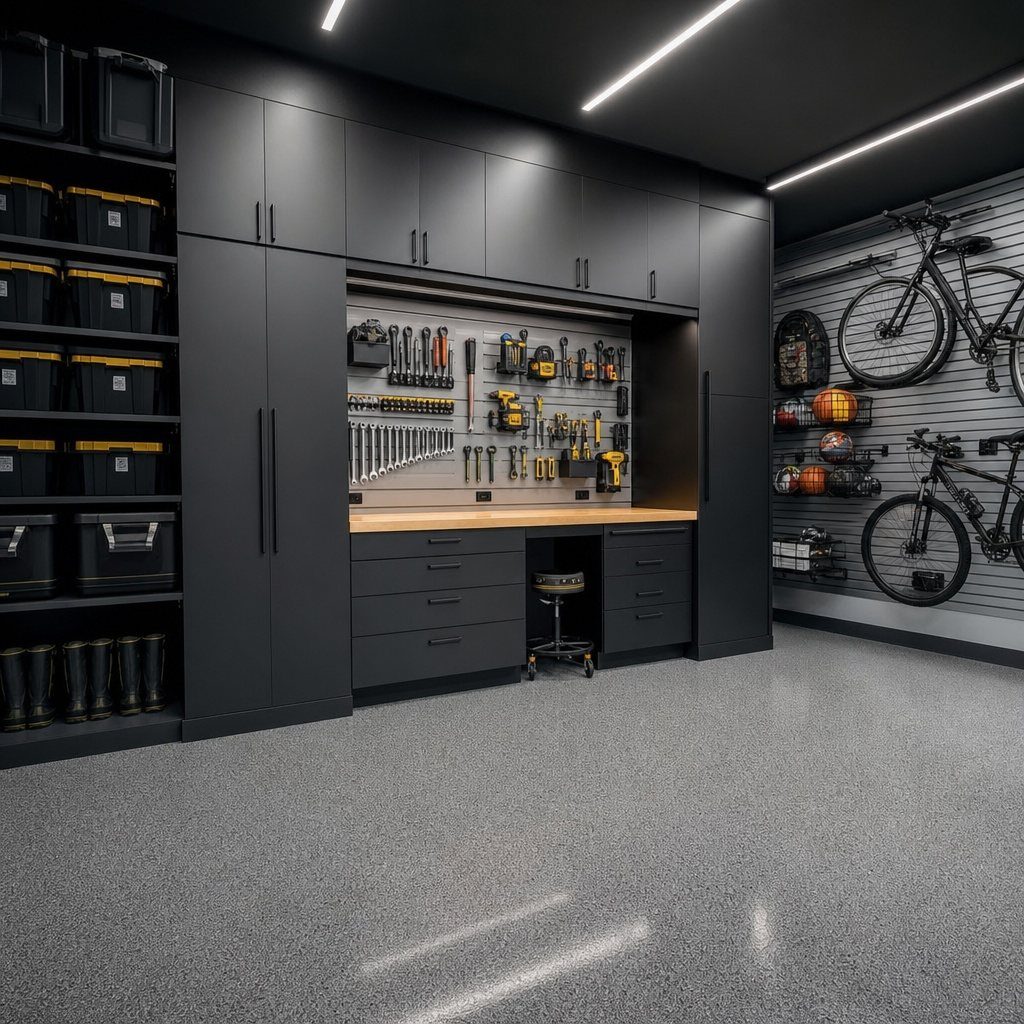
Slatwall panels let you move hooks and baskets as the seasons change without fresh holes in drywall. The black track against dark grey cabinetry keeps the tool wall from reading as clutter even when every slot is full.
12. Sports Equipment Storage
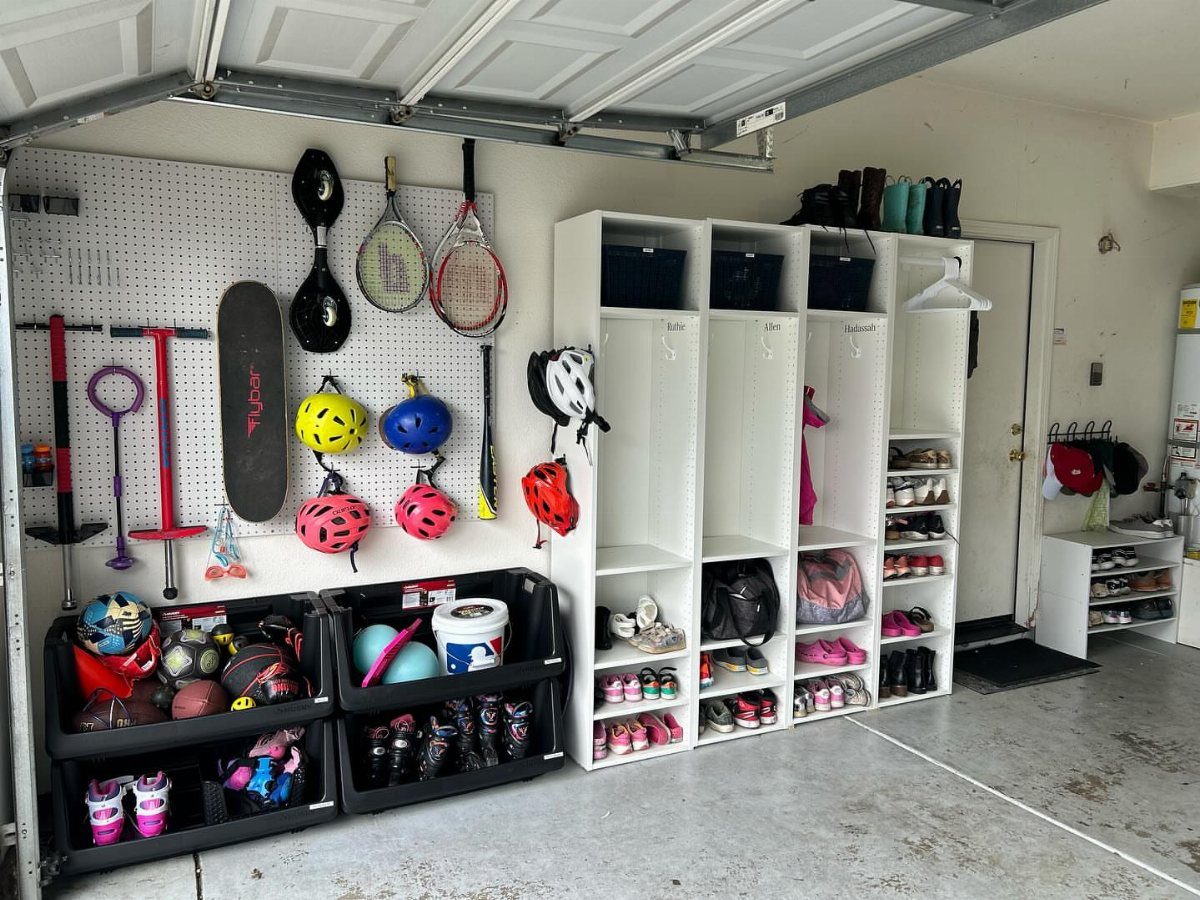
A pegboard for rackets and helmets plus stackable bins for balls keeps sports gear from colonizing the car’s parking spot.
I like the white cubbies beside the board; they give each kid a landing zone for the season they are in.
13. Big Cabinets
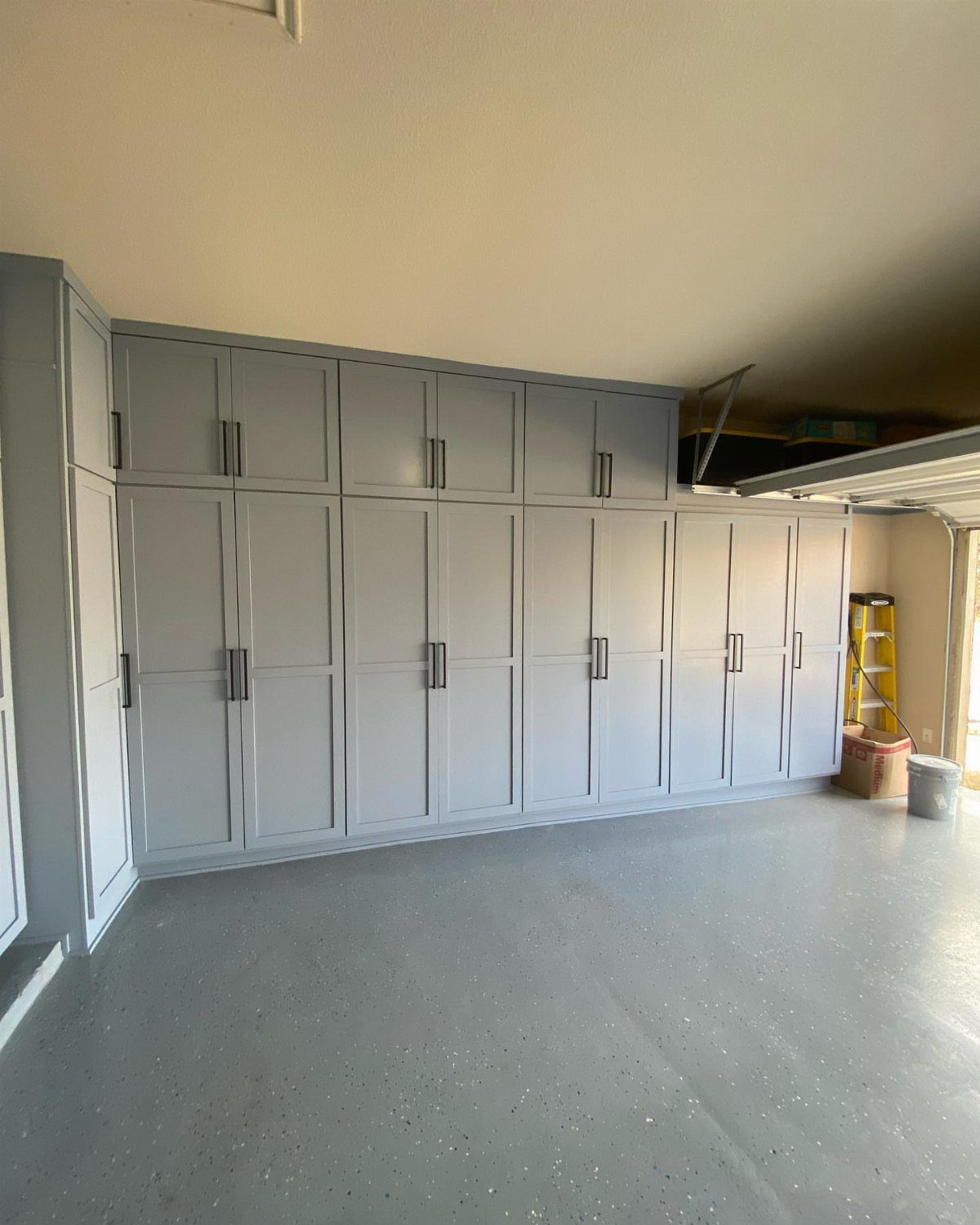
Shaker-style cabinets against one wall swallow the clutter that otherwise migrates to every horizontal surface.
I would frame these in place with 2×4 uprights and 3/4-inch plywood boxes rather than wrestle full units through a door; face frames hide the seams and give you something solid to mount hardware to.
Light gray paint keeps the mass from dominating a space that already holds a car.
Built to ceiling height, the top shelf catches holiday décor and the once-a-year tools that used to live in random piles.
14. Heavy-Duty Hooks
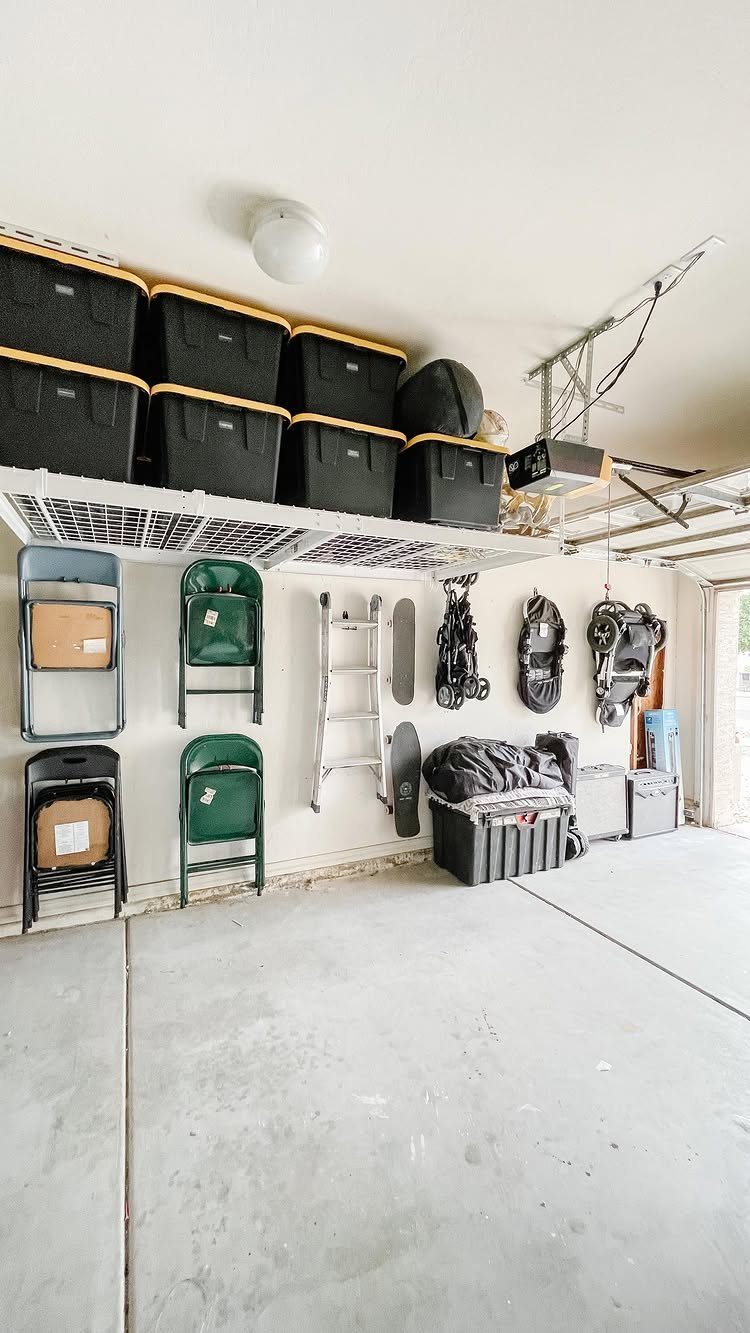
Wall hooks rate by what they will hold without bending: 50 lb for a folding chair, and noticeably more for heavier loads like a ladder or bikes.
I space them at staggered heights so the folded chairs nest without knocking, and mount into studs because toggle bolts in drywall eventually fatigue.
Overhead racks for bins plus hooks below turns one wall into full vertical storage. Leave enough clear floor beneath the chairs that the car door still opens wide.
15. Label Everything
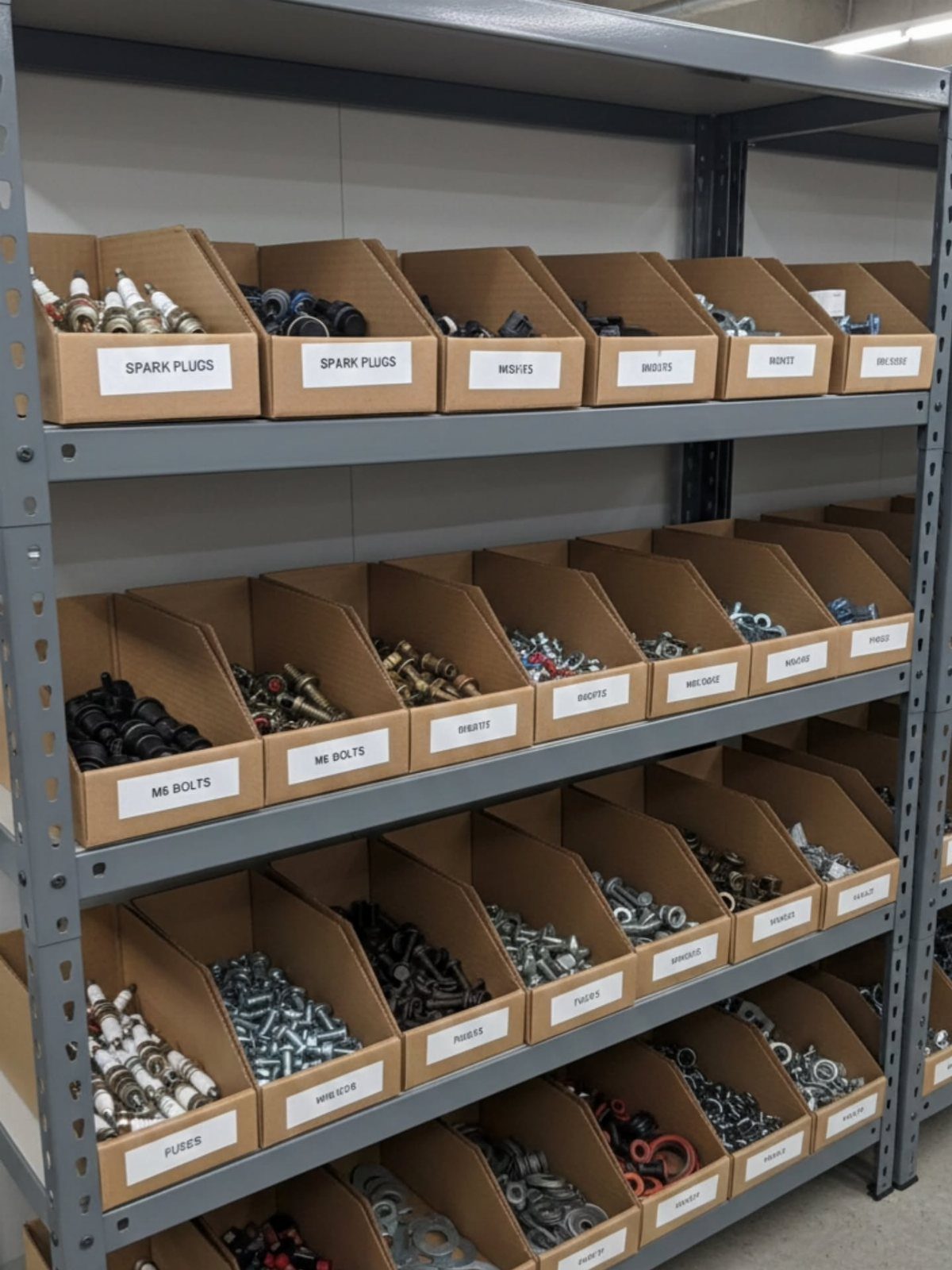
A label turns a bin of hardware into something a family member can actually find. I use a label maker for garage duty, not masking tape that curls in humidity; the adhesive holds through temperature swings.
Cardboard bins work for sorted hardware because the contents are light and the cost stays low.
For anything heavier or damp, I would swap to plastic and keep the same naming system. Print the label large enough to read from a step stool.
16. Use a Tool Chest
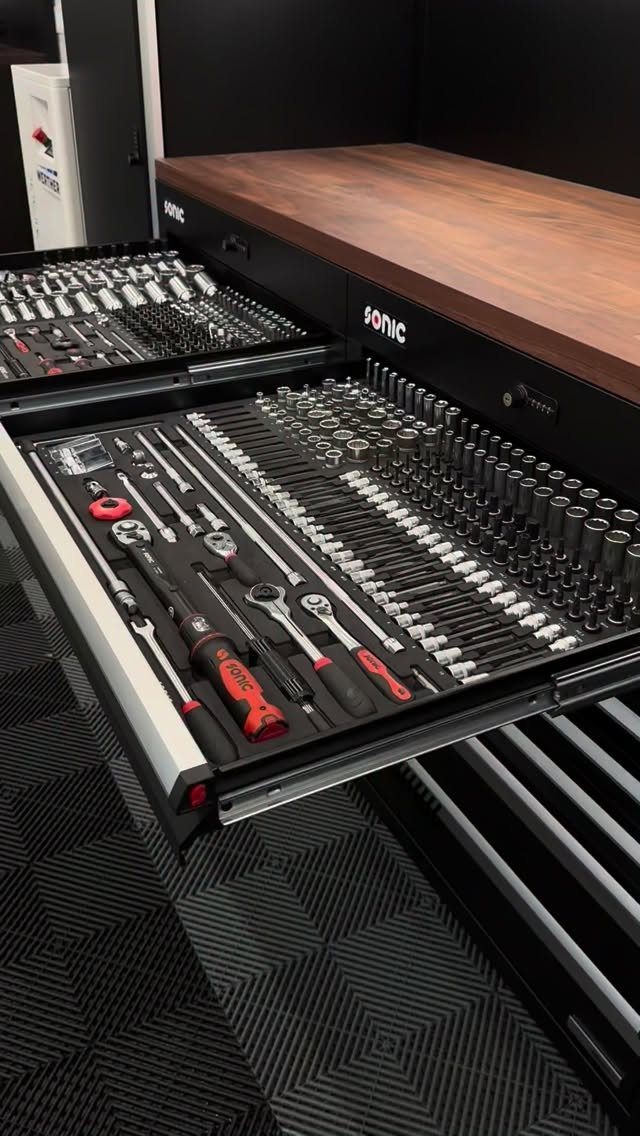
Foam cutouts for each wrench and socket mean every tool returns to one empty silhouette, and a missing piece announces itself before you need it.
I like the drawer depth in a chest like this; long wrenches lie flat without rattling, and the drawers extend fully so nothing hides at the back.
A wooden top on a metal chest gives you a work surface without sacrificing the box below. The casters matter more than most people think; a loaded chest that drifts while you lean into a bolt strips threads and tempers.
17. Store Lawn Chairs
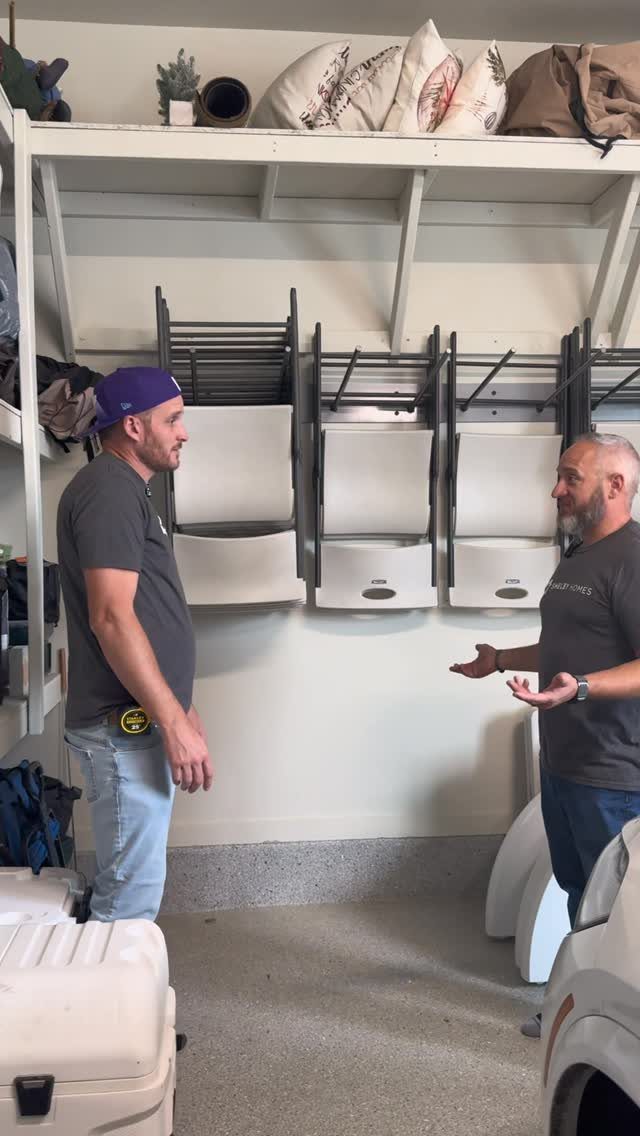
Wall racks for folding chairs keep the floor clear and the stack visible so you grab the right count for guests without unstacking.
I hang them high enough that the lowest chair clears the car’s roofline, and angle the rack so the seats tilt back, not forward into the wall.
18. Rolling Cart
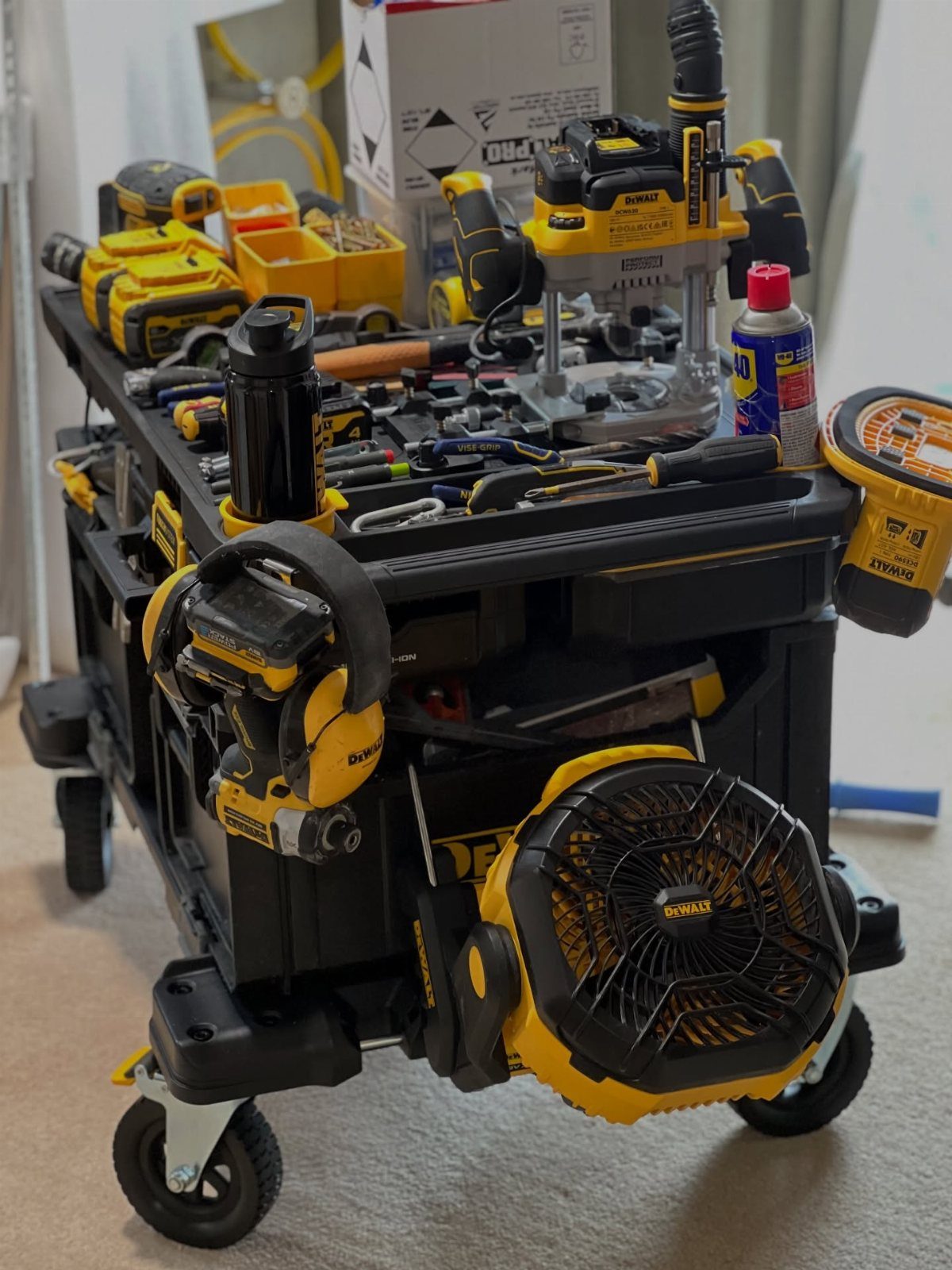
A cart that follows the project beats walking back to the wall for every other bit. DeWalt’s black and yellow line is easy to spot in a crowded garage, and the trays keep batteries from rolling under the workbench.
I load mine with the tools for the job at hand and park it back against the wall when done.
The casters need to lock; a cart that drifts while you are wrist-deep in a motor is a hazard, not a help. Keep a can of WD-40 in the tray; humidity gets to everything in a garage.
19. Ladder Organizer
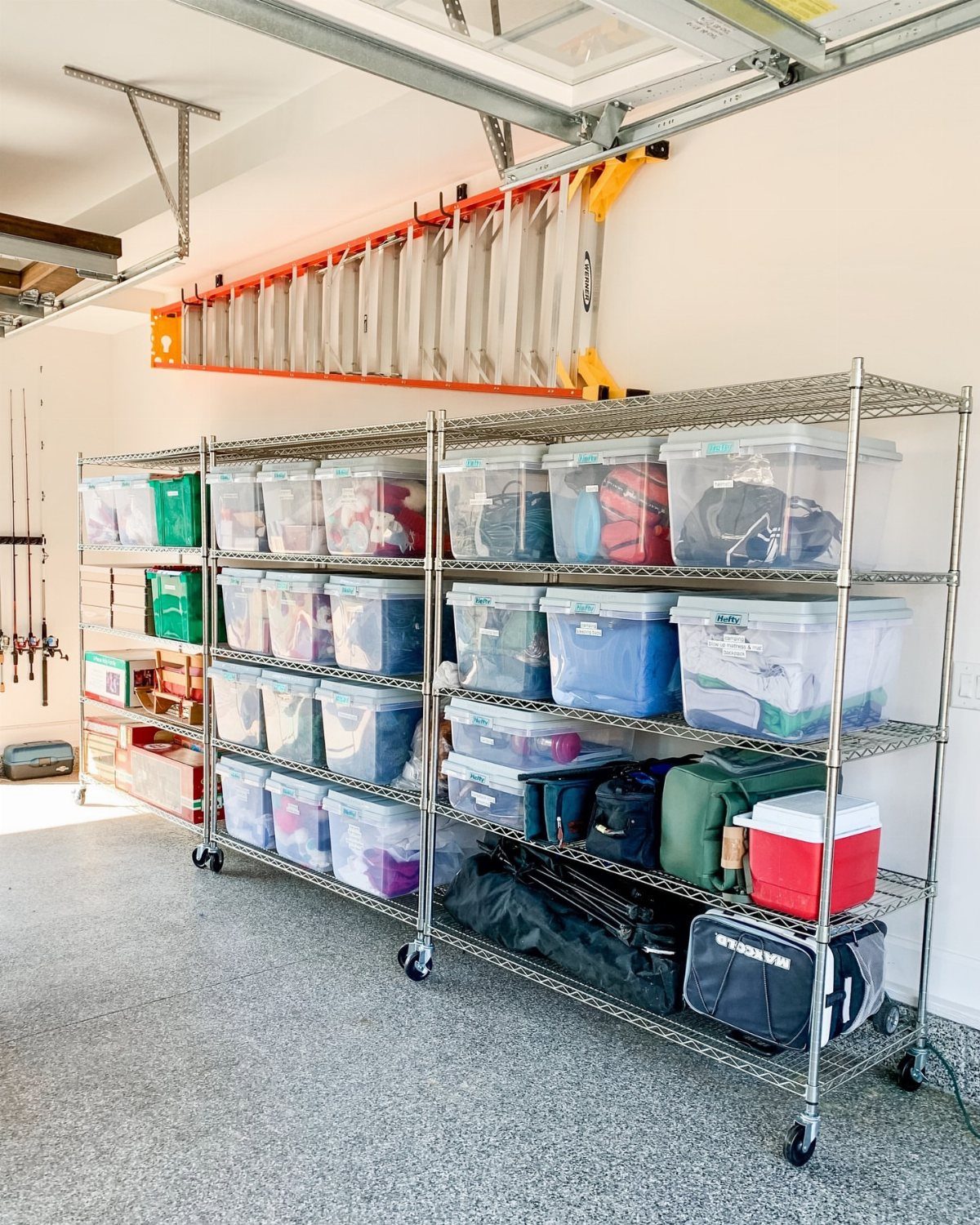
The orange Werner frame is an extension ladder right at the weight limit for solo mounting; for anything heavier, I would add a second pair of hooks for the middle.
I space the hooks at the ladder’s balance points, not its ends, so the load is even and the wall does not fight you when you lift it down.
Mount into studs, or lag bolts into blocking; the leverage of a long ladder will pull anything less free over time.
20. Lockable Cabinets for Hazardous Materials
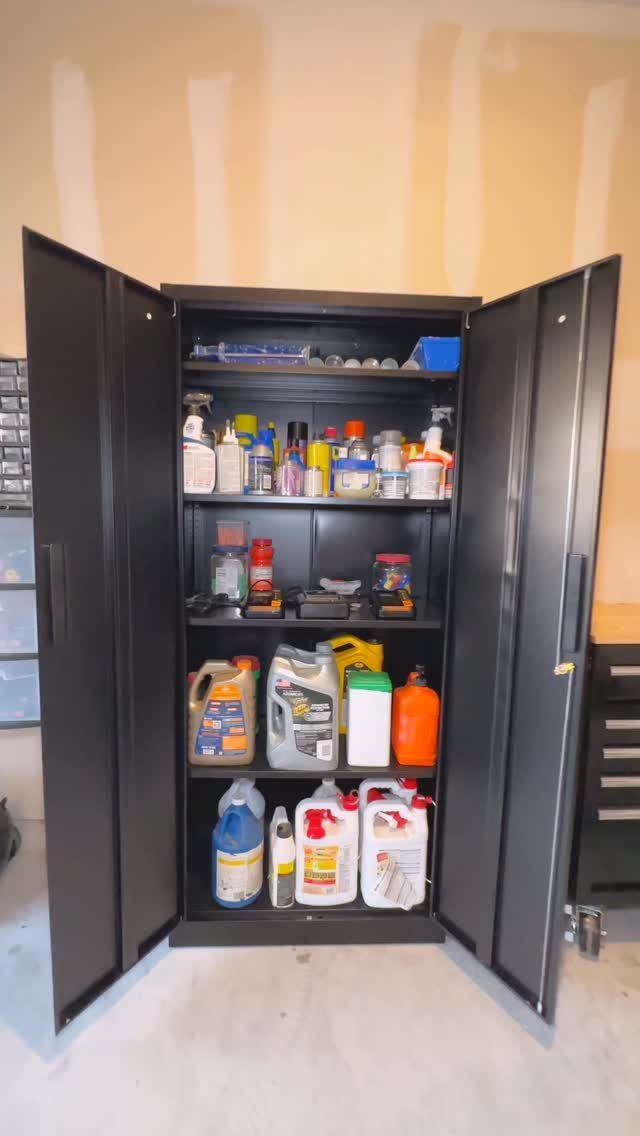
Locking chemical storage keeps it separate from kids and pets, and a black metal cabinet keeps its contents visible only when you choose.
I would store motor oil upright on the shelf, never the floor, and keep battery chargers on their own level so spilled fluid never reaches them.
The key stays with the person who does the buying, not the one who does the borrowing.
A cabinet tall enough for jugs this size runs heavy when full; bolt it to the wall at the back, or it will walk forward the first time a door swings.
21. Use Pegboards
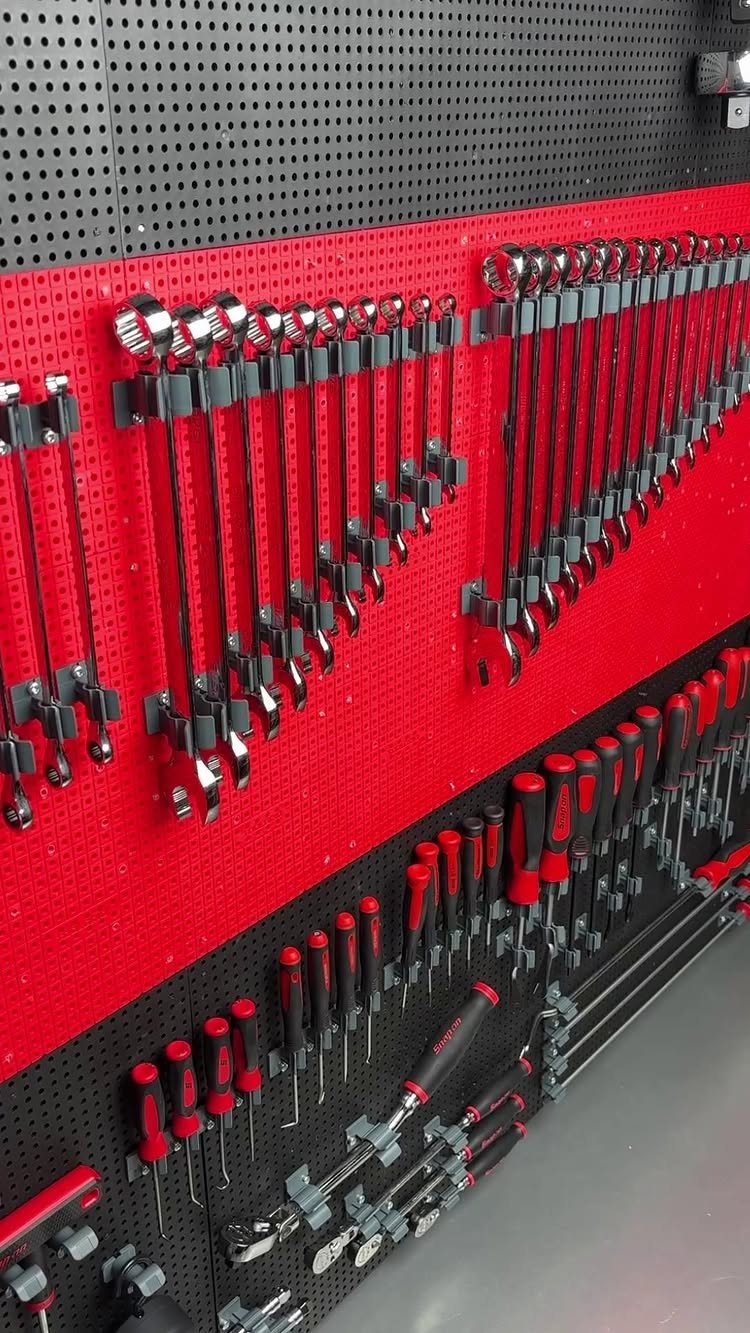
Red and black pegboards with color-coded zones let you build a system where metric lives on one side and SAE on the other, or where the tools for electrical work never mingle with plumbing.
I like the peg locks Snap-on includes; standard hooks vibrate free in a garage where the compressor kicks on.
Arrange by task, not by tool type: every wrench a brake job needs, clustered, beats a wall of all wrenches sorted by size.
Leave gaps. A pegboard packed solid is a pegboard you cannot update without rebuilding the whole thing.
22. DIY Fishing Rod Holder
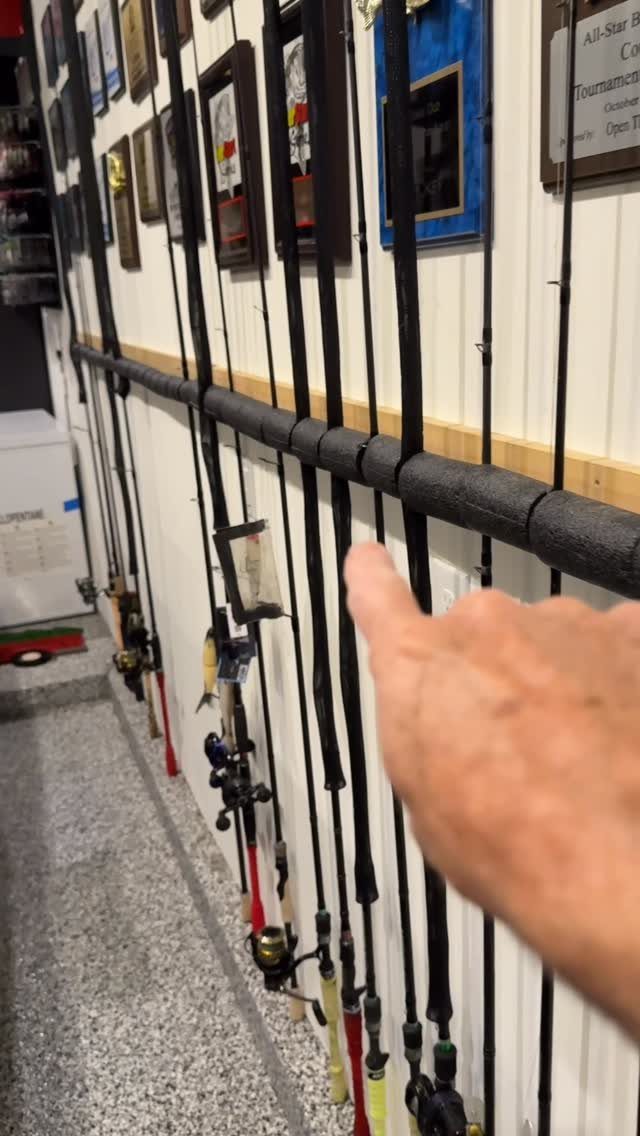
Slotted foam pipe insulation, the kind made for copper lines, grips rods without crushing the guides and costs less than any commercial rack.
Screw a wood strip to the wall for the holders; I would run that strip through a bath of boiled linseed oil to slow the garage humidity from swelling the grain.
Cut slots on one side only, not through, so the rod settles in and the foam keeps its shape.
Mount at working height for the tallest rod, angled slightly upward, and reels stay put without extra clips. For two-piece rods, store them assembled; the joint wears less than the finish does from repeated threading.
Safety and Clearance
Safety and clearance come before any shelf goes up. I leave enough walking room between parked cars and storage that I can walk normally; anything tighter turns a quick trip to the bin into a sideways shuffle.
Overhead mounting needs headroom too. Ceiling-hung ladders and hoists sit where the garage door track already sweeps, so I measure the open and closed positions before drilling a single hole.
Heavy items stay below shoulder height. A loaded bin on a high shelf asks for a ladder every time, and a ladder in a garage is one more thing to store.
I keep the weight on the floor or the bottom tier, and the seasonal stuff overhead where it belongs.
Door swing gets checked twice. A cabinet or rack that blocks the service door turns an emergency exit into an obstacle, and no storage system is worth that trade.
Regular Maintenance
A garage organizes itself back to chaos fast if nobody resets it.
I put a short block on the calendar Saturday evenings; the tools go back to their silhouettes, the cart rolls to its wall, and empty boxes break down before they become a second workbench.
Sweeping matters more here than inside the house.
Concrete grinds grit into casters and tracks, so I keep the broom where the work happens, not across the room. Kitty litter handles oil spills before they stain; a dustpan beside it means I actually use it.
Once a year I pull every bin and ask whether the tent poles inside match the tent I still own.
What fails that test sells or goes to donation. The space that returns is worth more than the guilt of keeping it.
Time Management
A full garage reorganization takes a weekend, not an afternoon, and planning for that upfront saves the half-finished purge that sits for months.
I start Saturday morning with the car out and the door up; daylight matters when you are sorting from one pile into four.
Breaking it into multiple sessions beats pushing through.
Saturday is declutter and sort; Sunday is install and place. The wall anchors still need a patient eye, and a tired one measures wrong.
I do not schedule projects in the same weekend.
A workbench build the same Saturday as a full zone sort means both finish rough. The reset routine starts that second Sunday evening, when the last tool is back and the system either works or shows where it buckles.
Frequently Asked Questions
How to declutter your garage?
Start by pulling everything into 4 piles: keep, donate, sell, and trash. The keep pile goes back only after you have measured where it will live, so you do not end up re-stacking the same clutter on new shelves.
Block out a full day at minimum; half a weekend is better, because the sort stage and the install stage both need daylight and a clear head.
What shouldn’t be stored in a garage?
Paint cans and electronics do not survive temperature swings in a space that has no insulation; condensation ruins circuit boards and heat degrades latex.
Pet food in cardboard attracts rodents, and cardboard itself grows mildew where concrete meets humidity. Anything you value enough to keep belongs in a bin with a lid, or inside the house.
Can AI help me organize my garage?
I work with my own hands on these projects, so I have not tested AI tools for garage layout.
A tape measure and a Saturday morning of walking the space still tells me more than any program about where the door swings and how much headroom the open garage door leaves.
Does organizing your garage make it easier to clean?
Yes, because open floor space lets a broom move freely and every tool has a path back to its place. The weekly reset goes fast when each item already has a home, instead of burning time deciding where things belong.





