
These DIY garden projects run from a half-hour with scrap wood and spray paint to a full afternoon for raised beds, with most finishing inside a single weekend.
Each one has a failure mode you can already picture and accept: tin cans that rust by season’s end, fabric pockets that rot every second year, moss that demands daily misting in August.
I judge a garden project by whether it teaches you something you can use again: the church key for clean cuts, the clove hitch for tension without hardware, the washer glued off-center to keep a painted mushroom from spinning in wind.
[link-whisper-related-posts]1. DIY Garden Trinkets
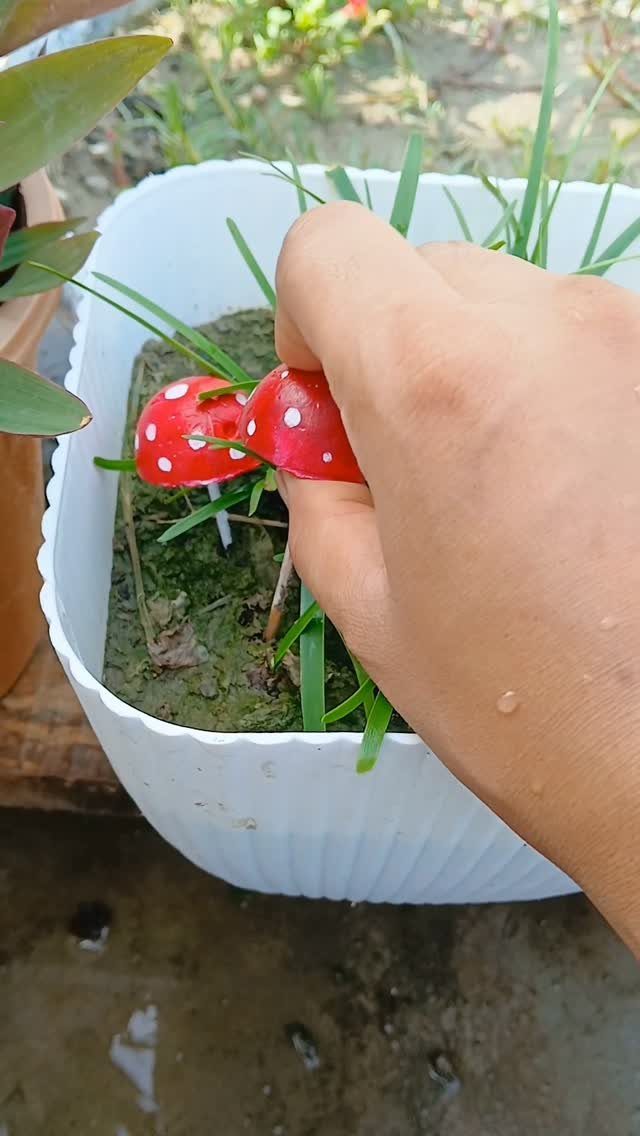
A few painted wood slices on skewers turn leftover scrap into the kind of garden marker that actually makes me want to weed.
Red caps with white dots read instantly from across the yard, and the flat underside of each "mushroom" stays dry enough to hold paint for years.
I drill the hole off-center so the cap tilts as it settles; a washer glued underneath keeps it from spinning in wind.
Total cost is whatever spray paint runs you, plus a half-hour with a jigsaw on pine scraps too knotty for anything else.
2. Painted Tin Can Planters
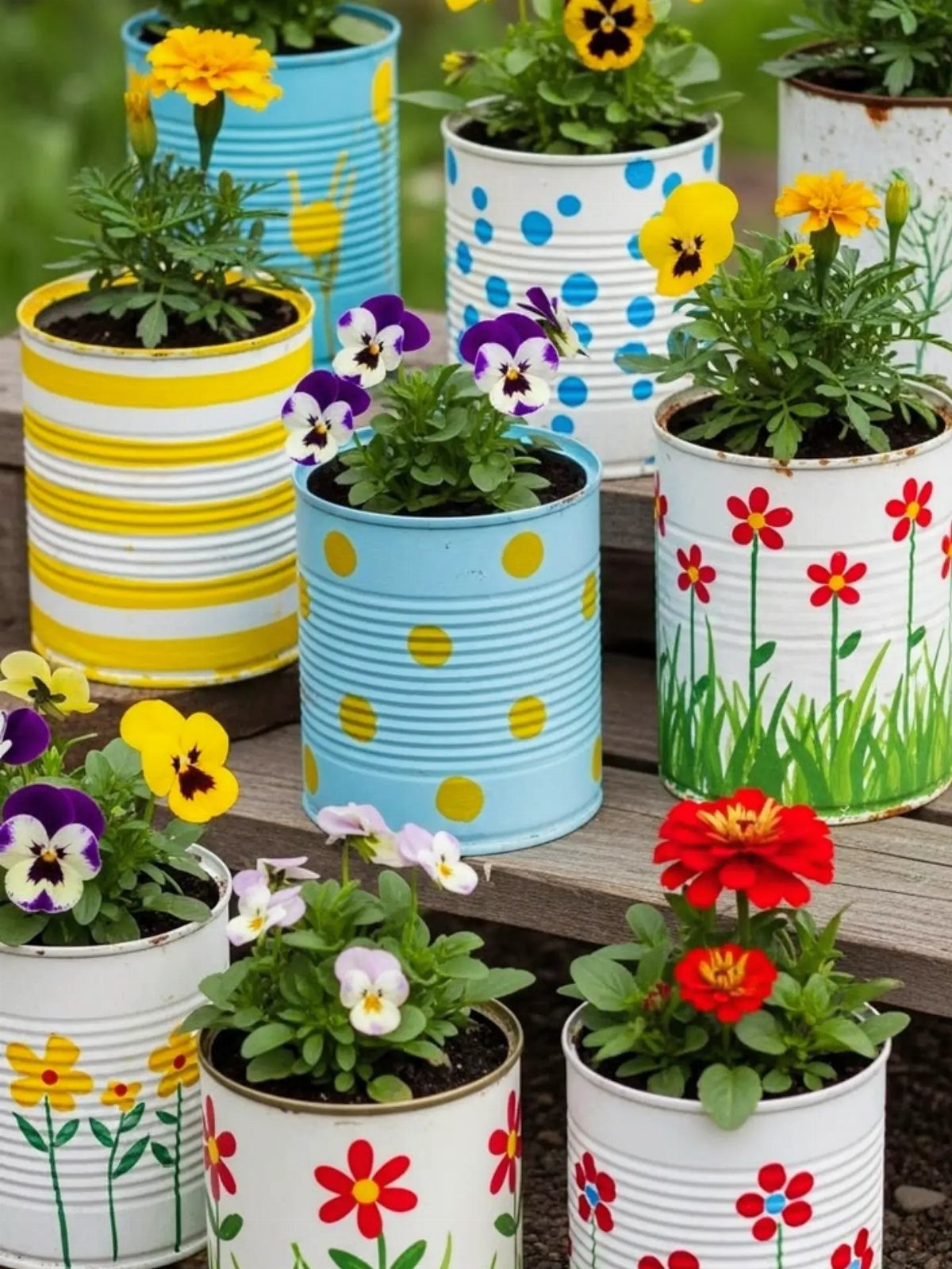
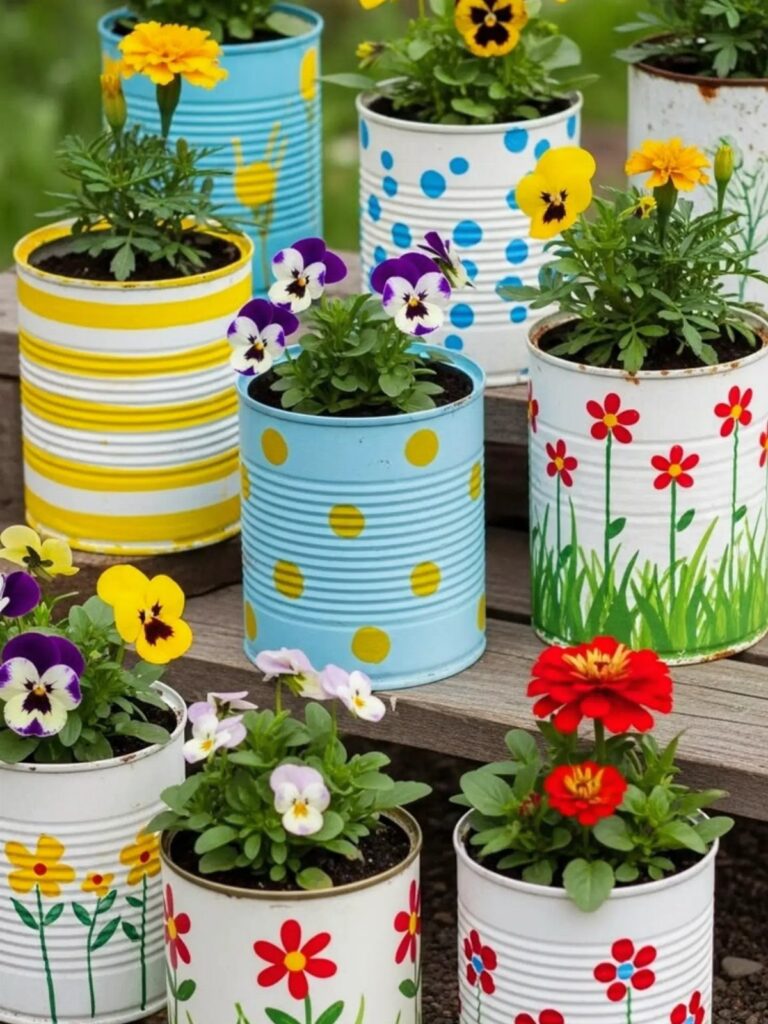
Tin cans survive one season outdoors before the rim rusts, which is longer than most annuals need anyway.
I punch three holes near the top rim with a church key, thread wire through for hanging, and lay down two coats of exterior paint over sanded metal so the finish doesn’t chip when I bump them against the stairs.
The size matters more than the pattern: standard coffee cans hold dwarf marigolds and trailing lobelia without tipping, while soup cans dry out too fast in midsummer sun.
I keep a drip tray underneath, rust stains being harder to lift from decking than from wood.
3. Raised Garden Beds
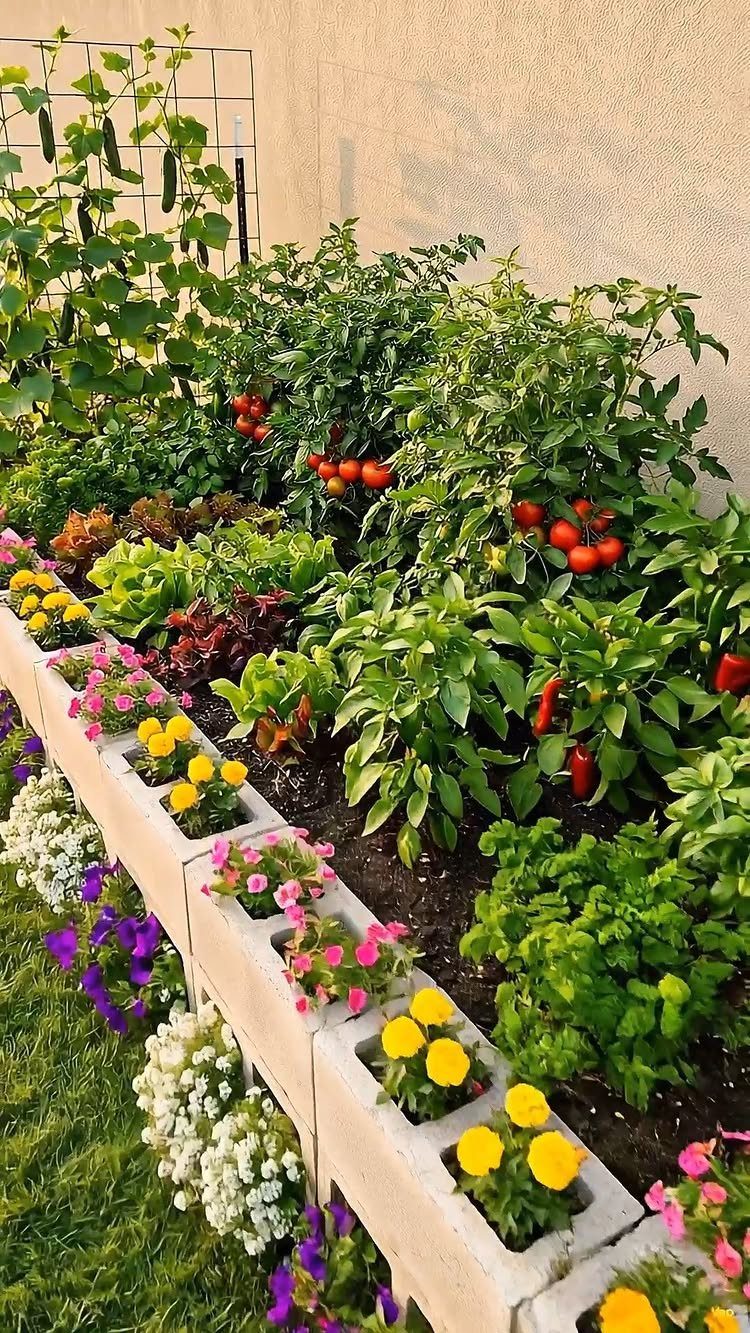
Cinder block beds warm faster in spring because the thermal mass collects daytime heat, a real advantage where I garden in zone 6 with last frosts into May.
The holes become their own planters: shallow-rooted nasturtiums and trailing strawberries where depth doesn’t matter, soil blocks or nursery pots dropped inside where it does.
I lay cardboard under the first course to suppress grass, then stack two high for a comfortable working height that saves your back.
The top course needs half-blocks staggered at corners or the wall drifts; I rent a splitter for an afternoon rather than wrestle a hammer through hollow block.
4. Stacked Terracotta Pot Water Fountain
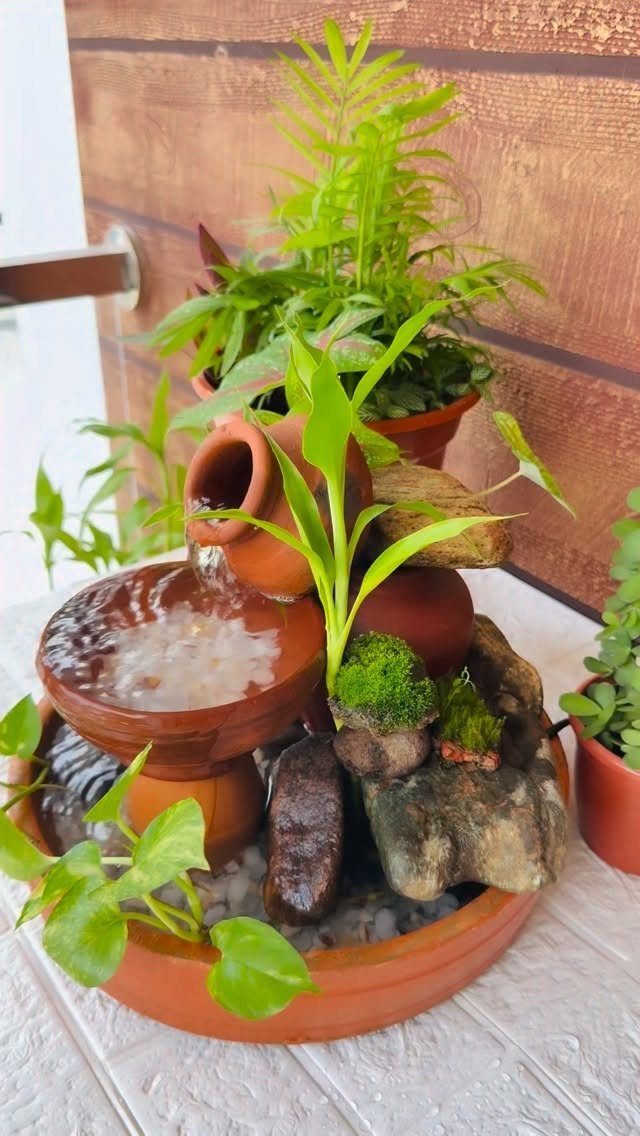
A small pump in the bottom pot pushes water up through a hidden riser pipe, which is the single part no terracotta vessel provides on its own.
I use a small pump, barely more than an aquarium needs, because the head height here is low and too much flow splashes out the shallow saucers.
Moss on the rim needs misting daily in August; I swap it for something succulent and gray if I want to ignore the thing for a week.
The sound changes with each drop height I test, and I spend longer adjusting saucer angles than assembling the stack.
5. Pallet Vegetable Garden
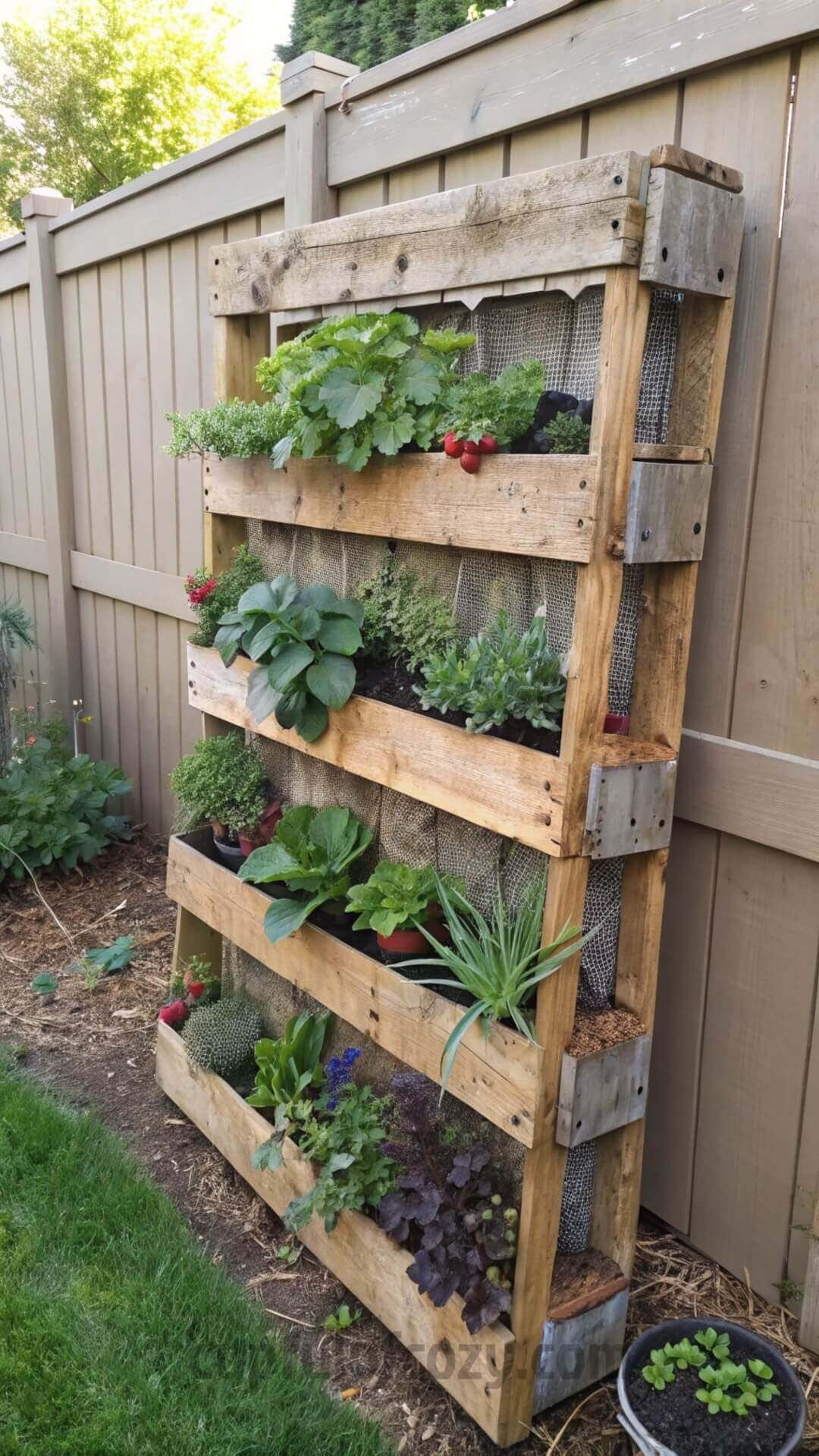
Vertical pallets read as tidy from the street side where my fence faces traffic, but the back is always a mess of landscape fabric stapled to hold soil in open slats.
I mount with the slats running horizontal so pockets form naturally, then staple a double layer of fabric inside each opening before filling with potting mix, not garden soil, which compresses too much against the weight.
Root crops fail here; lettuce, spinach, and compact basil do not. I replace the fabric every second season, the constant wet-dry cycle rotting it faster than I expect.
6. Mini Herb Garden Planter
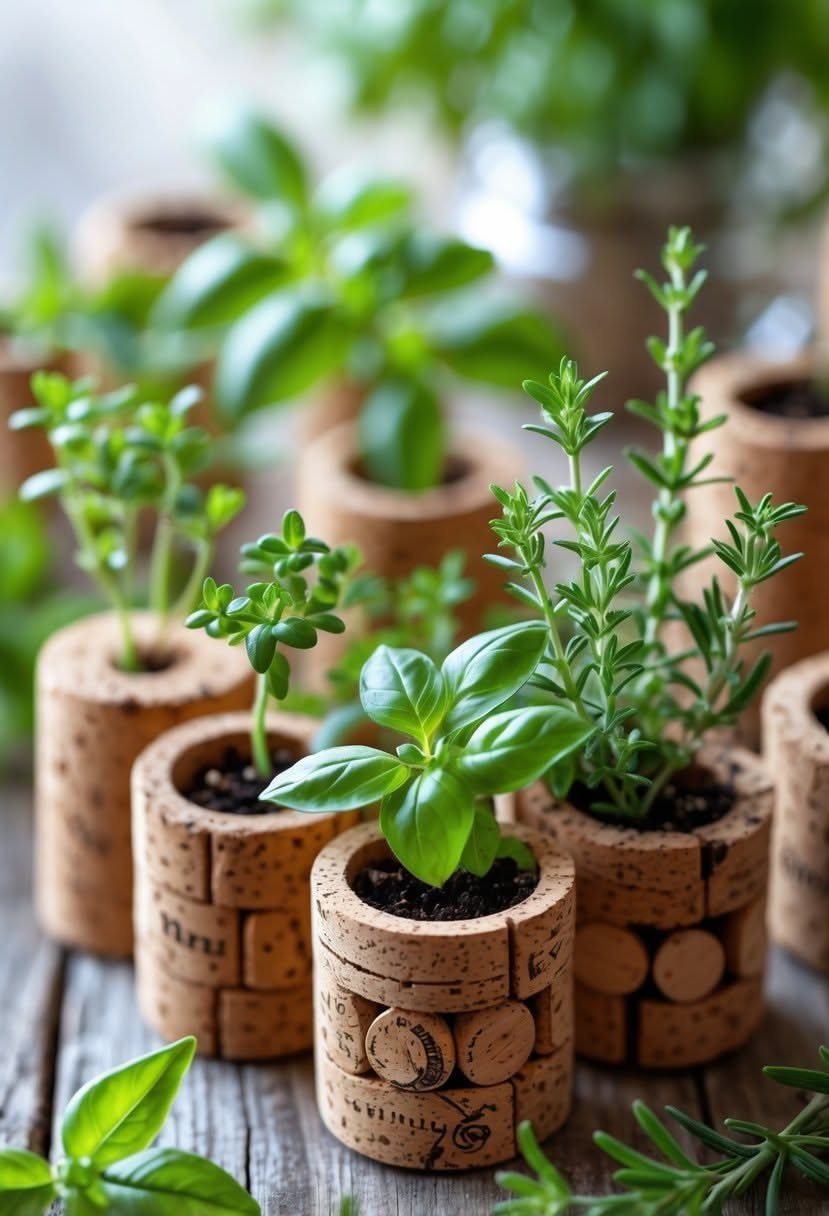
Wine corks rot slowly enough to last a summer, which is all most kids need before the thyme outgrows the container anyway.
I hollow the top with a sharp paring knife, staying shallow; herbs root downward faster than sidewalls can hold soil once water softens the cork.
A shallow wooden tray keeps the collection from rolling, and morning sun on a windowsill does the growing. Oregano and compact thyme stay small enough to work; basil wants deeper soil and wilts fast in something this size.
The planting goes fast enough that kids old enough to hold a spoon can manage the scooping. I soak corks overnight first so the knife bites cleaner and the stopper doesn’t split.
7. Bean Teepee Play Tent
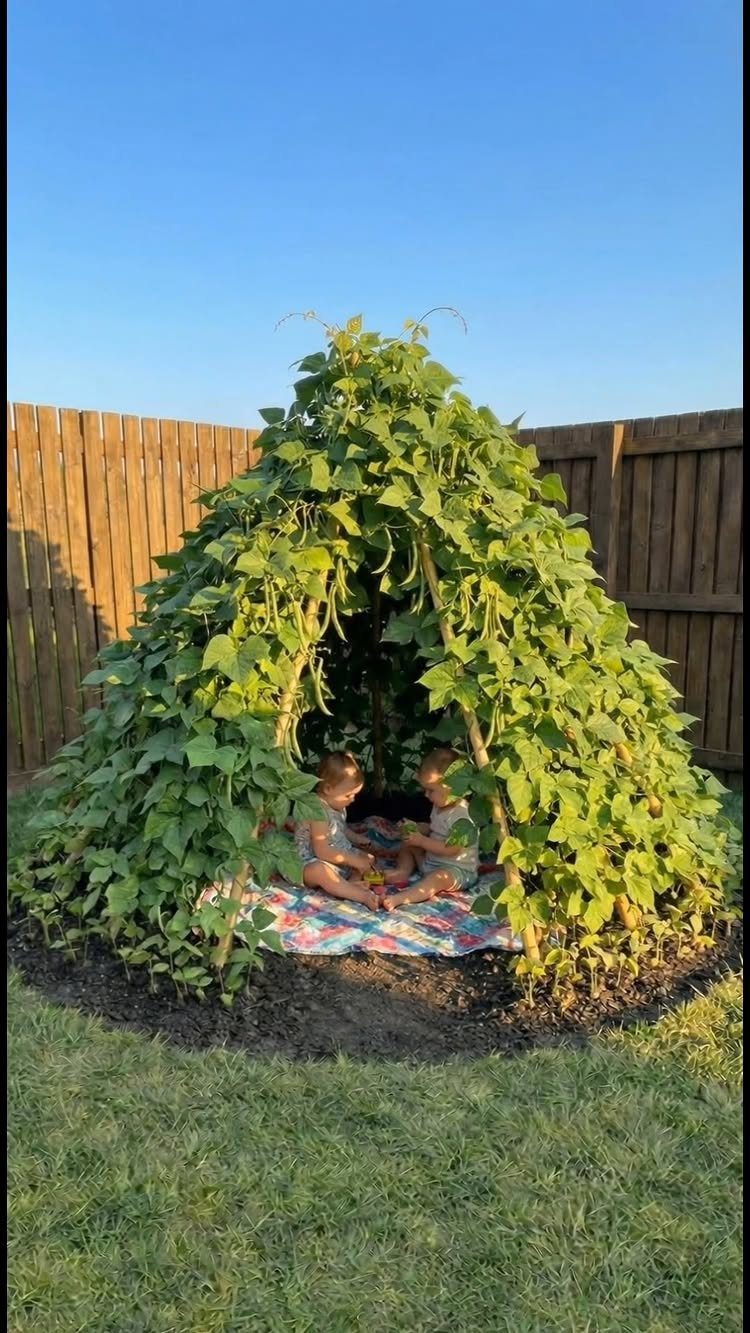
Bamboo poles lashed at the top with twine make a frame light enough to move before the beans climb, sturdy enough to survive a summer of kids crawling through the door.
I lash with a shear lashing: twine wrapped tight around both poles where they cross, then looped between them to lock the angle.
String runs from each pole to the ground in spirals so the vines find their way up without guidance.
Scarlet runner beans reach the top fastest and hang long enough for small hands to pick; bush beans would mound around the base instead of enclosing the space.
Plant after the soil warms and frost risk has passed, or start indoors if your season runs short.
The poles store flat for winter, and once the twine frays beyond re-lashing you can pull the whole thing apart and send the kitchen-garden bean vines to the compost pile.
8. Hanging Flower Baskets
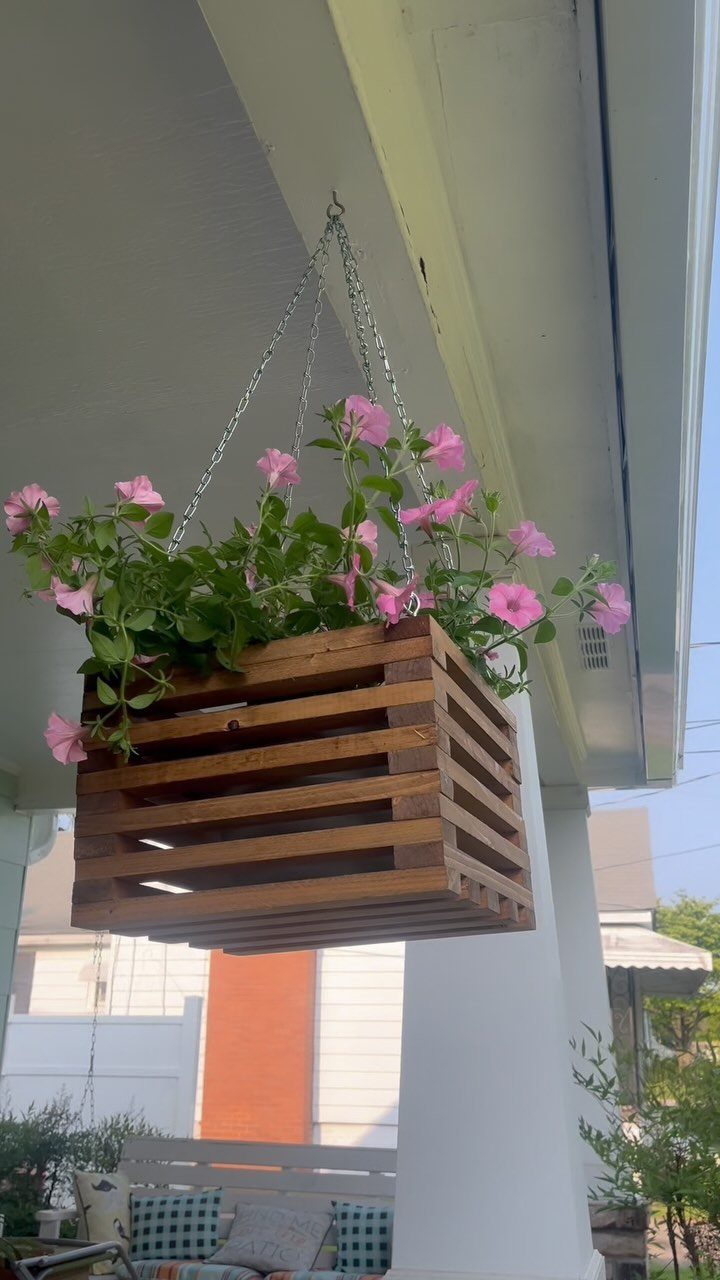
A slatted box suspends better than a plastic pot because the weight distributes across multiple chains instead of one hook, and the wood breathes so petunias don’t stew in trapped water.
I line with coconut fiber, not solid plastic, so drainage runs free and roots get air. The fiber sags a little; I pack it fuller than I would soil alone so the surface stays level after the first waterings.
Chain length sets the working height: pick a drop that clears most heads on a standard porch, shorter if your ceiling is low and you pass underneath daily.
Petunias fill out fastest from nursery starts planted edge to edge; seeds bloom too late for the season most readers have left.
I feed weekly, the confined soil exhausts itself by August otherwise, and I split the box off its chains before frost to store it dry.
Budget-friendly Materials
The cheapest garden projects start with what you already throw away.
Tin cans stack in most kitchens by the dozen; pallets ship free to anyone who asks a receiving dock. Tree trimmings yield wood rounds for markers with one phone call to an arborist who needs somewhere to dump chips.
Terracotta pots crack in frost and sell for pennies at spring yard sales; the saucers work even when the pot does not.
River stones fill the bottom of a fountain for nothing if you live near any running water, though quarried pea gravel drains better if you buy it.
Coconut fiber liner comes in sheets that outlast sphagnum moss and cost half as much per season once you cut your own dimensions.
Paint is where the budget goes if you let it.
Exterior spray covers metal in two thin coats; one can handles a season’s worth of cans and markers both. The same church key that opens soup punches hanger holes, so that tool costs nothing extra.
Beginner-friendly Projects
The mushroom markers ask only that you keep a jigsaw steady long enough to round a corner; practice on scrap until the cut feels smooth before you work the real thing.
Lashing bamboo poles with twine takes no knot beyond a clove hitch, and gravity locks most of the tension for you.
The fountain sounds technical because of the pump, but the physics are simple. Head height is just how far the water climbs; the pump label lists it honestly, and most small pumps handle a three-pot stack with force left over.
Electrical cord gets buried if you want, or runs along the pot rim in daylight. GFCI on the outlet, always; the rest is plugging it in.
Fabric pockets in a pallet fail eventually, which is information, not a mistake.
Replacing them every second season is maintenance, not repair. That distinction matters because it frames failure as expected and scheduled, which is easier on a beginner than surprise rot in September.
Family-oriented Activities
Kids need 2 things from a garden project: a result before boredom sets in, and permission to make dirt.
Wine cork planters deliver both. A spoon handles the soil once the hollow is cut, and thyme sprouts fast enough that kids don’t lose interest before something green shows.
Bean teepees frame the garden into a room children can claim.
The lashing at the top is adult work; carrying poles and winding ground-level string is not. The door stays open by default because poles splay slightly; no precision required.
Watering a fountain garden of moss and stones gives younger kids a spray bottle task they cannot overdo.
The daily misting in August is responsibility with a clear signal: moss curls when dry, uncurls when wet. That visual feedback teaches more than most chore charts.
Frequently Asked Questions
What are the easiest DIY garden projects?
Painted tin can planters and mini herb gardens in hollowed wine corks are the simplest starts.
For the least effort at real impact, I reach for two things: tin cans punched with a church key for hanger holes and brushed with two coats of exterior paint, or a wine cork hollowed out with a sharp paring knife and set on a sunny windowsill.
Both go from raw material to planted in under an hour, and the materials cost nothing if you already drink coffee or wine.
What are some creative garden crafts I can make from junk?
Tin cans, wine corks, scrap pallet wood, and cracked terracotta pots from yard sales all become garden pieces that work.
I use cans for hanging annuals, corks for kid-scale herb planters, and pot saucers stacked with a cheap pump for a running fountain.
The only cost is paint and a small pump; the rest is material most households throw out or find for pennies.





