
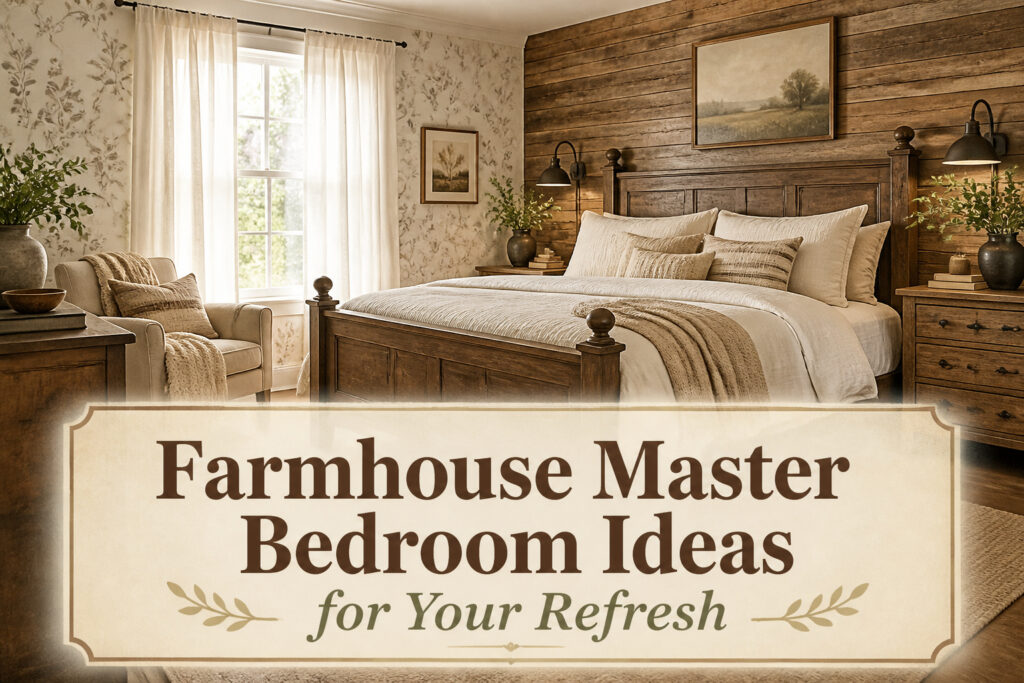
A farmhouse master bedroom refresh in 2026 runs from a $40 peel-and-stick wallpaper roll to a full reclaimed wood accent wall that eats two weekends and still splinters. The deciding factor is not budget but patience: whether you can live with a test paint swatch for a week before committing, or need a room finished by Sunday night.
The ones that hold up skip the themed restaurant look and let the dents stay. A Beverly King Bed in dark stain, bought sight unseen after twins arrived, became the first "grown up" piece its owners could imagine passing down. That permanence is what separates farmhouse from trend.
[link-whisper-related-posts]1. Neutral Color Palette
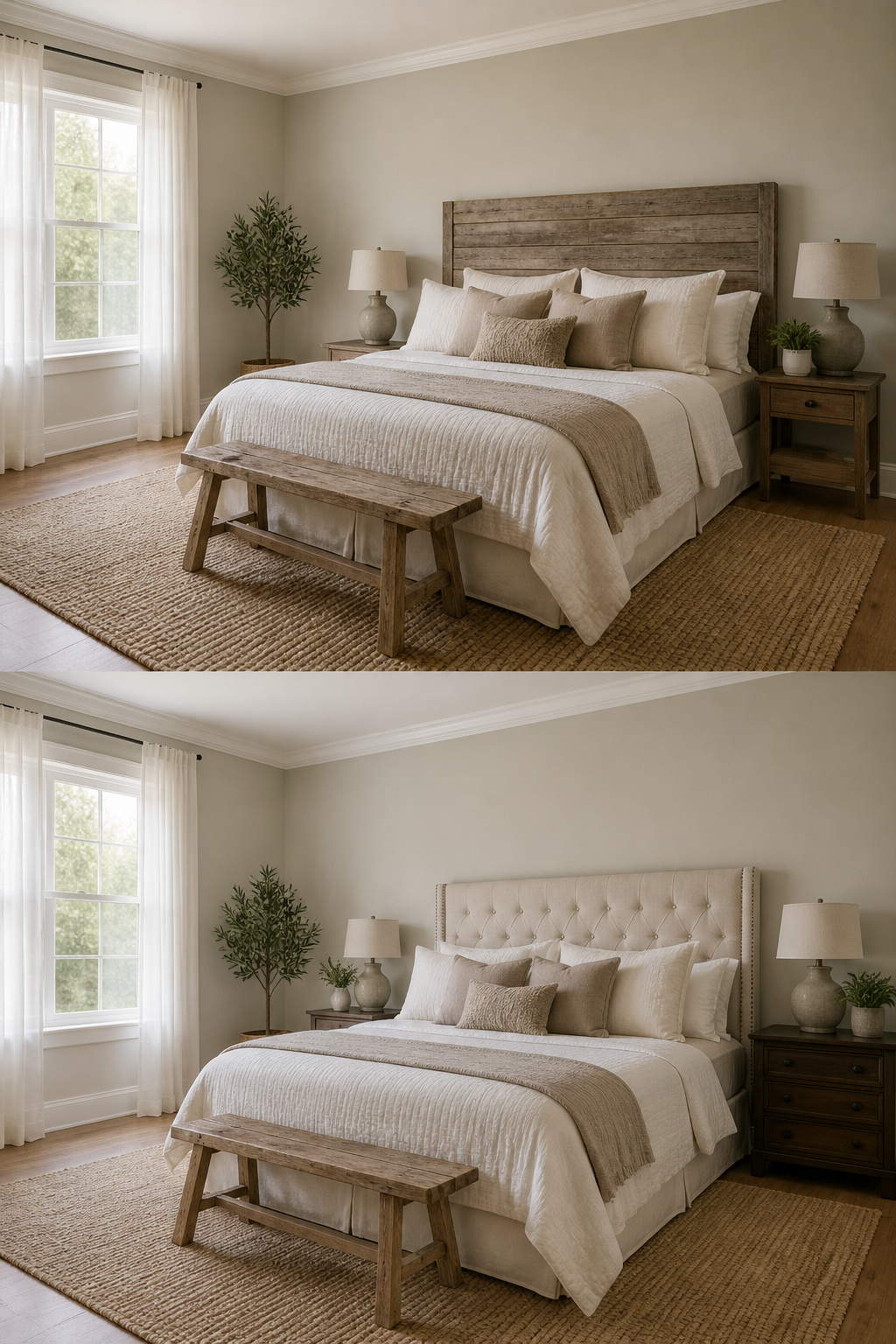
Soft whites, creams, and muted earth tones form the backbone of a farmhouse bedroom that still feels livable a year in. The goal is a wall color that reads as something in morning light, not just a safe blank. Two options worth testing: Benjamin Moore Heirloom, described by the company as an incandescent shade of peach with gentle pink undertones, and Sherwin Williams Repose Gray, a warm gray that stays soft instead of going cold.
Heirloom is the riskier choice. One homeowner who used it in their master bedroom found it read far pinker than peach in their actual light, to the point they added navy accents trying to balance it out. That contrast wore thin. Repose Gray, by contrast, has become a go-to for people who know they’ll sell or rent soon; it photographs clean, works with wood tones and white bedding, and lets hardware or a ceiling fan carry the personality.
My take, reading through enough of these rooms: if you want the wall to do the work, test Heirloom on a full wall and live with it for a week. If you want the bedding and weekend projects to stand out, Repose Gray leaves the room open without feeling empty.

【Rustic King Size Bed Frame】The 49.2" barn door headboard and matching footboard bring warm rustic character to this king size bed frame for master bedrooms and country homes.

【Warm Rustic Farmhouse Look】The 49.2" barn door headboard and matching footboard make this full size bed frame a warm rustic bed frame for guest rooms, teen rooms, and country bedrooms.
2. Natural Materials
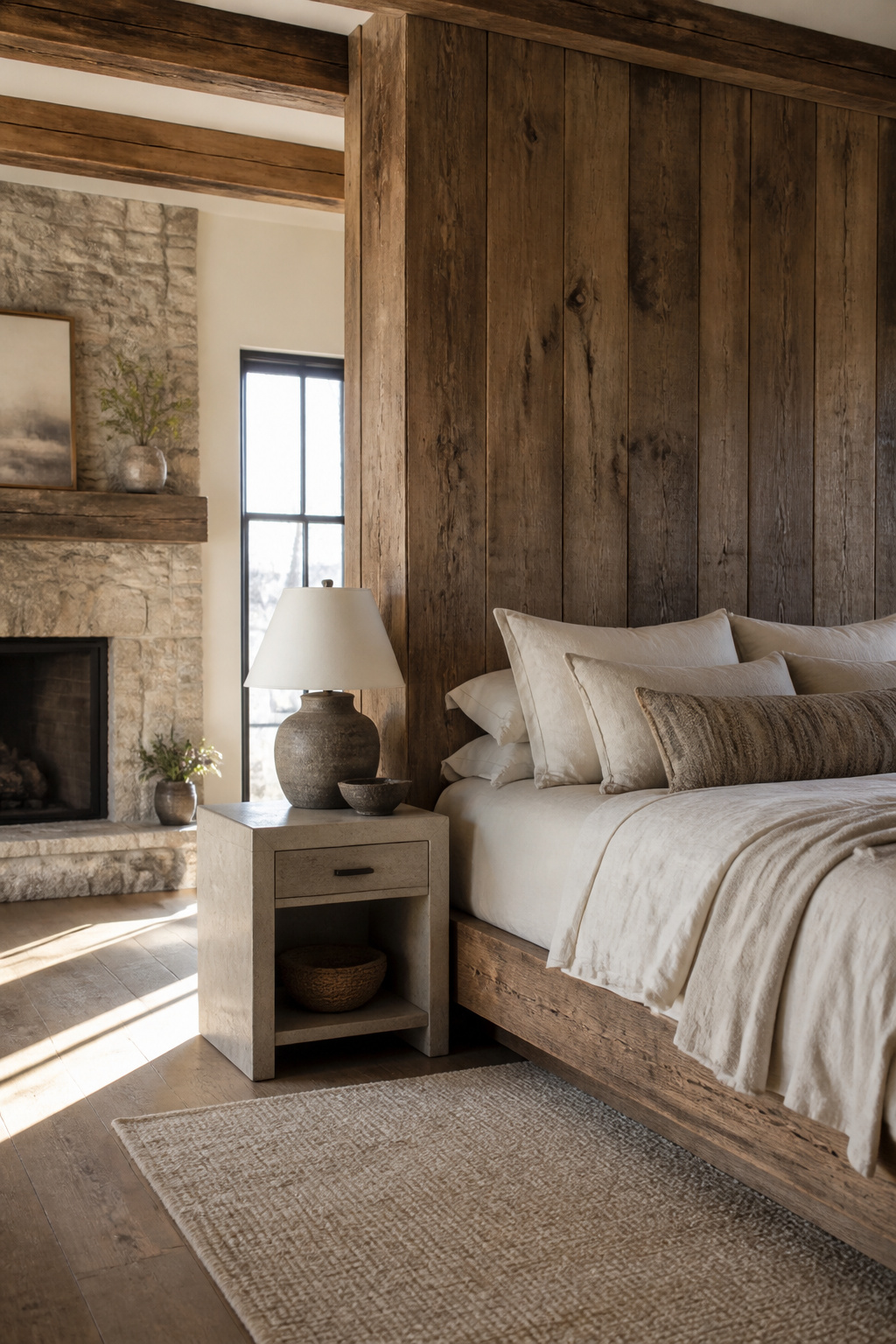
Wood, stone, and linen each do different work in a farmhouse bedroom, and knowing which goes where keeps the look from turning into a themed restaurant. Reclaimed barn wood belongs where you see it on waking: a headboard, the wall behind the bed, or ceiling beams overhead. The grain carries the room, and the dents and knots that would disqualify it from a furniture store are exactly what you want. A smooth painted finish in soft white or cream reads more Scandinavian than farmhouse, so skip that unless you are deliberately mixing styles.
Stone works best as an accent, not a feature wall. A brick or stone fireplace surround, if you have one, grounds the room without competing with the wood. If you do not have masonry in place, a stone-topped nightstand or a single stone shelf gives the same weight for less labor and no structural commitment.
Linen is where the budget opens up. Real linen bedding softens with washing and never looks pressed, which is the point. It layers well against the harder surfaces and keeps the room from feeling like a cabin. Source it from discount home retailers or end-of-season sales; the slight irregularities that make linen desirable hide in lower price points just fine.

COLORS CRAFTED BY ANNIE SLOAN: Canvas is a slightly warm neutral beige-white. The name reflects the versatility of the color, which will make a fabulous backdrop for other colors (and invite the addition of colorful furniture, contrasting trims, and other artistic interior additions!). It’s Original without the creaminess, more of a putty taupe. This shade has been developed to match a color mix of Chalk Paint in Country Grey and Pure.

Paint Swatch Card: our paint color card helps you pick the best paint color for your next DIY project

Premium Wall Art Prints – Crafted with professional printing technology, these posters feature vivid colors, sharp details, and a canvas finish that instantly elevates your walls while adding warmth and character to your home décor
3. Layered Textures
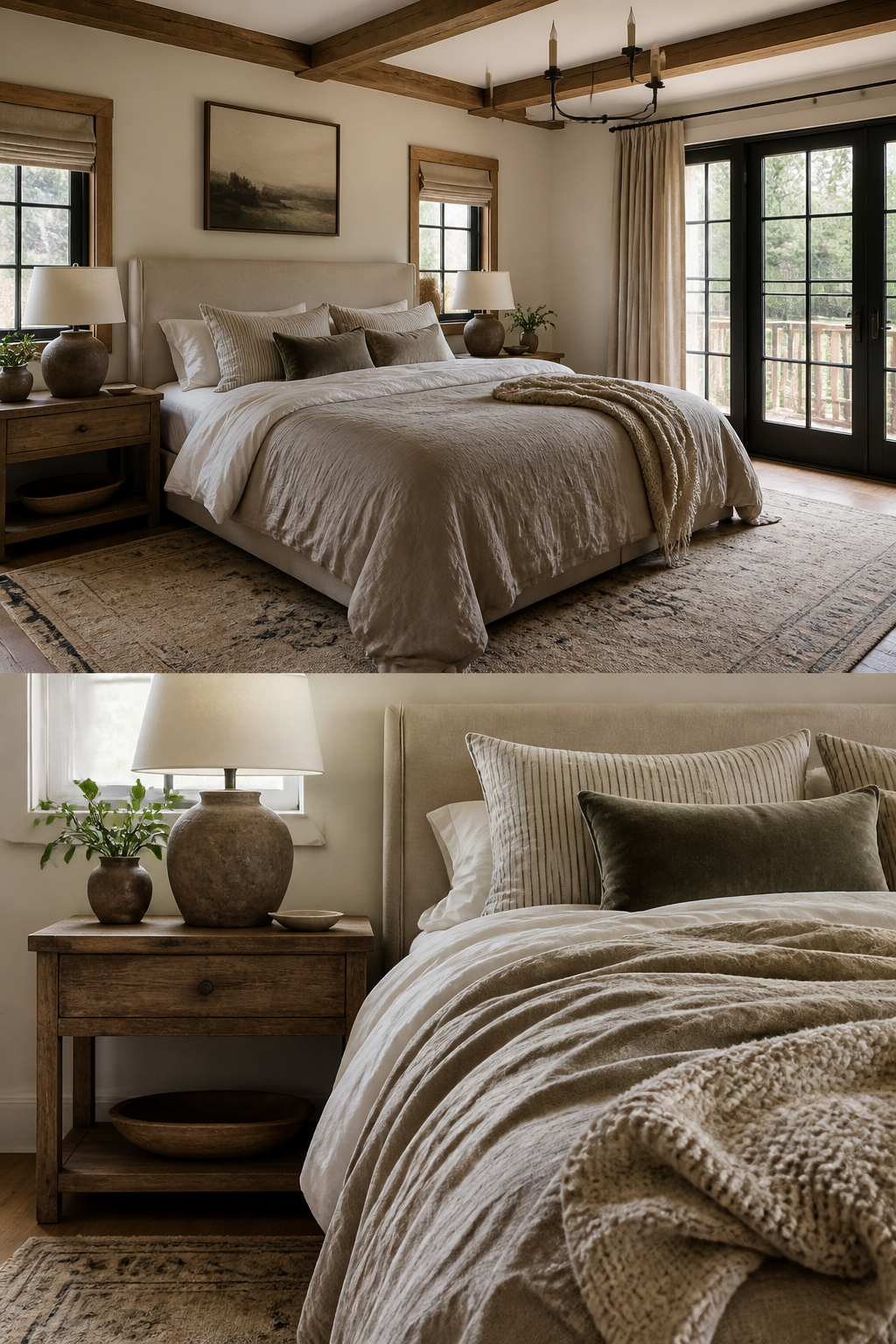
A farmhouse bed earns its keep through texture, not color. Start with crisp cotton sheets, add a heavy linen duvet, and build from there with a chunky knit throw and pillows in ticking stripe, burlap, or velvet. The layers create visual richness that reads as luxurious without trying too hard.
Readers have asked specifically about the Boll and Branch white duvet cover and sheet set, and the reports back are consistent: the cotton holds up to repeated bleaching, which matters when dogs or kids share the bed. One owner with two labradors and a toddler notes it still comes out sparkling clean after multiple washes. The sheets run breathable, and the white base lets you swap in blush throw pillows or a cream fringe blanket without rethinking the whole scheme.
The trick is keeping the foundation neutral so the textures do the work. A white bed with taupe banding ties into warm farmhouse tones; the throw and cushions supply the depth. Skip the urge to match everything. The best farmhouse beds look assembled over time, not ordered from a single catalog page.

Ultra Soft: This double brushed duvet cover set is made from polyester microfiber that offers exceptional softness. The smooth and breathable fabric provides maximum comfort without any rustling noise, giving your loved ones the utmost comfort
Ultra Soft: This duvet cover set is made from polyester microfiber that offers exceptional softness. The smooth and breathable fabric provides maximum comfort without any rustling noise, giving your little one the utmost comfort

Classic Home Decor: This Simple&Opulence linen duvet cover adopts classic solid colors, and the overall design is simple and stylish. Fall duvert cover twin size matches any bedding and easily creates a high-quality sleeping space.
4. Functional Furniture
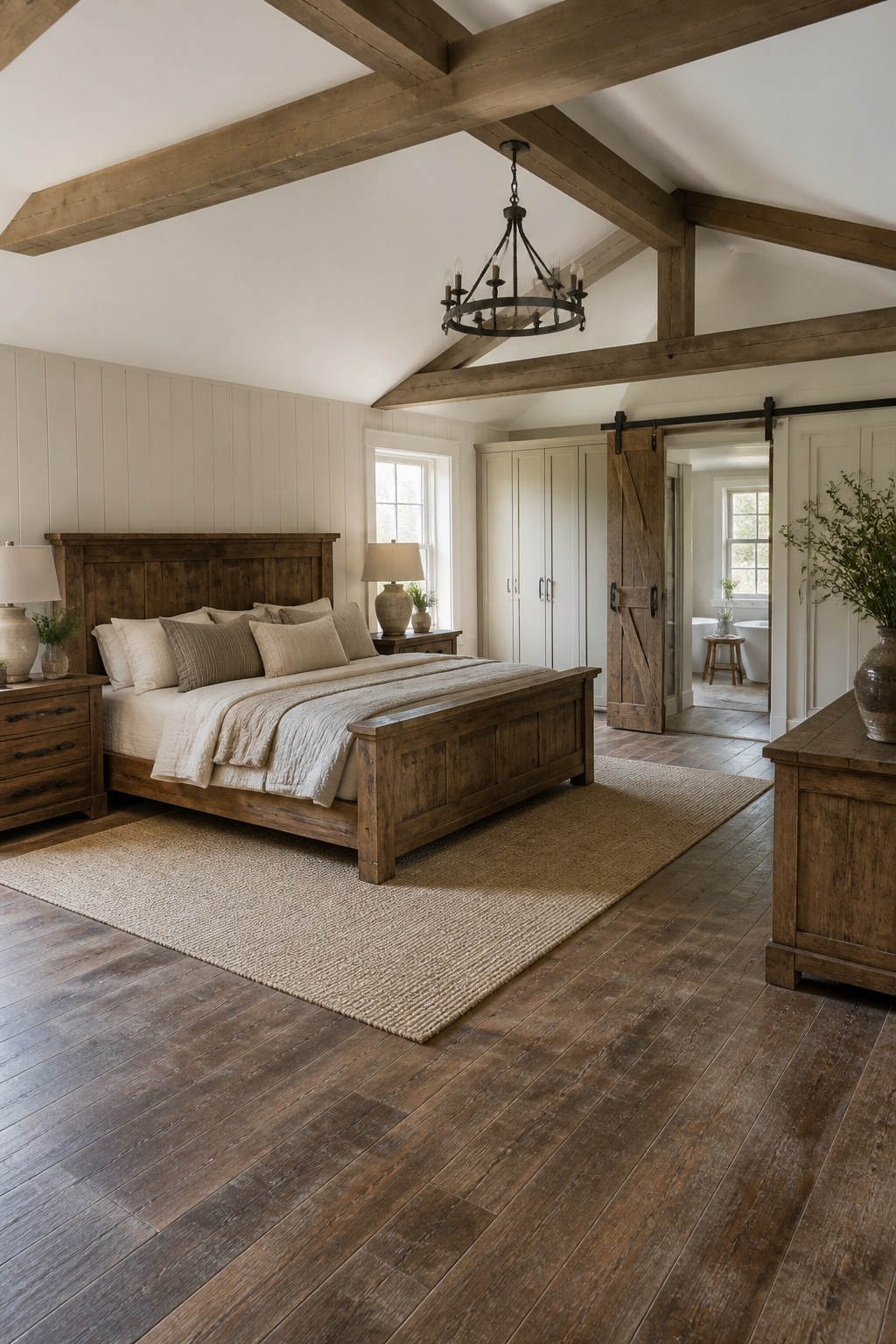
A bed frame made from reclaimed wood carries the dents and knots that tell a story, and in a farmhouse master bedroom that matters more than a factory finish ever could. The Beverly King Bed from Macys.com nails this balance: one reader bought it sight unseen after twins arrived, found the dark stain and sturdy build felt almost antique, and called it the first "grown up" piece she and her husband could pass to their kids. That kind of weight and permanence is what separates farmhouse furniture from trend pieces.
Storage needs to pull the same double duty. Built-in wardrobes or rustic chests keep clutter out of sight so the room stays calm, while a heavy timber sliding barn door replaces a standard swing door and saves floor space. Proportion is the quiet rule here: furniture scaled to the room size keeps the flow open enough to actually use the space. Painted timber works if reclaimed is scarce, but the warmth should come from the material itself, not from distressing tricks.

Nightstand with Charging Station: Power up your devices right from your bed. This side table features 2 AC outlets, 1 USB-A port, and 1 USB-C port, allowing you to easily charge your phone and tablet without searching for wall sockets

Bring in Farmhouse Flair: This nightstand comes from our LIRY Collection—a line of farmhouse-inspired storage furniture boasting elegant tall legs, versatile storage, and rustic charm to transform any room into an inviting, organized retreat

5. Statement Lighting
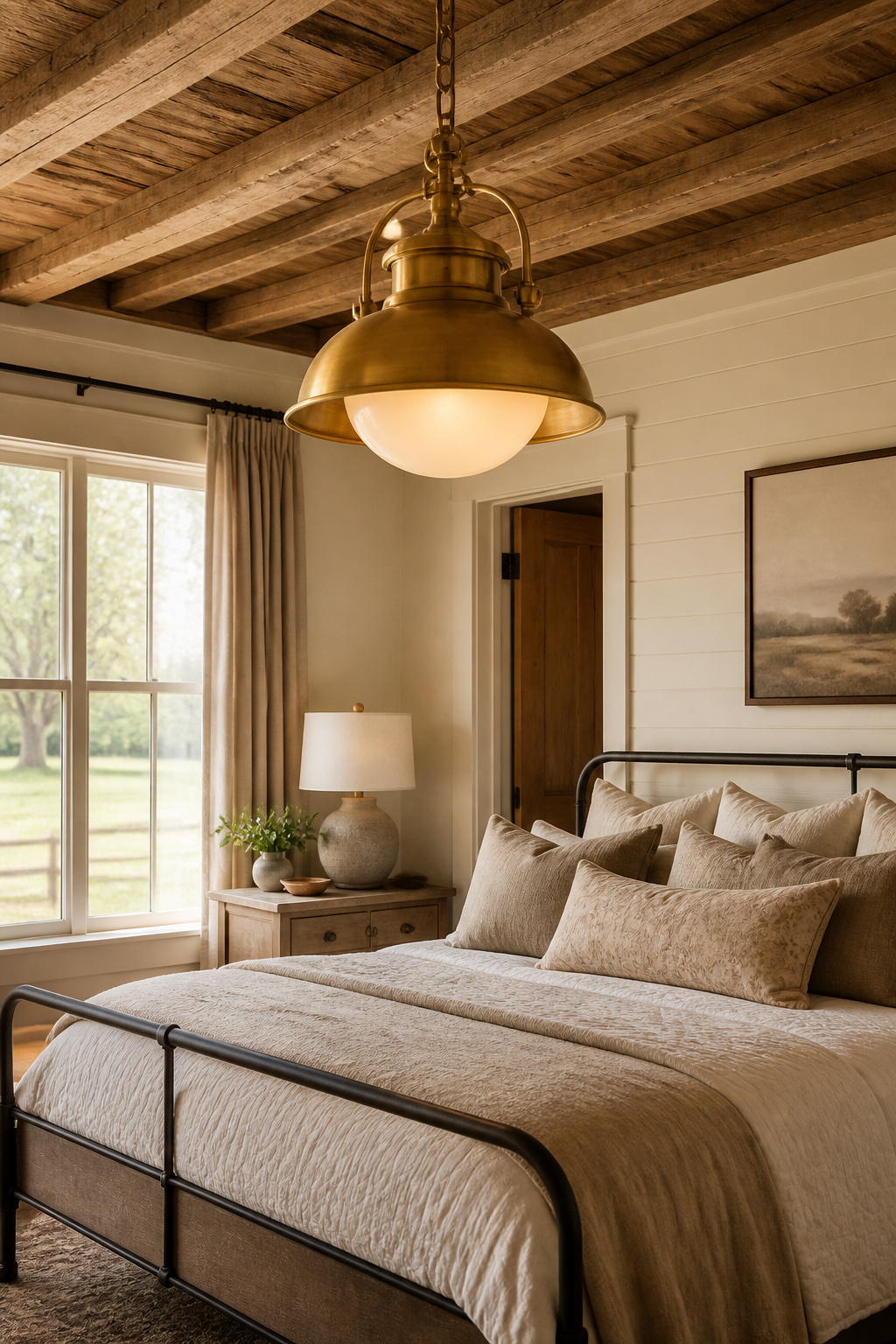
Vintage-inspired fixtures still carry most of the farmhouse weight, though the modern side has cleaned things up. Traditional pieces lean on unlacquered brass and deeper tones like burgundy, while modern farmhouse keeps the warmth but strips back to cleaner lines and neutral schemes. The blend works when you want charm without the full antique commitment.
Ceiling fixtures set the baseline. Warm LED bulbs inside a vintage-style pendant or a simple semi-flush mount keep the room from going clinical, which is where farmhouse bedrooms lose their hold. Harsh fluorescents belong in the garage, not where you wind down.
The Hunter Hepburn Fan sits right in the middle of this tension. It reads traditional in silhouette but runs quieter and leaner than the boxy units from twenty years ago. I have seen it swapped into rooms where the old brass chandelier felt too precious and a bare builder light felt too thin; it fills that gap without shouting. If your ceiling is standard height, the low-profile housing keeps headroom intact.
A weekend swap is realistic here. Kill the breaker, note your wire colors, and budget an hour if the box is already rated for fan weight. The mistake most people make is skipping the support bracket and wondering why the wobble starts six months in.

Rustic Cabin Drum Fandelier: Combining the comfort of a ceiling fan with the decorative appeal of a chandelier, this wood-look caged fandelier features sparkling crystal accents, an antique-inspired distressed finish and an elegant round drum silhouette. The enclosed structure softens the appearance of traditional ceiling fans while complementing rustic cabins, mountain lodges, lake houses and cottage-style interiors with distinctive character.

Rustic Character, Modern Function:Upgrade your home with the timeless appeal of farmhouse rustic design. This wood caged ceiling fan with light combines natural wood tones with an open, airy cage structure. The flush mount profile sits close to the ceiling, making it an ideal low profile solution for rooms with limited height. Whether it's a cozy bedroom, a farmhouse kitchen, or a hallway, this wood fan adds instant character and practical airflow.

Square Caged Design: The farmhouse ceiling fan boasts a unique square wood grain color cage design, and the intersecting pattern on the cage adds an artistic touch to this caged ceiling fan. The small ceiling fan fits well in most spaces, complementing bedrooms, kitchen and living rooms perfectly, bringing a rich blend of industrial and rustic styles to your home decor
6. Personal Touches
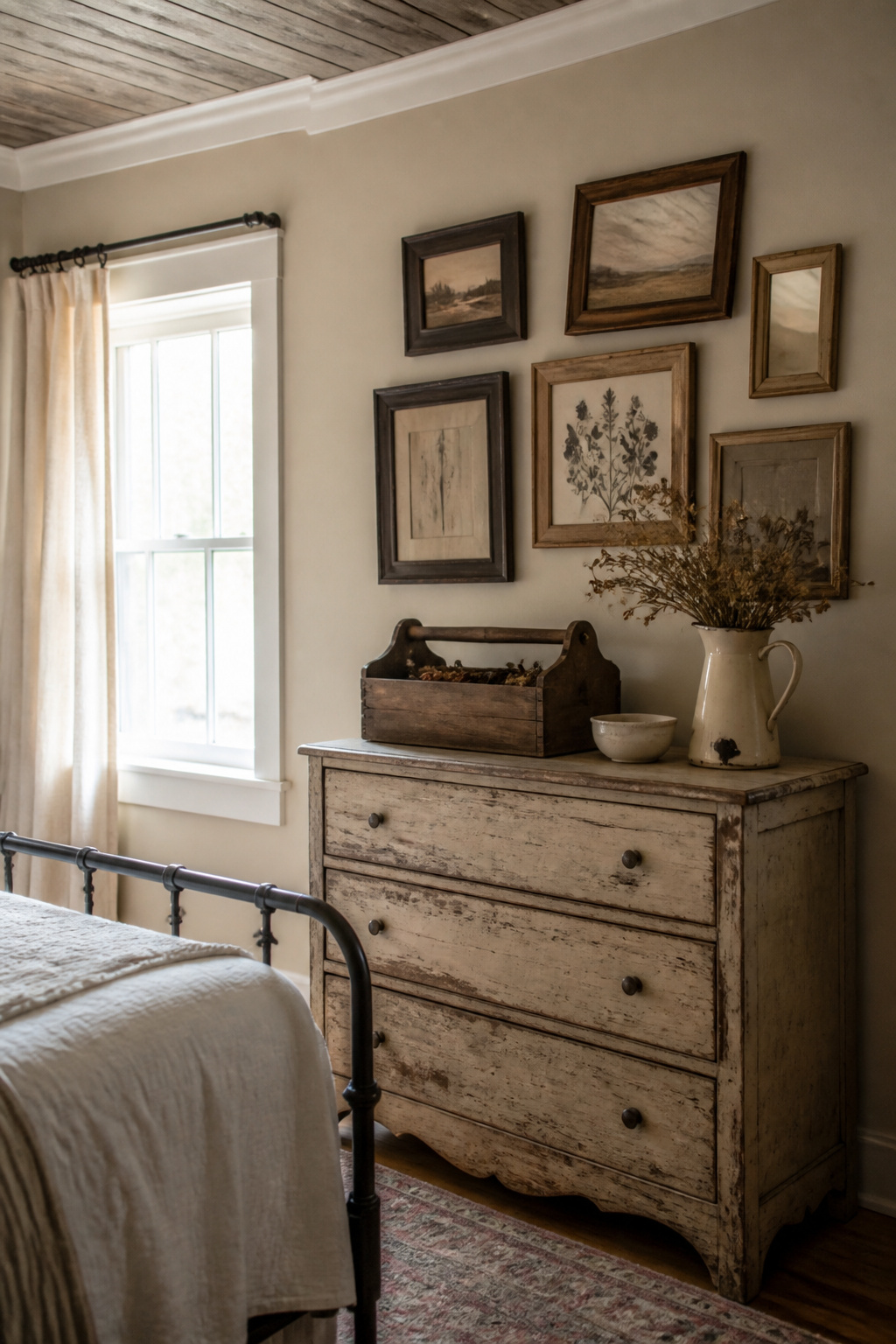
The best farmhouse bedrooms never look like a showroom, and the cheapest way to get there is with what you already own. A cluster of mismatched frames in weathered wood or soft black, hung slightly off-grid above the dresser, reads as collected over time rather than bought in a set. Thrift stores and estate sales are where I find the frames that matter, usually running $2–$8 apiece, and the slight dings or tarnished brass only help.
Vintage finds work the same way. An old wooden toolbox on the nightstand holds reading glasses and hand cream. A chipped enamel pitcher, maybe $12 at a flea market, becomes a vase for dried grass or nothing at all. The farmhouse look tolerates wear; it depends on it. What kills the mood is anything too polished, too obviously new.
Handmade pieces carry the same weight without the same cost. A simple looped yarn wall hanging, even a clumsy first attempt, adds texture that factory decor cannot replicate. The materials run under $20 if you already own a dowel rod. The imperfection is the point. A bedroom assembled this way tells a story, and the story is yours, not a catalog’s.
Spend the bulk of the budget, maybe $150–$200, on one piece with history: a small quilt at an estate sale, a mirror with foxed glass. Everything else layers around it.

RUSTIC KING HEADBOARD ONLY - Instantly upgrade your master bedroom with a warm rustic plank finish over a replicated oak grain with an authentic touch

100% Genuine Reclaimed Wood – No faux finishes or manufactured distressing. These planks are naturally aged for a truly rustic, farmhouse look.

[COUNTRY HEADBOARD KING] Featuring an original headboard design with gray, orange, and light and dark natural brown wood colors handcrafted with real solid wood planks.
7. Cozy Seating Areas
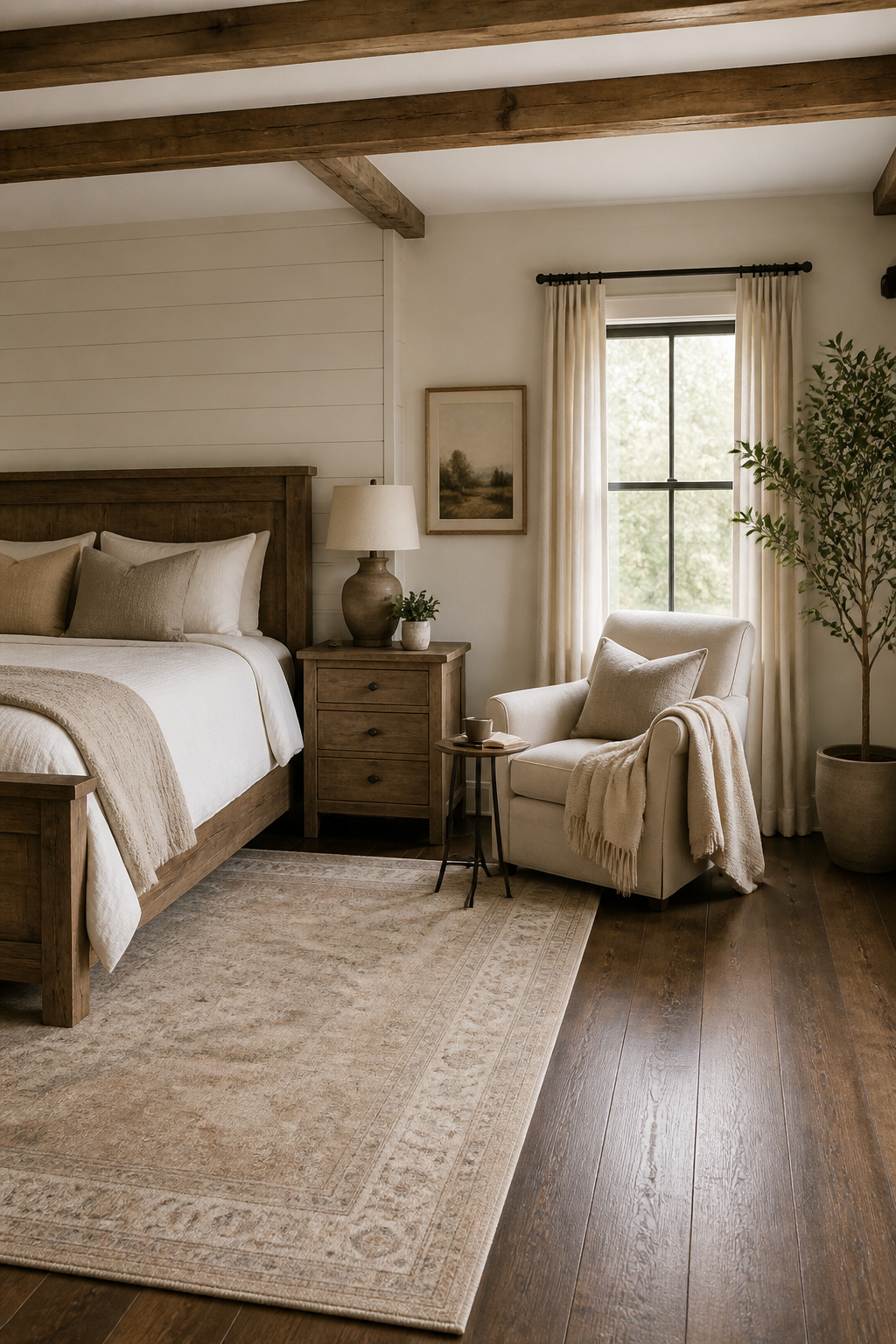
A farmhouse bedroom seating nook works best when it earns its square footage. Three feet by four feet is the minimum floor space for a single armchair and a slim side table, pulled from the wall so the chair can tip back without knocking trim. Most master bedrooms have one dead zone that fits this: the corner beyond the bed’s foot, the wall beside a window, or the gap between a closet door and a dresser.
The passage about a home office doubling as a bedroom and playroom shows how much function a room can absorb when the layout is honest about zones. A seating area in a farmhouse master bedroom should be the opposite of that multi-tasking approach. It is for sitting still. An armchair with a small sofa is the classic pairing from the sources, with plush cushions and a side table sized for a coffee cup or a book. If the room is narrow, skip the sofa and use two chairs facing each other across a 16-inch table. The chairs can be moved to the foot of the bed for putting on shoes, which the fixed sofa cannot do.
Windowside placement is what the farmhouse sources describe, and it is worth the fight for clear sight lines. Natural light on the page side makes a reading corner feel intentional rather than leftover. The textiles matter as much as the furniture: layered natural materials, including fabric and wood, ground the space in the style without requiring a renovation budget. A cotton throw and a beaten leather pillow do more for farmhouse credibility than barn door hardware on the opposite wall.

𝗩𝗜𝗡𝗧𝗔𝗚𝗘 𝗖𝗢𝗟𝗢𝗥 𝗚𝗨𝗜𝗗𝗘: Features an educational color chart displaying eight stacked swatches with solid circles and painted brushstrokes labeled Crimson, Sunflower, Tangerine, Leaf Green, Ocean Blue, Amethyst, Stone Gray, and Onyx Black.
𝗩𝗜𝗡𝗧𝗔𝗚𝗘 𝗖𝗢𝗟𝗢𝗥 𝗚𝗨𝗜𝗗𝗘: Features an educational color chart displaying eight stacked swatches with solid circles and painted brushstrokes labeled Crimson, Sunflower, Tangerine, Leaf Green, Ocean Blue, Amethyst, Stone Gray, and Onyx Black.
𝗩𝗜𝗡𝗧𝗔𝗚𝗘 𝗖𝗢𝗟𝗢𝗥 𝗚𝗨𝗜𝗗𝗘: Features an educational color chart displaying eight stacked swatches with solid circles and painted brushstrokes labeled Crimson, Sunflower, Tangerine, Leaf Green, Ocean Blue, Amethyst, Stone Gray, and Onyx Black.
8. Wall Art and Decor
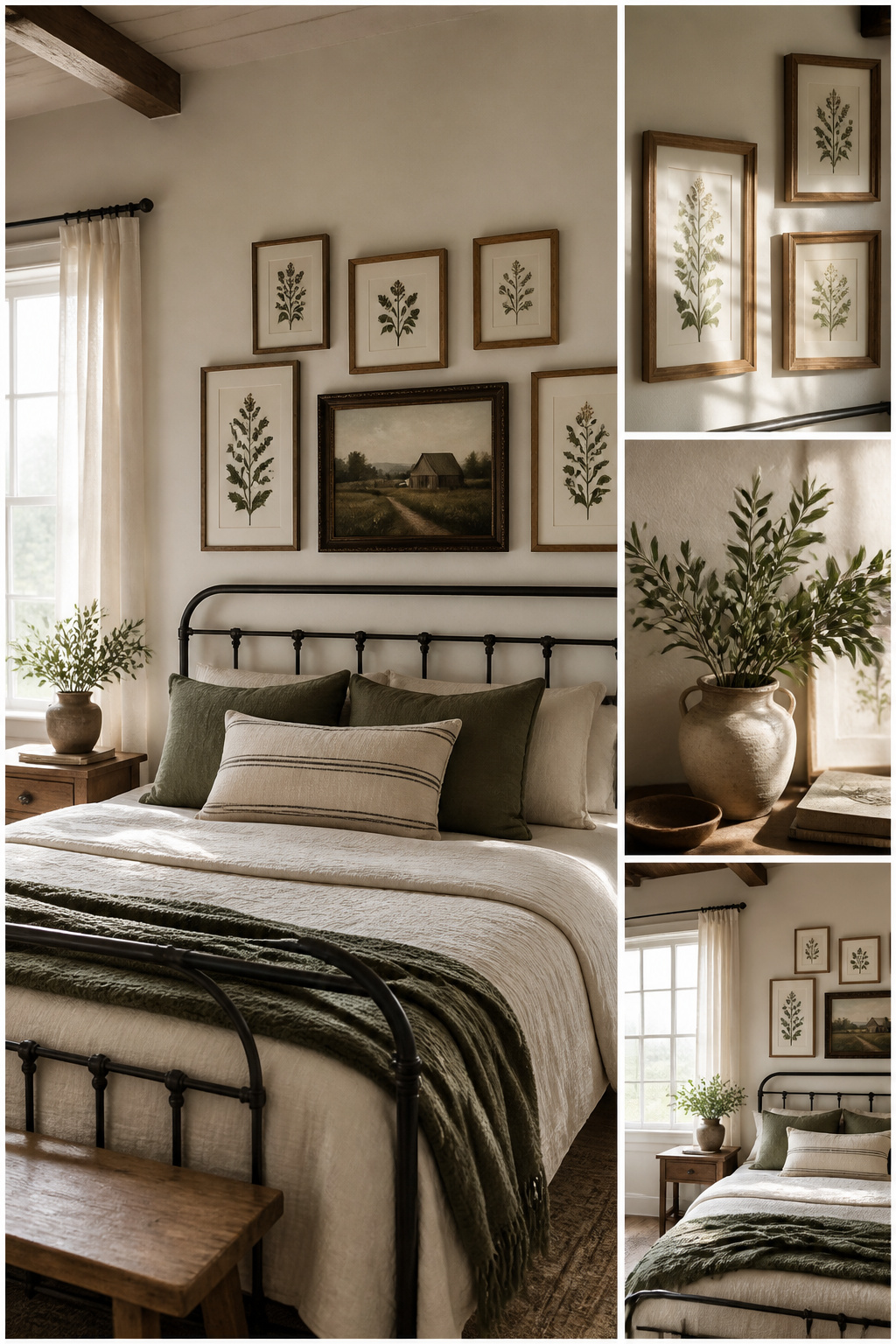
Botanical prints hang well in a farmhouse master bedroom because the natural motif already belongs there. Leaves and birds echo the exposed wood and linen textures that make the style feel grounded, not staged. The trick is keeping the wall from turning into a gallery. One or two framed pieces, spaced to let the wall breathe, read as character; a cluster reads as clutter.
Rustic art works the same way. A pastoral scene or a vintage farm image in an antique frame adds the shabby, earthy note that defines the style, but only if you edit. Modern farmhouse design stripped away the literal farm-animal motifs and floral overload of traditional country decor for a reason. The clean lines are what let the bedroom feel restful instead of busy.
The half-and-half mix is where the warmth survives without the mess. Pair a vintage find, something scored at a tag sale and hung in its original frame, with a newer print in simpler molding. The contrast keeps the eye moving and stops the room from feeling like a set. If the wall color is already soft, Elephant’s Breath by Farrow & Ball or something in that range, the art sits in quiet relief rather than competing for attention.

100% Natural Muslin Cotton, Ultra Soft & Breathable - Made of premium 100% cotton muslin, this duvet cover is lightweight, airy, and gentle on skin—ideal for sensitive skin, kids, and hot sleepers. Gets softer with every wash.
Ultra Soft: This duvet cover set is made from polyester that offers exceptional softness. The smooth and breathable fabric provides maximum comfort without any rustling noise, giving your little one the utmost comfort.

Boho Style: A beautiful tufted design in our softest fabric, the duvet cover set creates a stunning visual effect. Perfect for layering with lots of other cozy and tactile accessories for the boho bedroom.
9. Accent Walls
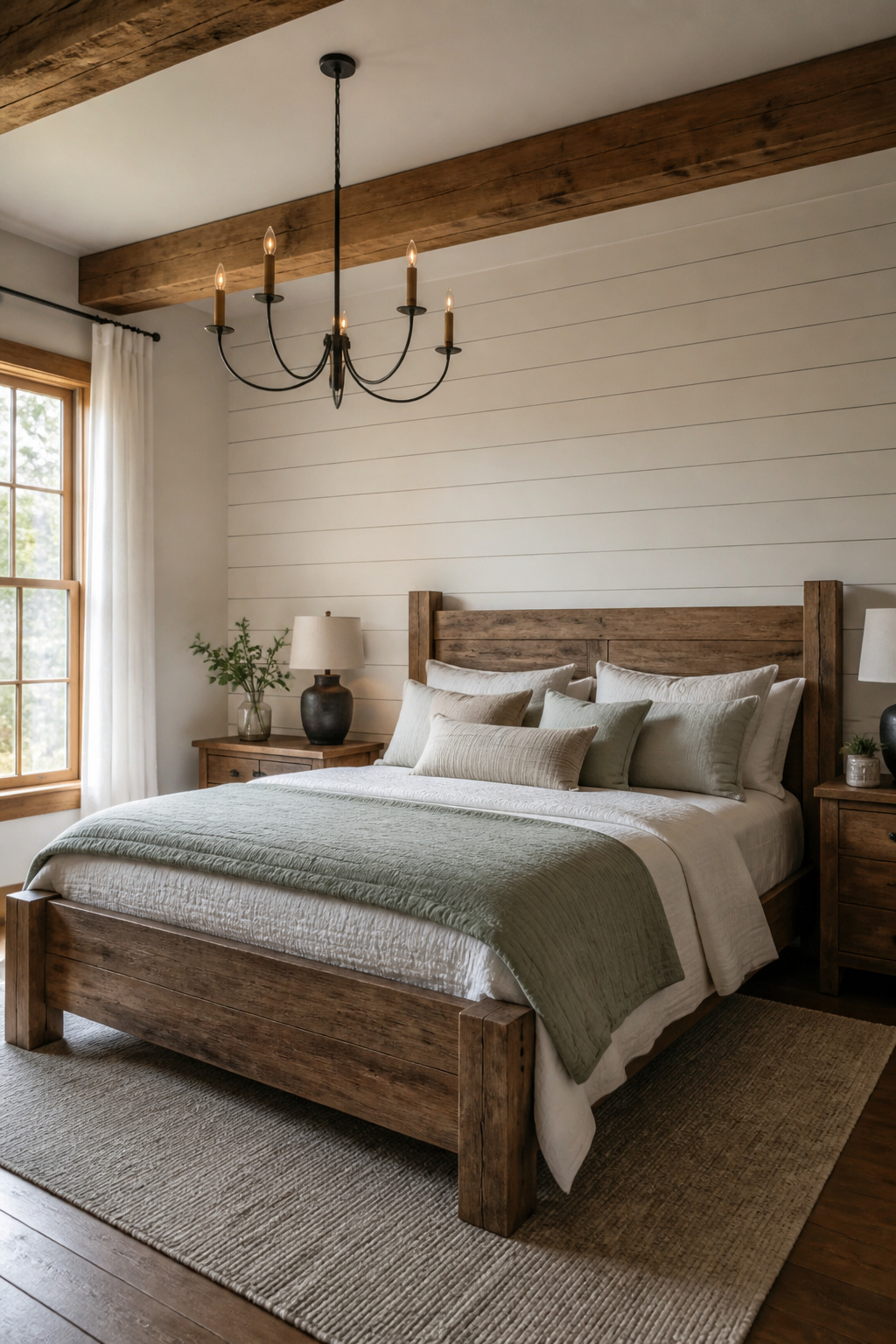
Shiplap reads farmhouse faster than anything else on a wall, but the real decision is whether to buy the pretreated boards or handle the finish yourself. I went the DIY route on one room and spent two full weekends sanding mill glaze off factory boards before paint would grip. Pretreated shiplap adds about a dollar per square foot and saves that headache entirely.
Reclaimed wood sounds romantic until you are face-down pulling century-old nails from barn siding. The variation is gorgeous, and the environmental math works, but budget for a metal detector pass and a planer rental. Warped boards will fight you on every stud.
Peel-and-stick wallpaper has come far enough that I now recommend it for accent walls in rentals. The 2024 prints with wide, hand-drawn stripes or faded botanicals hit the farmhouse note without the commitment. A standard wall runs roughly two rolls at thirty to forty dollars each, and if your corners are not square, the pattern will drift. Start from the least visible edge and work toward the door, not the reverse.
For any of the three, a single accent wall behind the bed carries the room. Doing more than one risks the lodge look, which is a different thing entirely.

[Bring in Farmhouse Flair] This nightstand comes from our LIRY Collection—a line of farmhouse-inspired storage furniture boasting elegant tall legs, versatile storage, and rustic charm to transform any room into an inviting, organized retreat

X Barn Door Design Nightstands: This rustic night stands for bedroom and living room is perfect to collect books, magazines, or electronics. Unique appearance in oak adds a farmhouse style to your bedroom. Inspired by rustic aesthetics, this type of compact end table is simple, practical and elegant, which can perfectly blend with different layout and decor.

Nightstand with Charging Station: Say goodbye to low battery anxiety with built-in USB-A, USB-C ports, and AC outlets, allowing you to charge your phone or tablet right from your bed
10. Maximizing Natural Light
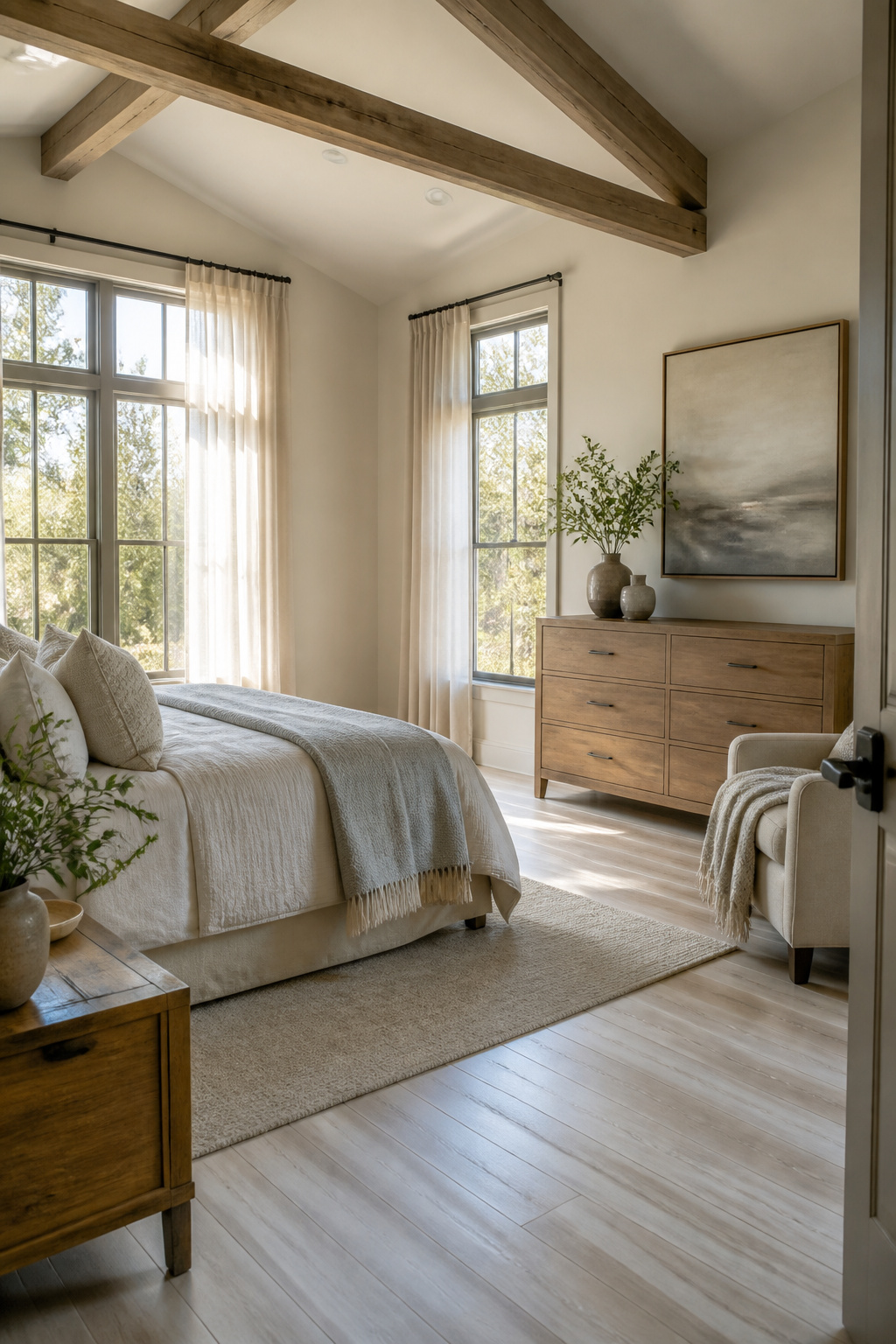
Large windows framed in white or soft gray do most of the work in a farmhouse master bedroom, but the wrong window treatment kills the effect. Sheer curtains in linen or cotton let the light filter through without the flatness of bare glass. They move a little with the air, which adds the softness the style depends on.
Flooring matters just as much. Pergo laminate in Modern Oak reads like real plank flooring and carries that pale, sun-bleached tone that bounces light around the room. I have put laminate into two rentals now, and the reason it keeps winning is simple: it goes down in a Saturday, survives the furniture dragged across it six months later, and costs roughly a third of engineered hardwood. For a weekend project with a real budget, that gap is the difference between finishing the room and leaving it half done.
What Farmhouse Actually Means Now
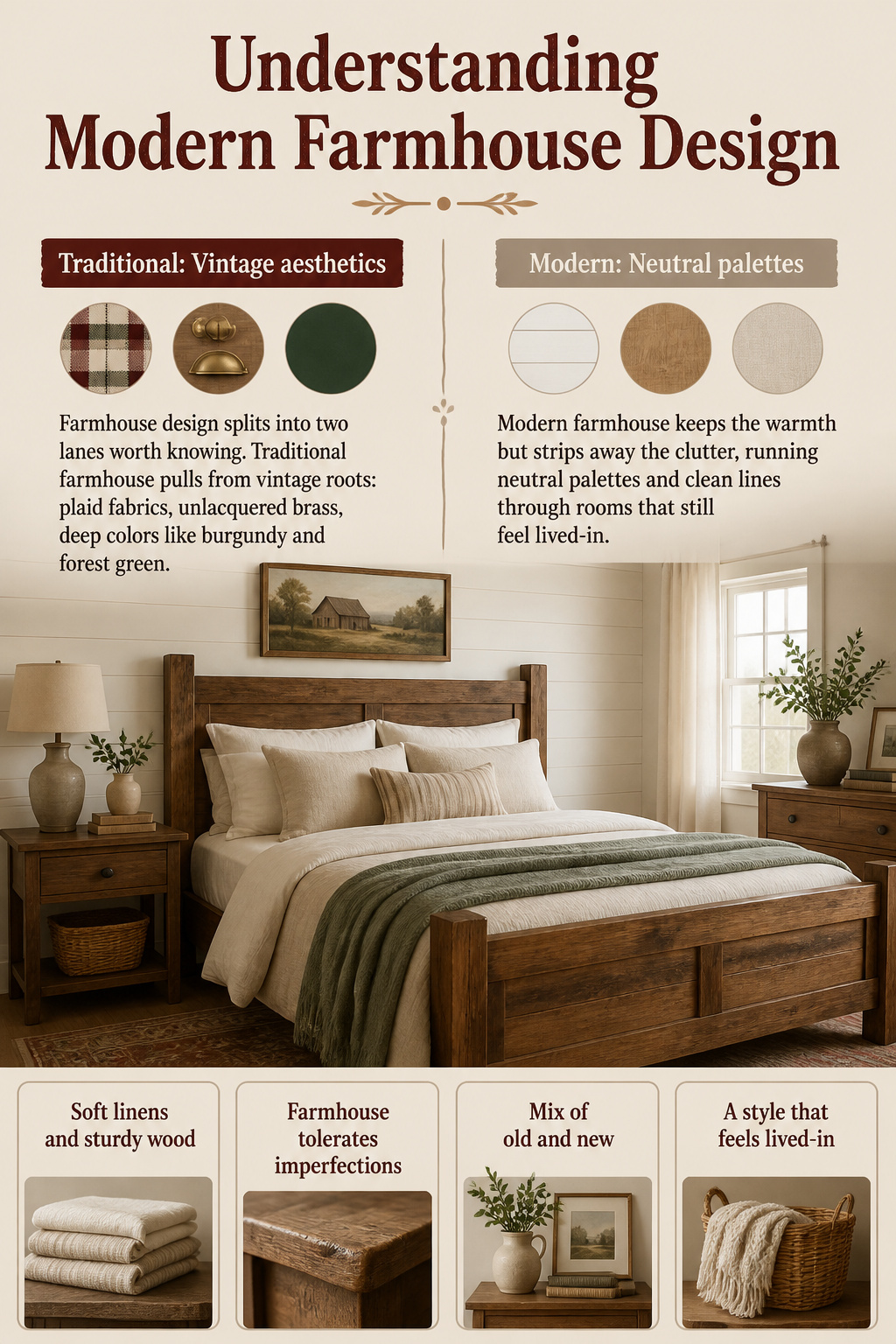
Farmhouse design splits into two lanes worth knowing. Traditional farmhouse pulls from vintage roots: plaid fabrics, unlacquered brass, deep colors like burgundy and forest green. Modern farmhouse keeps the warmth but strips away the clutter, running neutral palettes and clean lines through rooms that still feel lived-in.
The bedroom is where this balance actually matters. It is the room where you are most vulnerable, most still, most aware of whether a space lets you exhale or keeps you alert. Cold glass and steel aesthetics work against rest; farmhouse materials, by contrast, read warm to both eye and touch. Soft linens, sturdy wood, a palette drawn from weather and field. The nostalgia is not decorative but functional, a psychological safety that grounds the room.
For someone mid-project with a weekend and a few hundred dollars, this matters because farmhouse tolerates imperfection. A dented nightstand or a beam with visible grain reads as character, not failure. The style invites the mix of old and new that most renters and first-home owners already own.
Bedding That Looks Layered Without the Cost
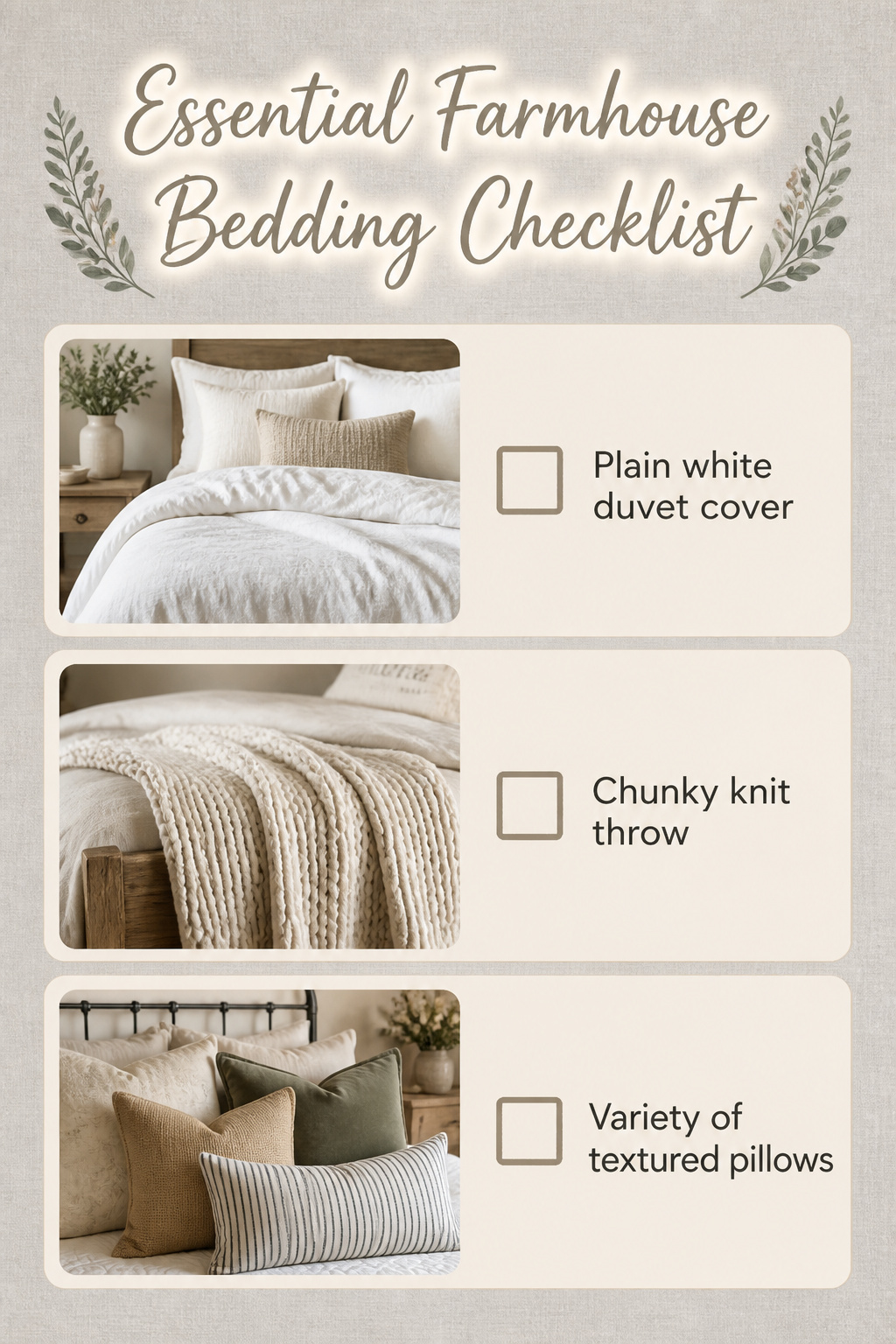
The mountain of bedding you see in farmhouse photos starts with one move: a plain white, oatmeal, or soft grey linen-effect duvet cover swapped over what you already own. Brushed cotton or a linen blend gives the rumpled texture that reads as layered even when the bed is just made.
From there, a single chunky knit or faux-fur throw draped at the foot adds the second layer for under $30 at most discount home stores. The pillows come last, not first. Burlap, velvet, ticking stripe, whatever reads as touchable against that neutral base. If the budget only stretches to one purchase this month, make it the duvet cover. Everything else can wait, and the room still shifts toward farmhouse that same weekend.
Storage That Reads as Decor
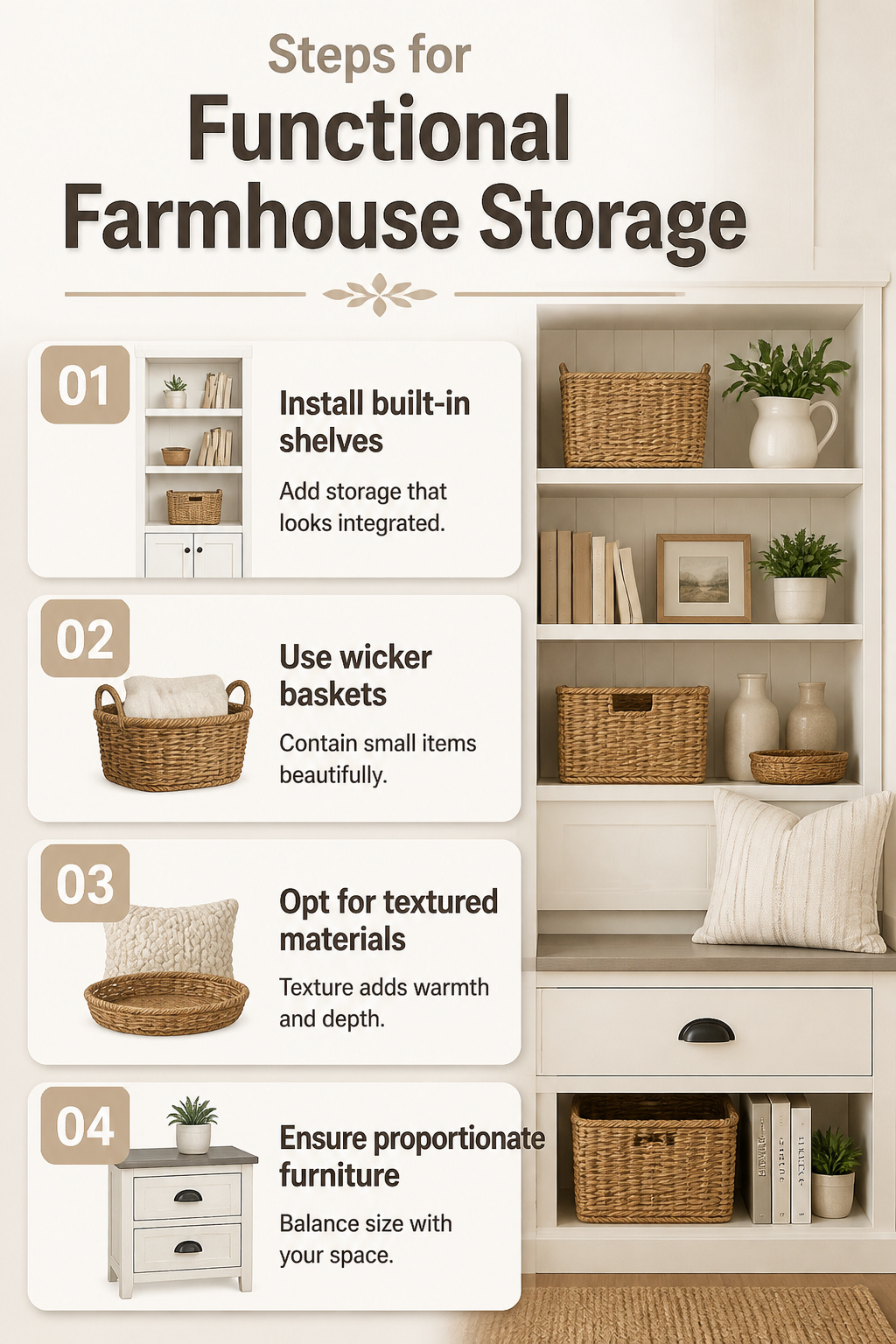
Built-in shelves flanking the bed give a farmhouse master bedroom its sense of settled order without the bulk of freestanding furniture. I like the look of window seats with bookcases underneath, like the ones I saw in a six-week renovation that completely shifted the room’s traffic pattern. The storage reads as architecture, not afterthought.
Wicker baskets and woven trays handle the smaller stuff. A few tucked onto those shelves or slid under a bench keep remotes, extra linens, and the miscellaneous alive that otherwise colonizes nightstands. The texture matters as much as the function here; smooth plastic bins would break the spell entirely.
Sheer window treatments and neutral bedding in white or beige keep the backdrop quiet so the storage pieces can do the visual work. Black hardware on a simple nightstand or cabinet sharpens the line between decorative and useful without announcing itself as either one.
The limit is proportion. A chest or basket that overwhelms the floor space beside the bed undoes the calm these rooms depend on. Keep furniture scaled to the room, leave walking lanes clear, and let the storage sit there looking like it was built in a century when nobody hid their belongings in molded polyethylene.
Lighting for a Bedroom You Actually Sleep In
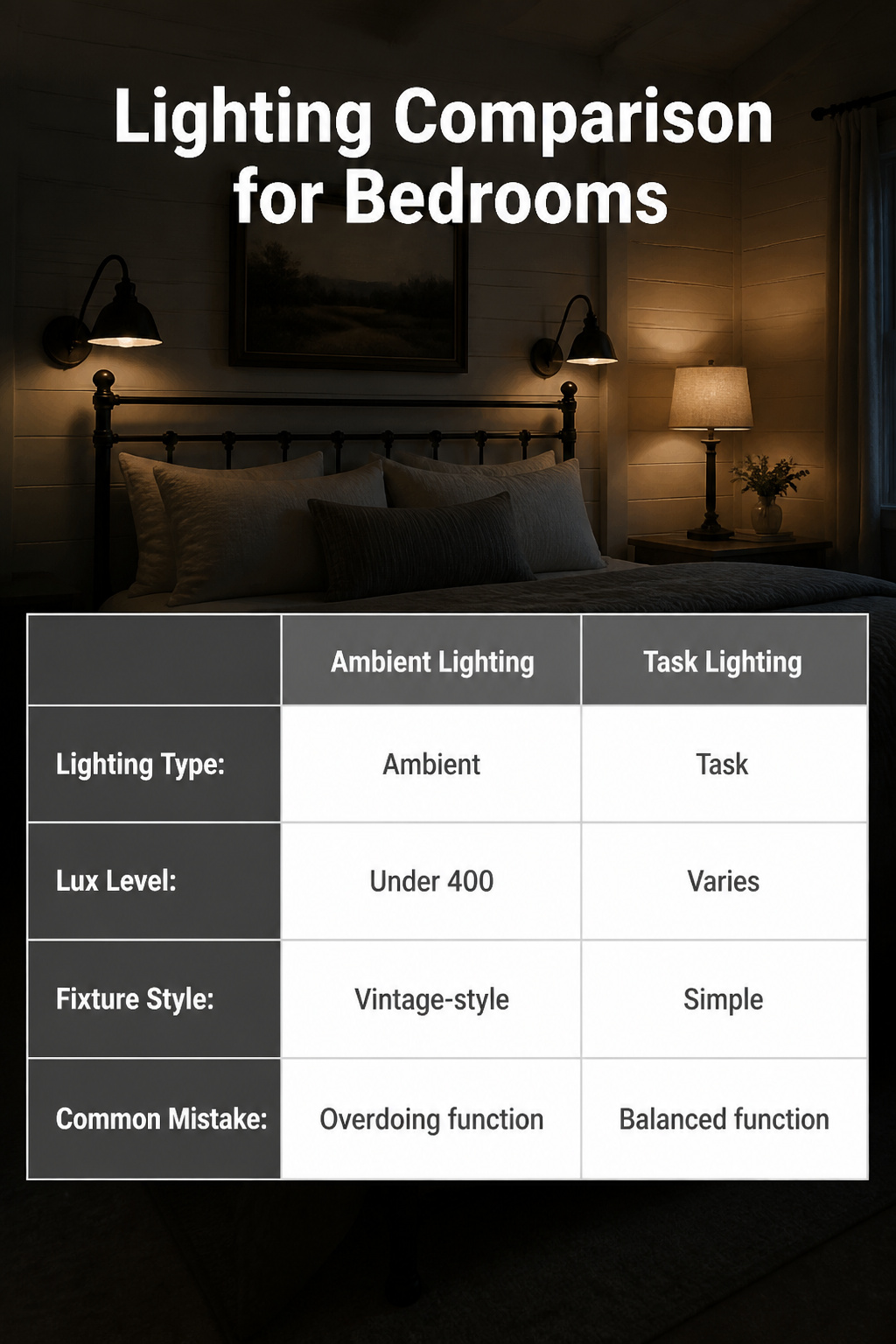
The ceiling fixture in my last bedroom put out 1,500 lumens from a single dome, and I slept worse for three years before I understood why. Ambient lighting in a farmhouse master bedroom should stay under 400 lux at eye level when you’re horizontal, which means a dimmable ceiling source or a vintage-style pendant on a low-wattage warm LED, not the hardware-store flush mount that came with the house.
Task lighting is where the work actually happens: a swing-arm sconce or a simple table lamp with a linen shade for reading, placed where it won’t throw across your pillow when your partner turns the page. Dark metal finishes on these fixtures, against white shiplap or a light ceiling, give the contrast that keeps farmhouse rooms from going flat.
The common mistake is treating a bedroom like a kitchen. Layered lighting balances function and atmosphere, but most people overdo the function. Two circuits, one for the room and one for the bed, let you drop the ambient layer after nine and keep only what you need to finish a chapter. If your overhead doesn’t dim, swap the bulb before you swap the fixture; a warm LED at 2,200K costs little and changes everything.
DIY Projects That Finish in a Weekend
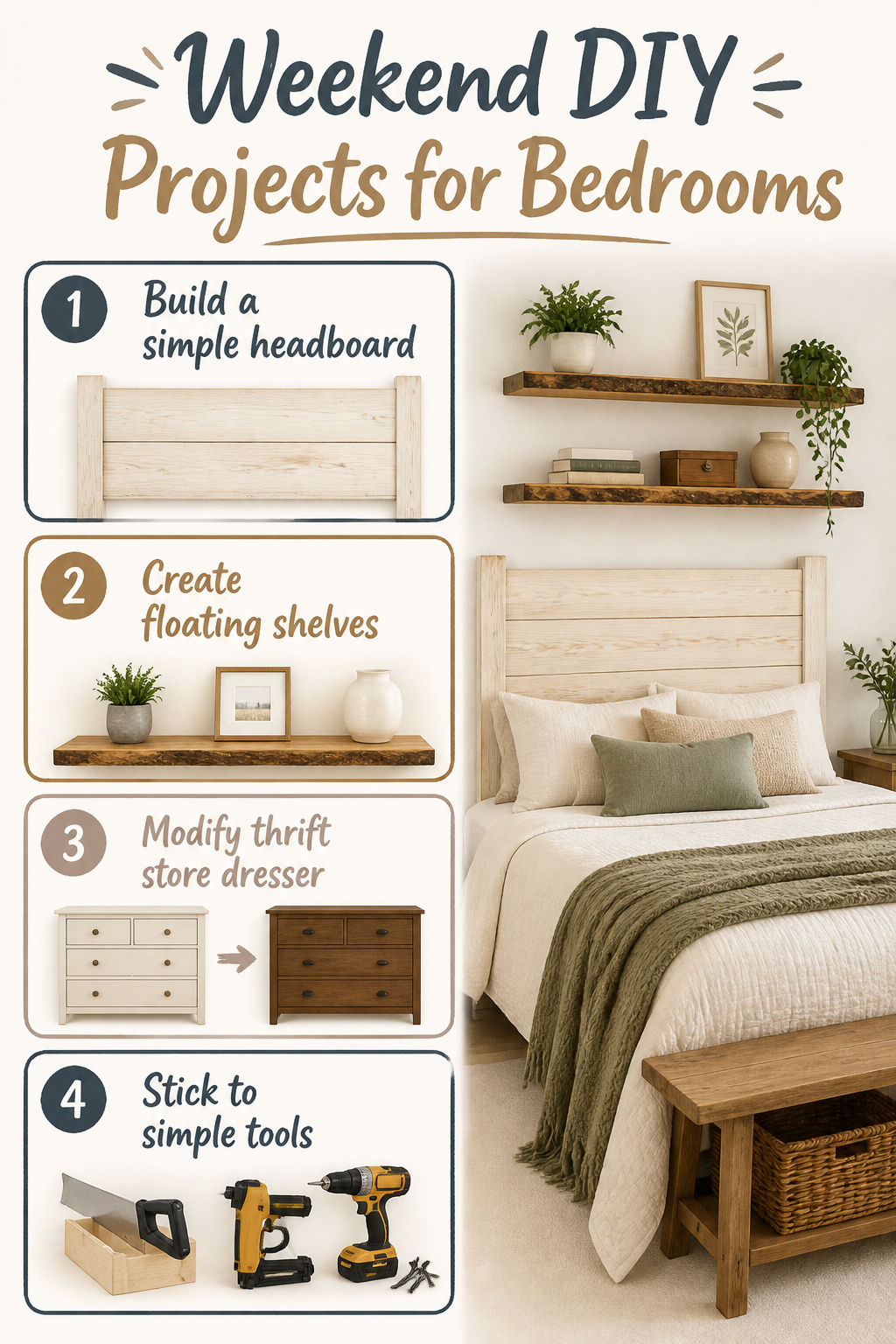
A farmhouse master bedroom refresh lives or dies on whether you actually finish what you start. Two days is enough to build a simple headboard from 1×6 pine boards, sand it smooth, and hit it with a whitewash that lets the grain show through. The same weekend gets you a pair of floating shelves with a live edge look, if you buy the boards pre-cut and just handle the stain and bracket mounting yourself.
What dies on the vine is anything needing precise joinery. A farmhouse bed frame with mortise and tenon joints will still be in pieces Monday morning, and you’ll have sawdust where your pillow should be. Skip the full furniture builds. Modify instead: an hour with a palm sander and some dark walnut stain turns a cheap thrift store dresser into something that reads intentional beside that pine headboard.
The tool list matters more than the Pinterest photo. If you do not already own a pocket hole jig, this is not the weekend to learn it for a king-size project. Stick to a miter box and a finish nailer, or even just a drill and wood screws with the heads countersunk. The look you want is honest construction, not cabinet shop precision. Gaps between boards, filled with a dark wax, read as character in farmhouse style. In a modern bedroom they read as failure, which is why the same project lands differently depending on what surrounds it.
Cost discipline is part of finishing. A $200 lumber bill for a headboard feels reasonable until you add the $80 in clamps you suddenly need for glue-up. Build in stages that let gravity do the holding, or use screws and call the visible heads part of the design. I have seen people abandon projects at 11 p.m. on Sunday because one clamp failed and the joint slid. The ones that get finished usually involved simpler plans and earlier bedtimes.
Frequently Asked Questions
What colors look good in a farmhouse bedroom?
Soft whites, creams, and muted earth tones form the backbone of the style. Benjamin Moore Heirloom, a peach shade with pink undertones, works if you want the wall to carry the room; Sherwin Williams Repose Gray, a warm gray that stays soft, leaves space for bedding and projects to stand out. Test Heirloom on a full wall for a week before committing, since actual light can shift it pinker than expected.
How to style a farmhouse bedroom?
Start with neutral wood furniture, layer in textiles like linen bedding and chunky knit throws, and finish with vintage finds that show wear. Reclaimed barn wood belongs where you see it on waking, stone works best as an accent rather than a feature wall, and linen softens the harder surfaces. The best beds look assembled over time, not ordered from one catalog page.
What are the best ways to achieve a cozy farmhouse bedroom look?
Layer textures starting with crisp cotton sheets, a heavy linen duvet, and a chunky knit throw with pillows in ticking stripe, burlap, or velvet. Natural materials like wood, stone, and linen add warmth through touch as well as sight. Keep the foundation neutral so the textures do the visual work, and let pieces look collected rather than matched.