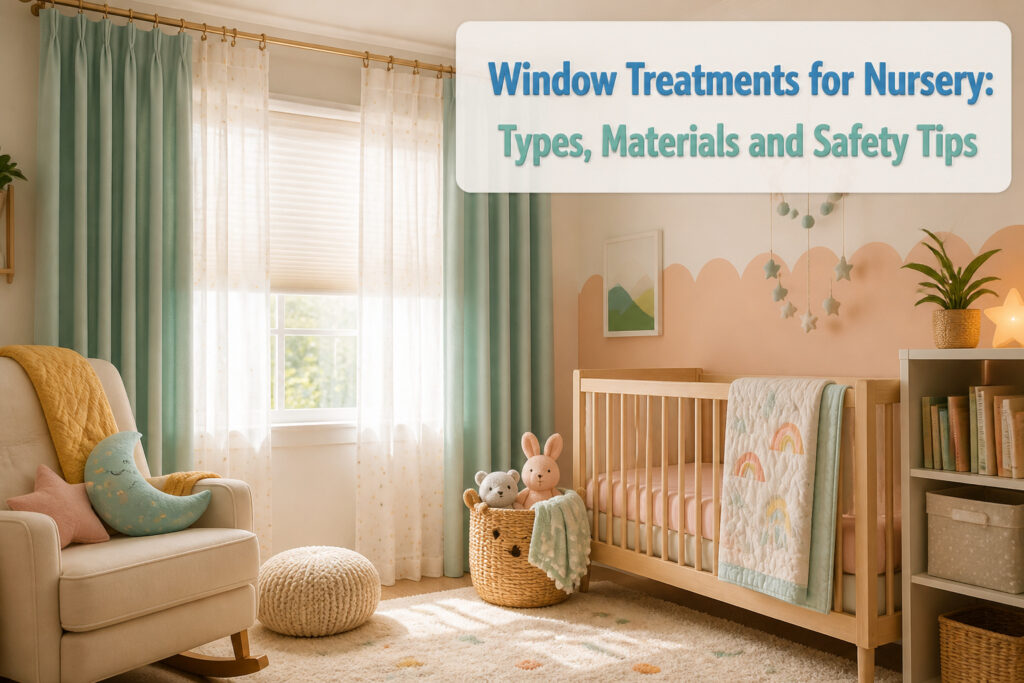
Window treatments for a nursery are any covering that controls light, temperature, privacy and safety around a sleeping baby. The mistake most parents make is buying one layer and expecting it to do all four jobs at once. A $12 tension rod and utility fabric with bonded fleece backing can match a $180 blackout panel, but only if you are willing to cut it to size and seal the edges with iron-on hem tape.
[link-whisper-related-posts]1. Blackout Curtains
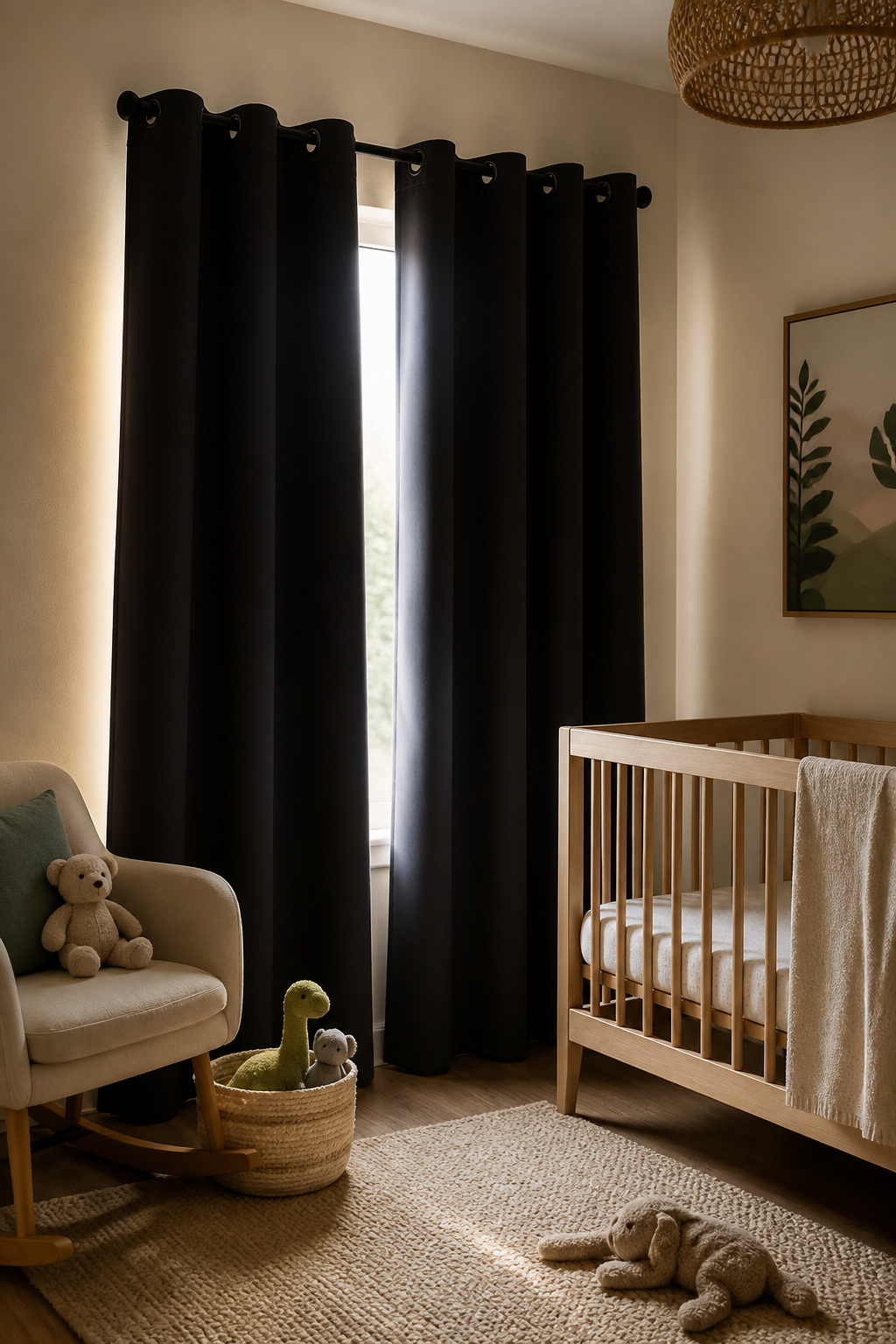
Blackout curtains block 95 to 100 percent of light, which is the difference between a baby who sleeps through sunrise and one who doesn’t. The fabric itself matters: true blackout uses a dense weave or bonded liner, while "room darkening" only hits that 95 percent ceiling and still lets morning light leak through the edges. I made that mistake once, ordering room darkening panels for a west-facing window and watching the nursery glow amber by 6:30 a.m.
For installation, grommet tops slide open and closed in one motion, helpful when you’re holding a sleeping baby. Rod pockets look cleaner but fight you every morning. Either way, mount the rod several inches past the window frame on each side and high enough above the trim; light finds gaps the same way water finds cracks, and an outside mount with poor coverage leaves you with exactly the problem the curtains were supposed to solve.
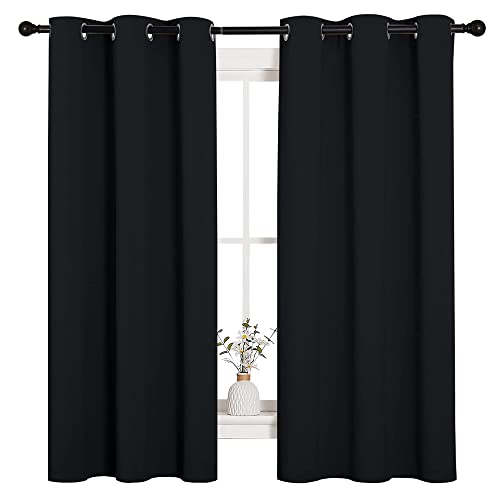
READY MADE: Set includes 2 BLACKOUT CURTAINS PANELS of 42" wide x 63" length with 6 grommets top each. Quality fabric without liner feels soft and heavy.

PAIR SOLD: 2 panels in package. Each panel measures 52"W x 84"L| Pair measures 104"W x 84"L. Thread trimmed and wrinkle free, panel is constructed with 8 anti rust grommets which fit well up to 1 1/2 inches curtain rods
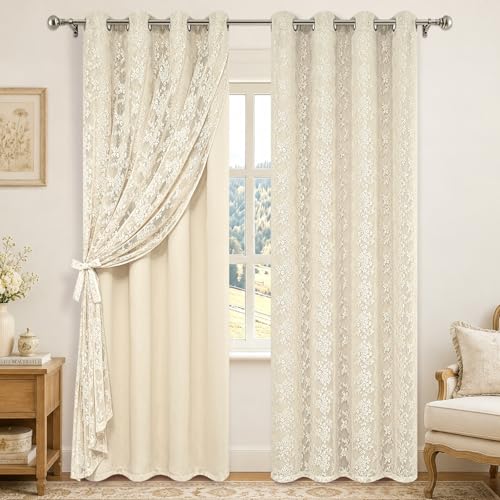
Double Layer Curtains: The embroidered floral sheer curtains are light and flowing, with a gauzy beauty that softens light—adding a peaceful and comfortable atmosphere to any room. The blackout layer effectively blocks light. Includes 2 lace tiebacks, so you can achieve different looks or light effects by tying it.
2. Cellular Shades
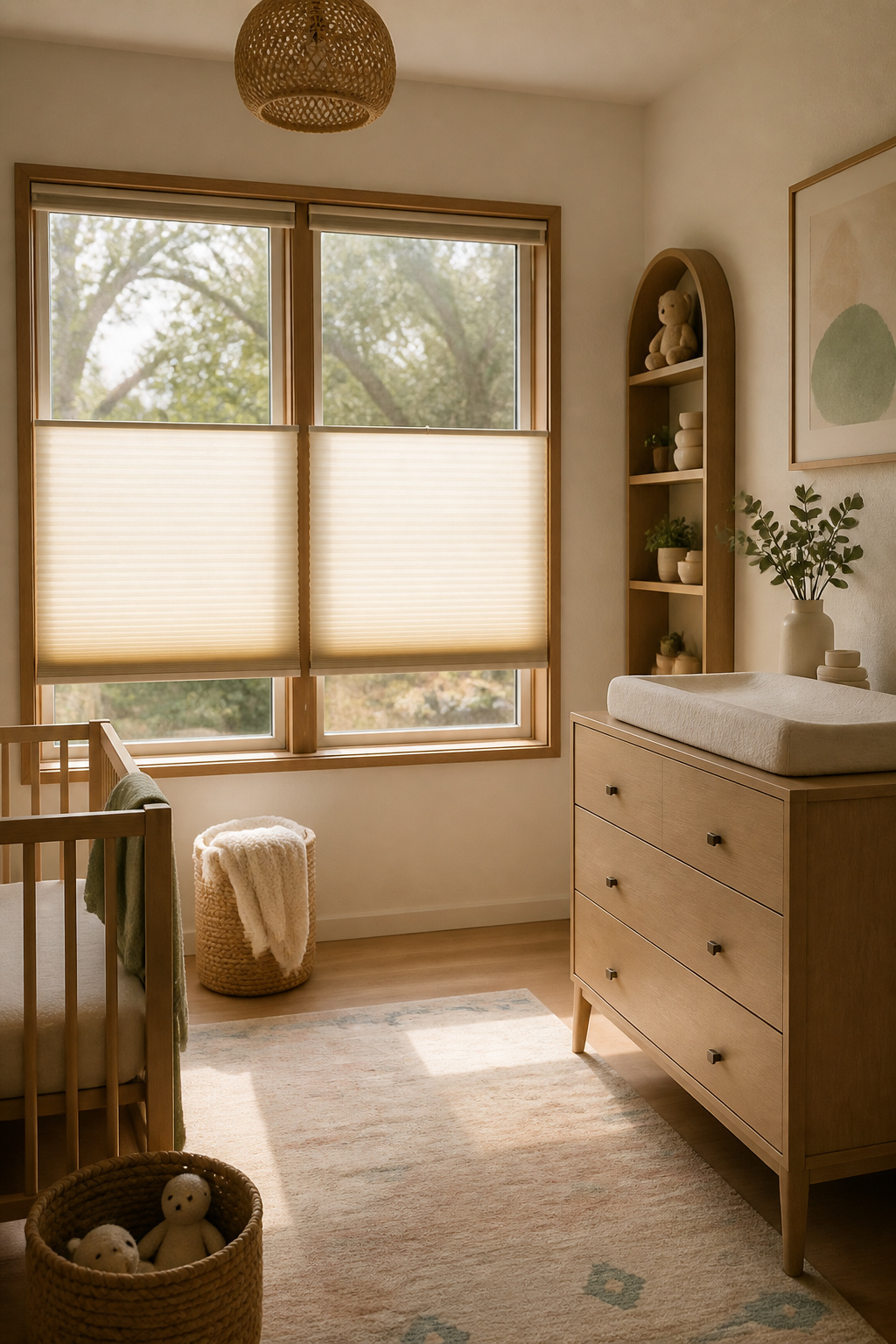
The honeycomb pockets inside cellular shades trap air in a layer of stillness that blocks heat in summer and cold in winter. For a nursery facing afternoon sun or sitting above an unconditioned garage, that structure adds measurable insulation where single-layer fabrics fail. Blackout fabric options are available in the same cellular construction, so the shade does two jobs without a second treatment.
Corded cellular shades cost less, but the savings disappear against the risk. A looped cord near a crib is a hazard that keeps compounding as the child grows mobile. Cordless lift is the version worth paying extra for in a nursery, and the cost difference pays back in both safety and the daily convenience of one-handed operation while holding a baby. Some cordless models lower from the top or raise from the bottom, which lets you drop the shade to mid-window for privacy while keeping daylight above the changing table.
The R-value benefit matters most on the problem windows: west-facing glass that bakes the room by four p.m., or any nursery over a garage where the floor below leaks temperature year-round. In those spots, cellular shades reduce the load on whatever HVAC the house has, and the blackout versions keep nap schedules intact through longer summer evenings.

【No Drill Install in 30 Seconds】Install these no drill cellular shades without wall screws, brackets, or wall damage. It can be securely installed inside any window frame– tile, marble, wooden, metal frame – in just 30 seconds. The tension mounting system is ideal for apartments, rental homes, bedrooms, and spaces where you want a cleaner window upgrade without drilling

Measure Accurate Size for Inside Mounts: These blinds are highly recommended for indoor installation. To ensure a proper inside mount, the width of the cellular shade should be equal to or less than the inside width of the window frame, with a maximum reduction of 0.25 inches. The more accurately the blinds fit the window, the better the blackout performance will be.

Important Inside Mount Measuring Instructions: This cellular shade is the exact size - no deductions are made. Measure the width across the top, middle, and bottom of window. Ensure your window measures 36.25" to 37" wide for a 36" wide cellular shade. This allows proper fit with minimal light gaps. Measure the height from the top of the window to the windowsill on the left, middle, and right of the window. The largest measurement will be the height you order.
3. Roman Shades
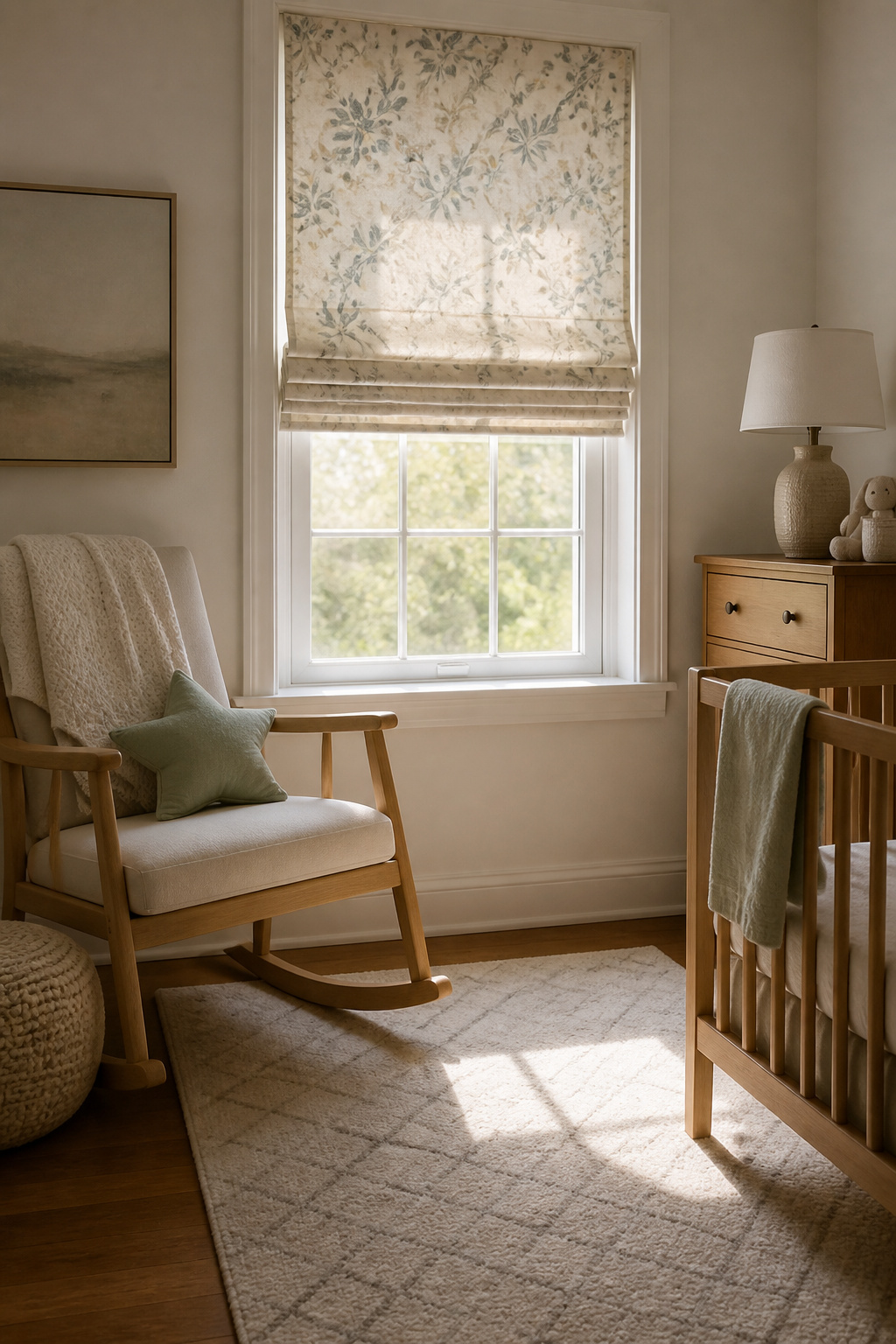
Roman shades read more like furniture than hardware, with flat or relaxed folds that soften the hard edges of a nursery. Hundreds of fabrics and patterns are available, so matching the shade to walls or floor coverings is straightforward. The shade itself filters light rather than blocking it, which means a blackout lining is necessary if early morning sun or afternoon nap light is the enemy.
Cordless assemblies are the only safe choice here. Continuous-cord loops belong nowhere near a crib, and the same goes for any exposed cord the child could reach. Motorized lifts cost more but remove the last visible cord entirely. The inside-cord designs some manufacturers use reduce the hazard, yet cordless or motorized is the safer bet for a room where sleep and safety share the same priority.

How to Choose a Proper Size: For INSIDE mount: Choose the size SAME or CLOSEST to your window width. For Example, if your windows are 30" wide, order 30" or slightly less for internal installation. For OUTSIDE mount: We recommend Shades Width=your window width + (3-5)inch for better coverage. For Example, if your windows width is 30", order size 34" would be okay for outside mount. Shades height can adjust from 0" to 64".

Motorized Cellular Shades with Remote: Smart cellular blinds can regulate the incoming natural daylight and sunlight to control the indoor climate and save energy, by taking full advantage of the reflective and insulating properties, creating perfect atmosphere at any time of the day.
Measure Accurate Size for Inside Mounts: These blinds are highly recommended for indoor installation. To ensure a proper inside mount, the width of the cellular shade should be equal to or less than the inside width of the window frame, with a maximum reduction of 0.25 inches. The more accurately the blinds fit the window, the better the blackout performance will be.
4. Wood Blinds
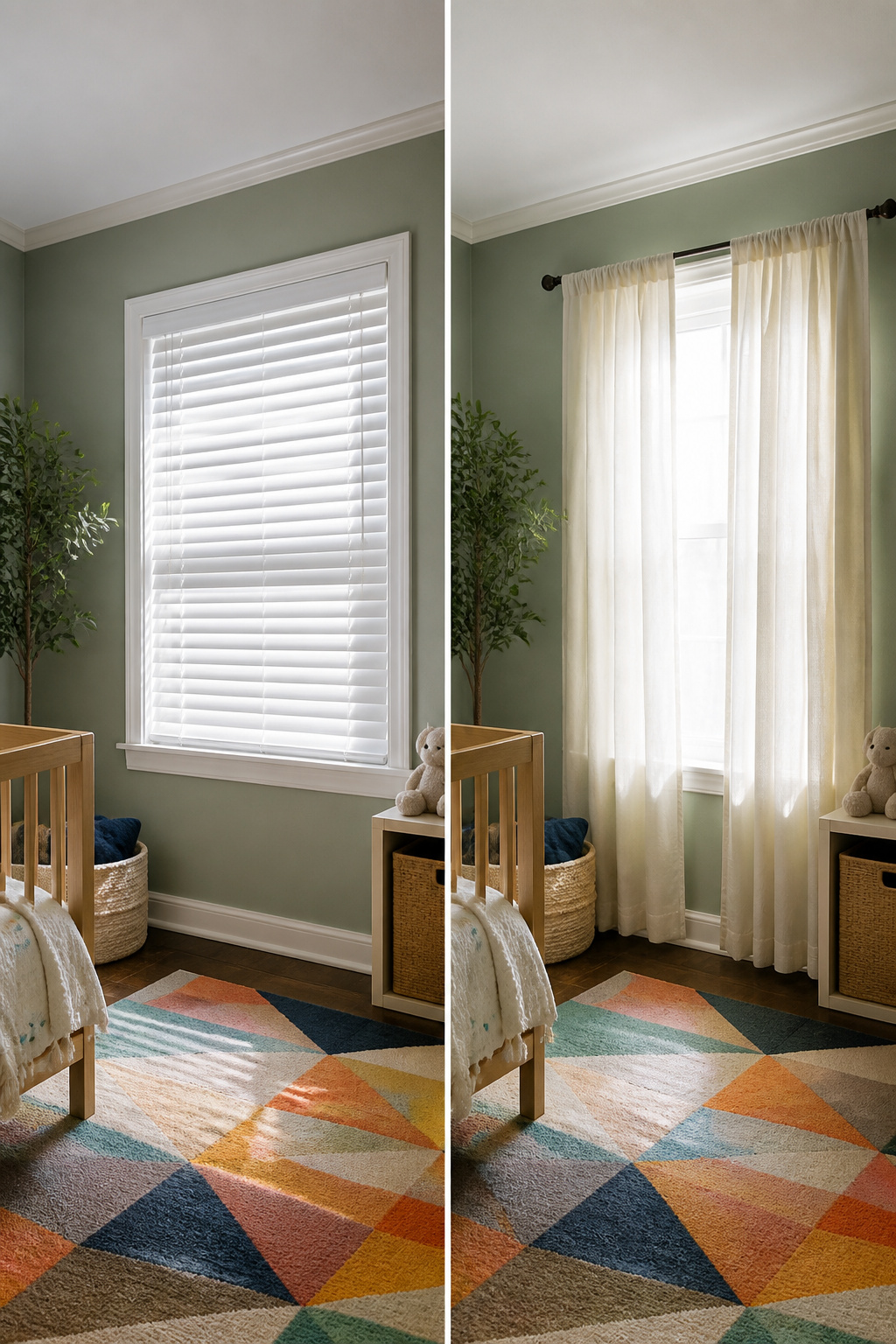
Wood blinds carry that traditional nursery look people picture when they think of a classic kids’ room, but the version that belongs in there now is cordless only. The old cord-and-wand systems are a strangulation hazard, so cordless lift or tilt mechanisms are non-negotiable for any space a baby will sleep in.
Slat width matters more than most people expect. Two-inch slats leave narrower light gaps when closed than the wider 2.5-inch alternative, which sounds minor until you’re trying to darken a room for midday naps. Neither width truly blacks out a window on its own, though. The light bleeds through the slats themselves and around the edges, so wood blinds work best paired with drapes or a secondary shade if complete darkness is the goal.
Real wood warps in humid air, and nurseries have plenty of it between diaper pails and running humidifiers. Faux wood holds its shape through that moisture cycle and costs less, which matters when the window treatment may outlast the crib itself. The trade is in the grain, real or printed, but from across a room the difference is slight and the durability gap is real.

💫Ready Made: Includes 1 single-panel curtain, magnetic rod accessories, and self-adhesive mounting strips. The top secures with Velcro. A rod pocket on the back allows you to insert the rod accessories, ensuring the curtain hangs perfectly flat and taut when closed. It easily covers French doors, sliding glass doors, or large interior windows, ensuring complete privacy and a seamless look.

Size instructions and inside mount only: No Drill Roman Shades sizes displayed on the page are the actual shade size you will receive. There are tension rods on both sides of top rail, please measure your window size carefully, and your window width should be 3/8-1/2 inches wider than the shade width for perfect fit. So this 23 inches wide 50 inches high roman shades fit for window width 23 3/8 - 23 1/2 inches, window height should be less than 50 inches. Please Note: Minimum 2" depth of window frame required, so this no drill roman shade may not fit for doors.
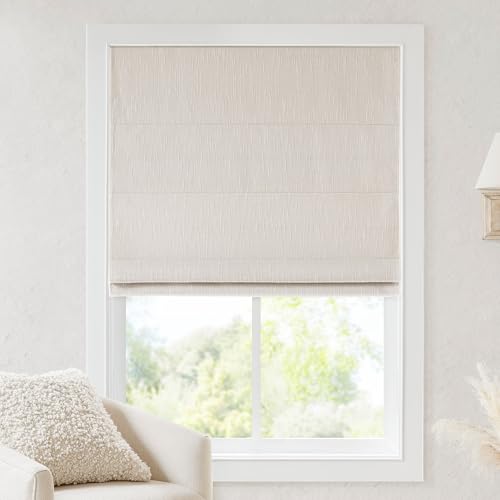
True to size - Refer to our sizing guide image for your perfect fit. SIZE: 34"W x 64"L. Inside mount requires shade 0.5" shorter in width, while outside mount requires shade 3" wider than your window size
5. Valances
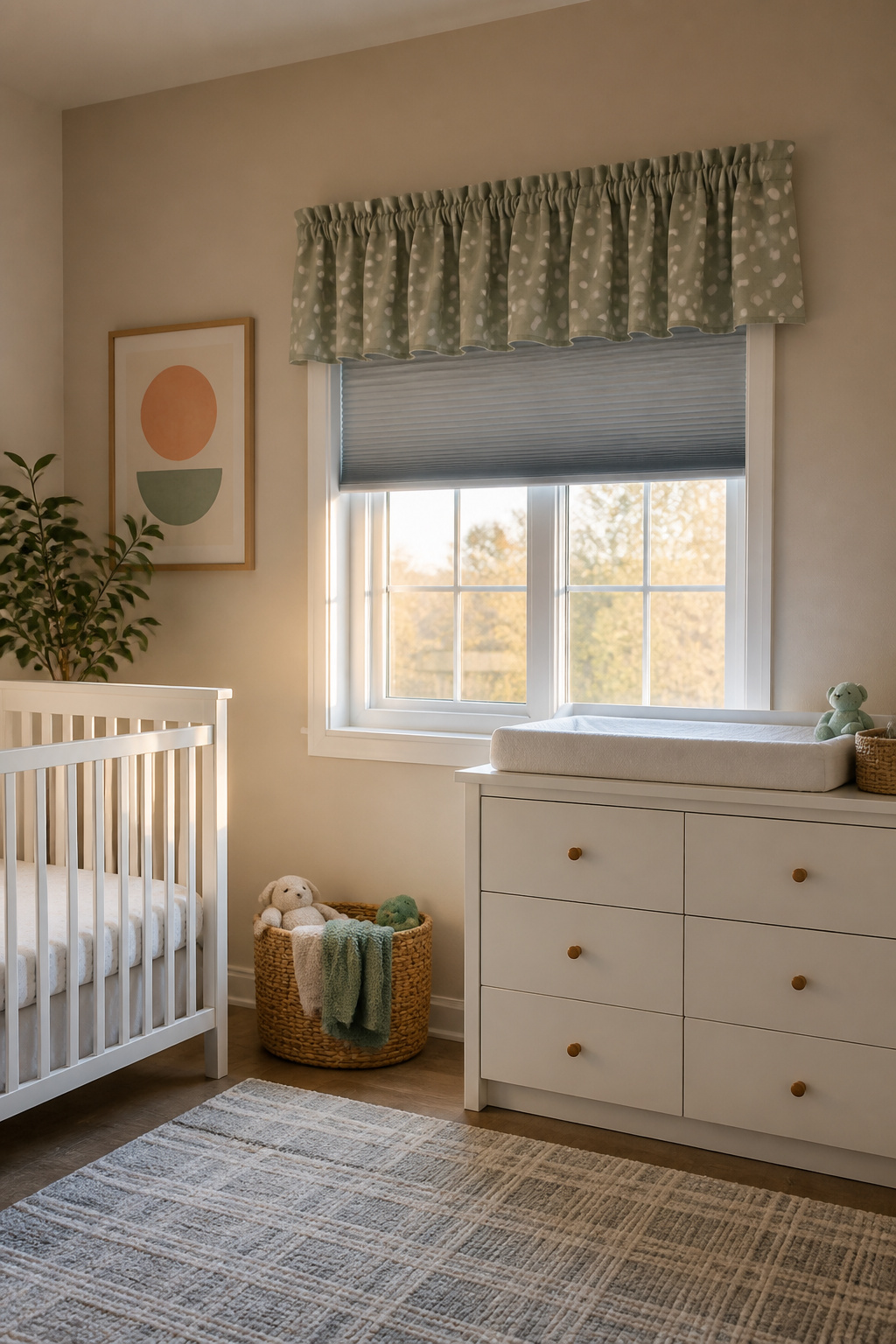
A valance is the decorative layer that hides mounting hardware and softens the top edge of a window, not a treatment that stands alone. In a nursery, the mistake is treating it as the full solution: gathered, scarf, or straight styles all leave the glass exposed, which means mid-afternoon sun still hits the crib directly and privacy disappears after dark. Pair every valance with blinds or shades beneath it so nap times stay dark and hardware stays hidden.
The hardware question matters for safety. Interior mounting and sleeker rod options have reduced the need for bulky top treatments, but a valance still does the cleanest job of masking the brackets and headrail of a roller shade or cellular blind. It adds the finishing touch without adding risk, since the fabric sits high and out of reach.
For under $30, a tension rod and a simple fabric panel do the same work. Buy a panel from a big-box store, hem or hot-glue the edges if needed, and mount it above the functional shade. No sewing required, and the whole assembly comes down in seconds for washing.

Pair Sold: Each package includes 2 panels of short blackout curtains. Each panel measures 40"W x 63"L, with a pair measuring 80"W x 63"L. The curtains blackout have 2 hanging options (Rod pocket & Clip Style) with a 3-inch rod pocket to fit standard or decorative curtain rods. Don't worry if this blackout curtain is a few inches shorter than your window. Hang with rings & hooks for easy 3-4" height adjustment.

SET DETAILS: Set of 2 light gray total blackout curtain panels per package. Each lined curtain measures 42 inch wide by 63 inch long with 6 silver metal grommets (1.6 inch inner diameter) on top, easy to install and slide.

SIZE & MATERIAL:Set includes 2 panels blackout curtains(52" Wide by 84" Long). Each panel has 8 grommets.The interior diameter of hole is 1.6 inch.It's easy to hang. Curtains are made by quality faux linen.
6. Sheer Curtains
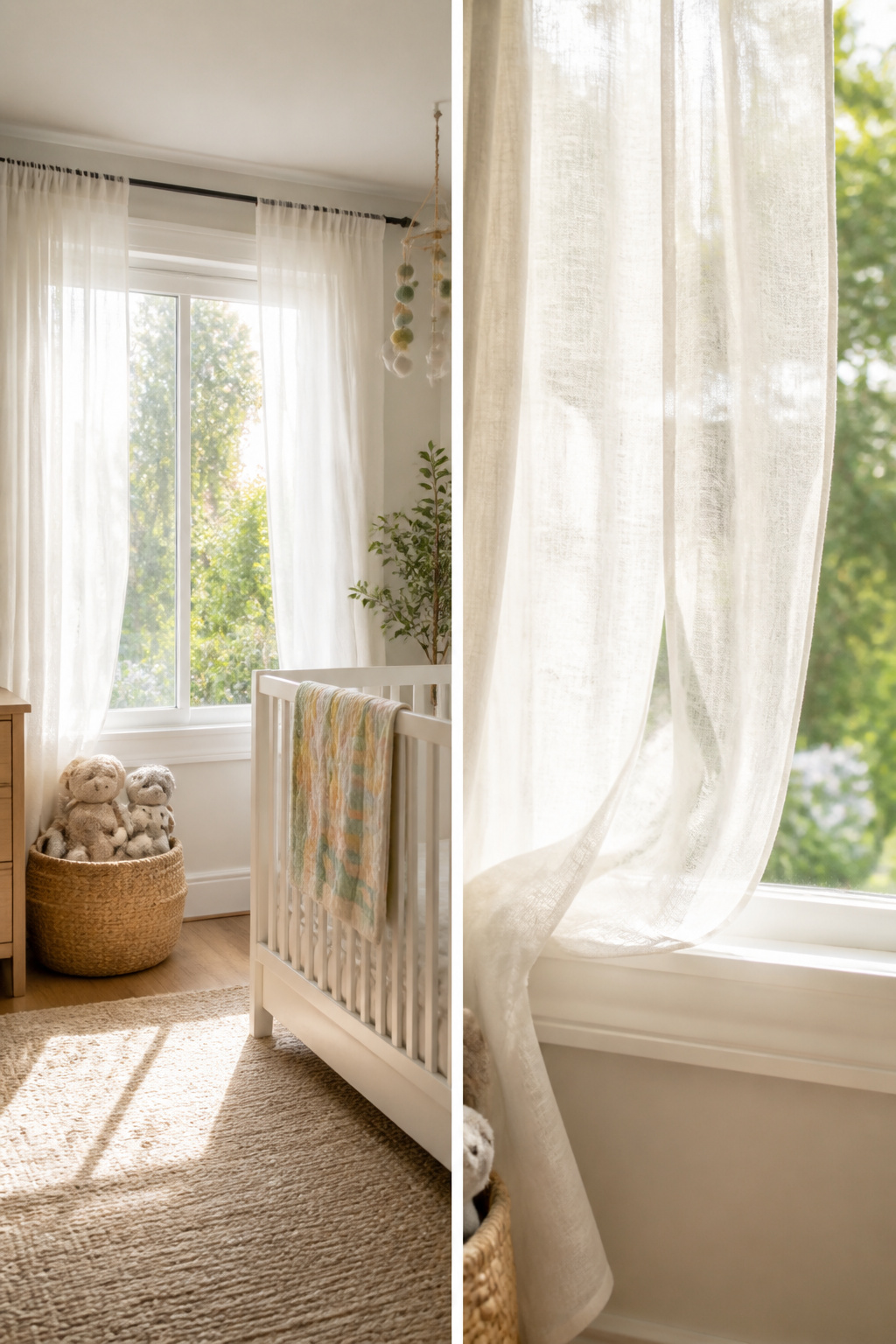
Sheer curtains filter daylight into something soft and usable, but they do not block it. In a nursery, that makes them the daytime layer and nothing more. The gauzy fabric gives you privacy from the street without turning the room into a cave, which is exactly what you want for morning play and nothing like what you need at 5:30 a.m. in June when the sun rises before the baby is done sleeping.
The fix is a double-rod setup: sheers in front, blackout curtains or Roman shades behind them. The sheers stay closed for diffusion during the day, and the blackout layer rolls down or slides shut for naps and night. Interior-mounted Roman shades work particularly well here, since you get the full blackout when lowered and the breezy layered look when raised. It costs more than a single treatment, but a single treatment always forces a choice you do not want to make.
I have seen the mistake enough times to name it: sheers hung alone, parents confused why the baby wakes with the sun. The fabric looks gentle, so it is easy to assume it does more than it does. Sheers alone will not get you past sunrise in summer. Pair them properly or skip them entirely.

Ready Made: Package includes 2 pieces of high quality blackout curtains. Each curtain panel measures 52 inches wide and 84 inches long with 8 nice anti-rust silver grommets(1.6 inch inner diameter) which would fit most standard curtain rods. Better quality grommets give you better experience to draw curtains unhindered

STYLISH BLACKOUT CURTAINS: Elevate your space with our timeless plaid curtains with sophisticated blackout linen fabric. This farmhouse-inspired pattern blends perfectly with various art styles, suitable for living room & bedroom, ideal for your winter festival home deocr.

WELL MADE: Sold per pair, including 2 grommet curtain panels - Panel measures: 42"W x 63"L|Set measures: 84"W x 63"L. Each panel has 6 elegant metal grommets, inner diameter of grommet is 1.6", fit well with standard or decorative curtain rods
7. Shutters
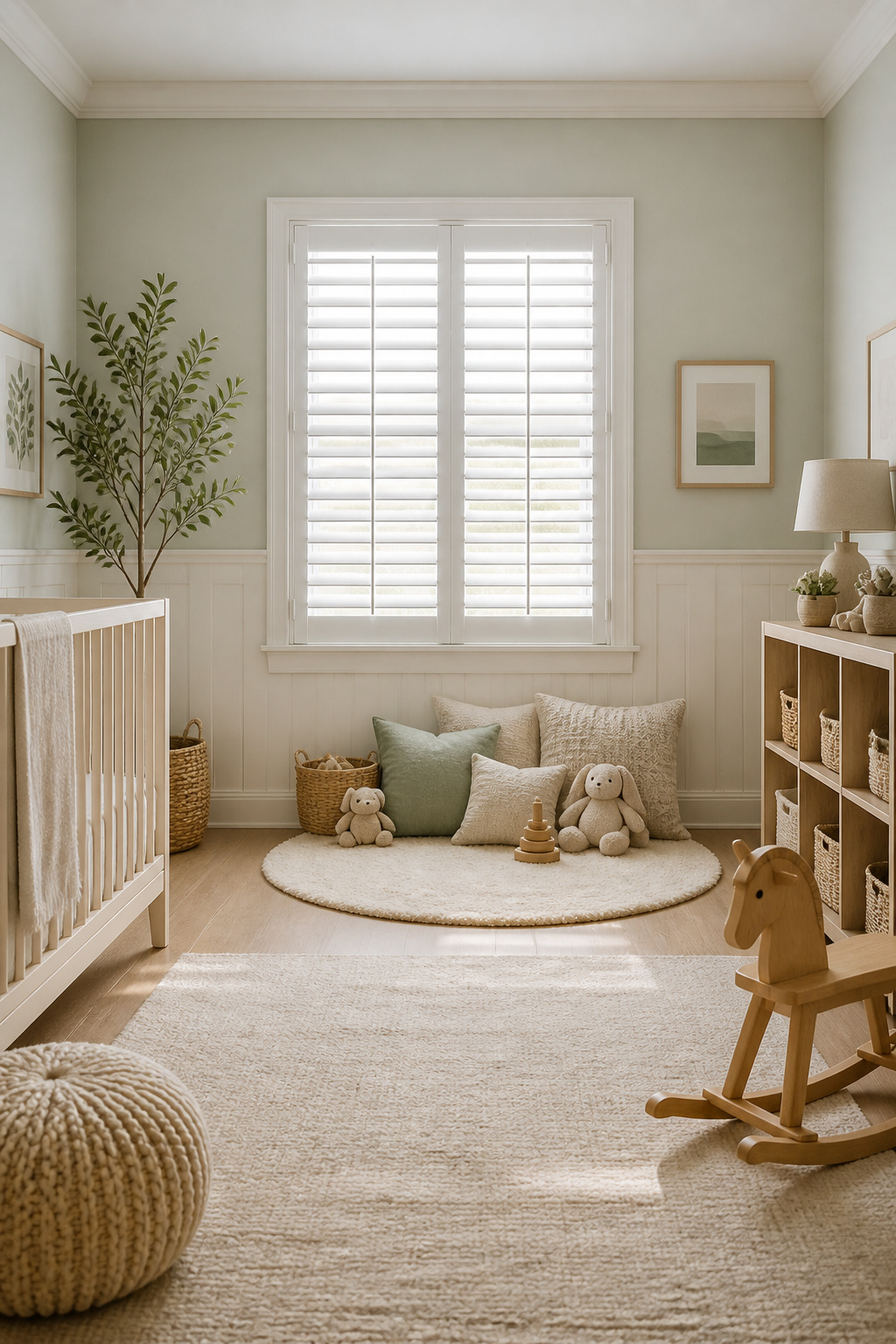
Plantation shutters are the most permanent choice in nursery window treatments, and that permanence cuts both ways. The louvers tilt open or closed for light control, and there are no cords at all, which removes the strangulation hazard that keeps parents up at night. A damp cloth wipes them clean; you will never haul fabric down to wash or discover dust buildup at naptime.
Custom shutters run $200 to $400 per window, and they stay with the house when you move. That makes the math sting if you are renting, but it pays out over years in a home you own. The solid build also blocks outside noise and insulates against temperature swings, both useful when a toddler’s sleep schedule is fragile.
Where shutters make the most sense is a nursery you plan to convert to a child’s room. The clean white lines outlast pastel themes and crib eras, and the slats still control privacy for a grade-schooler. The downside is the install itself: measuring and mounting are exacting work, and unlike a curtain rod, you cannot reposition them on Saturday afternoon if the first try looks off.

99% BLACKOUT & UV PROTECTION FOR RESTFUL SLEEP: Woven blackout honeycomb fabric laminated with an aluminum layer block up to 99% of sunlight and UV rays, creating a darker, more restful space. Ideal for bedrooms, nurseries, and home theaters, our cellular shades help light-sensitive sleepers, shift workers, and babies get better rest. A slight side glow may appear on inside mount windows depending on width, which is normal for adjustable fit blackout shades.
99% BLACKOUT & UV PROTECTION FOR RESTFUL SLEEP: Woven blackout honeycomb fabric laminated with an aluminum layer block up to 99% of sunlight and UV rays, creating a darker, more restful space. Ideal for bedrooms, nurseries, and home theaters, our cellular shades help light-sensitive sleepers, shift workers, and babies get better rest. A slight side glow may appear on inside mount windows depending on width, which is normal for adjustable fit blackout shades.
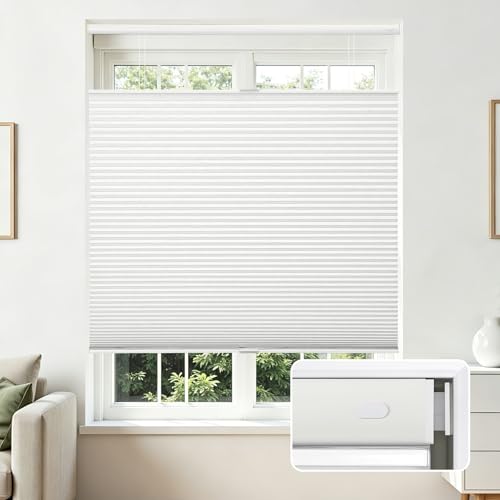
No Drill Blinds: Enjoy no drill effortless installation with Joydeco’s tension-mounted design. Measure accurate size for inside mounts: The chosen cellular shade width should be less than or equal to the window's inside frame measurement, with a maximum reduction of 1/2 inch from the window size.
8. DIY Options
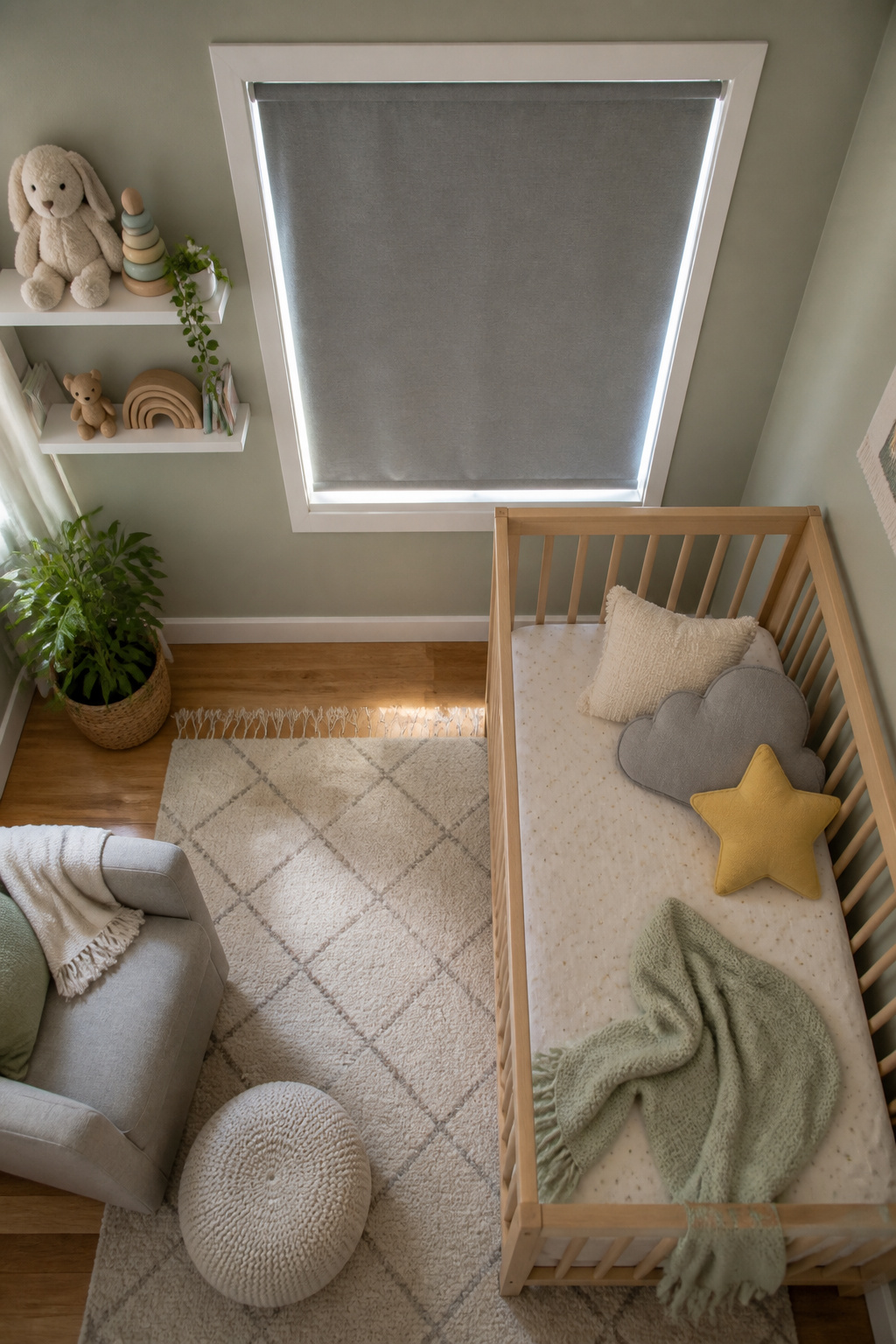
The blackout panels I ended up with started as utility fabric from the back corner of a big-box store, the kind with a fuzzy white fleece bonded to one side and a matte gray face on the other. A tension rod inside the window frame held them without a single screw, which mattered because we were renting and the lease had a paragraph about "existing fixtures only." I cut the fabric to size, folded a double hem along each edge, and ran iron-on hem tape through with a hot iron. The result looked finished from the street and blocked light like a commercial panel.
The whole window cost about $40. Comparable ready-made blackout panels ran $180 for the same coverage, and the $140 difference was mostly markup on a rod pocket and grommets I did not need. The savings showed in the hardware: a $12 tension rod versus a $40 decorative one, and fabric sold by the yard rather than by the "panel" at roughly triple the per-yard price.
The fleece side faces the glass, which also buys a little sound dampening. On the one window where the tension rod sat slightly crooked, the inside mount hid the gap completely.

【ENVIRONMENTALLY FRIENDLY RECYCLABLE MATERIAL】Persilux blackout cellular shades is made from recycled materials, which is a great way to continue your eco-friendly lifestyle. Instead of using all new materials to create these blinds, you can have peace of mind that you're giving materials a new life (image 3).They come in multiple fabric colors as light filtering or blackout. Special honeycomb structure offers features such as energy saving & thermal insulation & noise reduction.
【No Drill Install in 30 Seconds】Install these no drill cellular shades without wall screws, brackets, or wall damage. It can be securely installed inside any window frame– tile, marble, wooden, metal frame – in just 30 seconds. The tension mounting system is ideal for apartments, rental homes, bedrooms, and spaces where you want a cleaner window upgrade without drilling

No Drill Blinds: Our tension mount system requires NO DRILL, NO TOOLS, and NO DAMAGE. The dual-spring design provides equal tension on both sides for maximum stability, prevents sagging and securely holding up to 30 kg. Installs easily in under 1 minute on wood, tile, or concrete window frames.
Cord Safety
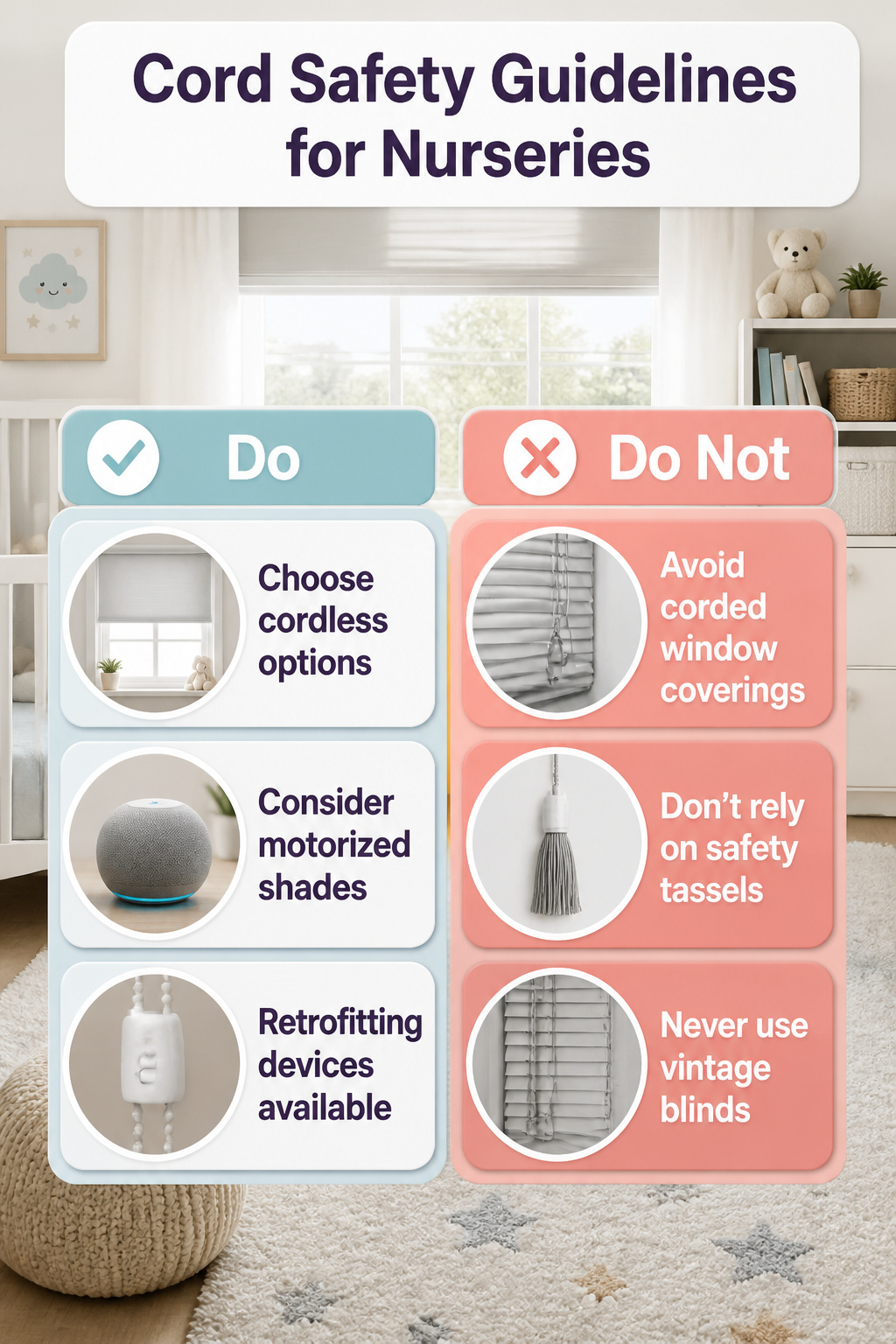
Every year, window cords strangle children under three, which is why every guide puts this first. The CPSC now mandates that custom window coverings meet federal safety standards, and the distinction between "cordless" and "corded with safety tassel" matters more than the marketing suggests. A safety tassel breaks apart under pressure, but cordless means no accessible cord at all, and that is the only option I would install fresh in a nursery.
Motorized shades cost more, but the price gap has narrowed enough that they belong in the conversation. Being able to lower blackout shades by phone while holding a feeding baby is not a luxury feature; it is a workaround for a room you cannot leave.
If you are keeping existing blinds, breakaway devices retrofit onto corded systems and satisfy the Best for Kids certification program. They are better than nothing. They are still second best, because the cord still exists in the room.
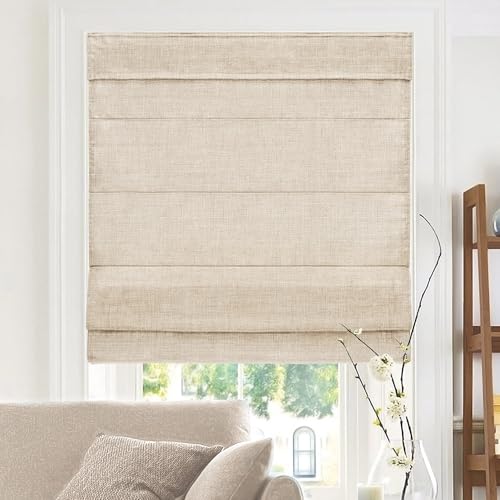
PRIVACY + LIGHT FILTERING (NOT BLACKOUT) – Softens sunlight and provides daytime privacy. At night with interior lights on, silhouettes may be visible (common for light-filtering shades).

No Drill Blinds: LazBlinds patented technology No Tools-No Drill system allow it no need to drill any holes on your window frame, great for Renter, Landlord, and Home Buyer. Easy to Install in 30 seconds with no tools-no drill, screws, or brackets. And it can afford maximum 30kg. Fit All Kinds of Walls, like woodiness metope, tile marble, concrete wall and rough tile.
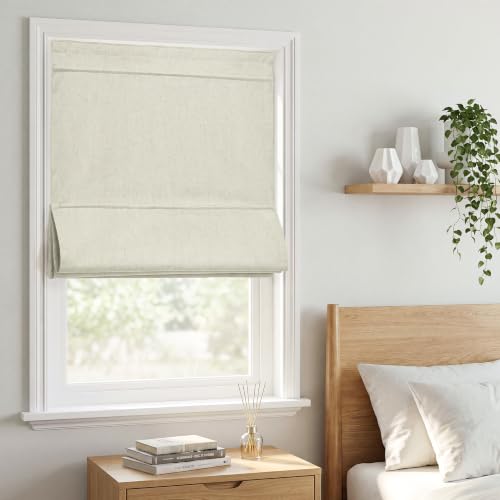
Easy, Damage-Free Installation: Say goodbye to drilling and complicated installation. Simply stick the high-strength adhesive strip to quickly and securely install the Roman shade. The strong adhesive ensures it stays firmly in place over time, so you don’t have to worry about it falling or damaging your walls or window frame. Perfect for rentals, temporary homes, or anyone who wants to avoid wall damage.
Light Control for Sleep
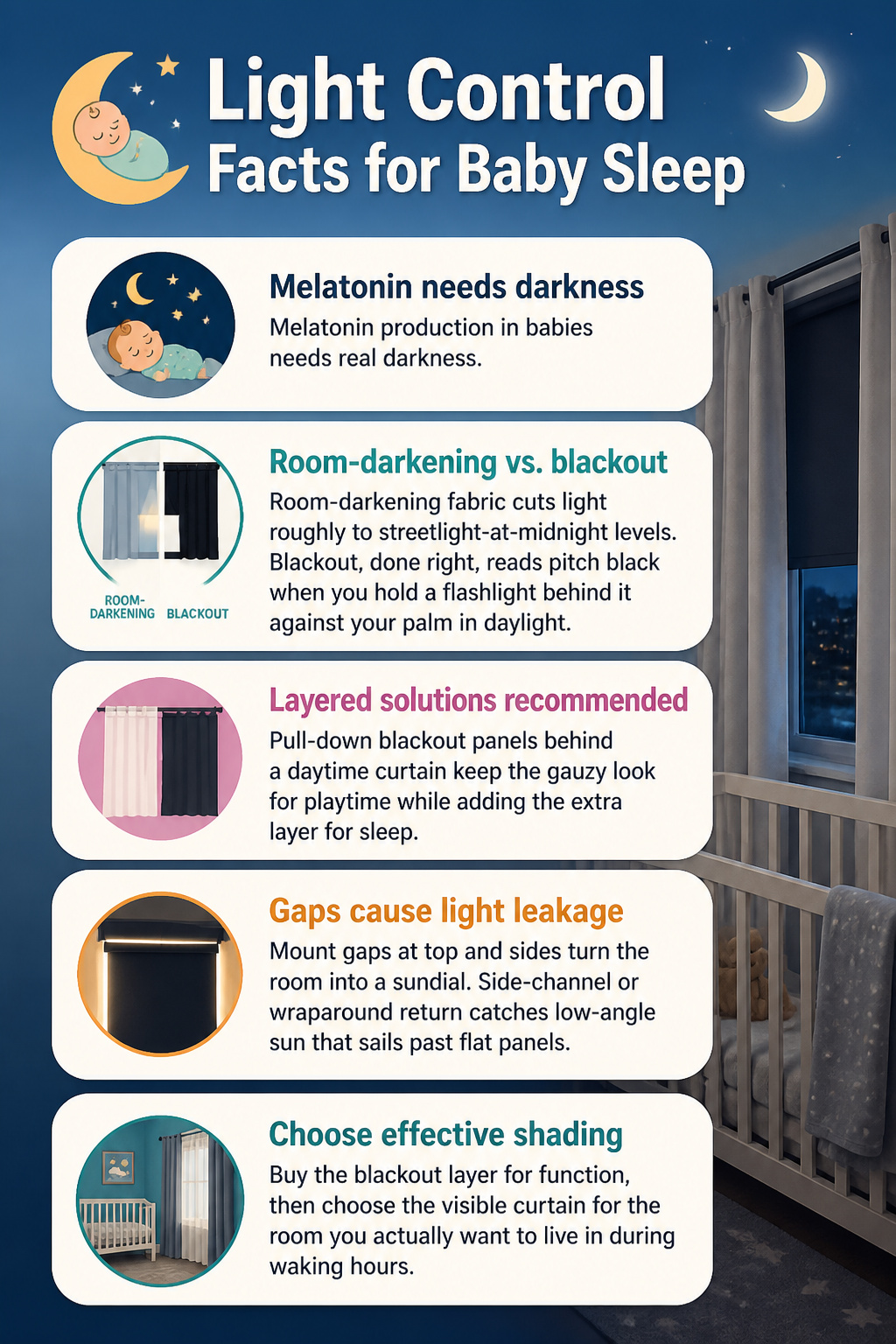
Melatonin production in babies needs real darkness, not the dimness most adults sleep through. Streetlight seeping around curtain edges or through top rails is enough to reset a newborn’s clock, which is why room-darkening and blackout are two different thresholds. Room-darkening fabric cuts light roughly to streetlight-at-midnight levels. Blackout, done right, reads pitch black when you hold a flashlight behind it against your palm in daylight.
The test is simple once installed: wait for afternoon sun, cup your hands around the flashlight against the shade or curtain, and look for any glow. If you see the bulb shape, light is still getting through.
That glow is almost never the fabric’s fault. Danielle Moss found this with outside-mounted woven wood shades lined in blackout material; the lining blocked light fine, but the mount left gaps at top and sides that turned the room into a sundial. Her solution was layering, not replacement. Pull-down blackout panels behind a daytime curtain keep the gauzy look for playtime while adding the extra layer for sleep. Pottery Barn Kids and similar lines build this same logic into blackout liners that slide across on their own track.
Summer evenings and winter mornings test different edges. June light lingers past eight and bounces off snow in January, so the layering strategy needs to account for both: a side-channel or wraparound return catches low-angle sun that sails straight past flat panels. Relying on a single product, however thick its label claims, leaves you adjusting blankets over the rod at 5 a.m. when the gap finds your cheek.
Nothing beats blackout shades for the nursery, especially if you have a lot of natural light coming in or live in an area that stays light late. Pair simple, pull-down panels with any other curtain look to keep a gauzy and pretty presentation by day and have that extra layer for sleep.
What this means practically: buy the blackout layer for function, then choose the visible curtain for the room you actually want to live in during waking hours.
Temperature and Insulation

Cellular shades with their honeycomb pockets trap air against the glass and reduce heat transfer by up to 40% in manufacturer tests. That figure matters most in the rooms that fight temperature hardest: nurseries above garages where the floor bleeds cold, west-facing walls that bake from three o’clock on, or older homes still running single-pane windows the builder installed decades ago.
The practical check takes thirty seconds on a January morning. Touch the bare glass, then lower the shade and touch again through the fabric. The difference is what your baby sleeps against. Good insulating shades, custom drapery, or tailored Roman shades do not replace your thermostat; they remove the load that makes your heating system chase its own tail through the night. Same fabric that blocks heat transfer also softens street noise, which is worth something when garbage trucks run at 5 a.m.
Motorized cellular blinds add convenience but cost more and collect dust inside those cells where a wipe cannot reach. For a nursery you are already outfitting on a tight weekend budget, hand-operated honeycomb shades in a room-darkening fabric give the insulation without the upkeep headache.
Cleaning and Durability
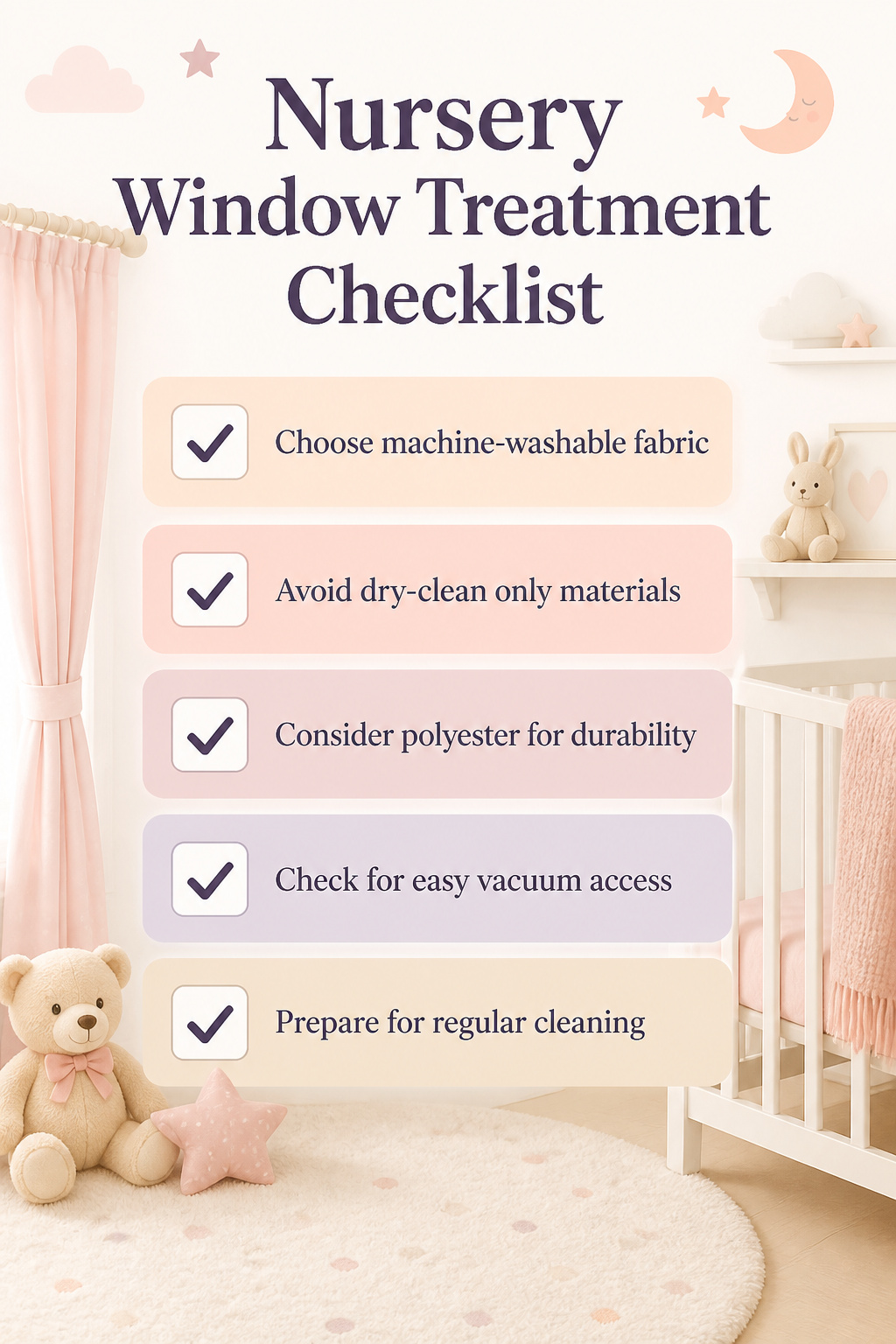
Machine-washable cotton panels held up better than anything else against the biology of a nursery. Spit-up and diaper cream came out on a normal cycle, and the fabric softened instead of breaking down. Silk or anything "dry clean only" is a trap in a room with a changing table; you are not hauling curtains to the cleaner every Tuesday because the baby found the Desitin.
Polyester blackout curtains were what I ended up with, mostly because I could throw them in the wash every two weeks without thinking. They do not feel as nice as cotton, but they block light and they survive. Horizontal blind slats, meanwhile, collect dust in a way that looks harmless until you try wiping them one by one while the baby naps. Vacuuming helps, but the buildup happens faster than the cleaning.
Style That Lasts Past the Crib
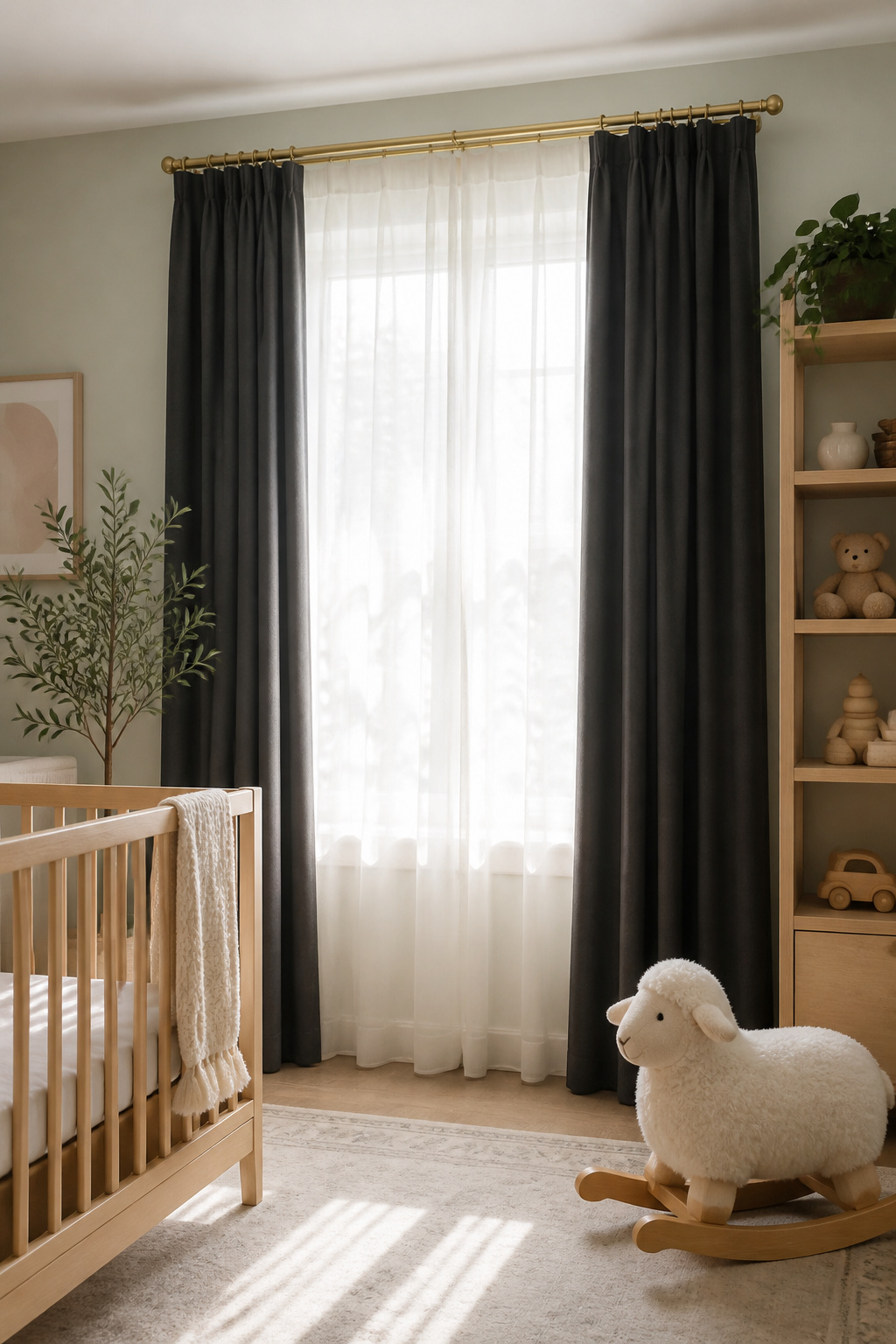
Charcoal linen-look panels with white sheers went into my nursery instead of pale blue sailboats, and at six years old that room still looks intentional. The trick is choosing a base that reads as adult fabric in child-scale proportions. Pattern is where most people lose the long game: a geometric or texture-heavy weave ages better than motifs that announce a baby’s age.
Hardware finish matters more than most fabric choices. Brass, nickel, or black, that metal is what your eye registers first from the doorway, and it is what ties the room to the rest of the house. I picked the finish before I picked the panels, because swapping rods later means new brackets, new holes, and a wall that shows the story.
Sheers layer in without dating themselves, and they are cheap to replace if taste shifts. The heavier panels do the blackout work; the sheers just soften the window into something that reads bedroom rather than nursery. By the time the crib leaves, the only thing you are swapping is the mattress size.
Frequently Asked Questions
What type of curtains are best for a nursery?
Blackout and insulating curtains are best for a nursery. True blackout fabric uses a dense weave or bonded liner to block 95 to 100 percent of light, which keeps babies asleep through sunrise and summer evenings. Room darkening only hits that 95 percent ceiling and still leaks morning light around the edges.
Is it safe to put curtains in a nursery?
Curtains are safe because they have no control cords or exposed cords that could cause entanglement or strangulation. Securely fasten brackets and rods, keep them out of crib reach, and avoid dangling decorations or embellishments that could be swallowed. Tension rods are not recommended since infants can tug them down.
What type of shades are best for a nursery?
Cellular shades are the strongest all-around choice. Their honeycomb pockets trap air to insulate against heat, cold, and sound, and blackout fabric options are available in the same construction. Cordless lift is the version worth paying extra for in a nursery, both for safety and for one-handed operation while holding a baby.
How do I choose window treatments for a nursery?
Prioritize cordless operation for safety, then match the treatment to the window’s problems. Blackout layers preserve nap schedules, cellular construction handles temperature swings on west-facing or over-garage windows, and machine-washable fabrics survive spit-up and diaper cream. Choose hardware finish and base fabrics that read as adult design in child-scale proportions so the room ages past the crib.