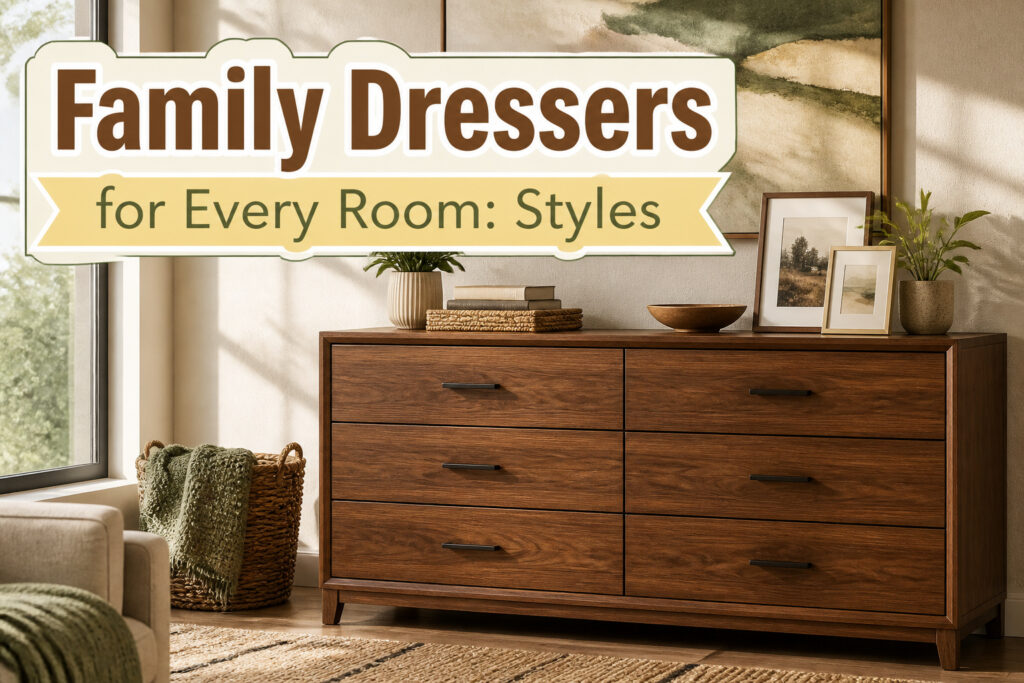
A family dresser is the piece that absorbs daily yanking from people who can’t read "gentle" and still looks at home once the nursery phase ends. That only works if you buy past the phase upfront; otherwise you’re replacing particleboard corners that soften in a single month of use, as one tester found with the $849 Marin and its stuck glides. The ten dressers below run $349 to $1,885, and the real split is between glides that extend fully at 3 a.m. and glides that don’t.
[link-whisper-related-posts]What Family Dresser Means Now
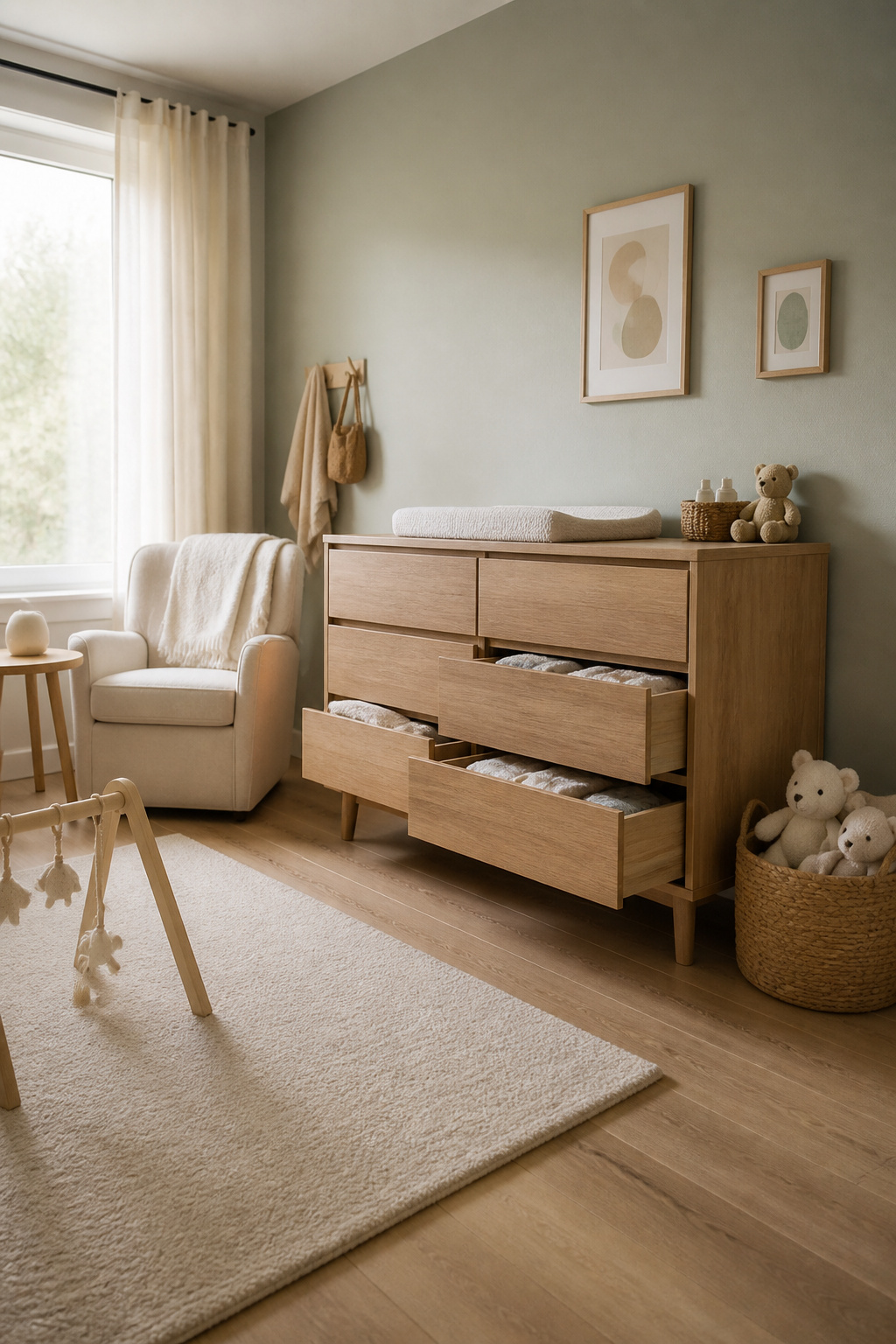
Standing in the nursery at thirty-six weeks, I finally saw it: the sleek dresser we’d registered for had six drawers, sure, but the glides stuck halfway open and the particleboard corners were already softening from one month of use. A family dresser needs to handle accumulation without becoming a stuffing contest, survive daily yanking from people who can’t yet read "gentle," and look like it belongs somewhere other than a baby’s room once that phase ends.
The Marin dresser someone tested arrived fully assembled at $849 with ball-bearing glides that actually extended, which matters when you’re fishing for a onesie at 3 a.m. But the changing tray cost extra, and the cane panels, while beautiful, read nursery-specific. The Wes from Crate & Kids ran $799 with quiet-closing drawers and a Greenguard Gold certification, though the engineered wood grain looked manufactured and the drawers drifted open, a small flaw now that becomes a toddler-access problem later.
What I was actually hunting wasn’t on either spec sheet. I wanted a piece that could absorb the volume shift from newborn onesies to size-6 jeans without looking like I was storing someone else’s aesthetic. Ten options later, the split became clear: buy for the phase and replace, or buy past it and live with the upfront cost.

【78.7 Inch Long Dresser with 15 Drawers】Extra Long, Enlarged Storage. Your closet overflows, until this large dresser for closet. Between seasonal clothes, extra blankets, there is zero space left? This extra-wide long dresser gives you 15 storage fabric drawers. Finally, your yoga pants, spare cables, and winter hats have a real home

【Spacious 5-Drawer Dresser with Storage】 This wide fabric dresser features 2 large drawers for jeans, pants, or sweaters, and 3 smaller drawers for socks, underwear, T-shirts, or accessories. Perfect as a bedroom dresser, closet organizer, or storage chest for entryways, and dorms.

Fusion That Delights: From the BELLAH Collection, this chest of drawers fuses steel, engineered wood, and non-woven fabric for a perfect blend of strength, softness, and storage. Pair it with nightstands for a cohesive space that feels just right
1. Newport B5430-20 Drawer Dresser
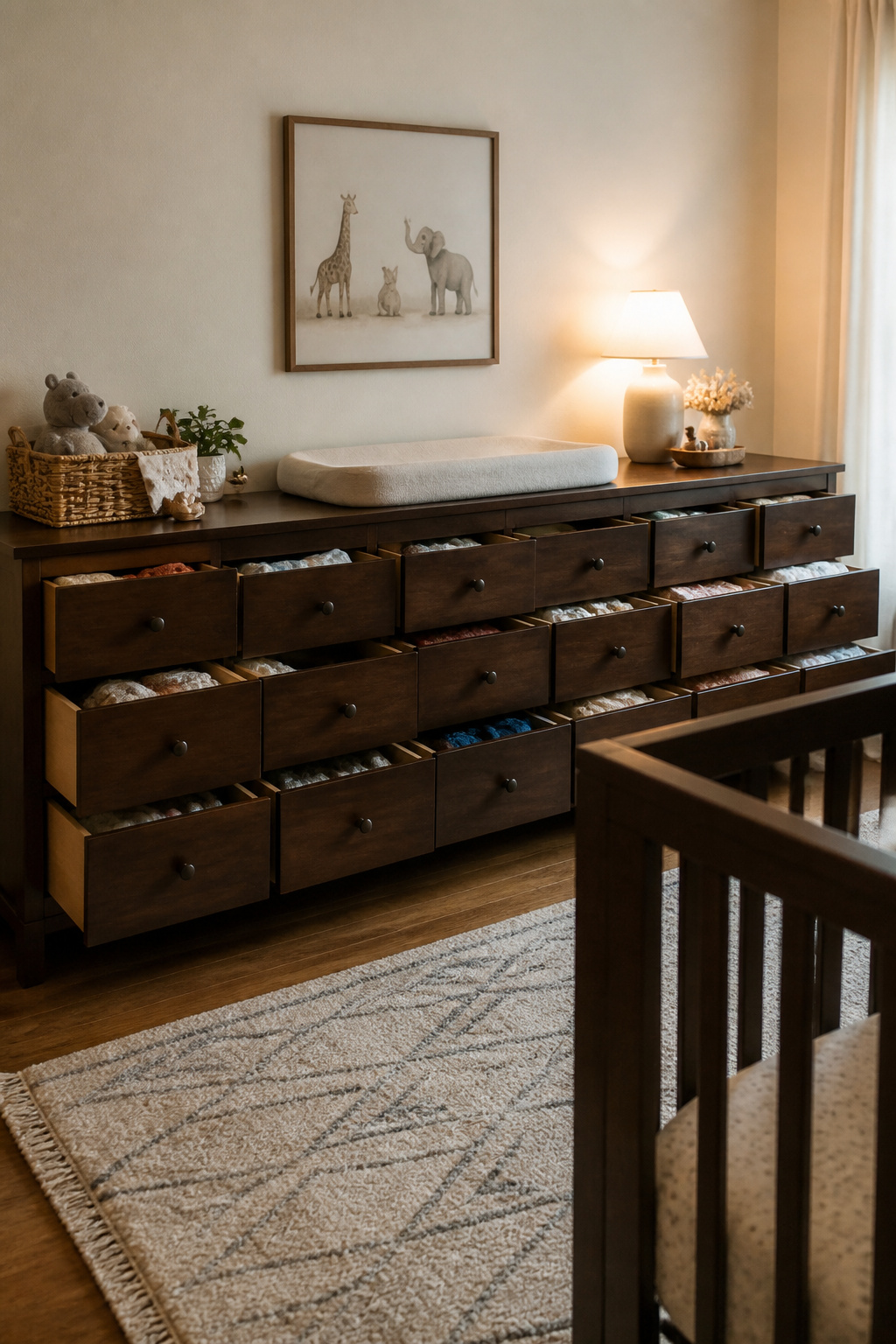
At 68″W x 18″D x 40″H, the Newport B5430-20 spreads its storage wide and low. The footprint eats a five-and-a-half-foot span of wall, which in a nursery means you are probably giving up the space where a glider would have lived. Depth is the saving grace here. At eighteen inches, it sits closer to the wall than a standard twenty-one-inch dresser, so traffic paths stay open in a smaller bedroom.
Twenty drawers across that width works out to roughly three and a half inches of face per drawer. That density favors small-item storage, the kind of compartmentalized chaos that baby gear generates. Folded adult clothes in a stack need more vertical clearance per drawer than that math suggests you will get. The build is listed at Family Furniture as on display in their showrooms, which tells me it is a volume mover rather than a special order piece. Volume usually means laminate over composite, not the solid poplar you see in the higher Namesake lines. Whether the price matches the material depends on what they are asking, but at that drawer count and width, the cost is likely covering real estate more than craftsmanship.

UNIVERSAL CHANGING TOPPER — SECURE & CONVENIENT DESIGN: The Storkcraft Universal Changer Topper transforms compatible Storkcraft & Graco double dressers (minimum surface dimension of 17 inch x 46 inch) into a convenient baby changing station

Our Premium Baby Changing Tray is Unique and Hand Woven by our artisans. Note: Small Diaper Caddy Basket is Not Included!

Comfy design: The pad's comfy foam construction provides a sturdy surface that helps distribute weight evenly and deliver pressure point relief
2. Vista Fremont Dresser
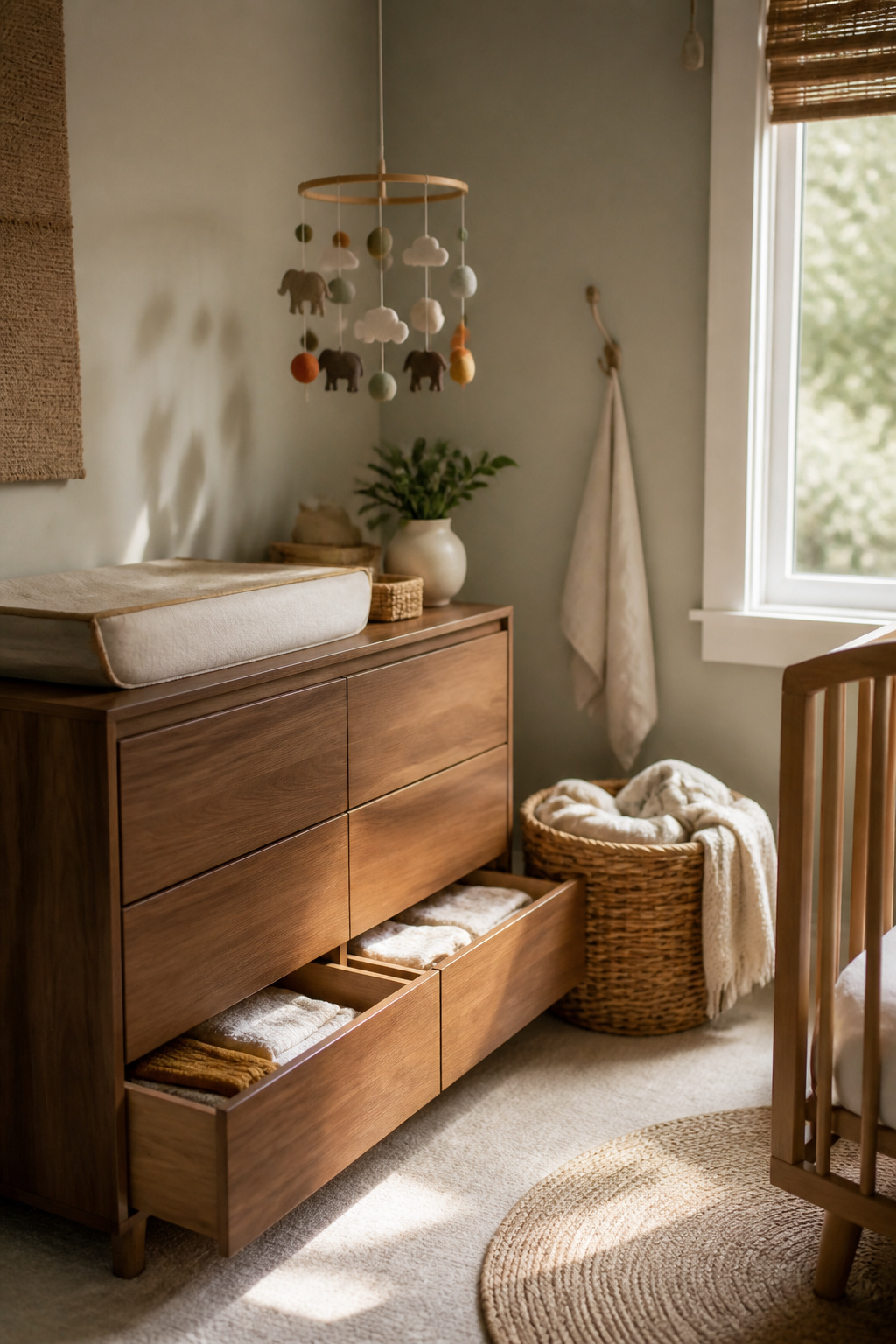
Cedar lining does two things for clothes in storage: it pulls moisture away from fabric and it smells like something moths want nothing to do with. The scent is sharp and specific, not a perfume but a warning signal in tree form. Those two bottom drawers in the Vista Fremont sit right where a parent might stash the next size up, the ones bought on sale six months early, or the outgrown newborn things waiting for a sibling.
That second use is where the cedar earns its keep. Outgrown baby clothes kept for the next child sit for months or years, exactly the timeline where moisture and moth damage actually happen. In a nursery where everything cycles through in six-week rotations, the lining is nice but not doing much work. Fast turnover means the drawer gets opened too often for moths to settle in, and damp clothes get washed before cedar could pull anything out of them.
If the plan is one child and done, those drawers function like any other. If the plan includes handing things down, the cedar becomes a reason to choose this piece over a dresser with identical dimensions and no smell at all.
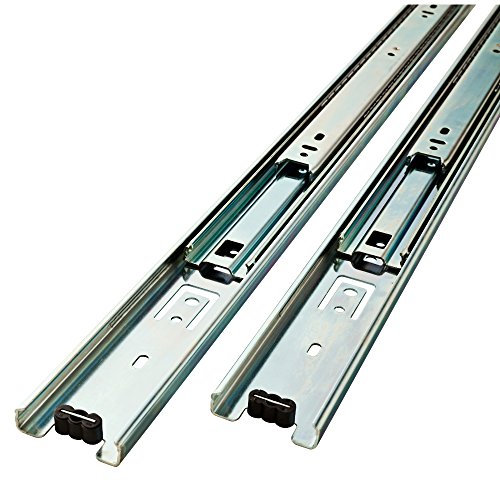
Made from stamped steel with a zinc plated finish

[4 pairs Full Extension Drawer Slides]:You will get 4 pairs(8pcs) full extension drawer slides ,12 inch.And each pair matchs with 12pcs screws.Sulawskys full extension drawer slides designed with 3-fold full extension, enabling them to fully open for easy access. You won't need to reach under the lip of your cabinet to access anything in the drawer.Ball bearings ensure smooth and quiet performance that offer less noise at closing and opening creating a silent life environment for your family.

Built to Stay Upright: When your toddler uses a drawer to pull themselves up, it stays put. Anti-tip tested to ASTM F2057-23 and CPSC standards, with reinforced back panels, internal supports and wall anchors in the box
3. Surfside 6-Drawer, 2-Door Dresser
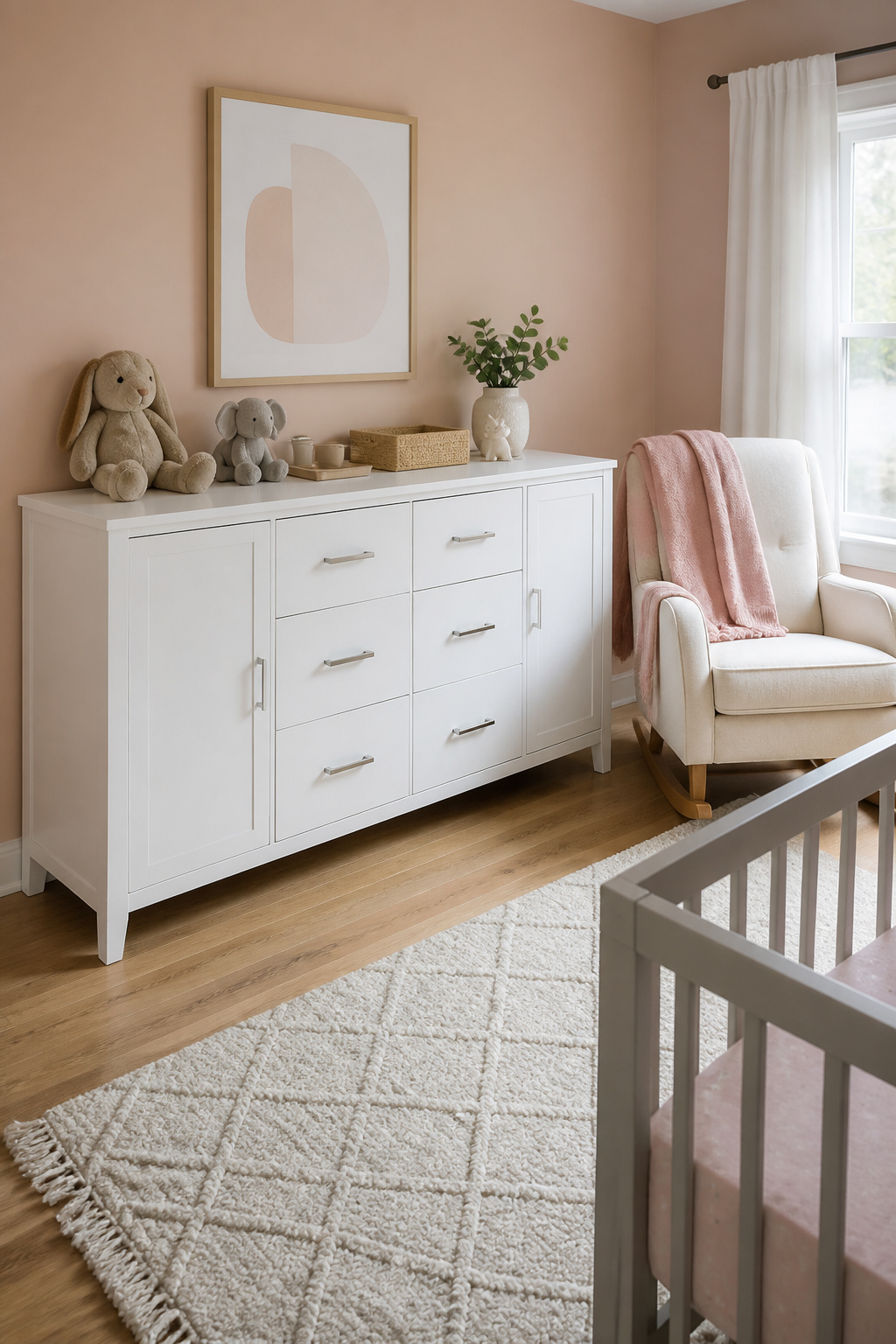
A six-drawer, two-door dresser with straighter lines and simpler hardware ages better than anything chasing the moment’s finish. Brass pulls and routed drawer fronts look dated fast; a plain bar handle or a cutout finger grip stays quiet through three redecorations. The construction matters more than the label. When I have moved pieces from nursery to a child’s room and finally to a guest space, the ones that survived were the ones that never shouted a decade.
Color works the same way. White or a mid-tone wood stain asks less of the walls around it than sage green or terracotta, which were everywhere in 2022 and already feel tired. Timelessness is usually the cheaper choice, not the premium one, because you are not paying to replace the thing when the room changes purpose. The dresser that works for onesies should still hold spare sheets for visitors at twelve years, and the simpler build gets there without costing extra up front.

【🏠Ample Storage TV Media Console】Measures 42.3" L x 15.6" W x 29.8" H, 50'' TV can be placed, our fabric dresser is equipped with 6 detachable fabric drawers and spacious woodtop, which facilitate the orderly storage of entertainment equipment and daily items, while the desktop provides display space for artworks and small ornaments, and more life style!

【Soft and Skin Friendly Fabric】These girls dresses is made of 100% cotton material, which increases elasticity and is gentle on the skin. Unlike party dresses with rough lining, your child will experience comfort throughout the day whether they wear it for daily wear or attend parties

【Space-Saving】With limited space, need to be modularity and space-saving. These drawer organzier is designed for making it easier to find anything in need. Good for organizing with clothes, socks, underwear, bra, scarves, newborn baby items and accessories. Ease of access in drawer, cabinet, dresser, closet and more.
4. Babyletto Gelato 3-Drawer Changer Dresser
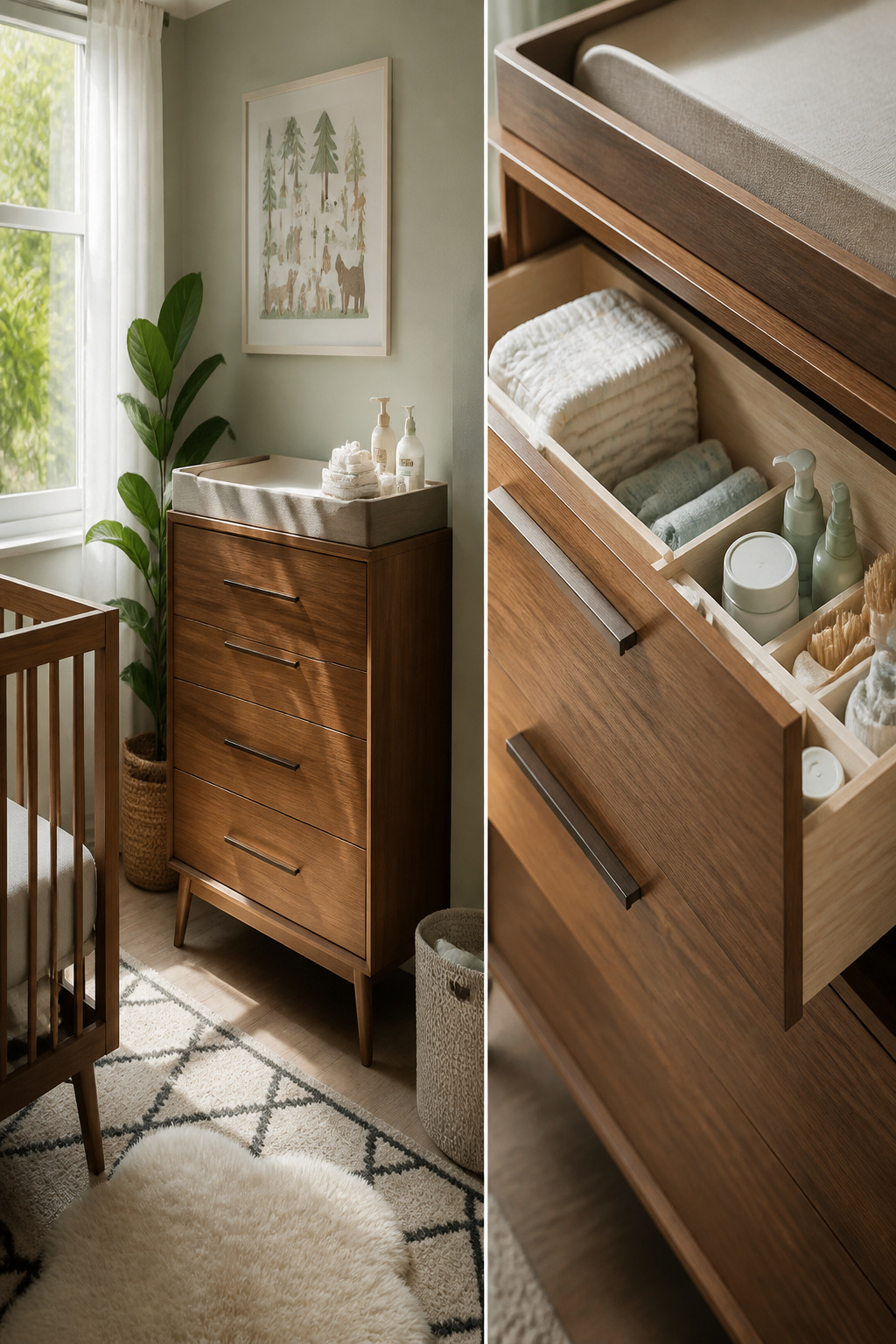
The Babyletto Gelato 3-Drawer Changer Dresser runs $349 on Amazon, or $499 at AllModern if you are comparison shopping. That price includes the changing tray, not an add-on you have to hunt down later.
At over 100 pounds, this piece ships in one large box and needs two people to move and build it. I found the parts labeled and the instructions detailed, but do not plan to solo this on a Sunday afternoon.
The drawers glide smooth and quiet, which matters more than you might think until you are shutting one at 2 a.m. with a sleeping baby six feet away. No extra force needed, no metal-on-metal snap to wake anyone.
Once the changing tray comes off, the dresser keeps working. Sources mention it becoming a nightstand in a guest room or storage for a workout area that doubles as office space. The scale fits small spaces, and the finishes, natural walnut with gold legs or cove blue among them, do not read strictly nursery. Plan to let it air out for a couple days after unpacking; the fume smell fades, but it is there at first.

Versatile Storage Solution: This multifunctional organizer fits seamlessly in your closet or entryway. It efficiently stores workout gear, blankets, delicate lingerie, and everyday essentials, maximizing space while keeping items neatly accessible

Maxi dress Is made of high quality polyester fabric that Is skin_friendly and Stretchy,It is comfortable to touch your skin, for women can be easily dress up or dress.

【Size】: 7.17" (182mm) long, 0.7" (17mm) wide two way drawer slides, perfect for various applications and fitting most drawer sizes.
5. Crate & Kids Wes 3-Drawer Wood Dresser
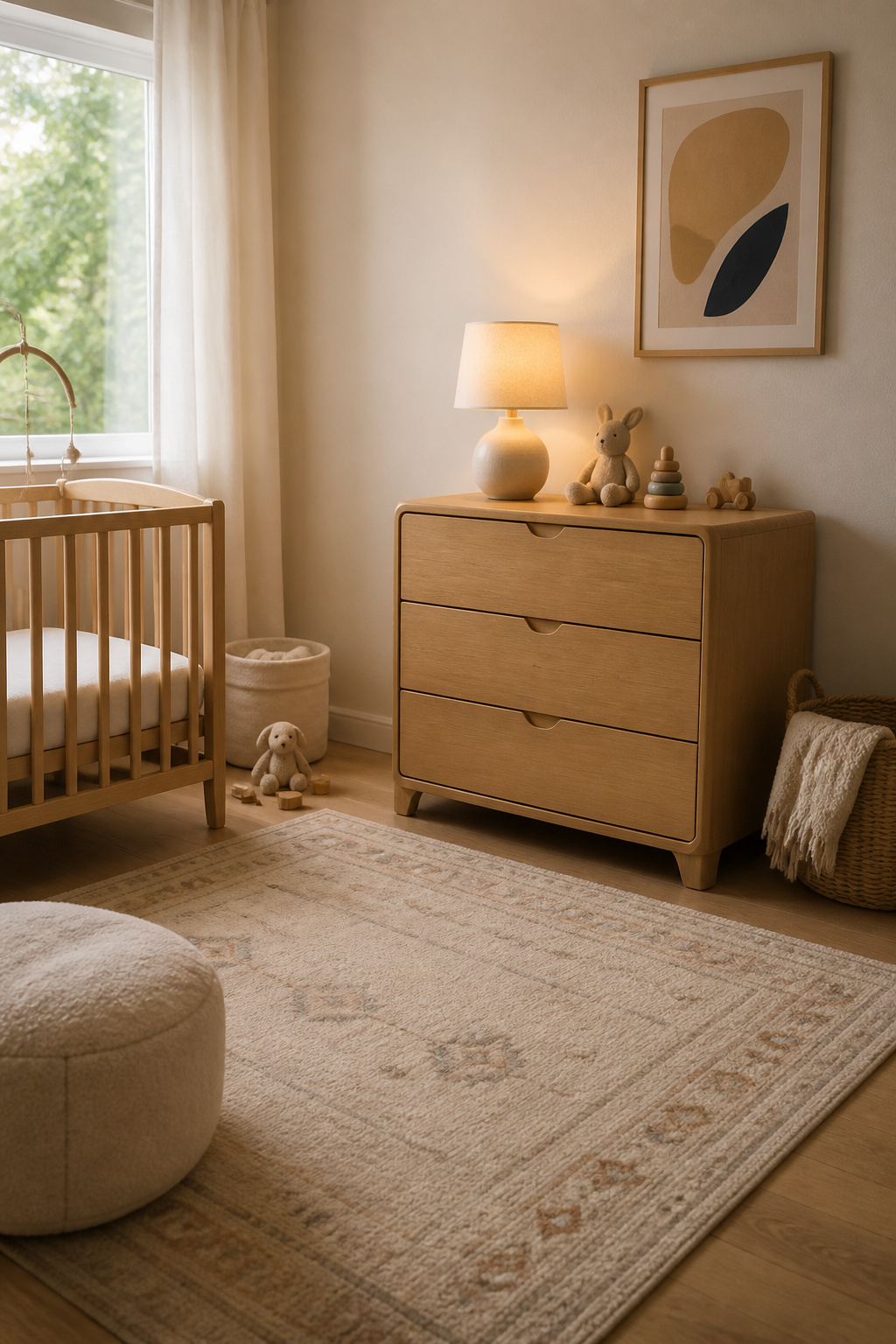
At 36 inches wide and 19 inches deep, the Wes lands in that zone where compact either saves you or betrays you. The $799 price puts it mid-range for nursery furniture, and the Greenguard Gold certification is a real plus if off-gassing worries keep you up at night, though it did not keep the tester up.
The oak shows on the exterior, the engineered wood and plywood do the structural work inside. That split matters most at the drawer joints and the top surface, where a changing pad will sit. Engineered wood handles humidity shifts better than solid boards, so the joints stay square longer, but the top will dent under a kneeling knee or a dropped wipe warmer. The tester noticed the grain looked manufactured up close, which is what happens when veneer meets budget.
Three drawers in this footprint fill fast. New parents tend to underestimate accumulation, so the Wes works better as a second dresser for overflow, or for a nursery with a closet already in play. The soft edges and hidden handles are smart touches for a mobile baby, and the quiet-close drawers mean you can fetch a onesie at 2 a.m. without the click waking anyone.
I think this piece can grow with our daughter and transition well from a nursery dresser to a kids dresser. Again, I wish it were 100% wood, and that would probably up my desire to keep it as an heirloom item in our home.
What that means for you: plan it as a ten-year piece, not a twenty-year one, and budget for white-glove delivery at $119 unless you want to wrestle 80 pounds of boxed dresser while sleep-deprived.

【78.7" Long Dresser TV Stand】Make room for everything you actually use. The 78.7" long tabletop of the dresser tv stand fits 65–85" TVs with plenty of space left for a gaming console, speakers, décor, and everyday essentials. This horizontal dresser is a great fit for creating a clean, put-together entertainment setup without feeling crowded

Premium Material: Crafted from 95% polyester and 5% spandex, this girls knit dress features a soft, skin-friendly feel with breathable comfort and just the right amount of stretch. The fabric is designed with proper thickness, perfect for everyday wear in fall and spring.

HANDCRAFTED FULL GRAIN LEATHER HANDLES: CestAntiQ drawer handles and dresser pulls are handmade with durable full grain leather, providing an elegant, stylish touch to cabinets and furniture.
6. Namesake Emma Regency 4-Drawer Assembled Dresser
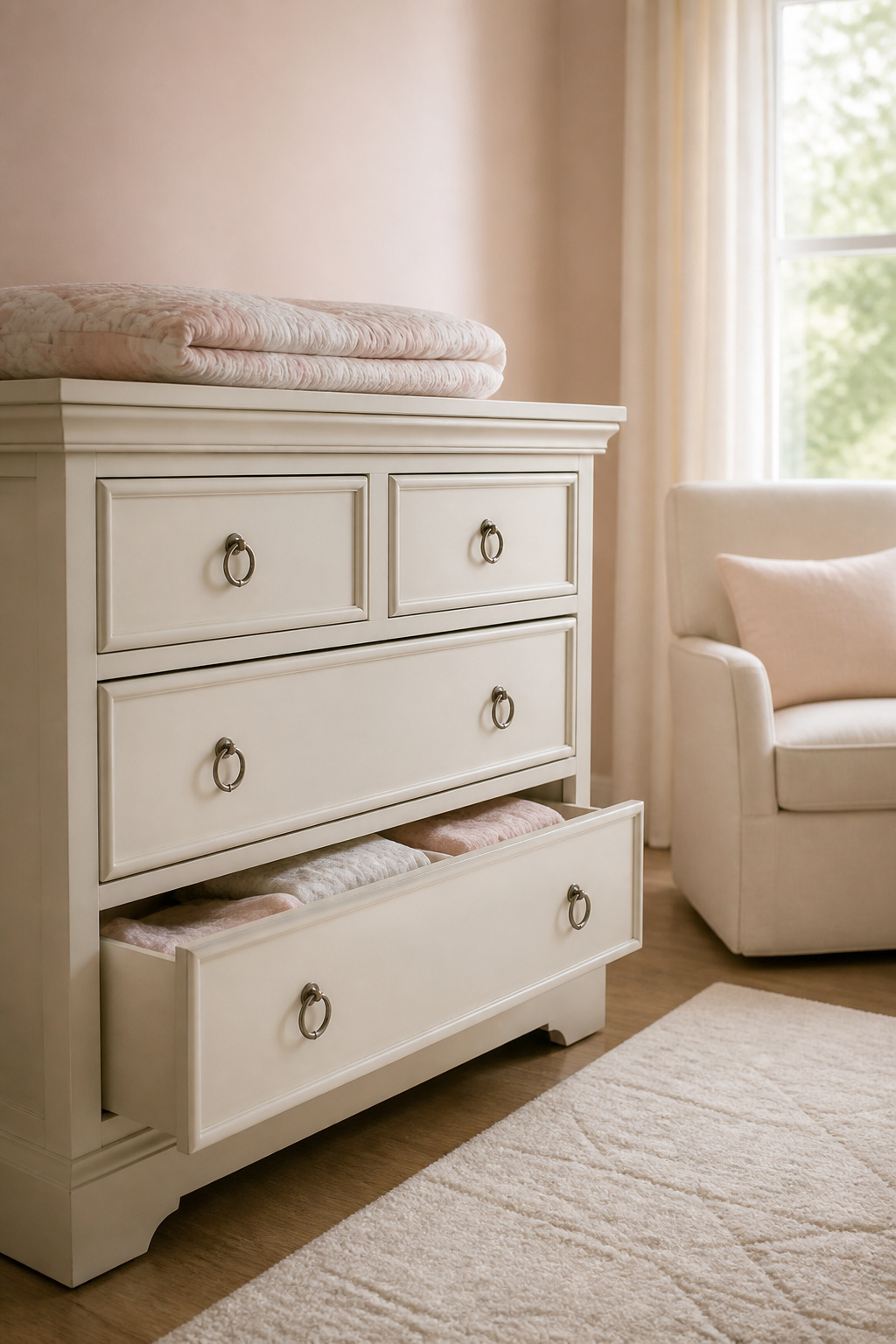
Traditional panel molding, ring drawer pulls, and tapered feet give the Namesake Emma Regency a silhouette that reads nursery-appropriate without shouting "baby furniture." At $599, it sits mid-pack in the assembled-dresser category, and that fully-built delivery cuts one weekend frustration out entirely: no Allen wrenches, no missing cam bolts, no step where two people hold a side panel while a third drives a screw.
The tradeoff is real. A piece that arrives in one box cannot be broken down to fit through a narrow doorway or a tight stair turn. I have watched a 52-inch dresser spend an hour in a hallway while someone figured out whether to angle it past the banister or call for a return. Measure your path before you order, and add two inches to every dimension for the packaging.
Once inside, the warm white finish and pretty hardware keep the look neutral enough for a guest room or a big-kid bedroom later. The traditional styling does not limit placement the way themed furniture does, though the proportions are clearly nursery-scaled. The drawers need dividers to keep diapers and clothing where they belong, and the lack of soft-close hardware means a slammed drawer can wake a light sleeper.
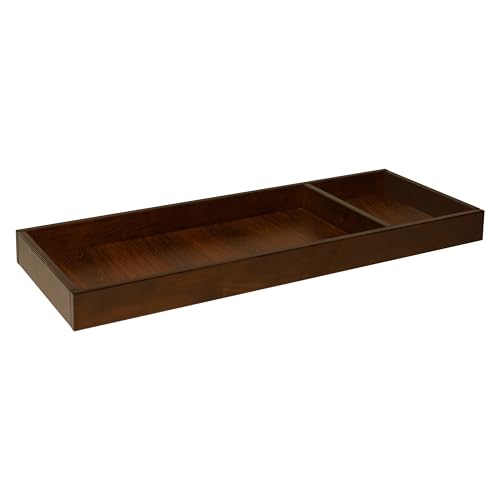
Universal fit, convert most standard double-dressers and table tops into a changing area for your baby

Made with New Zealand pine wood and tsca compliant MDF

SOFT CUSHIONED PAD FOR CHANGING TABLE | Premium Pillow Topper Provides Baby with Fluffy Support, Breathable Comfort & Dependable Safety During Diaper Changes, Swaddling, Dressing, Grooming & More | Mat Measures 31.25 x 16” & Includes Adhesive Straps for Secure Mounting on Any Standard Size Changing Table, Dresser Top, or Similar Surface
7. Babyletto Yuzu 6-Drawer Dresser
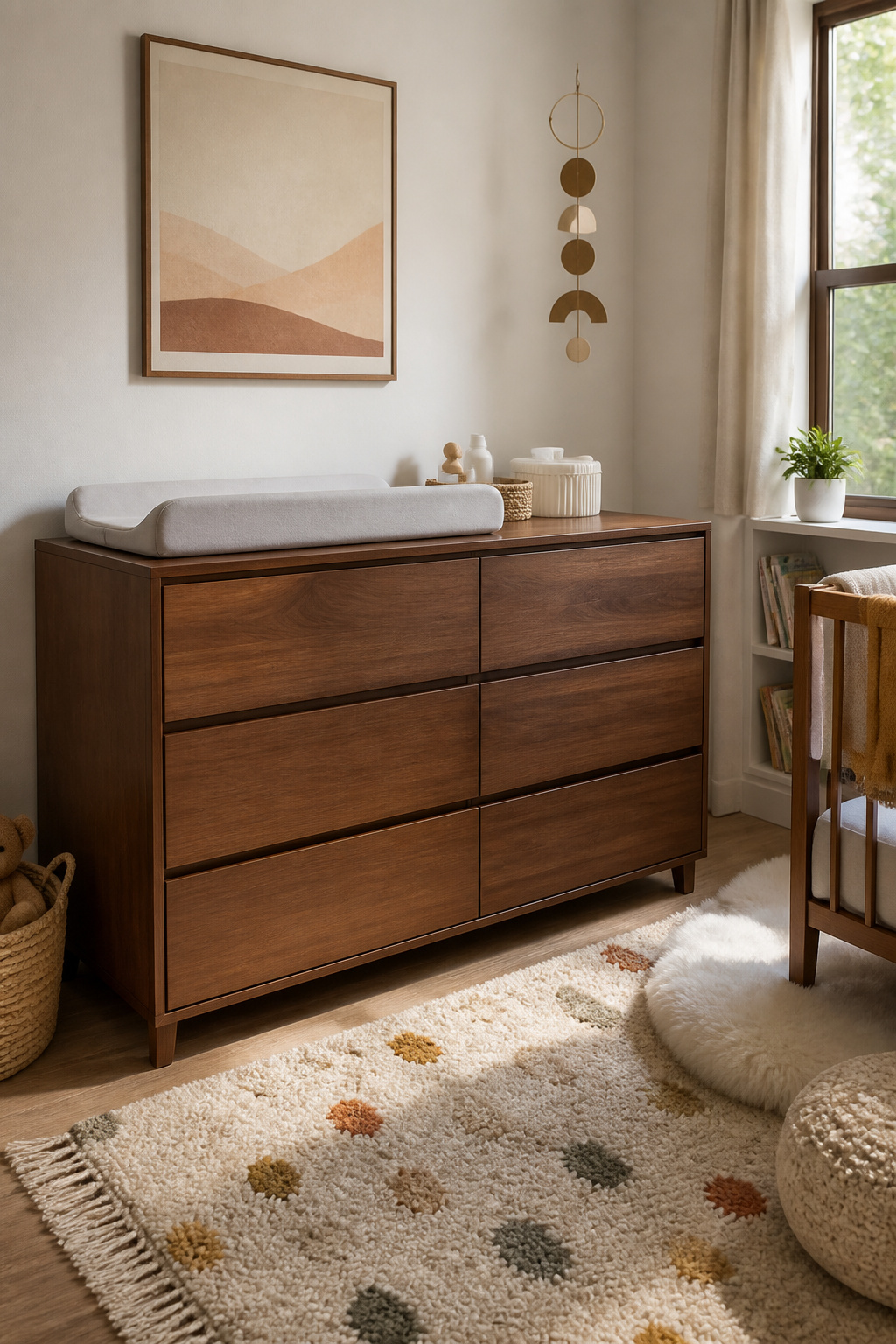
The Babyletto Yuzu 6-Drawer Dresser runs $699 and reads as a standard modern dresser rather than nursery furniture. The lines are straight, the feet are simple posts rather than the rounded bun feet that signal "baby," and the finish options include Natural Walnut alongside white tones, none of them pastel. That form is what lets it migrate to a guest room later without looking like a hand-me-down from a phase.
The sustainably sourced New Zealand pine wood carries certification, though what that actually tracks is chain-of-custody, not necessarily the working conditions or the full life cycle of the piece. The frame is solid pine with engineered wood for the drawer boxes, which is where the cost control happens. I have seen the scratches the sources mention after a year and a half, but the structure itself holds up.
Whether this design really extends usable life or just delays the dated look is the question. A dresser without baby-specific cues avoids the changing-table silhouette, yet "modern" in 2026 is still a narrow aesthetic. The six drawers give you the storage to justify keeping it, and the lack of attached changing hardware means you are not drilling holes that later read as repurposed. For a piece bought mid-pregnancy, that flexibility matters more than the finish.
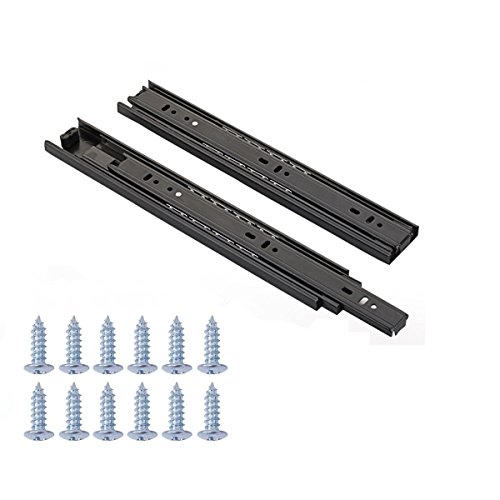
Made from high-grade cold rolled steel that is electron plated
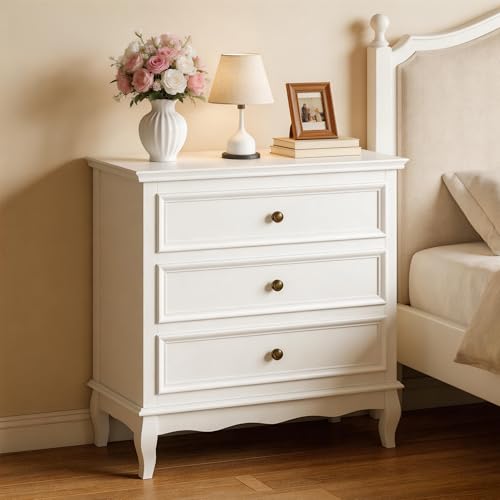
【Eco-friendly and Odorless】 Constructed with sturdy P2 certified MDF and ASTM eco-friendly paint , this modern white fluted dresser ensures durability and environmental consciousness, creating a space that is both healthy and visually appealing. It can serve as the ideal housewarming gift for your family, friends, or loved ones.

★ 6 pairs of 24 inch,mounting screws included (extra screws offered for spare use). Attention: the mounting brackets are not included,please buy separately if need it.
8. Oeuf 6-Drawer Sparrow Dresser
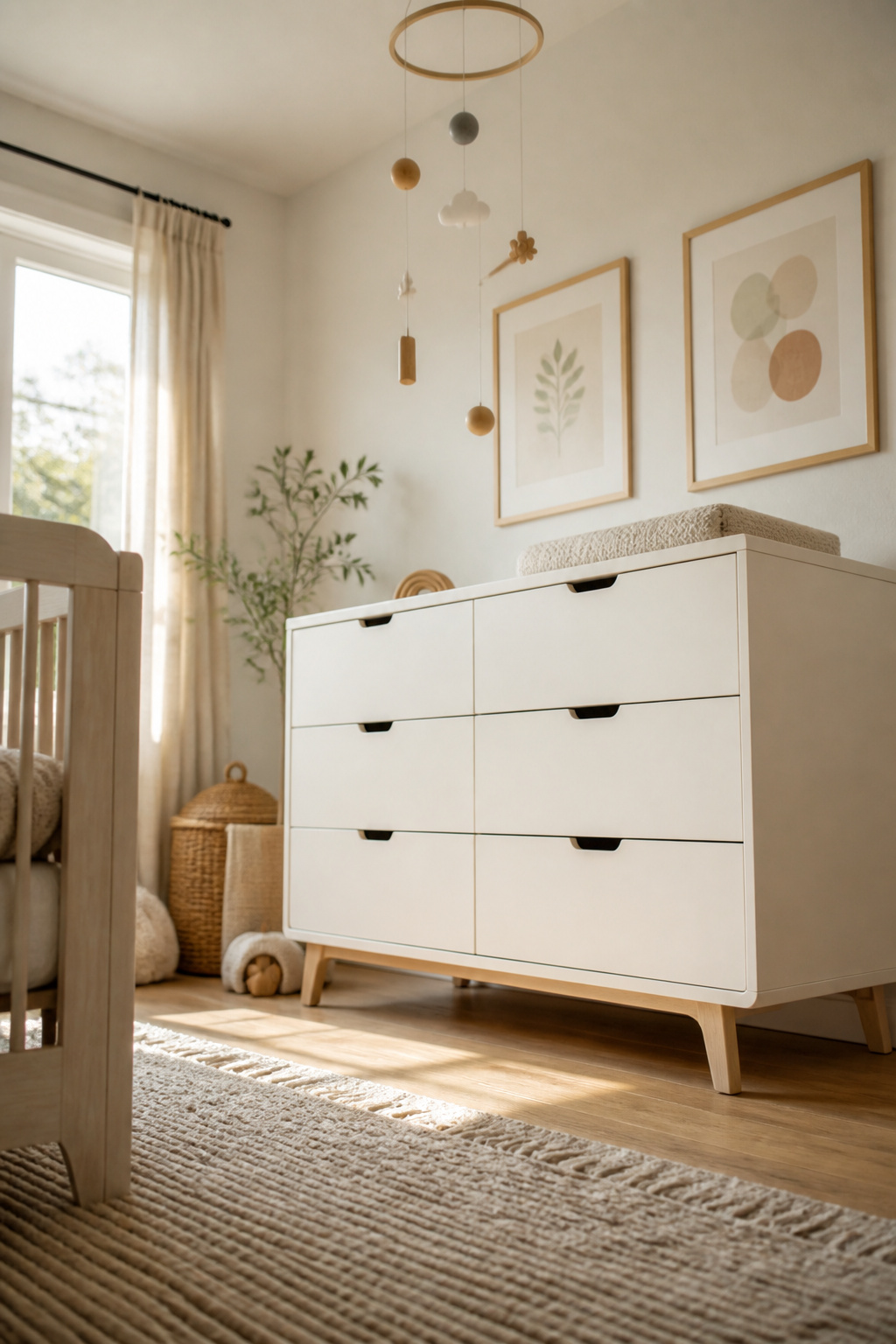
At 220 pounds, the Oeuf 6-Drawer Sparrow Dresser is heavy enough that two people need to carry it and still a job to wrestle into place. That weight comes from Baltic birch plywood and eco-MDF rather than solid hardwood, which matters for how it settles over years of use. A dresser this dense does not shimmy when a toddler pulls the second drawer open, and it will not walk across the floor during the weekly room rearrangement. The legs ship detached, so the box is manageable until the final stage, when the piece suddenly becomes furniture that stays put.
The $1,885 price raises the question of what timeless actually buys. The joinery and material thickness are not substantially different from pieces at half the cost. What the Sparrow avoids is ornament that dates itself; the lines are severe enough to read as modern in a nursery now and as simply grown-up furniture later. Whether that restraint is worth the premium depends on whether the rest of the room budget can absorb it. Ten nursery items at this level would overrun most plans, so this piece makes sense as the one splurge that stays, or as a skip if the crib and the glider already consumed the discretionary fund.

2-in-1 Dresser & TV Stand: 6 deep fabric drawers give you all the storage of a full dresser—clothes, accessories, you name it. The sturdy top doubles as a TV stand, so you get both functions in one streamlined footprint. Clutter stays hidden

【🏠Ample Storage TV Media Console】Measures 42.3" L x 15.6" W x 29.8" H, 50'' TV can be placed, our fabric dresser is equipped with 6 detachable fabric drawers and spacious woodtop, which facilitate the orderly storage of entertainment equipment and daily items, while the desktop provides display space for artworks and small ornaments, and more life style!

Fusion That Delights: From the BELLAH Collection, this chest of drawers fuses steel, particleboard, and non-woven fabric for a perfect blend of strength, softness, and storage. Pair it with nightstands for a cohesive space that feels just right
9. Castlery Kinsley Sideboard
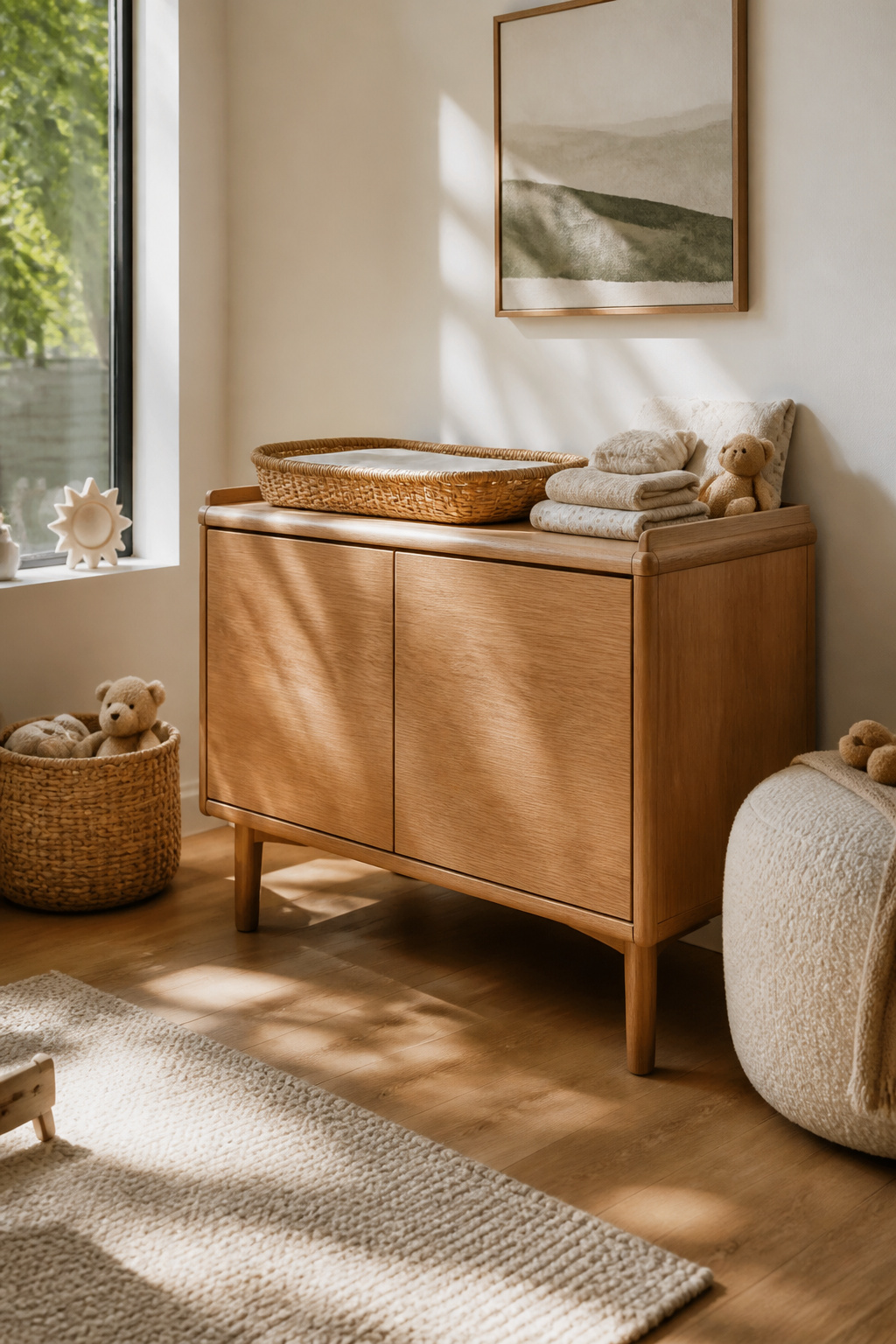
At $1,199, the Castlery Kinsley Sideboard sits in the upper middle of what most people budget for nursery furniture, but it asks for that money on different terms than a dresser does. The surface stands higher than a standard dresser top, which matters when you are leaning over it several times a night for diaper changes. Storage is behind two cabinet doors rather than stacked drawers, so towels and linens disappear in bulk instead of getting folded into graduated slots. The solid oak and oak veneer construction reads as adult furniture from the living room category, not the juvenile section, which is the point if you are buying for a house you plan to stay in.
The changing table adaptation works because the height is already right, but changing a baby on a sideboard means working around a front edge that was not designed for containment. Sources note the quiet-closing doors as a genuine asset for not waking a sleeping baby, and the slim footprint keeps it from dominating a small nursery. After diaper days, nothing about the form announces it used to be a changing station. It is a sideboard again, or a credenza, or whatever the next room needs it to be. The weight is substantial enough that assembling it with a second person is not optional, especially if you are already managing a newborn.
10. Castlery Harper Sideboard
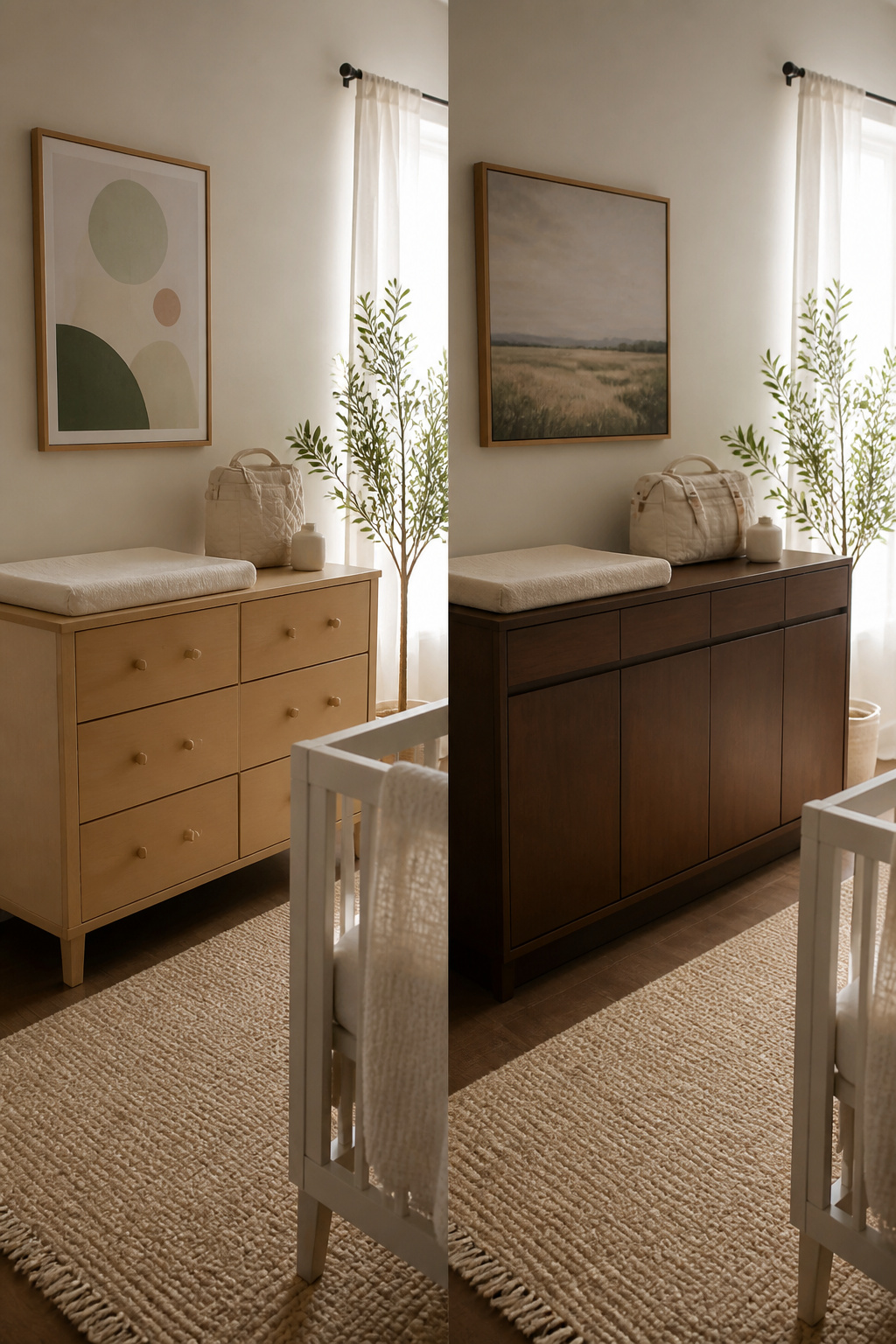
The $1,299 Castlery Harper Sideboard sits just a hundred dollars above the Kinsley, and that gap buys a shift in material and mood. Where the Kinsley runs engineered wood with oak veneer, the Harper keeps the same oak-veneer frame but tightens the proportions into something more deliberately grownup: chestnut or natural finish options, metal hardware where the Kinsley leans brass, and a silhouette that reads dining room rather than nursery even when it is standing in one.
That elegance is doing double duty during the long nights, though whether it is for the parents’ sanity or the room’s eventual life after diapers is worth deciding before you buy. The rounded edges on the Kinsley soften a nursery; the Harper’s cleaner lines look like you meant to put them there, not like you are borrowing from the baby’s room.
Once the crib is gone, the sideboard form translates more naturally to an entry or living space than a traditional dresser ever would. The two drawers and cabinet behind doors swallow linens, board games, or the mail pile that accumulates by the front door. The five-year limited warranty covers the same ground as the Kinsley; the Harper just starts from a place that needs less explaining when guests arrive.
Storage That Keeps Up
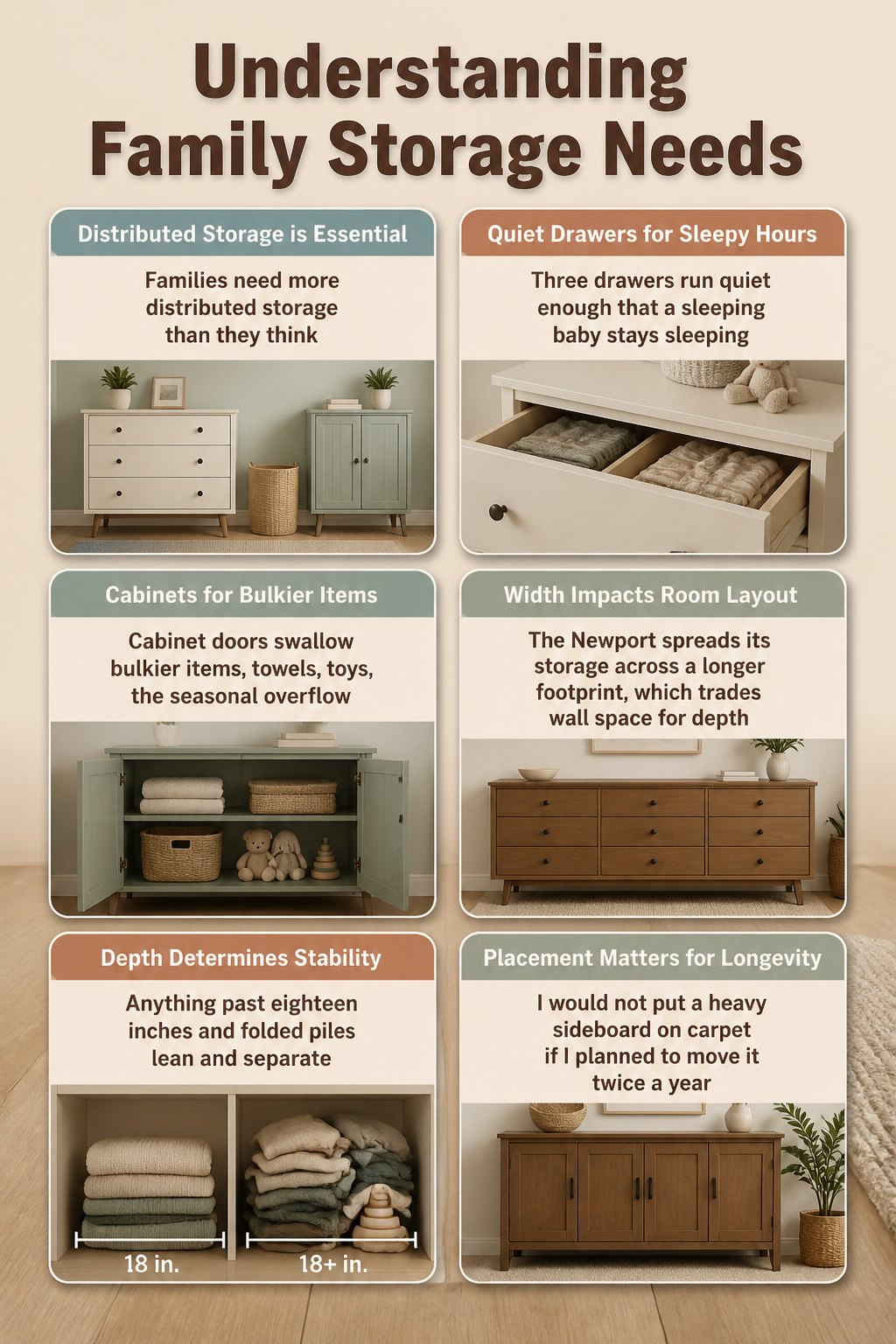
Ten dressers in, a pattern settles. Families need more distributed storage than they think, not one cavernous unit. The Gelato’s three drawers run quiet enough that a sleeping baby stays sleeping; the hardware matters because nursery hours are not daytime hours. Drawers win for clothing you fold daily, but the Kinsley’s cabinet doors swallow bulkier items, towels, toys, the seasonal overflow that jams drawer tracks. Width is where rooms break: the Newport spreads its storage across a longer footprint, which trades wall space for depth, and depth determines whether stacks topple. Anything past eighteen inches and folded piles lean and separate. I lean toward the drawer pieces for bedrooms, the cabinets for hallways and shared spaces, and I would not put a heavy sideboard on carpet if I planned to move it twice a year.
Solid Wood and What Else
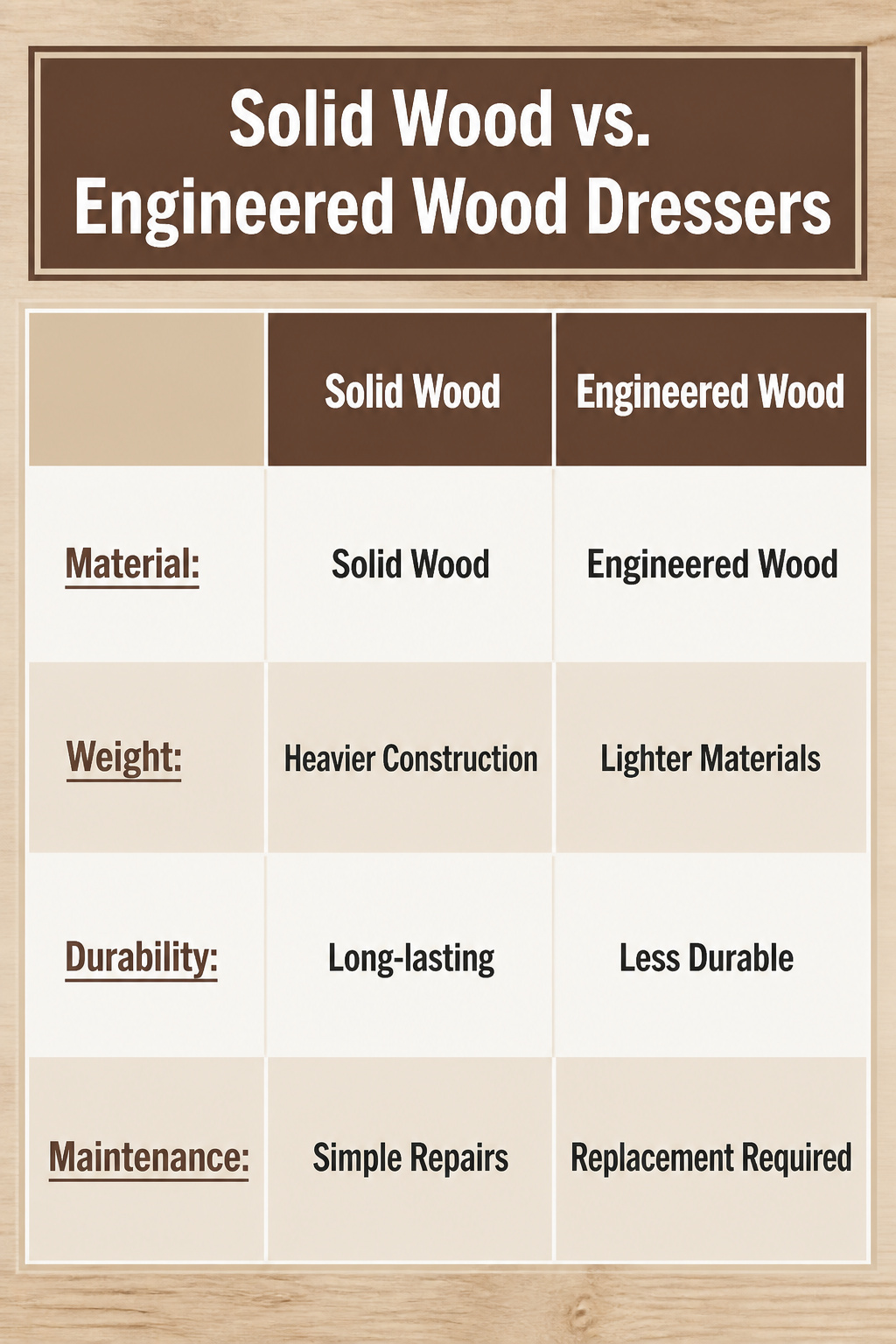
Solid wood sounds simple until you unpack the ten dressers and find the term stretched across three different realities. Three of the ten are solid pine, one is solid oak, and the rest lean on engineered wood somewhere in the frame or drawers. Cedar lining shows up once, in a drawer box meant to repel moths, though most families will never notice the difference unless they are storing woolens.
What convinced me, reading through the specs, is that drawer bottoms fail before faces do. A half-inch plywood bottom holds folded onesies fine until a teenager loads it with textbooks. The solid oak option weighs enough that two people must move it; the pine pieces arrive in flat boxes for a reason. Assembly time doubles with weight, but so does repairability. A cracked pine side rail takes a wood screw and glue. A split particleboard panel becomes a replacement part hunt, if the company still stocks it.
Nobody lists weight limits for drawers or tops. The gap is universal across these ten options, so the safe assumption is that engineered bottoms handle about half what solid wood manages, and even solid wood will sag if you center a television on a span unsupported underneath.
From Nursery to Beyond
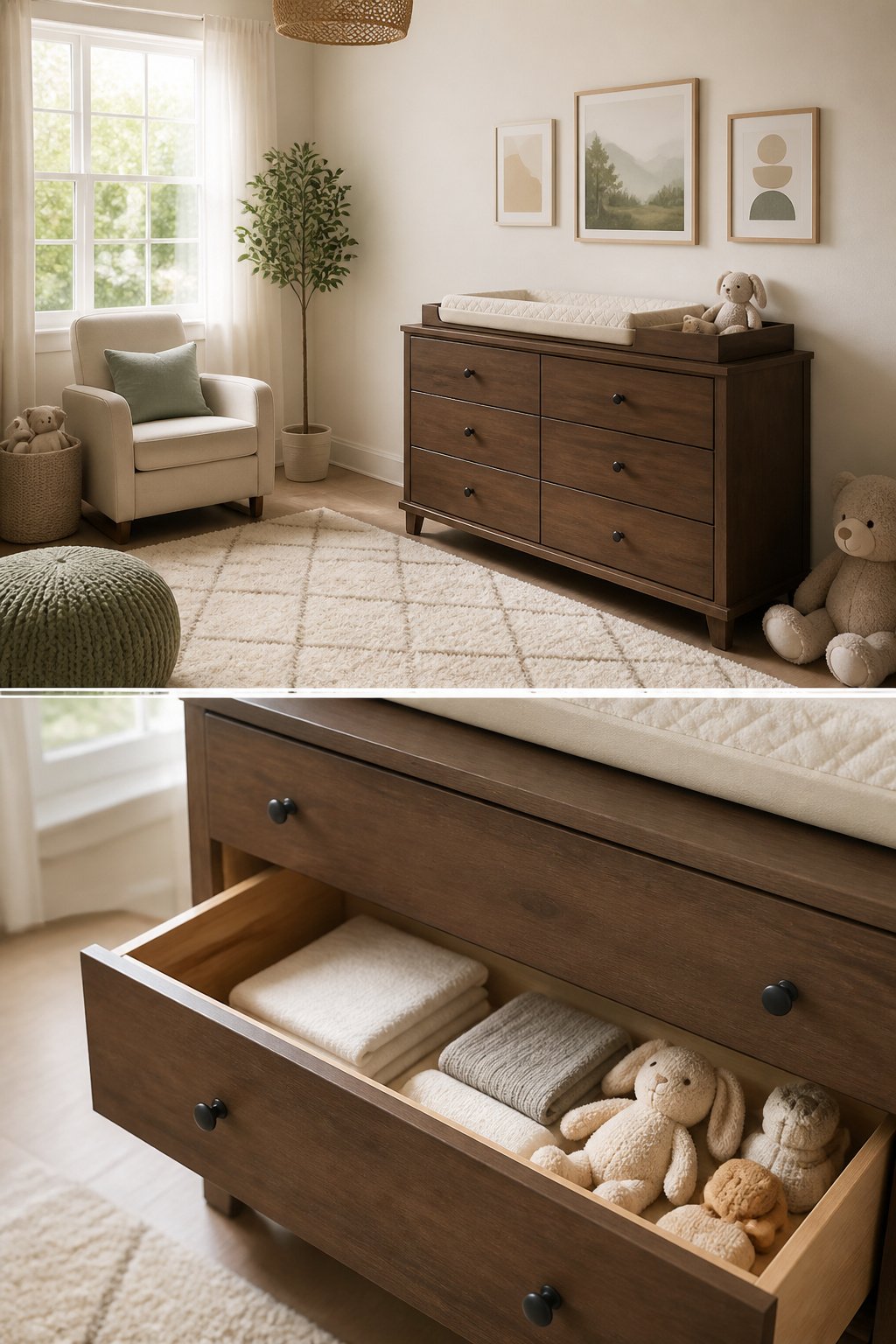
The promise of a dresser that follows a child from nursery to adulthood sounds better in the catalog than it lives in your hallway. Pieces marketed as transitional often lean too hard on one identity, and the gap between what ships and what actually works in a new room is where money disappears.
A changing tray that never comes off is the detail that sells the Gelato as lifelong furniture. In practice, that tray becomes a visual anchor. The dresser underneath may read neutral, but the proportions and hardware still signal "baby" to anyone walking past. I once bought a piece on exactly this logic, convinced the clean lines would translate to a teenager’s room. The scale was wrong, the drawer depths awkward for adult clothing, and it looked like borrowed furniture until I finally sold it. The mistake was trusting the marketing word "transitional" instead of measuring drawer interiors and imagining my own t-shirts inside.
The Yuzu at $699 approaches the problem differently by skipping the changing station entirely. It reads as a modern six-drawer dresser first, nursery second, which is precisely why Architectural Digest’s tester paired it with a separate Quinn Changing Station from Pottery Barn Kids. Sustainably sourced New Zealand pine and engineered wood give it a material basis that doesn’t age out, though scratches have shown up across a year and a half of use, something to weigh against the price.
True versatility tends to come from pieces that were never nursery-specific at all. Sideboards and standard dressers without juvenile proportions or built-in trays don’t need to transition because they were never categorized. The investment logic reverses: rather than buying baby furniture that hopes to grow up, buy adult furniture that happens to work when the drawers are filled with onesies.
Assembly and the Two-Person Problem
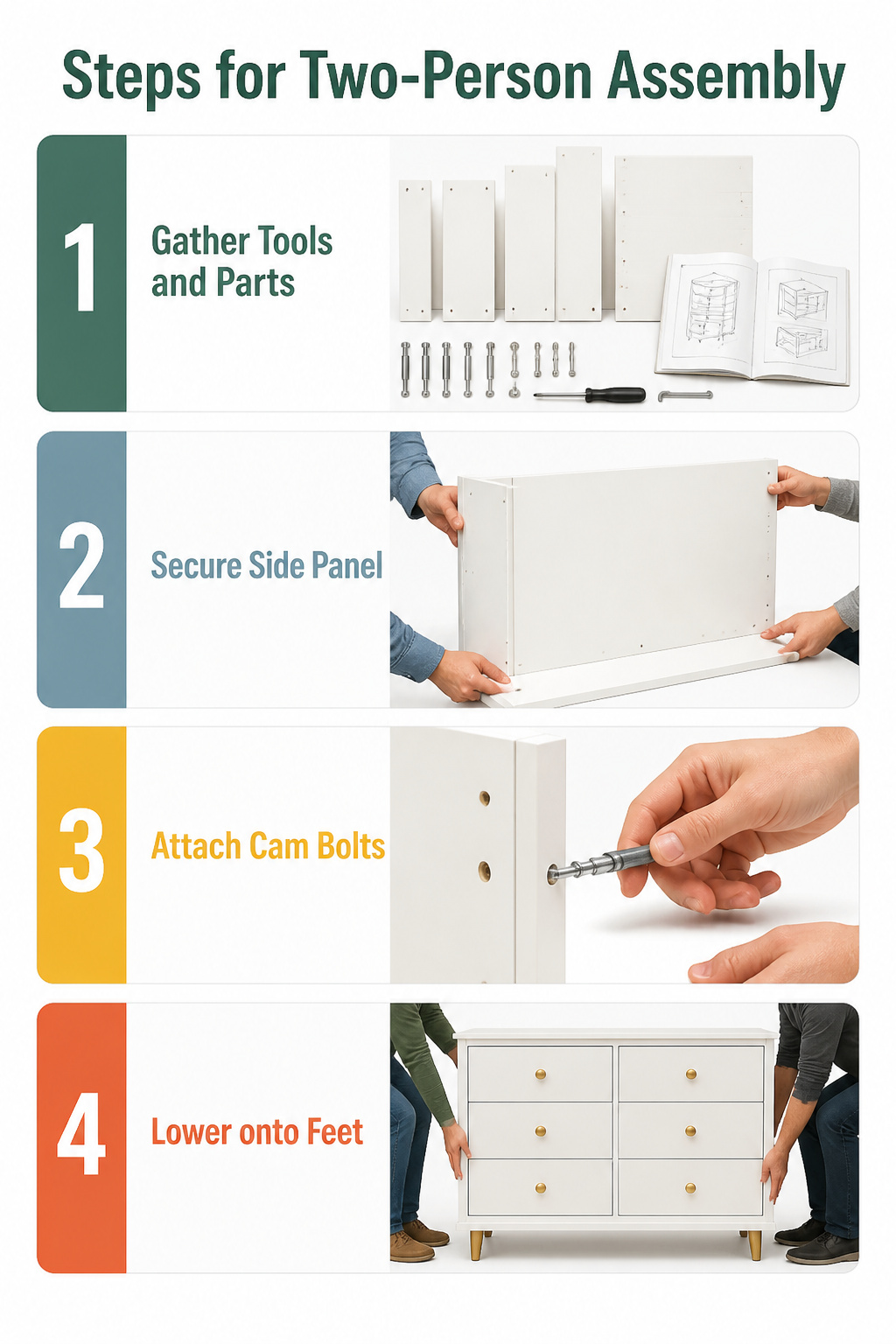
The Babyletto Gelato ships at over a hundred pounds, and the manual is explicit: two people for assembly. That detail stopped me cold, because two-person assembly means something different when you do not have two people or when your second person is a toddler who thinks the Allen wrench is a snack.
What that weight actually translates to is holding a side panel steady while someone else drives in cam bolts, or lowering a fully assembled carcass onto its feet without cornering yourself into the wall. I have done enough flat-pack furniture alone to know the workaround, a stack of books, a leaned pillow, a lot of swearing, but a dresser you plan to change a baby on is not the place to test your solo balancing act.
Assembled delivery exists for exactly this gap. The Namesake Emma Regency arrives built, and the surcharge, whatever it runs, buys back an hour of marriage and the certainty that the drawer glides were installed by someone who did not just lose an argument about whose turn it was to hold the level. Whether that surcharge is worth it depends on how many Saturdays you have left before the baby outgrows the nursery, and whether your local help lives in the same time zone.
What $349 to $1,885 Actually Buys
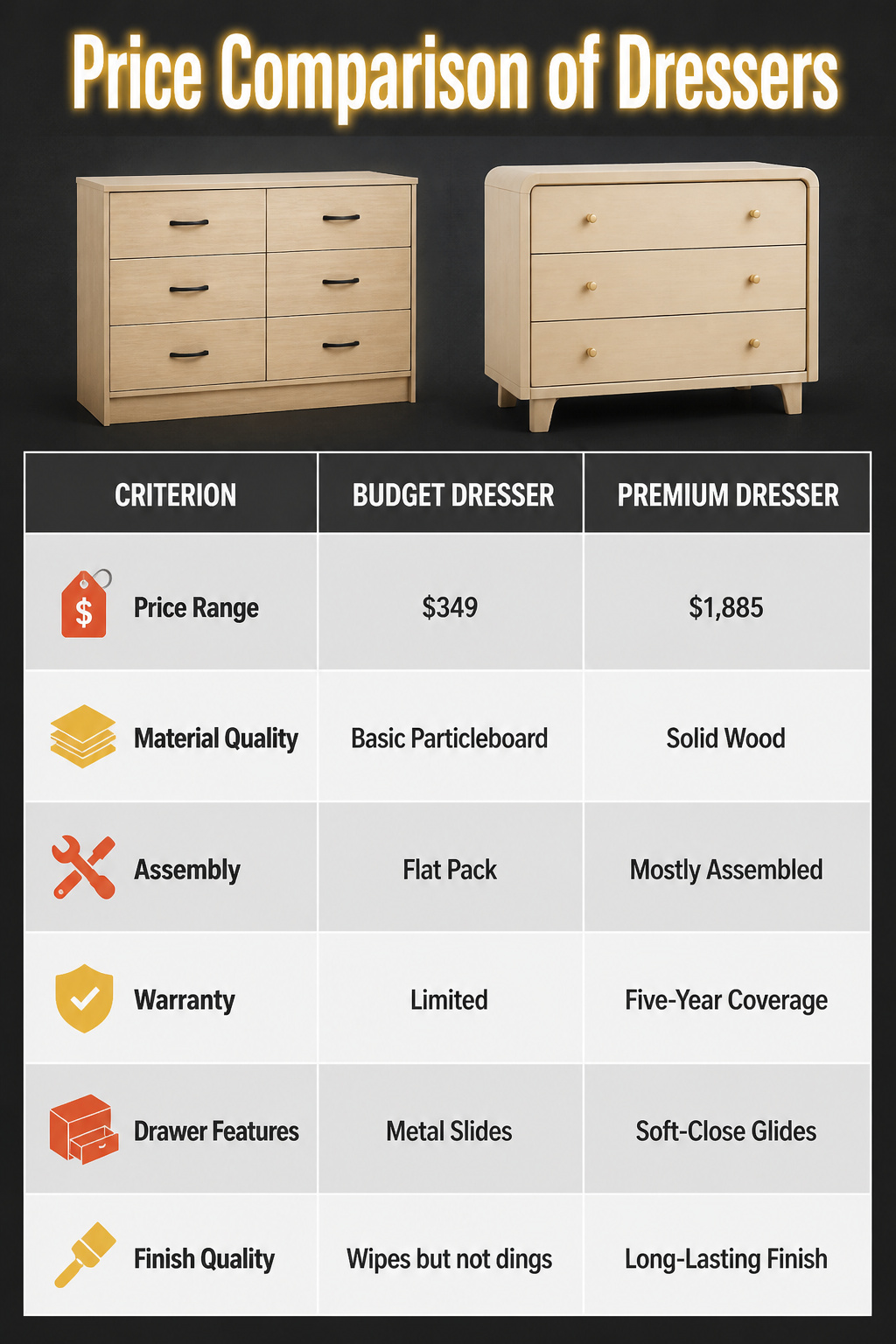
The ten family dressers I looked at run $349 to $1,885, and that spread is not arbitrary. At the low end you get particleboard frames shipped flat, drawers that run on metal slides, and a finish that tolerates wipes but not dings. Move toward $500, the entry point Architectural Digest flags for anything built well enough to last, and you start seeing solid wood fronts, soft-close glides, and finishes that do not telegraph "nursery" so loudly the piece cannot graduate to a guest room later. Above $1,200 you are paying for brand positioning and country of manufacture as much as material: the Oeuf Sparrow, at $1,885, arrives largely assembled, weighs 220 pounds of Baltic birch plywood and eco-MDF, and carries a five-year warranty on wood frames that cheaper lines simply do not match.
I budgeted for our piece assuming the sticker price was the hit. It was not. By month four we had drawer organizers, anti-tip hardware we actually trusted, and a second run to the hardware store after the included screws stripped. If I were doing it again, I would price the dresser at 120 percent of retail and decide on that number, because the first year accumulates fast and the $500 threshold makes more sense as a planning floor than a spending ceiling.
Frequently Asked Questions
What should you consider when choosing a nursery dresser?
Focus on storage space, how easily and quietly drawers open and close, and whether the finish wipes clean without staining. Soft-close glides matter more than you expect at 2 a.m., and a surface that tolerates daily cleaning saves replacement costs.
How much should you spend on a family dresser?
Expect to spend at least $500 for anything built well enough to last past infancy, with solid options running up to about $1,300. The ten dressers reviewed range from $349 to $1,885; below $500 you are looking at particleboard frames and metal slides, while above $1,200 you are paying partly for brand positioning and assembly convenience.
What are the best dressers for small spaces?
Look for compact footprints around 36 inches wide and 18 to 19 inches deep, which keep traffic paths open without sacrificing usable storage. The Wes and Gelato both fit this profile, though three drawers fill faster than most new parents expect, so plan for overflow or pair with closet storage.