
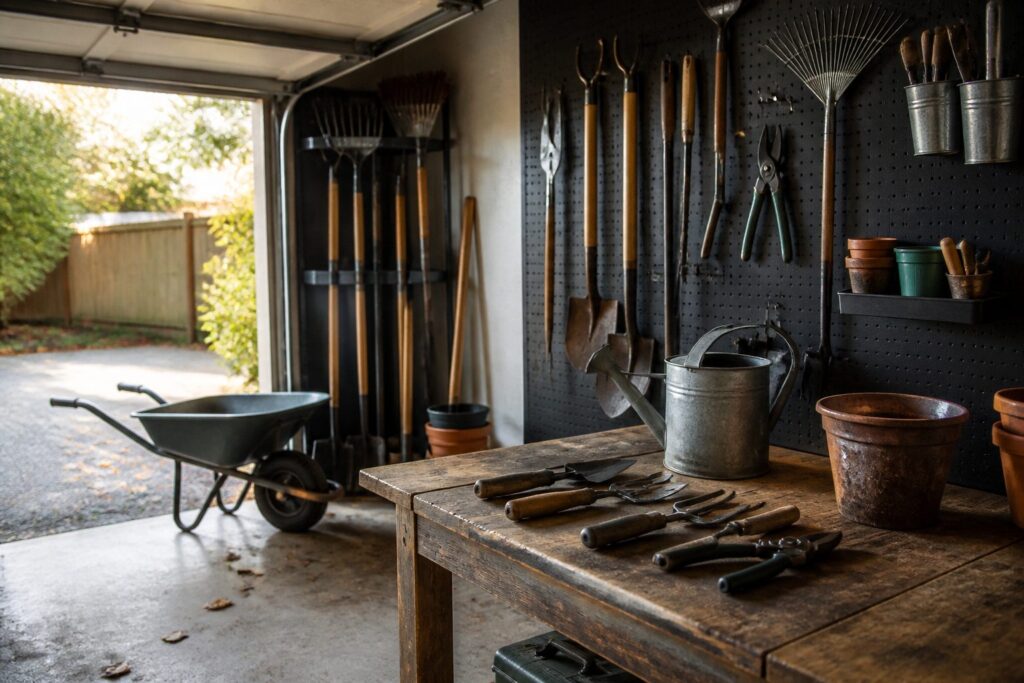
The right way to organize garden tools in a garage depends on whether you want speed or flexibility: a $35 corner tower goes up in minutes, while slatwall panels let you rearrange hooks as your collection grows from hand trowels to a string trimmer.
PVC pipe holders cost even less and adapt to odd-shaped tools, though they look like a shop project facing the driveway.
Start with the trade-off that matches how finished your walls need to be and how often your tool mix changes.
[link-whisper-related-posts]1. Wall-Mounted Tool Racks
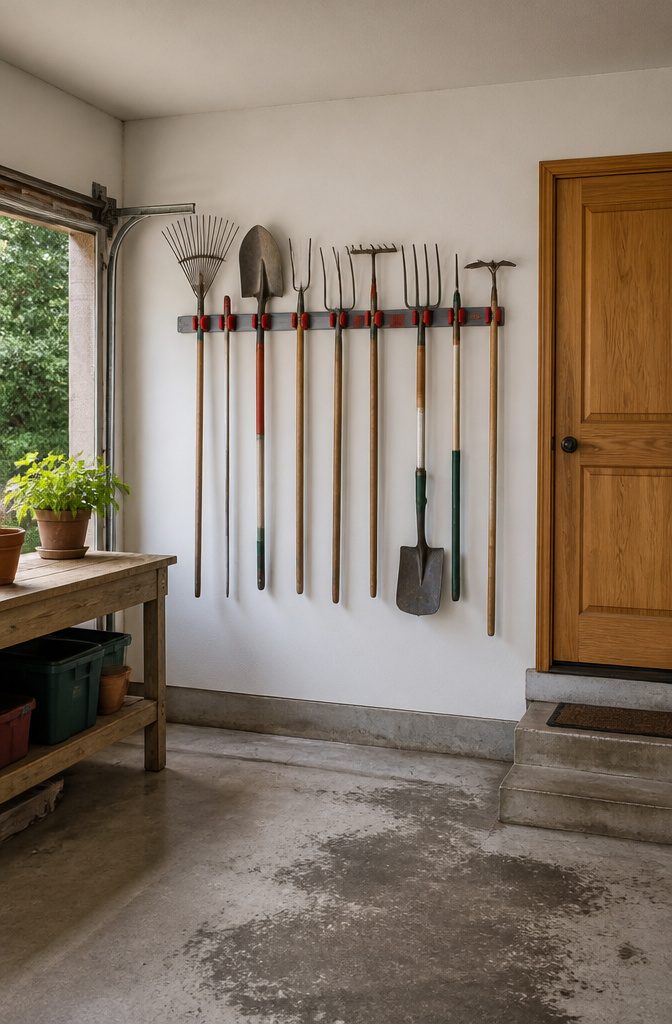
Wall-mounted racks turn the narrow gap between studs or the back of a door into storage for shovels, rakes, and hoes that would otherwise sprawl across the floor.
The Rubbermaid Garage Corner Tool Tower Rack fits an empty corner and holds up to 30 long-handled tools in plastic slots that will not rot, rust, or dent.
At $34.99, it is lightweight enough to set up in a few minutes, and thousands of Amazon reviewers rate it five stars for doing exactly what it promises without fuss.
Getting tools off the floor changes how you work. You see what you own at a glance, grab the right handle without untangling three others, and sweep the concrete without dragging everything outside first.
Slatwall panels and track systems do the same job with more flexibility, hooks and baskets rearranging as your collection shifts from hand tools to a string trimmer.
The corner tower wins for speed and cost; track systems win if you want to add a basket for gloves later or move the whole layout when you buy a mower.
2. PVC Pipe Holders
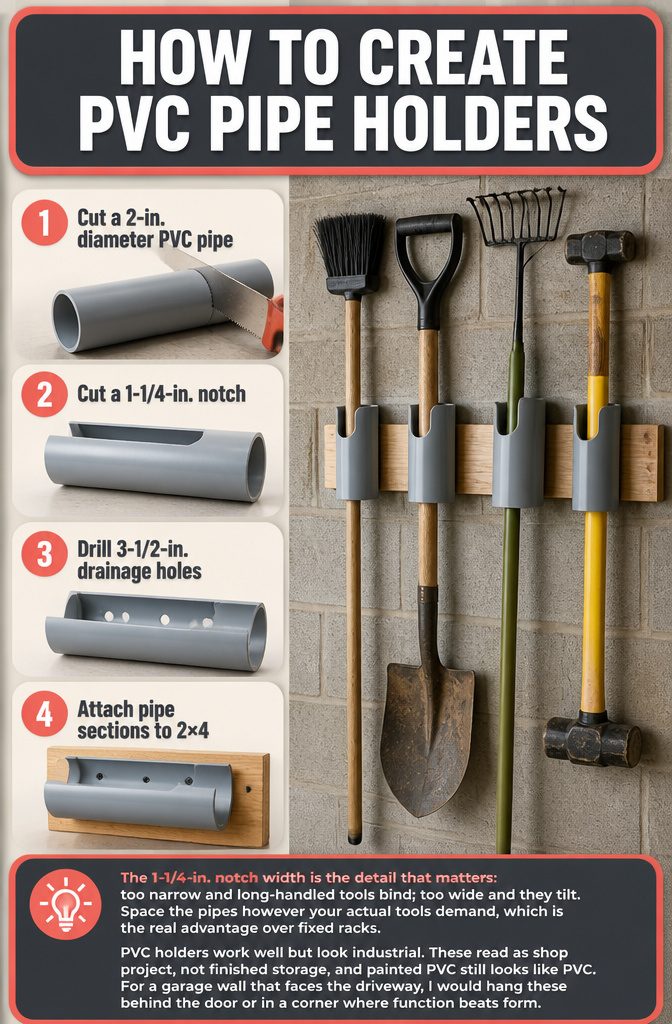
PVC pipe holders give you custom spacing for a few dollars in parts. I like them for odd-shaped tools that never fit store-bought racks.
- Cut a 2-in.-diameter PVC pipe to the length you need for each tool.
- Use a jigsaw to cut a 1-1/4-in.-wide notch the length of the pipe. This opening faces up and lets the tool handle drop in while the head rests inside.
- Drill several 3-1/2-in.-long, 1/8-in.-wide holes behind the notch for drainage and to keep the pipe from splitting when you screw it down.
- Screw a 2×4 to your garage wall, then attach the pipe sections to it with 1-1/4-in. drywall screws.
The 1-1/4-in. notch width is the detail that matters: too narrow and long-handled tools bind; too wide and they tilt.
Space the pipes however your actual tools demand, which is the real advantage over fixed racks. PVC holders work well but look industrial.
These read as shop project, not finished storage, and painted PVC still looks like PVC. For a garage wall that faces the driveway, I would hang these behind the door or in a corner where function beats form.
3. Storage Bins and Buckets
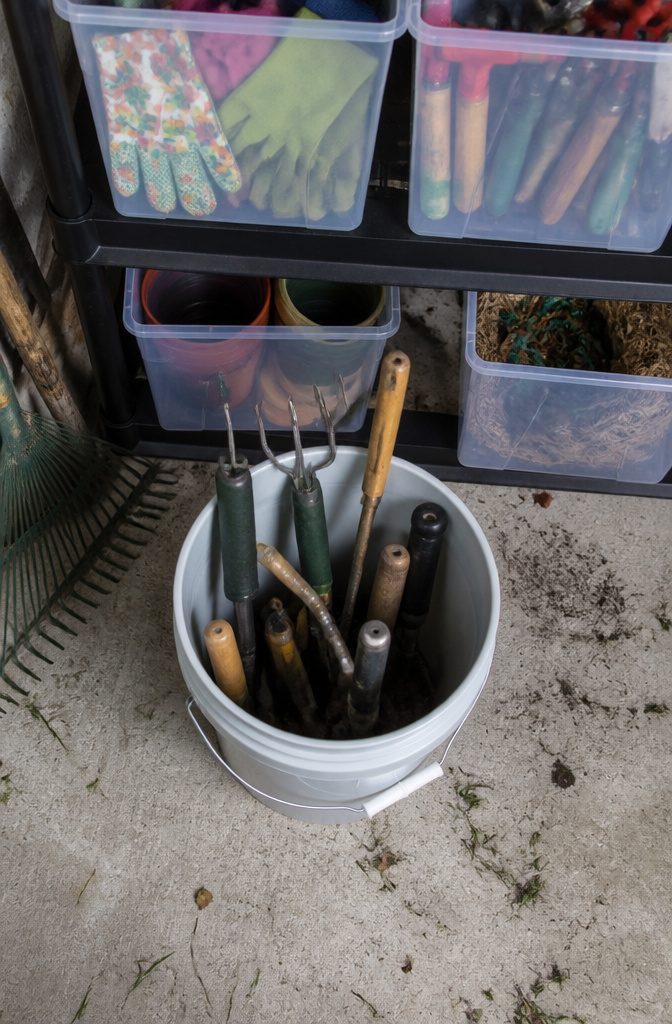
A 5-gallon bucket loads up with gardening tools and carries them easily from place to place, which is why I keep two in my own setup: one for hand tools and one for long-handled ones.
The lid snaps on to protect everything if weather turns, though I found the factory tabs fight back hard.
Cutting off all but two of the plastic tabs solves that; the lid goes on and off in a snap, and the bucket doubles as a portable stool when you need to rest or prune low branches.
For smaller hand tools, clear storage bins on a shelf keep everything visible so you are not digging through opaque containers mid-project.
I label mine by task, pruning shears in one and trowels in another, and stack the flat-topped bins to save floor space.
The bin method wins for garage storage, but the bucket wins for carrying out to the garden; most people end up wanting both.
4. Tool Cabinets
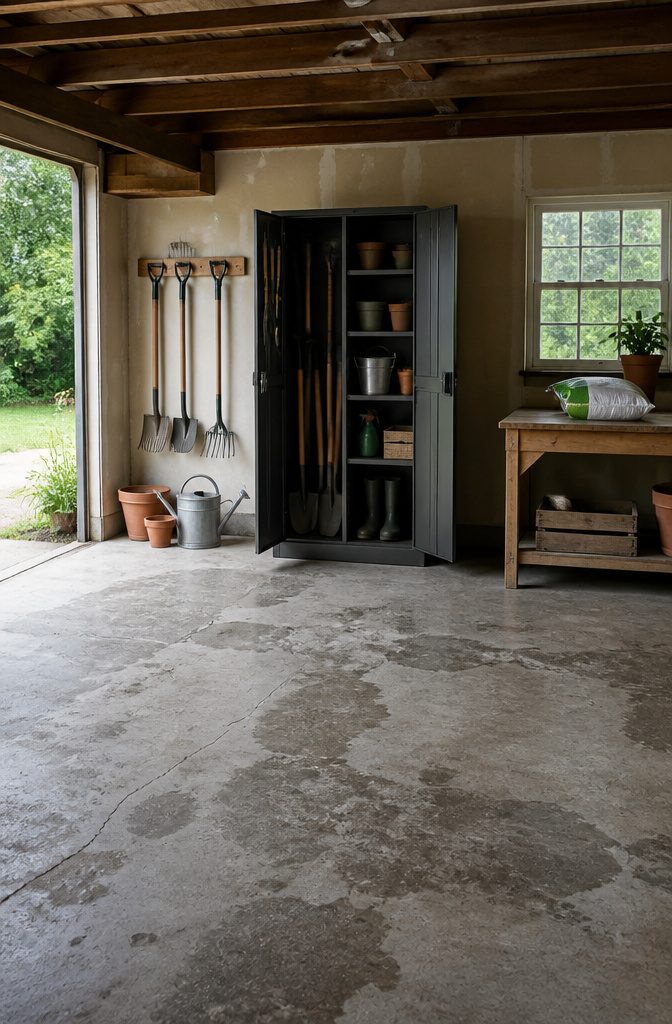
Closed cabinets solve the two problems open storage never does: dust settles on every horizontal surface, and moisture from a garage that opens to the yard finds its way into metal joints and wooden handles.
A cabinet with a door stops both, which is why I consider them essential for anything I want to keep sharp and smooth-running.
Freestanding units roll into place and hold their own weight, so they work when wall studs are unreliable or when I am renting and cannot drill.
Wall-mounted cabinets lift tools off the floor and free the footprint below for a mower or potting bench.
Either way, the same principle applies: what I cannot see feels like less clutter, and a clean front panel makes the whole garage read as organized even when the drawers inside are a mess.
I like freestanding cabinets for the flexibility.
I like wall-mounted for keeping soil bags and watering cans at a height where I notice them before they leak. The choice depends on whether your priority is moving the system later or reclaiming floor space now.
5. Pegboards and Slatwalls
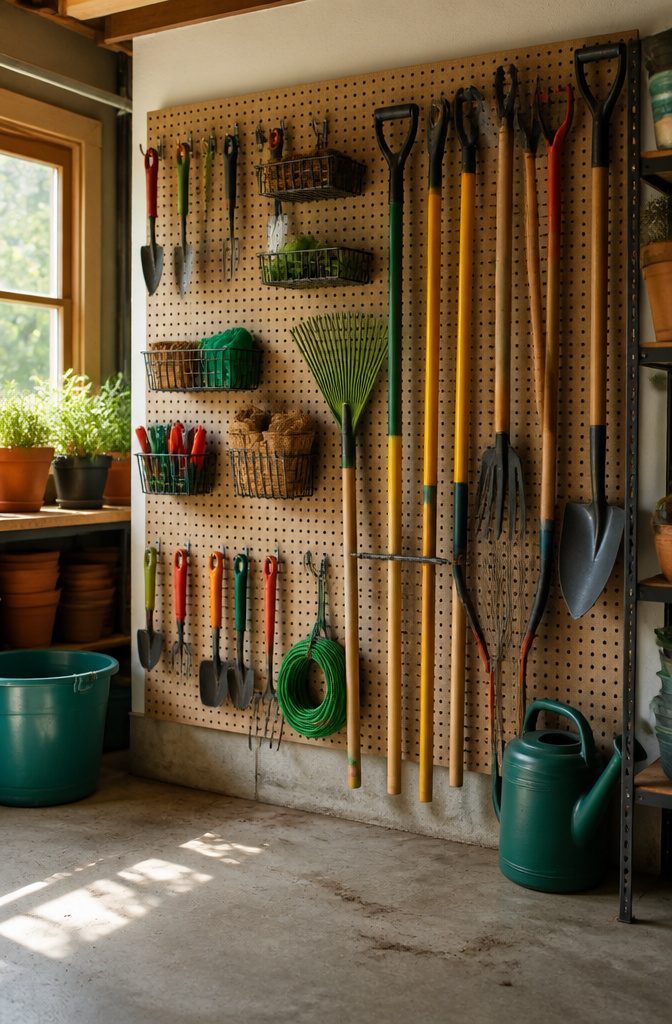
Adjustable wall systems are the first place I look when someone wants to organize garden tools in a garage with room to grow.
Pegboard is the name most people know: a panel of perforated hardboard that accepts hooks for trowels, baskets for gloves, and small shelves for pots.
It works, but the hooks can pull loose if you bump them loading a heavy shovel, and the board itself has weight limits that make me cautious about hanging anything with a motor.
Slatwall is the upgrade I steer weekend projects toward. The Proslat 88102 PVC system, for instance, comes as ten interlocking panels covering 4 feet high by 8 feet wide, and it handles up to 75 pounds per square foot.
That density matters when you are hanging a string trimmer or a full garden sprayer, not just hand tools. Proslat and Gladiator both sell matching hooks, baskets, and shelves that lock into the horizontal grooves and stay put.
The real advantage over a cabinet row is visibility. Every tool sits in the open, so you grab the right hoe without opening three doors, and you notice immediately when something is missing.
When your collection shifts from hand tools to long-handled ones, or when you add a bike in autumn, the same slats accept new hardware without new holes.
You pay for the upgrade: a kit like the Proslat runs about $200 before accessories, against maybe $30 for basic pegboard. For a few hundred dollars and a Saturday, though, slatwall gives you a wall that adapts as your garden habits do.
6. Corner Tool Racks
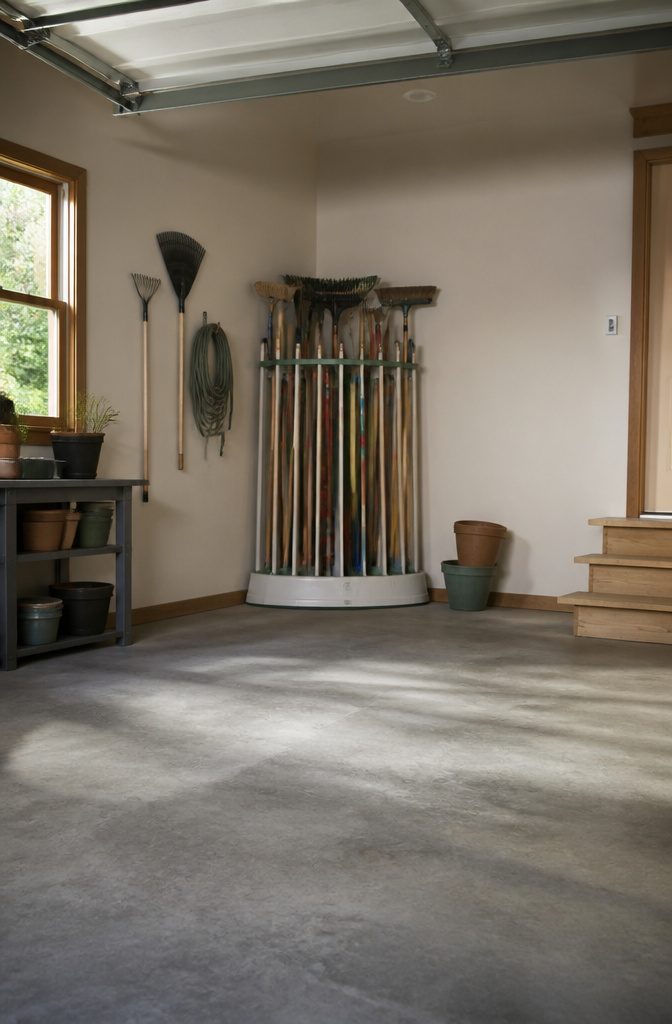
Corners collect nothing but shadows until you give them a job. A corner tool tower turns that dead angle into storage for thirty long-handled tools, standing them upright where they stay visible and grab-ready.
The Rubbermaid Garage Corner Tool Tower Rack anchors this category: plastic construction means no rot, no rust, no dents, and the whole unit stays light enough to reposition without help.
At $34.99, it costs less than most single power tools and earns its space back in floor clearance within a weekend.
Corner racks save space but can wobble under heavy loads.
These towers work best against two walls and a concrete floor; on uneven garage slabs or in spots where the corner isn’t truly square, the fit goes from snug to sloppy fast.
I would skip the wheeled alternatives for pure corner duty. Mobility sounds useful until you realize garden tools see daily use in season, and a rack that rolls easily also shifts when you lean a loaded shovel against it.
The Suncast wheeled unit holds more tools and carries 150 pounds, but its strength is a straight-wall solution, not a corner wedge.
For the geometry you actually have, the fixed corner tower wins: purpose-built for the angle, cheaper, and less to fail.
7. Overhead Storage
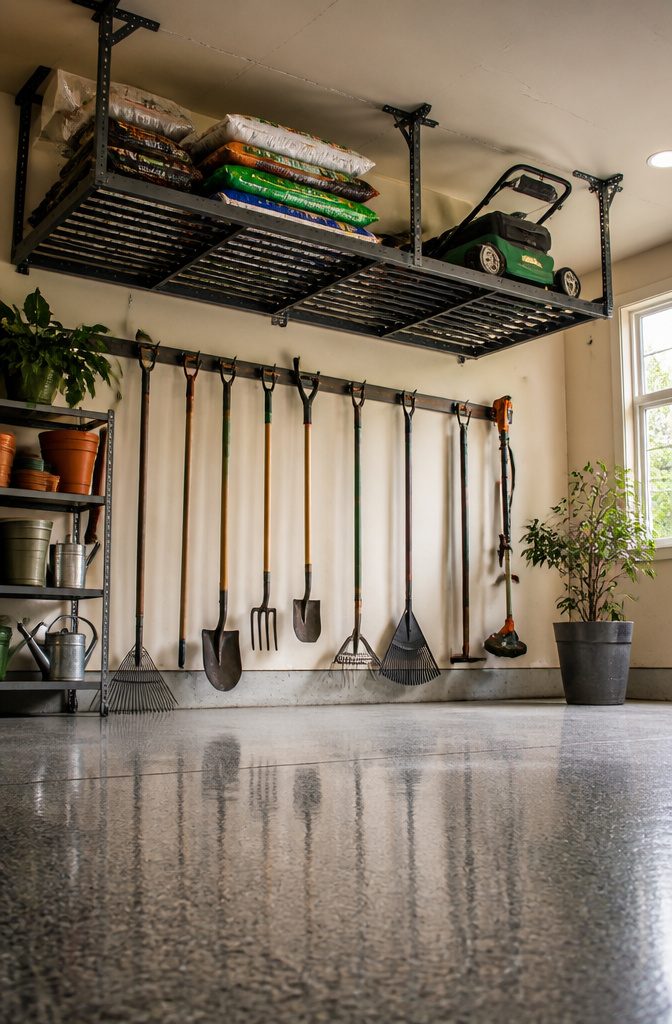
Ceiling-mounted racks handle the tools you reach for maybe three weekends a year. Gladiator Overhead Storage Racks come in enough sizes and weight capacities that most garages can fit at least one bay without boxing out the garage door track.
I would put the aerator, the hedge trimmer, and the half-empty bags of soil up there, then pull the ladder down twice a season.
There is a real cost here: anything overhead takes longer to retrieve than a hook at shoulder height. That delay is actually useful.
It keeps the wall rails free for daily tools and the floor clear for the project you’re actually doing this Saturday. Seasonal items belong where the friction of access matches how often you need them.
Gladiator’s range matters because garage joist spacing and your own height vary.
A rack that spans four feet and holds a few hundred pounds suits most homeowners; the larger units exist if you’re storing the pressure washer and the snow blower both.
Weight capacity printed on the rack is the one to trust, since a box of terracotta pots weighs more than it looks.
8. DIY Storage Solutions
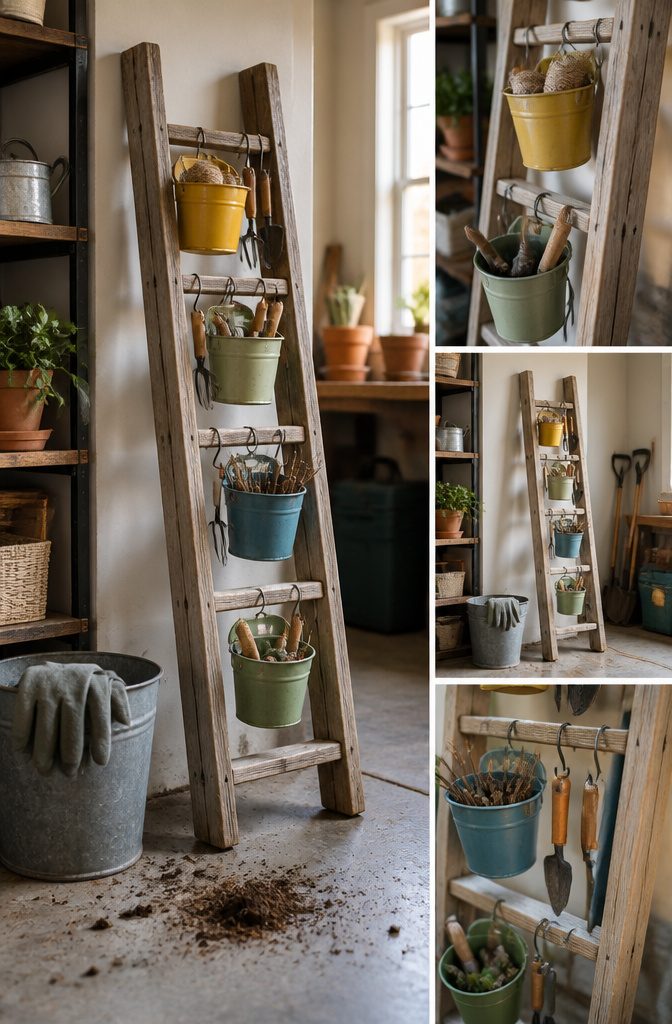
Repurposed materials beat store-bought racks on a Saturday budget, and most garage organization projects never need more than that.
- Stand an old pallet on its side to slot long-handled tools between the boards. Rakes, shovels, and hoes stay upright and separate. Sand the rough patches first; splinters turn a free project into an urgent care visit.
- An old ladder leans against the wall as a rack for small pots, herb trays, or hand tools hung with S-hooks. A quick coat of leftover paint keeps it from looking like you forgot to haul it to the dump.
- A spare bucket corrals garden hoses or hand trowels and pruners. Stack two or three and you have a modular system that moves where the mess is.
- Hardware cloth stretched over an open drum keeps long tools apart and visible. The 2-by-4-inch mesh lets you pull one tool without upsetting the rest, and the whole thing costs nothing if you scrounge the materials.
These projects run on found wood, a handsaw, and maybe a box of screws. Nothing here requires a table saw or a trip to the specialty store, and nothing takes longer than a single afternoon.
9. Mobile Tool Caddies
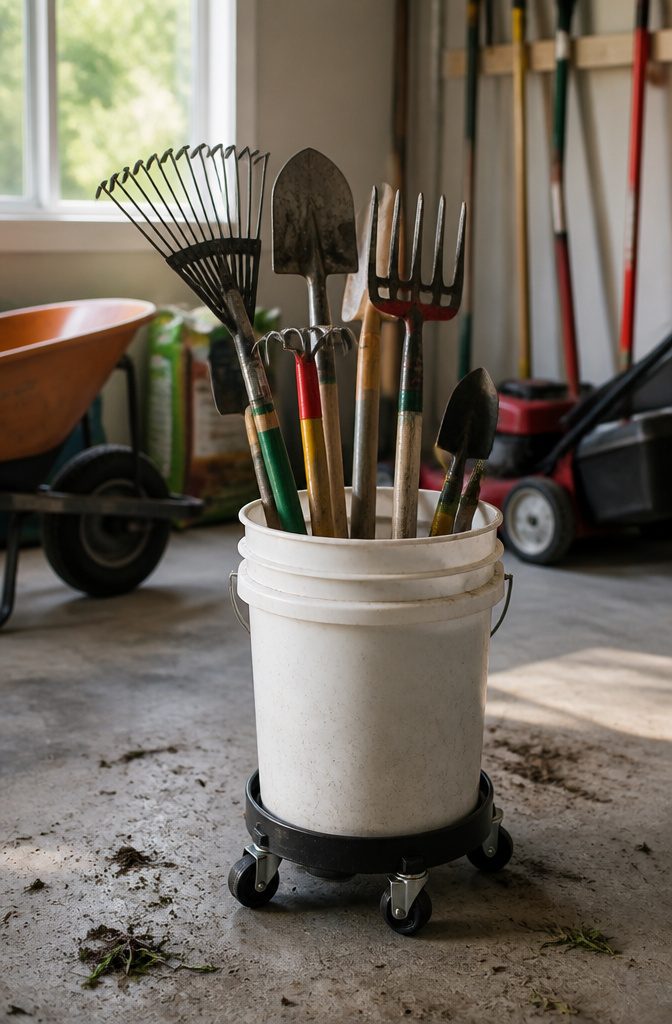
A wheeled caddy turns a few scattered tools into a grab-and-go gardening kit you can roll from garage to shed and out to the beds.
Gardener’s Supply Company makes one that amounts to a 5-gallon bucket on large outdoor wheels, fitted with slots and pockets for long-handled and hand tools alike.
At $129.99 it costs more than a simple tote, yet you gain one trip instead of three when the pruning shears, hand fork, and cultivator all travel together.
For a tighter budget, the Suncast Wheeled Tool Storage Rack runs $59 and carries up to 150 pounds on a steel-cored resin frame.
It holds roughly 40 tools, with side-access slots for head-down storage of long-handled items. Four wheels make it easy to reposition, though the footprint is larger than a tote-style carrier.
Between the two, the bucket caddy wins for anyone with a modest collection who works across multiple spots in the yard.
The Suncast rack makes sense once your tool count justifies the space it claims. Tote-style carriers work in a pinch, but they stay where you set them down.
Wheels earn their keep on the days you realize the secateurs are in the garage, the hand rake is in the shed, and the weeds are in the front bed.
Cleaning Before Storing

- Brush off loose soil and debris before the dirt hardens; a stiff brush or old towel handles most of it. For grime that has already set, soak the tool in warm water with dish soap, then scrub until clean.
- Dry every surface thoroughly. Garages trap humidity from poor ventilation, roof runoff, or vehicles tracking in rain and snow, and even stainless steel will rust in damp air if moisture sits on the metal. I run a rag along handles and blades, then leave tools in open air for ten minutes to finish.
- Apply a light coat of oil to metal parts. A dab on a rag, wiped across blades and hinges, is enough to repel the condensation that builds overnight. I skip the oil on wooden handles; it darkens the grain and can turn slick in a hot garage.
Safety and Ventilation
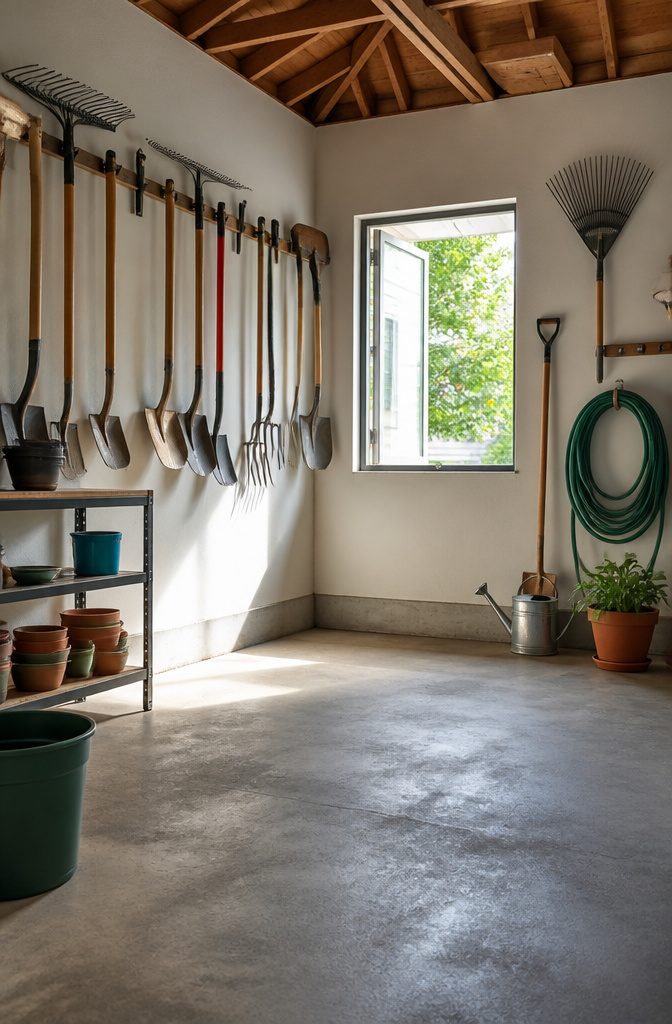
A shovel left blade-up against a wall is a shin splitter waiting to happen, and a rake on the floor is a snapped tine or a rolled ankle.
I hang long-handled tools with the working end at a consistent height, well above foot traffic, so the silhouette stays predictable even when I reach for something with gloves on.
The floor itself has to stay clear, not just for neatness but because a garage collects its own hazards: meltwater, sawdust from the last project, a spilled bag of peat moss.
Ventilation matters more than most people budget time for.
Any tool that ran on gas today, even after it cools, still breathes hydrocarbons into the air. A corner with no air movement turns that residue into a low-grade chemical stew by morning.
An exhaust fan or a window cracked on two walls does the job without drama. I think of it as part of the storage system, not an extra.
Purposeful storage isn’t just about tidiness—it protects your investment and saves you time on repairs down the line.
That holds double for safety.
A rusted blade needs more force to cut, and more force means less control. Keeping tools dry, hung, and aired out is the same work as keeping them sharp.
Seasonal Rotation and Inventory
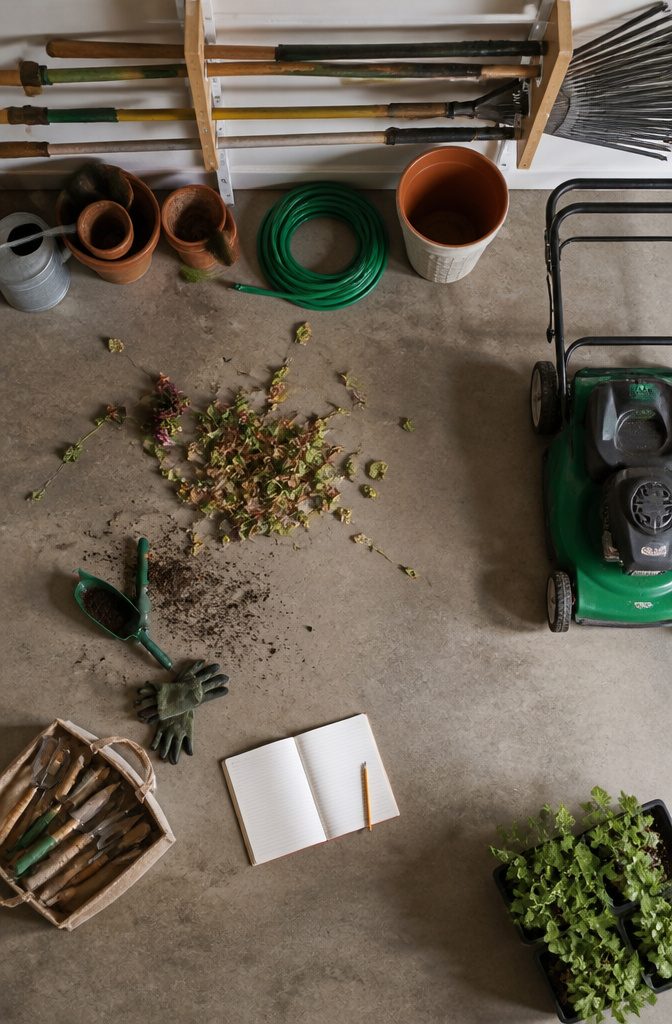
Seasonal tools and the ones you reach for daily want different real estate in the same garage.
I move the off-duty gear, the pots and watering cans that hibernate through winter, to overhead racks where they keep out of the way until March.
That swap buys back the wall space and the easy-reach zone for what you actually need this month.
The second half of this is less visible but saves more grief: a written inventory.
Tools rank just behind vehicles as what a thief targets first in a garage, and most of us cannot name every item we own after a break-in.
A simple list, maybe a photo backup, turns a police report and an insurance claim from a memory test into a formality.
Lockable cabinets help for the expensive power equipment, leaf blowers and hedge trimmers especially, but the inventory is what gets you compensated if the lock fails.
Overhead storage for the seasonal stuff, a list for the whole collection: the combination costs little and covers both the space problem and the worst-case scenario.
Frequently Asked Questions
How can I organize garden tools in my garage?
Wall-mounted racks, corner towers, PVC pipe holders, pegboards, and slatwall systems all keep tools off the floor and visible.
The method that fits you depends on your budget, wall space, and whether you need the setup to change as your collection grows.
A fixed corner rack like the Rubbermaid Garage Corner Tool Tower Rack costs $34.99 and holds 30 long-handled tools; slatwall runs closer to $200 but lets you rearrange hooks and baskets anytime.
How do I organize long-handled garden tools?
Stand them upright in a corner rack or wall-mounted slots so handles stay separated and reachable.
PVC pipe sections screwed to a 2×4 work too: cut a 2-inch pipe to length, notch it 1-1/4 inches wide for the handle, and space the pipes to fit your actual tools.
Stand them upright; anything leaning in a pile ends up tangled and floor-bound.
What are some DIY ideas for garden tool storage?
An old pallet stood on its side slots rakes and shovels between the boards; sand it first to avoid splinters. A spare ladder painted and leaned against the wall holds small pots or hand tools on S-hooks.
Buckets corral hoses or hand tools, and hardware cloth stretched over an open drum keeps long tools apart and visible. These projects need only found wood, a handsaw, and an afternoon.
Can I store tools outdoors safely?
Yes, if you use weatherproof containers or build a small cabinet from treated wood and add ventilation plus ground moisture protection.
Most gardeners with a garage do better storing tools inside, where dust, humidity, and temperature swings do less damage to metal and wood.
What is the best tool organizer for a garage?
Cabinets win for protecting tools from dust and moisture; slatwall wins for visibility and flexibility. A Stanley Black & Decker survey found 53% of U.S. homeowners use a garage or workshop for DIY projects, and cabinets serve that workshop need well.
For pure garden tool storage, a mix usually works best: slatwall or a corner rack for daily tools, overhead racks for seasonal ones, and a cabinet for anything you want locked away.
How can I store shovels and rakes in my garage?
Hang them on wall-mounted racks with the working end above foot traffic, or stand them in a corner tower. The StoreYourBoard BLAT Garden Tool Organizer holds up to 250 pounds on lag screws into studs and costs $49.99.
Consistent height matters: a blade-up shovel against a wall is a shin splitter, and a rake on the floor snaps tines or twists ankles.
How do I store my garden tools?
Clean them first: brush off soil, dry every surface, and wipe metal with a light oil coat to repel condensation.
Then store dry tools off the floor, hung or racked, with the garage ventilated so gas tool residue and humidity do not accumulate. Seasonal items belong overhead; daily tools belong at shoulder height.





