

A bedroom reset in under ten minutes is possible, but only if you stop making the bed properly.
The waft, a five-minute sheet snap that trades hospital corners for visual relief, works because it accepts imperfection. Most people lose their morning to tight folds and smoothing rituals that the bed undoes by nightfall anyway.
[link-whisper-related-posts]1. Waft the Bed Linens

The waft is what I use on mornings when tucking hospital corners feels like someone else’s life.
Pull the sheets and comforter onto the floor or a chair, then layer them back while snapping each piece upward so it floats down even on both sides.
Air carries off the dust, crumbs, and whatever else settled in overnight; the motion takes under five minutes and the bed reads as finished from the doorway.
It is not proper bed-making. It will not survive a partner who cares about tight folds.
For a room that needs to look reset before you leave for work, or for a Saturday when you will crawl back in by noon, the waft wins because it asks almost nothing and still removes the visual weight of a rumpled mattress.
Straighten the pillows, toss a throw at the foot, and the illusion holds.
2. Keep Crease-Release Spray in the Nightstand

A spray bottle of diluted fabric softener lives in my nightstand and gets pulled out more mornings than not.
The mix is simple: a drop of fabric softener in water, shaken, then misted over the duvet or top sheet where it sat crumpled from sleep.
Thirty seconds of smoothing with a flat hand pulls the creases out before they set, and the bed looks kept rather than slept-in.
This is not laundering, and it does not replace it.
What it does is stretch the polished look across more days between full changes, which matters on a Tuesday morning when the sheets are still clean but the surface looks like a rumpled envelope.
The same misting bottle, something amber glass with a fine nozzle, covers a king spread in four or five pumps and leaves the cotton smelling fresh.
I would not bother with ironing for this; the spray wins on speed and the result is close enough that no guest would notice the difference.
3. Run a Lint Roller Over Soft Surfaces
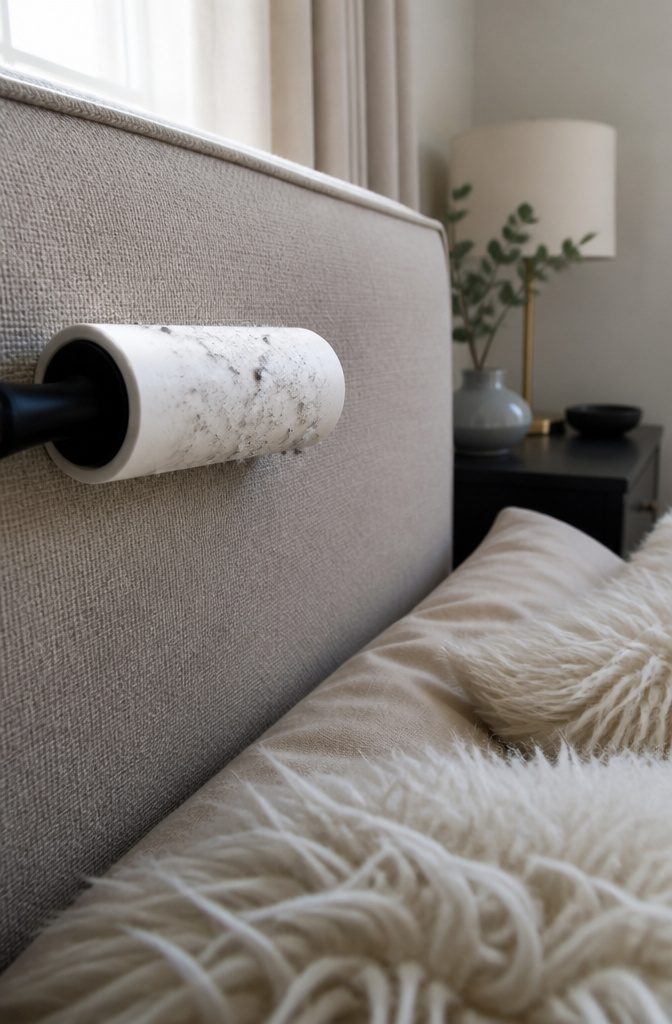
A lint roller does the dusting job faster than a feather duster because it traps debris instead of flinging it into the air.
I run it over the headboard first, especially if it is fabric, then across throw pillows and lampshades. The sticky sheet picks up the bulk of surface dust in one pass and keeps it there.
A duster redistributes particles; a roller removes them. For anyone who sleeps near fabric surfaces, this matters, since dust stirred up at bedtime tends to resettle right where you breathe.
After a few uses, the sheet peels off and the roller is ready again. It is a small tool, but it cuts the time spent on soft furnishings by more than half.
4. Stage Dishes in the Doorway
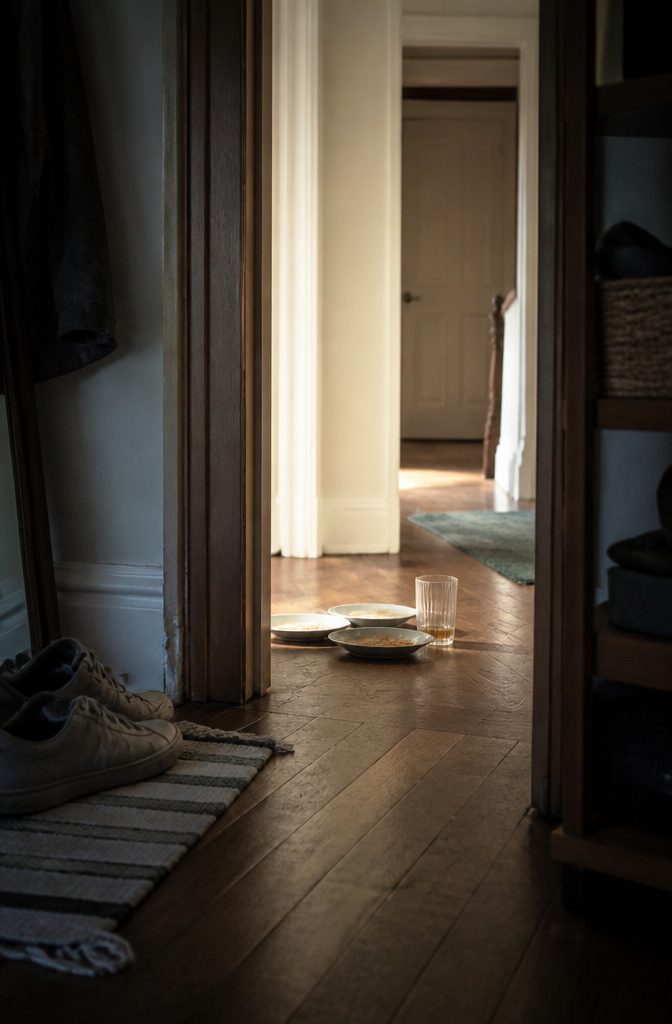
Half-eaten plates and water glasses have a way of turning invisible once they sit on a nightstand long enough. The clutter becomes scenery, and scenery gets ignored.
The fix is to break that camouflage by moving dishes to the doorway while tidying.
The floor at the threshold forces the issue: you cannot leave the room without stepping over or picking up what is there. With your hands already full, the path of least resistance leads straight to the kitchen sink.
I have seen the morning collection on a nightstand hit three or four glasses deep.
The doorway staging stops that buildup by making the exit itself the reminder. No apps, no alarms, just the physical fact of an object blocking your way out.
The downside is minor. A plate on the floor looks odd for the minutes it sits there, and it needs retrieving before it becomes a tripping hazard.
But those minutes are the point. The dish stays visible, which means it stays in your working memory until it is gone.
5. Keep a Hamper and Trash Can in the Bedroom
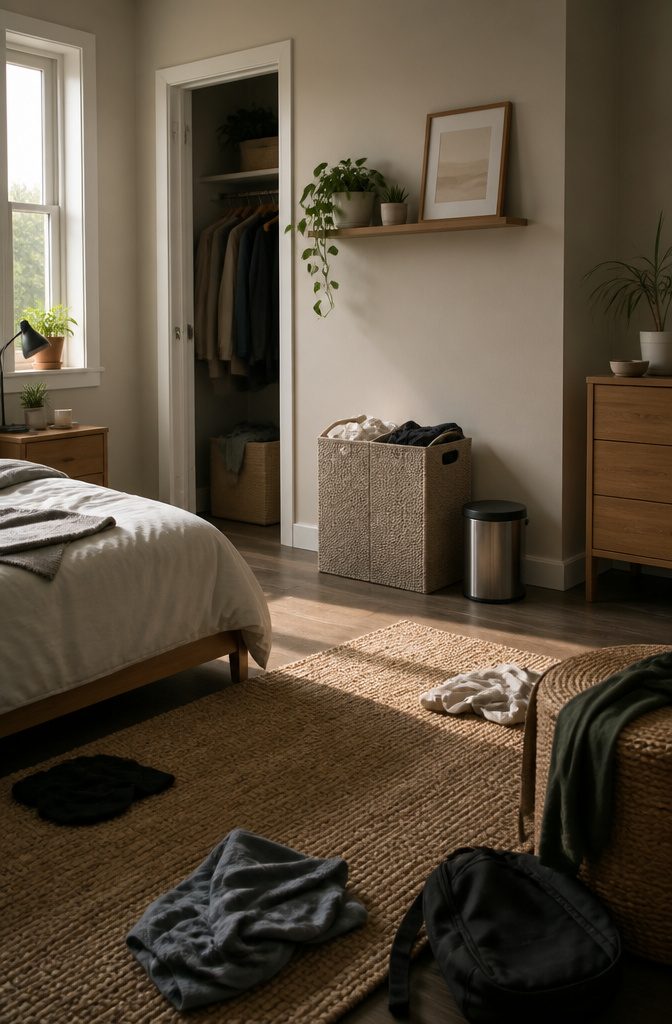
A hamper and trash can in the bedroom remove the single biggest source of visible mess: the friction of walking worn clothes and packaging to another room.
Most bedroom clutter starts as a temporary landing spot because carrying that shirt to the laundry basket in the hall feels like a separate chore.
I keep a split "lights and darks" hamper for exactly this reason.
Dividing laundry as I drop it saves a sorting step later, and the $32.99 price for a model like the one I use is low enough that I consider it a tool, not a splurge.
A narrow bin beside it handles the tags, receipts, and delivery packaging that otherwise collect on the nightstand.
If floor space is tight, carry the hamper and bin through the room with you during the reset, then return them to their spots as you leave.
You want zero decisions about where something goes; the floor and the chair should never be options.
6. Pick Up Visible Dust Bunnies by Hand
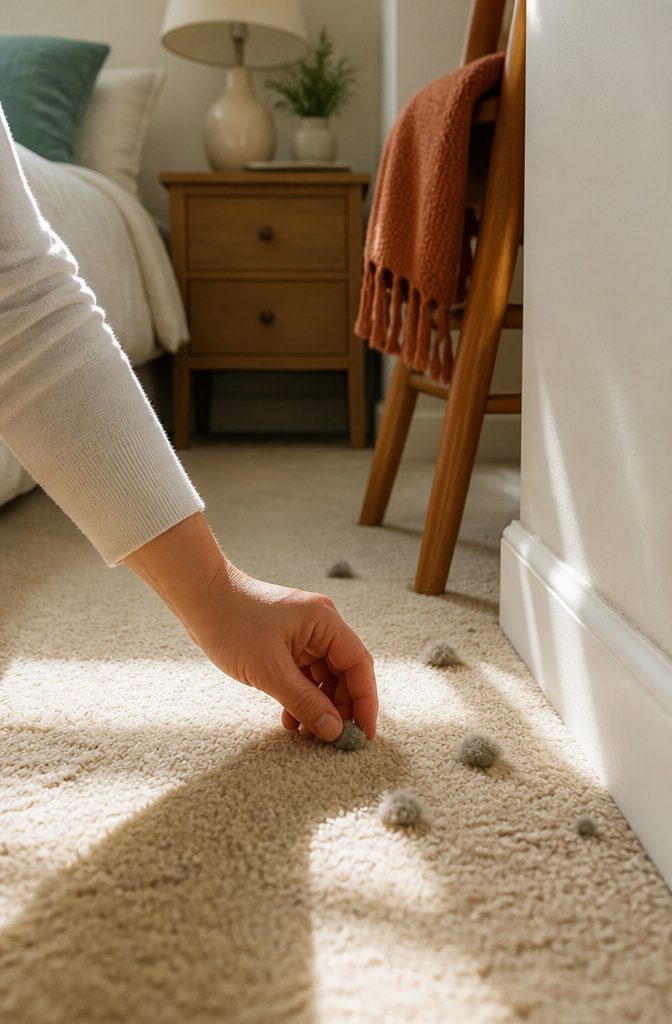
A vacuum cycle takes longer than most quick resets allow, so I go after the visible debris by hand.
Dust bunnies collect along baseboards and in corners where they register as dirty even when the rest of the floor looks fine. Picking them up directly skips the cord-wrangling and the noise that turns a two-minute job into ten.
If you share the room with a pet that sleeps on the bed, this shortcut does not apply.
Pet hair embeds itself and spreads fast enough that only a proper vacuuming keeps the space genuinely fresh. For everyone else, manual removal hits the spots that actually bother the eye without the overhead of a full cleaning cycle.
Why Quick Bursts Beat Marathon Sessions
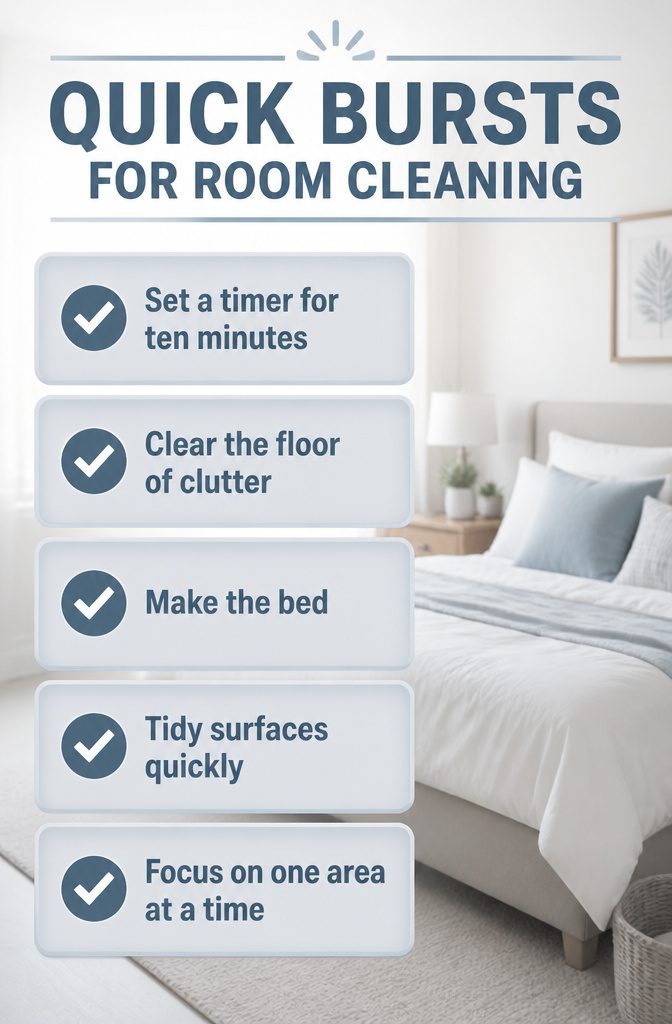
A bedroom left messy first thing in the morning starts to drag on mental well-being by evening, and the bed itself stops feeling inviting. Ten minutes on a timer keeps the chore small enough to finish before resistance sets in.
I set the timer, work until it rings, then walk away regardless of where things stand. That cutoff matters more than the cleaning itself; it keeps the task from ballooning into an hour-long session that never quite ends.
The break lets the mind reset, and the room gets another burst later if needed. Two or three rounds spread across a day beat one marathon that gets abandoned halfway through.
The timer technique turns tidying into something repeatable rather than something to dread, and a room that resets daily stays manageable without ever becoming a project.
How Often to Reset the Room
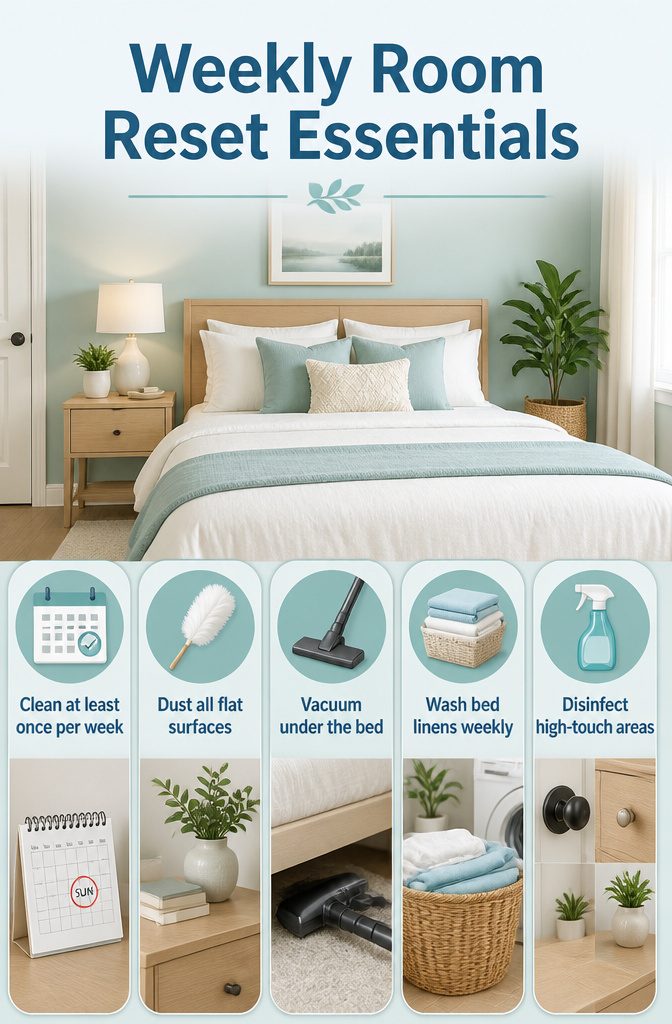
A weekly reset is the baseline that keeps a bedroom from sliding into a project.
Once per week, the room needs dusting on every flat surface, vacuuming that reaches under the bed and along baseboards, and a pass over the spots hands actually touch: nightstands, drawer pulls, door handles.
The linens go in the wash too, since skin cells and oil collect fast and the pillowcase is what your face meets every morning.
You should aim to clean your bedroom at least once per week and include proper dusting, vacuuming, disinfecting commonly touched surfaces such as nightstands, door handles, and drawers, and washing your bed linens.
That frequency is realistic, not aspirational. Missing a week and the dust layer becomes visible, the floor develops texture, and the reset stops feeling quick.
I treat the weekly clean as non-negotiable infrastructure; the daily two-minute pickups that follow are only possible because the deeper layer was handled on Sunday.
What a Tidy Room Actually Changes
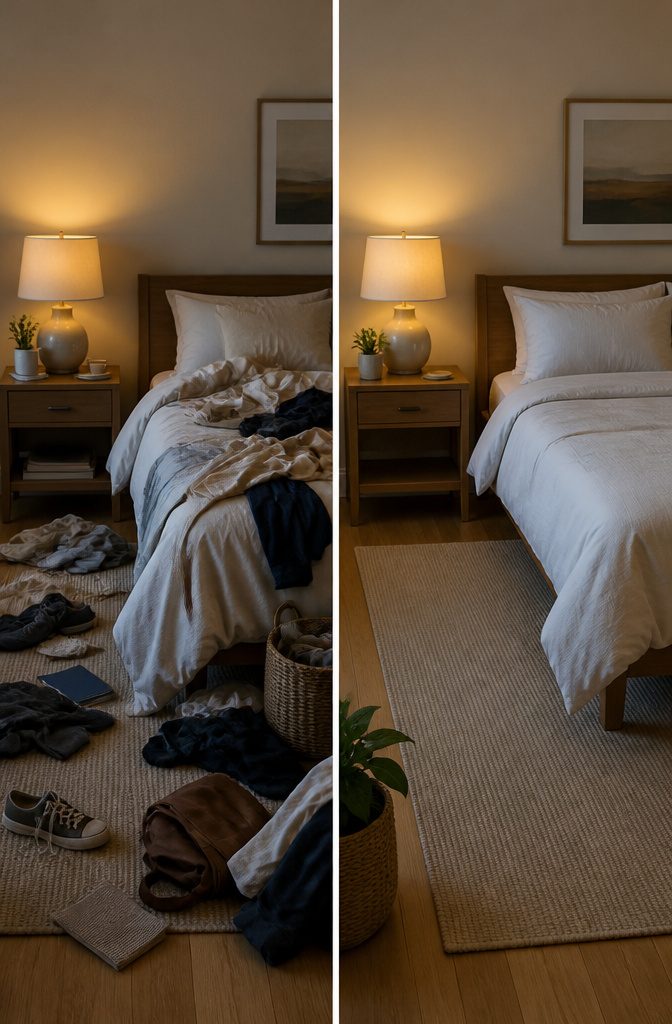
A tidy room changes how the air itself feels when you walk back in at the end of the day.
The floor visible, the bed pulled straight, the nightstand holding only what belongs there. That visual quiet is what lets your shoulders drop.
I notice the difference most when I skip an evening reset.
The chair with yesterday’s clothes becomes a signal my brain reads as unfinished work, and sleep comes slower. A clear surface does not solve stress, but it removes one layer of static.
The atmosphere shifts for anyone who enters, too.
A bedroom that reads as cared-for invites actual rest rather than the nagging sense that something waits. What you get back is not productivity; it is permission to stop performing.
For a space you see first thing and last, that matters more than any staging photo suggests.
Frequently Asked Questions
How do I clean my room without being overwhelmed?
Set a timer for ten minutes, work until it rings, then walk away no matter where things stand.
That hard cutoff keeps the task from ballooning into an hour-long session, and you can come back for another burst later if needed. Two or three short rounds spread across a day beat one marathon that gets abandoned halfway through.
How can I clean my room fast in 5 minutes?
Pull the bed linens up with a quick waft, run a lint roller over soft surfaces, and move any dishes to the doorway so you cannot leave without taking them with you.
These three moves hit the visual weight of a room, the surface dust, and the clutter that otherwise turns invisible on nightstands.
How often should you clean your bedroom?
Aim for a full reset at least once per week, including dusting every flat surface, vacuuming under the bed and along baseboards, disinfecting touched spots like drawer pulls and door handles, and washing bed linens.
Daily two-minute pickups only stay possible because that deeper layer was handled on Sunday.
How do you clean up a bedroom?
Start with the bed, since it takes up the most visual space; a quick waft of linens and straightened pillows reads as finished from the doorway.
Then trap dust with a lint roller on fabric surfaces rather than redistributing it, stage dishes at the threshold so they leave with you, and drop clothes straight into a bedroom hamper to kill the friction of carrying them elsewhere.
Is there an app to help me clean my room?
No app is needed if you use the doorway as a physical reminder.
Moving dishes and clutter to the threshold blocks your exit, so the object itself becomes the prompt to carry it to the kitchen or trash. The timer on your phone handles the rest.
What is the 20 minute rule in cleaning?
Work until the alarm sounds, then step away regardless of progress. That limit prevents resistance from building and keeps the chore repeatable rather than something to dread.
What does a clean room do?
It removes one layer of static so your shoulders drop when you walk back in at the end of the day.
A clear surface does not solve stress, but it stops the brain from reading yesterday’s clothes as unfinished work, and sleep comes easier when the bed itself feels inviting.





