

A keep your house clean schedule splits chores across daily, weekly, monthly, and seasonal tiers so the work never piles into a lost Saturday. Most people collapse the whole routine into one weekend marathon, which is exactly why schedules fail.
Ten to fifteen minutes each morning or evening covers the daily tier: making beds, wiping counters, and running one load of laundry before it becomes a half-day folding project.
[link-whisper-related-posts]Daily Cleaning Tasks
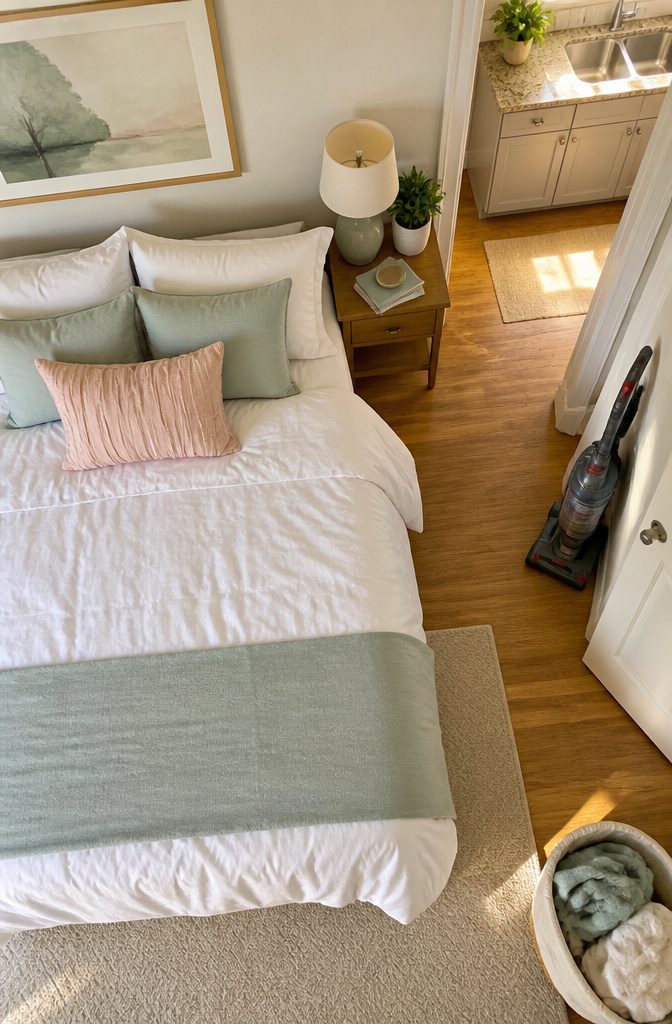
The daily routine that actually keeps a house from sliding backward is shorter than most people expect.
Ten to fifteen minutes, morning or evening, covers the whole list: make the bed, wipe kitchen counters and sink, load or unload the dishwasher, take out trash and recycling when needed, sweep or vacuum high-traffic floors, run one load of laundry, and sort or toss mail before it piles.
Making the bed and wiping the counters are the two anchors that matter most. A made bed sets the visual tone of the room, and clean counters keep spills from hardening into real work later.
I split the dishwasher across both ends of the day, unloading in the morning so the rack is empty for dinner dishes, then loading after the evening meal so the kitchen resets overnight.
High-traffic sweeping targets entryways, kitchen, and living room floors where dirt concentrates.
A single daily laundry load prevents the weekend pile that turns folding into a half-day project. The mail sort takes two minutes if done daily, twenty if ignored until Saturday.
This routine attacks surface mess, not deep grime. It keeps the house livable between the heavier cycles, and it works because each task is small enough to finish before coffee brews.
Weekly Cleaning Tasks

Weekly cleaning is where the schedule either holds or collapses. I spread the heavier rotation across the week instead of loading it into one draining day.
Dusting every surface and cleaning the bathrooms, including toilets, sinks, and tubs, are the non-negotiables here, supported by six sources as the backbone of this tier. Miss those and the rest is cosmetic.
I vacuum carpets and rugs, mop hard floors, wipe down kitchen appliances, change bed sheets, and clean out the refrigerator. Some people assign one task per weekday, ten to fifteen minutes once the rhythm sticks.
Others batch bathrooms on Monday, kitchen deep-cleaning on Tuesday, floors on Thursday. The refrigerator cleanout matters more than it sounds, spoiled produce turns a quick grab into a project.
Weekly momentum asks for fixed days, but a looser rotation keeps the schedule alive when life interrupts.
A rigid daily assignment keeps you from skipping the toilet scrub because you are tired. But life happens, so I leave Friday open for anything that slipped, or Saturday for sheets and towels if the week ran long.
Monthly Cleaning Tasks

Monthly cleaning is where the schedule loosens up, and I like that flexibility. Only two or three sources even agree on what belongs here, so you can shape this tier around what your house actually needs.
The jobs that do make most lists are the ones that hide in plain sight. Vacuum and rotate mattresses to cut down allergens and keep the wear even.
Deep clean upholstery and rugs with a vacuum attachment or a rented steam cleaner; the furniture will smell better for it. Inside kitchen appliances need attention too: wipe down fridge shelves, oven interiors, and microwave walls.
For the microwave, heating a bowl with one cup of water and several tablespoons of vinegar until the window steams softens everything. Let it cool five minutes, then wipe.
Wash windows and blinds, especially after pollen season leaves its film.
Disinfect trash cans with a hard scrub to stop odors and bacteria from taking hold. I skip closet organizing here; that belongs in seasonal work where you have the headspace to decide what stays.
Seasonal Cleaning Tasks

The heavy rotation of a keep your house clean schedule belongs in the seasons, not the weekend.
Spring and winter both call for carpet work: spring deep cleans carpets and curtains after the closed-up months, and winter brings another round of shampooing carpets and rugs before holiday traffic wears them in.
Summer shifts attention upward to ceiling fans and air vents, where dust buildup chokes airflow right when you need it most. Fall finishes the year by pulling summer dust from heating vents and radiators before the first switch-on.
Wall-to-wall carpeting needs attention twice a year in both spring and winter; vents split by cooling and heating seasons, so they spread across summer and fall instead.
I would rent a carpet cleaner for the two deep cleans rather than buy; a Bissell ProHeat 2X Revolution Pet Pro runs the math close only if you own pets and light-colored pile.
For the rest of us, the rental breaks even after two years.
Building the Schedule
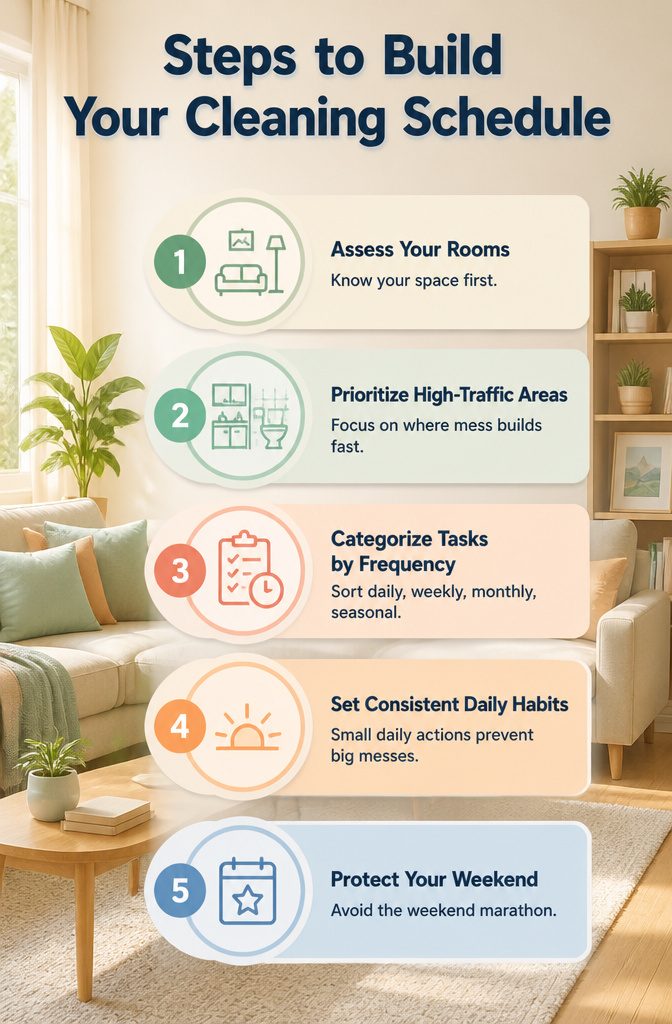
A schedule that actually works starts with your own rooms, not a template from a magazine. Walk through with a notebook and sort every task by how fast the mess returns.
Dishes in the sink? Daily.
The film on the bathroom mirror? Weekly.
The fridge coils? That is seasonal work, and forgetting it costs you in energy bills.
The point of the split is to stop the weekend marathon. Daily tasks are the ten-minute habits that keep chaos from compounding.
Weekly tasks hit the surfaces that collect actual grime. Monthly and seasonal jobs tackle the buildup you can see only when the light changes or the allergy season hits.
I have watched friends abandon entire routines because they tried to do everything on Saturday; the split exists to protect your Saturday.
Your high-traffic zones, the kitchen and bathrooms, will pull more than their share of daily and weekly slots.
That is correct. A bedroom that sees eight hours of sleep and little else does not need the same frequency.
Start with the traffic, then assign the task. Consistency follows from realism, not the other way around.
Time Blocks That Work

The five-to-fifteen-minute block is the interval that actually protects a schedule from collapsing into weekend marathons.
One long cleaning session exhausts most people and leaves the rest of the week in worse shape. Every Saturday morning turned into a four-hour slog, and by Sunday the place already looked lived-in again.
Short daily blocks keep surfaces from ever reaching the point where cleaning feels like punishment. A kitchen counter wiped at 7:15 after breakfast never builds up the sticky archaeology that demands an hour of scraping.
The research on task completion supports what feels true in practice: the brain finishes what it starts more reliably when the finish line is visible from the start.
A fifteen-minute timer turns cleaning into a closed loop. You pick the room, do what the timer allows, and walk away.
One source frames this as interval training, which fits. The effort is concentrated, not diffused across an open-ended afternoon.
Morning people should use the morning. Night owls get the same result after dinner.
The specific clock position matters less than the consistency of the block itself. What breaks the system is saving everything for Saturday, which converts rest days into unpaid labor and makes the schedule feel like a bill coming due.
Splitting the Load
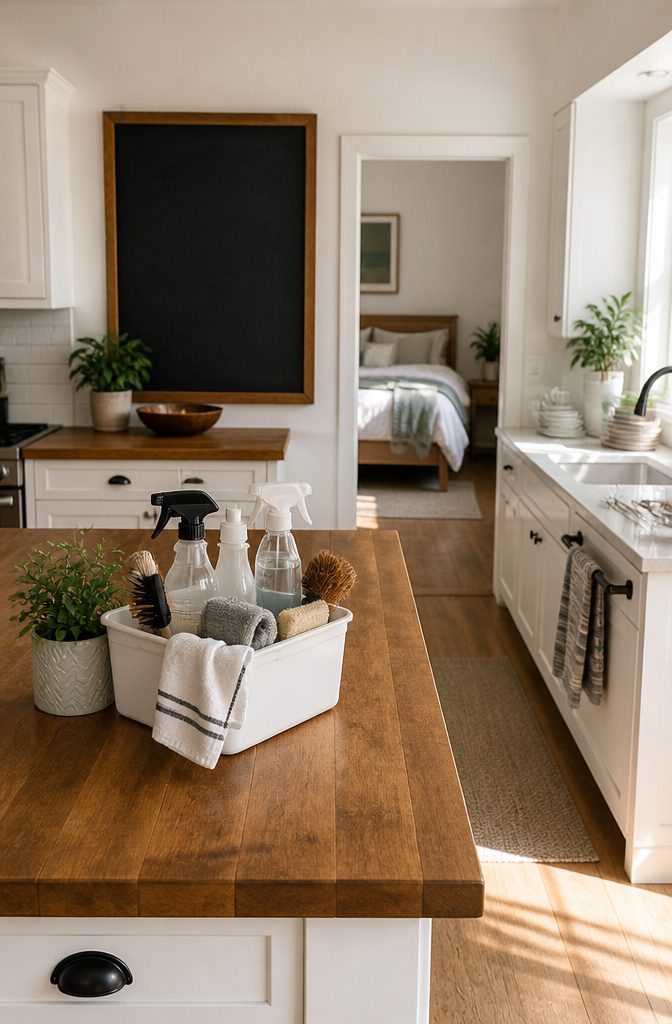
A cleaning schedule only works if one person is not carrying all of it.
The daily tasks that keep a house from sliding into chaos are small enough to hand off: making beds, loading the dishwasher after dinner, wiping kitchen sinks post-meals, and the 10–15 minute clutter catcher that resets a room before bed.
A child old enough to pull up a comforter can handle the bed; the clutter catcher works well as a timed race for elementary ages.
The dishwasher and sink wipe-down need someone with enough judgment not to load wooden spoons on the bottom rack, but that is middle-school territory, not adult-only.
Weekly tasks divide by stamina and schedule, not just age. Dusting all surfaces on Monday and vacuuming carpets and rugs on Tuesday are quiet jobs that fit a teenager’s homework break or a partner’s conference-call lag.
Kitchen deep-cleans on Wednesday and bathrooms on Thursday take more elbow grease and stronger products, so they should go to whoever has a lighter workday that week, not default to the same person every time.
Sweeping and mopping wood and tile on Friday, plus the Saturday load of sheets, towels, clothes, and pet bedding, round out the rotation.
The rule that saves resentment is simple: whoever cooks does not clean the kitchen that night, and whoever did last week’s bathroom gets this week’s dusting.
Sunday stays free for meal prep and calendar review, which is planning, not scrubbing, and often the most neglected piece.
Declutter First

A cleaning schedule only works when the surfaces are clear enough to wipe. Cluttered counters and jammed closets turn every scheduled task into a wrestling match with stuff that has no assigned place.
I treat decluttering as a parallel habit, not a competing project.
Fifteen minutes before the weekend cleaning block, I walk through with a basket and remove anything that belongs in another room. That small head start keeps the actual schedule on time.
The rule is simple: if the item has not been used in the current season, it leaves the space, not just gets shuffled to a back closet. Seasonal transitions are natural checkpoints.
Before holiday decorations go up, the summer gear and accumulated paper need to exit. The schedule assumes this clearing has happened; it does not build in time to work around piles.
Products and Tools
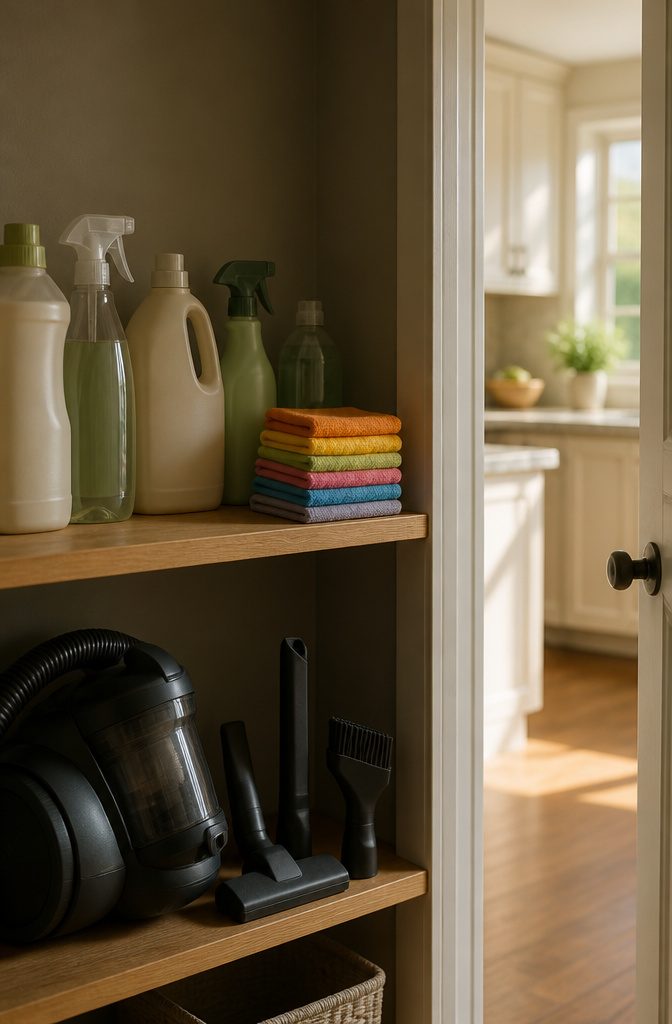
A good cleaning schedule lives or dies by what you actually keep under the sink. I have seen too many weekend plans collapse because someone reached for a product that promised everything and delivered streaks, residue, or a headache.
The labels that matter are EPA Safer Choice and the specific surface guidance on the back. "Multi-surface" rarely means all surfaces; granite, hardwood, and stainless steel each have limits that a generic cleaner ignores.
I skip anything with a warning label longer than the directions. The safer formulations cost about the same now, and they spare you the gloves-and-windows routine.
Microfiber cloths outperform paper towels on every count except convenience.
I keep a color-coded stack: blue for glass, yellow for dust, green for kitchen. Wash them separately, no fabric softener, or they turn into rags that push dirt around.
For tools, a vacuum with a hose attachment covers more ground than any specialty gadget. The crevice tool does baseboards, the brush does blinds, and you already own it.
A squeegee for shower walls takes 30 seconds after each use and cuts deep-cleaning time by half. I would not buy a steam mop unless you have sealed tile throughout; on wood or laminate, the moisture risk outweighs the speed.
When to Call a Service

A recurring cleaning service runs roughly $150–$250 per visit for a standard home, which pencils out to $600–$1,000 monthly if you want weekly help.
That cost stings, but so does watching your keep your house clean schedule slide into a cycle of catch-up weekends and guilt.
I have seen friends hire out the monthly deep clean while keeping daily and weekly tasks on their own shoulders, a split that preserves the routine’s structure without consuming every Saturday.
The schedule itself tells you when it is time.
If your monthly tasks are consistently pushed to the next month, or seasonal jobs like washing windows and cleaning behind appliances never happen, you are not failing at cleaning; your life has outgrown the time you assigned it.
A professional team can also tailor frequency to household size and layout rather than forcing a rigid calendar.
Paying a service trades money for a steady result you do not have to push yourself to finish.
You lose the satisfaction of finishing a room yourself, and you still need to tidy surfaces between visits or the crew cannot access floors and counters.
For renters and first-home owners on a tight budget, I would rather see someone cut the schedule to a true minimum and execute it reliably than stretch an ambitious one they cannot sustain.
Frequently Asked Questions
How do I create a cleaning schedule for my home?
Start by walking through your house with a notebook and sorting every task by how fast the mess returns.
Dishes in the sink need daily attention; the film on your bathroom mirror can wait a week; fridge coils are seasonal work.
Assign tasks to daily, weekly, monthly, and seasonal blocks based on that speed, with your highest-traffic rooms like kitchens and bathrooms pulling the most frequent slots.
What are some daily cleaning tasks I should do?
The core daily list takes 10-15 minutes: make the bed, wipe kitchen counters and sink, handle the dishwasher, sweep or vacuum high-traffic floors, run one load of laundry, and sort incoming mail.
Making the bed and wiping counters are the two anchors that matter most. They set the visual tone and keep small spills from hardening into real work later.
How often should I deep clean my home?
Deep cleaning happens monthly and seasonally, not weekly. Monthly jobs include vacuuming and rotating mattresses, deep cleaning upholstery and rugs, wiping inside kitchen appliances, washing windows and blinds, and disinfecting trash cans.
Seasonal tasks hit carpets and curtains in spring, vents and radiators before winter heating starts, and ceiling fans in summer when dust chokes airflow.
How can I involve my family in cleaning?
Hand off daily tasks by ability: children old enough to pull up a comforter can make beds, middle-schoolers can load the dishwasher, and elementary ages respond well to timed clutter-catching races.
Split weekly tasks by stamina and schedule rather than defaulting to the same person. The rule that saves resentment: whoever cooks does not clean the kitchen that night, and whoever did last week’s bathroom gets this week’s dusting.
What is the 5-5-5 rule for cleaning?
The schedule it recommends instead uses 10-15 minute daily blocks, a weekly rotation spread across days, and monthly or seasonal deep cleans.
Short blocks keep surfaces from ever reaching the point where cleaning feels like punishment, which achieves the same goal of breaking work into manageable pieces.
What is the 6/10 rule for cleaning houses?
Its own framework splits tasks into daily, weekly, monthly, and seasonal tiers based on how fast mess returns in your specific rooms. High-traffic zones like kitchens and bathrooms pull more frequent slots; bedrooms that see only sleep need less attention.
What are 10 things I should clean weekly in my home?
The weekly rotation covers seven core jobs: dust all surfaces, clean bathrooms including toilets, sinks, and tubs, vacuum carpets and rugs, mop hard floors, wipe down kitchen appliances, change bed sheets, and clean out the refrigerator.
Some people add sweeping wood and tile, washing sheets and towels, and handling any tasks that slipped from earlier in the week to reach ten or more.
What are 6 things I can do every day to keep my house clean?
The six daily anchors are: make the bed, wipe kitchen counters and sink, run the dishwasher, sweep or vacuum high-traffic floors, do one load of laundry, and sort or toss mail before it piles.
Each is small enough to finish before coffee brews, and together they keep chaos from compounding into weekend marathons.





