
Most of what you’ll see here lands in the middle: 2 weekends, your own hands, and enough room in the budget to buy the soil or lumber without wincing.
A glass greenhouse anchors one end, and at the other, marking rows with string and a hoe still counts.
In March, the hydroponic towers with their reservoir pump let you start seedlings indoors; by August, a bamboo arch loaded with cucumbers makes more sense.
The painted tire beds, drilled with half-inch holes and scrubbed with soap, are the detail that sold me on pulling this list together, yellow, blue, and red in a staggered line.
[link-whisper-related-posts]1. Raised Beds
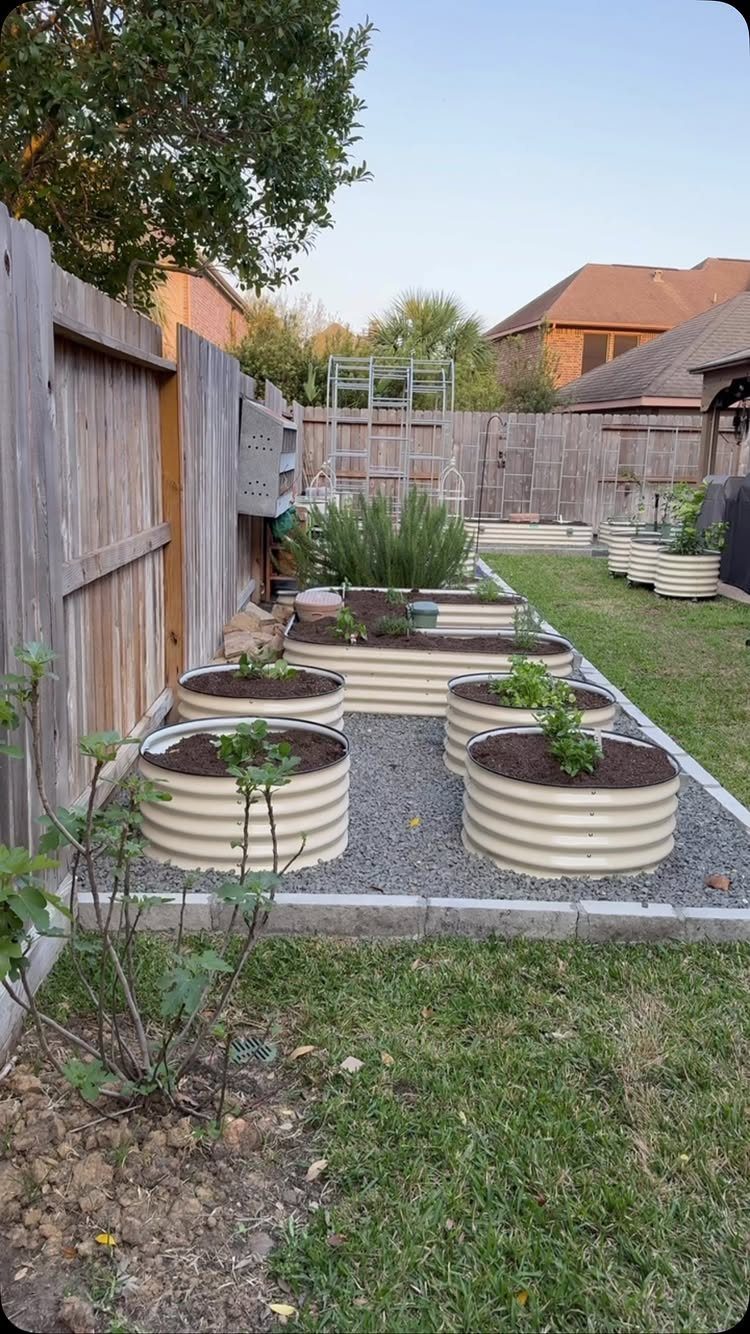
Corrugated metal raised beds give compact structure to a vegetable plot without the rot risk of wood. I like the round and oval shapes for squeezing into corners regular boxes waste.
Set them on gravel, not bare soil, so drainage stays clean and mowing stays simple.
Fill with a mix of topsoil and compost; soil depth enough to handle most greens and roots. The metal warms early in spring, which speeds germination by a week or two.
Shop around: the same profile sells under several brand names, and prices swing for identical gauges.
2. Vegetable Garden with Water Feature
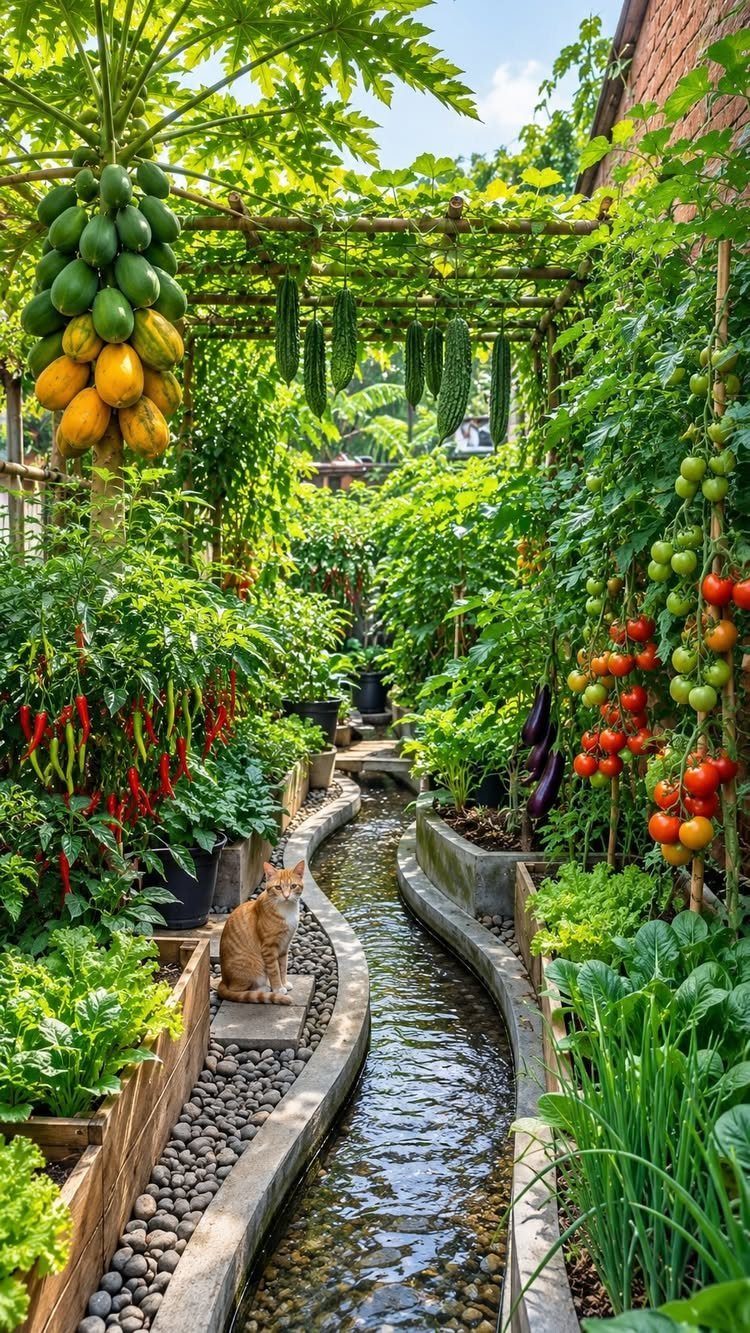
A narrow concrete channel threading between beds turns irrigation into something you want to look at.
This suits gardeners in dry climates who already run drip lines; the open channel lets you check flow at a glance.
Trade-off is weed seeds that blow in and sprout in the damp edges, so plan for a minute of edging with a trowel each week.
The stone lip keeps soil from collapsing in. Build it sloped, not level, or water pools and stagnates.
3. Glass Greenhouse and Potting Area
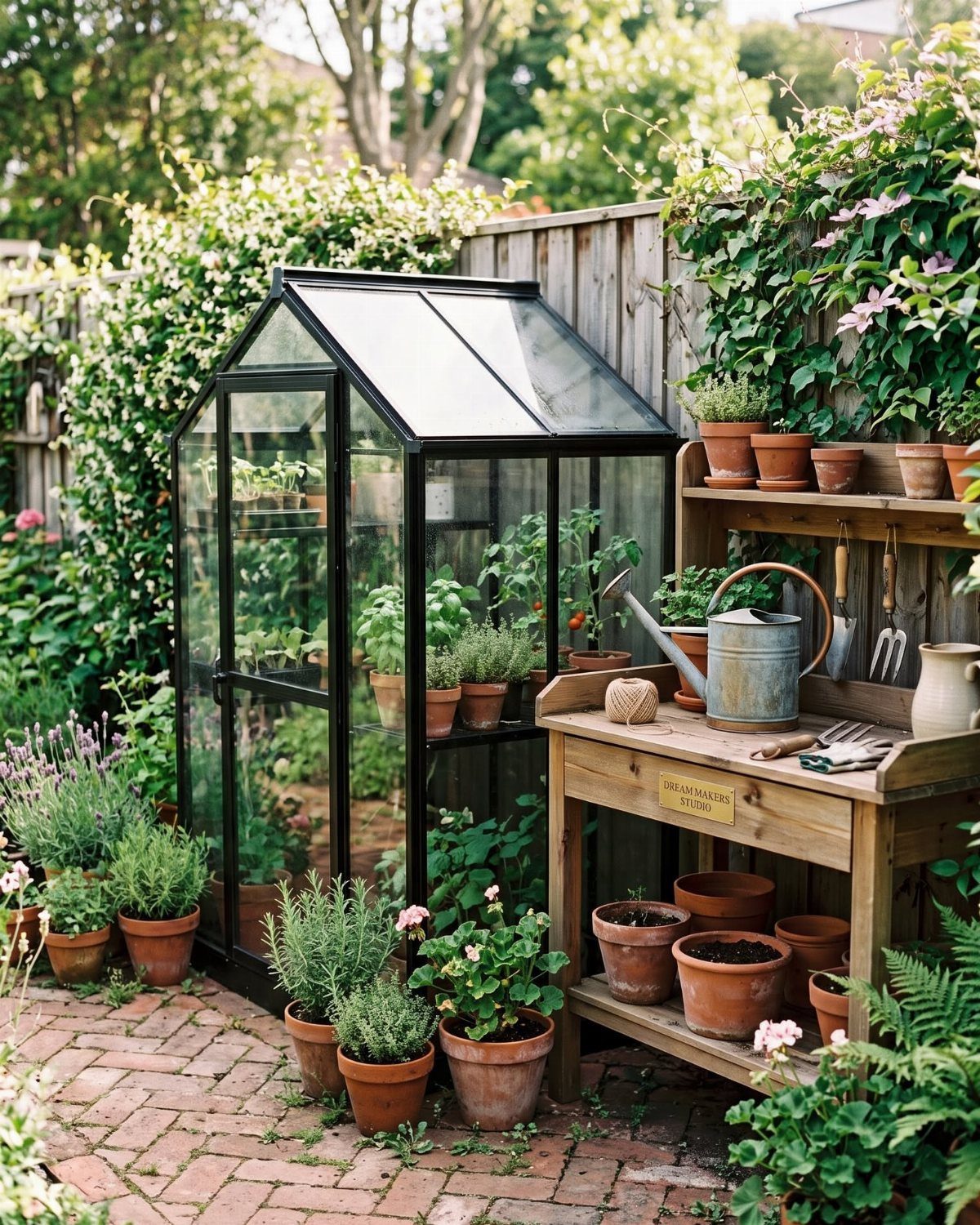
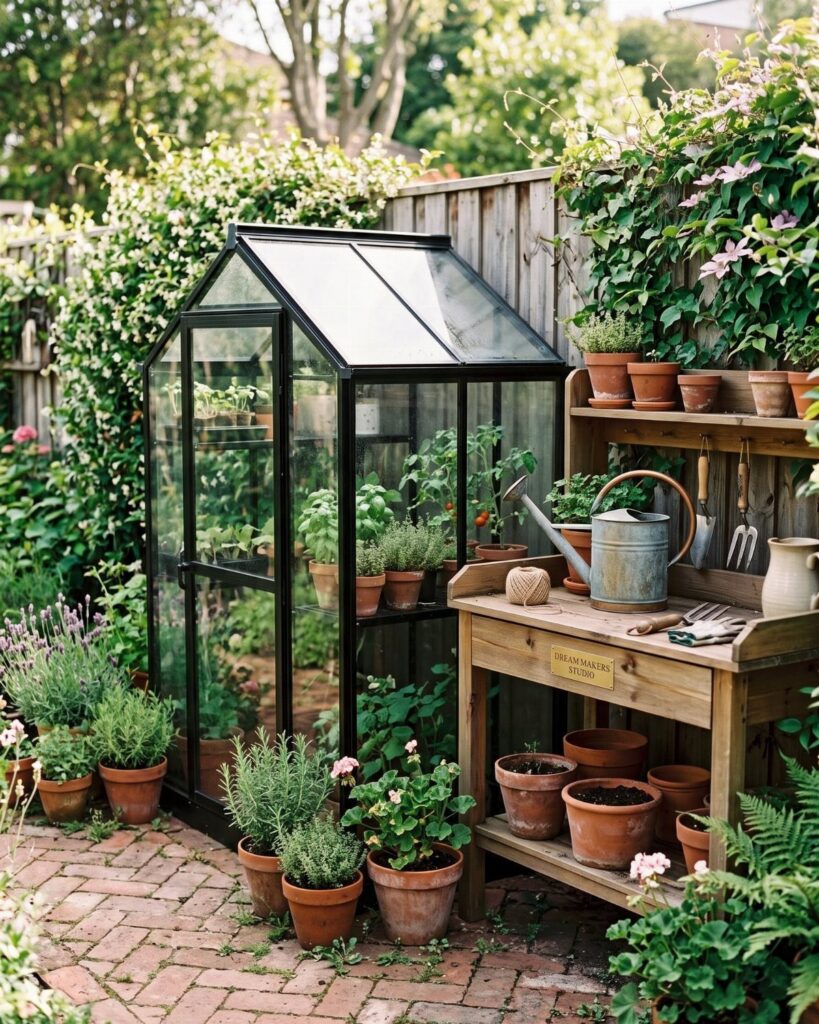
A glass greenhouse at this scale is a staging area more than a full production space; I use mine to harden off seedlings and overwinter pot-grown peppers.
The black frame against brick reads as furniture, not farm equipment, which matters when the patio sits close to the house.
The potting bench is the practical center.
A wooden surface at standard counter height saves your back during long sessions; slatted or wire shelves below dry tools without rust. Terracotta on the bench, not plastic, because the weight steadies watering cans and the pots breathe.
Greenhouse glass needs washing twice a year or light drops fast enough to matter.
4. Vegetable Beds Along Stone Paths
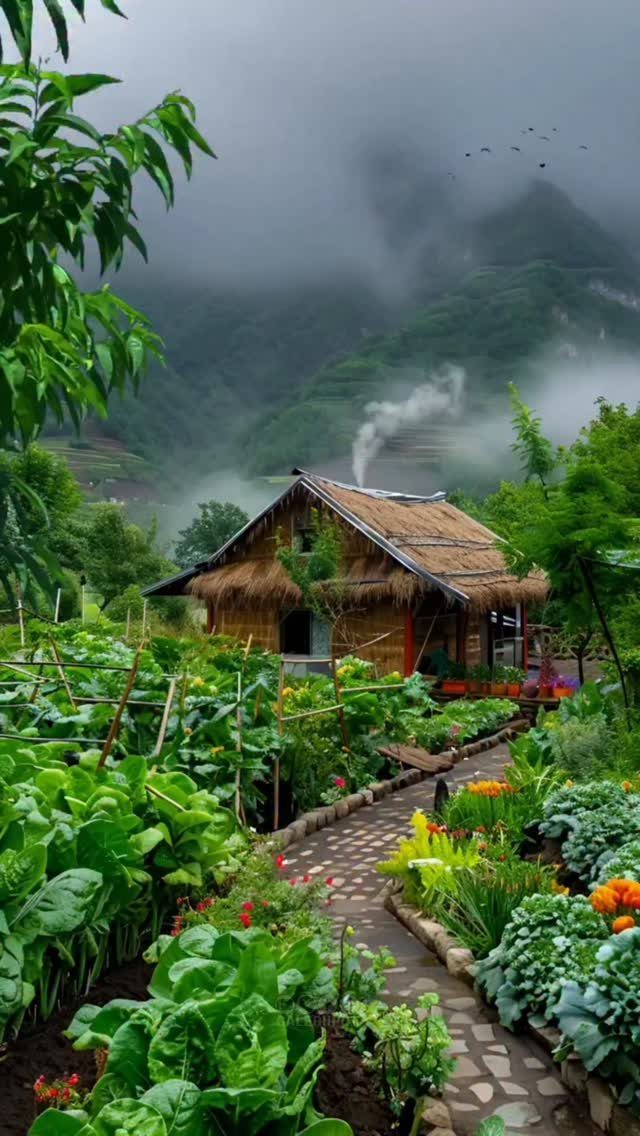
Stone paths wide enough for a wheelbarrow keep your feet dry and your harvest clean through any weather.
Companion planting alongside vegetables is the detail that makes this more than a walkway. Nasturtiums and calendula are reliable; both seed cheaply and handle the root competition from mature stone.
Flagstone over packed sand beats concrete for drainage and for moving later. Budget two weekends: one to grade and pack, one to lay and settle the stone.
5. Hydroponic Growing Towers
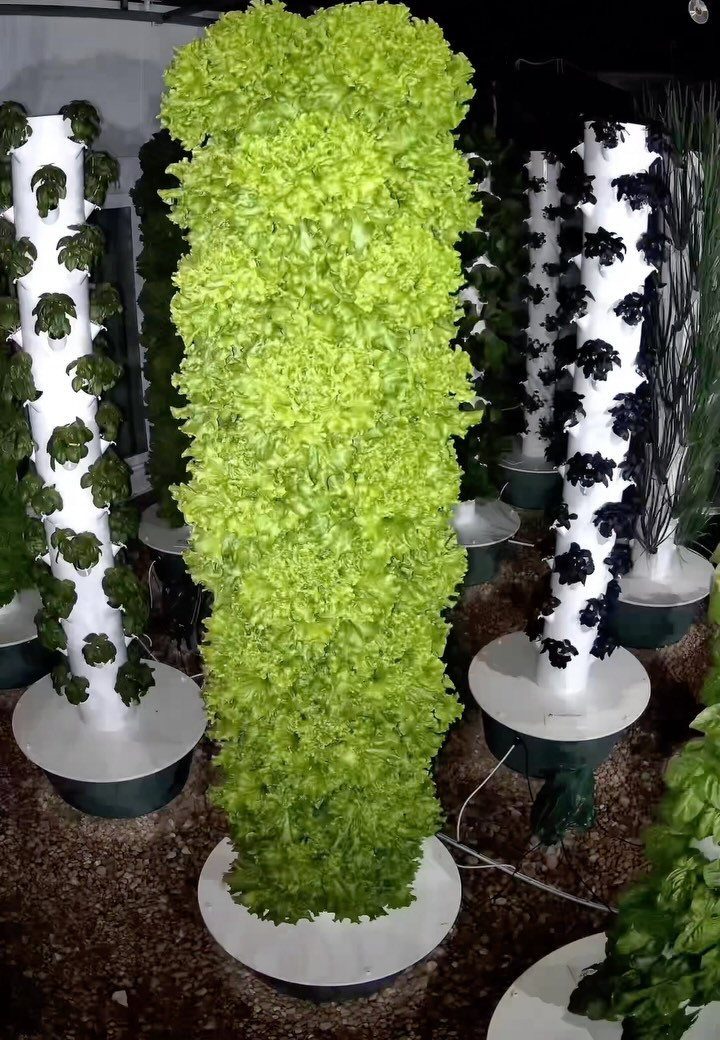
White vertical towers pack a full bed’s growing area into almost no floor space. I ran one in a basement under standard LEDs; lettuce and basil cycled fast enough to keep a kitchen supplied, no soilborne disease possible.
The design depends on a reservoir and small pump at the base.
Nutrient solution recirculates constantly, so pH stays in range and roots stay oxygenated. Check the pump weekly; a dry tower kills plants in hours, not days.
Start-up runs higher than dirt gardening. After that, seed and nutrient cost roughly matches a good organic soil, and water use drops by half.
6. In-Ground Vegetable Rows
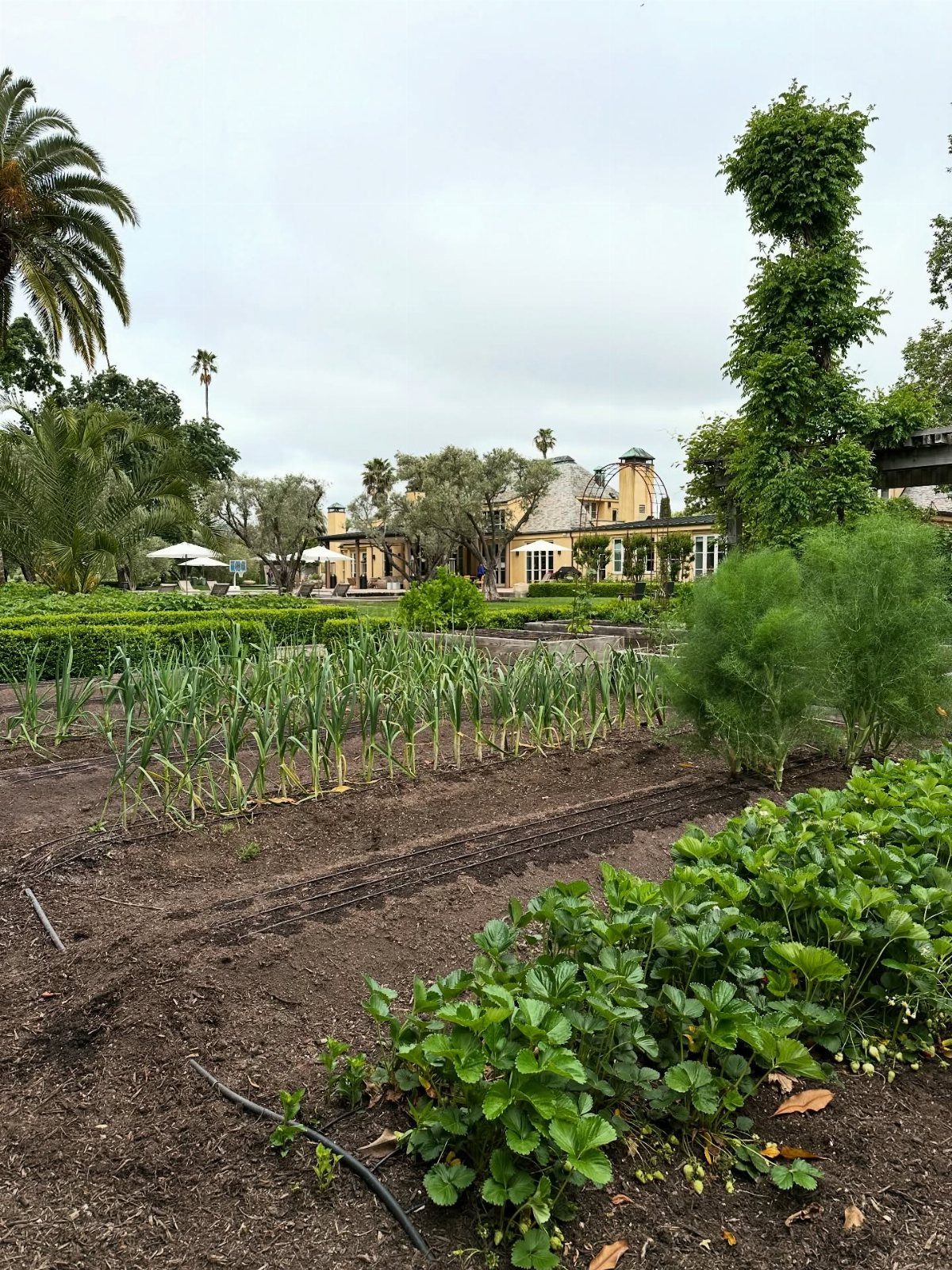
In-ground rows scale to any harvest goal and need no construction beyond a hoe and string line.
Drip tape down each row, not overhead spray, keeps foliage dry and cuts water use. I bury mine shallow so cultivation and harvesting do not disturb it.
Weeds will follow where the soil is open and fertile.
Mulch between rows, straw or shredded leaves, or plan to cultivate weekly through June. Order suits the gardener who has space and prefers crops in the ground where they naturally belong.
7. Trellises and Arbors
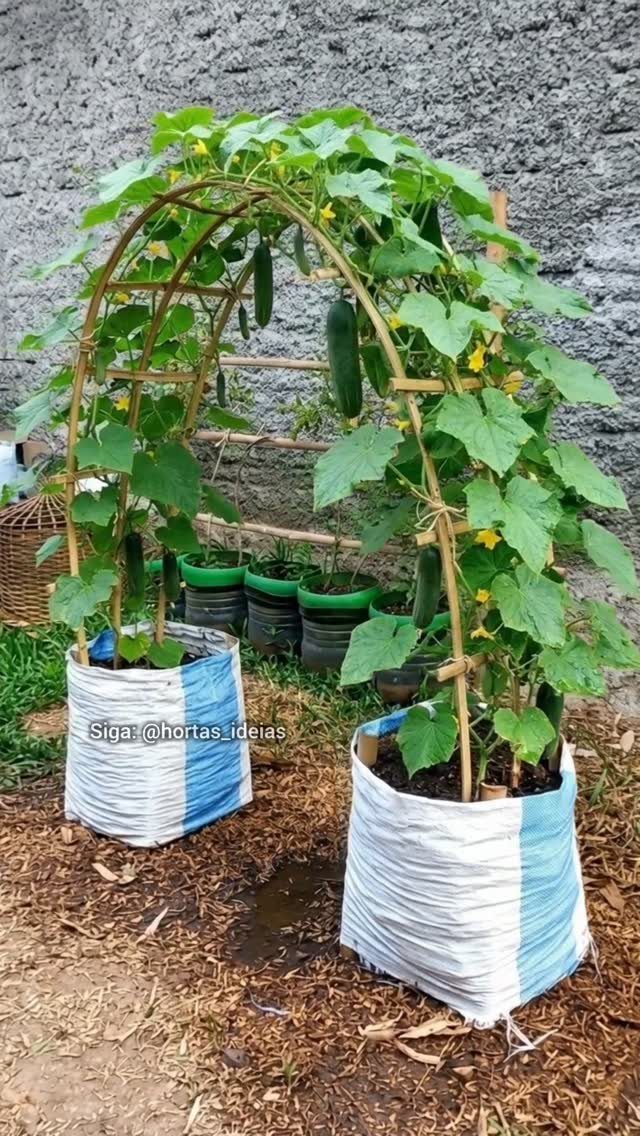
A bamboo arch loaded with cucumbers turns 2 grow bags into a room-dividing screen of hanging fruit.
I anchor the arch with steel pins driven through the bags into soil below; without that, a full crop of melons or gourds will pull the frame over by August.
The open weave lets you reach through to harvest without freeing the vine.
Grow bags this size hold enough root space for 2 vigorous climbers. I replace the bag fabric every 3 seasons; UV cracks it sooner than you’d expect.
8. Green Wall
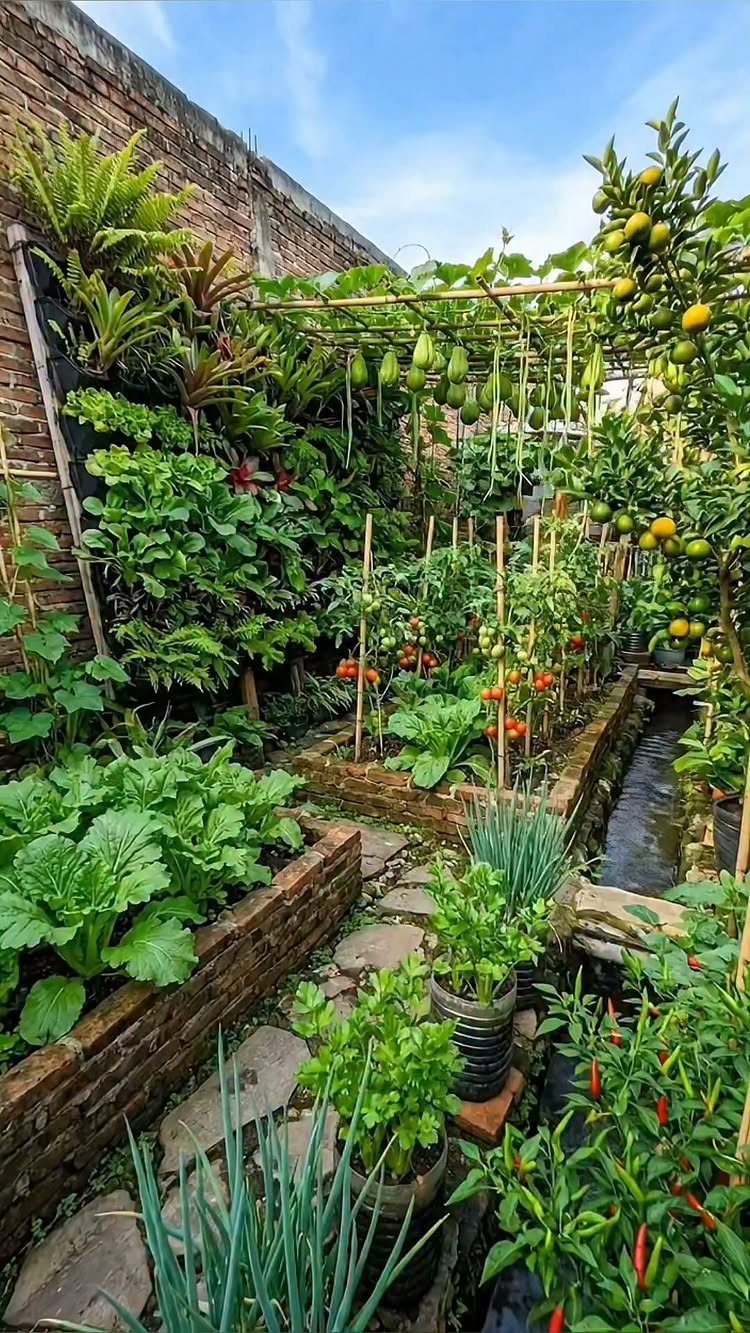
Pocket planters on a brick wall borrowZ vertical real estate that raised beds cannot reach.
The felt or fabric pockets dry fast in full sun; I run drip line along the top row and let gravity feed the rest. Tomatoes in pockets need determinate varieties or relentless pruning; indeterminate vines outgrow the support by mid-July.
Leafier crops, lettuce and kale, handle the constraint better. Mounting hardware must hit mortar joints, not brick face; a masonry bit and expansion bolts hold per panel without drama.
9. Vertical Gardening
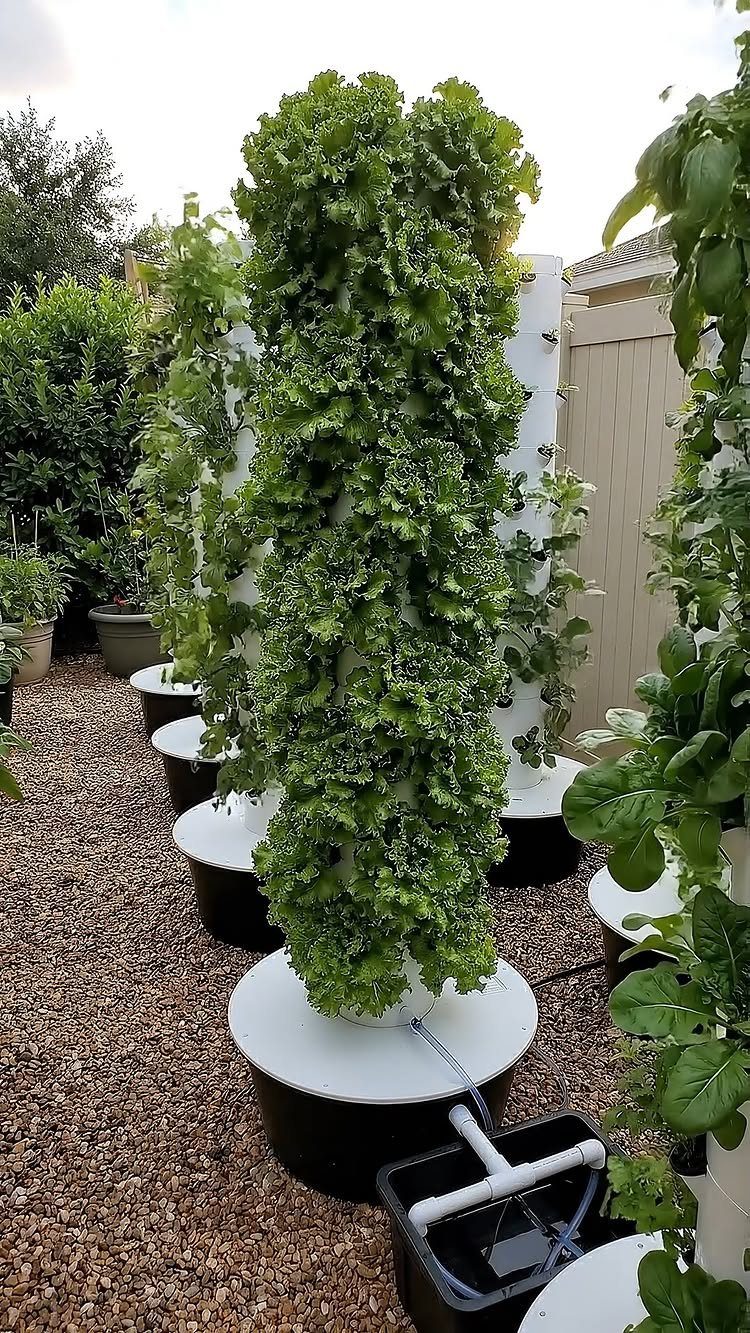
White tower columns of lettuce stack growing surface into a footprint no wider than a trash can.
The black base houses a reservoir; a small pump pushes nutrient solution to the top, and it cascades back down through roots exposed to air.
Gravel under the base keeps drainage tidy and prevents the pool of standing water that invites mosquitoes.
Tomatoes and peppers load too heavy for the upper ports. I count on a weekly maintenance routine: pH check, reservoir top-off, dead leaf removal.
10. Container Gardening
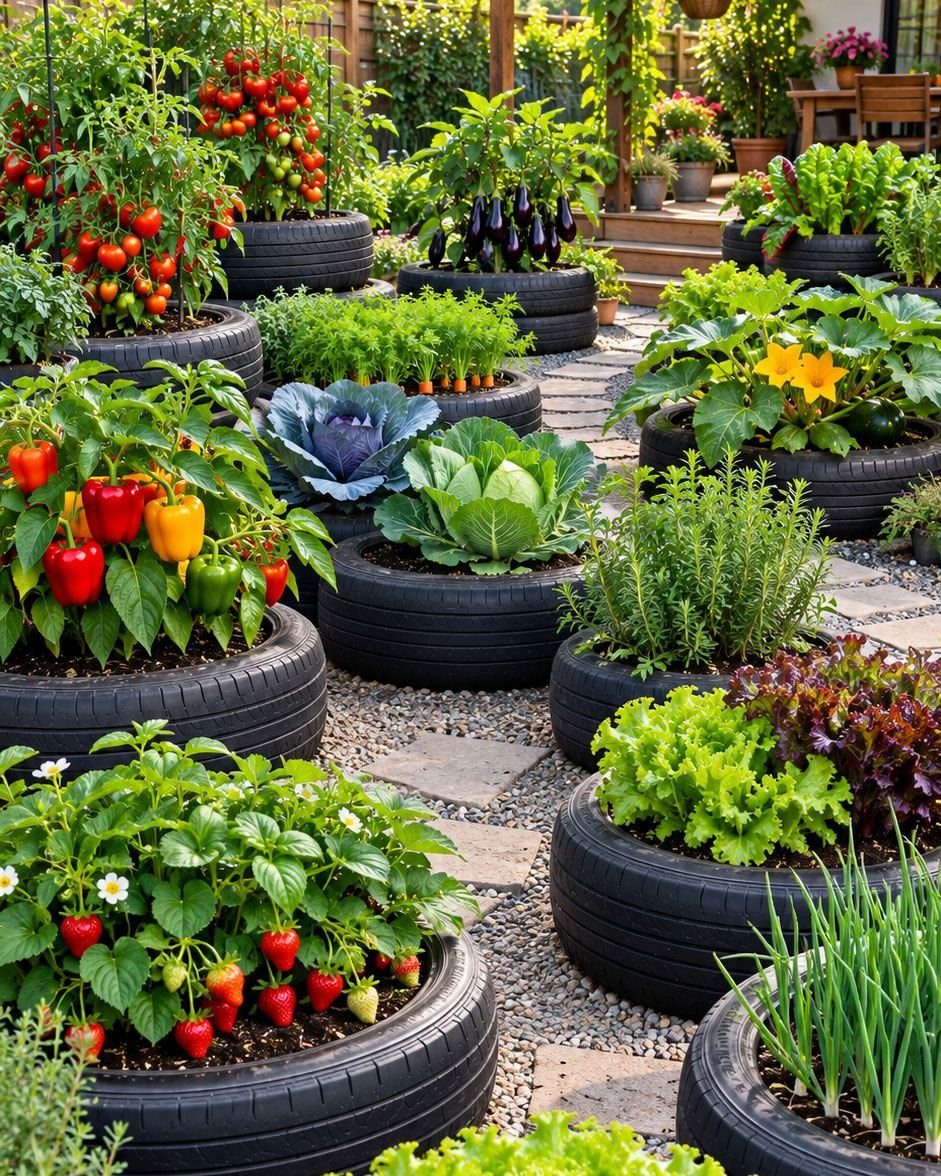
Stacked tires on gravel give you raised beds for the cost of labor and a weekend’s work.
I scrub interiors with soap and a stiff brush, then drill a ring of half-inch holes through the sidewall for drainage. The rubber insulates roots from sudden temperature swings; peppers in tires outproduce my in-ground rows some years.
Stack 2 for potatoes, filling as the vine climbs.
Single walls suit shallow-rooted strawberries and greens. The black heats early, which helps in short-season zones; in Phoenix or Tucson, I’d switch to white paint or shade cloth by June.
11. Garden Beds in Creative Shapes
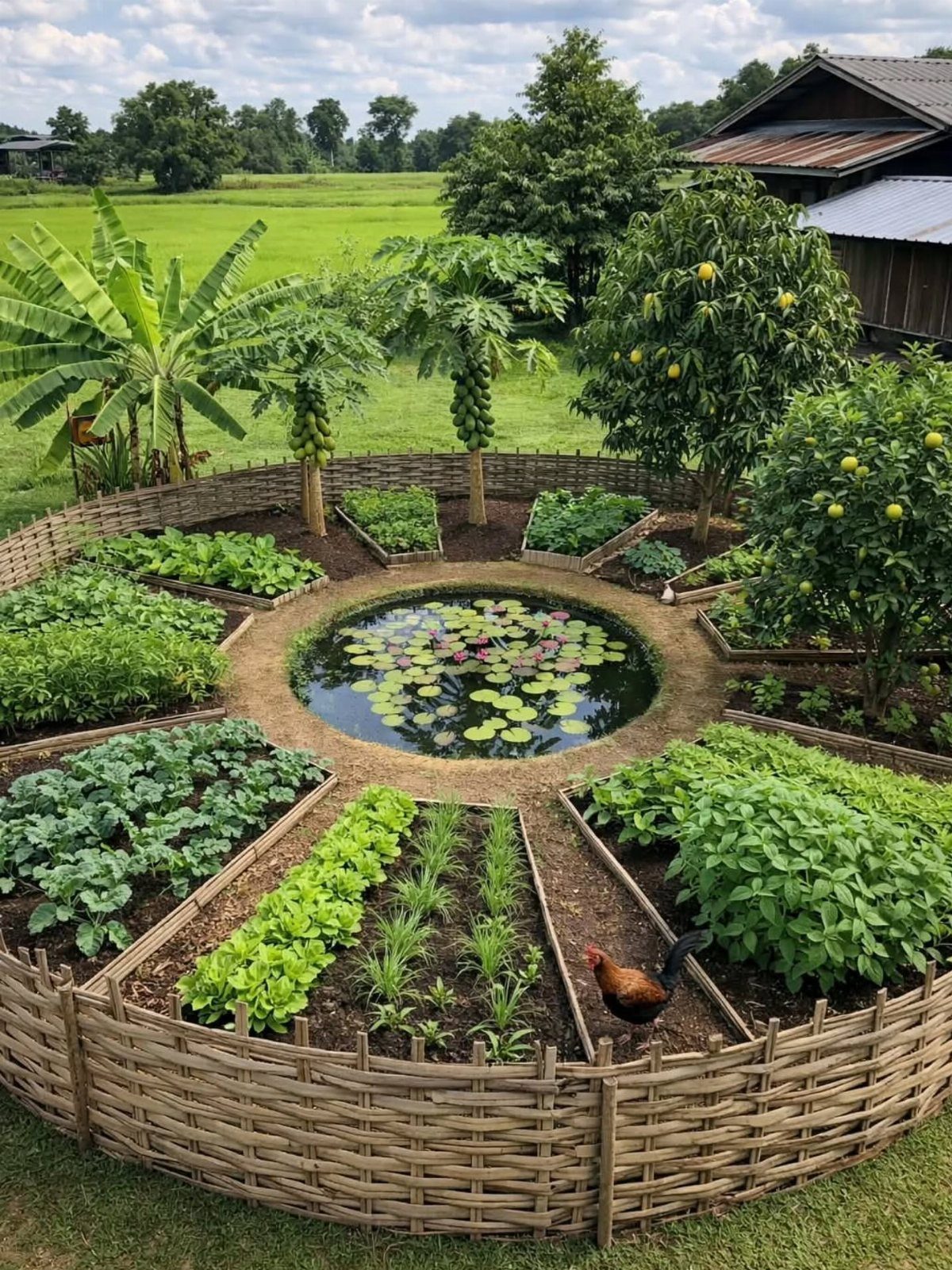
Wedge beds radiating from a center point turn the whole garden into a single view from a window or deck.
A woven fence around the rim blocks wind and gives climbing peas a support that disappears under foliage. The pond at center does more than ornament; it moderates temperature extremes and draws pollinators through the spokes.
I measure the wedge angle with a string from a center stake, then divide the circle so each bed gets even spacing. Curving the outer edge slightly, not true straight lines, hides the geometry and reads softer from a distance.
“The key is finding the right balance that works for your space and resources,” he says. He is passionate about weaving in foraging opportunities—think strawberries, huckleberries, and blackberries—throughout the garden.
Sunlight Requirements
Most vegetables need 6 to 8 hours of sunlight daily, and you cannot negotiate with that number. A garden that gets afternoon shade from a building or tree line will grow leafy greens acceptably but will fail at peppers and tomatoes.
Track your site before you build anything, marking the sunny patches across a full day in midsummer.
One inch of water per week covers the baseline need, rain included. I prefer deep, infrequent watering: a slow soak that trains roots downward rather than a daily mist that keeps them shallow.
Check soil moisture with a finger pushed a few inches in; if it comes up dry past the first joint, it is time to water.
Pest Protection
Companion planting is the first line, not an afterthought. I treat them as infrastructure, not decoration.
A fully enclosed garden solves the problem where rabbits or deer are persistent, and the cost of fencing pays back in harvests you would otherwise donate.
If your beds are open, move them closer to the house and human traffic; many pests avoid the active zone near a door.
The drip systems I mentioned earlier keep foliage dry, which matters more than most gardeners realize.
Wet leaves invite fungal disease and provide cover for insects that damage from below. Spray only the soil, not the plant, and you remove one habitat layer the pests count on.
Soil Preparation
Well-draining soil with organic matter is the foundation, and "well-draining" means a loam-sand-clay mix that water penetrates in seconds, not minutes.
I amend with compost before the season opens and again between plantings; organic matter breaks down fast in an active bed.
Earthworm castings and composted manure rebuild soil that started poor, though the recovery costs months you do not get back.
Fish emulsion and composted manure supply nitrogen, phosphorus, and potassium without chemical build-up. I apply these when transplanting or at midseason for heavy feeders; the smell dissipates in a day or two.
Fertilizer high in those 3 elements supports fruiting and root crops specifically.
Leafy greens want more nitrogen, less phosphorus. Match the amendment to the crop, not the calendar.
Frequently Asked Questions
How much sunlight do vegetables need?
Six to eight hours of direct sun is the standard most vegetables cannot negotiate.
Leafy greens tolerate a shadier plot, but peppers and tomatoes need that full stretch of light to set fruit. Track your site across a full midsummer day before you build anything.
How do I protect my garden from pests?
I position pest-repelling flowers and herbs near vulnerable crops from the start rather than planting them later as a rescue attempt.
Fully enclosed fencing pays back its cost in harvests you would otherwise lose to rabbits or deer; open beds work better closer to human traffic near doors.
Dry foliage also matters: drip systems that water soil directly remove the humid cover insects and fungi rely on.
What is companion planting?
Companion planting means placing beneficial plants alongside vegetables as infrastructure that supports the whole system.
Nasturtiums and calendula sell for pocket change as seed, push through the cramped edges along stone, and still bloom thick enough to distract aphids from your beans.
This technique deters pests and fits into garden design without treating it as mere decoration.





