
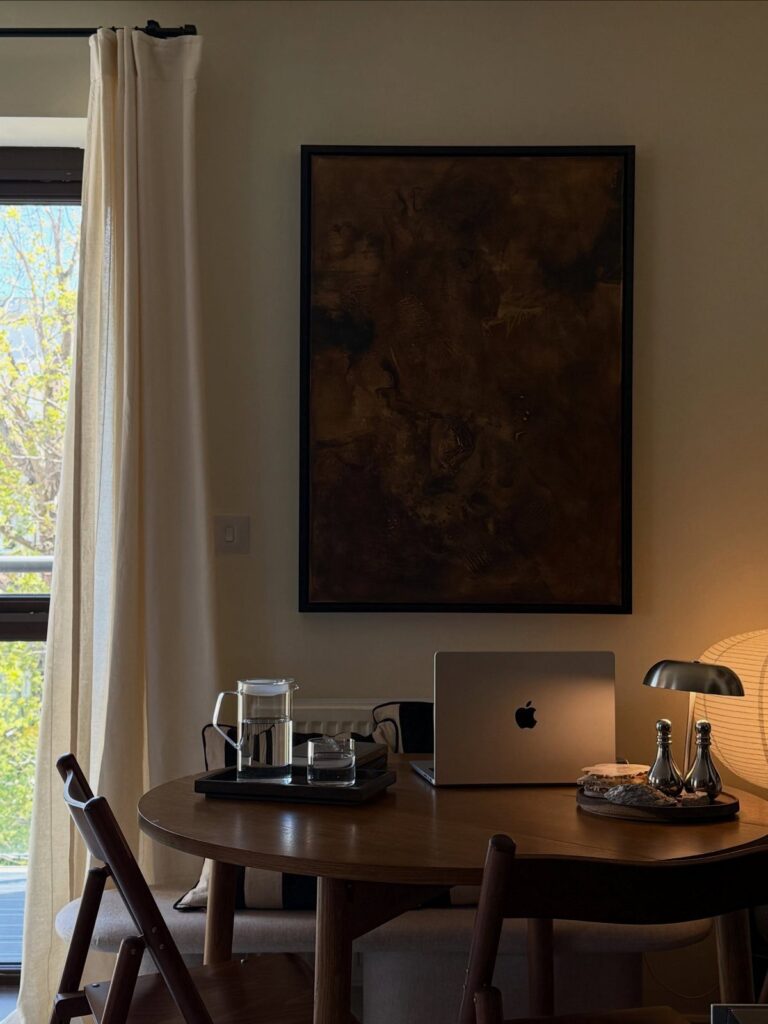
The ideas below range from a single coat of paint to a fresh lighting layout, all sized for a weekend and a real budget.
The right one for you depends on whether you need the room to feel calmer or more defined; that single need decides between neutral walls and a dark green accent.
[link-whisper-related-posts]1. Neutral Color Palette
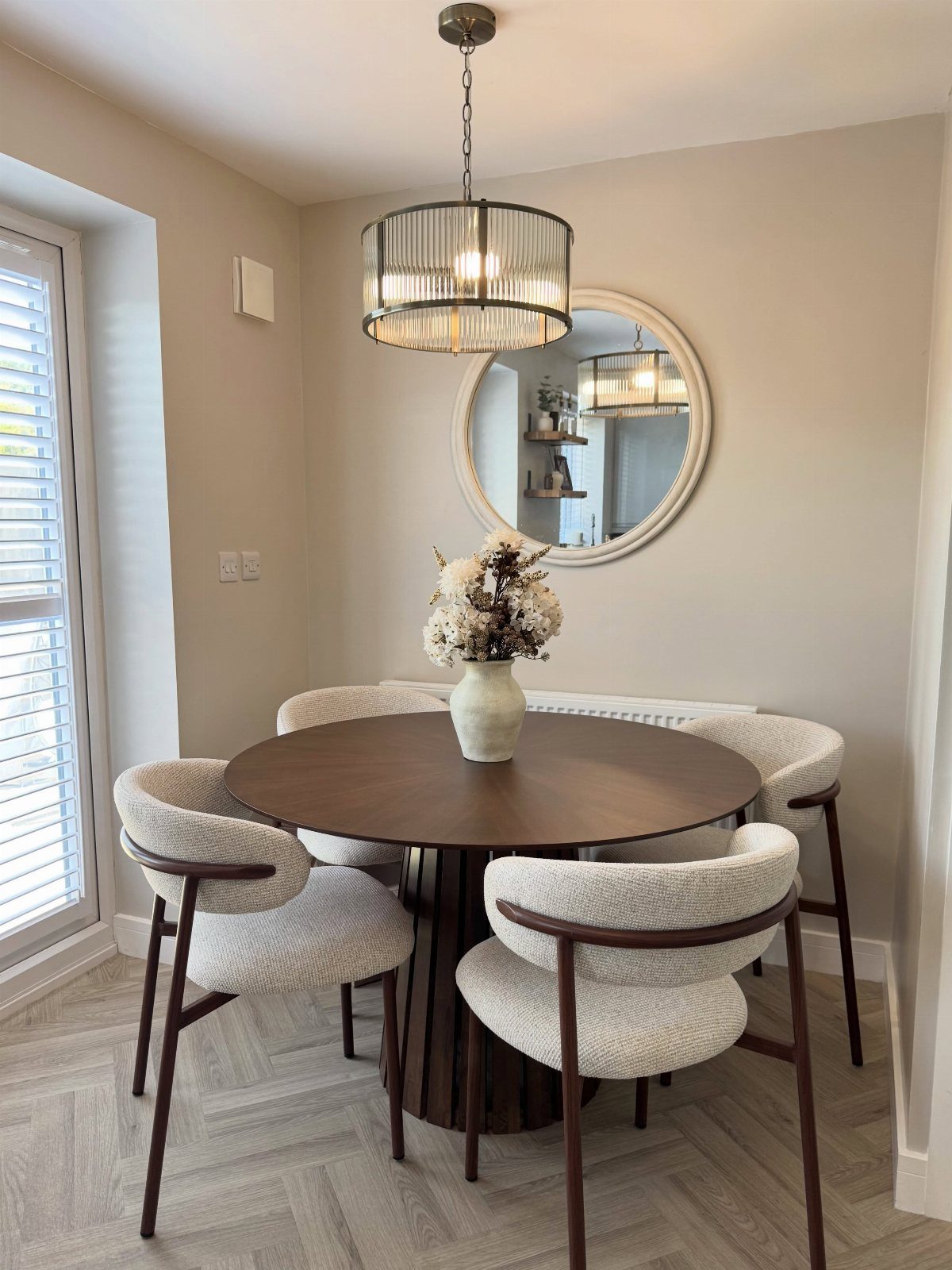
Soft, neutral tones settle a dining room faster than any color scheme I have tried.
Cream upholstery against dark wood keeps the contrast gentle and the eye moving through the space rather than stopping on any single piece. Herringbone flooring in a wood-look finish adds quiet pattern without breaking the calm.
This palette suits the renter who cannot repaint walls and the first-time buyer who wants one cohesive room before tackling the rest of the house. Everything mixes: swap the chairs later, keep the tone.
2. Minimalist Dining Tables and Chairs
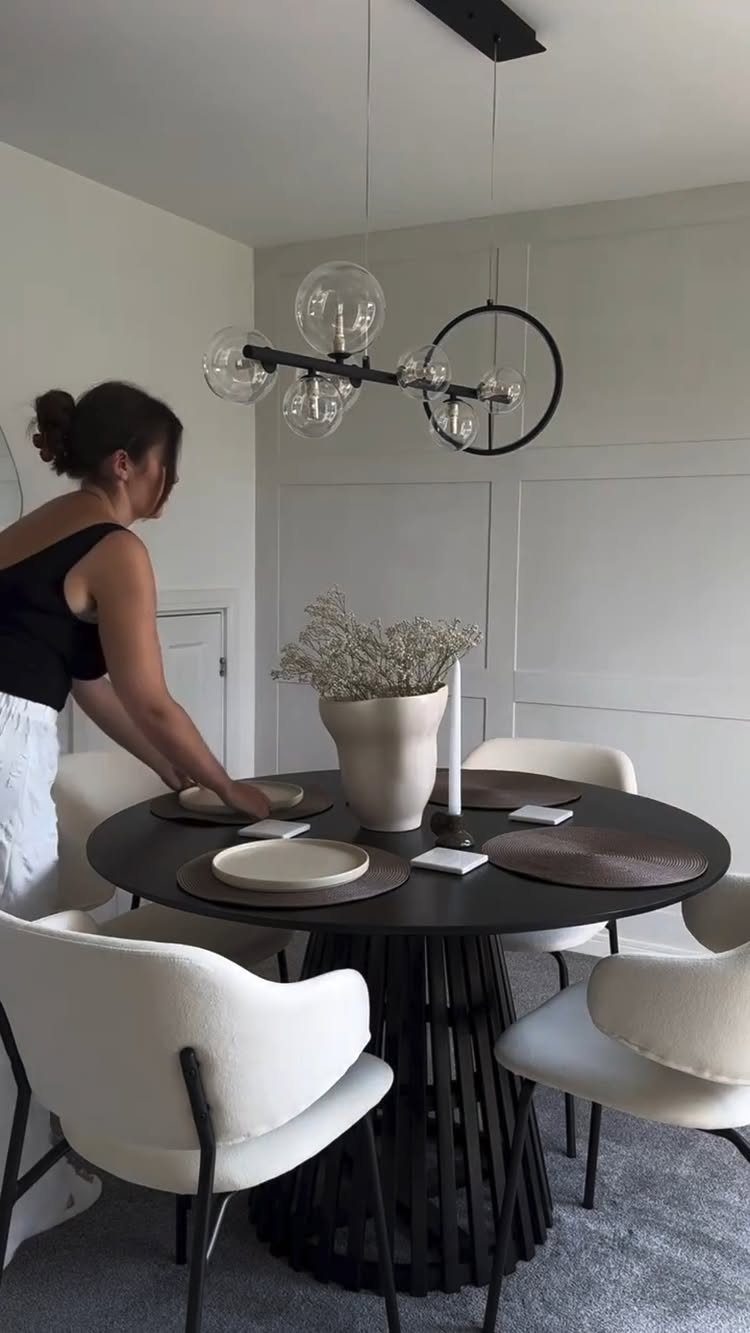
A black table with white curved chairs reads as intentional rather than stark because the shapes do the work.
I like this pairing for small spaces; the light color on the seating keeps the footprint from feeling heavy while the dark table grounds the room.
For a weekend setup, look for powder-coated steel or molded polypropylene in the chairs; both wipe clean and survive daily use.
3. Sculptural Lighting
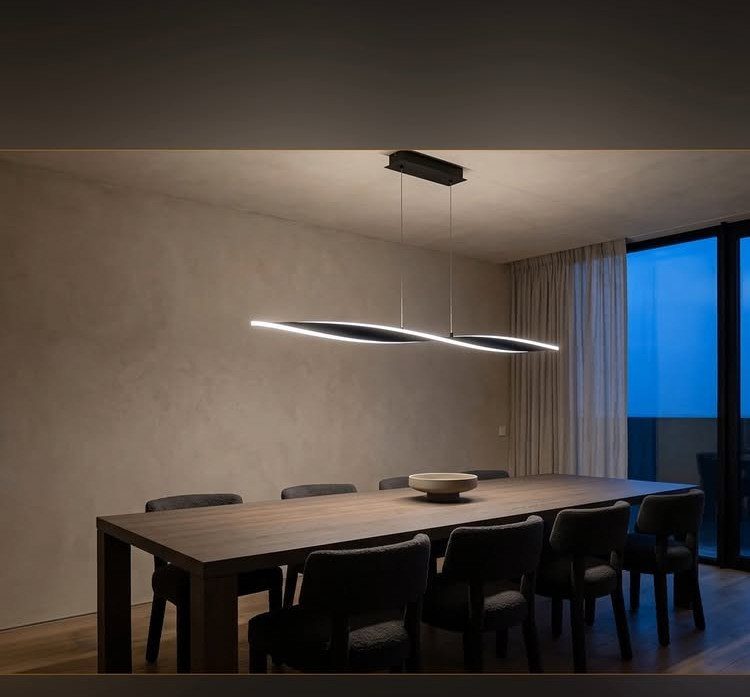
One pendant in a bold, curved form replaces both a fixture and a centerpiece.
I would hang it low, in that pocket just above eye level, where the shape reads during dinner rather than floating near the ceiling like an afterthought.
The bowl on this table is empty; the light is the decoration.
That trade-off matters in a small room where surface space is limited. Choose a single sculptural piece over a cluster if the ceiling is low; clusters need height to spread properly.
4. Minimalist Table Settings
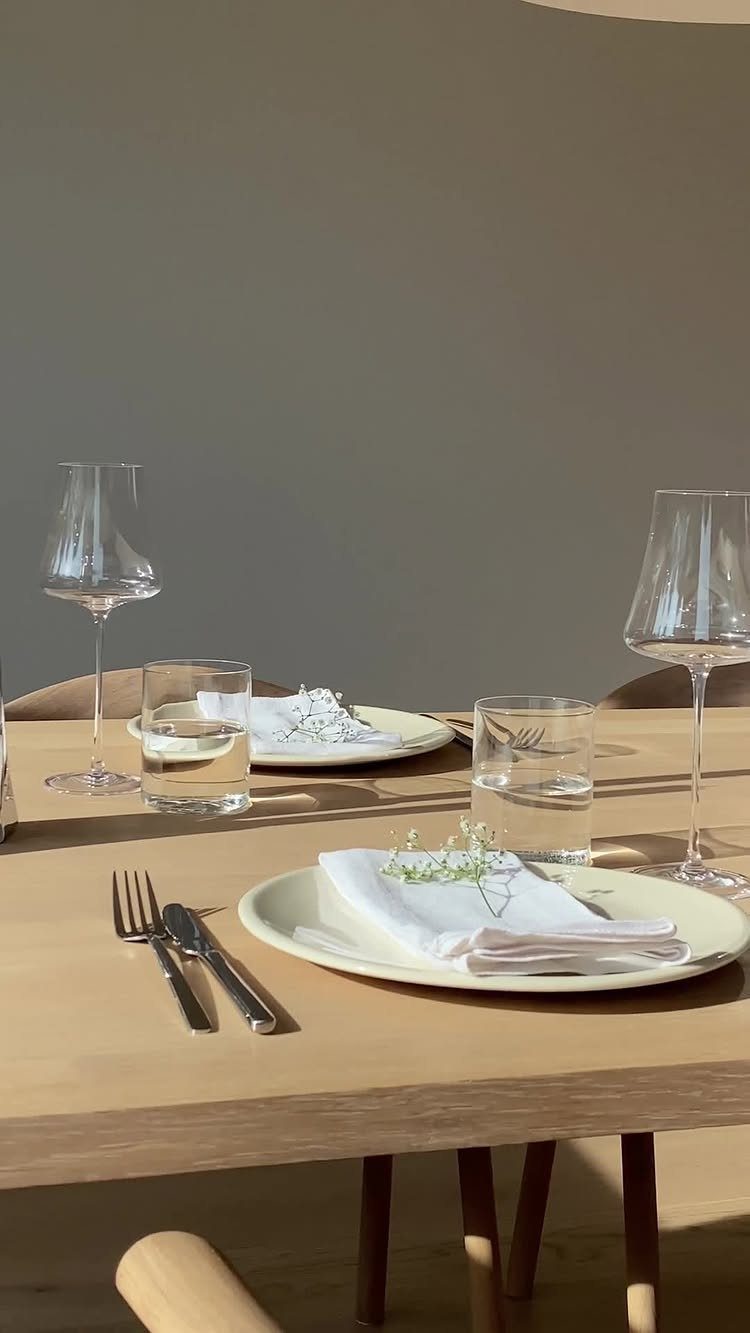
White plates, plain glassware, and a single stem per place setting let the wood grain do the talking. I fold napkins simply rather than staging them; I want the table set fast, not photographed.
Linen or cotton napkins in off-white hide water spots better than true white and cost less to replace.
Clear tumblers mix with wine glasses of any shape, so this setup adapts as the occasion changes. The baby’s breath is optional; the structure holds without it.
5. Statement Wall Art
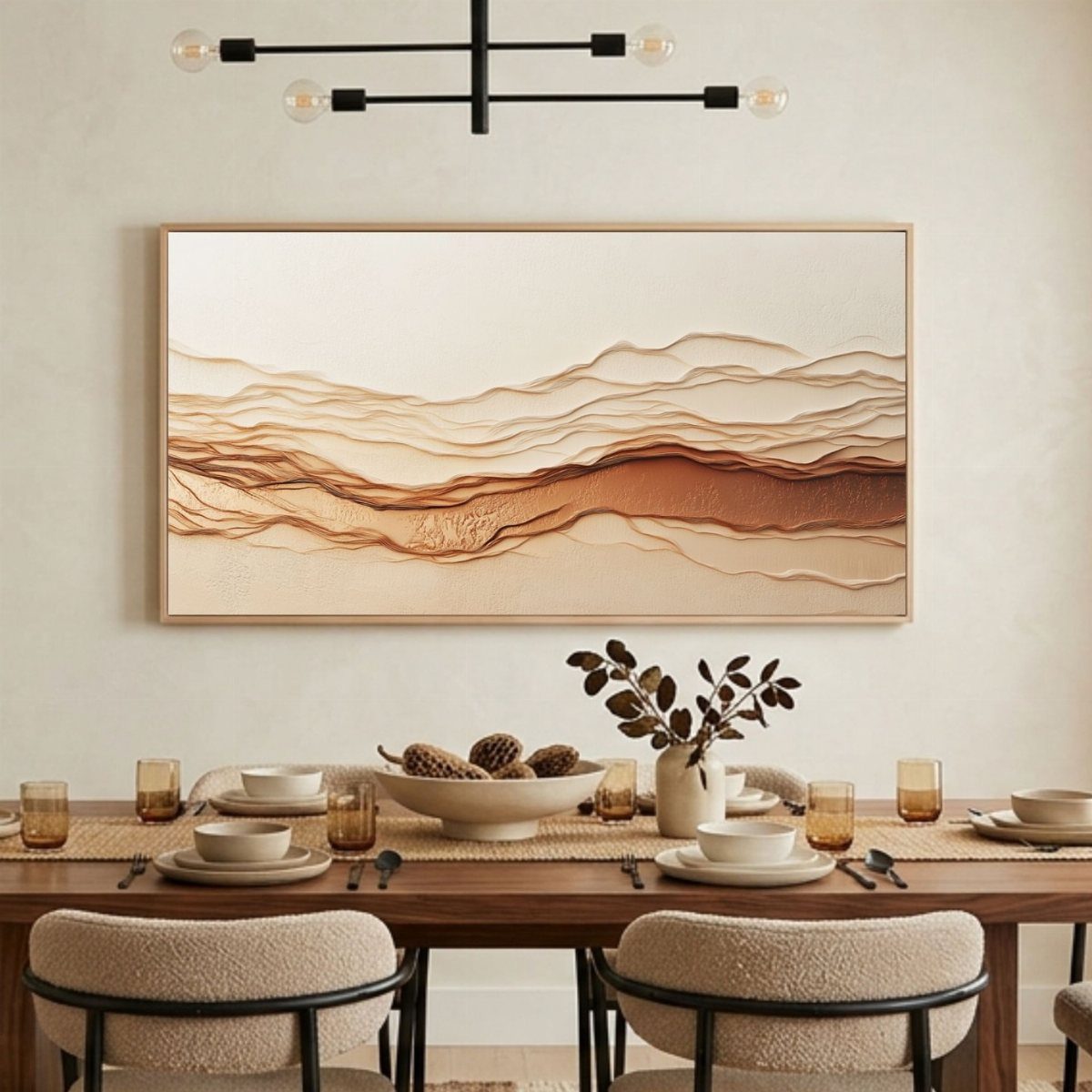
One large horizontal piece fills the visual field more calmly than a gallery wall.
I size art to the table below it, narrow enough to keep the relationship proportional, and here the warm, textured tones pick up the wood without matching it exactly.
This works best when the ceiling is too low for a dramatic light fixture or the room is too narrow for a sideboard.
The art becomes the room’s vertical interest. Abstract texture suits renters; it travels to the next apartment and fits walls of any color.
6. Natural Elements
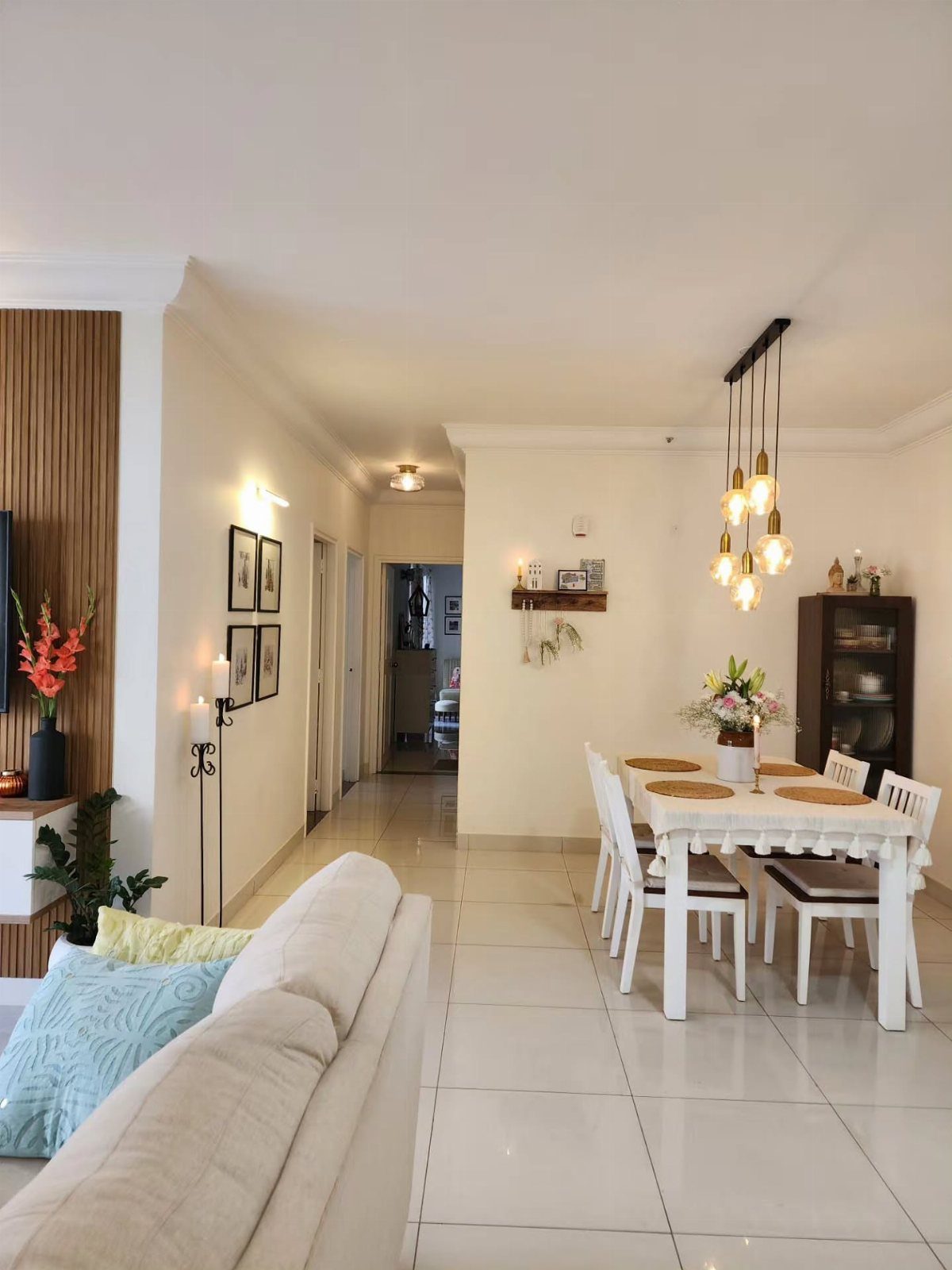
A floral centerpiece on a white table keeps the room from reading as clinical.
I use whatever is growing: grocery-store mixed bunches, backyard branches, or forced bulbs in winter. The white ceramic vase disappears, so the shape of the stems carries the arrangement.
In a bright, open room like this one, live plants need rotating; permanent botanicals in matte finishes fool the eye from across a room and survive missed waterings.
Real or not, the green note keeps the white palette from feeling like a showroom.
7. The Single Pendant
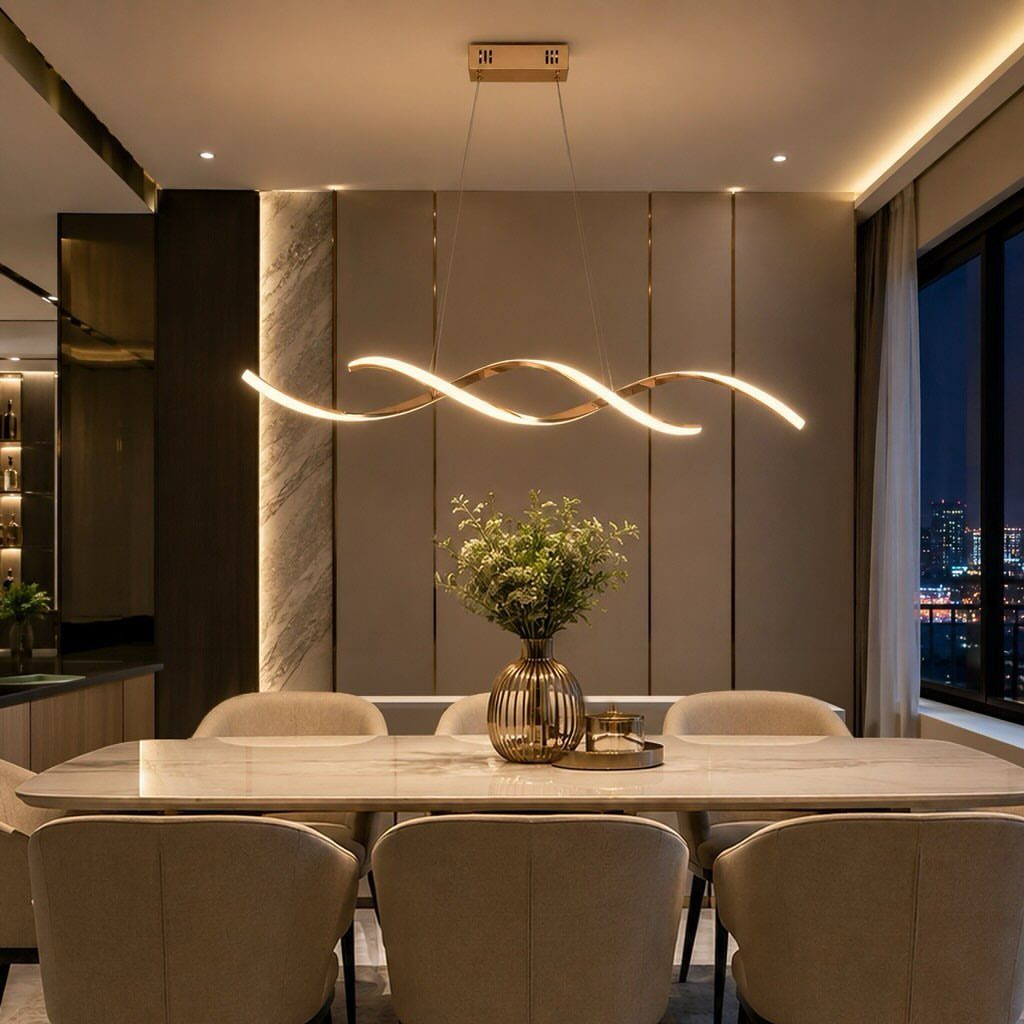
A single wave-shaped LED pendant in warm gold turns the ceiling into architecture without cluttering sight lines.
I would hang it low enough that the glow stays intimate and the form reads as an object, not a fixture; too high and it loses both jobs.
This suits rooms where the walls stay white and the floor is already busy; one bold shape replaces the usual cluster of three.
The light itself carries all the visual weight, so the table stays clear and the chairs stay simple.
Marble tops pair well because both surfaces reflect; matte laminate fights the pendant’s warmth.
8. Fluted Sideboard Styling
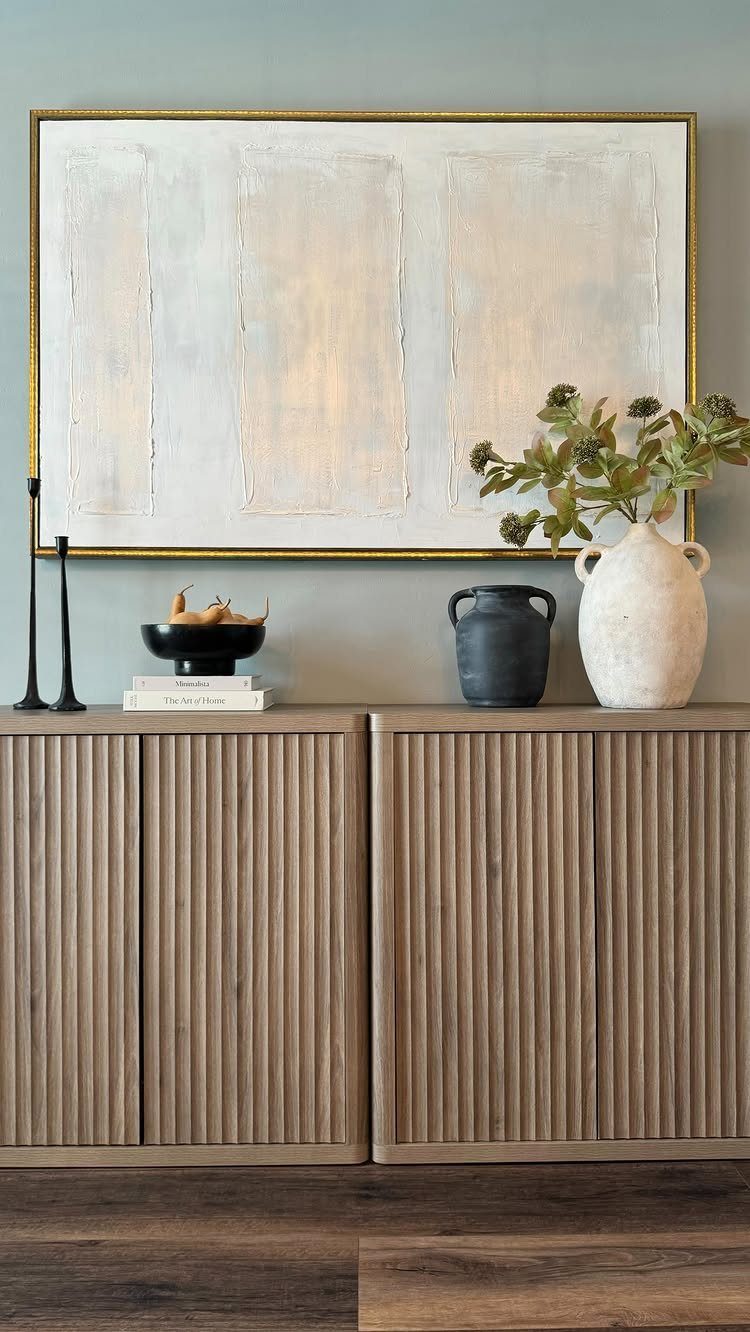
Vertical fluting on a sideboard catches low light and gives the eye something to follow without pattern or color. The books here are stacked, not shelved, which raises the bowl to a height the wall art can talk to.
I keep the surface to 3 heights: something tall and thin, something low and round, and something flat in between.
Candlesticks in matte black read as shape, not color, against oak or walnut. Ceramic vases in unglazed white or terracotta keep the palette to 2 tones.
Leaning art rather than hanging it means the frame can move; renter-friendly, and the overlap softens both pieces.
9. Trio of Globe Pendants
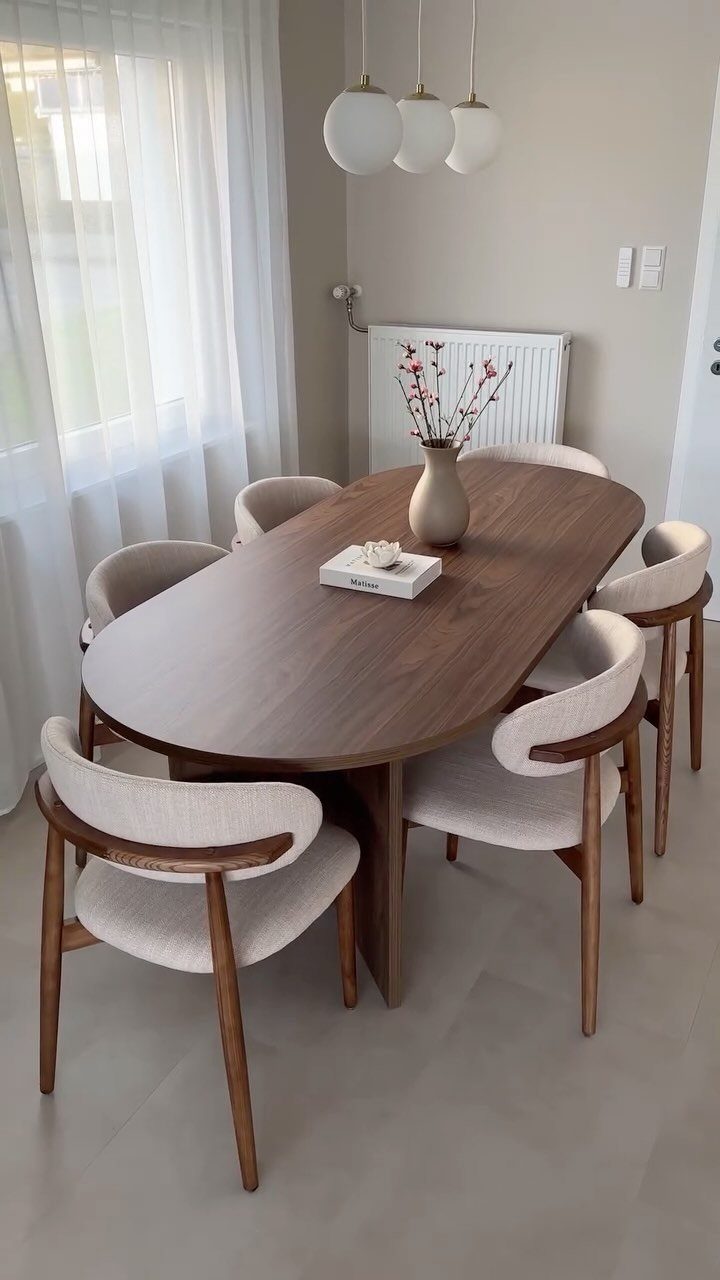
Three identical white globes spaced evenly above an oval table give the clean rhythm of a row without the formality of a chandelier.
I like this set best with an elongated table; the alignment follows the shape and the repetition calms the room.
Globe pendants in opal glass spread light softly and show no filament, so they work without a dimmer.
Spacing matters more than height: divide the table length by four and set the globes at those three points, each hung at the same low level so the light pools on the surface.
Too even a cluster loses the beat; too tight, and the middle one shadows the book below.
10. Organic Accent Mirrors
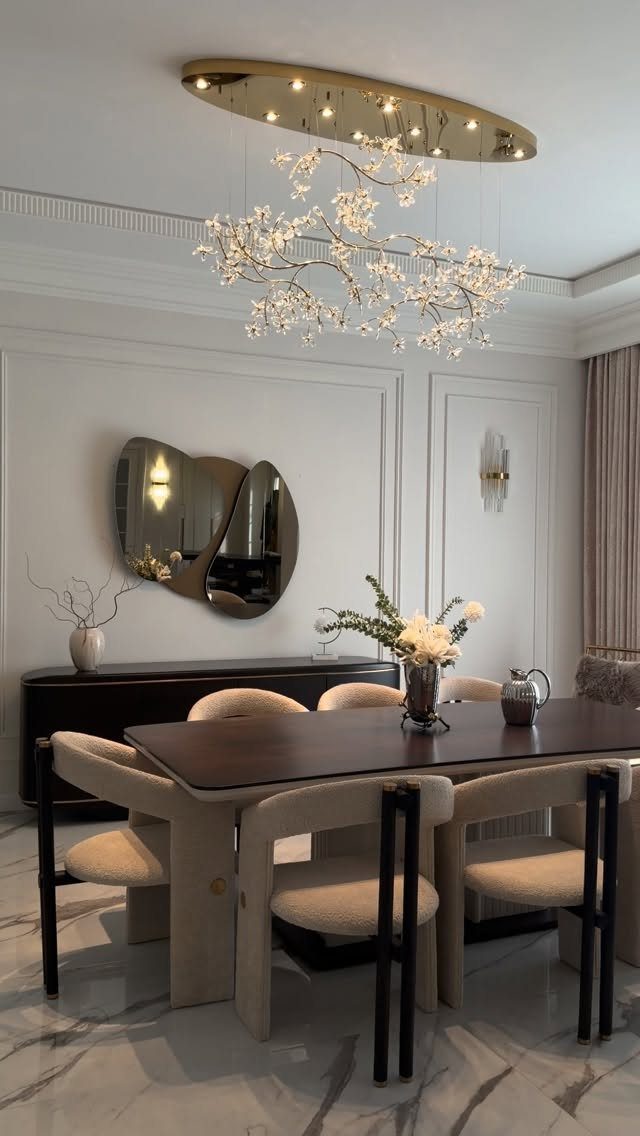
A curved, organic mirror opens a wall the way a window would, bouncing light from the fixture and softening the room’s box. I would hang it where the branch chandelier’s reflection doubles the statement without adding another piece.
The shape matters more than the frame here; thin metal in brass or black stays quiet, while thick wood competes with the table.
Paneled walls behind it work because the flat mirror smooths the grid; smooth drywall and this mirror both read as blank.
11. Subtle Dark Green Accent Wall
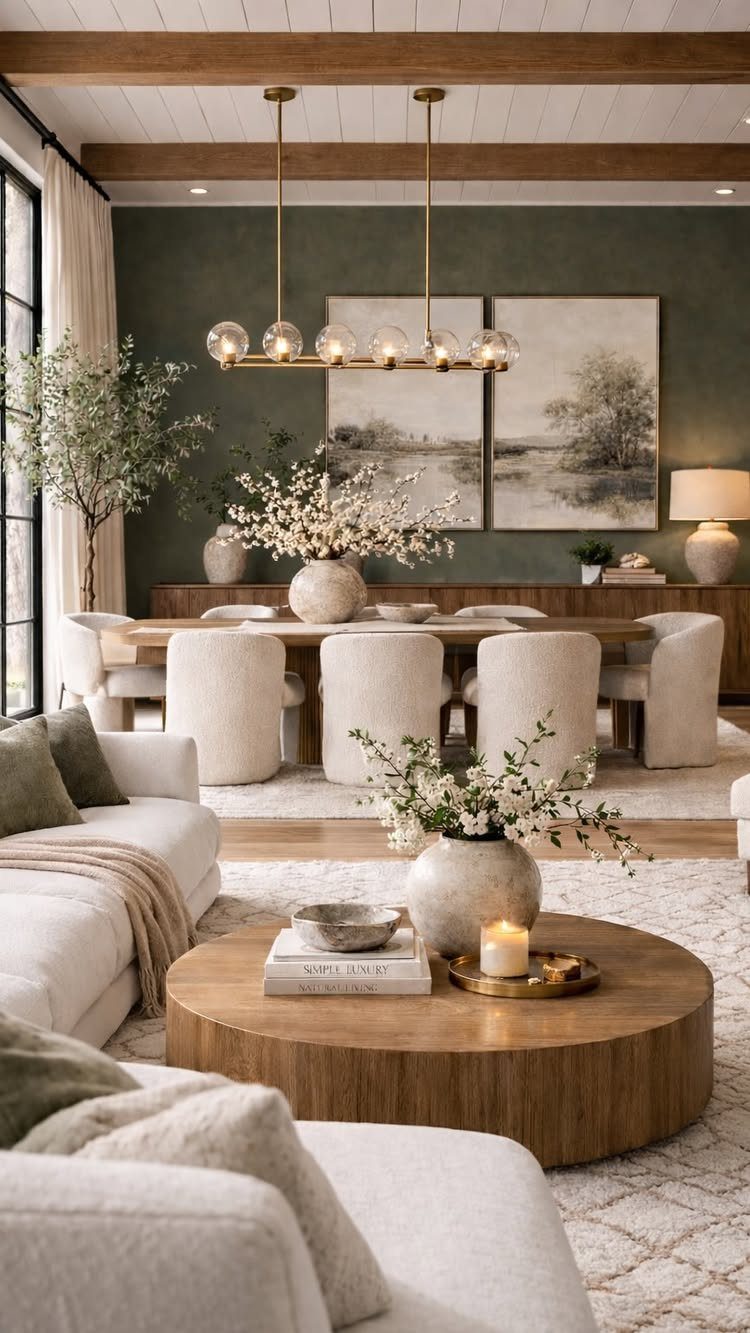
A wall in deep green lets warm wood and cream upholstery advance the way they never would against white.
I would paint only the wall behind the table, not wrapping the room, so the color reads as backdrop rather than enclosure.
Flat or eggshell finish keeps it contemporary; semigloss turns dining room green into kitchen cabinet green.
Test at least 3 swatches at the hour you usually eat; this depth shifts dramatically with light. The art here stays in warm tones and simple frames, letting the wall be the gesture.
This trades the peacefulness of all-neutral for definition. You notice the room’s shape.
Don’t be shy about a little shine, she says, even if the overall feel is sophisticated. "Dining rooms are most often used in the evenings, so incorporating a bit of drama and sparkle feels right."
Creating a Mindful Atmosphere
A dining room without a television or phone charger keeps conversation where it belongs. I leave surfaces clear enough that the act of setting the table becomes the transition into the meal.
That physical gesture, laying a plate and folding a napkin, signals the body to slow down in a way that walking into a ready room never does.
I seat people so the light falls on faces, not walls. A pendant low enough to cast a warm pool on the table draws eyes inward; light scattered to the corners lets attention wander.
The same clean space that reads as spare at noon feels protected after six, when the outside world drops away and the room holds only what is necessary for dinner.
Importance of Natural Light
Sheer linen or cotton panels filter afternoon sun without killing it. I hang them level with the window head or a few inches above, never short; a high rod keeps the wall continuous and the ceiling-reading tall.
The fabric opacity matters more than the color: too heavy and the room goes flat, too sheer and the glare strips the calm from a white table.
Large windows are fixed where they are; renters work with placement by clearing the glass.
I keep nothing on the sill, and I skip blinds with visible slats that chop the light into stripes. A single unbroken rectangle of daylight does more for spaciousness than any paint choice.
Where the window is small, a mirror on the opposite wall carries what light there is. I aim the reflection toward the table, not the floor; the glow should land where people sit.
Avoiding Coldness in Minimalism
Warmth in a minimalist room comes down to 2 things: what you touch and what the light does after dark.
Solid wood under the hand, linen against the arm, wool underfoot; these register before the eye has catalogued the absence of objects.
I specify 2700K bulbs the way I specify chair height, not as atmosphere but as material. Anything cooler and wood turns gray, skin looks tired, and the meal feels like a waiting room.
Stone brings cold mass only if it reads heavy; honed or flamed finishes lighten the surface without adding detail.
Honed or flamed surfaces hold light instead of flashing it back, and that softness keeps travertine or granite from dominating the table. I use stone in small pieces, a tray or a single coaster stack, not as the whole statement.
Plants should be live where the owner will water them, matte-finish permanent where they will not. What breaks the straight lines is an irregular, living shape, not the fact that you watered it.
Frequently Asked Questions
What is minimalist design?
Minimalist design strips away anything that does not serve a purpose, leaving clean lines and a restrained palette that lets the few chosen pieces carry the room.
In a dining room, that means a table with a strong silhouette, seating that reads as shape rather than ornament, and light treated as a material, not an afterthought. The calm comes from what is absent, not what is added.
How do I make a minimalist dining room feel warm?
Warmth in a minimalist dining room depends on 2 things: texture you can feel and light that flatters after sunset.
Honed or flamed stone holds light softly, and live plants or matte-finish permanent botanicals break straight lines with irregular, living shapes.
What kind of dining table is best for a minimalist look?
I look for a table whose shape speaks plainly and whose material tells the truth about itself.
A black table paired with white curved chairs looks deliberate rather than cold, and a round table seats more people in the same square footage than a square one ever will. The shape carries the design, not the detail.





