
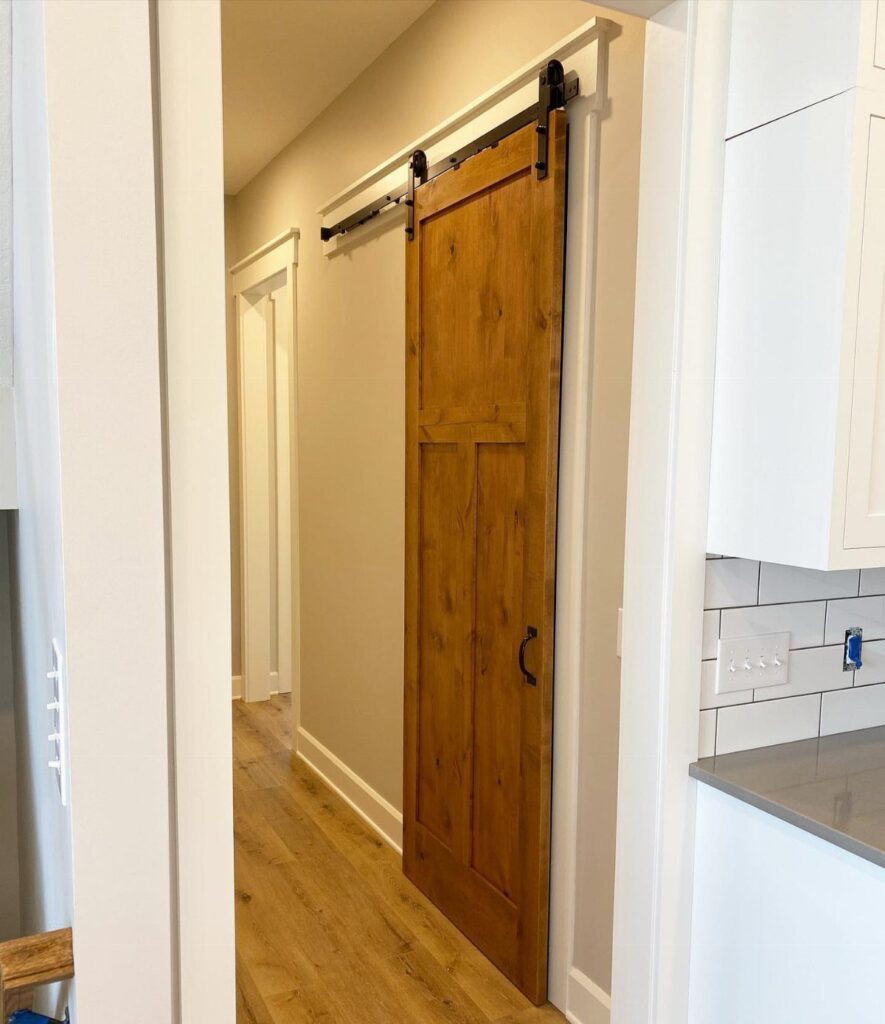
A solid sliding barn door installed right takes a weekend and common tools if you own a drill; full-extension corner drawers or a pocket door swap need a pro and a lot more budget.
The idea you land on depends on whether you are adding to existing cabinets or building into raw wall and angle space, and on which of these thirteen approaches fits the physical space you have.
I would let the aisle width between shelves be your first filter: anything too narrow kills the walk-in option before you price a bracket.
[link-whisper-related-posts]1. Sliding Barn Doors
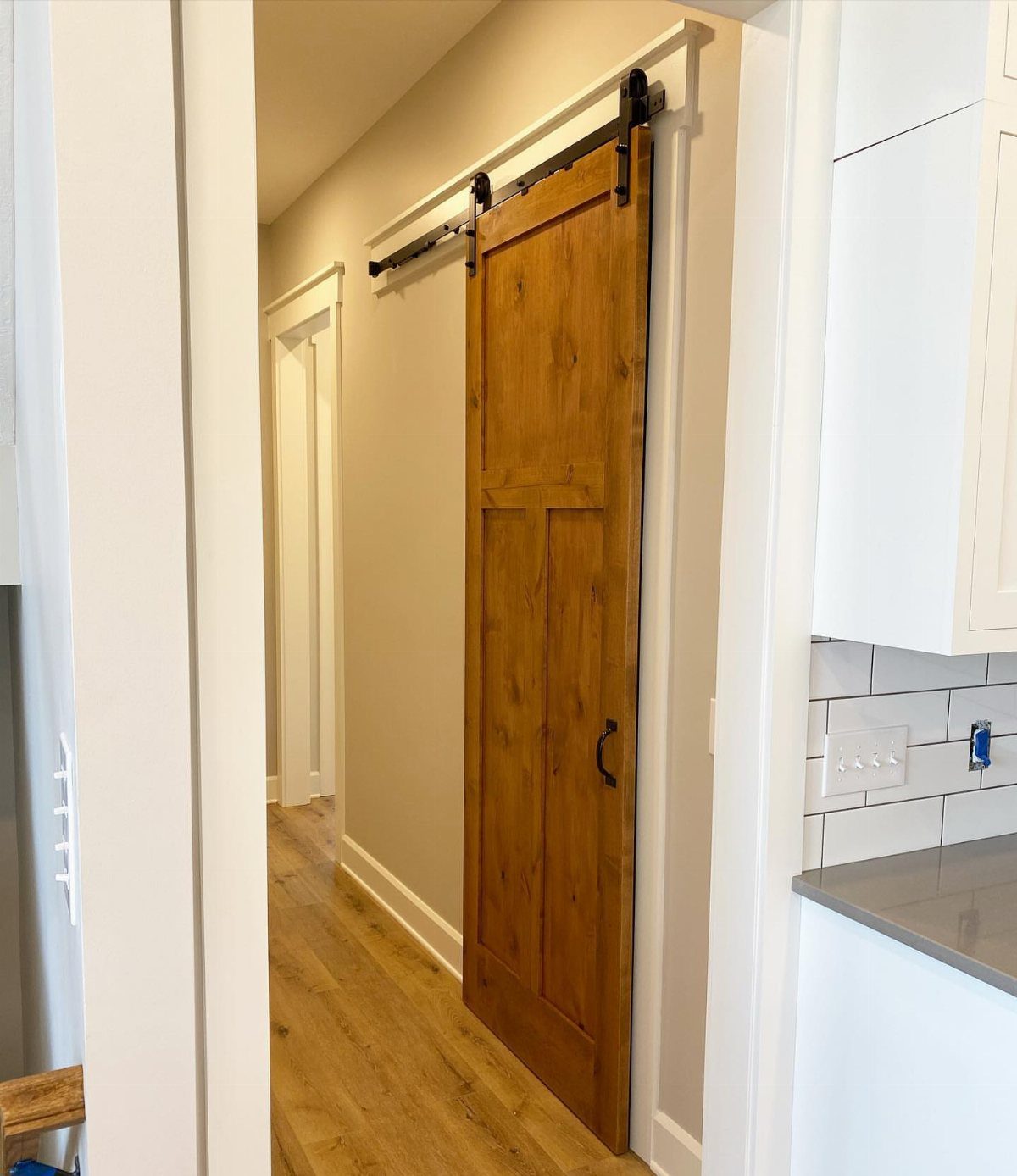
A sliding barn door on exposed hardware turns the doorway itself into storage real estate you were already walking through.
The black track sits proud of the wall, so nothing swings into the kitchen or hallway, and that matters when your pantry opens off a working counter.
I would go with a solid panel for the cleanest look; the rail carries most of the visual weight anyway.
Installation needs a header board into studs, since the track load runs across the frame, not down it. Pocket-door budgets run higher and need wall demolition; this gives the same floor space back for under half the trouble.
2. Labeled Containers
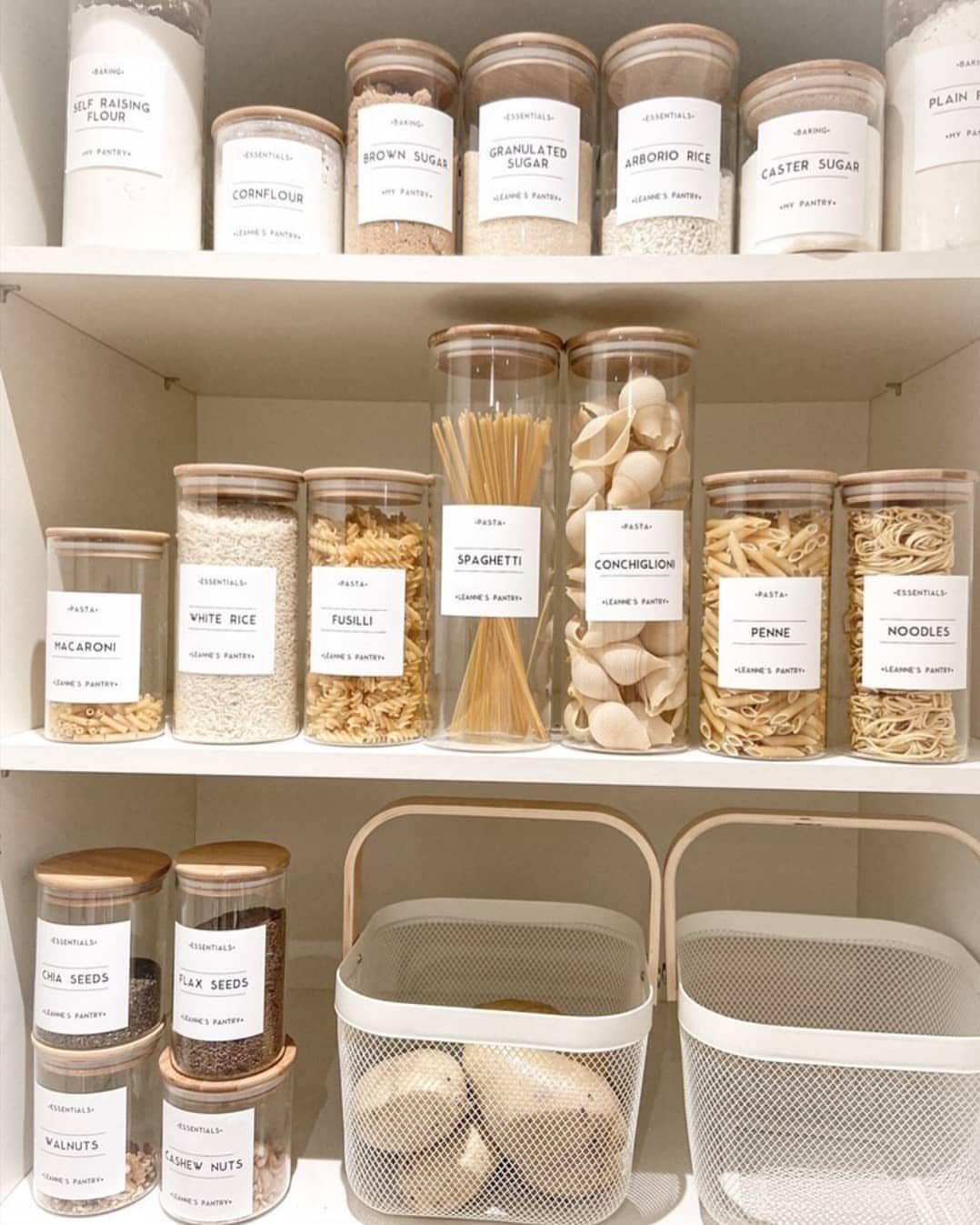
Printed labels on glass jars with wooden lids turn "find the pasta" into a one-second glance.
Labels that lift off and swap are what make a container system last; I stick with removable stickers instead of etched or painted jars, which lock you into one use.
The mesh baskets alongside hold the irregular stuff that would waste a tall cylinder: snack bags, seasoning packets, the half-empty box of crackers.
A basic label printer and a few minutes every few months keeps the system current. Skip the fancy fonts; plain block letters read fastest when you are half-awake and hunting for coffee.
3. Pull-out Shelves
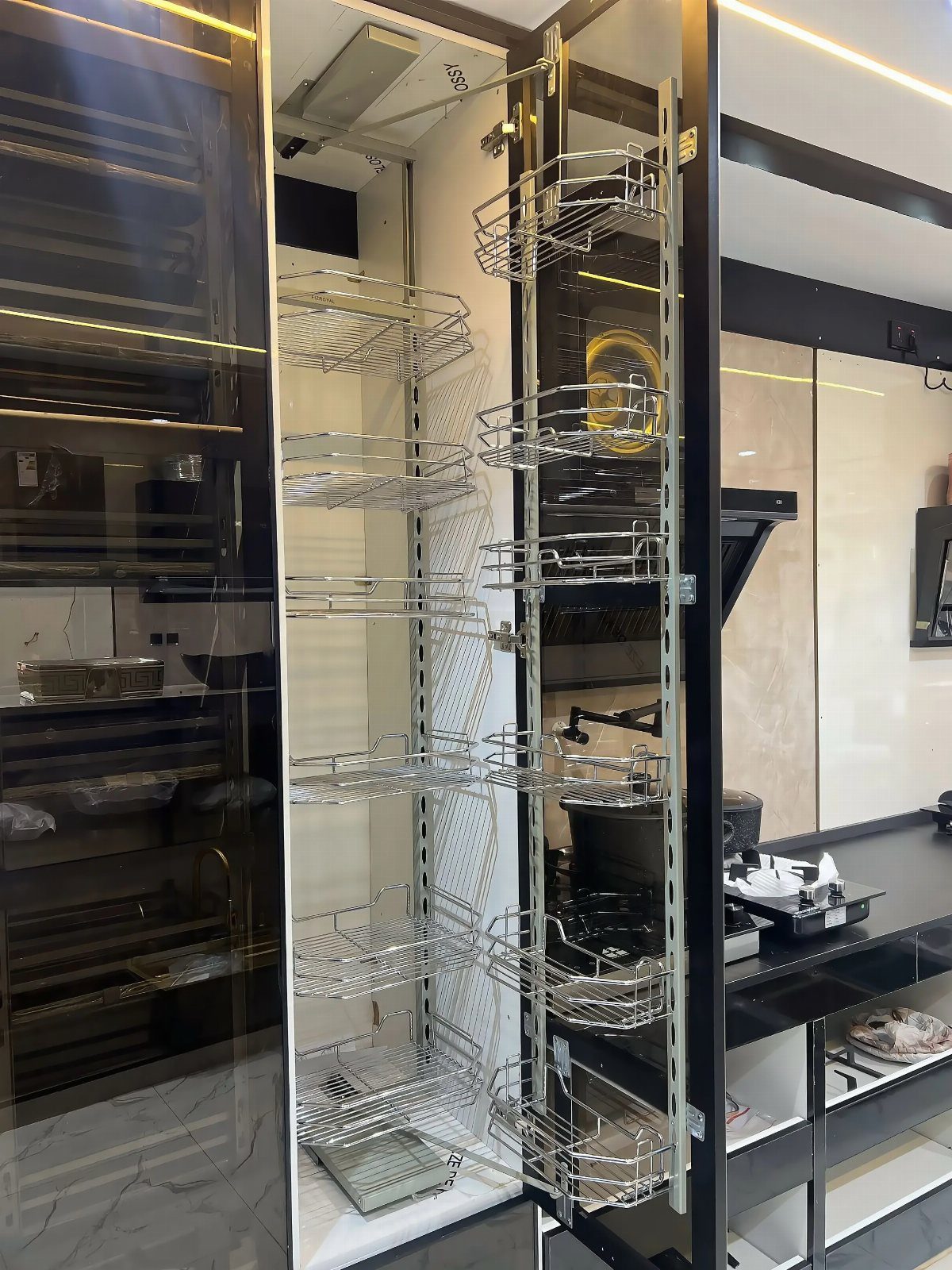
Chrome wire pull-outs in a tall cabinet bring the back corner to you instead of sending you crawling after it. The wire gaps lose crumbs rather than trapping them, which matters with flour and sugar in the mix.
I would measure your tallest cereal box or oil bottle before ordering slides; standard depth fits most pantries, but deeper sizes exist for full-depth cabinets and cost a little more per shelf.
Soft-close slides add a few dollars apiece and are worth it only if the cabinet faces a living area; in a back kitchen, standard slides hold up fine.
4. Floor-to-ceiling Shelving
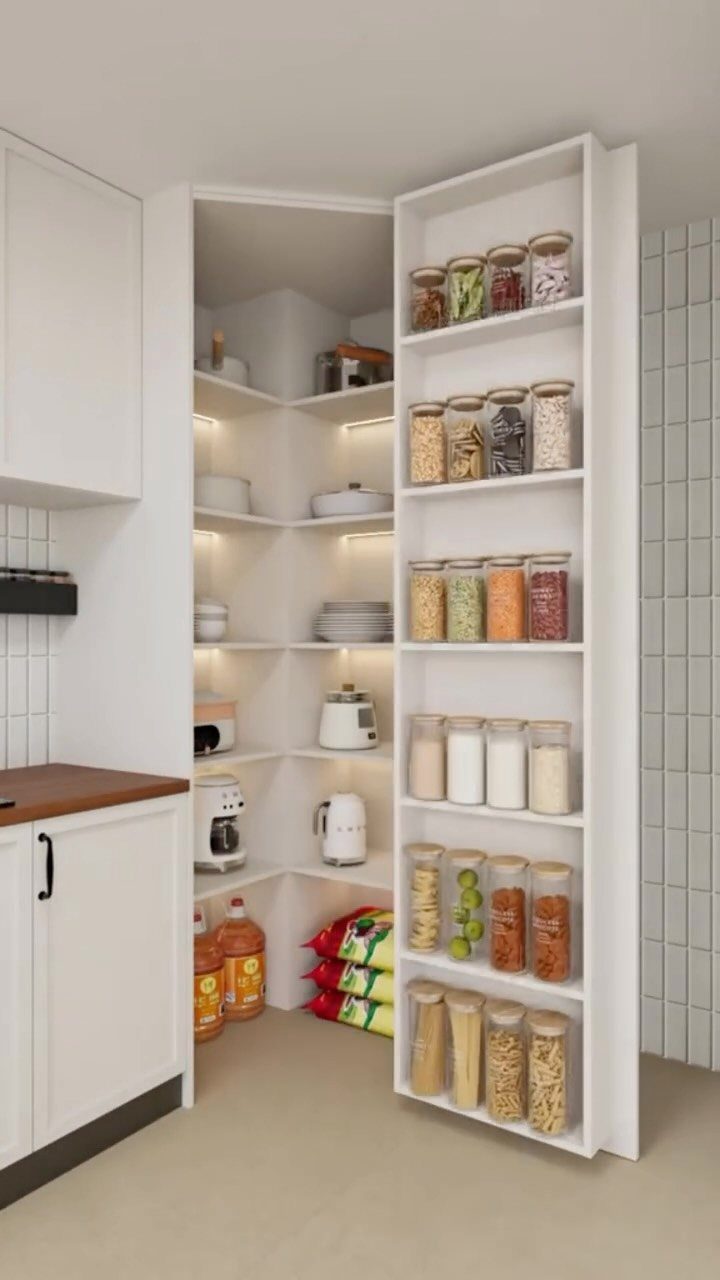
Full-height shelving uses studs you already paid for. A return shelf at a right angle gains a few extra inches at each level without stealing walkway.
I tend to keep the highest shelf for the light stuff: paper goods, bulk toilet paper, the holiday platter you use twice a year.
Anything above eye line wants a step stool, so plan for one that lives in the pantry or nearby.
A standard sheet good cuts in half with one rip; most pantries run narrower, so factory edges face out and the cut hides against the wall.
5. Grouped Similar Foods
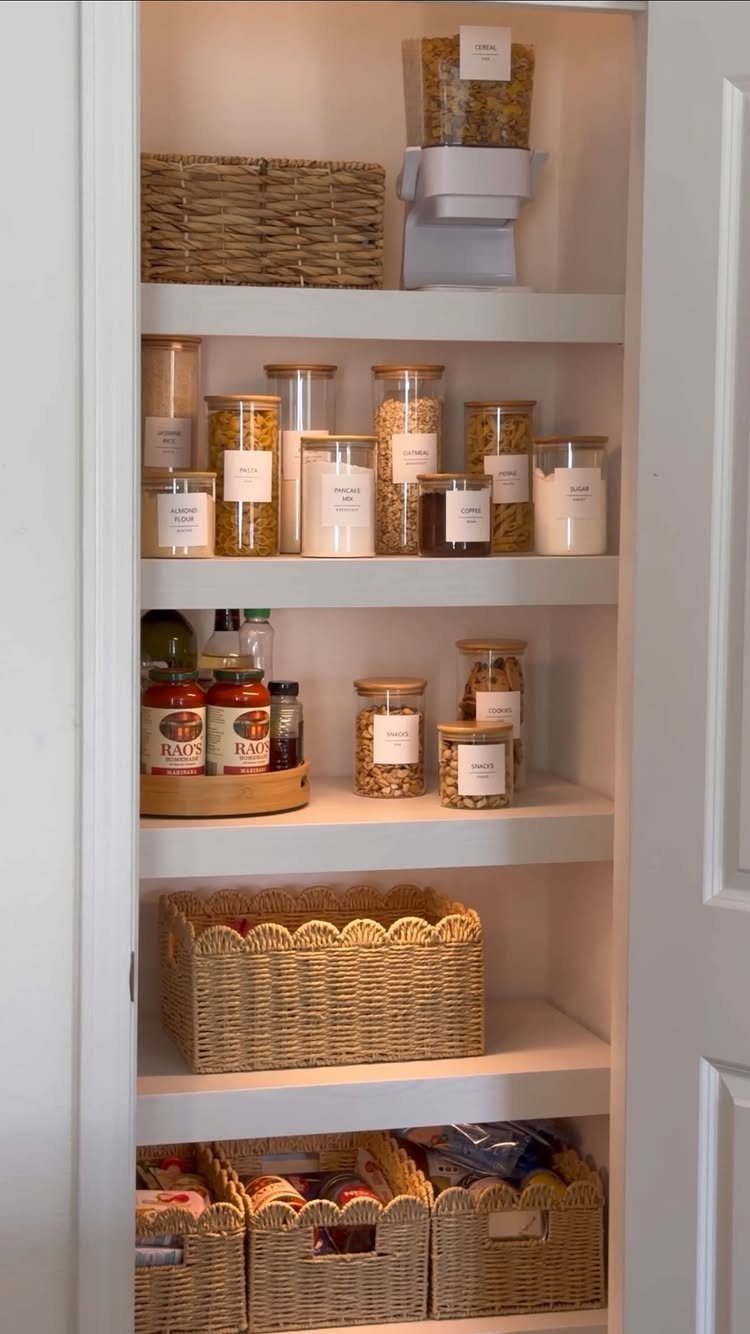
Grouping like with like means you see a full category at a glance and know what is running low.
The turntable for sauces keeps every label forward; I would size it to the shelf depth so bottles do not overhang and tip.
Wicker or wire baskets corral the categories that come in awkward shapes: foil packets, pouches, the granola bars that fall over standing up.
The cereal dispenser belongs with breakfast, not baking, and sorting by meal, not by package type, is what keeps a system working. One labeled zone per shelf level means family members put things back in roughly the right neighborhood.
6. Custom Shelves
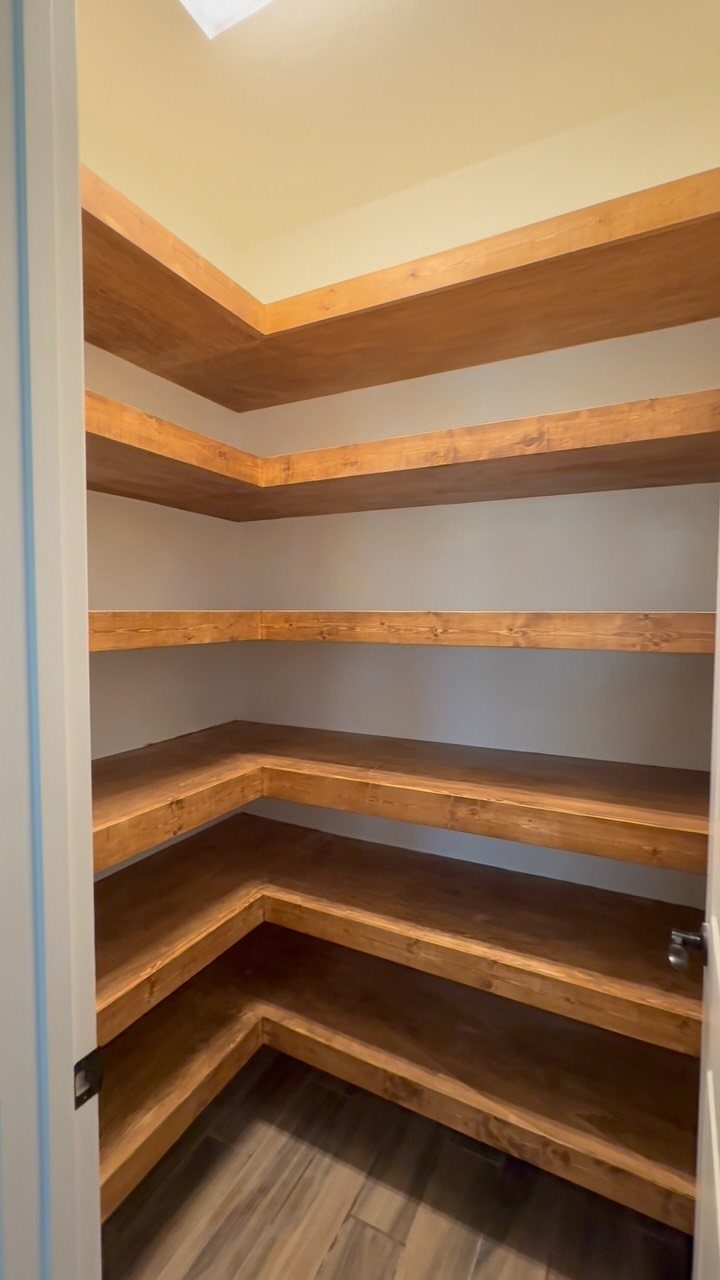
L-shaped floating shelves built into the corner turn dead space into the most useful real estate in a small pantry.
Thick wood, probably butcher block or plywood built up and edged clean, gives you screw purchase from 2 faces for heavy items.
I would let the front corner float rather than mitre it; most home cuts gap, and a butt joint with a small roundover reads as intentional.
The wrap tells you what the wall allows: measure twice for the stud placement before you order material, since custom means no returns.
7. Under-stair Pantries with Shelves
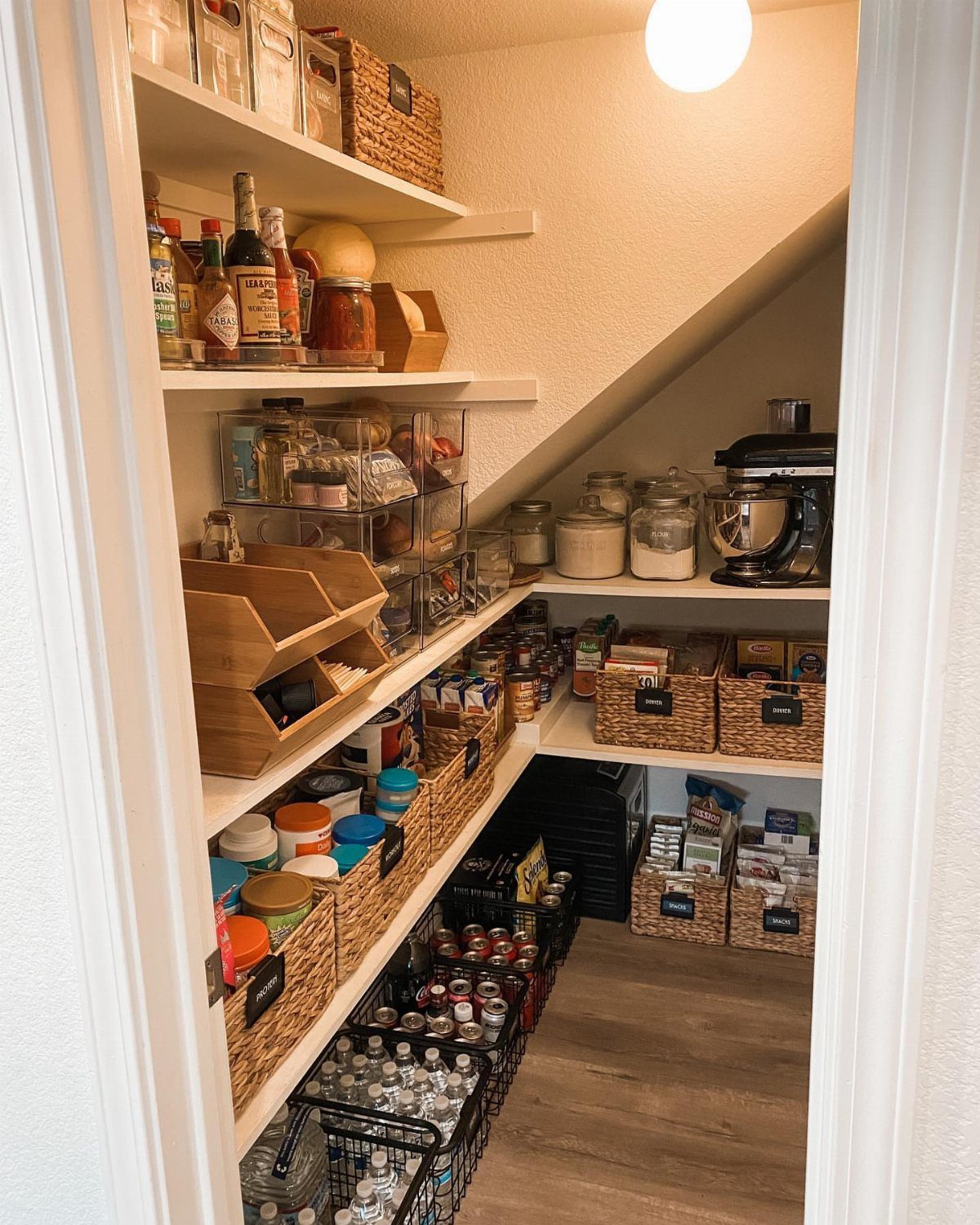
Slanted ceiling space is storage you already own but probably ignore.
Open shelves sit deeper under the high side of the stair, shallower as the angle drops, and that stepped rhythm sorts itself: small appliances and bins low where headroom lasts, single rows of cans and jars following the slope up.
I would keep the floor itself clear for a step stool and the crate of drinks; anything permanent down there blocks the only path.
Raw plywood painted white is honest and cheap, but finished shelves with a small front lip stop jars from sliding on the incline.
8. Lazy Susans for Corners
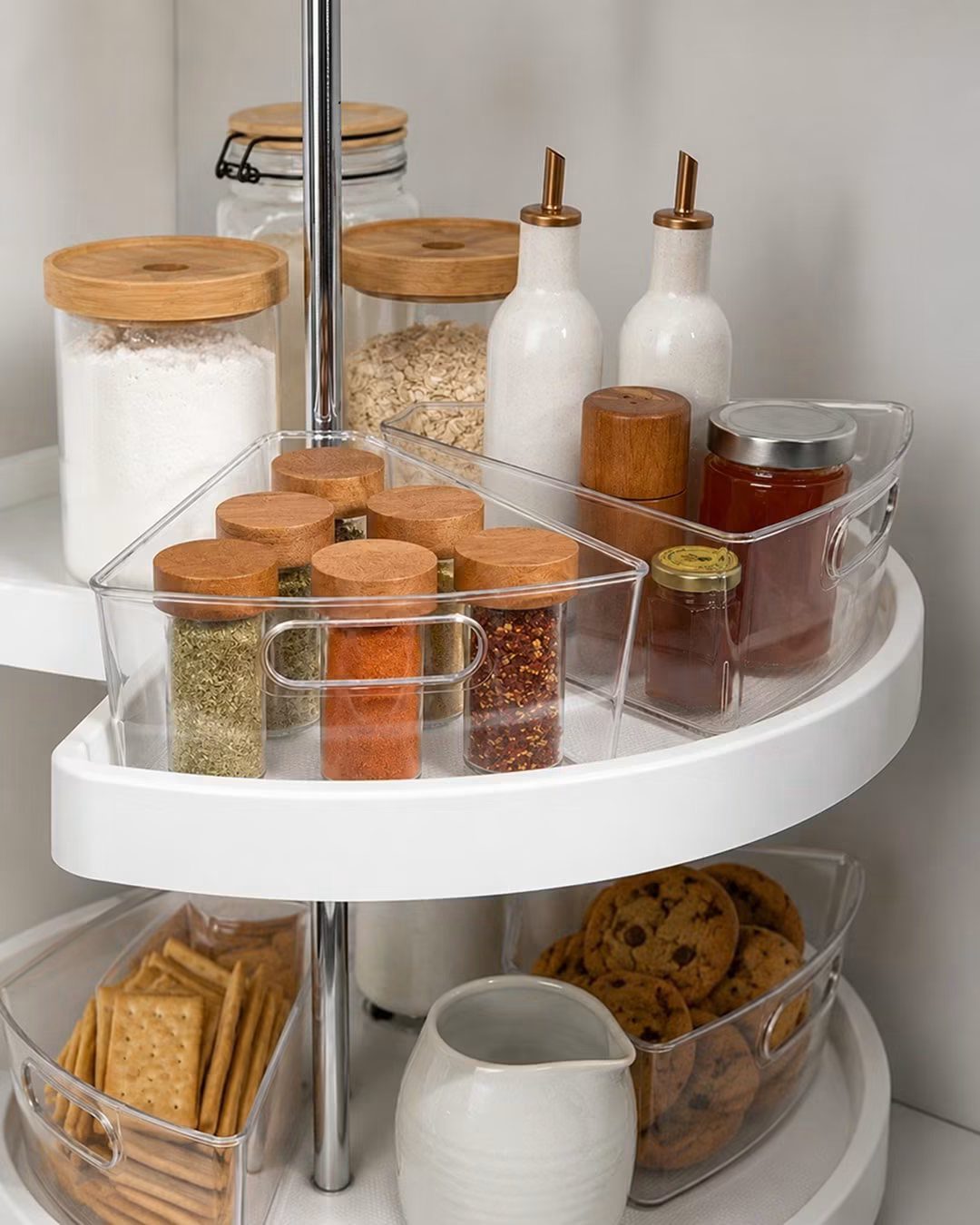
A corner shelf that turns brings the back third to your hand without kneeling.
2 tiers stacked clear most of the vertical space without blocking sight lines above or below. Wedge-shaped bins on the turntable keep contents from drifting to the rim; square bins on a round tray waste the outer curve and tip.
I would reserve this for the bottles and jars that fall over in a line, not for boxed cereal that slides easy enough already.
The hardware is simple: a steel rod, a thrust bearing, and a lock ring. Full-extension corner drawers cost far more and need precise diagonal clearances this avoids.
9. Pantry Zones
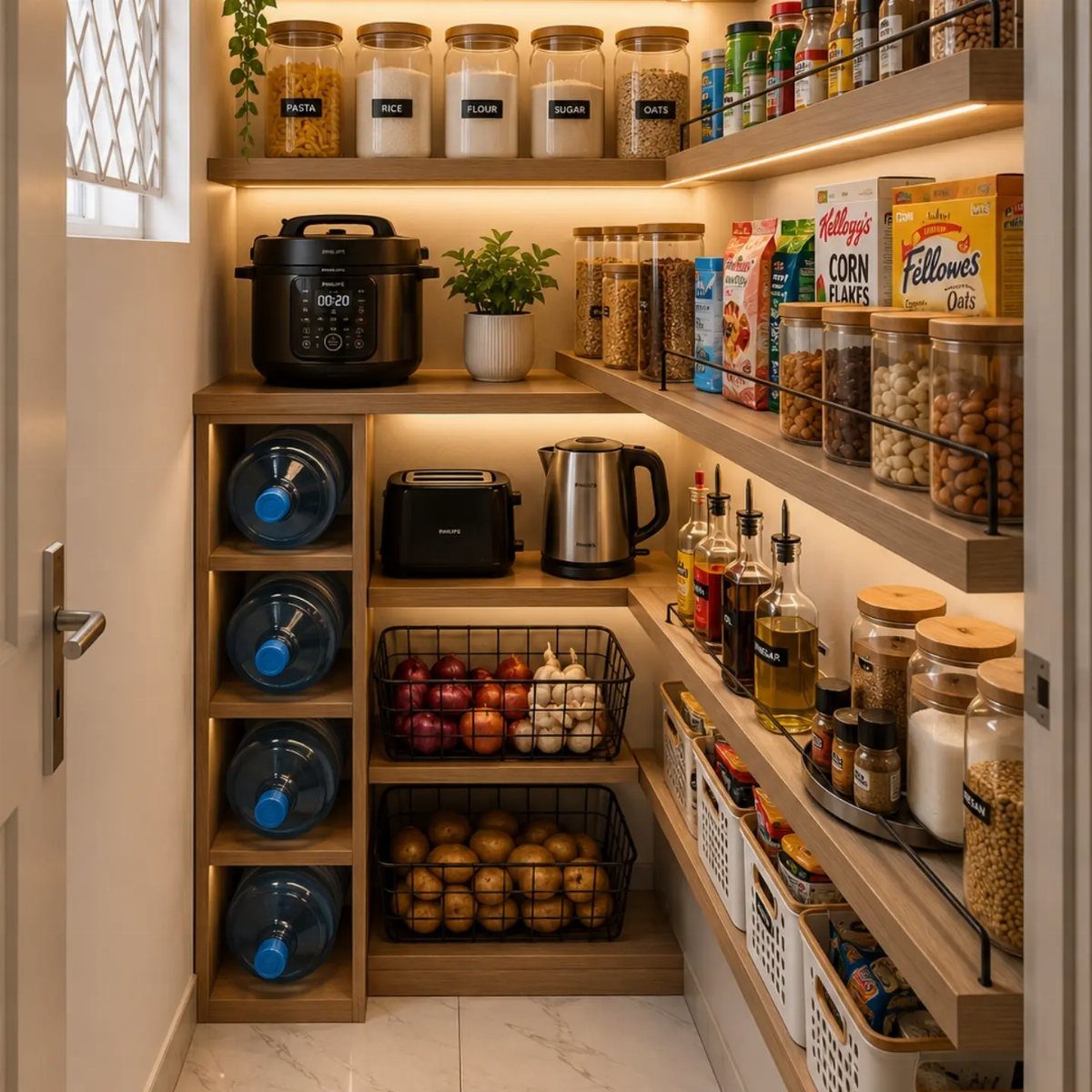
Shelves divided by function instead of size let everyone in the house put things back correctly.
The zone idea means a breakfast shelf with the dispenser and bowls, a baking shelf with flour and sugar in glass, a floor zone for the heavy water jugs, produce in wire so air moves.
I would let the zone edges stay soft; rigid rules fail when you bring home an odd-shaped bag of rice that does not match the jar system yet.
10. Small Appliance Pantry Station
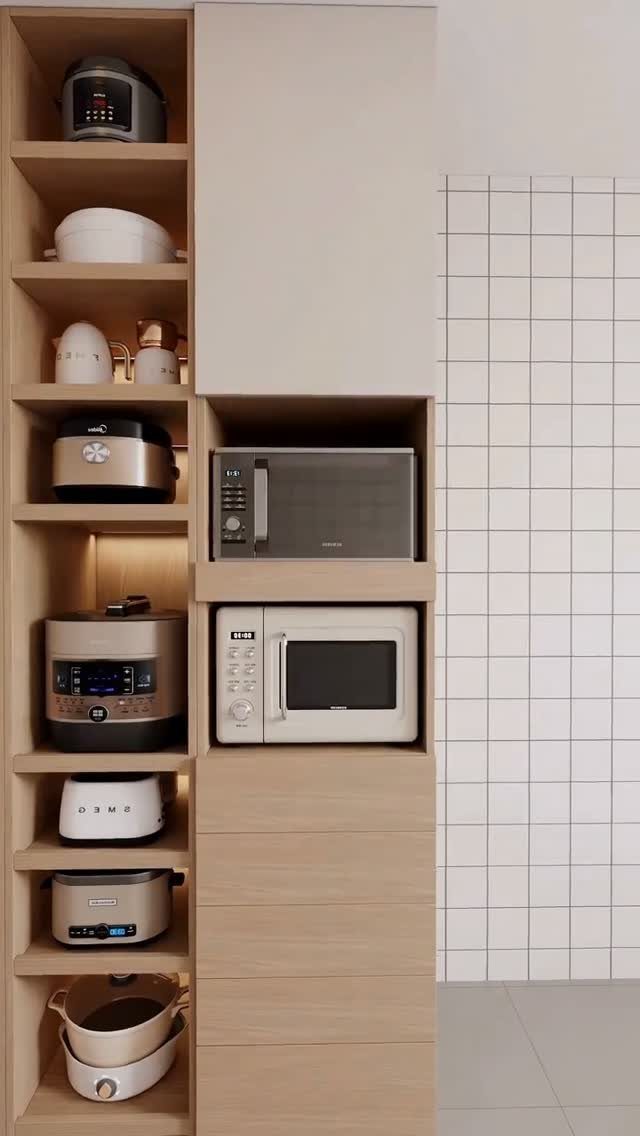
Open pantry shelves sized for appliances mean the rice cooker and toaster live outside the main kitchen cabinets, which frees drawers for the flatware and tools you reach for more often.
Built-in niches at counter height let you slide a microwave out to use, or keep it flush for the clean face.
I would run a short outlet strip behind each niche, not a single wall plate; cords stay short and the setup stays safe. This trades display for access, so the look is honest clutter of tools you actually use.
11. Narrow Walk-in Pantry Shelving
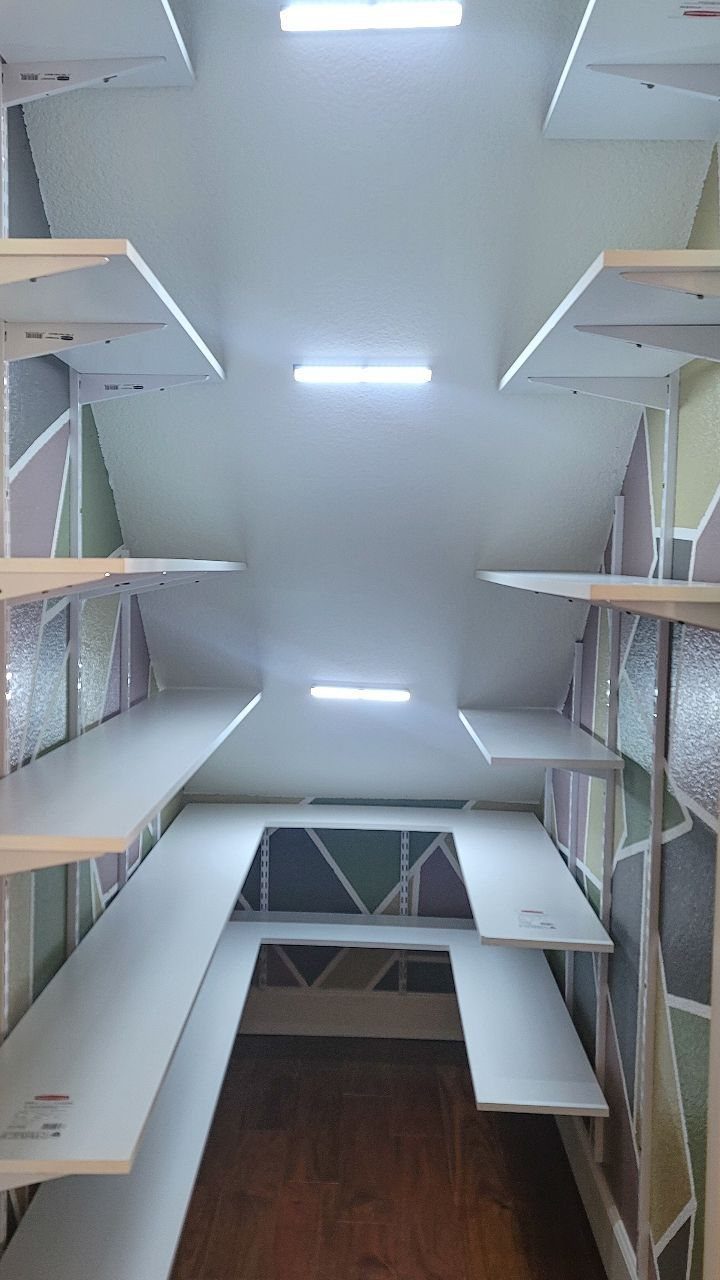
Shelves on both long walls of a skinny pantry turn a hallway into storage.
The trick is the aisle width: 36 inches minimum if two people pass, 24 if one person shops alone. Modular units let you shift a shelf up when tall bottles arrive or down for stacked cans.
I would leave the back wall alone in the very narrowest version; the reach is awkward and the depth lost to shelf brackets is better given to the sides.
Geometric paint on the back wall, visible between the shelves, gives the eye somewhere to rest.
Plan Your Pantry Layout
Empty the pantry before you buy a single bin or shelf bracket. An open cabinet tells you what habits actually shaped the clutter, not what you wish they were.
I measure height, width, and depth of each shelf with a tape still in my hand, then measure again what we reach for most: the cereal boxes that must stand, the crackers that can lie flat, the handful of dinners that repeat on busy weeks.
A sketch with real numbers, updated as the plan shifts, keeps container sizing from becoming a guessing game.
Space fills fast when the layout ignores daily motion. A plan built around the week you actually lived works longer than one built around the week you photograph.
What Not to Store in the Pantry
Some items earn their own spot outside the pantry, and that choice is what keeps the main space usable.
I keep spices and baking supplies in a dedicated cabinet, but flour and sugar live on the pantry shelf in glass canisters where I can see when I’m running low.
The pantry then holds only what the household reaches for daily, and the crowd stays manageable.
Nothing that needs cold storage stays here: dairy, opened condiments, anything that turns fast once the seal breaks. The cost of a spoiled half-gallon or a wilted bag of greens is shelf space you do not get back.
Keep Pantry Organized
Zones drift. A rushed morning puts the pasta on the snack shelf and the crackers with baking, and soon enough nothing is where the label says.
I reset roughly each month: walking each shelf back to its assigned category before the drift gets out of hand. The scan catches expiration dates early, before they settle into the back corner for another season.
Clear containers show the level at a glance and keep contents visible.
Labels, plain block or simple tape, tell anyone putting groceries away where the item lives. Eye level stays reserved for the daily reach; the step-stool items and holiday platters climb high.
Organization is maintenance, not a one-time install. The system lasts only as long as the habit of returning things to their marked home.
Frequently Asked Questions
How can I design my own pantry?
Start by emptying the space and measuring what you actually own, not what you wish you ate.
Start with the cereal boxes, oil bottles, and repeat dinners that define your real week, then match shelf height, width, and depth to what you already buy.
What not to store in the pantry?
Spices need their own cabinet, not the pantry floor where heat and light drain their flavor fast. Nothing temperature-sensitive belongs here: no dairy, no opened mayo, anything that spoils costs shelf space you do not get back.
What is the size of a small pantry?
A walk-in version wants 36 inches of aisle width for two people to pass, or 24 inches if one person shops alone. Most pantries run narrower than a standard sheet good cut in half.
How do you organize canned goods?
Group them by category, not by can size, so you see what is running low at a glance. Stepped shelves fit single rows under a slanted ceiling; wire baskets handle awkward shapes that do not stack clean.





