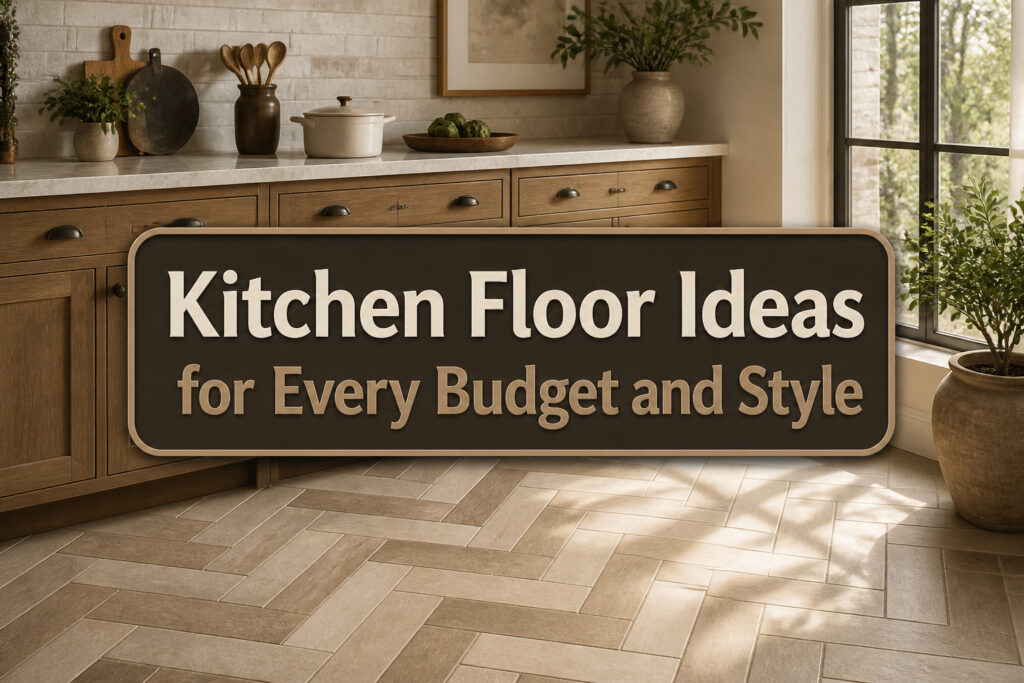
A kitchen floor has to survive two things: the actual cooking and the years of traffic that follow. The right choice depends on whether you need waterproof planks that handle a dropped pot of pasta water, or a surface you can refinish across decades instead of replacing. Porcelain tile outlasts most of what you put on it, but it will not forgive a dropped glass.
[link-whisper-related-posts]1. Porcelain Tile
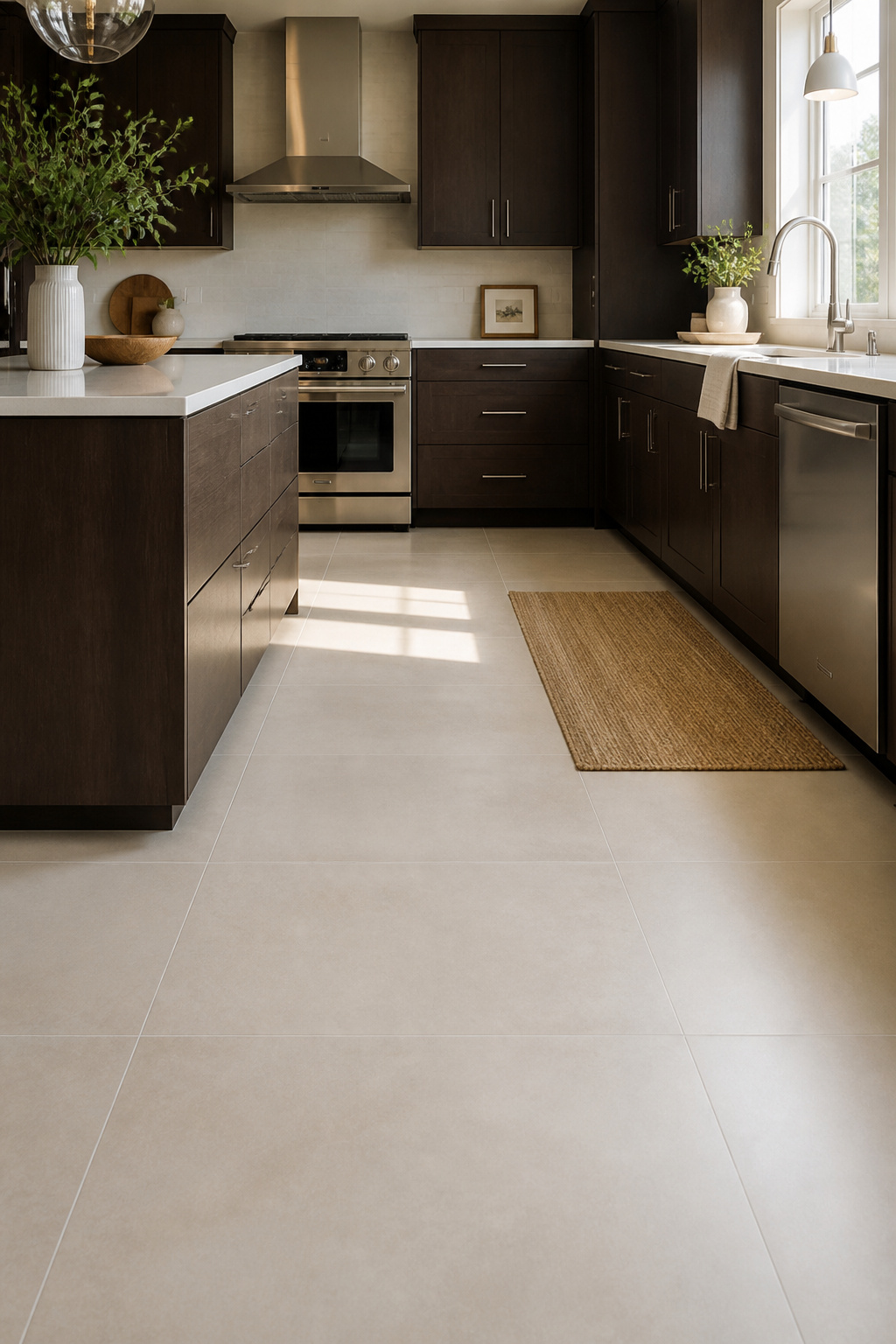
Porcelain tile belongs in a kitchen that sees real traffic. The material is rated for residential and commercial use, and the wear layer on many tiles resists scratches and stains from dropped pots, dragged chairs, and years of grit tracked in from outside. Water resistance matters here more than in almost any other room; porcelain handles spills without swelling or staining, which is why it works underneath cabinets and around islands where moisture lingers.
The finish you choose changes how the floor lives with you. Matte porcelain hides the crumbs and splatter of a working kitchen. High-gloss white or cream delivers the polished look from inspiration photos, though it demands more wiping to stay clean. Large-format slabs at 24×24 inches or larger reduce grout lines and lean modern; smaller tiles read more traditional but multiply the joints that collect grease.
The surface stays cold and hard underfoot. Area rugs help, or underfloor heating if the budget allows. Either way, the durability tradeoff is real: this floor outlasts most of what you put on it, but it does not forgive a dropped glass.

LUXURY VINYL FLOOR TILES: For use indoors and in temperature-controlled environments only, MSI brings adhesive flooring up a notch with Glue-Down floor planks – stylish at the surface with the authentic look of real wood plank flooring

Showcase the look of hardwood with rigid core performance: The Lone Star Spirit vinyl plank flooring collection features a wood grain embossed pine hardwood look. Waterproof, easy to clean, indent resistant, sound tested.

Timeless Charm - Stylish wood finishes offer an authentic and natural look that brings the beauty and warmth of nature into your flooring decor.
2. Luxury Vinyl Plank
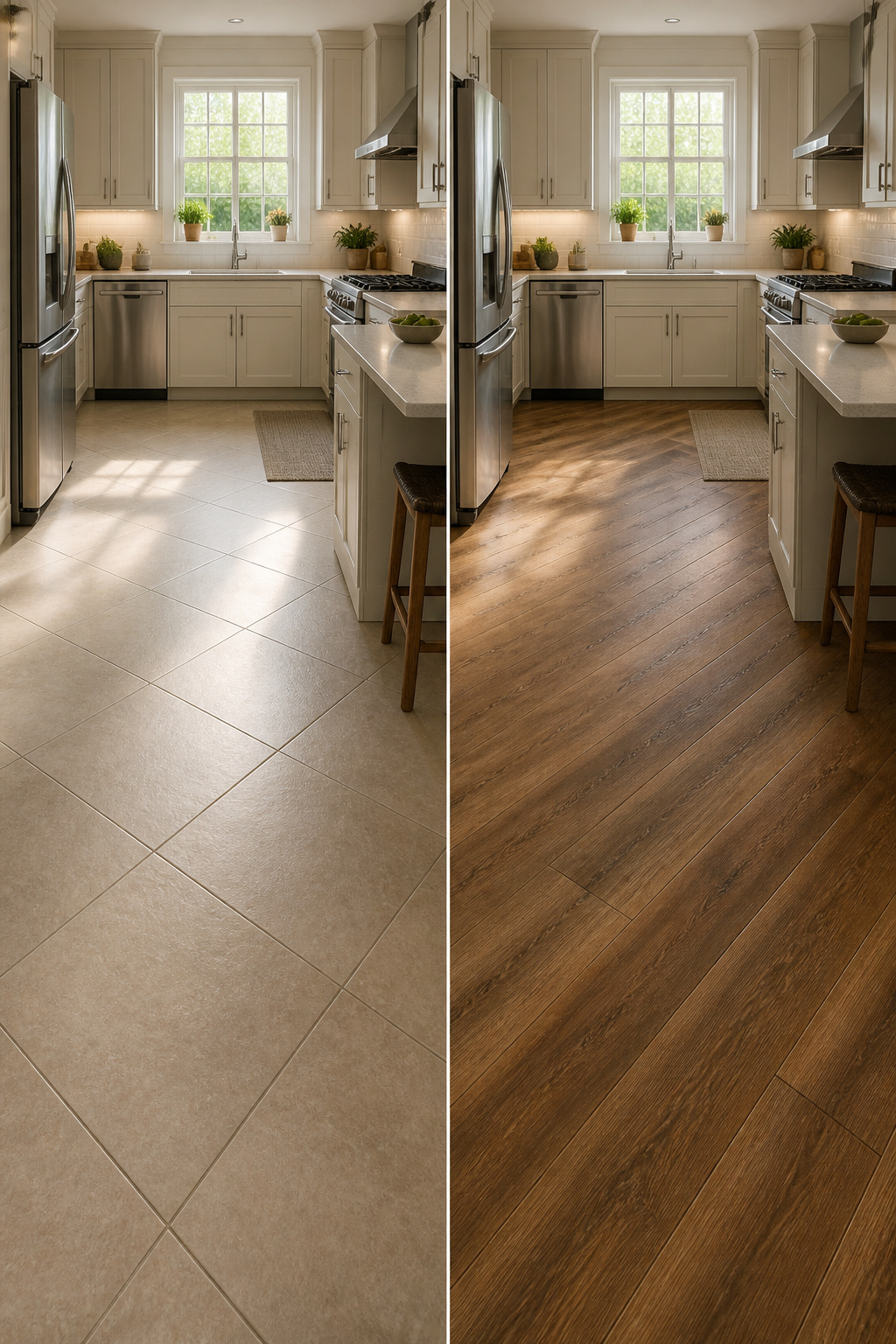
Luxury vinyl plank is waterproof all the way through, not just on the surface, which matters more in a kitchen than most people realize until they drop a full pot of pasta water. The planks come in wood-look finishes with wide formats and natural grain textures, or in stone patterns that mimic travertine, slate, or marble without the sealing, coldness, or cost of real stone.
I spent time comparing samples side by side, and the better ones have enough texture to catch light the way actual wood does. Lower-quality planks dent under cast iron or discolor near south-facing windows, so the upgrade to a thicker wear layer pays for itself if the kitchen sees real use.
The comfort difference shows up during long cooking sessions. Vinyl sits softer and quieter underfoot than laminate or tile, and it stays warmer than stone or porcelain in winter months. Installation runs straightforward enough that swapping a single damaged plank later is practical, though I would not call it effortless despite what the packaging claims.

Includes 12 Pieces per Case | 5.16 Square Ft. Per Case | Case Weight 34.8 lb |TILE SIZE: 8 in. W x 8 in. L x 0.55 in. T

Includes 15 Pieces per Case | 4.995 Square Ft. Per Case | Case Weight 18.75 lb |TILE SIZE: 4 in. W x 12 in. L x 0.31 in. T

MODERN WALL DECOR: These sleek 6.5 x 6.5 in. porcelain ceramic subway tiles create a modern finish in bathrooms, kitchens, and more. Each pack covers 5.87 sq. ft., making it easy to calculate material needs.
3. Ceramic Tile
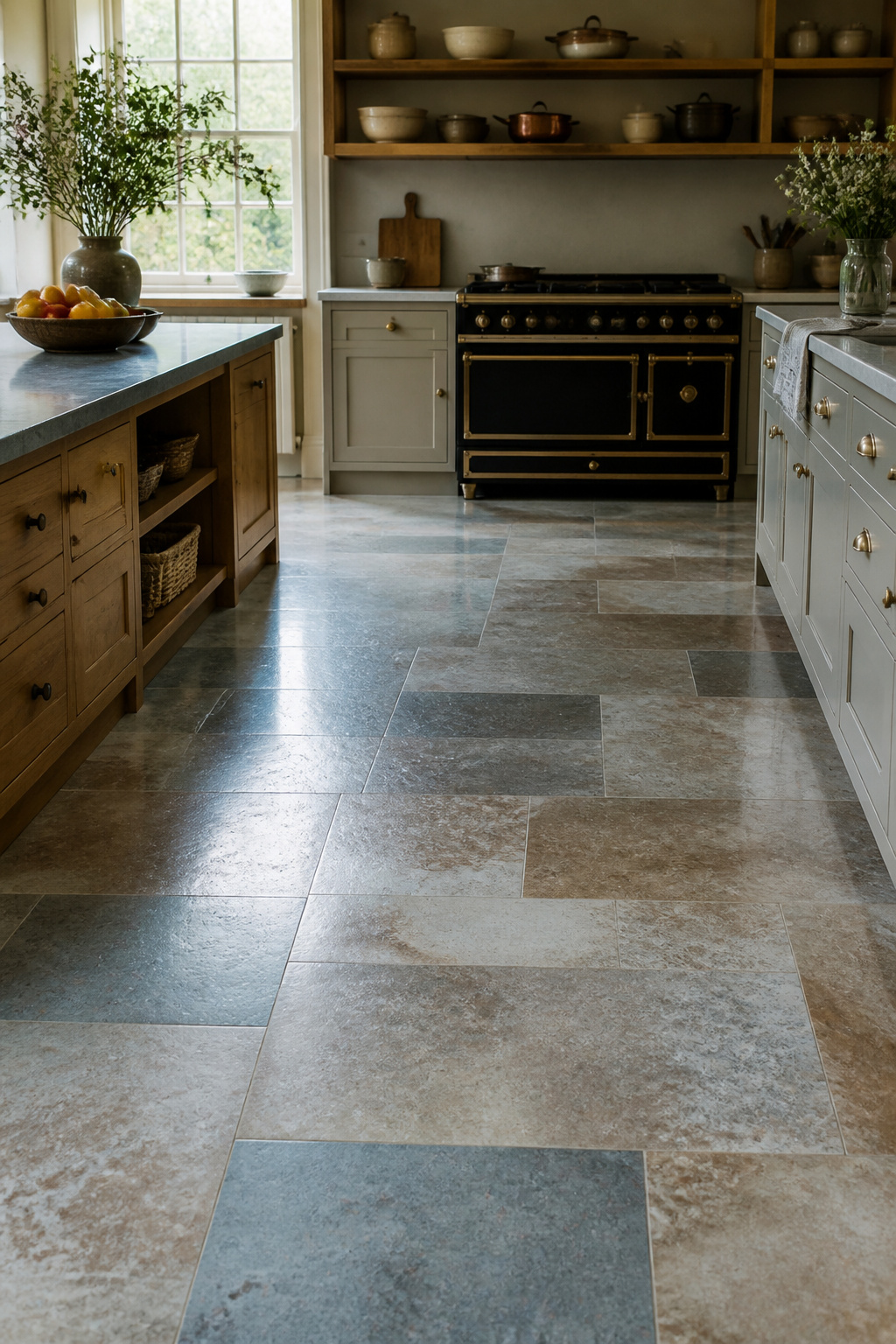
Ceramic tile handles water the way a kitchen floor needs to: spills sit on the surface instead of soaking in. That moisture resistance matters more than most people think until their first leaking ice maker or dropped pot of soup. Glazed ceramic wipes clean with a damp mop, and the glaze keeps stains from setting into the body of the tile.
The real draw is the range. Walk a tile showroom and you’ll find everything from hand-painted patterns that read Spanish Revival to soft matte rectangles that look almost concrete. That variety lets ceramic work in a vintage cottage or a stripped-down modern kitchen without feeling forced.
The catch is the hardness. Ceramic doesn’t give, and it pulls heat away from your feet. Standing at the stove for an hour means noticing that cold, hard surface. An area rug in the prep zone helps, or underfloor heating if the budget stretches that far. For renters, a thick washable mat is the practical fix.
Durability is high if you choose the right grade, though ceramic chips more easily than porcelain if something heavy drops corner-first. The glaze itself is the vulnerable layer. For busy kitchens, larger tiles mean fewer grout lines to scrub, and the floor reads calmer visually. A 12-by-24 or larger format installed on a running bond keeps the look current without demanding a designer’s eye for layout.

FILL CHIPS. RESTORE A SMOOTH FINISH:Repair chipped edges, small holes, pits and minor surface cracks with this white porcelain sink repair kit. The compound fills missing material for a smooth, even repair—so one damaged spot doesn’t have to mean replacing the whole sink.

SAVE THOUSANDS VS. REPLACEMENT – Refinish a worn, stained, or scratched bathtub, tile, sink, or shower in a weekend for a fraction of the cost of a new tub — a professional-grade DIY finish with no contractor required.

【Wide Application】This touch up paint pen adheres to a wide range of surfaces, including tile, tub, bathtub, sink, enamel, porcelain and refrigerators. It allows you to easily repair scratches, stains, chips, spots, yellowing, and other surface paint imperfections
4. Hardwood Flooring
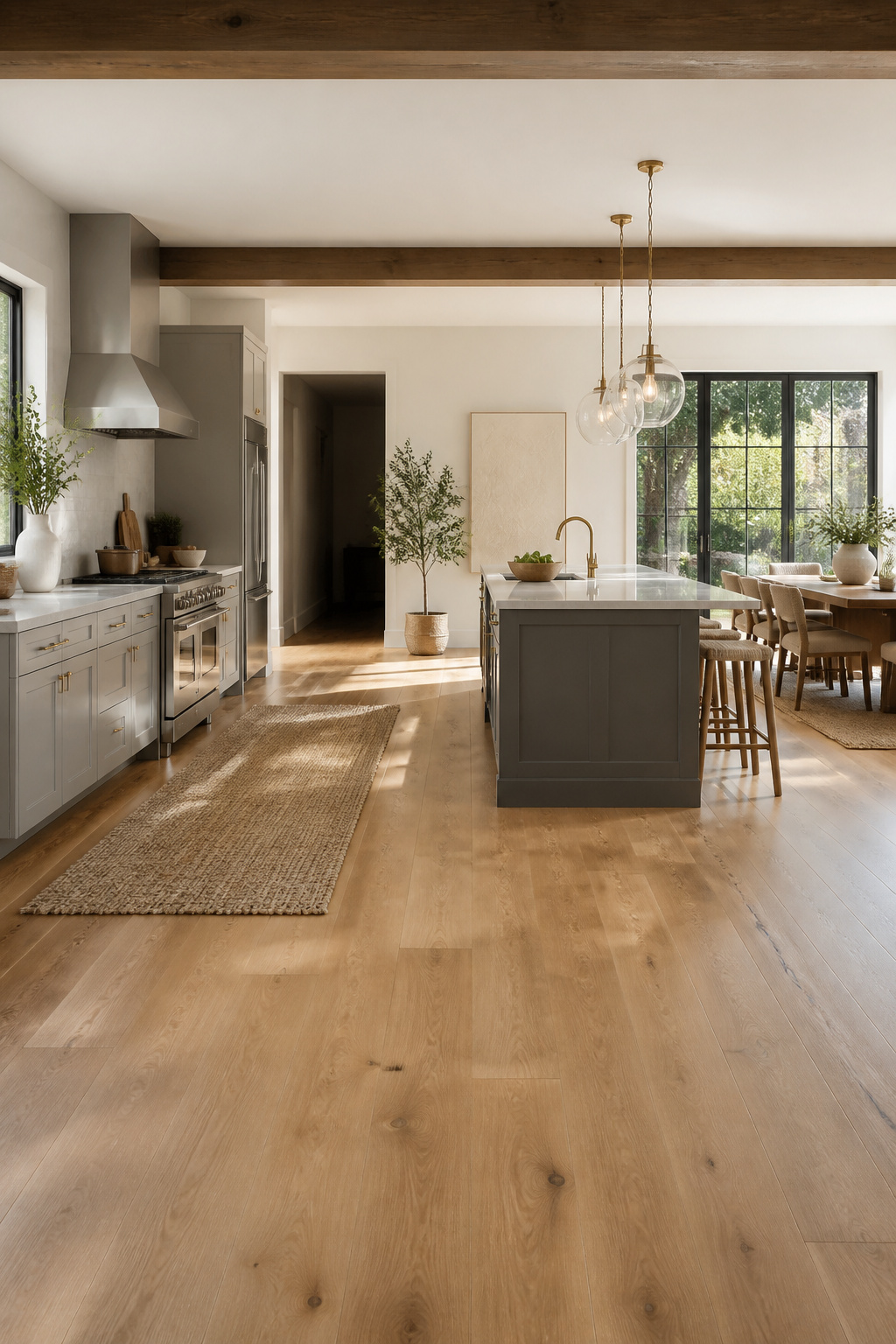
Hardwood flooring brings warmth that tile and vinyl struggle to match, and in a kitchen that warmth matters. The grain gives a room character that survives real living, not just the photo shoot. Engineered hardwood with a proper moisture barrier handles humidity fluctuations better than solid hardwood, which matters when a dishwasher leaks or winter heating dries the air flat.
The catch is maintenance. Spills need wiping quickly, and the finish requires attention to prevent moisture from working into seams where warping starts. But refinishing stretches the lifespan across decades, not the 10–15 years of budget alternatives. A kitchen floor that can be sanded and sealed several times turns the higher upfront cost into something closer to investment than expense.
White oak or light hickory in a wider plank reads modern without trying hard. Natural stone and hardwood sit in the same tier for resale value if kept up, which is worth weighing against the easier care of porcelain or luxury vinyl plank. For renters or anyone moving inside five years, the math shifts. For someone staying put, hardwood outlasts the trend cycle.

Heavy Duty Construction: The frame of the tile cutter tools hand tool is made of heavy all-steel material, compact, strong, and durable. The solid rail makes cutting work more accurate and suitable for long-term use. Friendly Reminder: This product is suitable for smooth, standard tiles and not for mosaic tiles with uneven surfaces.

Elegant marble veining available in five timeless colors

Unique Laser Guidance System– The 48-inch tile cutter features a unique laser guide that projects a clear cutting line onto tiles or stone surfaces, enabling precise alignment and cutting. This laser guide (also known as a tile cutting rail) minimizes errors and enhances cutting accuracy by marking exact cutting paths.
5. Laminate Flooring
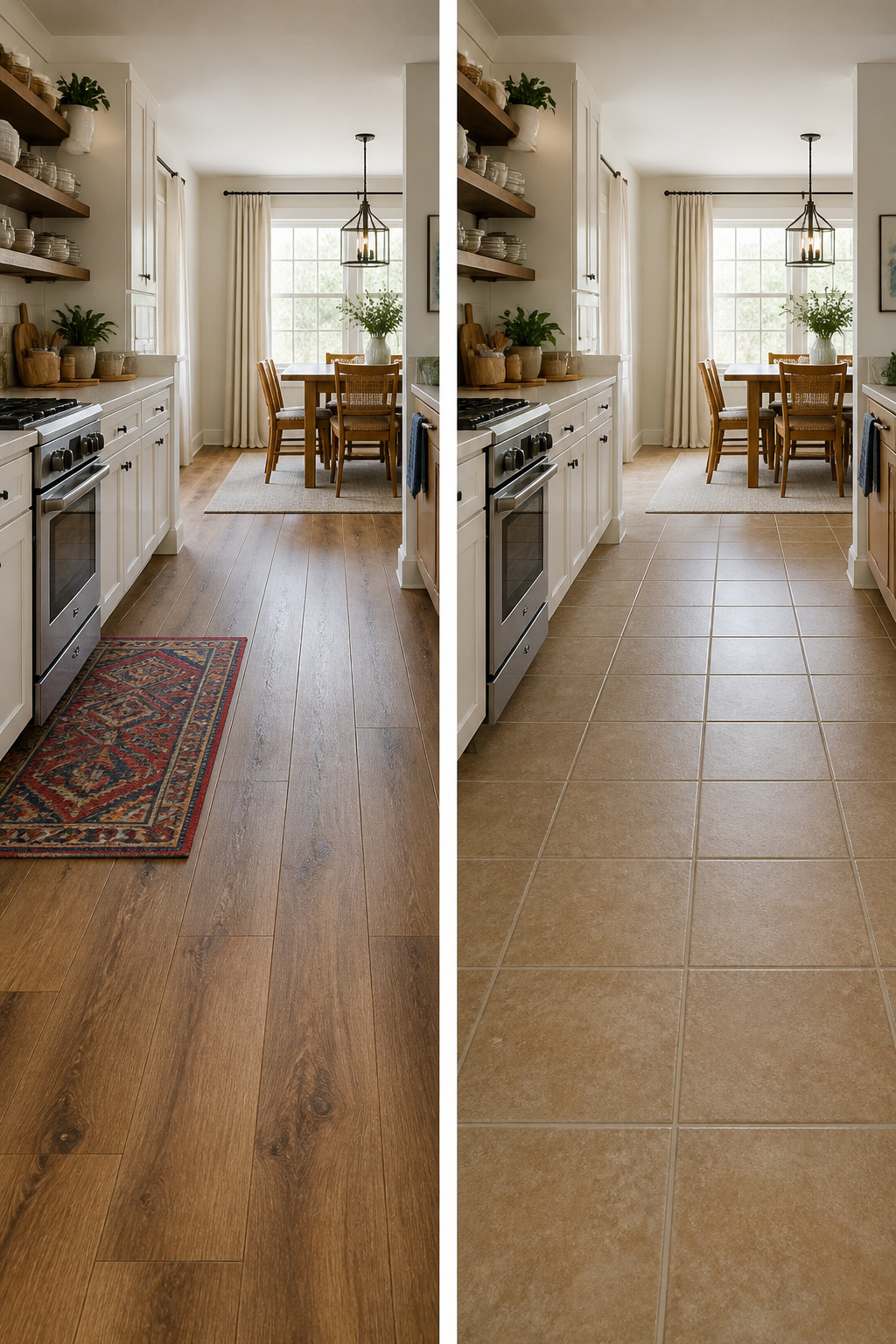
Laminate flooring gives you the look of hardwood at a fraction of the cost, and the surface designs have improved enough lately that the gap is narrowing. A stronger wear layer is what separates the planks that survive five years from the ones that survive fifteen, so that specification matters more than the wood grain photo on top.
Scratch resistance is where laminate earns its keep. Daily kitchen traffic, kids running through, chairs scraping back: the surface handles this better than real wood, which dents and shows it. The tradeoff is durability over the long haul. Traditional laminate is vulnerable to standing water, and even water-resistant versions do not match the lifespan of tile or vinyl in a room that sees spills. Shaw and Mohawk both produce waterproof laminate options that have closed most of that gap, though they still sit below engineered hardwood for longevity.
Maintenance stays simple. Sweep, damp-mop, done. No refinishing, no waxing, no sanding belts and sparks flying. The limit is moisture management: wipe up puddles, do not trust it in the wettest kitchens, and accept that this is a cost-effective choice for a quick upgrade rather than a permanent installation.
EXCELLENT ADHESION: Adheres to all types of ceramic & mosaic tile

One package contains 10 tiles that each measure .06-in in depth. Each tile measures 12 x 12 inches

PROFESSIONAL RESULTS WITH DIY EASE: Achieve expert-level tile grouting without the hassle - perfect for both new installations and repairs
6. Cork Flooring
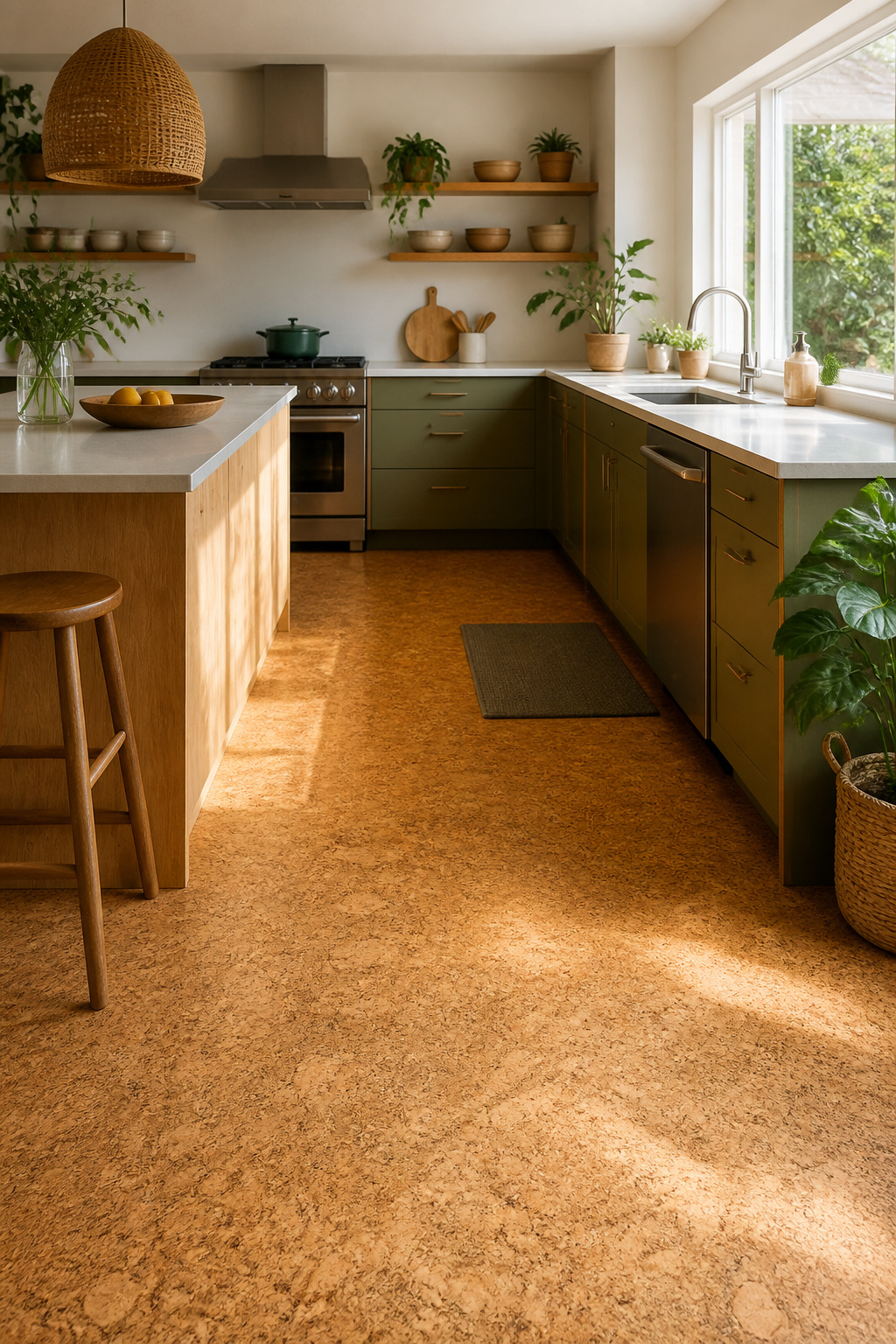
Cork gives a kitchen that rare quality of actually forgiving your body. The material compresses slightly underfoot, which means the hours spent at the stove or sink leave less fatigue in your knees and back. It also stays warm, so bare feet on winter mornings are tolerable.
The environmental appeal is straightforward: cork harvests from bark, not the tree itself, and the same oak can be stripped every nine years for decades. That makes it one of the gentler flooring choices for anyone tracking their home’s footprint.
The surface needs sealing, and re-sealing, to survive a kitchen. Without that maintenance, moisture seeps in and the floor swells, stains, or crumbles. Spills have to be wiped promptly; standing water is not something cork tolerates well. Sunlight is another weakness, direct exposure fades the color over time.
For renters, cork is usually out. It is a real investment in a permanent install, and the sealing regimen asks for ownership-level attention. But for a first-home owner who cooks daily and wants that soft, eco-friendly surface underfoot, the trade is specific: comfort and sustainability in exchange for vigilance about moisture and a maintenance calendar.
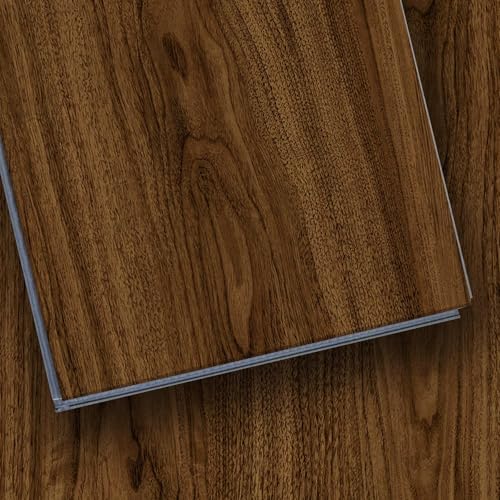
【Ultra-Durable & Pet-Friendly】With a 0.3mm wear layer tested over 15,000 abrasion cycles, this luxury vinyl plank flooring resists scratches, dents, and spills. Ideal for busy homes with pets and kids, it stays beautiful for years even in high-traffic areas.

REALISTIC WOOD LOOK: Featuring luxury wood-grain texture, micro-bevel edges, and HD film prints, these luxury vinyl planks perfectly replicate real hardwood floors with a fraction of cost of wood flooring.

Stylish - Authentic wood looking and grain texture, adding timeless feature for your home
7. Natural Stone
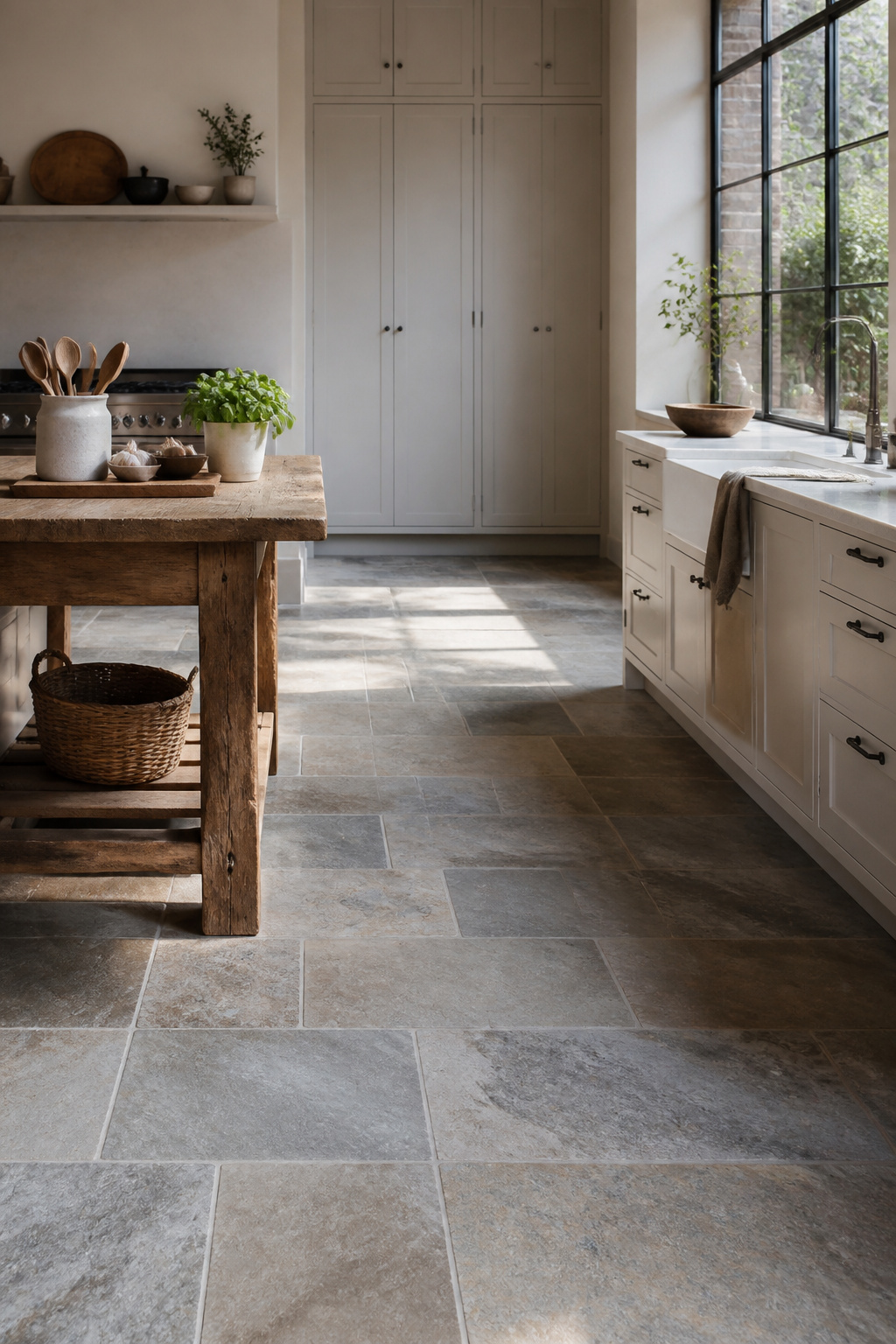
Natural stone tiles bring a grounded, timeless feel to a kitchen because no two tiles are ever the same. That variation spreads across the floor, creating subtle interest without making things feel busy. For an upscale kitchen design, this is where the elegance lives: the material itself does the work, not a pattern someone laid on top.
The catch is the upkeep. Stone floors in the kitchen need sealing from time to time, and without it they stain, they slip, and they turn cold underfoot unless you add rugs. I have walked into kitchens with sealed stone tiles and noticed immediately how rich and calm the space felt; I have also walked into ones where the seal had worn through and the stone looked tired, almost chalky, like a nice shirt that had been washed too many times. The difference is maintenance, not money spent at install.
If you are drawn to natural stone, budget for the care, not just the tile. The uniqueness is real, but so is the work.

Includes 15 Pieces per Case | 14.55 Square Ft. Per Case | Case Weight 33.15 lb |TILE SIZE: 11.73 in. W x 11.85 in. L x 0.24 in. T


White and Black Porcelain mosaic with matte finish
8. Concrete Flooring
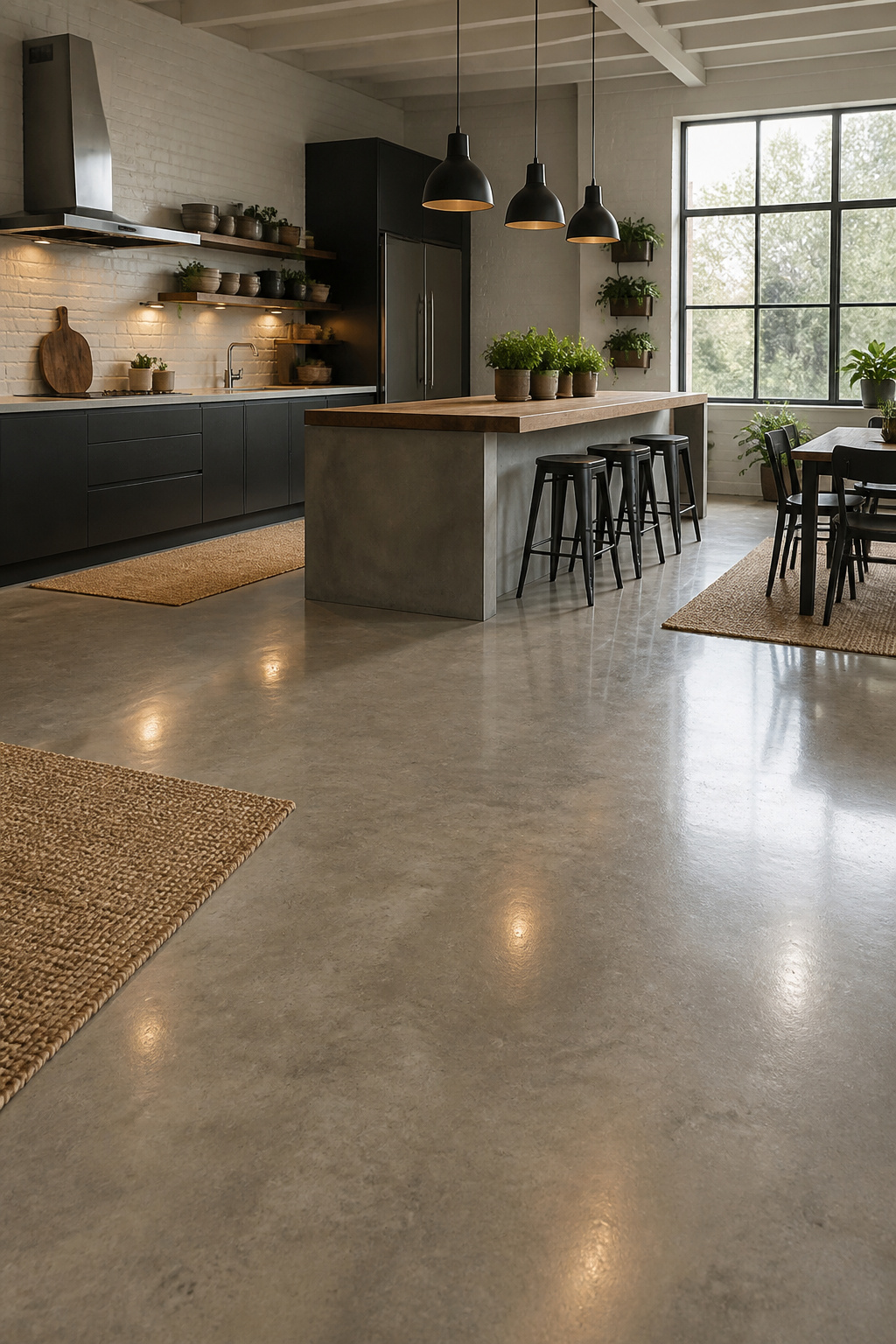
Concrete flooring delivers an industrial-modern vibe with durability that outlasts most kitchen renovations. Sealed properly, the surface is fully waterproof and shrugs off spills that would damage other materials.
The downside arrives underfoot. Concrete is cold and hard, and in a kitchen where you stand for long stretches, that matters more than the Pinterest photos suggest. Without radiant heating, the chill persists year-round, and your joints notice the lack of give after a Sunday of cooking. Area rugs help in the zones where you prep or wash, though they partially defeat the seamless look that drew you to concrete in the first place.
Two ways to play this: commit to the full system with in-floor heating installed at the pour, or budget for strategic rug placement and accept the tradeoff. The heating wins if you cook daily; rugs suffice for a weekend baker who mostly wants the aesthetic.

Efficiently Repairs Imperfections:Our touch up paint is specifically formulated to address scratches, stains, cracks, spots, and yellowing on bathroom tiles and enamel surfaces. Extensively tested, it delivers exceptional adhesion and sealing properties, effectively resisting fading, peeling, and wear. For deeper cracks or scratches, we recommend applying multiple coats to achieve optimal results and lasting coverage.Note: This tile paint formulation incorporates a curing agent to ensure long-term adhesion without flaking

HIGH-GLOSS WET LOOK FINISH – Enhances ceramic tile sealer and porcelain tile sealer performance with a clear, reflective shine that refreshes dull surfaces and improves the appearance of tile and grout sealer applications in showers and floors.

Contains the most effective carnauba waxes to produce the highest surface luster possible
9. Painted Floors
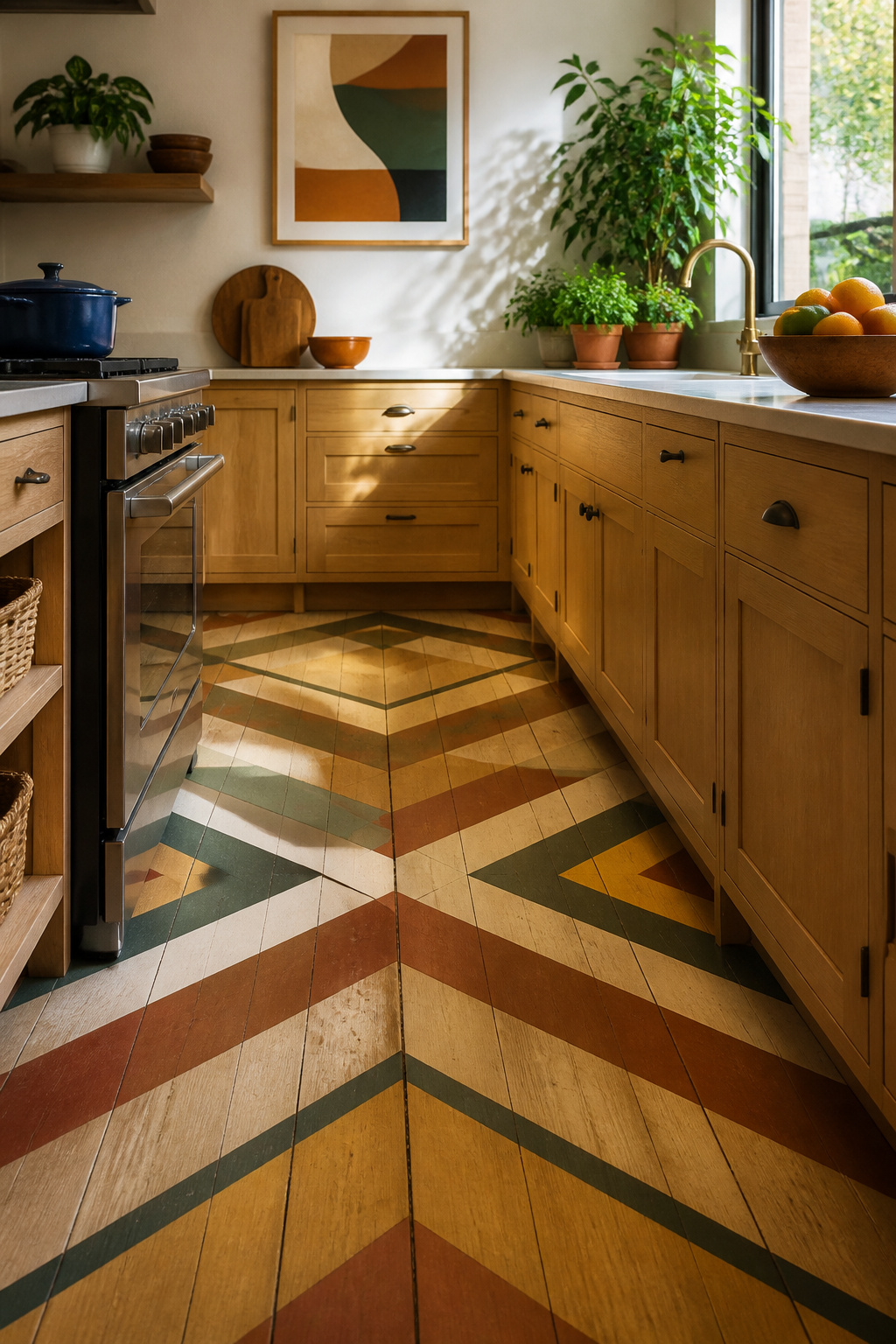
Painted floors give you the widest creative range for the smallest cash outlay. You choose the color, the pattern, and the pace, and the kitchen feels like yours again without pulling anything up or tearing anything out.
The seal that paint provides can also protect against further damage, including water, which matters in a kitchen. Proper prep and the right sealant separate a floor that lasts from one that chips in a month. Oak takes paint well enough that designer Kimille Taylor used a custom geometric design on her Upper West Side kitchen floors, proving natural wood doesn’t have to read as boring.
A checkerboard or stenciled pattern brings instant personality, but the surface stays thin, so the room doesn’t feel weighed down. The catch is maintenance: painted floors scuff where traffic concentrates, and touching up means matching that original color exactly. This option works best when you want a quick refresh that still looks thoughtful, not when you need a surface to survive kids, dogs, and dropped cast-iron pans for the next decade.
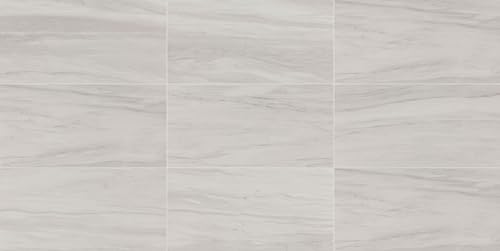
Capture the elegance of marble available in two colors

Elegant marble veining available in five timeless colors

Elegant marble veining available in five timeless colors
10. Checkerboard Patterns
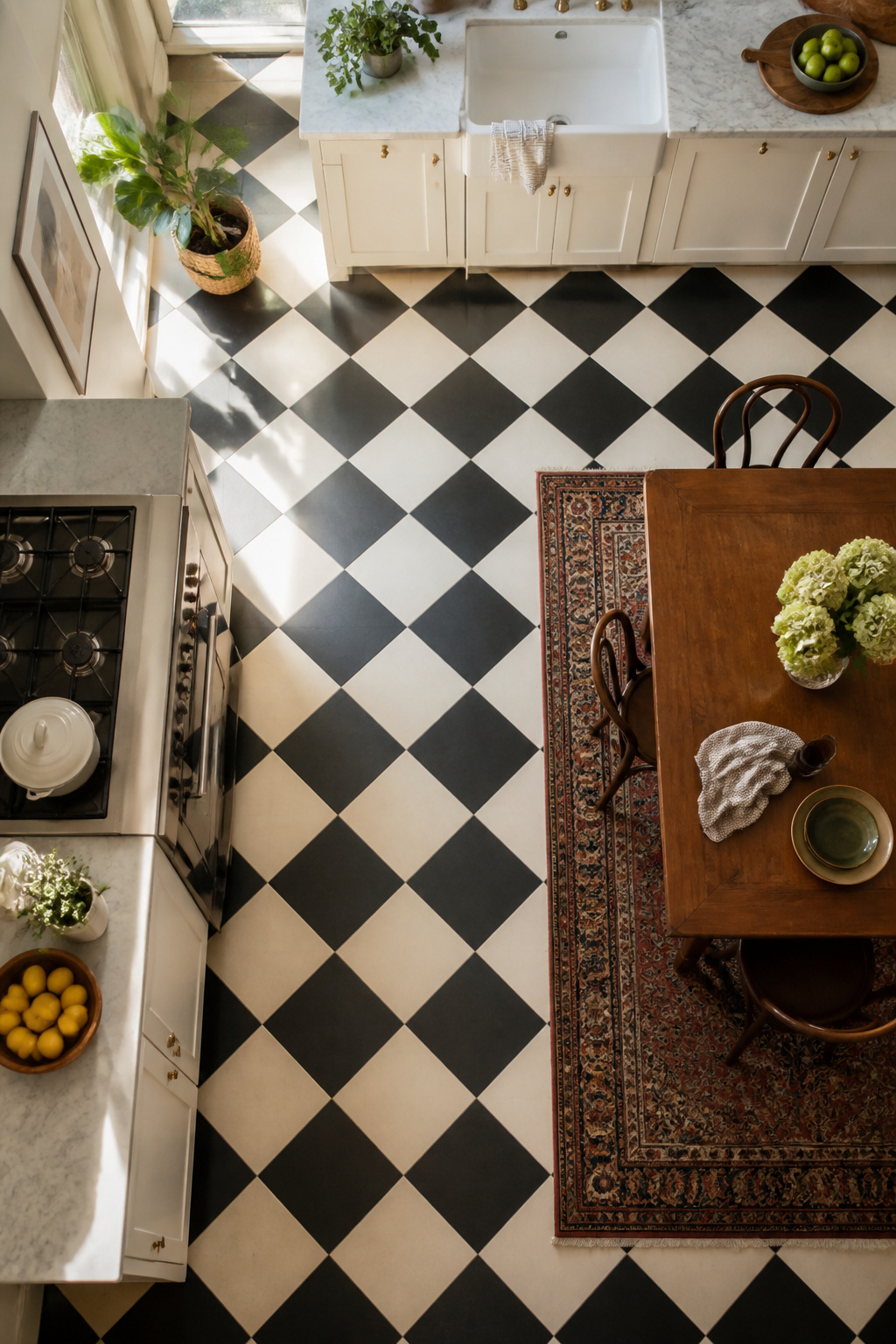
Checkerboard floors carry a kitchen without needing anything else to happen. The pattern itself moves your eye across the room, so the space reads as lively rather than busy. Black and white gives you drama; gray and white, like Cortney Bishop Design used, keeps the same structure but softens into something more rustic. Either way, the grid does the work of a rug without the maintenance.
What convinced me, reading through a dozen of these installations, is how forgiving the format is with material. You can run it in porcelain tile, but you can also mix reclaimed terra-cotta from Chateau Domingue with acid-washed limestone from ABC Stone and get something that looks unified at first glance, then better the closer you look. Amber Lewis pulled a similar move with Calacatta marble in a checkerboard, paired with painted copper, and the whole kitchen settled into that aged, old-world register.
The cabinets need to stay simple. Pattern this loud wants plain surroundings or it starts shouting at itself. One weekend, a tile cutter, and about a thousand dollars in mid-grade porcelain gets you there. The mistake I kept seeing was people adding a second pattern somewhere else, a busy backsplash or ornate hardware, and the kitchen turned into a game board nobody wanted to cook on.
What Water Resistance Actually Means
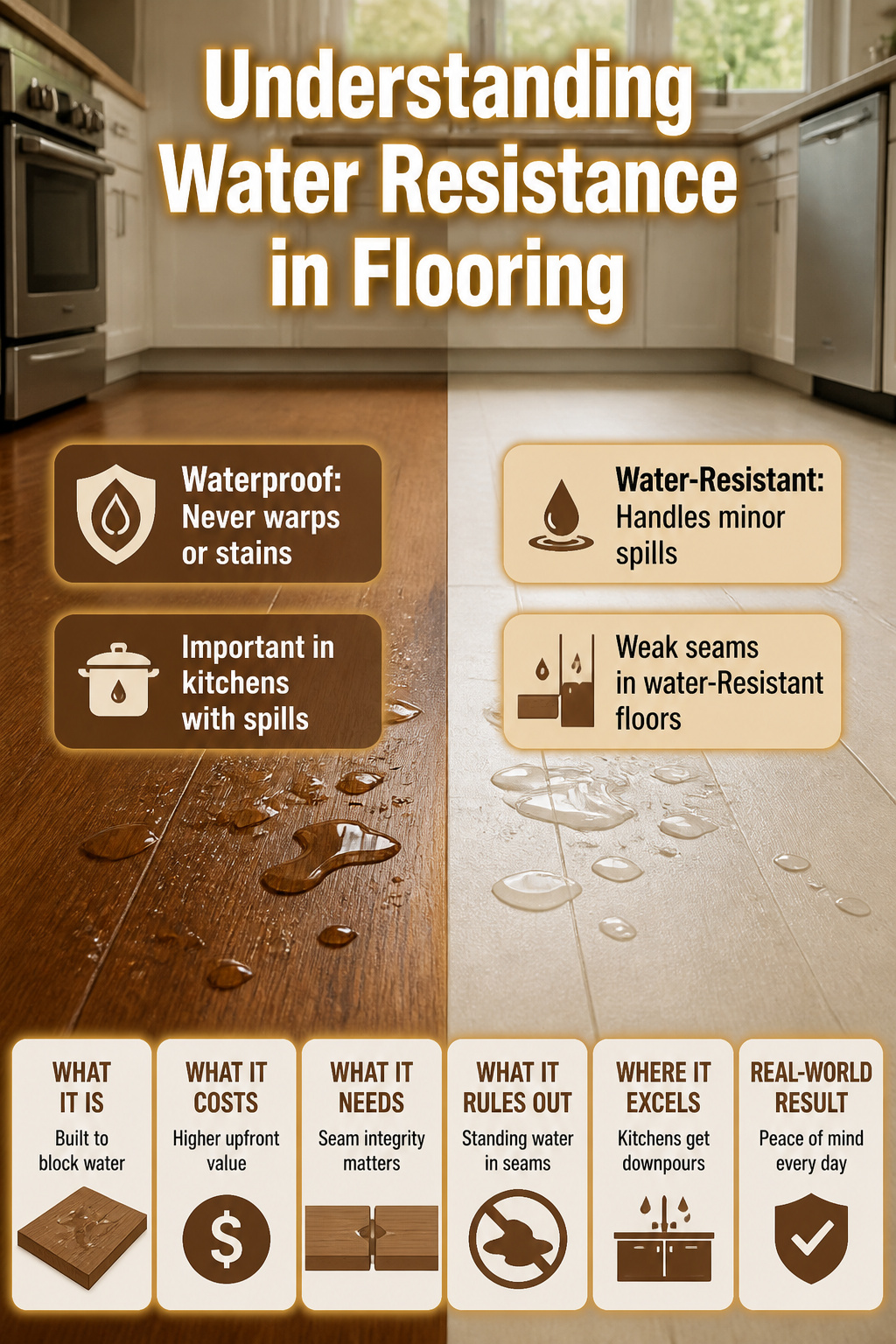
Waterproof flooring can be soaked, submerged, or steam-cleaned without warping, staining, or damage. Water-resistant flooring handles minor spills and damp mops, but standing water left in seams or edges will eventually absorb in.
The gap between the two matters most in kitchens because spills are guaranteed. A dropped pot or a leaking dishwasher hose turns a water-resistant floor into a problem if the moisture sits. The seams are the weak point, water-resistant materials rely on surface protection that fails once liquid finds its way underneath or between planks.
I read enough product pages while researching this to notice the terms get used interchangeably, which costs people. A hoodie keeps you dry in a drizzle; a raincoat keeps you dry in a downpour. Kitchens get downpours.
Where Comfort Matters Most
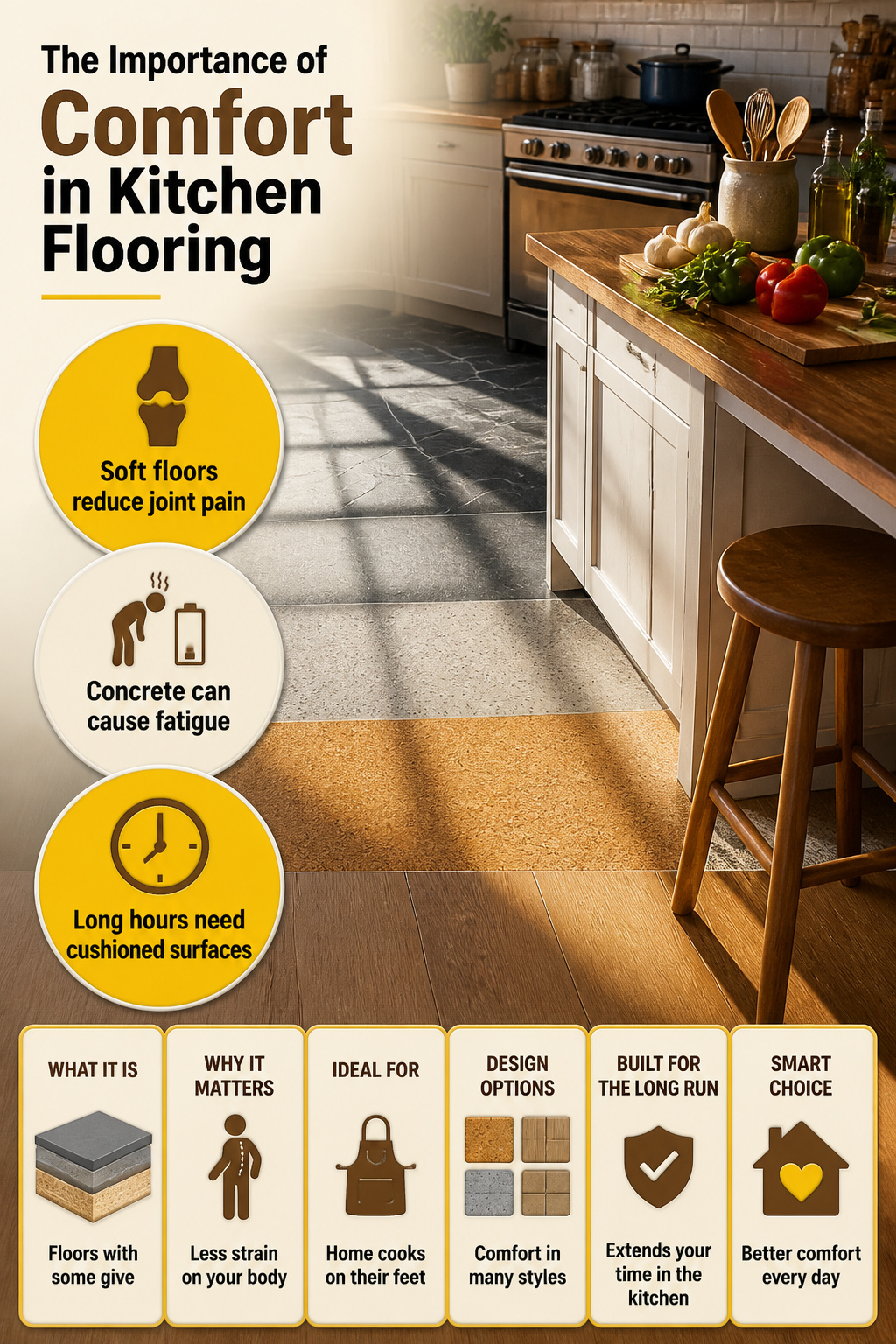
Softer floors earn their place in kitchens where the stove sees real use. After three hours of chopping, stirring, and washing up, the difference between a surface with some give and one that fights back is the difference between finishing dinner service and calling it early. Concrete and stone look sharp in photographs, but your knees and lower back register the truth by hour two.
The body does not forgive a hard surface because the rest of the room looks good. Joint pain, fatigue, and that particular ache across the arches of the feet all scale with time on your legs. A floor that absorbs some of that impact, even slightly, extends how long you can work comfortably and how willing you are to start again the next evening.
This matters most for home cooks who cannot swap out duties with a sous chef or take mandated breaks. The kitchen is often one person standing in place, moving between the same four stations, for stretches that would violate restaurant labor laws. Choosing comfort is not coddling yourself. It is accounting for the actual conditions of the work.
Mixing Materials in Open Kitchens
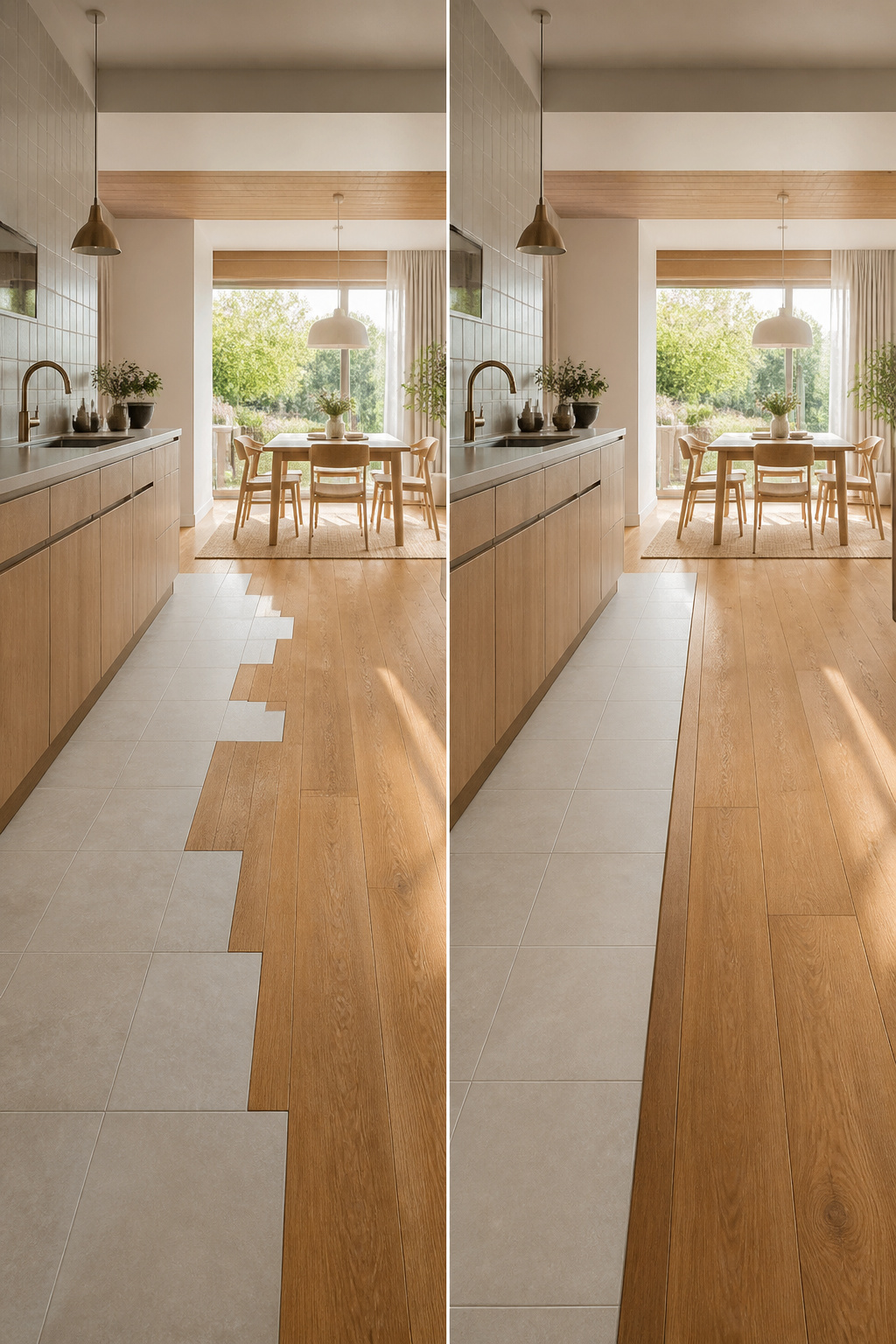
Open-concept kitchens leave you with one continuous floor and no walls to say where cooking stops and living begins. The fix is to let the material do the zoning. Tile under the sink and prep area handles the water, the dropped eggs, the traffic that destroys wood. Wood or laminate everywhere else warms the space back up and saves your feet during long hours at the stove.
The transition matters more than the materials themselves. A straight line where tile meets wood looks like a mistake from a rushed renovation. Offset the joint, or run the wood perpendicular to the tile edge so the break reads as intentional geometry. In one project DAAM handled, dark wood veneer cabinets carried into the flooring choice, and a geometric ceramic tile at the perimeter grounded the whole room without shouting for attention.
Cost is where this approach earns its keep. You are not buying enough tile for the entire kitchen, just the wet zone. You are not buying enough wood to survive under a leak-prone dishwasher. The mixed install takes more planning on the front end and a careful hand at the seam, but the materials budget often drops compared to covering the same square footage in a single premium product.
Herringbone and Chevron Layouts
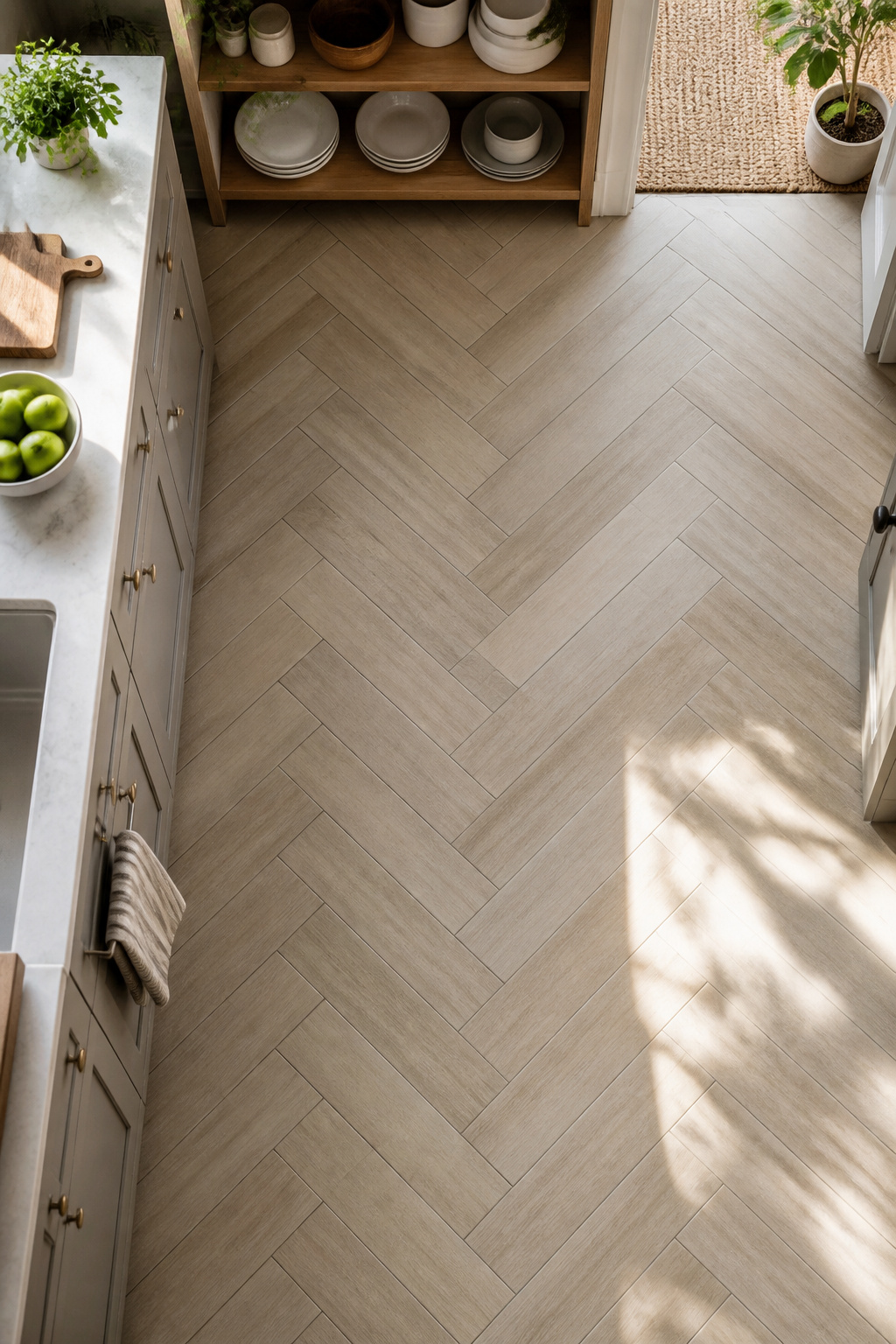
Herringbone and chevron layouts let you keep the same material everyone else is using while the floor itself reads as something custom. The difference between them is simple once you spot it: herringbone planks meet at a 90-degree zigzag, while chevron cuts to a sharper V where the ends actually touch. That sharper angle in chevron tends to suit kitchens with strong architectural lines and enough square footage for the pattern to breathe; in a tight galley, the geometry can feel like it’s closing in on you.
A matte neutral plank does the heavy lifting here. Loud grain or high variation fights the layout instead of letting it speak, and the whole point is to let the angles guide the eye across the room. Lighter planks stretch the sense of space; darker ones add weight without visual clutter. Lay a small sample on the actual floor first, because the same tile that reads elegant on a showroom wall can feel busy once it’s underfoot at 6 a.m. with coffee in hand.
The pattern itself creates movement, which matters in smaller kitchens where every trick to expand the perceived footprint helps. Diagonal lines pull the gaze past the actual walls. What stops this from reading as designer-level showboating is restraint in the material choice: standard LVP or bamboo in a quiet tone, installed with attention to the pattern’s repeat. It is not a weekend job for a first-timer. The waste factor runs higher than straight lay, and the cuts at the edges need to stay consistent or the whole thing looks like a mistake.
Eco-Friendly Options Beyond Cork
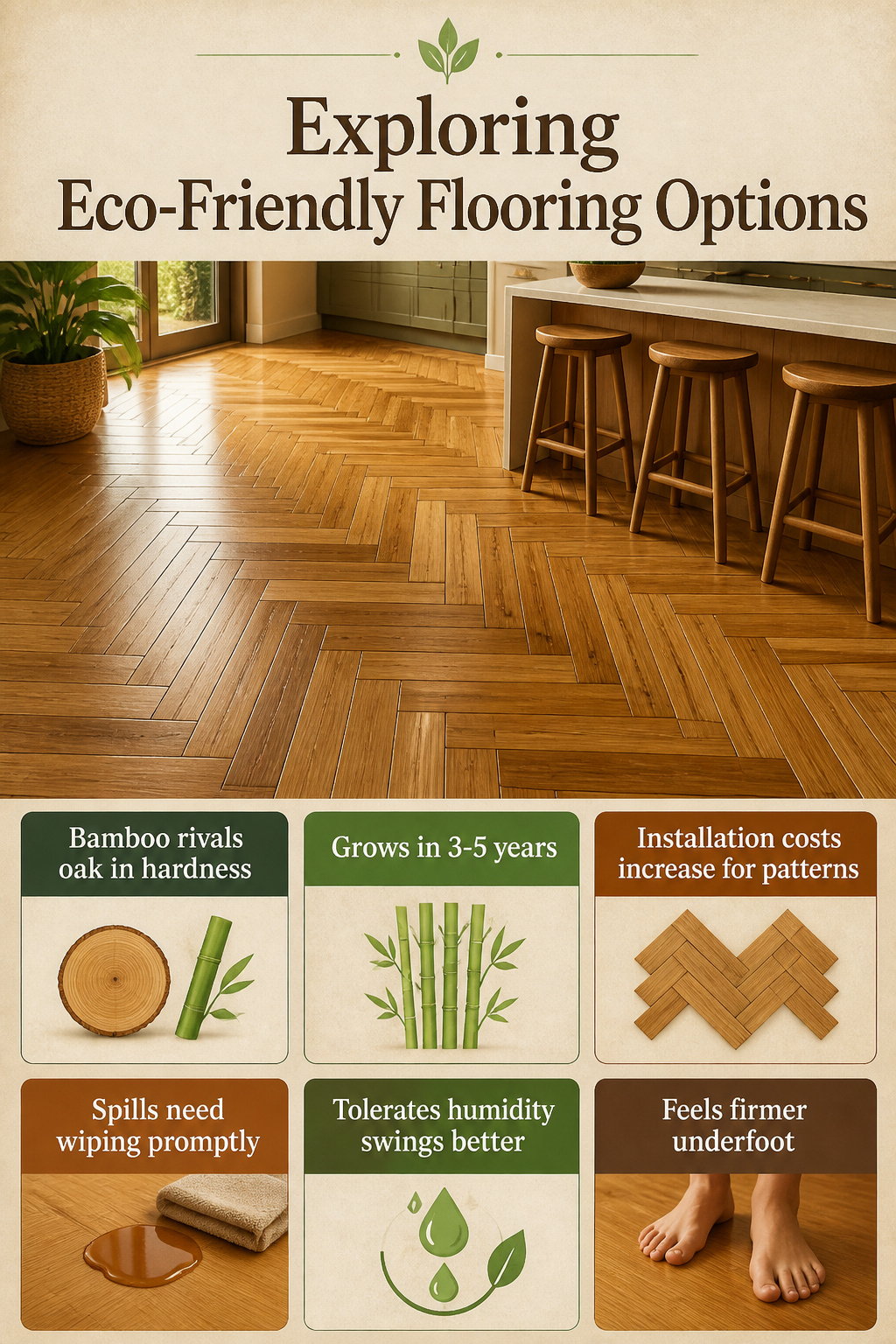
Bamboo carries a Janka hardness rating that rivals oak, which matters in a kitchen where dropped cast iron pans are a weekly event. The grass regrows in three to five years against the forty-plus years a hardwood needs, so the environmental math is straightforward even before you factor in how little pesticide the crop demands.
The herringbone layout is where bamboo stops looking like a budget compromise and starts reading as intentional design. Offset planks at 45 degrees and the eye catches the grain variation across each piece rather than skating down uniform rows. Installation costs run higher for the pattern, not the material itself; the waste factor climbs from the usual five percent to roughly ten or twelve.
Spills need wiping promptly. Bamboo tolerates humidity swings better than traditional hardwood, but standing water still finds the seams. The surface feels firmer than cork underfoot, a trade some homeowners notice during long prep sessions. Warmth stays moderate; it will not chill your feet like tile in January, though it will not cushion them either.
Frequently Asked Questions
What type of flooring is best in a kitchen?
Porcelain tile and luxury vinyl plank are the strongest all-around choices for a kitchen that sees real use. Porcelain handles dropped pots, dragged chairs, and standing water without staining or swelling, and it works well under cabinets and around islands where moisture lingers. Luxury vinyl plank is waterproof all the way through, softer underfoot than tile, and easy to replace plank by plank if one gets damaged. Engineered hardwood brings warmth and can be refinished across decades, but it asks for quicker cleanup of spills and more attention to the finish.
What is the most inexpensive kitchen flooring?
Sheet vinyl and laminate are the most budget-friendly kitchen floor ideas that still look finished. Laminate gives you a wood-look surface with scratch resistance for daily traffic, though traditional versions are vulnerable to standing water and waterproof laminate still sits below vinyl or engineered hardwood for longevity. Painted floors cost even less if you already have a surface to cover; proper prep and sealant protect against water, but scuffs need touch-ups and the surface will not survive heavy abuse. Vinyl plank flooring mimics wood or stone convincingly and is easy to maintain, making it the practical middle ground for a tight budget.
Is laminate or vinyl plank better for a kitchen?
Vinyl plank is the better fit for kitchens because it is fully waterproof, not just water-resistant on the surface. Laminate has a fiberboard core that swells if water seeps into seams, and even water-resistant laminate versions do not match the lifespan of vinyl in a room guaranteed to see spills. Vinyl also stays softer and quieter underfoot, and a damaged plank can be swapped out without tearing up the whole floor. Laminate wins on scratch resistance and upfront cost, but vinyl wins on moisture and long-term performance.
How do I clean kitchen flooring?
Sweep regularly and damp-mop with a gentle, pH-neutral cleaner. Glazed ceramic and porcelain wipe clean easily because spills sit on the surface rather than soaking in. Luxury vinyl plank needs little more than a damp mop; the waterproof core means you do not have to panic about moisture during cleaning. Natural stone requires more attention because the seal wears down over time, and without resealing the stone stains and turns chalky. Hardwood and cork both need prompt wiping of spills and more careful product choice to protect the finish or the seal.
Can I paint my kitchen floor?
Yes, with thorough prep and the right sealant, painted floors last and bring the widest creative range for the smallest cash outlay. The seal protects against water damage, which matters in a kitchen, and a checkerboard or stenciled pattern adds personality without weighing the room down. Oak takes paint well enough that designers use it for custom geometric designs. The catch is maintenance: traffic zones scuff, and touching up means matching the original color exactly. This works best for a quick, thoughtful refresh rather than a surface that must survive kids, dogs, and dropped cast iron for a decade.