

"The House That Love Built" is not one thing. It is six, scattered across seventy years and formats that refuse to agree with each other. The same title belongs to a 1953 country song about a failed marriage, a 2026 picture book for three-year-olds rebuilding after a storm, and a 2020 memoir about opening a hospitality house outside a Colorado immigrant detention center. What ties them together is the condition: each treats love as labor rather than feeling, something that only exists once someone starts the work.
[link-whisper-related-posts]What The House That Love Built Means

"The the house that love built" lands in search boxes for reasons that cross three decades and five different media. A country singer named Carl Smith recorded the phrase in 1953, turning a crumbling relationship into architecture made of moonlight and dreams. Frank Foster used it for a 1982 jazz album. Karen Peck & New River built a gospel song around it. Beth Wiseman titled a 2013 novel with it, shifting the meaning toward romantic repair. Sarah Jackson’s 2020 memoir borrows the same words for immigration justice and opened doors, published by Zondervan on July 14, 2020. Jessica Meserve has a picture book coming August 18, 2026, 32 pages, for ages 3 to 7.
The thread is not genre. It is the idea that love is labor, something built and rebuilt. A reader typing this phrase mid-project, maybe after an argument or during a renovation weekend, is looking for proof that the work holds meaning. The search intent leans toward books, relationships, family, forgiveness. What they find is a stack of answers that do not agree with each other, and that is the useful part.


Beth Wiseman’s Novel

Beth Wiseman’s The House That Love Built came out April 2, 2013, as a 320-page paperback in Christian romance. The premise pulls two wounded people into an old house project: Brooke Holloway, a widow running a hardware store in Smithville, Texas, and Owen Saunders, a divorced man who buys the Hadley mansion partly to spite the ex-wife who always wanted to restore it.
The restoration becomes the thing that holds them together while they sort out whether they can trust love again. Brooke worries she is betraying her late husband’s memory; Owen has to decide if he can believe in any woman after being cheated on. The house itself carries rumors of a secret, maybe a treasure, which gives the reader something to track besides the romance.
Wiseman had already won the Carol Award in 2011 and 2013 and sold over two million books by then, so this was not a debut. The cast fills out with an eccentric uncle, a teenage troublemaker, and a finicky cat, all of them there to keep the couple from having too easy a time of it. The faith thread runs through the question of whether God is orchestrating the second chance or whether the characters have to choose it themselves.
For a reader mid-project on their own weekend restoration, the appeal is probably the parallel: the house gets fixed at the same pace the hearts do, and neither happens cleanly.


Jessica Meserve’s Picture Book

Children’s picture books about rebuilding have a way of landing differently after you’ve spent a weekend patching drywall or coaxing a door back onto its frame. Jessica Meserve’s The House That Love Built, due August 18, 2026, takes the cumulative structure of "The House That Jack Built" and turns it toward something more collective: a forest community putting itself back together after a storm flattens nests, snaps trees, floods burrows. The animals start small, one by one, and the small steps add up to a restored home.
A community of forest animals comes together to rebuild after a storm and, in doing so, discovers the magic of belonging, hope, and working together.
The 32-page hardcover runs $18.99, aimed at ages 3–7, ISBN 9781664300958. For a parent or aunt or borrowed-time babysitter who has ever handed a toddler a sponge to "help" clean up flood damage, the premise lands close enough to use. The illustrations are Meserve’s own; the story keeps the rhythm of the original nursery rhyme but shifts the moral weight from individual accumulation to mutual aid. Whether it earns its shelf space depends on how much your particular three-year-old needs the reminder that disasters end, and that the work afterward is shared.


Karen Peck & New River’s Song

Karen Peck & New River recorded "The House That Love Built" for their 2019 album Carry Faith. The song sits firmly in the Southern gospel tradition the group has carried since the mid-1980s, with Peck’s soprano carrying the melody over close harmonies that recall family singing around a piano rather than arena production.
The lyrics trace what the title promises: a home held together by devotion rather than timber and nails. Peck has spoken in interviews about growing up in a house where her parents’ faith was lived aloud, and the song returns to that specific memory of security, the kind a child feels when discord gets resolved before bedtime. The chorus frames the house as something built in hindsight, recognizable only once you’ve left and need somewhere to return to.
For listeners mid-project on their own place, the song offers a useful counterweight to the renovation-as-achievement narrative common in design media. It treats the home as something accumulated over years of ordinary patience, not delivered by a weekend of effort. The production keeps this modesty: no swelling strings, just voices and a rhythm section that knows when to stay quiet.
The track runs about four minutes, long enough to let the second verse land with the weight the first only sets up.


Whimsical art created by nationally recognized artist Leigh Standley

Frank Foster’s Jazz Album
The 1982 Frank Foster Quartet album The House That Love Built runs 53:38 on its CD release, with Foster’s own composition supplying the title track. Recorded in Copenhagen and released on the SteepleChase label, it stands apart from every other work under this name. Where the others speak love through lyrics and voices, Foster speaks it through saxophone and arrangement alone.
Instrumental jazz carries a different burden. Without words to hand the listener a meaning, the composer has to build feeling from tempo, from the voicing of a chord, from the space between phrases. Foster had spent decades in the Count Basie Orchestra before this session, and that swing vocabulary shows in the way the quartet moves together. The title track does not announce its theme; it lets it accumulate across solos and returns.
For a listener coming to "the house that love built" through any of the other works, this one asks something different. No narrative of forgiveness or family to follow. Just the sound of four musicians in a room in 1982, making something that has to mean without saying what it means. That is its own kind of honesty, and for some moods it is the right one.

ICONIC LONESTAR LYRICS: Celebrate country music with the beloved "Amazed" song lyric print, perfect for adding a romantic, inspirational touch to any home or office wall decor.

YOUR SONG LYRICS AS A VINYL RECORD ART – Turn any track into a stunning retro vinyl poster with your favorite song's lyrics wrapped around the record in elegant concentric rings. A unique piece of music wall art that celebrates the song you'll never forget.

CUSTOM SONG LYRICS WALL ART - Showcase your favorite song with custom song lyrics wall decor. Create your own artwork to be a standalone focal point in your room or you can mix and match with other prints to create a personalized gallery wall.
Sarah Jackson’s Memoir

Sarah Jackson’s memoir, published July 14, 2020, by Zondervan, is the only work under this title that treats love as something you do for a stranger rather than something you feel for family. The book belongs to the non-fiction Christian life memoir genre, and its argument is that hospitality is the active form of love.
Jackson came to immigration justice through a specific encounter in 2010, before family separation became mainstream news: a young father deported and separated from his U.S.-citizen family. That meeting reversed her earlier belief that justice meant higher walls and longer fences. She founded Casa de Paz, a hospitality home outside Colorado’s largest detention center, where released detainees find temporary shelter.
The memoir places readers across every side of the issue: asylum seekers, detention guards, people with lapsed visas, families surviving alone, advocates, and officials deciding fates. Jackson treats the political failure as bipartisan, stating facts with enough restraint that readers draw their own conclusions. For Christians searching what "the house that love built" means in practice, this is the book that defines the phrase through open doors rather than closed borders.


Carl Smith’s Song
Carl Smith’s 1974 recording sits apart from the rest of this list. Where most works with this title reach toward redemption, his version lingers in the empty rooms. The lyrics move through a house still standing after the people inside have split apart, noticing how the staircase still holds the weight of carried brides and how the kitchen window frames light that falls on no one now. The melody stays low, almost spoken in places, letting the details do the work. What struck me, listening through a half-dozen country records with this same title, is how rarely a song lets the house win. Most want the couple back together by the final verse; Smith’s lets the building outlast the love and keeps the camera there after the car pulls away. For anyone mid-project on their own place, wondering what walls remember, this is the honest version, the one that admits some rooms never get their meaning back.

Love and Forgiveness Across the Works
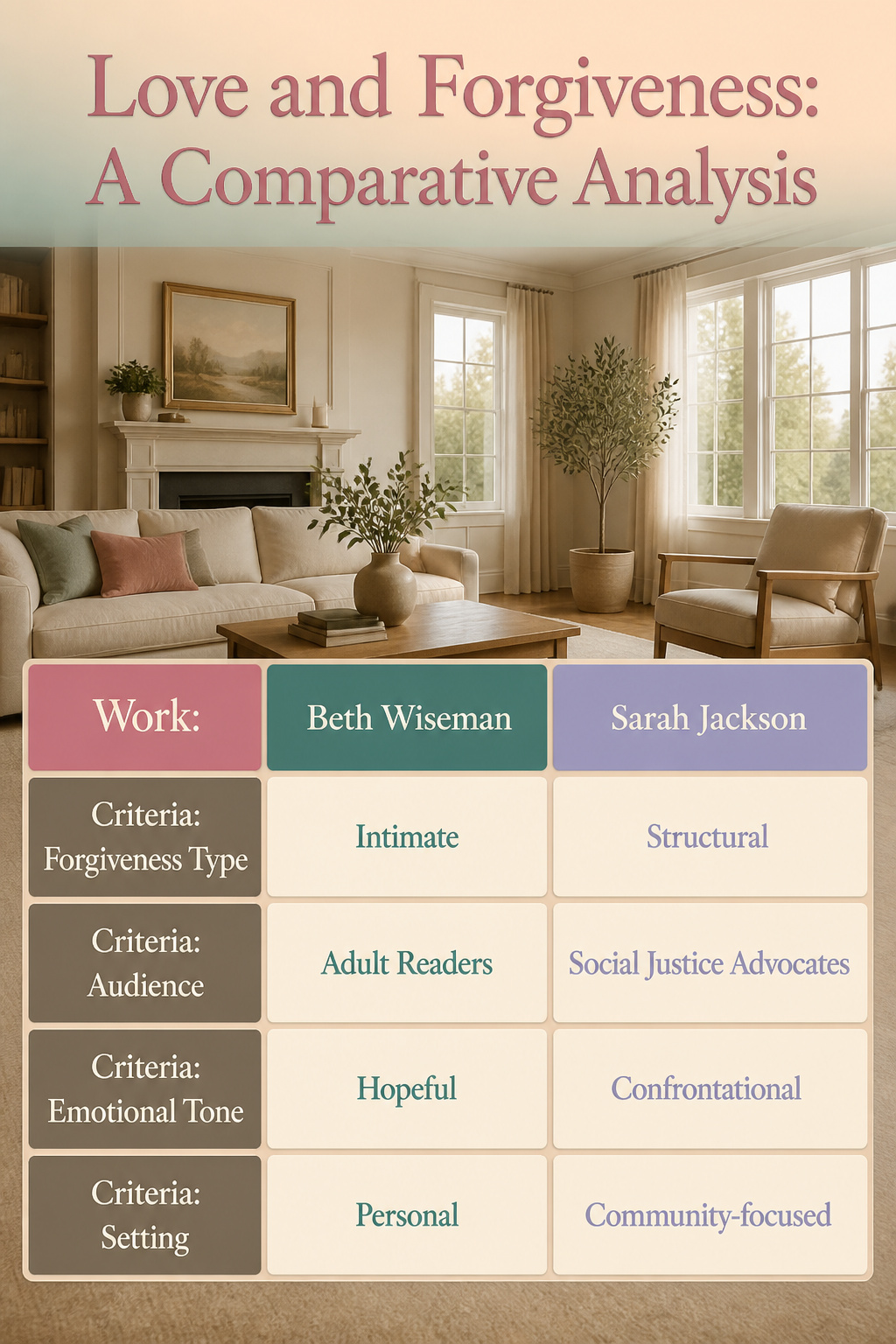
Most books carrying the title "the house that love built" ask the same question from different angles: forgiveness has to come first, or the rebuilding never holds.
Beth Wiseman’s novel makes this literal. Brooke Holloway carries hatred for her dying father until she learns he has cancer; only then does peace become possible. Owen Saunders buys the Hadley mansion to spite his cheating ex-wife, then finds his own heart needs more restoration than the floors. The secret baby trope arrives late, as if to prove the point: old betrayals keep spawning new rooms to clean.
Sarah Jackson’s memoir shifts the lens outward. She once thought immigration justice meant higher walls. Then she met a deported young father, separated from his U.S.-citizen family, and opened her home through Casa de Paz. The forgiveness here is structural: a system she believed in, and her own complicity with it.
The children’s book version, less discussed in search results, handles community forgiveness after disaster. Same architecture: rubble first, then relationship, then shelter that lasts.
What separates these works is who does the forgiving. Wiseman keeps it intimate: daughter to father, ex-husband to his own suspicion. Jackson makes the stranger central: hospitality as love for people you did not choose and may never fully understand. Both treat the house as consequence, not cause. The building only stands once the harder work is done.


Community and Family Dynamics

The children’s picture book builds its house through collective effort. After a storm flattens nests and floods burrows, forest animals rebuild together, step by step, until the structure holds again. The magic is in the belonging, not the blueprint.
Wiseman’s novel works with a different toolkit. Brooke Holloway raises two children alone in Smithville, Texas, running the family hardware store while grieving her late husband. Owen Saunders buys the Hadley mansion to spite an ex-wife who wanted to restore it. Their connection forms around the house, but the real architecture is emotional: an eccentric uncle, a teenage troublemaker, a finicky cat, all drawn into orbit. The family here is found, negotiated, tested.
Karen Peck & New River and Carl Smith sing from the other direction. Their houses are already standing, anchored by blood relation and memory. The home exists; the work is keeping it upright through longing or return.
Two ways to read this. The songs offer comfort in what you already have, the biological family as default. Wiseman’s novel and the children’s book ask more of you: build something new from loss, whether that loss is a storm or a marriage. The picture book makes this look simple. The novel knows it costs $15.99 in paperback, or $9.99 if you want the digital version, and even then the pages turn slowly.


Who Each Work Speaks To
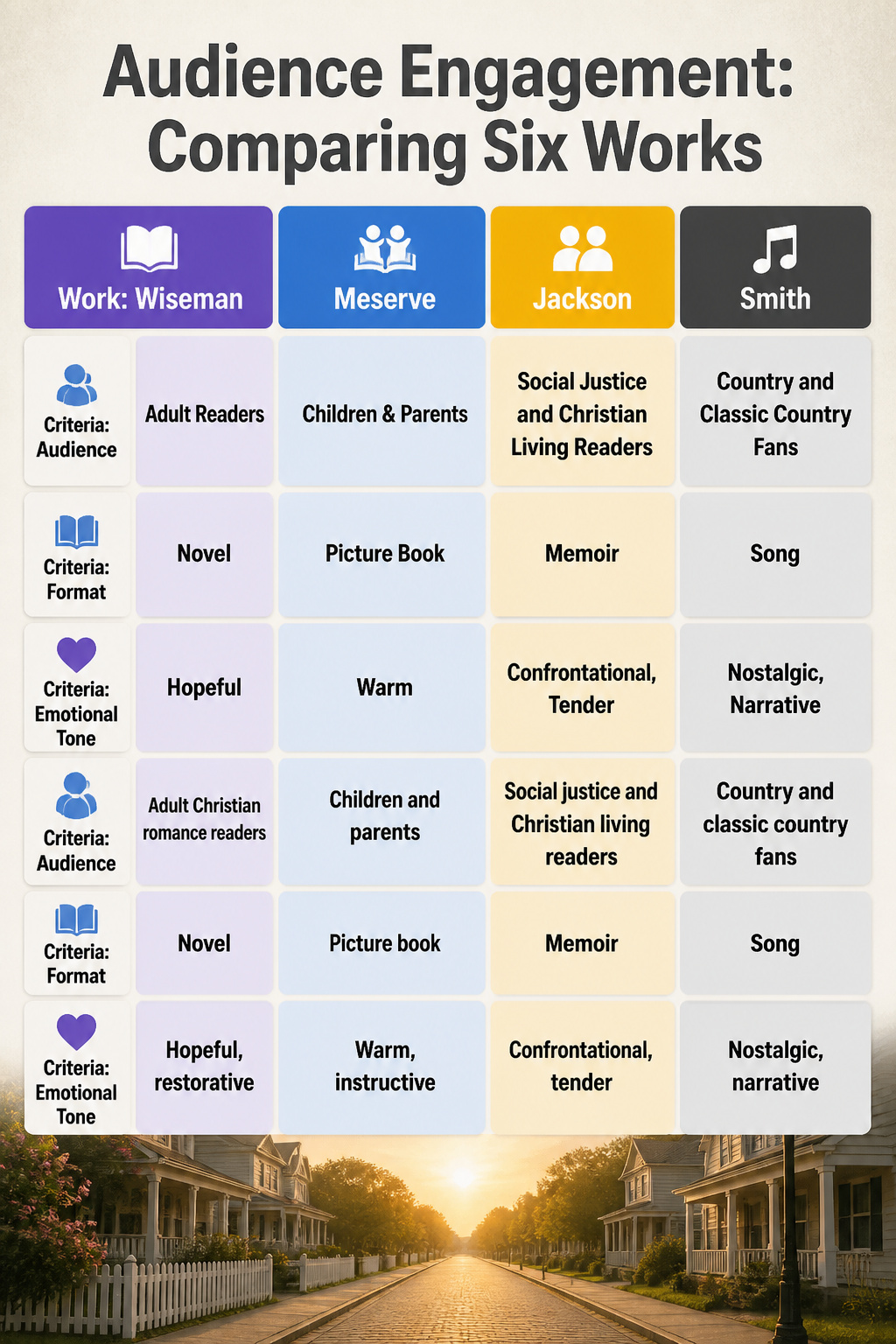
The same title reaches six completely different audiences, and the format shapes what each person takes away. A reader seeking escape lands in Beth Wiseman’s 2013 novel about a Texas house restoration and second-chance romance. A parent browsing bedtime stories finds Jessica Meserve’s picture book. Someone scrolling a Christian music playlist hits Karen Peck’s Southern gospel track, while a jazz listener discovers Frank Foster’s instrumental album entirely by accident.
The memoir by Sarah Jackson is the outlier that demands engagement. Where the novel offers charm and the albums offer atmosphere, Jackson’s 2020 book places readers inside Casa de Paz, the hospitality house she opened outside Colorado’s largest immigrant detention center in 2010. The format matters here: a memoir can carry the weight of policy, biblical justice, and lived messiness that fiction or music would flatten.
| Work | Primary Audience | Format | Emotional Register |
|---|---|---|---|
| Wiseman | Adult Christian romance readers | Novel | Hopeful, restorative |
| Meserve | Children and parents | Picture book | Warm, instructive |
| Peck | Christian music listeners | Song | Uplifting, devotional |
| Foster | Jazz listeners | Instrumental album | Atmospheric, interpretive |
| Jackson | Social justice and Christian living readers | Memoir | Confrontational, tender |
| Smith | Country and classic country fans | Song | Nostalgic, narrative |
Jackson’s readers come prepared to be disturbed. The book opens with her own assumptions about higher walls and longer fences, then tracks the 180-degree turn that followed meeting one deported father. A novel reader might skim the political thread; a memoir reader cannot. The title "The House That Love Built" sounds cozy everywhere else. In Jackson’s hands, it names a house of peace positioned deliberately beside a detention center, where love means sitting with the uncozy aftermath of broken systems.
Frequently Asked Questions
What is "The House That Love Built" about?
The phrase refers to multiple works across different media, all exploring how love functions as active labor rather than passive feeling. A 2013 novel by Beth Wiseman uses house restoration as a metaphor for romantic repair after loss. A 2026 picture book by Jessica Meserve shows forest animals rebuilding after a storm. A 2020 memoir by Sarah Jackson applies the idea to immigration justice and hospitality. There are also songs by Karen Peck & New River, Carl Smith, and a 1982 jazz album by Frank Foster. Each version asks what it means to build or rebuild something through devotion.
Who is the author of "The House That Love Built"?
Beth Wiseman wrote the best-known version, a 2013 Christian romance novel. Jessica Meserve wrote and illustrated a 2026 picture book. Sarah Jackson wrote a 2020 memoir. Karen Peck & New River, Carl Smith, and Frank Foster each recorded musical works with the title. The phrase has been used by at least six distinct creators across novels, children’s books, songs, and instrumental albums.