
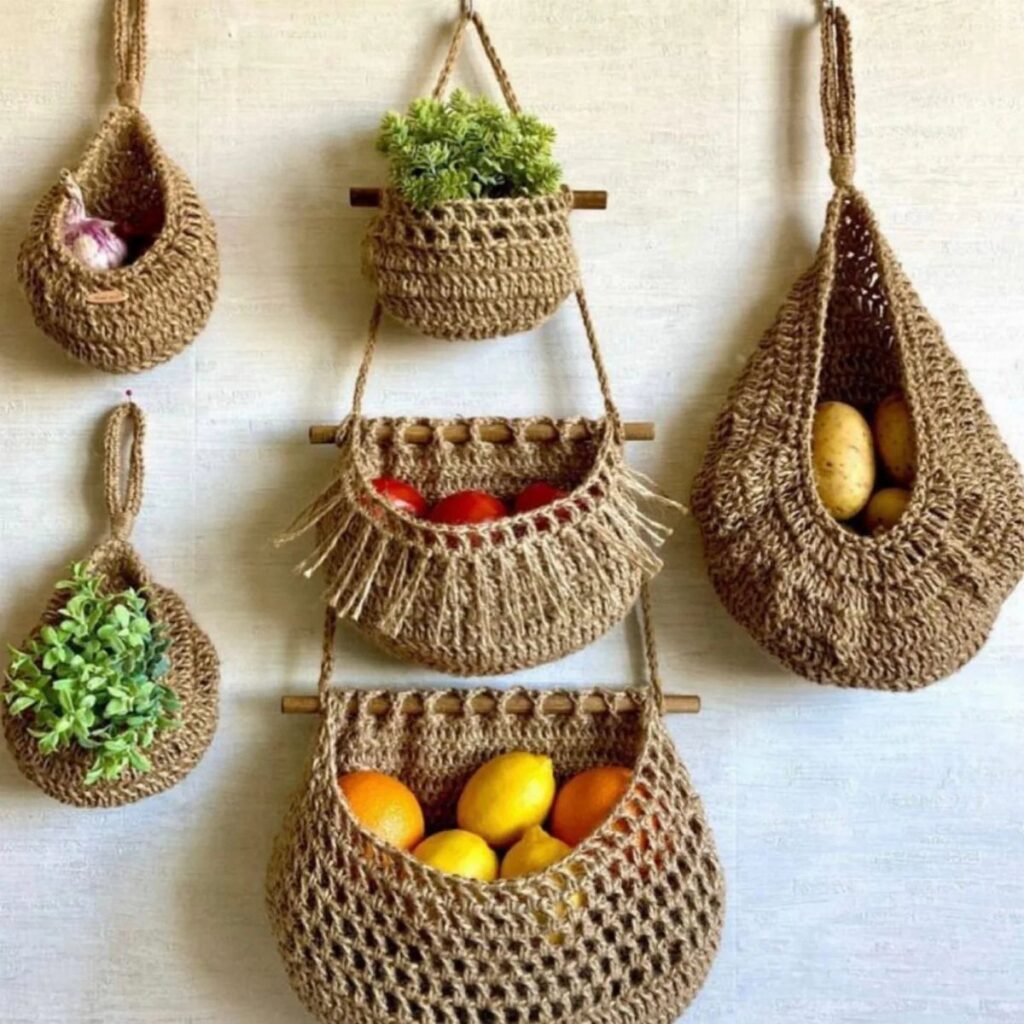
A small kitchen forces a choice between floor space and wall space.
I would hang daily items on the open wall above the backsplash before buying another shelf, because a magnetic knife strip or pegboard frees a drawer for something you cannot lift overhead.
The ideas below range from a rolling cart you can wheel to wherever you are working to a pegboard that turns wall space into flexible storage, and they share one rule: measure your actual cabinet opening, drawer depth, and faucet height before you order anything that has to fit inside them.
[link-whisper-related-posts]1. Rolling Storage Cart
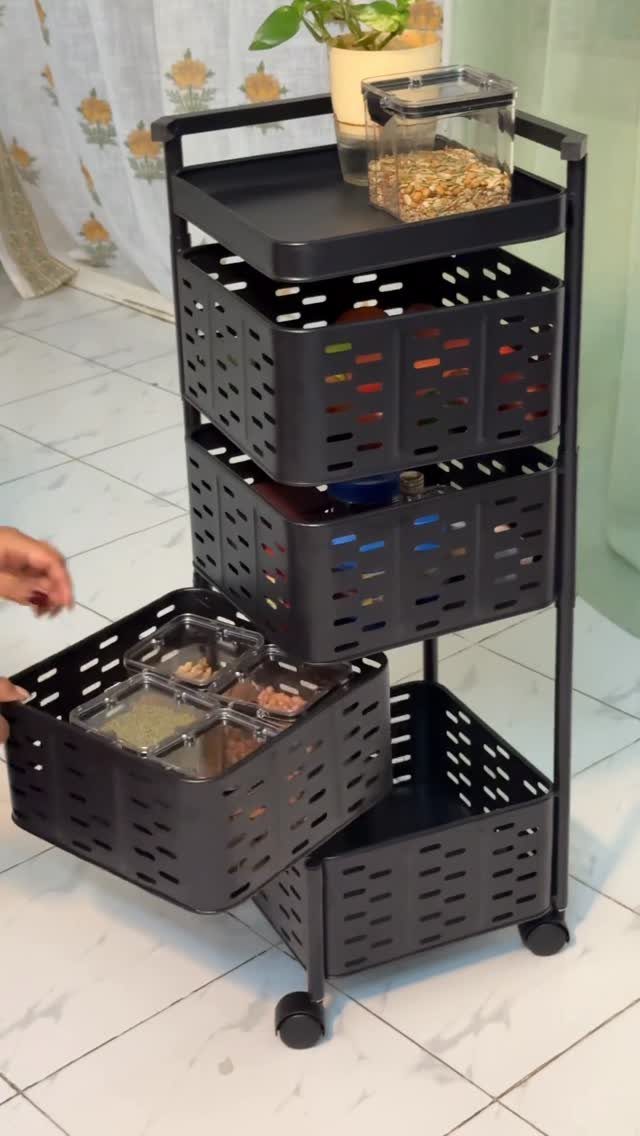
A rolling cart gives you storage that moves where you need it, which matters when every cabinet and counter is already working double duty.
A black frame and open baskets make a cart light enough to lift empty and narrow enough to slide into the gap between appliances or beside a fridge.
I would look for casters that lock; one rogue roll mid-cooking and you will regret it. Keep lighter items on top so the center of gravity stays low.
No assembly needed beyond keeping it reasonably level.
2. Hanging Baskets
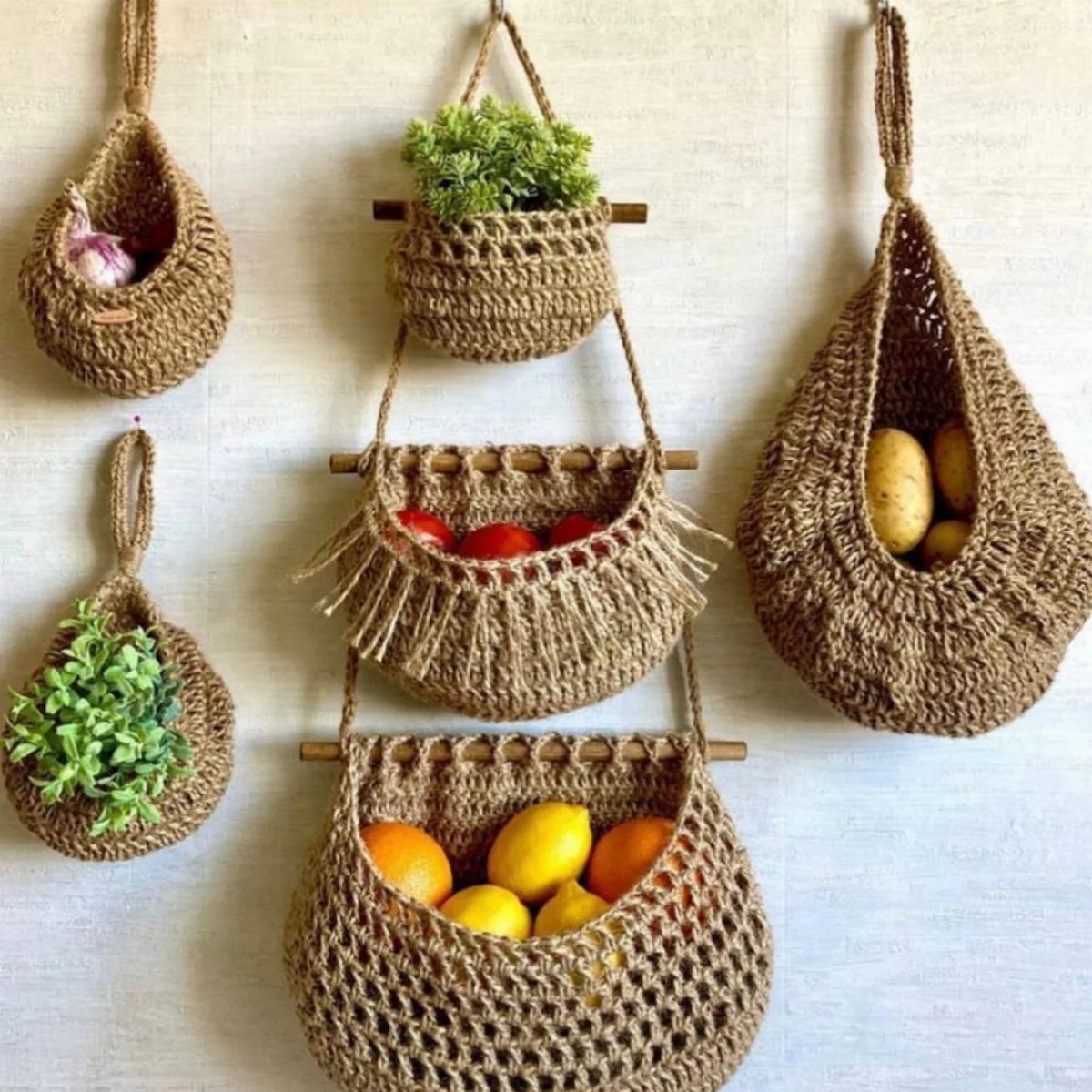
Jute handles moisture better than cotton and softens rather than sags, which is why it works for garlic and citrus that want air more than refrigeration.
An open crocheted weave lets you see what is left before you buy duplicates at the store.
Mount hooks high enough that the bottom basket clears your counter with room to spare. I would cluster heavy items, potatoes and onions, in the lowest basket so the wall anchors do not pull.
3. Drawer Dividers
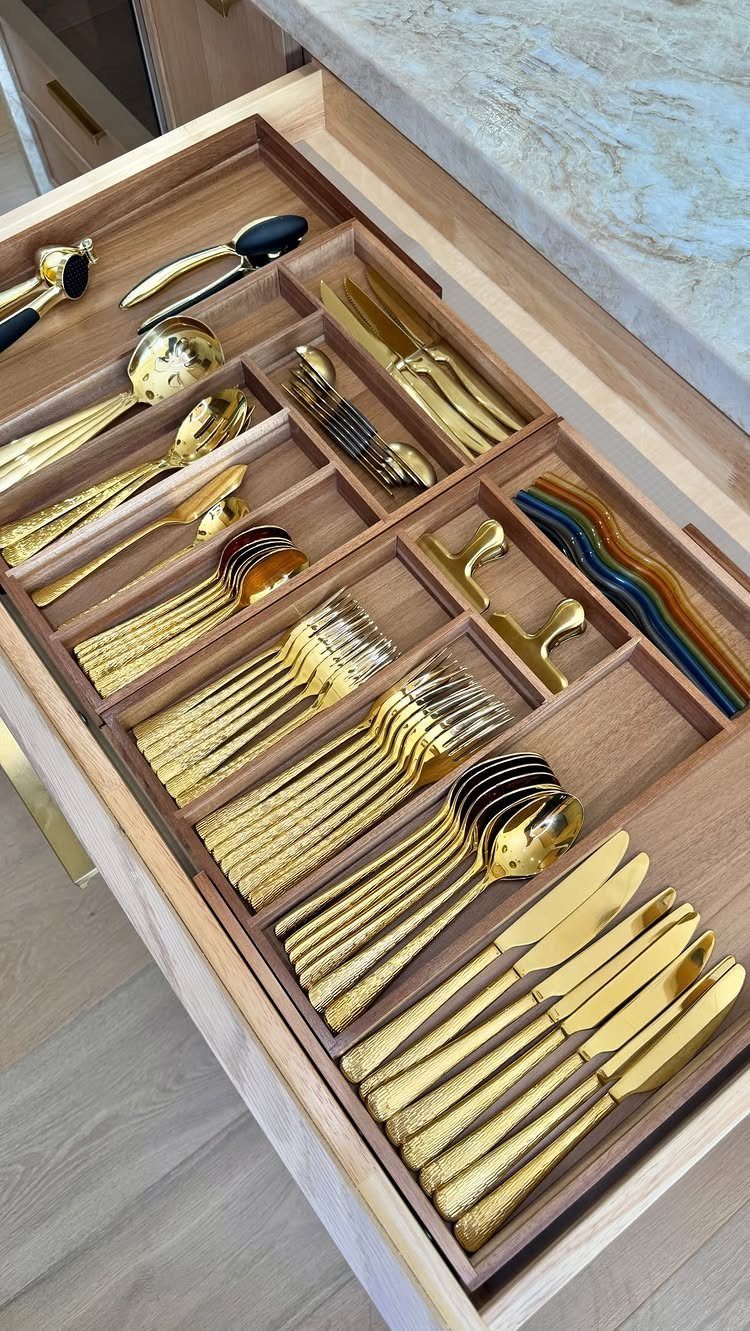
Modular wood trays let you reconfigure as your collection of tools grows, which happens faster than you think once you start cooking daily.
Gold utensils read as intentional rather than leftover; if your hardware is brushed nickel, bamboo or painted trays bridge the gap without matching.
Measure your drawer depth before ordering. I learned the hard way that a tray even a fraction too wide means the drawer will not close.
4. Lazy Susan
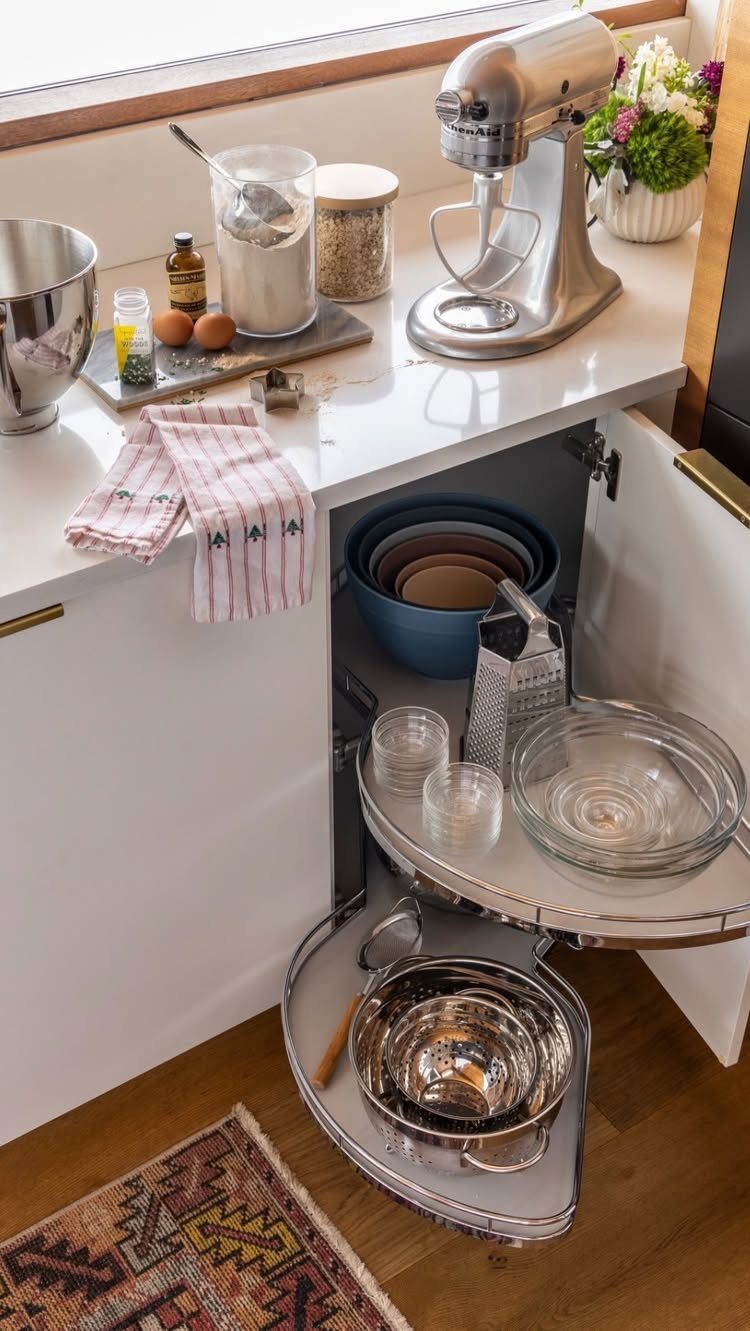
Corner cabinets waste space because reaching straight back to the diagonal corner is awkward geometry; a swing-out shelf spins the contents to you. A two-tier version fits a standard base cabinet and gives most of the corner volume back.
Install the post dead center; the brand is secondary. Single-tier models cost less but leave vertical space unused; spring for the second tier if you store bowls of multiple sizes.
5. Stackable Bins
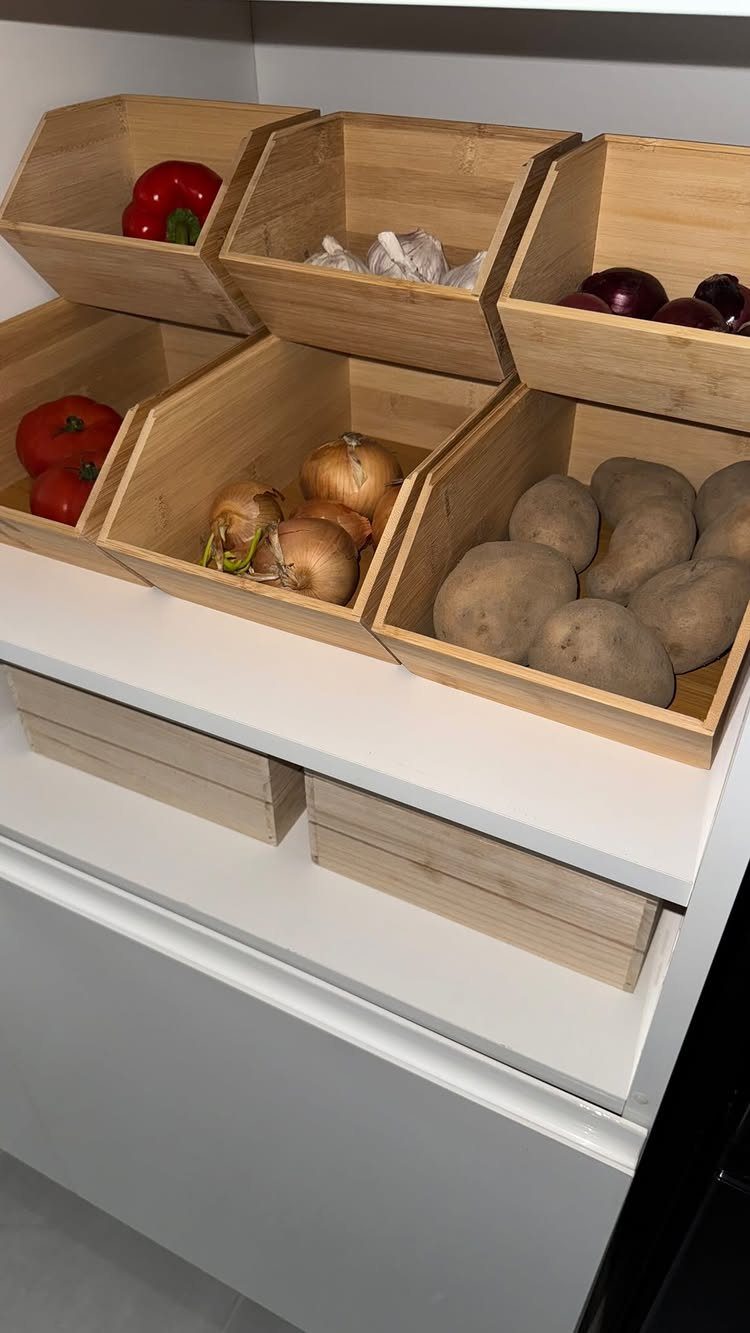
Bamboo bins stack without sliding because their foot rims lock into the bin below, a detail plastic often skips.
Separating produce by type matters because onions and potatoes share a gas that spoils both faster when combined. I would keep bins of similar width so they form a stable column; alternating wide and narrow invites a domino spill.
These work on a counter or inside a pantry, but not under a sink where humidity warps the joinery sooner than you expect.
6. Over-Sink Dish Drying Rack
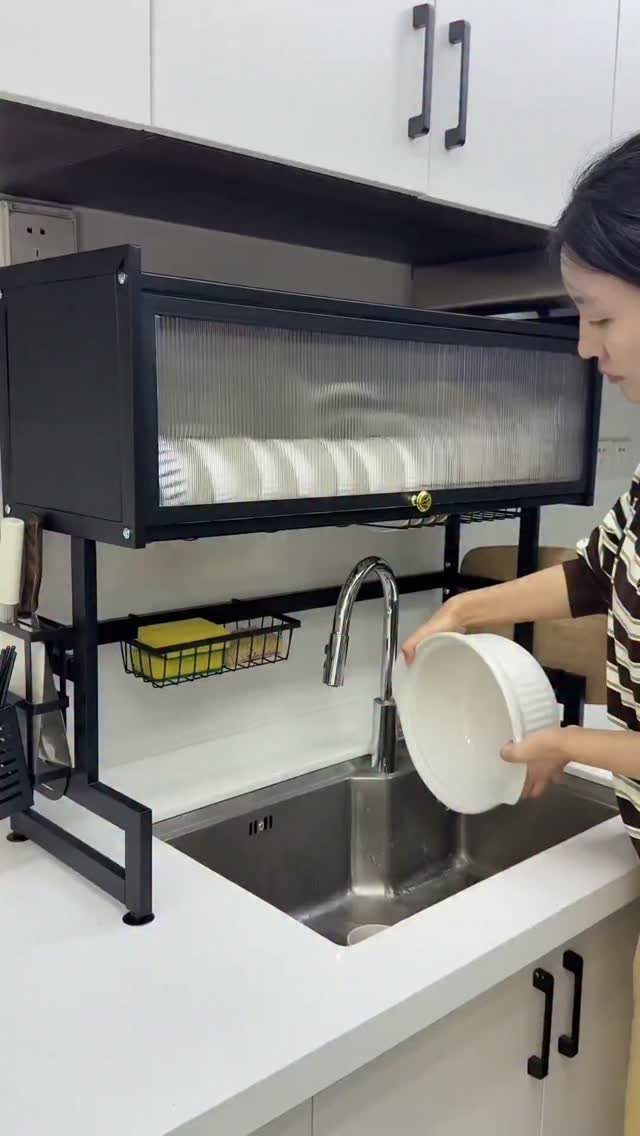
Drying dishes above the sink returns your counter to prep work, which counts for a lot in a small kitchen.
A rack that spans the full width and includes a shelf for soap is a detail I would not skip; bending to fetch cleanser mid-wash wastes the efficiency you just bought.
Check your faucet height against the rack’s lowest bar; a gooseneck faucet that does not clear means you are rinsing around the frame.
Most units need no installation beyond balancing on the sink rim, though heavier loads sway less on models with suction feet or small counter brackets.
7. Clear Storage Containers
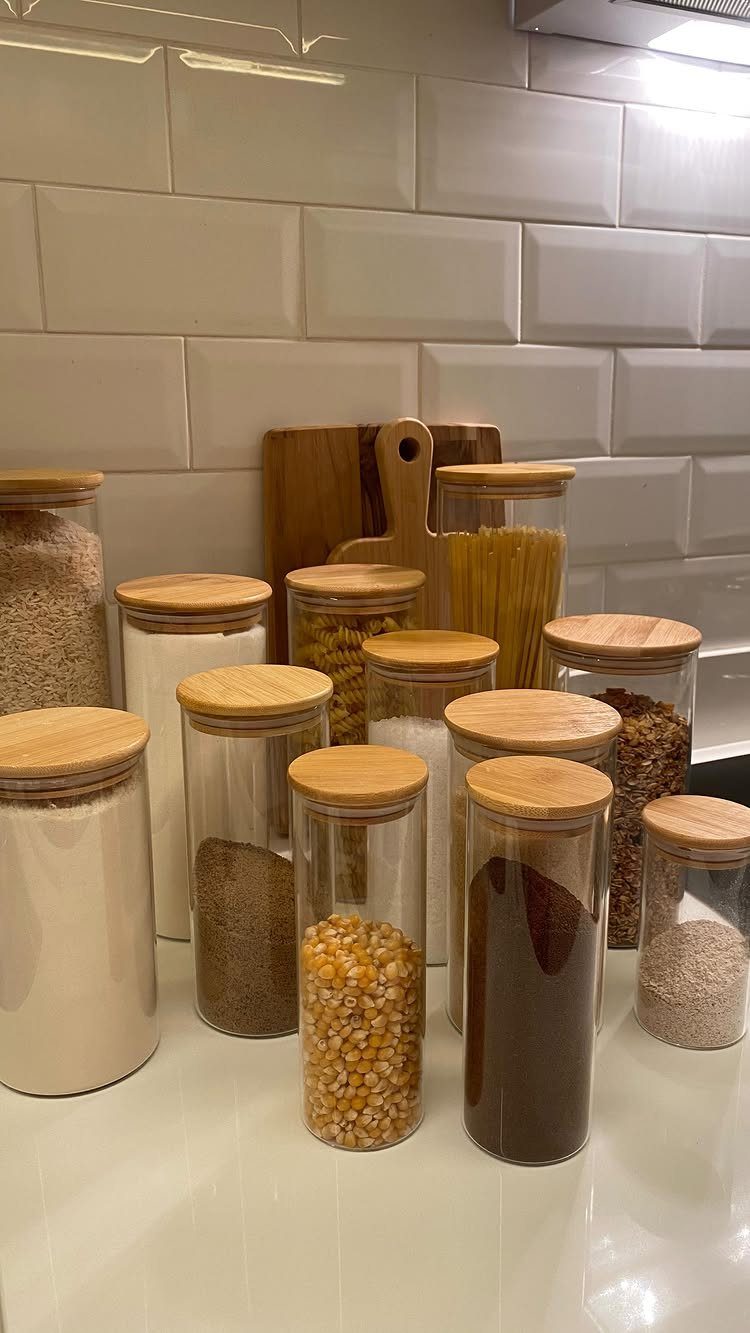
Glass with a bamboo lid seals tight enough to keep flour from picking up moisture, and a straight-sided jar packs tight against its neighbors on a shelf.
I choose tall containers for pasta, medium ones for rice and grains, and one I can open with one hand for anything I reach for daily.
The jar itself tells you when supplies run low; no need to lift lids or guess. Hand-wash the bamboo to keep the seal, and dry it thoroughly before refilling.
8. Cabinet Door Organizers
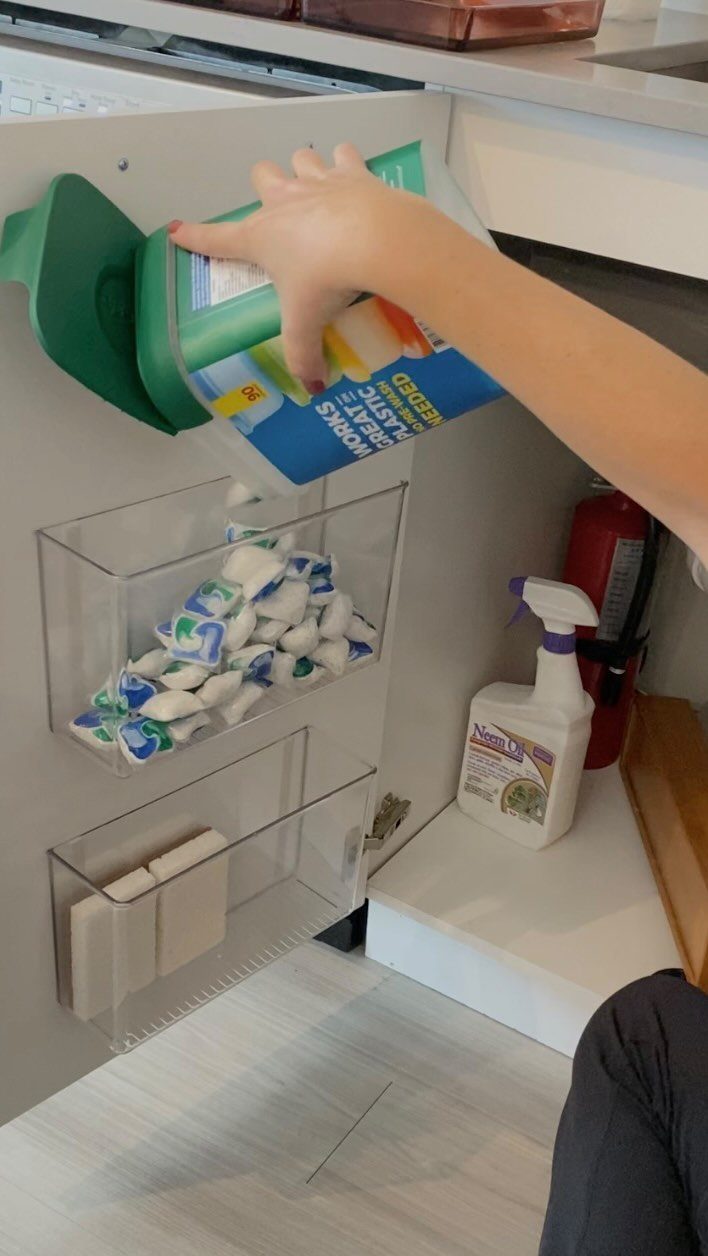
Acrylic organizers screwed to the inside of a cabinet door turn that narrow gap behind your shelves into real storage.
The clear ones let you see dishwasher pods, sponges, and wraps at a glance; I would mount the heaviest bin lowest to keep the door from sagging on its hinges.
Check your cabinet frame first; a door that sits flush to the box may not close over the organizer’s depth. Simple bar-and-loop adhesive strips work for light loads, but screw mounts hold up under a full supply of pods.
9. Open Shelving
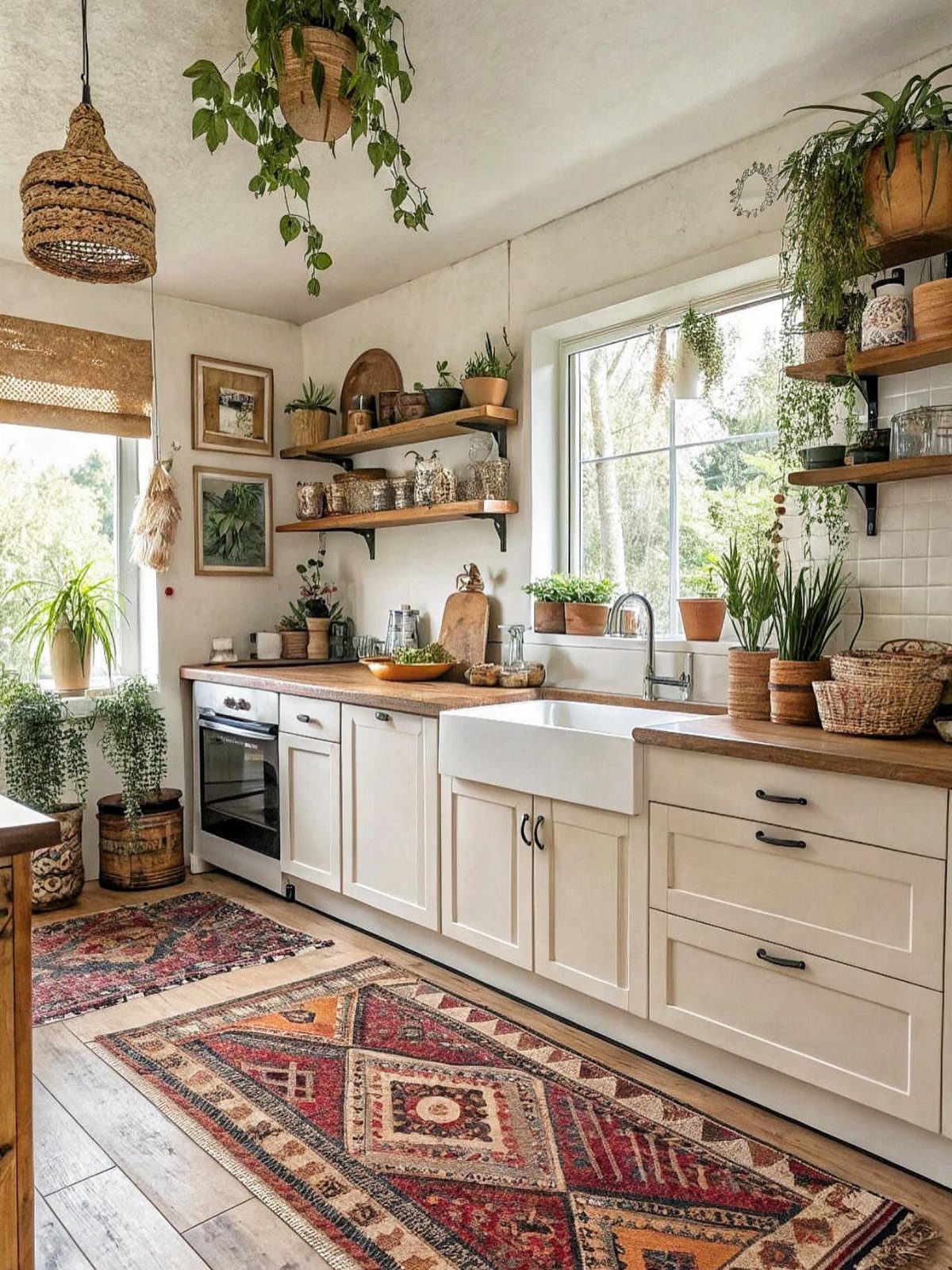
A wooden shelf at eye level turns everyday jars and a small plant into the room’s color, which plain white cabinets rarely manage on their own.
I keep the lowest shelf for the heaviest items; a deep shelf there handles large plates, but a shallower one higher up keeps the walkway open.
Wall studs sit apart on center, so plan bracket spacing to hit at least two. Without a cabinet front, dust settles; I wipe the shelf monthly and rotate the back jars forward.
10. Use Zones
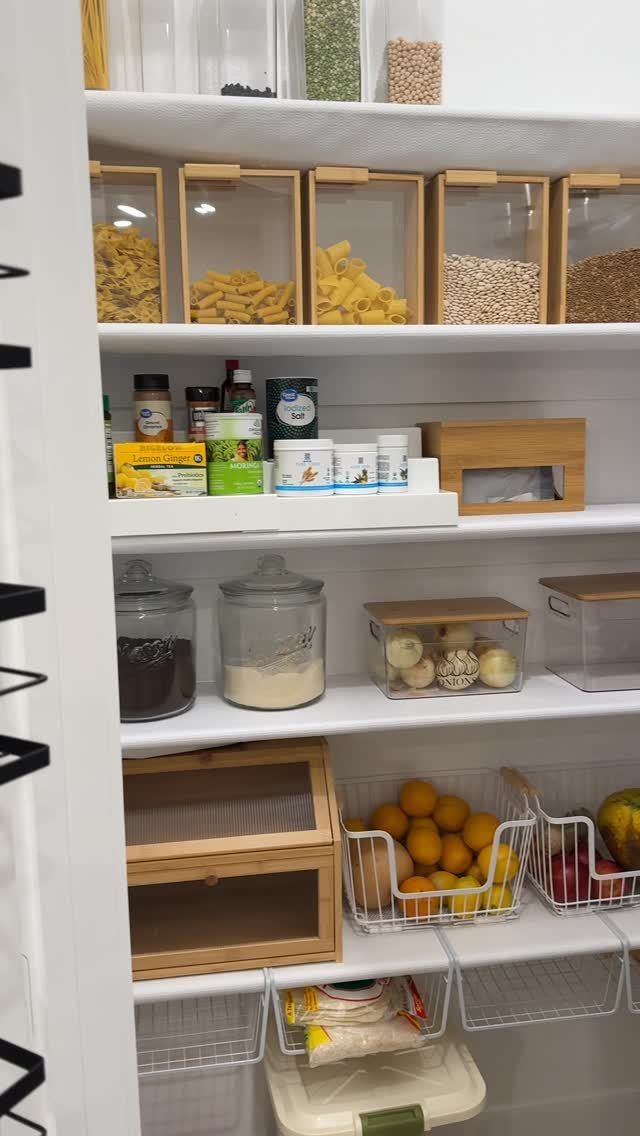
Grouping by task means the baking zone holds flour, sugar, and stackable measuring cups in one reach, while a prep zone clusters oils and vinegars near the cutting board.
Wire baskets keep fruit visible and breathing, separate from sealed dry goods. I would reserve eye-level shelves for the daily rotation and push occasional items, specialty flours and holiday spices, to a high shelf or back corner.
The zone system breaks down when one item belongs to two jobs; pick its primary home and store a small duplicate if you use it daily.
11. Pull-Out Organizers
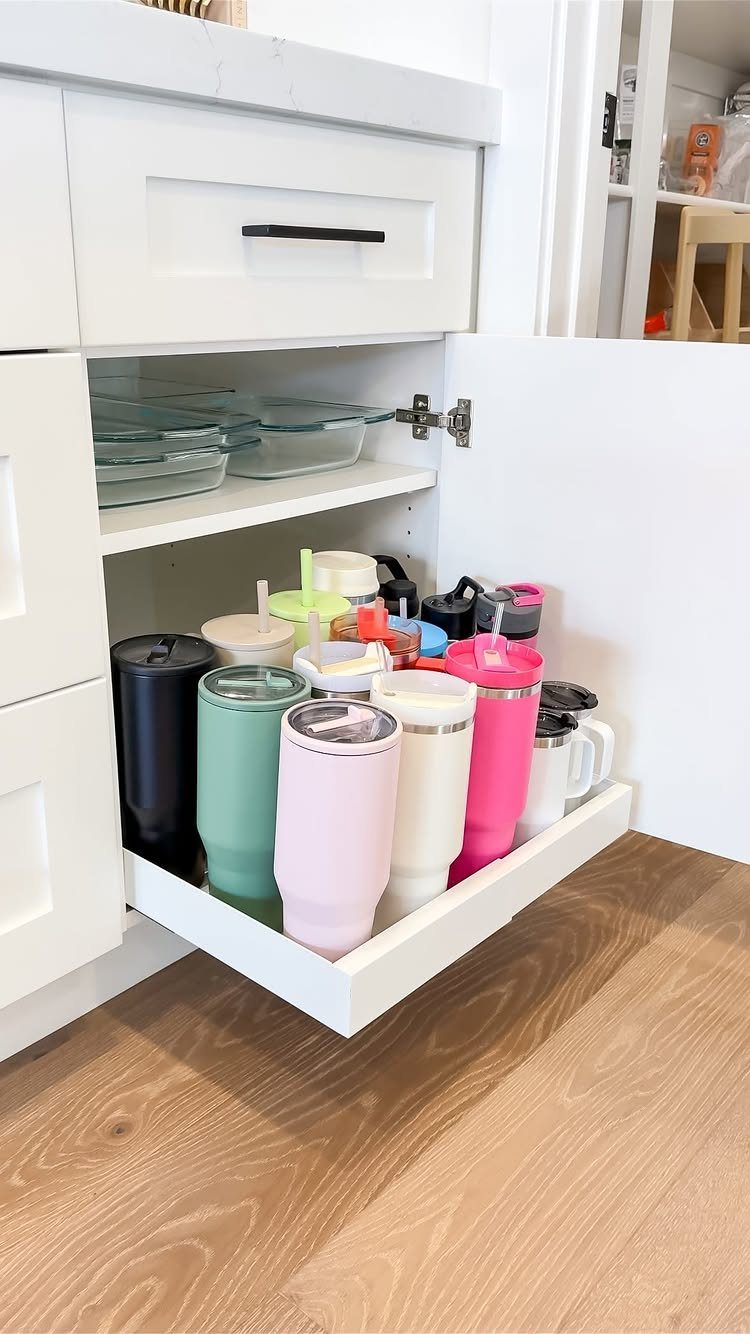
A rolling base cabinet shelf brings the full depth forward so nothing hides behind the front row. I prefer side-mounted ball-bearing slides with a solid weight rating; cheaper center-post units tilt when loaded unevenly.
Measure your cabinet opening carefully; the frame, not the door, sets the width you have. For a lower cabinet near the stove, I would store pans here and lids in a shallow drawer above.
12. Magnetic Knife Strip
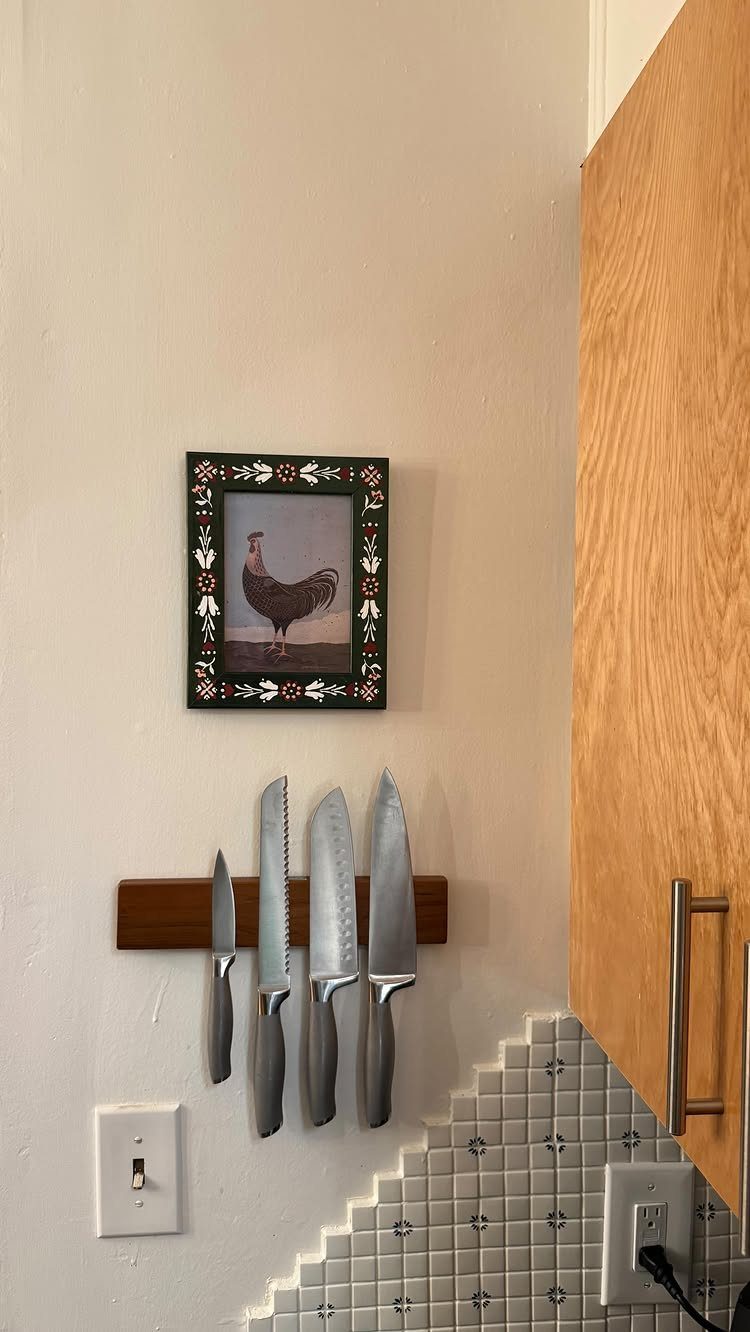
A wooden bar with an embedded magnetic strip clears counter space and protects the blade edge better than jostling inside a drawer.
Mount it high enough that the longest knife hangs clear of the counter and away from the edge a toddler might reach.
I would leave open wall on the left for a right-handed cook’s draw; place it where you actually stand, not where it photographs well.
Oil the wood twice yearly to keep it from drying out and splitting; the magnetic hold stays strong either way.
13. Pegboard Storage
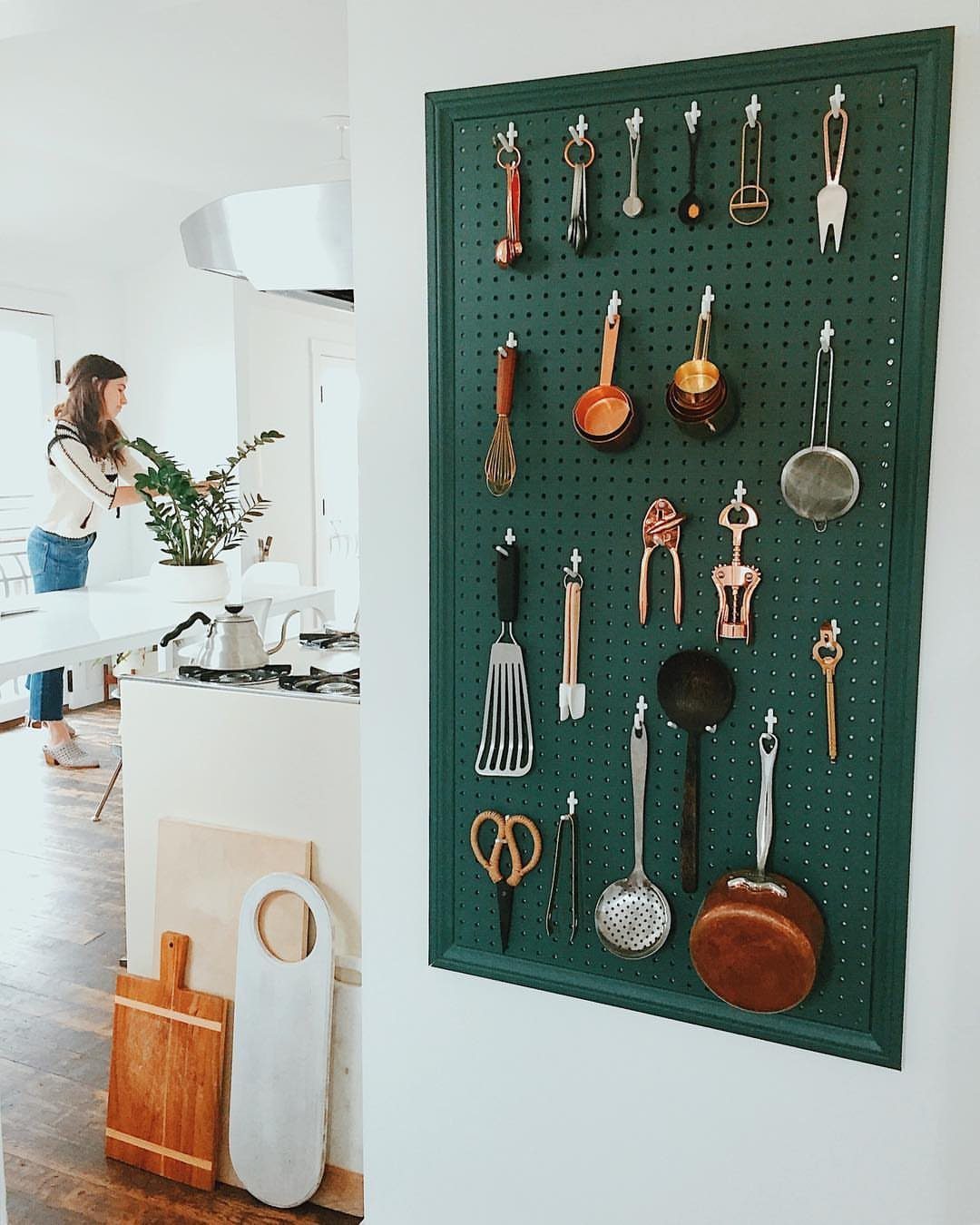
Framed pegboard turns a blank wall into storage that reconfigures as your tool collection changes.
The green paint here is a detail that shows the board itself; I would choose a color that reads as intentional against my wall, not leftover from a garage.
Standard pegboard hooks work for most utensils, but S-hooks hold heavier ladles without slipping.
Mount the frame into studs; the board’s weight loaded with metal tools pulls plaster anchors loose before long. Leave a few inches of open board for new acquisitions.
Dust settles on anything hung here, which a drawer would block. A quick wipe before cooking solves it.
Importance of Quality Hardware
Hardware in a small kitchen works harder than in any other room. Load capacity is the number I check first: cast-iron pans are heavy enough that a pull-out which tilts under real weight is useless inside a month.
Powder coating beats e-coating for scratch resistance on drawer faces that see daily contact; e-coating wins under the sink where humidity lives.
Quiet slides cost more upfront but save the small irritation of a slamming drawer hundreds of times a year. The mount matters as much as the metal.
Hit studs or solid blocking. A decorative rack that pulls loose under load is worse than no rack at all.
Maximizing Vertical Space
Tall cabinets fall into clutter traps without a system. A pantry pull-out extends fully so the back row comes to you; without it, the top half becomes storage you forget you own.
Vertical space is not just height on a wall. A magnetic rack on the fridge side, a utensil bar above the prep zone, a knife strip where you actually stand: these move tools off the counter without adding a footprint.
The open wall above the backsplash is often empty real estate; that is where I would put daily items before buying another shelf.
Under-sink organizers stack cleaning supplies vertically too, keeping the cabinet floor clear for a small bin or backup supply. Every item hung is a drawer freed for something else.
Regular Maintenance
Organizers degrade slowly enough that you stop noticing. A monthly wipe of bins, turntables, and drawer inserts takes under 5 minutes and keeps food residue from grinding into tracks and seals.
A spice system built around old cooking habits drifts into obstruction; a snack bin for a child who now reaches higher belongs relocated.
A pull-out that sticks or a bin with a crack signals the system is fraying. Replace it then.
One organizer costs less than the time I’d spend clawing back from clutter that built up because nothing had a set place. Small kitchens magnify every failure: one broken unit takes storage you cannot spare.
Frequently Asked Questions
What are the best kitchen organizers for small spaces?
I would start with pull-out shelves for base cabinets, drawer dividers that reconfigure as your tools grow, and clear glass containers with bamboo lids for dry goods.
A lazy Susan in a corner cabinet and a rolling cart that fits narrow gaps also earn their keep fast. The best ones share a trait: they fit the space you actually own, not the kitchen you wish you had.
How can I maximize storage in a small kitchen?
Before you bolt another shelf to the wall, look at the open backsplash area above the counter.
A magnetic rack on the fridge side or a simple utensil bar over the prep zone moves daily tools off the counter without stealing a single inch of floor space.
The cabinet under the sink becomes wasted depth fast. A two-tier organizer that stacks bottles and boxes vertically keeps the floor of that cabinet clear so you can actually reach what you stored.
What should I do with rarely used kitchen items?
Move appliances and stockpots you touch less than weekly out of the kitchen entirely.
A separate cabinet in the garage or basement works; treat these pieces like holiday decorations and fetch them only when needed. Space in a small kitchen is too tight to let a dusty pasta maker claim a prime drawer.





