
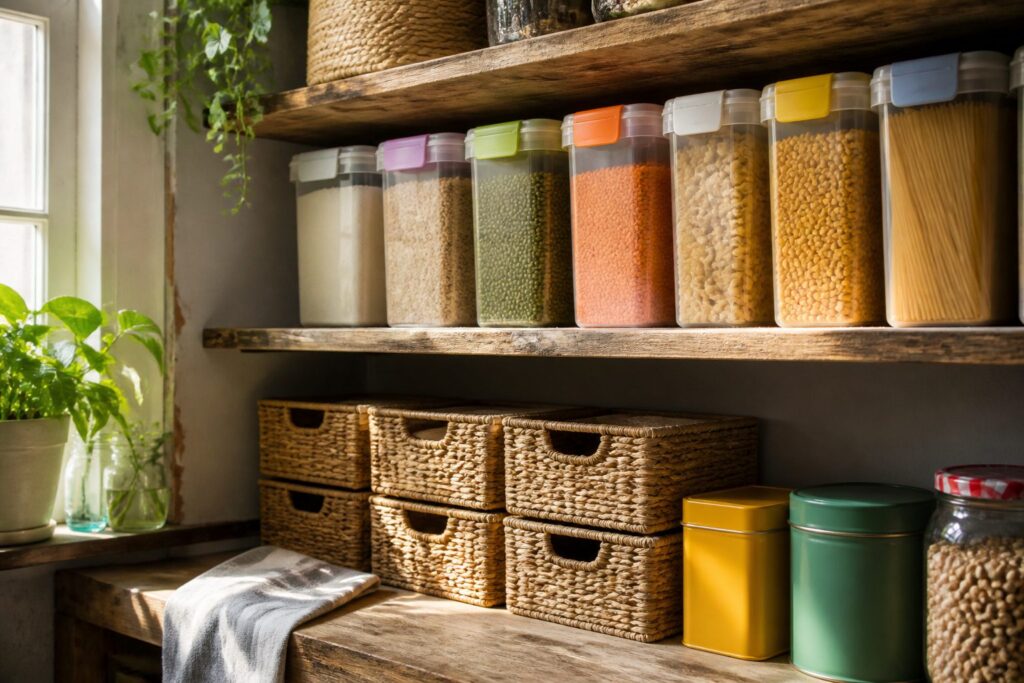
Not every dollar store organizer survives past the first month, and the ones that do share a single trait: they solve a real geometry problem rather than just looking neat in the cart.
The round turntables work because a 10.5-inch diameter actually fits fridge door shelves without wasting corners. The clip-on fridge drawers work because they lift off for sink washing, which matters more in a refrigerator than almost anywhere else.
The rest of this list follows the same rule: cheap is only a hack if it stays usable after daily abuse.
[link-whisper-related-posts]1. Lazy Susan for Condiments
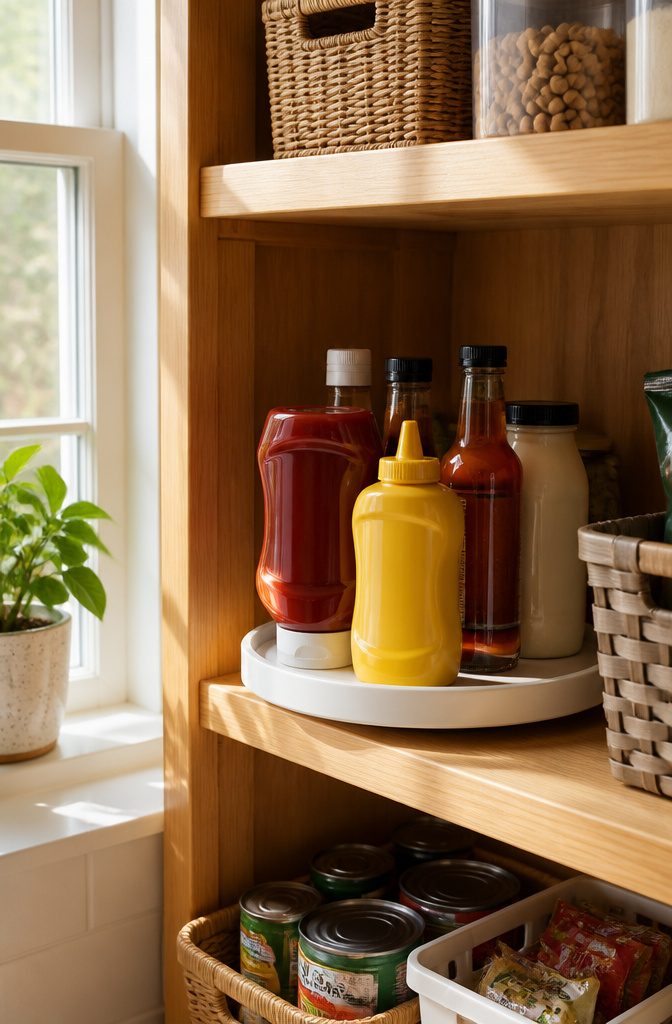
A $1.25 round turntable from Dollar Tree does more work than most organizers three times the price. The 10.5-inch diameter fits fridge door shelves and pantry corners without wasting space, and the non-slip surface keeps bottles upright when you spin it.
I would not trust it with a full gallon jug, but for ketchup, mustard, and the six to eight bottles most households keep, it stays put.
What you actually gain is visibility. Nothing hides in back anymore.
You spin, you grab, you spin back. Two separate roundups single this out as the hack that actually survives daily use, which puts it in rare company for a store where half the organizing aisle falls apart by month two.
I keep mine in the pantry corner rather than the fridge.
The cooler temperatures do not hurt the plastic, but the rim sits low enough that a tall bottle can still tip if you spin fast while the condiment is half empty.
In the pantry, that risk disappears, and the corner that used to collect dusty cans now rotates like a tiny stage.
2. Clip-On Plastic Fridge Drawers
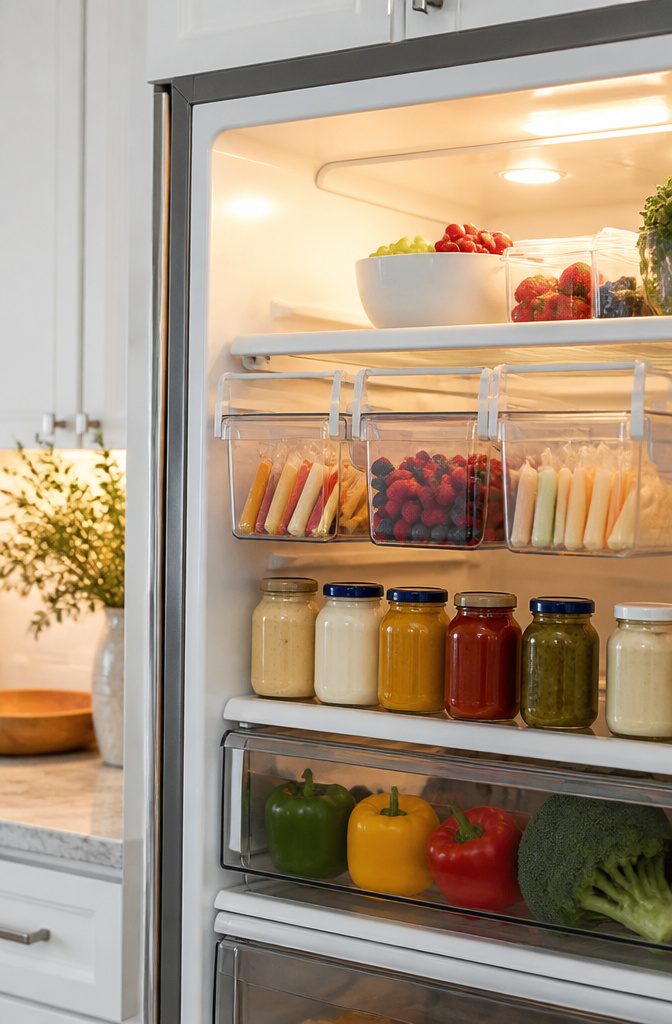
Slim clip-on plastic bins turn empty under-shelf airspace into a pull-out snack zone or lunch-prep drawer without sacrificing a full shelf to a bulky organizer.
They hook over the wire or glass shelf above and hang low enough to clear the tops of standard condiment jars, so the real estate below stays usable.
The whole drawer lifts off for sink washing, which matters more in a fridge than almost anywhere else; a fixed bin that traps dripped meat juice or stray parsley flakes is just a smell waiting to happen.
Load the front half with cheese sticks or washed berries and the back with hardboiled eggs kept separate from the raw carton, and you have the same grab-and-go logic as a salad bar without dedicating a whole crisper drawer to it.
The plastic is light, so overloading the front edge is the failure mode to watch; keep heavier items toward the back where the clip takes the load.
3. DIY Salad Bar Drawer
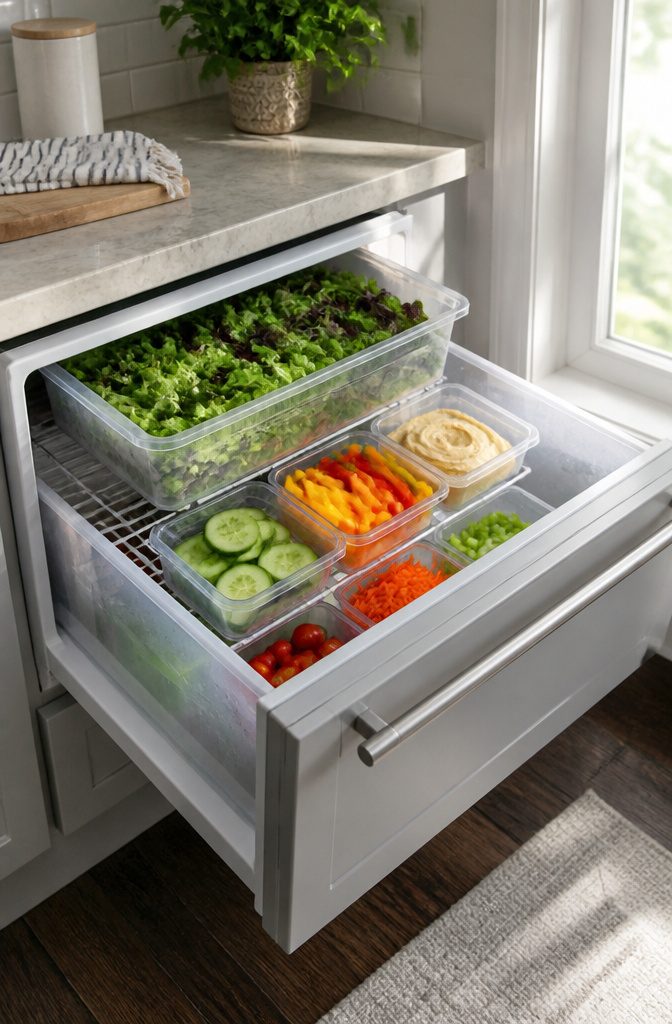
A refrigerated produce bin built from two plastic bins and a cooling rack lives in the crisper drawer itself, not clipped to a shelf.
Two standard Dollar Tree bins stack inside the drawer with a wire cooling rack laid across the top rim of the lower bin.
The rack holds the upper bin an inch or so above the first, creating a cold air channel that keeps greens from sitting in their own condensation.
The bins come in enough sizes now that matching a pair to your drawer depth is straightforward. I look for the ones with flat lids rather than hinged tabs, since the lid becomes the platform the rack rests on.
The cooling rack needs to span the width without sagging; the thin wire ones sold for baking work fine here because they are not carrying a turkey, just sliced peppers and maybe a container of hummus.
Wash and chop produce ahead, fill both bins, and slide the drawer out at dinner for a salad bar that takes thirty seconds to restock.
The trade-off against the clip-on version above is drawer space lost to the rack height, which is why this setup works best in a deep bottom bin rather than a shallow side drawer.
4. Cutting Board and Lid Organizer
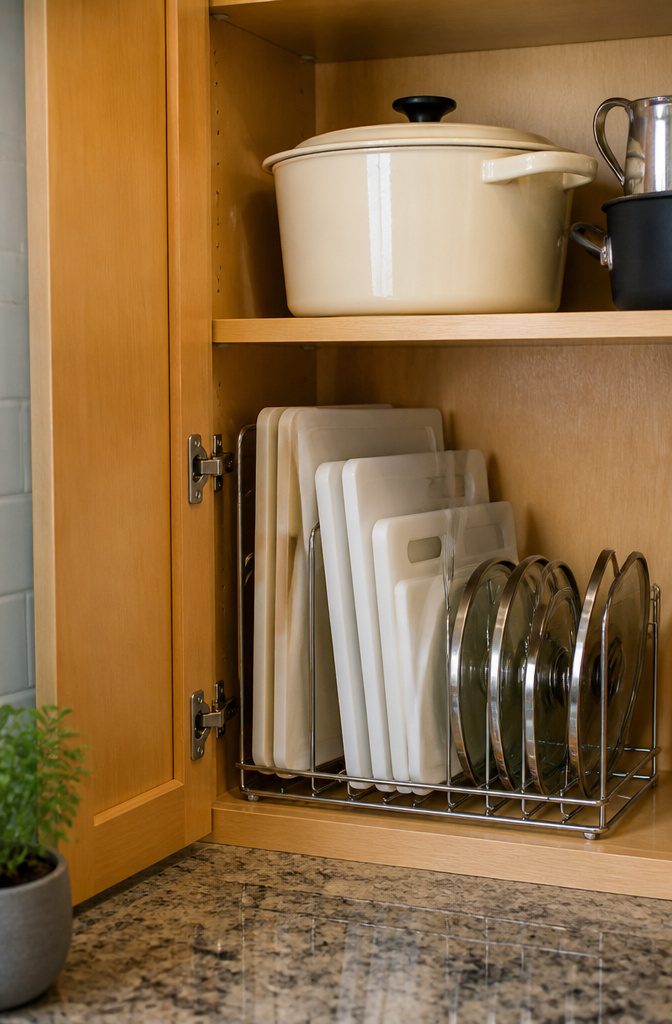
A wire shower caddy, the kind with a flat back and curved front basket, sits upright in a lower cabinet and turns dead space into a cutting board and lid organizer that actually stays put.
The vertical wires cradle boards by their edges so they lean without sliding, and the same spacing works for pot lids if you flip the caddy so the basket faces the cabinet door.
File organizers from the office aisle do the same job with slimmer profiles, though their flat sides mean lids can slip if the cabinet shakes when you close it hard.
I prefer the shower caddy for heavier boards, since the weighted base and rubber feet most come with keep the whole unit from walking backward when you pull one out.
Depth is the catch: a caddy eats more cabinet front-to-back than a file organizer, so measure your shelf before you buy.
Either way, standing items upright beats stacking them flat, where the one you need always sits on the bottom and the rest scatter when you pull it free.
5. Oil and Dish Soap Decanters
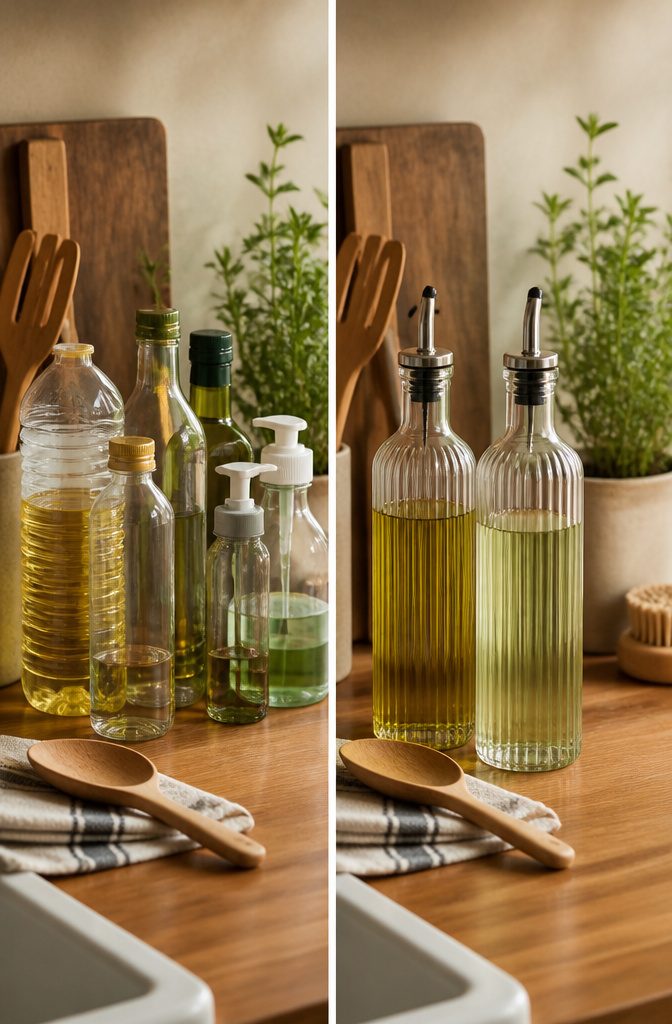
Glass-look plastic bottles with pour spouts sit on the Dollar Tree kitchen aisle, and they are one of the few storage pieces that actually look better than what most of us already own.
At $1.25, they undercut the Target equivalents that run $8 to $15 by a wide margin. The swap takes about two minutes: pour the oil or dish soap, screw on the spout, and the counter suddenly reads as intentional instead of branded.
I would use these for anything that pours daily. The spout controls the stream, and the uniform shape lets you line them up without the visual noise of different bottle heights and labels.
The trade-off is the plastic itself. Turmeric and tomato oil will stain it over time, so olive oil stays cleaner longer than chili oil, and dish soap is the safest bet of the three.
When the staining starts, a year or two in, the replacement cost is low enough that I do not mind starting over.
6. DIY Magnetic Planner
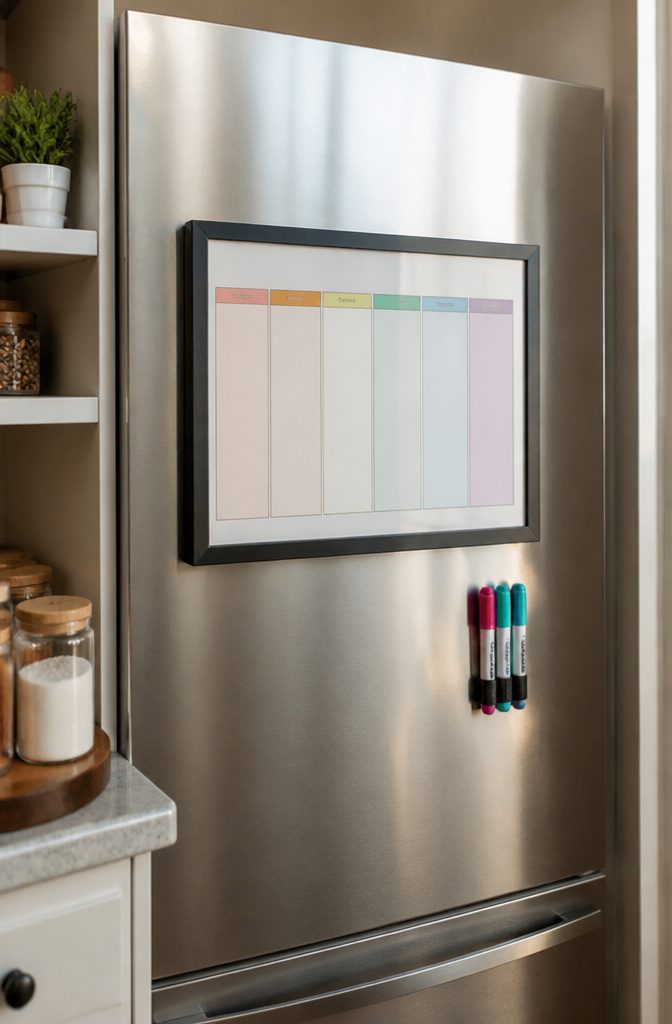
A sheet magnet cut to fit a dollar store picture frame solves the problem most cheap dry-erase boards have: they curl and bubble on the fridge door.
The frame gives the whole thing rigidity, so your weekly calendar stays flat against the surface instead of warping every time someone opens the freezer.
Sheet magnets come in rolls, which means you buy once and cut pieces for several projects. A 5-by-7 frame is just right for a weekly layout: enough room for seven days without covering half the refrigerator.
The glass or plastic front of the frame wipes clean with a dry-erase marker, though you will want to test in a corner first. Some Dollar Tree frames have a textured plastic that holds marker pigment; smooth glass works better.
Weight is the catch.
A glass-front frame plus magnet sheet is heavier than the flimsy boards sold for this purpose, so the magnet needs full contact with the fridge surface. Skip the decorative frames with thick molding; the flat ones sit flush and hold.
7. Bedside Shoe Organizer
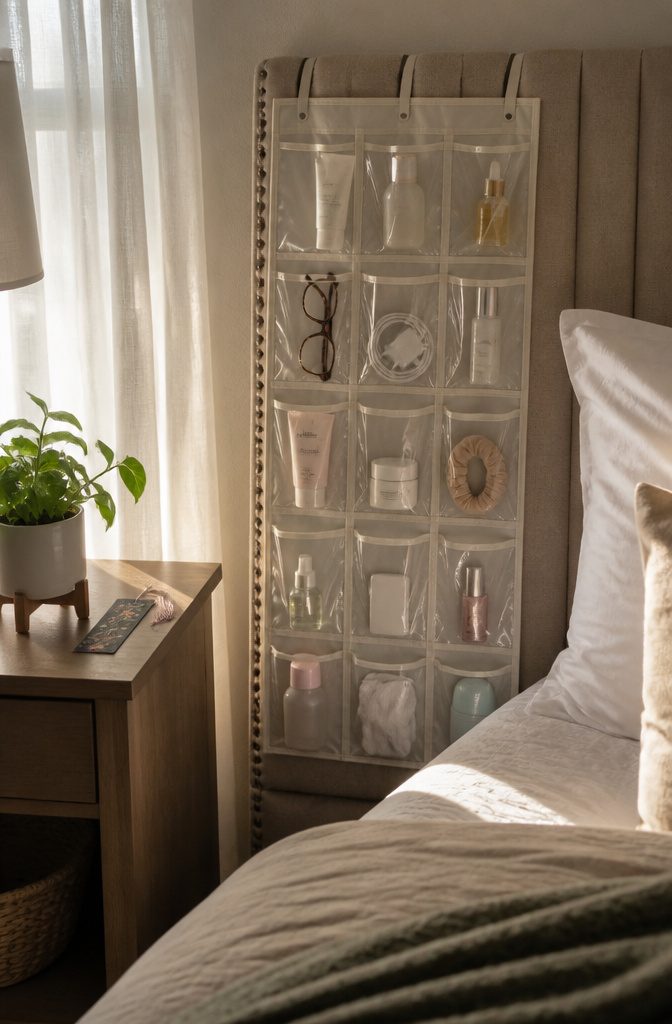
A clear over-door shoe organizer hung on bed frame legs or wall hooks turns dead vertical space into twelve see-through pockets for the clutter that usually covers your nightstand.
I like the pocket size here: deep enough to hold a lotion bottle upright, shallow enough that reading glasses and a charging cable sit right at the front where you can spot them in the dark.
The clear plastic matters more than it should. Fabric versions hide what is inside, which defeats the purpose when you are half-asleep and reaching for your phone charger.
I have seen people try this with the organizer draped over a headboard, but it bunches and slides; wrapping the top hooks around the bed frame legs or screwing small wall hooks into studs behind the frame keeps the pockets vertical and the contents from spilling.
This is a bedside solution, not a closet one. The pockets here stay in rotation: tomorrow morning’s glasses, tonight’s lip balm, the cable you need now.
Move it to a closet door and it disappears into long-term storage with out-of-season shoes. Keep it beside the bed and it earns its space every day.
8. Acrylic Drawer Jewelry Holder
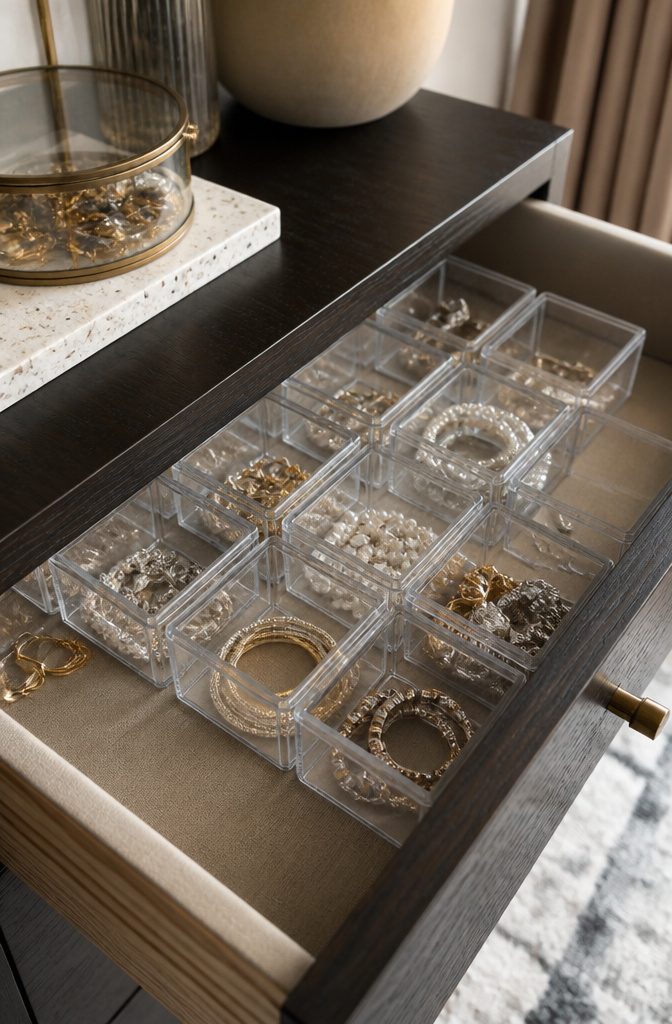
Small square cosmetic organizers from Dollar Tree stack into a jewelry setup that costs less than a single acrylic tray from a specialty store.
Each cube measures about 3.25 inches, a size that slides into most dresser drawers without trimming or forcing. I use two stacked for earrings, another pair for rings and bracelets, and the clear walls let me see everything at a glance.
The acrylic is lightweight, which helps when you are moving the whole stack to the bathroom mirror and back. It does crack if you drop it on tile, a hard lesson I learned with a similar bathroom caddy.
Melamine versions from Target or The Container Store survive that fall, but they run $8–$15 per piece and the opacity hides your pieces.
For a drawer that stays put, the trade-off favors the dollar-store acrylic. For a travel kit that lives on a vanity, I would spend the extra.
9. Under-Sink Bathroom Organization
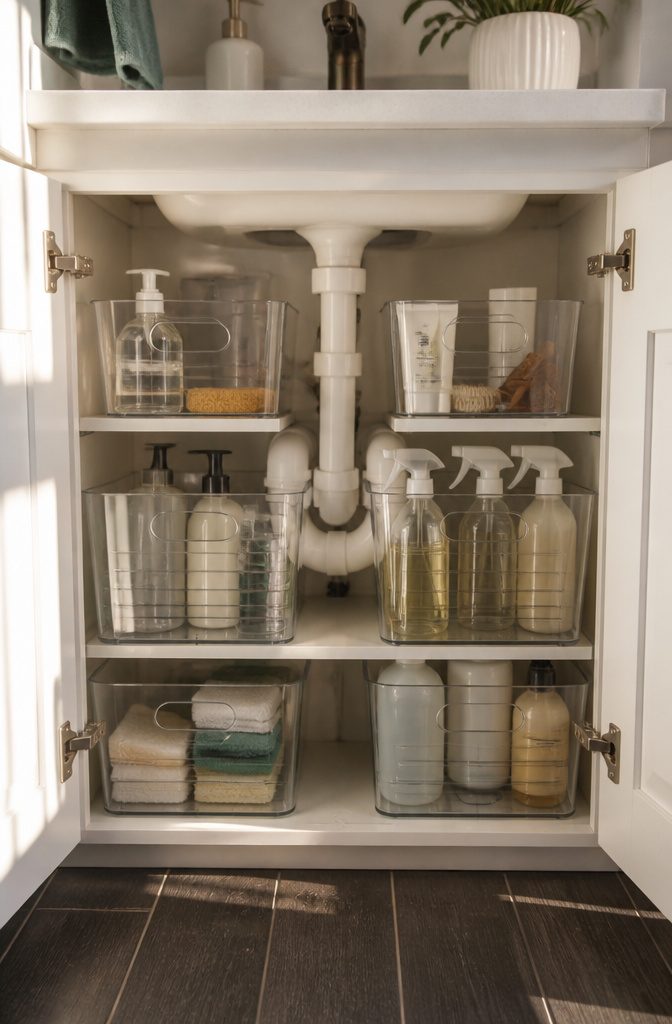
The space under a bathroom sink is where good intentions go to die.
Pipes jut through the middle, the cabinet floor is usually some dark composite you never want to touch, and everything you store there ends up in a single tangled layer.
The U-shaped stackable bins solve the pipe problem by wrapping around it, which sounds obvious once you see it but changes the whole geometry of the space.
Most Dollar Tree stores carry these in a few sizes, and the move is to stack two tiers on each side of the center drain.
The open front means you can slide the bin out without unstacking, and the depth is shallow enough that nothing gets lost in the back.
For the vertical gap between the top of the bins and the sink deck, a tension rod turns that dead air into usable real estate.
Spray bottles hang nozzle-down, which keeps the trigger from gunking up and lets you read labels at a glance.
I skip the round lazy Susans here; the pipe already steals the center, so rotation buys you nothing.
The bins do require measuring your cabinet depth against the bin length, and the cheap plastic can bow if you load the back corner with a full bottle of bleach.
For a Saturday morning and six dollars in bins, the compromise is worth it.
10. Mop Holder for Styling Tools
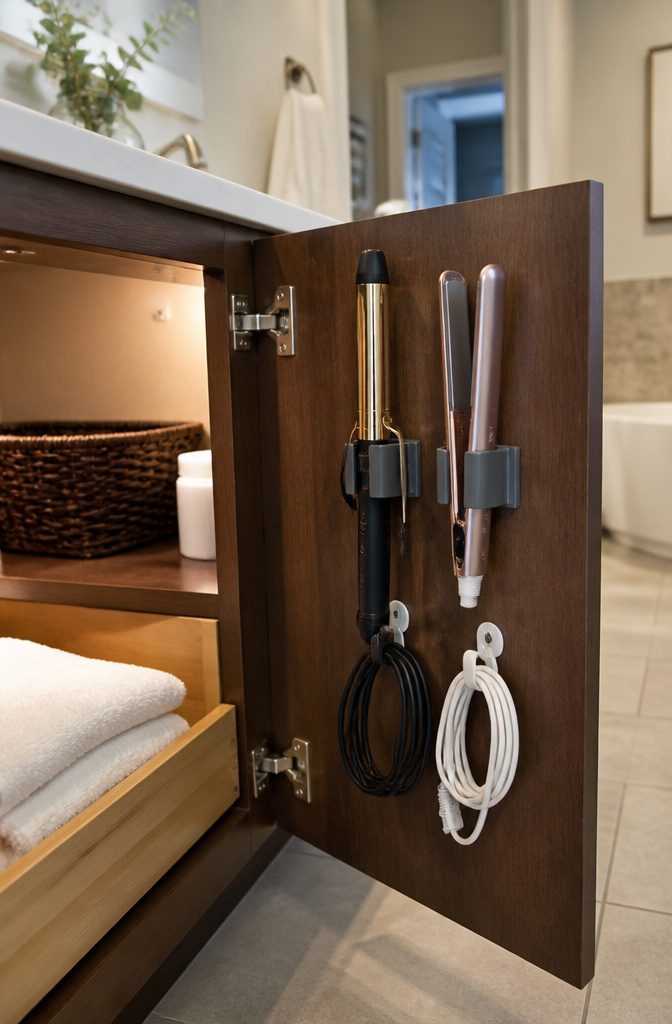
Self-adhesive mop grips meant for broom handles stick to the inside of a cabinet door and hold a curling iron or flat iron horizontally, with the spring clip keeping the barrel from rolling and the small hook or loop cradling the cord.
Dollar Tree sells these in packs for $1.25, which is where the value sits: purpose-built heat-resistant silicone holders for styling tools run closer to $8–12 elsewhere, and while those tolerate a warm barrel, the plastic and rubber mix in the budget version cannot.
The tool has to be fully cool before it goes back into the clip. That is the trade-off that decides whether this hack works for your routine.
Someone who styles hair in the morning and leaves the house may not mind the wait; someone who reaches for a touch-up between video calls probably will. For the second person, the silicone upgrade pays for itself in convenience.
For the first, the Dollar Tree version does the same job at one-eighth the price, and the inside of a bathroom cabinet door is space that was doing nothing anyway.
11. Cookbook Display Easel
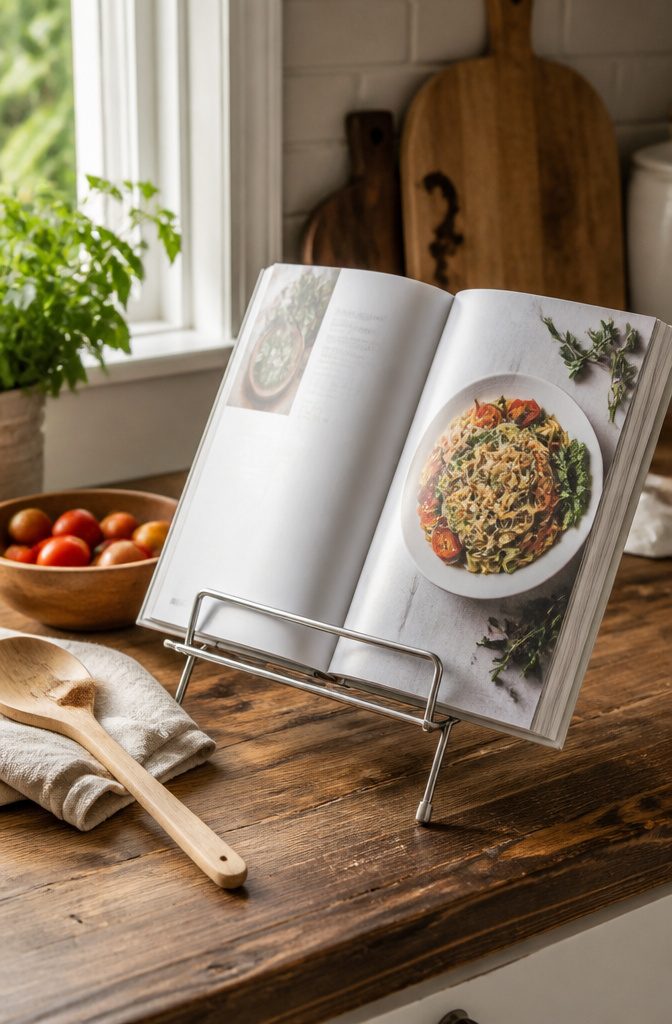
A wire plate stand from Dollar Tree, the kind meant for cabinet display, keeps a cookbook propped at a readable angle without costing more than a dollar.
I like the acrylic sign holder even better for this job; its flat back and slanted lip cradle the spine so the book stays open on its own, no weighting down with a sugar bowl.
Laying a cookbook flat on the counter covers both pages in splatter and ties up your hands every time you need to turn back for the ingredient list.
The stand keeps the page vertical, the text visible from a step away, and your fingers free for the knife work.
The wire version runs a little small for oversized baking books, so check your tallest cookbook against the stand height before you commit.
For standard paperbacks and the average hardcover, either option works and neither needs drawer space when dinner is done.
12. Wire Cabinet Shelves as Shoe Rack
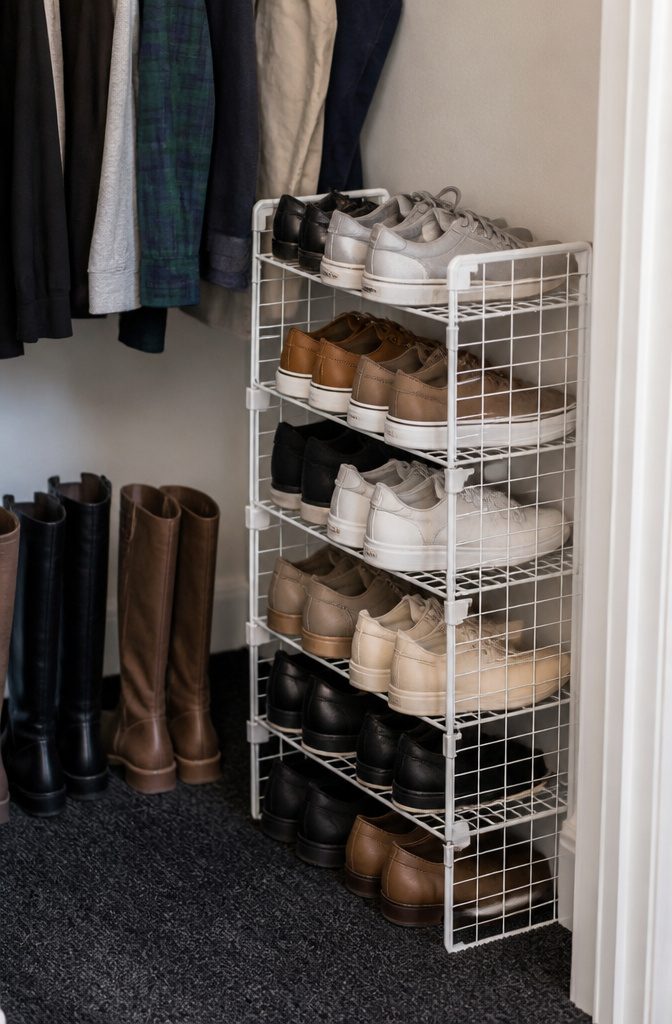
Stackable wire cabinet shelves, the kind sold for $1.50 each as cabinet risers, turn into a narrow shoe rack when you rotate them on their sides and zip-tie the frames together.
The depth lands around 10 inches, which fits sneakers and low-profile shoes but leaves boots hanging over the edge, so measure your usual pairs before you buy.
I like the vinyl-coated finish for closet use; it keeps the metal from rusting where humidity lingers.
Zip-tie two shelves into a single flat unit, repeat for another, then stack the pairs vertically so each shelf becomes a slot. Four shelves give you three rows of shoes in a footprint barely deeper than a hanger.
The gaps between wires mean sand and grit fall through instead of collecting, though small heels can slip if you do not angle them toe-down.
For a closet floor or the dead space beneath a short hanging rod, this beats a fabric shoe hanger that sags inside a year.
13. Stackable Drawers for Laundry Room
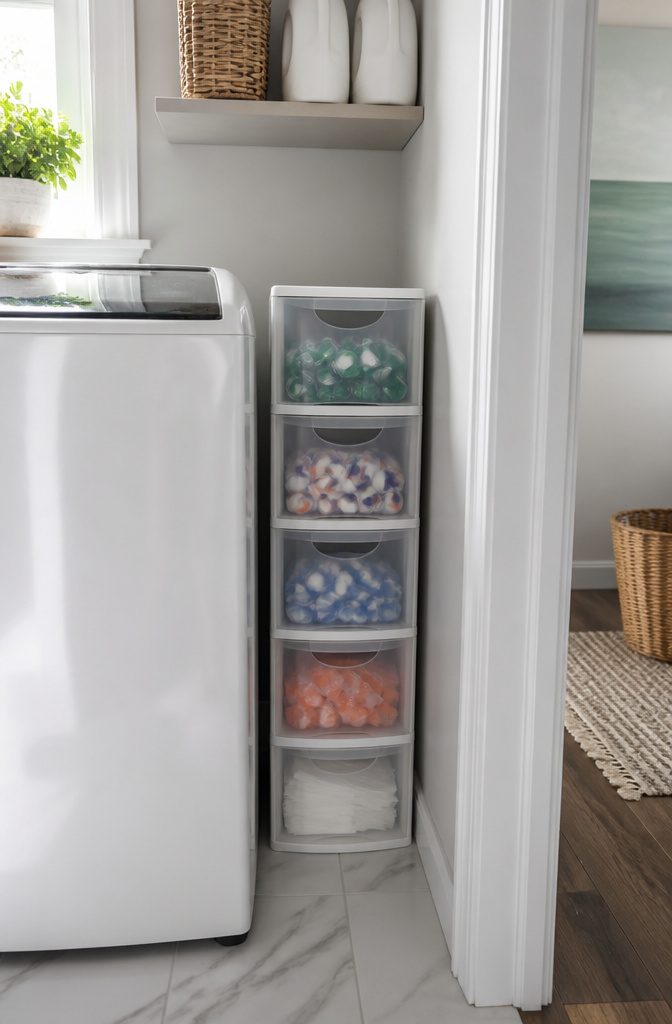
The deeper stackable drawers that hold a full box of detergent pods or a stack of dryer sheets now run $1.50 apiece, up from the standard $1.25.
That extra quarter buys enough depth that the drawer actually closes without bulging, which is the difference between a storage solution and a storage frustration.
I would skip the magnet trick for the washer or dryer side. Hot-glued magnets on plastic drawers take abuse from vibration and heat, and the first time a drawer of wet lint drops behind the machine, the convenience evaporates.
These work better as standalone units stacked between the washer and wall, or on a shelf above the unit where you can pull the whole drawer out to refill it.
For the $1.50, you get a bin that holds roughly a month’s supply of pods or two months of dryer sheets in a footprint under six inches square.
The stackable lip means three of them lock into a column that does not drift when you pull the middle one.
That is the detail that makes them usable in a laundry room where you are usually holding something in one hand.
14. Pantry Storage Bins
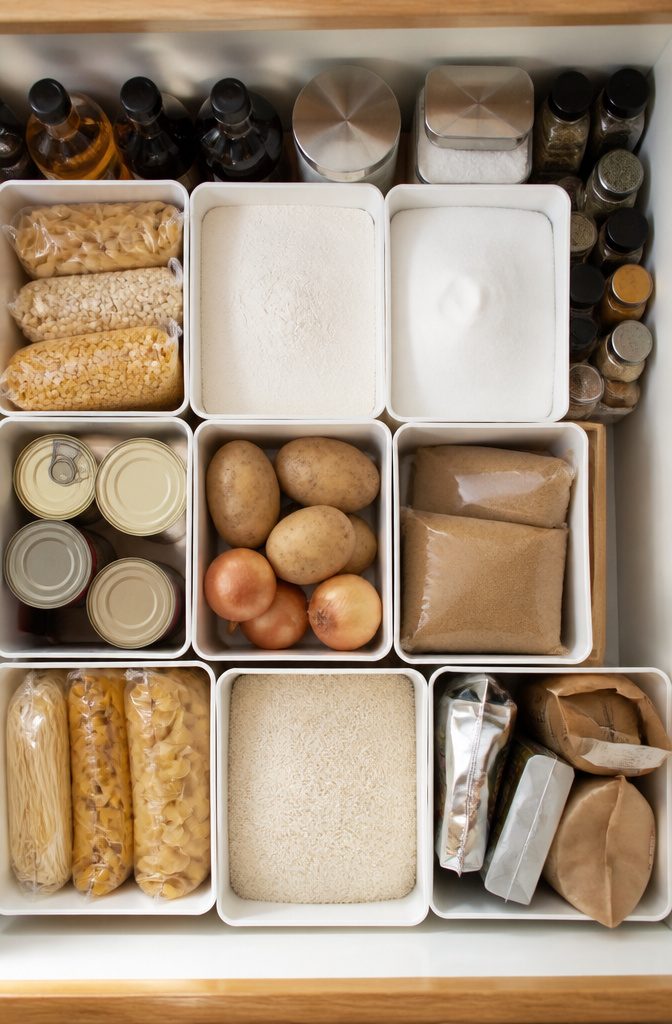
Rectangle and square bins with labels are the move for dry goods, and the shape matters more than most people notice at first.
Round bins waste the gaps between them where shelf depth could hold more; squares sit flush and let you pack a row tight against the back wall.
Dollar Tree carries these in 7-cup and 16-cup sizes, which covers most of what a pantry actually stores.
The smaller bin fits a standard flour bag with room to scoop; the larger handles bulk rice or a five-pound sugar load without splitting the seam.
Labels keep you honest. I use masking tape and a marker, nothing fancy, because the point is knowing whether that bin holds bread flour or all-purpose without opening the lid.
The bins stack if you buy the same footprint, but I would not stack more than two high in a cabinet where you are reaching overhead. One tipped bin of oats teaches that lesson fast enough.
15. Sink Caddy Organization
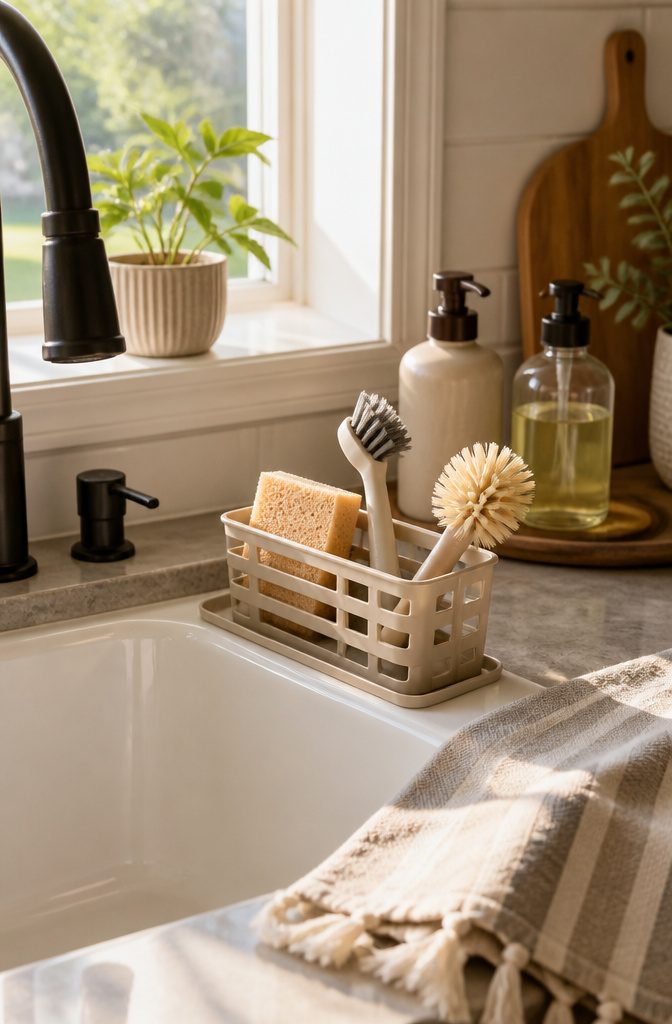
A sponge left flat on the counter never fully dries, which is why I look for a caddy that holds it upright.
Dollar Tree carries two styles worth considering: a wire-frame basket that straddles the sink divider, and a small plastic tray with a raised grid.
The wire option wins for airflow, but only if your faucet clears it; the plastic tray sits lower and catches drips, though the grid needs a weekly scrub to stay clean.
For brushes, the narrow wire holders meant for cabinet doors work surprisingly well propped against a backsplash.
They keep bristles from flattening and cost less than a single replacement brush. Skip the suction-cup models unless your sink is porcelain; on stainless, they drop within a week.
The whole setup, caddy plus two brush holders, runs about $4. Replace the caddy every six months before rust sets in, and you are still spending less than one premium holder from a kitchen store.
16. Spice Racks and Spice Drawer
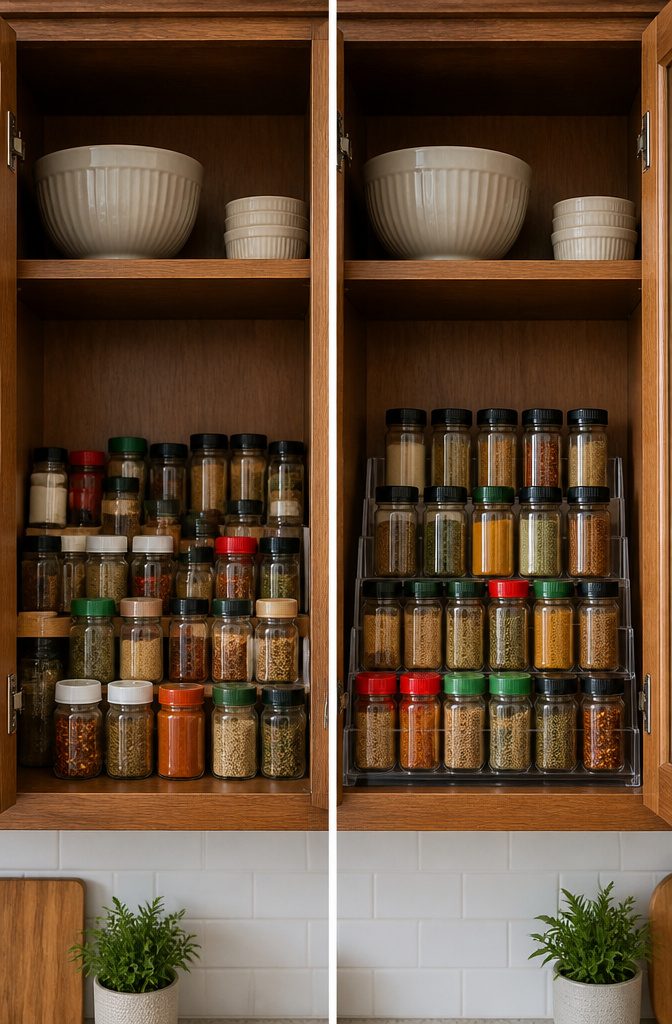
Tiered shelf risers from Dollar Tree solve the problem of spice bottles hiding behind each other in upper cabinets.
The stepped profile brings labels into view without pulling half the row forward to find the cumin. I prefer the clear plastic versions; they disappear against white shelves and do not fight whatever color the walls already are.
The same brand makes a flat drawer insert with angled tiers that turns a shallow kitchen drawer into a spice file.
You need 2.5 inches of clearance above the drawer contents for the tiers to close flush, which rules out most drawers already stuffed with utensils.
The angle keeps bottles from tipping when you slide the drawer shut, a flaw that ruins the riser approach inside drawers where nothing holds the base steady.
For renters with drawer space to spare, this is the cleaner look. Cabinet dwellers should stick with the riser and accept the reach.
17. Wall Baskets
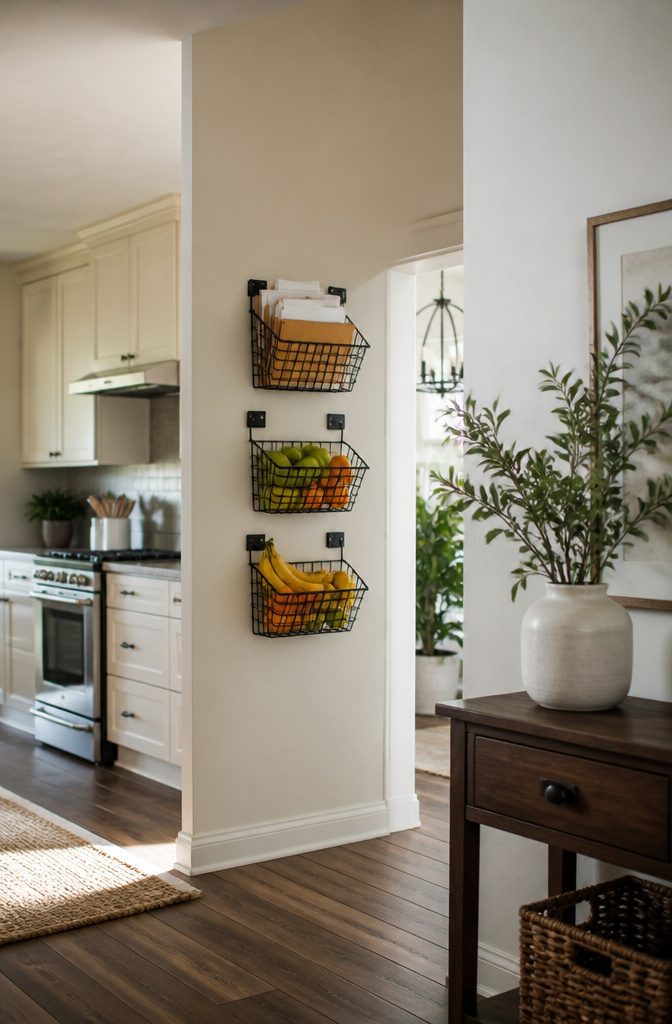
Wall-mounted bins from Dollar Tree work best where counter space is scarce and the clutter is daily: mail by the door, produce that shouldn’t sit in plastic bags, or the bottles and brushes that overrun a bathroom sink.
I prefer the wire locker-style baskets for anything damp; plastic slatwall bins sag over time if the contents stay wet.
The trick is the mount. Command strips will fail on textured walls or anything over about two pounds, so I use small screws into studs for wire baskets and reserve adhesive hooks for smooth surfaces with light loads only.
In a rental, a patchable screw hole beats a bin crashing down at 6 a.m.
Wire baskets run roughly 6 by 10 inches, which fits a stack of envelopes or three onions with room to breathe. Plastic versions hold more but look cheaper; I use them inside closets where the door hides the shine.
One basket alone looks like an afterthought, so I hang two or three in a loose column, spaced about a hand’s width apart, and the repetition reads as intentional.
18. Ribbon Storage from Water Bottles
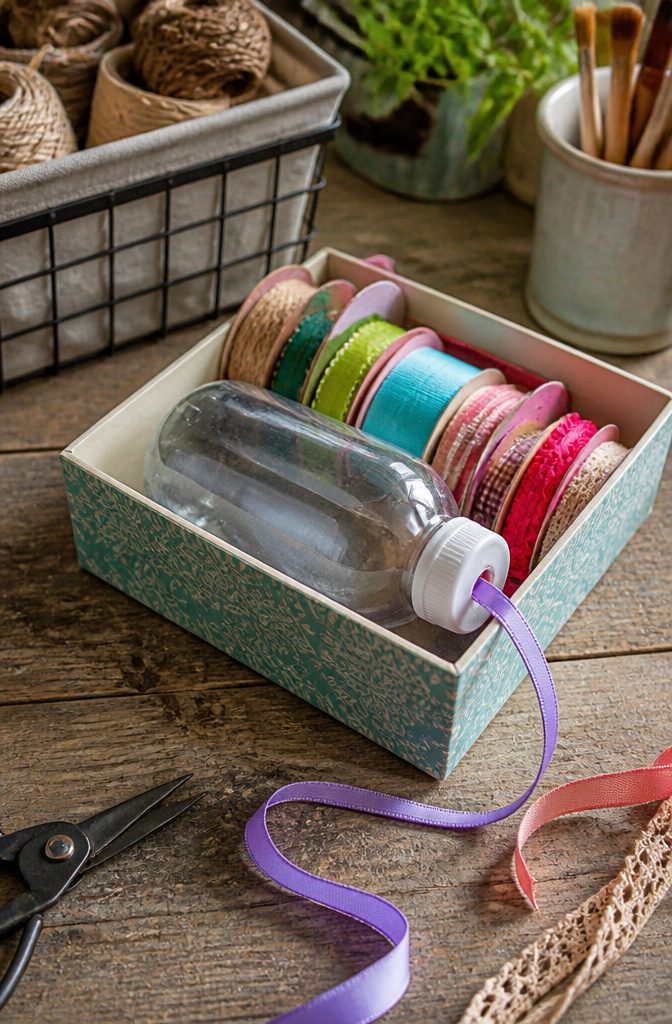
Narrow sports bottles with long necks and small spout holes thread ribbon better than the wide-mouth versions most people grab first.
I stack mine on their sides in shallow boxes, feeding each ribbon tail through the hole so it pulls cleanly without tangling.
Wide ribbon needs a wider bottle, no way around it; grosgrain or wired edge that bunches at the opening will drive you to swap in a bottle with a bigger cap, even if it takes up more box space.
The threading itself takes patience. I work the end through with a bent paper clip, then knot it inside so the spool stays put when you pull from the outside.
Labels on the bottle help if you store ribbon by project rather than by color, though I skip them and just face the cut end outward to see what I have.
This setup shines for the rolls you reach for often and replaces the jumbled shoebox method that leaves everything knotted at the bottom.
Height is the catch: a bottle stack runs taller than flat storage, so measure your shelf before you commit to a full set.
19. Emergency Kit Bin
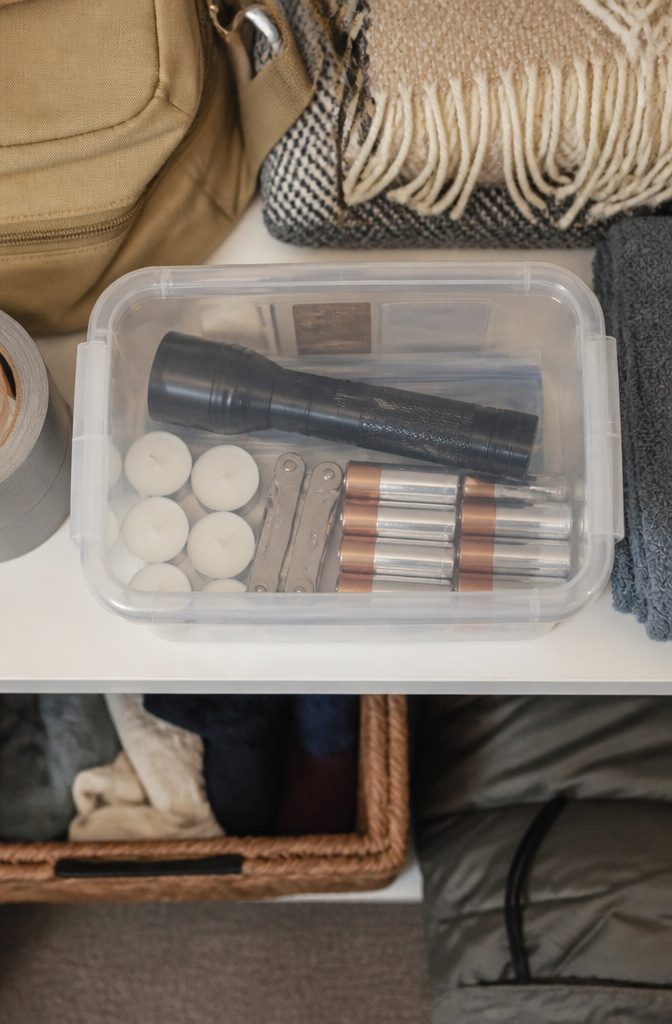
A flat plastic box with a snap lid from Dollar Tree is the right shape for an emergency kit because it slides onto a closet shelf or under a car seat without wasting the airspace a taller bin would claim.
I keep one in the hall closet with a flashlight, spare batteries in their original packaging, a basic first-aid kit, and a small envelope of cash in small bills.
The same box lives in the trunk in winter, where the rigid sides keep the batteries from bouncing into the first-aid tape.
The lid needs to snap audibly; if it settles into place silently, it will pop open the first time something leans against it.
Clear plastic lets you confirm contents without opening it, but I have seen the tinted versions crack faster in a hot car. For household storage, either works.
The real advantage is the footprint: at roughly the dimensions of a hardcover book laid flat, two or three stack where a single bulky kit would sit, and you can pull out the one you need without unloading the whole closet.
20. Pegboard Organizer
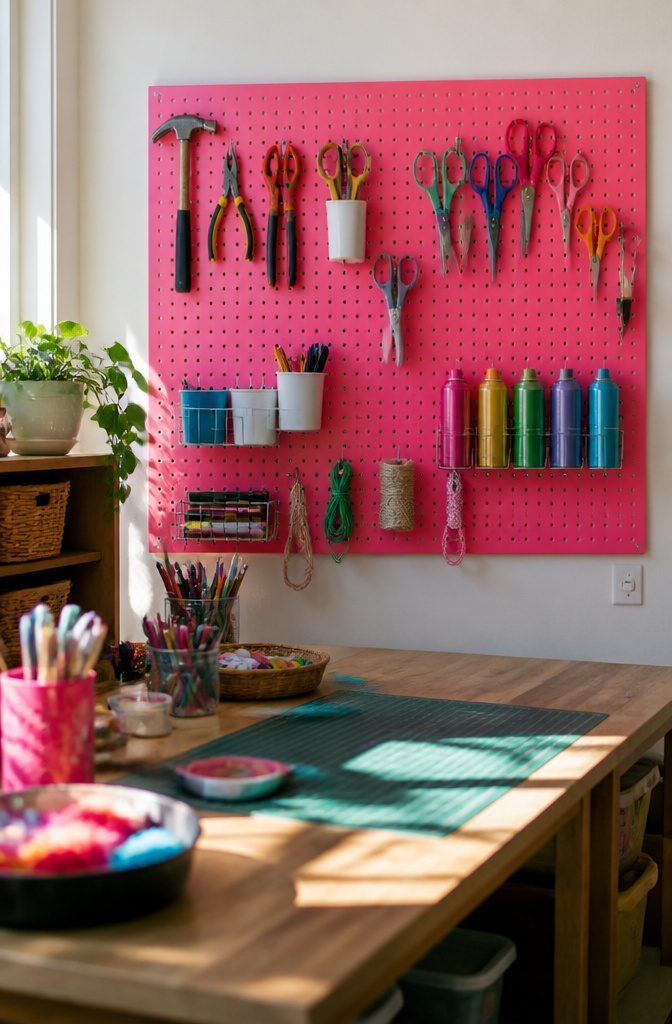
Dollar Tree’s 12-by-16-inch plastic pegboards with push-in hooks are sized right for a garage wall or above a craft table, though the material sets a hard ceiling on what you can hang from them.
Keep the load under 10 pounds or the board warps, pulling the hooks loose and sending your pliers or sandpaper rolls to the floor.
For hand tools, gardening gloves, and spray cans, the setup works; for a drill or torque wrench, you will need proper steel pegboard from a hardware store.
I would use these in a craft room without hesitation, where scissors, tape rolls, and glue guns sit well inside the limit.
In a garage, I would treat them as overflow storage for the light stuff you reach for constantly, not as the backbone of the system.
Frequently Asked Questions
Are Dollar Tree bins helpful for organizing?
Yes. The $1.25 to $1.50 bins solve specific problems like U-shaped under-sink versions that wrap around pipes, stackable pantry squares that sit flush against walls, and clip-on fridge drawers that turn dead airspace into pull-out storage.
The plastic stays light enough to move but holds up for daily use if you keep heavier items toward the back where supports take the load.
How can I make storage solutions from Dollar Tree items?
Repurpose items outside their original aisle.
Shower caddies become cutting board and lid organizers. Plate stands prop cookbooks at readable angles.
Mop holders stick inside cabinet doors to cradle styling tools. Wire cabinet shelves zip-tied on their sides turn into narrow shoe racks.
Sports bottles thread ribbon without tangles. The move is matching the item’s structure to a problem it was not sold to solve.
Is $20 enough to make storage solutions from Dollar Tree?
Yes. At $1.25 to $1.50 per piece, $20 covers roughly fifteen items, which outfits a full pantry, under-sink bath cabinet, and bedside organizer with change left.
Most hacks here pair two or three items, so twenty dollars runs deeper than single-purpose buys at Target or The Container Store where one acrylic tray eats the same budget.





