
A garden drawing can stay loose as a single-afternoon watercolor of an archway over a pond or tighten into a layered colored-pencil plan of cottage rows and a tea table that takes several evenings.
The one thing that decides which idea is yours is whether you need the drawing to map out a real flower bed or just to sketch a unicorn fountain before the weekend rains set in.
A size 6 or 8 round brush and a single fine liner pen are all the loose version asks for; the controlled version wants Polychromos pencils on cold-press illustration board and a colorless blender brought in at the end.
[link-whisper-related-posts]1. Candyland
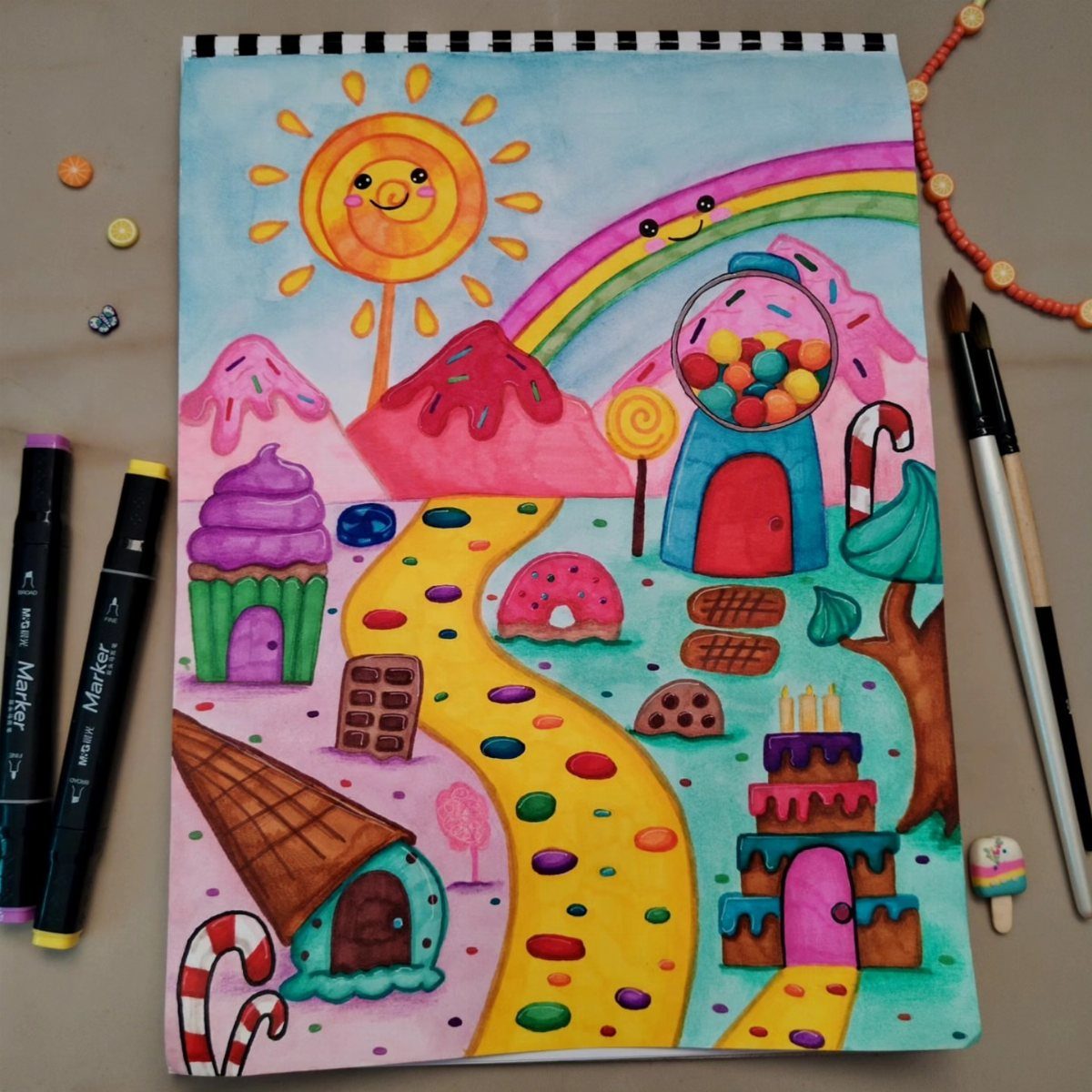
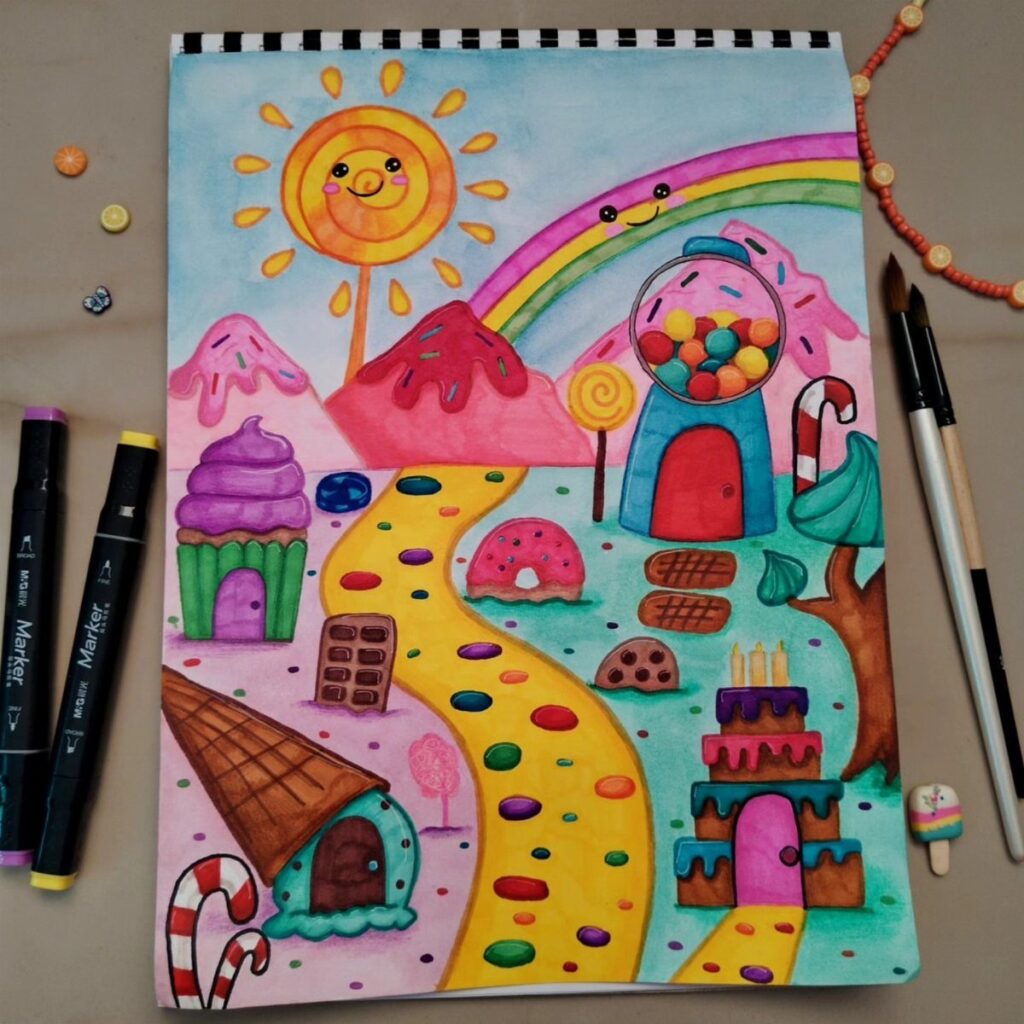
Candyland turns a garden sketch into something a child will actually want to finish.
Gumdrop-shaped bushes, licorice fences, and peppermint pathways give a kid fixed shapes to color inside and enough freedom to choose any stripe or sprinkle pattern they like.
Heavy cardstock handles marker layering without feathering; Crayola Supertips or similar water-based markers let them build color in passes rather than pressing hard and tearing the surface.
My preference is to start the sky first so stray strokes disappear into blue, then work ground to top to avoid dragging a hand through wet work.
2. Rainbow World
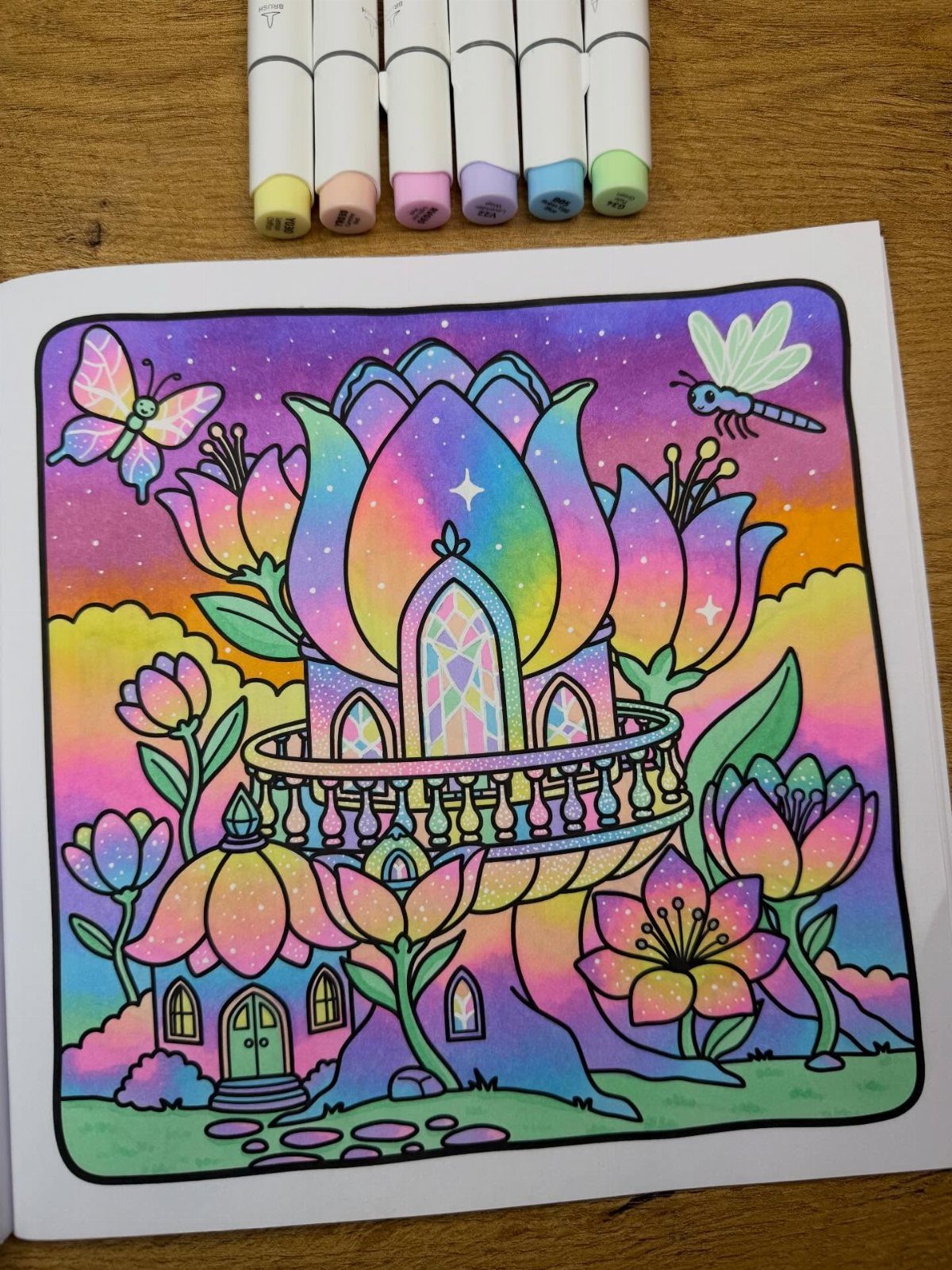
A small kid who refuses to draw trees green will love a garden where that choice is right.
Rainbow World hands them lotus houses, sunset gradients, and insects that can be any color at all simultaneously. Heavy watercolor paper or mixed-media journal pages accept marker, colored pencil, and light watercolor washes without pilling.
Prismacolor Premier or similar waxy pencils layer well for the flower-house walls, and a white gel pen adds stars or dewdrops after the base colors are down.
For adults, this same setup works as a warm-up when garden design paralysis sets in; the rules loosen enough to let a real plan surface afterward.
3. Refined Garden Drawing
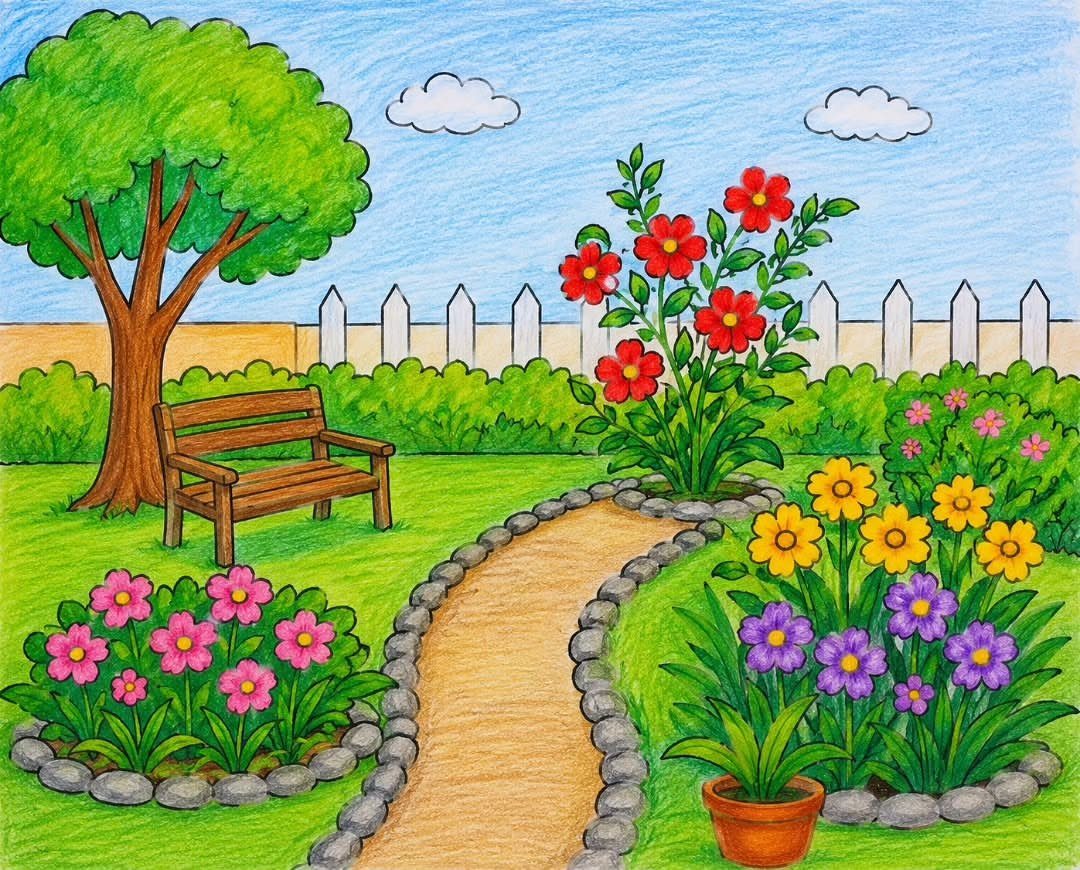
Controlled colored pencil work suits someone who wants garden drawing as a quiet evening activity, not a child’s afternoon project.
Stone paths curve with deliberate width, flowerbeds repeat at measured intervals, and a bench sits at a specific depth to push the background fence back visually.
I like Polychromos or comparable oil-based pencils for this; harder cores keep edges sharp through layer after layer, and the tooth of cold-press illustration board grabs enough pigment for saturated blooms without the waxy bloom that soft pencils leave.
Burnishing comes last, with a colorless blender or a light-value pencil in the same family as the area beneath it.
4. Original Garden Sketch
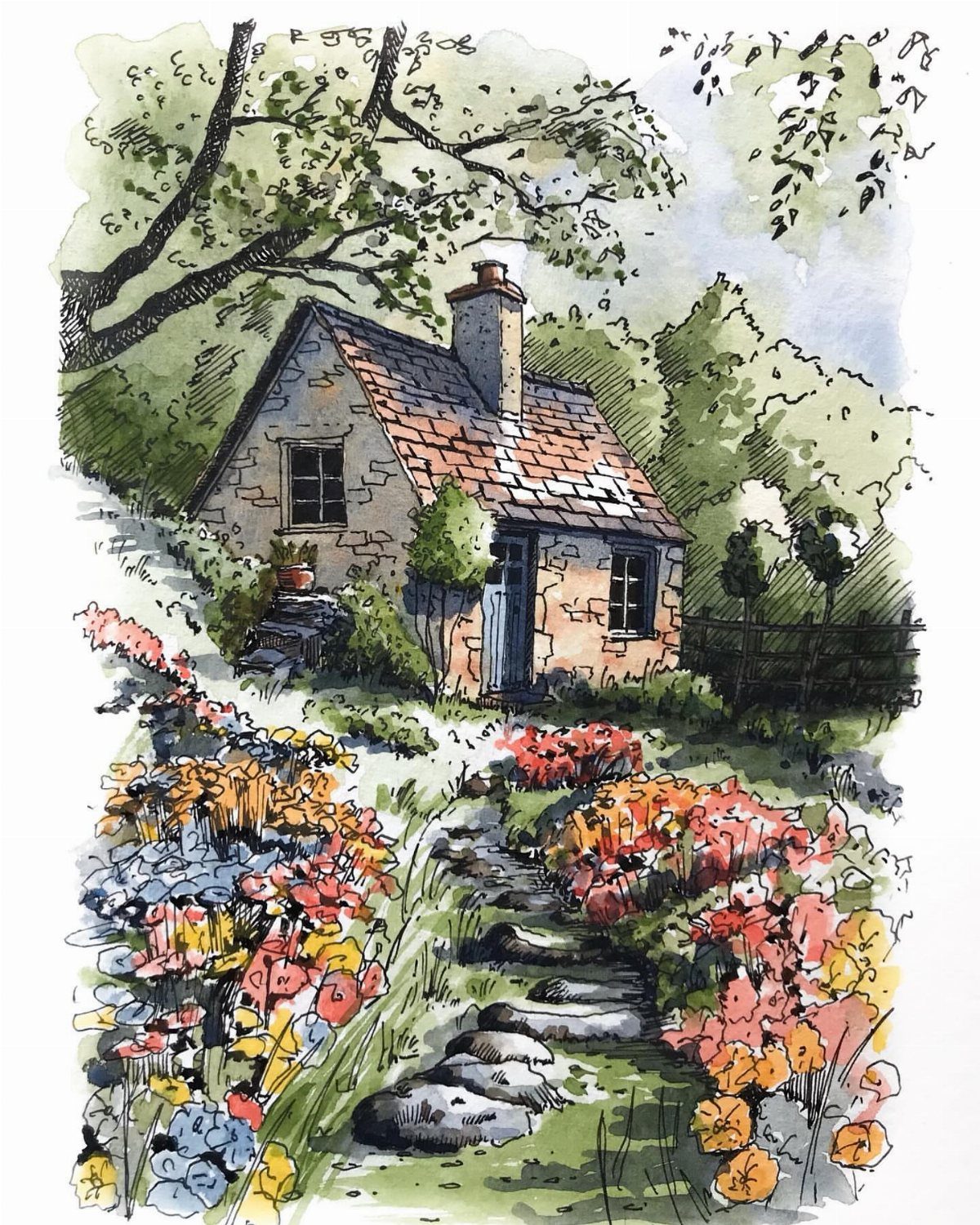
Loose watercolor and ink is the fastest way to capture a garden idea before it shifts.
A single round brush, size 6 or 8, handles the wash for stone, foliage, and shadow; once dry, a fine liner pen in sepia or black picks out door frames, path edges, and the irregular roofline that makes a cottage look settled rather than drawn.
I reach for cold-press watercolor paper for this, though sturdy sketchbook paper works if I keep washes light.
The stone texture comes from letting the first wash dry slightly, then dropping in a darker value so it feathers at the edges but holds in the center.
Half the detail I think I need, I skip; the sketch reads better for it.
5. Coloring Garden Drawing Flower Colors
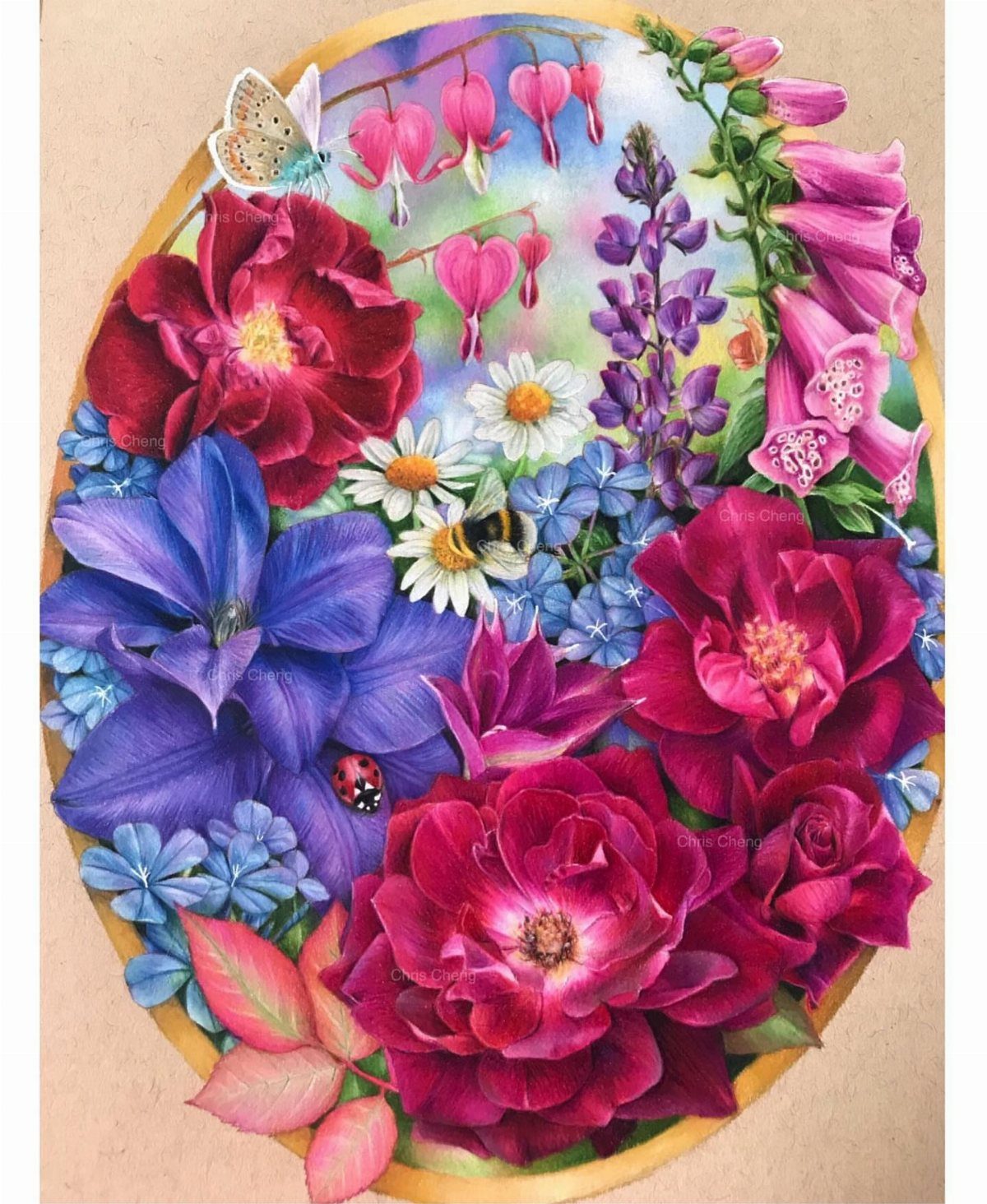
Chris Cheng’s oval frame of specific flowers, each labeled by habit rather than species, is a coloring masterclass in value and temperature.
Roses carry deep cool shadows against warm highlights; clematis vines need the white of the paper saved or lifted for their star-shaped throats; foxglove bells read as bells only when the inside stays lighter than the spotted outside.
I work tan or gray toned paper when I want the subject to glow, and I choose pencils with enough pigment load that 3 layers still look like flower, not like colored filler.
The insects are the reward at the end: quick, high contrast, and they move the eye around the page.
6. Garden Archway and Pond Sketch
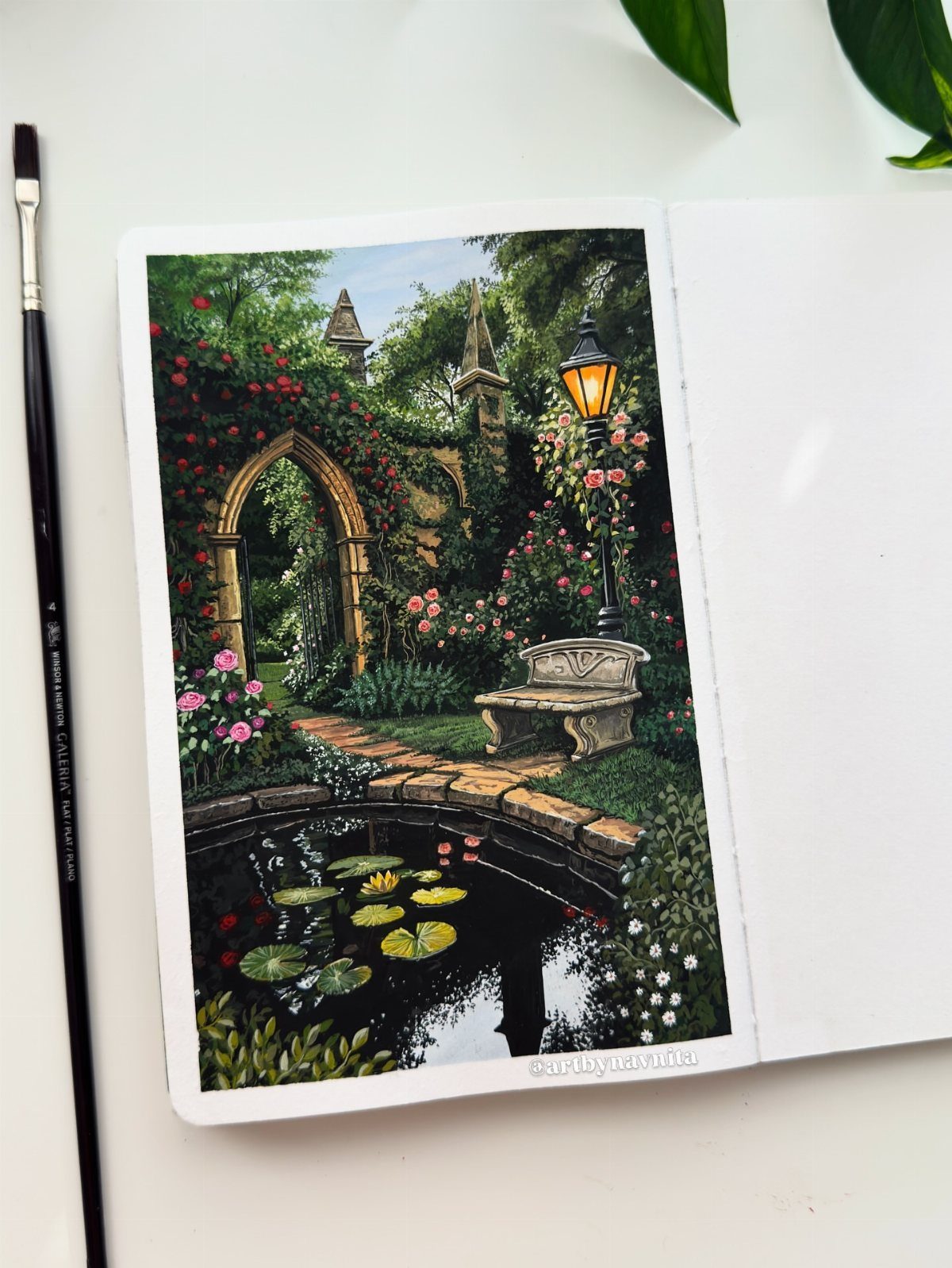
Acrylic gouache in a sketchbook gives a garden scene the weight of a finished painting without the setup of canvas and easel.
The archway here is the anchor: drawn first in pencil, then blocked in with a middle-value green, it frames everything behind it and lets the lamp glow read as actual light rather than just pale yellow.
I paint the pond first, wet-into-wet, so lily pad reflections soft-run into the water; dry-brushed texture on the stone bench comes after, with a flat brush held nearly vertical.
The sketchbook stays portable, small enough to tuck in a bag, and the work dries fast enough to close the book within the hour.
7. Cottage and Flower Rows
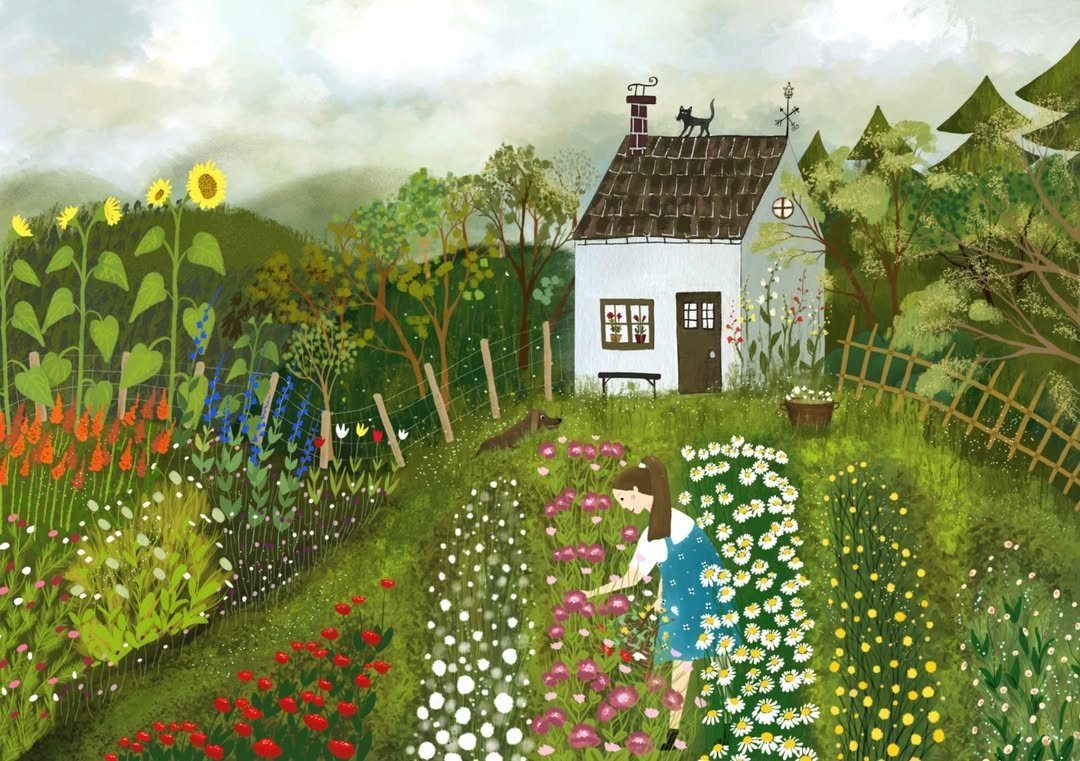
A cottage garden with rows of flowers works for a child who likes structure but still wants color choices.
The straight rows give them clear sections to fill, and the small building lets them decide: door red or blue, shutters open or closed.
I use printer paper for this age group; crayon or basic colored pencil covers the space fast and the white cottage gives them a built-in highlight that needs no technique.
The sunflowers are the reward, tall and simple, a single yellow with an orange circle. A small figure or animal in the foreground gets a young artist past the blank-page stare and into the garden itself.
8. Garden Tea Table Scene
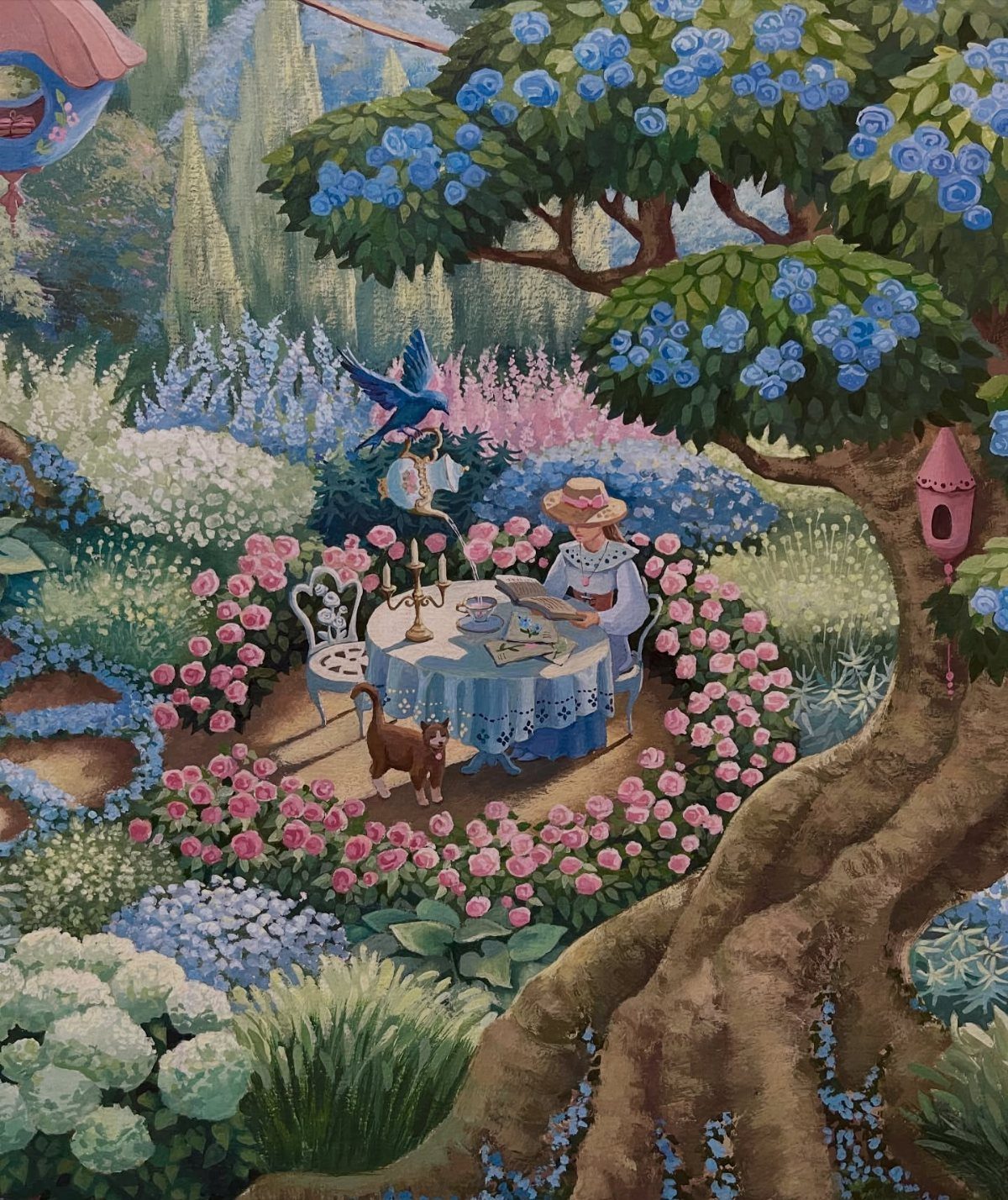
Pink and blue blooms around a tea table invite watercolor with a light hand.
The flowers here read as mass rather than botanical specimen; a wash of rose madder light, a cooler sweep for the blues, and the shapes suggest themselves while wet.
I leave the table white of the paper, adding only faint shadow with a gray-violet once the flower layer is fully dry.
A seated figure gives scale and a reason for the table to exist; a cat or small creature at the edge breaks the symmetry without competing. This suits an afternoon when precision feels impossible and color alone is enough.
9. Ethereal Unicorn Fountain Garden
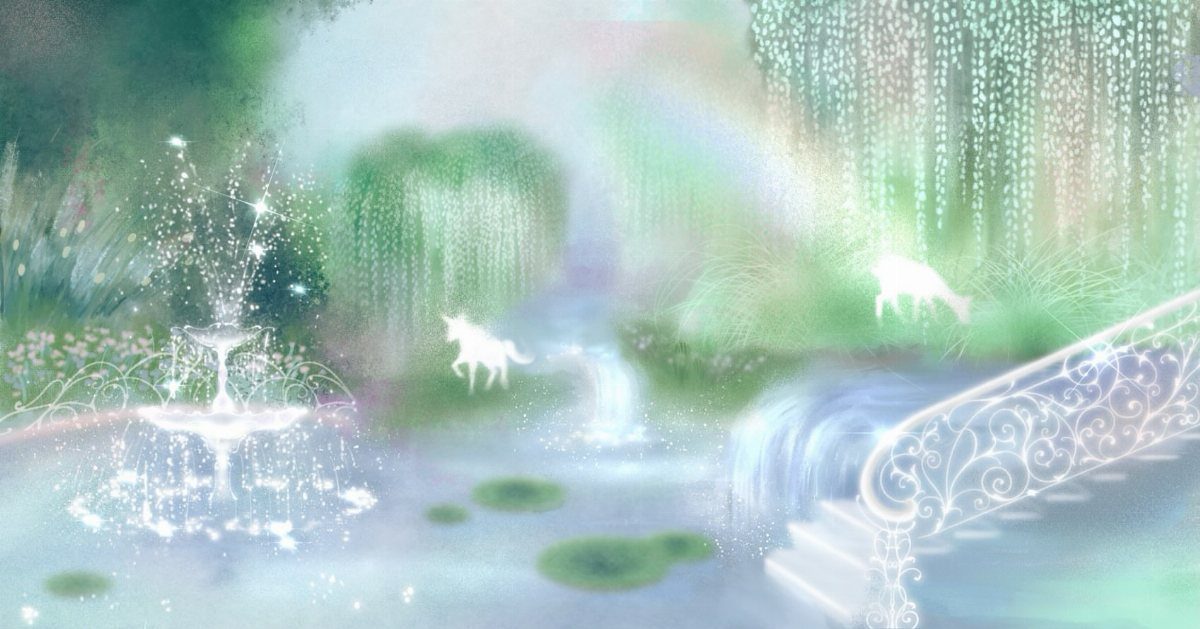
Digital or traditional, a fountain scene with unicorns demands that the glow read as light source, not afterthought.
I build the mist first, soft grays and pale violet, so the white creatures emerge from atmosphere rather than sit pasted on top.
The fountain itself carries the value range; its water stays the lightest area, the stone basin the darkest, and everything else falls between.
Weeping willows drape and repeat that middle value, framing without enclosing. This is the entry for a kid who has moved past coloring books and wants to invent a place that could not exist.
Layers in Procreate or similar software let them test glow placement before committing; on paper, masking fluid preserves the fountain spray against later washes.
10. Star-Shaped Fantasy House Garden
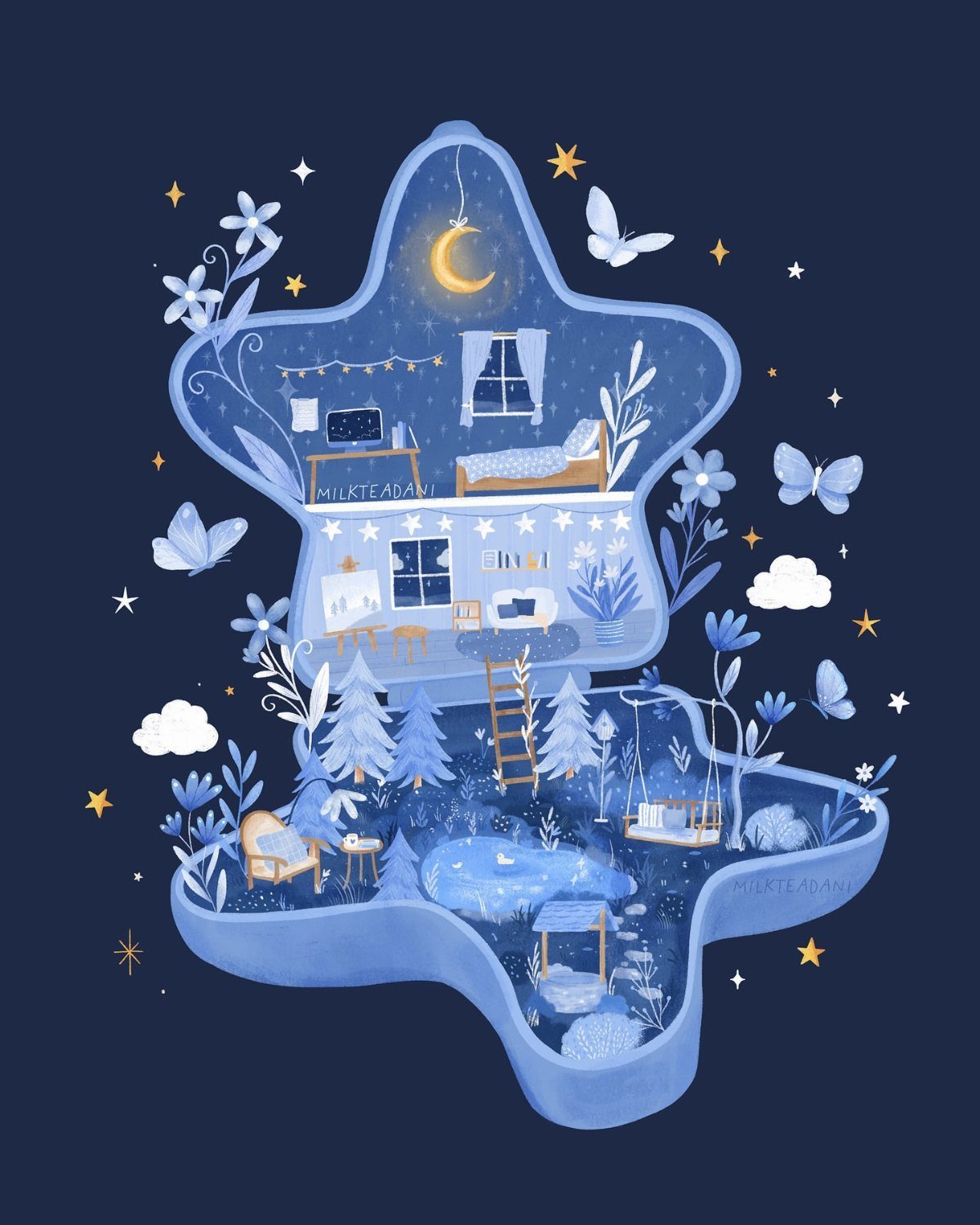
A star-shaped cutaway house turns the garden into a room, not a yard. Trees grow indoors, a pond sits under the same roof as beds and chairs, and the logic is architectural rather than botanical.
Colored pencil on smooth paper keeps the edges crisp; each point of the star is a separate space to furnish, and the flat perspective means no vanishing point to wrestle with.
I sketch the star outline first, divide it into levels with horizontal lines, then decide which point holds which function.
The blue palette in the visible version is one choice; I have seen this work in warm sepia too, like a storybook interior.
The garden level belongs at the bottom for stability, but a child often places it in the center, where they most want to be.
Creative Garden Themes
Themes that come from a child’s own life work better than ones borrowed from a shelf.
The mix matters more than the scale. A garden built around what your family actually does outside gives the child drawing it something real to anchor the fantasy to.
I think the useful split is motion and stillness, not age or skill level. One zone for running, throwing, or sliding, another for sitting, tending, or watching.
The drawing holds together when both exist, even if one is just a tiny vegetable patch squeezed beside a dragon cave. Harvey’s version happened to be large; the structure works at any size.
Drawing Techniques
Line weight does more work than most people give it. A thick outline around a tree or structure reads as shadow or mass; the same tree drawn with a hairline edge looks flat, cut out.
I vary pressure at the source, pressing harder on the side away from light, rather than going back to add a second line.
For garden depth, I push background elements lighter in value and thinner in line. A fence behind flowers gets a single pale stroke; the flowers in front carry two or three passes, darker.
Shading follows the same rule: full value on foreground planes, half on middle ground, a whisper on anything that reads as sky or distant green. The eye reads this as atmosphere without any conscious decision.
Controlled edges suit plans and measured beds; looseness fits the quick capture before an idea fades. I choose per drawing, not per habit, since the same hand can do both.
Frequently Asked Questions
What does a whimsical garden look like?
It mixes the real with the invented. Gumdrop bushes and licorice fences in a child’s Candyland sketch, or a star-shaped house where trees grow indoors and beds sit beside a pond, give the idea of a whimsical garden shape.
The logic is architectural or playful rather than botanical.
How to sketch a garden design?
Start loose and fast before precision takes over. Keep a single round brush in size 6 or 8 for watercolor washes, then pick up a fine liner pen once dry for edges like path lines or roof shapes.





