
The 7 ideas below run from a wire basket you swap in an afternoon to a fully custom measured-and-built system, plus what the install actually takes.
I skip the repair talk because every one of these is built to your existing cabinet sizes before anyone shows up at your door; there is no ‘something goes wrong’ to walk through.
The right choice depends on whether your cabinet is a slim narrow tower beside a pantry or a full-height gap with room for a pegboard and doubled hooks.
I would check that number first, because the narrow full-height jar pull-out and the utensil and knife pull-out are built to exact widths, and everything else flows from what fits.
[link-whisper-related-posts]1. Fully Extendable Pull-Out Shelves
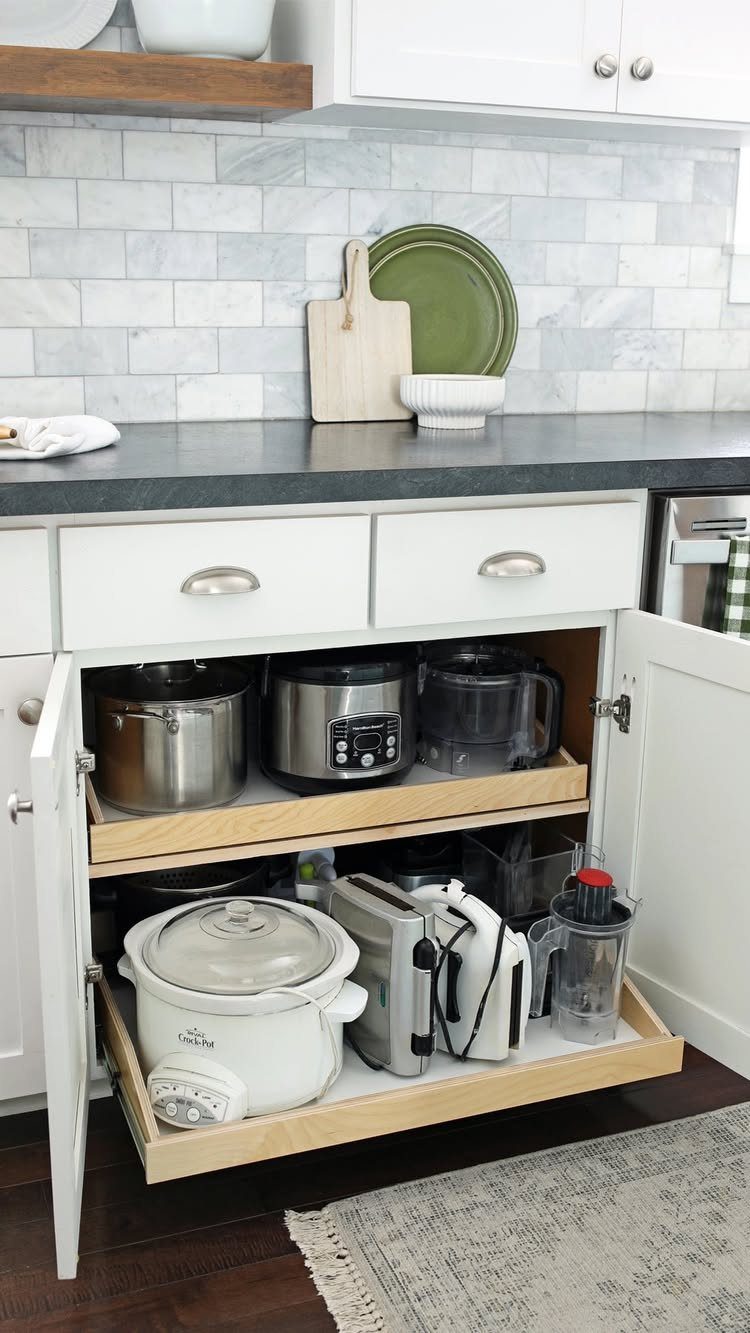
Fully extendable pull-out shelves let you lift a slow cooker or blender straight out without hauling it across a fixed shelf edge.
The hardware costs more than standard extension slides, but the full reach keeps you from scratching the cabinet face or chipping a tile backsplash.
I think the upgrade pays for itself the first time you pull out a heavy mixer without tilting it.
2. Single-Height Pull-Out Shelves
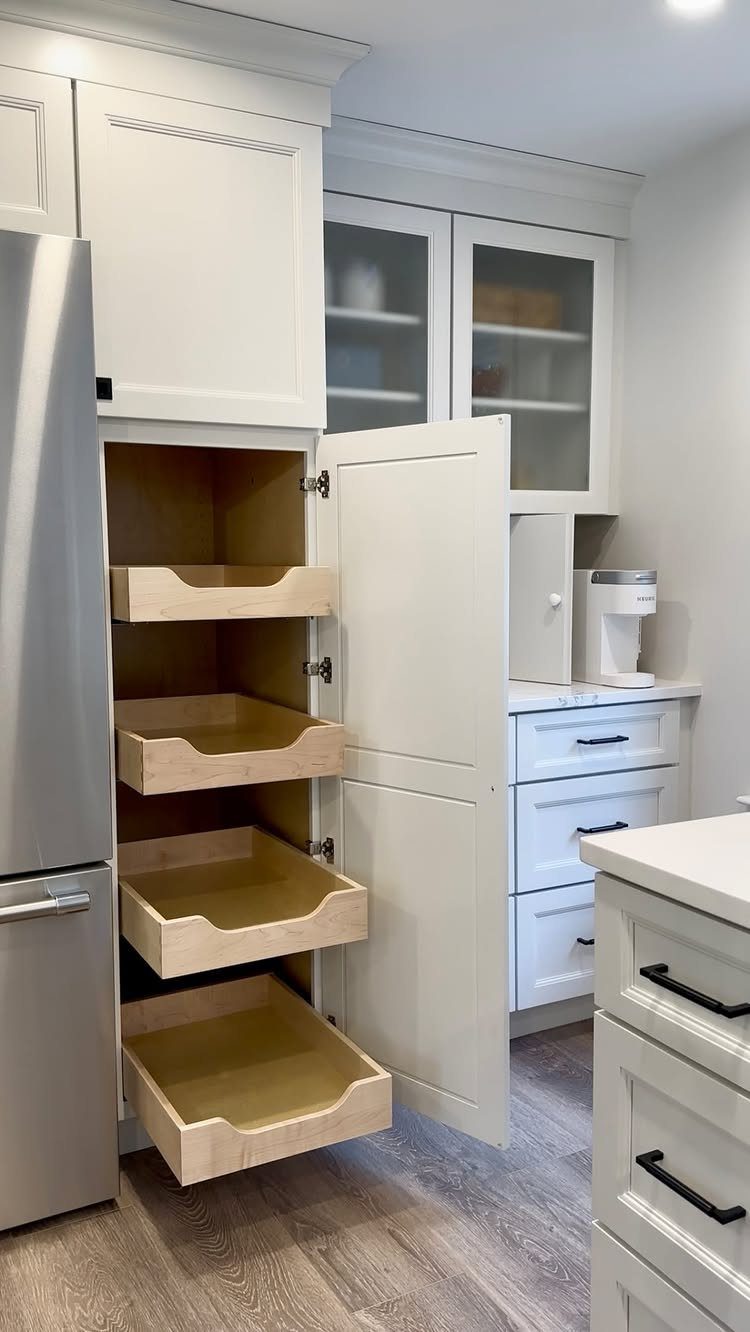
Shallow shelves stacked in a tall cabinet beat 2 deep ones if you store mostly boxed goods and cans rather than stockpot towers. Each shelf takes the load instead of one bottom panel sagging under everything.
The single-height design means no wasted headroom above cereal boxes; you gain a shelf or two in the same cabinet run. I would mount these on heavy-duty slides so the loaded weight stays smooth.
3. Tray Bin-Height Drawers
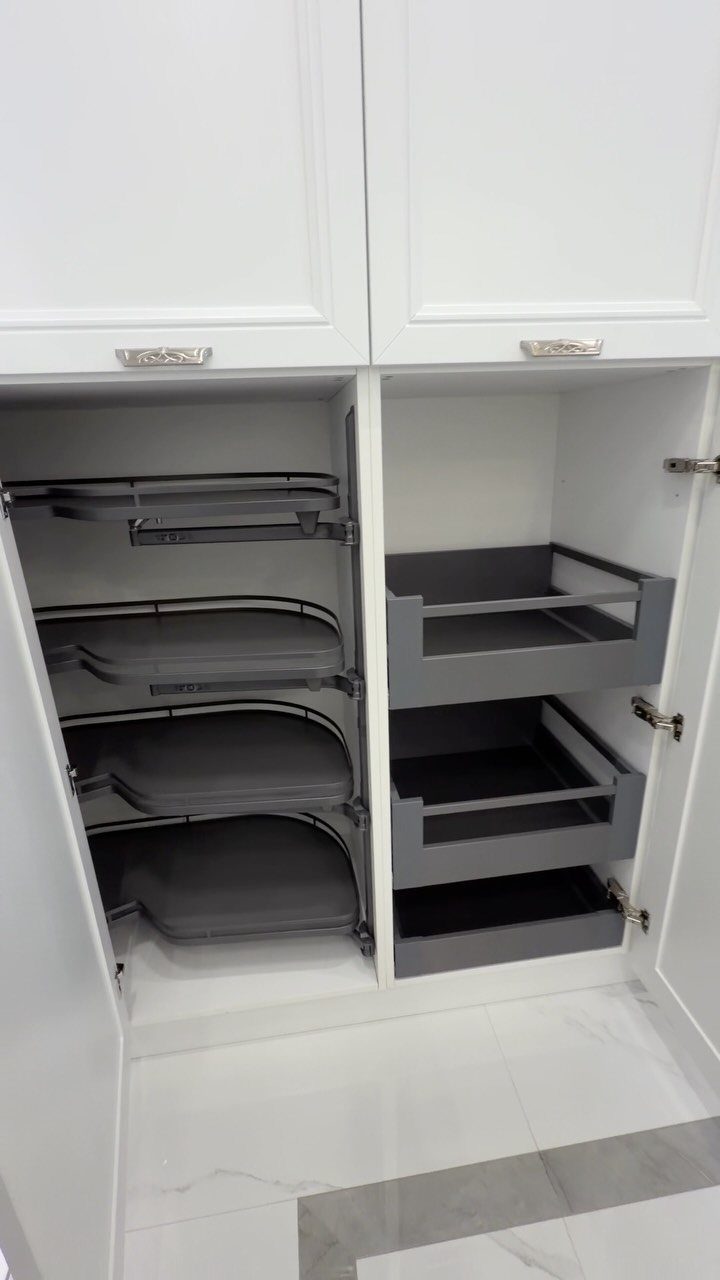
Tray bin-height drawers swallow flour buckets, stand mixer bowls, and bulk items that roll around on standard half-depth shelves. The extra height lets you stand things upright that would otherwise lie flat and block access to whatever is beneath.
I would put the deepest tray at shoulder level or below; anything higher and the loaded weight fights you on opening.
4. Narrow Full-Height Jar Pull-Out
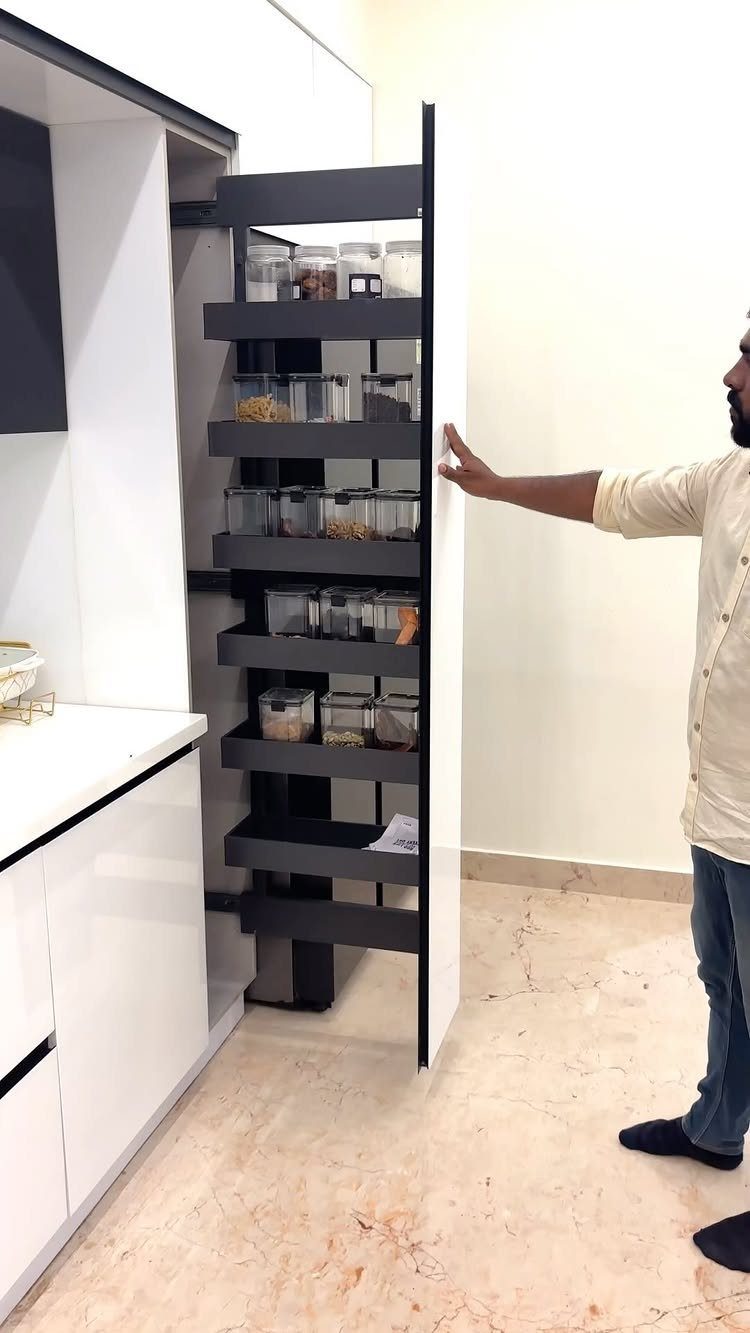
A narrow pull-out column turns the awkward gap beside a refrigerator or range into pantry territory. Glass jars sit on tiered shelves from bottom to top so you read labels at a glance instead of rummaging a deep shelf.
The narrow track uses full-extension hardware since partial reach would leave the rear jars stranded. I would keep total load modest so the slides stay true over years.
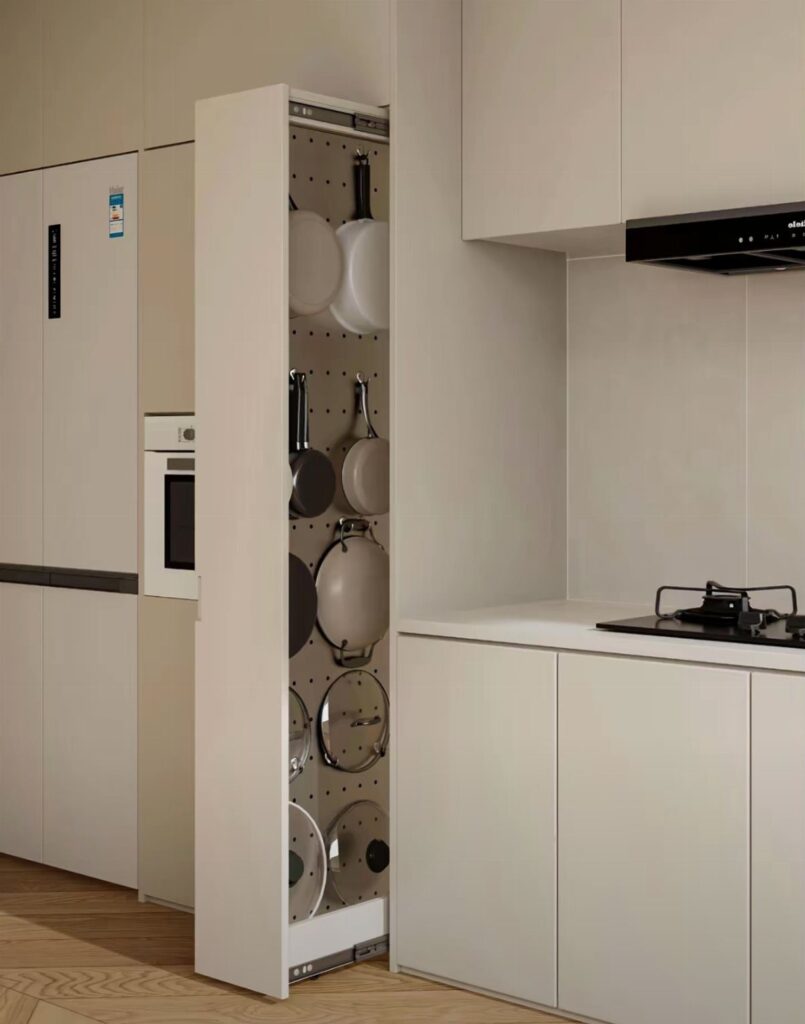
5. Pegboard Pot and Pan Pull-Out
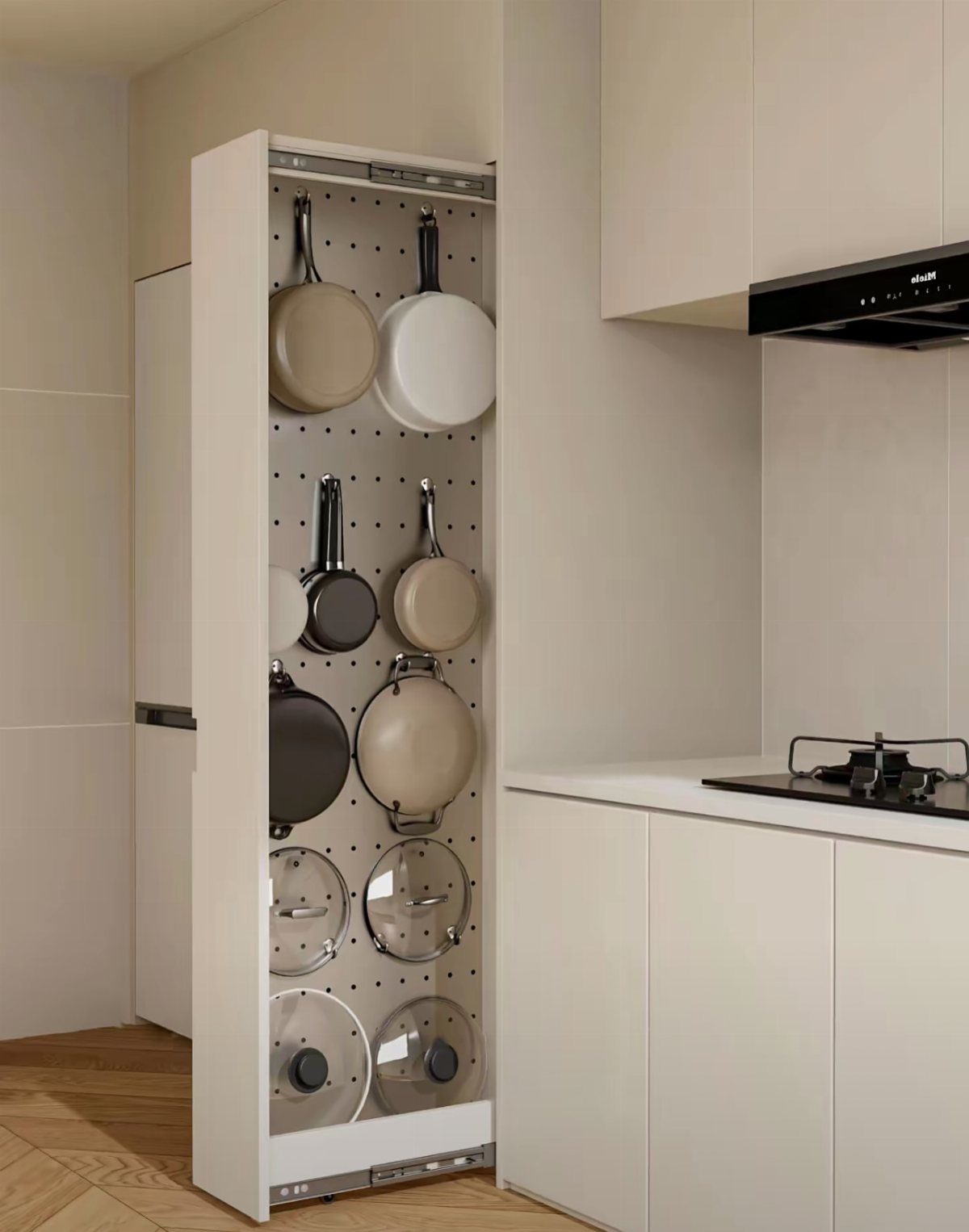
Pegboard inside a tall narrow cabinet hangs pans where a drawer would fail: lids nest flat, frypan handles stay vertical, and nothing stacks.
The board needs real backing, not raw pegboard, or the hooks loosen from the torque of lifting a loaded pan.
I would use doubled hooks, the kind made for tools, and space them so handles do not collide. This trades away enclosed dust protection for speed of access; I prefer it beside the cooktop where the mess belongs anyway.
6. Wire Basket Pull-Out Storage
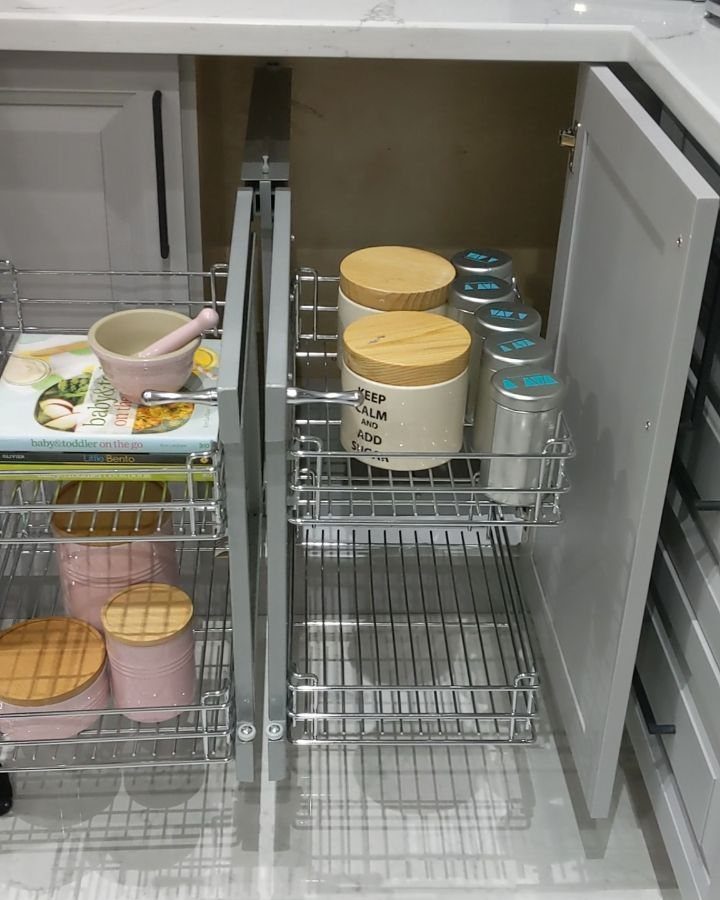
Open wire baskets let you spot a spice tin or cookbook spine without pulling the whole drawer to see what sits behind.
The mesh supports loose items, a mortar or small canister, that would tip on a flat slide. I would keep the bottom basket for weight, the top for things you grab daily.
Wire runs cooler than solid sides if your cabinet sits near an oven; the trade is noise when metal meets metal, so I would line with thin cork sheet.
7. Utensil and Knife Pull-Out
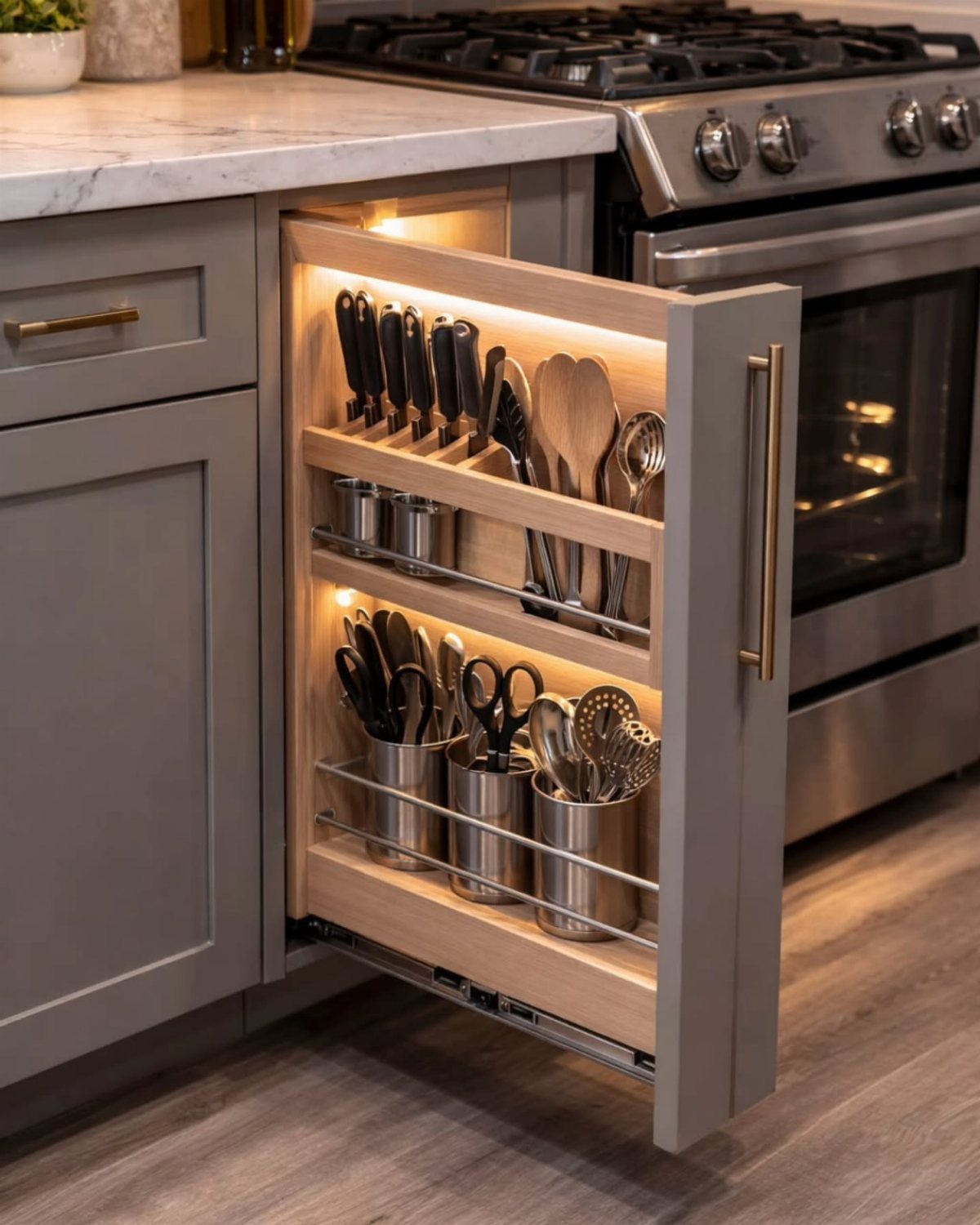
A slim pull-out beside the stove keeps knives and utensils inside the work triangle without stealing counter space.
The canister inserts sort spatulas and spoons upright so you grab one without disturbing the rest; knife slots keep blades edge-down and fingers safe. Built-in lighting matters more here than in deeper cabinets because the narrow box shadows itself.
I would mount this on full-extension soft-close slides; the silence and control matter when you are reaching past a hot pan. The narrow box fits a slim gap where nothing else earns its keep.
Keep total weight reasonable; a loaded knife block and metal canisters add up fast, and this cabinet gets opened in a hurry.
Installation Process
Installation goes faster than most kitchen projects because the storage gets built to your existing cabinet sizes before anyone shows up at your door.
A designer measures during a free in-home visit and feeds those numbers to a factory build, so the unit arrives ready to drop in.
Most jobs finish in under a day since there is no on-site cutting or waiting for glue and finish to cure.
The 3D rendering happens at that first meeting, which means you see the shelf heights and clearances before committing rather than guessing from a catalog drawing.
I would pull everything out of the target cabinet the night before; installers need the box empty and the old shelves removed to work efficiently.
Custom building also means odd cabinet depths, that 9-inch gap beside a pantry, get used instead of left dead.
Customer Satisfaction Guarantee
The guarantee runs through the Neighborly Done Right Promise rather than a branded in-house policy, which means the backing company handles disputes if a local franchise falls short.
I think that structure matters for built-in storage because you cannot return it to a store shelf if the slide spacing feels wrong after a month of use.
The promise covers adjustment or remake, not just refund, so a sagging shelf or sticky slide gets fixed instead of becoming your problem.
I would still test every pull-out with a full load the day of install, before the crew leaves; catching a height mismatch or a soft-close that does not catch is easier with the installer standing there.





