New York Christmas windows are free sidewalk displays that run from late November through early January along Fifth Avenue and Broadway, turning department store glass into the city’s most accessible holiday tradition. The catch is timing: the same displays that cost nothing to view can cost you an hour shivering in a November unveiling crowd, and the famous Saks light show only runs after dark when the sidewalk becomes shoulder-to-shoulder. Macy’s Herald Square keeps its animated windows until January 1, while Bergdorf Goodman spends nearly a full year handcrafting museum-level installations across from the Plaza Hotel.
[link-whisper-related-posts]Macy’s Herald Square
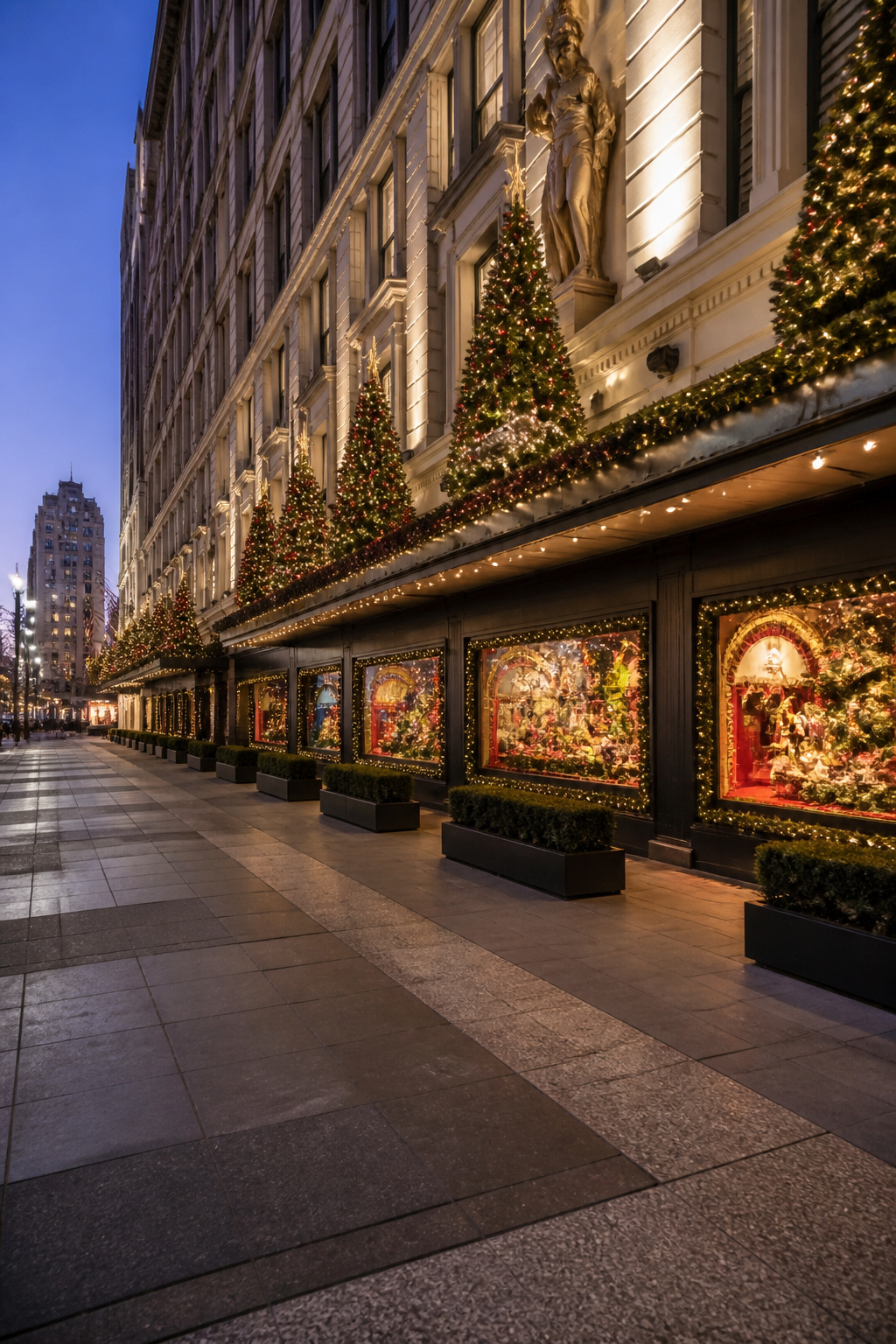
The animated holiday window at Macy’s Herald Square debuted in 1883, and that single display is what turned shopping into a public spectacle. Before then, stores were places you entered; after, the street outside became the attraction. Other retailers followed, but the standard was set here: mechanical figures, narrative scenes, and the deliberate engineering of holiday nostalgia.
What strikes me, reading through the history, is how little the formula has needed to change. The 2025 theme, "The Most Wonderful Stories Start Here," reaches back to Santa’s first arrival in 1861 and the first parade in 1924, treating the store’s own mythology as the draw. That self-awareness matters. The windows do not pretend to surprise you; they invite you to recognize something you already wanted to feel.
Six windows run along Broadway, mixing animation with music and interactive elements. They debut right before Thanksgiving and stay lit through January 1, which is a longer run than most displays get. The late hours matter if you are walking the route after dinner, though the crowds in December mean a morning or weekday visit will spare you the shoulder-to-shoulder slowdown.

Smart Curtain Lights with DIY Editable Patterns: In addition to the preset patterns, you input any text or pattern you want to show, which can be dynamically displayed. 6.56 x 6.56Ft LED smart curtain lights make interesting fonts, pictures, colors, and copy to perfect your imagination, add more dimension to your


Saks Fifth Avenue
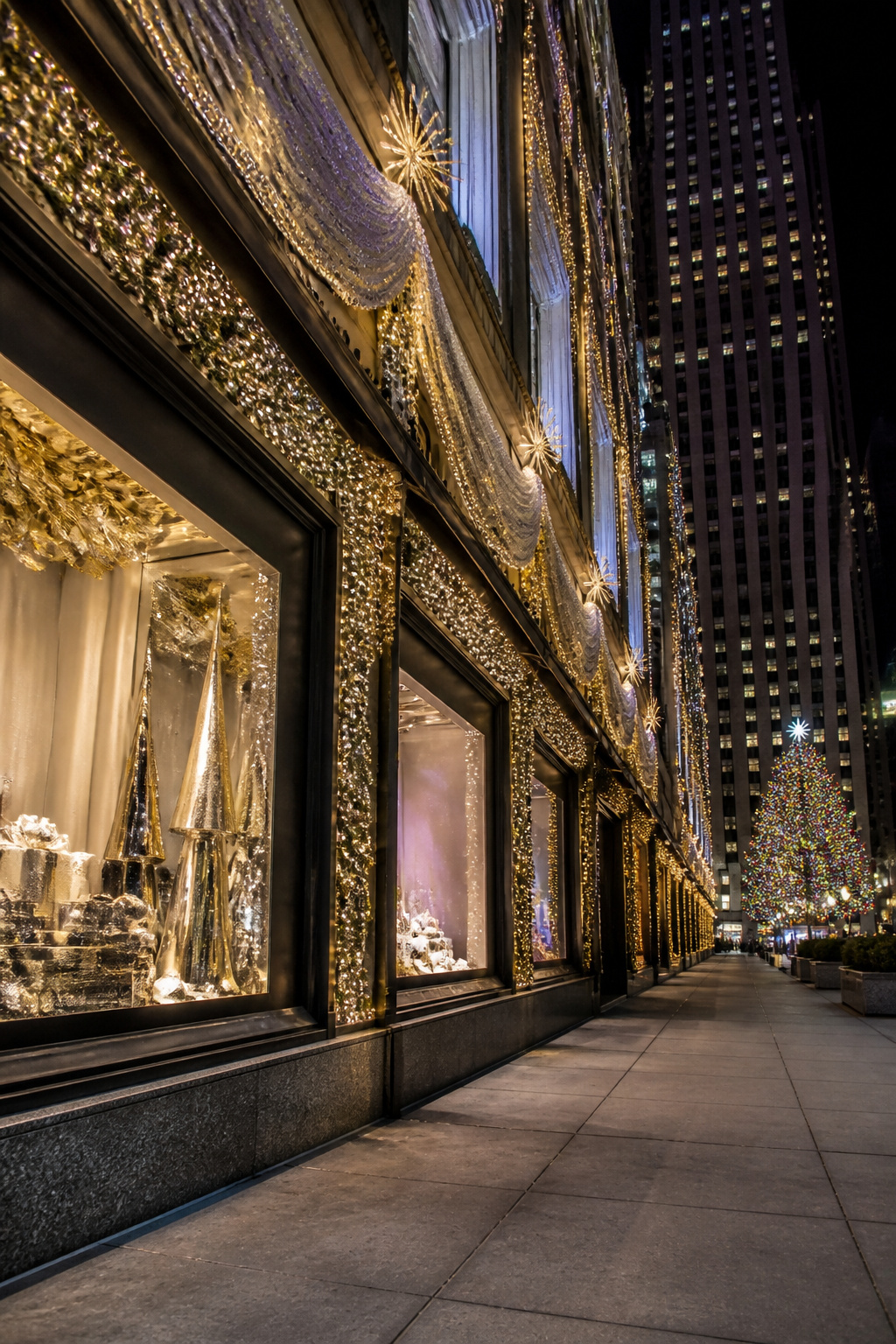
The Saks Fifth Avenue holiday light show returns for 2026 with its facade facing Rockefeller Center across Fifth Avenue, and that positioning alone makes the unveiling in late November a genuine crush. Thousands pack the sidewalk between 49th and 50th Streets while the store runs its sound-and-light sequence across the building face, and the crowd density feels more like a concert than window shopping.
Six windows line the Fifth Avenue side, each built around a New York City moment rather than a product display. The 2024 season skipped the light show entirely for a fashion-focused centennial display, so the 2026 return matters for anyone who missed the full experience. The windows stay up through early January, which gives you weeks after the holiday crowds thin.
Evenings are when the light show actually works, though the tradeoff is shoulder-to-shoulder sidewalk traffic. If you want the facade without the bodies, a weekday morning lets you see the window details up close, but the synchronized lights and music only run after dark.
Saks and Macy’s Herald Square sit barely ten blocks apart, and both draw massive audiences for their late-November unveilings. Macy’s keeps its windows until January 1, while Saks typically runs a few days longer into early January. The real choice is whether you want narrative windows with a theatrical light show, or Macy’s more traditional puppet-driven scenes. My own preference shifts year to year, but the Saks location wins for combining with other Midtown stops, since the Rockefeller tree and skating rink sit directly across the street and require no extra walking.

【ANIMATED CHRISTMAS DISPLAY FOR YOUR CAR】 Turn your rear window into a festive holiday display with colorful pixel animations featuring Santa, Christmas trees, snowflakes, snowmen, reindeer, gifts and other seasonal designs. A fun alternative to ordinary static Christmas car lights.

Video is 8 minutes long and made to seamless loop

【ANIMATED CHRISTMAS DISPLAY FOR YOUR CAR】 Turn your rear window into a festive holiday display with colorful pixel animations featuring Santa, Christmas trees, snowflakes, snowmen, reindeer, gifts and other seasonal designs. A fun alternative to ordinary static Christmas car lights.
Bergdorf Goodman
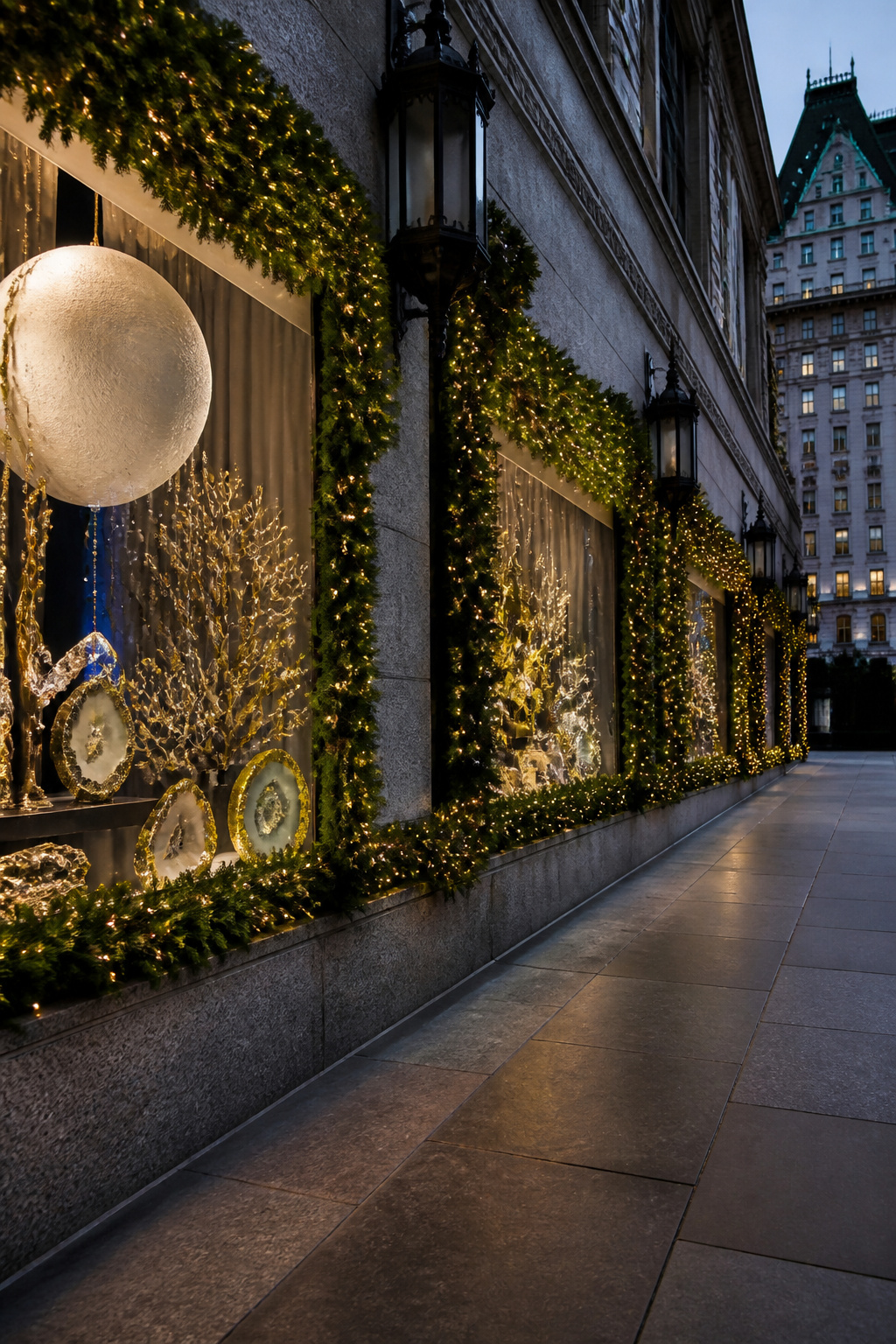
Bergdorf Goodman treats its Christmas windows as museum installations rather than retail decoration. The store spends almost a full year planning each display, and that timeline shows in what you see from the sidewalk: handcrafted props, rare materials, references that pull from art history rather than catalog pages. Past windows have used intricate sets built by a team of designers, costumers, carpenters, and animatronics professionals working across several weeks of installation.
The corner at Fifth Avenue and 58th Street, directly across from the Plaza Hotel, means these are some of the most photographed holiday stops in Midtown Manhattan. Plan extra time here; the detail rewards a second and third look, and the crowd in front of you will likely be standing still anyway. Displays typically go up mid to late November and stay through early January.

Musical Christmas Lights: These 100 super-bright mini incandescent bulb string lights are suitable for both indoor and outdoor applications, making them ideal for decorative purposes. They provide a welcoming ambiance in the evening, enhancing the aesthetic appeal of any home.Light strand comes ready to hang with convenient spacing between bulbs for optimal light distribution.

CHRISTMAS LIGHTS OUTDOOR WITH MUSIC: Toodour multicolor xmas tree lights come with motion sensor control box. When someone enters the 5-10ft sensing range, the control box will play cheerful music and string lights will flicker to the music, It will be the best product for your Christmas decoration.

【 Musical Christmas Lights 】: Christmas musical bell string lights has 5 different color bell (red, green, yellow, blue,pink) with incandescent multicolor bulbs and controller. We provided 1 spare fuse and 2 extra incandescent light bulbs in our package.
Bloomingdale’s
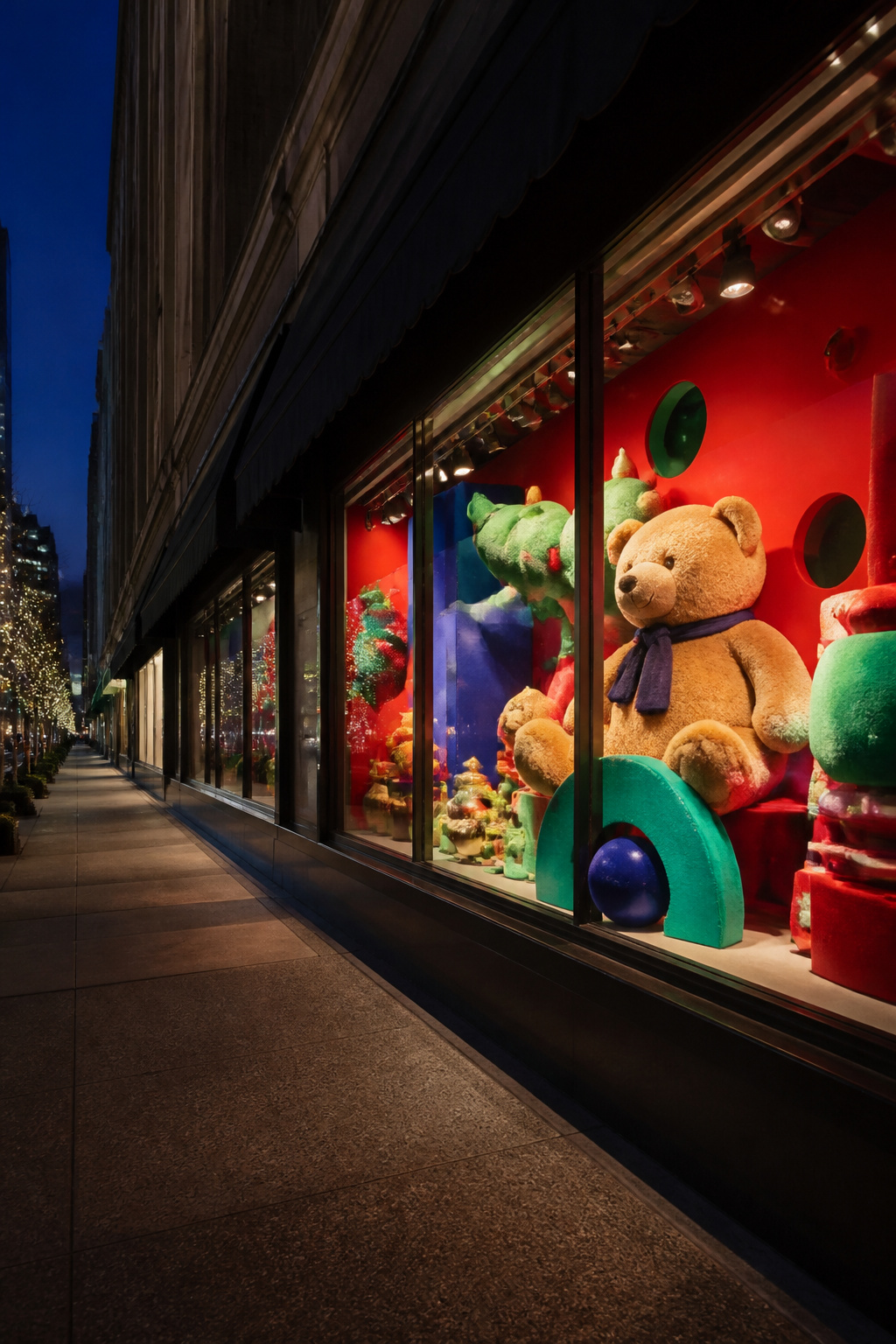
Bloomingdale’s sits a block east of the main Fifth Avenue drag, and the detour pays off in windows that feel like they were built for someone who grew up on cable TV and Broadway cast recordings. In 2024 they ran a "Wicked Good Holiday" tie-in with the musical; for 2025, a full-wall Burberry collaboration lined Lexington Avenue with iron-clad knights in plaid scarves, one at a piano, another wrestling a stuffed bear out of a chimney. The rule here is permission to be literal about what you love. No abstraction, no snow-dusted nostalgia, just the thing itself blown up to window scale.
For a renter working with a few hundred dollars and a Saturday, this translates easily. Pick one pop-culture anchor, the musical or movie or game your household actually talks about, and build around it with color and a single prop rather than spreading thin. Bloomingdale’s adds sound and interior pop-ups because they can; your apartment window gets the same punch from one oversized element and lights that actually work on a timer. The store’s windows debut before Thanksgiving and run through early January, which is roughly the lifespan of a real person’s patience for holiday storage anyway.
PERFECT FOR ANY SMOOTH SURFACE: Christmas snowflakes window clings, fit for any smooth surface: sliding glass door, glass window, shop window, ceramic tiles, home appliance, etc. Great as Christmas stickers, Xmas decals, Static snowflakes stickers, snowflakes decals decorations, make amazing Christmas party supplies, Xmas decorations indoor ornaments, holiday home décor.
【Great Christmas Decorations】Package includes 71PCS/4 sheets(30*90cm/11.81*35.43"). Cute Christmas window clings contain a lot of Xmas elements, like lovely Santa Claus, different size snowflakes, big Christmas tree, which can meet your various needs for decorating your home at Christmas with this large Christmas window stickers. Use this double sided window clings to add more fun and joy to your glass windows.

【Wizardry Floating Candles】Unveil the magic within our flameless candles and a bewitching magic wand remote. It's an extraordinary gift, inviting you to revel in the delights of magical play and immerse yourself in a world brimming with enchantment.
Tiffany & Co.
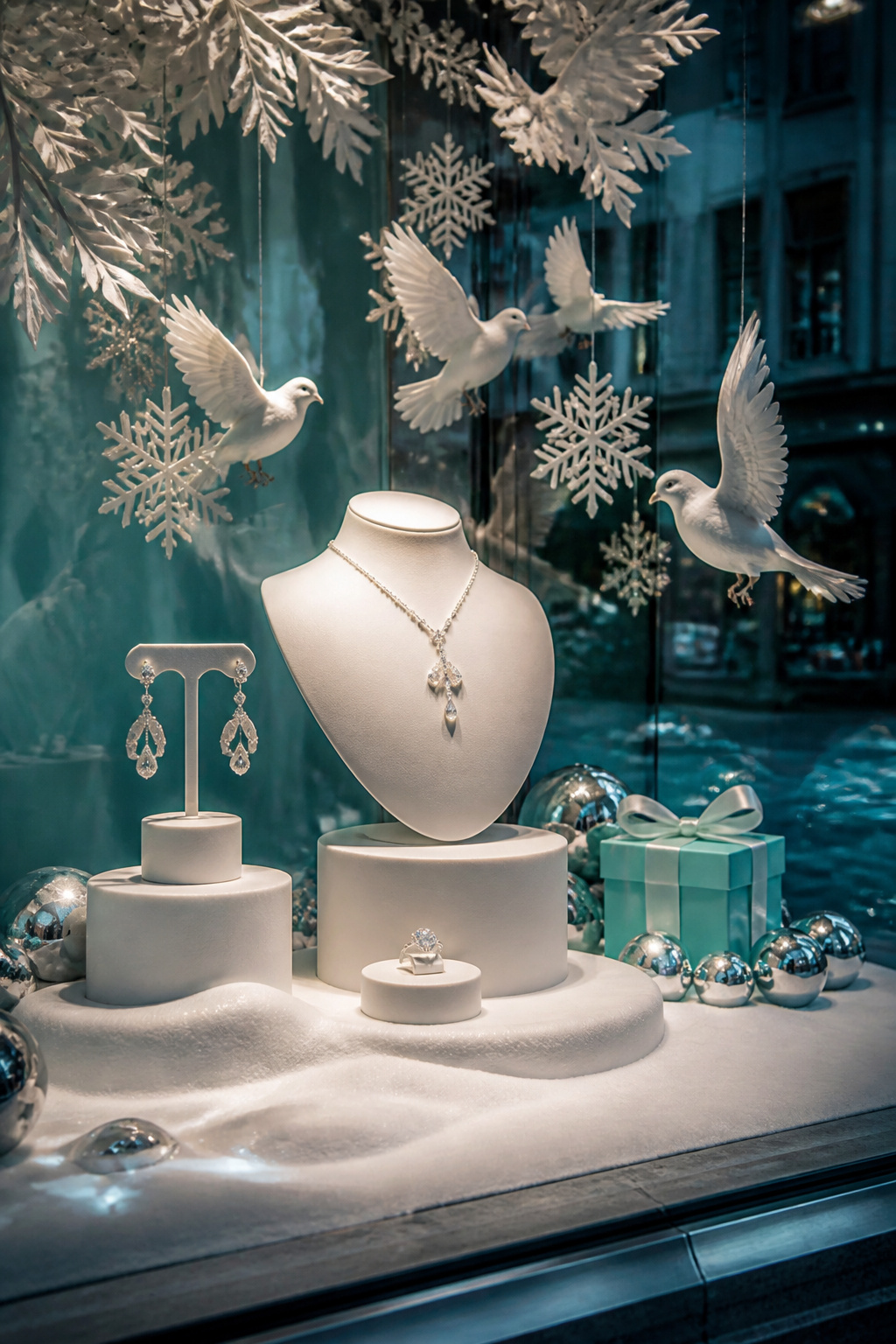
The Tiffany & Co. flagship on Fifth Avenue builds its holiday display from the jewelry already inside the case rather than draping generic tinsel over it. Glass-like snowballs glow behind diamond bracelets that sit in the foreground, framed by floating doves, icicles, and snowy white trees. The famous little wrapped blue boxes appear as themselves, not as props imitating something else.
This is the difference between a store that sells romance and one that merely borrows it. The jewelry is the decoration, and the atmosphere starts from the product outward. A passerby sees the bracelet first, the winter scene second, which is exactly the hierarchy a jeweler wants.
The result reads as a "canvas of dreams and love in all its forms," which sounds like marketing copy because it is, but the window earns the sentiment by keeping the merchandise central. For someone mid-project at home, the lesson is about restraint: pick one thing you already own that you love, and let the holiday framing serve that object instead of competing with it.

Dynamic Motion Halloween Projector:Create an eye-catching Halloween atmosphere with animated projection effects and HD holiday patterns. Featuring spooky cat, ghost, spider and pumpkin designs, this projector light brings walls, windows and yards to life with a unique moving display

[8 Lighting Modes]: WATERGLIDE 2 pack 50LED Halloween orange and purple mini string light has 8 lighting modes for you to choose - Combination, In waves, Sequential, Slow Glow, Chasing/Flash, Slow fade, Twinkle/Flash, Steady on. Adjust the lighting modes by pressing the round button on the battery box

🎄【𝟐𝟎𝟐𝟔 𝟑𝐃 𝐃𝐲𝐧𝐚𝐦𝐢𝐜 𝐁𝐫𝐞𝐚𝐭𝐡𝐢𝐧𝐠 𝐄𝐟𝐟𝐞𝐜𝐭】Engineered with 2026 upgraded 3D dynamic breathing technology, HoneyFair Christmas projector lights display vivid, multi-layered three-dimensional animations rather than flat, boring images. You can see lifelike patterns effortlessly glide, float, and dance on any surface, instantly generating a cozy, magical glow. Serving as high-performance Christmas projector lights outdoor and indoor decorations, it effortlessly converts your yard, exterior wall, window, or garage door into an enchanting winter wonderland.
Gucci
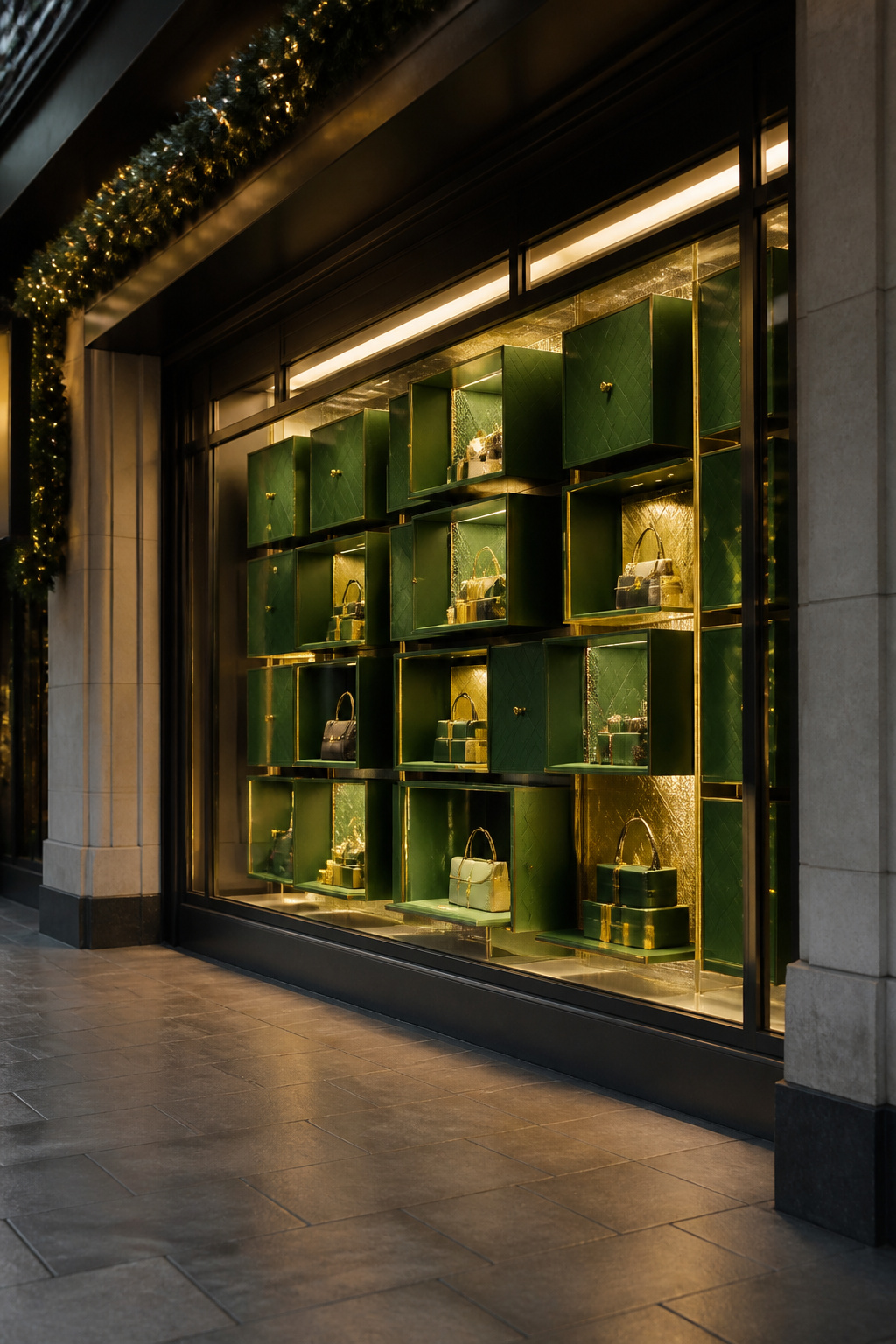
The Gucci windows on Fifth Avenue take a different route than the atmospheric scenes you’ll find further up the street. Instead of a story unfolding across glass, the display borrows the structure of a traditional advent calendar: numbered emerald green boxes that open and close on a timer, each one revealing silver heels, handbags, or jewelry tucked inside like daily surprises made physical.
This mechanical approach stands out against the immersive, walk-into-a-snow-globe strategy Saks and Bergdorf favor. Where those stores build a narrative you step into, Gucci builds a ritual you watch. The numbered sequence gives the eye a clear path, which matters on a crowded sidewalk where people are jostling for position. Little bells jingle each time a door swings open, a sound cue that pulls attention without demanding it.
For a renter or weekend DIYer thinking about their own window display at home, the lesson is structural more than thematic. A calendar format breaks the job into discrete, repeatable units. One box, one day, one object. The repetition is what makes it readable from twenty feet away, and what makes it photographable for Pinterest in the three seconds before the crowd shifts.

White, Green Wide Angle LED

9 Stunning 4K Winter TV Screensavers - Premium ultra-HD animated scenes including snowfall, fireplaces, cabins, and winter villages

[Always Ready to Play] Charge up to four controllers at once, ensuring your PlayStation 4 and PS5 VR setup is always ready for action without waiting for individual controllers to recharge.
Nordstrom
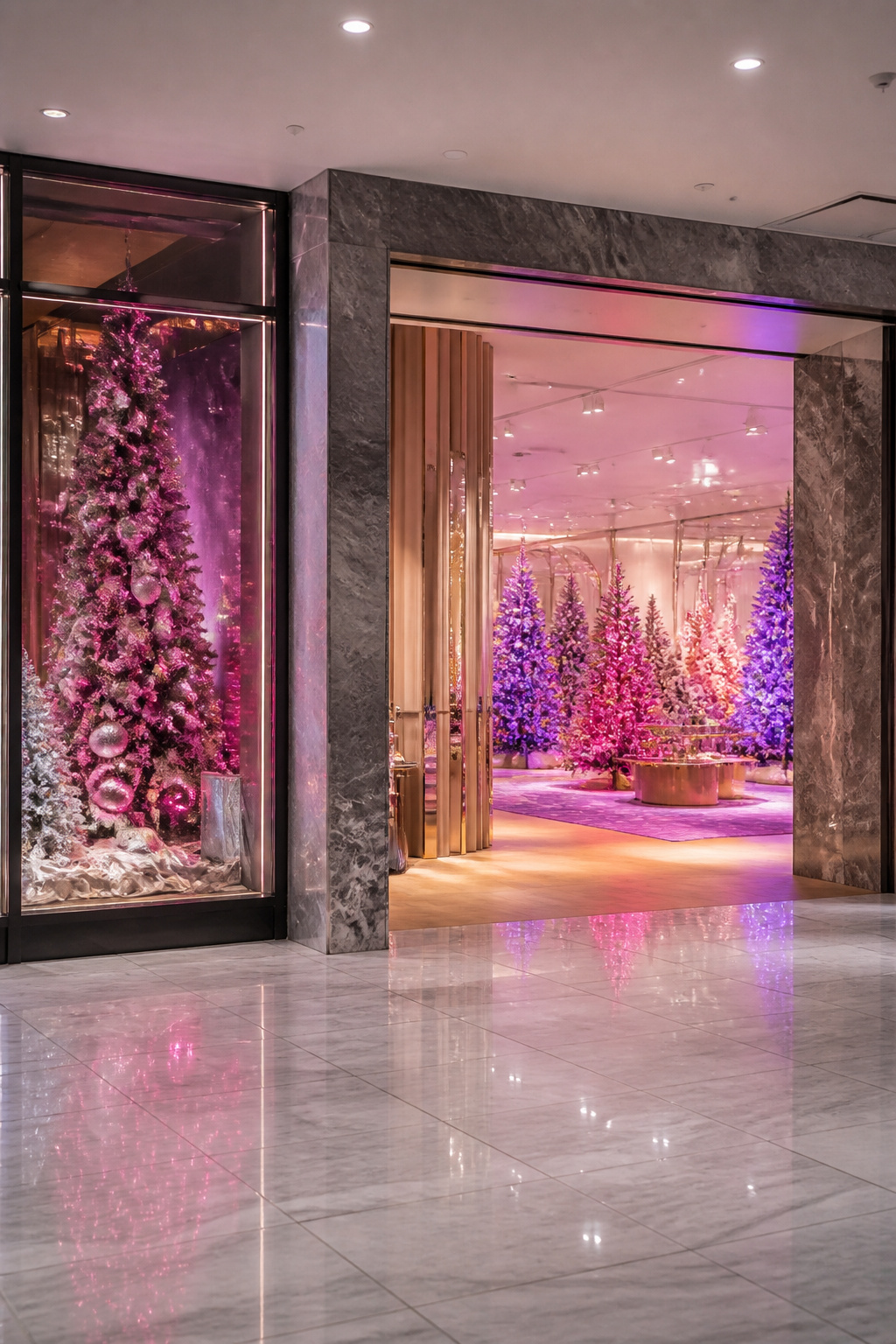
Nordstrom’s 2026 display breaks the pattern of standing outside to look in. The flagship store on 57th Street runs an interactive experience called "Oh, What Funhouse!" that starts the moment you walk through the entrance. Visitors pass through a glowing LED tunnel with floating metallic letters spelling "Oh, What Fun!" before the main event even begins.
Inside, the store hands every shopper a "Gift Expert Guide" and sends them through five separate elevator rides, each themed to one of the five senses. The task is concrete: collect stickers, notes, and clues that point toward actual gift ideas. Complete all five levels and you earn the title of Certified Gift Expert. The windows themselves are lined with rows of Christmas trees in pink and purple, but they function more as a billboard for what waits inside than as the main attraction.
This is a different bargain than the classic department store route. At Saks or Macy’s, the crowd gathers on the sidewalk for a curated viewing, maybe a light show timed to music. Nordstrom asks you to commit time inside, to participate rather than spectate. For visitors with kids or anyone tired of passive holiday consumption, the trade makes sense. For the photographer looking for that single perfect shot, the better canvas is probably still down the avenue.

Atmosfx USB Stick contains 16 different scenes


Luxury Boutiques
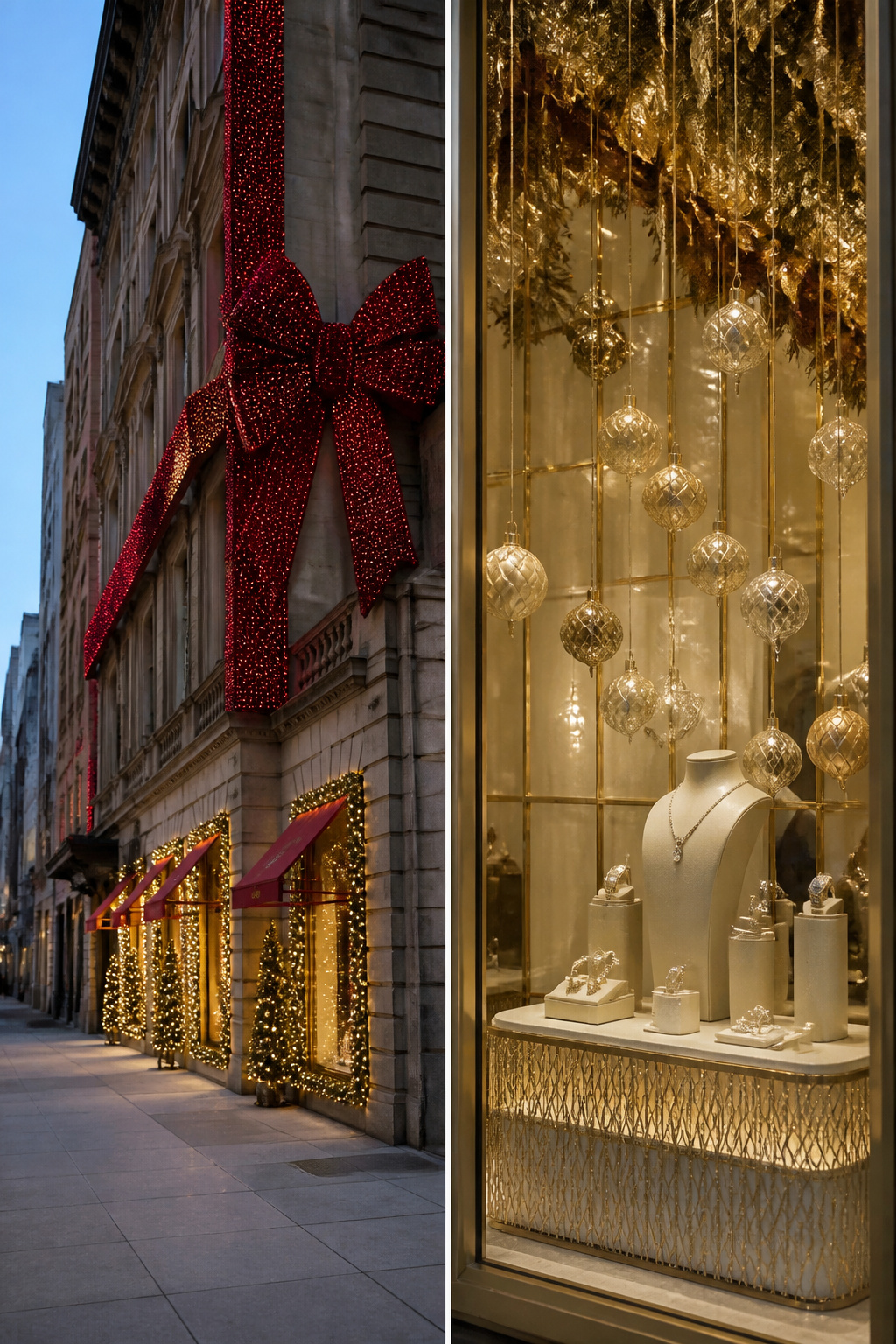
The luxury boutiques along Fifth Avenue treat their facades as single statements rather than sequential stories. Cartier wraps its building in a glowing red bow and lights, turning the architecture itself into the photograph most visitors take home. Dior’s windows lean on glittering ornaments and couture details that read as jewelry from twenty feet away, not diorama props demanding close inspection.
Where department stores build narratives you walk past, these storefronts compete for a split-second glance between traffic lights. The scale is intimate, maybe fifteen feet of glass instead of sixty, but the intent is brand immersion rather than storytelling. Louis Vuitton’s recent flagship used oversized luggage trunks as sculpture, making the window feel like a gallery piece that happens to sell bags.
The passerby’s best move is to stop directly across the street, not press against the glass. These displays are designed for distance, for the crowd shot that includes the building name above the ribbon. Up close, the magic thins; from the opposite sidewalk, the whole block becomes a sequence of jewel boxes.

ALL-IN-ONE LIGHT AND SOUND SYSTEM: This outdoor power strip synchronizes your yard lights with 20 festive holiday songs for a captivating display


Light & Sound Kit Only, 21330 Model Sold Separately: Kyglaring light and sound kit is compatible with LEGO 21330 Home Alone House building set; this product includes lighting and sound components only
When the Windows Open
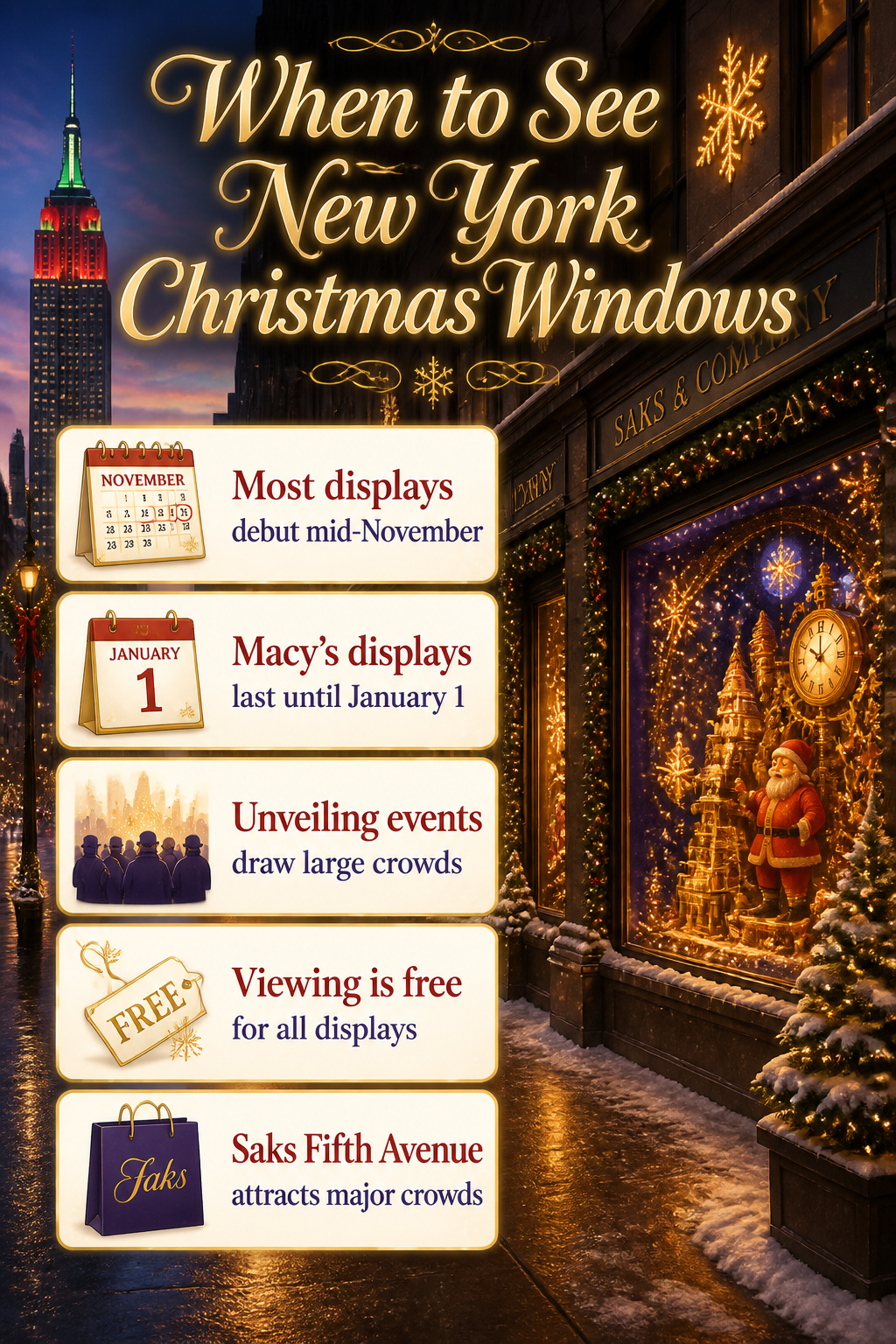
Most Christmas windows in New York debut in mid to late November, just before Thanksgiving, and stay up through early January. Macy’s Herald Square is the exception that proves the rule, keeping its displays until January 1 exactly, while Bergdorf Goodman and Saks Fifth Avenue often linger another week into the first week of January.
The unveiling events themselves draw serious crowds. Saks Fifth Avenue in particular packs the sidewalk for its opening night, with performances and a countdown ceremony that can mean standing in the cold for an hour to catch a glimpse. The November unveilings are worth attending only if you are already nearby and dressed for standing still; otherwise, the windows look identical the next morning without the body heat of a thousand strangers.
For planning purposes, the calendar gives you roughly six weeks of overlap between the displays, so missing a November debut costs you nothing in actual viewing. Evenings on Fifth Avenue feel more festive, but a Tuesday morning in mid-December gets you the same animatronics and Swarovski crystals without the shoulder-to-shoulder photography battle. The displays are free to view, which matters when every other holiday attraction in the city carries a ticket price.

★ Size- 23.6x35.4in,Please refer to our size picture carefully.


How to Walk the Route
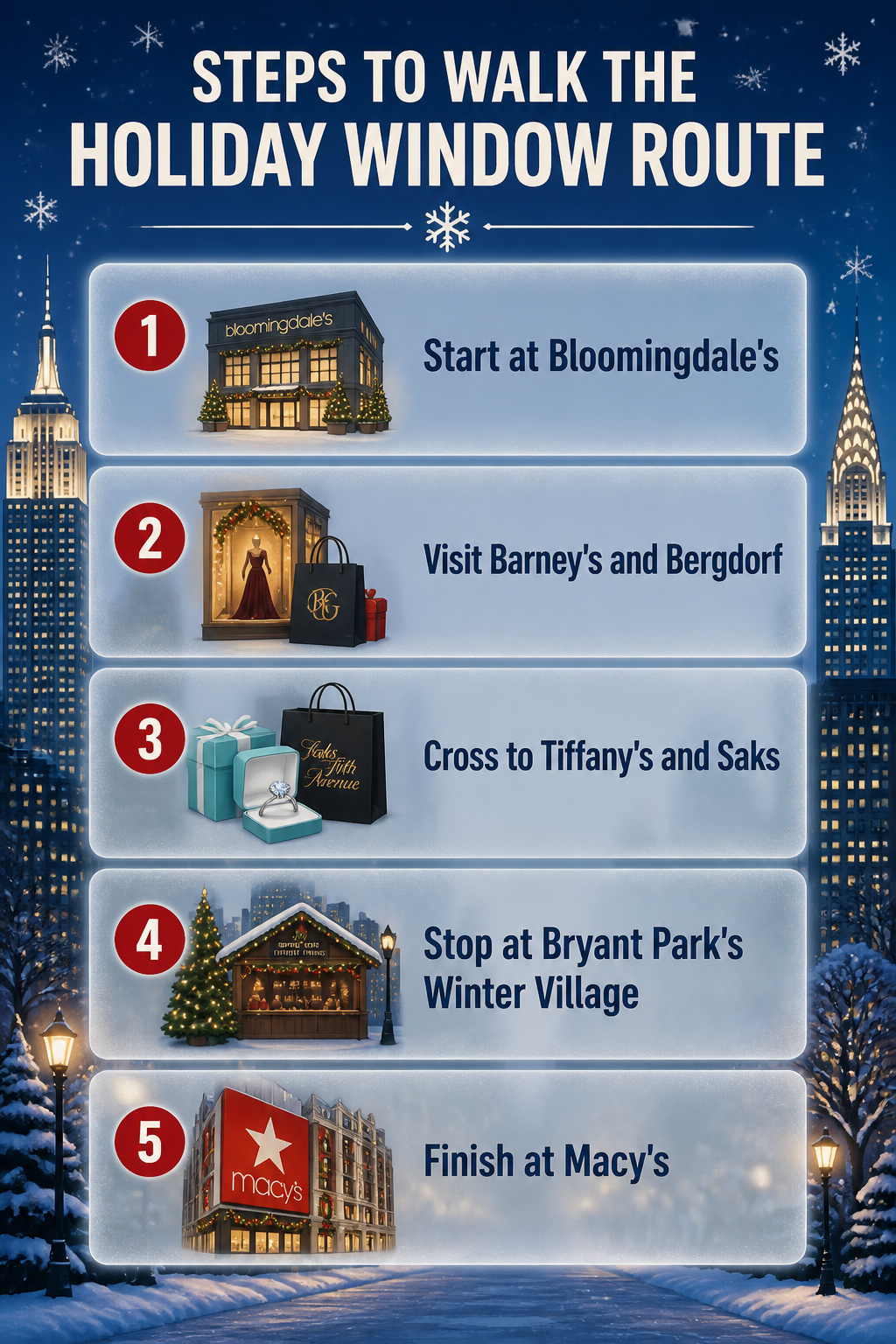
The windows read best after dark, when the glass goes black and the lighting inside does the work. Weekday evenings are the move here; the sidewalks thin out enough to stand in front of a display without getting shouldered every ten seconds.
I have walked this route both ways, and starting at Bloomingdale’s on Lexington Avenue makes the pacing click. You hit Barney’s and Bergdorf Goodman while your legs are fresh, cross to Tiffany’s and Saks before the Rockefeller tree crowd thickens, then push south past Bryant Park’s Winter Village to Lord & Taylor and finish at Macy’s on Broadway. The whole line is roughly two miles, and planning on ninety minutes keeps it from turning into a slog. Budget a pause at the library steps or the holiday market when your feet start talking; the route has no mercy if you try to power through.
What the Displays Cost to See
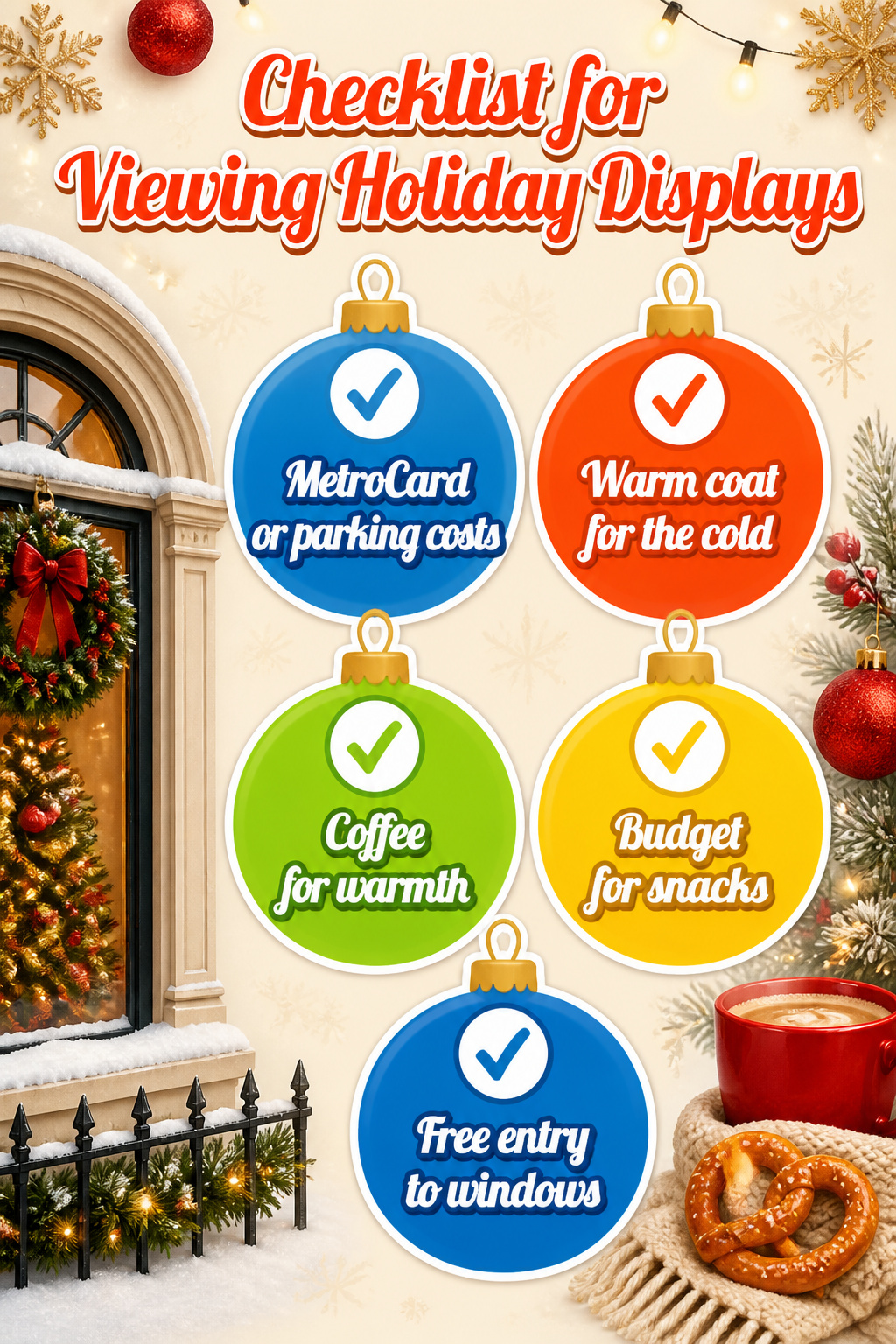
Every window on the route is free to walk up to, which matters more than it should in a city where standing in line for a $17 hot chocolate passes for holiday tradition. The real cost is everything wrapped around it: the MetroCard or the parking garage, the coffee you grab because you misjudged the wind, the hour you spend thawing in a chain restaurant because you didn’t pack a real coat.
For someone who budgets a few hundred dollars on holiday projects each year, this fits like a hand-me-down sweater. My own December spending usually breaks toward a new wreath form, replacement lights, and the lumber for a simple mantel piece. Setting aside maybe thirty or forty dollars for a train ticket and a street-vendor pretzel keeps the windows within reach without touching the project fund. Time is the bigger subtraction. A full evening after work, or one weekend afternoon, is enough to see three or four locations if you walk hard and resist stepping inside every heated lobby. The displays themselves ask nothing. That is their gift, and it is a real one.
Bringing It Home
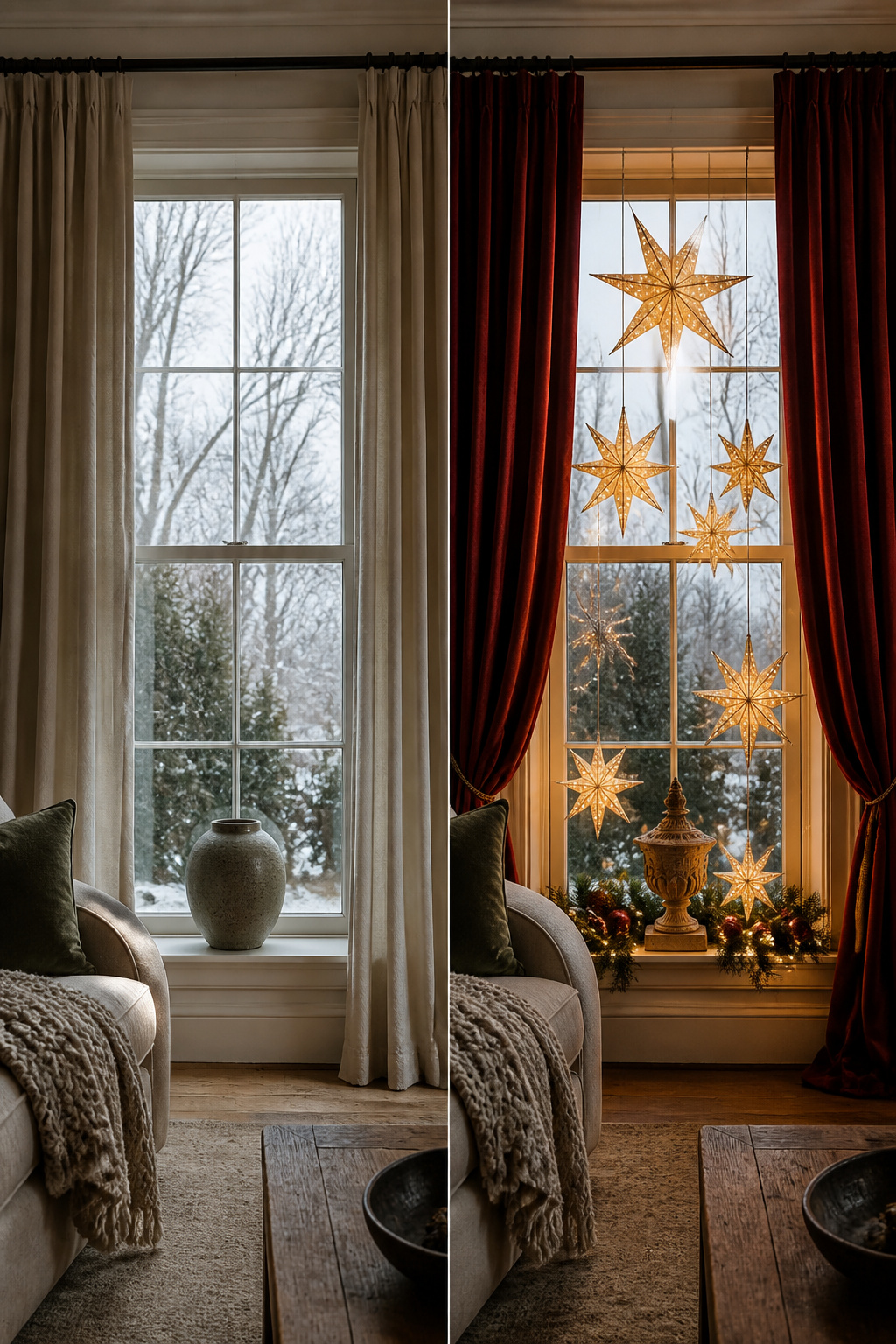
Battery-powered lighting is the first thing to borrow, since most rentals do not have an outlet where you need it. The star-shaped fixtures I noticed at several displays run warm white, not cool, and that temperature matters more than the shape. Tartan curtains behind the lights add depth, but a plain curtain in a dark color does nearly the same work of catching the glow and hiding the room behind.
Scale is where the Fifth Avenue approach falls apart. Those windows are twenty feet tall and designed to read from a sidewalk thirty feet away. A living room window reads from six feet inside and maybe fifteen feet out, so anything over eight inches tall risks looking like a prop lost on a stage. The small light figures, the ones clustered at sill height rather than hung overhead, translate best.
What fails is trying to recreate the layered depth. The big displays build scenes with foreground, middle, and background elements, each at a different light level. In a home window, that collapses into visual noise. One focal point at the sill, one light source behind it, and darkness everywhere else reads cleaner than the busy tableau you walked past downtown.
Frequently Asked Questions
When do New York Christmas windows open?
New York Christmas windows usually debut in mid to late November, just before Thanksgiving. Saks Fifth Avenue draws particularly large crowds for its opening night, which includes performances and a countdown ceremony. If you are not already nearby and dressed for standing in the cold, the windows look identical the next morning without the crush of bodies.
How long do the Christmas windows stay up?
Most Christmas windows stay up through early January, giving you roughly six weeks to see them. Macy’s Herald Square keeps its displays until January 1 exactly, while Bergdorf Goodman and Saks Fifth Avenue often linger another week into the first few days of January. Missing a November debut costs nothing in actual viewing time.
What are the best times to see the Christmas windows?
Evenings after dark are when the windows read best, since the glass goes black and the interior lighting does the work. Weekday evenings thin the crowds enough to stand in front of a display without getting shouldered every ten seconds. Later at night beats the early evening rush, and mornings or weekdays spare you the December shoulder-to-shoulder slowdown if you prefer photos and closer inspection.