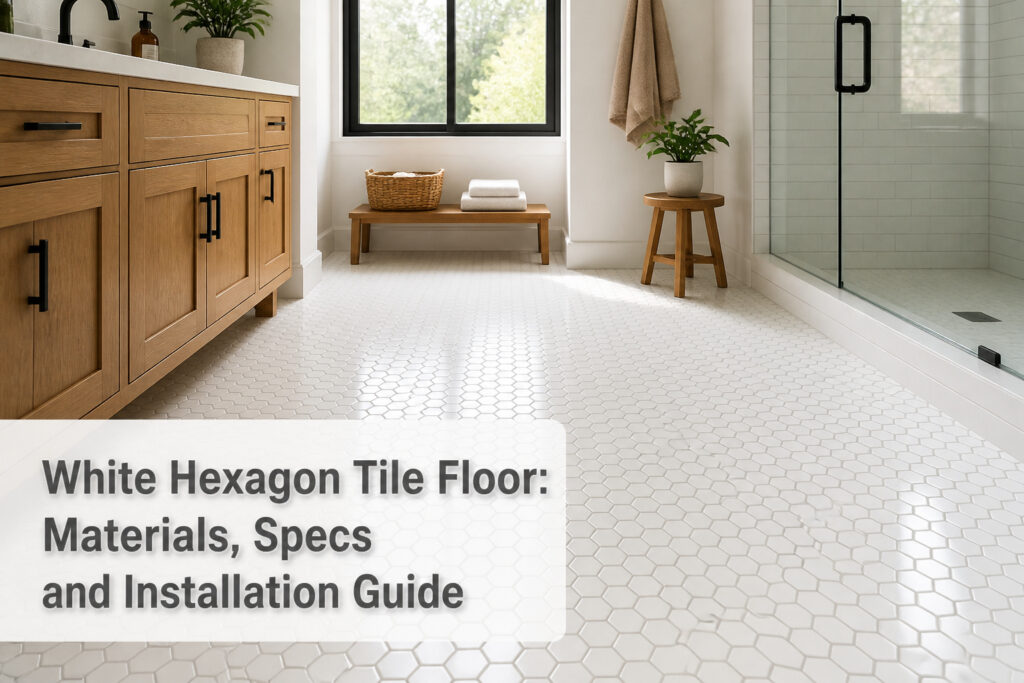
A white hexagon tile floor is a mosaic porcelain installation laid in 1 x 1 inch hex chips on 10 x 12 inch sheets, and the finish you choose changes everything about how it lives in a room. Matte is the practical call for bathrooms: it kills glare under vanity lights and gives wet bare feet something to grip. The real trip point most people miss is the mortar color. Gray thinset shows through the gaps and muddies the clean look you paid for, which is why the $55.20 bag of white Laticrete 254 exists.
[link-whisper-related-posts]White Hexagon Matte Porcelain Mosaic
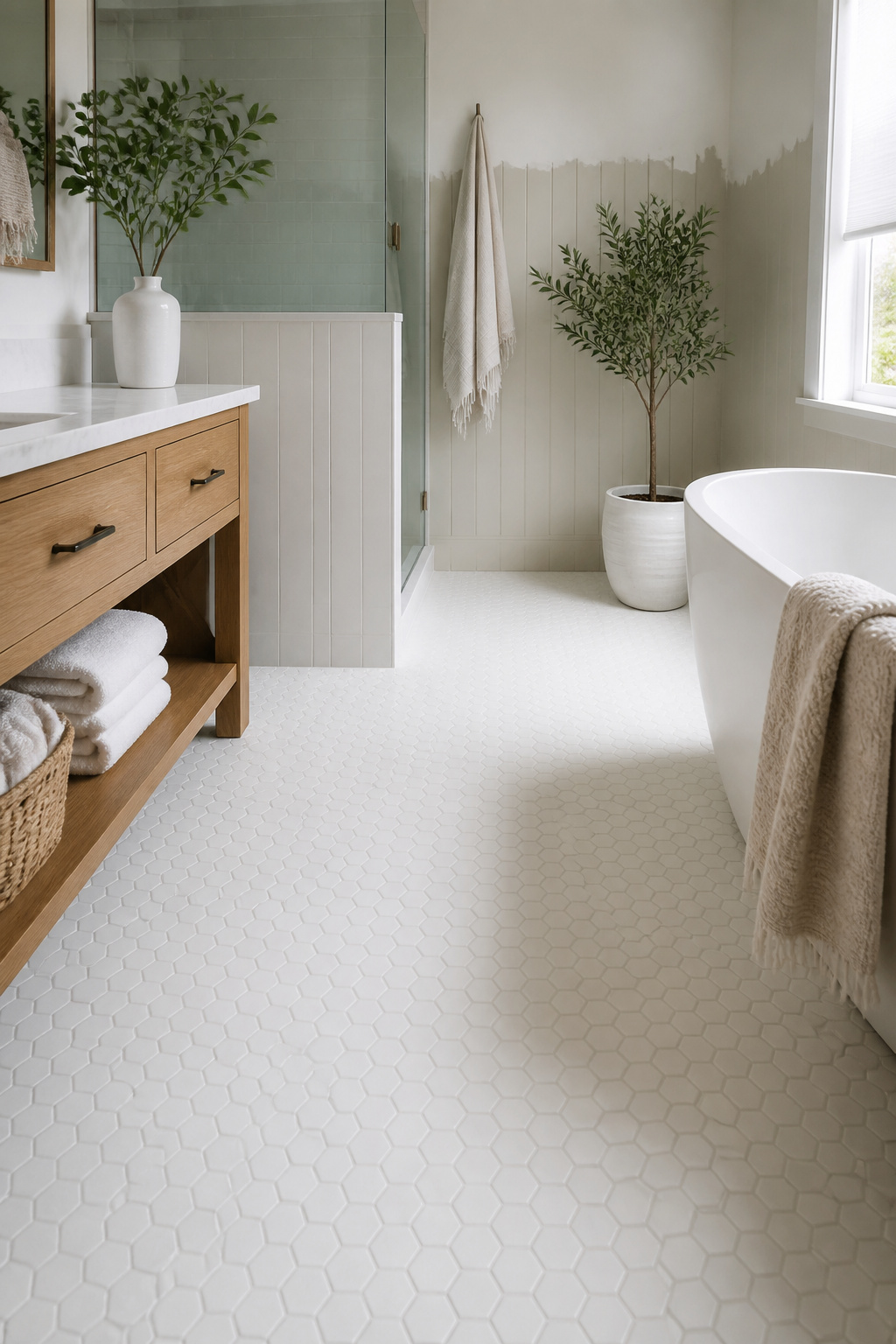
The 10 x 12 inch sheet breaks into 1 x 1 inch hex chips, which is the scale that reads right on a bathroom floor without feeling busy. At 5.20mm thick, the tile sits low enough that you won’t fight transitions into adjoining rooms, and the less than 0.50% water absorption rate is what lets you take it into a shower floor without worrying about freeze-thaw cracking or long-term water damage. Pressed edges matter more than they sound like they would; the slight bevel lets adjacent chips meet cleanly so the grout line becomes a thin, consistent shadow rather than a distracting ridge.
Matte finish is the practical choice here. It doesn’t throw glare under vanity lights or morning sun, and the texture gives bare feet something to grip on wet shower floors. I would skip this for pool decking, which the manufacturer flags as unsuitable anyway, but for indoor bathroom floors, shower floors, and walls, the rating covers all of it. Grout lines from 1/16 to 3/8 inch are acceptable; 1/16 keeps the field looking more like solid stone, while 3/8 gives you room to hide slight unevenness in your substrate if you’re working a weekend timeline with hand tools.

White 2" Porcelain Mosaic Tile

Shiny Smooth surface Hexagon design White and Black Porcelain Mosaic
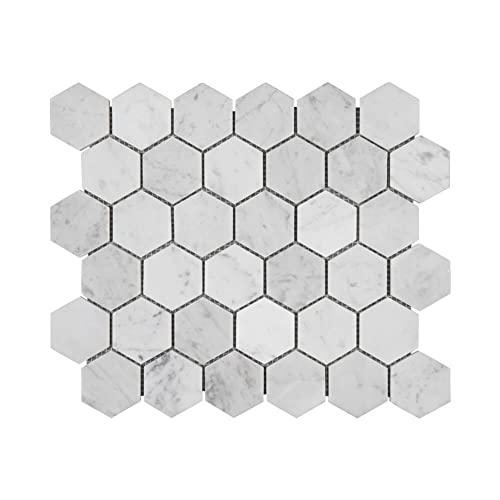
Sheet size: 11.7"x10.2"x0.3"(298mm×258mm×8mm); 5 sheets/box; 4.1SQ.FT./box
Laticrete 254 Adhesive Mortar
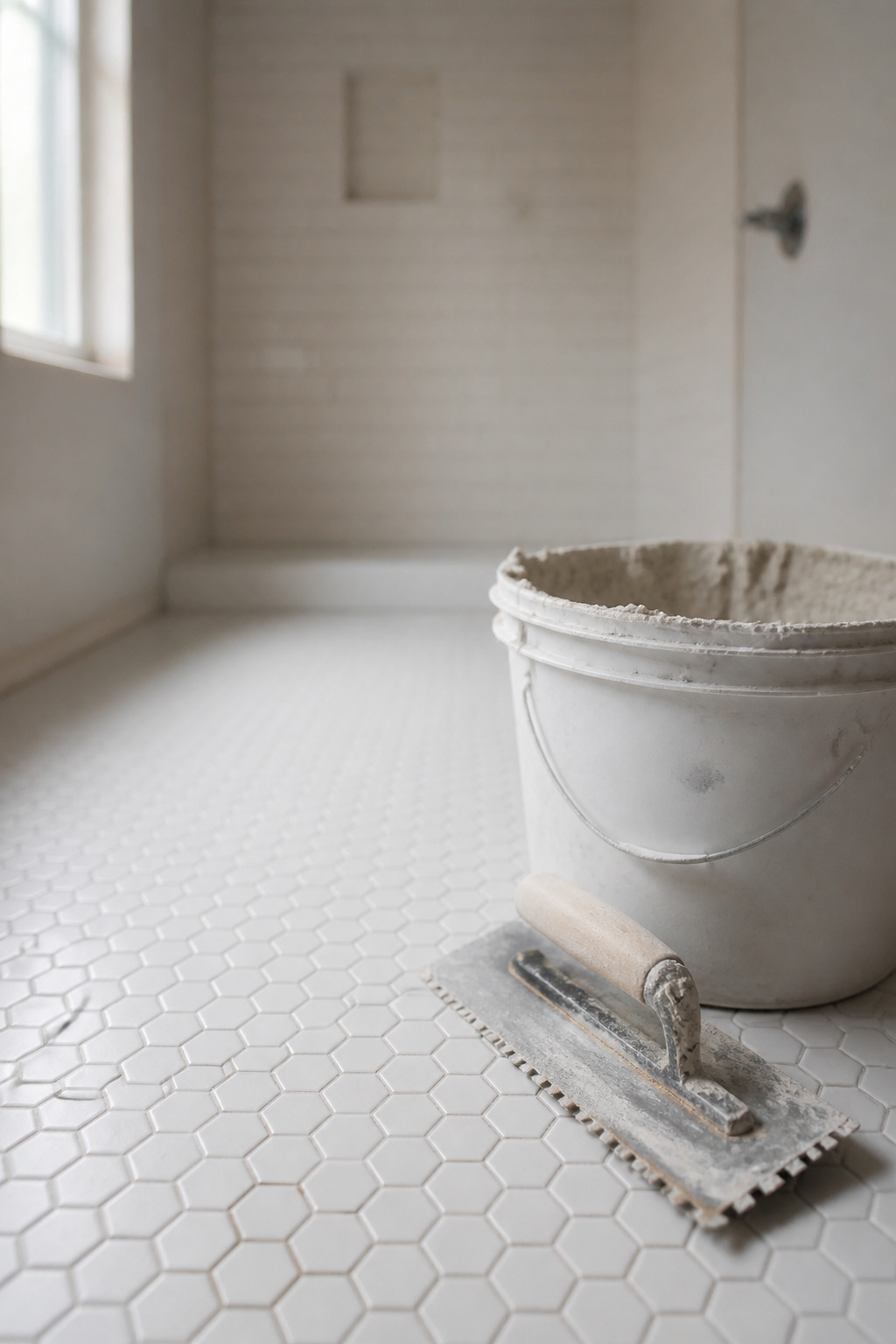
White mortar matters more than people expect. With a white hexagon tile floor, gray thinset shows through the gaps and mutts the clean look you paid for. I learned this the hard way on a bathroom job years ago, and now I check the bag color before I check the price.
The adhesive that handled my last hex install was Laticrete 254 Platinum Plus White Adhesive Mortar. It comes in 25lb bags at $55.20, which is not the cheapest option on the shelf. What that money buys is a polymer-modified formula that grips porcelain mosaic without slumping between the small tiles. The white base keeps the grout lines reading true, especially if you end up with a lighter grout choice or if the joint spacing runs tight.
A 25lb bag covers roughly what you’d expect for a small bathroom floor, though I always grab one more than the math suggests. The hex pattern eats more adhesive than square tile because of the increased edge length, and running short mid-set is a mistake you make once.

Premium Porcelain Construction: Made from high-quality porcelain for superior durability, water resistance, and long-lasting performance in bathrooms, kitchens, and other moisture-prone areas.


Wide Application: Our ceramic mosaic tiles come in a variety of colors and sizes and are perfect for both indoor and outdoor use on floors, walls, swimming pools, picture frames, planters, handmade plates and even furniture. Unleash your imagination and create as much as you want
Laticrete Spectralock 1 Grout
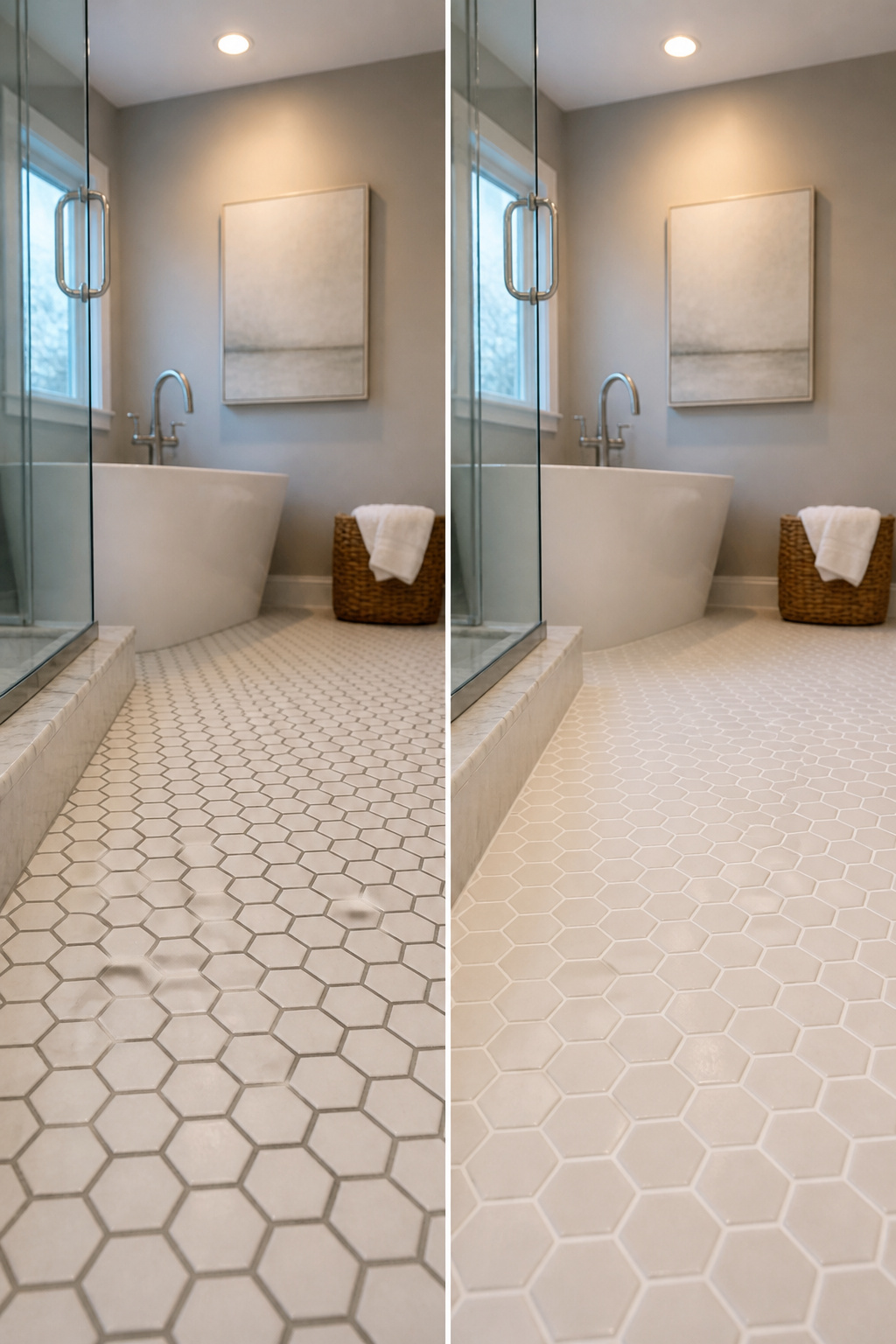
Laticrete Spectralock 1 Grout runs $116.00 for a single gallon unit, and the color range stretches well past what you’d expect for a white hexagon tile floor. Bright White sits at the center of the lineup, but the same bucket comes in thirty-four other colors, from Silk and Antique White through Stormy Grey and Slate Gray all the way to Raven and Midnight Black. That kind of spread matters if you’re laying white hexagons with a contrasting joint, or if you want the grout to disappear entirely into a pale field.
The manufacturer specs the material for joints between 1/16 and 3/8 inches, which covers most mosaic layouts without forcing you to switch products mid-job. I’ve seen narrower grout lines crack under seasonal floor movement, and anything over 3/8 starts to look like caulked seams rather than tile work. The pre-mixed formula also means you’re not standing over a bucket with a margin trowel, guessing whether the consistency is right. For a weekend project with a hard stop on Sunday evening, that convenience is worth pricing into the materials list.

ARDEX X 3 PLUS LHT Large and Heavy Tile and Stone Mortar is a high-performance polymer-modified mortar specially formulated for the installation of large format tiles, natural stone.


ARDEX S 48 rapid-set mortar is the ultimate solution for seamless tile installations, particularly for floor tile and backsplashes, designed to save time without sacrificing quality.
Laticrete L-Shape Edge Profile
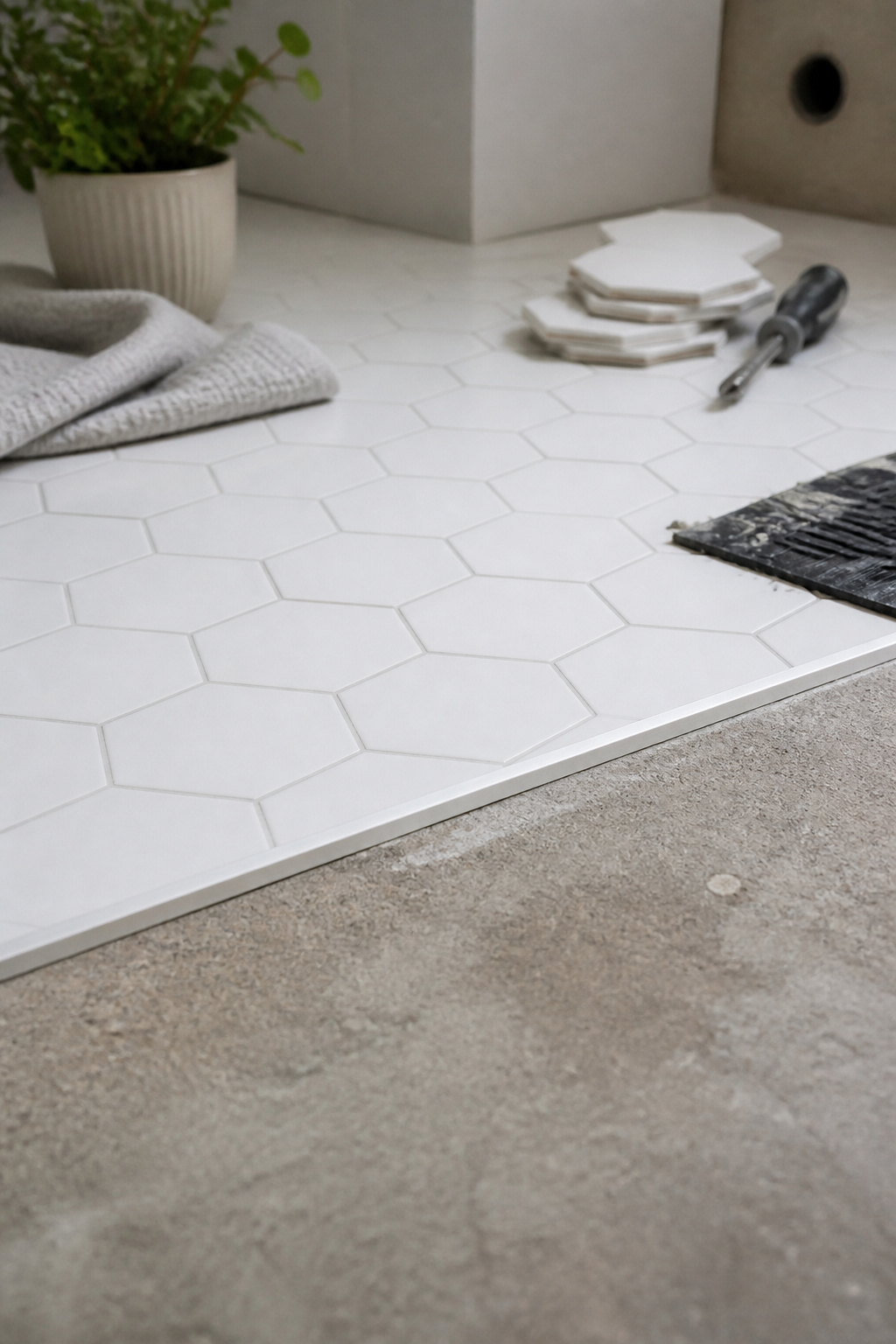
The Laticrete L-Shape Edge 3/8in. Textured Color-Coated Aluminum Profile runs where your white hexagon tile floor meets a different material or drops off to the subfloor, and at $23.07 per piece it solves a problem that caulk never quite manages. Bare tile edges chip. Caulk discolors and shrinks back from traffic. This profile gives you a metal lip that takes the hit instead.
Color matters more than you might think with white tile. Brilliant White disappears against bright grout, while Matte Black or Smoke Gray turn the transition into a deliberate line. Greige, Frosty, Dusty Gray and Antique White fill the middle ground if pure white feels too clinical against your particular shade of hexagon. The textured finish hides scuffing better than a polished surface would in a bathroom or kitchen path.
Installation happens before you set the last row of tile. The leg of the L tucks under the tile edge, the face covers the cut, and the whole piece gets bedded in the same thinset you are already mixing. The 3/8in. size matches standard porcelain mosaic thickness, so you are not building up extra layers to make it flush.

Premium Cove Base Design – Integrated cove edge provides a smooth and curved transition between floor and wall for a clean, professional, and hygienic finish.

Matte White Finish – Clean, smooth surface adds modern sophistication to any room.

Coverage: One 12x12-inch mesh-mounted sheet = 1 sq ft — order by square footage and add 10% overage.
Rubi Tile Spacers
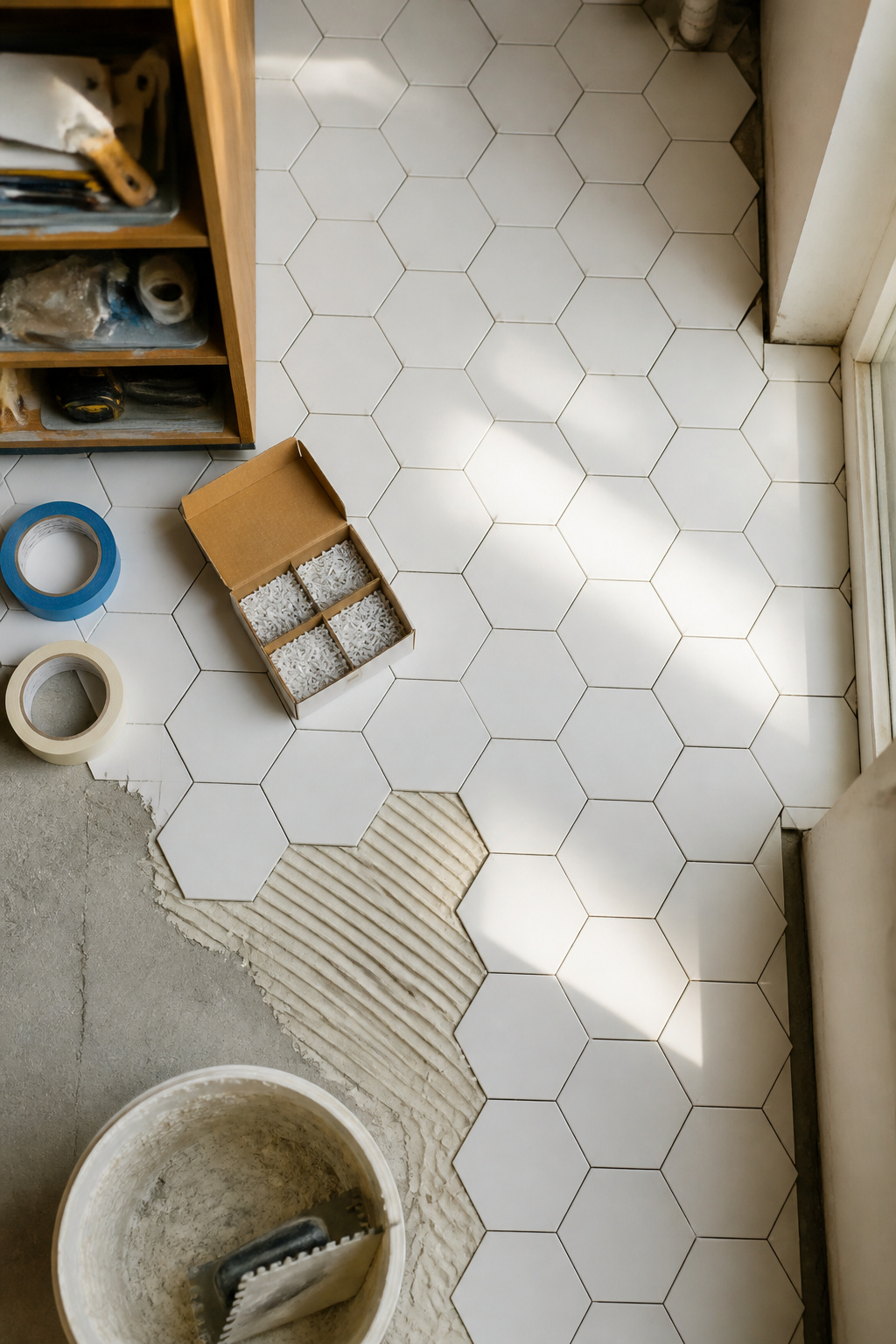
Rubi 1/8in. Leave-in Tile Spacers run $14.48 for a thousand pieces, which is enough for most bathroom floors with spares left for the inevitable one that rolls under the vanity.
A 1/8 inch gap is the right call for hexagon tile. The six-sided layout already breaks up the grout lines visually, and anything narrower makes the pattern read as busy; anything wider and the floor starts looking like a honeycomb diagram from a science textbook. The 1/8 inch hits the middle ground where the shape gets to be the story.
"Leave-in" means exactly what it sounds like. These spacers stay put while the thinset cures, so you are not crawling back across the floor pulling them out one by one while the mortar is still soft. With hexagon tile, that matters more than with squares. The points on each tile want to drift, and having the spacer hold position through the full set means you are not re-seating the same corner three times. I have seen people try to rush this with standard cross spacers pulled early, and the pattern goes wobbly by the back wall every time.

Elegant Floral Design: Features a refined black and white floral pattern with 0.89" hexagonal chips for a visually striking, modern aesthetic.

Floral Hexagon Design: Charming black-and-white flower pattern in a classic 1x1 hexagon format.
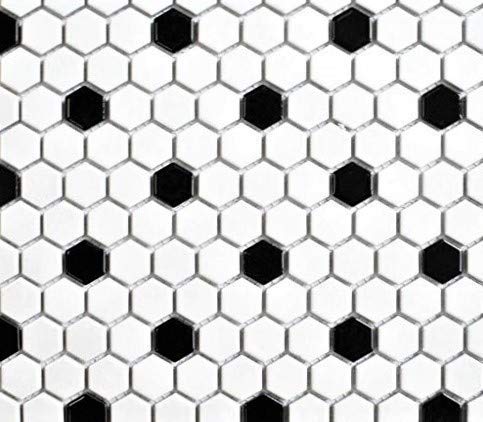
Shiny Smooth surface Hexagon design White and Black Porcelain Mosaic
Sentinel Wet Saw
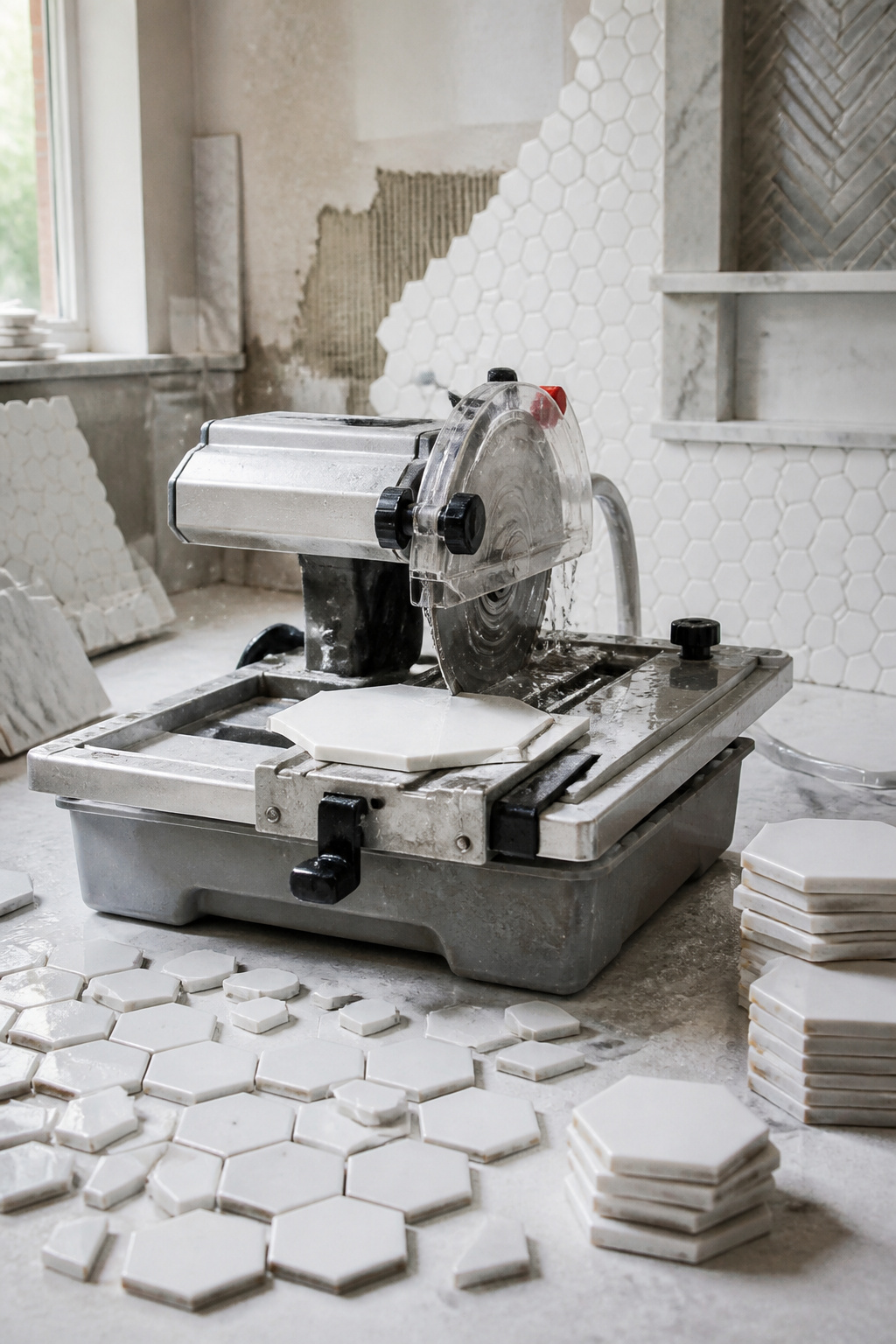
A snap cutter scores and snaps in a straight line, which is fine for squares and soft ceramic. Hexagons and porcelain are a different problem entirely. The six angled sides mean almost every cut is partial, and porcelain’s density will either shatter along a score line or leave a ragged edge that telegraphs through thin grout joints.
The Sentinel 7in. Tabletop Wet Saw at $173.99 handles both issues with a diamond blade cooled by continuous water flow. The blade grinds rather than scores, so porcelain cuts cleanly without the risk of fracture, and the small tabletop size still allows you to guide odd angles freehand or with a miter gauge. For a white hexagon tile floor, where the pale color makes chipped edges glaringly obvious, that clean cut matters more than the price difference against a snap cutter.
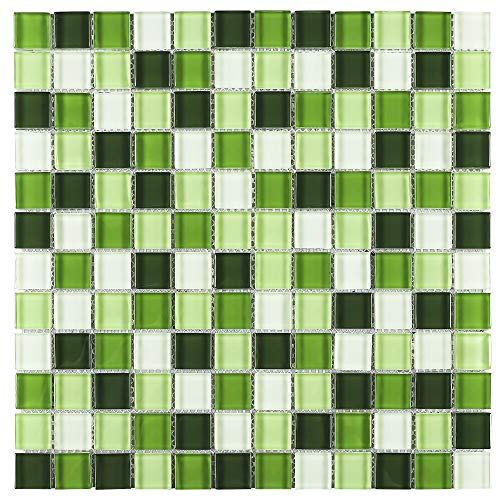
Single Sheet Size: 11-3/4 in. x 11-3/4 in. x 8 mm

Mosaic Tiles Specifications: Each mosaic tile size: 25mm X 25mm X 4mm. A box about 85-90 pieces, which can cover about 0.7 Sq Ft (a square with a length of 255mm)

Exact Chip Size: 1-1/16 in. black and white squares — the classic checkerboard, sized honestly (corrected).
Rubi Jagged Trowel and Grout Float
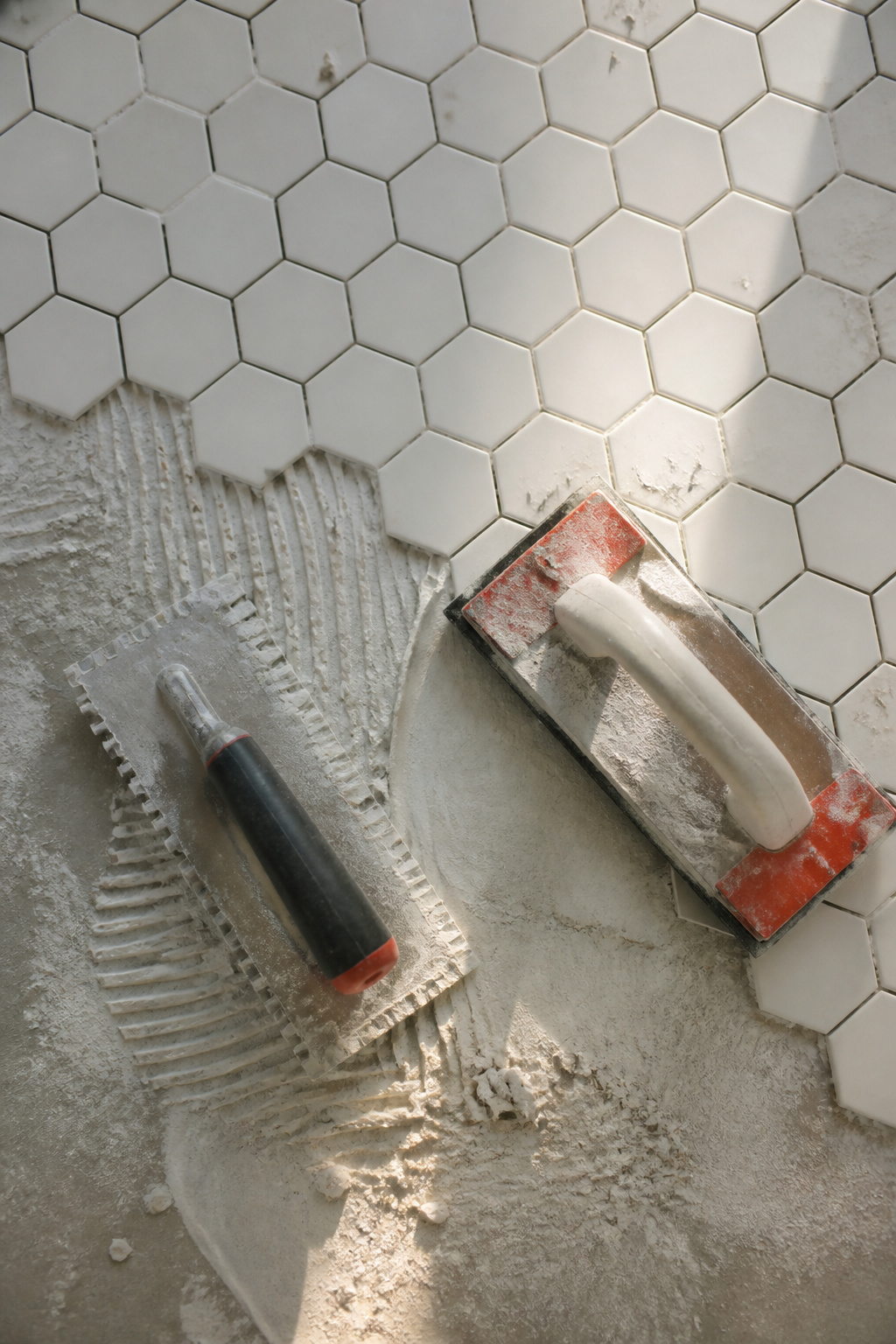
The Rubi Jagged Trowel at $17.84 puts down adhesive with a 1/4 by 1/4 inch jagged notch, and that jagged pattern matters more than it looks. Those little teeth bite into thinset and leave behind ridges that collapse when the tile presses in, which means air has somewhere to go instead of getting trapped under the hexagons. Trapped air is what causes hollow spots that crack underfoot two winters later.
For the grout pass, the Rubi Pro Rubber Grout Float at $14.68 runs 9 inches across and uses a rubber face for a reason. Epoxy grout is stiffer than cement grout, almost like spreading peanut butter that starts setting on you. A rubber face flexes into the joints and pushes the material through without digging back out what you just packed in. Hard plastic floats skate over epoxy or leave streaks; rubber grabs and moves it. The 9-inch width covers enough ground to keep ahead of the pot life without tiring your wrist on a small bathroom floor.

Portland cement-based polymer modified

50LB WHITE Polymer-Modified, general-purpose mortar

50 pound (22.7 kg) mortar bag, white mortar color best for use with light and translucent tile colors, engineered for durable, reliable everyday performance.
Tile Dimensions and Specifications
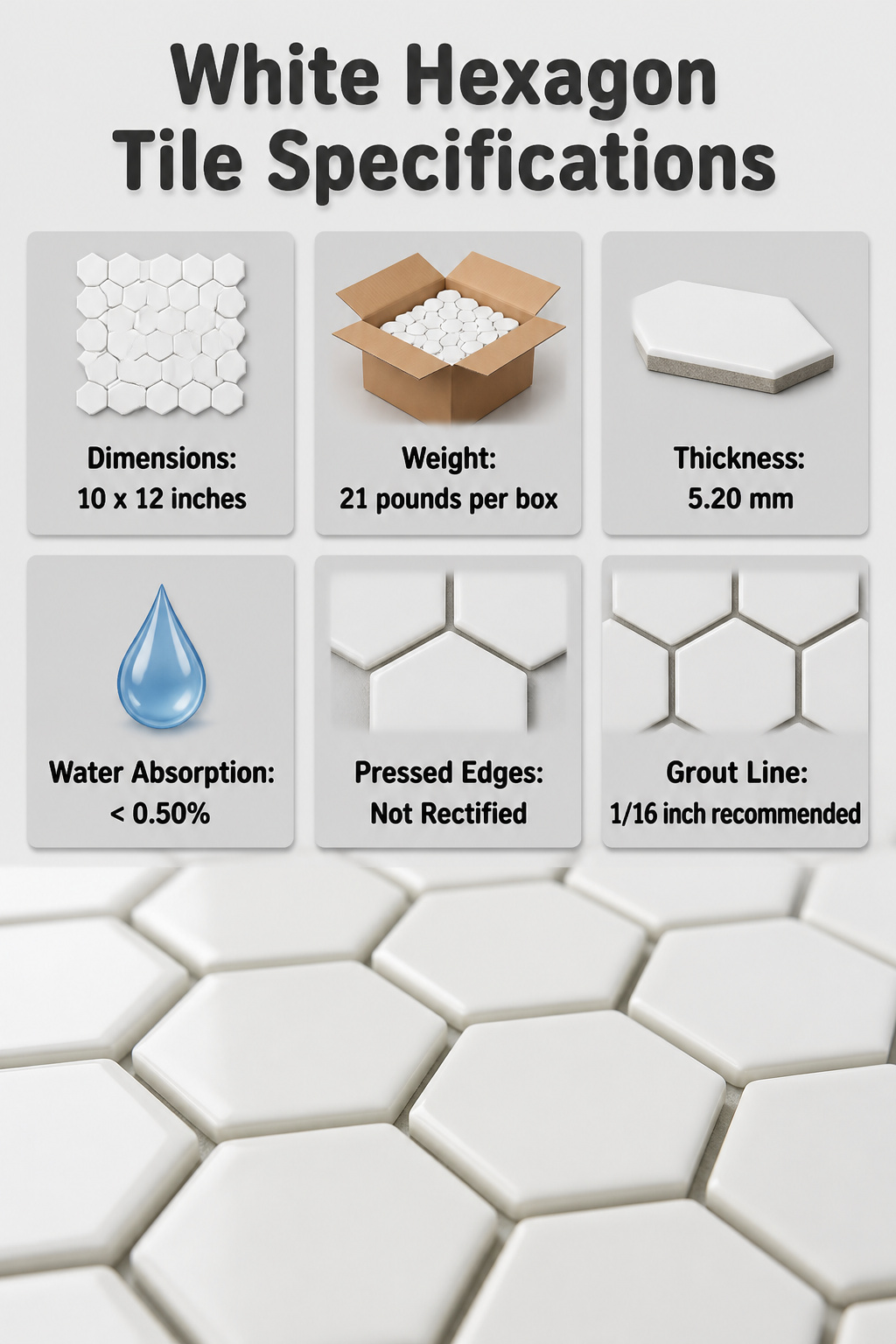
A white hexagon tile floor built on 10 x 12 inch sheets lands in a sweet spot between speed and control. The sheets cover 0.84 square feet each, so twelve of them fill a box that weighs just under twenty-one pounds. One person can carry that without a second trip.
The 5.20mm thickness matters more than it sounds. Porcelain this thin keeps the finished height low, which helps when you are butting up against an existing door jamb or a neighboring room’s floor level. It also means less mortar bed, less drying time, and less chance of lippage if your subfloor is already flat.
Water absorption sits below 0.50 percent. In practice, that is what lets this tile go anywhere indoors, including shower floors and pool interiors where it will stay submerged. For a bathroom reno on a Saturday morning, it means the same material works for the floor and the shower pan without a separate order.
Pressed edges, not rectified, give you a little forgiveness. The slight round means a 1/16 inch grout line still looks clean even when your cuts wander by a hair. I would not push past 3/8 inch; the sheet layout starts to read messy once the gaps get decorative.

SIZE: 24" Length × 2.76" Width × 2.75" Height | 2" Center Outlet. Fits standard US No-Hub 2" drain base systems. Please verify your shower area measurements and review the dimensions image in our listing if unsure.

𝗧𝗶𝗹𝗲 𝗠𝗮𝘁𝗲𝗿𝗶𝗮𝗹 𝗮𝗻𝗱 𝗙𝗶𝗻𝗶𝘀𝗵: Cobalt blue 1x1 square mosaic glass tile. Glass is non-porous, so it will not absorb water, stains, or odors, and the color reads with depth because light passes into the chips instead of sitting on a painted surface. The mesh backing holds every chip in alignment, so the pattern repeats cleanly sheet to sheet. The color stays consistent from sheet to sheet and box to box, so repeat orders and later repairs match.

Installation Materials Checklist
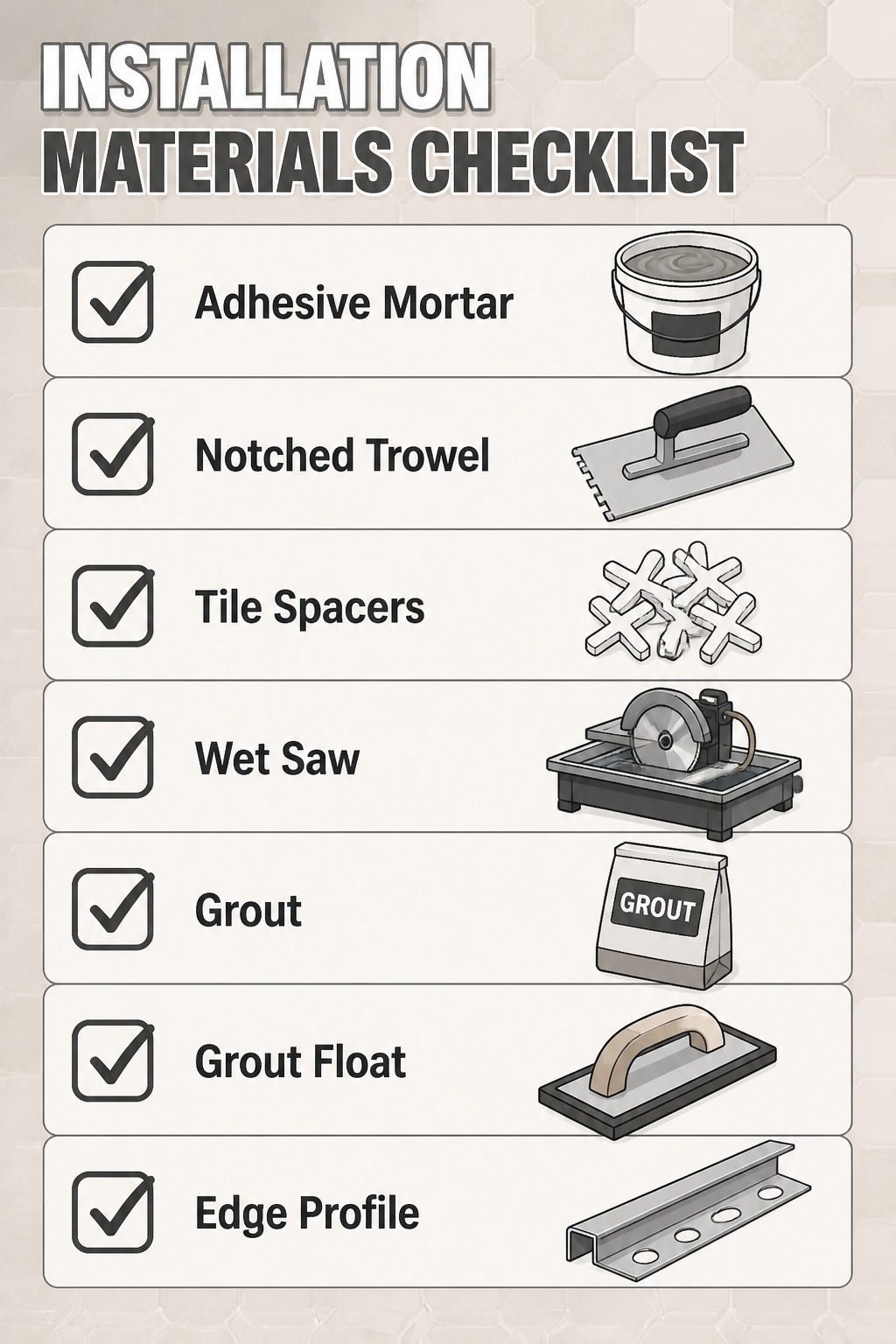
White hexagon tile floor installation runs on a short list of materials, and the order you reach for them matters more than the brand on the bag.
- Adhesive mortar bonds the tile to the subfloor. Thinset modified with polymer holds better on plywood or concrete that shifts slightly with the seasons, which matters in older rentals where I have done most of my work.
- A notched trowel spreads that mortar. The notch size matches the tile; small hexagons need a smaller notch than the half-inch I would use for large-format porcelain.
- Tile spacers keep the gap even while the mortar sets. I leave them in overnight and pull them just before grouting, not after the mortar has fully cured and locked them in place.
- A wet saw with a diamond blade cuts the hexagons where walls or fixtures interrupt the pattern. Dry cutters dust up the whole room and chip the glaze on white tile.
- Grout fills the joints after the mortar has cured, usually the next day. Sanded grout works for joints wider than an eighth-inch; unsanded for anything tighter.
- A grout float forces the grout into the joints at a 45-degree angle, then scrapes the excess diagonally across the face.
- Edge profile metal finishes the perimeter where tile meets another floor surface or a wall without a baseboard in place yet. I install it last, after the grout has cured and been sealed.

10-Sheet Box: Honeycomb hexagon mosaic sheets for floors and walls.

Timeless Design: Classic 1-inch hexagon mosaic pattern adds geometric elegance and visual interest to any interior.

Size: 12.6x12.6x0.3 Inch(320mm×320mm×8mm), 5 sheets/box, 4.8 sq.ft/box, chip size: 2 inches
Grout Color Options
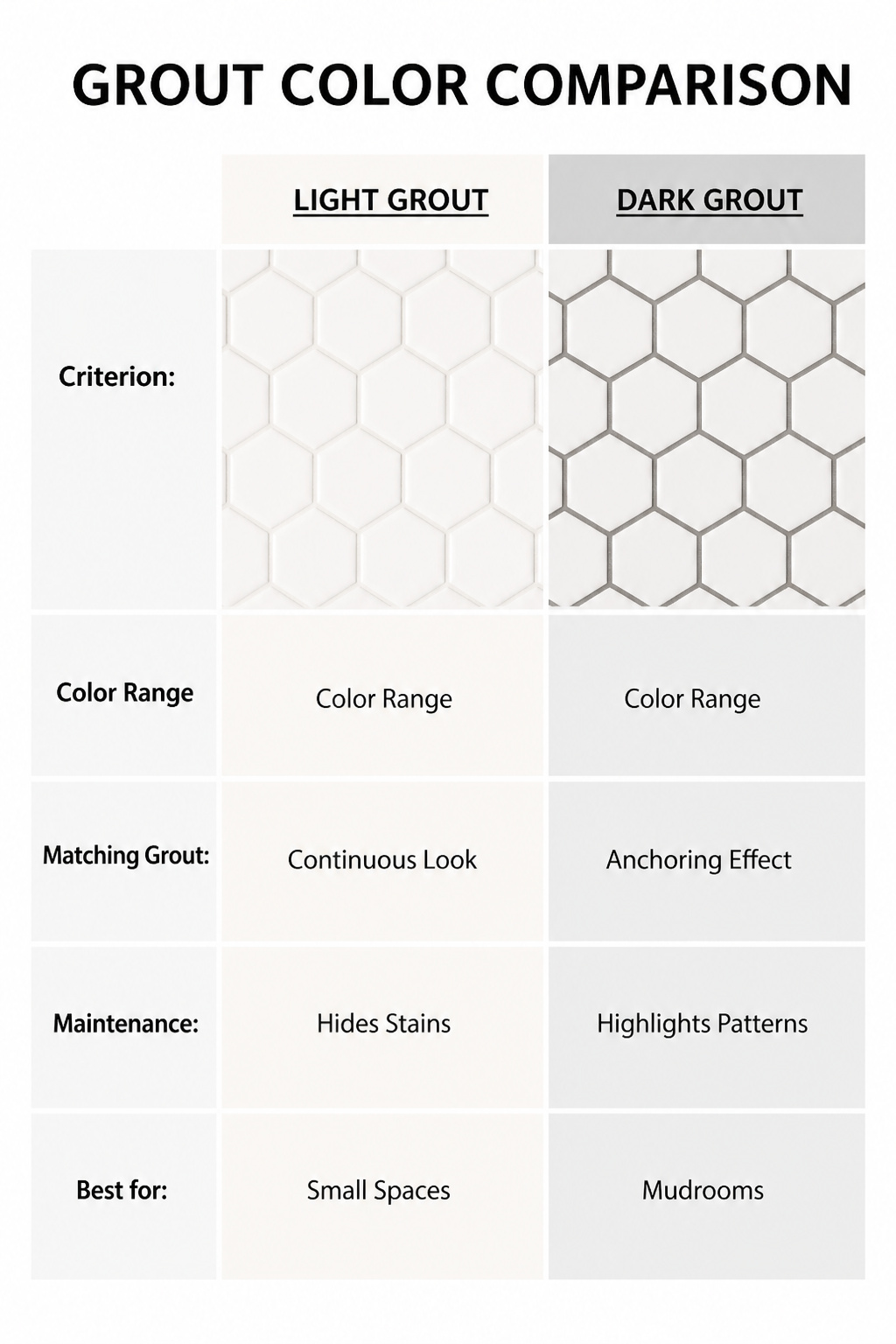
Spectralock 1 comes in colors well past Bright White, and that range matters more than most people expect when they first pick up a sample board. A matching grout on white hexagon tile floor reads as one continuous surface, which works in small bathrooms or galley kitchens where you want the walls to feel like they go on forever. The hexagons soften into texture rather than pattern, and the room gains a few visual feet it does not actually have.
Contrast does the opposite job, and it is the bolder choice on white tile. Darker grout, even a warm gray, traces every line and turns the floor into a honeycomb grid that anchors the space. That reads as deliberate in an entry or a mudroom where you want the floor to hold its own against boots and bags and whatever the dog dragged in. The trade is maintenance: light grout on a white hexagon tile floor hides nothing, but dark grout in a hard-water area can collect mineral film at the edges that needs scrubbing.
For a rental or a first project, the safe middle is a tone just off-white, warm enough to forgive the inevitable shadow between imperfect cuts but not so dark that it fights the tile. I have seen that choice survive three years of tenant turnover without looking tired.
Floor and Wall Installation Types
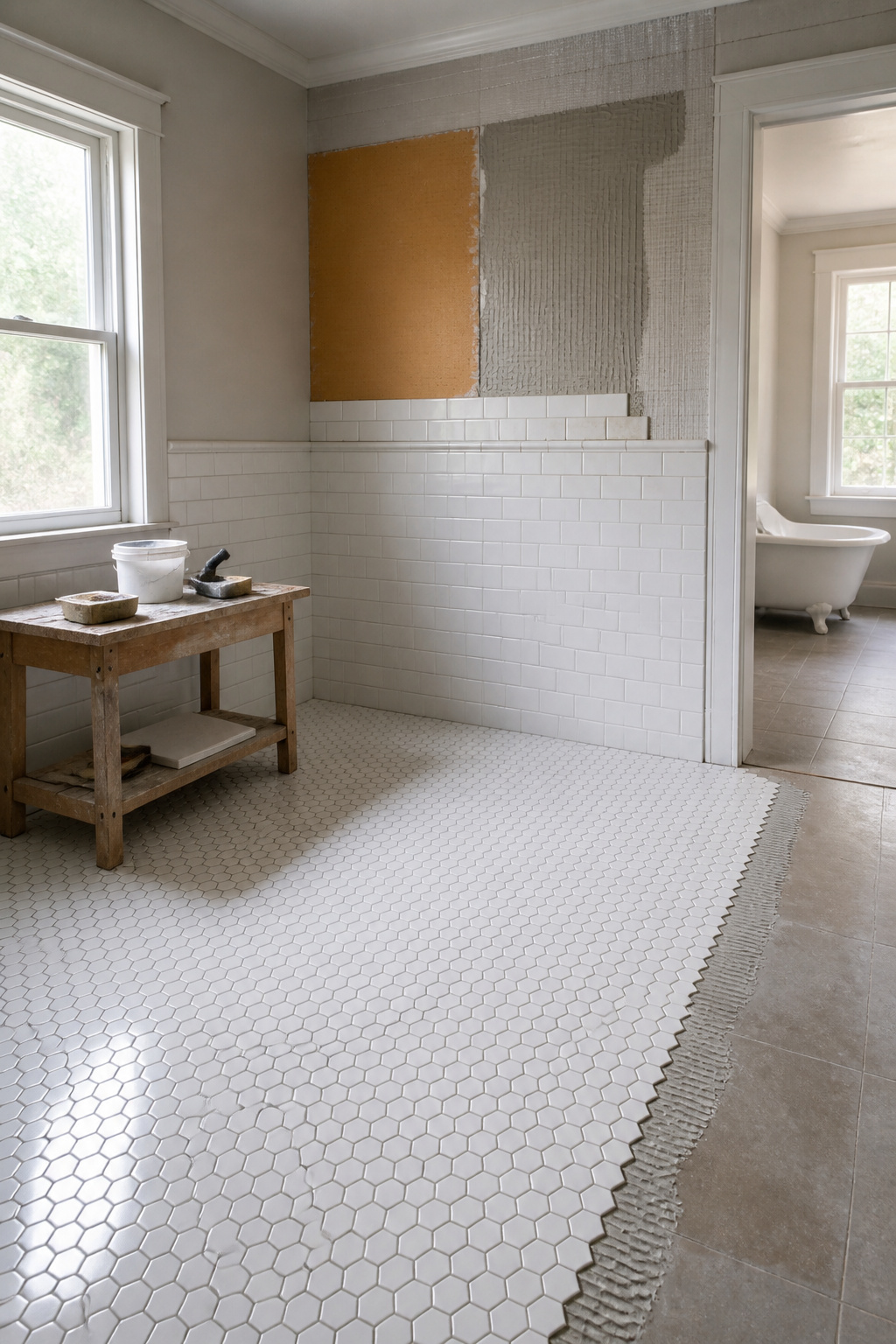
A white hexagon tile floor can go nearly anywhere, but the substrate and adhesive change entirely depending on whether the surface faces up or faces out.
Floors want compressive strength. The tile sits flat, the load pushes down, and the main fight is keeping the assembly stiff enough that the grout does not crack underfoot. Walls add shear: gravity wants to pull the tile plane away from vertical, so the thinset needs more open time and often a polymer modification to grab and hold. The trowel pattern matters more on a wall; full coverage behind each tile is harder to verify by sound, so working in smaller sections and checking with the flat edge of the trowel becomes part of the rhythm.
Wet areas are where the installation either survives or fails invisibly. Shower floors in particular need a sloped pan beneath the tile, and the hexagon pattern, with its many grout joints, can hide the slope or reveal it depending on how the sheets align. The grout itself becomes the waterproofing weak point; epoxy or a urethane-modified grout shrinks less and stains less than standard cement grout in a steam shower. On a bathroom floor outside the shower, a white hexagon tile floor faces splashing and mopping but not standing water, so a standard polymer-modified thinset over a cement backer or an uncoupling membrane is usually enough. The membrane costs more upfront but pays back the first time the subfloor moves seasonally and the grout lines stay closed.
Frequently Asked Questions
What are the dimensions of the white hexagon tile?
The sheets measure 10 x 12 inches, with individual hex chips at 1 x 1 inch. Each sheet covers 0.84 square feet, and a box holds 12 sheets weighing just under 21 pounds. The tile itself is 5.20mm thick, which keeps transitions low when butting up against adjoining rooms.
What materials do I need for installation?
You will need white adhesive mortar (Laticrete 254 Platinum Plus White is specified), a jagged notched trowel, leave-in tile spacers, a wet saw with diamond blade, epoxy grout (Laticrete Spectralock 1), a rubber grout float, and L-shaped edge profiles for transitions. White mortar matters here; gray thinset will show through and dull the clean look of the white tile.
Can the tile be used in wet areas?
Yes, the less than 0.50% water absorption rate makes it suitable for shower floors, shower walls, and pool interiors without freeze-thaw cracking. The matte finish also gives bare feet grip on wet surfaces. The manufacturer does not recommend it for pool decking, however.